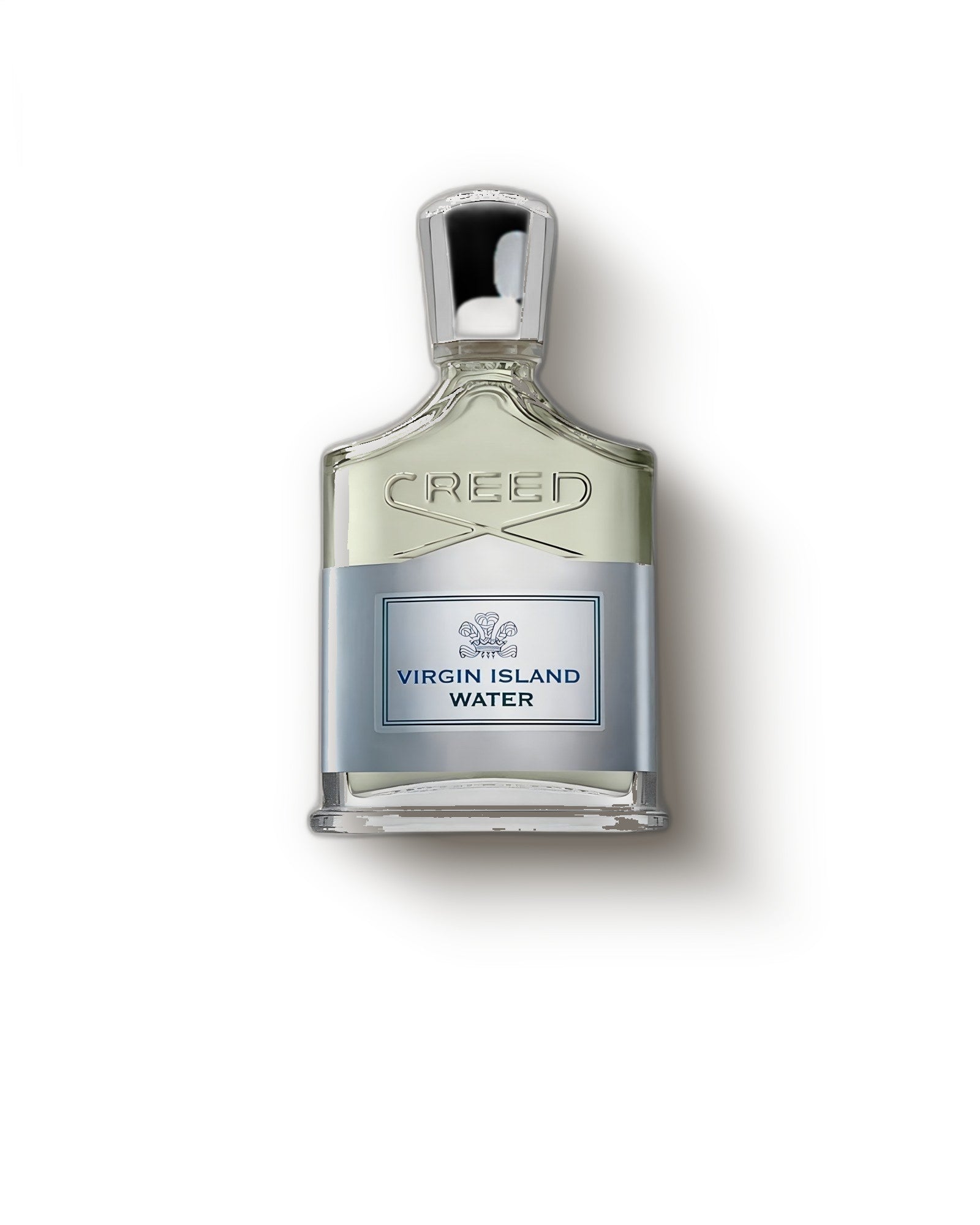
Creed
Virgin Island Water
The Story
Virgin Island Water came out of a sailing trip near Ginger Island in the Caribbean, and Creed has never dressed the origin up beyond that. The coconut, lime and rum accord is the house doing something close to a holiday drink and taking it seriously.


Citrus
First bright zest of morning
The juicy, rind-snapping brightness of lemon, bergamot, and orange peel, tart and effervescent with a clean bitter edge. It opens a scent with instant lift and sparkle, fresh and energizing, evaporating quickly like sunlight on water.


Sweet
Warm sugar you cannot quite name
Caramel, honey, spun sugar: sweetness that hovers between all three and never settles on one. This is the gourmand pull, the thing that makes someone lean in closer than they meant to, warm and soft and a half step short of edible.


Coconut
sunscreen warmth on bare skin
Sweet, creamy and slightly nutty, halfway between toasted flakes and tropical suntan lotion. It carries heat and beach nostalgia, a soft milky richness that wraps florals and vanilla in something warm and humid, without ever tipping into candy.


Tropical
Sun-warmed fruit and creamy bloom
A juicy swell of ripe mango, pineapple, and overripe banana laced with coconut milk and sticky white petals. It smells of heat on bare skin, suntan lotion, and fruit left to soften in the sun, breezy and indulgent at once.


White Floral
The flowers you smell across a garden
Jasmine and tuberose share it: thick creamy petals with a ripe, almost animal sweetness underneath, the indole that keeps big florals from ever smelling polite. Green at the edges, overripe fruit in the middle, and louder on warm skin.


Patchouli
Damp earth and dark cocoa
A deep, earthy darkness that smells of damp soil, dry wood, and a faint bitter-sweet cocoa, with a cool, almost camphorous edge. It feels grounding and a little mysterious, lending weight and shadow to whatever it touches.


Lime
Green citrus zest with a bitter peel snap
What it is
The oil leaves the fruit two ways. Cold pressing squeezes it straight out of the green peel; distillation boils it off the whole crushed fruit, a grade made largely for the soft-drink trade. They do not smell alike.
How it smells
Pressed lime is sharp and bitter and wet, exactly a wedge cut a second ago. Distilled lime is rounder and almost candied, all cola and soda fizz. Both fade fast and leave a thin green, faintly soapy dryness.
In perfumery
Lime goes at the top, cutting richness and making the first few minutes feel carbonated. Basil, mint, vetiver and rum are its usual company, in colognes, fougeres and every gin-and-tonic accord ever built.
Good to know
Sunlight is the catch. The compounds that make cold-pressed lime smell alive leave skin hypersensitive to it, so the dose is capped. Distillation strips them out, which is why lime in perfumery smells of soda not peel.


Tropical Fruits
Ripe mango and pineapple, sticky and sun-hot
What it is
No orchard, no still. Mango, guava and passionfruit give up almost nothing under steam or press, so this is a built accord: esters and lactones assembled to match what a headspace probe read off the living fruit.
How it smells
Juicy and mouthwatering, syrupy mango and pineapple tang with the musky-floral lift of lychee behind it. A creamy coconut edge keeps it from turning shrill. As the sharp esters burn off it goes jammy, almost boozy.
In perfumery
A top-to-heart accord that drops a whole holiday into the opening. Salt and aquatic notes keep it from cloying; white florals, coconut and vanilla push it toward dessert. Indie houses will run it neat.
Good to know
The tang is the trick. Ethyl butyrate gives the juicy flash, allyl caproate the pineapple flesh, and passionfruit thiols add the faintly sulphurous edge that stops the accord smelling like sweets and makes it read fresh-cut.


Bergamot
Sparkling citrus light with a bitter edge
What it is
Nobody eats bergamot. It is sour, seedy and disappointing, and almost the whole world's supply grows on one strip of Calabrian coast, farmed purely for the oil pressed cold from its green rind.
How it smells
Zest and green light in the first second, then something rounder than lemon: a floral, tea-like smoothness sitting on a faintly bitter warmth. It burns off fast. What stays behind is a quiet, slightly spiced hum.
In perfumery
It defines eau de cologne, and sits on top of nearly every fougère alongside lavender and oakmoss. Perfumers want the first bright second it gives, and the oil is also what makes Earl Grey smell like Earl Grey.
Good to know
The thing that makes it sparkle can also burn. Bergamot carries bergapten, which leaves skin hypersensitive to sunlight, so perfumers either keep the dose low or reach for a grade with the molecule stripped out.


Coconut Milk
Coconut pressed into cream, never into candy
What it is
Grated white coconut flesh, pressed and strained: that is the kitchen version. In a bottle it is a reconstruction, built from creamy molecules that imitate soft wet pulp rather than dry toasted shavings.
How it smells
Sweet and soft, closer to fresh flesh blended into cream than to coconut candy. The opening is milky with a cool nutty edge; it warms and goes faintly waxy on skin, thick rather than sugary.
In perfumery
Used for volume: it brings tropical weight and that warm suntan-lotion softness to the heart and base. Tiare, vanilla, almond and frangipani are its usual company, and monoi-themed summer scents lean on it for a skin-warm backdrop.
Good to know
It is called aldehyde C-18 and it is not an aldehyde. Gamma-nonalactone, the workhorse behind most coconut accords, is a lactone, one of the ring-shaped molecules that also give peaches and milk their richness. Real coconut rarely enters.


White Flowers
The heady, indolic chorus of summer blooms
What it is
No such flower exists. White florals are a club: jasmine, tuberose, gardenia, orange blossom, ylang-ylang. What they share is fleshy pale petals, a scent captured as absolute or rebuilt from a headspace reading of the living bloom.
How it smells
Creamy, warm and too much, in the best way. Indole gives the depth an animalic, overripe edge under the sweetness: milky coconut from tuberose, green mushroom from gardenia, honey from jasmine. It dries down softer, closer to skin.
In perfumery
A heart accord that carries sillage and sensuality, usually cut with citrus or musk so the richness does not swallow everything else. Tuberose anchors the famous floral bombshells; jasmine does the honeyed heavy lifting. Romantic, full-bodied, unmistakably floral.
Good to know
Indole on its own smells of mothballs and decay. Jasmine absolute carries about 2.5 percent of it, and at that trace it reads as a living flower; add much more and the accord turns faintly fecal.


Jasmine
The heady white flower at perfumery's beating heart
What it is
Picking runs by hand in the dark, from before first light into the morning. The blossoms are too fragile to distill, so solvent lifts their oil into a waxy concrete, and alcohol washes the absolute out of that.
How it smells
Sweet, heavy and honeyed, with something faintly animal underneath. Sambac reads green, tea-like and luminous; grandiflorum is fruitier, creamier, heavier on the skin. Both dry down warm and soft, with a mushroomy musk you notice only up close.
In perfumery
Put it in the heart and it ties a citrus opening to the woods underneath, adding volume to both. Rose, tuberose, sandalwood and musk all take it well. Plenty of perfumes are built on jasmine and nothing else.
Good to know
Roughly five thousand hand-picked blossoms go into one gram of absolute, among the costliest materials in perfumery. Part of its depth is indole, which smells like decay when concentrated and turns radiant at the trace the flower carries.


Patchouli
Damp earth and dark wood after rain
What it is
Nobody guesses mint, but that is the family: a leafy bush whose leaves are dried and left to cure, close to fermenting, before distillation pulls out an oil thick and dark as syrup.
How it smells
Wet soil, forest floor, an old cellar, with a winey sweetness underneath. Young oil can come at you sharp and green, almost camphorous. Aged oil goes the other way, into chocolate and leather, and stays put for hours.
In perfumery
Almost nothing holds a composition down like it. Chypres and orientals are built on that anchor, and a few drops under rose, vetiver or labdanum will hold the whole thing on skin for hours.
Good to know
Nineteenth-century Kashmiri shawls travelled packed in dried patchouli leaves to keep moths off, and Europeans learned to tell a real one by smell alone. The oil improves with age, which almost no essential oil does, mellowing like wine.


White Musk
The laundered lab musk in almost everything
What it is
White musk names a shelf, not a material. Behind it sit clean synthetic musks, Galaxolide the most familiar, with lighter macrocyclics like Habanolide beside it, and together they anchor the base of nearly every fragrance made today.
How it smells
If you can smell it at all: soft, airy, weightless, reading as fresh cotton, warm skin and powdery soap, with a faint fruity shimmer where Galaxolide is doing the work. Laundered rather than alive.
In perfumery
This is the great diffuser and fixative: stable, forgiving, able to stretch everything around it, which is how a modern scent gets its second-skin drydown. Older polycyclic musks are under environmental review, pushing perfumers toward biodegradable macrocyclics.
Good to know
A fair number of people cannot smell Galaxolide, so the same fragrance vanishes on one wearer and blooms on the next. White musk is what most people now mean by musk: clean, soft, nothing animal about it.


Tonka Bean
Warm almond-vanilla sweetness with a hay-tobacco shadow
What it is
Shelled seeds from a South American legume tree go into alcohol, then dry for weeks until coumarin crystallizes across their skins like frost. That frosted bean is what becomes the absolute perfumers use.
How it smells
Vanilla and bitter almond first, then hay, dried tobacco and something toasted. The opening is close to caramelized custard; the drydown goes powdery and boozy, with cinnamon and cut clover in it. Hazier than vanilla, softer than almond.
In perfumery
Between heart and base, it sweetens without turning sharp. Lavender, amber and tobacco all take to it. Coumarin, first pulled out of this seed, built the fougère family, though the 1882 original ran on the synthetic version.
Good to know
Tonka owes most of its scent to coumarin, which American food regulators banned in 1954 after high doses damaged the livers of lab animals. The bean is effectively illegal in a US kitchen and perfectly legal on skin.
Fragrance Character
All citrus snap at first, lime and bergamot cutting through the tropical fruit with real acidity. Coconut milk and jasmine follow, softening the sharp edges into something creamy without ever turning cloying. Patchouli and tonka anchor the drydown, giving the musk just enough earth to keep it grounded rather than powdery.


Longevity
how long it stays on skin
The hourglass reads wear time: how many hours the fragrance keeps speaking before it fades. A bar that barely leaves the start means a few fleeting hours. One that runs the full length carries from morning into evening. Treat it as typical, not promised. Oily skin holds scent far longer than dry.


Sillage
the size of its scent trail
Sillage is French for a ship's wake, and that is exactly what this measures: how much of the scent reaches the room instead of staying on you. Low is a whisper only close friends catch. Enormous fills the room, then keeps filling it after you leave.


Experimental
Built to provoke, not to please
Some perfumes are made to be liked. These are made to be argued about: inky tar, hot rubber, fruit on the turn, metal and fur where you expected flowers. The coin glows for a scent that provokes and dims for one that plays it safe, which is sometimes the point.


Office
Polished, and never louder than the room
Scent is manners in a shared room. At this range it should reach the person across the desk and stop there: tidy citrus, soft musk, pale woods, all of it reading competent and considerate. A glowing coin means nobody has to mention it. A dim one means it travels.


Evening
After dark, when it deepens
Dinner, drinks, the night that runs long. Low light is where ambers, resins and smoky woods stop being polite, and where a plush floral finally blooms. A glowing coin means it is waiting for exactly this hour. A dim one means it did its best work in daylight.


Romantic
Close enough to be felt
A fragrance can hum against skin instead of announcing itself across a table. That is the register here: creamy florals, vanilla, soft musk, a thread of spice, warm enough to make someone lean in. The coin glows when a scent sets that mood and dims when it is more practical than seductive.


Formal
Quiet authority in a dressed-up room
A wedding, a ceremony, a room where everyone has thought about their shoes. What works here is structure, not volume: smooth woods, disciplined florals, soft leather. A glowing coin means it holds its posture all evening. A dim one means it is too casual for the room.


Casual
Easy comfort for unhurried days
Errands, coffee, a slow Saturday with nowhere to be. Nothing here has to impress anyone, so the fit is soft and easy: fresh citrus, light woods, a little warmth off the skin. A glowing coin says yes to all that. A dim one means the fragrance is asking for a bigger night.


Day to Night
where its mood naturally falls
A bar running from sun to moon, reading the hour the fragrance was made for. The more of it that stays gold, the more the scent belongs to daylight and open air. The further the blue reaches back toward the sun, the deeper and warmer it turns: evening, candlelight, low rooms.


Winter
Warmth that carries through cold air
Cold air mutes a fragrance and slows it down, which is why winter belongs to the dense and the warm: resin, smoke, vanilla, leather, ambered spice. The bar reads how well this one pushes back, glowing against the chill instead of thinning out in it.


Spring
Fresh blooms in mild, rising warmth
Mild, humid air lifts a light composition, so the season belongs to dewy florals, green stems, soft powder and citrus you can see through. Alive rather than heavy. The further the green runs along the bar, the more comfortably this one wears in that weather.


Summer
Bright and airy in real heat
Heat does the projecting for you, which is why the wrong perfume turns unbearable by noon. What survives is cool and breathable: sharp citrus, salt air, aromatic herbs, water. Things that refresh instead of cloy. A short bar here means save it for cooler months.


Fall
Spiced warmth for cooling days
As the air cools, the rich materials stop smothering and start reading clearly: dry woods, warm spice, tobacco, amber, fruit gone golden. It is the season perfume turns contemplative. The bar fills according to how naturally this one settles into crisp, cooling days.
Best Worn
Made for the heat and bright daylight of summer and spring, a creamy citrus-and-coconut ease that carries through unhurried casual days and the workday alike.
Choose options
The Vibe


The Nose

Olivier Creed
Perfumer
Sixth-generation head of the House of Creed, master perfumer from 1980 until his death in May 2026. Creed credits him with Aventus, Green Irish Tweed, Silver Mountain Water, Virgin Island Water, Royal Oud and Millésime Impérial.
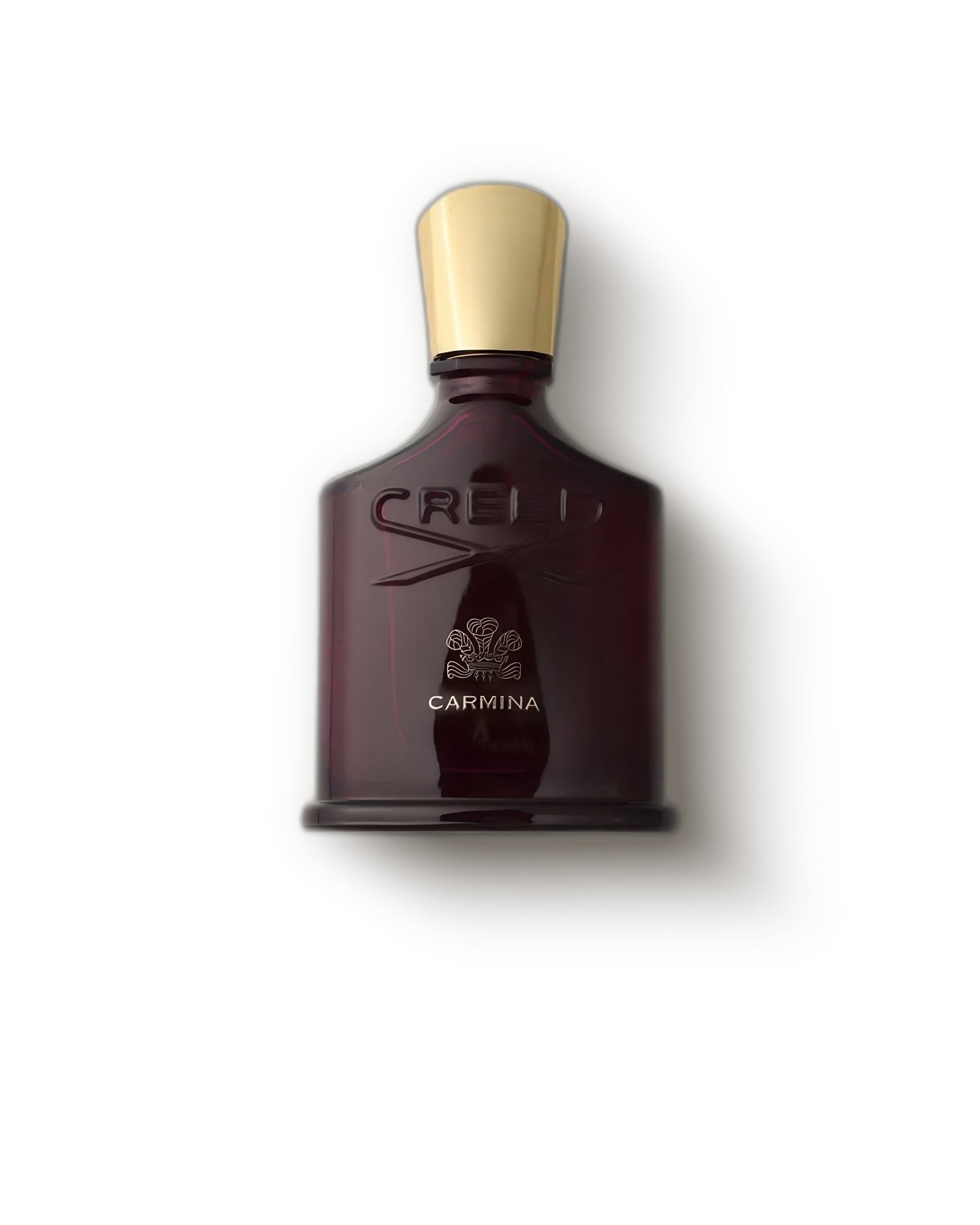
More by this noseMillésime 1849Absolu AventusCarmina

Erwin Creed
Perfumer
Seventh-generation Creed, son of Olivier, trained by his father inside the family house rather than at a perfumery school. Creed credits him as the perfumer of Viking Cologne, and he contributed to Love in White and Fleurs de Gardenia.
More by this noseMillésime 1849Absolu AventusCarmina
The Maison

The polished entrance, from Green Irish Tweed’s cut grass to the swagger of Aventus, tried by the millilitre.
Creed is the fragrance you notice before you notice the person wearing it. Fresh citrus caught over old wood, a lavender that reads like a pressed collar, a pineapple sparkle that has become shorthand for confidence. These are scents people commit to for years, which is exactly why they reward trying first.
- Origin
- Paris, France
- Founded
- 1760
- Known for
- Aventus, Green Irish Tweed, Royal Oud
More from Creed
You may also like