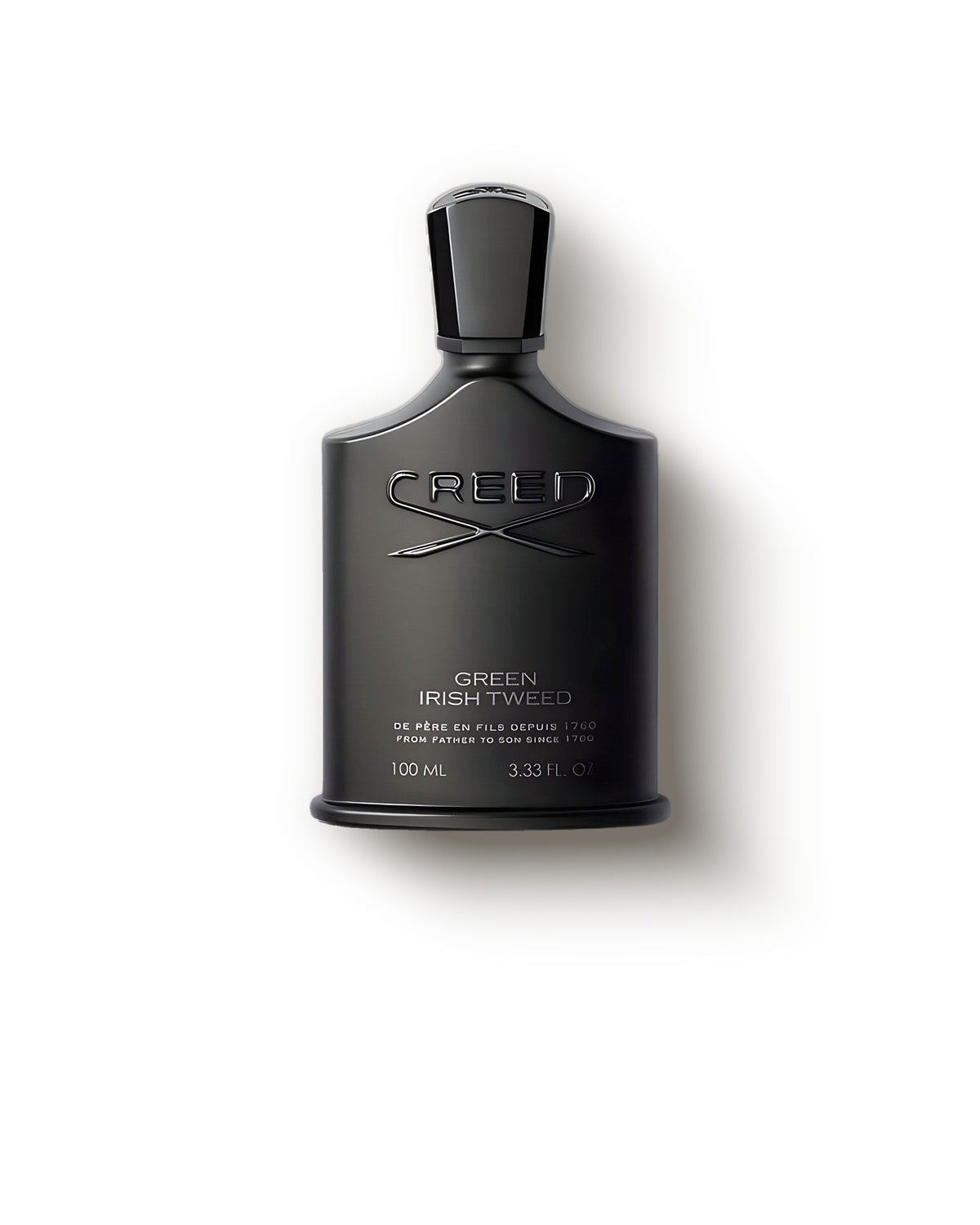
Creed
Green Irish Tweed
The Story
Released in 1985 and widely attributed to Pierre Bourdon, Green Irish Tweed set the template for the green, violet-leaf masculine that the next two decades copied. It draws on the lush greenery of the Emerald Isle and the house's old ties to the Linton Tweed Mills in Cumbria.


Ozonic
the air before a storm
A clean, airy transparency like the charged sky just before rain or sheets billowing on a line. Crisp and almost electric, it suggests altitude and open windows, weightless and modern, the smell of pure breathable space rather than any single thing.


Aquatic
The sea, invented in a laboratory
Real seawater smells of iodine, weed and low tide, which is nothing like this. The aquatic accord is a fiction, built around Calone, a melon-tinged marine molecule that helped give the nineties their ozonic wardrobe, with fresh partners such as dihydromyrcenol beside it. Cool, transparent, mineral: wet stone and cold spray, with none of the tide in it.


Iris
cool powder over damp earth
A cool, silvery powderiness with a buttery, slightly carroty rootiness and a whisper of damp soil. It feels elegant and restrained, almost melancholic, like fine face powder and suede laid over something quietly earthy.


Powdery
Soft hush of dressed skin
A velvety, slightly dry softness of iris root, violet, and fine talc, like face powder or clean linen warmed by skin. It feels intimate, refined, and nostalgic, blurring a fragrance into a gentle, cushioned haze.


Woody
Dry grain of cut timber
The smell of cedar shavings, sandalwood, and dry vetiver roots, a sanded, resinous warmth with a faint pencil-box rasp. It feels grounded and composed, the quiet backbone that makes a scent read as serious and lasting.


Amber
Resin warmed until it goes sweet
Labdanum, benzoin and vanilla melted together into something sweet but dusky, like tree sap gone soft in the sun with a thread of incense smoke through it. Amber does not sparkle or shout. It sits close to the skin and gives off heat for hours.


Mint
Two mints, one icy and one sweet
What it is
Two plants, two different jobs. Peppermint carries menthol and reads cold. Spearmint carries carvone instead and reads sweet, round and herbal. Both are steam-distilled from leaves and flowering tops, and swapping one for the other changes everything.
How it smells
Peppermint is piercing and icy, with a camphor edge that clears your head whether you asked or not. Spearmint is gentler: sweet, faintly fruity, no cold bite. Both start green and watery, then settle to a clean herbal hum.
In perfumery
A top note, and a fast one: it flashes through fougeres, colognes and fresh masculines, then it is gone. Peppermint handles the bracing openings. Both work with lavender, basil, citrus and, less obviously, chocolate.
Good to know
Menthol does not cool anything. It switches on the nerve receptors that report cold, so your brain reads cold where there is none. That is the trick behind toothpaste and gum, and spearmint cannot do it.


Vervain
Crushed lemon leaves sparkling green and sharp
What it is
Two plants answer to this name and only one smells. Perfumery's vervain is lemon verbena, a South American shrub whose leaves are steam-distilled; the vervain of herbalists is a different plant, and it is close to scentless.
How it smells
Sharper and greener than lemon itself, closer to a leaf you have just crushed between your fingers than to peel. There is lemongrass in it, and a vegetal bitterness underneath. It is brilliant, and then it is gone.
In perfumery
A top note, and a short one: it flashes at the opening and hands over to the heart. Colognes, fougeres and green florals use it for that first cold sparkle, usually alongside bergamot, neroli or mint.
Good to know
The oil is loaded with citral: the thing that makes it smell like that is also the thing that caps the dose, so verbena scents often lean on litsea cubeba instead. The same leaves make France's bedtime tisane.


Lemon
Cold yellow zest snapping into bright sun
What it is
Squeezed, not distilled: the colored rind is pressed and scraped until the glands give up their oil. Italy and California grow most of what perfumery uses. The tree's white blossom is a different note entirely.
How it smells
Tart, green and fizzing, all cold rind and mouth-watering sourness, with a faint sweet pith underneath and a waxy edge from the peel itself. Enjoy it fast: it is gone within minutes.
In perfumery
It powers the eau de cologne tradition, working with bergamot, neroli and petitgrain to open a fragrance in full sunlight. Because it burns off so fast, perfumers reinforce it with citral.
Good to know
Cold-pressed lemon carries furocoumarins that leave skin liable to burn in sunlight, so perfumers often reach for a grade with the sun-sensitizing compounds removed. It also spoils in the bottle, oxidizing toward turpentine, which is why citrus fragrances are hard to stabilize.


Bergamot
Sparkling citrus light with a bitter edge
What it is
Nobody eats bergamot. It is sour, seedy and disappointing, and almost the whole world's supply grows on one strip of Calabrian coast, farmed purely for the oil pressed cold from its green rind.
How it smells
Zest and green light in the first second, then something rounder than lemon: a floral, tea-like smoothness sitting on a faintly bitter warmth. It burns off fast. What stays behind is a quiet, slightly spiced hum.
In perfumery
It defines eau de cologne, and sits on top of nearly every fougère alongside lavender and oakmoss. Perfumers want the first bright second it gives, and the oil is also what makes Earl Grey smell like Earl Grey.
Good to know
The thing that makes it sparkle can also burn. Bergamot carries bergapten, which leaves skin hypersensitive to sunlight, so perfumers either keep the dose low or reach for a grade with the molecule stripped out.


Galbanum
Green so bitter it borders on turpentine
What it is
A gum that bleeds out of cuts in the stems and roots of a giant fennel from Iran and Central Asia. Once hardened, it is steam-distilled to an oil or pulled into a dark, thick brown absolute.
How it smells
Bitter, sharp and aggressively green, a fistful of snapped stems with a turpentine edge. Underneath sits something musky and almost balsamic. At a trace rather than a dose it turns cool and dewy, more garden than assault.
In perfumery
One of the few natural green base notes, used as a fixative and as the opening signature of the green chypre. It sits with oakmoss, iris, hyacinth and neroli, and has been overdosed on purpose more than once.
Good to know
The Book of Exodus names it, as an ingredient of the sacred temple incense. Iran still supplies most of the gum, thousands of years later.


Geranium
A rose with green stems and crushed mint
What it is
The perfumer's geranium is not a geranium at all. It is a pelargonium, and the rose smell sits in the leaves and stems, which is the part that goes into the still.
How it smells
Crush a leaf and you get rose, but rose with the stem still attached: green, crisp, a little peppery, cooled by something minty. Lemon and a powdery sweetness thread through it.
In perfumery
It works the heart, bridging florals and fougeres, and its herbal edge is the reason so much of it ends up in scents marketed to men. Rose, mint, clove, bergamot and vetiver all take it well.
Good to know
Geranium and rose share citronellol, which is why geranium can stand in for part of a rose accord far more affordably. Reunion's Bourbon crop, once the benchmark, has thinned as growing shifted to Egypt and China.


Lavender
Cool herbal blue from a sunlit hillside
What it is
The flowering tops are cut at peak bloom and go straight to the still, the purple spikes giving up a pale oil. Solvent extraction yields a darker absolute instead. Provence and Bulgaria supply most of it.
How it smells
Sharp and green at first, almost minty, with a cool camphor lift over soft floral sweetness. The dry-down warms into hay, faint vanilla and a powdery calm. True lavender is rounder and sweeter than the lavandin hybrid.
In perfumery
Set it against oakmoss, coumarin and tonka and you have a fougere, the barbershop structure behind countless aromatic masculines. Lavender runs from the top into the heart, cooling bright florals and softening citrus colognes.
Good to know
Those Provence fields the tourists photograph are mostly lavandin, a sterile hybrid that yields far more oil per hectare. True lavender is retreating uphill: a bacterial disease carried by sap-sucking insects has pushed plantings to cooler altitudes.


Violet Leaf
Cool green leaf breathing crushed grass and cucumber
What it is
This is the leaf, not the flower, and it smells nothing like it. A ton of leaves from the fields around Grasse or in Egypt, washed down with solvent, yields under a kilogram of thick, deep-green absolute.
How it smells
Green and watery rather than floral. Crushed leaf and cut grass first, over a cold cucumber tang with something faintly metallic in it. Then it dries: leathery, earthy, a long way from the candied purple sweet everyone expects.
In perfumery
A top-to-heart note that cools a fougere down and gives leather a transparent, green lift. It works with iris, rose and cucumber, and signs the classic green-leather compositions. Many violet-leaf openings lean on methyl octine carbonate.
Good to know
Cut a cucumber and you are smelling the same molecule: violet leaf aldehyde. It makes up around one percent of the absolute and does almost all of the smelling.


Sandalwood
Creamy wood, pulled up by the roots
What it is
The richest oil sits in the roots, so the whole tree is pulled up and steam-distilled rather than felled. Mysore in southern India was the classic source, until decades of overcutting pushed the wild trees to the edge.
How it smells
Milk and warm wood, with a rosy, almost buttery edge and nothing sharp at all. What surprises people is how little it moves: no bright opening, no dry-down drama, just the same quiet glow for hours.
In perfumery
It works twice over: as a smell, and as a fixative that holds rose or jasmine in place. Sandalwood is also graded, and the darkest, densest, most resin-heavy old heartwood carries its own name: red meat.
Good to know
A heart worth taking takes about thirty years to form. Plantations of the same species in Western Australia now supply a large share of the world's oil, close to the old Mysore chemistry if not quite its creaminess.


Cedarwood
Dry pencil shavings and sun-warmed timber
What it is
The cedar in your pencil and your closet is usually a juniper. Virginia and Texas cedar both are; among the cedars of perfumery, only Atlas and Himalayan are true Cedrus. The oil is steam-distilled from heartwood chips and sawmill dust.
How it smells
Freshly sharpened pencils, and the inside of a cedar chest. Virginia leans pencil-dry and balsamic; Atlas is sweeter, almost honeyed. Both carry a clean, faintly camphor-cool smoke that settles into sappy warmth.
In perfumery
A heart-to-base workhorse: dry structure other materials can lean on. It sits well with vetiver, rose, citrus and incense, and it is the smoke in the drydown of countless modern woody-ambers.
Good to know
Cedar rarely appears alone. Its molecules, reworked in the lab, form the backbone of a great many contemporary woody fragrances, which is why so much of the modern woody shelf smells faintly of a sharpened pencil.


Ambroxan
Synthetic ambergris that glows like warm skin
What it is
A molecule built to stand in for ambergris, and it starts in a field: clary sage yields sclareol, which is converted into ambroxide. Newer routes skip the plant: microbes ferment sugar into a precursor and an enzyme closes it into ambroxide.
How it smells
Put your nose right on it and there is almost nothing there. Step back and it fills the room: dry, warm, faintly salty, mineral, blond woods and sun-warmed skin. It diffuses without a single sharp edge.
In perfumery
Plenty of modern scents that seem to hang in the air owe it to this molecule. It pushes woods and ambers outward and hands a whole composition its reach. A few are built on almost nothing else.
Good to know
Real ambergris forms inside sperm whales and washes ashore when it does, a supply no one can plan. Ambroxan gives the part that matters, no whale involved, and the fermentation route made it far greener to produce.


Oakmoss
The damp green soul of the forest floor
What it is
Not a moss at all, but a lichen, scraped off oak and other deciduous bark across temperate Europe, Russia and North Africa. Solvents turn the harvested growth into a dark, viscous concrete, then the absolute perfumers actually use.
How it smells
Wet stone, damp bark and something inky and leathery underneath, dry and faintly bitter. This is not fresh green: it is the cool floor beneath old trees after rain has soaked the ground.
In perfumery
The backbone of the chypre: a base note that gives a fragrance its shadow and its spine, classically under bergamot, beside labdanum and patchouli. Anything described as mossy, vintage or green-masculine is usually leaning on it.
Good to know
Oakmoss carries two allergens, atranol and chloroatranol, potent enough that the EU banned them from cosmetics outright. Perfumers use stripped grades now, but it was the earlier cap on the extract that changed how the classic chypre smells.
Fragrance Character
Vervain strikes first, sharp and lemony over cool peppermint. Violet leaf carries the middle, green as snapped stems, with a damp, silvery edge that reads instantly fresh. The base is where it earns its reputation: Ambroxan and sandalwood, salty and smooth, lasting long after the green has quieted.


Longevity
how long it stays on skin
The hourglass reads wear time: how many hours the fragrance keeps speaking before it fades. A bar that barely leaves the start means a few fleeting hours. One that runs the full length carries from morning into evening. Treat it as typical, not promised. Oily skin holds scent far longer than dry.


Sillage
the size of its scent trail
Sillage is French for a ship's wake, and that is exactly what this measures: how much of the scent reaches the room instead of staying on you. Low is a whisper only close friends catch. Enormous fills the room, then keeps filling it after you leave.


Experimental
Built to provoke, not to please
Some perfumes are made to be liked. These are made to be argued about: inky tar, hot rubber, fruit on the turn, metal and fur where you expected flowers. The coin glows for a scent that provokes and dims for one that plays it safe, which is sometimes the point.


Office
Polished, and never louder than the room
Scent is manners in a shared room. At this range it should reach the person across the desk and stop there: tidy citrus, soft musk, pale woods, all of it reading competent and considerate. A glowing coin means nobody has to mention it. A dim one means it travels.


Evening
After dark, when it deepens
Dinner, drinks, the night that runs long. Low light is where ambers, resins and smoky woods stop being polite, and where a plush floral finally blooms. A glowing coin means it is waiting for exactly this hour. A dim one means it did its best work in daylight.


Romantic
Close enough to be felt
A fragrance can hum against skin instead of announcing itself across a table. That is the register here: creamy florals, vanilla, soft musk, a thread of spice, warm enough to make someone lean in. The coin glows when a scent sets that mood and dims when it is more practical than seductive.


Formal
Quiet authority in a dressed-up room
A wedding, a ceremony, a room where everyone has thought about their shoes. What works here is structure, not volume: smooth woods, disciplined florals, soft leather. A glowing coin means it holds its posture all evening. A dim one means it is too casual for the room.


Casual
Easy comfort for unhurried days
Errands, coffee, a slow Saturday with nowhere to be. Nothing here has to impress anyone, so the fit is soft and easy: fresh citrus, light woods, a little warmth off the skin. A glowing coin says yes to all that. A dim one means the fragrance is asking for a bigger night.


Day to Night
where its mood naturally falls
A bar running from sun to moon, reading the hour the fragrance was made for. The more of it that stays gold, the more the scent belongs to daylight and open air. The further the blue reaches back toward the sun, the deeper and warmer it turns: evening, candlelight, low rooms.


Winter
Warmth that carries through cold air
Cold air mutes a fragrance and slows it down, which is why winter belongs to the dense and the warm: resin, smoke, vanilla, leather, ambered spice. The bar reads how well this one pushes back, glowing against the chill instead of thinning out in it.


Spring
Fresh blooms in mild, rising warmth
Mild, humid air lifts a light composition, so the season belongs to dewy florals, green stems, soft powder and citrus you can see through. Alive rather than heavy. The further the green runs along the bar, the more comfortably this one wears in that weather.


Summer
Bright and airy in real heat
Heat does the projecting for you, which is why the wrong perfume turns unbearable by noon. What survives is cool and breathable: sharp citrus, salt air, aromatic herbs, water. Things that refresh instead of cloy. A short bar here means save it for cooler months.


Fall
Spiced warmth for cooling days
As the air cools, the rich materials stop smothering and start reading clearly: dry woods, warm spice, tobacco, amber, fruit gone golden. It is the season perfume turns contemplative. The bar fills according to how naturally this one settles into crisp, cooling days.
Best Worn
Daylight and open air, from first warm days to crisp autumn walks. It works as hard in a meeting as it does on a weekend.
Choose options
The Vibe


The Nose

Olivier Creed
Perfumer
Sixth-generation head of the House of Creed, master perfumer until his death in May 2026. He joined the family business at 18, beside his father James. Under his direction the house launched Creed Aventus, Creed Green Irish Tweed, Creed Silver Mountain Water, Creed Virgin Island Water and Creed Royal Oud.
More by this noseMillésime 1849Absolu AventusCarmina

Pierre Bourdon
Perfumer
French perfumer who trained at Roure in Grasse and was mentored by Edmond Roudnitska. He was head perfumer at Takasago Europe, later Fragrance Resources. He composed Yves Saint Laurent Kouros, Davidoff Cool Water, Frédéric Malle French Lover and Iris Poudre, and Shiseido Féminité du Bois with Christopher Sheldrake.
The Maison

The polished entrance, from Green Irish Tweed’s cut grass to the swagger of Aventus, tried by the millilitre.
Creed is the fragrance you notice before you notice the person wearing it. Fresh citrus caught over old wood, a lavender that reads like a pressed collar, a pineapple sparkle that has become shorthand for confidence. These are scents people commit to for years, which is exactly why they reward trying first.
- Origin
- Paris, France
- Founded
- 1760
- Known for
- Aventus, Green Irish Tweed, Royal Oud

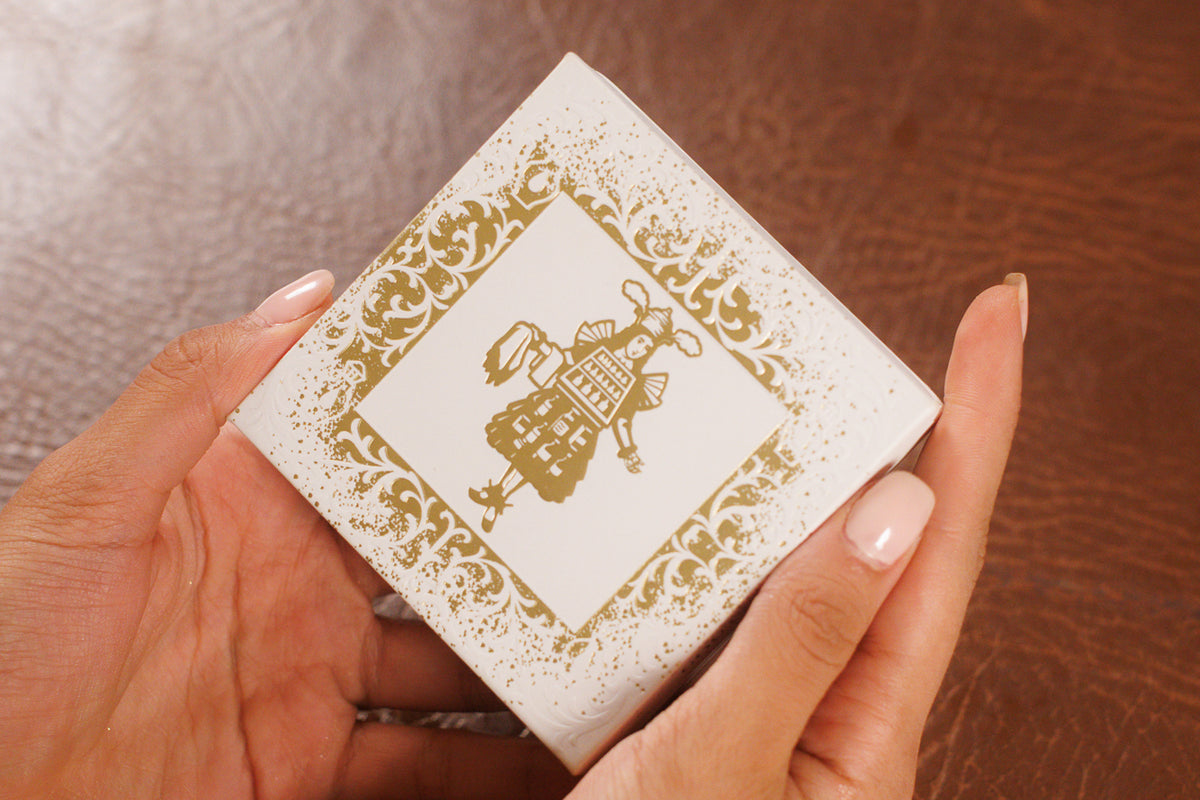

EVERY DECANT
From the original bottle to your door
We buy the original flacon at full retail price, direct from the house.
A medical grade Socorex syringe takes the exact millilitres straight from the flacon.
Packed into the hot foiled box and handed to DHL, every duty already paid. How a decant is made
More from Creed
You may also like