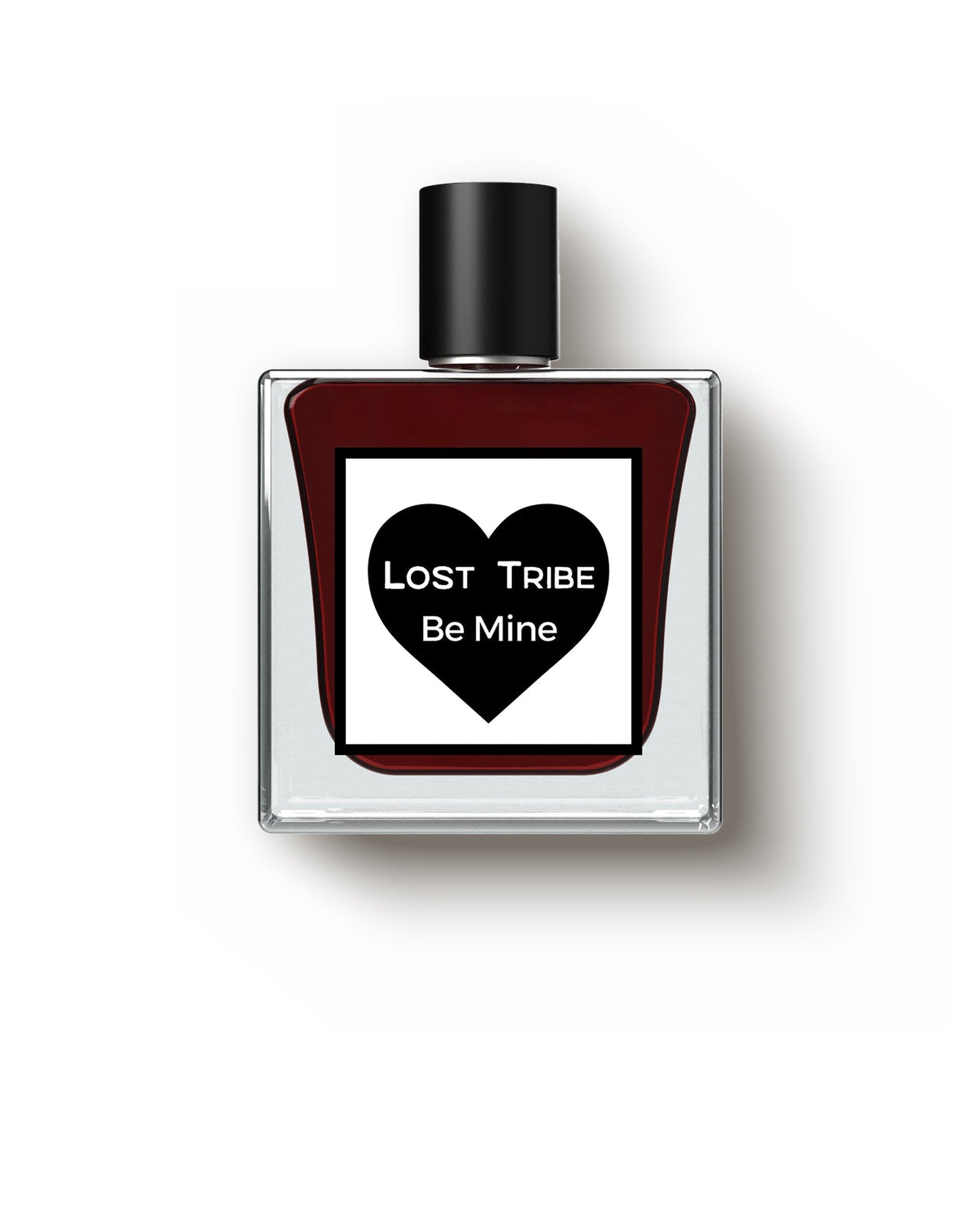
Lost Tribe
Be Mine
The Story
Be Mine is a Valentine's release Lost Tribe published to its own store in February 2026, paired with a sibling called St Valentine. The New York house opens it on black currant and rose otto over two ouds, and each 15ml bottle carries more than a gram of that oud blend.


Woody
Dry grain of cut timber
The smell of cedar shavings, sandalwood, and dry vetiver roots, a sanded, resinous warmth with a faint pencil-box rasp. It feels grounded and composed, the quiet backbone that makes a scent read as serious and lasting.


Oud
What a tree makes when it is wounded
A dense, resinous wood that smells warm and slightly medicinal, with a leathery, animal-tinged smokiness and a sweet, almost barnyard funk underneath. It feels ancient and brooding, wrapping the skin in something thick and quietly powerful.


Iris
cool powder over damp earth
A cool, silvery powderiness with a buttery, slightly carroty rootiness and a whisper of damp soil. It feels elegant and restrained, almost melancholic, like fine face powder and suede laid over something quietly earthy.


Rose
Velvet petals, honey and thorn
Dewy and fruity on top, then a jammy, honeyed heart with a green peppery bite underneath. Here the rose is largely the real flower, rose otto or absolute, rather than an accord built from aroma-chemicals.


Musky
Warm breath of bare skin
The softly animalic warmth of natural musk, whether deer musk or a plant musk such as ambrette seed: warm skin and soft fur, powdery, intimate and faintly sweet. It hums quietly underneath a fragrance, a second skin that only registers when someone is already standing close enough to catch it.


Fruity
Peach skin, not lemon peel
Peach, pear, apple, berry: this is sweetness in the flesh rather than the rind, dewy and nectar-heavy where citrus is sharp and thin. It plays young and slightly greedy, the sort of ripeness you can almost feel running down a wrist.


Black Currant
Tart cassis with a wild, animalic snarl
What it is
Perfumery mostly ignores the berry. The material that matters is cassis bud absolute, extracted from the sticky, resinous leaf buds of the shrub, and its own trace sulphur compounds carry the fruit's tart snap.
How it smells
Sharp, tart, unmistakably purple, then something feral cuts across it: a green, leafy, faintly sweaty pungency that sits closer to cat than to fruit. Ripe berry with a growl behind it.
In perfumery
A top note with claws. It cuts through sweetness, puts an edge on rose, and gives a fruity-floral something to push against. It still jolts open modern fruity compositions.
Good to know
The catty edge comes from thiols your nose can catch at parts per trillion, the same family behind tomcat spray and a glass of Sauvignon Blanc. Perfumers dose cassis in drops, not millilitres.


Apple
An apple with no apple in it
What it is
Squeeze an apple and you get juice, not perfume. There is no apple oil, no absolute, nothing to distil, so every apple note is assembled: fruity esters in most hands, Roman chamomile and davana in all-botanical ones.
How it smells
Cold, tart and green, the snap of skin breaking under a bite, with something candied behind it. The ester build is bright and holds one clear shape. The chamomile build is hazier, honeyed, more cider than orchard.
In perfumery
A trace lifts fruity florals, chypres, aquatics and gourmands, beside rose, musk and light woods. With esters the green and the candy can be dialled precisely. With botanicals the whole accord is rebalanced by hand.
Good to know
Neither route is the fruit, so the honest difference is stability rather than authenticity. Ester-built apple survives soap, heat and detergent and repeats identically. The botanical one is costly, shifts with the harvest, speaks quietly, and stays rare.


Georgian Rose Otto
The sunlit, honey-clear damask of the Caucasus
What it is
Damask rose grown in the valleys of the Caucasus and distilled rather than solvent-extracted, which is the whole difference. Otto keeps the crystalline top of the flower; absolute keeps the dark jammy depth. Georgia's comes out unusually clear.
How it smells
Bright, warm and lit from inside: a clear honeyed damask with musky powder under it and a green, almost geranium lift at the top. In the drydown you get the whole shrub, leaves and stems included.
In perfumery
Perfumers use it to put daylight into a dark blend: against oud or musk it lifts rather than thickens. A few drops read clean and floral, while a heavier hand turns it velvety and powdery without clouding it.
Good to know
A true otto congeals in a cool room, around 20C, and melts again in your hand, which is one way to tell it has not been stretched. Hundreds of pounds of blossoms go into a single ounce.


Geranium
A rose with green stems and crushed mint
What it is
The perfumer's geranium is not a geranium at all. It is a pelargonium, and the rose smell sits in the leaves and stems, which is the part that goes into the still.
How it smells
Crush a leaf and you get rose, but rose with the stem still attached: green, crisp, a little peppery, cooled by something minty. Lemon and a powdery sweetness thread through it.
In perfumery
It works the heart, bridging florals and fougeres, and its herbal edge is the reason so much of it ends up in scents marketed to men. Rose, mint, clove, bergamot and vetiver all take it well.
Good to know
Geranium and rose share citronellol, which is why geranium can stand in for part of a rose accord far more affordably. Reunion's Bourbon crop, once the benchmark, has thinned as growing shifted to Egypt and China.


Lychee Rose Musk
The house's own rose, steeped for months in deer musk
What it is
A maceration Lost Tribe makes in house: its lychee rose left to steep in real deer musk. The rose is macerated with deer musk for over eight months.
How it smells
A quick, bright burst of lychee, then rose, full and rounded rather than powdery, with the musk rising beneath it and drawing the flower close to skin. In Be Mine it adds a soft, dewy shimmer beside the crisp, tart edge of black currant and apple.
In perfumery
Maceration is the slow way to join two materials: one rests in the other for months before it goes into a perfume. Here the result sits among the top notes, where the musk gives the fruit and the rose ottos a warm, skin-close floor from the first minutes.
Good to know
This is real deer musk rather than a synthetic musk under a fruity name. The rose brings openness and the musk brings weight and intimacy, so the flower seems to bloom against skin rather than in air.


Red Rose Otto
Three thousand kilos of blossoms, one kilo of oil
What it is
Damask rose, picked from before sunrise into mid-morning and steam-distilled within hours of leaving the field. Bulgaria's Rose Valley and Isparta in Turkey grow most of what the trade calls otto.
How it smells
Fresh and dewy at first, green and lemony with a spice edge, then deeper into petal sweetness with a waxy, clove-like, tea-like undertone. Brighter, greener and spicier than rose absolute, which holds the honeyed weight distillation leaves behind.
In perfumery
A heart-note cornerstone. It gives florals, chypres and orientals their body and their romance, and it is the rose in Middle Eastern rose-and-oud attars as surely as in the old French chypres.
Good to know
Leave the bottle below about 22 Celsius and part of it solidifies, throwing pale crystalline flakes. That is stearoptene, a near-odourless wax carried over from the petals; warm it in your hand and it goes clear again.


Nootka
Pacific coast wood with grapefruit hidden inside
What it is
Not the Mediterranean cypress, despite the name. It grows in the temperate rainforest of the North Pacific coast, takes its name from Nootka Sound, and yields oil from the wood rather than from fresh needles.
How it smells
Dark pencil wood arrives first, dry and a little bitter, staying at the back of your nose. Then something unexpected lifts off it: a flicker of grapefruit peel. It dries down powdery and resinous.
In perfumery
Where the Mediterranean cypress lifts an opening and leaves, this one sinks. Perfumers keep the dose low and let it hold the base, a dry wood that can carry citrus and cedar in the same breath.
Good to know
A signature grapefruit molecule was found in this wood first. Chemists pulled nootkatone from the heartwood and named it for the tree, then met the same thing soon after in citrus peel.
Cedrat
The ancient knobbly citrus of dry, green light
What it is
Older than almost any citrus in cultivation, and the lemon's ancestor. Cut one open and there is barely any juice, just thick, knobbly, leathery rind, which is exactly where the oil lives. Cold-pressed, it is called cedrat.
How it smells
Lemon, but rounder and less acid, with a velvety weight behind the zest and a dry bitterness at the end. There is a small floral lift in there too. Polished is the word, where lemon is simply sharp.
In perfumery
A top note for colognes and modern citrus accords, brighter and drier than lemon, at home with neroli, petitgrain and green herbs. Under its French name, cedrat, it has a whole genre of fragrances named after it.
Good to know
One variety barely bothers with flesh, splitting instead into a cluster of yellow fingers. Buddha's hand, it is called, and across Asia it is offered in temples and used to scent rooms, and its rind is candied and used as zest.


Gardenia Enf
Creamy white bloom with a mushroom heart
What it is
A glossy evergreen of the coffee family, out of China and Japan, carrying waxy white flowers that will not give up their scent to a still. Enfleurage catches it instead: fresh blossoms are laid again and again on fat or oil, which slowly soaks up their perfume.
How it smells
Lush and creamy, jasmine sweetness laid over tuberose richness, opening with a green, almost buttery freshness. At the core sits the strange part: a mushroom-and-coconut facet, fleshy and faintly savory, that keeps the sweetness from turning candied.
In perfumery
Perfumers use it in the heart, where it brings velvety body to white-floral and tropical compositions. It pairs with tuberose, ylang-ylang, jasmine and coconut, and stars in soliflores built entirely around the bloom.
Good to know
A true gardenia absolute barely exists commercially: the flower yields too little to extract economically, so nearly every gardenia note is a reconstruction. An enfleurage is the rare exception, the scent of real blossoms caught by hand.

Jasmine Sambac
Tea-green jasmine that opens after dark
What it is
The flowers open after dark, which is when they smell strongest, so pickers take them as buds in the early morning, before they unfurl. Solvent extraction gives a waxy concrete, and washing that with alcohol gives the absolute.
How it smells
Greener and more tea-like than the grandiflorum kind, and much less fruity. It starts crisp and a little waxy, almost banana-tinged, then warms into indolic sweetness. That indole is the animal in it: heady up close, still luminous.
In perfumery
A heart note that gives white-floral bouquets their body and their lift. It works with rose, tuberose, sandalwood and green tea, rounds off sharp citrus, and some night-blooming soliflores are built on almost nothing else.
Good to know
This is sampaguita, the national flower of the Philippines, strung into garlands and used to scent Chinese tea. Tiny blooms picked by hand every morning across a long season put the absolute among the costliest florals.


Osmanthus
Apricot and soft leather in a tiny gold flower
What it is
Tiny orange-gold flowers that China has scented its tea and its wine with for centuries. They are gathered by hand, drawn into a waxy concrete with solvent, then washed down to the absolute perfumers buy.
How it smells
Apricot first, ripe and almost jammy, then peach and black tea. Give it a minute and suede appears, soft and slightly smoky, the way a well-worn glove smells. It dries toward raisin rather than sugar.
In perfumery
A heart note that sits exactly between fruit, flower and leather, which is why it can sweeten a composition without any sugar in it. Black tea, rose and apricot accords go with it naturally; so does actual leather.
Good to know
It takes about a tonne of those minuscule flowers to make one kilo of absolute. The tree belongs to the harvest moon and to love there, a lot of meaning for a flower this small.

Rosewood
Creamy rose-wood with a peachy glow
What it is
Perfumery's rosewood is bois de rose, an Amazonian laurel whose freshly cut timber smells of roses. It is not the palisander of furniture and guitar backs, which is a different tree entirely.
How it smells
Sweet, rosy and creamy rather than dry, with a peachy blush and a faint camphor lift on the opening. Lighter than sandalwood, more floral than cedar. The drydown is warm, balsamic and rounded.
In perfumery
A heart note that sits between the florals and the woods, brightening both. Rose, jasmine, vetiver and citrus all take to it, and many of the great aldehydic florals leaned on Brazilian rosewood oil.
Good to know
Almost no plant carries more linalool: the oil ran up to ninety percent of it, and cutting for that molecule stripped out the wild stands. The sustainable route now is oil distilled from leaves and twigs pruned off planted trees, which are left standing.

Jadewood
Dry cypress with a warm-milk softness
What it is
There is no jade wood tree. The name belongs to the trade, and the oil behind it is steam distilled from white cypress pine, a conifer scattered across the dry Australian interior.
How it smells
Dry wood with an unexpected softness over it, lactonic, nearer warm milk than fresh sap. Balsamic underneath, barely sweet. Blue cypress is its closest relative on the shelf, with sandalwood and massoia bark somewhere behind.
In perfumery
From the base it works as a fixative, holding a composition together without announcing itself. Incense and smoke accords suit it, so does a place beside agarwood. It often stands in for blue cypress at lower cost.
Good to know
Australians know this tree as timber, not perfume. Its heartwood shrugs off termites, an effect traced to sesquiterpenes in the wood, and it gets milled into flooring and fence posts right across the country.

Rose Bulgarian
The fresh dawn breath of the Rose Valley
What it is
Damask roses around Kazanlak, in the valley Bulgaria named after them. Three to four tonnes of blossoms go into the still for a single kilo of rose otto. Solvent extraction gives a deep red absolute.
How it smells
Dewy and lemon-bright on top, then honey, then a velvet spice underneath. It is the clearer of the two great damask roses. Give it time and a clove warmth surfaces, with something waxy and close to black tea.
In perfumery
Transparency is what perfumers want from it: it holds its shape next to patchouli, oud, sandalwood or something fruity like lychee, and most of the great rose fragrances lean on it.
Good to know
The harvest is three or four weeks, mid-May into June, and that is the whole year. Pickers are out before sunrise because the day's heat drives the oil off. Left somewhere cool, the otto crystallises in the bottle.

Cedarwood EO
Dry pencil shavings and sun-warmed timber
What it is
The cedar in your closet or cedar chest is usually a juniper. Virginia and Texas cedar both are; among the cedars of perfumery, only Atlas and Himalayan are true Cedrus. The oil is steam-distilled from heartwood chips and sawmill dust.
How it smells
Freshly sharpened pencils, and the inside of a cedar chest. Virginia leans pencil-dry and balsamic; Atlas is sweeter, almost honeyed. Both carry a clean, faintly camphor-cool smoke that settles into sappy warmth.
In perfumery
A heart-to-base workhorse: dry structure other materials can lean on. It sits well with vetiver, rose, citrus and incense, and it is the smoke in the drydown of countless modern woody-ambers.
Good to know
Cedar rarely appears alone. Its molecules, reworked in the lab, form the backbone of a great many contemporary woody fragrances, which is why so much of the modern woody shelf smells faintly of a sharpened pencil.


Port Oxford
Ginger-warm wood from a false cypress
What it is
Cedar in name only. Port Orford is a false cypress, no relation to fir, and it grows wild on a single coastal strip about 175 miles long where Oregon meets California.
How it smells
Nothing like a Christmas tree. The wood smells dry and clean, warm the way fresh ginger is warm, with a green herbal snap of fennel underneath and none of fir's sticky balsam sweetness.
In perfumery
Perfumers get it from the wood, steam distilled from sawmill offcuts and stumps rather than needles or twigs. That makes it a base note rather than a green top: cedar's dry structure, lifted by spice.
Good to know
A water mould kills these trees, and it travels in wet soil stuck to tyres, boots and hooves. Forests in its range close roads through the rainy months and wash vehicles down at the gate.


Lavender
Cool herbal blue from a sunlit hillside
What it is
The flowering tops are cut at peak bloom and go straight to the still, the purple spikes giving up a pale oil. Solvent extraction yields a darker absolute instead. Provence and Bulgaria supply most of it.
How it smells
Sharp and green at first, almost minty, with a cool camphor lift over soft floral sweetness. The dry-down warms into hay, faint vanilla and a powdery calm. True lavender is rounder and sweeter than the lavandin hybrid.
In perfumery
Set it against oakmoss, coumarin and tonka and you have a fougere, the barbershop structure behind countless aromatic masculines. Lavender runs from the top into the heart, cooling bright florals and softening citrus colognes.
Good to know
Those Provence fields the tourists photograph are mostly lavandin, a sterile hybrid that yields far more oil per hectare. True lavender is retreating uphill: a bacterial disease carried by sap-sucking insects has pushed plantings to cooler altitudes.


Sumatra Oud
Dark, earthy oud from the volcanic west
What it is
Oud distilled on Sumatra, the long western island of the Indonesian arc, chiefly from Aquilaria malaccensis and Aquilaria microcarpa. Its terroir is lowland rainforest on volcanic soil under constant humidity, and that ground shows in the oil. Sumatra is one of several distinct Indonesian oud countries, alongside Kalimantan on Borneo and Papua in the far east, and it is the one most often mistaken for the others: an oil labelled simply Indonesian is usually Kalimantan, and reads nothing like this.
How it smells
Deeper and more grounded than the airy Bornean style, opening damp and animalic with wet forest floor, humus and a fermented edge rather than camphor. Beneath that sits a dark resinous woodiness, quietly sweet instead of fruity, with a faintly medicinal thread running through. It is the earthiest of the archipelago oils and the slowest to lift off the skin.
In perfumery
Used for weight and soil at the base of a composition, where the vaporous Kalimantan oils give lift instead. Its damp, animalic depth anchors amber, rose and resin without the fecal charge of a Hindi oil, which makes it a favourite of natural perfumers who want oud to read as forest rather than as barnyard. A little carries a long way.
Good to know
Indonesia is not one oud. The camphorous blue character usually credited to the country belongs to Kalimantan on Borneo; Sumatran oil runs darker and earthier, and Papuan oil greener and more herbal. Yields are tiny and distillation runs for days, so genuine single-origin Sumatran oud is made in small artisanal batches.

Natuna Oud
Sea-air sweetness from Indonesia's far north
What it is
Oud from the Natuna Islands, a small archipelago in the South China Sea between the Malay peninsula and Borneo, and the northernmost reach of Indonesia's Riau Islands. It is an island oud in the literal sense, distilled from trees grown within reach of salt air on a scattering of land far from the great rainforest sources, and the supply is correspondingly small.
How it smells
It opens faintly fruity and saline, with the sea genuinely in it, lifted by a soft white-floral tone often likened to jasmine. The middle stays bright and clean rather than fermented, and the drydown turns quietly vanillic and incense-like over pale wood. Among Indonesian oils it is one of the most approachable and least animalic.
In perfumery
Valued as a lifting oud, used where a composition needs agarwood's structure without its shadow. Its saline brightness pairs naturally with citrus, marine and white-floral accords and keeps ambers from turning heavy. Because the character is delicate rather than dominant, it is usually placed alongside a darker oud that supplies the depth beneath it.
Good to know
Natuna is Indonesian territory but sits closer to Borneo and the Malay peninsula than to Java, and the oil reflects that in-between position: neither the camphorous Kalimantan style nor the earthy Sumatran one. Island supply is limited and the name is sometimes used loosely, so provenance matters more here than with the mainland origins.
Black Meat Santal
The oldest, darkest grade of Indian sandalwood
What it is
Black meat is the trade's name for the oldest and highest grade of Santalum album: the dark, oil-saturated core wood and root of trees left standing for many decades, where the heartwood has darkened from pale gold to deep brown with accumulated santalol. Distillers regard the root as the finest part of the tree, and this is the material that built the reputation of Mysore, the Karnataka region it came from.
How it smells
Everything the standard grade does, but slower, thicker and further down. The creamy milky sweetness is still there and so is the sour-buttery edge, but they sit under a dense resinous darkness with a leathered, faintly smoky depth that young heartwood simply does not have. It opens quiet and unfolds for hours.
In perfumery
A base material used in small quantity for gravity and tenacity rather than for the recognisable sandalwood note. It fixes and rounds everything above it, and it is the traditional partner for oud, rose and aged musks in Arabian blending, where the pale plantation grades sound thin by comparison.
Good to know
Grade language in sandalwood describes the wood, not the seller's opinion: black meat means old dark core wood and root, and no plantation tree is old enough to yield it. Indian sandalwood came close to collapse from over-harvesting, so genuine old-growth material now moves almost entirely as legacy stock.


Kerala 1953 Santal
A vintage Indian sandalwood oil, aged in the bottle
What it is
An aged Santalum album oil from Kerala, on the south-western coast of India next to Karnataka, carrying a 1953 date. Sandalwood is one of the few naturals that genuinely improves in glass, and an oil held this long is a different material from a fresh distillation of the same wood.
How it smells
Rounder and quieter than any new oil. Decades in the bottle have softened the sour-buttery top edge entirely, leaving a smooth milky sweetness, a warm rosy-balsamic middle and a dry, almost powdery woodiness underneath. There is no sharpness anywhere in it; it reads as skin more than as timber.
In perfumery
Used the way a vintage material is always used, sparingly and as the centre of a composition rather than a supporting note. Its softness makes it an ideal bed for rose, violet and jasmine, and it will fix an accord without contributing any edge of its own.
Good to know
A date on a sandalwood oil is a claim about storage as much as about distillation, and only the seller's record stands behind it. Kerala and Karnataka share the same species and the same protected status; what separates a bottle like this from a modern one is the age of the tree it came from and the decades since.


Sweet Mongolian Musk
Chocolate, dust and a warm animal hum
What it is
Deer musk from the cold end of its range, the forested mountains where Mongolia meets southern Siberia. Perfumers grade it against Tonkin, the prized Tibetan and Chinese grade every other musk is measured by.
How it smells
Sweeter than expected, almost chocolatey, with earth and resin underneath and a dry sandy warmth close to ambergris. Muddier than the floral prettiness of Tonkin, softer than the feral Siberian grade. It sits on skin, not above it.
In perfumery
A trace holds everything above it in place for hours and gives a blend its brooding, skin-close weight. All-natural houses set it against oud, where its earthy backbone meets the smoke halfway.
Good to know
Most musk on today's note lists is synthetic; a named deer musk like this one is the real material those molecules were made to echo. Tonkin stays the benchmark; taiga grades read rougher and more barnyard.


Iris 80% Irones
Cold powdered violet, orris with the fat removed
What it is
Nothing here came from a cow. Orris butter sets solid like one, but it is iris root, and most of its weight is odorless fat. Wash that away and eighty percent of what is left is irones.
How it smells
Cold and dry, closer to face powder and scrubbed carrot than to any flower, with violets hiding behind suede. Nothing sweet about it. One drop at this concentration turns a whole formula silver.
In perfumery
Perfumers work it in traces and it still carries. Ordinary orris butter runs eight to fifteen percent irones, so this holds five to ten times as much. It gives rose and sandalwood a cool suede spine.
Good to know
Dig the rhizome and it smells green and acrid, nothing like this. The irones are not there yet. They form over three to five years of drying while odorless compounds in the root slowly oxidize.

Costus Root
Warm hair and skin, animalic and unsettling
What it is
A Himalayan thistle whose roots, kuth in India, are dried, then steam-distilled or solvent-extracted into a thick, dark oil that smells almost nothing like a plant.
How it smells
Unwashed hair, scalp, worn wool, with a greasy earthiness under it. Some people find a dry orris-violet facet beneath the funk; others say wet dog or old leather. Dense, slow to fade, and faintly sweet at the end.
In perfumery
In the base it made a chypre or a leather smell like it had already been worn by someone. Mainstream perfumery now reaches for reconstructions such as Costus Oliffac to get the same hair-like signature; natural perfumers still use the real root oil, in tiny amounts.
Good to know
Mainstream perfumery gave it up when the natural oil was judged too strong a skin sensitiser to use. The plant is critically endangered in any case, overharvested for the very roots that made it interesting.


Valspice
Clove and bonfire smoke in a single note
What it is
The name promises a spice rack, and what arrives is spice seen through smoke. Valspice brings clove-like warmth, a breath of wood fire and a soft vanillic sweetness, a smoky accent that reads more campfire than kitchen.
How it smells
Expect smoke first. Cold campfire, smoked ham, then clove and a sweet vanillic hum underneath, with leather and a faint medicinal bite at the edges. Warm, but nothing like nutmeg's dry powder.
In perfumery
Its smoke and spice make leather smell tanned, tobacco smell lit and coffee smell roasted rather than merely bitter. A drop also roughens up a white floral. Overdo it and everything reads of disinfectant.
Good to know
Burning wood tears lignin apart, and smoky, clove-scented phenols fly off: that is the smell at the core of this note. The same smell sits in a charred bourbon barrel, in peat-dried Islay malt, in a smokehouse.

Cedar Atlas
Dry mountain wood, sweet balsam and warm resin
What it is
A true cedar, and a mountain one: it comes from the high Atlas ranges of Morocco and Algeria. The oil is steam-distilled from chips, offcuts and sawdust, largely what the lumber trade has already finished with.
How it smells
Warm and dry with a sweet balsamic core, lifted by something camphorous and faintly smoky over an earthy base. Sweeter and more resinous than the dry pencil-shaving bite of Virginian cedar. It dries down clean and tenacious.
In perfumery
A workhorse in the base, giving structure, dryness and something for the rest to hold onto. It sits under rose, vetiver, patchouli, oakmoss and labdanum, and it holds up chypre and woody oriental builds from underneath.
Good to know
Atlas cedar is endangered in its own range now, and the forests are shrinking. It is the rare case where the responsible material is the leftover one: sawmill waste, not a standing tree.
Fragrance Character
The opening reads fruity and rosy on paper, black currant and apple over two rose ottos, though several wearers report registering almost none of that fruit. What follows is dry: cedar, rosewood and a powdery, rooty iris, then oud, two santals and costus root. Reports describe a linear wear with steady projection.


Longevity
how long it stays on skin
The hourglass reads wear time: how many hours the fragrance keeps speaking before it fades. A bar that barely leaves the start means a few fleeting hours. One that runs the full length carries from morning into evening. Treat it as typical, not promised. Oily skin holds scent far longer than dry.


Sillage
the size of its scent trail
Sillage is French for a ship's wake, and that is exactly what this measures: how much of the scent reaches the room instead of staying on you. Low is a whisper only close friends catch. Enormous fills the room, then keeps filling it after you leave.


Experimental
Built to provoke, not to please
Some perfumes are made to be liked. These are made to be argued about: inky tar, hot rubber, fruit on the turn, metal and fur where you expected flowers. The coin glows for a scent that provokes and dims for one that plays it safe, which is sometimes the point.


Office
Polished, and never louder than the room
Scent is manners in a shared room. At this range it should reach the person across the desk and stop there: tidy citrus, soft musk, pale woods, all of it reading competent and considerate. A glowing coin means nobody has to mention it. A dim one means it travels.


Evening
After dark, when it deepens
Dinner, drinks, the night that runs long. Low light is where ambers, resins and smoky woods stop being polite, and where a plush floral finally blooms. A glowing coin means it is waiting for exactly this hour. A dim one means it did its best work in daylight.


Romantic
Close enough to be felt
A fragrance can hum against skin instead of announcing itself across a table. That is the register here: creamy florals, vanilla, soft musk, a thread of spice, warm enough to make someone lean in. The coin glows when a scent sets that mood and dims when it is more practical than seductive.


Formal
Quiet authority in a dressed-up room
A wedding, a ceremony, a room where everyone has thought about their shoes. What works here is structure, not volume: smooth woods, disciplined florals, soft leather. A glowing coin means it holds its posture all evening. A dim one means it is too casual for the room.


Casual
Easy comfort for unhurried days
Errands, coffee, a slow Saturday with nowhere to be. Nothing here has to impress anyone, so the fit is soft and easy: fresh citrus, light woods, a little warmth off the skin. A glowing coin says yes to all that. A dim one means the fragrance is asking for a bigger night.


Day to Night
where its mood naturally falls
A bar running from sun to moon, reading the hour the fragrance was made for. The more of it that stays gold, the more the scent belongs to daylight and open air. The further the blue reaches back toward the sun, the deeper and warmer it turns: evening, candlelight, low rooms.


Winter
Warmth that carries through cold air
Cold air mutes a fragrance and slows it down, which is why winter belongs to the dense and the warm: resin, smoke, vanilla, leather, ambered spice. The bar reads how well this one pushes back, glowing against the chill instead of thinning out in it.


Spring
Fresh blooms in mild, rising warmth
Mild, humid air lifts a light composition, so the season belongs to dewy florals, green stems, soft powder and citrus you can see through. Alive rather than heavy. The further the green runs along the bar, the more comfortably this one wears in that weather.


Summer
Bright and airy in real heat
Heat does the projecting for you, which is why the wrong perfume turns unbearable by noon. What survives is cool and breathable: sharp citrus, salt air, aromatic herbs, water. Things that refresh instead of cloy. A short bar here means save it for cooler months.


Fall
Spiced warmth for cooling days
As the air cools, the rich materials stop smothering and start reading clearly: dry woods, warm spice, tobacco, amber, fruit gone golden. It is the season perfume turns contemplative. The bar fills according to how naturally this one settles into crisp, cooling days.
Best Worn
Best in cold weather and after the light goes. It suits anyone who wants oud and iris rather than sweetness, and it reads more austere than the name suggests.
Choose options
The Vibe


The Nose
Mathew Schmuelian
Founder and perfumer
Founder and perfumer of Lost Tribe, who moved from collecting artisanal naturals to macerating his own musks in 2022; his first release was Lost Tribe Hope You Like It. He composed Lost Tribe Sultry Sambac, Lost Tribe Smoky Bear and Lost Tribe Prince of Persia.
More by this noseNeon PalmsVanilla Waves V2 Extra MuskLost Lotus
The Maison

Small tribe, real musk, no compromises, poured while stock of the originals lasts.
Lost Tribe makes fragrance that feels lived in and loud, the kind that arrives before you do and lingers after you leave. There is a maximalist streak running through the whole house, from sun drunk tropical fruit to resin thick vanilla to rare oud built on aged Kinam.
- Known for
- Maximalist naturals, aged Kinam

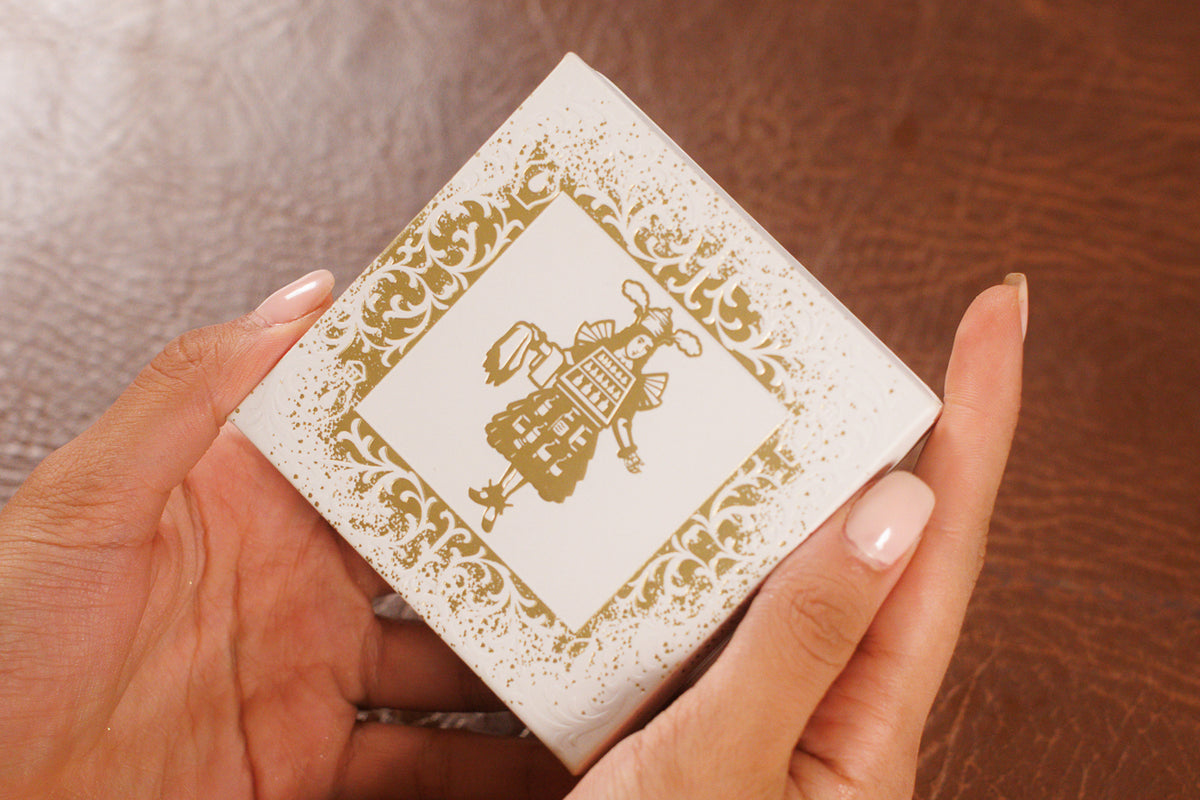
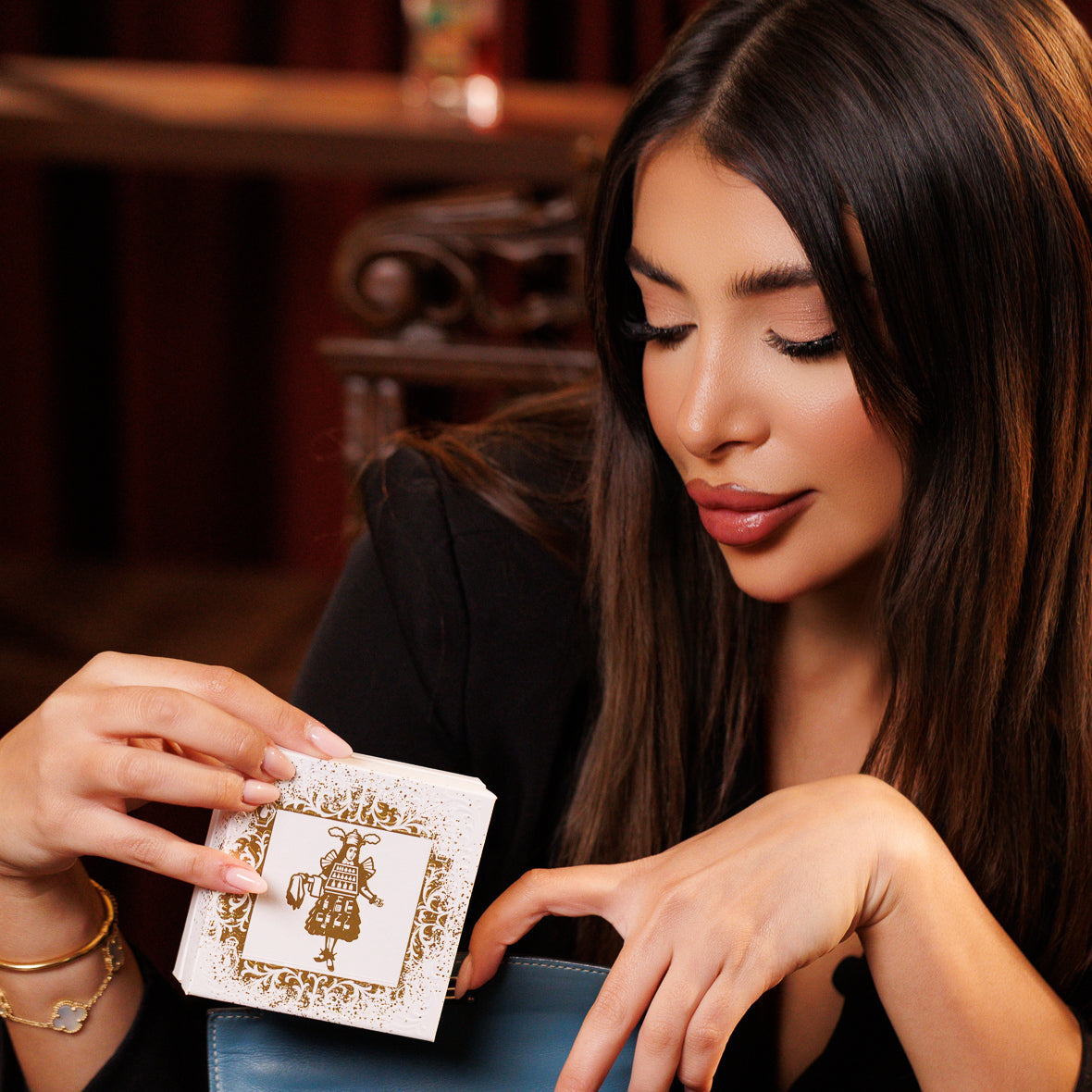
EVERY DECANT
From the original bottle to your door
We buy the original flacon at full retail price, direct from the house.
A medical grade Socorex syringe takes the exact millilitres straight from the flacon.
Packed into the hot foiled box and handed to DHL, every duty already paid. How a decant is made
More from Lost Tribe
You may also like