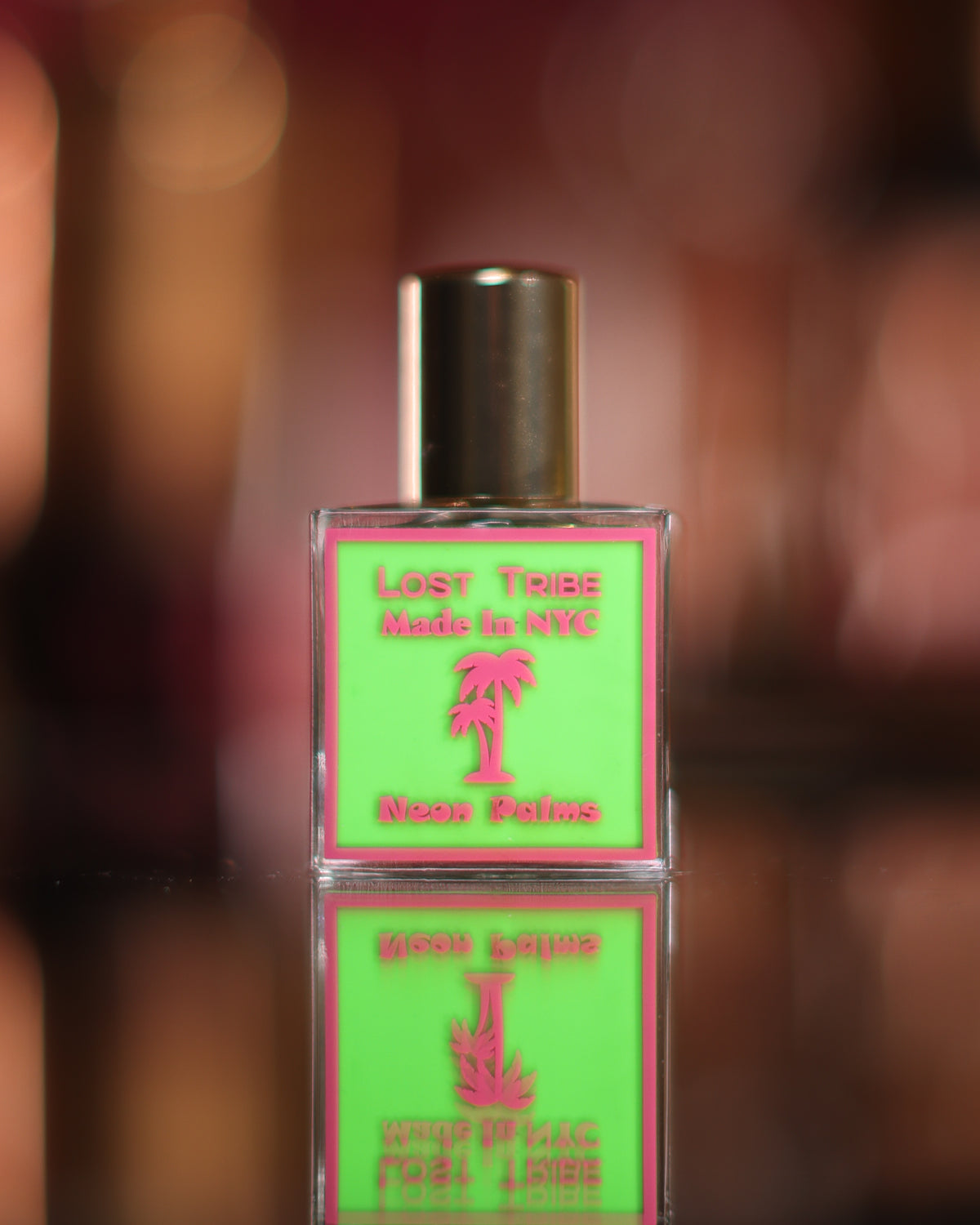
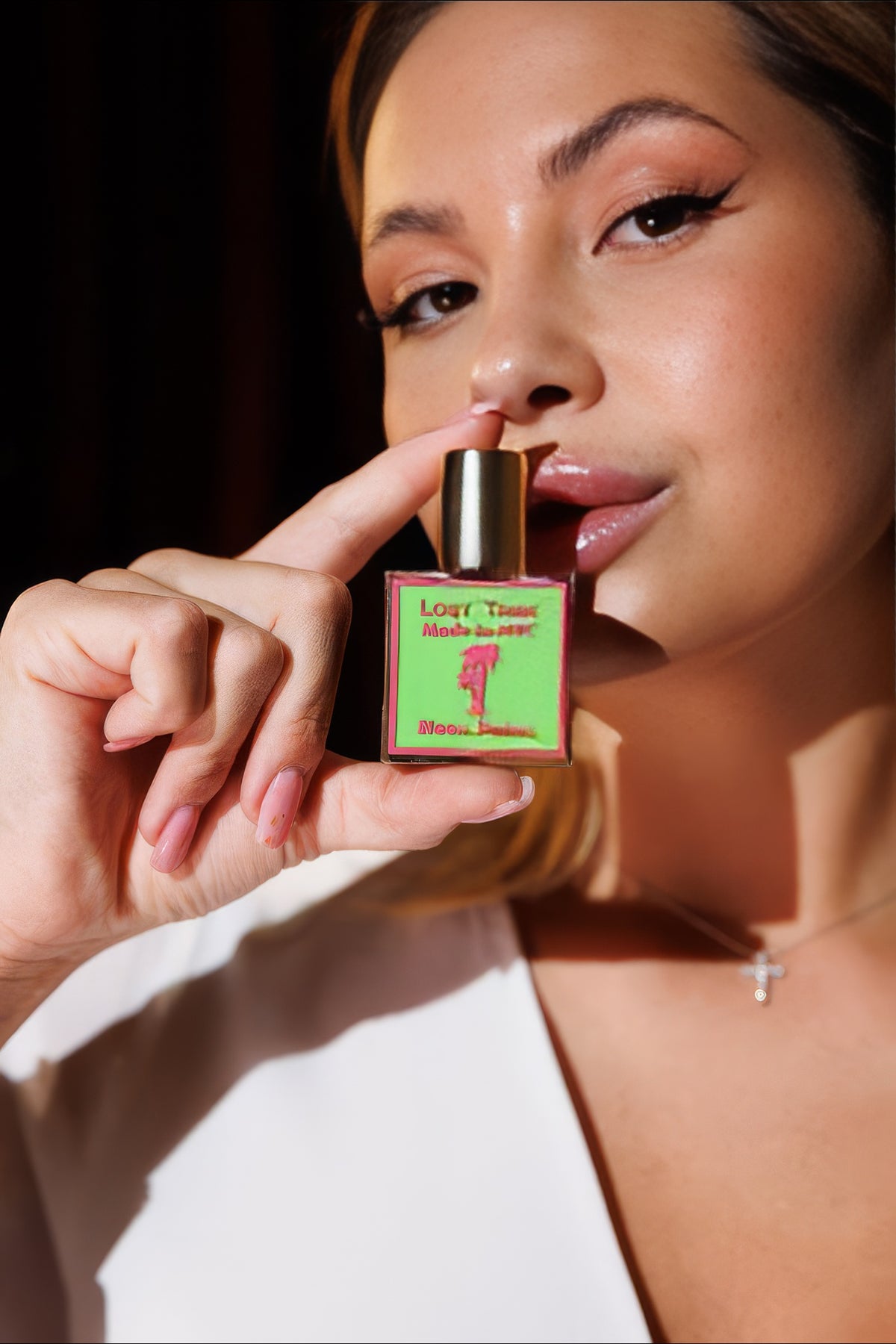
Lost Tribe
Neon Palms
The Story
Neon Palms sets tropical fruit on a chypre base, which is a formal old structure to hand a scent this bright, and it is composed entirely in naturals. Working without synthetics rules out the fixatives that normally hold fruit in place, so the composition has to earn its shape from the materials themselves.


Fruity
Peach skin, not lemon peel
Peach, pear, apple, berry: this is sweetness in the flesh rather than the rind, dewy and nectar-heavy where citrus is sharp and thin. It plays young and slightly greedy, the sort of ripeness you can almost feel running down a wrist.


Floral
A whole garden, never one flower
Not one flower but the impression of many, usually rose, jasmine and orange blossom leaning on each other until no single one is recognizable. Sweet, dewy, faintly powdery, with nectar underneath. It is what people mean when a perfume smells like flowers and they cannot say which.


Sweet
Warm sugar you cannot quite name
Caramel, honey, spun sugar: sweetness that hovers between all three and never settles on one. This is the gourmand pull, the thing that makes someone lean in closer than they meant to, warm and soft and a half step short of edible.


Pineapple
Tropical sweetness with no fruit behind it
What it is
Squeeze a pineapple, distil it, and you get nothing a perfumer can use. The note is always a construction: a synthetic route led by allyl caproate, or a botanical one assembled from ylang-ylang, balsams, citrus and isolates.
How it smells
The ester version is hard-candy bright and sits exactly where it is put. The botanical one is warmer and rounder, more flesh than candy, green-tart at the edge, and it blooms and fades instead of holding still.
In perfumery
A trace lifts an opening; a heavy hand turns the whole thing into fruit punch. It sits easily with coconut, citrus, jasmine and warm resins, and the botanical version goes jammy the moment it is overdosed.
Good to know
Stability decides it. The synthetic behaves identically every time, so it turns up wherever a tropical accent is wanted, while the botanical costs more, shifts from batch to batch, and carries less distance.


Raspberry Accord
A berry conjured, since none can be extracted
What it is
The fruit gives up nothing: no oil, no absolute. The note is always built, from raspberry ketone with beta-ionone for a violet edge and furaneol for cooked sweetness, or from boronia absolute, davana, rose and violet leaf.
How it smells
Jammy and ripe, sweeter than it is sharp, with a powdery floral shadow that surfaces as it dries. The lab version is brighter, a little candied, and holds its shape. The boronia route runs warmer, greener, wilder.
In perfumery
It lives in fruity-florals and gourmands, next to rose, violet and vanilla. Raspberry ketone is unusual among fruit materials for its tenacity: it is still there in the dry-down, long after pear and peach have evaporated.
Good to know
Raspberry leaf absolute exists, but it reads green, leathery and balsamic with a jammy sweetness, closer to mulled wine than fresh fruit. Boronia smells of raspberry jam and tea, and is scarce enough that botanical raspberry stays rare.


Bergamot
Sparkling citrus light with a bitter edge
What it is
Nobody eats bergamot. It is sour, seedy and disappointing, and almost the whole world's supply grows on one strip of Calabrian coast, farmed purely for the oil pressed cold from its green rind.
How it smells
Zest and green light in the first second, then something rounder than lemon: a floral, tea-like smoothness sitting on a faintly bitter warmth. It burns off fast. What stays behind is a quiet, slightly spiced hum.
In perfumery
It defines eau de cologne, and sits on top of nearly every fougère alongside lavender and oakmoss. Perfumers want the first bright second it gives, and the oil is also what makes Earl Grey smell like Earl Grey.
Good to know
The thing that makes it sparkle can also burn. Bergamot carries bergapten, which leaves skin hypersensitive to sunlight, so perfumers either keep the dose low or reach for a grade with the molecule stripped out.


Cedrat
The ancient knobbly citrus of dry, green light
What it is
Older than almost any citrus in cultivation, and the lemon's ancestor. Cut one open and there is barely any juice, just thick, knobbly, leathery rind, which is exactly where the oil lives. Cold-pressed, it is called cedrat.
How it smells
Lemon, but rounder and less acid, with a velvety weight behind the zest and a dry bitterness at the end. There is a small floral lift in there too. Polished is the word, where lemon is simply sharp.
In perfumery
A top note for colognes and modern citrus accords, brighter and drier than lemon, at home with neroli, petitgrain and green herbs. Under its French name, cedrat, it has a whole genre of fragrances named after it.
Good to know
One variety barely bothers with flesh, splitting instead into a cluster of yellow fingers. Buddha's hand, it is called, and across Asia it is offered in temples and used to scent rooms, and its rind is candied and used as zest.


Sweet Orange
Sunlit zest squeezed straight from the peel
What it is
The oil is pressed cold out of the peel. Most of the world's supply is a side effect of breakfast: the juice industry squeezes the fruit, and the discarded rind is what the perfumer wants.
How it smells
Juicy and immediately recognisable: ripe orange flesh with a sherbet fizz and a green bitterness hiding behind it. It arrives round and sunny and does not stay long, leaving a soft waxy sweetness rather than lemon's sharp tang.
In perfumery
A top note with the edibility of the fruit itself, used to round off citruses that would otherwise cut. It opens eaux de cologne, and sits happily beside neroli, clove, cinnamon and vanilla when a gourmand needs lifting.
Good to know
Bergamot burns skin in sunlight. Sweet orange, pressed from the same kind of rind, carries almost none of that molecule, so a sunny day is no risk. It is also one of the least expensive naturals there is.


Red Rose Otto
Three thousand kilos of blossoms, one kilo of oil
What it is
Damask rose, picked from before sunrise into mid-morning and steam-distilled within hours of leaving the field. Bulgaria's Rose Valley and Isparta in Turkey grow most of what the trade calls otto.
How it smells
Fresh and dewy at first, green and lemony with a spice edge, then deeper into petal sweetness with a waxy, clove-like, tea-like undertone. Brighter, greener and spicier than rose absolute, which holds the honeyed weight distillation leaves behind.
In perfumery
A heart-note cornerstone. It gives florals, chypres and orientals their body and their romance, and it is the rose in Middle Eastern rose-and-oud attars as surely as in the old French chypres.
Good to know
Leave the bottle below about 22 Celsius and part of it solidifies, throwing pale crystalline flakes. That is stearoptene, a near-odourless wax carried over from the petals; warm it in your hand and it goes clear again.


Lavender
Cool herbal blue from a sunlit hillside
What it is
The flowering tops are cut at peak bloom and go straight to the still, the purple spikes giving up a pale oil. Solvent extraction yields a darker absolute instead. Provence and Bulgaria supply most of it.
How it smells
Sharp and green at first, almost minty, with a cool camphor lift over soft floral sweetness. The dry-down warms into hay, faint vanilla and a powdery calm. True lavender is rounder and sweeter than the lavandin hybrid.
In perfumery
Set it against oakmoss, coumarin and tonka and you have a fougere, the barbershop structure behind countless aromatic masculines. Lavender runs from the top into the heart, cooling bright florals and softening citrus colognes.
Good to know
Those Provence fields the tourists photograph are mostly lavandin, a sterile hybrid that yields far more oil per hectare. True lavender is retreating uphill: a bacterial disease carried by sap-sucking insects has pushed plantings to cooler altitudes.


Clary Sage
Herbal ambery haze with a wine-like lift
What it is
Cut in flower, this tall biennial of the mint family is steam-distilled from its tops and leaves; a heavier concrete and absolute are made too. Nothing about the plant hints at what perfumery does with it.
How it smells
Green and hay-like at first, with a nutty edge and something distinctly winey, as if the herb had been left to ferment. Underneath runs a clean musk. It dries down warm, rounded and faintly tobacco-sweet.
In perfumery
Perfumers place it between top and heart, where it adds roundness and holds the volatile notes down a little longer. It is the quiet backbone of the fougere, sitting beside lavender, bergamot and oakmoss in the barbershop classics.
Good to know
Clary sage gives sclareol, the natural starting point for Ambrox, the synthetic that stands in for ambergris in modern perfumery. A field herb underwrites the amber category. Folk tradition read the name as clear-eye, after an old remedy for sore eyes.


Gardenia
Creamy white bloom with a mushroom heart
What it is
A glossy evergreen of the coffee family, out of China and Japan, carrying waxy white flowers that refuse to give up their oil. So perfumers read the living bloom's air and rebuild it from jasmine, tuberose and aroma-chemicals.
How it smells
Lush and creamy, jasmine sweetness laid over tuberose richness, opening with a green, almost buttery freshness. At the core sits the strange part: a mushroom-and-coconut facet, fleshy and faintly savory, that keeps the sweetness from turning candied.
In perfumery
Perfumers use it in the heart, where it brings velvety body to white-floral and tropical compositions. It pairs with tuberose, ylang-ylang, jasmine and coconut, and stars in soliflores built entirely around the bloom.
Good to know
A true gardenia absolute barely exists commercially: the flower yields too little to extract economically, so nearly every gardenia note is a reconstruction. The gardenia you smell has almost certainly never been near a gardenia.


Neroli
Bittersweet orange blossom distilled into white light
What it is
One flower, two perfumes. Steam the fresh blossoms of the bitter orange and you get neroli; wash them in solvent and you get orange blossom absolute, heavier and sweeter. Both go in the day they are picked.
How it smells
Clean and green with a honeyed metallic shimmer, closer to freshly ironed linen than to anything sugary. It opens cool and citrus-crisp, then softens into waxy petal warmth. A bitter edge keeps it from turning sweet.
In perfumery
Colognes are built on it. It gives the top of a fragrance somewhere to go, opening outward instead of sitting still, with bergamot and petitgrain either side and jasmine and musk underneath.
Good to know
Neroli carries the name of a seventeenth-century princess of Nerola who scented her gloves and her bathwater with it until half of Europe copied her. It still takes about a tonne of hand-picked blossom to make one kilo.


Rose
Dewy sweetness over a green, peppery bite
What it is
Most perfumery rose is one of two: damascena from Bulgaria and Turkey, centifolia from Grasse. Whole blossoms are picked by hand from before sunrise until about ten thirty, then distilled into otto or solvent-extracted into absolute.
How it smells
Fresh, honeyed, green at the edges, with something dewy still on it. Spice and fruit sit underneath, and in the absolute a jammy darkness. Otto opens crisp and bright; absolute is warmer, smokier, closer to skin.
In perfumery
Rose behaves less like one note than a whole palette. It carries a perfume alone or vanishes into a chypre, turns dark against oud and patchouli, goes powdery beside violet, and holds a floral heart together.
Good to know
The two extractions are not the same bargain. Otto takes three to four thousand kilograms of blossoms to yield one kilogram of oil. Absolute, pulled out with solvent, gets there on roughly a seventh of the flowers.


Ylang-ylang
Sun-warmed tropical bloom, banana-cream and jasmine
What it is
A drooping yellow star of a flower, hand-picked from a tropical tree and held in the still for fifteen to twenty hours. The run is drawn off in stages, each one a different grade, Extra down to Third.
How it smells
Creamy and heady, jasmine over something like banana custard, with rubber and clove threaded through. Extra grade is the bright, fruity, spicy one; the later fractions go deeper, fatter and faintly medicinal, drying down waxy and round.
In perfumery
In the heart it bridges jasmine, rose and tuberose, and it keeps citrus tops from turning thin. It carries the floral bouquet inside the aldehydic classics, and it is the reason a solar tiare accord smells tropical.
Good to know
In Indonesia the blossoms are scattered over the beds of newlyweds. The name is Tagalog, ilang-ilang, flower of flowers. The most fragrant blooms are taken at dawn, while they are still cool.


Wild Papua Oud
The distilled resin and the accord that imitates it
What it is
Resinous heartwood, and the oil distilled from it. One word covers chips burned over coals, attars that shift with species, soil and still, and the woody-amber accords built to imitate them. Most commercial oud is the accord.
How it smells
A distilled oil moves: fermented and barnyard, then leather, dried fruit, honey, then resin and warm skin, rarely the same twice in one evening. An accord holds still. Dry, smoky, medicinal, unchanged from first minute to last.
In perfumery
Collectors chase regions the way wine drinkers chase terroir: fecal Hindi, fruity Cambodi, camphorous Borneo, and above them all kyara, the rarest and most prized grade. The accord exists because none of that can be repeated at scale.
Good to know
Aquilaria is listed under CITES Appendix II, which regulates the trade rather than banning it. Chips, beads and carvings move on permits. The finished bottle on a shelf does not.


Oakmoss
The damp green soul of the forest floor
What it is
Not a moss at all, but a lichen, scraped off oak and other deciduous bark across temperate Europe, Russia and North Africa. Solvents turn the harvested growth into a dark, viscous concrete, then the absolute perfumers actually use.
How it smells
Wet stone, damp bark and something inky and leathery underneath, dry and faintly bitter. This is not fresh green: it is the cool floor beneath old trees after rain has soaked the ground.
In perfumery
The backbone of the chypre: a base note that gives a fragrance its shadow and its spine, classically under bergamot, beside labdanum and patchouli. Anything described as mossy, vintage or green-masculine is usually leaning on it.
Good to know
Oakmoss carries two allergens, atranol and chloroatranol, potent enough that the EU banned them from cosmetics outright. Perfumers use stripped grades now, but it was the earlier cap on the extract that changed how the classic chypre smells.


Labdanum
Sticky amber resin scraped from sun-baked rockrose
What it is
A Mediterranean rockrose sweats gum through its leaves in summer, dark and sticky enough to glue your fingers together. Harvesters boil or scrape the branches to get it off, then extract that crude gum into absolute and resinoid.
How it smells
Balsamic warmth, then leather, dried fruit, honey and a curl of smoke. There is something almost ambergris-like in the opening. Hours later it has settled into brown tobacco and worn skin, still going.
In perfumery
Take labdanum out and most amber accords collapse; it is what vanilla and benzoin get built on. It fixes a formula in place, gives chypres and leathers their depth, and sits well with rose, oakmoss and incense.
Good to know
Before there was distillation, there were goats. Herds browsed through cistus scrub all summer, the gum matted into their beards and thighs, and shepherds combed it out. Labdanum is one of the oldest aromatic materials still in use.


Patchouli
Damp earth and dark wood after rain
What it is
Nobody guesses mint, but that is the family: a leafy bush whose leaves are dried and left to cure, close to fermenting, before distillation pulls out an oil thick and dark as syrup.
How it smells
Wet soil, forest floor, an old cellar, with a winey sweetness underneath. Young oil can come at you sharp and green, almost camphorous. Aged oil goes the other way, into chocolate and leather, and stays put for hours.
In perfumery
Almost nothing holds a composition down like it. Chypres and orientals are built on that anchor, and a few drops under rose, vetiver or labdanum will hold the whole thing on skin for hours.
Good to know
Nineteenth-century Kashmiri shawls travelled packed in dried patchouli leaves to keep moths off, and Europeans learned to tell a real one by smell alone. The oil improves with age, which almost no essential oil does, mellowing like wine.


Atlas Cedar
Dry mountain wood, sweet balsam and warm resin
What it is
A true cedar, and a mountain one: it comes from the high Atlas ranges of Morocco and Algeria. The oil is steam-distilled from chips, offcuts and sawdust, largely what the lumber trade has already finished with.
How it smells
Warm and dry with a sweet balsamic core, lifted by something camphorous and faintly smoky over an earthy base. Sweeter and more resinous than the dry pencil-shaving bite of Virginian cedar. It dries down clean and tenacious.
In perfumery
A workhorse in the base, giving structure, dryness and something for the rest to hold onto. It sits under rose, vetiver, patchouli, oakmoss and labdanum, and it holds up chypre and woody oriental builds from underneath.
Good to know
Atlas cedar is endangered in its own range now, and the forests are shrinking. It is the rare case where the responsible material is the leftover one: sawmill waste, not a standing tree.


Frankincense
Golden tears hardened on a cut trunk
What it is
A scored Boswellia bleeds a milky sap that hardens over weeks into golden tears. The sacra trees of Oman and Somalia give the most prized resin. Steam or solvent turns the tears into oil.
How it smells
Brighter than you expect from something called incense: cool, lemony, almost pine-fresh, with a peppery lift. Underneath it is dry and balsamic, and it ends in the warm dusty smoke you already know.
In perfumery
It does something odd for a resin: it makes heavy things lighter. Sitting in the heart and base, it opens up oud, labdanum and thick oriental accords, and gives rose a cool, quiet space to stand in.
Good to know
The trees are in trouble. Wild Boswellia stands are thinning under over-tapping, drought and grazing, and the long-term supply of a resin the world has burned for thousands of years is now a real question.


Benzoin
Warm vanilla balsam wept from a tapped tree
What it is
Benzoin does not flow on its own. Someone cuts the bark of a styrax tree in Laos, Vietnam or Sumatra, and the wound weeps a gum that hardens over months into reddish tears.
How it smells
Sweet, warm, unmistakably vanillic, with a powdery amber softness underneath. Siam benzoin is rounder and creamier; Sumatra runs smokier, with a cinnamon bite. Left on skin it turns almost caramelized.
In perfumery
A base note that behaves like a fixative and a sweetener at once, giving amber accords their glow and holding the rest of the composition still. It softens sharp edges beside labdanum, tonka and incense.
Good to know
The word benzene comes from here. Chemists named benzoic acid after this resin, and benzene took its name from the acid. The resin's own name is a worn-down Arabic phrase, luban jawi, frankincense of Java.


Sweet Barbershop Accord
The fougere idea of clean, turned sweet
What it is
Barbershops have smelled of lavender, coumarin and mossy soap for well over a century. This is a house's name for that idea, the fougere structure pushed sweeter than the classic version runs.
How it smells
Lavender comes first, herbal and a little camphorous, then coumarin settles over it with its powdery hay and almond warmth. Underneath, a tonka sweetness closer to talc than to cologne. It smells like skin just after a shave.
In perfumery
Three things stack into barbershop: the herbal lift of lavender, the hay sweetness of coumarin, and a mossy, lathered soapiness. A century of aftershaves and talcs taught noses to read that as grooming rather than perfume.
Good to know
No standard formula sits behind the name, so how sweet it runs is the perfumer's call. Lost Tribe puts it in the base of Neon Palms, under a tropical fruit opening, beside oud, oakmoss and labdanum.
Fragrance Character
The first minutes are vivid and acidic, the citrus and tropical fruit pushing outward with real presence. As the top burns off, lavender and clary sage temper the florals, lending an herbal smokiness that bridges the brightness above and the oud below. On skin it dries to a close, resinous warmth, benzoin and patchouli anchoring the Papua oud while oakmoss keeps a fresh green edge in the base, keeping the finish from turning fully dark.


Longevity
how long it stays on skin
The hourglass reads wear time: how many hours the fragrance keeps speaking before it fades. A bar that barely leaves the start means a few fleeting hours. One that runs the full length carries from morning into evening. Treat it as typical, not promised. Oily skin holds scent far longer than dry.


Sillage
the size of its scent trail
Sillage is French for a ship's wake, and that is exactly what this measures: how much of the scent reaches the room instead of staying on you. Low is a whisper only close friends catch. Enormous fills the room, then keeps filling it after you leave.


Experimental
Built to provoke, not to please
Some perfumes are made to be liked. These are made to be argued about: inky tar, hot rubber, fruit on the turn, metal and fur where you expected flowers. The coin glows for a scent that provokes and dims for one that plays it safe, which is sometimes the point.


Office
Polished, and never louder than the room
Scent is manners in a shared room. At this range it should reach the person across the desk and stop there: tidy citrus, soft musk, pale woods, all of it reading competent and considerate. A glowing coin means nobody has to mention it. A dim one means it travels.


Evening
After dark, when it deepens
Dinner, drinks, the night that runs long. Low light is where ambers, resins and smoky woods stop being polite, and where a plush floral finally blooms. A glowing coin means it is waiting for exactly this hour. A dim one means it did its best work in daylight.


Romantic
Close enough to be felt
A fragrance can hum against skin instead of announcing itself across a table. That is the register here: creamy florals, vanilla, soft musk, a thread of spice, warm enough to make someone lean in. The coin glows when a scent sets that mood and dims when it is more practical than seductive.


Formal
Quiet authority in a dressed-up room
A wedding, a ceremony, a room where everyone has thought about their shoes. What works here is structure, not volume: smooth woods, disciplined florals, soft leather. A glowing coin means it holds its posture all evening. A dim one means it is too casual for the room.


Casual
Easy comfort for unhurried days
Errands, coffee, a slow Saturday with nowhere to be. Nothing here has to impress anyone, so the fit is soft and easy: fresh citrus, light woods, a little warmth off the skin. A glowing coin says yes to all that. A dim one means the fragrance is asking for a bigger night.


Day to Night
where its mood naturally falls
A bar running from sun to moon, reading the hour the fragrance was made for. The more of it that stays gold, the more the scent belongs to daylight and open air. The further the blue reaches back toward the sun, the deeper and warmer it turns: evening, candlelight, low rooms.


Winter
Warmth that carries through cold air
Cold air mutes a fragrance and slows it down, which is why winter belongs to the dense and the warm: resin, smoke, vanilla, leather, ambered spice. The bar reads how well this one pushes back, glowing against the chill instead of thinning out in it.


Spring
Fresh blooms in mild, rising warmth
Mild, humid air lifts a light composition, so the season belongs to dewy florals, green stems, soft powder and citrus you can see through. Alive rather than heavy. The further the green runs along the bar, the more comfortably this one wears in that weather.


Summer
Bright and airy in real heat
Heat does the projecting for you, which is why the wrong perfume turns unbearable by noon. What survives is cool and breathable: sharp citrus, salt air, aromatic herbs, water. Things that refresh instead of cloy. A short bar here means save it for cooler months.


Fall
Spiced warmth for cooling days
As the air cools, the rich materials stop smothering and start reading clearly: dry woods, warm spice, tobacco, amber, fruit gone golden. It is the season perfume turns contemplative. The bar fills according to how naturally this one settles into crisp, cooling days.
Best Worn
Fresh enough for daytime and striking on evenings out, its vivid fruit cooling into herbal smoke as the night settles in, just as at home on a relaxed evening close to home.
Choose options
The Vibe


The Nose
Mathew Schmuelian
Founder and perfumer
Founder and perfumer of Lost Tribe, who moved from collecting artisanal naturals to macerating his own musks in 2022; his first release was Lost Tribe Hope You Like It. He composed Lost Tribe Sultry Sambac, Lost Tribe Smoky Bear and Lost Tribe Prince of Persia.
More by this noseVanilla Waves V2 Extra MuskLost LotusPrince of Persia
The Maison

Small tribe, real musk, no compromises, poured while stock of the originals lasts.
Lost Tribe makes fragrance that feels lived in and loud, the kind that arrives before you do and lingers after you leave. There is a maximalist streak running through the whole house, from sun drunk tropical fruit to resin thick vanilla to rare oud built on aged Kinam.
- Known for
- Maximalist naturals, aged Kinam

EVERY DECANT
From the original bottle to your door
We buy the original flacon at full retail price, direct from the house.
A medical grade Socorex syringe takes the exact millilitres straight from the flacon.
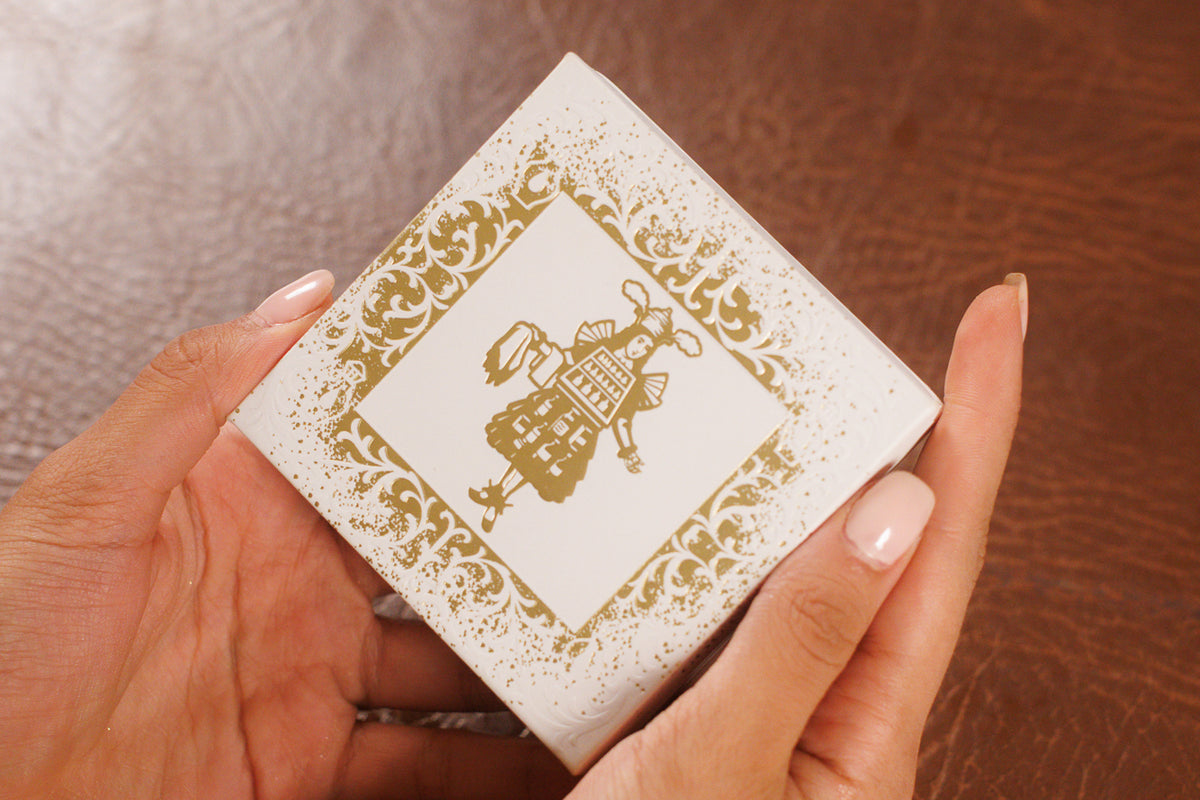
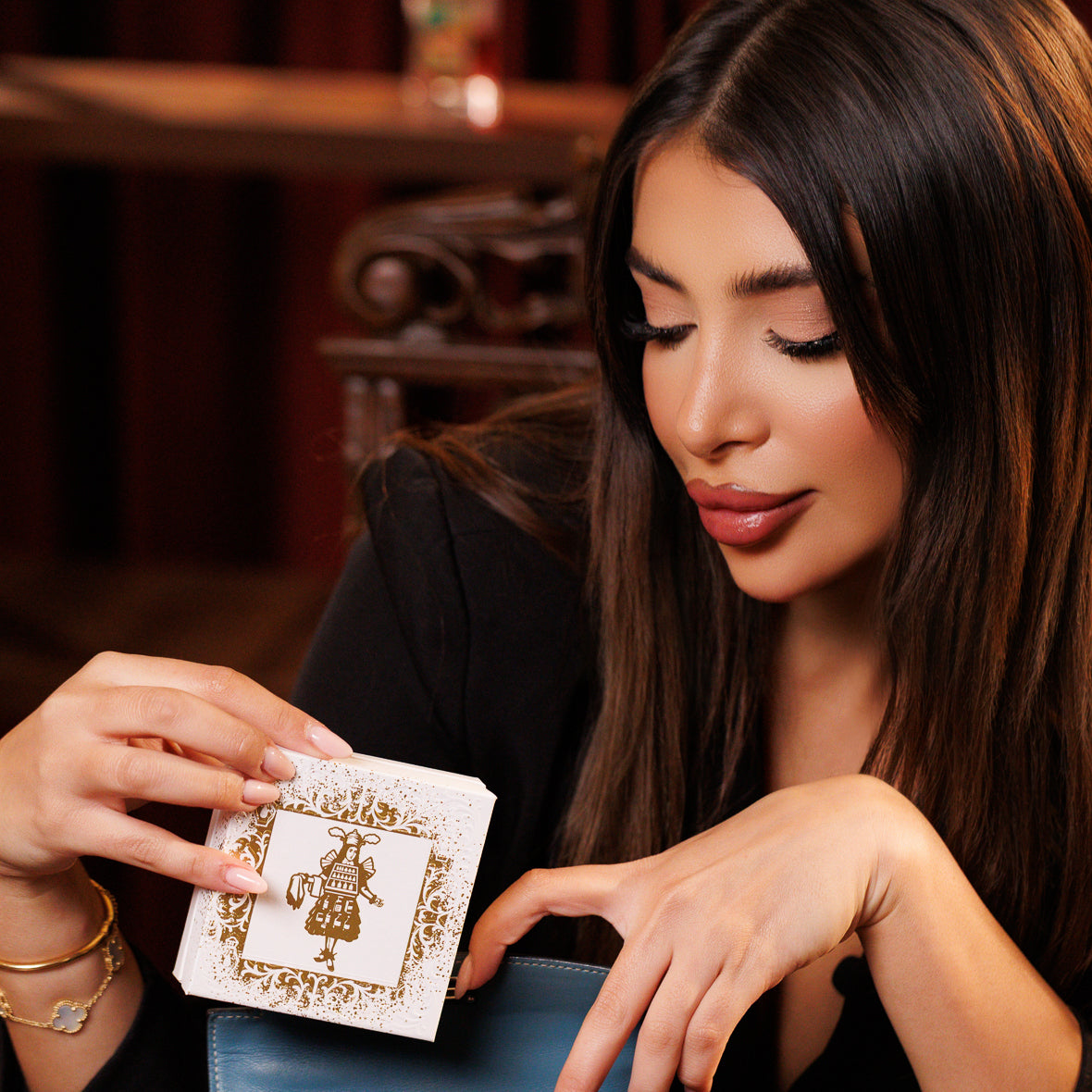
Packed into the hot foiled box and handed to DHL, every duty already paid. How a decant is made
More from Lost Tribe
You may also like