

Maison Crivelli
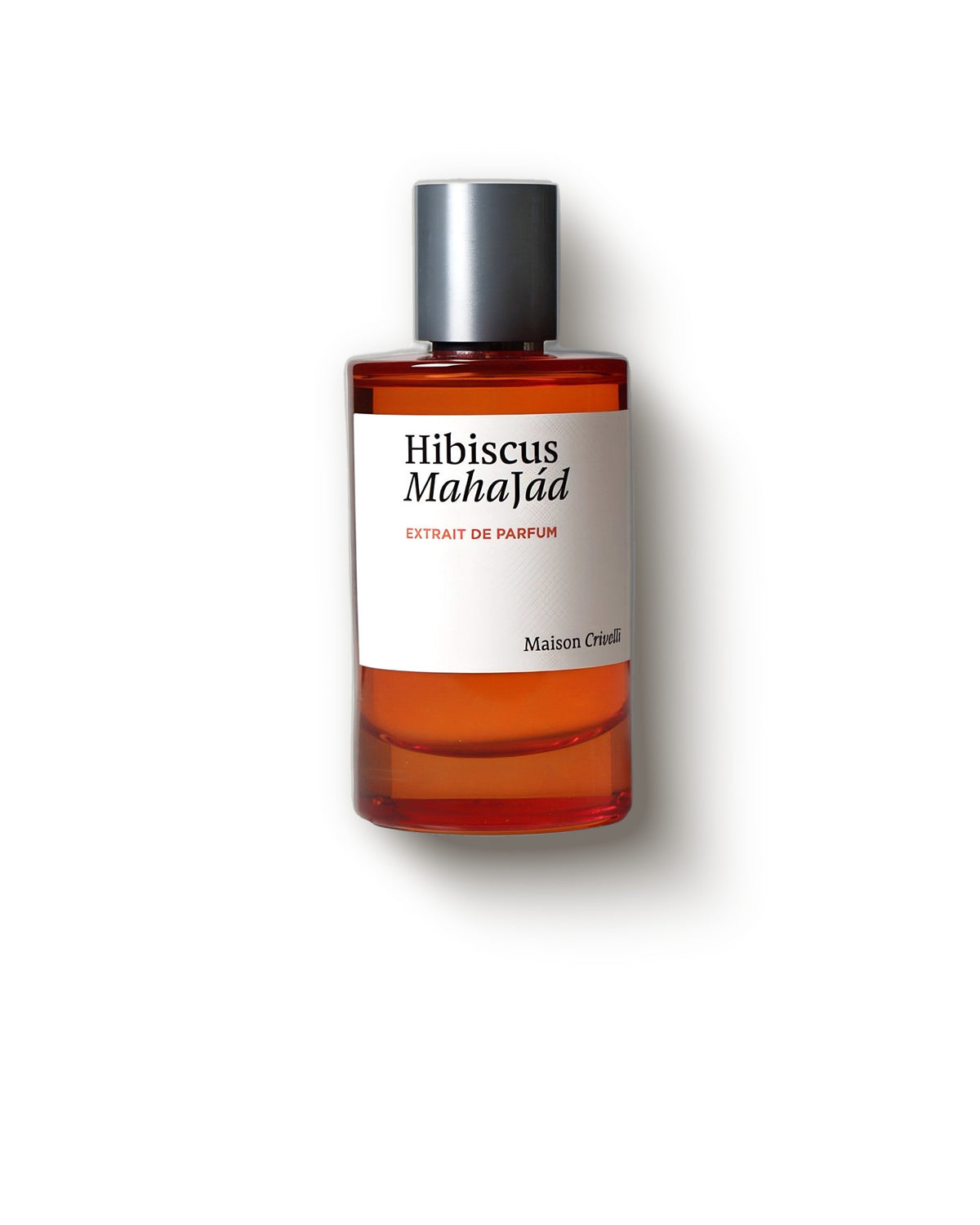
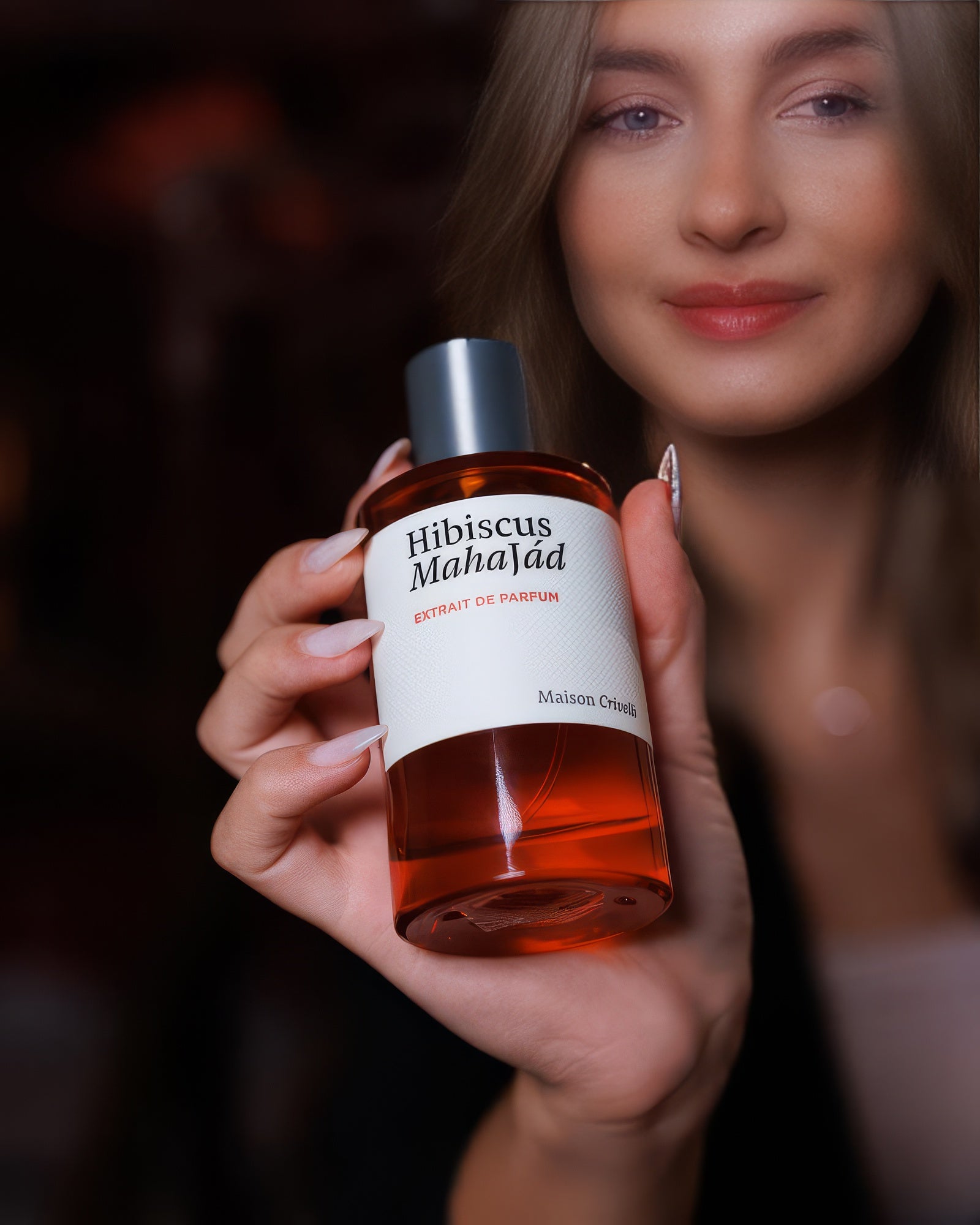
Hibiscus Mahajád
The Story
Hibiscus Mahajád comes from a hibiscus Thibaud Crivelli met in Madagascar, and the invented name is his way of marking that it belongs to one encounter and not to a category. The flower is kept tart rather than sweetened into a generic red floral.


Floral
A whole garden, never one flower
Not one flower but the impression of many, usually rose, jasmine and orange blossom leaning on each other until no single one is recognizable. Sweet, dewy, faintly powdery, with nectar underneath. It is what people mean when a perfume smells like flowers and they cannot say which.


Sweet
Warm sugar you cannot quite name
Caramel, honey, spun sugar: sweetness that hovers between all three and never settles on one. This is the gourmand pull, the thing that makes someone lean in closer than they meant to, warm and soft and a half step short of edible.


Fruity
Peach skin, not lemon peel
Peach, pear, apple, berry: this is sweetness in the flesh rather than the rind, dewy and nectar-heavy where citrus is sharp and thin. It plays young and slightly greedy, the sort of ripeness you can almost feel running down a wrist.


Blackcurrant
Tart cassis with a wild, animalic snarl
What it is
Perfumery mostly ignores the berry. The material that matters is cassis bud absolute, extracted from the sticky, resinous leaf buds of the shrub, usually propped up with sulphur molecules that carry the fruit's tart snap.
How it smells
Sharp, tart, unmistakably purple, then something feral cuts across it: a green, leafy, faintly sweaty pungency that sits closer to cat than to fruit. Ripe berry with a growl behind it.
In perfumery
A top note with claws. It cuts through sweetness, puts an edge on rose, and gives a fruity-floral something to push against. The classic chypre opening starts here, and it still jolts open modern fruity compositions.
Good to know
The catty edge comes from thiols your nose can catch at parts per trillion, the same family behind tomcat spray and a glass of Sauvignon Blanc. Perfumers dose cassis in drops, not millilitres.


Pomegranate
Tart ruby seeds, crisp and bittersweet
What it is
Each ruby seed sits in a bead of tart juice that barely smells of anything, and no essential oil can be had from it. So the note is invented: a fantasy accord of fruity and green molecules.
How it smells
Bright and juicy but never sugary, with a winey red-fruit edge. There is something watery and faintly metallic on top, a cranberry sharpness in the middle, and a dry tannic bitterness underneath that stops it turning cloying.
In perfumery
Its job is to sharpen. A tart red edge on rose, peony or citrus keeps a fruity-floral from going syrupy, and set against patchouli or musk it gives dark spicy roses their glint.
Good to know
Latin called it the seeded apple; the French call it grenade. When soldiers met a small round bomb packed with fragments, they borrowed the fruit's name for it, and the grenade has kept it ever since.


Spearmint
Two mints, one icy and one sweet
What it is
Two plants, two different jobs. Peppermint carries menthol and reads cold. Spearmint carries carvone instead and reads sweet, round and herbal. Both are steam-distilled from leaves and flowering tops, and swapping one for the other changes everything.
How it smells
Peppermint is piercing and icy, with a camphor edge that clears your head whether you asked or not. Spearmint is gentler: sweet, faintly fruity, no cold bite. Both start green and watery, then settle to a clean herbal hum.
In perfumery
A top note, and a fast one: it flashes through fougeres, colognes and fresh masculines, then it is gone. Peppermint handles the bracing openings. Both work with lavender, basil, citrus and, less obviously, chocolate.
Good to know
Menthol does not cool anything. It switches on the nerve receptors that report cold, so your brain reads cold where there is none. That is the trick behind toothpaste and gum, and spearmint cannot do it.


Hibiscus
Cranberry tartness in place of a scent
What it is
The showy tropical blooms barely smell of anything. What the kitchen uses is roselle, the dried red calyx of one particular hibiscus, and what perfumery uses is an accord built to match its tartness.
How it smells
Sharp and fruity, cranberry and red currant steeped in sour tea, with a thin rosy lift. It starts bright and jammy, then dries into a woody-vegetal tang, the way cooled hibiscus tea tastes.
In perfumery
A top-to-heart accent that brightens anything sweet, throwing red tartness across rose, raspberry, peony and citrus. It carries hibiscus soliflores and gives fruity-floral and tropical compositions their sour edge.
Good to know
Brewed as karkade or agua de Jamaica, roselle turns a glass ruby red. The color and the sourness come from fruit acids and pigments, which the nose cannot smell at all: taste, not scent.


Damask Rose Absolute
The empress of roses, picked through the morning
What it is
Bulgaria's Rose Valley starts picking in the dark and stops around half past ten, before the day gets hot. Whole blossoms, not petals, go to the still for rose otto or to solvent for rose absolute.
How it smells
Deep and honeyed, with dew and green stem at the top and a peppery warmth underneath. The two forms part ways here: otto is clean and waxy with a clove edge, the absolute darker, jammier, closer to fruit.
In perfumery
It sits at the heart and gives a composition its body. Oud, saffron and patchouli are its usual company, and the dark, jammy rose builds come out of that pairing. It anchors oriental and chypre structures alike.
Good to know
Three to four tonnes of blossom go into a kilo of rose otto; the absolute needs roughly a seventh of that. The damascones found in this flower changed perfumery: they read as rosy at vanishingly small concentrations.


Hibiscus Tea
Steeped roselle, tart and cooled
What it is
The infusion rather than the flower: dried calyces of Hibiscus sabdariffa, the roselle, steeped in hot water and drunk across the world as karkade, agua de Jamaica and sorrel. Its colour and its sourness come from anthocyanins and fruit acids rather than from aroma compounds, so the perfumery note is built to evoke the drink, not extracted from it.
How it smells
Softer and rounder than a raw hibiscus accord. The cranberry-and-red-currant tartness is still the centre, but it is damped by a warm steeped-leaf quality, a hint of sugar, and a dry woody-vegetal edge like a pot left to cool. Less acidic and more comforting than the flower note.
In perfumery
A heart accent that gives fruity-floral compositions a tart, drinkable warmth rather than a sharp burst, pairing with rose, raspberry, black tea and citrus. It is the note reached for when a fragrance wants to read as a cold drink on a hot afternoon.
Good to know
Roselle is not the ornamental hibiscus of gardens, and neither flower yields a usable aromatic extract, so both this and the plain hibiscus note are reconstructions. What separates the two is register: the tea accord carries the infusion's steeped sweetness where the flower accord stays bright and acidic.


Cinnamon
Sweet bark heat, glowing rather than stinging
What it is
Only the inner bark is worth anything. Strips are peeled from the tree, curled into quills, then steam-distilled. Sri Lanka's true cinnamon is the delicate one; the coarser, lower-priced cassia is what fills most kitchen jars.
How it smells
Warm, dry and sweet, with a red glow from cinnamaldehyde and a clove-like edge behind it. True cinnamon smells rounder and faintly floral; cassia bites. The dry-down goes woody and balsamic, with a whisper of leather.
In perfumery
A heart note, and the reason gourmands and orientals feel like a warm room. It works with vanilla, amber, rose, apple and tobacco, and the whole trick is restraint: a touch gives glow, a fraction more gives sting.
Good to know
The Dutch once burned their own stockpiles to keep the price up, back when this bark outvalued gold and Ceylon was worth conquering for it. Modern caution is duller: cinnamaldehyde sensitizes skin, so the dose is capped.


Vanilla Absolute
Cured orchid pods rendered into dark sweet resin
What it is
An orchid, and a demanding one. Every flower is pollinated by hand, and the green pods it sets are blanched, sweated and sun-dried for months before alcohol pulls the cured resin out of them.
How it smells
Deep, dark and balsamic rather than bakery sweet: rum, dried prune, tobacco, a wisp of smoke left by the curing. It opens warm and rounded, then goes resinous and faintly leathery. Synthetic vanillin has none of this shadow.
In perfumery
It works as glue. Vanilla absolute holds a composition together and slows it down, softening anything too sharp, and it sits comfortably under amber, tonka, sandalwood and oud. Most gourmands are built on top of it.
Good to know
Only saffron costs more. About six hundred hand-pollinated blossoms go into a single kilo of cured pods, which is why a bad Madagascar season is felt across the whole fragrance trade.


Ambrette Seed Absolute
The one musk that grows on a bush
What it is
The seeds of a mallow, a scruffy hibiscus relative, smell of musk before anyone does anything to them. Steam distillation, CO2 or a solvent wash for an absolute all draw out the same musk, carried by ambrettolide.
How it smells
Warm, powdery and closer to skin than any synthetic quite manages. There is a pear-like fruitiness in it, a nutty amber sweetness, a touch of iris. It blooms slowly, and reads as a person rather than a perfume.
In perfumery
A base note that works as an exalter: it rounds and lifts whatever sits above it, giving florals, iris and gourmands a skin-warm undertow. Nothing else from a plant smells this much like musk.
Good to know
Yields are tiny, which puts ambrette among the costliest things on a perfumer's shelf. Its ambrettolide is close kin to muscone, the musk molecule itself, which is why a seed does the job at all.


Leather
Tanned hide, smoke and animal warmth
What it is
There is no leather essential oil. Perfumers rebuild the smell from birch tar and cade, smoky distilled woods, plus styrax and labdanum resins, isobutyl quinoline and safraleine-type molecules, echoing the tannins and oils once used to cure hides.
How it smells
Smoky, dry and animalic, ranging from supple new suede to tarry old saddle. Birch-tar versions read sooty and phenolic, almost campfire and band-aid; softer suede accords turn powdery, floral and skin-warm.
In perfumery
A base note that lends spine and a carnal edge. It does its best work under rose and violet, alongside tobacco and oud, and a floral heart set on leather turns unmistakably human.
Good to know
The genre was born in Russia, where boots and book bindings were treated with birch tar, and Russian leather still means that smell. The real tanning oils were mostly restricted on safety grounds, so today's leathers are reconstructions.


Vanilla Orchid
Cured orchid pods, custard and faint smoke
What it is
Green pods come off the orchid vine smelling of almost nothing. The scent is made, not found: months of blanching, sweating in the sun and slow drying before the vanillin appears. Mexico first, Madagascar now.
How it smells
Custard and caramel up front, then something darker underneath: dried fruit and a thread of tobacco smoke. It turns powdery as it dries and sits close to the skin. Real cured vanilla reads deeper than vanillin alone.
In perfumery
Perfumers use it to round off edges. Anything too sharp, too green, too austere gets warmth and body from a vanilla base, which is why it anchors many oriental and gourmand builds alongside tonka, amber, sandalwood and spice.
Good to know
Every flower opens for one day. Miss it and there is no pod, so all of it is pollinated by hand, a trick devised by Edmond Albius, a twelve-year-old enslaved boy on Réunion. Most vanilla flavour today is synthetic.
Fragrance Character
The first minutes are vivid and high-pitched, the fruit acids bright and the mint almost medicinal before the hibiscus softens the edges. Cinnamon and rose absolute pull the composition inward and warmer through the heart, the floral turning almost jammy against the spice. On the skin it eventually becomes a close, skin-warmed presence of leather and dual vanillas anchored by the musk of ambrette, fading slowly and with real tenacity.


Longevity
how long it stays on skin
The hourglass reads wear time: how many hours the fragrance keeps speaking before it fades. A bar that barely leaves the start means a few fleeting hours. One that runs the full length carries from morning into evening. Treat it as typical, not promised. Oily skin holds scent far longer than dry.


Sillage
the size of its scent trail
Sillage is French for a ship's wake, and that is exactly what this measures: how much of the scent reaches the room instead of staying on you. Low is a whisper only close friends catch. Enormous fills the room, then keeps filling it after you leave.


Experimental
Built to provoke, not to please
Some perfumes are made to be liked. These are made to be argued about: inky tar, hot rubber, fruit on the turn, metal and fur where you expected flowers. The coin glows for a scent that provokes and dims for one that plays it safe, which is sometimes the point.


Office
Polished, and never louder than the room
Scent is manners in a shared room. At this range it should reach the person across the desk and stop there: tidy citrus, soft musk, pale woods, all of it reading competent and considerate. A glowing coin means nobody has to mention it. A dim one means it travels.


Evening
After dark, when it deepens
Dinner, drinks, the night that runs long. Low light is where ambers, resins and smoky woods stop being polite, and where a plush floral finally blooms. A glowing coin means it is waiting for exactly this hour. A dim one means it did its best work in daylight.


Romantic
Close enough to be felt
A fragrance can hum against skin instead of announcing itself across a table. That is the register here: creamy florals, vanilla, soft musk, a thread of spice, warm enough to make someone lean in. The coin glows when a scent sets that mood and dims when it is more practical than seductive.


Formal
Quiet authority in a dressed-up room
A wedding, a ceremony, a room where everyone has thought about their shoes. What works here is structure, not volume: smooth woods, disciplined florals, soft leather. A glowing coin means it holds its posture all evening. A dim one means it is too casual for the room.


Casual
Easy comfort for unhurried days
Errands, coffee, a slow Saturday with nowhere to be. Nothing here has to impress anyone, so the fit is soft and easy: fresh citrus, light woods, a little warmth off the skin. A glowing coin says yes to all that. A dim one means the fragrance is asking for a bigger night.


Day to Night
where its mood naturally falls
A bar running from sun to moon, reading the hour the fragrance was made for. The more of it that stays gold, the more the scent belongs to daylight and open air. The further the blue reaches back toward the sun, the deeper and warmer it turns: evening, candlelight, low rooms.


Winter
Warmth that carries through cold air
Cold air mutes a fragrance and slows it down, which is why winter belongs to the dense and the warm: resin, smoke, vanilla, leather, ambered spice. The bar reads how well this one pushes back, glowing against the chill instead of thinning out in it.


Spring
Fresh blooms in mild, rising warmth
Mild, humid air lifts a light composition, so the season belongs to dewy florals, green stems, soft powder and citrus you can see through. Alive rather than heavy. The further the green runs along the bar, the more comfortably this one wears in that weather.


Summer
Bright and airy in real heat
Heat does the projecting for you, which is why the wrong perfume turns unbearable by noon. What survives is cool and breathable: sharp citrus, salt air, aromatic herbs, water. Things that refresh instead of cloy. A short bar here means save it for cooler months.


Fall
Spiced warmth for cooling days
As the air cools, the rich materials stop smothering and start reading clearly: dry woods, warm spice, tobacco, amber, fruit gone golden. It is the season perfume turns contemplative. The bar fills according to how naturally this one settles into crisp, cooling days.
Best Worn
Made for cool-weather evenings and the kind of occasion that calls for something with presence and a faintly dangerous warmth; it suits someone who wears their fragrance as a deliberate statement rather than an afterthought.
Choose options
The Vibe


The Nose

Quentin Bisch
Perfumer
Givaudan perfumer based in Paris. He spent a year as an assistant perfumer at Robertet in Grasse under Michel Almairac, then trained at the Givaudan Perfumery School. His work includes Parfums de Marly Delina, Chloé Nomade, Ex Nihilo Fleur Narcotique and Mugler Angel Muse.
More by this noseGuidance 46Delina ExclusifValaya
The Maison

Perfume as sensory flashback, best sprung from a small vial.
Maison Crivelli builds the way a memory ambushes you, all at once and out of nowhere. Each scent is anchored to a moment the founder actually lived, then pushed until it feels almost too vivid to be real. A bright fruit can crash straight into resin, or a cool herb can turn suddenly sultry.
- Origin
- Paris, France
- Founded
- 2018
- Known for
- Oud Maracujá, vivid contrasts

More from Maison Crivelli
You may also like