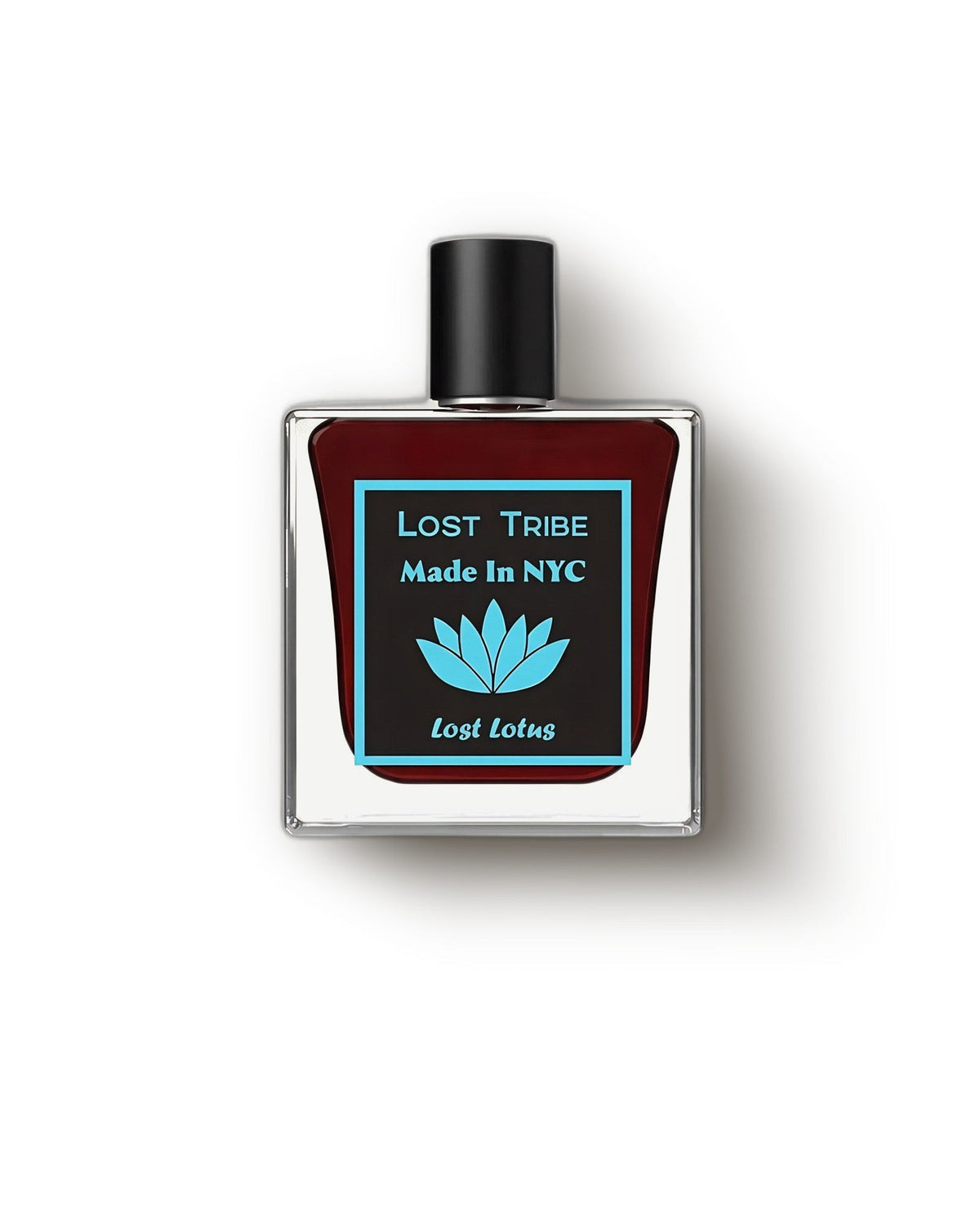
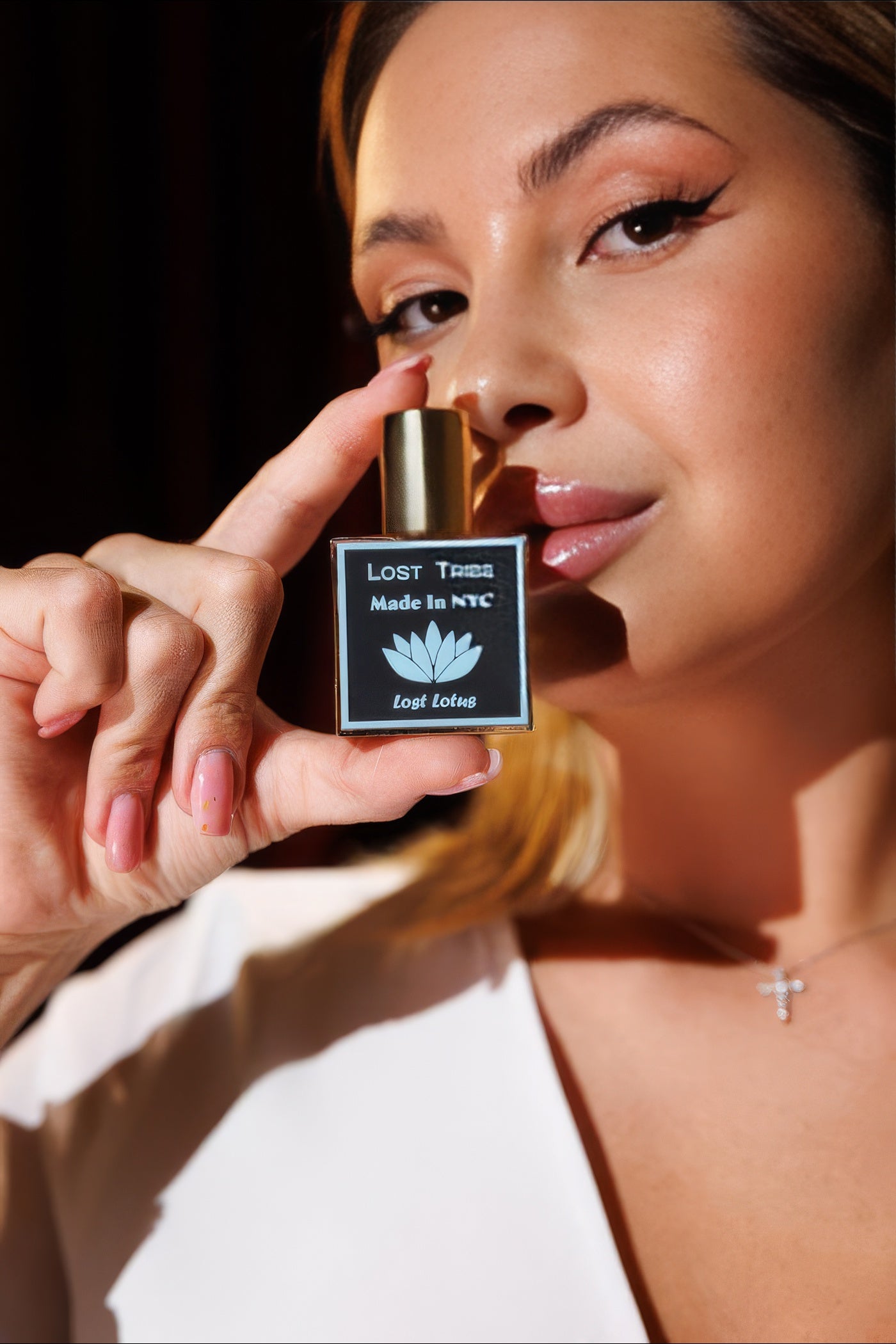
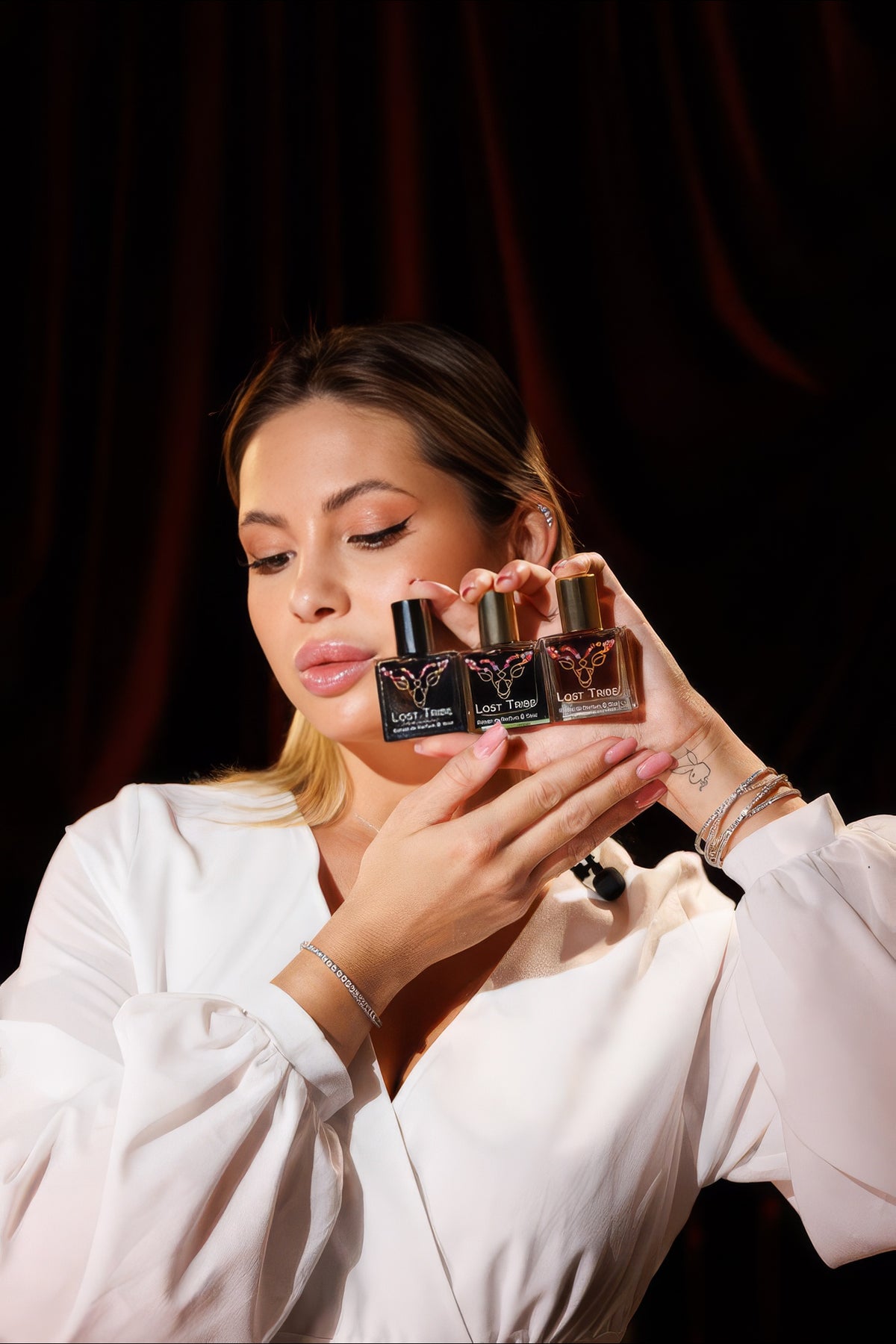
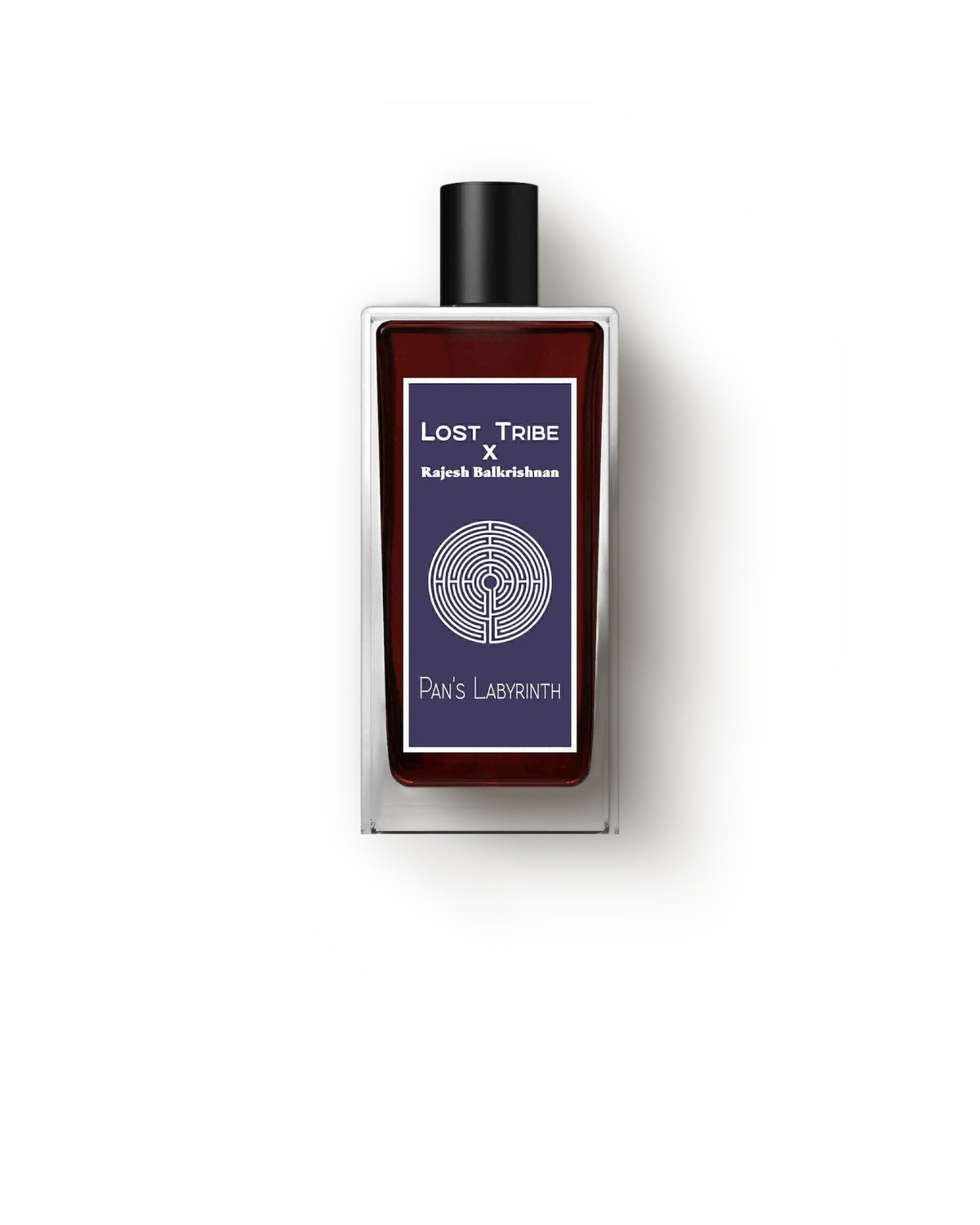
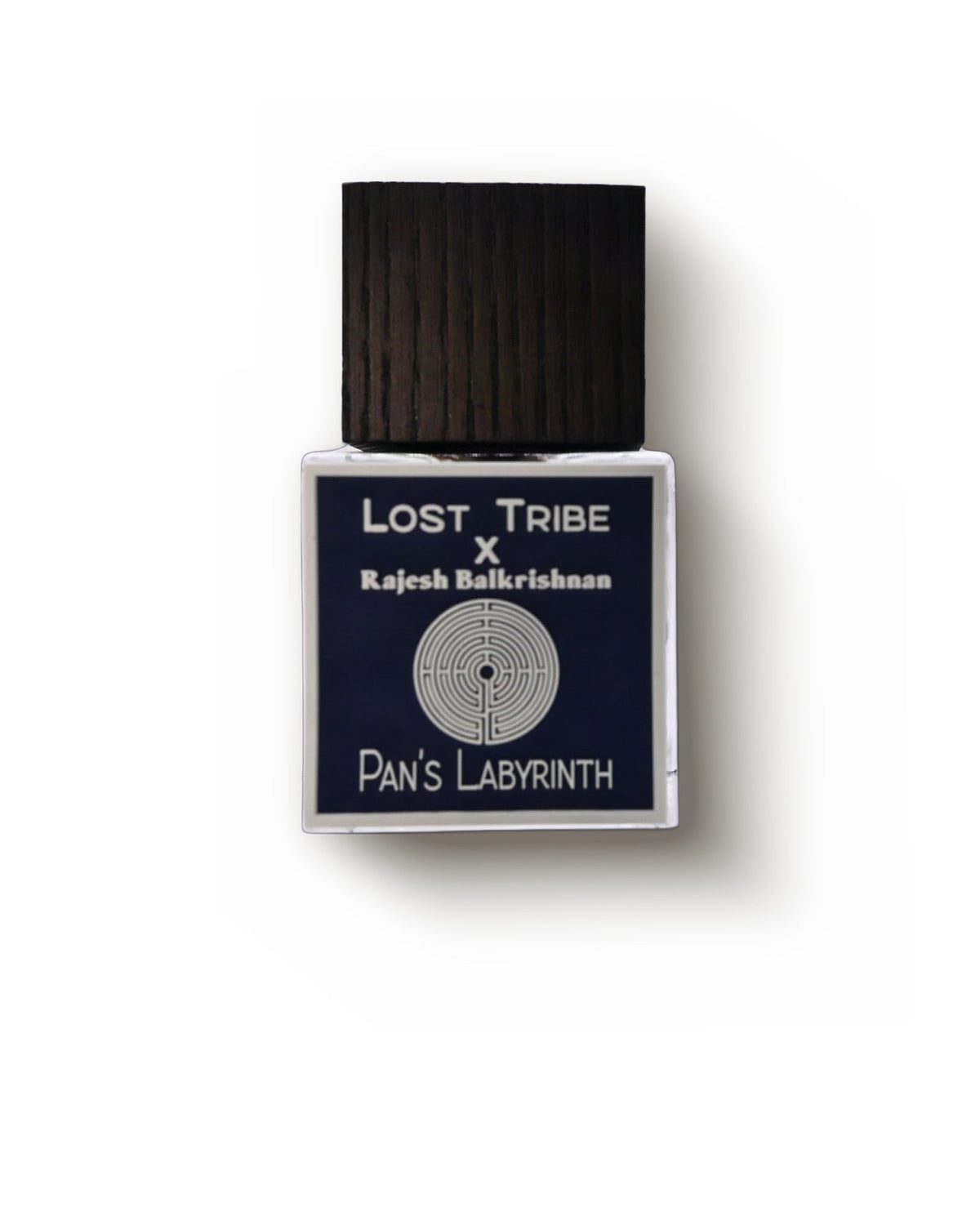
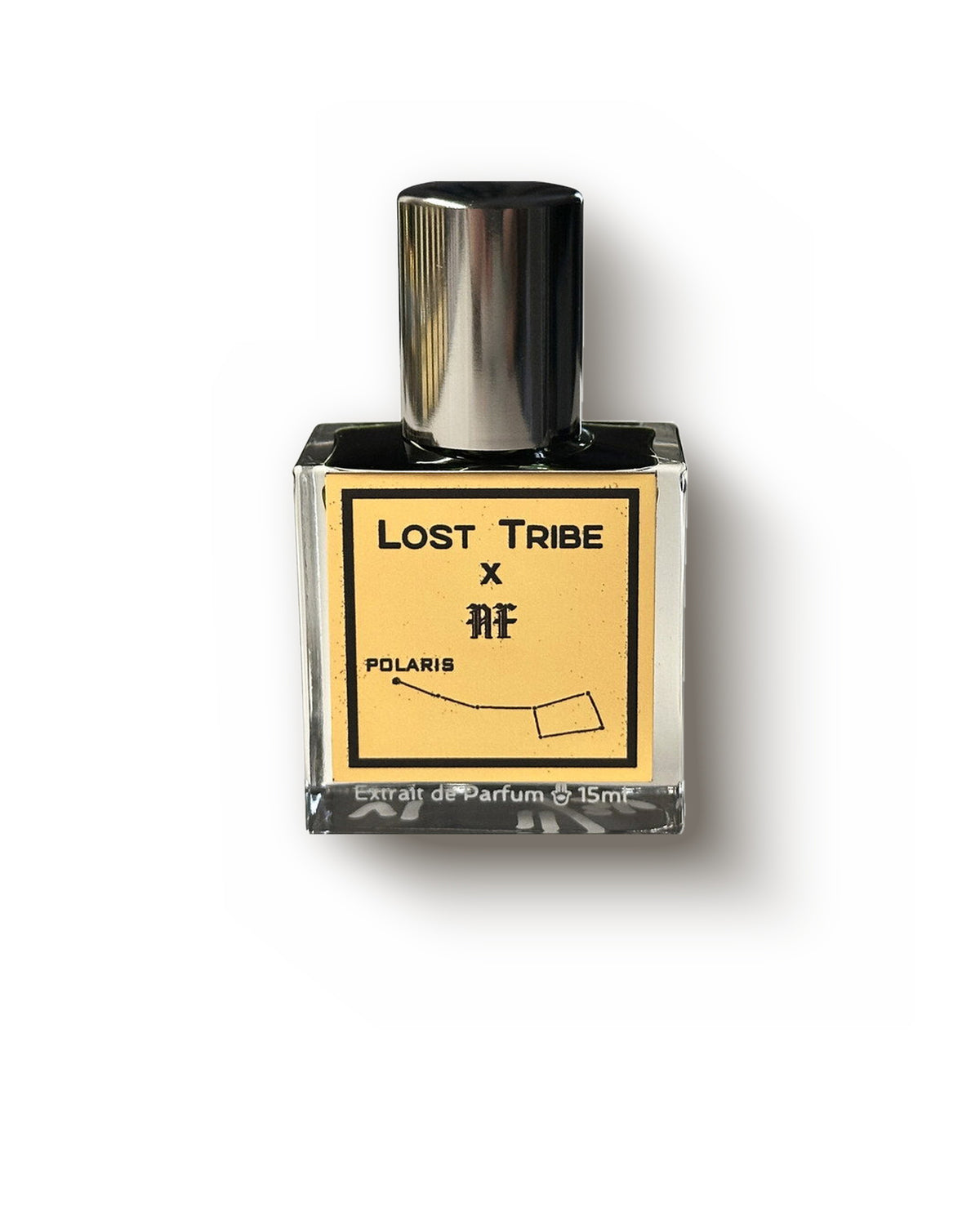
Lost Tribe
Lost Lotus
The Story
Lost Lotus is built around blue lotus with osmanthus and Douglas fir, then grounded in Padang and Indian ouds with frankincense, storax and sandalwood. Setting those natural ouds under a flower is what gives it the green, resinous cast that runs underneath the florals.


Floral
A whole garden, never one flower
Not one flower but the impression of many, usually rose, jasmine and orange blossom leaning on each other until no single one is recognizable. Sweet, dewy, faintly powdery, with nectar underneath. It is what people mean when a perfume smells like flowers and they cannot say which.


Oud
What a tree makes when it is wounded
A dense, resinous wood that smells warm and slightly medicinal, with a leathery, animal-tinged smokiness and a sweet, almost barnyard funk underneath. It feels ancient and brooding, wrapping the skin in something thick and quietly powerful.


Amber
Resin warmed until it goes sweet
Labdanum, benzoin and vanilla melted together into something sweet but dusky, like tree sap gone soft in the sun with a thread of incense smoke through it. Amber does not sparkle or shout. It sits close to the skin and gives off heat for hours.


Animalic
Skin, fur and something not quite tame
A raw, body-warm muskiness that reads of skin, hair and fur, sometimes sweet and powdery, sometimes sharp and faintly feral. At its best you cannot tell where the perfume stops and the wearer starts. At its strongest, it is the reason some people back away.


Citrus
First bright zest of morning
The juicy, rind-snapping brightness of lemon, bergamot, and orange peel, tart and effervescent with a clean bitter edge. It opens a scent with instant lift and sparkle, fresh and energizing, evaporating quickly like sunlight on water.


Fruity
Peach skin, not lemon peel
Peach, pear, apple, berry: this is sweetness in the flesh rather than the rind, dewy and nectar-heavy where citrus is sharp and thin. It plays young and slightly greedy, the sort of ripeness you can almost feel running down a wrist.


Pink Grapefruit
The sweeter, redder half of the grapefruit
What it is
Oil cold-pressed from the peel of the pink and red cultivars of Citrus paradisi, such as Ruby Red, Star Ruby and Rio Red, whose flesh carries lycopene and beta-carotene where the older white varieties do not. The pigment sits in the fruit rather than the peel, but the cultivars differ in their rind chemistry too, and the pressed oils are not interchangeable.
How it smells
Softer and rounder than white grapefruit, with more juicy sweetness and noticeably less of the bitter rind bite. The sulfurous tang that makes grapefruit unmistakable is still there but sits further back, wrapped in a berry-tinged fruitiness. It reads as ripe rather than sharp.
In perfumery
The friendlier grapefruit, used where a citrus opening has to be bright without being aggressive. It sits naturally with rose, peony and red berries and gives a modern sparkle to florals that a bitter white grapefruit would cut against.
Good to know
Pink and red grapefruit are cultivar differences within one species, not separate fruits, and the names are used loosely in the trade. Like most cold-pressed citrus peel oils it carries furocoumarins and is phototoxic, so it is dosed under fragrance-safety limits or used in a furocoumarin-free form.


Douglas Fir
A cold forest breathed in at first light
What it is
One name, two materials. The needles and young twigs steam-distil into a clear, sappy oil; the needles and small branches of the balsam fir, taken with solvent, give a dark, sticky fir balsam absolute. Balsam, silver and Douglas fir all answer to the name.
How it smells
The distilled oil is green and resinous, sappy almost to fruit: crushed Christmas-tree needles in the hand. The absolute goes deeper and sweeter, jammy, intensely balsamic, warmed by a hay-like, coumarin-like sweetness and a wisp of smoke, and it lasts.
In perfumery
Distilled fir works top to heart, the absolute anchors the base, and between them they build forest, fougere and aromatic-woody accords. It sits well with cedar, lavender, oakmoss and incense, and carries dense coniferous work like Slumberhouse Norne.
Good to know
Douglas fir is not a true fir, and smells it: brighter, closer to citrus. Balsam fir has the odder history: bark blisters yielding Canada balsam, the glass-clear cement that mounted microscope slides because it bends light like glass.


Brown Ambergris
Sea-aged whale gold breathing warm salt air
What it is
Perhaps one sperm whale in a hundred makes it: a waxy mass in the gut, thought to coat the squid beaks it cannot digest. Expelled, it drifts for years, curing in sun and salt before washing ashore.
How it smells
Fresh from the whale it is fecal and marine. Years later it is sweet, animalic, softly mineral, all tobacco and dry seaweed and old wood. It reads less as an odor than as warmth, diffusion and breath.
In perfumery
In a base it slows everything down and lends skin-like radiance. Almost every ambergris note is Ambroxan, the synthetic built around the molecule the sea makes; real tinctures survive in natural and artisanal perfumery, and in old bottles.
Good to know
Collecting or selling it is illegal in the United States, where the whale is protected, though some countries let a beachcomber keep what washes up. Boulder-sized lumps have sold for hundreds of thousands of dollars, hence floating gold.


Blue Lotus
The sacred water lily of pharaohs and dreams
What it is
Egypt made this flower sacred, though the absolute sold today comes mostly from Thailand and India. The lily roots in mud; its star-shaped blossoms are washed with solvent, then alcohol, into a thick dark extract.
How it smells
Cool and watery to begin with, like a pond at dawn, with a honeyed sweetness and a lychee-soft fruitiness underneath. Then it warms: earthy, faintly spicy, powdery, drying down resinous rather than bright. More meditative than pretty.
In perfumery
A heart note that bridges water and warmth. Perfumers reach for it when a floral needs to feel ancient rather than fresh, mostly in niche work and in amber-incense accords on Egyptian themes.
Good to know
Tomb walls are full of it, a symbol of the sun and rebirth, and the Egyptians are thought to have steeped it in wine for a mild psychoactive lift. The symbolism was earned: it opens through the morning and closes at dusk.


Osmanthus
Apricot and soft leather in a tiny gold flower
What it is
Tiny orange-gold flowers that China has scented its tea and its wine with for centuries. They are gathered by hand, drawn into a waxy concrete with solvent, then washed down to the absolute perfumers buy.
How it smells
Apricot first, ripe and almost jammy, then peach and black tea. Give it a minute and suede appears, soft and slightly smoky, the way a well-worn glove smells. It dries toward raisin rather than sugar.
In perfumery
A heart note that sits exactly between fruit, flower and leather, which is why it can sweeten a composition without any sugar in it. Black tea, rose and apricot accords go with it naturally; so does actual leather.
Good to know
It takes about a tonne of those minuscule flowers to make one kilo of absolute. The tree belongs to the harvest moon and to love there, a lot of meaning for a flower this small.


Pink Lotus
Honeyed bloom, cool water, dark roots
What it is
The sacred lotus roots in pond mud and opens clean above it. Hand-gathered blossoms are solvent-extracted into a thick reddish-brown absolute, and each flower gives so little that it stays one of the scarcer floral absolutes.
How it smells
Green and spicy first, then a dense honeyed sweetness that reads earthy and creamy at once. Ripe fruit and coumarin pull it toward tonka. Lighter than jasmine, rounder than waterlily, with a muddy undertow.
In perfumery
A heart note that opens space where heavier white flowers would crowd it. Set against sandalwood, jasmine, incense and benzoin, it carries pond-flower soliflores and puts honeyed depth under a surface that stays watery and calm.
Good to know
A lotus fruit dug out of a dry Chinese lakebed, dated to roughly 1,300 years old, was planted and grew. The flower also warms its bloom to draw beetles, which pushes the honeyed scent into cool morning air.


Linden Blossom
Green honey off a flowering lime tree
What it is
The lime tree here is not a citrus: it is the big European shade tree, Tilia, hung with pale yellow flower clusters. They give up so little oil that most linden notes are rebuilt from aroma molecules.
How it smells
Honeyed and green and see-through, with a tea-like warmth under it. Hay, a little wax, a cool dewiness like a flowering tree on a warm afternoon. Delicate, not heady; it fades airy and powdery.
In perfumery
In the heart it lifts spring bouquets with green honey and a nostalgic glow, keeping company with mimosa, hay, lily of the valley and white musks. D'Orsay Tilleul, reworked by Olivia Giacobetti, is the linden soliflore.
Good to know
Dried linden flowers are brewed as tilleul, the tisane French households drink before bed. For a lot of European wearers that is the whole association: they met this smell first in a cup, half asleep.


Frangipani
Tropical petals breathing coconut and almond cream
What it is
Five waxy petals on a small tropical tree, plumeria, grown across the Pacific, the Caribbean and India. Solvent or CO2 lifts the scent from picked blooms into an absolute few perfumers ever get to use.
How it smells
Coconut and almond cream, ripe peach behind it, and a green spicy edge that stops it turning syrupy. Milkier and sunnier than jasmine or tuberose, and nowhere near as indolic. It smells like heat on skin.
In perfumery
In the heart it does the work of sunlight, turning a composition creamy. Coconut, ylang, jasmine, sandalwood and vanilla sit alongside it, and when a fragrance smells of hot skin on a beach, this is usually why.
Good to know
Yields run well under a tenth of a percent, so true frangipani absolute is scarce and most of what you smell is a reconstruction. The name comes from a Renaissance Roman family whose almond-scented glove perfume it recalls.


Tuberose
Carnal white flower that opens after dark
What it is
Cut a tuberose and it carries on. The waxy white flower keeps making scent for hours after picking, which is why perfumers once laid blossoms on trays of cold fat to catch it. Solvents do that job now.
How it smells
Creamy and buttery, with a cool mentholated snap on top and green sap beneath. Stay with it and something almost fleshy surfaces, warm and indolic, faintly clove-spiced. This is the flower people call too much.
In perfumery
It sits in the heart and pushes outward, three-dimensional in a way few florals manage. Gardenia, jasmine, orange blossom and coconut round it off. The great tuberose soliflores are still the benchmark everyone else is measured against.
Good to know
Six to eight thousand kilos of fresh flowers go into one kilo of absolute. Picture a field, then a small bottle. That ratio is why tuberose sits among the most costly florals in perfumery.


Rose
Dewy sweetness over a green, peppery bite
What it is
Most perfumery rose is one of two: damascena from Bulgaria and Turkey, centifolia from Grasse. Whole blossoms are picked by hand from before sunrise until about ten thirty, then distilled into otto or solvent-extracted into absolute.
How it smells
Fresh, honeyed, green at the edges, with something dewy still on it. Spice and fruit sit underneath, and in the absolute a jammy darkness. Otto opens crisp and bright; absolute is warmer, smokier, closer to skin.
In perfumery
Rose behaves less like one note than a whole palette. It carries a perfume alone or vanishes into a chypre, turns dark against oud and patchouli, goes powdery beside violet, and holds a floral heart together.
Good to know
The two extractions are not the same bargain. Otto takes three to four thousand kilograms of blossoms to yield one kilogram of oil. Absolute, pulled out with solvent, gets there on roughly a seventh of the flowers.


Padang Oud
The west-coast Sumatran trade name
What it is
Padang is the port city of West Sumatra and a long-standing trade name for agarwood shipped from the island's western slopes, principally Aquilaria malaccensis and Aquilaria microcarpa. Like most agarwood trade names it describes where the material left from rather than a botanical distinction, and it has been in commercial use long enough to carry a recognised character of its own.
How it smells
Sumatran through and through: a damp, jungly earthiness with an animalic top, a dark resinous woody heart and a slow, quiet sweetness underneath. It is less clean than a Cambodian oil and less barnyard than an Indian one, and it stays close to the skin rather than radiating.
In perfumery
A weight-bearing base oud, used to give a composition floor and shadow. It sits well beneath amber, labdanum and dark florals, and its earthiness keeps sweet accords from turning syrupy. Perfumers who want oud as atmosphere rather than as a declared note reach for material like this.
Good to know
Because it is a shipping name, Padang oud varies more from batch to batch than a single-estate oil would, so the distiller matters as much as the label. Its profile belongs to the Sumatran family and should not be expected to deliver the camphorous lift of Kalimantan material.


Indian Oud
The fermented, leathered, animalic king of agarwood
What it is
Agarwood from Assam, and collectors call it Hindi. What makes an oud Hindi is not the tree but the method: it soaks and ferments for days, then goes into a copper still with the water it rotted in.
How it smells
The opening is not pretty: barnyard, stable floor, frankly fecal. Give it twenty minutes. It resolves into buttery leather, dry hay, black pepper and clove, then a deep smoky base. Aged oils add chai and dried fruit.
In perfumery
Every other oud is measured against this one. The intensity that sends newcomers running is exactly what collectors pay for. Rose is the classic partner, the Arabian mukhallat, though in practice a Hindi oil is usually worn neat.
Good to know
Cambodi is sweet and honeyed, Borneo cool with pine, Thai medicinal. India alone owns the fermented register. Young, a Hindi hits hardest; ageing turns the funk to smooth leather. Loudness proves nothing: a badly cured oil shouts too.


Sandalwood
Creamy wood, pulled up by the roots
What it is
The richest oil sits in the roots, so the whole tree is pulled up and steam-distilled rather than felled. Mysore in southern India was the classic source, until decades of overcutting pushed the wild trees to the edge.
How it smells
Milk and warm wood, with a rosy, almost buttery edge and nothing sharp at all. What surprises people is how little it moves: no bright opening, no dry-down drama, just the same quiet glow for hours.
In perfumery
It works twice over: as a smell, and as a fixative that holds rose or jasmine in place. Sandalwood is also graded, and the darkest, densest, most resin-heavy old heartwood carries its own name: red meat.
Good to know
A heart worth taking takes about thirty years to form. Plantations of the same species in Western Australia now supply a large share of the world's oil, close to the old Mysore chemistry if not quite its creaminess.


Frankincense
Golden tears hardened on a cut trunk
What it is
A scored Boswellia bleeds a milky sap that hardens over weeks into golden tears. The sacra trees of Oman and Somalia give the most prized resin. Steam or solvent turns the tears into oil.
How it smells
Brighter than you expect from something called incense: cool, lemony, almost pine-fresh, with a peppery lift. Underneath it is dry and balsamic, and it ends in the warm dusty smoke you already know.
In perfumery
It does something odd for a resin: it makes heavy things lighter. Sitting in the heart and base, it opens up oud, labdanum and thick oriental accords, and gives rose a cool, quiet space to stand in.
Good to know
The trees are in trouble. Wild Boswellia stands are thinning under over-tapping, drought and grazing, and the long-term supply of a resin the world has burned for thousands of years is now a real question.


Storax
Cinnamon-tinged balsam wept from wounded bark
What it is
Wound a sweetgum tree and it bleeds a fragrant balsam. The bark is incised, the resin gathered, then either refined into a resinoid or distilled into styrax oil. Turkey and the Americas each have their own tree.
How it smells
Sweet, warm and balsamic with a leathery, faintly smoky edge and a clear streak of cinnamon. A vinyl, glue-like top flashes off first, leaving honeyed amber resin. Richer and more leathery than benzoin, drier than vanilla.
In perfumery
A fixative that weighs the base down and warms it, deepening leather, amber and oriental accords and giving florals and chypres a body they otherwise lack. It runs as a signature thread through the classic leathers.
Good to know
Purified storax carries a trace of styrene, the molecule that went on to name polystyrene. The name itself has confused people for centuries: an unrelated tropical tree, genus Styrax, yields benzoin, which is also sometimes called storax.
Fragrance Character
Brown ambergris lends a soft, salty warmth to the first minutes, cooled by green Douglas fir, with pink grapefruit cutting through clean. As it settles, the florals press forward in a humid, almost tropical register, tuberose and frangipani richest among them, with linden blossom adding a honeyed, slightly green counterpoint. The base is where this fragrance commits fully: Padang and Indian ouds converge with frankincense, storax and sandalwood into something dense and slow-burning, sitting close to skin by the final hours but never disappearing.


Longevity
how long it stays on skin
The hourglass reads wear time: how many hours the fragrance keeps speaking before it fades. A bar that barely leaves the start means a few fleeting hours. One that runs the full length carries from morning into evening. Treat it as typical, not promised. Oily skin holds scent far longer than dry.


Sillage
the size of its scent trail
Sillage is French for a ship's wake, and that is exactly what this measures: how much of the scent reaches the room instead of staying on you. Low is a whisper only close friends catch. Enormous fills the room, then keeps filling it after you leave.


Experimental
Built to provoke, not to please
Some perfumes are made to be liked. These are made to be argued about: inky tar, hot rubber, fruit on the turn, metal and fur where you expected flowers. The coin glows for a scent that provokes and dims for one that plays it safe, which is sometimes the point.


Office
Polished, and never louder than the room
Scent is manners in a shared room. At this range it should reach the person across the desk and stop there: tidy citrus, soft musk, pale woods, all of it reading competent and considerate. A glowing coin means nobody has to mention it. A dim one means it travels.


Evening
After dark, when it deepens
Dinner, drinks, the night that runs long. Low light is where ambers, resins and smoky woods stop being polite, and where a plush floral finally blooms. A glowing coin means it is waiting for exactly this hour. A dim one means it did its best work in daylight.


Romantic
Close enough to be felt
A fragrance can hum against skin instead of announcing itself across a table. That is the register here: creamy florals, vanilla, soft musk, a thread of spice, warm enough to make someone lean in. The coin glows when a scent sets that mood and dims when it is more practical than seductive.


Formal
Quiet authority in a dressed-up room
A wedding, a ceremony, a room where everyone has thought about their shoes. What works here is structure, not volume: smooth woods, disciplined florals, soft leather. A glowing coin means it holds its posture all evening. A dim one means it is too casual for the room.


Casual
Easy comfort for unhurried days
Errands, coffee, a slow Saturday with nowhere to be. Nothing here has to impress anyone, so the fit is soft and easy: fresh citrus, light woods, a little warmth off the skin. A glowing coin says yes to all that. A dim one means the fragrance is asking for a bigger night.


Day to Night
where its mood naturally falls
A bar running from sun to moon, reading the hour the fragrance was made for. The more of it that stays gold, the more the scent belongs to daylight and open air. The further the blue reaches back toward the sun, the deeper and warmer it turns: evening, candlelight, low rooms.


Winter
Warmth that carries through cold air
Cold air mutes a fragrance and slows it down, which is why winter belongs to the dense and the warm: resin, smoke, vanilla, leather, ambered spice. The bar reads how well this one pushes back, glowing against the chill instead of thinning out in it.


Spring
Fresh blooms in mild, rising warmth
Mild, humid air lifts a light composition, so the season belongs to dewy florals, green stems, soft powder and citrus you can see through. Alive rather than heavy. The further the green runs along the bar, the more comfortably this one wears in that weather.


Summer
Bright and airy in real heat
Heat does the projecting for you, which is why the wrong perfume turns unbearable by noon. What survives is cool and breathable: sharp citrus, salt air, aromatic herbs, water. Things that refresh instead of cloy. A short bar here means save it for cooler months.


Fall
Spiced warmth for cooling days
As the air cools, the rich materials stop smothering and start reading clearly: dry woods, warm spice, tobacco, amber, fruit gone golden. It is the season perfume turns contemplative. The bar fills according to how naturally this one settles into crisp, cooling days.
Best Worn
An easy companion for warm spring and summer days, its humid florals and resin-soft warmth slipping from relaxed daytime hours into something worn close, equally at home when the occasion turns refined.
Choose options
The Vibe


The Nose
Mathew Schmuelian
Founder and perfumer
Founder and perfumer of Lost Tribe, who moved from collecting artisanal naturals to macerating his own musks in 2022; his first release was Lost Tribe Hope You Like It. He composed Lost Tribe Sultry Sambac, Lost Tribe Smoky Bear and Lost Tribe Prince of Persia.
More by this noseNeon PalmsVanilla Waves V2 Extra MuskPrince of Persia
The Maison

Small tribe, real musk, no compromises, poured while stock of the originals lasts.
Lost Tribe makes fragrance that feels lived in and loud, the kind that arrives before you do and lingers after you leave. There is a maximalist streak running through the whole house, from sun drunk tropical fruit to resin thick vanilla to rare oud built on aged Kinam.
- Known for
- Maximalist naturals, aged Kinam

EVERY DECANT
From the original bottle to your door
We buy the original flacon at full retail price, direct from the house.
A medical grade Socorex syringe takes the exact millilitres straight from the flacon.
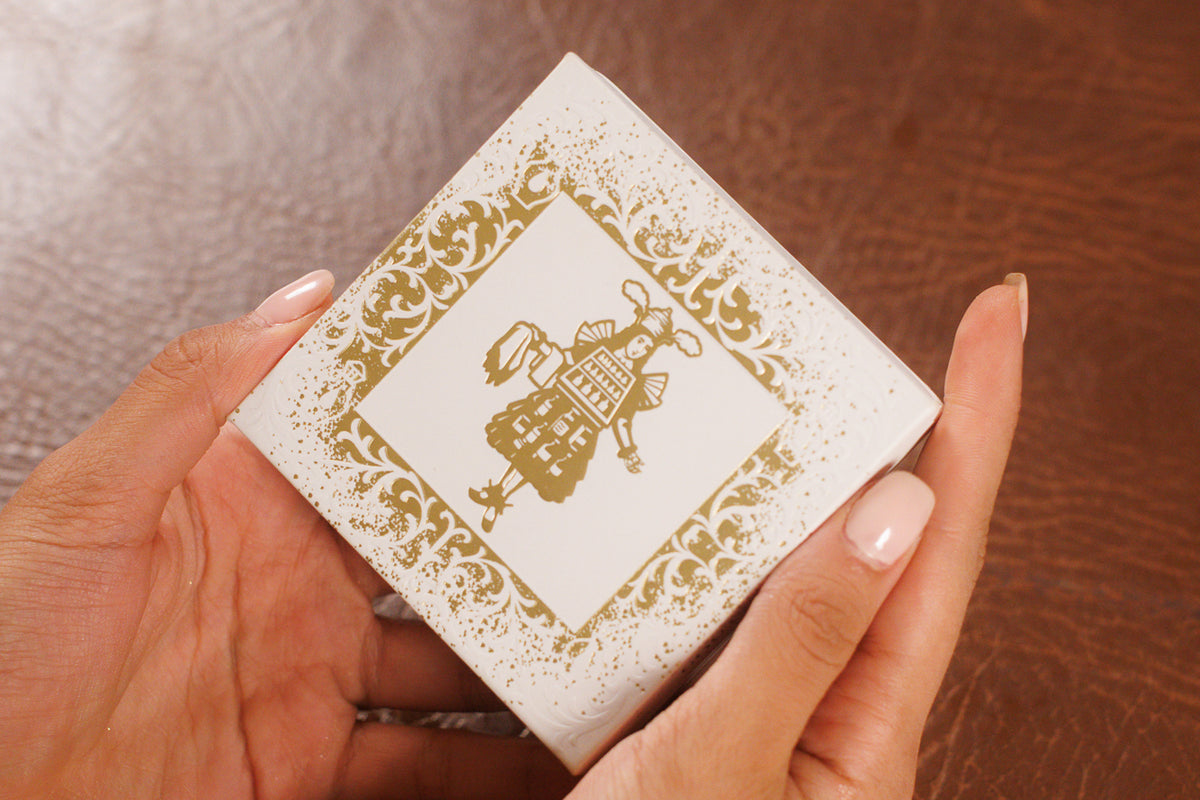
Packed into the hot foiled box and handed to DHL, every duty already paid. How a decant is made
More from Lost Tribe

You may also like