

Ensar Oud
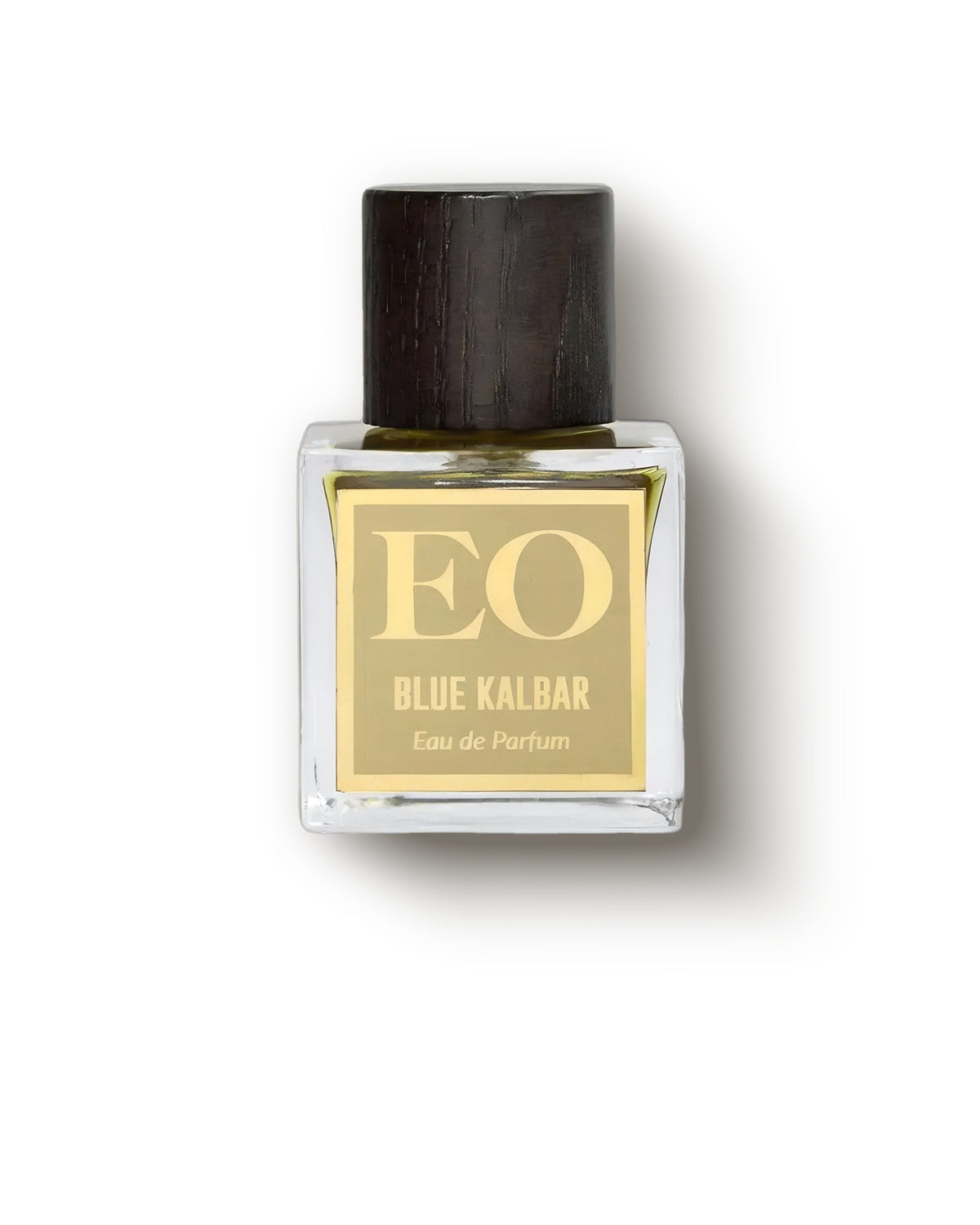
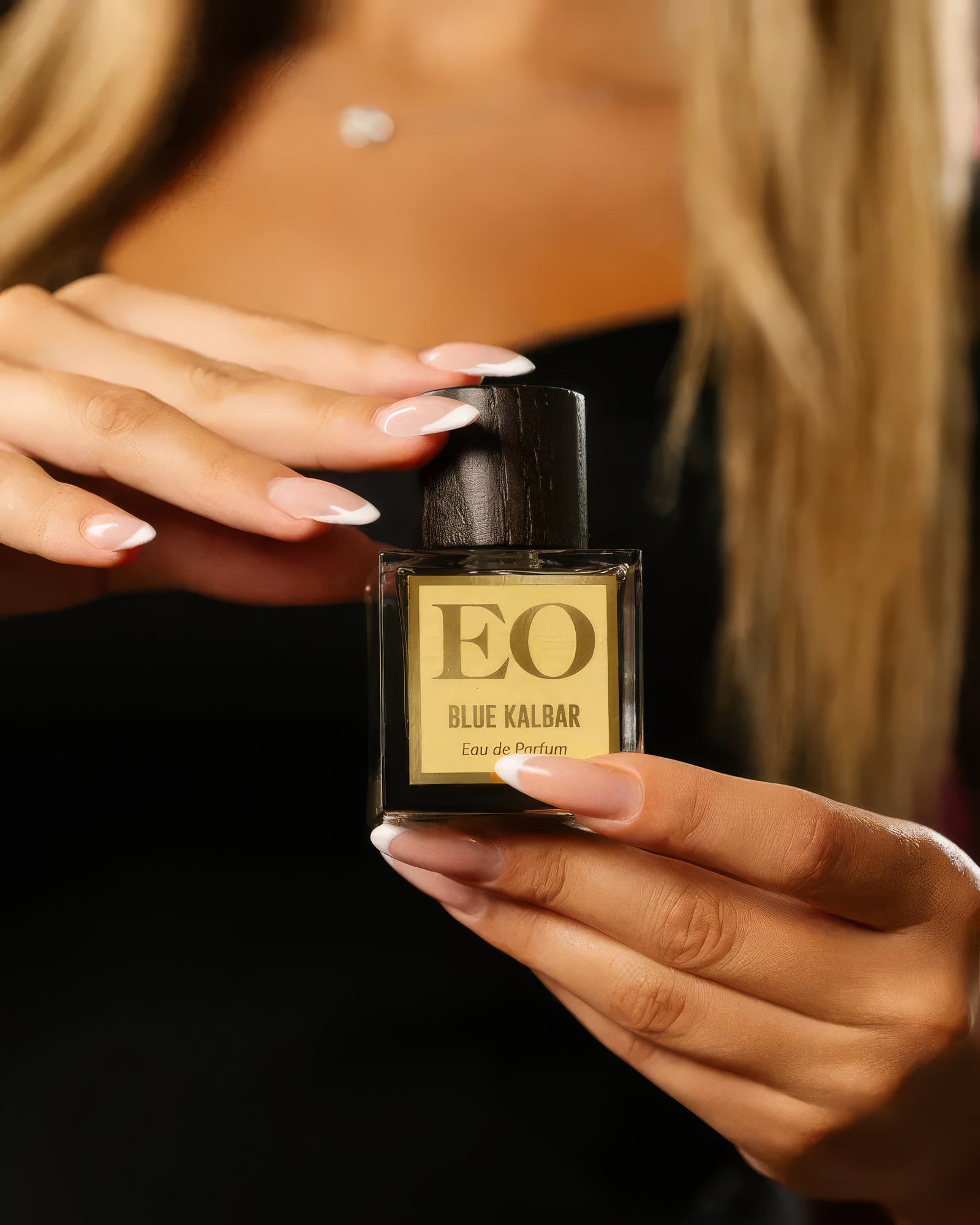
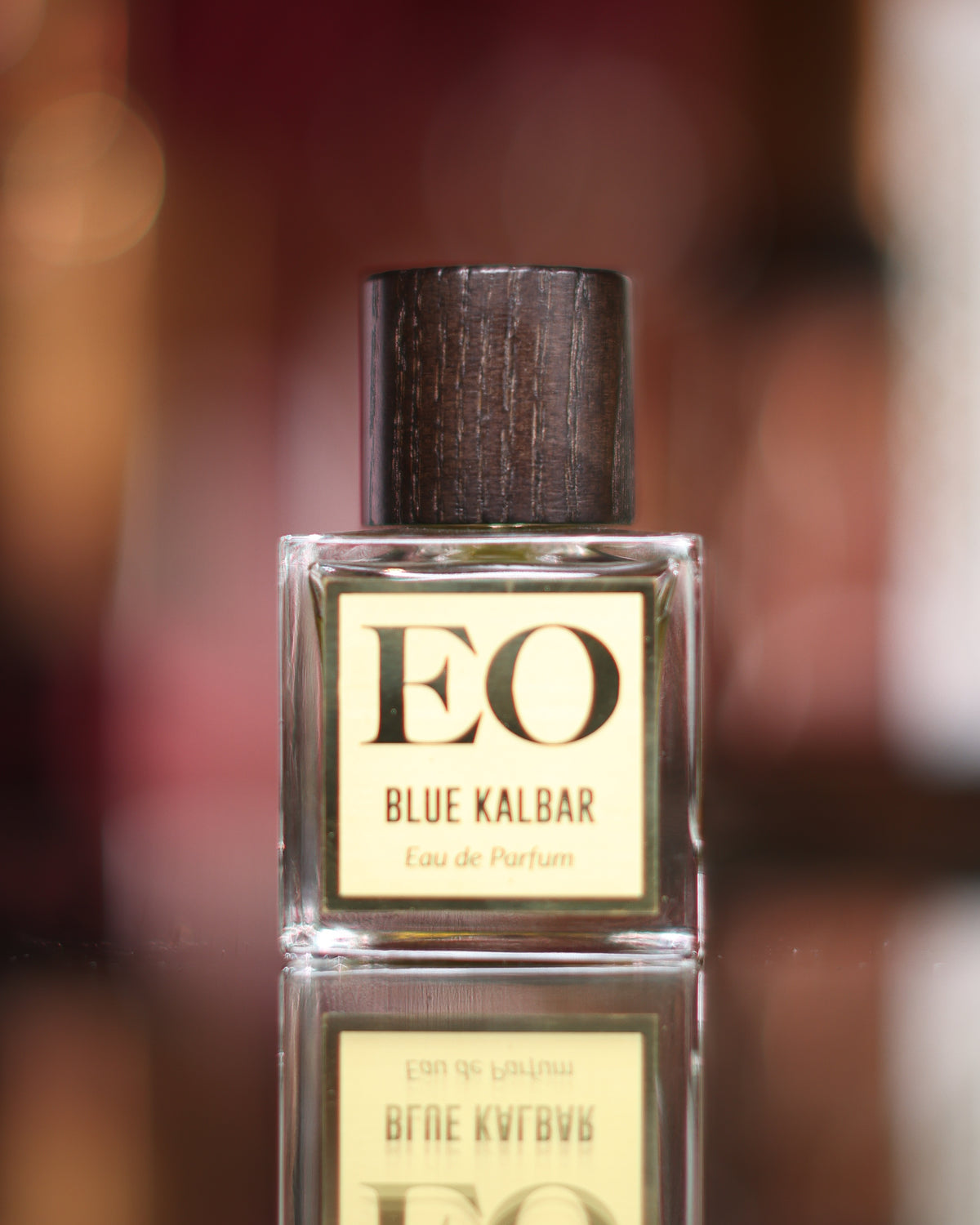
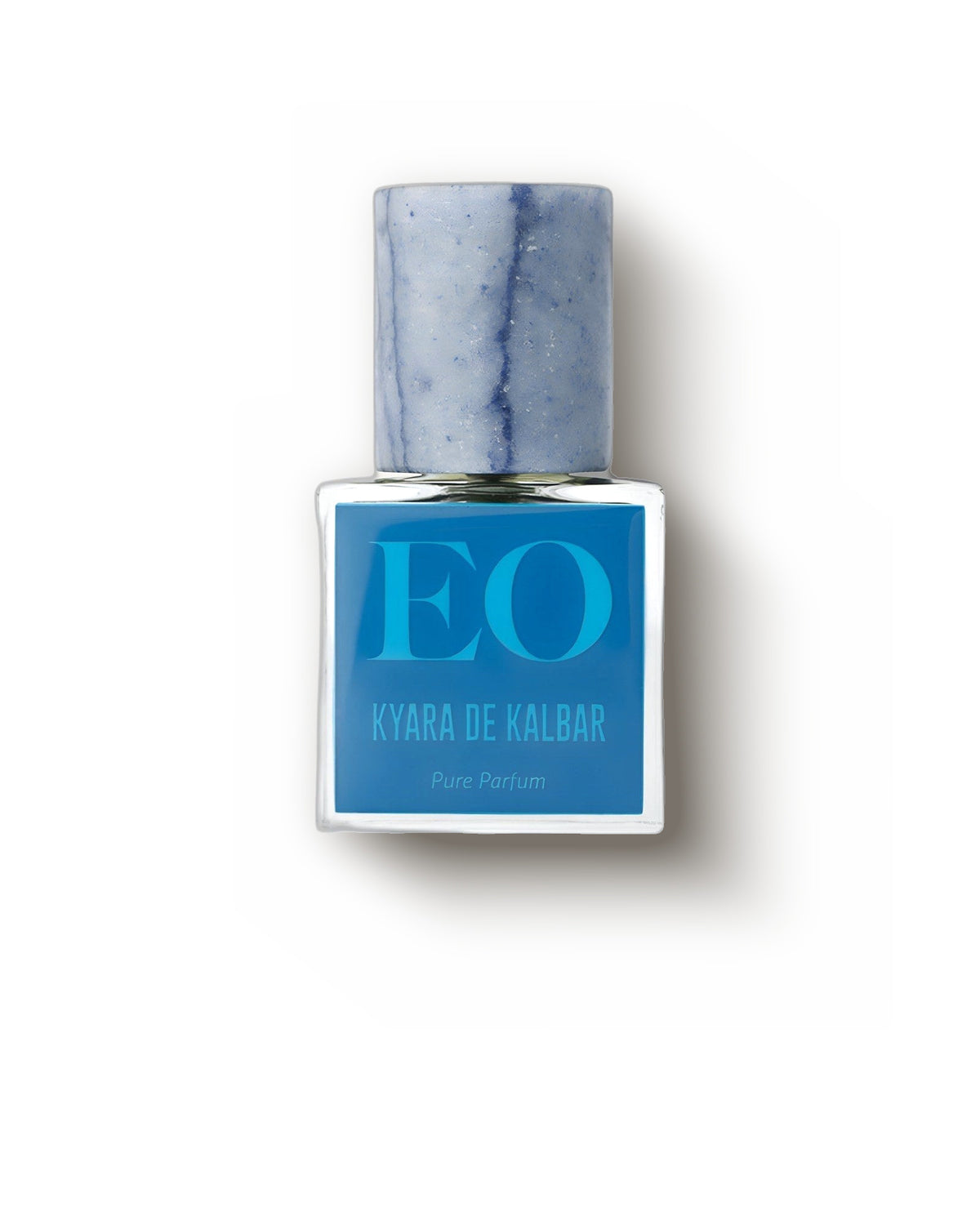
Blue Kalbar
The Story
Blue Kalbar gathers twenty of the rarest materials Ensar Oud has access to, including genuine civet paste, creamy sandalwood and vintage Ta'ifi rose otto, around blue lotus the house sought out in the Thai countryside. Roughly three tonnes of those flowers yield a single kilogram of absolute, and regional output runs to about three kilograms a year.


Woody
Dry grain of cut timber
The smell of cedar shavings, sandalwood, and dry vetiver roots, a sanded, resinous warmth with a faint pencil-box rasp. It feels grounded and composed, the quiet backbone that makes a scent read as serious and lasting.


Animalic
Skin, fur and something not quite tame
A raw, body-warm muskiness that reads of skin, hair and fur, sometimes sweet and powdery, sometimes sharp and faintly feral. At its best you cannot tell where the perfume stops and the wearer starts. At its strongest, it is the reason some people back away.


Floral
A whole garden, never one flower
Not one flower but the impression of many, usually rose, jasmine and orange blossom leaning on each other until no single one is recognizable. Sweet, dewy, faintly powdery, with nectar underneath. It is what people mean when a perfume smells like flowers and they cannot say which.


Blue Cypress
Sweet smoky wood that distils to ink blue
What it is
Not a true cypress, and nowhere near Italy. This is an Australian conifer of the monsoon north, and the still takes chipped wood and bark, not foliage. Different genus, different hemisphere.
How it smells
Warm and sweet where you expected cold and green. Sanded wood, honeyed fruit, a curl of smoke, a faint licorice edge underneath. Closer to a balsamic resin than to a clipped green hedge.
In perfumery
Perfumers build it into the base. A needle oil lifts and vanishes; this one barely moves, so it fixes incense and wood accords in place and stretches the drydown. Citrus reads brighter over it.
Good to know
The blue is not in the tree. Its timber is pale gold. The colour is made in the still: wood and bark go in together, and the heat builds a blue the tree never had.


Lavender
Cool herbal blue from a sunlit hillside
What it is
The flowering tops are cut at peak bloom and go straight to the still, the purple spikes giving up a pale oil. Solvent extraction yields a darker absolute instead. Provence and Bulgaria supply most of it.
How it smells
Sharp and green at first, almost minty, with a cool camphor lift over soft floral sweetness. The dry-down warms into hay, faint vanilla and a powdery calm. True lavender is rounder and sweeter than the lavandin hybrid.
In perfumery
Set it against oakmoss, coumarin and tonka and you have a fougere, the barbershop structure behind countless aromatic masculines. Lavender runs from the top into the heart, cooling bright florals and softening citrus colognes.
Good to know
Those Provence fields the tourists photograph are mostly lavandin, a sterile hybrid that yields far more oil per hectare. True lavender is retreating uphill: a bacterial disease carried by sap-sucking insects has pushed plantings to cooler altitudes.


Taif Rose
A Hejaz mountain rose, dark and peppery
What it is
The thirty-petalled Damask rose, grown on terraced slopes above Taif in western Saudi Arabia. Picking starts before sunrise and runs on into the morning, while the oil is highest, and the blossoms go straight to copper stills.
How it smells
Darker than any European rose: jammy and wine-rich at first, clove-like pepper at the edges, drying into something warm and faintly leathery. Almost none of the dewy softness of Bulgarian otto. Altitude and dry heat did that.
In perfumery
A heart note for when a rose needs weight. Attars layer it with oud, saffron and amber; Western chypres set it against patchouli and oakmoss. It is what you reach for when the soft version will not carry.
Good to know
Several tons of hand-picked blossoms make a single kilogram of oil, and the harvest lasts a few weeks in spring. Miss the window and there is no Taif rose that year. It is sold by the gram.


Thai Blue Lotus Absolute
The sacred water lily of pharaohs and dreams
What it is
Egypt made this flower sacred, though the absolute sold today comes mostly from Thailand and India. The lily roots in mud; its star-shaped blossoms are washed with solvent, then alcohol, into a thick dark extract.
How it smells
Cool and watery to begin with, like a pond at dawn, with a honeyed sweetness and a lychee-soft fruitiness underneath. Then it warms: earthy, faintly spicy, powdery, drying down resinous rather than bright. More meditative than pretty.
In perfumery
A heart note that bridges water and warmth. Perfumers reach for it when a floral needs to feel ancient rather than fresh, mostly in niche work and in amber-incense accords on Egyptian themes.
Good to know
Tomb walls are full of it, a symbol of the sun and rebirth, and tomb art suggests the Egyptians steeped it in wine for a lift. The symbolism was earned: it opens through the morning and closes at dusk.


Kewda Attar
Screwpine blossom, rosy and honeyed over cool water
What it is
The male flowers of a coastal screwpine, hand-plucked at dawn and distilled the same morning, often straight into sandalwood oil. Indian attar makers call them kewda, or kewra.
How it smells
Heady and honey-sweet with a rosy warmth, and then something cool and watery slips underneath. There is a fruity, hyacinth-like richness to the opening; it settles balmy, faintly spiced, more tropical than any rose.
In perfumery
At the heart of Indian attars and incense it does what neither rose nor jasmine can. Sandalwood, saffron and oud take it well, and niche florals reach for it when they want an unfamiliar blossom.
Good to know
A kewda flower has to be processed quickly after picking, so the work is a race, and only the male blooms are worth taking. Ganjam in Odisha supplies most of India's kewda and holds a Geographical Indication on it.


Mimosa
Powdery golden pompoms, honeyed and soft
What it is
The perfumer's mimosa is not a mimosa but a wattle, Australian by birth and so at home on the French Riviera it now looks native. The winter pompoms go into solvent and come out a thick golden absolute.
How it smells
Soft, dry, dusty sweetness over honeyed straw, with almond and violet in it and a cool cucumber-green flicker at the edge. Nothing here is sharp. It settles into powder you want to keep your face near.
In perfumery
A heart note with a little staying power, mimosa turns iris, violet and heliotrope golden and gives a blend a soft naturalness. Its close relative cassie does the same work in older formulas.
Good to know
A mimosa pompom has no petals worth the name. The fluff is hundreds of tiny stamens packed into a ball, which is why the flower reads as texture before it reads as colour.


Nutmeg
Warm baking spice with a hidden narcotic edge
What it is
Two spices come out of one fruit. Split the apricot-like flesh and there is a hard brown seed, nutmeg, wrapped in a scarlet lace of mace. The seed is ground for the kitchen or steam-distilled for perfumery.
How it smells
Warm and dry rather than sweet, with a cool camphor lift on top that stops it feeling like dessert. Underneath, soft wood and a faint balsamic resin. Cozy at first, then oddly sharp, almost pine.
In perfumery
It works high in a fragrance, giving warmth and an ambery glow without the sugar a gourmand note brings. Vanilla, tobacco, lavender and woods take it well. The warm-spice signature of a barbershop fougere is mostly this.
Good to know
Nutmeg holds myristicin, mildly psychoactive and toxic in quantity. In the 1600s the world's entire supply grew on one small cluster of islands, the Banda, and Europe went to war over them.


Orange Blossom
White petals between honey and bitter green
What it is
Neroli and orange blossom absolute come off the same hand-picked white flower of the bitter orange tree: one steam-distilled, the other drawn out with solvent into a waxy concrete. Tunisia, Morocco and the Mediterranean supply most of it.
How it smells
Honeyed nectar at the centre, cut by a clean bitter-green edge and a faint metallic cool. Neroli is the brighter, soapier of the two; the absolute runs warmer and more indolic, with a musky depth under the sweetness.
In perfumery
It is the hinge between citrus and skin: bright enough to follow a lemon top, warm enough to melt into musk. Colognes use the sparkling side; big white florals use the plush, indolic one.
Good to know
Neroli is named for a seventeenth-century princess of Nerola who scented her gloves and her bathwater with it. A kilo of the oil takes roughly a tonne of hand-picked blossoms.


Frangipani
Tropical petals breathing coconut and almond cream
What it is
Five waxy petals on a small tropical tree, plumeria, grown across the Pacific, the Caribbean and India. Solvent or CO2 lifts the scent from picked blooms into an absolute few perfumers ever get to use.
How it smells
Coconut and almond cream, ripe peach behind it, and a green spicy edge that stops it turning syrupy. Milkier and sunnier than jasmine or tuberose, and nowhere near as indolic. It smells like heat on skin.
In perfumery
In the heart it does the work of sunlight, turning a composition creamy. Coconut, ylang, jasmine, sandalwood and vanilla sit alongside it, and when a fragrance smells of hot skin on a beach, this is usually why.
Good to know
Yields run well under a tenth of a percent, so true frangipani absolute is scarce and most of what you smell is a reconstruction. The name comes from a Renaissance Roman family whose almond-scented glove perfume it recalls.


Civet
Animal warmth that makes flowers bloom indecent
What it is
A paste scraped from a pouch under the tail of the African civet, a nocturnal cat-like animal, then tinctured in alcohol. Nearly all perfumery civet today is civetone, made in a lab.
How it smells
Undiluted it is shocking: fecal, indolic, more soiled stable than perfume. At a trace it turns honeyed and leathery, warm as skin, with a low tobacco hum. The shift from repellent to alluring happens entirely through dilution.
In perfumery
Perfumers use it in traces, as base and fixative, to make jasmine and rose smell like they are growing on a living body rather than sitting in a bottle. Animalic chypres and orientals run on it.
Good to know
Animals are still caged and scraped for it in Ethiopia, on a small scale, decades after the lab made that unnecessary. And this is not the palm civet behind kopi luwak coffee: same family, different animal.


Ambergris
Sea-aged whale gold breathing warm salt air
What it is
Perhaps one sperm whale in a hundred makes it: a waxy mass in the gut, thought to coat the squid beaks it cannot digest. Expelled, it drifts for years, curing in sun and salt before washing ashore.
How it smells
Fresh from the whale it is fecal and marine. Years later it is sweet, animalic, softly mineral, all tobacco and dry seaweed and old wood. It reads less as an odor than as warmth, diffusion and breath.
In perfumery
In a base it slows everything down and lends skin-like radiance. Almost every ambergris note is Ambroxan, the synthetic built around the molecule the sea makes; real tinctures survive in bespoke work and old bottles.
Good to know
Collecting or selling it is illegal in the United States, where the whale is protected, though some countries let a beachcomber keep what washes up. Boulder-sized lumps have sold for hundreds of thousands of dollars, hence floating gold.


Sandalwood
Creamy wood, pulled up by the roots
What it is
The richest oil sits in the roots, so the whole tree is pulled up and steam-distilled rather than felled. Mysore in southern India was the classic source, until decades of overcutting pushed the wild trees to the edge.
How it smells
Milk and warm wood, with a rosy, almost buttery edge and nothing sharp at all. What surprises people is how little it moves: no bright opening, no dry-down drama, just the same quiet glow for hours.
In perfumery
It works twice over: as a smell, and as a fixative that holds rose or jasmine in place. Sandalwood is also graded, and the darkest, densest, most resin-heavy old heartwood carries its own name: red meat.
Good to know
A heart worth taking takes about thirty years to form. Plantations of the same species in Western Australia now supply a large share of the world's oil, close to the old Mysore chemistry if not quite its creaminess.


Cedar
Dry sharpened pencils and sun-warmed timber
What it is
Most perfumery cedar is not cedar. It is juniper, from the Virginia and Texas trees, steam-distilled from chips and sawmill shavings. True Atlas cedar exists and is used, but it is the smaller source.
How it smells
Freshly sharpened pencils, then the inside of a cedar-lined closet. Atlas leans warm, smoky and balsamic; Virginia reads sharper and cleaner. Either way it settles into soft sawdust warmth and stays there for hours.
In perfumery
A workhorse. It gives woody compositions their backbone and holds lighter materials in place, sitting comfortably beside vetiver, rose, citrus and amber. Its plummy-woody core runs through most modern unisex woods.
Good to know
Egyptian embalmers poured cedar oil into the body rather than burning it, and cedar timber lined the tombs and coffins they meant to outlast them. The true cedars and the junipers share a name through smell, not lineage.


Natural Oud
Real distilled agarwood, alive and shifting
What it is
The dark resin an Aquilaria tree, wild or cultivated, lays down to defend a wound. The heartwood is ground and slowly distilled, often after a soak of days or weeks that ferments the wood, then the oil is aged for years.
How it smells
Never a fixed note: resinous and smoky one minute, then leather, dried fruit, honey, earth, warm skin. Some open raw and animalic and settle into something meditative and golden. Rarely the same twice across an evening.
In perfumery
Sold by the gram, wildly variable, and regulated under CITES, which is why mainstream perfume mostly reaches for an accord instead. The real oil is sold as dehn al oud across the Gulf and distilled in small batches.
Good to know
The barnyard note that startles newcomers is the signature of fine Indian oils, a warm, hay-like animalic depth that reads as character rather than fault. Oils without it are just as real and far cleaner. Age smooths whatever harshness is left.


East Indian Oud
Hay, barn and leather, oud at its oldest
What it is
Assam and the Brahmaputra valley are the benchmark for what the trade calls Hindi oud. The wood there is soaked and fermented in the old Indian manner, then hydro-distilled in copper stills.
How it smells
The legendary funk: warm barnyard and hay, leather, dried fruit and a chai spine of pepper, cardamom and clove. The opening is famously difficult, even fecal. Then it settles for hours into aged barn, tobacco and smoky leather.
In perfumery
Traditional Arabian and South Asian attars are built on it, worn ceremonially and to mosque. Distillers steer a batch toward honey or leave the barn intact through soaking and fermentation time.
Good to know
'East Indian' is provenance, not a brand: it means northeast India, with Assam its most divisive and most revered oud. One drop outlasts anything beside it. New to oud? Start on a Cambodi, and come here when you want the untamed thing.
Fragrance Character
Blue cypress and lavender open together like wind crossing a cold meadow, resinous and clean. The heart blurs Ta'ifi rose and blue lotus into something between jam and rain, warmed by nutmeg and lifted by the pandanus breath of kewda, with mimosa, orange blossom and frangipani sweetening every edge. Creamy sandalwood and two ouds, one cool and incense-bright Papuan, one smooth and aged East Indian, then settle into civet and ambergris, creamy and animalic and as close to skin as skin itself.


Longevity
how long it stays on skin
The hourglass reads wear time: how many hours the fragrance keeps speaking before it fades. A bar that barely leaves the start means a few fleeting hours. One that runs the full length carries from morning into evening. Treat it as typical, not promised. Oily skin holds scent far longer than dry.


Sillage
the size of its scent trail
Sillage is French for a ship's wake, and that is exactly what this measures: how much of the scent reaches the room instead of staying on you. Low is a whisper only close friends catch. Enormous fills the room, then keeps filling it after you leave.


Experimental
Built to provoke, not to please
Some perfumes are made to be liked. These are made to be argued about: inky tar, hot rubber, fruit on the turn, metal and fur where you expected flowers. The coin glows for a scent that provokes and dims for one that plays it safe, which is sometimes the point.


Office
Polished, and never louder than the room
Scent is manners in a shared room. At this range it should reach the person across the desk and stop there: tidy citrus, soft musk, pale woods, all of it reading competent and considerate. A glowing coin means nobody has to mention it. A dim one means it travels.


Evening
After dark, when it deepens
Dinner, drinks, the night that runs long. Low light is where ambers, resins and smoky woods stop being polite, and where a plush floral finally blooms. A glowing coin means it is waiting for exactly this hour. A dim one means it did its best work in daylight.


Romantic
Close enough to be felt
A fragrance can hum against skin instead of announcing itself across a table. That is the register here: creamy florals, vanilla, soft musk, a thread of spice, warm enough to make someone lean in. The coin glows when a scent sets that mood and dims when it is more practical than seductive.


Formal
Quiet authority in a dressed-up room
A wedding, a ceremony, a room where everyone has thought about their shoes. What works here is structure, not volume: smooth woods, disciplined florals, soft leather. A glowing coin means it holds its posture all evening. A dim one means it is too casual for the room.


Casual
Easy comfort for unhurried days
Errands, coffee, a slow Saturday with nowhere to be. Nothing here has to impress anyone, so the fit is soft and easy: fresh citrus, light woods, a little warmth off the skin. A glowing coin says yes to all that. A dim one means the fragrance is asking for a bigger night.


Day to Night
where its mood naturally falls
A bar running from sun to moon, reading the hour the fragrance was made for. The more of it that stays gold, the more the scent belongs to daylight and open air. The further the blue reaches back toward the sun, the deeper and warmer it turns: evening, candlelight, low rooms.


Winter
Warmth that carries through cold air
Cold air mutes a fragrance and slows it down, which is why winter belongs to the dense and the warm: resin, smoke, vanilla, leather, ambered spice. The bar reads how well this one pushes back, glowing against the chill instead of thinning out in it.


Spring
Fresh blooms in mild, rising warmth
Mild, humid air lifts a light composition, so the season belongs to dewy florals, green stems, soft powder and citrus you can see through. Alive rather than heavy. The further the green runs along the bar, the more comfortably this one wears in that weather.


Summer
Bright and airy in real heat
Heat does the projecting for you, which is why the wrong perfume turns unbearable by noon. What survives is cool and breathable: sharp citrus, salt air, aromatic herbs, water. Things that refresh instead of cloy. A short bar here means save it for cooler months.


Fall
Spiced warmth for cooling days
As the air cools, the rich materials stop smothering and start reading clearly: dry woods, warm spice, tobacco, amber, fruit gone golden. It is the season perfume turns contemplative. The bar fills according to how naturally this one settles into crisp, cooling days.
Best Worn
An easy, unhurried floral-woody for fall and winter, the blue cypress and lavender soft against the cold, equally at home in relaxed daytime wear and worn close in intimate evening moments.
Choose options
The Vibe


The Nose
Composed in-house.
The Maison

Pure artisanal oud, the real resinous thing, poured from the source bottle into your vial.
Ensar Oud treats agarwood the way a vintner treats a single hillside of old vines. These are dense, slow, deeply serious extraits built around aged ouds, grey ambergris and animalic musks most people have only read about. A drop blooms for hours, shifting from smoke to resin to something warm and skin close.
- Origin
- New York, United States
- Founded
- 2004, as Oriscent
- Known for
- Sultani grade oud, true musk

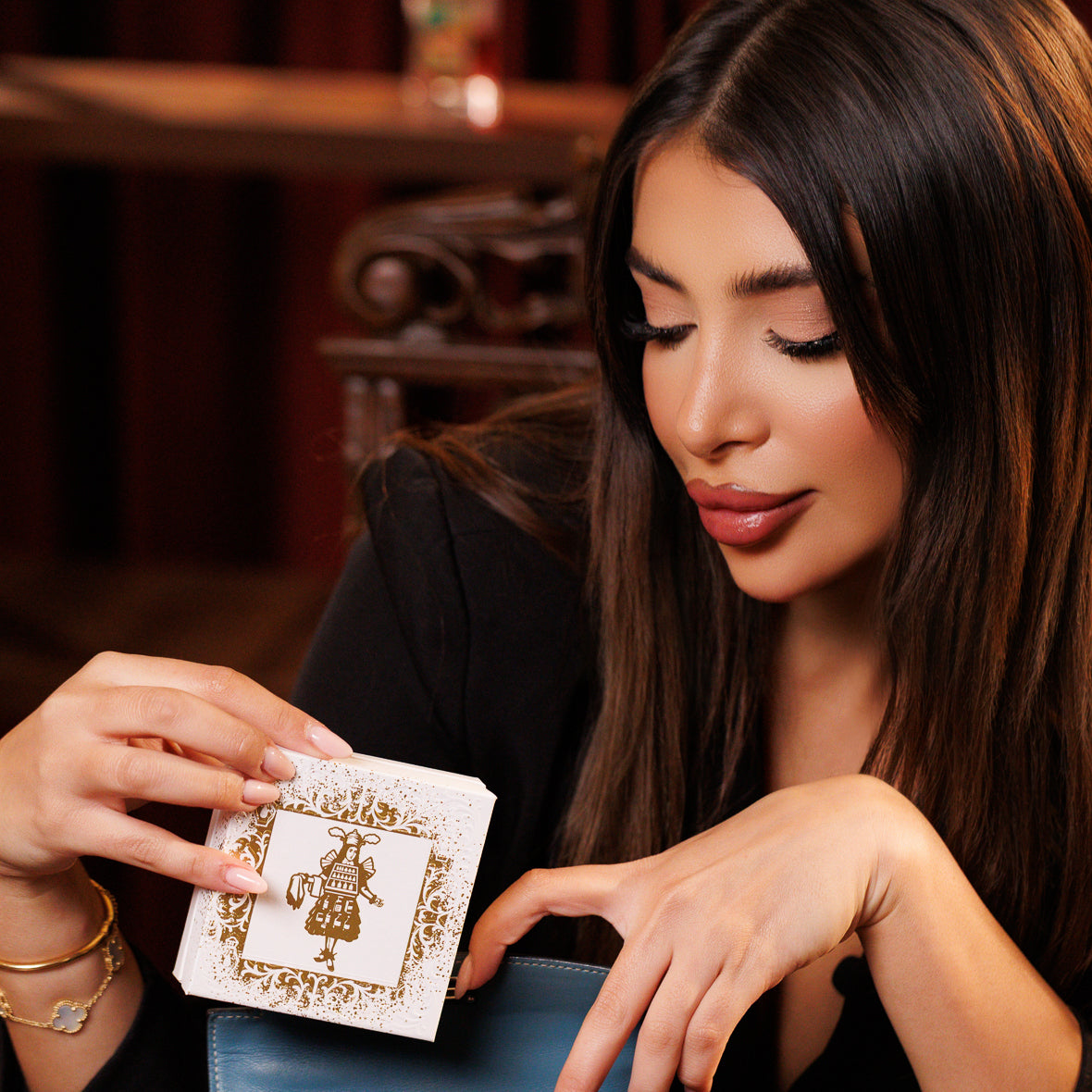
EVERY DECANT
From the original bottle to your door
We buy the original flacon at full retail price, direct from the house.
A medical grade Socorex syringe takes the exact millilitres straight from the flacon.
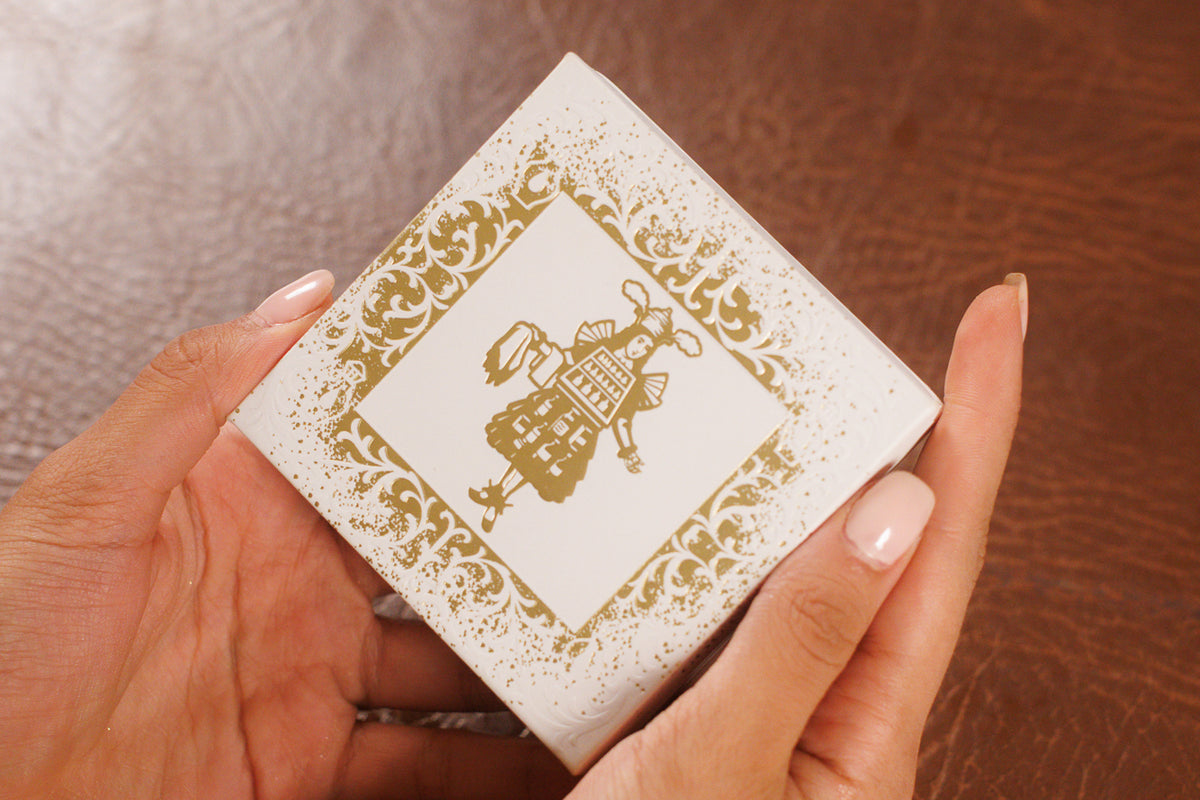
Packed into the hot foiled box and handed to DHL, every duty already paid. How a decant is made
More from Ensar Oud
You may also like