Ensar Oud
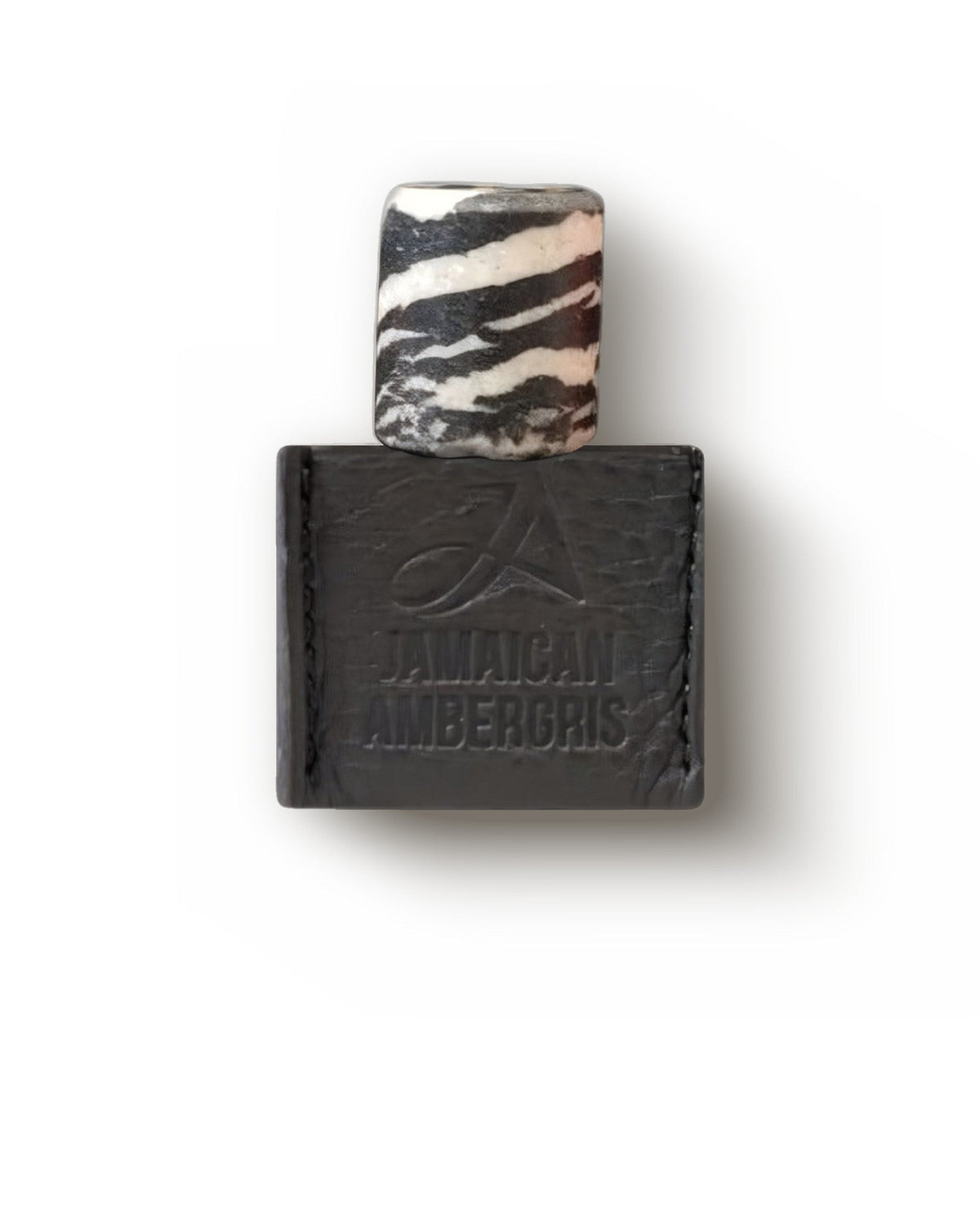
Jamaican Ambergris: Purple Sultani
The Story
The cornerstone of Jamaican Ambergris is grey ambergris sourced from a royal patron's private collection, aged over decades before use. The Purple Sultani edition builds on this base by introducing a Purple Melange of vintage ouds, each carried to purple maturity, with a super-king sinking oud among them. That aged grey ambergris lays down an oceanic, sandy veneer, lifted by rose and frangipani.


Sweet
Warm sugar you cannot quite name
Caramel, honey, spun sugar: sweetness that hovers between all three and never settles on one. This is the gourmand pull, the thing that makes someone lean in closer than they meant to, warm and soft and a half step short of edible.


Woody
Dry grain of cut timber
The smell of cedar shavings, sandalwood, and dry vetiver roots, a sanded, resinous warmth with a faint pencil-box rasp. It feels grounded and composed, the quiet backbone that makes a scent read as serious and lasting.


Floral
A whole garden, never one flower
Not one flower but the impression of many, usually rose, jasmine and orange blossom leaning on each other until no single one is recognizable. Sweet, dewy, faintly powdery, with nectar underneath. It is what people mean when a perfume smells like flowers and they cannot say which.


Lactonic
creamy milk and warm skin
A creamy, milky softness reminiscent of warm steamed milk, milk skin, or coconut flesh without the sweetness. It feels plush and enveloping, smoothing florals and woods into something tender and slightly nostalgic, the warmth of skin more than the sweetness of dessert.


Fruity
Peach skin, not lemon peel
Peach, pear, apple, berry: this is sweetness in the flesh rather than the rind, dewy and nectar-heavy where citrus is sharp and thin. It plays young and slightly greedy, the sort of ripeness you can almost feel running down a wrist.


Grey Ambergris
The long-cured tobacco-marine heart of whale gold
What it is
A sperm whale forms a waxy mass in its gut, sometimes around squid beaks, and expels it at sea; sun, salt and time cure it for years or decades. Grey is the middle grade, past raw black, not yet weathered to white.
How it smells
Wet stone, sea spray, sun-warmed driftwood, and a dry tobacco-leaf sweetness that reads cured rather than sugary. Then the famous part: a warmth less animal than clean skin, that makes your own smell faintly of itself.
In perfumery
Fixative and diffuser at once, stretching a fragrance's life while throwing every other note outward in a salty, sunlit halo. Worked as a true tincture or dissolved in oil, it gives a depth that synthetic ambroxide only approximates.
Good to know
Black still smells of the stable; white has mellowed into the softest, sweetest grade. Grey is where the two meet. It is picked off the tideline rather than taken from a whale.


Purple Sultani Oud
Vintage sinking oud with a purple floral heart
What it is
A sinking-grade oud that the house blends with Terengganu and King Super into one chord, all three distilled decades ago from Malay and Brunei-grade wood that no longer exists and aged until they turned purple. It sits in the family of purple, kinam-like sinking ouds.
How it smells
It smells of flowers, which no one expects from wood. Plum and raspberry over molasses, an iris-toned incense depth, and a dry crystalline edge on the opening that softens into velvety resin. Candied and violet-tinged rather than smoky.
In perfumery
A single smear behaves like a finished perfume and runs for hours, so it is dosed by the drop. Under rose, jasmine, iris or violet it deepens a floral from below instead of shouting over it.
Good to know
Anyone braced for Hindi leather and stable will be wrong-footed. Give it half an hour and the purple floral gets clearer, and since the wood it came from no longer exists, the supply is finite.


Terengganu Oud
Malaysia's purple jam: berried, resinous, narcotically smooth
What it is
Wild agarwood from Terengganu on Malaysia's resin-rich east coast. At its best it is sinking grade, heartwood so loaded with resin that the oil runs dark as obsidian. This is the canonical Malaysian jam oud.
How it smells
Plum and berry over burgundy-glazed resin, with vanilla, pepper and clove smouldering under it. The odd part is the colour: violet-tinged, an ultraviolet where other ouds go blue. It skips the top notes and sits straight down in the resin.
In perfumery
The eudesmol-heavy body of a malaccensis oil reads deep and sweet-woody, and it lasts on skin and fabric. Perfumers use it where they want oud's body and fruit without the barn, alongside rose absolute, tobacco, castoreum and clove.
Good to know
Do not confuse it with its regional cousins: Kelantan runs darker, heavier and more jungle-woody, while Borneo across the water (Malaysian Sabah and Sarawak, Indonesian Kalimantan) skews cool, fresh and blue. Old-growth malaccensis of this grade no longer reaches the market.

King Super Oud
Ensar's benchmark Tigerwood sinker, black as treacle
What it is
King Super is a grade, not a place: Ensar Oud's name for its densest sinking Tigerwood, black-striped with resin. Decades of the living tree's oleoresin had sunk it before it was cut, and the oil is a vintage sinking-grade distillation that pre-dates Ensar's Tigerwood 1995.
How it smells
It opens sooty and black-resinous, a forest floor rolled in coffee grounds and bittersweet cacao, with a wisp of smoke and Peru balsam underneath. Then a cool camphor lift, and a treacle-thick resin that carries weight without sharpness.
In perfumery
Worn neat, or dosed by the gram into a blend, it gives bittersweet resinous depth without the bite of a green distillation. In Ensar's own Tigerwood: King Super it lacquers cacao in coffee and tobacco.
Good to know
Ensar's own line is blunt: this caliber cannot be distilled today. Where a Cambodi reads fruity and a Hindi turns barnyard, King Super goes the other way, fruit cooked out, funk absent, the young oud's edges sanded smooth by age.

Blue Oud
Blue names the temperature, not the liquid
What it is
The blue is a temperature, not a colour. The juice is not blue; the name marks a rare cool, camphor-marine face of agarwood that a handful of woods can produce. In this bottle it is SQ Aoudh al Azraq, the Sultan's own oud, infused with ambergris.
How it smells
Camphor and cold minerals first, like sea glass and alpine air, then a deep resin underneath. The ambergris steeped into it adds a dry, sandy, salt-air warmth.
In perfumery
Cool ouds answer the barnyard cliche, and in this perfume it sits beside three sinking-grade ouds and grey ambergris, a cooler voice against their dense resin. Wear it as the serene counterpoint to a fiery Hindi or a sweet Cambodi oil.
Good to know
Azulene tints do turn up in some raw malaccensis and Sri Lankan distillates, which is where the idea started. Visible blue in a finished bottle is the opposite of a good sign: it usually means pigment was added.
Jambu Oleoresin
Electric daisy that hums on the tongue
What it is
A thick extract from a Brazilian daisy known as the toothache plant. Its yellow, red-eyed flowerheads are loaded with spilanthol, the compound behind the famous tingling, saliva-prompting kick you get from chewing one.
How it smells
Sharp and green, citrus-herbal with a watercress bite and an odd musty coolness. The odour is the smaller half of it: what you notice is the tingle, a fizzing, faintly numbing prickle like carbonation against skin.
In perfumery
Fine fragrance uses it in traces, for touch rather than smell: a sherbet fizz and cooling buzz across citrus, aquatic and herbal tops. Bergamot, mint, ginger and pepper are its usual partners.
Good to know
That buzz has a second career. Spilanthol is a mild local anaesthetic, and it now turns up in lip plumpers, wrinkle creams and fizzing oral-care products far more often than in perfume.

Jasmine Sambac
Tea-green jasmine that opens after dark
What it is
The flowers open after dark, which is when they smell strongest, so pickers take them as buds in the early morning, before they unfurl. Solvent extraction gives a waxy concrete, and washing that with alcohol gives the absolute.
How it smells
Greener and more tea-like than the grandiflorum kind, and much less fruity. It starts crisp and a little waxy, almost banana-tinged, then warms into indolic sweetness. That indole is the animal in it: heady up close, still luminous.
In perfumery
A heart note that gives white-floral bouquets their body and their lift. It works with rose, tuberose, sandalwood and green tea, rounds off sharp citrus, and some night-blooming soliflores are built on almost nothing else.
Good to know
This is sampaguita, the national flower of the Philippines, strung into garlands and used to scent Chinese tea. Tiny blooms picked by hand every morning across a long season put the absolute among the costliest florals.


Georgian Rose
The sunlit, honey-clear damask of the Caucasus
What it is
Damask rose grown in the valleys of the Caucasus and distilled rather than solvent-extracted, which is the whole difference. Otto keeps the crystalline top of the flower; absolute keeps the dark jammy depth. Georgia's comes out unusually clear.
How it smells
Bright, warm and lit from inside: a clear honeyed damask with musky powder under it and a green, almost geranium lift at the top. In the drydown you get the whole shrub, leaves and stems included.
In perfumery
Perfumers use it to put daylight into a dark blend: against oud or musk it lifts rather than thickens. A few drops read clean and floral, while a heavier hand turns it velvety and powdery without clouding it.
Good to know
A true otto congeals in a cool room, around 20C, and melts again in your hand, which is one way to tell it has not been stretched. Hundreds of pounds of blossoms go into a single ounce.


Frangipani
Tropical petals breathing coconut and almond cream
What it is
Five waxy petals on a small tropical tree, plumeria, grown across the Pacific, the Caribbean and India. Solvent or CO2 lifts the scent from picked blooms into an absolute few perfumers ever get to use.
How it smells
Coconut and almond cream, ripe peach behind it, and a green spicy edge that stops it turning syrupy. Milkier and sunnier than jasmine or tuberose, and nowhere near as indolic. It smells like heat on skin.
In perfumery
In the heart it does the work of sunlight, turning a composition creamy. Coconut, ylang, jasmine, sandalwood and vanilla sit alongside it, and when a fragrance smells of hot skin on a beach, this is usually why.
Good to know
Yields are tiny, so true frangipani absolute is scarce and costly: mainstream frangipani is usually a reconstruction, while natural houses use the absolute or CO2 extract itself, sparingly. The name comes from a Renaissance Roman family whose famous glove perfume it is said to recall.


Bourbon Vanilla
Rum, raisin and cream from a cured pod
What it is
Nothing to do with whiskey. Bourbon here means Reunion, formerly the Ile Bourbon, and the name stuck to pods cured there, on Madagascar and in the Comoros: blanched, sweated, sun-dried, then rested in closed boxes for months until the aroma arrives.
How it smells
Dark and creamy, with a rum-and-raisin warmth that ordinary vanilla never reaches. Look under the cream and there is tobacco, prune and a woody spice. It unfolds slowly and stays as a soft, enveloping sweetness.
In perfumery
As a base note it does two jobs, sweetening the composition and holding everything else in place. It sits with tonka, benzoin and sandalwood, forming the plush core of orientals and the dessert drydown of gourmands.
Good to know
Only saffron costs more by weight. Each flower opens for a single day and must be pollinated by hand within hours. The boozy depth is not borrowed from the name: it comes from the curing.


Haitian Vetiver
Grapefruit and green soap over roasted root
What it is
Half the world's vetiver comes off the limestone hills of southern Haiti, where the roots are washed, dried in the sun and steam-distilled. Some houses bottle it neat as Haitian khus; others build oud compositions on it.
How it smells
Zesty from the first second, a grapefruit-and-green-soap lift no other vetiver has. Under the sparkle sits a grassy, faintly floral creaminess and a roasted-root warmth, a whisper of burnt wood rather than a bonfire.
In perfumery
Heavy molecules leave slowly, so the root fixes a fragrance and, like oud, improves with age. It runs top to base in green and citrus work, and stands alone as a soliflore of root.
Good to know
Javanese is the dark, leathery, most intensely earthy one; Réunion Bourbon is rounder, mineral and nutty. Haitian is the bright, dry, faintly floral one, and when a fragrance says only "vetiver", this is usually what is in it.
Massoia Bark
Coconut cream distilled out of rainforest bark
What it is
Strip the bark from this New Guinea rainforest tree and steam it, and what comes off smells like coconut cream. One lactone does nearly all of that work.
How it smells
Fatty, milky, unapologetically coconut. Think toasted flakes and warm milk on opening, sweet almost to the point of too much, then a soft dairy warmth on skin with a dried-fruit, faintly rum-like tail.
In perfumery
At heart and base it gave gourmands, tropical florals and beach accords their creamy volume and sun-warmed-skin softness, alongside tonka, sandalwood and vanilla. Modern coconut-and-milk scents reach the same effect through other creamy lactones.
Good to know
The sensitisation test was never finished. It was too strong, and both the bark oil and the pure lactone are now IFRA-prohibited. Wild Papuan bark is thinning too, because taking it kills the tree.


Peru Balsam
Warm vanilla cinnamon bleeding from wounded bark
What it is
Harvesters scorch the tree, beat the bark until it splits, then pack the wound with cloth and boil the resin out. Almost all of it comes from one stretch of El Salvador, the Costa del Balsamo.
How it smells
Vanilla and cinnamon in a deep sticky resin, with something almost cola-like underneath and a whisper of smoked leather. It starts tarry, then goes soft and powdery, with clove and dried fruit hanging around the edges.
In perfumery
Base note and fixative, the thing that makes an amber last, at home with vanilla, tonka, labdanum and tobacco. The raw exudation is a potent contact allergen, so only purified extracts and distillates ever reach a bottle.
Good to know
The name is a lie of logistics. The resin sailed for Europe out of a Peruvian port and Europe named it after the harbor, while the trees themselves stand in Central America.


Mysore Sandalwood
Creamy heartwood, pulled up roots and all
What it is
Harvesting means uprooting: the oil runs richest in the roots, so in Karnataka the whole tree comes out of the ground. Heartwood only begins forming around ten years, but a heart worth taking is closer to thirty.
How it smells
Cream and warm milk over sawn wood, with a sour-buttery edge that turns almost lactic. Something rosy and balsamic sits underneath. It never sharpens and never smokes, just settles on skin, quiet and close, for hours.
In perfumery
Perfumers use it to hold a blend together: it rounds sharp edges and makes everything above it last longer. Rose, jasmine, violet and oud all soften against it. The great vintage milky-woody orientals are built on it.
Good to know
India cut its own supply almost to collapse. Standing trees and sales now fall under government licence and auction, and genuine Mysore oil has grown scarce, so most sandalwood you meet is Australian plantation wood or a synthetic sandalwood molecule.


Oakmoss
The damp green soul of the forest floor
What it is
Not a moss at all, but a lichen, scraped off oak and other deciduous bark across temperate Europe, Russia and North Africa. Solvents turn the harvested growth into a dark, viscous concrete, then the absolute perfumers actually use.
How it smells
Wet stone, damp bark and something inky and leathery underneath, dry and faintly bitter. This is not fresh green: it is the cool floor beneath old trees after rain has soaked the ground.
In perfumery
The backbone of the chypre: a base note that gives a fragrance its shadow and its spine, classically under bergamot, beside labdanum and patchouli. Anything described as mossy, vintage or green-masculine is usually leaning on it.
Good to know
Oakmoss carries two allergens, atranol and chloroatranol, potent enough that the EU banned them from cosmetics outright. Perfumers use stripped grades now, but it was the earlier cap on the extract that changed how the classic chypre smells.
Fragrance Character
Aged grey ambergris arrives first, dry and faintly saline, meeting the dense, iris-toned purple resin of Purple Sultani and Terengganu. Through the heart, Georgian rose and jasmine sambac surface with clarity before being folded back into massoia bark, peru balsam, and oakmoss. By the drydown, bourbon vanilla and Mysore sandalwood soften everything into a warm resinous skin-scent that holds quietly for hours.


Longevity
how long it stays on skin
The hourglass reads wear time: how many hours the fragrance keeps speaking before it fades. A bar that barely leaves the start means a few fleeting hours. One that runs the full length carries from morning into evening. Treat it as typical, not promised. Oily skin holds scent far longer than dry.


Sillage
the size of its scent trail
Sillage is French for a ship's wake, and that is exactly what this measures: how much of the scent reaches the room instead of staying on you. Low is a whisper only close friends catch. Enormous fills the room, then keeps filling it after you leave.


Experimental
Built to provoke, not to please
Some perfumes are made to be liked. These are made to be argued about: inky tar, hot rubber, fruit on the turn, metal and fur where you expected flowers. The coin glows for a scent that provokes and dims for one that plays it safe, which is sometimes the point.


Office
Polished, and never louder than the room
Scent is manners in a shared room. At this range it should reach the person across the desk and stop there: tidy citrus, soft musk, pale woods, all of it reading competent and considerate. A glowing coin means nobody has to mention it. A dim one means it travels.


Evening
After dark, when it deepens
Dinner, drinks, the night that runs long. Low light is where ambers, resins and smoky woods stop being polite, and where a plush floral finally blooms. A glowing coin means it is waiting for exactly this hour. A dim one means it did its best work in daylight.


Romantic
Close enough to be felt
A fragrance can hum against skin instead of announcing itself across a table. That is the register here: creamy florals, vanilla, soft musk, a thread of spice, warm enough to make someone lean in. The coin glows when a scent sets that mood and dims when it is more practical than seductive.


Formal
Quiet authority in a dressed-up room
A wedding, a ceremony, a room where everyone has thought about their shoes. What works here is structure, not volume: smooth woods, disciplined florals, soft leather. A glowing coin means it holds its posture all evening. A dim one means it is too casual for the room.


Casual
Easy comfort for unhurried days
Errands, coffee, a slow Saturday with nowhere to be. Nothing here has to impress anyone, so the fit is soft and easy: fresh citrus, light woods, a little warmth off the skin. A glowing coin says yes to all that. A dim one means the fragrance is asking for a bigger night.


Day to Night
where its mood naturally falls
A bar running from sun to moon, reading the hour the fragrance was made for. The more of it that stays gold, the more the scent belongs to daylight and open air. The further the blue reaches back toward the sun, the deeper and warmer it turns: evening, candlelight, low rooms.


Winter
Warmth that carries through cold air
Cold air mutes a fragrance and slows it down, which is why winter belongs to the dense and the warm: resin, smoke, vanilla, leather, ambered spice. The bar reads how well this one pushes back, glowing against the chill instead of thinning out in it.


Spring
Fresh blooms in mild, rising warmth
Mild, humid air lifts a light composition, so the season belongs to dewy florals, green stems, soft powder and citrus you can see through. Alive rather than heavy. The further the green runs along the bar, the more comfortably this one wears in that weather.


Summer
Bright and airy in real heat
Heat does the projecting for you, which is why the wrong perfume turns unbearable by noon. What survives is cool and breathable: sharp citrus, salt air, aromatic herbs, water. Things that refresh instead of cloy. A short bar here means save it for cooler months.


Fall
Spiced warmth for cooling days
As the air cools, the rich materials stop smothering and start reading clearly: dry woods, warm spice, tobacco, amber, fruit gone golden. It is the season perfume turns contemplative. The bar fills according to how naturally this one settles into crisp, cooling days.
Best Worn
Best in the cold descent of autumn or deep winter, dressed formally, when the air itself demands weight and complexity.
Choose options
The Vibe


The Nose
Composed in-house.
The Maison

Pure artisanal oud, the real resinous thing, poured from the source bottle into your vial.
Ensar Oud treats agarwood the way a vintner treats a single hillside of old vines. These are dense, slow, deeply serious extraits built around aged ouds, grey ambergris and animalic musks most people have only read about. A drop blooms for hours, shifting from smoke to resin to something warm and skin close.
- Origin
- New York, United States
- Founded
- 2004, as Oriscent
- Known for
- Sultani grade oud, true musk

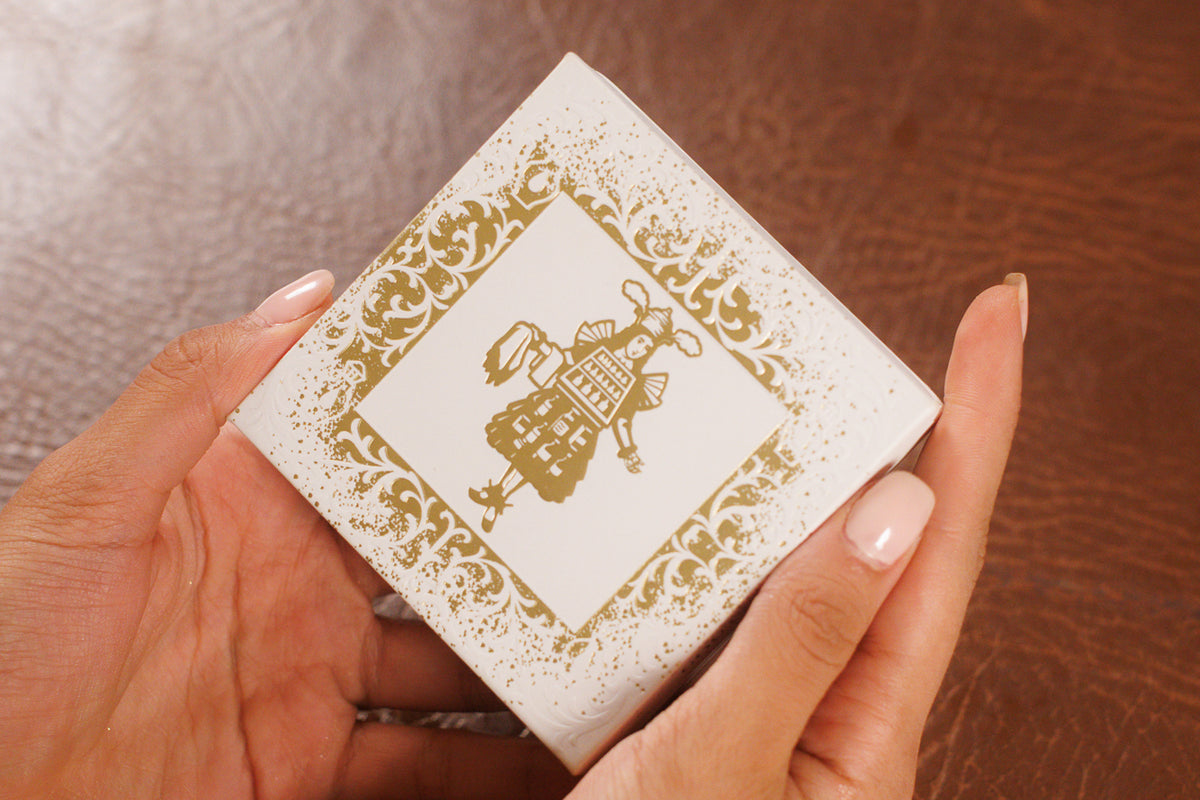
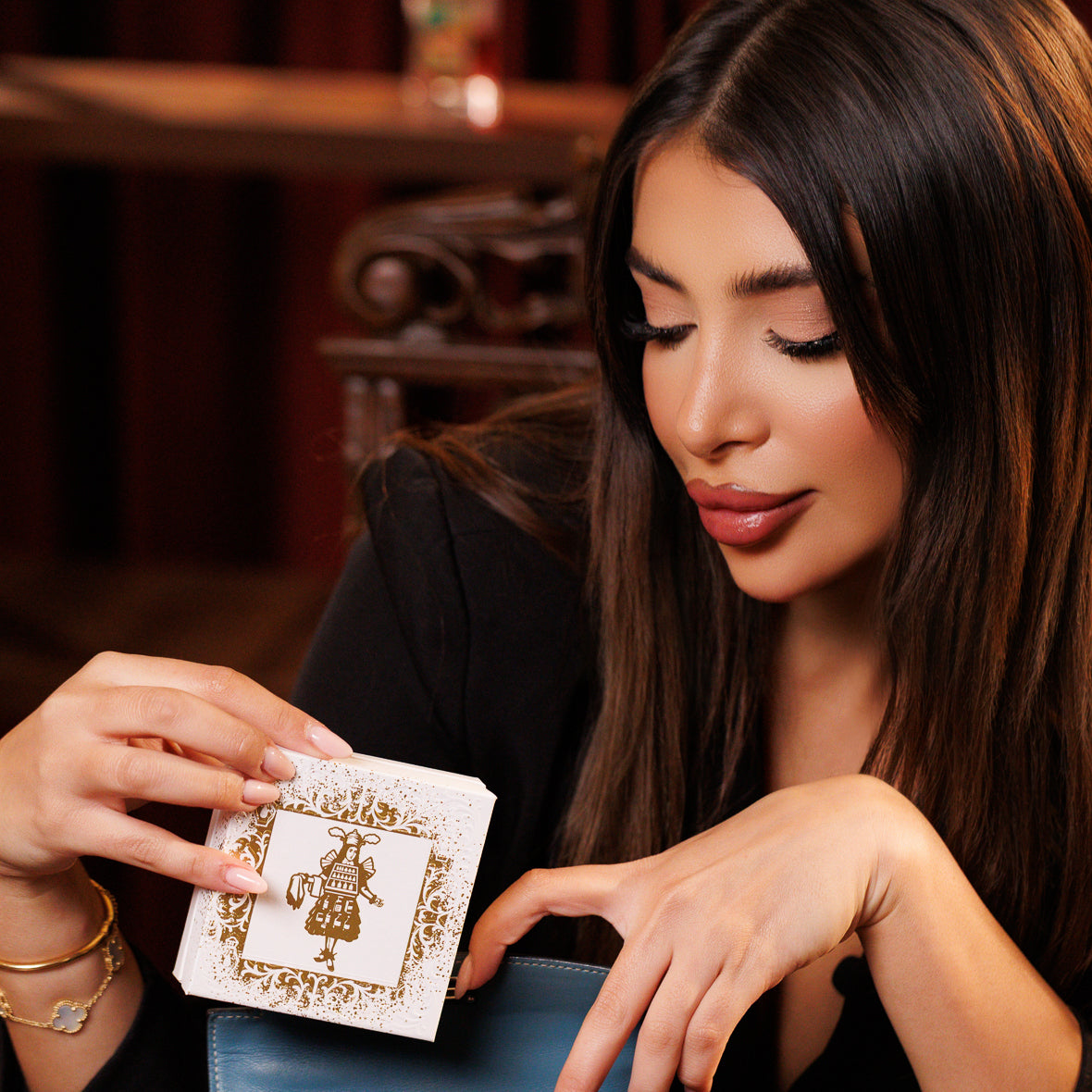
EVERY DECANT
From the original bottle to your door
We buy the original flacon at full retail price, direct from the house.
A medical grade Socorex syringe takes the exact millilitres straight from the flacon.
Packed into the hot foiled box and handed to DHL, every duty already paid. How a decant is made
More from Ensar Oud
You may also like