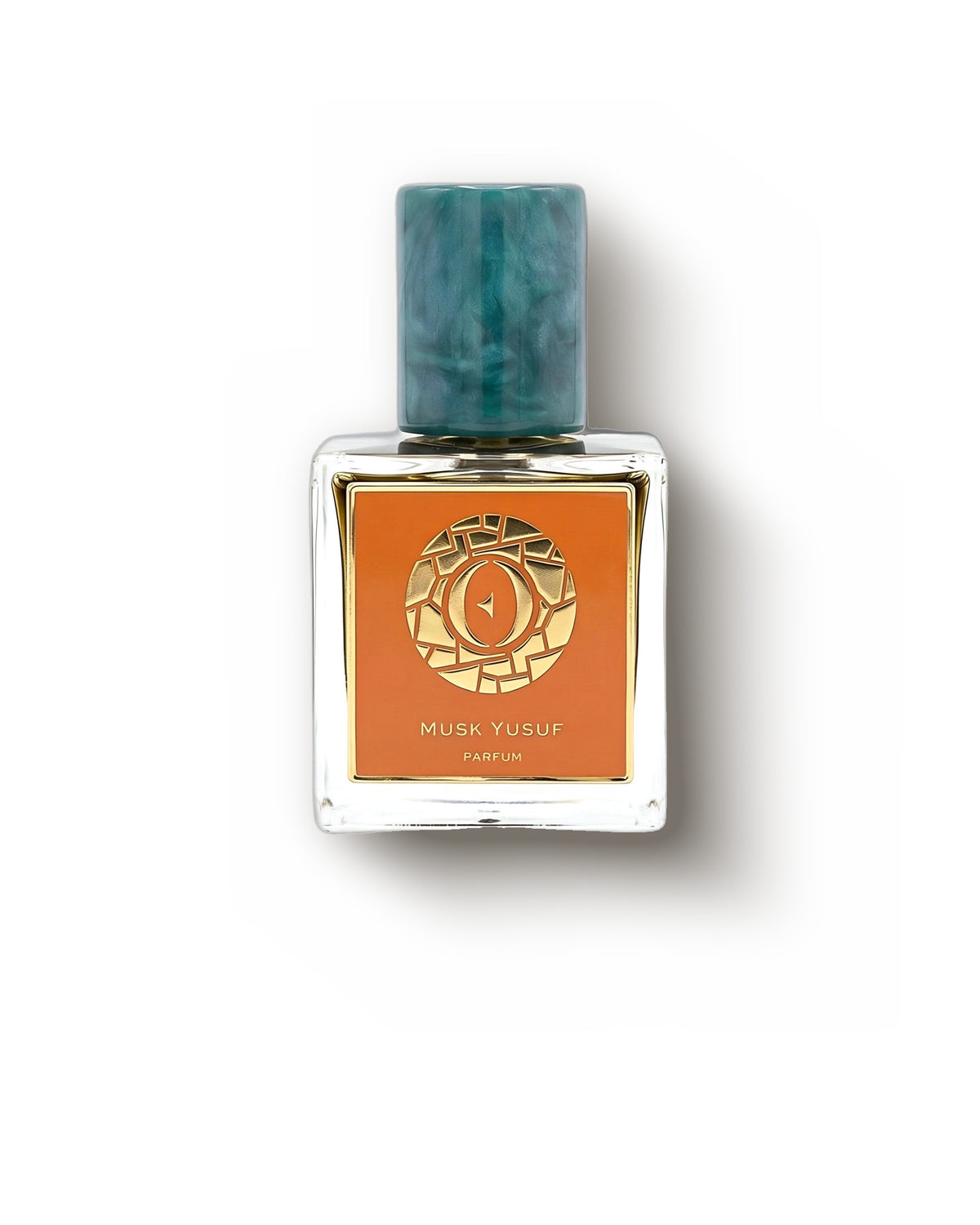
Ensar Oud
Musk Yusuf
The Story
Musk Yusuf takes Oud Yusuf, a Thai oud that Ensar infused himself with vintage Tibetan musk. It is his method in miniature, a finished oil treated as raw material for the next thing rather than as an endpoint.


Animalic
Skin, fur and something not quite tame
A raw, body-warm muskiness that reads of skin, hair and fur, sometimes sweet and powdery, sometimes sharp and faintly feral. At its best you cannot tell where the perfume stops and the wearer starts. At its strongest, it is the reason some people back away.


Musk
warm skin, soft and clinging
A soft, skin-like warmth, slightly powdery and gently animalic, the way real deer musk or the musky side of a natural oud oil smells: sun-warmed bare arms, a little fur, faintly sweet. It hums low and close, rounding off sharper notes and leaving a quiet, intimate trail that reads almost like your own skin amplified.


Spicy
A spice stall in the open air
Black pepper, cardamom and pimento berry, dry rather than sweet, with a heat that catches at the top of the nose before you have finished inhaling. It does not sit quietly under anything. Spice raises the temperature of whatever it is put next to.


Apricot
Sun-warmed velvet with no fruit in it
What it is
There is no apricot in apricot. The fruit gives up nothing worth distilling, so the note gets built: lactones and bright esters in most hands, or osmanthus absolute, which smells of dried apricot and leather on its own.
How it smells
Velvety and sun-warmed, the blush of ripe skin over something creamy and waxy. The lab build holds one apricot shape start to finish. The naturals build is hazier, threaded with tea and honey, and will not sit still.
In perfumery
It sits in the top and heart of fruity florals, chypres and gourmands, adding plush sweetness and lift. Lactones dose predictably and give volume. Osmanthus and davana are costly and harvest-dependent, so they get treated as the centrepiece.
Good to know
Osmanthus and davana turn up in mainstream formulas too, so seeing them on a list proves nothing about how natural a perfume is. The tell is behaviour: a lab apricot stays put and projects, a botanical one wanders.


Peach
Downy skin and cream, no fruit involved
What it is
Press a peach and you get a wet mess, so the note is always built. It rests on lactones, and the trade still sells one of them as aldehyde C-14, which is not an aldehyde and never was.
How it smells
Fuzzy skin first, then flesh: creamy, a little buttery, sweet at the edge of overripe. A lab-built peach reads bright and stays put. One leaning on naturals is hazier, more floral and tea-like, and moves as it dries.
In perfumery
It works in the heart, carrying rose and white florals down into woods, amber and musk. Osmanthus is the shortcut: that flower makes the same lactones itself, which is why it smells of apricot and peach on its own.
Good to know
Lactones are stubborn, so peach lasts whichever way it is built. One of them can now be brewed instead of synthesised, castor oil fed to yeast, which is enough to make that version count as natural.


Frangipani
Tropical petals breathing coconut and almond cream
What it is
Five waxy petals on a small tropical tree, plumeria, grown across the Pacific, the Caribbean and India. Solvent or CO2 lifts the scent from picked blooms into an absolute few perfumers ever get to use.
How it smells
Coconut and almond cream, ripe peach behind it, and a green spicy edge that stops it turning syrupy. Milkier and sunnier than jasmine or tuberose, and nowhere near as indolic. It smells like heat on skin.
In perfumery
In the heart it does the work of sunlight, turning a composition creamy. Coconut, ylang, jasmine, sandalwood and vanilla sit alongside it, and when a fragrance smells of hot skin on a beach, this is usually why.
Good to know
Yields run well under a tenth of a percent, so true frangipani absolute is scarce and most of what you smell is a reconstruction. The name comes from a Renaissance Roman family whose almond-scented glove perfume it recalls.
Musk Motia


Orange Blossom
White petals between honey and bitter green
What it is
Neroli and orange blossom absolute come off the same hand-picked white flower of the bitter orange tree: one steam-distilled, the other drawn out with solvent into a waxy concrete. Tunisia, Morocco and the Mediterranean supply most of it.
How it smells
Honeyed nectar at the centre, cut by a clean bitter-green edge and a faint metallic cool. Neroli is the brighter, soapier of the two; the absolute runs warmer and more indolic, with a musky depth under the sweetness.
In perfumery
It is the hinge between citrus and skin: bright enough to follow a lemon top, warm enough to melt into musk. Colognes use the sparkling side; big white florals use the plush, indolic one.
Good to know
Neroli is named for a seventeenth-century princess of Nerola who scented her gloves and her bathwater with it. A kilo of the oil takes roughly a tonne of hand-picked blossoms.


Mimosa
Powdery golden pompoms, honeyed and soft
What it is
The perfumer's mimosa is not a mimosa but a wattle, Australian by birth and so at home on the French Riviera it now looks native. The winter pompoms go into solvent and come out a thick golden absolute.
How it smells
Soft, dry, dusty sweetness over honeyed straw, with almond and violet in it and a cool cucumber-green flicker at the edge. Nothing here is sharp. It settles into powder you want to keep your face near.
In perfumery
A heart note with a little staying power, mimosa turns iris, violet and heliotrope golden and gives a blend a soft naturalness. Its close relative cassie does the same work in older formulas.
Good to know
A mimosa pompom has no petals worth the name. The fluff is hundreds of tiny stamens packed into a ball, which is why the flower reads as texture before it reads as colour.


Clove
Warm spice with a numbing, dentist-chair bite
What it is
The clove you know is a flower stopped before it opened. Buds come off the tree as they flush pink, dry to small brown nails, and go to the still as clove bud oil.
How it smells
Hot and dry, with a tingle that turns numb: eugenol, the same compound a dentist uses. Under the burn sits a woody, fruity sweetness and a slow balsamic trail of pomanders and mulled wine.
In perfumery
Perfumers use it in the heart for heat and old-world richness, beside carnation, rose and vanilla. Caron's Poivre opens on clove and pepper over a carnation heart, and the same spice warms a shelf of chypres and fougeres.
Good to know
Clove was once among the most prized spices in Europe, and the Dutch razed whole groves in the Spice Islands to control supply. Eugenol can turn skin allergic, so IFRA caps the eugenol in a finished perfume, whichever material it comes from.


Osmanthus
Apricot and soft leather in a tiny gold flower
What it is
Tiny orange-gold flowers that China has scented its tea and its wine with for centuries. They are gathered by hand, drawn into a waxy concrete with solvent, then washed down to the absolute perfumers buy.
How it smells
Apricot first, ripe and almost jammy, then peach and black tea. Give it a minute and suede appears, soft and slightly smoky, the way a well-worn glove smells. It dries toward raisin rather than sugar.
In perfumery
A heart note that sits exactly between fruit, flower and leather, which is why it can sweeten a composition without any sugar in it. Black tea, rose and apricot accords go with it naturally; so does actual leather.
Good to know
It takes about a tonne of those minuscule flowers to make one kilo of absolute. The tree belongs to the harvest moon and to love there, a lot of meaning for a flower this small.


Narcissus
Hay, honey and a green animal hush
What it is
Forget the bright daffodil on a windowsill. This absolute comes from the poet's narcissus, combed by hand off high meadows on France's Aubrac plateau during a few weeks of late-spring bloom.
How it smells
Green and heady at once: bruised petals, fresh hay, a curl of tobacco, and an indolic sweetness that reads almost fecal. It opens grassy, then turns earthy, leathery and mossy. Darker and stranger than any daffodil should be.
In perfumery
In the heart it deepens chypres and florals with hay and moss, sitting well beside jasmine, oakmoss, immortelle and leather. Its black animalic streak is what anchors the darkest vintage florals.
Good to know
Yield is tiny and the harvest window is weeks, which puts it among the costliest florals. The name probably comes not from the Greek youth at the pool but from narke, numbness, for the head-spinning scent.


Tibetan Musk
High-altitude deer musk, dry, bright and chocolate-smooth
What it is
Where it comes from is the whole story. Real deer musk from the high mountains of the Tibetan plateau comes up dry and clean instead of farmyard-heavy, and the artisanal releases carrying it draw on stock held privately for decades.
How it smells
It bites first, a brief feral, urinous flash, then opens out. Lemony lift, a swell of blackcurrant, an animal warmth that turns frankly chocolatey as it settles. Dry and luminous where cruder musks go phenolic and sharp.
In perfumery
A trace carries enormous projection, so it is dosed by the breath rather than the gram. Compositions built on it leave it exposed, ringed with blackcurrant, frankincense, amber and lavender, and its dryness keeps sweet resins from turning heavy.
Good to know
Set it beside a synthetic white musk and the difference is immediate: galaxolide smells soapy and flat, one idea repeated. Siberian musk runs more urinous and animalic. Tibetan stock, long traded as Tonkin musk, has been the most prized grade.


Thai Oud
Smouldering leather with a fruity thread
What it is
Oud distilled in Thailand, much of it from plantations in the eastern provinces around Trat, though Thai stills run on more than one Aquilaria species. Wood is commonly aged for years before it ever reaches the pot.
How it smells
Smouldering rather than burning: tannic leather, warm spice and honeyed tobacco with a bright fruity thread running under it. The camphor edge keeps things bracing, almost antiseptic, and a faint animal warmth sits beneath.
In perfumery
It sits between the sweet Cambodian style and the animalic Hindi one: smoky leather depth without the barnyard, which is why artisan distillers and blenders both reach for it. Trat oils are the most sought of the lot.
Good to know
Trat shares the Cardamom range with Cambodia, so border oils can echo Khmer sweetness while carrying far more leather and smoke. Years of ageing before distillation is what rounds off the medicinal sharpness.
Fragrance Character
The fruit is vivid from the first second and lingers through the wear, even as jasmine and mimosa thicken the heart into a dense, almost waxy floral. Clove and the dry Tibetan spices keep the composition warm and slightly metallic. On the drydown, Thai oud rises with the Tibetan musk infused into it, a deep, earthy skin scent that projects broadly at first, then settles into a close, animalic warmth that persists for hours.


Longevity
how long it stays on skin
The hourglass reads wear time: how many hours the fragrance keeps speaking before it fades. A bar that barely leaves the start means a few fleeting hours. One that runs the full length carries from morning into evening. Treat it as typical, not promised. Oily skin holds scent far longer than dry.


Sillage
the size of its scent trail
Sillage is French for a ship's wake, and that is exactly what this measures: how much of the scent reaches the room instead of staying on you. Low is a whisper only close friends catch. Enormous fills the room, then keeps filling it after you leave.


Experimental
Built to provoke, not to please
Some perfumes are made to be liked. These are made to be argued about: inky tar, hot rubber, fruit on the turn, metal and fur where you expected flowers. The coin glows for a scent that provokes and dims for one that plays it safe, which is sometimes the point.


Office
Polished, and never louder than the room
Scent is manners in a shared room. At this range it should reach the person across the desk and stop there: tidy citrus, soft musk, pale woods, all of it reading competent and considerate. A glowing coin means nobody has to mention it. A dim one means it travels.


Evening
After dark, when it deepens
Dinner, drinks, the night that runs long. Low light is where ambers, resins and smoky woods stop being polite, and where a plush floral finally blooms. A glowing coin means it is waiting for exactly this hour. A dim one means it did its best work in daylight.


Romantic
Close enough to be felt
A fragrance can hum against skin instead of announcing itself across a table. That is the register here: creamy florals, vanilla, soft musk, a thread of spice, warm enough to make someone lean in. The coin glows when a scent sets that mood and dims when it is more practical than seductive.


Formal
Quiet authority in a dressed-up room
A wedding, a ceremony, a room where everyone has thought about their shoes. What works here is structure, not volume: smooth woods, disciplined florals, soft leather. A glowing coin means it holds its posture all evening. A dim one means it is too casual for the room.


Casual
Easy comfort for unhurried days
Errands, coffee, a slow Saturday with nowhere to be. Nothing here has to impress anyone, so the fit is soft and easy: fresh citrus, light woods, a little warmth off the skin. A glowing coin says yes to all that. A dim one means the fragrance is asking for a bigger night.


Day to Night
where its mood naturally falls
A bar running from sun to moon, reading the hour the fragrance was made for. The more of it that stays gold, the more the scent belongs to daylight and open air. The further the blue reaches back toward the sun, the deeper and warmer it turns: evening, candlelight, low rooms.


Winter
Warmth that carries through cold air
Cold air mutes a fragrance and slows it down, which is why winter belongs to the dense and the warm: resin, smoke, vanilla, leather, ambered spice. The bar reads how well this one pushes back, glowing against the chill instead of thinning out in it.


Spring
Fresh blooms in mild, rising warmth
Mild, humid air lifts a light composition, so the season belongs to dewy florals, green stems, soft powder and citrus you can see through. Alive rather than heavy. The further the green runs along the bar, the more comfortably this one wears in that weather.


Summer
Bright and airy in real heat
Heat does the projecting for you, which is why the wrong perfume turns unbearable by noon. What survives is cool and breathable: sharp citrus, salt air, aromatic herbs, water. Things that refresh instead of cloy. A short bar here means save it for cooler months.


Fall
Spiced warmth for cooling days
As the air cools, the rich materials stop smothering and start reading clearly: dry woods, warm spice, tobacco, amber, fruit gone golden. It is the season perfume turns contemplative. The bar fills according to how naturally this one settles into crisp, cooling days.
Best Worn
A cold-weather companion that carries from a quiet fireside afternoon into the evening, worn close on someone with nothing to prove, its waxy florals and warm clove drawn out by the autumn and winter chill.
Choose options
The Vibe


The Nose
Composed in-house.
The Maison

Pure artisanal oud, the real resinous thing, poured from the source bottle into your vial.
Ensar Oud treats agarwood the way a vintner treats a single hillside of old vines. These are dense, slow, deeply serious extraits built around aged ouds, grey ambergris and animalic musks most people have only read about. A drop blooms for hours, shifting from smoke to resin to something warm and skin close.
- Origin
- New York, United States
- Founded
- 2004, as Oriscent
- Known for
- Sultani grade oud, true musk

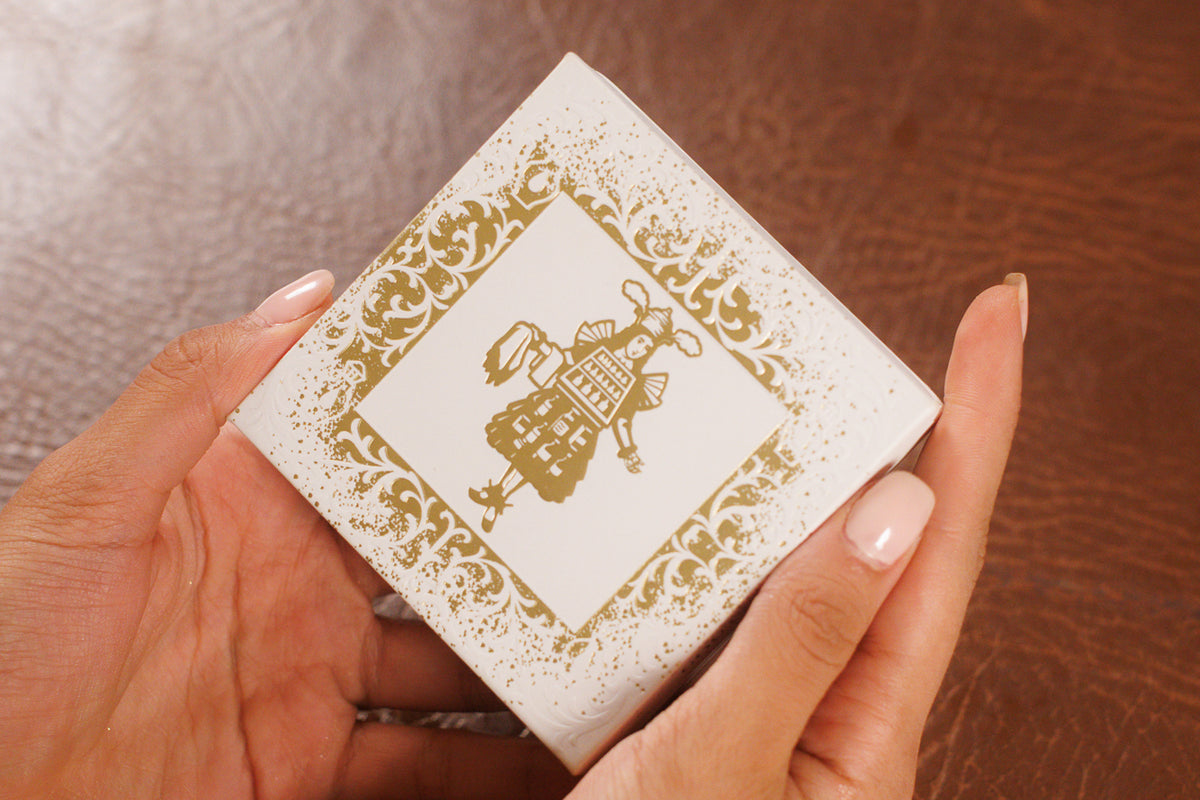
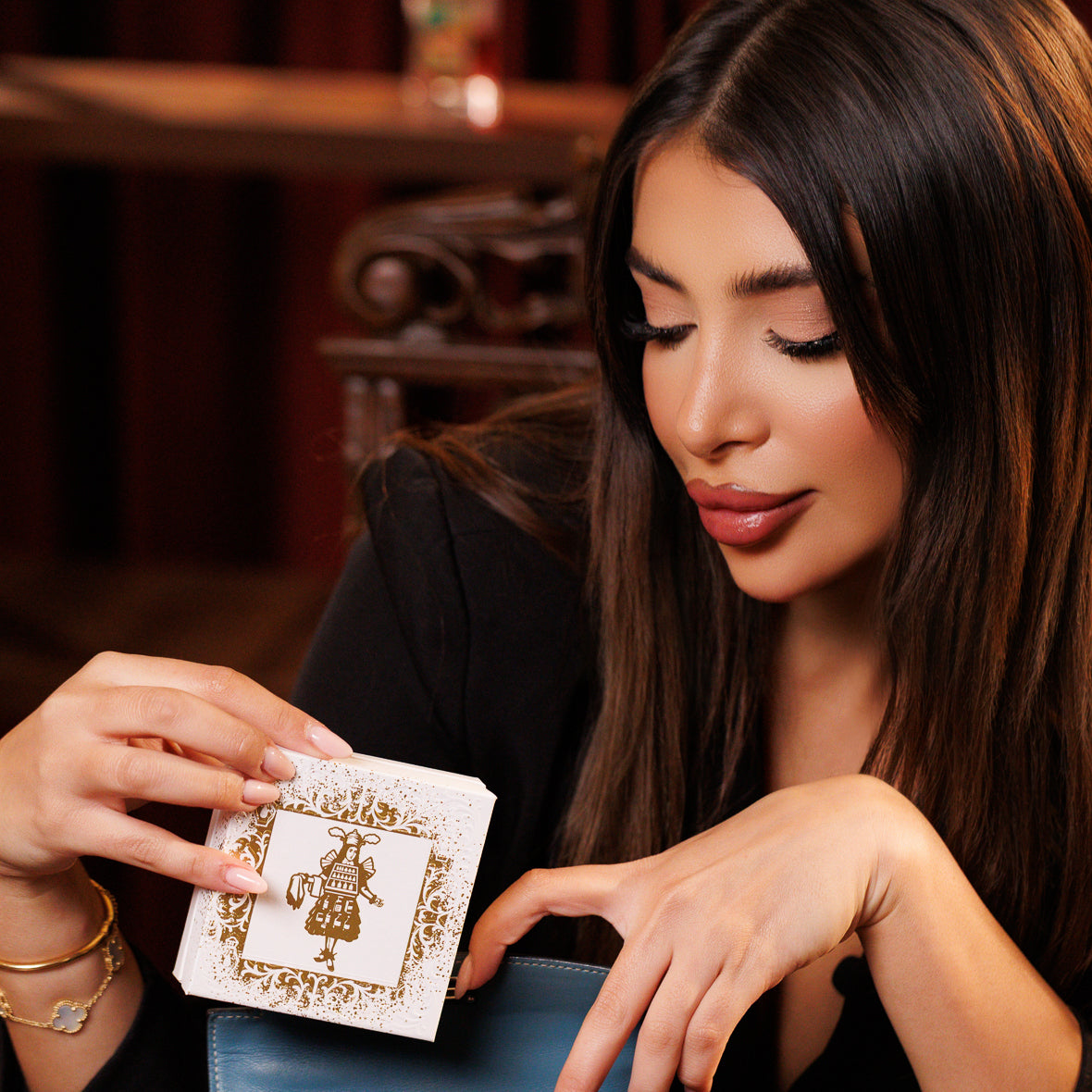
EVERY DECANT
From the original bottle to your door
We buy the original flacon at full retail price, direct from the house.
A medical grade Socorex syringe takes the exact millilitres straight from the flacon.
Packed into the hot foiled box and handed to DHL, every duty already paid. How a decant is made
More from Ensar Oud
You may also like