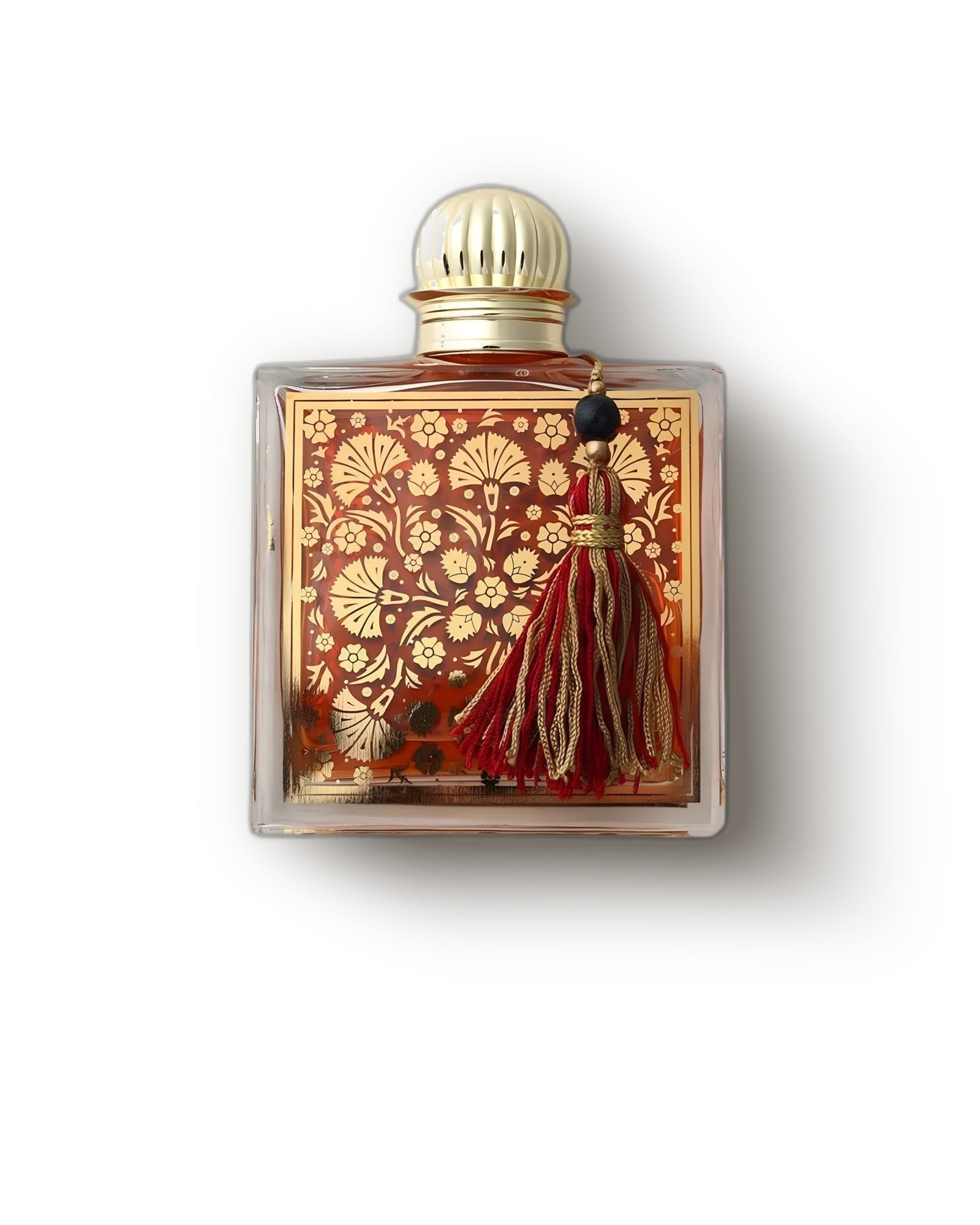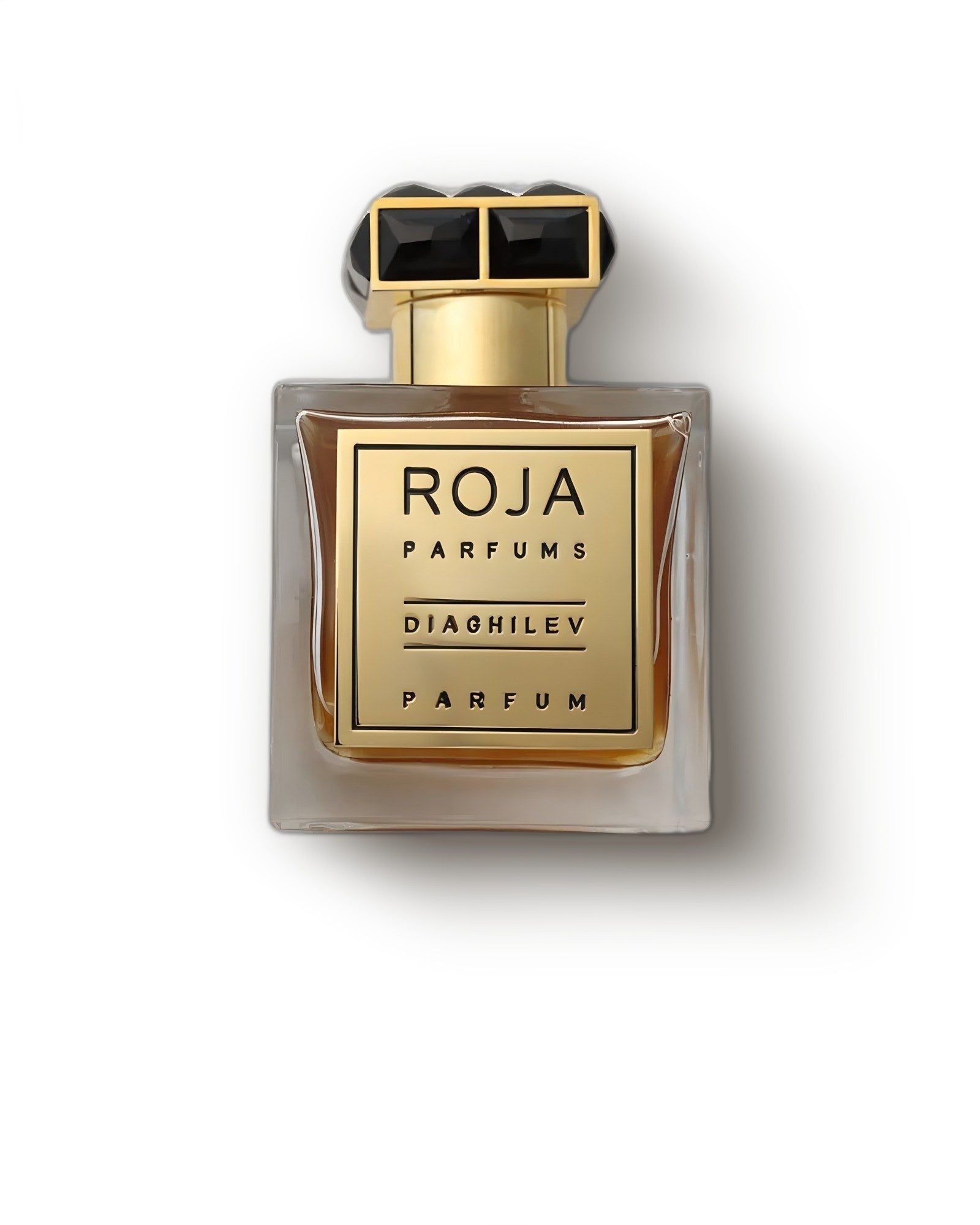


Roja - Diaghilev
The Story
The Victoria and Albert Museum commissioned this for its 2010 Ballets Russes exhibition, in homage to the impresario Sergei Diaghilev, and released it in an edition of a thousand bottles. Diaghilev had the stage curtains sprayed with Guerlain's Mitsouko before performances, and Roja Dove answered that with a chypre of his own.


Woody
Dry grain of cut timber
The smell of cedar shavings, sandalwood, and dry vetiver roots, a sanded, resinous warmth with a faint pencil-box rasp. It feels grounded and composed, the quiet backbone that makes a scent read as serious and lasting.


Musky
Warm breath of clean skin
A soft, slightly animalic warmth that smells like clean skin and freshly dried laundry, intimate and faintly sweet. It hums quietly underneath a fragrance, a second skin that only registers when someone is already standing close enough to catch it.


Animalic
Skin, fur and something not quite tame
A raw, body-warm muskiness that reads of skin, hair and fur, sometimes sweet and powdery, sometimes sharp and faintly feral. At its best you cannot tell where the perfume stops and the wearer starts. At its strongest, it is the reason some people back away.


Powdery
Soft hush of dressed skin
A velvety, slightly dry softness of iris root, violet, and fine talc, like face powder or clean linen warmed by skin. It feels intimate, refined, and nostalgic, blurring a fragrance into a gentle, cushioned haze.


Amber
Resin warmed until it goes sweet
Labdanum, benzoin and vanilla melted together into something sweet but dusky, like tree sap gone soft in the sun with a thread of incense smoke through it. Amber does not sparkle or shout. It sits close to the skin and gives off heat for hours.


Mossy
inky green shade under old oaks
The damp, inky smell of oakmoss and treemoss, lichens rather than true mosses, gathered from shaded oak and fir bark, faintly bitter with a cool woody depth. It grounds a fragrance in forest-floor shadow, lending an old, melancholy elegance that feels like breathing in a rain-soaked wood.


Bergamot
Sparkling citrus light with a bitter edge
What it is
Nobody eats bergamot. It is sour, seedy and disappointing, and almost the whole world's supply grows on one strip of Calabrian coast, farmed purely for the oil pressed cold from its green rind.
How it smells
Zest and green light in the first second, then something rounder than lemon: a floral, tea-like smoothness sitting on a faintly bitter warmth. It burns off fast. What stays behind is a quiet, slightly spiced hum.
In perfumery
It defines eau de cologne, and sits on top of nearly every fougère alongside lavender and oakmoss. Perfumers want the first bright second it gives, and the oil is also what makes Earl Grey smell like Earl Grey.
Good to know
The thing that makes it sparkle can also burn. Bergamot carries bergapten, which leaves skin hypersensitive to sunlight, so perfumers either keep the dose low or reach for a grade with the molecule stripped out.


Tarragon
Named for a dragon, tastes of liquorice
What it is
A daisy-family herb whose leaves and flowering tops are steam-distilled into an oil loaded with estragole, the molecule behind its anise streak. Central Asia gave it to the world and France made it worth cooking with.
How it smells
Green and herbaceous with a sweet anise lift, fennel and liquorice crossed with fresh-cut grass. A peppery, basil-like coolness runs underneath. Bright and watery close up, then a soft warm-herbal hum, never the sugary heaviness of pure anise.
In perfumery
A top note bringing green freshness and a whiff of the kitchen, set beside lavender, citrus and clary sage in aromatic fougeres. Mid-century citrus colognes opened on it and fresh colognes still do.
Good to know
Estragon traces to a word for little dragon, after the coiled roots or an old belief it cured snakebite. French tarragon sets sterile seed and spreads only from cuttings; the Russian sort grows from seed and barely smells.


Orange
Sun in the rind, bright and bittersweet
What it is
Squeeze a fresh peel and the mist that flies off it is the perfume material, pressed cold from the rind rather than distilled. Bitter orange is a separate tree, its blossom giving neroli and its leaves petitgrain.
How it smells
Sweet pulp over a rind that bites back. It opens sparkling, sunlit and briefly tart, then rounds off into something candied. Next to lemon it is warmer and softer, less a knife than a glass of juice.
In perfumery
Nearly always a top note: the burst is bright and gone within the hour. It works with neroli, bergamot, clove and warm spice, and carries Atelier Cologne Orange Sanguine and the whole eau de cologne tradition.
Good to know
Cold-pressed sweet orange peel carries almost none of the molecules behind citrus photosensitivity, so it is not treated as phototoxic the way bergamot, lime and bitter orange are. It is volatile, though, and oxidizes fast: brilliant, brief.


Lemon
Cold yellow zest snapping into bright sun
What it is
Squeezed, not distilled: the colored rind is pressed and scraped until the glands give up their oil. Italy and California grow most of what perfumery uses. The tree's white blossom is a different note entirely.
How it smells
Tart, green and fizzing, all cold rind and mouth-watering sourness, with a faint sweet pith underneath and a waxy edge from the peel itself. Enjoy it fast: it is gone within minutes.
In perfumery
It powers the eau de cologne tradition, working with bergamot, neroli and petitgrain to open a fragrance in full sunlight. Because it burns off so fast, perfumers reinforce it with citral.
Good to know
Cold-pressed lemon carries furocoumarins that leave skin liable to burn in sunlight, so perfumers often reach for a stripped grade. It also spoils in the bottle, oxidizing toward turpentine, which is why citrus fragrances are hard to stabilize.


Lime
Green citrus zest with a bitter peel snap
What it is
The oil leaves the fruit two ways. Cold pressing squeezes it straight out of the green peel; distillation boils it off the whole crushed fruit, a grade made largely for the soft-drink trade. They do not smell alike.
How it smells
Pressed lime is sharp and bitter and wet, exactly a wedge cut a second ago. Distilled lime is rounder and almost candied, all cola and soda fizz. Both fade fast and leave a thin green, faintly soapy dryness.
In perfumery
Lime goes at the top, cutting richness and making the first few minutes feel carbonated. Basil, mint, vetiver and rum are its usual company, in colognes, fougeres and every gin-and-tonic accord ever built.
Good to know
Sunlight is the catch. The compounds that make cold-pressed lime smell alive leave skin hypersensitive to it, so the dose is capped. Distillation strips them out, which is why lime in perfumery smells of soda not peel.


Peach
Downy skin and cream, no fruit involved
What it is
Press a peach and you get a wet mess, so the note is always built. It rests on lactones, and the trade still sells one of them as aldehyde C-14, which is not an aldehyde and never was.
How it smells
Fuzzy skin first, then flesh: creamy, a little buttery, sweet at the edge of overripe. A lab-built peach reads bright and stays put. One leaning on naturals is hazier, more floral and tea-like, and moves as it dries.
In perfumery
It works in the heart, carrying rose and white florals down into woods, amber and musk. Osmanthus is the shortcut: that flower makes the same lactones itself, which is why it smells of apricot and peach on its own.
Good to know
Lactones are stubborn, so peach lasts whichever way it is built. One of them can now be brewed instead of synthesised, castor oil fed to yeast, which is enough to make that version count as natural.


Ylang-Ylang
Sun-warmed tropical bloom, banana-cream and jasmine
What it is
A drooping yellow star of a flower, hand-picked from a tropical tree and held in the still for fifteen to twenty hours. The run is drawn off in stages, each one a different grade, Extra down to Third.
How it smells
Creamy and heady, jasmine over something like banana custard, with rubber and clove threaded through. Extra grade is the bright, fruity, spicy one; the later fractions go deeper, fatter and faintly medicinal, drying down waxy and round.
In perfumery
In the heart it bridges jasmine, rose and tuberose, and it keeps citrus tops from turning thin. It carries the floral bouquet inside the aldehydic classics, and it is the reason a solar tiare accord smells tropical.
Good to know
In Indonesia the blossoms are scattered over the beds of newlyweds. The name is Tagalog, ilang-ilang, flower of flowers. The most fragrant blooms are taken at dawn, while they are still cool.


Jasmine
The heady white flower at perfumery's beating heart
What it is
Picking runs by hand in the dark, from before first light into the morning. The blossoms are too fragile to distill, so solvent lifts their oil into a waxy concrete, and alcohol washes the absolute out of that.
How it smells
Sweet, heavy and honeyed, with something faintly animal underneath. Sambac reads green, tea-like and luminous; grandiflorum is fruitier, creamier, heavier on the skin. Both dry down warm and soft, with a mushroomy musk you notice only up close.
In perfumery
Put it in the heart and it ties a citrus opening to the woods underneath, adding volume to both. Rose, tuberose, sandalwood and musk all take it well. Plenty of perfumes are built on jasmine and nothing else.
Good to know
Roughly five thousand hand-picked blossoms go into one gram of absolute, among the costliest materials in perfumery. Part of its depth is indole, which smells like decay when concentrated and turns radiant at the trace the flower carries.


Rose
Dewy sweetness over a green, peppery bite
What it is
Most perfumery rose is one of two: damascena from Bulgaria and Turkey, centifolia from Grasse. Whole blossoms are picked by hand from before sunrise until about ten thirty, then distilled into otto or solvent-extracted into absolute.
How it smells
Fresh, honeyed, green at the edges, with something dewy still on it. Spice and fruit sit underneath, and in the absolute a jammy darkness. Otto opens crisp and bright; absolute is warmer, smokier, closer to skin.
In perfumery
Rose behaves less like one note than a whole palette. It carries a perfume alone or vanishes into a chypre, turns dark against oud and patchouli, goes powdery beside violet, and holds a floral heart together.
Good to know
The two extractions are not the same bargain. Otto takes three to four thousand kilograms of blossoms to yield one kilogram of oil. Absolute, pulled out with solvent, gets there on roughly a seventh of the flowers.


Heliotrope
Powdered almonds, marzipan and warm vanilla skin
What it is
The flower is real, a purple garden shrub, but it gives up no usable extract. Everything you smell under the name is heliotropin, a molecule that has stood in for the plant since the nineteenth century.
How it smells
Soft, sweet, powdery: bitter almond and marzipan over a creamy vanilla heart, with a faint cherry-and-anise lift. Meringue dusted with face powder. It opens tender and dries down warm, milky and faintly spiced.
In perfumery
It works from heart to base, adding powdery sweetness and almond comfort, and it flatters vanilla, tonka, violet, iris and cherry. Guerlain's L'Heure Bleue is the landmark, heliotrope meeting aniseed in an early-twentieth-century powdery floral.
Good to know
Piperonal was christened heliotropin because it mimicked the flower, not because anyone ever got it out of one. It sweetens confectionery, fixes fougeres, and is now tracked as a drug precursor along with the safrole it came from.


Violet
Powdery purple petals that vanish as you reach
What it is
Almost no violet in perfumery comes from violets. The flower yields so little oil that it is hardly produced any more, so the note is built from ionones, aroma-chemicals first made in a lab in the 1890s.
How it smells
Soft, cool and powdery, with a sugar-dusted candied sweetness and a thin green wetness behind it. It reads tender and nostalgic: Parma violet sweets, face powder, petals crushed in a pocket.
In perfumery
In the heart it does something unusual: it takes the sugar out of sweetness and leaves powder behind. Iris, rose, leather and almond all bend toward it, and violet soliflores wear it like an old makeup box.
Good to know
Ionones saturate the receptors fast, so the scent seems to vanish, then return as your nose recovers: perfumery's textbook case of olfactory fatigue. Violet leaf is another material entirely, green and cucumber-cool.


Tuberose
Carnal white flower that opens after dark
What it is
Cut a tuberose and it carries on. The waxy white flower keeps making scent for hours after picking, which is why perfumers once laid blossoms on trays of cold fat to catch it. Solvents do that job now.
How it smells
Creamy and buttery, with a cool mentholated snap on top and green sap beneath. Stay with it and something almost fleshy surfaces, warm and indolic, faintly clove-spiced. This is the flower people call too much.
In perfumery
It sits in the heart and pushes outward, three-dimensional in a way few florals manage. Gardenia, jasmine, orange blossom and coconut round it off. The great tuberose soliflores are still the benchmark everyone else is measured against.
Good to know
Six to eight thousand kilos of fresh flowers go into one kilo of absolute. Picture a field, then a small bottle. That ratio is why tuberose sits among the most costly florals in perfumery.


Black Currant
Tart cassis with a wild, animalic snarl
What it is
Perfumery mostly ignores the berry. The material that matters is cassis bud absolute, extracted from the sticky, resinous leaf buds of the shrub, usually propped up with sulphur molecules that carry the fruit's tart snap.
How it smells
Sharp, tart, unmistakably purple, then something feral cuts across it: a green, leafy, faintly sweaty pungency that sits closer to cat than to fruit. Ripe berry with a growl behind it.
In perfumery
A top note with claws. It cuts through sweetness, puts an edge on rose, and gives a fruity-floral something to push against. The classic chypre opening starts here, and it still jolts open modern fruity compositions.
Good to know
The catty edge comes from thiols your nose can catch at parts per trillion, the same family behind tomcat spray and a glass of Sauvignon Blanc. Perfumers dose cassis in drops, not millilitres.


Oak Moss
Damp forest floor in a bottle
What it is
It isn't a moss at all. Oakmoss is a lichen, half fungus and half alga, prised off oak bark in the Balkans, France and Morocco, then solvent-extracted to a dark green absolute.
How it smells
Damp bark, wet stone, humus after rain. Inky and bitter at the edges, with a leathery, faintly marine coolness underneath. It stays put for hours, casting shadow under whatever brighter notes sit above it.
In perfumery
The backbone of chypre. Meet it with bergamot and labdanum and you have the whole family in three materials. It pairs with patchouli, vetiver and leather, and gives the old fougeres their damp green floor.
Good to know
Two of its molecules turned out to be potent allergens. The limits that followed reshaped chypre: many vintage greats can no longer be made to their original formula, and what you smell today is a purified, low-atranol grade.


Civet
Animal warmth that makes flowers bloom indecent
What it is
A paste scraped from a pouch under the tail of the African civet, a nocturnal cat-like animal, then tinctured in alcohol. Nearly all perfumery civet today is civetone, made in a lab.
How it smells
Undiluted it is shocking: fecal, indolic, more soiled stable than perfume. At a trace it turns honeyed and leathery, warm as skin, with a low tobacco hum. The shift from repellent to alluring happens entirely through dilution.
In perfumery
Perfumers use it in traces, as base and fixative, to make jasmine and rose smell like they are growing on a living body rather than sitting in a bottle. Animalic chypres and orientals run on it.
Good to know
Animals are still caged and scraped for it in Ethiopia, on a small scale, decades after the lab made that unnecessary. And this is not the palm civet behind kopi luwak coffee: same family, different animal.


Leather
Tanned hide, smoke and animal warmth
What it is
There is no leather essential oil. Perfumers rebuild the smell from birch tar and cade, smoky distilled woods, plus styrax and labdanum resins, isobutyl quinoline and safraleine-type molecules, echoing the tannins and oils once used to cure hides.
How it smells
Smoky, dry and animalic, ranging from supple new suede to tarry old saddle. Birch-tar versions read sooty and phenolic, almost campfire and band-aid; softer suede accords turn powdery, floral and skin-warm.
In perfumery
A base note that lends spine and a carnal edge. It does its best work under rose and violet, alongside tobacco and oud, and a floral heart set on leather turns unmistakably human.
Good to know
The genre was born in Russia, where boots and book bindings were treated with birch tar, and Russian leather still means that smell. The real tanning oils were mostly restricted on safety grounds, so today's leathers are reconstructions.


Musk
One word for two entirely different materials
What it is
Two things answer to the name. A family of synthetic musks, built to carry warmth and softness, does most of the work in perfumery today. Deer musk is the older road, and traditional attar work still runs on it.
How it smells
Deer musk is animalic and heavy up close, and turns warm, sweet and radiantly skin-like the moment it is diluted to a whisper. The synthetics run cleaner: hot-ironed linen, warm cotton, skin rather than fur.
In perfumery
Musk is the floor a composition stands on: it fixes what sits above, stretches the wear and adds that second-skin glow. A lychee or a rose often has one underneath, holding the fruit in place long after it should have faded.
Good to know
One bottle can smell radiant on you and like almost nothing on the next person. A large number of people cannot smell certain synthetic musks at all, a quirk called specific anosmia.


Labdanum
Sticky amber resin scraped from sun-baked rockrose
What it is
A Mediterranean rockrose sweats gum through its leaves in summer, dark and sticky enough to glue your fingers together. Harvesters boil or scrape the branches to get it off, then extract that crude gum into absolute and resinoid.
How it smells
Balsamic warmth, then leather, dried fruit, honey and a curl of smoke. There is something almost ambergris-like in the opening. Hours later it has settled into brown tobacco and worn skin, still going.
In perfumery
Take labdanum out and most amber accords collapse; it is what vanilla and benzoin get built on. It fixes a formula in place, gives chypres and leathers their depth, and sits well with rose, oakmoss and incense.
Good to know
Before there was distillation, there were goats. Herds browsed through cistus scrub all summer, the gum matted into their beards and thighs, and shepherds combed it out. Labdanum is one of the oldest aromatic materials still in use.


Cloves
Warm pinpricks of dark, resinous spice
What it is
A clove never gets to flower. The buds come off the tree still shut, dry in the sun until they are hard and dark brown, and go either to the spice rack or to the still.
How it smells
Hot and sweet at once, with a numbing medicinal bite anyone who has sat in a dentist's chair will know. Underneath, woody and balsamic and faintly fruity. The tingle is eugenol, and it reads as carnation.
In perfumery
A few drops in the heart pull rose and ylang somewhere warmer and more old-fashioned, and give vanilla and ambery resins a dry, biting edge. Plenty of classic spicy fragrances open on clove.
Good to know
Cloves once started trade wars: the Dutch burned whole groves to corner the supply. The modern constraint is duller but real. Eugenol sensitises skin, so perfumers dose the oil lightly and build the rest from other spices.


Cumin
The spice that smells like a person
What it is
Cook with it and it is a kitchen spice. Distil it and it turns into something closer to a body. The crescent-shaped seeds carry cuminaldehyde, one compound doing both jobs: the food and the flesh.
How it smells
Hot, dusty and green at the top, then unmistakably skin. A trace reads as warmth off a collarbone. A little more and it is a shirt worn two days running. Underneath sits something nutty and oddly comforting.
In perfumery
Perfumers keep it to fractions of a percent, at the heart, where it puts a carnal pulse under rose, leather, labdanum and orange blossom. It warms several oriental classics. One drop too many tips the whole formula.
Good to know
Cuminaldehyde sits close enough to a compound in human sweat that nobody is neutral about it: the same skin, the same dose, and one person reads intimate while the next reads unwashed.


Ambrette (Musk Mallow)
The only plant that breathes like skin-warm musk
What it is
Nearly every musk in perfumery is synthetic. This one is a seed, a small kidney-shaped kernel from a tropical hibiscus relative, steam-distilled or CO2-extracted to release the musk lactone locked inside.
How it smells
Warm and soft, with the nutty sweetness of pear skin and a powdery suede body that recalls iris. It opens faintly waxy, then settles into something closer to sun-warmed skin than to perfume.
In perfumery
It earns its place in the heart and base as the plant kingdom's answer to musk, and as a gentle fixative that rounds citrus and florals. Niche musk soliflores are often built on it alone.
Good to know
Its seeds were long confused with Musk Ambrette, a synthetic nitromusk that shared the name and nothing else. Photosensitivity reports pushed it out of perfumery; neurotoxicity findings finished the job. The plant was never at fault.


Peru Balsam
Warm vanilla cinnamon bleeding from wounded bark
What it is
Harvesters scorch the tree, beat the bark until it splits, then pack the wound with cloth and boil the resin out. Almost all of it comes from one stretch of El Salvador, the Costa del Balsamo.
How it smells
Vanilla and cinnamon in a deep sticky resin, with something almost cola-like underneath and a whisper of smoked leather. It starts tarry, then goes soft and powdery, with clove and dried fruit hanging around the edges.
In perfumery
Base note and fixative, the thing that makes an amber last, at home with vanilla, tonka, labdanum and tobacco. The raw exudation is a potent contact allergen, so only purified extracts and distillates ever reach a bottle.
Good to know
The name is a lie of logistics. The resin sailed for Europe out of a Peruvian port and Europe named it after the harbor, while the trees themselves stand in Central America.


Patchouli
Damp earth and dark wood after rain
What it is
Nobody guesses mint, but that is the family: a leafy bush whose leaves are dried and left to cure, close to fermenting, before distillation pulls out an oil thick and dark as syrup.
How it smells
Wet soil, forest floor, an old cellar, with a winey sweetness underneath. Young oil can come at you sharp and green, almost camphorous. Aged oil goes the other way, into chocolate and leather, and stays put for hours.
In perfumery
Almost nothing holds a composition down like it. Chypres and orientals are built on that anchor, and a few drops under rose, vetiver or labdanum will hold the whole thing on skin for hours.
Good to know
Nineteenth-century Kashmiri shawls travelled packed in dried patchouli leaves to keep moths off, and Europeans learned to tell a real one by smell alone. The oil improves with age, which almost no essential oil does, mellowing like wine.


Benzoin
Warm vanilla balsam wept from a tapped tree
What it is
Benzoin does not flow on its own. Someone cuts the bark of a styrax tree in Laos, Vietnam or Sumatra, and the wound weeps a gum that hardens over months into reddish tears.
How it smells
Sweet, warm, unmistakably vanillic, with a powdery amber softness underneath. Siam benzoin is rounder and creamier; Sumatra runs smokier, with a cinnamon bite. Left on skin it turns almost caramelized.
In perfumery
A base note that behaves like a fixative and a sweetener at once, giving amber accords their glow and holding the rest of the composition still. It softens sharp edges beside labdanum, tonka and incense.
Good to know
The word benzene comes from here. Chemists named benzoic acid after this resin, and benzene took its name from the acid. The resin's own name is a worn-down Arabic phrase, luban jawi, frankincense of Java.


Guaiac Wood
Smoldering wood with a tea-rose heart
What it is
The oil arrives as a solid. Guaiac is a slow-growing Gran Chaco hardwood whose chipped heartwood steam-distills to a pale amber, waxy oil, one that sets at room temperature and has to be warmed before it will pour.
How it smells
An ember, not an open flame. Warm, smoky and balsamic, with a sweet woodiness and a distinct tea-rose facet running through it, plus powdery, peppery, faintly tarry edges. It dries creamy, closer to incense than to timber.
In perfumery
It earns its place in the base twice over: as a scent, and as a fixative that stretches everything around it. It rounds rough woods and smoky leathers, and sits well with rose, vetiver and tobacco.
Good to know
Demand has outrun the forest. Overharvesting put the species under international protection, so logs, extract and oil all travel on permits. It is still traded, just closely counted.


Vanille
Cured orchid pod, milky and faintly smoky
What it is
Every flower is pollinated by hand, one at a time. The green pods that follow come from a climbing orchid, and they are blanched, sweated and slow-dried until the vanillin develops. Vanille is simply the French name.
How it smells
Sweet and milky, more custard than sugar, with caramel, hay and dried fruit folded in and a thread of woody smoke left by the curing. Rounder and more edible than the dark resin of a vanilla absolute.
In perfumery
It smooths whatever it touches, which is why so many orientals and gourmands are built on it. Tonka, benzoin, sandalwood and amber are the usual company, from boozy spiritous vanillas to the cozy blends that need nothing else.
Good to know
Most vanilla you smell never saw an orchid. Synthetic vanillin, first made in 1874, is built mainly from a petrochemical, with the rest from wood pulp and fermented sugar, so one vanilla accord can carry three unrelated origins.


Vetyver
Damp earth and smoke braided through roots
What it is
Same plant, French spelling. It is a grass, and the part worth having is underground: deep, fine, intertwined roots, dug up, washed, dried and steam-distilled into an oil thick enough to pour like syrup.
How it smells
Damp soil and roots after rain, woody and smoky. Haitian vetiver is the cleaner one, green and faintly floral with something almost citric on top; Javanese is denser, smokier, closer to leather. Both dry down rooty and nutty.
In perfumery
The classic base note, and a fixative: its sesquiterpenes are heavy and slow, so they hold lighter things in place for hours. Citrus laid over vetiver is a standing arrangement, and leather and woods deepen it.
Good to know
A hundred kilos of dried root give up roughly one kilo of oil. The same dense mat that makes that ratio punishing is why vetiver gets planted on eroding hillsides: it holds the ground together.


Styrax
Cured leather, cinnamon and warm skin
What it is
Wound a sweetgum tree, Liquidambar, and it bleeds a grey sticky balsam. That balsam is styrax, also called storax, and confusingly it has nothing to do with the genus Styrax, which yields benzoin instead.
How it smells
Sweet, warm and balsamic, with leather, smoke and a touch of cinnamon. Underneath runs something almost vanillic and skin-warm. It opens faintly medicinal and dries down ambery and clinging, like cured hide.
In perfumery
Perfumers keep it in the base, where it holds the formula in place and supplies the leather itself. Run it through amber and incense and you get the warm animal underside of the classic leathers and chypres.
Good to know
Temples have burned it for thousands of years, and the reason is in the smell: of all the balsams, this is the one that reads as human. Warm skin, not church smoke.


Cedar
Dry sharpened pencils and sun-warmed timber
What it is
Most perfumery cedar is not cedar. It is juniper, from the Virginia and Texas trees, steam-distilled from chips and sawmill shavings. True Atlas cedar exists and is used, but it is the smaller source.
How it smells
Freshly sharpened pencils, then the inside of a cedar-lined closet. Atlas leans warm, smoky and balsamic; Virginia reads sharper and cleaner. Either way it settles into soft sawdust warmth and stays there for hours.
In perfumery
A workhorse. It gives woody compositions their backbone and holds lighter materials in place, sitting comfortably beside vetiver, rose, citrus and amber. Its plummy-woody core runs through most modern unisex woods.
Good to know
Egyptian embalmers poured cedar oil into the body rather than burning it, and cedar timber lined the tombs and coffins they meant to outlast them. The true cedars and the junipers share a name through smell, not lineage.


Nutmeg
Warm baking spice with a hidden narcotic edge
What it is
Two spices come out of one fruit. Split the apricot-like flesh and there is a hard brown seed, nutmeg, wrapped in a scarlet lace of mace. The seed is ground for the kitchen or steam-distilled for perfumery.
How it smells
Warm and dry rather than sweet, with a cool camphor lift on top that stops it feeling like dessert. Underneath, soft wood and a faint balsamic resin. Cozy at first, then oddly sharp, almost pine.
In perfumery
It works high in a fragrance, giving warmth and an ambery glow without the sugar a gourmand note brings. Vanilla, tobacco, lavender and woods take it well. The warm-spice signature of a barbershop fougere is mostly this.
Good to know
Nutmeg holds myristicin, mildly psychoactive and toxic in quantity. In the 1600s the world's entire supply grew on one small cluster of islands, the Banda, and Europe went to war over them.


Sandalwood
Creamy wood, pulled up by the roots
What it is
The richest oil sits in the roots, so the whole tree is pulled up and steam-distilled rather than felled. Mysore in southern India was the classic source, until decades of overcutting pushed the wild trees to the edge.
How it smells
Milk and warm wood, with a rosy, almost buttery edge and nothing sharp at all. What surprises people is how little it moves: no bright opening, no dry-down drama, just the same quiet glow for hours.
In perfumery
It works twice over: as a smell, and as a fixative that holds rose or jasmine in place. Sandalwood is also graded, and the darkest, densest, most resin-heavy old heartwood carries its own name: red meat.
Good to know
A heart worth taking takes about thirty years to form. Plantations of the same species in Western Australia now supply most of the world's oil, close to the old Mysore chemistry if not quite its creaminess.


Orris
Violet powder from a root dried for years
What it is
Iris grown for its roots, not its flowers, in the hills of Tuscany. The rhizomes are dug, dried, then left three to five years before anyone grinds and steam-distils them into a waxy ivory butter.
How it smells
Cool and powdery, a violet with no sweetness in it, closer to face powder and soft suede than to a flower. Raw carrot and flour, damp soil underneath, a faint metallic shine over all of it.
In perfumery
Perfumers use it for body: a little in the heart or base rounds off sharp florals and raw woods and leaves powder behind. Violet, rose and ambrette are its company, and it underpins every great iris fragrance.
Good to know
Dig the root up and it smells green and acrid, nothing like a violet. The irones form as the dried rhizome oxidises, so the years make the violet, not the plant. A tonne gives two kilos of butter.


Ambergris
Sea-aged whale gold breathing warm salt air
What it is
Perhaps one sperm whale in a hundred makes it: a waxy mass in the gut, thought to coat the squid beaks it cannot digest. Expelled, it drifts for years, curing in sun and salt before washing ashore.
How it smells
Fresh from the whale it is fecal and marine. Years later it is sweet, animalic, softly mineral, all tobacco and dry seaweed and old wood. It reads less as an odor than as warmth, diffusion and breath.
In perfumery
In a base it slows everything down and lends skin-like radiance. Almost every ambergris note is Ambroxan, the synthetic built around the molecule the sea makes; real tinctures survive in bespoke work and old bottles.
Good to know
Collecting or selling it is illegal in the United States, where the whale is protected, though some countries let a beachcomber keep what washes up. Boulder-sized lumps have sold for hundreds of thousands of dollars, hence floating gold.
Fragrance Character
Loud and bodily from the start, cumin sharpens the bergamot and citrus before black currant and ylang-ylang pull the fragrance toward a warm, fleshy richness. The heart is dense rather than pretty, heliotrope and tuberose thickening around rose and violet into something powdered and almost edible. On the drydown, leather and civet claim the skin; vetiver and guaiac wood add dry structure beneath the labdanum and vanilla, and the whole thing sits close and animalic for hours.


Longevity
how long it stays on skin
The hourglass reads wear time: how many hours the fragrance keeps speaking before it fades. A bar that barely leaves the start means a few fleeting hours. One that runs the full length carries from morning into evening. Treat it as typical, not promised. Oily skin holds scent far longer than dry.


Sillage
the size of its scent trail
Sillage is French for a ship's wake, and that is exactly what this measures: how much of the scent reaches the room instead of staying on you. Low is a whisper only close friends catch. Enormous fills the room, then keeps filling it after you leave.


Experimental
Built to provoke, not to please
Some perfumes are made to be liked. These are made to be argued about: inky tar, hot rubber, fruit on the turn, metal and fur where you expected flowers. The coin glows for a scent that provokes and dims for one that plays it safe, which is sometimes the point.


Office
Polished, and never louder than the room
Scent is manners in a shared room. At this range it should reach the person across the desk and stop there: tidy citrus, soft musk, pale woods, all of it reading competent and considerate. A glowing coin means nobody has to mention it. A dim one means it travels.


Evening
After dark, when it deepens
Dinner, drinks, the night that runs long. Low light is where ambers, resins and smoky woods stop being polite, and where a plush floral finally blooms. A glowing coin means it is waiting for exactly this hour. A dim one means it did its best work in daylight.


Romantic
Close enough to be felt
A fragrance can hum against skin instead of announcing itself across a table. That is the register here: creamy florals, vanilla, soft musk, a thread of spice, warm enough to make someone lean in. The coin glows when a scent sets that mood and dims when it is more practical than seductive.


Formal
Quiet authority in a dressed-up room
A wedding, a ceremony, a room where everyone has thought about their shoes. What works here is structure, not volume: smooth woods, disciplined florals, soft leather. A glowing coin means it holds its posture all evening. A dim one means it is too casual for the room.


Casual
Easy comfort for unhurried days
Errands, coffee, a slow Saturday with nowhere to be. Nothing here has to impress anyone, so the fit is soft and easy: fresh citrus, light woods, a little warmth off the skin. A glowing coin says yes to all that. A dim one means the fragrance is asking for a bigger night.


Day to Night
where its mood naturally falls
A bar running from sun to moon, reading the hour the fragrance was made for. The more of it that stays gold, the more the scent belongs to daylight and open air. The further the blue reaches back toward the sun, the deeper and warmer it turns: evening, candlelight, low rooms.


Winter
Warmth that carries through cold air
Cold air mutes a fragrance and slows it down, which is why winter belongs to the dense and the warm: resin, smoke, vanilla, leather, ambered spice. The bar reads how well this one pushes back, glowing against the chill instead of thinning out in it.


Spring
Fresh blooms in mild, rising warmth
Mild, humid air lifts a light composition, so the season belongs to dewy florals, green stems, soft powder and citrus you can see through. Alive rather than heavy. The further the green runs along the bar, the more comfortably this one wears in that weather.


Summer
Bright and airy in real heat
Heat does the projecting for you, which is why the wrong perfume turns unbearable by noon. What survives is cool and breathable: sharp citrus, salt air, aromatic herbs, water. Things that refresh instead of cloy. A short bar here means save it for cooler months.


Fall
Spiced warmth for cooling days
As the air cools, the rich materials stop smothering and start reading clearly: dry woods, warm spice, tobacco, amber, fruit gone golden. It is the season perfume turns contemplative. The bar fills according to how naturally this one settles into crisp, cooling days.
Best Worn
Made for cold-weather evenings when the air is still and the room is warm, worn by someone who wants their presence felt before and after they leave.
Choose options
The Vibe


The Nose

Roja Dove
Founder and perfumer
Founder of Roja Parfums in London. He spent nearly twenty years at Guerlain, joining its training and PR side and rising to global ambassador, with no perfumery school behind him. His line includes Roja Elysium Pour Homme, Roja Enigma, Roja Amber Aoud and Roja Diaghilev, made for the V&A.
More by this noseEnigma parfumOceania
The Maison

British opulence at its most unapologetic, decanted from bottles priced like jewellery.
Roja Dove built his London house on extrait strength concentrations and the costliest naturals, which is what makes the juice so rich and the bottles so dear. These are dense, deliberate compositions that fill a room and stay on a scarf for days. There is nothing shy or minimal here.
- Origin
- London, England
- Founded
- 2011
- Known for
- Diaghilev, Enigma, Elysium
More from Roja Dove
You may also like