Ensar Oud
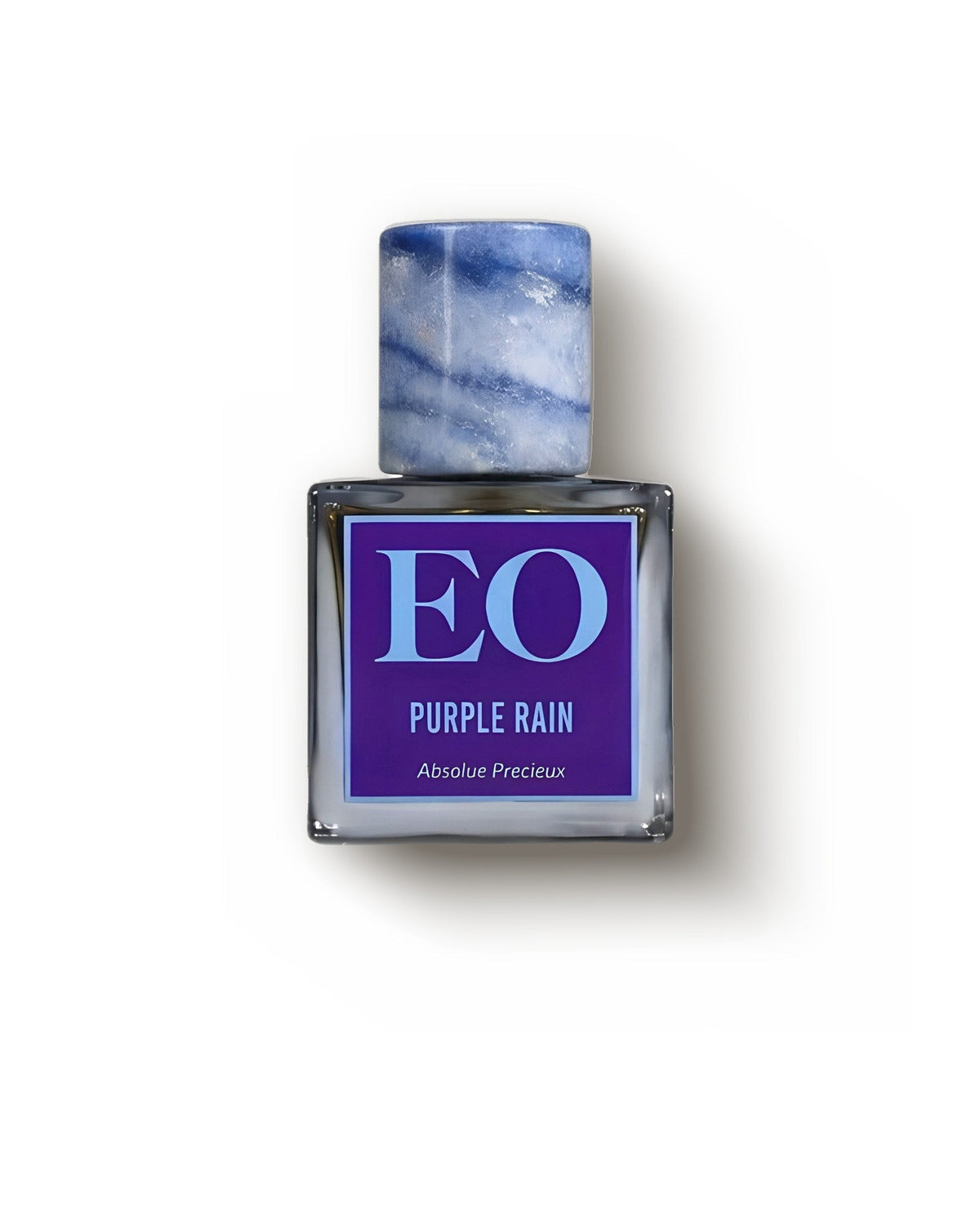
Purple Rain: Überblau
The Story
Überblau is an edition of Purple Rain, Ensar Oud's iris perfume that began as a reformulation of Iris Ghalia, and this edition is an entirely new composition, built from the ground up. The Überblau edition carries roughly three times the oud load of the standard batch, anchored by Blue Yunnan, an aged Yunnan oud steeped in Tonkin musk grains that smells blue. That Yunnan-musk infusion is irreplaceable.


Fruity
Peach skin, not lemon peel
Peach, pear, apple, berry: this is sweetness in the flesh rather than the rind, dewy and nectar-heavy where citrus is sharp and thin. It plays young and slightly greedy, the sort of ripeness you can almost feel running down a wrist.


Lactonic
creamy milk and warm skin
A creamy, milky softness reminiscent of warm steamed milk, milk skin, or coconut flesh without the sweetness. It feels plush and enveloping, smoothing florals and woods into something tender and slightly nostalgic, the warmth of skin more than the sweetness of dessert.


Woody
Dry grain of cut timber
The smell of cedar shavings, sandalwood, and dry vetiver roots, a sanded, resinous warmth with a faint pencil-box rasp. It feels grounded and composed, the quiet backbone that makes a scent read as serious and lasting.


Animalic
Skin, fur and something not quite tame
A raw, body-warm muskiness that reads of skin, hair and fur, sometimes sweet and powdery, sometimes sharp and faintly feral. At its best you cannot tell where the perfume stops and the wearer starts. At its strongest, it is the reason some people back away.


Spicy
A spice stall in the open air
Black pepper, cardamom and pimento berry, dry rather than sweet, with a heat that catches at the top of the nose before you have finished inhaling. It does not sit quietly under anything. Spice raises the temperature of whatever it is put next to.


Blueberry
A berry with no extract behind it
What it is
Squeeze a blueberry and you get juice, not oil. There is too little of it to distil, so no blueberry essential oil exists anywhere at commercial scale. What you smell is assembled from scratch.
How it smells
Cool and blue-purple, candied, sharply drawn, more the idea of blueberry than the fruit in your hand. Built from botanicals instead, through osmanthus and violet leaf, it goes hazier and jammier and slides toward flowers and powder.
In perfumery
It lives in the opening, flattering violet, soft woods and musk, and it is fugitive: without musks or lactones holding it up from below, the berry is gone before the first hour is.
Good to know
With nothing bottled to copy, every perfumer's blueberry is an opinion about what blueberry smells like. That is why two of them rarely agree, one leaning candy, the next leaning violet and dust.


Orange Peel
Sun in the rind, bright and bittersweet
What it is
Squeeze a fresh peel and the mist that flies off it is the perfume material, pressed cold from the rind rather than distilled. Bitter orange is a separate tree, its blossom giving neroli and its leaves petitgrain.
How it smells
Sweet pulp over a rind that bites back. It opens sparkling, sunlit and briefly tart, then rounds off into something candied. Next to lemon it is warmer and softer, less a knife than a glass of juice.
In perfumery
Nearly always a top note: the burst is bright and gone within the hour. It works with neroli, bergamot, clove and warm spice, and carries the whole eau de cologne tradition.
Good to know
Cold-pressed sweet orange peel carries almost none of the molecules behind citrus photosensitivity, so it is not treated as phototoxic the way bergamot, lime and bitter orange are. It is volatile, though, and oxidizes fast: brilliant, brief.
White Carnation
A clove-peppered bloom with old-fashioned spice
What it is
Almost nobody extracts the real flower; the yield is not worth the trouble. So natural perfumers build carnation instead from clove bud oil, rich in eugenol, propped up with rose and ylang until the bloom appears, sometimes with a drop of the rare true carnation absolute.
How it smells
Dry, peppery heat first, then a powdery rose sweetness underneath. There is a green snap of stem up top, and as it settles the whole thing turns waxy and honeyed, a flower from a grandmother's dressing table.
In perfumery
A heart note, and the entire point of a carnation soliflore. Elsewhere it slots between rose and clove, adding spice to a floral without tipping the whole thing into dessert.
Good to know
The clove in it is not a metaphor. Carnation and clove run on the same molecule, eugenol, and once limits on eugenol tightened over skin sensitization, the old spicy carnations became much harder to dose.


Grapefruit
Bitter-bright citrus burst with a sulfurous tang
What it is
The oil is in the rind, not the flesh: pressure ruptures the glands and it runs out cold. The fruit was an accident, a chance cross of pomelo and sweet orange that turned up in the Caribbean.
How it smells
Tart and fizzing, with a bitter rind edge and, underneath, something faintly sweaty and sulfurous that is exactly what makes it read as grapefruit rather than orange. It goes quickly, leaving a clean, soapy, bitter-green trace.
In perfumery
Perfumers use it for the opening, the cold slap of freshness before anything else arrives. It sits well with neroli and mint, and turns modern and dry over vetiver or a woody amber base.
Good to know
Almost all of that character is trace: grapefruit mercaptan, which the nose catches at a fraction of a part per trillion, and nootkatone. The oil also leaves skin sun-sensitive, so it is usually stripped or kept low.


Cherry
Candied red fruit with a bitter stone
What it is
Cherry gives no usable oil, so the note is always assembled. Benzaldehyde carries it: the bitter-almond molecule behind the Prunus stone fruits. Build it from esters, or from bitter almond oil with davana, rose and tonka around it.
How it smells
The chemical version is loud and one-shaped, cherry as cordial and confectionery. The botanical route reads softer, jammier, nuttier at the pit, and it moves as it warms, davana pulling toward dried fruit and rose quieting it underneath.
In perfumery
It belongs in the opening, not the base. Benzaldehyde is volatile and short-lived on skin, so the accord is legible early, then hands off to the almond, vanilla or tonka underneath. It is dosed for that handover.
Good to know
Natural and synthetic benzaldehyde are the same molecule, and supply is overwhelmingly synthetic. The molecule is not the tell. What separates the routes is everything set around it: botanicals shift with the harvest, a chemical build never varies.


Iris
Cool powdered earth from a patiently aged root
What it is
Perfumery iris comes not from the flower but from the root. The dug rhizomes are dried and left to age three to five years while the aromatic irones form, then ground and steam-distilled into a waxy orris butter.
How it smells
Cool, powdery and rooty: violet, suede and fresh-sawn wood dusted with face powder. Underneath sits a damp mineral earthiness, a faint carrot sweetness, a buttery softness. It feels more texture than perfume, and it stays quiet on skin.
In perfumery
Nothing else gives a blend that cool, powdered restraint. It steadies chypres and florals, takes the shine off rose and violet, and lends sandalwood and ambrette a velvet finish. Iris makes a perfume behave.
Good to know
A tonne of dried, aged rhizome yields about two kilograms of butter. Add the years of waiting before it can even be distilled and you see why real orris turns up in so few bottles.


Rose
Dewy sweetness over a green, peppery bite
What it is
Most perfumery rose is one of two: damascena from Bulgaria and Turkey, centifolia from Grasse. Whole blossoms are picked by hand from before sunrise until about ten thirty, then distilled into otto or solvent-extracted into absolute.
How it smells
Fresh, honeyed, green at the edges, with something dewy still on it. Spice and fruit sit underneath, and in the absolute a jammy darkness. Otto opens crisp and bright; absolute is warmer, smokier, closer to skin.
In perfumery
Rose behaves less like one note than a whole palette. It carries a perfume alone or vanishes into a chypre, turns dark against oud and patchouli, goes powdery beside violet, and holds a floral heart together.
Good to know
The two extractions are not the same bargain. Otto takes three to four thousand kilograms of blossoms to yield one kilogram of oil. Absolute, pulled out with solvent, gets there on roughly a seventh of the flowers.


Malayan Oud
Malaysian agarwood, dark and jammy beneath the florals
What it is
Agarwood oil from Malaysia, one of three ouds in this perfume beside a Yunnan and a Vietnamese oil. The house gives no region or grade for it, and describes the oud it uses as pure and natural.
How it smells
Malaysian oud tends to arrive in two layers: smoke and incense resin on top, then a jammy fruit-leather heart of stewed dark fruit and mahogany sweetness, with a gently animalic underbelly. Dense and syrupy rather than airy.
In perfumery
It lends body, leather and resinous gravity to the base, and its dark fruit sits easily under the blueberry, iris and rose above it. The house says this edition carries about three times the oud of earlier batches, so the ouds lead the drydown.
Good to know
Malaysian ouds vary from batch to batch, and the oil deepens toward velvet with age. Judge it on the drydown rather than the first minutes, once the fruit of the opening has settled and the woods take over.

Blue Yunnan Oud
China's rarest agarwood, cool incense laced with honeyed musk
What it is
Agarwood from Yunnan in China's far southwest. Chinese collectors absorb most of what is distilled, so little of it leaves the country. This one is the house's Blue Yunnan, steeped in Tonkin musk grains for so long that the house has lost track of the years.
How it smells
Dry and incense-like, with a cooling camphor edge. Then the thing no other region gives: a honeyed, almost pheromonal sweetness threaded through frankincense and raw musk. Aged lots flash salty and animalic, then resolve into osmanthus and old tobacco.
In perfumery
Collectors wear it neat, as a meditation oil, and it rarely reaches commercial formulas. Its smoky-resinous incense sits naturally with myrrh, osmanthus and tobacco, and because the sweetness can blur the wood, it rewards a small dose and patience.
Good to know
Long ageing has rounded it, leaving only a faint grapefruit-cherry twang, and this musk infusion cannot be made again. It is also shy: next to a loud Hindi or a jammy Cambodi it can seem subdued, so it wants a quiet room and an unhurried nose.

Vietnamese Oud
Sweet, polished Vietnamese agarwood in the oud core
What it is
Agarwood oil from Vietnam, one of three ouds in this perfume beside a Malaysian and a Yunnan oil.
How it smells
Vietnamese oud is usually the sweetest and most polished of the regional styles: candied citrus, creamy milk and a floral lift over clean resin, with little of the barnyard funk of Indian oils.
In perfumery
Its polish needs little correcting, so it brightens the oud core rather than darkening it, and it sits naturally under iris, rose and carnation. Here it works alongside the Yunnan and Malaysian ouds rather than standing alone.
Good to know
Vietnamese agarwood is among the most prized in the world and is distilled in small lots by a handful of artisanal houses. Give it time on skin: the sweetness opens slowly and keeps unfolding through the drydown.
Tonkin Musk
Honeyed animal warmth that clings for days
What it is
Every other natural musk gets measured against this one. Tonkin takes its name from northern Vietnam, and what circulates now is old material, held for decades.
How it smells
Velvety and warm-blooded, wrapped in something honeyed and waxy that edges toward chocolate, finishing powdery like suede. There is a bite to it, unmistakably animal, but suave rather than sharp. One drop reads for days.
In perfumery
Dosed in the smallest fractions, it works as a fixative, welding unrelated notes into one glowing accord and stretching a composition toward days. Used well you never smell musk, only a scent that will not let go.
Good to know
The white musk on most ingredient lists is a laboratory molecule, clean and one-note by design. Among the real ones Tonkin is the sweetest and most floral-friendly, where Mongolian reads calmer and sharper, Kashmiri drier.
Fragrance Character
Blueberry and grapefruit open fruited and tart, giving way quickly to iris and carnation, cool and faintly spiced. Rose surfaces in the heart, warmer now, but the ouds keep everything slightly resinous and mineral. On the drydown the oud complex takes over entirely, sitting close to the skin with a waxy, almost indigo-dark depth that lingers long after the florals have receded.


Longevity
how long it stays on skin
The hourglass reads wear time: how many hours the fragrance keeps speaking before it fades. A bar that barely leaves the start means a few fleeting hours. One that runs the full length carries from morning into evening. Treat it as typical, not promised. Oily skin holds scent far longer than dry.


Sillage
the size of its scent trail
Sillage is French for a ship's wake, and that is exactly what this measures: how much of the scent reaches the room instead of staying on you. Low is a whisper only close friends catch. Enormous fills the room, then keeps filling it after you leave.


Experimental
Built to provoke, not to please
Some perfumes are made to be liked. These are made to be argued about: inky tar, hot rubber, fruit on the turn, metal and fur where you expected flowers. The coin glows for a scent that provokes and dims for one that plays it safe, which is sometimes the point.


Office
Polished, and never louder than the room
Scent is manners in a shared room. At this range it should reach the person across the desk and stop there: tidy citrus, soft musk, pale woods, all of it reading competent and considerate. A glowing coin means nobody has to mention it. A dim one means it travels.


Evening
After dark, when it deepens
Dinner, drinks, the night that runs long. Low light is where ambers, resins and smoky woods stop being polite, and where a plush floral finally blooms. A glowing coin means it is waiting for exactly this hour. A dim one means it did its best work in daylight.


Romantic
Close enough to be felt
A fragrance can hum against skin instead of announcing itself across a table. That is the register here: creamy florals, vanilla, soft musk, a thread of spice, warm enough to make someone lean in. The coin glows when a scent sets that mood and dims when it is more practical than seductive.


Formal
Quiet authority in a dressed-up room
A wedding, a ceremony, a room where everyone has thought about their shoes. What works here is structure, not volume: smooth woods, disciplined florals, soft leather. A glowing coin means it holds its posture all evening. A dim one means it is too casual for the room.


Casual
Easy comfort for unhurried days
Errands, coffee, a slow Saturday with nowhere to be. Nothing here has to impress anyone, so the fit is soft and easy: fresh citrus, light woods, a little warmth off the skin. A glowing coin says yes to all that. A dim one means the fragrance is asking for a bigger night.


Day to Night
where its mood naturally falls
A bar running from sun to moon, reading the hour the fragrance was made for. The more of it that stays gold, the more the scent belongs to daylight and open air. The further the blue reaches back toward the sun, the deeper and warmer it turns: evening, candlelight, low rooms.


Winter
Warmth that carries through cold air
Cold air mutes a fragrance and slows it down, which is why winter belongs to the dense and the warm: resin, smoke, vanilla, leather, ambered spice. The bar reads how well this one pushes back, glowing against the chill instead of thinning out in it.


Spring
Fresh blooms in mild, rising warmth
Mild, humid air lifts a light composition, so the season belongs to dewy florals, green stems, soft powder and citrus you can see through. Alive rather than heavy. The further the green runs along the bar, the more comfortably this one wears in that weather.


Summer
Bright and airy in real heat
Heat does the projecting for you, which is why the wrong perfume turns unbearable by noon. What survives is cool and breathable: sharp citrus, salt air, aromatic herbs, water. Things that refresh instead of cloy. A short bar here means save it for cooler months.


Fall
Spiced warmth for cooling days
As the air cools, the rich materials stop smothering and start reading clearly: dry woods, warm spice, tobacco, amber, fruit gone golden. It is the season perfume turns contemplative. The bar fills according to how naturally this one settles into crisp, cooling days.
Best Worn
Best in autumn and winter, worn somewhere between afternoon and evening when the air is cool enough to let the oud breathe without turning heavy.
Choose options
The Vibe


The Nose
Composed in-house.
The Maison

Pure artisanal oud, the real resinous thing, poured from the source bottle into your vial.
Ensar Oud treats agarwood the way a vintner treats a single hillside of old vines. These are dense, slow, deeply serious extraits built around aged ouds, grey ambergris and animalic musks most people have only read about. A drop blooms for hours, shifting from smoke to resin to something warm and skin close.
- Origin
- New York, United States
- Founded
- 2004, as Oriscent
- Known for
- Sultani grade oud, true musk

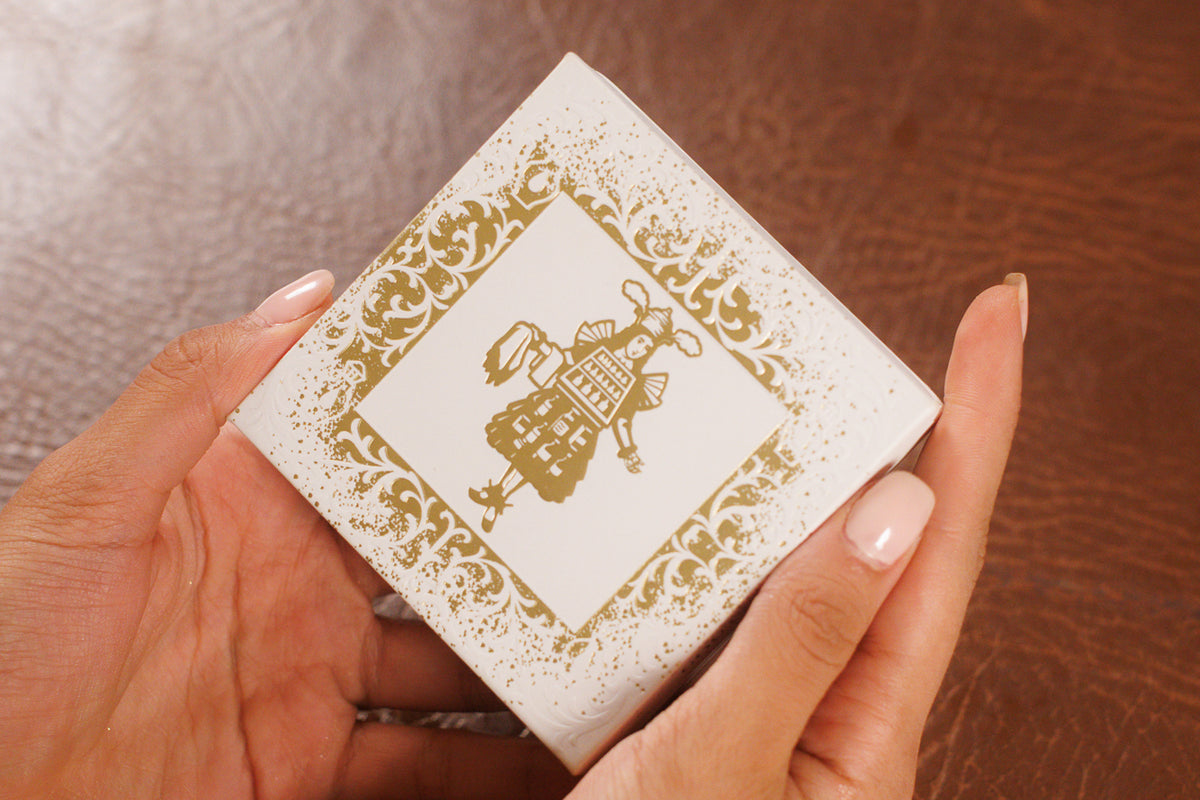
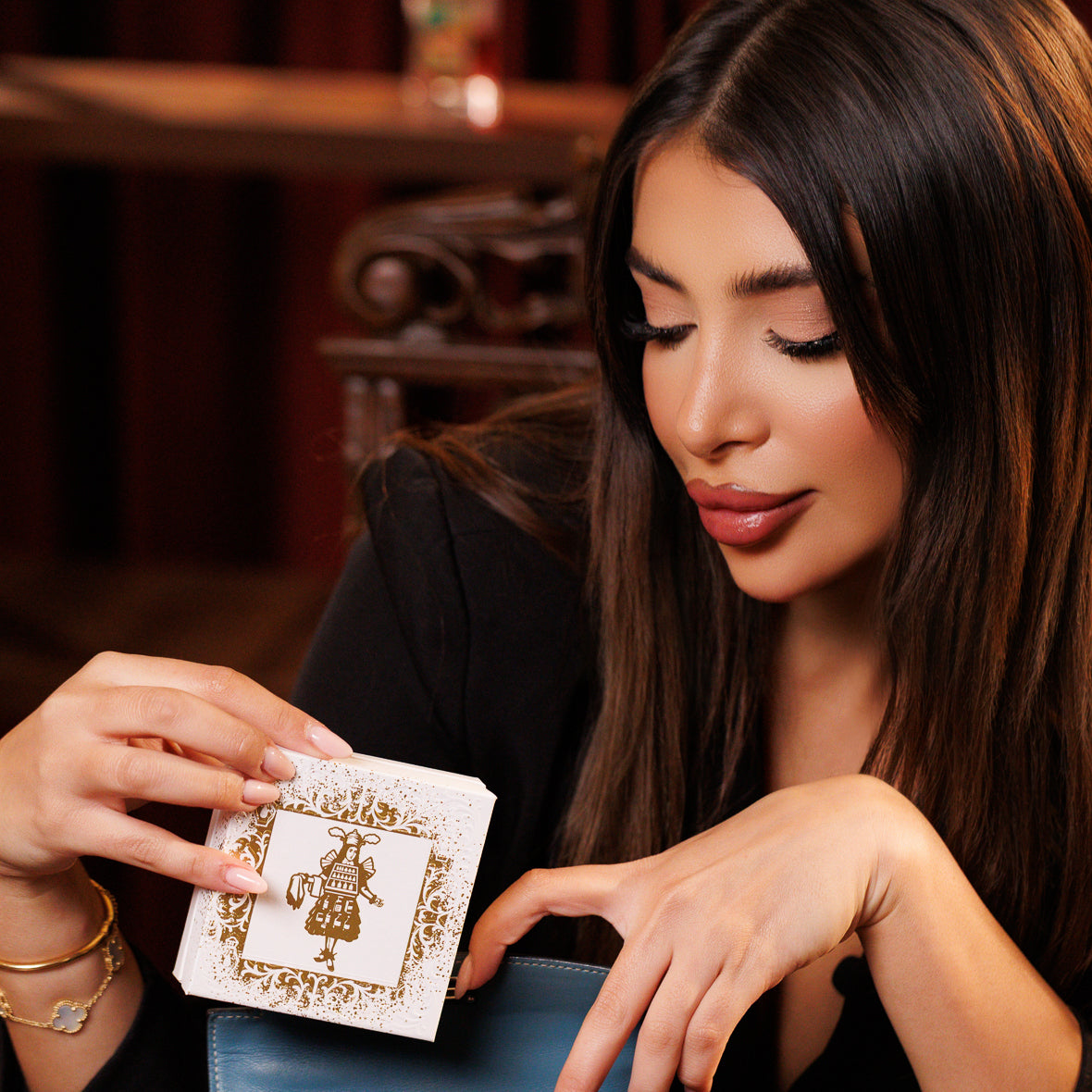
EVERY DECANT
From the original bottle to your door
We buy the original flacon at full retail price, direct from the house.
A medical grade Socorex syringe takes the exact millilitres straight from the flacon.
Packed into the hot foiled box and handed to DHL, every duty already paid. How a decant is made
More from Ensar Oud
You may also like