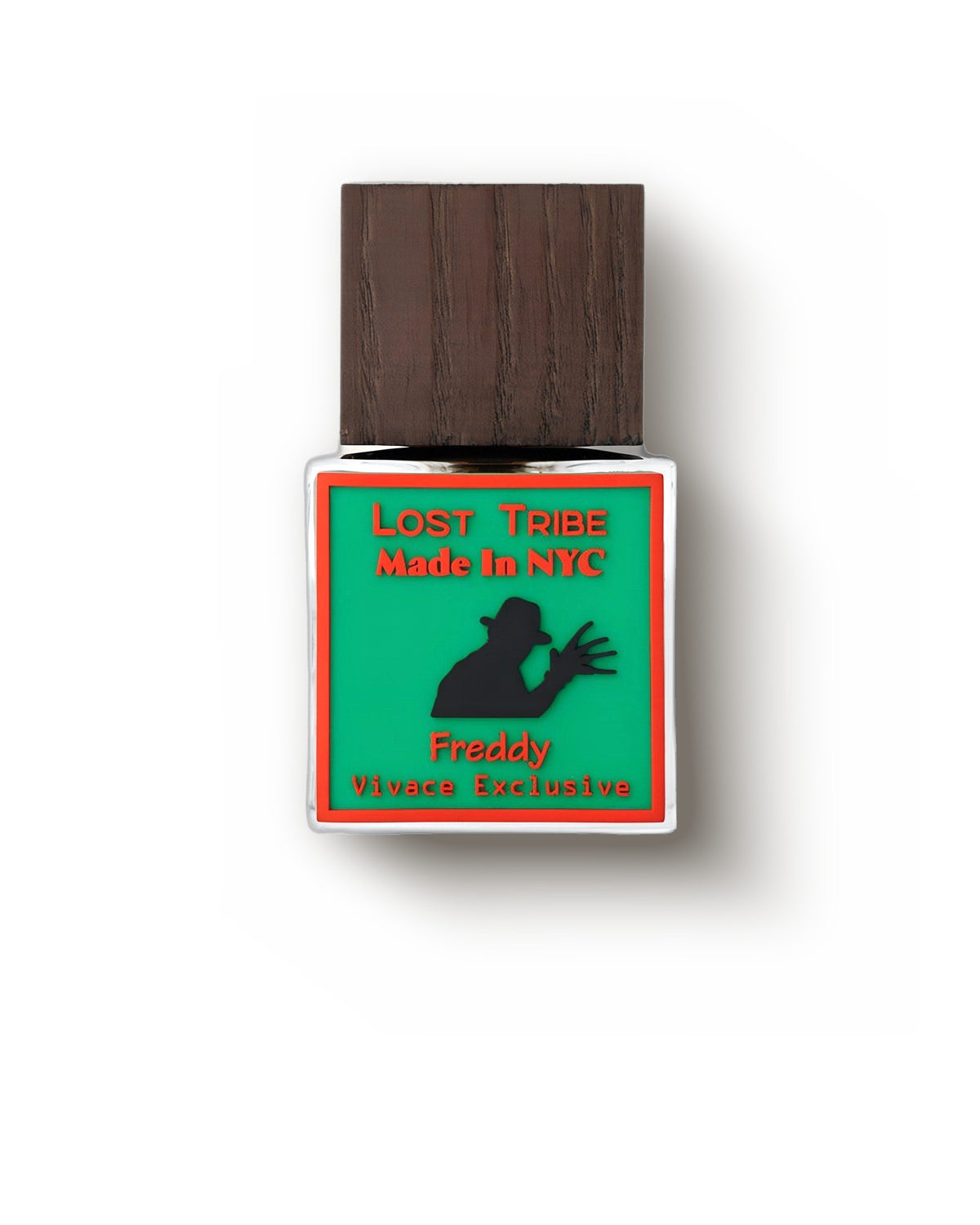
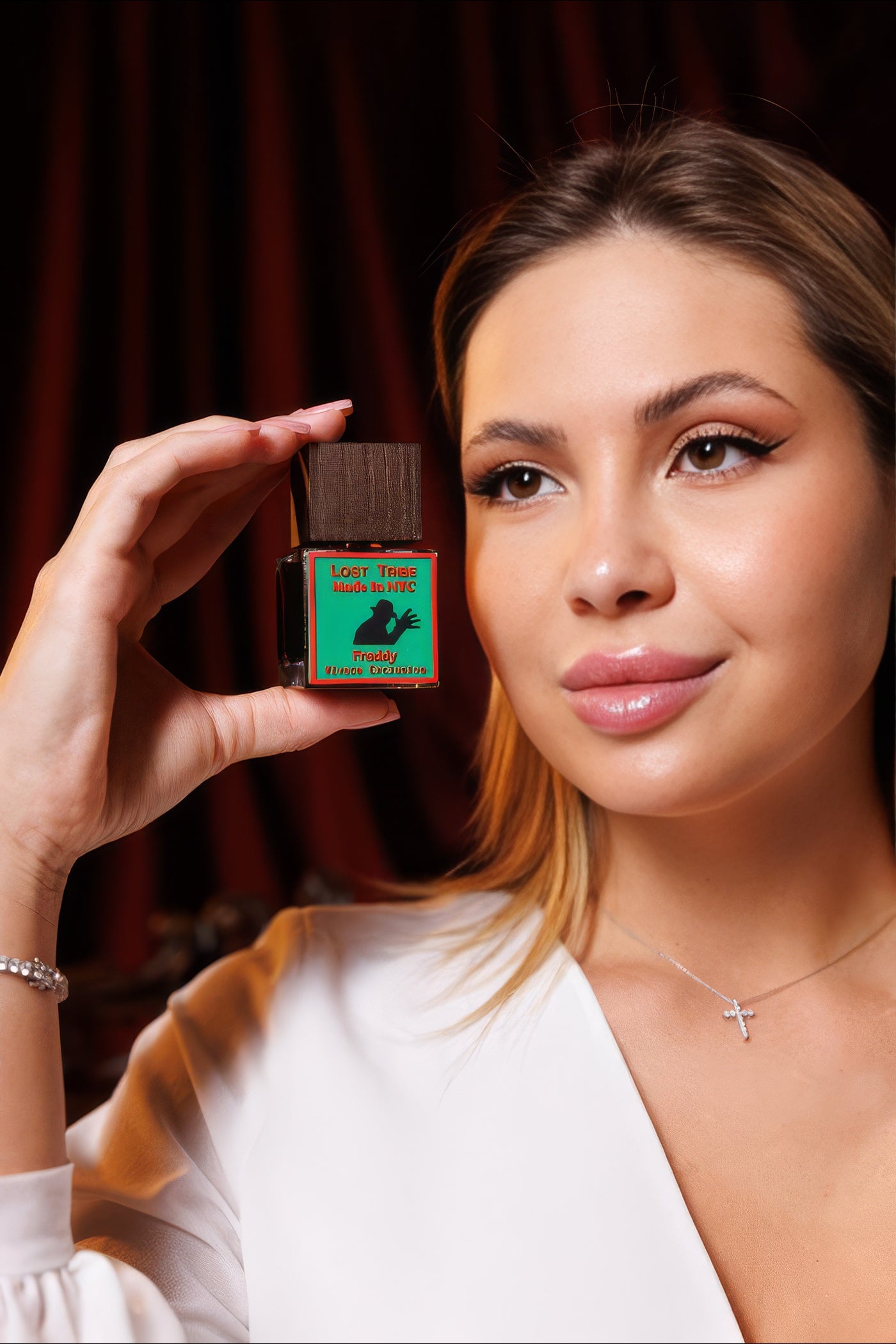
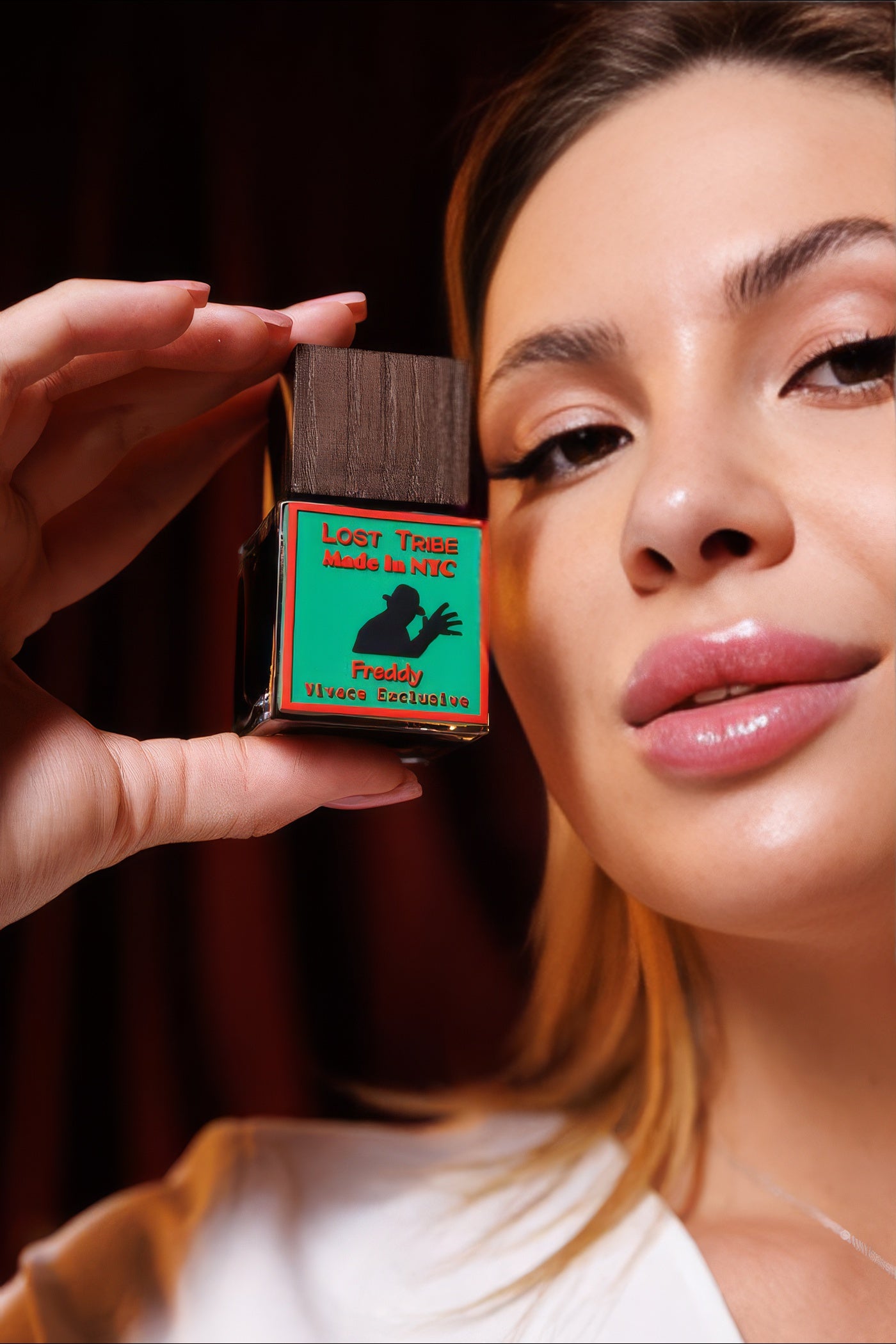


Lost Tribe
Freddy
The Story
Freddy is an apple pie accord cut with pine and fir balsam, which is what stops it from turning into a straightforward gourmand. It stays green and resinous from the first spray to the drydown, and the name is a tribute to Freddy Krueger, the dark pressed up against the sweet.


Fruity
Peach skin, not lemon peel
Peach, pear, apple, berry: this is sweetness in the flesh rather than the rind, dewy and nectar-heavy where citrus is sharp and thin. It plays young and slightly greedy, the sort of ripeness you can almost feel running down a wrist.


Woody
Dry grain of cut timber
The smell of cedar shavings, sandalwood, and dry vetiver roots, a sanded, resinous warmth with a faint pencil-box rasp. It feels grounded and composed, the quiet backbone that makes a scent read as serious and lasting.


Green
Sap on your hands after weeding
Snap a stem and this is what comes off: sappy, cool, a little bitter, more vegetable than floral. Cut grass, bruised leaves, the inside of a hedge after the shears. Nothing here is sweet.


Spicy
A spice stall in the open air
Black pepper, cardamom and pimento berry, dry rather than sweet, with a heat that catches at the top of the nose before you have finished inhaling. It does not sit quietly under anything. Spice raises the temperature of whatever it is put next to.


Apple
An apple with no apple in it
What it is
Squeeze an apple and you get juice, not perfume. There is no apple oil, no absolute, nothing to distil, so every apple note is assembled: fruity esters in most hands, Roman chamomile and davana in all-botanical ones.
How it smells
Cold, tart and green, the snap of skin breaking under a bite, with something candied behind it. The ester build is bright and holds one clear shape. The chamomile build is hazier, honeyed, more cider than orchard.
In perfumery
A trace lifts fruity florals, chypres, aquatics and gourmands, beside rose, musk and light woods. With esters the green and the candy can be dialled precisely. With botanicals the whole accord is rebalanced by hand.
Good to know
Neither route is the fruit, so the honest difference is stability rather than authenticity. Ester-built apple survives soap, heat and detergent and repeats identically. The botanical one is costly, shifts with the harvest, speaks quietly, and stays rare.


Apple Pie
Cinnamon and cooked apple over a warm crust
What it is
An oven smell with no apple and no pastry anywhere in it. Esters make the fruit, cinnamic aldehyde the spice, lactones and vanillin the buttery crust. A botanical build sends Roman chamomile in for green apple peel.
How it smells
The lab version arrives sharp: candied apple over a clean cinnamon edge, one shape held from spray to fade. The botanical one is softer and hazier, herbal under the fruit, the spice turning woodier as the sweetness thins.
In perfumery
Both routes turn on cinnamaldehyde, because cinnamon bark oil is mostly made of it. Around that pivot the warmth sits low and slow, benzoin and tonka holding the base while the fruit leaves first.
Good to know
Cinnamal is capped for skin sensitisation, which limits the spice whichever route is taken. Apple esters are volatile and leave early either way. What lasts is the crust, not the fruit.


Applewood
Orchard timber smouldering with sweet fruity smoke
What it is
No one distills apple wood; it gives up almost nothing. In natural work the note is assembled instead, the apple-like sweetness of Roman chamomile or the fruity warmth of davana laid over smoky naturals such as birch tar or cade, until it reads like the tree rather than the fruit.
How it smells
Drier and smokier than fresh apple: fruit wood on glowing coals. A crisp green brightness sits over warm sawdust and resin, with a low barbecue smoulder underneath. Outdoorsy rather than jammy, and it ends woody.
In perfumery
Autumn in a bottle usually starts here. Applewood bridges gourmand fruit and dry timber, sitting easily with cedar, sandalwood, vanilla, tobacco and amber, and it runs through woodsman-style fragrances and a great many artisan candles.
Good to know
Pitmasters know this wood better than perfumers do. It burns mild and faintly sweet, which is why it goes under slow-smoked pork and poultry, and that culinary smoke is precisely what the fragrance version is copying.
Coriander Seed
Warm seed spice with a lavender whisper
What it is
The plant whose leaves taste like soap to some people dries into something else entirely. Coriander seed is the ripe fruit of that same herb, harvested, dried and steam-distilled into a warm, sweet-spiced oil.
How it smells
Bright and dry at first, peppery with a faint citrus lift, then a soft woody body underneath. There is an unexpected lavender edge to it, and a nutty, gingerbread warmth. Spicy without any sharpness.
In perfumery
Top to heart, and mostly a blender: it smooths seams in colognes, chypres, fougeres and orientals, freshening citrus, warming lavender, rounding woods. Plenty of the classic citrus colognes open on it.
Good to know
Most of the oil is a single molecule, linalool, the same molecule that leads lavender oil. That is where the floral coolness in a seed spice comes from, and why coriander bridges herbs and flowers so easily.


Eau de Cologne Mint
Cool mint dressed in bergamot and lavender
What it is
A mint with almost no menthol in it. Bergamot mint, or orange mint, is a cultivated cross whose flowering tops are steam-distilled into an oil that comes out cool without ever going cold.
How it smells
Far softer than peppermint. It opens green and herbal with a citrus lift that reads as bergamot and orange peel, a lavender coolness sitting underneath. The finish is clean and faintly sweet, aromatic rather than icy.
In perfumery
Used at the top for aromatic sparkle in colognes, fougeres and herbal-citrus builds. Because the lavender-bergamot facet is already built in, it slots straight beside neroli, rosemary, petitgrain and clary sage without any bridging.
Good to know
Roughly half the oil is linalool and roughly half is linalyl acetate, the two molecules that define lavender and bergamot. Chemically this is barely a mint at all, which is how it earned the cologne in its name.


Fir
A cold forest breathed in at first light
What it is
One name, two materials. The needles and young twigs steam-distil into a clear, sappy oil; the same needles and twigs, taken with solvent, give a dark, sticky fir balsam absolute. Balsam, silver and Douglas fir all answer to the name.
How it smells
The distilled oil is green and resinous, sappy almost to fruit: crushed Christmas-tree needles in the hand. The absolute goes deeper and sweeter, jammy, intensely balsamic, warmed with coumarin and a wisp of smoke, and it lasts.
In perfumery
Distilled fir works top to heart, the absolute anchors the base, and between them they build forest, fougere and aromatic-woody accords. It sits well with cedar, lavender, oakmoss and incense, and carries dense coniferous work like Slumberhouse Norne.
Good to know
Douglas fir is not a true fir, and smells it: brighter, closer to citrus. Balsam fir has the odder history: bark blisters yielding Canada balsam, the glass-clear cement that mounted microscope slides because it bends light like glass.
Fir Balsam
Cold forest air and crushed evergreen needles
What it is
An evergreen of cold North American forests. Its needles and twigs give the absolute and the essential oil, while the bark does something else entirely, pushing a clear sticky resin called Canada balsam out through blisters.
How it smells
Crisp, green, resinous: a freshly cut Christmas tree standing in the room. Cool pine-needle sharpness first, then a soft sweet balsamic heart with a jammy stickiness that dries down woody and faintly coumarinic.
In perfumery
A heart-to-base note dosed low, where it lends forest freshness and sweet resinous warmth. Cedar, pine, incense and amber sit easily beside it, and it anchors most evergreen and fireside accords.
Good to know
Canada balsam, collected by hand from those bark blisters, bends light almost exactly as glass does. For generations it was the glue that mounted microscope slides. The same ooze that scents perfume helped scientists see.


Fir Needle
Crushed needles, frost and a lemon-camphor snap
What it is
Steam-distilled from the fresh needles and young twigs of fir trees, most of it Siberian fir. The oil runs pale and thin, and it is the winter foliage doing the work here, not the wood or the resin.
How it smells
Cold and green, like a handful of needles crushed in freezing air. Pine sap and a lemon-camphor brightness sit up top, sharp and resinous, before the whole thing settles into a clean, faintly fruity woodiness.
In perfumery
Top-to-heart material in fougeres, chypres and woody-aromatic colognes, bought for freshness and outdoor lift. Lavender, oakmoss and citrus meet it halfway. It is the brisk edge running through forest and pine compositions.
Good to know
Long before fine fragrance wanted it, Siberian fir oil was what made soap and disinfectant smell clean. Left in warmth and light it turns, and turned oil can irritate skin, so perfumers buy it fresh.

Japanese Yuzu
Tart Japanese citrus, crisp as winter air
What it is
A knobbly, thick-skinned citrus grown in Japan, Korea and China, long used in Japanese cooking and bathing. The fragrance sits in the bumpy rind, cold-pressed from the peel; smaller amounts are steam-distilled.
How it smells
Sharp and mouth-watering, like grapefruit crossed with mandarin and a squeeze of lime. A green, faintly herbal bitterness sits under the brightness, with cool floral facets that belong to yuzu alone. Then it thins to clean zest.
In perfumery
Perfumers reach for it when a citrus opening should read sharp rather than sweet: it is fresher and more savory than orange, and it sits well with shiso, tea, vetiver and clean musks.
Good to know
Yuzu trees take years to fruit, long enough to feed a proverb about waiting eighteen years for the harvest. On the winter solstice whole yuzu are floated in a hot bath, the yuzuyu, to scent the water.


Pear
Almost always built, almost never extracted
What it is
Squeeze a pear and you get juice, not perfume. The esters that carry its smell sit at parts per million and will not survive a still, so almost every pear you smell was assembled, not extracted.
How it smells
Juicy and gently sweet, dewy at the edge, watery-honeyed in the flesh. The built version is crisp and high-definition, one clean shape all the way through. Naturals run blurrier and drift toward green herb and waxy skin.
In perfumery
Pear brightens the tops of fruity-florals, fresh musks and gourmands. The build is pear ester and a few acetates, dosed at one percent or less; more and it takes over. Roman chamomile carries the same facets naturally.
Good to know
Only one of pear ester's four forms smells of pear, which is why it is specified so precisely. Pear was long called impossible to extract, until Firgood, a process that warms the fruit's own water, produced one.


Pine Absolute
Warm caramelized resin of a sun-baked forest
What it is
Scots pine, but not the pine you know. A solvent pulls a waxy concrete out of the tree, and chilled alcohol washes the wax away, leaving a thick dark absolute that carries resin molecules steam would never lift.
How it smells
Rich, caramelised, almost honeyed, with a hay-like depth underneath. It opens dense and balsamic, like dried needles baking in the sun, then settles into a golden woody warmth. The turpentine edge you expect never arrives.
In perfumery
A heart-to-base material used for body, not freshness, and in small amounts. It deepens woody and amber accords and sits well with hay, labdanum, cedar and tobacco. Perfumers reach for it when a forest needs to feel warm.
Good to know
One tree, two materials: distil the needles and you get a sharp, cold top note; extract with solvent and you get this. The method shapes the smell as much as the plant does.


Pinyon Pine Resin
High-desert pitch, soft balsam over warm pine
What it is
Amber pitch weeps out of pinyon pines across the arid mesas of New Mexico, Arizona and Colorado, hardening into brittle tears. Southwestern and Native American peoples have long burned those tears as incense and smudge.
How it smells
Smoother and sweeter than ordinary pine. A soft fruity-floral top gives way to warm resin and dry needle, then to a deep, faintly sweet base. Less turpentine than you brace for, more balsam.
In perfumery
A base-to-heart resin that brings dry balsamic warmth and, when burned, smoke. It grounds desert and incense compositions beside frankincense, cedar, labdanum and fir balsam, the smell of high juniper-and-pine country rendered as a base note.
Good to know
Burning pinyon is the winter smell of Santa Fe, drifting off fireplaces across the northern high desert. Its esters keep it softer than colophony, the dry rosin from other pines, and the same trees drop edible pine nuts.


Red Pine
The pine behind forest bathing, sharp and sappy
What it is
The tree is easy to spot: bark the colour of rust, high on Japanese and Korean hillsides. Its fresh needles and twigs are steam-distilled into a thin, pinene-heavy oil.
How it smells
Cold needles first, with a turpentine brightness and a whisper of camphor. Then it warms: dry sap, forest floor, a sweetness that is closer to balsam than to a cleaning cupboard.
In perfumery
At the top and into the heart it gives foresty lift, doing its best work in fougeres and aromatic woods next to juniper, cypress or lavender, where it keeps a composition from going soft.
Good to know
In a pine forest the air already carries the pinene this oil is made of. That is the scent of forest bathing, shinrin-yoku, and Korean and Japanese folk medicine was brewing the needles long before the word existed.
Clove
Warm spice with a numbing, dentist-chair bite
What it is
The clove you know is a flower stopped before it opened. Buds come off the tree as they flush pink, dry to small brown nails, and go to the still as clove bud oil.
How it smells
Hot and dry, with a tingle that turns numb: eugenol, the same compound a dentist uses. Under the burn sits a woody, fruity sweetness and a slow balsamic trail of pomanders and mulled wine.
In perfumery
Perfumers use it in the heart for heat and old-world richness, beside carnation, rose and vanilla. The same spice warms a shelf of chypres, fougeres and spicy carnation accords.
Good to know
Clove was once among the most prized spices in Europe, and the Dutch razed whole groves in the Spice Islands to control supply. Eugenol can turn skin allergic, so IFRA caps the eugenol in a finished perfume, whichever material it comes from.


Frangipani
Tropical petals breathing coconut and almond cream
What it is
Five waxy petals on a small tropical tree, plumeria, grown across the Pacific, the Caribbean and India. Solvent or CO2 lifts the scent from picked blooms into an absolute few perfumers ever get to use.
How it smells
Coconut and almond cream, ripe peach behind it, and a green spicy edge that stops it turning syrupy. Milkier and sunnier than jasmine or tuberose, and nowhere near as indolic. It smells like heat on skin.
In perfumery
In the heart it does the work of sunlight, turning a composition creamy. Coconut, ylang, jasmine, sandalwood and vanilla sit alongside it, and when a fragrance smells of hot skin on a beach, this is usually why.
Good to know
Yields are tiny, so true frangipani absolute is scarce and costly: mainstream frangipani is usually a reconstruction, while natural houses use the absolute or CO2 extract itself, sparingly. The name comes from a Renaissance Roman family whose famous glove perfume it is said to recall.


Gallic Rose
The apothecary's rose, dark as red wine
What it is
One of the oldest roses in cultivation, grown in Europe long before anyone thought of perfume houses. The crimson petals are the fragrant part, steam-distilled into rose otto or solvent-extracted into a dark, thick absolute.
How it smells
Old-fashioned rose, honeyed and deep, with something of red wine in it and a green peppery flick. Rounder and jammier than the lemony damask. Strangest part: dry the petals and the smell gets stronger, not fainter.
In perfumery
Perfumers reach for it when a rose needs age on it. Blended with damask and centifolia it adds body in the heart, and its dried-petal richness suits chypres and orientals where a dewy modern rose thins out.
Good to know
Rosa gallica var. officinalis was literally the apothecary's rose: Provins, near Paris, built a medieval trade on its dried petals, sold at the great Champagne fairs. Countless modern garden roses descend from it.


Honeysuckle Otto
Hedgerow honey distilled into sandalwood oil
What it is
An attar rather than an essential oil: honeysuckle blossom worked into sandalwood in the attar tradition. The vine gives up little scent to a still, so the sandalwood is there to catch every trace of it, which makes this a true attar rather than a reconstruction.
How it smells
Deeper and rounder than the airy flower on the hedge: thick honeyed nectar, a jasmine-like sweetness, a soft waxy body. The sandalwood underneath adds warmth and a faint resin, so it clings where fresh honeysuckle would drift off.
In perfumery
Sweet and clinging in the heart of a blend, it layers with rose, jasmine and vanilla. Sold as oil for direct skin wear, it also works alone as an alcohol-free soliflore.
Good to know
In classical attar craft the receiving vessel is charged with sandalwood oil, so the flower's aroma condenses straight into the wood rather than into water. That base is why an attar wears warm and holds for hours.

Jasmine Sambac
Tea-green jasmine that opens after dark
What it is
The flowers open after dark, which is when they smell strongest, so pickers take them as buds in the early morning, before they unfurl. Solvent extraction gives a waxy concrete, and washing that with alcohol gives the absolute.
How it smells
Greener and more tea-like than the grandiflorum kind, and much less fruity. It starts crisp and a little waxy, almost banana-tinged, then warms into indolic sweetness. That indole is the animal in it: heady up close, still luminous.
In perfumery
A heart note that gives white-floral bouquets their body and their lift. It works with rose, tuberose, sandalwood and green tea, rounds off sharp citrus, and some night-blooming soliflores are built on almost nothing else.
Good to know
This is sampaguita, the national flower of the Philippines, strung into garlands and used to scent Chinese tea. Tiny blooms picked by hand every morning across a long season put the absolute among the costliest florals.


Ceylonese Sandalwood
Same species as Mysore, grown in Sri Lanka
What it is
The tree behind fabled Mysore sandalwood, Santalum album, also grows in the hills of Sri Lanka. Heartwood and roots from mature trees are ground and steam-distilled into a pale, heavy oil.
How it smells
Creamy and milky, closer to warm skin than to timber. Beside the drier Australian sandalwood it reads sweeter and rounder, with a balsamic depth that edges toward animalic. It has no real opening: it arrives, and it stays.
In perfumery
Base note, and a fixative that softens everything around it. Rose, jasmine, violet and vetiver all sit better on top of it, which is why orientals, chypres and woody florals keep coming back to that santalol drydown.
Good to know
Nobody cuts one young: the heart is worth taking at around thirty years, and because the oil runs richest in the roots the tree is pulled up rather than felled. Mysore was harvested past recovery, which is why Sri Lanka matters.


Cistus
Sun-baked Mediterranean shrub that bleeds amber resin
What it is
Cistus, the rockrose, survives dry Mediterranean hillsides by sweating a sticky brown resin across its leaves and stems. The resin is labdanum, boiled out of the cut branches or lifted with solvent.
How it smells
Warm, dark and balsamic around a leathery amber core. It opens green and medicinal, then settles into resinous sweetness laced with honey, dried fruit and a faint muskiness. The drydown recalls ambergris, tobacco and old polished wood.
In perfumery
Most amber accords are built on it. Labdanum fixes a composition and gives chypres and orientals their leather-and-resin backbone, sitting under oakmoss, patchouli and bergamot long after the citrus has burned off.
Good to know
Cretan and Cypriot shepherds gathered labdanum by combing it from the beards and thighs of goats that had browsed through the sticky shrubs. Some scholars call it the onycha of the biblical holy incense.


Wild Aceh Oud
Buried wild oud from the forests of northern Sumatra
What it is
Agarwood from Aceh, at the northern tip of Sumatra. It is a wild, buried oud harvested from the region's humid forests, and Freddy carries 1.3 grams of it in every 15ml bottle: a real presence, not a trace.
How it smells
Not animalic and not medicinal. It is earthy and slightly mossy, with a soft, dark leather tone and a natural sweetness that lingers like sap, dark in a smooth way rather than loud.
In perfumery
It is the base Freddy rests on, humming beneath the other notes and revealing itself slowly as the perfume settles. Where cistus, labdanum and oakmoss meet, the Aceh oud starts to glow, merging with the pinyon amber and applewood into a shadowed sweetness.
Good to know
Sumatran oud is the earthiest of the Indonesian oils, darker and slower than the camphorous Kalimantan style usually credited to the country. An oil labelled simply Indonesian is usually Bornean, which is why a named Aceh origin matters.
Labdanum
Sticky amber resin scraped from sun-baked rockrose
What it is
A Mediterranean rockrose sweats gum through its leaves in summer, dark and sticky enough to glue your fingers together. Harvesters boil or scrape the branches to get it off, then extract that crude gum into absolute and resinoid.
How it smells
Balsamic warmth, then leather, dried fruit, honey and a curl of smoke. There is something almost ambergris-like in the opening. Hours later it has settled into brown tobacco and worn skin, still going.
In perfumery
Take labdanum out and most amber accords collapse; it is what vanilla and benzoin get built on. It fixes a formula in place, gives chypres and leathers their depth, and sits well with rose, oakmoss and incense.
Good to know
Before there was distillation, there were goats. Herds browsed through cistus scrub all summer, the gum matted into their beards and thighs, and shepherds combed it out. Labdanum is one of the oldest aromatic materials still in use.


Oakmoss
The damp green soul of the forest floor
What it is
Not a moss at all, but a lichen, scraped off oak and other deciduous bark across temperate Europe, Russia and North Africa. Solvents turn the harvested growth into a dark, viscous concrete, then the absolute perfumers actually use.
How it smells
Wet stone, damp bark and something inky and leathery underneath, dry and faintly bitter. This is not fresh green: it is the cool floor beneath old trees after rain has soaked the ground.
In perfumery
The backbone of the chypre: a base note that gives a fragrance its shadow and its spine, classically under bergamot, beside labdanum and patchouli. Anything described as mossy, vintage or green-masculine is usually leaning on it.
Good to know
Oakmoss carries two allergens, atranol and chloroatranol, potent enough that the EU banned them from cosmetics outright. Perfumers use stripped grades now, but it was the earlier cap on the extract that changed how the classic chypre smells.


Siberian Musk
The taiga's own musk, traded as Cabardine
What it is
Old traders called it Cabardine, and the name still does the sorting: true deer musk out of the Siberian taiga, a regional grade alongside the benchmark Tonquin and the Assam and Nepal types.
How it smells
Fresh, it is startling: sharp, ammoniac, close to fecal. Months in alcohol turn that into something warm, dry and faintly leathery, with a powdery radiance that sits on skin like fur. Coarser than Tonquin, and less honeyed.
In perfumery
Fixative and animalic heart, tinctured for months before it met a blend. Less muscone than Tonquin and a rougher edge put it a tier lower, yet it still commanded extraordinary sums back when natural musk underpinned the fougeres.
Good to know
When a modern list says musk, it almost never means this. Synthetics took the word over generations ago, and genuine Cabardine now turns up mostly in vintage bottles and the odd all-natural artisan release.


White Ambergris
Salt, skin and driftwood, bleached pale
What it is
White is where the journey ends. A waxy mass forms in the gut of a sperm whale, drifts for years, and sun and saltwater bleach it from black toward dusty white, oxidizing near-odorless ambrein into something fragrant.
How it smells
Soft, sweet and marine, the most rounded of the grades. Clean skin, warm musk, tobacco and sea air over a velvety mineral sweetness. Whatever fecal edge the fresher, darker pieces carry has weathered out of it.
In perfumery
Used as a tincture, it works less like a note than like a light behind the others, adding warmth, diffusion and a skin-close glow while making everything around it last. Ambroxan now reproduces the core of that effect.
Good to know
Nothing is taken from a whale: every piece is picked off a beach, often years after it was expelled. Each lump is a one-off find, and no two smell quite alike.
Fragrance Character
A frost-bitten orchard comes first: tart Japanese yuzu and ripe pear against the baked warmth of apple pie, threaded with pinyon pine resin and the clean bite of coriander seed and mint-laced fir needle. The heart softens into clove-spiced frangipani, honeysuckle otto and jasmine sambac, waxy and rich, lifted by the powder of gallic rose. Beneath it, Ceylonese sandalwood and wild Aceh oud from northern Sumatra, 1.3 grams in every 15ml bottle, anchor labdanum and cistus, with oakmoss and Siberian musk pulling the whole thing closer to forest floor than to dessert.


Longevity
how long it stays on skin
The hourglass reads wear time: how many hours the fragrance keeps speaking before it fades. A bar that barely leaves the start means a few fleeting hours. One that runs the full length carries from morning into evening. Treat it as typical, not promised. Oily skin holds scent far longer than dry.


Sillage
the size of its scent trail
Sillage is French for a ship's wake, and that is exactly what this measures: how much of the scent reaches the room instead of staying on you. Low is a whisper only close friends catch. Enormous fills the room, then keeps filling it after you leave.


Experimental
Built to provoke, not to please
Some perfumes are made to be liked. These are made to be argued about: inky tar, hot rubber, fruit on the turn, metal and fur where you expected flowers. The coin glows for a scent that provokes and dims for one that plays it safe, which is sometimes the point.


Office
Polished, and never louder than the room
Scent is manners in a shared room. At this range it should reach the person across the desk and stop there: tidy citrus, soft musk, pale woods, all of it reading competent and considerate. A glowing coin means nobody has to mention it. A dim one means it travels.


Evening
After dark, when it deepens
Dinner, drinks, the night that runs long. Low light is where ambers, resins and smoky woods stop being polite, and where a plush floral finally blooms. A glowing coin means it is waiting for exactly this hour. A dim one means it did its best work in daylight.


Romantic
Close enough to be felt
A fragrance can hum against skin instead of announcing itself across a table. That is the register here: creamy florals, vanilla, soft musk, a thread of spice, warm enough to make someone lean in. The coin glows when a scent sets that mood and dims when it is more practical than seductive.


Formal
Quiet authority in a dressed-up room
A wedding, a ceremony, a room where everyone has thought about their shoes. What works here is structure, not volume: smooth woods, disciplined florals, soft leather. A glowing coin means it holds its posture all evening. A dim one means it is too casual for the room.


Casual
Easy comfort for unhurried days
Errands, coffee, a slow Saturday with nowhere to be. Nothing here has to impress anyone, so the fit is soft and easy: fresh citrus, light woods, a little warmth off the skin. A glowing coin says yes to all that. A dim one means the fragrance is asking for a bigger night.


Day to Night
where its mood naturally falls
A bar running from sun to moon, reading the hour the fragrance was made for. The more of it that stays gold, the more the scent belongs to daylight and open air. The further the blue reaches back toward the sun, the deeper and warmer it turns: evening, candlelight, low rooms.


Winter
Warmth that carries through cold air
Cold air mutes a fragrance and slows it down, which is why winter belongs to the dense and the warm: resin, smoke, vanilla, leather, ambered spice. The bar reads how well this one pushes back, glowing against the chill instead of thinning out in it.


Spring
Fresh blooms in mild, rising warmth
Mild, humid air lifts a light composition, so the season belongs to dewy florals, green stems, soft powder and citrus you can see through. Alive rather than heavy. The further the green runs along the bar, the more comfortably this one wears in that weather.


Summer
Bright and airy in real heat
Heat does the projecting for you, which is why the wrong perfume turns unbearable by noon. What survives is cool and breathable: sharp citrus, salt air, aromatic herbs, water. Things that refresh instead of cloy. A short bar here means save it for cooler months.


Fall
Spiced warmth for cooling days
As the air cools, the rich materials stop smothering and start reading clearly: dry woods, warm spice, tobacco, amber, fruit gone golden. It is the season perfume turns contemplative. The bar fills according to how naturally this one settles into crisp, cooling days.
Best Worn
Autumn and winter, after dark. It is warm, sweet and resinous enough to feel like an indoor fragrance, best on cold evenings and in close company rather than in daylight.
Choose options
The Vibe


The Nose
Attribution not published.
The Maison

Small tribe, real musk, no compromises, poured while stock of the originals lasts.
Lost Tribe makes fragrance that feels lived in and loud, the kind that arrives before you do and lingers after you leave. There is a maximalist streak running through the whole house, from sun drunk tropical fruit to resin thick vanilla to rare oud built on aged Kinam.
- Known for
- Maximalist naturals, aged Kinam

EVERY DECANT
From the original bottle to your door
We buy the original flacon at full retail price, direct from the house.
A medical grade Socorex syringe takes the exact millilitres straight from the flacon.
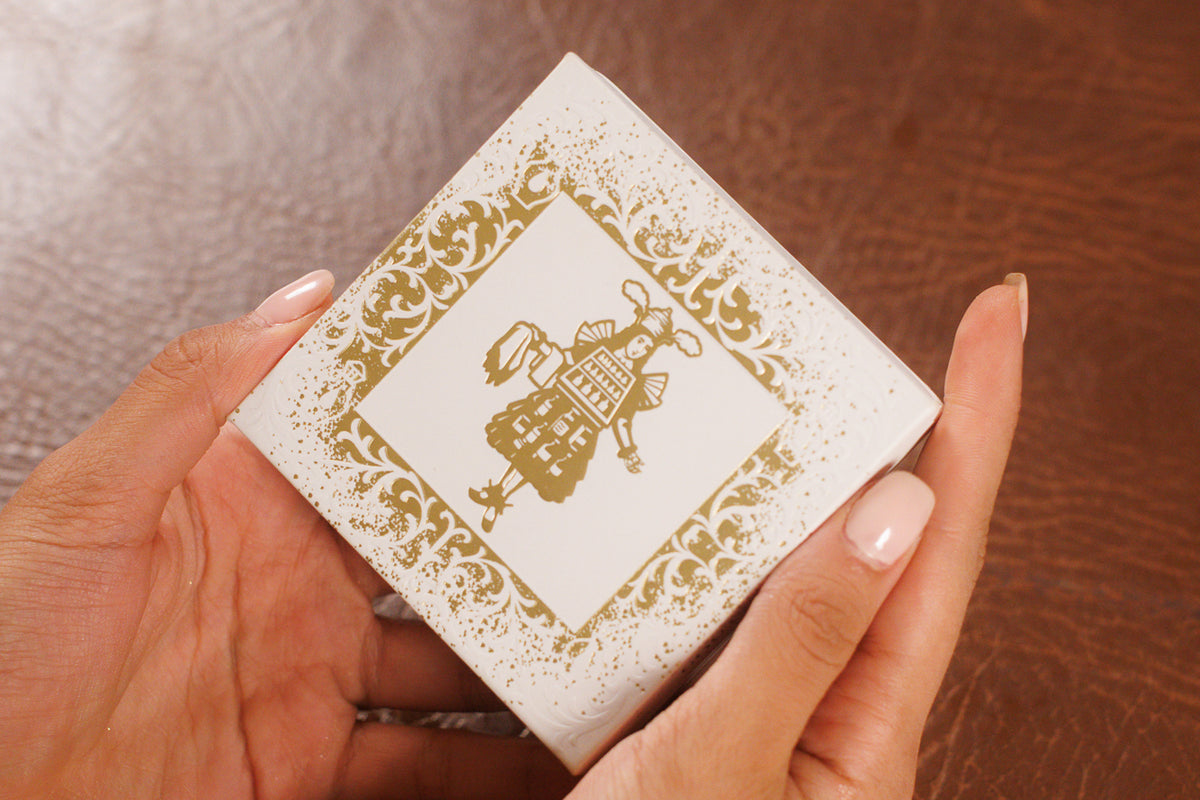
Packed into the hot foiled box and handed to DHL, every duty already paid. How a decant is made
More from Lost Tribe

You may also like