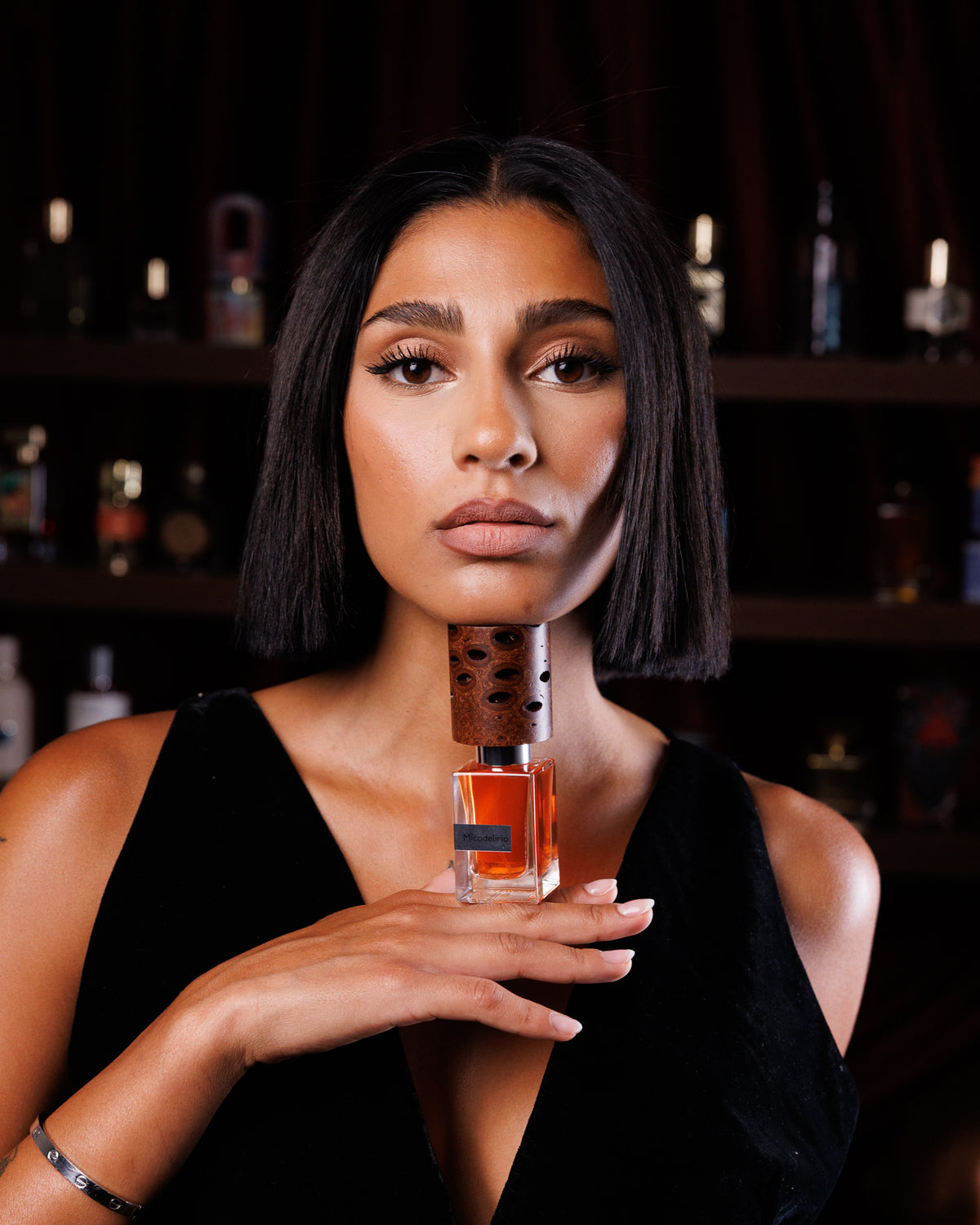

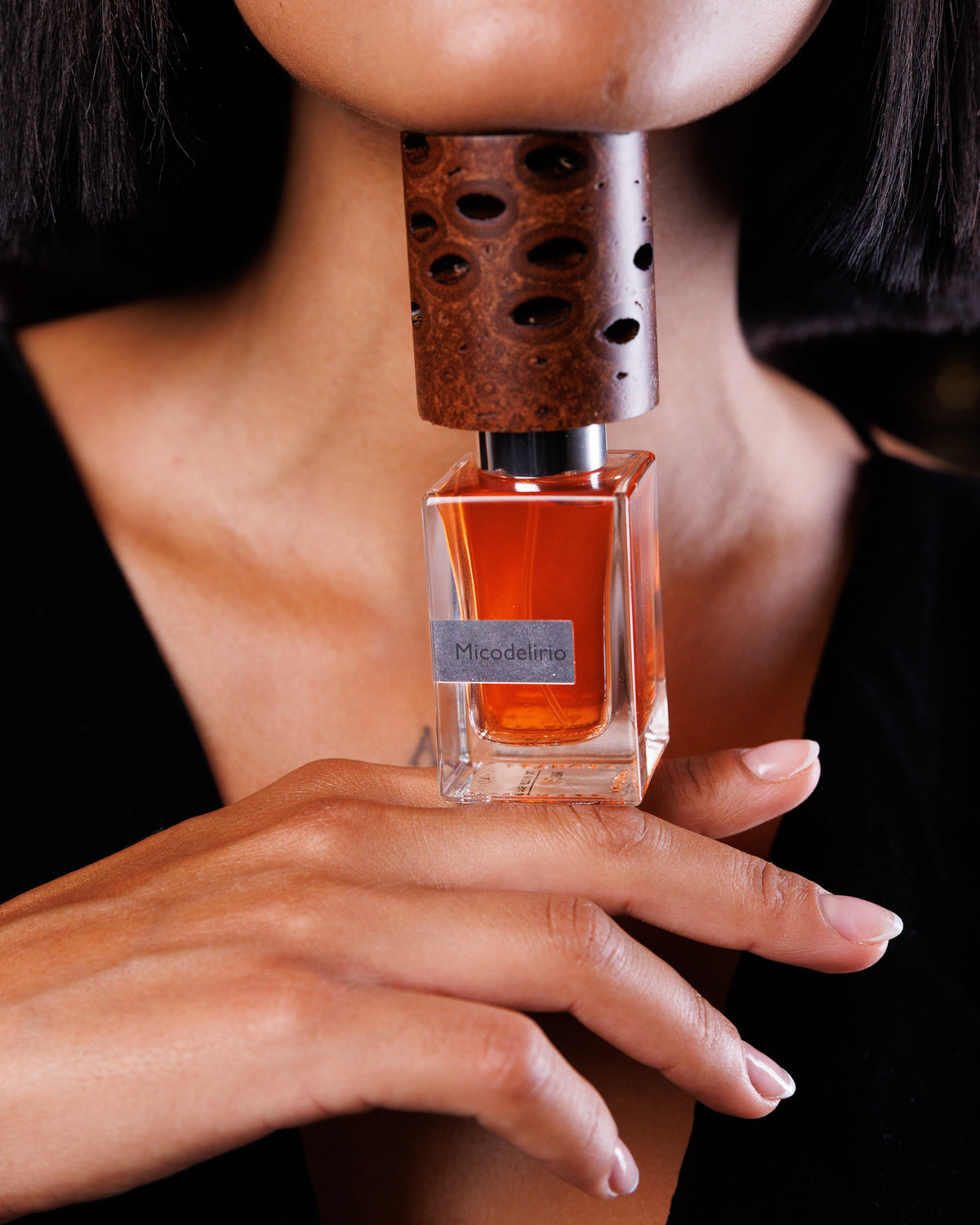
Nasomatto
Micodelirio
The Story
Micodelirio joins mico and delirio, and the mushroom reference is deliberate. It is born of a natural vital delirium, a flourishing ecosystem of organic disobedience, aimed at freeing instinct, behaviour and identity from imposed standards.


Earthy
Damp soil after the rain
The mineral smell of wet ground, and of beets pulled straight from the dirt with the soil still on them. Cool, raw and faintly bitter, it grounds a fragrance with the dark, humid breath of the forest floor.


Woody
Dry grain of cut timber
The smell of cedar shavings, sandalwood, and dry vetiver roots, a sanded, resinous warmth with a faint pencil-box rasp. It feels grounded and composed, the quiet backbone that makes a scent read as serious and lasting.


Green
Sap on your hands after weeding
Snap a stem and this is what comes off: sappy, cool, a little bitter, more vegetable than floral. Cut grass, bruised leaves, the inside of a hedge after the shears. Nothing here is sweet.


Sweet
Warm sugar you cannot quite name
Caramel, honey, spun sugar: sweetness that hovers between all three and never settles on one. This is the gourmand pull, the thing that makes someone lean in closer than they meant to, warm and soft and a half step short of edible.


Spicy
A spice stall in the open air
Black pepper, cardamom and pimento berry, dry rather than sweet, with a heat that catches at the top of the nose before you have finished inhaling. It does not sit quietly under anything. Spice raises the temperature of whatever it is put next to.


Green Notes
The cool snap of bruised stems and leaves
What it is
Not one material but a whole family: cut grass, snapped stems, crushed leaves, sap on your fingers. Perfumers build it from galbanum, violet leaf and tomato leaf, sharpened with the aroma-chemicals that stand in for torn foliage.
How it smells
Cool, watery and sharp, like a stem broken between your fingers. The opening bites, almost bitter, all sap and crushed leaf; some versions turn dewy and cucumber-fresh, others smoky. It quiets into vegetal coolness under the heart.
In perfumery
Mostly a top and heart effect, valued for realism, lift and the way it cuts sweetness. Galbanum and violet leaf carry the classic green signatures, with the aldehydic florals of the postwar era setting the template.
Good to know
Tear a leaf and the plant answers instantly with cis-3-hexenol, leaf alcohol, part of a chemical alarm signal. That is what your nose reads as freshly mown grass and newly cut stems.


Fruity Notes
An orchard in a bottle, sun-warmed and dripping
What it is
Everything edible except citrus: peach, apple, pear, berry, plum, lychee. Almost none of it is real, because fruit gives up so little usable scent. The impressions are assembled molecule by molecule, ethyl maltol doing the candied warmth.
How it smells
Juicy and round, from crisp green apple through jammy berry to syrupy plum and tropical lychee. Lactones give the soft skin-of-the-fruit creaminess, esters add a nail-polish sharpness up top. Most accords start sappy and end candied.
In perfumery
Lift and approachability, usually top through heart, softening woods and brightening florals. Fruity-florals are built on it outright and gourmands lean on it hard, from the crisp apple of a fresh floral to berry crushed into patchouli.
Good to know
The peach in classic perfume is almost never peach. Gamma-undecalactone, nicknamed Aldehyde C-14 though it is not an aldehyde at all, gave Guerlain's Mitsouko its fuzzy fruit-skin warmth, and it has never stopped.


Mushroom
Damp forest floor, held at a trace
What it is
Almost no mushroom is picked for perfume. A real extract exists, cepes absolute from the porcini, but most mushroom effects are reconstructions built around a single molecule that fungi make for themselves.
How it smells
Cool soil, torn leaf, the cut face of a cap. A metallic edge sits over an oily, faintly fatty weight. Push it too far and it turns raw and savoury, closer to uncooked chicken than to woodland.
In perfumery
The workhorse is mushroom alcohol, 1-octen-3-ol, detectable in parts per billion and therefore dosed in traces. Slipped under oakmoss and vetiver in a chypre it reads as humus, not mushroom, with geosmin alongside it for wet soil.
Good to know
Tear a mushroom and the smell sharpens at once: the cap and gills build that molecule on the spot from a fatty acid. It turns up in cheese too, and mosquitoes are drawn to it.


Damp Earth
The smell of rain landing on dry ground
What it is
No one distils soil, so this one has to be built. Its anchor is geosmin, made by bacteria underground and by beetroot, which is why a raw beet smells of the earth it grew in.
How it smells
Cool, mineral and dark. Turned clay, a cellar floor, roots rinsed under a tap. Petrichor is the word for rain hitting dry ground, and this accord follows it. Your nose catches geosmin at parts per trillion.
In perfumery
Geosmin arrives diluted: neat, it floods a formula and turns it to mud. At a low dose it stops reading as soil and gives green notes, roots and white flowers the feel of something grown in the ground.
Good to know
Patchouli and vetiver get called earthy too, but they are a different earth: distilled from plants, warm and woody and sweet at the base. Damp earth stays cold and wet. It sits closer to stone than to root.


Oakmoss
The damp green soul of the forest floor
What it is
Not a moss at all, but a lichen, scraped off oak and other deciduous bark across temperate Europe, Russia and North Africa. Solvents turn the harvested growth into a dark, viscous concrete, then the absolute perfumers actually use.
How it smells
Wet stone, damp bark and something inky and leathery underneath, dry and faintly bitter. This is not fresh green: it is the cool floor beneath old trees after rain has soaked the ground.
In perfumery
The backbone of the chypre: a base note that gives a fragrance its shadow and its spine, classically under bergamot, beside labdanum and patchouli. Anything described as mossy, vintage or green-masculine is usually leaning on it.
Good to know
Oakmoss carries two allergens, atranol and chloroatranol, potent enough that the EU banned them from cosmetics outright. Perfumers use stripped grades now, but it was the earlier cap on the extract that changed how the classic chypre smells.


Amber
A warm resinous glow built, not harvested
What it is
There is no amber tree. Perfumers assemble the smell from labdanum, the sticky gum that bleeds off a Mediterranean rockrose in summer heat, plus benzoin and vanilla. The fossilized resin in museum cases is odorless on skin.
How it smells
Honeyed and faintly animalic at first, then it settles into golden powdery warmth: beeswax, old tobacco, worn leather, a thread of smoke underneath. It stays close to the skin rather than filling the room.
In perfumery
It sits at the base and holds everything above it in place, which is why oriental compositions lean on it so hard. Vanilla and patchouli push it sweet; more resin, spice and dry herbs push it austere.
Good to know
The word once meant ambergris, the waxy secretion of sperm whales, and the confusion never cleared. The trade now uses amber for two things: this resin accord, almost always plant and synthetic, and the ambergris substitutes like Ambroxan.


Woods
The structure everything else hangs on
What it is
Heartwood, root and bark, the parts you have to cut into. Cedar, sandalwood, guaiac and agarwood are chipped and steam-distilled, vetiver's roots too, while Iso E Super and cedryl acetate come out of a lab.
How it smells
Cedar is pencil shavings. Sandalwood is milk and cream. Guaiac turns smoky and tarry, vetiver damp and rooty. They all open crisp, then settle into a dry grainy hum you stop noticing and keep smelling.
In perfumery
Almost always a base note, there to hold the lighter things up and make them last. Rose, leather, incense and amber all need something underneath them, and a great many modern fragrances get it from cedar and vetiver.
Good to know
Mysore sandalwood was harvested so hard that India banned most raw export. Prices went vertical, and perfumers moved to Australian plantations growing the same species, and to Iso E Super, a woody-amber synthetic propping up accords since the 1970s.


Patchouli
Damp earth and dark wood after rain
What it is
Nobody guesses mint, but that is the family: a leafy bush whose leaves are dried and left to cure, close to fermenting, before distillation pulls out an oil thick and dark as syrup.
How it smells
Wet soil, forest floor, an old cellar, with a winey sweetness underneath. Young oil can come at you sharp and green, almost camphorous. Aged oil goes the other way, into chocolate and leather, and stays put for hours.
In perfumery
Almost nothing holds a composition down like it. Chypres and orientals are built on that anchor, and a few drops under rose, vetiver or labdanum will hold the whole thing on skin for hours.
Good to know
Nineteenth-century Kashmiri shawls travelled packed in dried patchouli leaves to keep moths off, and Europeans learned to tell a real one by smell alone. The oil improves with age, which almost no essential oil does, mellowing like wine.
Fragrance Character
It opens almost edible, sweet ripe fruit over a green snap, before the forest closes in: mushroom, wet soil and moss thickening into damp wood and earthy patchouli. The sweetness never fully leaves, but it is pulled underground, leaving something that smells less like a perfume than like rain on a forest floor. It stays close to the skin, earthy and faintly fruity, for hours.


Longevity
how long it stays on skin
The hourglass reads wear time: how many hours the fragrance keeps speaking before it fades. A bar that barely leaves the start means a few fleeting hours. One that runs the full length carries from morning into evening. Treat it as typical, not promised. Oily skin holds scent far longer than dry.


Sillage
the size of its scent trail
Sillage is French for a ship's wake, and that is exactly what this measures: how much of the scent reaches the room instead of staying on you. Low is a whisper only close friends catch. Enormous fills the room, then keeps filling it after you leave.


Experimental
Built to provoke, not to please
Some perfumes are made to be liked. These are made to be argued about: inky tar, hot rubber, fruit on the turn, metal and fur where you expected flowers. The coin glows for a scent that provokes and dims for one that plays it safe, which is sometimes the point.


Office
Polished, and never louder than the room
Scent is manners in a shared room. At this range it should reach the person across the desk and stop there: tidy citrus, soft musk, pale woods, all of it reading competent and considerate. A glowing coin means nobody has to mention it. A dim one means it travels.


Evening
After dark, when it deepens
Dinner, drinks, the night that runs long. Low light is where ambers, resins and smoky woods stop being polite, and where a plush floral finally blooms. A glowing coin means it is waiting for exactly this hour. A dim one means it did its best work in daylight.


Romantic
Close enough to be felt
A fragrance can hum against skin instead of announcing itself across a table. That is the register here: creamy florals, vanilla, soft musk, a thread of spice, warm enough to make someone lean in. The coin glows when a scent sets that mood and dims when it is more practical than seductive.


Formal
Quiet authority in a dressed-up room
A wedding, a ceremony, a room where everyone has thought about their shoes. What works here is structure, not volume: smooth woods, disciplined florals, soft leather. A glowing coin means it holds its posture all evening. A dim one means it is too casual for the room.


Casual
Easy comfort for unhurried days
Errands, coffee, a slow Saturday with nowhere to be. Nothing here has to impress anyone, so the fit is soft and easy: fresh citrus, light woods, a little warmth off the skin. A glowing coin says yes to all that. A dim one means the fragrance is asking for a bigger night.


Day to Night
where its mood naturally falls
A bar running from sun to moon, reading the hour the fragrance was made for. The more of it that stays gold, the more the scent belongs to daylight and open air. The further the blue reaches back toward the sun, the deeper and warmer it turns: evening, candlelight, low rooms.


Winter
Warmth that carries through cold air
Cold air mutes a fragrance and slows it down, which is why winter belongs to the dense and the warm: resin, smoke, vanilla, leather, ambered spice. The bar reads how well this one pushes back, glowing against the chill instead of thinning out in it.


Spring
Fresh blooms in mild, rising warmth
Mild, humid air lifts a light composition, so the season belongs to dewy florals, green stems, soft powder and citrus you can see through. Alive rather than heavy. The further the green runs along the bar, the more comfortably this one wears in that weather.


Summer
Bright and airy in real heat
Heat does the projecting for you, which is why the wrong perfume turns unbearable by noon. What survives is cool and breathable: sharp citrus, salt air, aromatic herbs, water. Things that refresh instead of cloy. A short bar here means save it for cooler months.


Fall
Spiced warmth for cooling days
As the air cools, the rich materials stop smothering and start reading clearly: dry woods, warm spice, tobacco, amber, fruit gone golden. It is the season perfume turns contemplative. The bar fills according to how naturally this one settles into crisp, cooling days.
Best Worn
Made for autumn and cool, damp days, worn by someone who wants a fragrance that smells of living earth rather than something merely pretty, a quiet provocation rather than an easy win.
Choose options
The Vibe


The Nose

Alessandro Gualtieri
Founder and perfumer
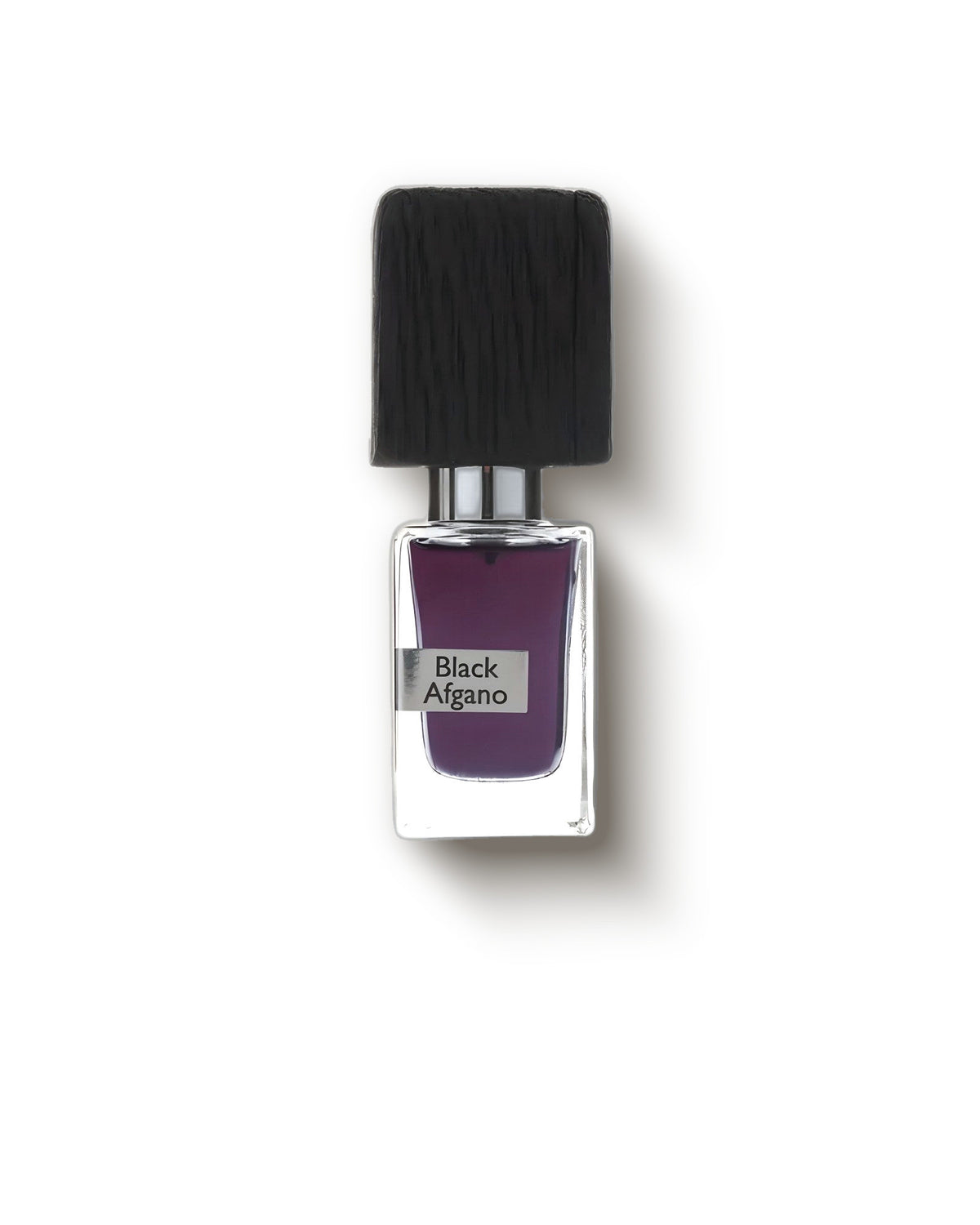
Italian perfumer who began in a German fragrance lab, then made scents for Fendi, Versace and Helmut Lang before founding his own Amsterdam houses Nasomatto and Orto Parisi. He composes them himself, including Nasomatto Black Afgano, Nasomatto Silver Musk, Orto Parisi Megamare and Orto Parisi Bergamask.
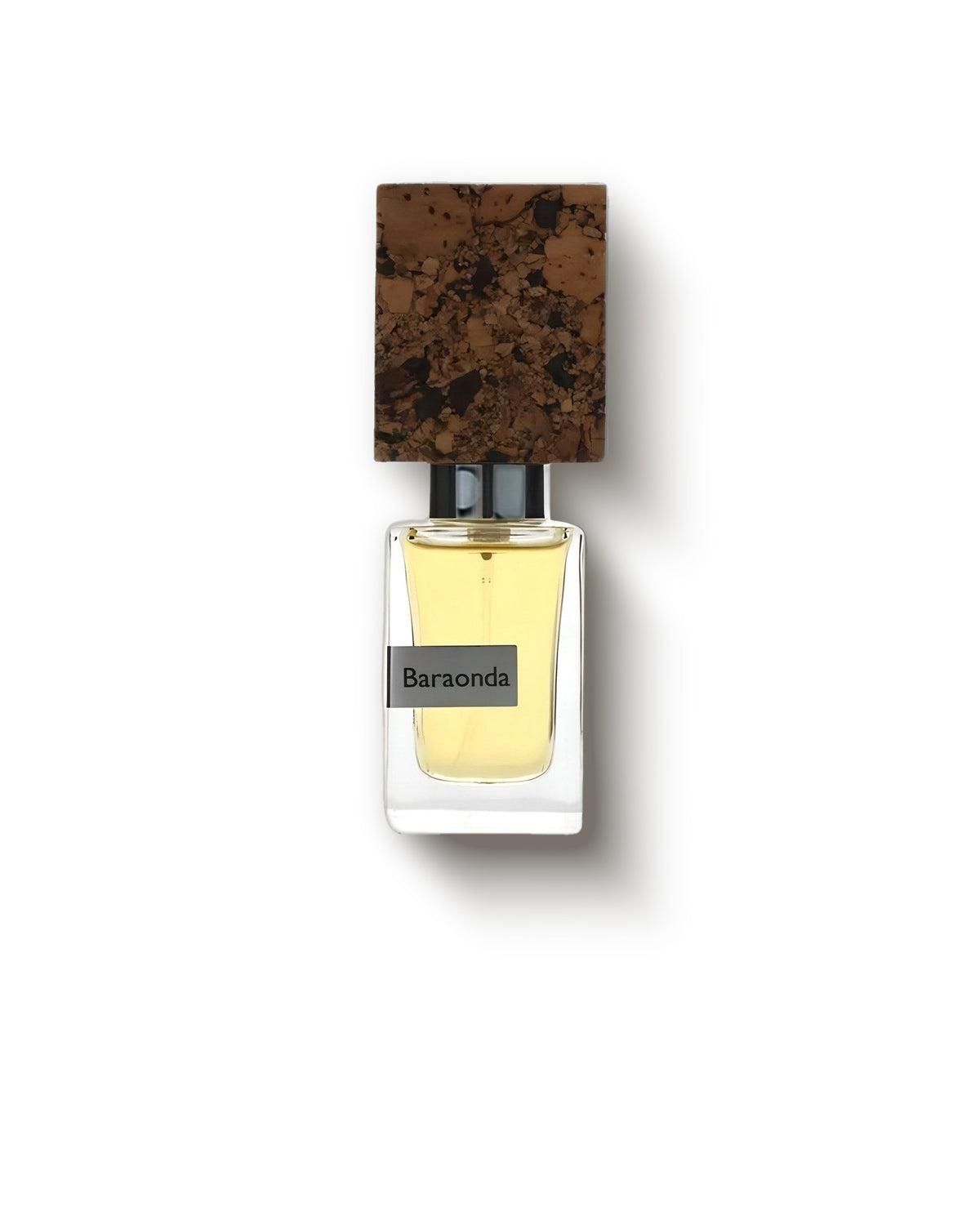
More by this noseMegamareBlack AfganoBaraonda
The Maison

Gualtieri’s wordless extraits. Short names, long shadows, small vials.
Nasomatto treats a bottle less like a fragrance and more like a substance you keep behind glass, dense extrait concentrations that lean animalic, resinous and a little disobedient. A Nasomatto walks into the room as a smell first and a perfume second.
- Origin
- Amsterdam, Netherlands
- Founded
- 2007
- Known for
- Black Afgano, Baraonda

EVERY DECANT
From the original bottle to your door
We buy the original flacon at full retail price, direct from the house.
A medical grade Socorex syringe takes the exact millilitres straight from the flacon.
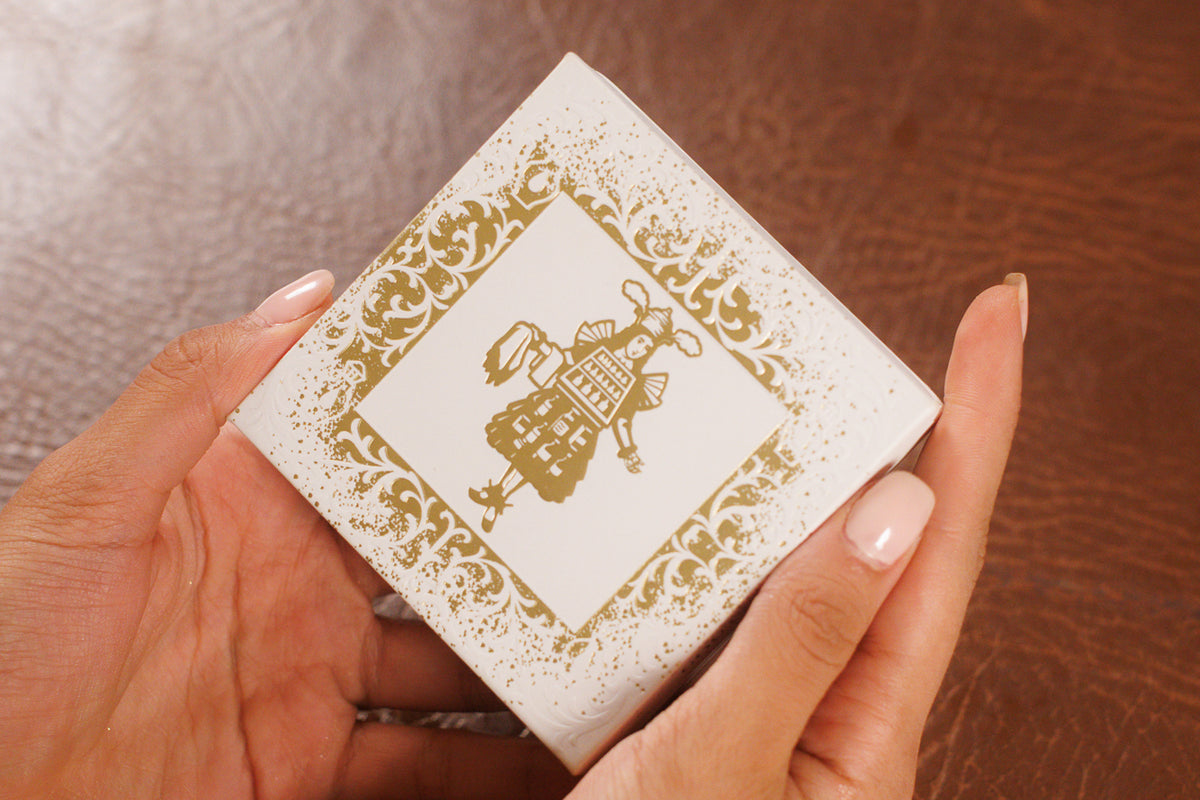
Packed into the hot foiled box and handed to DHL, every duty already paid. How a decant is made
More from Nasomatto
You may also like