


Orto Parisi
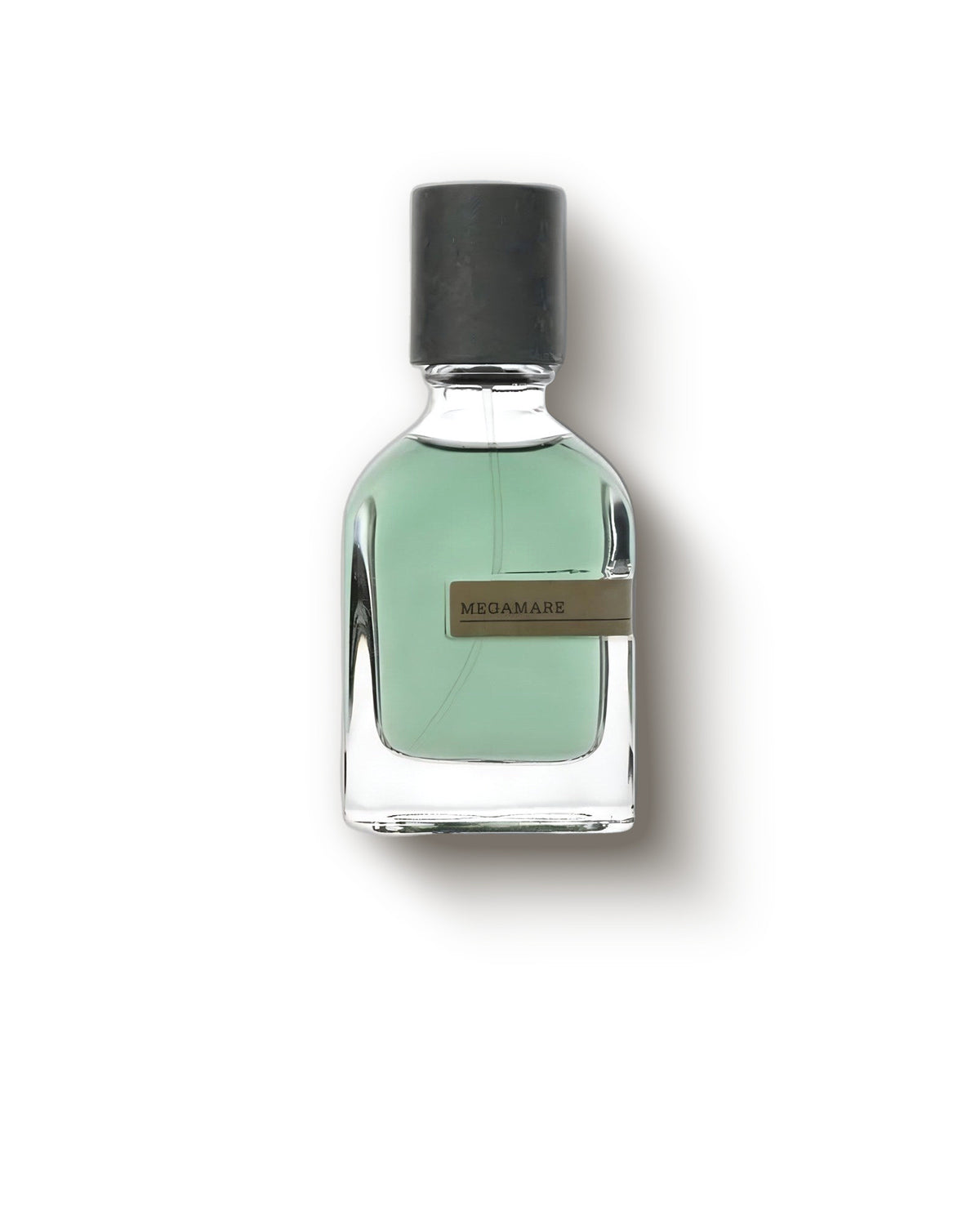
Megamare
The Story
Megamare is Alessandro Gualtieri's attempt at the sea itself rather than a scent worn near it, built on salt tide, seaweed and a dry, ambery mineral warmth pushed to a scale most houses would have pulled back from. Nothing in it is designed to be refreshing, which is why it reads as open water rather than a beach.


Musky
Warm breath of clean skin
A soft, slightly animalic warmth that smells like clean skin and freshly dried laundry, intimate and faintly sweet. It hums quietly underneath a fragrance, a second skin that only registers when someone is already standing close enough to catch it.


Marine
open sea air and spray
A cool, watery freshness evoking salt spray, wet stone, and the faint sulphurous tang that phytoplankton leave on open water. It feels clean and expansive, like wind over the surf, breezy and oxygenated with a slightly mineral, aquatic transparency.


Fresh
Cold water, open air, washed skin
Cool water, laundered cotton, air with nothing in it yet. The lift can go citrus-zesty or salt-aquatic, but the effect is the same either way: it registers as clean rather than as a scent, the way a room reads different five minutes after you open a window.


Aquatic
The sea, invented in a laboratory
Real seawater smells of iodine, weed and low tide, which is nothing like this. The aquatic accord is a fiction, built around Calone, a melon-tinged marine molecule that helped give the nineties their ozonic wardrobe, with fresh partners such as dihydromyrcenol beside it. Cool, transparent, mineral: wet stone and cold spray, with none of the tide in it.


Amber
Resin warmed until it goes sweet
Labdanum, benzoin and vanilla melted together into something sweet but dusky, like tree sap gone soft in the sun with a thread of incense smoke through it. Amber does not sparkle or shout. It sits close to the skin and gives off heat for hours.


Citrus
First bright zest of morning
The juicy, rind-snapping brightness of lemon, bergamot, and orange peel, tart and effervescent with a clean bitter edge. It opens a scent with instant lift and sparkle, fresh and energizing, evaporating quickly like sunlight on water.

Bergamot
Sparkling citrus light with a bitter edge
What it is
Nobody eats bergamot. It is sour, seedy and disappointing, and almost the whole world's supply grows on one strip of Calabrian coast, farmed purely for the oil pressed cold from its green rind.
How it smells
Zest and green light in the first second, then something rounder than lemon: a floral, tea-like smoothness sitting on a faintly bitter warmth. It burns off fast. What stays behind is a quiet, slightly spiced hum.
In perfumery
It defines eau de cologne, and sits on top of nearly every fougère alongside lavender and oakmoss. Perfumers want the first bright second it gives, and the oil is also what makes Earl Grey smell like Earl Grey.
Good to know
The thing that makes it sparkle can also burn. Bergamot carries bergapten, which leaves skin hypersensitive to sunlight, so perfumers either keep the dose low or reach for a grade with the molecule stripped out.


Lemon
Cold yellow zest snapping into bright sun
What it is
Squeezed, not distilled: the colored rind is pressed and scraped until the glands give up their oil. Argentina presses the most, and Sicily gives the classic perfumery grade. The tree's white blossom is a different note entirely.
How it smells
Tart, green and fizzing, all cold rind and mouth-watering sourness, with a faint sweet pith underneath and a waxy edge from the peel itself. Enjoy it fast: it is gone within minutes.
In perfumery
It powers the eau de cologne tradition, working with bergamot, neroli and petitgrain to open a fragrance in full sunlight. Because it burns off so fast, perfumers reinforce it with citral.
Good to know
Cold-pressed lemon carries furocoumarins that leave skin liable to burn in sunlight, so perfumers often reach for a grade with the sun-sensitizing compounds removed. It also spoils in the bottle, oxidizing toward turpentine, which is why citrus fragrances are hard to stabilize.


Seaweed
Green tidewrack breathing iodine and salt
What it is
Kelp and other coastal algae, dried and solvent-extracted into an absolute so dark and thick it looks closer to tar than to a perfume material. Synthetic marine molecules usually ride alongside to round out the brine.
How it smells
Green, salty and iodine-rich, all wet rock and low tide, with a faint marine funk that dries down leathery and a little smoky. Not the clean aquatic blue. This is the shoreline laid bare at ebb tide.
In perfumery
It gives coastal accords the iodine bite and dark green depth that clean aquatic molecules cannot fake, holding from heart to base. Salt, vetiver, ambergris and incense keep it from collapsing into pure low tide.
Good to know
The absolute is scarce and so tenacious that a trace counts as a dose. A savoury edge shows once the first brine fades, the sea made wearable.


Calone
The sea breeze captured in a molecule
What it is
Brown algae release compounds this synthetic echoes, which is probably why something made in a lab in 1966 smells so exactly of a shoreline. Pfizer's chemists called it Calone 1951; everyone else says watermelon ketone.
How it smells
Wet stone, salt air, sea spray. Under the coolness sit green and melon facets, unmistakably watermelon rind, with a faint oyster note behind. Diluted it reads clean and airy; concentrated it turns metallic, almost briny.
In perfumery
This is the molecule that helped build the aquatic genre. Working from the top into the heart with dihydromyrcenol, florals and musks, it opened whole formulas into fresh air and powered the marine wave that swept the 1990s.
Good to know
Perfumers now use it in traces: a drop reads as sea air, while a heavy hand dates a fragrance to the early 1990s. The watermelon facet also earns it work in fruity accords nowhere near the sea.


Hedione
Transparent jasmine that makes a fragrance breathe
What it is
A synthetic that does more to a formula than it does on a blotter. Methyl dihydrojasmonate echoes a trace component of jasmine, and it is now among the most heavily used materials in modern perfumery.
How it smells
Limpid and green, jasmine with the indoles taken out: dewy petals, magnolia, a citrus-watery edge. What you notice is not the smell so much as the space it opens, a fizz that people keep comparing to champagne.
In perfumery
Dosed high, it works as blender and diffuser: smoothing citrus, giving white florals room to bloom, stretching a drydown. One landmark fresh masculine built its whole character on it, and modern florals have leaned on it ever since.
Good to know
Firmenich gives its usual dose as two to fifteen percent of a formula, and some perfumes go past thirty-five. Stranger still, Hedione appears to activate a receptor in the human nose thought to handle pheromones, which feeds its reputation for flattering skin.


Musk
Soft, skin-close warmth that anchors the base
What it is
The house lists musk without saying which material it uses. In modern perfumery a musk note almost always means one of the synthetic musks, a large family of molecules, because natural deer musk is restricted and rarely used.
How it smells
Synthetic musks smell clean, soft and warm: hot-ironed linen, fresh cotton, skin rather than fur. Depending on the molecule they lean sweet and faintly fruity, powdery, or smooth and almost waxy, but all share a quiet, rounded warmth.
In perfumery
Musk is the floor a composition stands on: it fixes what sits above, stretches the wear and adds that second-skin glow. Synthetic musks do this so reliably that most modern fragrances carry at least one in the base.
Good to know
One bottle can smell radiant on you and like almost nothing on the next person. Many people cannot smell certain synthetic musks at all, a quirk called specific anosmia, which is one reason perfumers often blend several musks together.


Ambroxan
Synthetic ambergris that glows like warm skin
What it is
A molecule built to stand in for ambergris, and it starts in a field: clary sage yields sclareol, which is converted into ambroxide. Newer routes skip the plant: microbes ferment sugar into a precursor and an enzyme closes it into ambroxide.
How it smells
Put your nose right on it and there is almost nothing there. Step back and it fills the room: dry, warm, faintly salty, mineral, blond woods and sun-warmed skin. It diffuses without a single sharp edge.
In perfumery
Plenty of modern scents that seem to hang in the air owe it to this molecule. It pushes woods and ambers outward and hands a whole composition its reach. A few are built on almost nothing else.
Good to know
Real ambergris forms inside sperm whales and washes ashore when it does, a supply no one can plan. Ambroxan gives the part that matters, no whale involved, and the fermentation route made it far greener to produce.


Cedar
Dry sharpened pencils and sun-warmed timber
What it is
Most perfumery cedar is not cedar. It is juniper, from the Virginia and Texas trees, steam-distilled from chips and sawmill shavings. True Atlas cedar exists and is used, but it is the smaller source.
How it smells
Freshly sharpened pencils, then the inside of a cedar-lined closet. Atlas leans warm, smoky and balsamic; Virginia reads sharper and cleaner. Either way it settles into soft sawdust warmth and stays there for hours.
In perfumery
A workhorse. It gives woody compositions their backbone and holds lighter materials in place, sitting comfortably beside vetiver, rose, citrus and amber. Its plummy-woody core runs through most modern unisex woods.
Good to know
Egyptian embalmers poured cedar oil into the body rather than burning it, and cedar timber lined the tombs and coffins they meant to outlast them. The true cedars and the junipers share a name through smell, not lineage.
Fragrance Character
Bergamot and lemon open with a clean, almost electric brightness that dissolves quickly into the heart's dense marine core, where seaweed and calone read less like a beach and more like open water at depth. Hedione lifts the composition just enough to keep it from becoming suffocating. On the drydown, cedar gives the musk and ambroxan a dry, woody grip that holds the saline character close to the skin for hours.


Longevity
how long it stays on skin
The hourglass reads wear time: how many hours the fragrance keeps speaking before it fades. A bar that barely leaves the start means a few fleeting hours. One that runs the full length carries from morning into evening. Treat it as typical, not promised. Oily skin holds scent far longer than dry.


Sillage
the size of its scent trail
Sillage is French for a ship's wake, and that is exactly what this measures: how much of the scent reaches the room instead of staying on you. Low is a whisper only close friends catch. Enormous fills the room, then keeps filling it after you leave.


Experimental
Built to provoke, not to please
Some perfumes are made to be liked. These are made to be argued about: inky tar, hot rubber, fruit on the turn, metal and fur where you expected flowers. The coin glows for a scent that provokes and dims for one that plays it safe, which is sometimes the point.


Office
Polished, and never louder than the room
Scent is manners in a shared room. At this range it should reach the person across the desk and stop there: tidy citrus, soft musk, pale woods, all of it reading competent and considerate. A glowing coin means nobody has to mention it. A dim one means it travels.


Evening
After dark, when it deepens
Dinner, drinks, the night that runs long. Low light is where ambers, resins and smoky woods stop being polite, and where a plush floral finally blooms. A glowing coin means it is waiting for exactly this hour. A dim one means it did its best work in daylight.


Romantic
Close enough to be felt
A fragrance can hum against skin instead of announcing itself across a table. That is the register here: creamy florals, vanilla, soft musk, a thread of spice, warm enough to make someone lean in. The coin glows when a scent sets that mood and dims when it is more practical than seductive.


Formal
Quiet authority in a dressed-up room
A wedding, a ceremony, a room where everyone has thought about their shoes. What works here is structure, not volume: smooth woods, disciplined florals, soft leather. A glowing coin means it holds its posture all evening. A dim one means it is too casual for the room.


Casual
Easy comfort for unhurried days
Errands, coffee, a slow Saturday with nowhere to be. Nothing here has to impress anyone, so the fit is soft and easy: fresh citrus, light woods, a little warmth off the skin. A glowing coin says yes to all that. A dim one means the fragrance is asking for a bigger night.


Day to Night
where its mood naturally falls
A bar running from sun to moon, reading the hour the fragrance was made for. The more of it that stays gold, the more the scent belongs to daylight and open air. The further the blue reaches back toward the sun, the deeper and warmer it turns: evening, candlelight, low rooms.


Winter
Warmth that carries through cold air
Cold air mutes a fragrance and slows it down, which is why winter belongs to the dense and the warm: resin, smoke, vanilla, leather, ambered spice. The bar reads how well this one pushes back, glowing against the chill instead of thinning out in it.


Spring
Fresh blooms in mild, rising warmth
Mild, humid air lifts a light composition, so the season belongs to dewy florals, green stems, soft powder and citrus you can see through. Alive rather than heavy. The further the green runs along the bar, the more comfortably this one wears in that weather.


Summer
Bright and airy in real heat
Heat does the projecting for you, which is why the wrong perfume turns unbearable by noon. What survives is cool and breathable: sharp citrus, salt air, aromatic herbs, water. Things that refresh instead of cloy. A short bar here means save it for cooler months.


Fall
Spiced warmth for cooling days
As the air cools, the rich materials stop smothering and start reading clearly: dry woods, warm spice, tobacco, amber, fruit gone golden. It is the season perfume turns contemplative. The bar fills according to how naturally this one settles into crisp, cooling days.
Best Worn
This belongs to summer heat and nights that still carry the warmth of the day, worn by someone unbothered by taking up space in a room. Try it in a decant before committing to a bottle of this much ocean.
Choose options
The Vibe


The Nose

Alessandro Gualtieri
Founder and perfumer
Italian perfumer who began in a German fragrance lab, then made scents for Fendi, Versace and Helmut Lang before founding his own Amsterdam houses Nasomatto and Orto Parisi. He composes them himself, including Nasomatto Black Afgano, Nasomatto Silver Musk, Orto Parisi Megamare and Orto Parisi Bergamask.
More by this noseBlack AfganoBaraondaRisvelium
The Maison

The body, bottled. Perfumery pushed to its visceral edge, best approached in 2ml.
Orto Parisi is Alessandro Gualtieri working without restraint, the same nose behind Nasomatto. These are built at full volume, radiant and animalic and unmistakably human. Wearing one feels less like putting on a perfume and more like putting on a mood.
- Origin
- Amsterdam, Netherlands
- Founded
- 2014
- Known for
- Megamare, Stercus


EVERY DECANT
From the original bottle to your door
We buy the original flacon at full retail price, direct from the house.
A medical grade Socorex syringe takes the exact millilitres straight from the flacon.
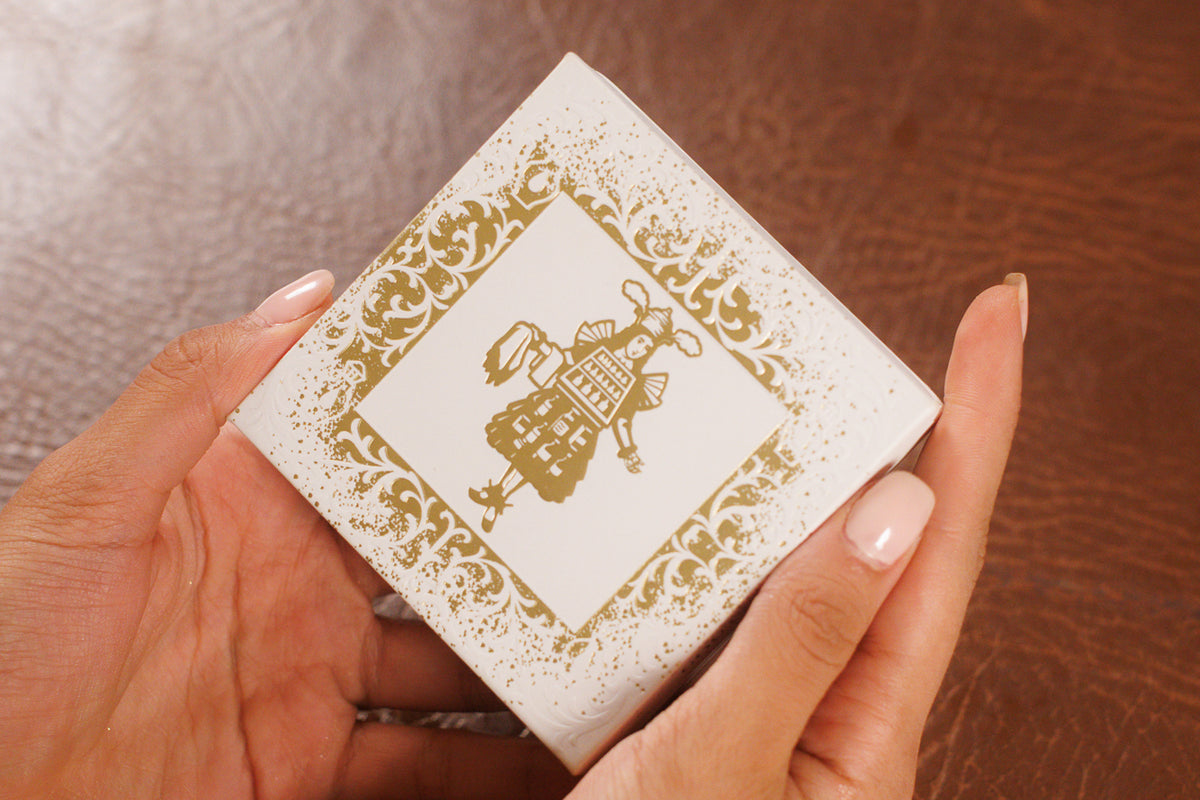
Packed into the hot foiled box and handed to DHL, every duty already paid. How a decant is made
More from Orto Parisi
You may also like