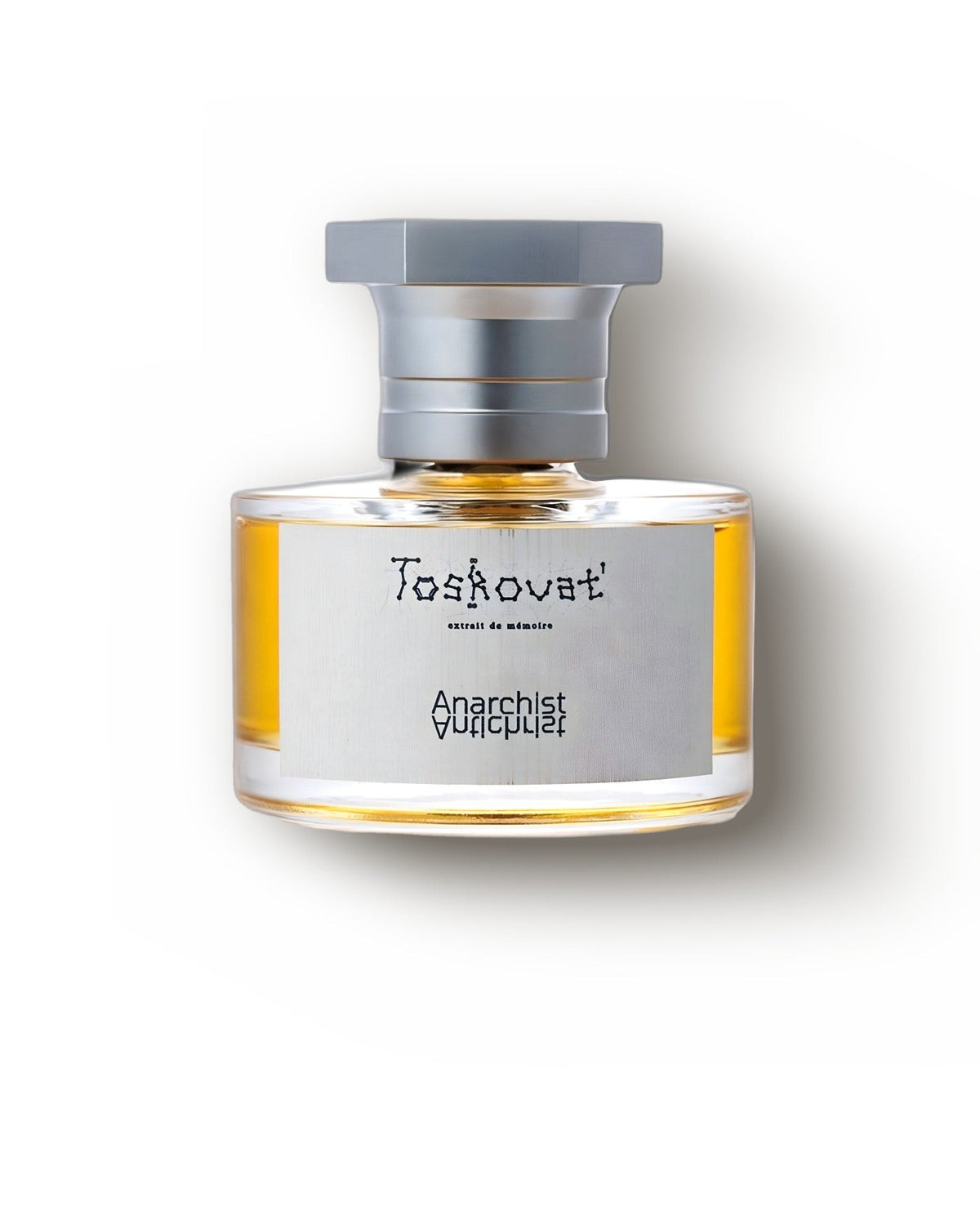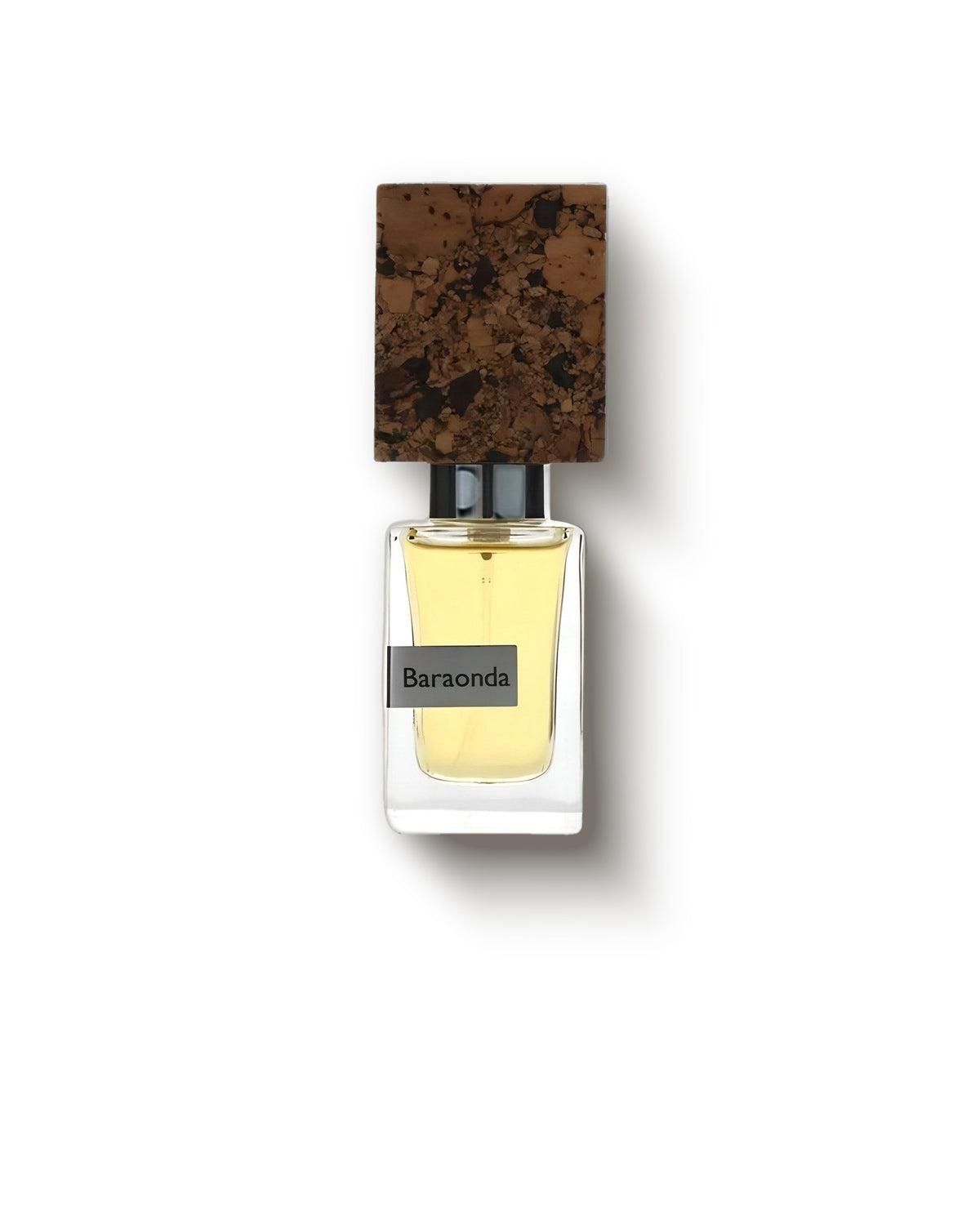
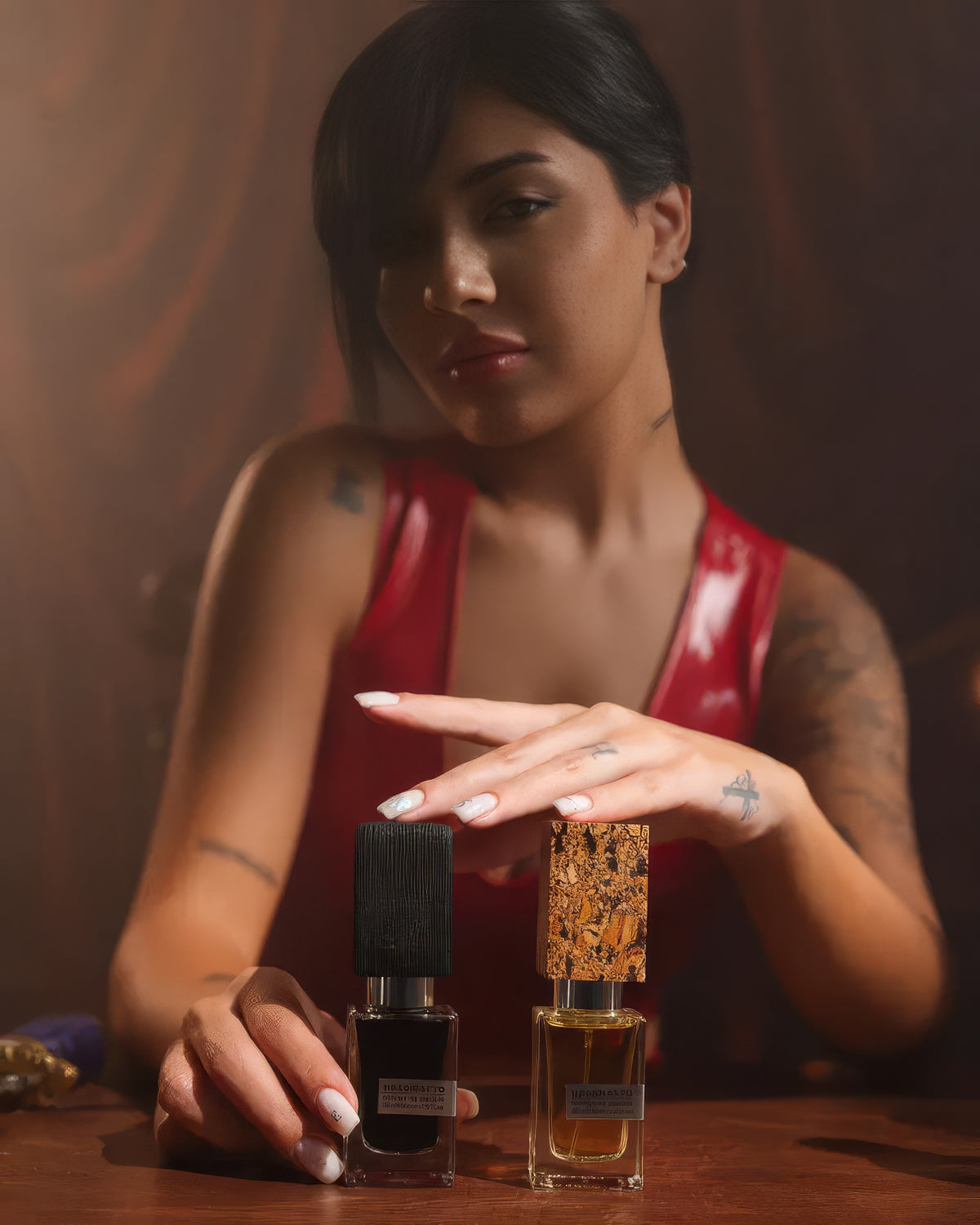


Nasomatto
Baraonda
The Story
Baraonda is Italian for uproar. Gualtieri built it around Venedikt Yerofeyev's novel Moscow to the End of the Line, whose narrator drinks his way along the railway, and the result blends single malt whiskey, lucid dreaming and reality in the same glass.


Woody
Dry grain of cut timber
The smell of cedar shavings, sandalwood, and dry vetiver roots, a sanded, resinous warmth with a faint pencil-box rasp. It feels grounded and composed, the quiet backbone that makes a scent read as serious and lasting.


Whiskey
warm spirit and oak smoke
A boozy amber warmth of aged grain steeped in charred oak. The vanilla comes straight off the burnt inside of the barrel, and the smoke, when a whiskey has it, comes from peat. It smells grown-up: a slow evening, a loosened collar.


Musky
Warm breath of clean skin
A soft, slightly animalic warmth that smells like clean skin and freshly dried laundry, intimate and faintly sweet. It hums quietly underneath a fragrance, a second skin that only registers when someone is already standing close enough to catch it.


Rose
Velvet petals, honey and thorn
Dewy and fruity on top, then a jammy, honeyed heart with a green peppery bite underneath. Very little of it is distilled flower. A rose accord is built, and a good one can smell more like a rose than the rose does.


Amber
Resin warmed until it goes sweet
Labdanum, benzoin and vanilla melted together into something sweet but dusky, like tree sap gone soft in the sun with a thread of incense smoke through it. Amber does not sparkle or shout. It sits close to the skin and gives off heat for hours.

Whiskey
Charred oak, honey and a boozy haze
What it is
You cannot distil a whiskey into a perfumer's oil. What you can do is rebuild it: oak lactones, smoky phenols, vanillin, esters of dried fruit and a grain facet, weighed out until the parts read as a glass of something aged.
How it smells
Toasted oak and sweet hay, honey, dried fruit, all of it under a warm alcoholic blur. Peated builds add iodine, wet stone and something medicinal; bourbon builds go the other way, toward coconut and caramel.
In perfumery
A heart note that reads as evening: the flush of a second drink. It keeps company with tobacco, leather, tonka and dried fruit, and turns woody oriental builds lived-in rather than polished.
Good to know
The overlap is not a metaphor. Charring a barrel breaks the wood down into vanillin and coconut-scented lactones, the same molecules a perfumer weighs out, so the accord and the spirit are chemically related.


Rose
Dewy sweetness over a green, peppery bite
What it is
Most perfumery rose is one of two: damascena from Bulgaria and Turkey, centifolia from Grasse. Whole blossoms are picked by hand from before sunrise until about ten thirty, then distilled into otto or solvent-extracted into absolute.
How it smells
Fresh, honeyed, green at the edges, with something dewy still on it. Spice and fruit sit underneath, and in the absolute a jammy darkness. Otto opens crisp and bright; absolute is warmer, smokier, closer to skin.
In perfumery
Rose behaves less like one note than a whole palette. It carries a perfume alone or vanishes into a chypre, turns dark against oud and patchouli, goes powdery beside violet, and holds a floral heart together.
Good to know
The two extractions are not the same bargain. Otto takes three to four thousand kilograms of blossoms to yield one kilogram of oil. Absolute, pulled out with solvent, gets there on roughly a seventh of the flowers.


Woody Notes
Sawn timber, pencil shavings, warm bark
What it is
Not one material but a whole shelf: sandalwood, cedar, vetiver, guaiac, patchouli, plus the lab-made woody-ambers that stretch them further. Roots, bark and heartwood, steam-distilled or solvent-extracted, sitting beside molecules built from nothing at all.
How it smells
Dry at one end, creamy at the other. Cedar reads pencil-sharp, sandalwood milky, vetiver rooty and damp, guaiac smoky-sweet. Together they smell of sawn timber and sun-warmed bark, grounding whatever gets built on top.
In perfumery
Heart and base work, mostly. Woods give a composition its spine: structure, staying power, something for florals and ambers to hang on. The dry cedar-vetiver register drives a great deal of what has been released this century.
Good to know
Most woodiness comes from a lab, partly because sandalwood and rosewood were overharvested into protection. Iso E Super grew so dominant that one fragrance was built around it almost neat: barely there up close, glowing on skin.
Ambrette (Musk Mallow)
The only plant that breathes like skin-warm musk
What it is
Nearly every musk in perfumery is synthetic. This one is a seed, a small kidney-shaped kernel from a tropical hibiscus relative, steam-distilled or CO2-extracted to release the musk lactone locked inside.
How it smells
Warm and soft, with the nutty sweetness of pear skin and a powdery suede body that recalls iris. It opens faintly waxy, then settles into something closer to sun-warmed skin than to perfume.
In perfumery
It earns its place in the heart and base as the plant kingdom's answer to musk, and as a gentle fixative that rounds citrus and florals. Niche musk soliflores are often built on it alone.
Good to know
The seed is chemically unrelated to Musk Ambrette, a synthetic nitromusk that borrowed its name and echoes the seed's scent. Photosensitivity reports pushed it out of perfumery; neurotoxicity findings finished the job. The plant was never at fault.


Ambroxan
Synthetic ambergris that glows like warm skin
What it is
A molecule built to stand in for ambergris, and it starts in a field: clary sage yields sclareol, which is converted into ambroxide. Newer routes skip the plant: microbes ferment sugar into a precursor and an enzyme closes it into ambroxide.
How it smells
Put your nose right on it and there is almost nothing there. Step back and it fills the room: dry, warm, faintly salty, mineral, blond woods and sun-warmed skin. It diffuses without a single sharp edge.
In perfumery
Plenty of modern scents that seem to hang in the air owe it to this molecule. It pushes woods and ambers outward and hands a whole composition its reach. A few are built on almost nothing else.
Good to know
Real ambergris forms inside sperm whales and washes ashore when it does, a supply no one can plan. Ambroxan gives the part that matters, no whale involved, and the fermentation route made it far greener to produce.


Musk
Soft, skin-close warmth that anchors the base
What it is
Nasomatto publishes no list of notes, so the house never says which material this musk is. In modern perfumery a musk note almost always means one of the synthetic musks, a large family of molecules, because natural deer musk is restricted and rarely used.
How it smells
Synthetic musks smell clean, soft and warm: hot-ironed linen, fresh cotton, skin rather than fur. Depending on the molecule they lean sweet and faintly fruity, powdery, or smooth and almost waxy, but all share a quiet, rounded warmth.
In perfumery
Musk is the floor a composition stands on: it fixes what sits above, stretches the wear and adds that second-skin glow. Synthetic musks do this so reliably that most modern fragrances carry at least one in the base.
Good to know
One bottle can smell radiant on you and like almost nothing on the next person. Many people cannot smell certain synthetic musks at all, a quirk called specific anosmia, which is one reason perfumers often blend several musks together.
Fragrance Character
Whiskey dominates from the first minute, loud and deliberate, with a fermented, stinging quality that commands space. Rose enters not as a floral relief but as something drier and more abraded, caught between the spirit and the woody base. As the hours pass, ambrette and ambroxan pull everything inward into a musky, skin-fused warmth that lingers rather than broadcasts.


Longevity
how long it stays on skin
The hourglass reads wear time: how many hours the fragrance keeps speaking before it fades. A bar that barely leaves the start means a few fleeting hours. One that runs the full length carries from morning into evening. Treat it as typical, not promised. Oily skin holds scent far longer than dry.


Sillage
the size of its scent trail
Sillage is French for a ship's wake, and that is exactly what this measures: how much of the scent reaches the room instead of staying on you. Low is a whisper only close friends catch. Enormous fills the room, then keeps filling it after you leave.


Experimental
Built to provoke, not to please
Some perfumes are made to be liked. These are made to be argued about: inky tar, hot rubber, fruit on the turn, metal and fur where you expected flowers. The coin glows for a scent that provokes and dims for one that plays it safe, which is sometimes the point.


Office
Polished, and never louder than the room
Scent is manners in a shared room. At this range it should reach the person across the desk and stop there: tidy citrus, soft musk, pale woods, all of it reading competent and considerate. A glowing coin means nobody has to mention it. A dim one means it travels.


Evening
After dark, when it deepens
Dinner, drinks, the night that runs long. Low light is where ambers, resins and smoky woods stop being polite, and where a plush floral finally blooms. A glowing coin means it is waiting for exactly this hour. A dim one means it did its best work in daylight.


Romantic
Close enough to be felt
A fragrance can hum against skin instead of announcing itself across a table. That is the register here: creamy florals, vanilla, soft musk, a thread of spice, warm enough to make someone lean in. The coin glows when a scent sets that mood and dims when it is more practical than seductive.


Formal
Quiet authority in a dressed-up room
A wedding, a ceremony, a room where everyone has thought about their shoes. What works here is structure, not volume: smooth woods, disciplined florals, soft leather. A glowing coin means it holds its posture all evening. A dim one means it is too casual for the room.


Casual
Easy comfort for unhurried days
Errands, coffee, a slow Saturday with nowhere to be. Nothing here has to impress anyone, so the fit is soft and easy: fresh citrus, light woods, a little warmth off the skin. A glowing coin says yes to all that. A dim one means the fragrance is asking for a bigger night.


Day to Night
where its mood naturally falls
A bar running from sun to moon, reading the hour the fragrance was made for. The more of it that stays gold, the more the scent belongs to daylight and open air. The further the blue reaches back toward the sun, the deeper and warmer it turns: evening, candlelight, low rooms.


Winter
Warmth that carries through cold air
Cold air mutes a fragrance and slows it down, which is why winter belongs to the dense and the warm: resin, smoke, vanilla, leather, ambered spice. The bar reads how well this one pushes back, glowing against the chill instead of thinning out in it.


Spring
Fresh blooms in mild, rising warmth
Mild, humid air lifts a light composition, so the season belongs to dewy florals, green stems, soft powder and citrus you can see through. Alive rather than heavy. The further the green runs along the bar, the more comfortably this one wears in that weather.


Summer
Bright and airy in real heat
Heat does the projecting for you, which is why the wrong perfume turns unbearable by noon. What survives is cool and breathable: sharp citrus, salt air, aromatic herbs, water. Things that refresh instead of cloy. A short bar here means save it for cooler months.


Fall
Spiced warmth for cooling days
As the air cools, the rich materials stop smothering and start reading clearly: dry woods, warm spice, tobacco, amber, fruit gone golden. It is the season perfume turns contemplative. The bar fills according to how naturally this one settles into crisp, cooling days.
Best Worn
A fragrance for the coldest months and late evenings, worn by someone who has no interest in being approachable on command.
Choose options
The Vibe


The Nose

Alessandro Gualtieri
Founder and perfumer
Italian perfumer who began in a German fragrance lab, then made scents for Fendi, Versace and Helmut Lang before founding his own Amsterdam houses Nasomatto and Orto Parisi. He composes them himself, including Nasomatto Black Afgano, Nasomatto Silver Musk, Orto Parisi Megamare and Orto Parisi Bergamask.
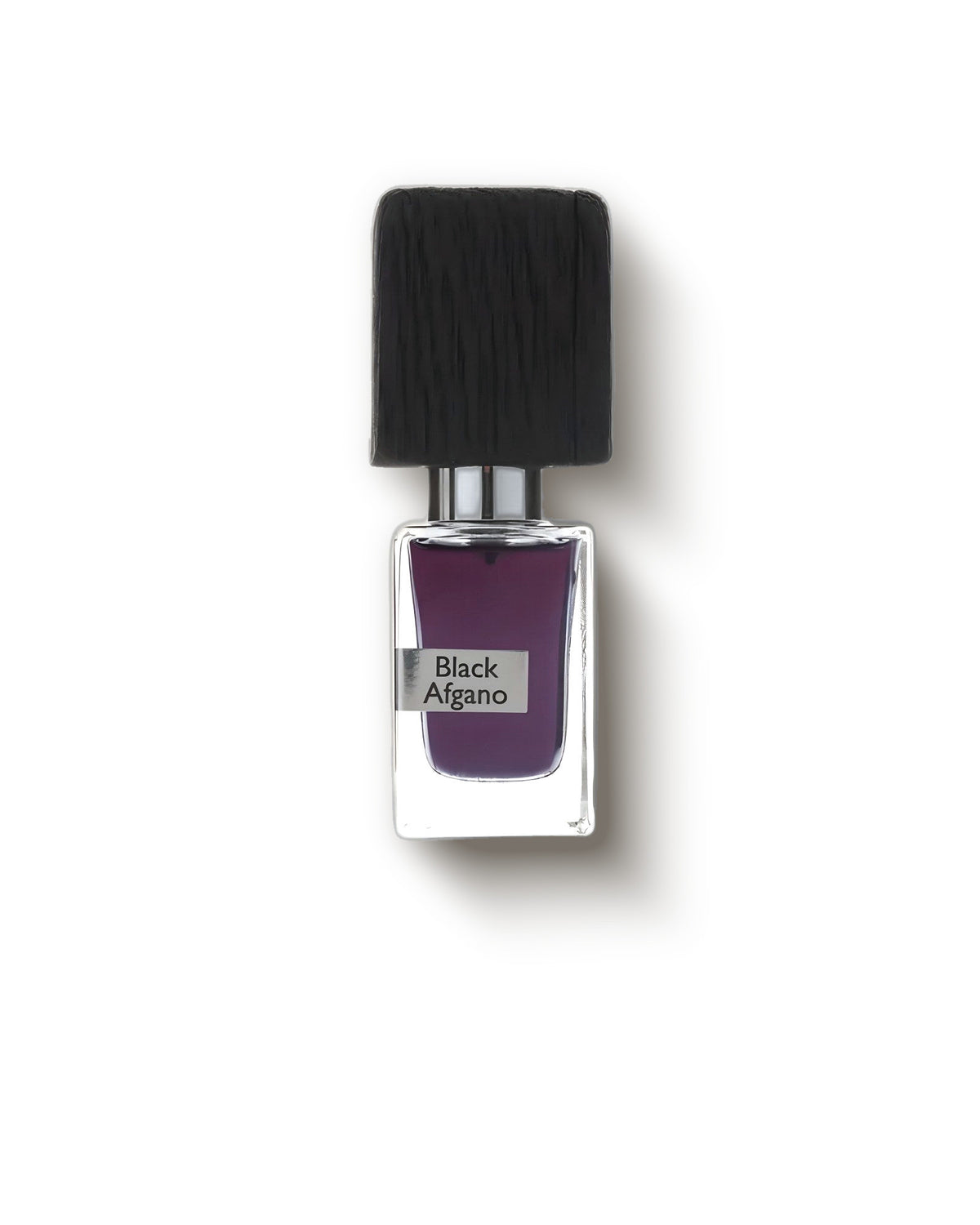
More by this noseMegamareBlack AfganoRisvelium
The Maison

Gualtieri’s wordless extraits. Short names, long shadows, small vials.
Nasomatto treats a bottle less like a fragrance and more like a substance you keep behind glass, dense extrait concentrations that lean animalic, resinous and a little disobedient. A Nasomatto walks into the room as a smell first and a perfume second.
- Origin
- Amsterdam, Netherlands
- Founded
- 2007
- Known for
- Black Afgano, Baraonda

EVERY DECANT
From the original bottle to your door
We buy the original flacon at full retail price, direct from the house.
A medical grade Socorex syringe takes the exact millilitres straight from the flacon.
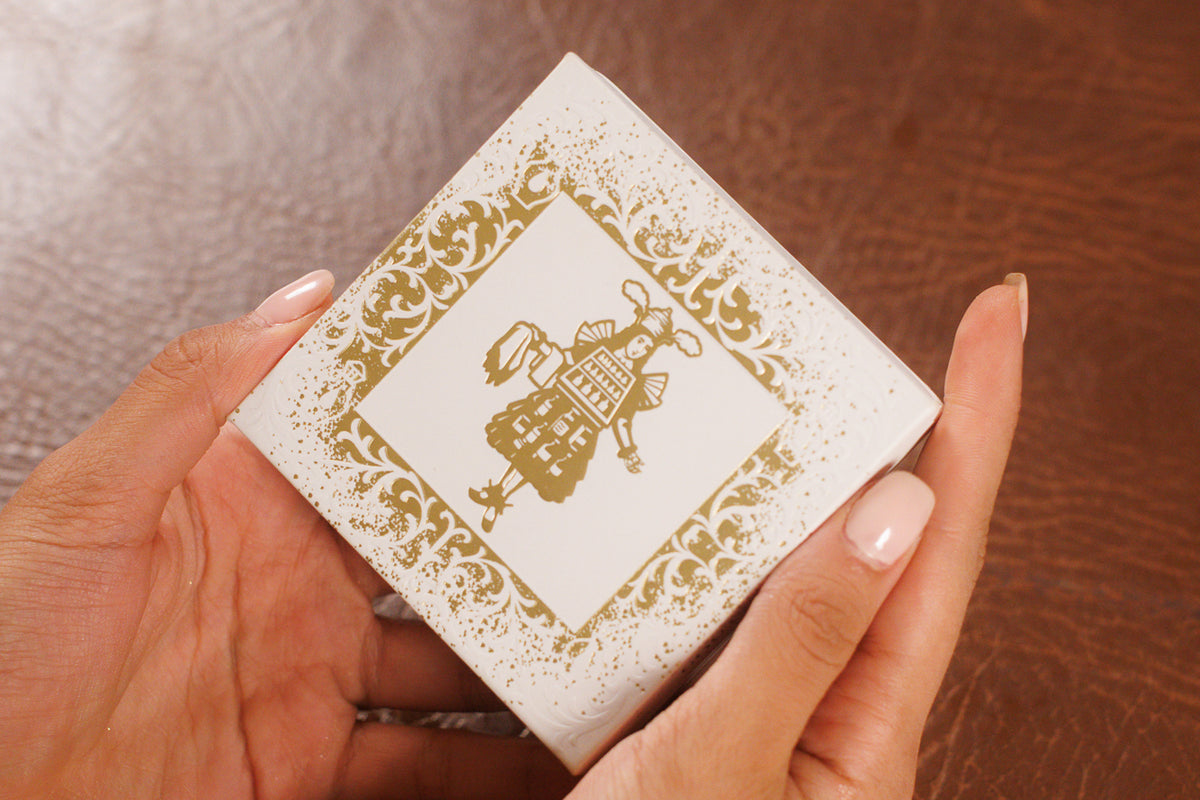
Packed into the hot foiled box and handed to DHL, every duty already paid. How a decant is made
More from Nasomatto

You may also like