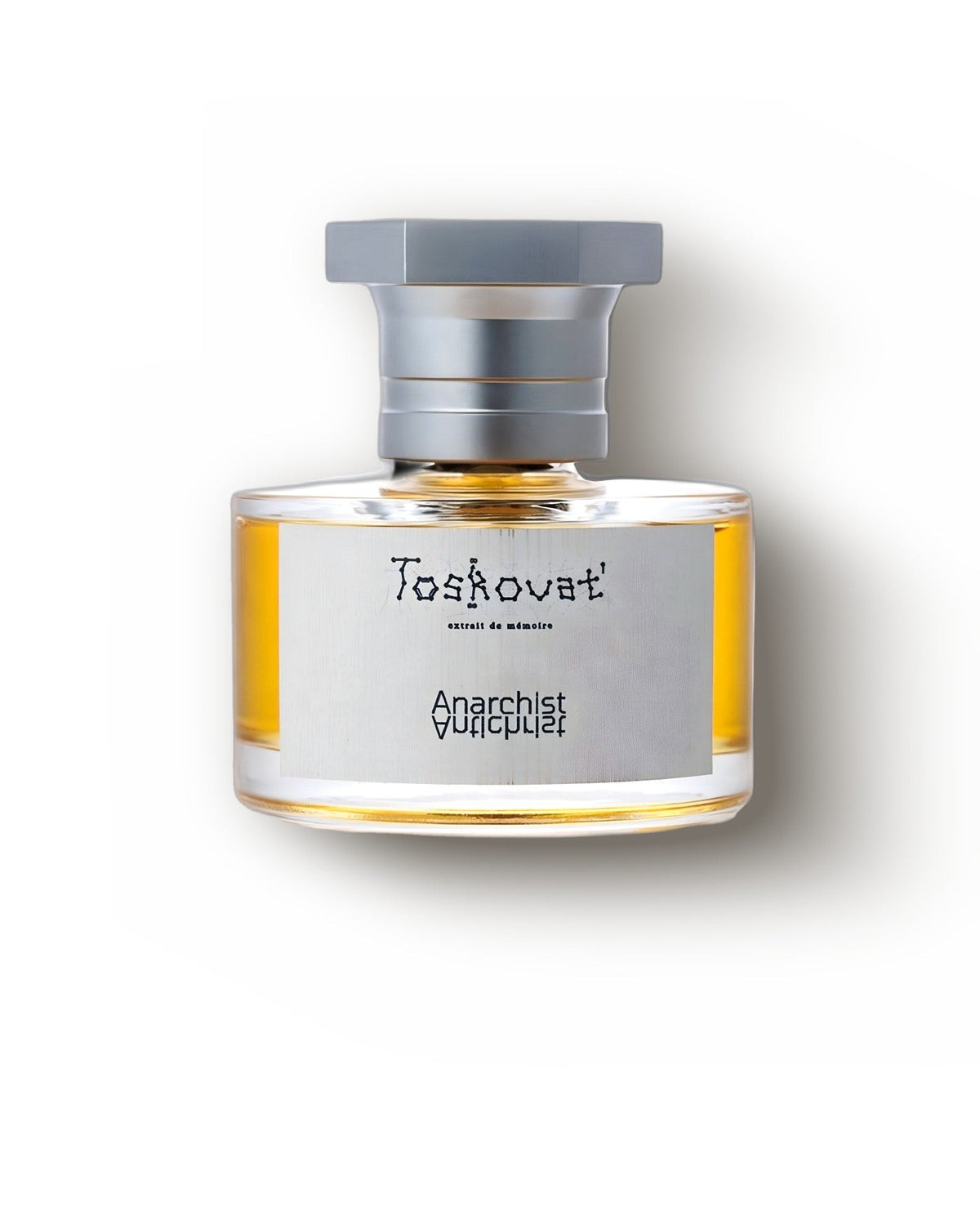
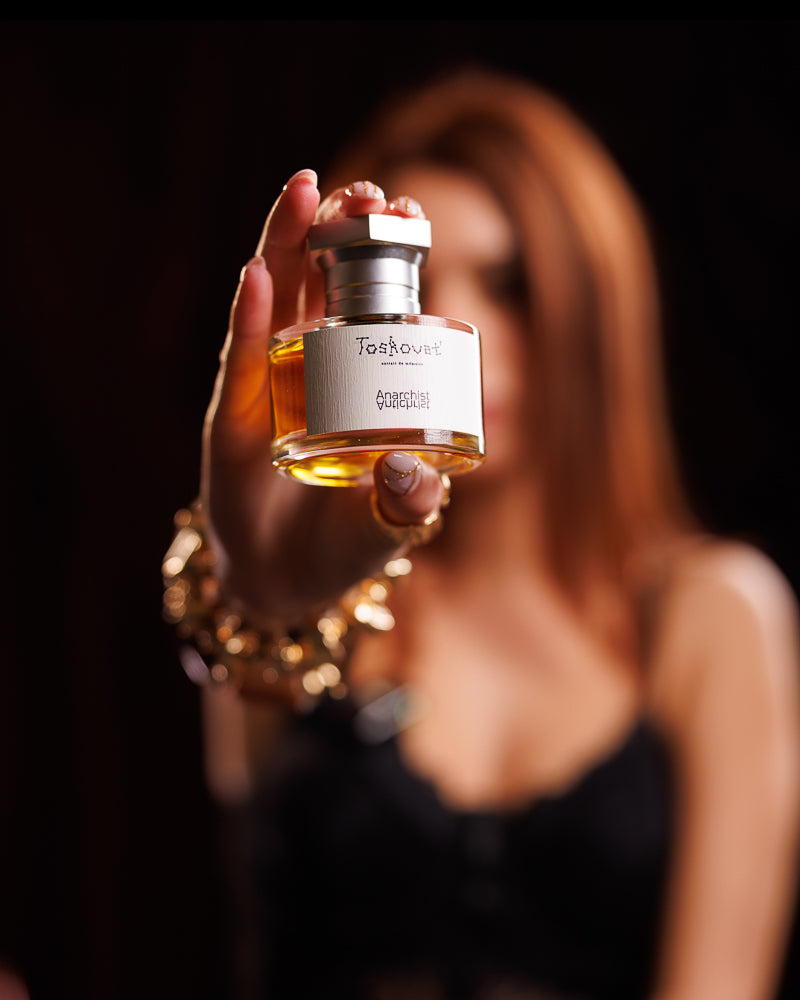
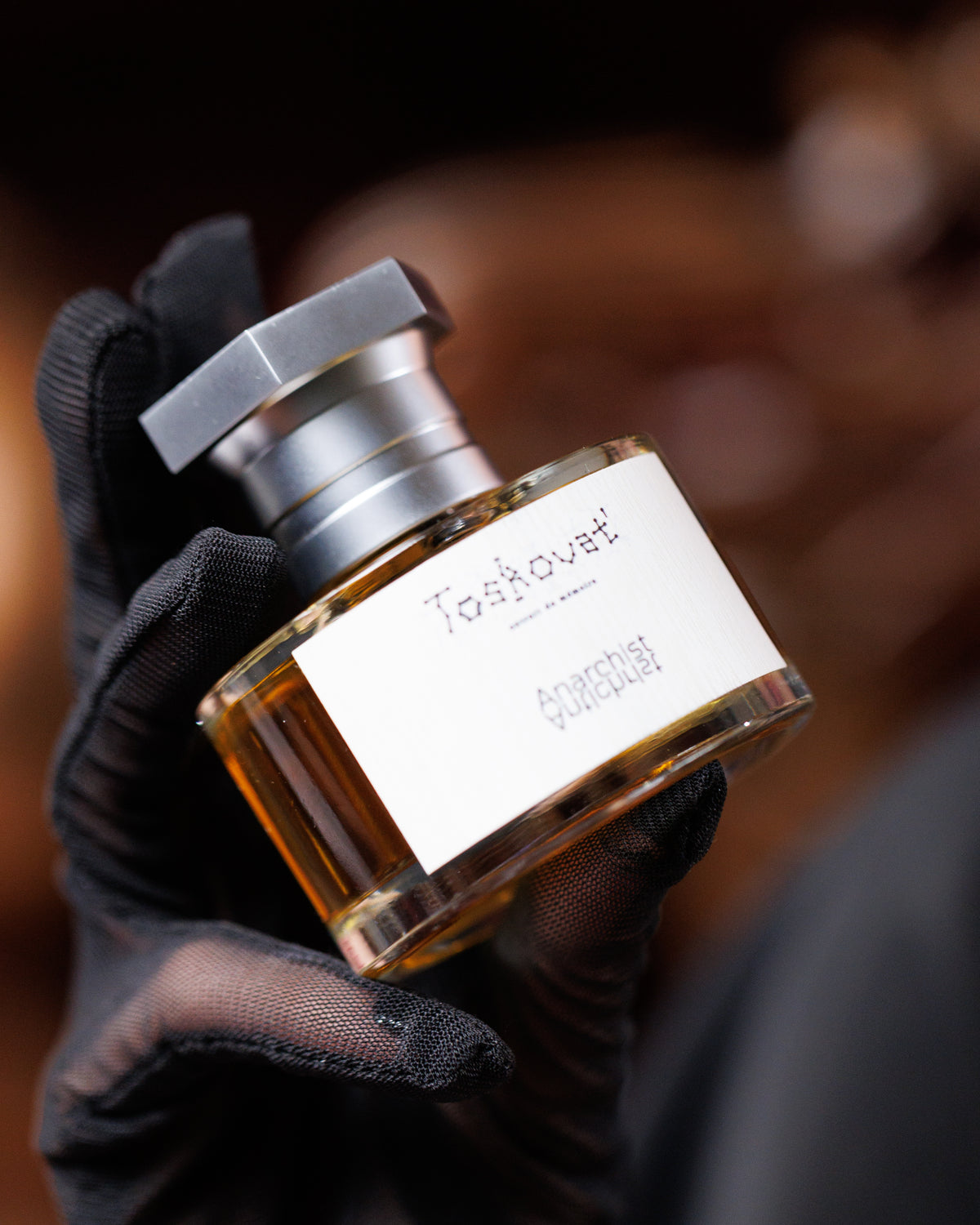

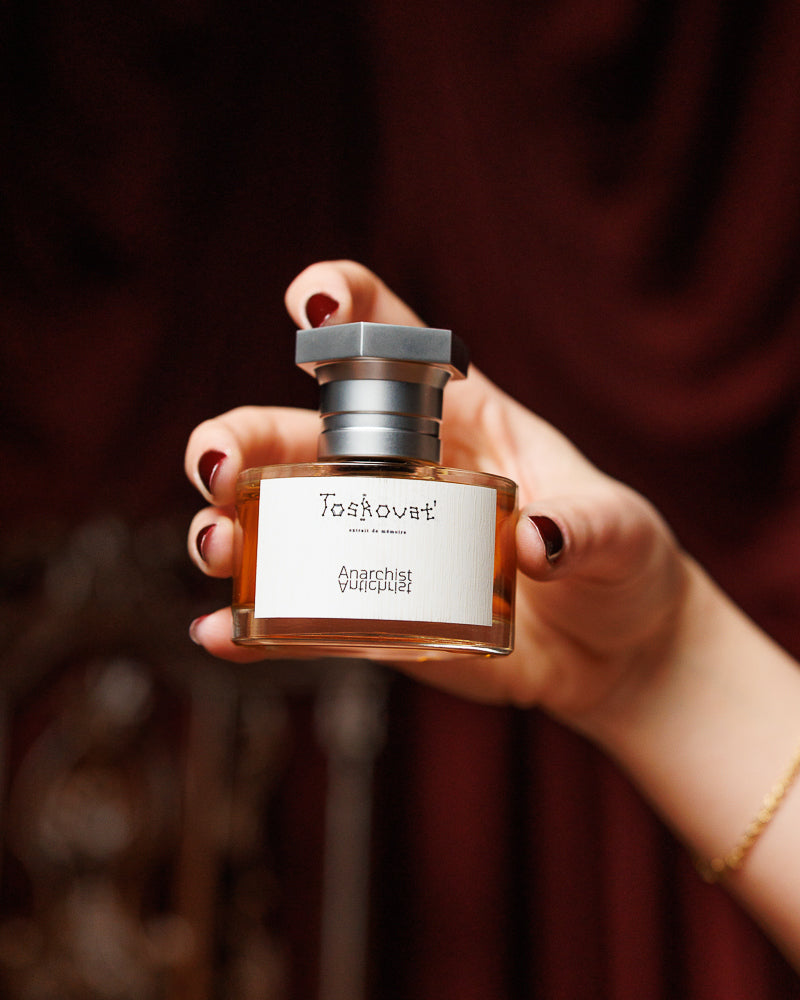
Toskovat
Anarchist A♭
The Story
Anarchist A♭ is built on a single provocation, that anything can be sold to a willing buyer: love, faith, forgiveness, distraction. Toskovat stages a collision between icy, flashing luxury and the stained underside of wealth, then marches the whole scene into a confession booth where the sacred and the synthetic breathe the same air. It remains one of the house's most confrontational, idea-driven releases.


Woody
Dry grain of cut timber
The smell of cedar shavings, sandalwood, and dry vetiver roots, a sanded, resinous warmth with a faint pencil-box rasp. It feels grounded and composed, the quiet backbone that makes a scent read as serious and lasting.


Aromatic
Crushed herbs in cool air
The green, camphorous coolness of lavender, rosemary, sage, and thyme, like herbs bruised between the fingers. It feels clean, invigorating, and a touch austere, the crisp backbone of a classic barbershop freshness.


Whiskey
warm spirit and oak smoke
A boozy amber warmth of aged grain steeped in charred oak. The vanilla comes straight off the burnt inside of the barrel, and the smoke, when a whiskey has it, comes from peat. It smells grown-up: a slow evening, a loosened collar.


Fresh
Cold water, open air, washed skin
Cool water, laundered cotton, air with nothing in it yet. The lift can go citrus-zesty or salt-aquatic, but the effect is the same either way: it registers as clean rather than as a scent, the way a room reads different five minutes after you open a window.

Warm Spicy
Glowing embers of the spice drawer
The rounded heat of cinnamon, clove, and nutmeg, dry and slightly resinous, like a baking pantry rather than a sharp kitchen. It creates a flushed, enveloping warmth that feels intimate and cool-weather, hugging the skin from within.


Credit Cards
Cold plastic and consumerism rendered as scent
What it is
No plant, no animal, no card. It is an idea given a smell: perfumers building the cold polymer of a payment card out of aroma-chemicals, part of a niche habit of naming objects instead of ingredients.
How it smells
Cool, hard, faintly chemical: new plastic still half in its wrapper. There is a metallic gleam to it and a thin ozonic edge, almost no sweetness and no warmth at all. You register surface before you register scent.
In perfumery
It works at the top and into the heart of conceptual compositions, set against organic notes so the contrast bites. It has appeared alongside whiskey and snow, opening a structure that goes smoky and abstract rather than pretty.
Good to know
The name is a story, not a formula. Independent perfumery has spent years chasing notes like anxiety, ink, candle wax and asphalt, less to smell good than to say something, which is a fair warning before you spray.


Whiskey
Charred oak, honey and a boozy haze
What it is
You cannot distil a whiskey. What you can do is rebuild it: oak lactones, smoky phenols, vanillin, esters of dried fruit and a grain facet, weighed out until the parts read as a glass of something aged.
How it smells
Toasted oak and sweet hay, honey, dried fruit, all of it under a warm alcoholic blur. Peated builds add iodine, wet stone and something medicinal; bourbon builds go the other way, toward coconut and caramel.
In perfumery
A heart note that reads as evening: the flush of a second drink. It keeps company with tobacco, leather, tonka and dried fruit, and turns woody oriental builds lived-in rather than polished.
Good to know
The overlap is not a metaphor. Charring a barrel breaks the wood down into vanillin and coconut-scented lactones, the same molecules a perfumer weighs out, so the accord and the spirit are chemically related.


Snow
Cold clean air, the scent of absence
What it is
Frozen water is very nearly odourless, so this one is invented outright: cold metallic aldehydes, airy molecules such as dihydromyrcenol, a drop of ozonic Calone, transparent white musks. Air, assembled.
How it smells
Sharp, mineral and deliberately near-empty. Cold air, a faint metallic prickle, damp stone, a watery transparency. It registers as a sensation rather than a scent, sometimes brushed with sweetness from the musk beneath.
In perfumery
It opens a fragrance with coldness and space instead of with a smell, pairing with juniper, mint, iris, pine and aquatic notes. Glacial niche releases and frosted winter compositions run on it.
Good to know
The trick is subtraction. A snow accord is defined by what the perfumer leaves out, warmth, sweetness, anything organic, as much as by the handful of molecules put in. Emptiness turns out to be difficult to build.


Money
Cotton, ink and the cold tang of coins
What it is
Banknotes are woven from cotton and linen, so money smells more like cloth than paper. No plant gives you this. Perfumers assemble it from ink, metal and cotton facets with a soapy, faintly soiled edge.
How it smells
A worn handful of cash: oily ink and soap, threaded with the metal of coins and the leather of a wallet. Dry and papery, then sharp and inky like over-steeped black tea, ending faintly grubby and human.
In perfumery
Nobody wears this for beauty. It is a heart accent used to provoke, lending a gritty, faintly dirty realism to a composition, and it sits well against leather, iris, vetiver and incense.
Good to know
Symrise perfumer Marc vom Ende sealed dollar bills with charcoal, worked out what they give off, and rebuilt it for an artist's invisible sculpture. The verdict: cotton, soap and ink under leather, metal and sweat.


Candle Wax
Warm beeswax tapers and a quiet flame
What it is
Start with the room, not the raw material: wax, warm air, a wick just gone out. Beeswax absolute gives the body, with smoky and paraffin-cool facets over the top to put the flame in.
How it smells
Soft and honeyed at first, the way a warm taper smells before you light it. Then the cooler part arrives: clean wax, a thread of smoke, that faint burnt-cotton smell a wick leaves behind. Powdery, quiet, never sharp.
In perfumery
Perfumers use it low down, where it slows a volatile floral and leaves a golden hum. L'Artisan Parfumeur's Seville a l'Aube melts it under orange blossom and tobacco: the clearest lesson in what wax does to a flower.
Good to know
Most candles today are paraffin or soy and smell of almost nothing until the flame is out. Beeswax is the exception, and one of the few animal-warm materials in perfumery that costs the animal nothing.


Ink
Wet writing and cold metal on paper
What it is
No one extracts anything from an inkwell. The note is assembled, a few naturals under a stack of synthetics, to suggest India ink, iron-gall writing fluid and paper left somewhere damp.
How it smells
Cool, dark and mineral, with a sooty metallic edge over damp paper. Camphor smoke at the top, a dry patchouli-like earth beneath, a green-bitter prickle across it. Shadowy rather than sweet.
In perfumery
It sits at the top and into the heart, a cold intellectual hook set against woods, leather and earth. Birch tar and violet leaf do most of the building. Naomi Goodsir Bois d'Ascese explores the territory.
Good to know
What reads as metal is not metal. Iron has no smell; the tang comes from 1-octen-3-one, formed when iron meets the oils on your skin. Blood and old fountain pens smell of you, not of the metal.


Plastic Bag
Cool synthetic film, faintly sweet and airless
What it is
There is no extract for this, obviously. Polyethylene film, the stuff of shopping bags and bin liners, gets rebuilt out of petrochemical-smelling synthetics that mimic the cool, waxy sweetness of a fresh roll of plastic sheeting.
How it smells
Cool, smooth and oddly clean: a thin waxy-petrol sweetness with a static, airless quality, like opening a new packet of bags. Warm vinyl, rubber and crayon hover underneath. Synthetic, inedible, and somehow soothing rather than sharp.
In perfumery
A conceptual top note for newness and unease: a new car interior, an appliance out of its box. It runs with rubber, leather, aldehydes and metallic notes in compositions that want the city, not the garden.
Good to know
That faint sweetness is not the polymer at all. It comes from residual additives and the by-products of extrusion, the traces left over from turning pellets into film. What you are smelling is the manufacturing, not the plastic.


Priest's Clothes
Cold incense smoke clinging to woven cloth
What it is
Nothing is harvested for this one. Perfumers assemble it from incense resin, ash, cool wood and a faint synthetic fabric note, chasing the smell a vestment picks up over years of standing in the smoke.
How it smells
Cold and austere. Spent church incense over dry cedar, candle wax, and an odd polyester edge where the cloth should be. This is not incense burning, it is the smoke after it has gone out and cooled.
In perfumery
A base-note atmosphere, used where a fragrance wants ritual and solemnity. It sits with olibanum, ash and cool woods, and gets set against something deliberately profane, plastic or vinyl, so the holiness has something to push against.
Good to know
The idea is not invented. Incense offered in worship soaks into wool and linen a little more each service, until the vestment carries the church on it long after the censer cools.


Holy Water
Cold stone, incense haze, the hush of a nave
What it is
Consecrated water is odorless, so perfumers bottle the room instead. Nothing is harvested for this one: it is assembled from incense resins, beeswax, wet-mineral and aquatic facets and cool stone-like aroma molecules.
How it smells
Cold, mineral, faintly damp, like the air inside a stone basilica. Frankincense smoke threads through it, dry and citrus-piney over a wet-rock chill. Beeswax softens the edges, but the whole thing stays austere rather than sweet.
In perfumery
It sits in the heart of incense and liturgical compositions, where the job is less scent than space: it makes a perfume feel like a room with a high ceiling. AbdesSalaam Attar's Acqua Santa is the reference.
Good to know
Place-scents are a small genre of their own: rain, dust, old library, and this. Its power is memory. Nobody can name the raw material, but everyone recognizes the room.


Precious Woods
Several rare woods, speaking with one voice
What it is
There is no such tree. This is a chord a perfumer builds, usually oud over sandalwood, with rosewood, cedar or guaiac filling the gaps, and molecules standing in wherever the real wood has run scarce.
How it smells
Dry rather than sweet, and taller than any one wood: smoke and leather from the oud, cream from the sandalwood, a rosy edge underneath. There is something polished about it, almost like ink.
In perfumery
The accord works as scaffolding. Built into the base, it gives spice, amber and leather something to stand on, and it is what makes a woody oriental read deep rather than merely dark.
Good to know
The scarcity is the whole story. Trade in agarwood and Brazilian rosewood is regulated, and true Mysore sandalwood barely reaches the open market, so most precious-woods accords now run on plantation wood and clever synthetics.


Olibanum Sacra Resin Green
Frankincense caught green, before the smoke
What it is
Tap the bark of the olibanum tree, Boswellia sacra, and it bleeds gum resin. Take that resin young and distil it lightly and the oil keeps its green, with barely any of the smoke.
How it smells
Green lemon and unripe apple skin, with a peppery snap over a clean balsamic core. Nothing like the dark church resin you might expect. It dries to a soft woody incense warmth that never turns heavy.
In perfumery
A top-to-heart note that lifts darker accords rather than weighting them. Perfumers set it against citrus, pink pepper, woods and other resins, and it is what makes a transparent incense read luminous instead of solemn.
Good to know
It grows in the harshest desert in Oman and the Horn of Africa, its swollen trunk anchored into bare rock. Omani Royal Al-Hojari, the greenish translucent grade, is a few percent of a harvest, and wild stands are overcut.
Fragrance Character
The opening projects at arm's length, metallic snow and whiskey, sharp and cold, before ink and wax pull it inward, warmer and more conspiratorial. The heart holds a candlelit gravity, money and wax in quiet tension. The drydown settles close to the skin: old confessional wood and green sacra resin alongside holy water and that single, unsettling thread of plastic, like a confession no one meant to make.


Longevity
how long it stays on skin
The hourglass reads wear time: how many hours the fragrance keeps speaking before it fades. A bar that barely leaves the start means a few fleeting hours. One that runs the full length carries from morning into evening. Treat it as typical, not promised. Oily skin holds scent far longer than dry.


Sillage
the size of its scent trail
Sillage is French for a ship's wake, and that is exactly what this measures: how much of the scent reaches the room instead of staying on you. Low is a whisper only close friends catch. Enormous fills the room, then keeps filling it after you leave.


Experimental
Built to provoke, not to please
Some perfumes are made to be liked. These are made to be argued about: inky tar, hot rubber, fruit on the turn, metal and fur where you expected flowers. The coin glows for a scent that provokes and dims for one that plays it safe, which is sometimes the point.


Office
Polished, and never louder than the room
Scent is manners in a shared room. At this range it should reach the person across the desk and stop there: tidy citrus, soft musk, pale woods, all of it reading competent and considerate. A glowing coin means nobody has to mention it. A dim one means it travels.


Evening
After dark, when it deepens
Dinner, drinks, the night that runs long. Low light is where ambers, resins and smoky woods stop being polite, and where a plush floral finally blooms. A glowing coin means it is waiting for exactly this hour. A dim one means it did its best work in daylight.


Romantic
Close enough to be felt
A fragrance can hum against skin instead of announcing itself across a table. That is the register here: creamy florals, vanilla, soft musk, a thread of spice, warm enough to make someone lean in. The coin glows when a scent sets that mood and dims when it is more practical than seductive.


Formal
Quiet authority in a dressed-up room
A wedding, a ceremony, a room where everyone has thought about their shoes. What works here is structure, not volume: smooth woods, disciplined florals, soft leather. A glowing coin means it holds its posture all evening. A dim one means it is too casual for the room.


Casual
Easy comfort for unhurried days
Errands, coffee, a slow Saturday with nowhere to be. Nothing here has to impress anyone, so the fit is soft and easy: fresh citrus, light woods, a little warmth off the skin. A glowing coin says yes to all that. A dim one means the fragrance is asking for a bigger night.


Day to Night
where its mood naturally falls
A bar running from sun to moon, reading the hour the fragrance was made for. The more of it that stays gold, the more the scent belongs to daylight and open air. The further the blue reaches back toward the sun, the deeper and warmer it turns: evening, candlelight, low rooms.


Winter
Warmth that carries through cold air
Cold air mutes a fragrance and slows it down, which is why winter belongs to the dense and the warm: resin, smoke, vanilla, leather, ambered spice. The bar reads how well this one pushes back, glowing against the chill instead of thinning out in it.


Spring
Fresh blooms in mild, rising warmth
Mild, humid air lifts a light composition, so the season belongs to dewy florals, green stems, soft powder and citrus you can see through. Alive rather than heavy. The further the green runs along the bar, the more comfortably this one wears in that weather.


Summer
Bright and airy in real heat
Heat does the projecting for you, which is why the wrong perfume turns unbearable by noon. What survives is cool and breathable: sharp citrus, salt air, aromatic herbs, water. Things that refresh instead of cloy. A short bar here means save it for cooler months.


Fall
Spiced warmth for cooling days
As the air cools, the rich materials stop smothering and start reading clearly: dry woods, warm spice, tobacco, amber, fruit gone golden. It is the season perfume turns contemplative. The bar fills according to how naturally this one settles into crisp, cooling days.
Best Worn
Made for deep winter nights and the kind of evening that leaves questions behind, for the wearer who treats a little discomfort in a perfume as a feature rather than a flaw.
Choose options
The Vibe


The Nose

David-Lev Jipa-Slivinschi
Founder and perfumer
Bucharest-based Romanian who came to perfumery from filmmaking and founded Toskovat' in 2022. He composed Toskovat' Inexcusable Evil, Toskovat' Age of Innocence, Toskovat' Anarchist A_, Toskovat' In the Belly of the Beast and Adi ale Van Gethsemane.
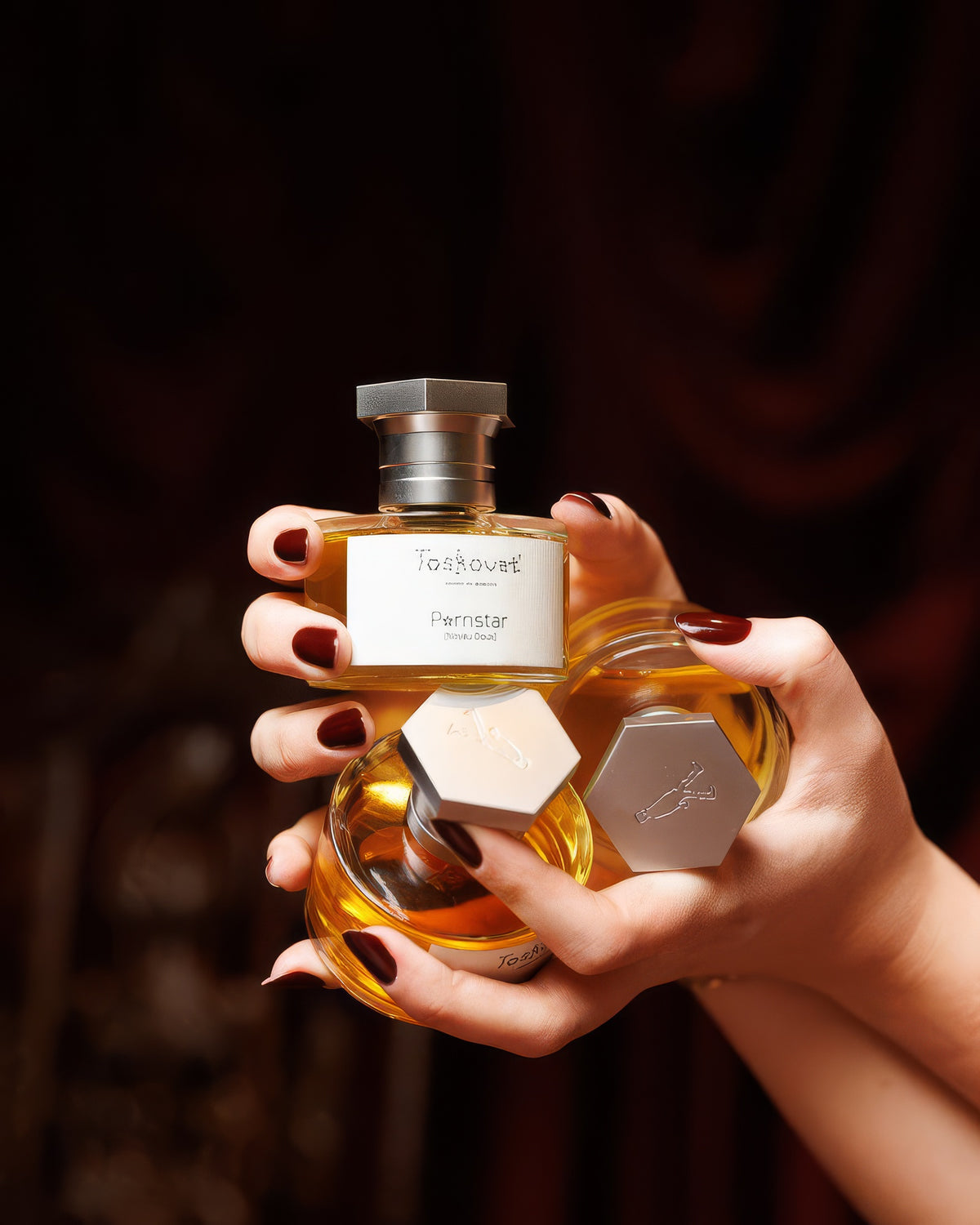
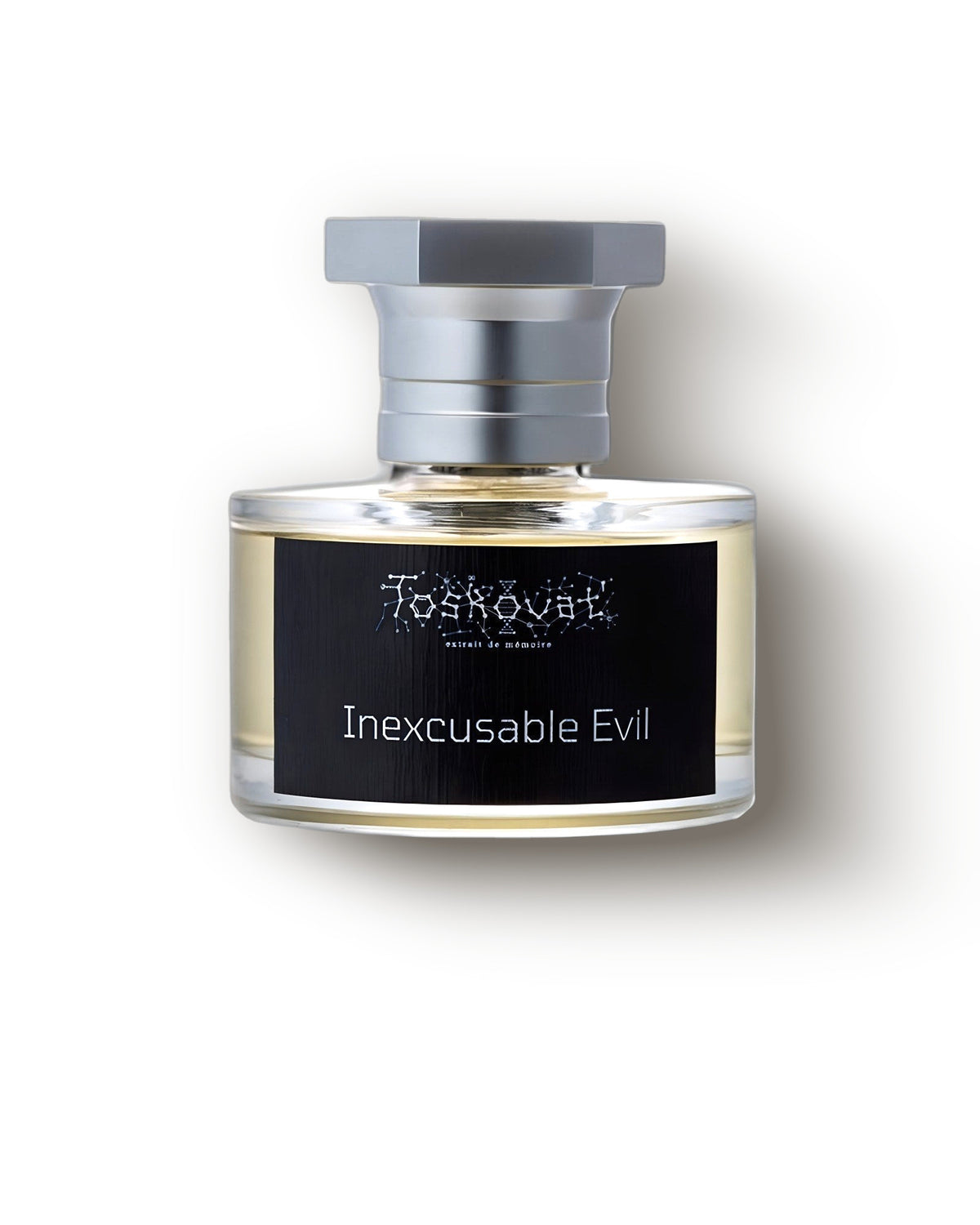
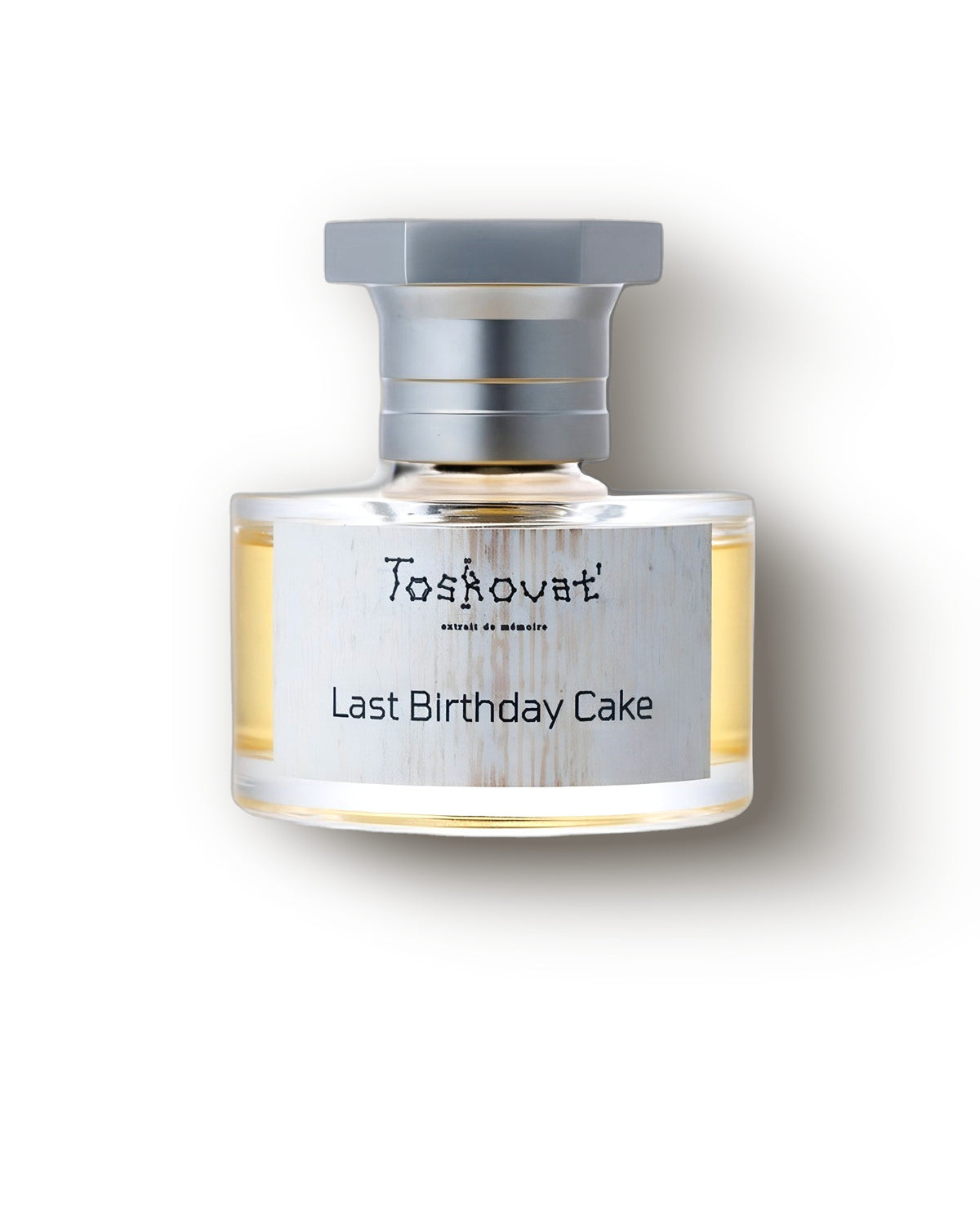
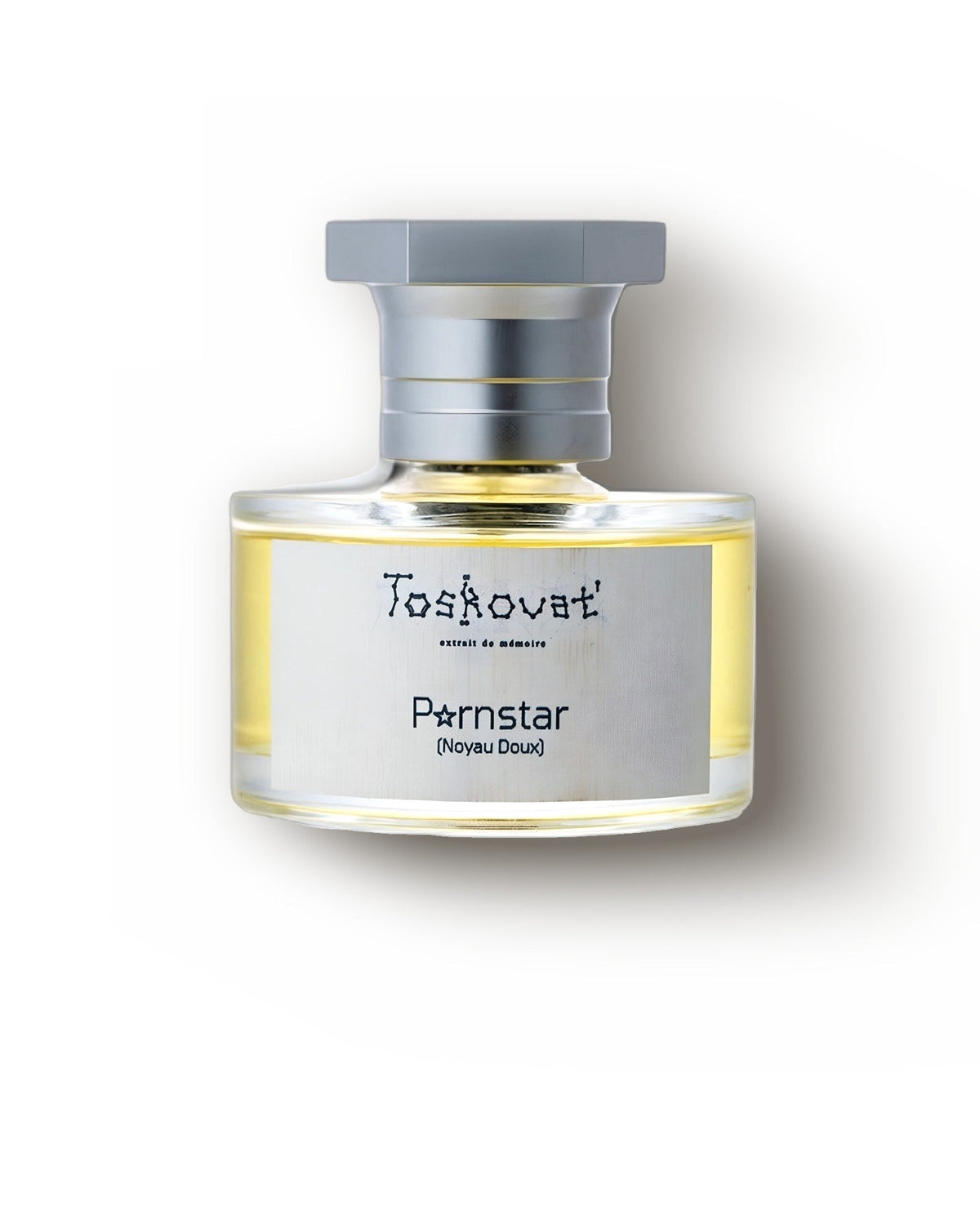
More by this noseInexcusable EvilLast Birthday CakePornstar (Noyau Doux)
The Maison

Perfume as short fiction. Gunpowder, cold iodine and burnt sugar tell stories most houses would never print.
A Toskovat feels like a scene from a film you are not sure you were meant to watch. Cold metallic air, smoke, wax, and a gourmand sweetness that always arrives with a shadow behind it. These are conceptual extraits for people who want a fragrance to say something, and the projection tends to match the intensity of the idea.
- Origin
- Bucharest, Romania
- Founded
- 2022
- Known for
- Conceptual extraits, Inexcusable Evil

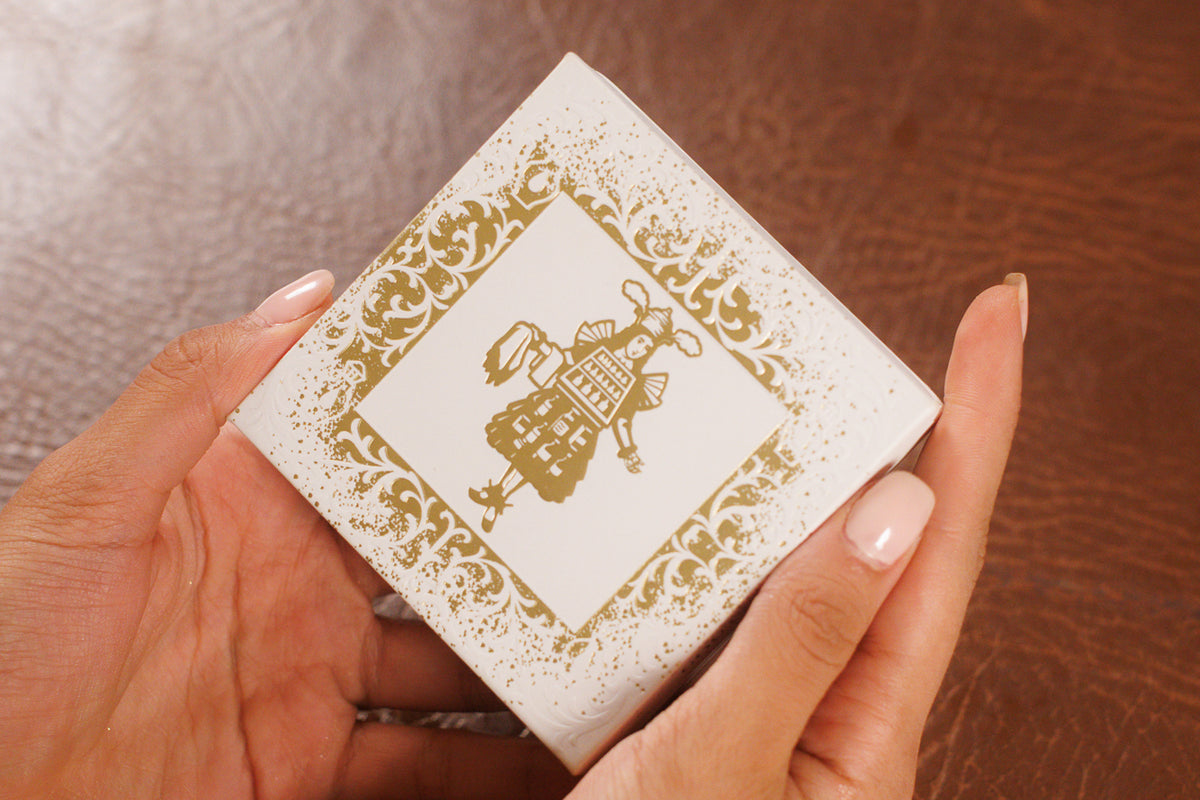
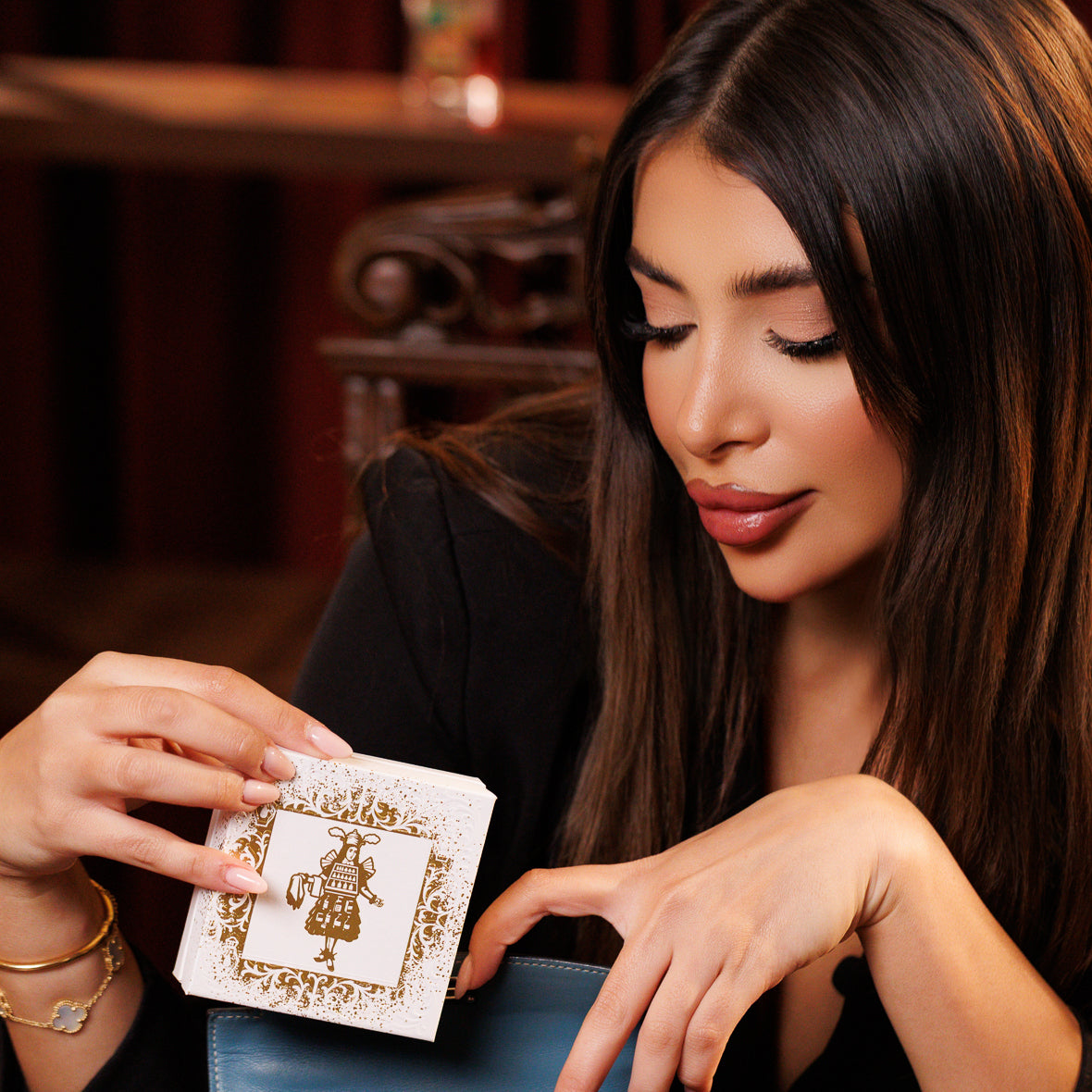
EVERY DECANT
From the original bottle to your door
We buy the original flacon at full retail price, direct from the house.
A medical grade Socorex syringe takes the exact millilitres straight from the flacon.
Packed into the hot foiled box and handed to DHL, every duty already paid. How a decant is made
More from Toskovat
You may also like