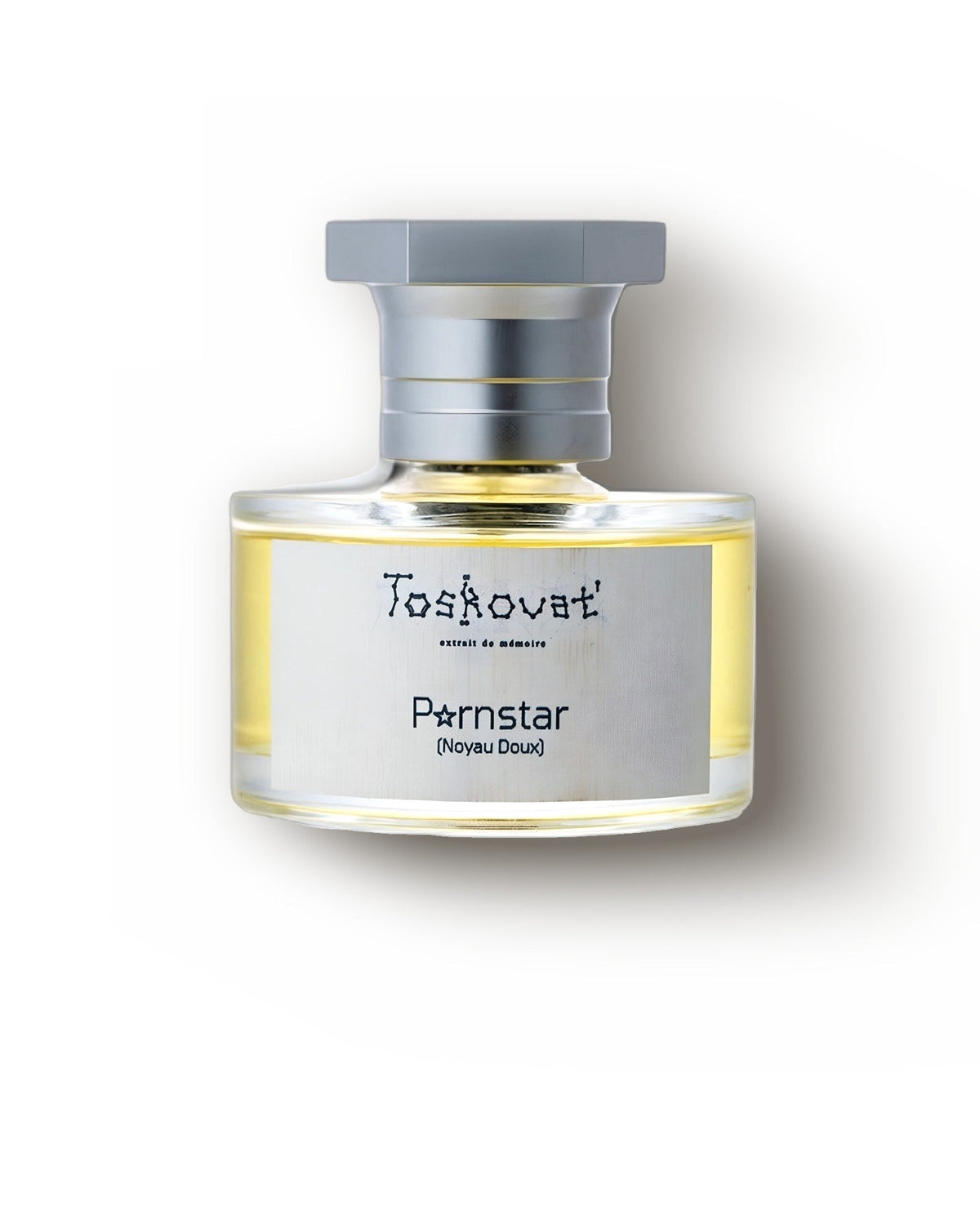
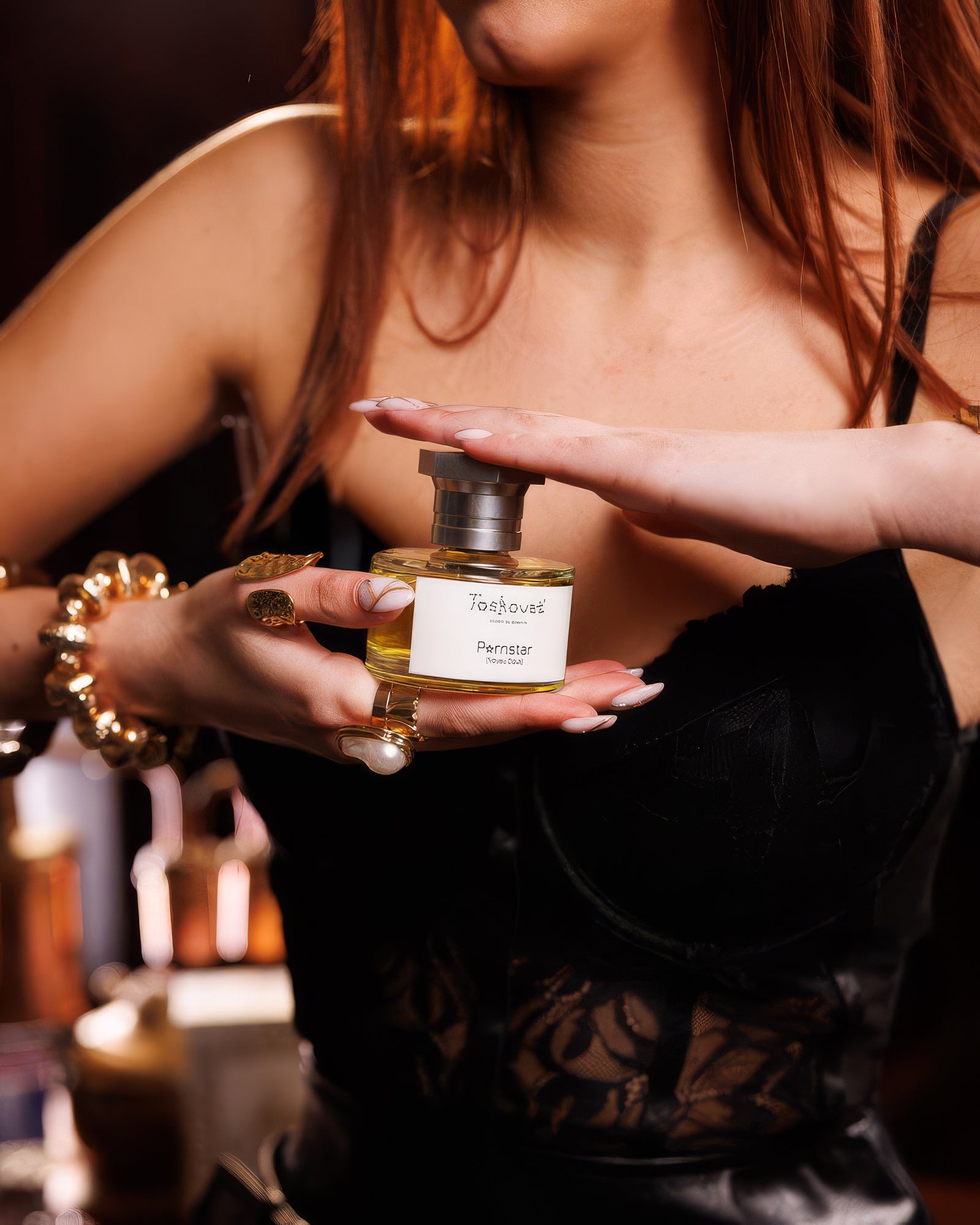
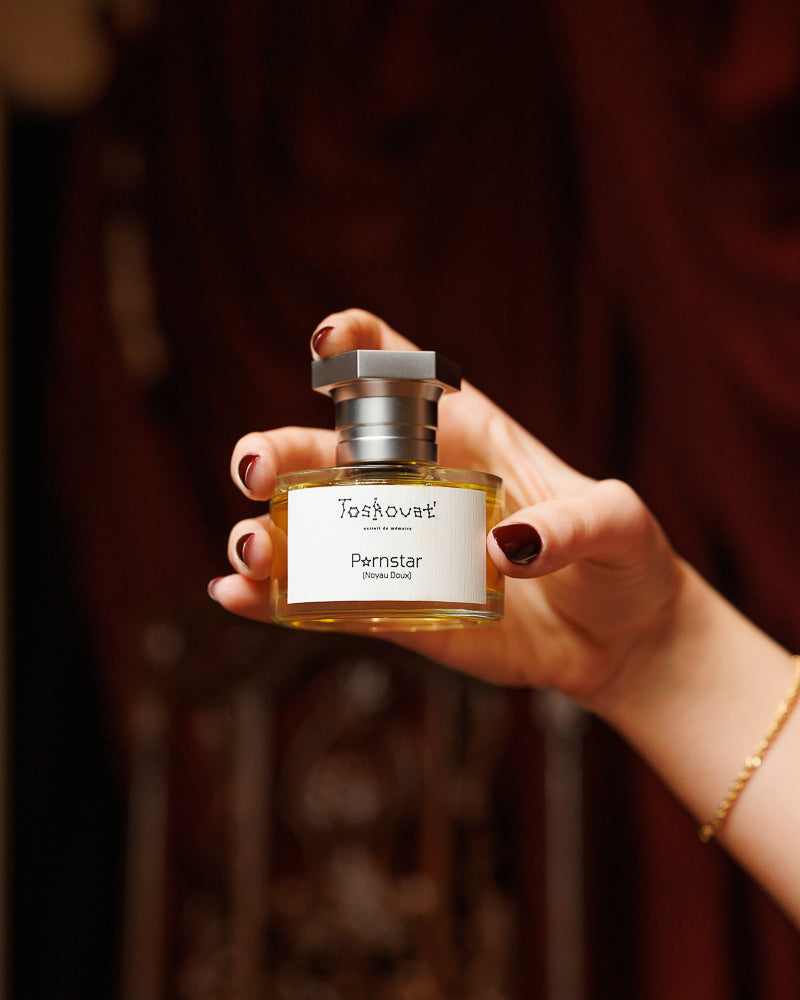

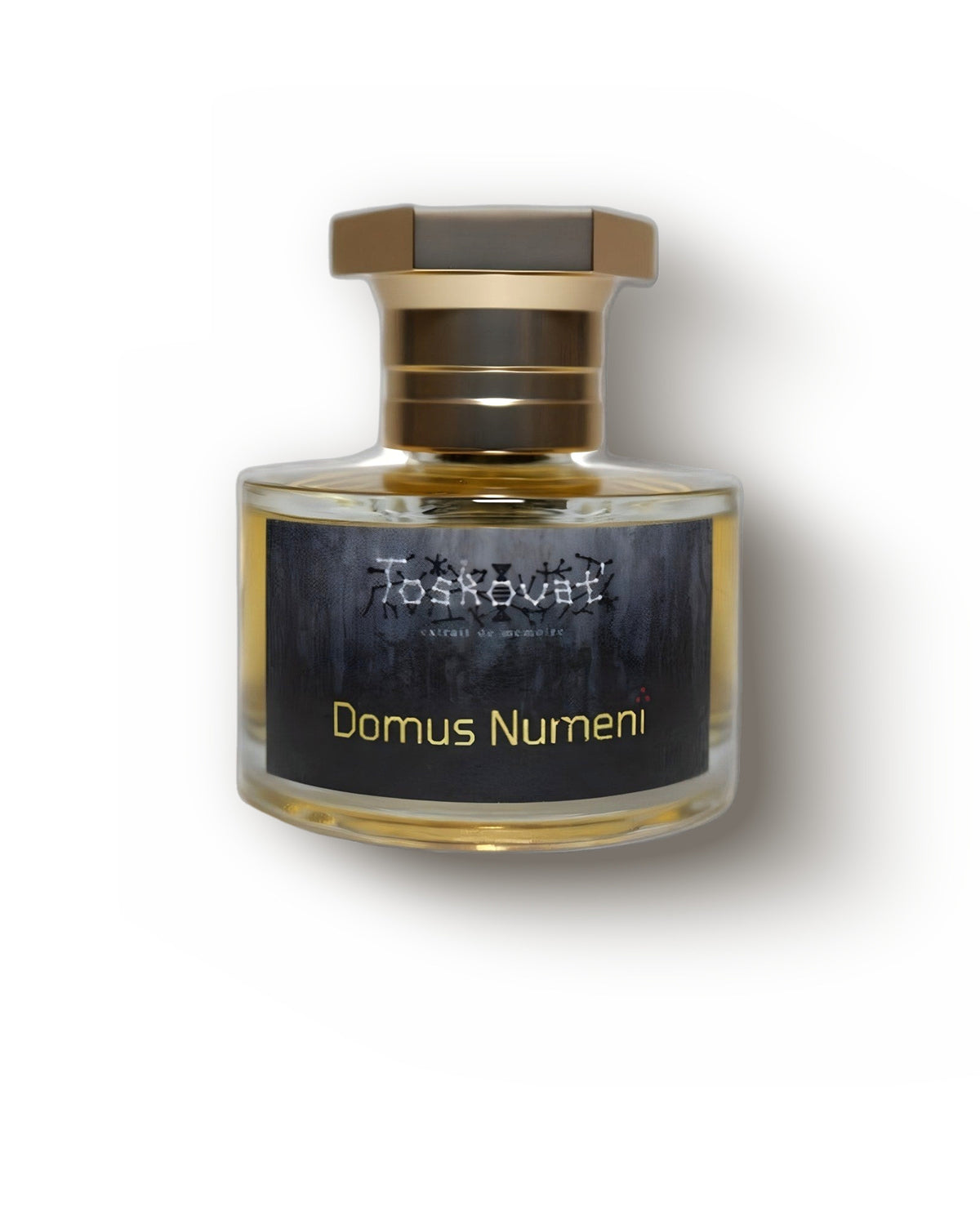
Toskovat
Pornstar (Noyau Doux)
The Story
Noyau doux is French for soft core, and the double meaning is the point. The scent is built on the gap between the spotlight and the mirror, provocation on the outside and something considerably more vulnerable underneath.


Fruity
Peach skin, not lemon peel
Peach, pear, apple, berry: this is sweetness in the flesh rather than the rind, dewy and nectar-heavy where citrus is sharp and thin. It plays young and slightly greedy, the sort of ripeness you can almost feel running down a wrist.


Tropical
Sun-warmed fruit and creamy bloom
A juicy swell of ripe mango, pineapple, and overripe banana laced with coconut milk and sticky white petals. It smells of heat on bare skin, suntan lotion, and fruit left to soften in the sun, breezy and indulgent at once.


Floral
A whole garden, never one flower
Not one flower but the impression of many, usually rose, jasmine and orange blossom leaning on each other until no single one is recognizable. Sweet, dewy, faintly powdery, with nectar underneath. It is what people mean when a perfume smells like flowers and they cannot say which.


Sweet
Warm sugar you cannot quite name
Caramel, honey, spun sugar: sweetness that hovers between all three and never settles on one. This is the gourmand pull, the thing that makes someone lean in closer than they meant to, warm and soft and a half step short of edible.


Fresh
Cold water, open air, washed skin
Cool water, laundered cotton, air with nothing in it yet. The lift can go citrus-zesty or salt-aquatic, but the effect is the same either way: it registers as clean rather than as a scent, the way a room reads different five minutes after you open a window.


Aromatic
Crushed herbs in cool air
The green, camphorous coolness of lavender, rosemary, sage, and thyme, like herbs bruised between the fingers. It feels clean, invigorating, and a touch austere, the crisp backbone of a classic barbershop freshness.


Pitahaya
Dragon fruit: all drama, almost no smell
What it is
Dragon fruit grows on a climbing cactus that clings to trees rather than rooting in soil. Scaly pink skin and soft, seed-flecked flesh.
How it smells
Mild, for something that looks like that. Faintly sweet and clean, kiwi crossed with pear over a watery melon coolness. The seeds add a whisper of nut, and something floral drifts underneath, the flower this fruit came from.
In perfumery
A top-note accord for juicy, exotic sparkle that never turns candied. It sits with lychee, melon, watery florals and citrus in modern fruity-florals that want their fruit transparent and slightly aquatic rather than sugared.
Good to know
The cactus flowers only after dark, huge and white and gone by morning, which earned it the names moonflower and queen of the night. And because the ripe fruit smells so faint, most pitahaya notes are largely invented.


Chewing Gum
Pink fairground sweetness that points to no fruit
What it is
Fully synthetic, with no plant behind it: the model is chewing gum, not fruit. Perfumers blend fruity esters with candy molecules like ethyl maltol, vanillin and methyl anthranilate to rebuild that confected, faintly powdery effect.
How it smells
Sweet, fruity and unmistakably artificial, a blur of strawberry, banana and raspberry that resolves into no single fruit. Ethyl maltol brings spun-sugar warmth, methyl anthranilate a grape-soda lift, and a faint plasticky edge finishes the pink.
In perfumery
Loud, from top through heart, and used for exactly that: playful, nostalgic, candy-shop character. It anchors youthful fruity gourmands beside cotton candy, vanilla, red fruits and clean musks.
Good to know
The pink was an accident of supply: when Walter Diemer perfected bubble gum at Fleer in 1928, pink was reportedly the only food coloring in the factory, and the flavor that grew up around it is a blend of fruity esters that matches no single fruit. Methyl anthranilate, the grape thread in the accord, doubles as a bird repellent.


Ice
A clean cold breath of frozen mineral air
What it is
Frozen water has no smell, so Ice has to be faked. Perfumers reach for cooling molecules, ozonic and aquatic materials and a hard mineral edge, and between them they persuade the nose that something is cold.
How it smells
Crisp and transparent, like the first sharp breath outdoors on a frosty morning. Slightly metallic, wet stone, a faint ozone sparkle. No sweetness, no warmth: the whole effect is clarity and space.
In perfumery
Ice lives at the top, an airy lift that opens a composition rather than filling it. It sits beside mint, citrus, juniper, marine and metallic accords, and it defines the frozen and aquatic genre outright.
Good to know
The chill is a nerve trick. These molecules work on skin the way menthol does, so the nerves report cold while the temperature never moves. Ice sells atmosphere: glaciers, winter air, nothing that was ever harvested.
Finger Lime
Rainforest lime that comes in bursting pearls
What it is
A thorny shrub from the rainforest floor of Queensland and New South Wales, carrying slim, gherkin-shaped fruit. Inside, instead of segments, sit tiny pearls of juice. The aroma is cold-pressed from the oil-heavy peel.
How it smells
Bright, tart and effervescent: lime, grapefruit and lemon with a sharp green tang. Juicier and wilder than an ordinary lime, with a fizzy popping quality that echoes the pearls themselves, and a clean herbal finish.
In perfumery
A sparkling top note and a modern way out of lemon and bergamot. It brightens openings and lifts florals, vetiver and woods, and its tangy, faintly wild edge suits contemporary unisex citrus and aquatic builds.
Good to know
Chefs call it citrus caviar, and the pearls do burst on the tongue like roe. It was a foraged bush food of Aboriginal Australians long before it was farmed, and it now comes in pink, green and ruby.


Martini
A frosted glass of cold, bone-dry gin
What it is
Not a material but a reconstruction of the drink: juniper berry oil, dry herbs, citrus and a lift of aldehydes. A saline or anise twist stands in for the olive or the strip of lemon peel.
How it smells
Cold and bone-dry. Piney juniper and crushed coriander over sharp lemon zest, with an ethanol shimmer. Then the bitter hum of vermouth, a briny olive edge, and a finish clean, metallic and faintly woody, like the glass itself.
In perfumery
Perfumers use it near the top, where it reads as wit: a gastronomic wink inside an otherwise straight aromatic. Citrus, vetiver and musks carry it, and it can hold a whole composition together on its own.
Good to know
Juniper berries are not berries. They are the blue-black cones of a conifer, steam-distilled for the oil that gives both the drink and the note their backbone.

Amaryllis
A green trumpet flower, invented in scent
What it is
Tap this note and there is no flower behind it. The potted amaryllis barely smells of anything, so perfumers build the impression from synthetics and floral materials: sap, stem and the cool green of a trumpet in bloom.
How it smells
Green and dewy, with a watery, almost vegetal stem freshness. A soft fruit sits behind it, somewhere between nectarine and apple, then a faint rose heart and a lick of spice. It dries clean and lightly sweet.
In perfumery
Perfumers reach for it when a floral heart needs air. It lightens bergamot, orange blossom, violet, jasmine and white musk without adding weight, and gives green florals and spicy hearts a springlike lift.
Good to know
Breeders have mostly chased size and color, and the common potted amaryllis stays faint at best. That leaves the perfumer free: with no real flower to copy, every amaryllis in a bottle is somebody's invention rather than a portrait.
Pink Flamingo Heliconia
Waxy bract, cool nectar and rain-wet green
What it is
Blazing pink and orange, and none of it is the flower. Those waxy blades are bracts, sheathing the true blooms. The plant is real, a tropical American heliconia; the note is a reconstruction, since it yields no extract.
How it smells
More felt than smelled: cool nectar, crushed green stem, rain sitting on broad leaves. A pulpy sweetness suggests guava and unripe melon, lifted by an almost cucumber transparency. It opens green and thins fast into jungle air.
In perfumery
A top-to-heart accord that gives aquatic-florals a dewy, exotic lift without the weight of white flowers. It works with frangipani, green leaf, melon and coconut water, and turns up wherever a fragrance wants jungle rather than bouquet.
Good to know
The true blooms are slender green tubes half hidden inside the bracts, shaped for the curved bill of a hermit hummingbird. Birds choose by colour and nectar, not scent, so the plant never needed a smell. Perfumers invented one.

Venus Flytrap
A green mouth that smells like fruit
What it is
Nothing is distilled from a flytrap, so the plant has to be implied: green, fruity and faintly animal materials arranged to suggest something that eats. Toskovat puts it in the heart of Pornstar (Noyau Doux).
How it smells
Green first, the wet snap of a broken stem, then sweet tropical fruit just behind it. Underneath runs a warm, fleshy hum, the edge where ripeness turns. More closed greenhouse than garden, and it stays near the skin.
In perfumery
Leaf-green materials, passionfruit and blackcurrant, and a thread of something indolic held back. Dosage decides everything: too much of that animal edge and the accord turns savoury. In Pornstar it keeps a very sweet composition from going flat.
Good to know
An undamaged flytrap gives off more than sixty compounds, close enough to fruit and flowers to draw fruit flies. Nothing about it reads as decay. The note keeps the sweetness and adds a rot the plant never had.


Body Lotion
A beach day, bottled and worn indoors
What it is
Sunscreen, rebuilt from scratch. Salicylates supply the powdery solar haze, coconut lactones and monoi (tiare gardenia steeped in coconut oil) supply the grease, ylang and orange blossom the flowers, soft musks the warm arm underneath.
How it smells
Creamy and lactonic, coconut oil melting on sun-heated skin. Salicylates blur everything into a nutty solar haze while tiare and ylang sweeten the edges. You smell hot sand and sea air long before you smell any flower.
In perfumery
The engine of every solar and beach fragrance, holding across heart and base so the warmth never leaves. Vanilla, sea salt, frangipani and amber slot into it, and tanning oils have run on the same salicylates for decades.
Good to know
Which smell counts as sunscreen depends on where you grew up: Europe remembers floral, salicylate-heavy Ambre Solaire, America remembers coconut and Coppertone. Benzyl salicylate began as a real UV filter and stayed for the smell.


Vanilla
Cured orchid pods, custard and faint smoke
What it is
Green pods come off the orchid vine smelling of almost nothing. The scent is made, not found: months of blanching, sweating in the sun and slow drying before the vanillin appears. Mexico first, Madagascar now.
How it smells
Custard and caramel up front, then something darker underneath: dried fruit and a thread of tobacco smoke. It turns powdery as it dries and sits close to the skin. Real cured vanilla reads deeper than vanillin alone.
In perfumery
Perfumers use it to round off edges. Anything too sharp, too green, too austere gets warmth and body from a vanilla base, which is why it anchors many oriental and gourmand builds alongside tonka, amber, sandalwood and spice.
Good to know
Every flower opens for one day. Miss it and there is no pod, so all of it is pollinated by hand, a trick devised by Edmond Albius, a twelve-year-old enslaved boy on Réunion. Most vanilla flavour today is synthetic.
Persimmon
A fruit with no oil, rebuilt from memory
What it is
Squeeze a persimmon and you get nothing a perfumer can use. There is no essential oil, so the note is assembled: beta-ionone for the glow, fruity esters, a soft lactone for the flesh.
How it smells
Sweet and succulent, with the plush give of ripe apricot. Something earthy sits under the sugar, a faint warm spice, and the whole thing is jammier and rounder than the tart tropical fruits it gets shelved beside.
In perfumery
It works in the heart, bridging flowers and base with a mellow autumn warmth. Woods, soft musks and a little cinnamon suit it. Cosy rather than sharp, which is why it lands in gourmand-leaning compositions.
Good to know
Bite an unripe one and your mouth puckers shut; the tannins have to break down until the fruit is almost jelly before it turns sweet. And with no extract to anchor it, two persimmon fragrances need not smell alike.


Lotus
Cool pond petals, long painted in Egyptian tombs
What it is
Two flowers answer to the name: the pink lotus of Asia and the blue water lily of the Nile, both rooted in pond mud. Neither yields much oil, so nearly every lotus you meet is a reconstruction.
How it smells
Cool and watery, petals over still water. The pink reads clean and rosy-green; the blue goes deeper, heavier, almost wine-like. Reconstructions add cucumber and melon, which is why the note often feels like air off a pond.
In perfumery
It works as a fresh floral heart, thinning out heavy white florals and putting daylight between woods. Ozonic marine molecules and green cucumber materials do the building. Nearly every spa-clean aquatic leans on it.
Good to know
The Egyptians held blue lotus at their banquets and painted it through their tombs as rebirth: the bloom opens each morning, closes by mid-afternoon, and returns with the next sun.


Beeswax
Golden honeyed wax, the warmth of the hive
What it is
Worker bees secrete wax to build the comb, and the comb keeps everything that happens inside it. Solvent-extracted, it becomes a dark gold absolute still carrying honey, pollen and propolis.
How it smells
Honey first, then the smell of a candle just blown out. Underneath there is hay, a little tobacco, and something faintly animal from the propolis. Golden, waxy, round, and warmer than any of those words suggest.
In perfumery
Heart to base, where it rounds a floral and thickens an amber with something close to texture. Orange blossom, immortelle, tobacco and labdanum are its usual neighbours. Niche houses often leave it raw and let the hive show.
Good to know
Bees eat about eight kilos of honey to make one kilo of wax, and a hundred kilos of that wax renders down to a single kilo of absolute. Very little of it ever reaches a bottle.


Meringue
Whipped sugar and egg white baked to a crisp
What it is
Egg white whipped with sugar and left to dry in a barely warm oven. There is nothing to extract, so the note is assembled: ethyl maltol for the sugar, vanillin, and lactones for the cream.
How it smells
Light, sugary, warm: the crackled crust of a pavlova, spun sugar with a caramelised edge and something custardy underneath. Airy rather than dense. It powders off at the end, closer to marshmallow than to toffee.
In perfumery
It works in the heart and base of dessert compositions, giving sweetness some air so the whole thing does not sit like syrup. Vanilla, tonka, caramel and milky notes are its neighbours in patisserie-themed work.
Good to know
Most of the sweetness is ethyl maltol, a laboratory-made and far louder cousin of the maltol that forms in baked bread and caramel. It is the candy-floss molecule behind the gourmand wave of the early 1990s.
Fragrance Character
Pitahaya and chewing gum push outward loud and unapologetically fruity, with a sugared, fizzy edge. As it settles, amaryllis and a martini-like boozy cool thread through, keeping the sweetness from going cloying. The drydown is skin-close: vanilla and beeswax melt into meringue and lotus, leaving a soft, lotion-warm finish that lingers without weight.


Longevity
how long it stays on skin
The hourglass reads wear time: how many hours the fragrance keeps speaking before it fades. A bar that barely leaves the start means a few fleeting hours. One that runs the full length carries from morning into evening. Treat it as typical, not promised. Oily skin holds scent far longer than dry.


Sillage
the size of its scent trail
Sillage is French for a ship's wake, and that is exactly what this measures: how much of the scent reaches the room instead of staying on you. Low is a whisper only close friends catch. Enormous fills the room, then keeps filling it after you leave.


Experimental
Built to provoke, not to please
Some perfumes are made to be liked. These are made to be argued about: inky tar, hot rubber, fruit on the turn, metal and fur where you expected flowers. The coin glows for a scent that provokes and dims for one that plays it safe, which is sometimes the point.


Office
Polished, and never louder than the room
Scent is manners in a shared room. At this range it should reach the person across the desk and stop there: tidy citrus, soft musk, pale woods, all of it reading competent and considerate. A glowing coin means nobody has to mention it. A dim one means it travels.

Evening
After dark, when it deepens
Dinner, drinks, the night that runs long. Low light is where ambers, resins and smoky woods stop being polite, and where a plush floral finally blooms. A glowing coin means it is waiting for exactly this hour. A dim one means it did its best work in daylight.


Romantic
Close enough to be felt
A fragrance can hum against skin instead of announcing itself across a table. That is the register here: creamy florals, vanilla, soft musk, a thread of spice, warm enough to make someone lean in. The coin glows when a scent sets that mood and dims when it is more practical than seductive.


Formal
Quiet authority in a dressed-up room
A wedding, a ceremony, a room where everyone has thought about their shoes. What works here is structure, not volume: smooth woods, disciplined florals, soft leather. A glowing coin means it holds its posture all evening. A dim one means it is too casual for the room.


Casual
Easy comfort for unhurried days
Errands, coffee, a slow Saturday with nowhere to be. Nothing here has to impress anyone, so the fit is soft and easy: fresh citrus, light woods, a little warmth off the skin. A glowing coin says yes to all that. A dim one means the fragrance is asking for a bigger night.


Day to Night
where its mood naturally falls
A bar running from sun to moon, reading the hour the fragrance was made for. The more of it that stays gold, the more the scent belongs to daylight and open air. The further the blue reaches back toward the sun, the deeper and warmer it turns: evening, candlelight, low rooms.


Winter
Warmth that carries through cold air
Cold air mutes a fragrance and slows it down, which is why winter belongs to the dense and the warm: resin, smoke, vanilla, leather, ambered spice. The bar reads how well this one pushes back, glowing against the chill instead of thinning out in it.


Spring
Fresh blooms in mild, rising warmth
Mild, humid air lifts a light composition, so the season belongs to dewy florals, green stems, soft powder and citrus you can see through. Alive rather than heavy. The further the green runs along the bar, the more comfortably this one wears in that weather.


Summer
Bright and airy in real heat
Heat does the projecting for you, which is why the wrong perfume turns unbearable by noon. What survives is cool and breathable: sharp citrus, salt air, aromatic herbs, water. Things that refresh instead of cloy. A short bar here means save it for cooler months.


Fall
Spiced warmth for cooling days
As the air cools, the rich materials stop smothering and start reading clearly: dry woods, warm spice, tobacco, amber, fruit gone golden. It is the season perfume turns contemplative. The bar fills according to how naturally this one settles into crisp, cooling days.
Best Worn
A spring evening out, somewhere between a rooftop and a beach bar, on someone who wears sweetness without apology and wants to be noticed leaving the room.
Choose options
The Vibe


The Nose

David-Lev Jipa-Slivinschi
Founder and perfumer
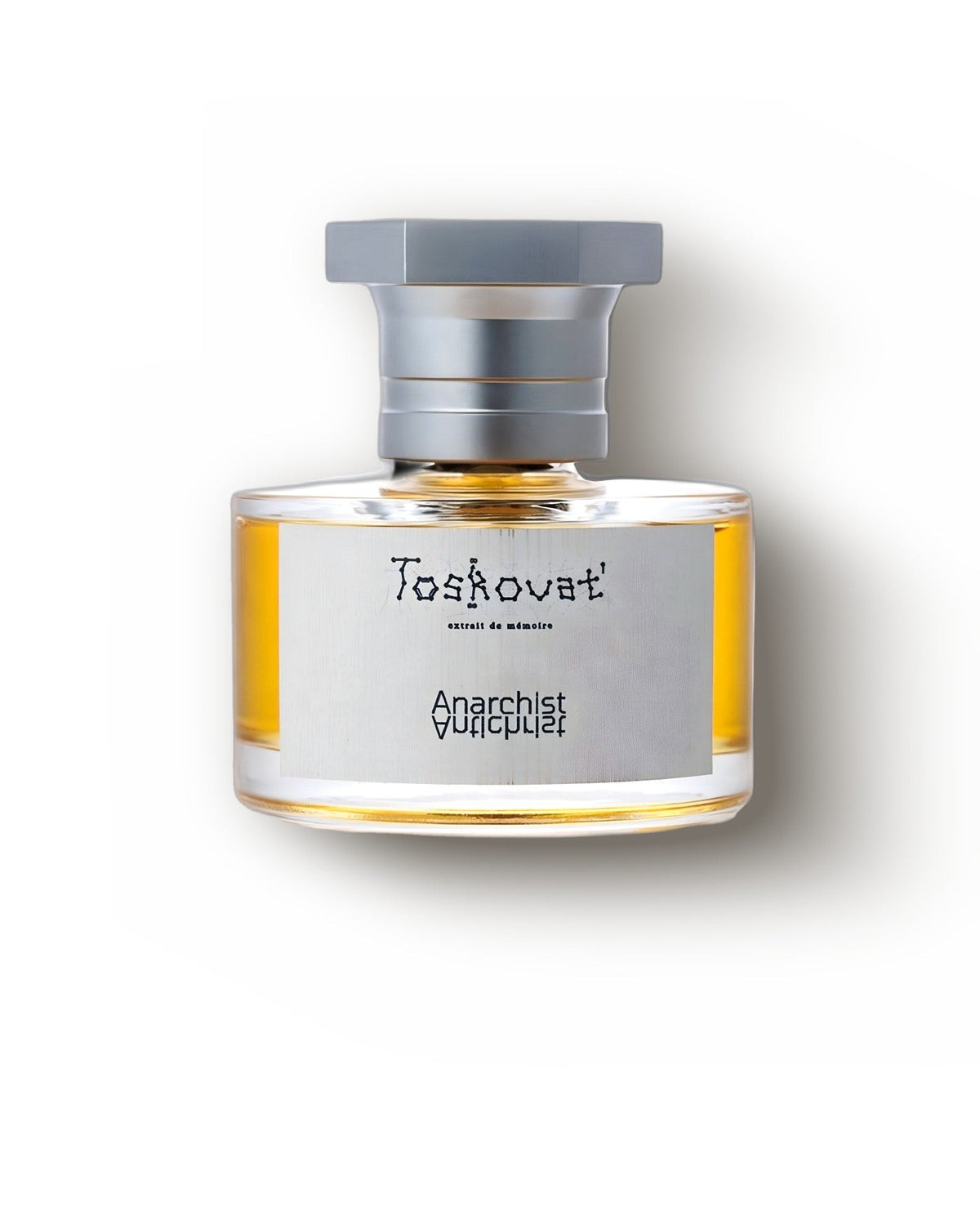
Bucharest-based Romanian who came to perfumery from filmmaking and founded Toskovat' in 2022. He composed Toskovat' Inexcusable Evil, Toskovat' Age of Innocence, Toskovat' Anarchist A_, Toskovat' In the Belly of the Beast and Adi ale Van Gethsemane.
More by this noseInexcusable EvilLast Birthday CakeAnarchist A♭
The Maison

Perfume as short fiction. Gunpowder, cold iodine and burnt sugar tell stories most houses would never print.
A Toskovat feels like a scene from a film you are not sure you were meant to watch. Cold metallic air, smoke, wax, and a gourmand sweetness that always arrives with a shadow behind it. These are conceptual extraits for people who want a fragrance to say something, and the projection tends to match the intensity of the idea.
- Origin
- Bucharest, Romania
- Founded
- 2022
- Known for
- Conceptual extraits, Inexcusable Evil

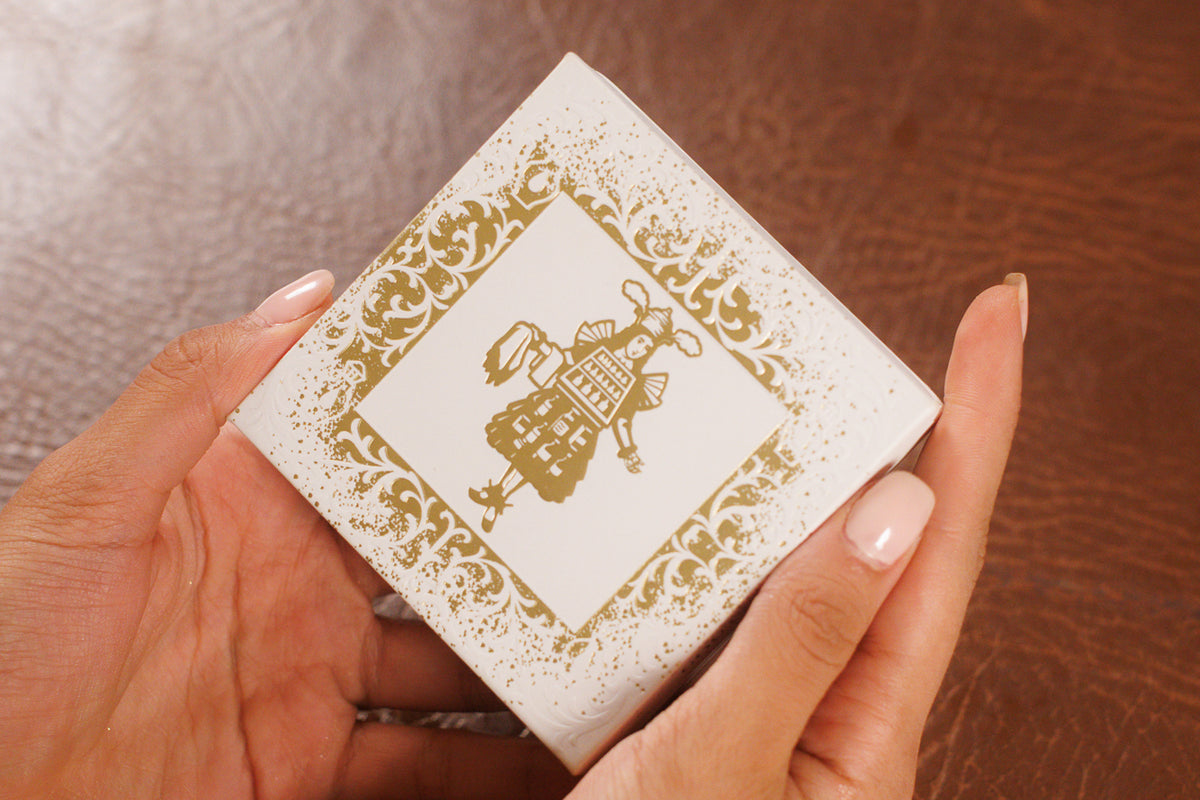
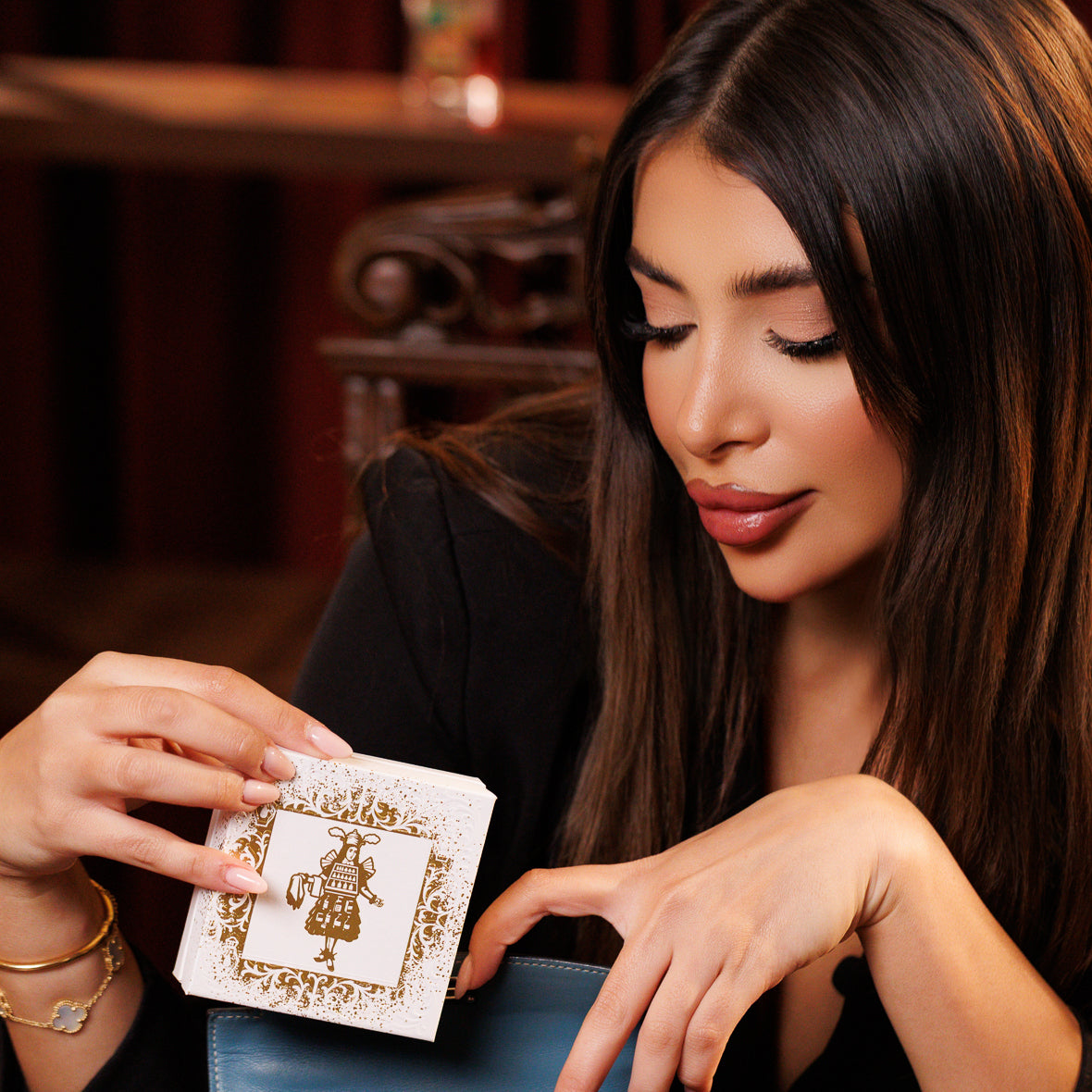
EVERY DECANT
From the original bottle to your door
We buy the original flacon at full retail price, direct from the house.
A medical grade Socorex syringe takes the exact millilitres straight from the flacon.
Packed into the hot foiled box and handed to DHL, every duty already paid. How a decant is made
More from Toskovat
You may also like