

Louis Vuitton
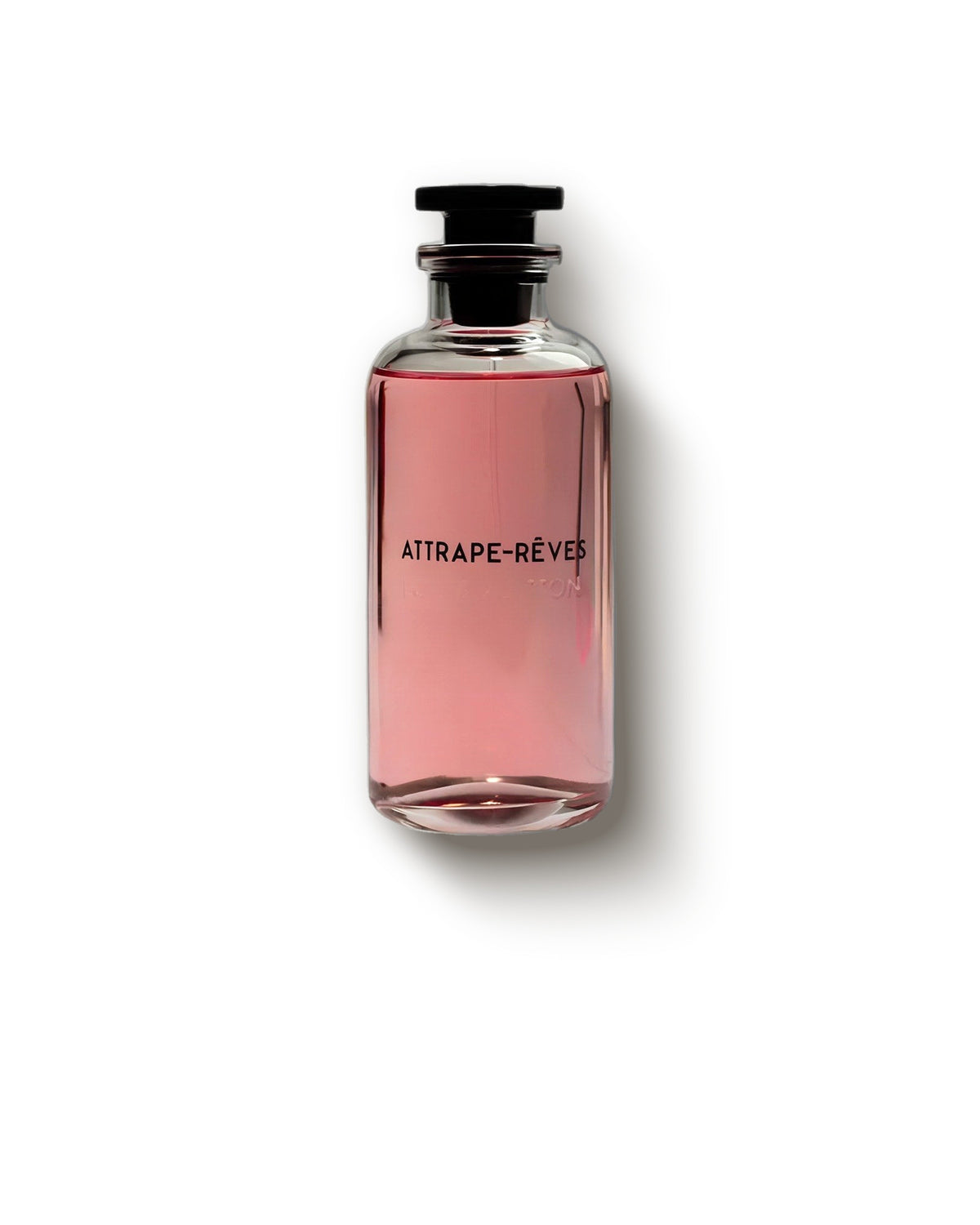
Attrape-Rêves
The Story
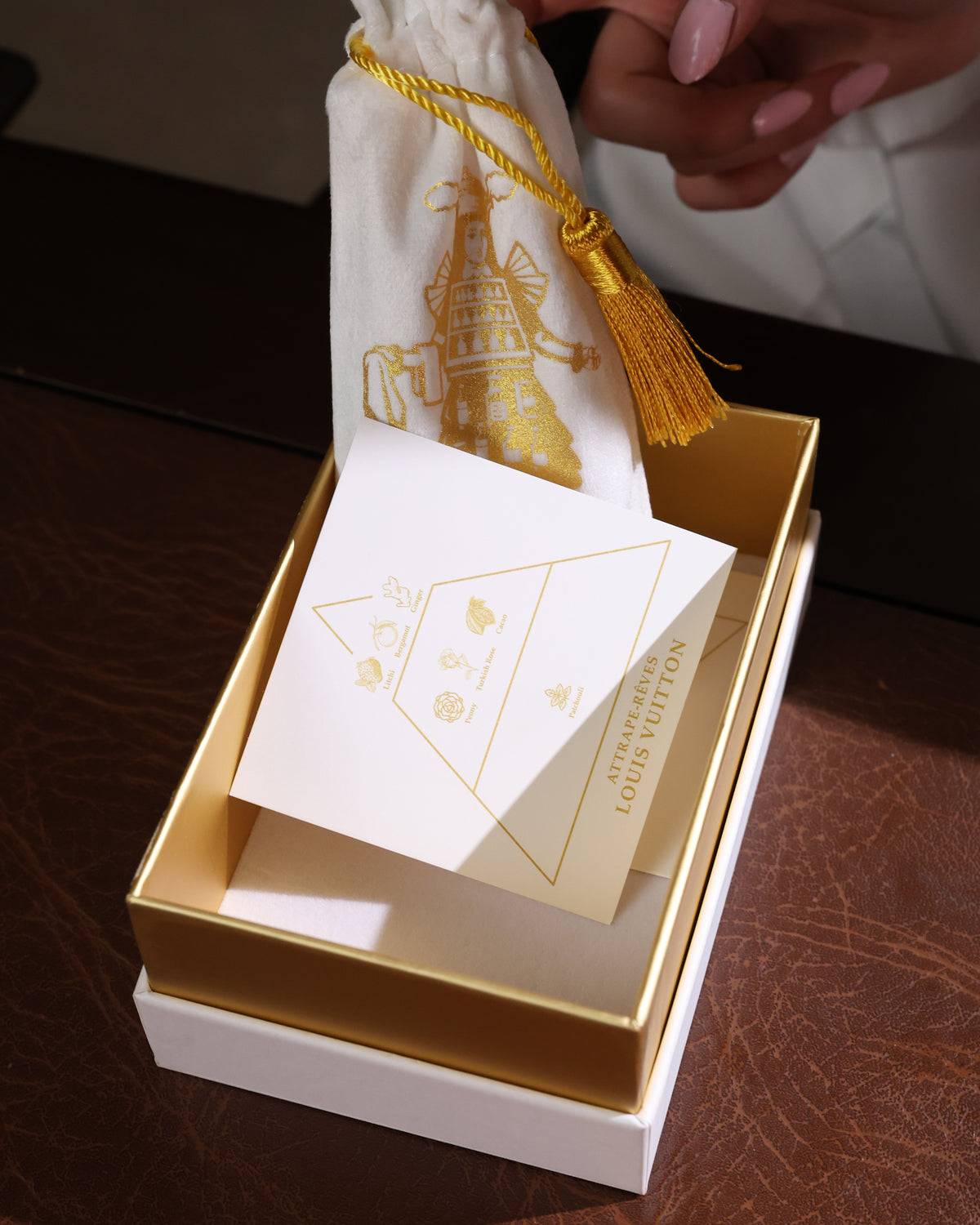
Attrape-Rêves means dream catcher, and Cavallier Belletrud describes the brief as the euphoria of an encounter nobody saw coming. The peony is pulled off its usual polite register by raw cocoa and litchi.


Rose
Velvet petals, honey and thorn
Dewy and fruity on top, then a jammy, honeyed heart with a green peppery bite underneath. Very little of it is distilled flower. A rose accord is built, and a good one can smell more like a rose than the rose does.


Floral
A whole garden, never one flower
Not one flower but the impression of many, usually rose, jasmine and orange blossom leaning on each other until no single one is recognizable. Sweet, dewy, faintly powdery, with nectar underneath. It is what people mean when a perfume smells like flowers and they cannot say which.


Fresh
Cold water, open air, washed skin
Cool water, laundered cotton, air with nothing in it yet. The lift can go citrus-zesty or salt-aquatic, but the effect is the same either way: it registers as clean rather than as a scent, the way a room reads different five minutes after you open a window.


Fruity
Peach skin, not lemon peel
Peach, pear, apple, berry: this is sweetness in the flesh rather than the rind, dewy and nectar-heavy where citrus is sharp and thin. It plays young and slightly greedy, the sort of ripeness you can almost feel running down a wrist.


Tropical
Sun-warmed fruit and creamy bloom
A juicy swell of ripe mango, pineapple, and overripe banana laced with coconut milk and sticky white petals. It smells of heat on bare skin, suntan lotion, and fruit left to soften in the sun, breezy and indulgent at once.

Litchi
Pink-skinned fruit that smells of roses and rain
What it is
Rough red shell, translucent white flesh, and nothing worth distilling. The fruit carries too little odorant to work at usable scale, and heat flattens what is there, so every litchi note is built from aroma-chemicals.
How it smells
Juicy and candied at first, almost rosewater, then a cool watery transparency takes over. Ripe tropical sweetness with a rosy, faintly metallic edge and a green dewiness underneath.
In perfumery
It sits at the top of fruity-florals, and its rose-oxide chemistry makes rose, peony and freesia natural partners. That pairing is the fruity-rose accord at the heart of most modern rose bouquets.
Good to know
Litchi and rose share a molecule, cis-rose oxide, which is why the fruit smells faintly floral and slips so easily into rose accords. The same compound gives the Gewurztraminer grape its lychee aroma.

Bergamot
Sparkling citrus light with a bitter edge
What it is
Nobody eats bergamot. It is sour, seedy and disappointing, and almost the whole world's supply grows on one strip of Calabrian coast, farmed purely for the oil pressed cold from its green rind.
How it smells
Zest and green light in the first second, then something rounder than lemon: a floral, tea-like smoothness sitting on a faintly bitter warmth. It burns off fast. What stays behind is a quiet, slightly spiced hum.
In perfumery
It defines eau de cologne, and sits on top of nearly every fougère alongside lavender and oakmoss. Perfumers want the first bright second it gives, and the oil is also what makes Earl Grey smell like Earl Grey.
Good to know
The thing that makes it sparkle can also burn. Bergamot carries bergapten, which leaves skin hypersensitive to sunlight, so perfumers either keep the dose low or reach for a grade with the molecule stripped out.


Ginger
Fresh peppery zing with a fibrous warmth
What it is
Not a root, whatever the greengrocer calls it, but a swollen underground stem. Perfumers take it two ways: steam-distilled to an essential oil, or extracted with CO2, and the two are not interchangeable.
How it smells
Bright and dry, a fizzy lemon-pine sparkle with pepper behind it and a fibrous, earthy warmth underneath. None of the sweetness of cooked ginger. The CO2 extract is rounder and juicier, closer to a rhizome snapped in half.
In perfumery
It works between the top and the heart, waking up citrus, putting an edge on woods, keeping aquatic and fougere structures from going flat. When a crisp, peppery scent has a pulse to it, ginger is usually why.
Good to know
Ginger barely flowers in cultivation. Every plant is grown from a piece of another plant, which makes the world's ginger something close to one enormous clone, passed hand to hand along trade routes for five thousand years.


Peony
Dewy ruffles, fresh and quietly green
What it is
Ruffled spring bloom of the Paeonia genus, herbaceous bushes and tree peonies alike. The living flower yields no oil at usable scale, so every peony in a bottle is assembled from rosy, green and watery aroma-chemicals.
How it smells
Cool, dewy and see-through: a soft rose heart lifted by crisp green stems and a faint honey. Think pale pink rather than red, a bud just opening, water on the petal. It never turns jammy.
In perfumery
The heart note of a thousand pink florals, radiant and light where rose would be heavy. It leans on lychee, freesia, magnolia and white musks, and shimmers through countless spring-toned bouquets.
Good to know
Since there is nothing to distil, every peony is a perfumer's guess at a flower, so two of them can smell almost unrelated. China has called it the king of flowers, a symbol of honor and wealth.


Turkish Rose
Spiced honey petals from the Isparta valleys
What it is
The valleys around Isparta are planted with damask rose, picked in the dark and finished by mid-morning, before the heat scatters the oil. The still gives rose otto; solvent gives the darker, redder absolute, jammier and fuller.
How it smells
Honey and spice more than dew. Against the brighter Bulgarian rose this one reads warmer and denser, opening fresh and green-edged before settling into something clove-like and deep. There is a peppery flick at the edges.
In perfumery
Put it in the heart and the whole fragrance turns radiant and slightly restless, never one flat rose. Oud, saffron, patchouli and geranium all take it well, in florals, chypres and orientals alike.
Good to know
Three to four tonnes of hand-picked blossoms go into one kilogram of otto. The name is protected as well: Isparta Rose is a registered name of origin covering the provinces of Isparta, Burdur, Afyon and Denizli, and a grower outside that line cannot use it.


Cacao
Roasted cocoa, bitter until the sugar arrives
What it is
Chocolate starts as a bean in a pod, packed in white pulp, on a shade-loving American tree now farmed mostly in West Africa. Ferment it, dry it, roast it, and the absolute smells of chocolate with nothing added.
How it smells
Dry, roasted and dusty, like cocoa powder or dark chocolate shaved thin. Bitter up front, with coffee, nut and damp earth behind it, drying to a powdery brown warmth that stays close to the skin for hours.
In perfumery
Heart to base, the note that makes a gourmand edible without making it sugary. It sits with vanilla, tonka, patchouli, orange and chili. Sweeten it and it drifts toward drinking chocolate; leave it bare and it stays bitter.
Good to know
The Maya and the Aztec drank it bitter, frothed and spiced, and held it sacred. Sugar arrived with Europe, centuries later. The material itself never took it up.


Patchouli
Damp earth and dark wood after rain
What it is
Nobody guesses mint, but that is the family: a leafy bush whose leaves are dried and left to cure, close to fermenting, before distillation pulls out an oil thick and dark as syrup.
How it smells
Wet soil, forest floor, an old cellar, with a winey sweetness underneath. Young oil can come at you sharp and green, almost camphorous. Aged oil goes the other way, into chocolate and leather, and stays put for hours.
In perfumery
Almost nothing holds a composition down like it. Chypres and orientals are built on that anchor, and a few drops under rose, vetiver or labdanum will hold the whole thing on skin for hours.
Good to know
Nineteenth-century Kashmiri shawls travelled packed in dried patchouli leaves to keep moths off, and Europeans learned to tell a real one by smell alone. The oil improves with age, which almost no essential oil does, mellowing like wine.
Fragrance Character
The first minutes are bright and slightly sharp, the ginger keeping the litchi from turning sugary while bergamot adds citric lift. Peony and Turkish rose arrive as the opening settles, made warmer and more tactile by the presence of cacao; it is floral, but with weight. Patchouli closes it down gradually, wearing close to skin by the late hours, a soft resinous murmur beneath fading rose.


Longevity
how long it stays on skin
The hourglass reads wear time: how many hours the fragrance keeps speaking before it fades. A bar that barely leaves the start means a few fleeting hours. One that runs the full length carries from morning into evening. Treat it as typical, not promised. Oily skin holds scent far longer than dry.


Sillage
the size of its scent trail
Sillage is French for a ship's wake, and that is exactly what this measures: how much of the scent reaches the room instead of staying on you. Low is a whisper only close friends catch. Enormous fills the room, then keeps filling it after you leave.


Experimental
Built to provoke, not to please
Some perfumes are made to be liked. These are made to be argued about: inky tar, hot rubber, fruit on the turn, metal and fur where you expected flowers. The coin glows for a scent that provokes and dims for one that plays it safe, which is sometimes the point.


Office
Polished, and never louder than the room
Scent is manners in a shared room. At this range it should reach the person across the desk and stop there: tidy citrus, soft musk, pale woods, all of it reading competent and considerate. A glowing coin means nobody has to mention it. A dim one means it travels.


Evening
After dark, when it deepens
Dinner, drinks, the night that runs long. Low light is where ambers, resins and smoky woods stop being polite, and where a plush floral finally blooms. A glowing coin means it is waiting for exactly this hour. A dim one means it did its best work in daylight.


Romantic
Close enough to be felt
A fragrance can hum against skin instead of announcing itself across a table. That is the register here: creamy florals, vanilla, soft musk, a thread of spice, warm enough to make someone lean in. The coin glows when a scent sets that mood and dims when it is more practical than seductive.


Formal
Quiet authority in a dressed-up room
A wedding, a ceremony, a room where everyone has thought about their shoes. What works here is structure, not volume: smooth woods, disciplined florals, soft leather. A glowing coin means it holds its posture all evening. A dim one means it is too casual for the room.


Casual
Easy comfort for unhurried days
Errands, coffee, a slow Saturday with nowhere to be. Nothing here has to impress anyone, so the fit is soft and easy: fresh citrus, light woods, a little warmth off the skin. A glowing coin says yes to all that. A dim one means the fragrance is asking for a bigger night.


Day to Night
where its mood naturally falls
A bar running from sun to moon, reading the hour the fragrance was made for. The more of it that stays gold, the more the scent belongs to daylight and open air. The further the blue reaches back toward the sun, the deeper and warmer it turns: evening, candlelight, low rooms.


Winter
Warmth that carries through cold air
Cold air mutes a fragrance and slows it down, which is why winter belongs to the dense and the warm: resin, smoke, vanilla, leather, ambered spice. The bar reads how well this one pushes back, glowing against the chill instead of thinning out in it.


Spring
Fresh blooms in mild, rising warmth
Mild, humid air lifts a light composition, so the season belongs to dewy florals, green stems, soft powder and citrus you can see through. Alive rather than heavy. The further the green runs along the bar, the more comfortably this one wears in that weather.


Summer
Bright and airy in real heat
Heat does the projecting for you, which is why the wrong perfume turns unbearable by noon. What survives is cool and breathable: sharp citrus, salt air, aromatic herbs, water. Things that refresh instead of cloy. A short bar here means save it for cooler months.


Fall
Spiced warmth for cooling days
As the air cools, the rich materials stop smothering and start reading clearly: dry woods, warm spice, tobacco, amber, fruit gone golden. It is the season perfume turns contemplative. The bar fills according to how naturally this one settles into crisp, cooling days.
Best Worn
Warm spring mornings and bright summer afternoons suit it best, worn close on someone slipping away for an unhurried day together, where ginger keeps the litchi and rose from ever turning sweet.
Choose options
The Vibe


The Nose
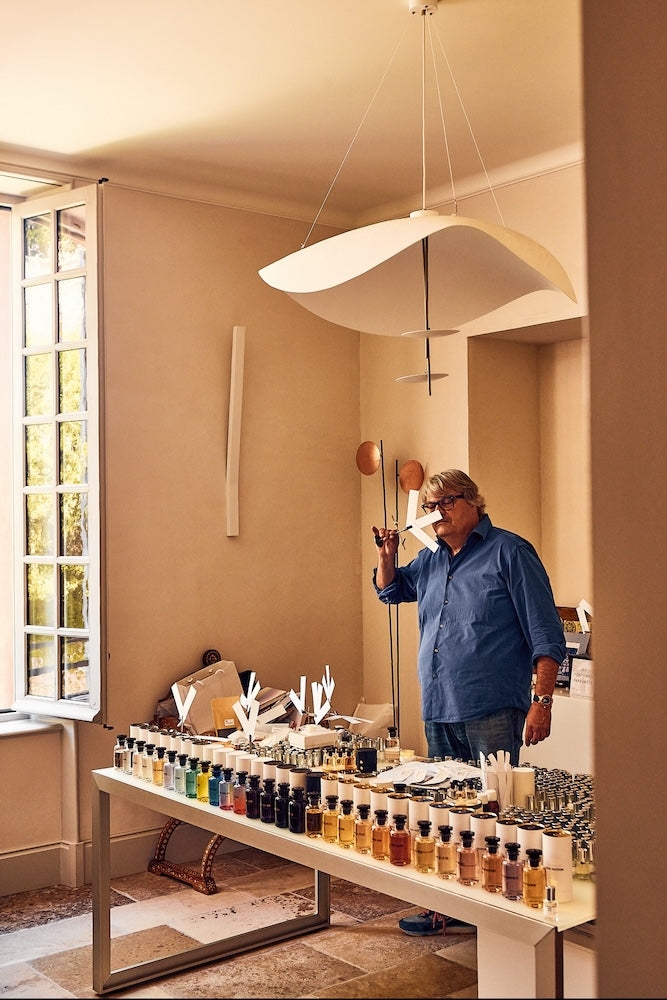
Jacques Cavallier Belletrud
Master perfumer
Born in Grasse to a family of perfumers, he joined Firmenich in 1990 and became Louis Vuitton's in-house perfumer in 2012. He composed Issey Miyake L'Eau d'Issey, Jean Paul Gaultier Classique, Yves Saint Laurent Opium pour Homme, Lancôme Poême and Louis Vuitton L'Immensité.
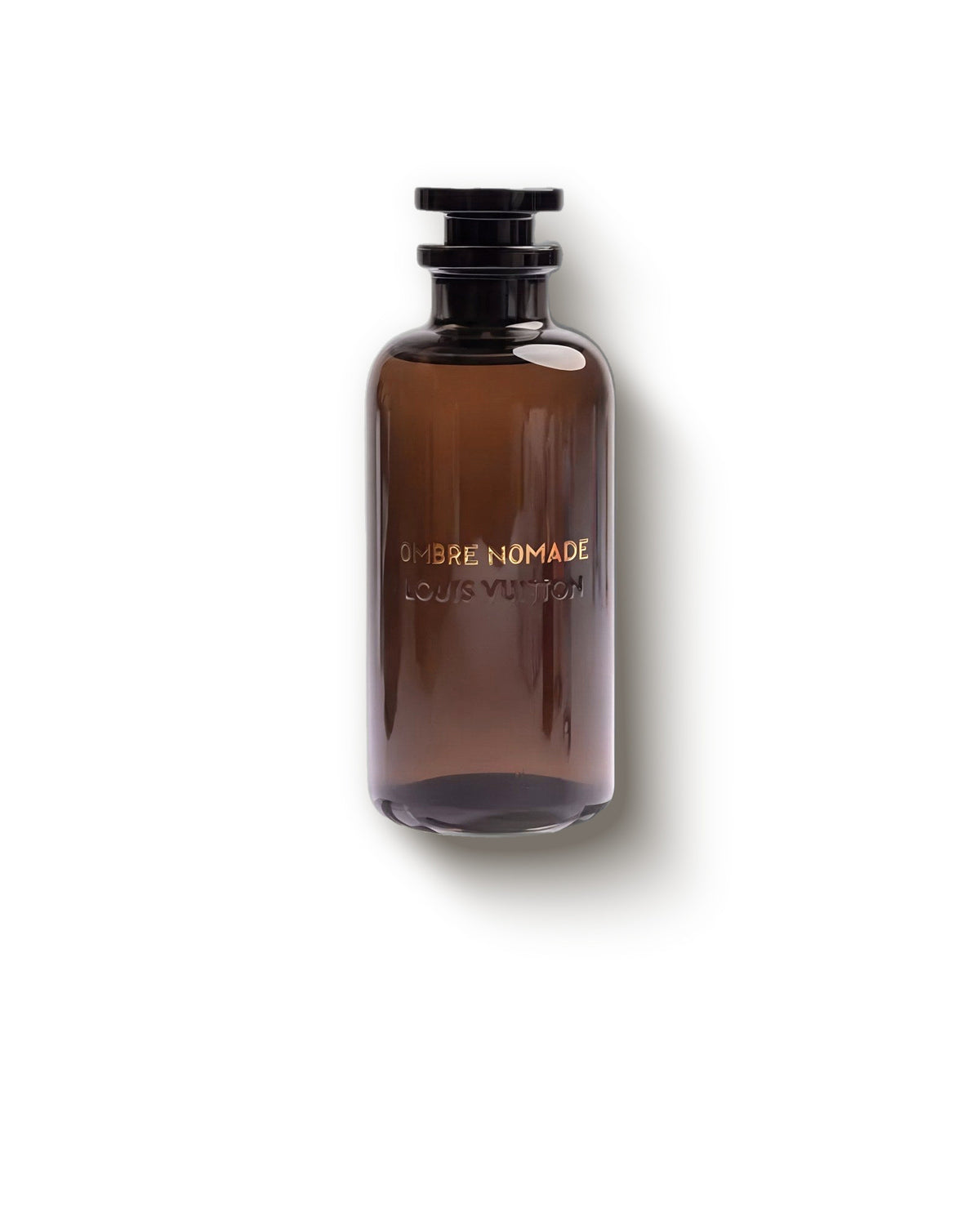
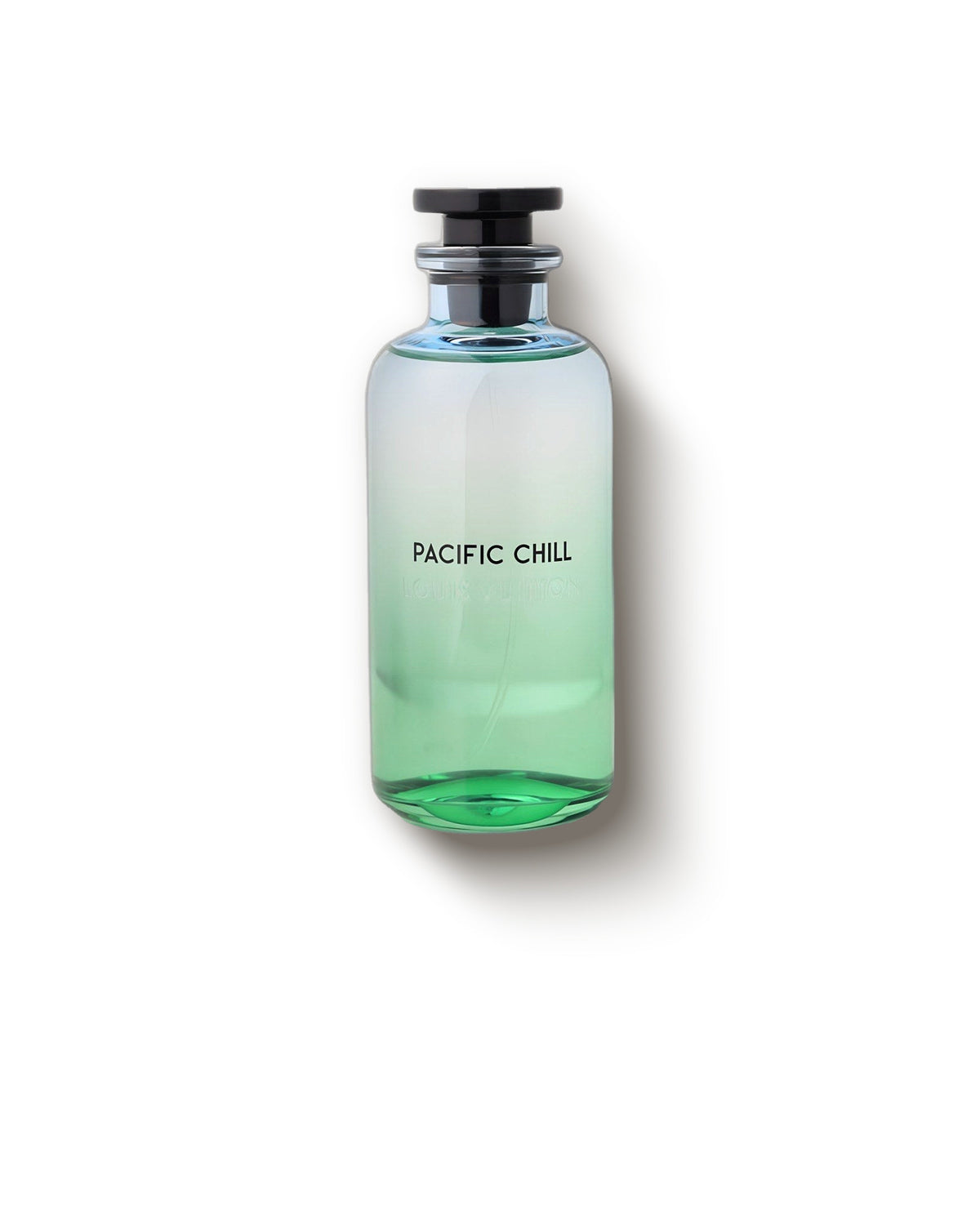
More by this noseOmbre NomadeSymphonyPacific Chill
The Maison

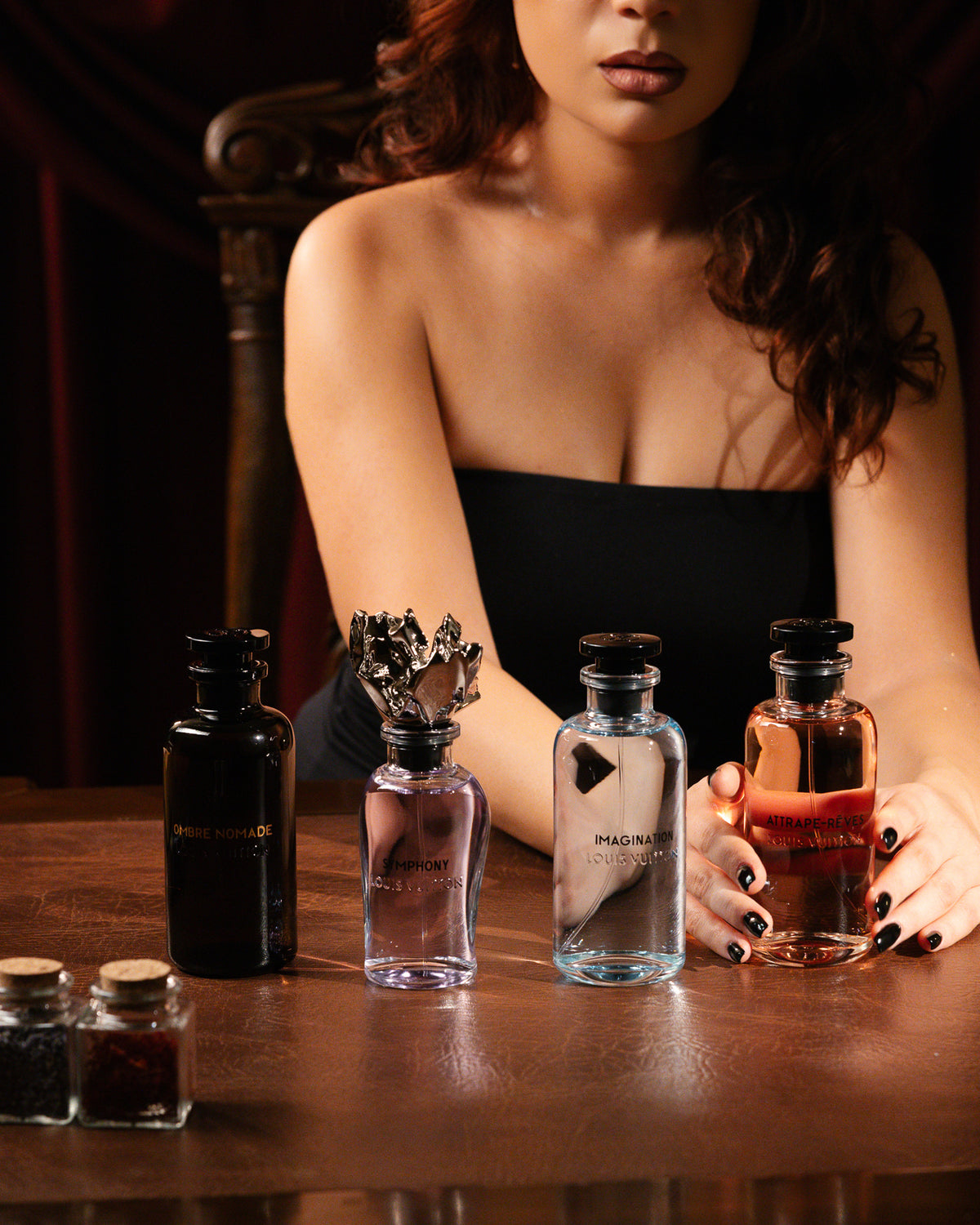
Ombre Nomade’s smoked oud and Attrape-Rêves’ lychee daydream, so the skin test costs a coffee.
Louis Vuitton perfumery trades in mood and travel, a fragrance meant to feel like a passport stamp rather than a note pyramid. The range swings from sun struck citrus to a dense smoky oud built for a long evening, all of it carrying the same polished, unhurried confidence.
- Origin
- Paris, France
- Founded
- 1854, perfumes relaunched in 2016
- Known for
- Ombre Nomade, Attrape-Rêves

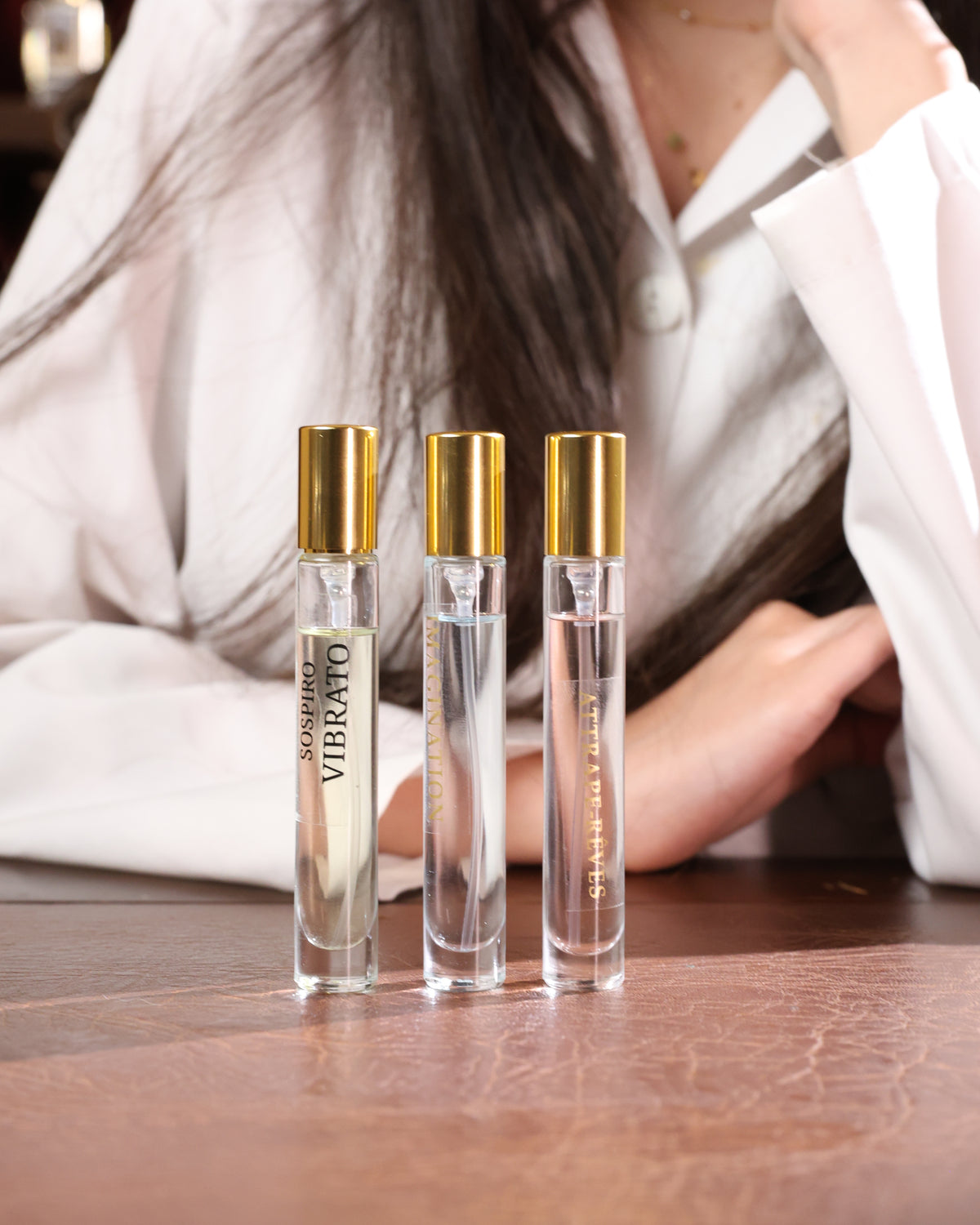
EVERY DECANT
From the original bottle to your door
We buy the original flacon at full retail price, direct from the house.
A medical grade Socorex syringe takes the exact millilitres straight from the flacon.
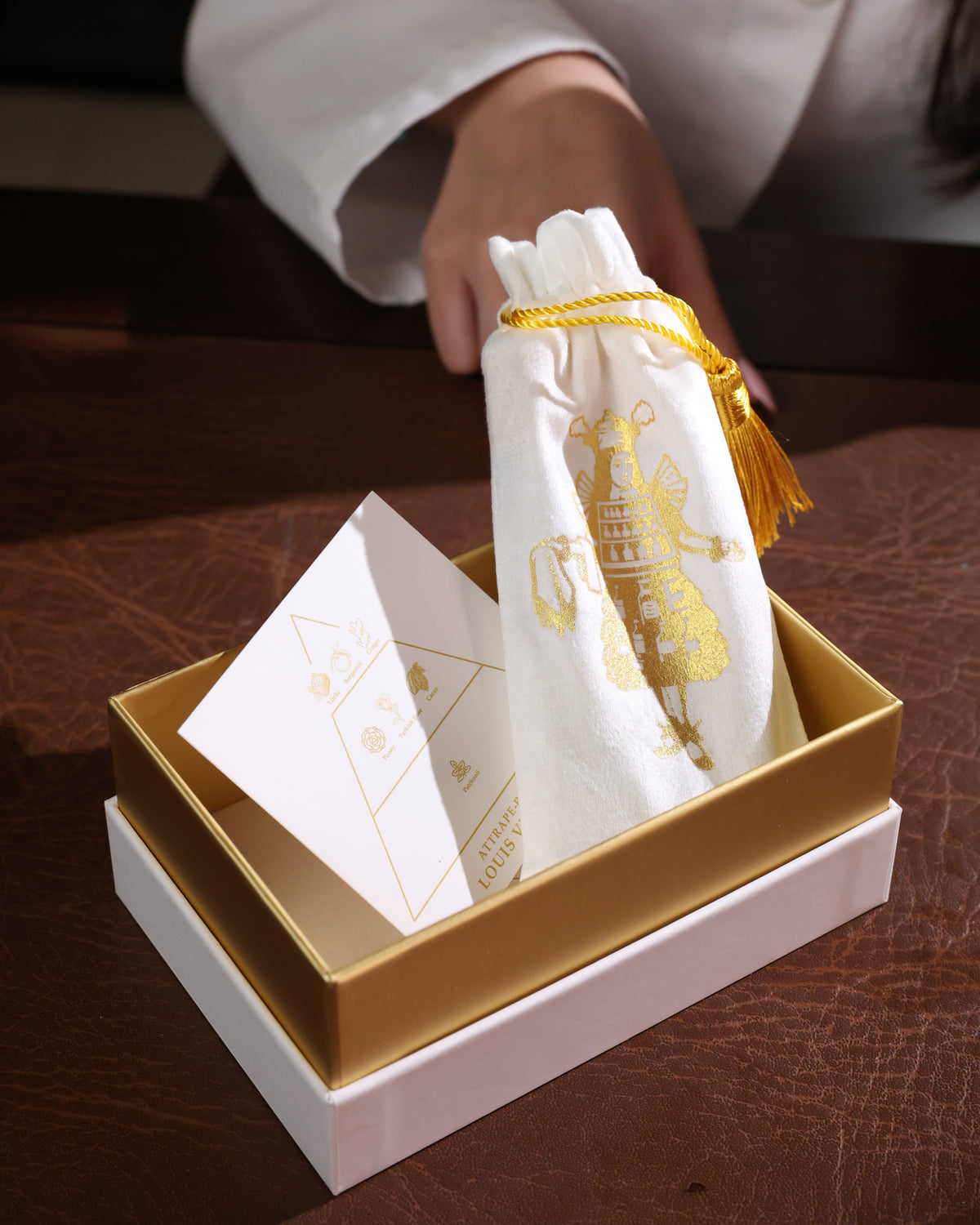
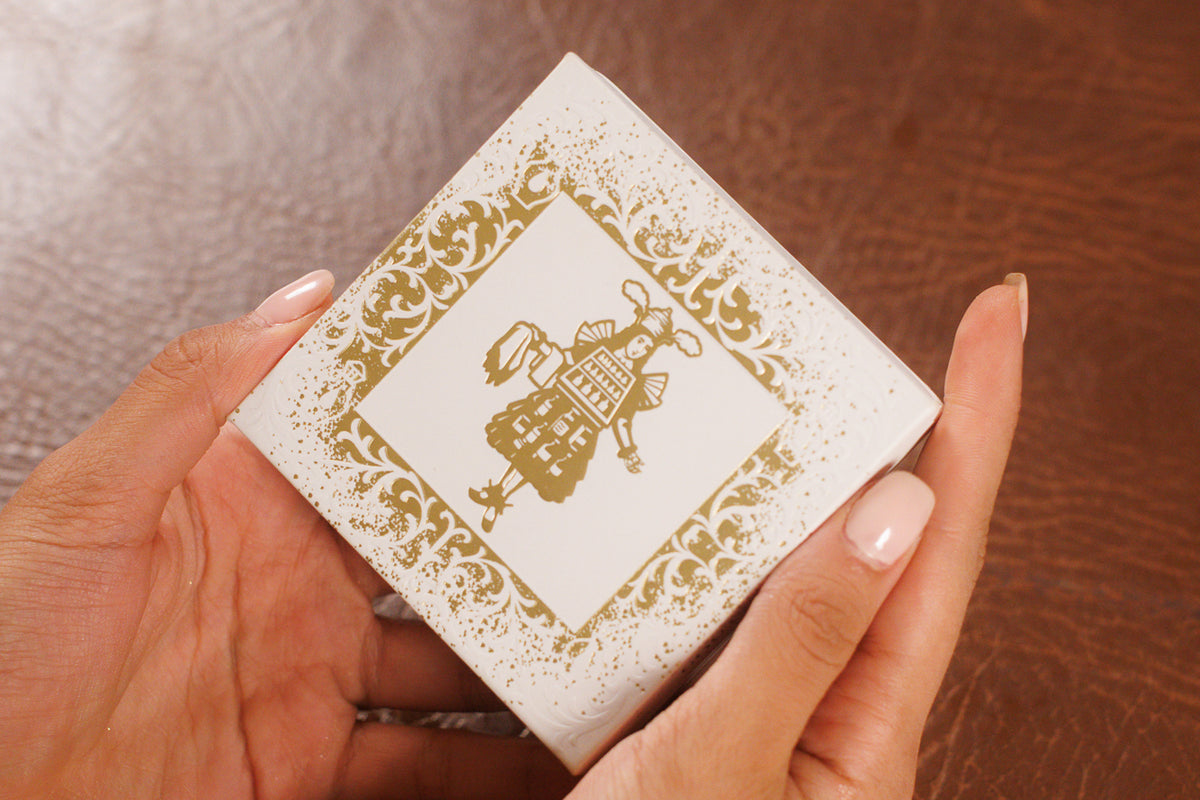
Packed into the hot foiled box and handed to DHL, every duty already paid. How a decant is made
More from Louis Vuitton
You may also like