

Louis Vuitton
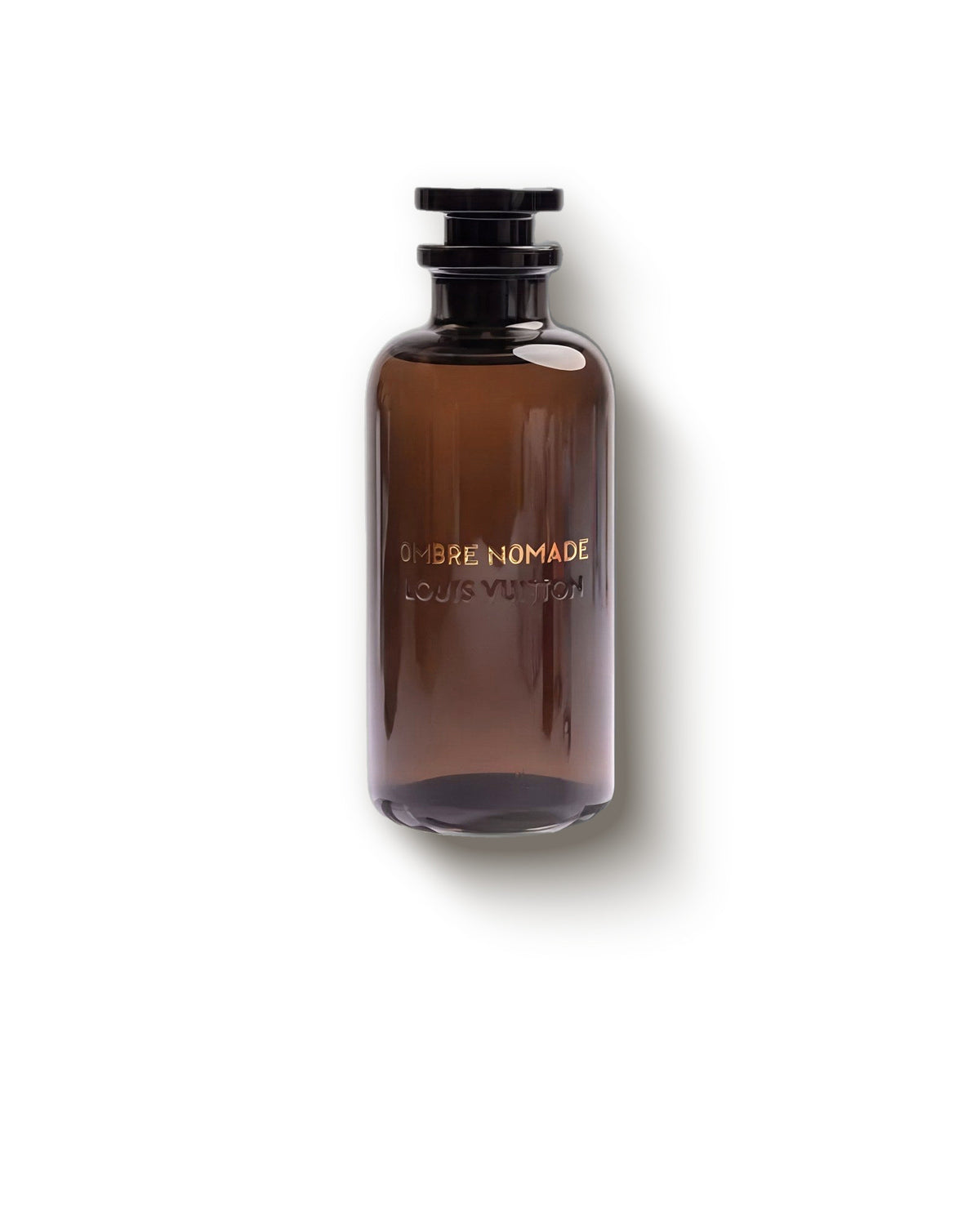
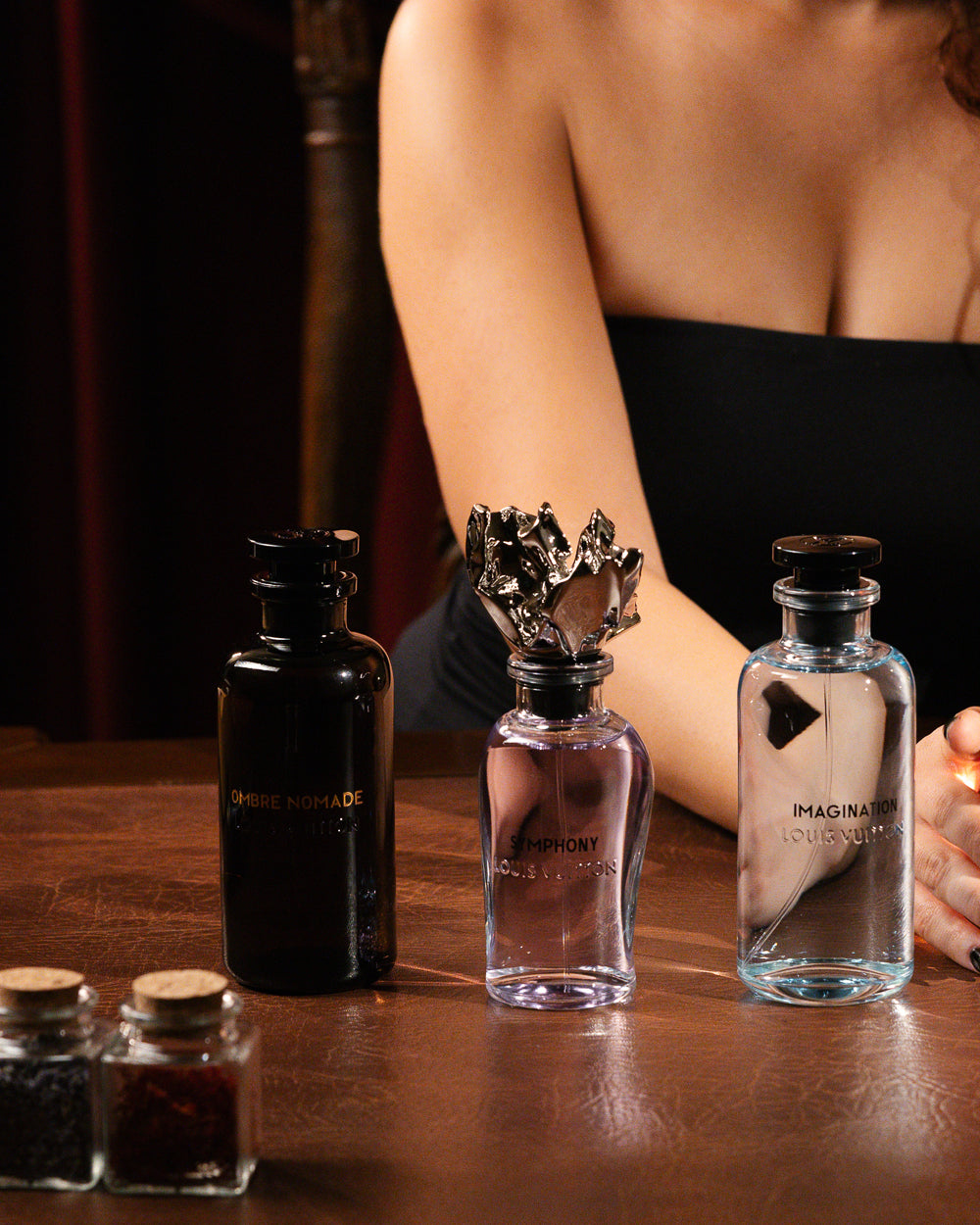
Ombre Nomade
The Story
Ombre Nomade was built as a direct homage to Middle Eastern perfumery, drawing on Jacques Cavallier Belletrud's own time in Saudi Arabia, Dubai and Oman. The oud assam is lifted by a flash of raspberry, and the picture is a journey through the desert, sun and shadow shifting across the dunes while a far wisp of incense smoke rises.


Amber
Resin warmed until it goes sweet
Labdanum, benzoin and vanilla melted together into something sweet but dusky, like tree sap gone soft in the sun with a thread of incense smoke through it. Amber does not sparkle or shout. It sits close to the skin and gives off heat for hours.

Warm Spicy
Glowing embers of the spice drawer
The rounded heat of cinnamon, clove, and nutmeg, dry and slightly resinous, like a baking pantry rather than a sharp kitchen. It creates a flushed, enveloping warmth that feels intimate and cool-weather, hugging the skin from within.


Oud
What a tree makes when it is wounded
A dense, resinous wood that smells warm and slightly medicinal, with a leathery, animal-tinged smokiness and a sweet, almost barnyard funk underneath. It feels ancient and brooding, wrapping the skin in something thick and quietly powerful.


Rose
Velvet petals, honey and thorn
Dewy and fruity on top, then a jammy, honeyed heart with a green peppery bite underneath. Very little of it is distilled flower. A rose accord is built, and a good one can smell more like a rose than the rose does.


Smoky
Charred wood and rising embers
The dry, charred scent of burning wood, smoldering incense, and lingering ash, sometimes tarry, sometimes wispy and gray. It feels brooding and atmospheric, conjuring a dying fire and a cool current of air carrying its last breath.


Woody
Dry grain of cut timber
The smell of cedar shavings, sandalwood, and dry vetiver roots, a sanded, resinous warmth with a faint pencil-box rasp. It feels grounded and composed, the quiet backbone that makes a scent read as serious and lasting.


Raspberry
A berry conjured, since none can be extracted
What it is
The fruit gives up nothing: no oil, no absolute. The note is always built, from raspberry ketone with beta-ionone for a violet edge and furaneol for cooked sweetness, or from boronia absolute, davana, rose and violet leaf.
How it smells
Jammy and ripe, sweeter than it is sharp, with a powdery floral shadow that surfaces as it dries. The lab version is brighter, a little candied, and holds its shape. The boronia route runs warmer, greener, wilder.
In perfumery
It lives in fruity-florals and gourmands, next to rose, violet and vanilla. Raspberry ketone is unusual among fruit materials for its tenacity: it is still there in the dry-down, long after pear and peach have evaporated.
Good to know
Raspberry leaf absolute exists, but it reads green, leathery and balsamic with a jammy sweetness, closer to mulled wine than fresh fruit. Boronia smells of raspberry jam and tea, and is scarce enough that botanical raspberry stays rare.


Rose
Dewy sweetness over a green, peppery bite
What it is
Most perfumery rose is one of two: damascena from Bulgaria and Turkey, centifolia from Grasse. Whole blossoms are picked by hand from before sunrise until about ten thirty, then distilled into otto or solvent-extracted into absolute.
How it smells
Fresh, honeyed, green at the edges, with something dewy still on it. Spice and fruit sit underneath, and in the absolute a jammy darkness. Otto opens crisp and bright; absolute is warmer, smokier, closer to skin.
In perfumery
Rose behaves less like one note than a whole palette. It carries a perfume alone or vanishes into a chypre, turns dark against oud and patchouli, goes powdery beside violet, and holds a floral heart together.
Good to know
The two extractions are not the same bargain. Otto takes three to four thousand kilograms of blossoms to yield one kilogram of oil. Absolute, pulled out with solvent, gets there on roughly a seventh of the flowers.

Saffron
Crimson threads breathing leather, honey and dry hay
What it is
Three crimson threads sit inside each autumn crocus flower, and a hand pulls every one. Dried, those stigmas are steeped into a tincture or extracted into an absolute. That is the entire supply chain.
How it smells
Hay and honey and warm toast first, then something metallic and leathery underneath, the work of a molecule called safranal. It dries down into suede, tobacco and dusty amber, bitter at the edges.
In perfumery
It lives in the heart, glowing reddish, the hinge between spice and leather. Perfumers wed it to rose so often the pairing became a genre, and entire leather accords get built on it alone.
Good to know
A kilogram of saffron costs about 150,000 hand-picked flowers and many days of stooped labor, which is why almost none of it reaches perfume. Most saffron notes are built from synthetic safranal instead.


Birch
Charred bark, old saddles, cool green sap
What it is
Two very different things come off a birch. Bark cooked without air gives birch tar, a black oil thick with phenols, the reason it smells of leather. The leaves and buds give something far greener and lighter.
How it smells
Tar first: a campfire you cannot walk away from, charred wood, old saddle leather, a medicinal sting behind it. The leaf side is the opposite, cool and wet, like snapped green twigs in damp woodland.
In perfumery
In the base it builds the smoky half of leather and the ruggedness of a chypre. Green birch facets do lighter work up top. The dry, tarry leathers of the early twentieth century were built on it.
Good to know
Birch tar was rubbed into Russian leather, or yuft, and that is why the whole genre smells of smoke rather than hide. The crude tar carries compounds no one wants on skin, so perfumers work with purified grades.


Geranium
A rose with green stems and crushed mint
What it is
The perfumer's geranium is not a geranium at all. It is a pelargonium, and the rose smell sits in the leaves and stems, which is the part that goes into the still.
How it smells
Crush a leaf and you get rose, but rose with the stem still attached: green, crisp, a little peppery, cooled by something minty. Lemon and a powdery sweetness thread through it.
In perfumery
It works the heart, bridging florals and fougeres, and its herbal edge is the reason so much of it ends up in scents marketed to men. Rose, mint, clove, bergamot and vetiver all take it well.
Good to know
Geranium and rose share citronellol, which is why geranium can stand in for part of a rose accord far more affordably. Reunion's Bourbon crop, once the benchmark, has thinned as growing shifted to Egypt and China.


Bangladeshi Oud Assam
Leathery, spiced oud from a Bangladeshi family plantation
What it is
Real agarwood, which Louis Vuitton calls oud assam. The house sources it from a family-run plantation in Bangladesh growing a rare variety of the tree, found after months of searching.
How it smells
Strong, leathery, spicy and woody. In this perfume a hint of raspberry is set against it to calm it, while a touch of rose and roast geranium sits alongside.
In perfumery
It is monumental, blended with a hint of benzoin and accents of raspberry. It sits at the centre of the base, where benzoin and incense, both among the house's key notes, wrap it in warm resin and smoke.
Good to know
Oud changes with where it is grown, from warm and woody to smoky and sweet, so a named source matters. For this homage to Middle Eastern perfumery, the perfumer Jacques Cavallier Belletrud set out to find the best and most recognisable raw materials.


Incense
The smell of resin hitting hot coal
What it is
What you are smelling is a change of state: resin meeting heat. The resin is usually olibanum, wept by Boswellia trees in Oman and the Horn of Africa, and perfumers round the effect out with labdanum and styrax.
How it smells
Cool and dry to begin with, sharp enough to read as turpentine, then the smoke arrives: peppery, ashen, faintly sweet. There is a stone-church quality to it, soapy and faintly green, and it stays close to the skin.
In perfumery
It works the way silence works in a room. From the heart into the base it cools florals, sharpens woods and drops a weight of ritual into oriental and chypre structures that would otherwise read as merely rich.
Good to know
Long before anyone wore it, this smoke was among antiquity's costliest imports. It moved along the Arabian caravan roads to temples around the Mediterranean, where burning it was the point: the scent was the offering.


Amberwood
Ambergris glow without the whale, dry and woody
What it is
No tree gives this. Amberwood is a family of woody-amber molecules built in a lab, made stable and affordable as stand-ins for ambergris and for woods that are harder to source every year.
How it smells
Dry, radiant warmth, closer to sun on stone than to anything sweet, with a salty trace that nods at ambergris. It hardly moves. Hours in it is still there, a soft woody halo hanging just off the skin.
In perfumery
Base note and fixative, the backbone that keeps a modern fragrance projecting. It stacks with Iso E Super, ambroxan, musks and rose, and it is why so much of today's shelf shares one dry, transparent woody signature.
Good to know
Nothing here is related to fossilized tree amber, which is essentially odorless. The name borrows amber's warmth while the molecules do the work of ambergris, which comes from a protected whale, and of woods whose trade is now restricted.


Benzoin
Warm vanilla balsam wept from a tapped tree
What it is
Benzoin does not flow on its own. Someone cuts the bark of a styrax tree in Laos, Vietnam or Sumatra, and the wound weeps a gum that hardens over months into reddish tears.
How it smells
Sweet, warm, unmistakably vanillic, with a powdery amber softness underneath. Siam benzoin is rounder and creamier; Sumatra runs smokier, with a cinnamon bite. Left on skin it turns almost caramelized.
In perfumery
A base note that behaves like a fixative and a sweetener at once, giving amber accords their glow and holding the rest of the composition still. It softens sharp edges beside labdanum, tonka and incense.
Good to know
The word benzene comes from here. Chemists named benzoic acid after this resin, and benzene took its name from the acid. The resin's own name is a worn-down Arabic phrase, luban jawi, frankincense of Java.
Fragrance Character
The raspberry dissolves quickly, serving only to lift the saffron and geranium into focus before the birch and oud assert themselves with real weight. In the heart, rose provides softness without sweetness, threaded through with the metallic warmth of saffron. On the drydown, benzoin and amberwood mellow the smoke into a close, resinous skin-signature that lingers with quiet intensity.


Longevity
how long it stays on skin
The hourglass reads wear time: how many hours the fragrance keeps speaking before it fades. A bar that barely leaves the start means a few fleeting hours. One that runs the full length carries from morning into evening. Treat it as typical, not promised. Oily skin holds scent far longer than dry.


Sillage
the size of its scent trail
Sillage is French for a ship's wake, and that is exactly what this measures: how much of the scent reaches the room instead of staying on you. Low is a whisper only close friends catch. Enormous fills the room, then keeps filling it after you leave.


Experimental
Built to provoke, not to please
Some perfumes are made to be liked. These are made to be argued about: inky tar, hot rubber, fruit on the turn, metal and fur where you expected flowers. The coin glows for a scent that provokes and dims for one that plays it safe, which is sometimes the point.


Office
Polished, and never louder than the room
Scent is manners in a shared room. At this range it should reach the person across the desk and stop there: tidy citrus, soft musk, pale woods, all of it reading competent and considerate. A glowing coin means nobody has to mention it. A dim one means it travels.


Evening
After dark, when it deepens
Dinner, drinks, the night that runs long. Low light is where ambers, resins and smoky woods stop being polite, and where a plush floral finally blooms. A glowing coin means it is waiting for exactly this hour. A dim one means it did its best work in daylight.


Romantic
Close enough to be felt
A fragrance can hum against skin instead of announcing itself across a table. That is the register here: creamy florals, vanilla, soft musk, a thread of spice, warm enough to make someone lean in. The coin glows when a scent sets that mood and dims when it is more practical than seductive.


Formal
Quiet authority in a dressed-up room
A wedding, a ceremony, a room where everyone has thought about their shoes. What works here is structure, not volume: smooth woods, disciplined florals, soft leather. A glowing coin means it holds its posture all evening. A dim one means it is too casual for the room.


Casual
Easy comfort for unhurried days
Errands, coffee, a slow Saturday with nowhere to be. Nothing here has to impress anyone, so the fit is soft and easy: fresh citrus, light woods, a little warmth off the skin. A glowing coin says yes to all that. A dim one means the fragrance is asking for a bigger night.


Day to Night
where its mood naturally falls
A bar running from sun to moon, reading the hour the fragrance was made for. The more of it that stays gold, the more the scent belongs to daylight and open air. The further the blue reaches back toward the sun, the deeper and warmer it turns: evening, candlelight, low rooms.


Winter
Warmth that carries through cold air
Cold air mutes a fragrance and slows it down, which is why winter belongs to the dense and the warm: resin, smoke, vanilla, leather, ambered spice. The bar reads how well this one pushes back, glowing against the chill instead of thinning out in it.


Spring
Fresh blooms in mild, rising warmth
Mild, humid air lifts a light composition, so the season belongs to dewy florals, green stems, soft powder and citrus you can see through. Alive rather than heavy. The further the green runs along the bar, the more comfortably this one wears in that weather.


Summer
Bright and airy in real heat
Heat does the projecting for you, which is why the wrong perfume turns unbearable by noon. What survives is cool and breathable: sharp citrus, salt air, aromatic herbs, water. Things that refresh instead of cloy. A short bar here means save it for cooler months.


Fall
Spiced warmth for cooling days
As the air cools, the rich materials stop smothering and start reading clearly: dry woods, warm spice, tobacco, amber, fruit gone golden. It is the season perfume turns contemplative. The bar fills according to how naturally this one settles into crisp, cooling days.
Best Worn
Best suited to the cold months, worn after dark at a formal occasion or an intimate dinner where the smoke and amber can unfold slowly against cool air.
Choose options
The Vibe


The Nose
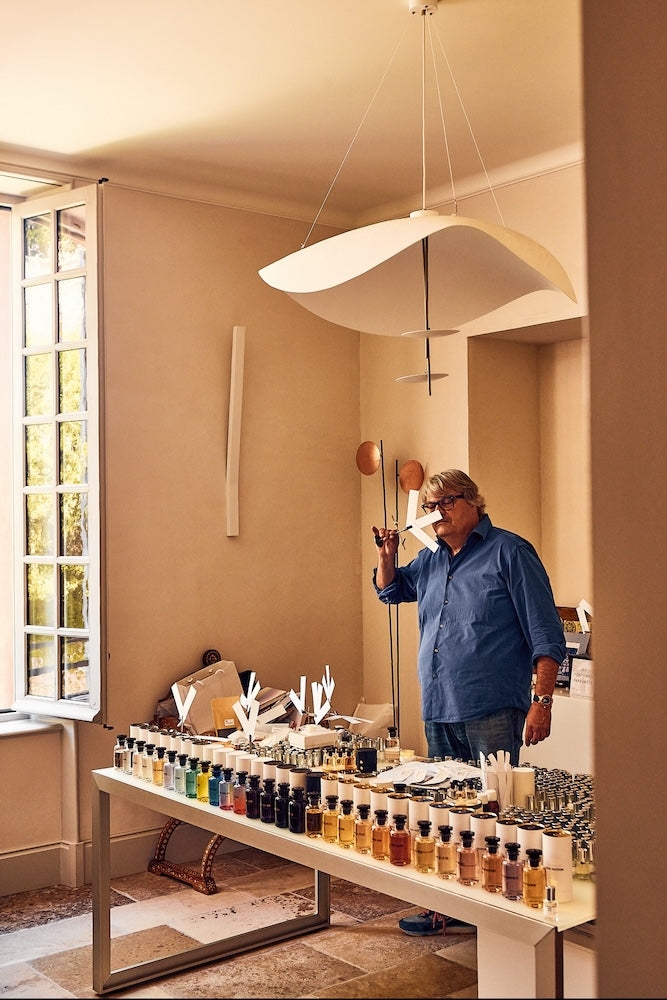
Jacques Cavallier Belletrud
Master perfumer
Born in Grasse to a family of perfumers, he joined Firmenich in 1990 and became Louis Vuitton's in-house perfumer in 2012. He composed Issey Miyake L'Eau d'Issey, Jean Paul Gaultier Classique, Yves Saint Laurent Opium pour Homme, Lancôme Poême and Louis Vuitton L'Immensité.
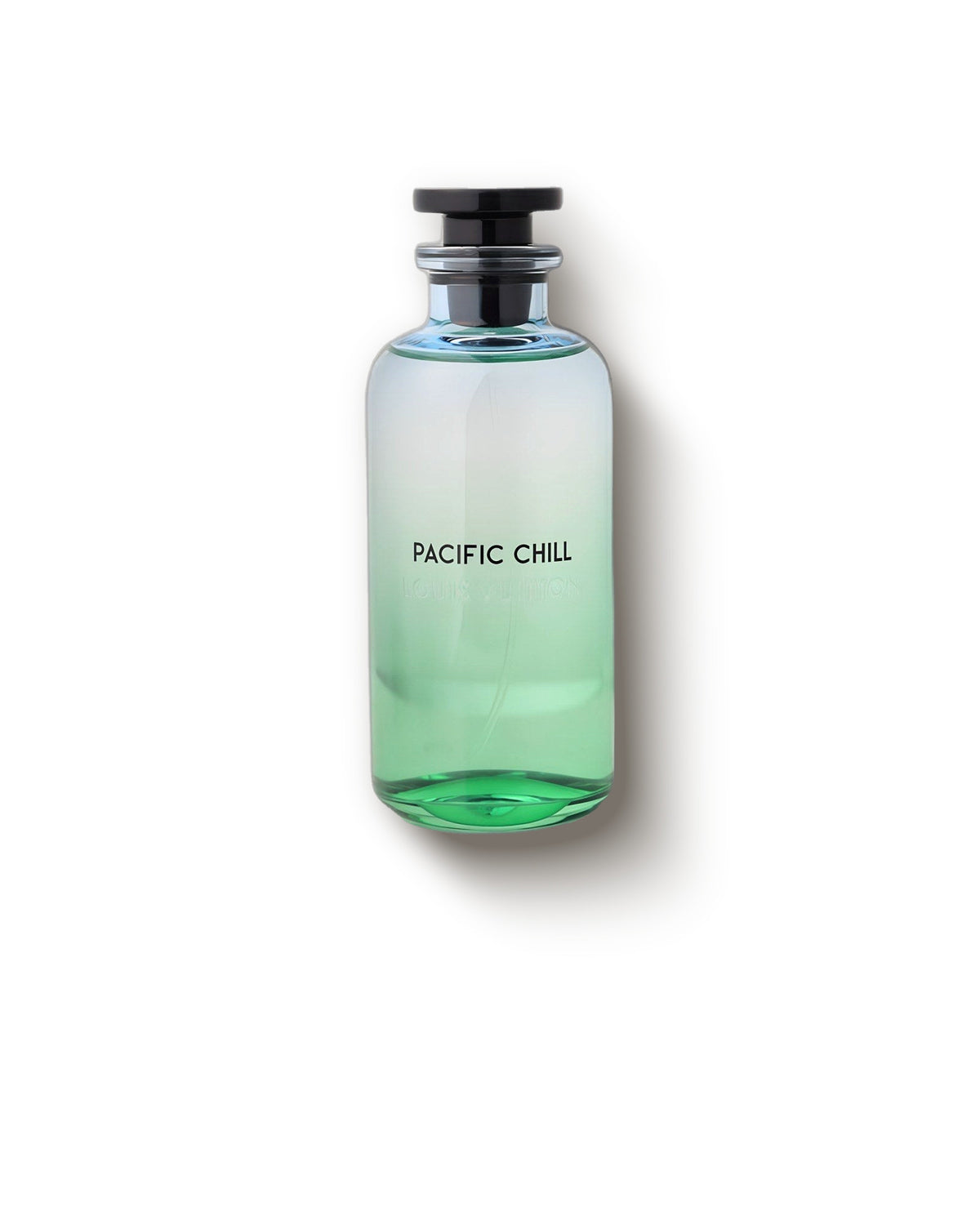
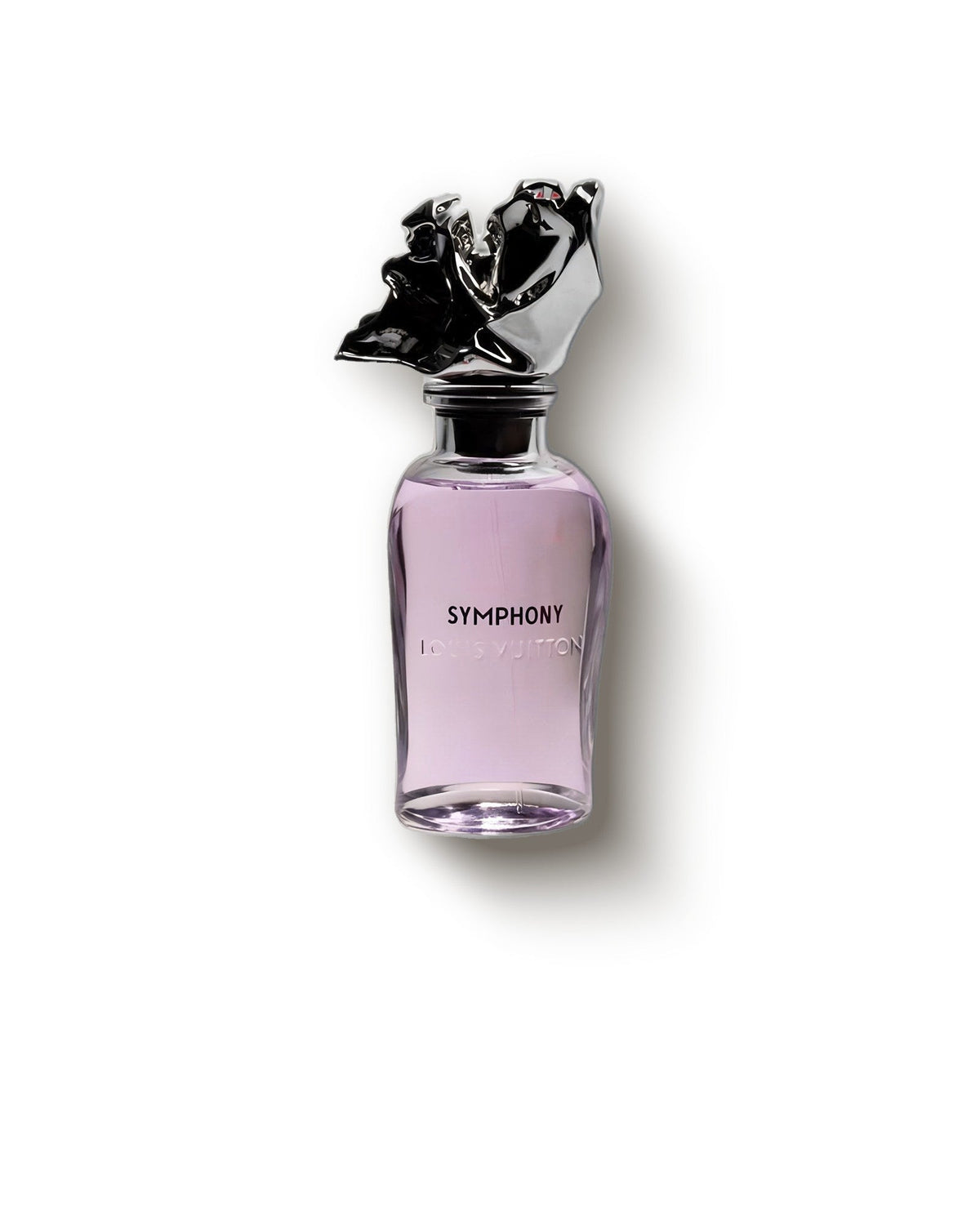
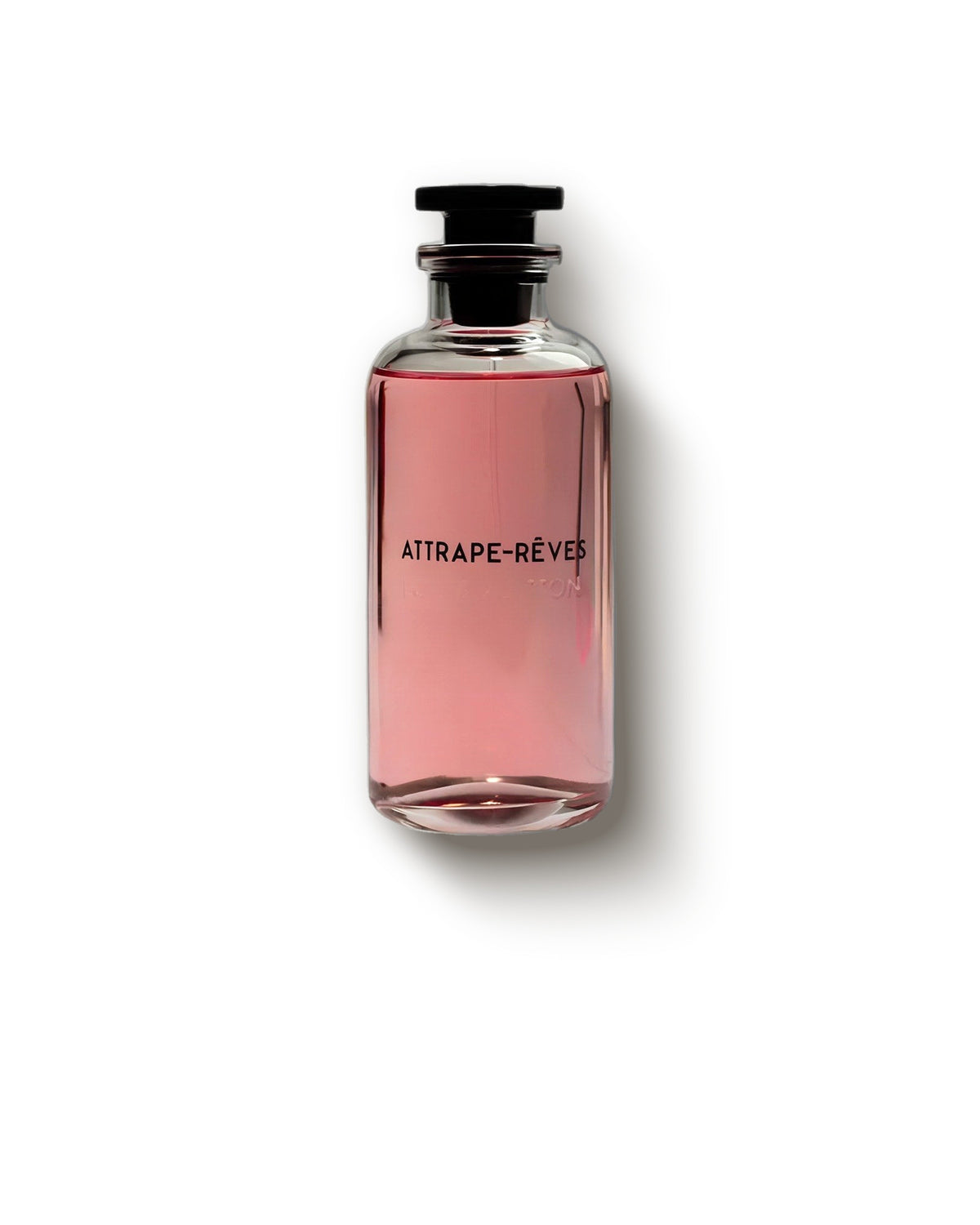
More by this noseSymphonyAttrape-RêvesPacific Chill
The Maison

Ombre Nomade’s smoked oud and Attrape-Rêves’ lychee daydream, so the skin test costs a coffee.
Louis Vuitton perfumery trades in mood and travel, a fragrance meant to feel like a passport stamp rather than a note pyramid. The range swings from sun struck citrus to a dense smoky oud built for a long evening, all of it carrying the same polished, unhurried confidence.
- Origin
- Paris, France
- Founded
- 1854, perfumes relaunched in 2016
- Known for
- Ombre Nomade, Attrape-Rêves

EVERY DECANT
From the original bottle to your door
We buy the original flacon at full retail price, direct from the house.
A medical grade Socorex syringe takes the exact millilitres straight from the flacon.
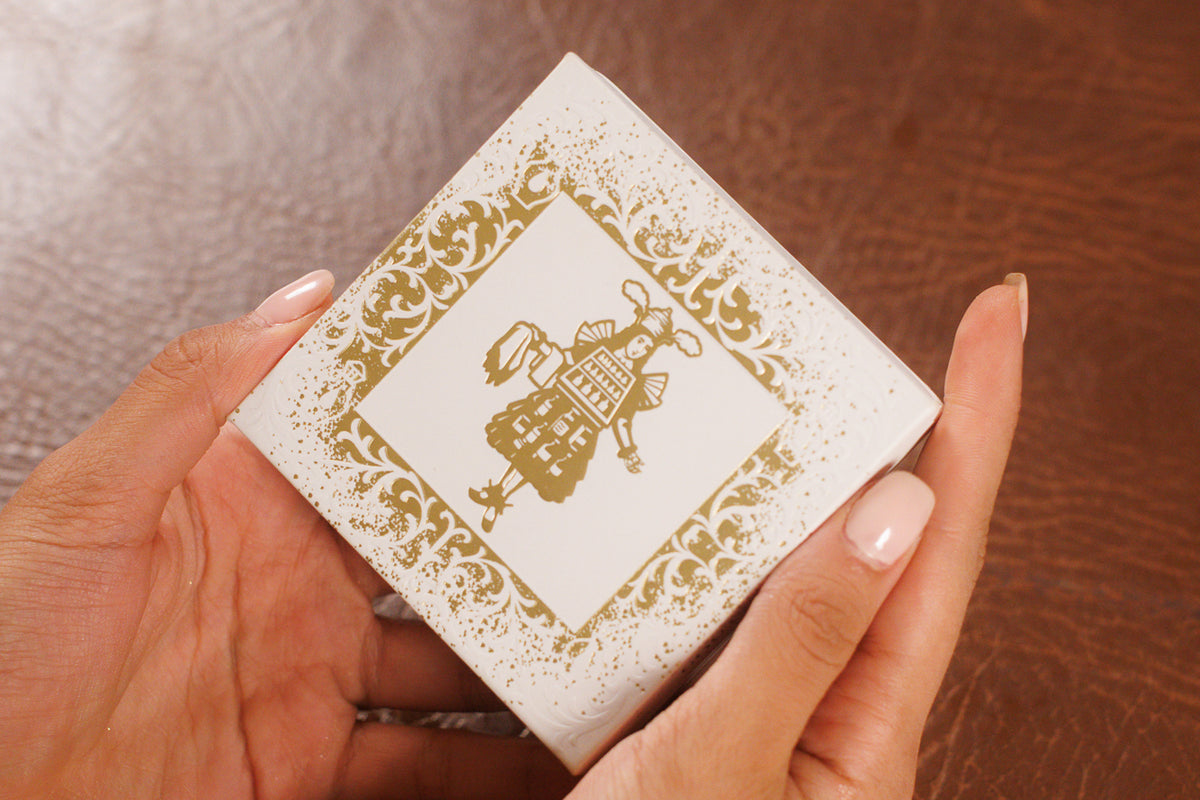
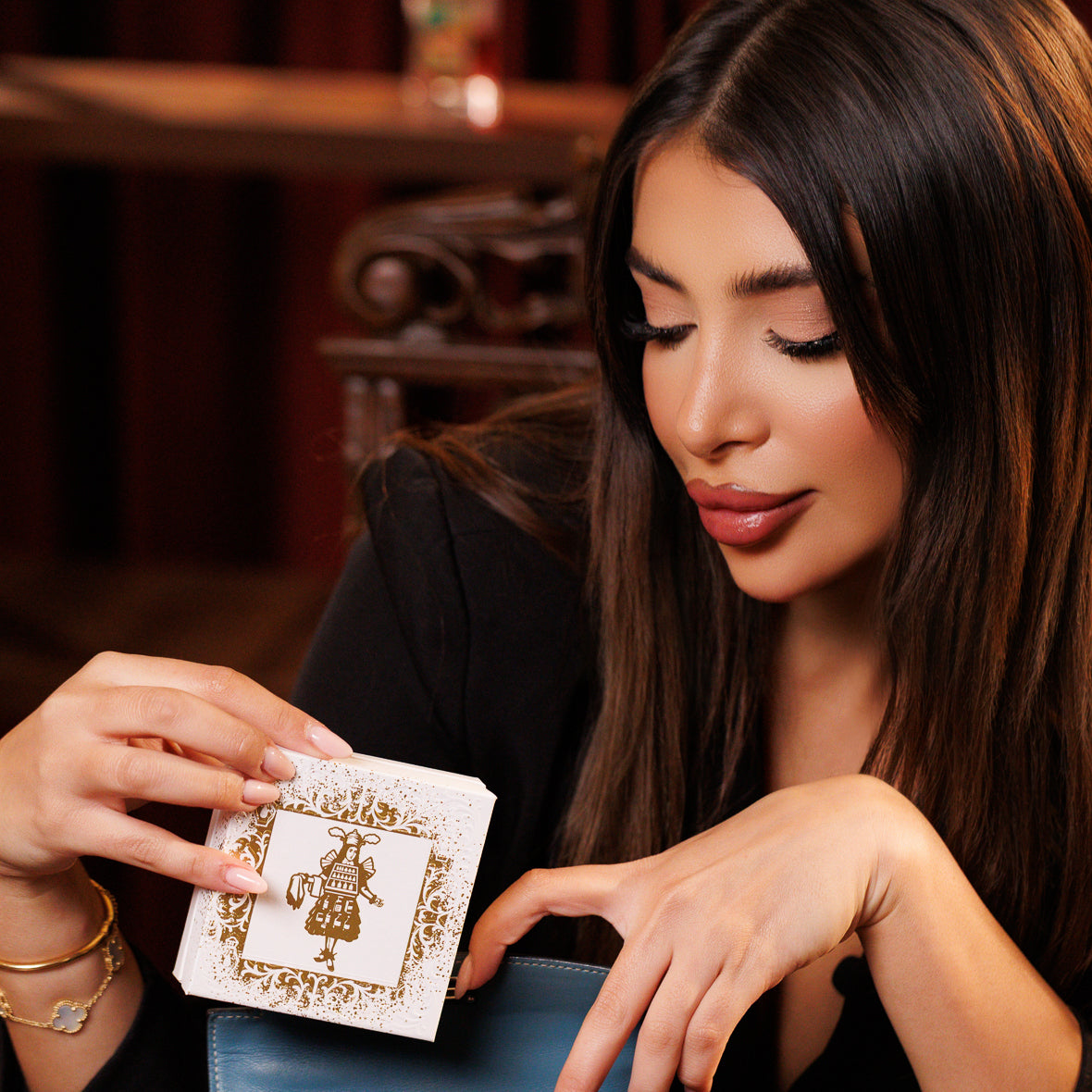
Packed into the hot foiled box and handed to DHL, every duty already paid. How a decant is made
More from Louis Vuitton
You may also like