
Parfums de Marly
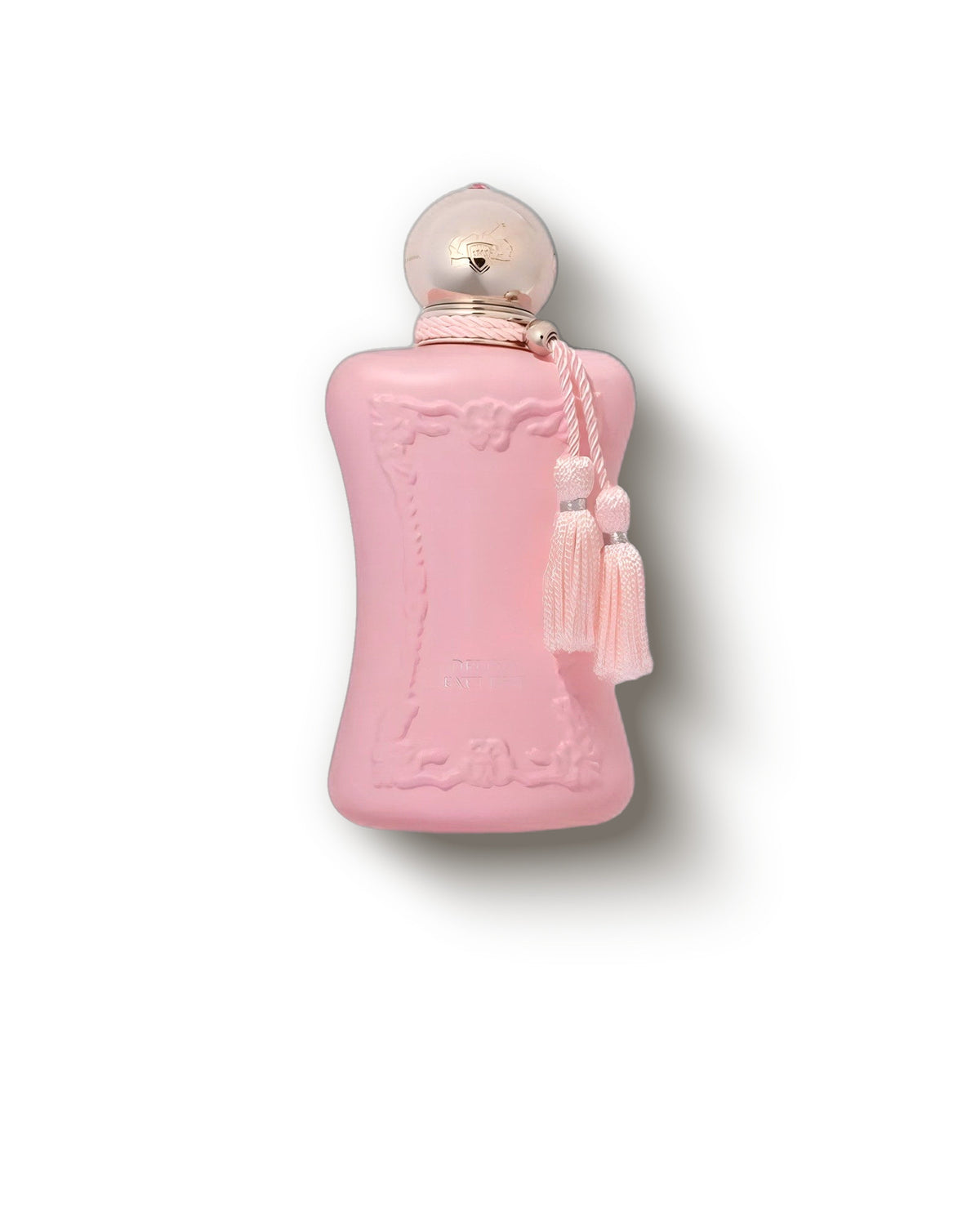
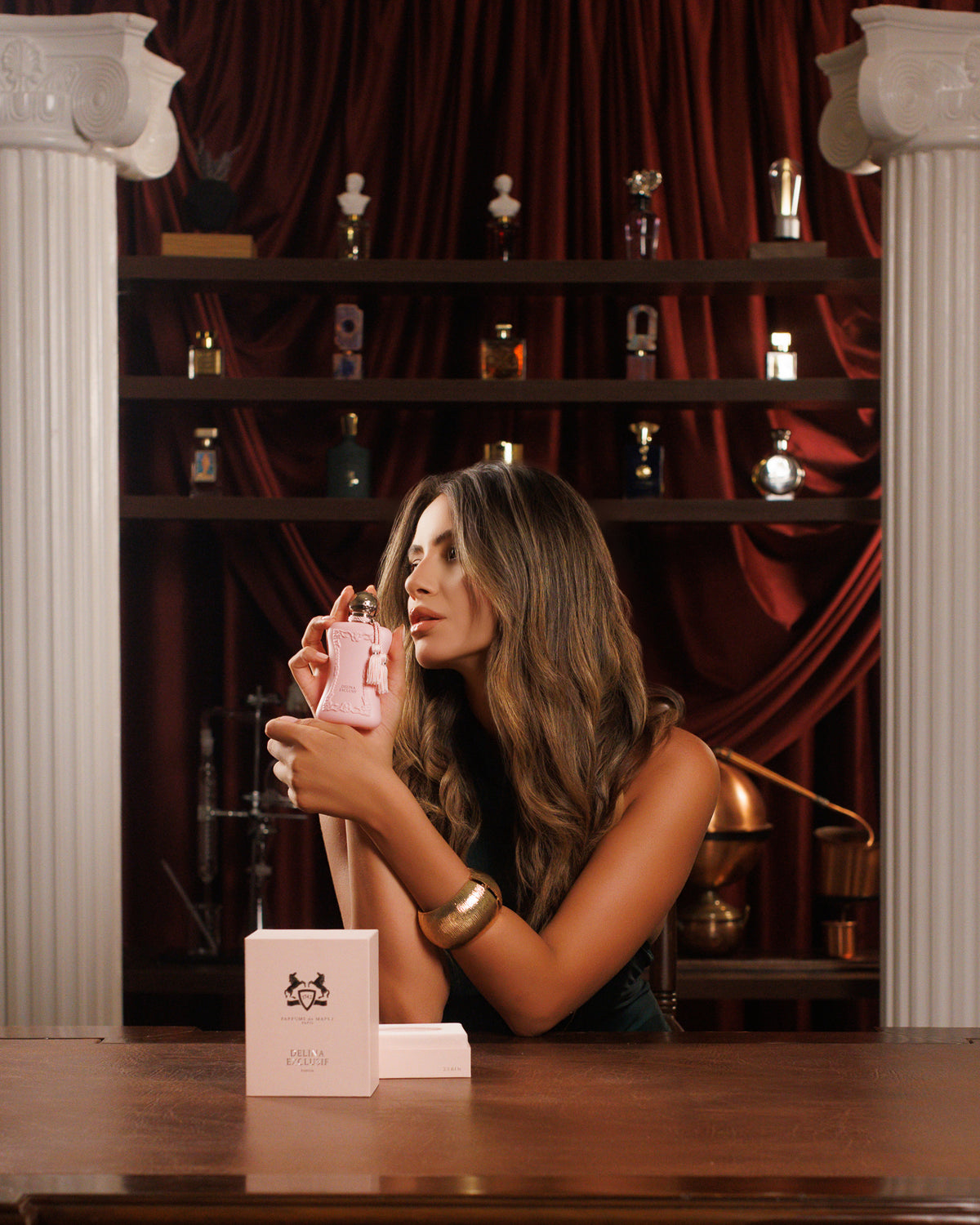
Delina Exclusif
The Story
Delina Exclusif takes the lychee and Damascena rose that made the original Delina a signature and pulls the whole thing darker and less sweet. The fruit is still there, but it sits under musk and vanilla rather than leading.


Rose
Velvet petals, honey and thorn
Dewy and fruity on top, then a jammy, honeyed heart with a green peppery bite underneath. Very little of it is distilled flower. A rose accord is built, and a good one can smell more like a rose than the rose does.


Fruity
Peach skin, not lemon peel
Peach, pear, apple, berry: this is sweetness in the flesh rather than the rind, dewy and nectar-heavy where citrus is sharp and thin. It plays young and slightly greedy, the sort of ripeness you can almost feel running down a wrist.


Vanilla
Cured pod, boozy under the cream
Cured pods, not frosting. The sweetness here is custardy and balsamic, with something dark and boozy under it, closer to rum and woodsmoke than to sugar. It warms everything above it, blunting sharp edges and slowing the whole thing down.


Amber
Resin warmed until it goes sweet
Labdanum, benzoin and vanilla melted together into something sweet but dusky, like tree sap gone soft in the sun with a thread of incense smoke through it. Amber does not sparkle or shout. It sits close to the skin and gives off heat for hours.


Tropical
Sun-warmed fruit and creamy bloom
A juicy swell of ripe mango, pineapple, and overripe banana laced with coconut milk and sticky white petals. It smells of heat on bare skin, suntan lotion, and fruit left to soften in the sun, breezy and indulgent at once.


Fresh
Cold water, open air, washed skin
Cool water, laundered cotton, air with nothing in it yet. The lift can go citrus-zesty or salt-aquatic, but the effect is the same either way: it registers as clean rather than as a scent, the way a room reads different five minutes after you open a window.


Litchi
Pink-skinned fruit that smells of roses and rain
What it is
Rough red shell, translucent white flesh, and nothing worth distilling. The fruit carries too little odorant to work at usable scale, and heat flattens what is there, so every litchi note is built from aroma-chemicals.
How it smells
Juicy and candied at first, almost rosewater, then a cool watery transparency takes over. Ripe tropical sweetness with a rosy, faintly metallic edge and a green dewiness underneath.
In perfumery
It sits at the top of fruity-florals, and its rose-oxide chemistry makes rose, peony and freesia natural partners. That pairing is the fruity-rose accord at the heart of most modern rose bouquets.
Good to know
Litchi and rose share a molecule, cis-rose oxide, which is why the fruit smells faintly floral and slips so easily into rose accords. The same compound gives the Gewurztraminer grape its lychee aroma.


Pear
Almost always built, almost never extracted
What it is
Squeeze a pear and you get juice, not perfume. The esters that carry its smell sit at parts per million and will not survive a still, so almost every pear you smell was assembled, not extracted.
How it smells
Juicy and gently sweet, dewy at the edge, watery-honeyed in the flesh. The built version is crisp and high-definition, one clean shape all the way through. Naturals run blurrier and drift toward green herb and waxy skin.
In perfumery
Pear brightens the tops of fruity-florals, fresh musks and gourmands. The build is pear ester and a few acetates, dosed at one percent or less; more and it takes over. Roman chamomile carries the same facets naturally.
Good to know
Only one of pear ester's four forms smells of pear, which is why it is specified so precisely. Pear was long called impossible to extract, until Firgood, a process that warms the fruit's own water, produced one.


Bergamot
Sparkling citrus light with a bitter edge
What it is
Nobody eats bergamot. It is sour, seedy and disappointing, and almost the whole world's supply grows on one strip of Calabrian coast, farmed purely for the oil pressed cold from its green rind.
How it smells
Zest and green light in the first second, then something rounder than lemon: a floral, tea-like smoothness sitting on a faintly bitter warmth. It burns off fast. What stays behind is a quiet, slightly spiced hum.
In perfumery
It defines eau de cologne, and sits on top of nearly every fougère alongside lavender and oakmoss. Perfumers want the first bright second it gives, and the oil is also what makes Earl Grey smell like Earl Grey.
Good to know
The thing that makes it sparkle can also burn. Bergamot carries bergapten, which leaves skin hypersensitive to sunlight, so perfumers either keep the dose low or reach for a grade with the molecule stripped out.


Turkish Rose
Spiced honey petals from the Isparta valleys
What it is
The valleys around Isparta are planted with damask rose, picked in the dark and finished by mid-morning, before the heat scatters the oil. The still gives rose otto; solvent gives the darker, redder absolute, jammier and fuller.
How it smells
Honey and spice more than dew. Against the brighter Bulgarian rose this one reads warmer and denser, opening fresh and green-edged before settling into something clove-like and deep. There is a peppery flick at the edges.
In perfumery
Put it in the heart and the whole fragrance turns radiant and slightly restless, never one flat rose. Oud, saffron, patchouli and geranium all take it well, in florals, chypres and orientals alike.
Good to know
Three to four tonnes of hand-picked blossoms go into one kilogram of otto. The name is protected as well: Isparta Rose is a registered name of origin covering the provinces of Isparta, Burdur, Afyon and Denizli, and a grower outside that line cannot use it.


Incense
The smell of resin hitting hot coal
What it is
What you are smelling is a change of state: resin meeting heat. The resin is usually olibanum, wept by Boswellia trees in Oman and the Horn of Africa, and perfumers round the effect out with labdanum and styrax.
How it smells
Cool and dry to begin with, sharp enough to read as turpentine, then the smoke arrives: peppery, ashen, faintly sweet. There is a stone-church quality to it, soapy and faintly green, and it stays close to the skin.
In perfumery
It works the way silence works in a room. From the heart into the base it cools florals, sharpens woods and drops a weight of ritual into oriental and chypre structures that would otherwise read as merely rich.
Good to know
Long before anyone wore it, this smoke was among antiquity's costliest imports. It moved along the Arabian caravan roads to temples around the Mediterranean, where burning it was the point: the scent was the offering.


Vanilla
Cured orchid pods, custard and faint smoke
What it is
Green pods come off the orchid vine smelling of almost nothing. The scent is made, not found: months of blanching, sweating in the sun and slow drying before the vanillin appears. Mexico first, Madagascar now.
How it smells
Custard and caramel up front, then something darker underneath: dried fruit and a thread of tobacco smoke. It turns powdery as it dries and sits close to the skin. Real cured vanilla reads deeper than vanillin alone.
In perfumery
Perfumers use it to round off edges. Anything too sharp, too green, too austere gets warmth and body from a vanilla base, which is why it anchors many oriental and gourmand builds alongside tonka, amber, sandalwood and spice.
Good to know
Every flower opens for one day. Miss it and there is no pod, so all of it is pollinated by hand, a trick devised by Edmond Albius, a twelve-year-old enslaved boy on Réunion. Most vanilla flavour today is synthetic.


Musks
One word for two entirely different materials
What it is
Two things answer to the name. A family of synthetic musks, built to carry warmth and softness, does most of the work in perfumery today. Deer musk is the older road, and traditional attar work still runs on it.
How it smells
Deer musk is animalic and heavy up close, and turns warm, sweet and radiantly skin-like the moment it is diluted to a whisper. The synthetics run cleaner: hot-ironed linen, warm cotton, skin rather than fur.
In perfumery
Musk is the floor a composition stands on: it fixes what sits above, stretches the wear and adds that second-skin glow. A lychee or a rose often has one underneath, holding the fruit in place long after it should have faded.
Good to know
One bottle can smell radiant on you and like almost nothing on the next person. A large number of people cannot smell certain synthetic musks at all, a quirk called specific anosmia.


Evernyl
The synthetic ghost of restricted oakmoss
What it is
Oakmoss got restricted, so the industry built a stand-in. Evernyl, from Givaudan, and Veramoss, from IFF, are the same white crystalline powder: made in a lab, no lichen involved, aimed squarely at the smell of moss.
How it smells
Dry, mossy and woody, with a powdery earthiness like bark after rain. Alone it reads thin, a little inky. In a blend it lays a shadowy green floor under everything, quieter than real lichen but the same country.
In perfumery
In the base it holds the mossy backbone of chypres and fougeres, standing in for oakmoss absolute alongside bergamot, patchouli, labdanum and rose. Plenty of reformulated classics keep their dark structure because of it.
Good to know
Two allergens did it: atranol and chloroatranol, both found in the natural moss. Evernyl carries neither, which is the entire point. It is also stubborn: still there on a test strip over a hundred hours later.


Tonka Bean
Warm almond-vanilla sweetness with a hay-tobacco shadow
What it is
Shelled seeds from a South American legume tree go into alcohol, then dry for weeks until coumarin crystallizes across their skins like frost. That frosted bean is what becomes the absolute perfumers use.
How it smells
Vanilla and bitter almond first, then hay, dried tobacco and something toasted. The opening is close to caramelized custard; the drydown goes powdery and boozy, with cinnamon and cut clover in it. Hazier than vanilla, softer than almond.
In perfumery
Between heart and base, it sweetens without turning sharp. Lavender, amber and tobacco all take to it. Coumarin, first pulled out of this seed, built the fougère family, though the 1882 original ran on the synthetic version.
Good to know
Tonka owes most of its scent to coumarin, which American food regulators banned in 1954 after high doses damaged the livers of lab animals. The bean is effectively illegal in a US kitchen and perfectly legal on skin.
Fragrance Character
Litchi and pear open it juicy and almost sweet, cut with bright bergamot so the fruit stays sharp. The heart is where it turns, Turkish rose threaded with smoky incense, which is what separates the Exclusif from the original Delina. Vanilla, tonka, musk and a dry moss hold the drydown close to the skin.


Longevity
how long it stays on skin
The hourglass reads wear time: how many hours the fragrance keeps speaking before it fades. A bar that barely leaves the start means a few fleeting hours. One that runs the full length carries from morning into evening. Treat it as typical, not promised. Oily skin holds scent far longer than dry.


Sillage
the size of its scent trail
Sillage is French for a ship's wake, and that is exactly what this measures: how much of the scent reaches the room instead of staying on you. Low is a whisper only close friends catch. Enormous fills the room, then keeps filling it after you leave.


Experimental
Built to provoke, not to please
Some perfumes are made to be liked. These are made to be argued about: inky tar, hot rubber, fruit on the turn, metal and fur where you expected flowers. The coin glows for a scent that provokes and dims for one that plays it safe, which is sometimes the point.


Office
Polished, and never louder than the room
Scent is manners in a shared room. At this range it should reach the person across the desk and stop there: tidy citrus, soft musk, pale woods, all of it reading competent and considerate. A glowing coin means nobody has to mention it. A dim one means it travels.


Evening
After dark, when it deepens
Dinner, drinks, the night that runs long. Low light is where ambers, resins and smoky woods stop being polite, and where a plush floral finally blooms. A glowing coin means it is waiting for exactly this hour. A dim one means it did its best work in daylight.


Romantic
Close enough to be felt
A fragrance can hum against skin instead of announcing itself across a table. That is the register here: creamy florals, vanilla, soft musk, a thread of spice, warm enough to make someone lean in. The coin glows when a scent sets that mood and dims when it is more practical than seductive.


Formal
Quiet authority in a dressed-up room
A wedding, a ceremony, a room where everyone has thought about their shoes. What works here is structure, not volume: smooth woods, disciplined florals, soft leather. A glowing coin means it holds its posture all evening. A dim one means it is too casual for the room.


Casual
Easy comfort for unhurried days
Errands, coffee, a slow Saturday with nowhere to be. Nothing here has to impress anyone, so the fit is soft and easy: fresh citrus, light woods, a little warmth off the skin. A glowing coin says yes to all that. A dim one means the fragrance is asking for a bigger night.


Day to Night
where its mood naturally falls
A bar running from sun to moon, reading the hour the fragrance was made for. The more of it that stays gold, the more the scent belongs to daylight and open air. The further the blue reaches back toward the sun, the deeper and warmer it turns: evening, candlelight, low rooms.


Winter
Warmth that carries through cold air
Cold air mutes a fragrance and slows it down, which is why winter belongs to the dense and the warm: resin, smoke, vanilla, leather, ambered spice. The bar reads how well this one pushes back, glowing against the chill instead of thinning out in it.


Spring
Fresh blooms in mild, rising warmth
Mild, humid air lifts a light composition, so the season belongs to dewy florals, green stems, soft powder and citrus you can see through. Alive rather than heavy. The further the green runs along the bar, the more comfortably this one wears in that weather.


Summer
Bright and airy in real heat
Heat does the projecting for you, which is why the wrong perfume turns unbearable by noon. What survives is cool and breathable: sharp citrus, salt air, aromatic herbs, water. Things that refresh instead of cloy. A short bar here means save it for cooler months.


Fall
Spiced warmth for cooling days
As the air cools, the rich materials stop smothering and start reading clearly: dry woods, warm spice, tobacco, amber, fruit gone golden. It is the season perfume turns contemplative. The bar fills according to how naturally this one settles into crisp, cooling days.
Best Worn
Made for autumn and winter evenings and dressed-up occasions, when the rose and incense carry further than the opening fruit suggests and settle close as the night goes on.
Choose options
The Vibe


The Nose

Quentin Bisch
Perfumer
Givaudan perfumer based in Paris. He spent a year as an assistant perfumer at Robertet in Grasse under Michel Almairac, then trained at the Givaudan Perfumery School. His work includes Parfums de Marly Delina, Chloé Nomade, Ex Nihilo Fleur Narcotique and Mugler Angel Muse.
More by this noseGuidance 46ValayaHibiscus Mahajád
The Maison

Château de Marly glamour with modern polish, poured to order.
Parfums de Marly wears its opulence like a court gown, plush and rounded and unmistakably rich, the kind of scent that fills a room before you do. There is a glossy, well fed quality to the house, fruit polished to a shine and florals set against warm resins.
- Origin
- Paris, France
- Founded
- 2009
- Known for
- Layton, Delina, Herod

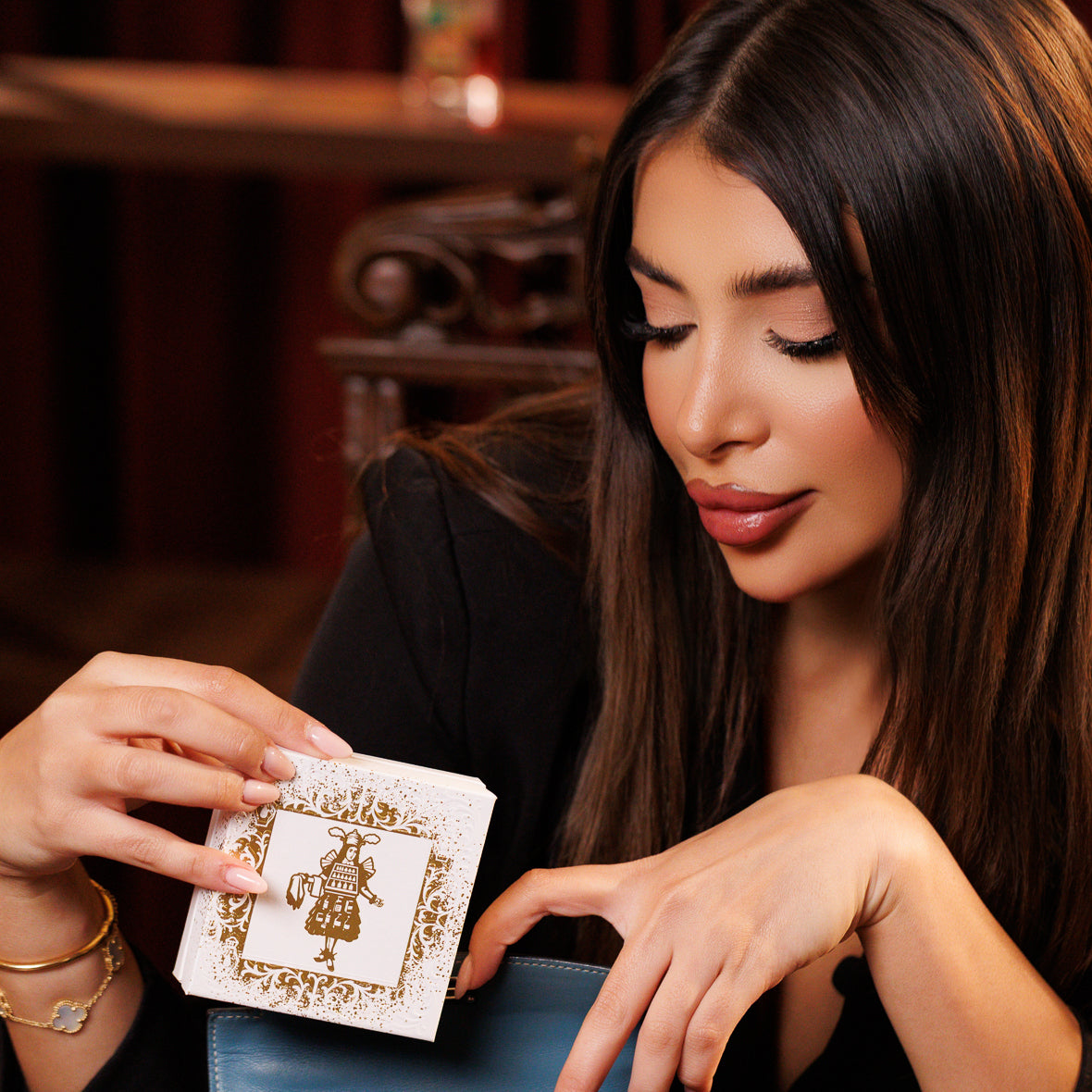
EVERY DECANT
From the original bottle to your door
We buy the original flacon at full retail price, direct from the house.
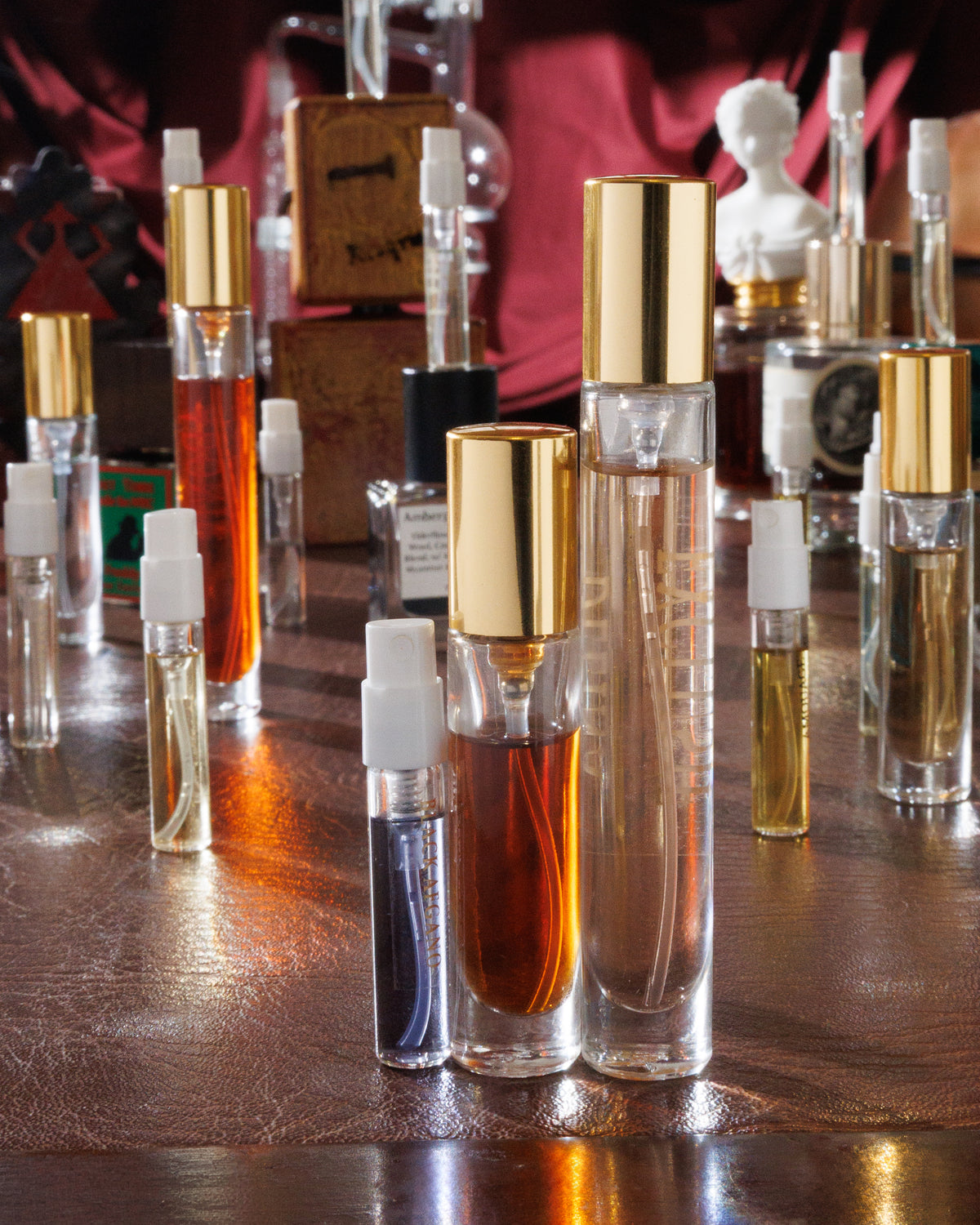
A medical grade Socorex syringe takes the exact millilitres straight from the flacon.
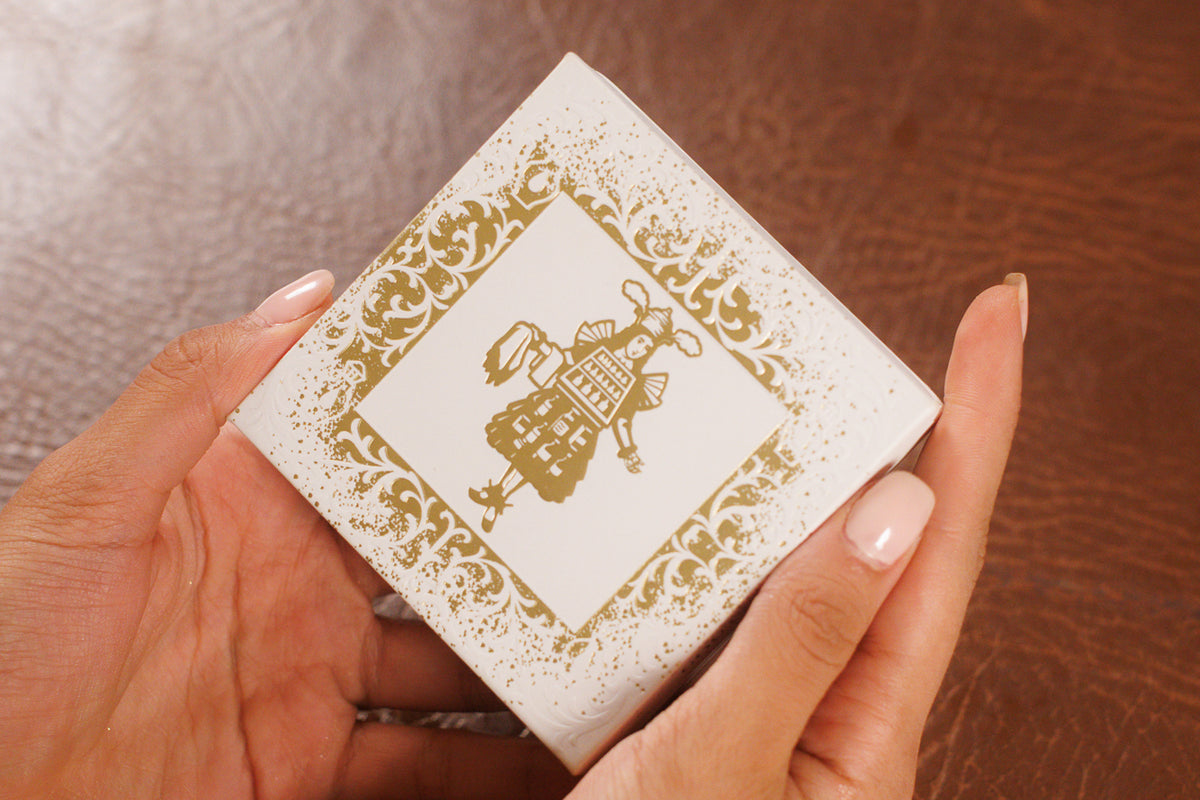
Packed into the hot foiled box and handed to DHL, every duty already paid. How a decant is made
More from Parfums de Marly
You may also like