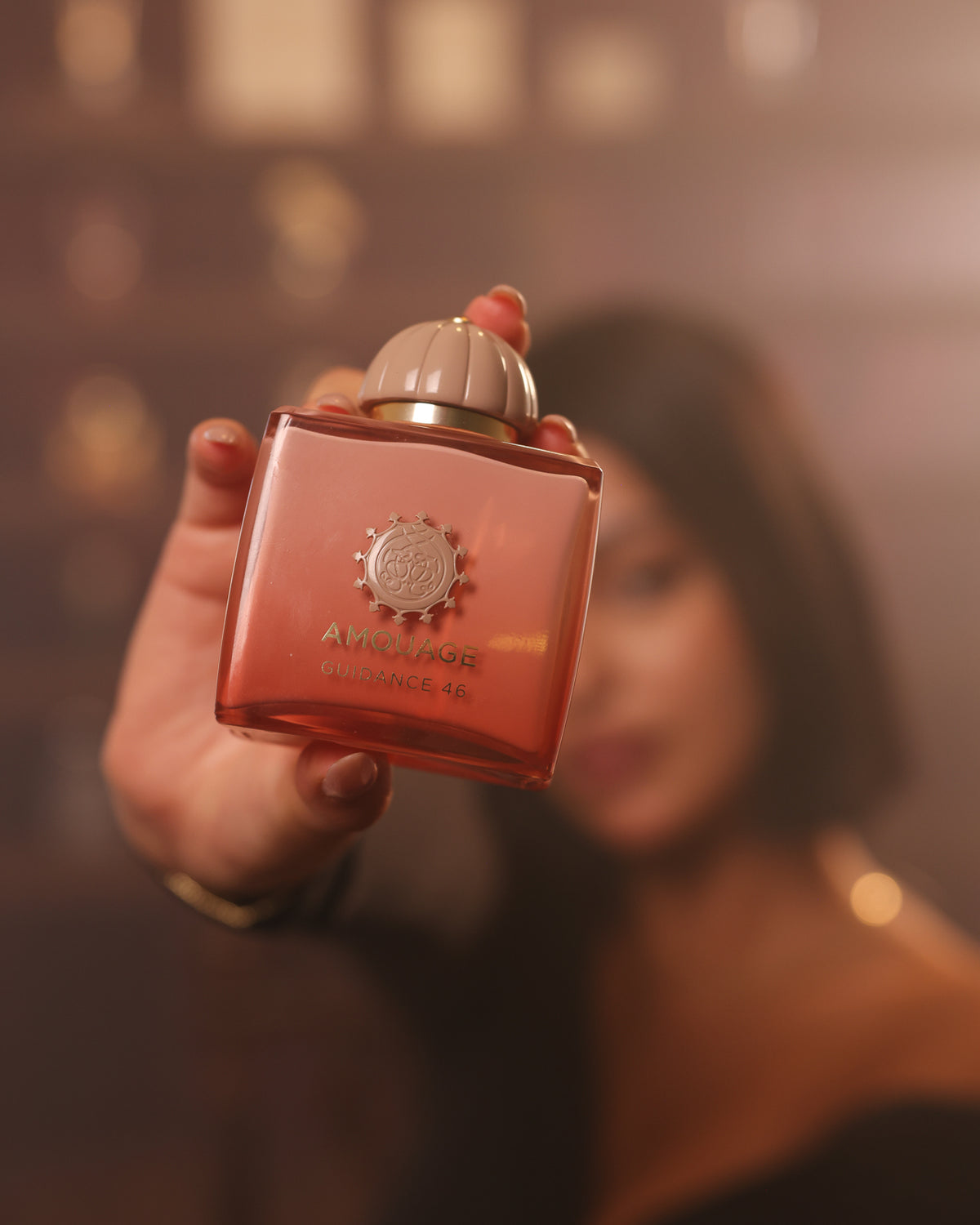
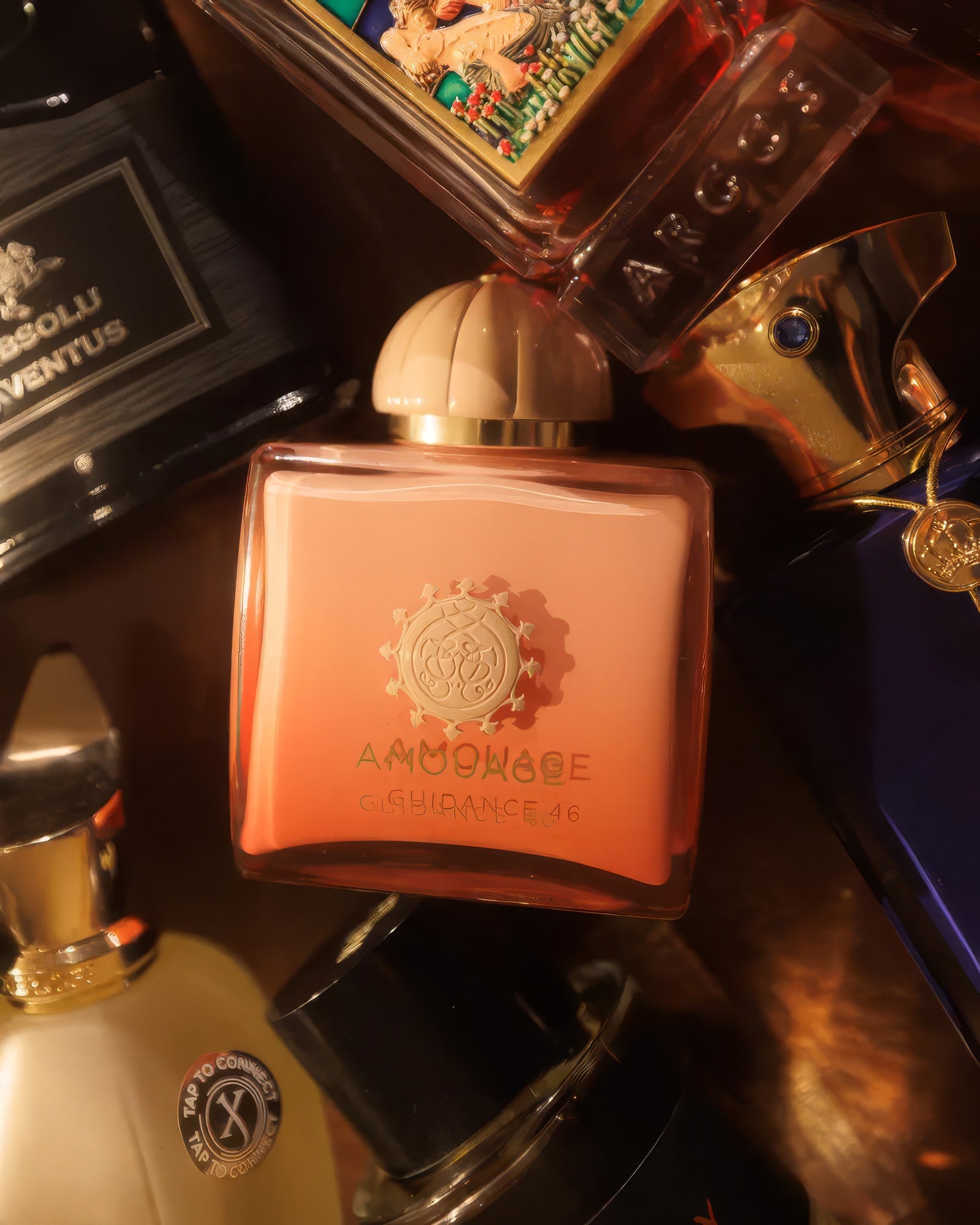
Amouage
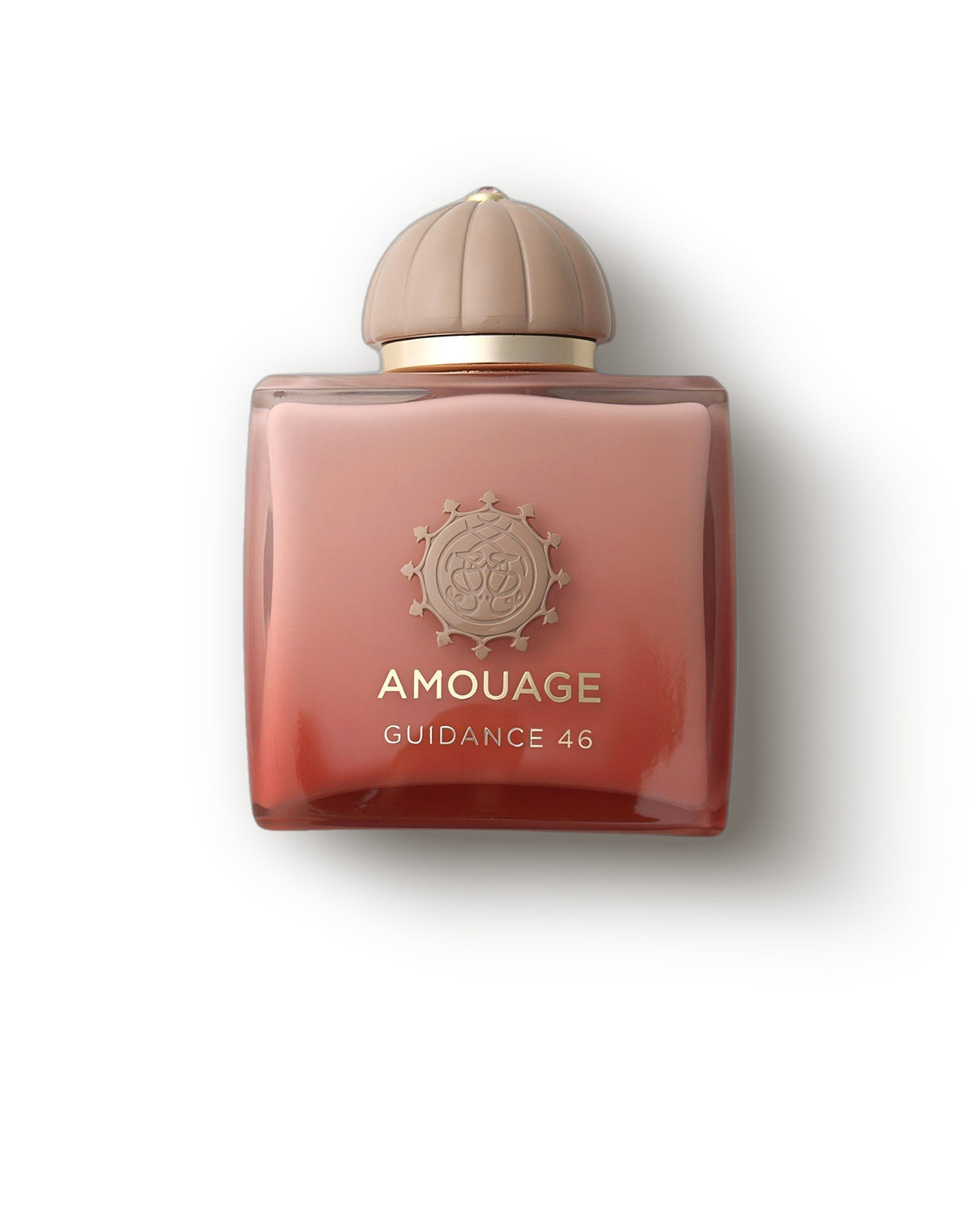
Guidance 46
The Story
Guidance 46 carries 46 percent perfume oils, one of the Exceptional Extraits Amouage built by going back to the original perfumer, then macerated for two weeks and matured for two more. Quentin Bisch balances saffron's leathery spice against pear and hazelnut, and at this strength the wood-amber drydown does most of the work.


Woody
Dry grain of cut timber
The smell of cedar shavings, sandalwood, and dry vetiver roots, a sanded, resinous warmth with a faint pencil-box rasp. It feels grounded and composed, the quiet backbone that makes a scent read as serious and lasting.


Fruity
Peach skin, not lemon peel
Peach, pear, apple, berry: this is sweetness in the flesh rather than the rind, dewy and nectar-heavy where citrus is sharp and thin. It plays young and slightly greedy, the sort of ripeness you can almost feel running down a wrist.


Nutty
the moment nuts turn golden
Skins toasting in a warm pan: hazelnut, almond and walnut going brown, with a buttery praline softness and a whisper of marzipan behind them. It reads cozy and edible, warm rather than sugary.


Floral
A whole garden, never one flower
Not one flower but the impression of many, usually rose, jasmine and orange blossom leaning on each other until no single one is recognizable. Sweet, dewy, faintly powdery, with nectar underneath. It is what people mean when a perfume smells like flowers and they cannot say which.

Warm Spicy
Glowing embers of the spice drawer
The rounded heat of cinnamon, clove, and nutmeg, dry and slightly resinous, like a baking pantry rather than a sharp kitchen. It creates a flushed, enveloping warmth that feels intimate and cool-weather, hugging the skin from within.


Amber
Resin warmed until it goes sweet
Labdanum, benzoin and vanilla melted together into something sweet but dusky, like tree sap gone soft in the sun with a thread of incense smoke through it. Amber does not sparkle or shout. It sits close to the skin and gives off heat for hours.


Rose Water
The clear dew left behind by roses
What it is
The water left in the still once damask blossoms have given up their oil. It holds everything the flower released that the oil could not carry, and Iran, Bulgaria and Turkey have been making it for centuries.
How it smells
Rose with the volume down and the windows open. Petally, faintly green, gently honeyed, without the jam or the metallic edge an absolute carries. Cool and almost edible, like walking into scented mist.
In perfumery
A gauzy floral accent at the top or heart, bringing dewiness and a hammam softness. It goes with citrus, neroli, almond and saffron, and it is the effect behind the transparent modern roses that pair petals with lychee.
Good to know
It is as much a kitchen staple as a perfume idea: Turkish delight, baklava, Persian sweets, and rose water sprinkled at weddings and shrines. Every spring Kashan, in Iran, holds a festival for the distillation itself, golabgiri.


Pear
Almost always built, almost never extracted
What it is
Squeeze a pear and you get juice, not perfume. The esters that carry its smell sit at parts per million and will not survive a still, so almost every pear you smell was assembled, not extracted.
How it smells
Juicy and gently sweet, dewy at the edge, watery-honeyed in the flesh. The built version is crisp and high-definition, one clean shape all the way through. Naturals run blurrier and drift toward green herb and waxy skin.
In perfumery
Pear brightens the tops of fruity-florals, fresh musks and gourmands. The build is pear ester and a few acetates, dosed at one percent or less; more and it takes over. Roman chamomile carries the same facets naturally.
Good to know
Only one of pear ester's four forms smells of pear, which is why it is specified so precisely. Pear was long called impossible to extract, until Firgood, a process that warms the fruit's own water, produced one.
Hazelnut
Toasted, buttery, one step from praline
What it is
Press a hazelnut and you get almost nothing fragrant. The smell only exists after roasting, so perfumery skips the nut and rebuilds the toasted part from aroma-chemicals. The nuts themselves are grown mostly in Turkey, with Italy next.
How it smells
Warm, buttery and roasted, with toasted bread and praline and a faint cocoa shadow. Rounded rather than sharp. It lands somewhere between coffee, hot milk and sugar caught just before it burns.
In perfumery
From the heart down it makes a fragrance edible without making it sugary, sitting with coffee, cocoa, vanilla, tonka and caramel. Praline gourmands lean on it for the warm, dense part of a dessert-shop trail.
Good to know
Much of the world's hazelnut crop ends up in chocolate spread, which is why the roasted smell reads as gianduja first. The toastiness comes from pyrazines, the molecules behind coffee, cocoa and a crust of bread.


Bitter Almond
Marzipan sweetness with a whisper of danger
What it is
Crush a raw bitter almond and it gives off hydrogen cyanide. The marzipan smell is benzaldehyde, the molecule hiding in those kernels and in apricot and peach stones and cherry pits.
How it smells
Sweet, nutty, unmistakably marzipan, with a cool cherry-stone bite and a nod to amaretto. A faint powderiness sits under the nut. It arrives bright and dries into something soft and creamy.
In perfumery
Perfumers keep it in the heart, where it does gourmand work without turning into dessert, sitting easily with vanilla, tonka and powdery iris. Paired with heliotropin it builds the marzipan-cherry centre of dark gourmand orientals.
Good to know
Detective novels are right about one thing: cyanide is often described as smelling of almonds. What you smell in a bottle is not. Distilled bitter almond oil is treated afterwards to strip the toxin out and leave only the fragrant part behind, and synthetic benzaldehyde never had any.


Frankincense
Golden tears hardened on a cut trunk
What it is
A scored Boswellia bleeds a milky sap that hardens over weeks into golden tears. The sacra trees of Oman and Somalia give the most prized resin. Steam or solvent turns the tears into oil.
How it smells
Brighter than you expect from something called incense: cool, lemony, almost pine-fresh, with a peppery lift. Underneath it is dry and balsamic, and it ends in the warm dusty smoke you already know.
In perfumery
It does something odd for a resin: it makes heavy things lighter. Sitting in the heart and base, it opens up oud, labdanum and thick oriental accords, and gives rose a cool, quiet space to stand in.
Good to know
The trees are in trouble. Wild Boswellia stands are thinning under over-tapping, drought and grazing, and the long-term supply of a resin the world has burned for thousands of years is now a real question.

Pink Pepper
Bright rosy berries with a spice fizz
What it is
It is not pepper. The rose-colored berries come from a South American tree with no botanical link to the pepper vine at all, dried and then steam-distilled or extracted with CO2.
How it smells
Rosier and fruitier than black pepper, with only a prickle of heat. Crushed berries, a juniper-ish resin, a flick of citrus. It flashes on the opening and is gone quickly, leaving a gentle warm spiciness behind.
In perfumery
Perfumers reach for it when a composition needs spice without heat. It puts a rosy fizz over florals, freshens woods and ambers, and sits well with bergamot and patchouli. The fizz is a signature of the modern fruity-floral.
Good to know
The family it actually belongs to is the cashews, close enough that people who react to cashew or mango sometimes react to these berries too. Worth knowing before you cook with them.


Rose
Dewy sweetness over a green, peppery bite
What it is
Most perfumery rose is one of two: damascena from Bulgaria and Turkey, centifolia from Grasse. Whole blossoms are picked by hand from before sunrise until about ten thirty, then distilled into otto or solvent-extracted into absolute.
How it smells
Fresh, honeyed, green at the edges, with something dewy still on it. Spice and fruit sit underneath, and in the absolute a jammy darkness. Otto opens crisp and bright; absolute is warmer, smokier, closer to skin.
In perfumery
Rose behaves less like one note than a whole palette. It carries a perfume alone or vanishes into a chypre, turns dark against oud and patchouli, goes powdery beside violet, and holds a floral heart together.
Good to know
The two extractions are not the same bargain. Otto takes three to four thousand kilograms of blossoms to yield one kilogram of oil. Absolute, pulled out with solvent, gets there on roughly a seventh of the flowers.


Osmanthus
Apricot and soft leather in a tiny gold flower
What it is
Tiny orange-gold flowers that China has scented its tea and its wine with for centuries. They are gathered by hand, drawn into a waxy concrete with solvent, then washed down to the absolute perfumers buy.
How it smells
Apricot first, ripe and almost jammy, then peach and black tea. Give it a minute and suede appears, soft and slightly smoky, the way a well-worn glove smells. It dries toward raisin rather than sugar.
In perfumery
A heart note that sits exactly between fruit, flower and leather, which is why it can sweeten a composition without any sugar in it. Black tea, rose and apricot accords go with it naturally; so does actual leather.
Good to know
It takes about a tonne of those minuscule flowers to make one kilo of absolute. The tree belongs to the harvest moon and to love there, a lot of meaning for a flower this small.

Saffron
Crimson threads breathing leather, honey and dry hay
What it is
Three crimson threads sit inside each autumn crocus flower, and a hand pulls every one. Dried, those stigmas are steeped into a tincture or extracted into an absolute. That is the entire supply chain.
How it smells
Hay and honey and warm toast first, then something metallic and leathery underneath, the work of a molecule called safranal. It dries down into suede, tobacco and dusty amber, bitter at the edges.
In perfumery
It lives in the heart, glowing reddish, the hinge between spice and leather. Perfumers wed it to rose so often the pairing became a genre, and entire leather accords get built on it alone.
Good to know
A kilogram of saffron costs about 150,000 hand-picked flowers and many days of stooped labor, which is why almost none of it reaches perfume. Most saffron notes are built from synthetic safranal instead.

Jasmine Sambac
Tea-green jasmine that opens after dark
What it is
The flowers open after dark, which is when they smell strongest, so pickers take them as buds in the early morning, before they unfurl. Solvent extraction gives a waxy concrete, and washing that with alcohol gives the absolute.
How it smells
Greener and more tea-like than the grandiflorum kind, and much less fruity. It starts crisp and a little waxy, almost banana-tinged, then warms into indolic sweetness. That indole is the animal in it: heady up close, still luminous.
In perfumery
A heart note that gives white-floral bouquets their body and their lift. It works with rose, tuberose, sandalwood and green tea, rounds off sharp citrus, and some night-blooming soliflores are built on almost nothing else.
Good to know
This is sampaguita, the national flower of the Philippines, strung into garlands and used to scent Chinese tea. Tiny blooms picked by hand every morning across a long season put the absolute among the costliest florals.


Sandalwood
Creamy wood, pulled up by the roots
What it is
The richest oil sits in the roots, so the whole tree is pulled up and steam-distilled rather than felled. Mysore in southern India was the classic source, until decades of overcutting pushed the wild trees to the edge.
How it smells
Milk and warm wood, with a rosy, almost buttery edge and nothing sharp at all. What surprises people is how little it moves: no bright opening, no dry-down drama, just the same quiet glow for hours.
In perfumery
It works twice over: as a smell, and as a fixative that holds rose or jasmine in place. Sandalwood is also graded, and the darkest, densest, most resin-heavy old heartwood carries its own name: red meat.
Good to know
A heart worth taking takes about thirty years to form. Plantations of the same species in Western Australia now supply a large share of the world's oil, close to the old Mysore chemistry if not quite its creaminess.


Akigalawood
Patchouli leftovers remade as peppery wood
What it is
The patchouli industry throws off a residue nobody wanted. Givaudan put fermentation-derived enzymes to work on it in a biotech process and got a wood that had never existed before. It counts as natural.
How it smells
Patchouli with the cellar taken out. What is left is dry and warm, peppery in a pink-pepper way, with a thin line of agarwood running through it. Transparent where oud is dense, and unmistakably contemporary.
In perfumery
It runs from heart to base, giving woody radiance and an oud impression without the animalic weight, which is why it turns up in so much modern niche. Pink pepper, rose, leather and amber are its usual company.
Good to know
A captive material, so only perfumers inside Givaudan can use it: every fragrance that smells of it traces back to one house. It has become the flagship example of upcycling in fragrance.


Vanilla
Cured orchid pods, custard and faint smoke
What it is
Green pods come off the orchid vine smelling of almost nothing. The scent is made, not found: months of blanching, sweating in the sun and slow drying before the vanillin appears. Mexico first, Madagascar now.
How it smells
Custard and caramel up front, then something darker underneath: dried fruit and a thread of tobacco smoke. It turns powdery as it dries and sits close to the skin. Real cured vanilla reads deeper than vanillin alone.
In perfumery
Perfumers use it to round off edges. Anything too sharp, too green, too austere gets warmth and body from a vanilla base, which is why it anchors many oriental and gourmand builds alongside tonka, amber, sandalwood and spice.
Good to know
Every flower opens for one day. Miss it and there is no pod, so all of it is pollinated by hand, a trick devised by Edmond Albius, a twelve-year-old enslaved boy on Réunion. Most vanilla flavour today is synthetic.
Ambrette
The one musk that grows on a bush
What it is
The seeds of a mallow, a scruffy hibiscus relative, smell of musk before anyone does anything to them. Steam distillation, CO2 or a solvent wash for an absolute all draw out the same musk, carried by ambrettolide.
How it smells
Warm, powdery and closer to skin than any synthetic quite manages. There is a pear-like fruitiness in it, a nutty amber sweetness, a touch of iris. It blooms slowly, and reads as a person rather than a perfume.
In perfumery
A base note that works as an exalter: it rounds and lifts whatever sits above it, giving florals, iris and gourmands a skin-warm undertow. Nothing else from a plant smells this much like musk.
Good to know
Yields are tiny, which puts ambrette among the costliest things on a perfumer's shelf. Its ambrettolide is close kin to muscone, the musk molecule itself, which is why a seed does the job at all.


Labdanum
Sticky amber resin scraped from sun-baked rockrose
What it is
A Mediterranean rockrose sweats gum through its leaves in summer, dark and sticky enough to glue your fingers together. Harvesters boil or scrape the branches to get it off, then extract that crude gum into absolute and resinoid.
How it smells
Balsamic warmth, then leather, dried fruit, honey and a curl of smoke. There is something almost ambergris-like in the opening. Hours later it has settled into brown tobacco and worn skin, still going.
In perfumery
Take labdanum out and most amber accords collapse; it is what vanilla and benzoin get built on. It fixes a formula in place, gives chypres and leathers their depth, and sits well with rose, oakmoss and incense.
Good to know
Before there was distillation, there were goats. Herds browsed through cistus scrub all summer, the gum matted into their beards and thighs, and shepherds combed it out. Labdanum is one of the oldest aromatic materials still in use.


Ambergris
A warm, salty glow that hangs in the air
What it is
On a note list, ambergris is almost always an accord built on Ambroxan-type molecules, since real ambergris is rare and turns up only by chance, on a shoreline or at sea.
How it smells
These accords smell warm, salty and skin-like, closer to a glow than to a smell. A dry mineral sweetness runs through them, with hints of driftwood, blond woods and sun-warmed skin, and no sharp edge anywhere.
In perfumery
An ambergris note works from the base. It lends radiance and hold, pushes woods and ambers outward and gives a composition the breathing, sun-warmed quality that so many modern scents share.
Good to know
Ambroxan-type molecules work in a curious way: right on the skin they can seem faint, yet a step away they fill the air. They are also remarkably long-lasting, often clinging to a scarf or a jumper long after the skin has let go.


Georgywood
Dry radiant wood that clings close to skin
What it is
A Givaudan captive, built in a laboratory with nothing of plant or animal anywhere in it. It belongs to the same family as Iso E Super and does much the same job with a lighter hand.
How it smells
Clean, dry and woody, cedar with a cool minty-green flicker and a trace of sweetness. It reads smoother and more transparent than Iso E Super, and stronger. Mostly it makes skin smell like warm, breathable wood.
In perfumery
A base note and fixative adding woody volume and a soft glow rather than a shape of its own. Ambers, musks, vetiver and florals absorb it invisibly. It sits under a great many transparent modern woods.
Good to know
Georgywood exists as two mirror-image forms, identical by every ordinary measure. The nose catches one of them at concentrations more than a hundred times lower than the other. Same atoms, same weight, one of them all but silent.

Cypriol
Dark smoky root from an Indian riverbed
What it is
Nagarmotha, a sedge that grows wild in the marshy riverbeds of Madhya Pradesh. The roots are dug up, dried, crushed and steam-distilled into a thick, dark oil, and the yield is low.
How it smells
Woody and earthy with a cold smoky underbelly, drier than patchouli and rootier than vetiver. A peppery sharpness first, then leather, dry amber and a little tar. It ends dark, mineral and ashy, close to burnt agarwood.
In perfumery
Base note and natural fixative, the affordable stand-in when a formula wants oud. It works with patchouli, saffron, cedar and incense, and holds up most of the smoky woody blends that lean agarwood.
Good to know
In India the same rhizome has long been used in Ayurvedic medicine and in attar making. Its sister sedge, meanwhile, is a stubborn farm weed cursed by growers worldwide.
Fragrance Character
Pear and almond give a juicy, marzipan lift to the opening; the heart is a full, saffron-spiced rose with osmanthus and jasmine; and the base is rich and enveloping, creamy sandalwood, ambergris, labdanum and vanilla.


Longevity
how long it stays on skin
The hourglass reads wear time: how many hours the fragrance keeps speaking before it fades. A bar that barely leaves the start means a few fleeting hours. One that runs the full length carries from morning into evening. Treat it as typical, not promised. Oily skin holds scent far longer than dry.


Sillage
the size of its scent trail
Sillage is French for a ship's wake, and that is exactly what this measures: how much of the scent reaches the room instead of staying on you. Low is a whisper only close friends catch. Enormous fills the room, then keeps filling it after you leave.


Experimental
Built to provoke, not to please
Some perfumes are made to be liked. These are made to be argued about: inky tar, hot rubber, fruit on the turn, metal and fur where you expected flowers. The coin glows for a scent that provokes and dims for one that plays it safe, which is sometimes the point.


Office
Polished, and never louder than the room
Scent is manners in a shared room. At this range it should reach the person across the desk and stop there: tidy citrus, soft musk, pale woods, all of it reading competent and considerate. A glowing coin means nobody has to mention it. A dim one means it travels.


Evening
After dark, when it deepens
Dinner, drinks, the night that runs long. Low light is where ambers, resins and smoky woods stop being polite, and where a plush floral finally blooms. A glowing coin means it is waiting for exactly this hour. A dim one means it did its best work in daylight.


Romantic
Close enough to be felt
A fragrance can hum against skin instead of announcing itself across a table. That is the register here: creamy florals, vanilla, soft musk, a thread of spice, warm enough to make someone lean in. The coin glows when a scent sets that mood and dims when it is more practical than seductive.


Formal
Quiet authority in a dressed-up room
A wedding, a ceremony, a room where everyone has thought about their shoes. What works here is structure, not volume: smooth woods, disciplined florals, soft leather. A glowing coin means it holds its posture all evening. A dim one means it is too casual for the room.


Casual
Easy comfort for unhurried days
Errands, coffee, a slow Saturday with nowhere to be. Nothing here has to impress anyone, so the fit is soft and easy: fresh citrus, light woods, a little warmth off the skin. A glowing coin says yes to all that. A dim one means the fragrance is asking for a bigger night.


Day to Night
where its mood naturally falls
A bar running from sun to moon, reading the hour the fragrance was made for. The more of it that stays gold, the more the scent belongs to daylight and open air. The further the blue reaches back toward the sun, the deeper and warmer it turns: evening, candlelight, low rooms.


Winter
Warmth that carries through cold air
Cold air mutes a fragrance and slows it down, which is why winter belongs to the dense and the warm: resin, smoke, vanilla, leather, ambered spice. The bar reads how well this one pushes back, glowing against the chill instead of thinning out in it.


Spring
Fresh blooms in mild, rising warmth
Mild, humid air lifts a light composition, so the season belongs to dewy florals, green stems, soft powder and citrus you can see through. Alive rather than heavy. The further the green runs along the bar, the more comfortably this one wears in that weather.


Summer
Bright and airy in real heat
Heat does the projecting for you, which is why the wrong perfume turns unbearable by noon. What survives is cool and breathable: sharp citrus, salt air, aromatic herbs, water. Things that refresh instead of cloy. A short bar here means save it for cooler months.


Fall
Spiced warmth for cooling days
As the air cools, the rich materials stop smothering and start reading clearly: dry woods, warm spice, tobacco, amber, fruit gone golden. It is the season perfume turns contemplative. The bar fills according to how naturally this one settles into crisp, cooling days.
Best Worn
Made for dressed-up winter and autumn occasions, when its saffron-spiced rose and creamy, marzipan warmth carry from a refined daytime gathering through an intimate evening worn close.
Choose options
The Vibe


The Nose

Quentin Bisch
Perfumer
Givaudan perfumer based in Paris. He spent a year as an assistant perfumer at Robertet in Grasse under Michel Almairac, then trained at the Givaudan Perfumery School. His work includes Parfums de Marly Delina, Chloé Nomade, Ex Nihilo Fleur Narcotique and Mugler Angel Muse.
More by this noseDelina ExclusifValayaHibiscus Mahajád
The Maison

Frankincense and rose at royal scale, sampled without the leap of faith a full bottle asks for.
Amouage does not do quiet. Every bottle feels built for a room you have to earn your way into, all high ceilings, incense in the air and light coming through something precious. The house pours frankincense, rose and oud like it has an endless supply, and the results wear big and last long without ever tipping into loud for its own sake.
- Origin
- Muscat, Oman
- Founded
- 1983
- Known for
- Frankincense, rose, oud

EVERY DECANT
From the original bottle to your door
We buy the original flacon at full retail price, direct from the house.
A medical grade Socorex syringe takes the exact millilitres straight from the flacon.
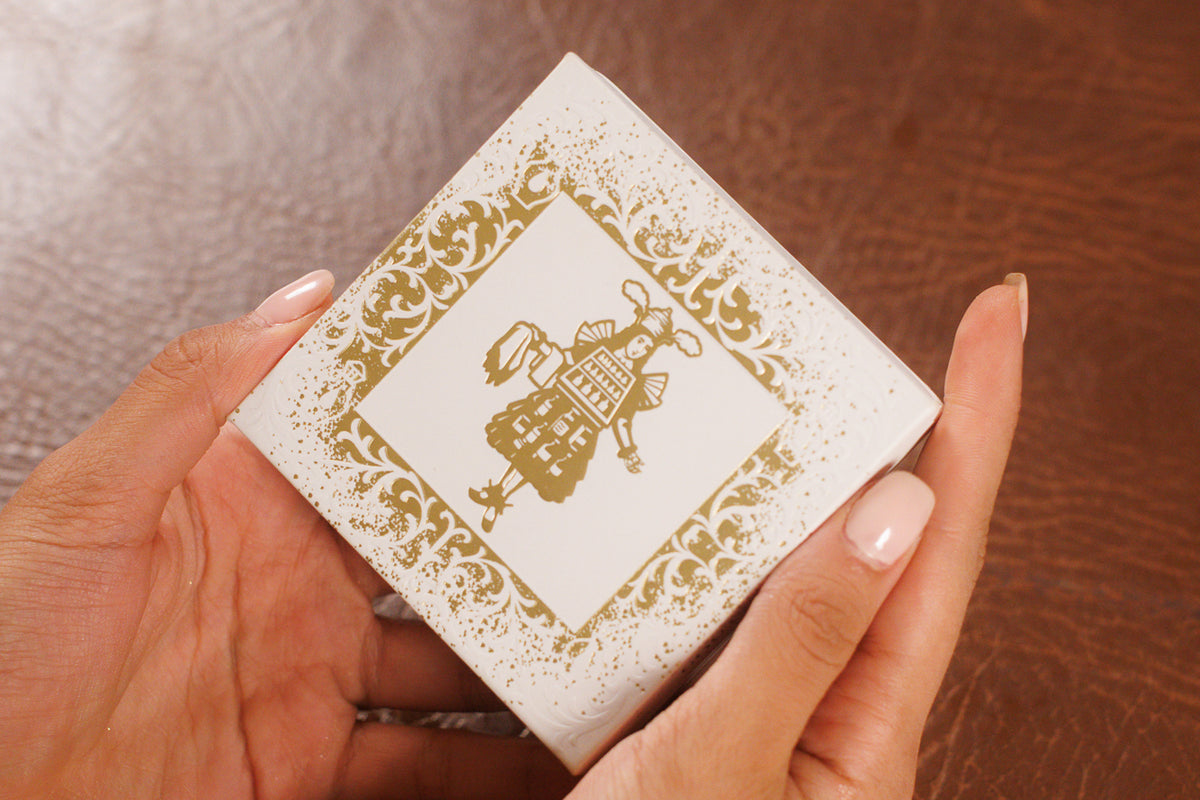
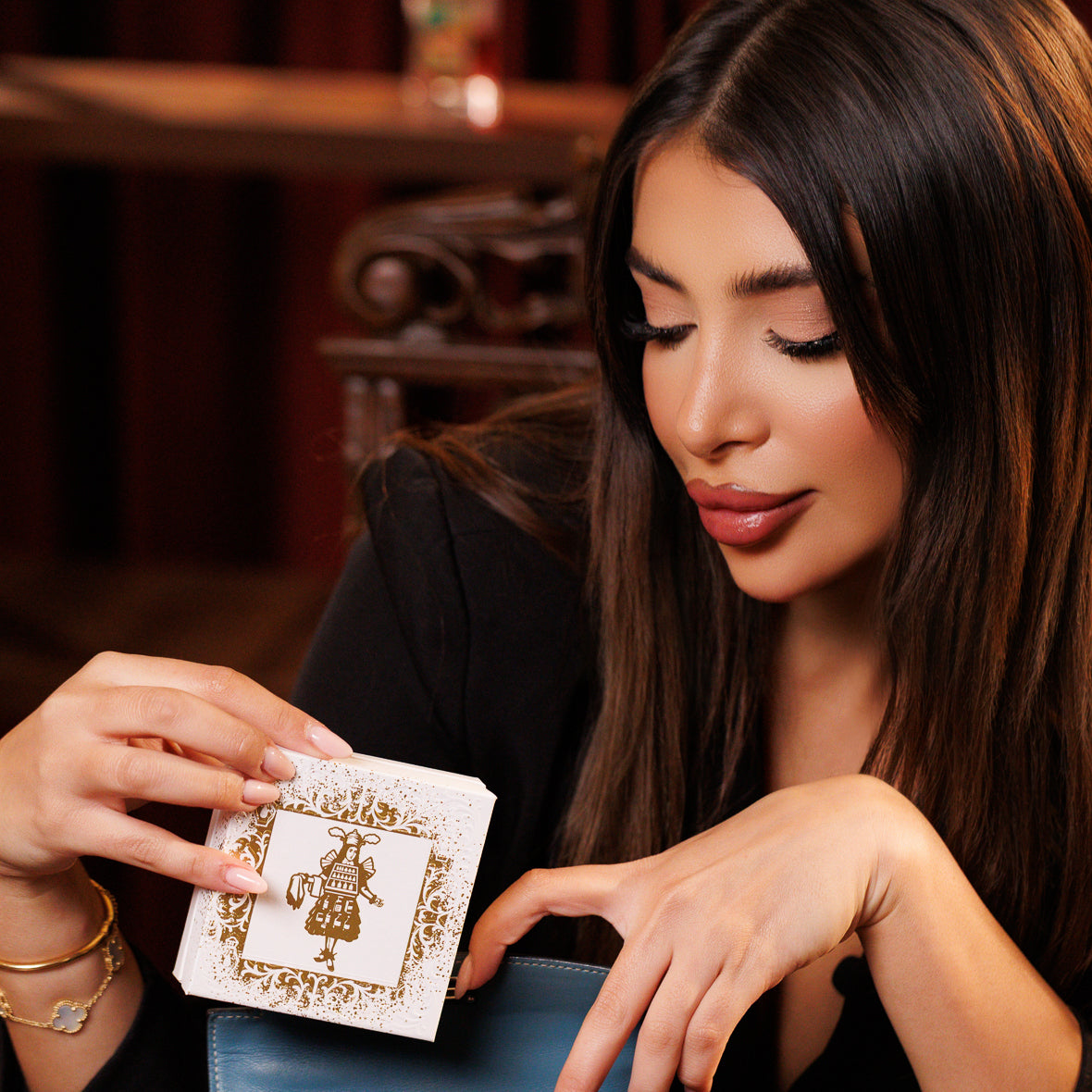
Packed into the hot foiled box and handed to DHL, every duty already paid. How a decant is made
More from Amouage
You may also like