
Alejandro Acosta
La Candelaria
The Story
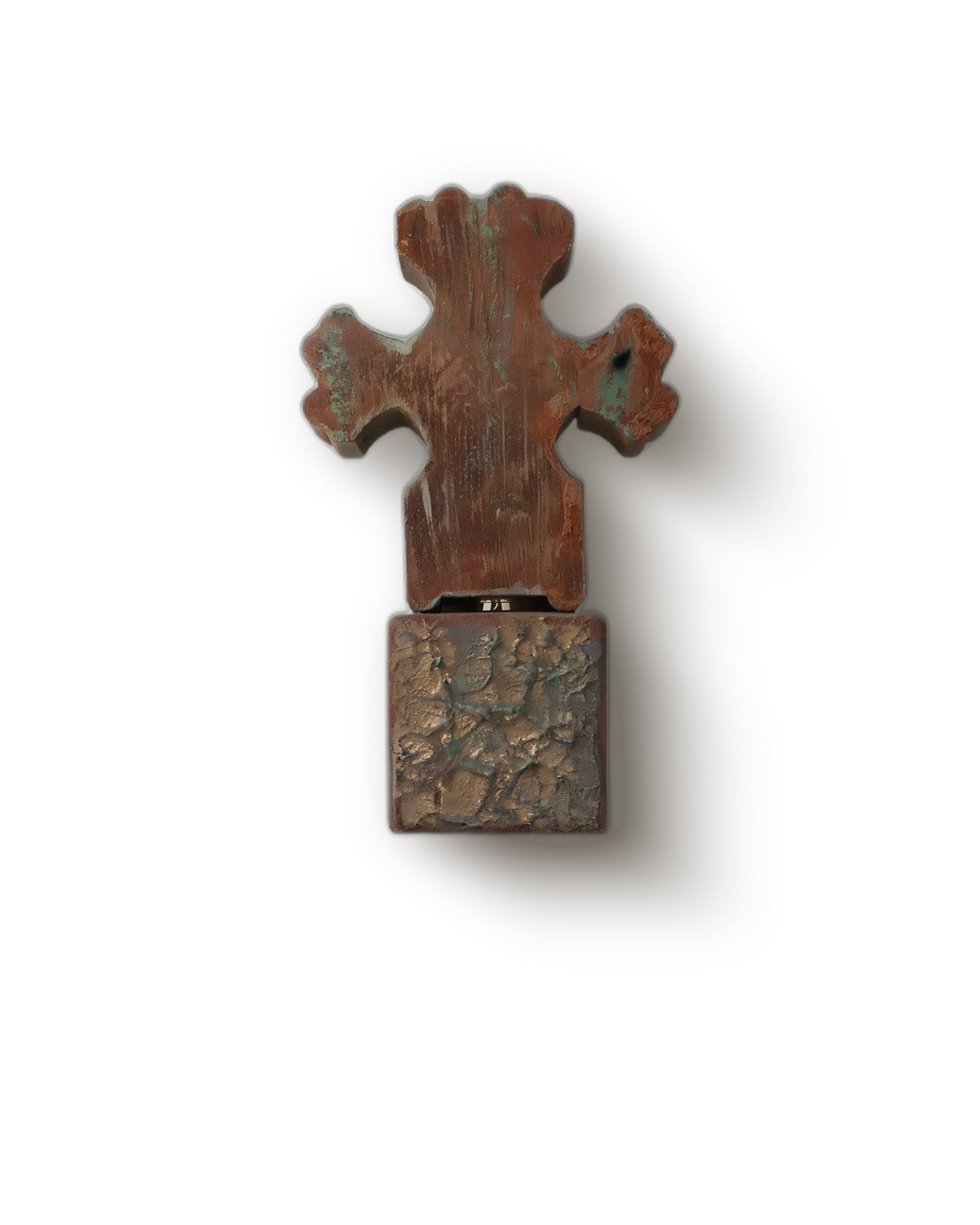
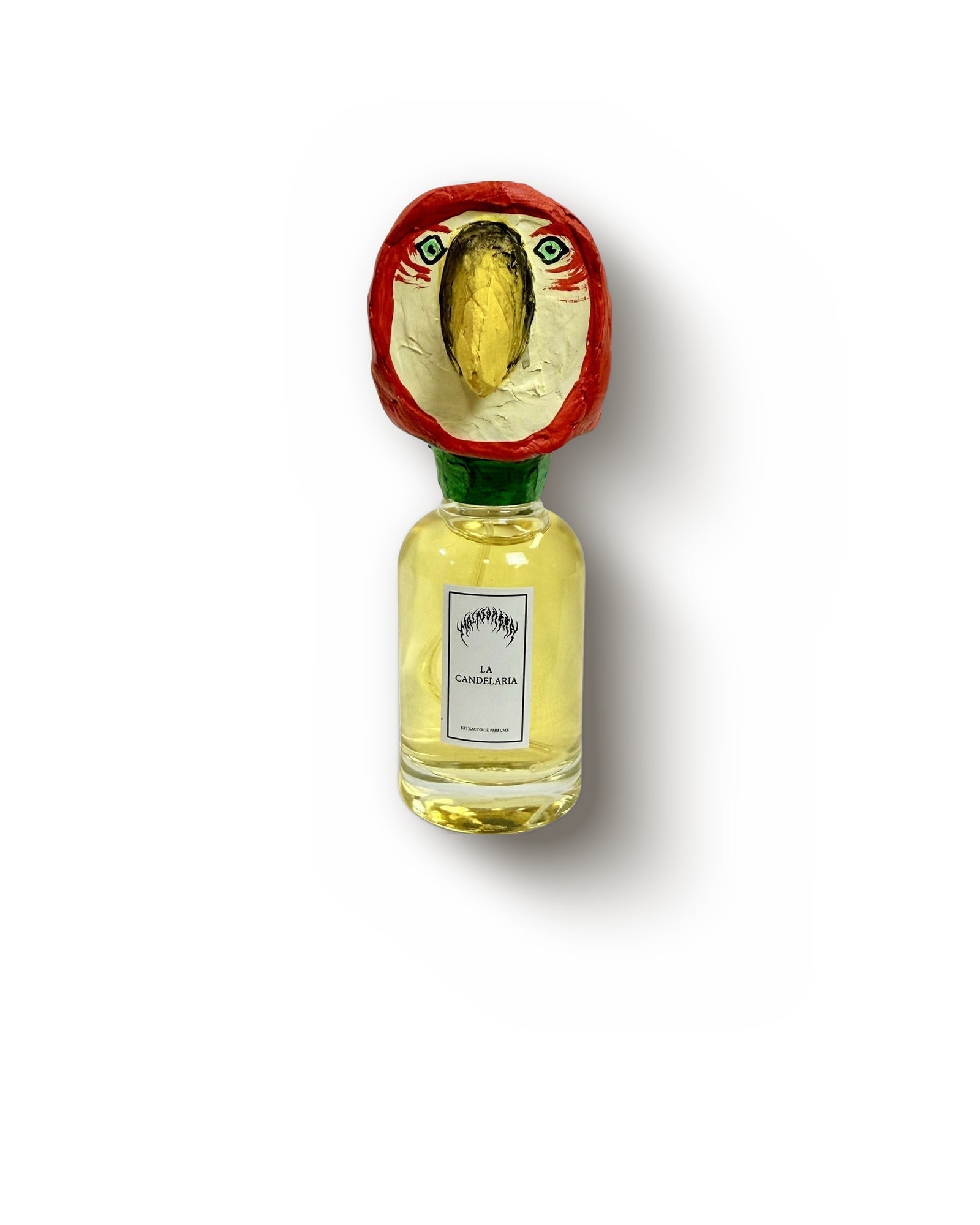
Alejandro Acosta calls himself an artist rather than a perfumer, and calls the bottles olfactory sculptures: each one modelled, sculpted and painted by hand, this one crowned with a scarlet macaw, the guacamaya he picked as an emblem of Colombian biodiversity. La Candelaria takes its name from the historic quarter of Bogotá, in the country his family comes from. He blends the juice himself from natural oils and tinctures alongside modern materials, in runs small enough that each piece varies.


Tropical
Sun-warmed fruit and creamy bloom
A juicy swell of ripe mango, pineapple, and overripe banana laced with coconut milk and sticky white petals. It smells of heat on bare skin, suntan lotion, and fruit left to soften in the sun, breezy and indulgent at once.


Fruity
Peach skin, not lemon peel
Peach, pear, apple, berry: this is sweetness in the flesh rather than the rind, dewy and nectar-heavy where citrus is sharp and thin. It plays young and slightly greedy, the sort of ripeness you can almost feel running down a wrist.


Coffee
Gourmand with the sugar burned off
Ground beans and pulled espresso, oily and bitter, smoke under the roast. A trace darkens vanilla, sharpens chocolate, stops caramel turning to syrup. Never dessert.


Woody
Dry grain of cut timber
The smell of cedar shavings, sandalwood, and dry vetiver roots, a sanded, resinous warmth with a faint pencil-box rasp. It feels grounded and composed, the quiet backbone that makes a scent read as serious and lasting.


Sweet
Warm sugar you cannot quite name
Caramel, honey, spun sugar: sweetness that hovers between all three and never settles on one. This is the gourmand pull, the thing that makes someone lean in closer than they meant to, warm and soft and a half step short of edible.


Citrus
First bright zest of morning
The juicy, rind-snapping brightness of lemon, bergamot, and orange peel, tart and effervescent with a clean bitter edge. It opens a scent with instant lift and sparkle, fresh and energizing, evaporating quickly like sunlight on water.


Guava
A tropical note assembled, never pressed or distilled
What it is
No press or still gets guava out of guava. The thing that makes it recognisable is sulfur, thiols the lab can dose directly, or the same catty facet borrowed from blackcurrant bud absolute, with davana for ripe warmth.
How it smells
Pink flesh and green skin at once, juicy and tart, tipping toward blackcurrant. The lab build is vivid and keeps its shape as it wears. A naturals-only guava is hazier, blooming and fading unevenly over a resinous undertone.
In perfumery
In the top and upper heart it lifts white florals, tropical fruit and light musks. The catch is dosage: the sulfur that makes it convincing in traces turns frankly cattish just above them.
Good to know
Guava leaf does give a real essential oil, waxy green and woody with a faint citrus edge and nothing of the pink flesh about it. Fruit and leaf share a name and little else: one is bought, the other is built.


Mango
Mango flesh gives nothing, so perfumers reconstruct it
What it is
Squeeze a mango and you get juice, not oil. The only mango material perfumers have comes from the tree's leaves, and it smells green and resinous. The note is therefore always assembled: lactones and esters, or davana and osmanthus.
How it smells
Built from lactones it comes out sweet and golden, creamy under a juicy top, one bright shape from opening to drydown. The botanical build is softer and hazier: jammy, faintly boozy, apricot at the edges, blurring as it wears.
In perfumery
Mango anchors tropical and gourmand builds, sitting easily with coconut and white florals. Lactones hold it into the drydown; the esters flash and go. A botanical build needs constant rebalancing, every material dragging a floral tail with it.
Good to know
Neither version is the fruit. The lactone route is stable and identical every time, which is why mango turns up everywhere. Osmanthus and davana shift with the harvest, so an all-botanical mango is rare, and reads warmer and quieter.


Lime
Green citrus zest with a bitter peel snap
What it is
The oil leaves the fruit two ways. Cold pressing squeezes it straight out of the green peel; distillation boils it off the whole crushed fruit, a grade made largely for the soft-drink trade. They do not smell alike.
How it smells
Pressed lime is sharp and bitter and wet, exactly a wedge cut a second ago. Distilled lime is rounder and almost candied, all cola and soda fizz. Both fade fast and leave a thin green, faintly soapy dryness.
In perfumery
Lime goes at the top, cutting richness and making the first few minutes feel carbonated. Basil, mint, vetiver and rum are its usual company, in colognes, fougeres and every gin-and-tonic accord ever built.
Good to know
Sunlight is the catch. The compounds that make cold-pressed lime smell alive leave skin hypersensitive to it, so the dose is capped. Distillation strips them out, which is why lime in perfumery smells of soda not peel.


Café Con Leche
The dark heart of morning, bottled
What it is
Not a bean at all: coffee is the seed of a tropical cherry, two to a fruit, and the smell arrives only with the roast. Perfumers use a roasted-bean absolute or a CO2 extract.
How it smells
Bitter cocoa, toasted nuts and a grainy, just-ground sharpness with smoke behind it. Then it softens: burnt sugar, chocolate, a little tobacco, and a milky, oily roundness that keeps the bitterness from turning harsh.
In perfumery
It sits in the heart, or at the top of the base, where bitterness does what sugar cannot and stops vanilla, tonka and amber going syrupy. A whole run of sweet masculine scents was built on that trick.
Good to know
One molecule does most of the talking. Your nose catches 2-furfurylthiol at 0.01 parts per billion, so a trace reads instantly as fresh brew. Natural coffee extracts fade and go flat, so most coffee notes are rebuilt.


Palo Santo
Sacred wood smoke, sweet and resinous
What it is
A dry-forest tree of Ecuador and Peru whose living wood gives almost nothing. Only after it falls and seasons on the forest floor for four to ten years does the heartwood turn fragrant, and that wood is distilled.
How it smells
Lemon and mint on top, oddly bright for a wood, then a warm sappy heart somewhere between frankincense and sandalwood. The end is dusty and balsamic with smoke drifting through it.
In perfumery
Few materials carry citrus and wood in the same breath, so perfumers use palo santo as a bridge: bright on top, resinous underneath. It sits naturally beside frankincense, cedar and labdanum.
Good to know
Nobody may cut a living one for oil. Peru's forestry authority permits only naturally fallen or dead wood, and synthetics increasingly stand in for the natural material.


Cinnamon
Sweet bark heat, glowing rather than stinging
What it is
Only the inner bark is worth anything. Strips are peeled from the tree, curled into quills, then steam-distilled. Sri Lanka's true cinnamon is the delicate one; the coarser, lower-priced cassia is what fills most kitchen jars.
How it smells
Warm, dry and sweet, with a red glow from cinnamaldehyde and a clove-like edge behind it. True cinnamon smells rounder and faintly floral; cassia bites. The dry-down goes woody and balsamic, with a whisper of leather.
In perfumery
A heart note, and the reason gourmands and orientals feel like a warm room. It works with vanilla, amber, rose, apple and tobacco, and the whole trick is restraint: a touch gives glow, a fraction more gives sting.
Good to know
The Dutch once burned their own stockpiles to keep the price up, back when this bark outvalued gold and Ceylon was worth conquering for it. Modern caution is duller: cinnamaldehyde sensitizes skin, so the dose is capped.


White Flowers
The heady, indolic chorus of summer blooms
What it is
No such flower exists. White florals are a club: jasmine, tuberose, gardenia, orange blossom, ylang-ylang. What they share is fleshy pale petals, a scent captured as absolute or rebuilt from a headspace reading of the living bloom.
How it smells
Creamy, warm and too much, in the best way. Indole gives the depth an animalic, overripe edge under the sweetness: milky coconut from tuberose, green mushroom from gardenia, honey from jasmine. It dries down softer, closer to skin.
In perfumery
A heart accord that carries sillage and sensuality, usually cut with citrus or musk so the richness does not swallow everything else. Tuberose anchors the famous floral bombshells; jasmine does the honeyed heavy lifting. Romantic, full-bodied, unmistakably floral.
Good to know
Indole on its own smells of mothballs and decay. Jasmine absolute carries about 2.5 percent of it, and at that trace it reads as a living flower; add much more and the accord turns faintly fecal.


Virginia Cedar
Dry pencil-shaving warmth from the eastern redcedar
What it is
Not a cedar at all, but a juniper, growing wild across the eastern United States. The oil is steam-distilled from sawmill shavings and offcuts, the same wood that once became lead pencils.
How it smells
Soft, dry and clean, sweeter than you expect from a wood, with a balsamic edge. It settles into the smell of a cedar closet, rounder and gentler than the sharper Atlas and Texas oils.
In perfumery
A base and heart note doing structural work: dry backbone, fixative weight, the floor under chypres and fougeres. Crystalline cedrol is isolated from it when a perfumer wants that woodiness clean and without the bark.
Good to know
Being a sawmill byproduct makes it one of perfumery's most abundant naturals. It is also the wood moths will not go near, the reason blanket chests and closet liners were cut from it.


Ginkgo
Older than the dinosaurs, cool and green
What it is
Every ginkgo alive belongs to the last surviving species of an order older than the dinosaurs, barely changed in two hundred million years. The fan-shaped leaves make the note. The fruit is another matter entirely.
How it smells
Cool, green and slightly bitter, with a mineral edge and none of the sweetness of a floral green. It reads as leaf rather than grass or stem, dry and faintly medicinal.
In perfumery
Rare, and used for texture rather than as a subject. Where mint or violet leaf would read familiar, this makes a green opening feel strange and old. It holds its shape against woods and resins.
Good to know
The fruit is the reason cities plant only male ginkgo trees: it carries butyric acid, the compound behind rancid butter. The leaf has none of it.
Fragrance Character
Tropical fruit dominates, with a genuine coffee-and-milk accord underneath that is the signature of the thing, then wood and a soft sweetness.


Longevity
how long it stays on skin
The hourglass reads wear time: how many hours the fragrance keeps speaking before it fades. A bar that barely leaves the start means a few fleeting hours. One that runs the full length carries from morning into evening. Treat it as typical, not promised. Oily skin holds scent far longer than dry.


Sillage
the size of its scent trail
Sillage is French for a ship's wake, and that is exactly what this measures: how much of the scent reaches the room instead of staying on you. Low is a whisper only close friends catch. Enormous fills the room, then keeps filling it after you leave.


Experimental
Built to provoke, not to please
Some perfumes are made to be liked. These are made to be argued about: inky tar, hot rubber, fruit on the turn, metal and fur where you expected flowers. The coin glows for a scent that provokes and dims for one that plays it safe, which is sometimes the point.


Office
Polished, and never louder than the room
Scent is manners in a shared room. At this range it should reach the person across the desk and stop there: tidy citrus, soft musk, pale woods, all of it reading competent and considerate. A glowing coin means nobody has to mention it. A dim one means it travels.


Evening
After dark, when it deepens
Dinner, drinks, the night that runs long. Low light is where ambers, resins and smoky woods stop being polite, and where a plush floral finally blooms. A glowing coin means it is waiting for exactly this hour. A dim one means it did its best work in daylight.


Romantic
Close enough to be felt
A fragrance can hum against skin instead of announcing itself across a table. That is the register here: creamy florals, vanilla, soft musk, a thread of spice, warm enough to make someone lean in. The coin glows when a scent sets that mood and dims when it is more practical than seductive.


Formal
Quiet authority in a dressed-up room
A wedding, a ceremony, a room where everyone has thought about their shoes. What works here is structure, not volume: smooth woods, disciplined florals, soft leather. A glowing coin means it holds its posture all evening. A dim one means it is too casual for the room.


Casual
Easy comfort for unhurried days
Errands, coffee, a slow Saturday with nowhere to be. Nothing here has to impress anyone, so the fit is soft and easy: fresh citrus, light woods, a little warmth off the skin. A glowing coin says yes to all that. A dim one means the fragrance is asking for a bigger night.


Day to Night
where its mood naturally falls
A bar running from sun to moon, reading the hour the fragrance was made for. The more of it that stays gold, the more the scent belongs to daylight and open air. The further the blue reaches back toward the sun, the deeper and warmer it turns: evening, candlelight, low rooms.


Winter
Warmth that carries through cold air
Cold air mutes a fragrance and slows it down, which is why winter belongs to the dense and the warm: resin, smoke, vanilla, leather, ambered spice. The bar reads how well this one pushes back, glowing against the chill instead of thinning out in it.


Spring
Fresh blooms in mild, rising warmth
Mild, humid air lifts a light composition, so the season belongs to dewy florals, green stems, soft powder and citrus you can see through. Alive rather than heavy. The further the green runs along the bar, the more comfortably this one wears in that weather.


Summer
Bright and airy in real heat
Heat does the projecting for you, which is why the wrong perfume turns unbearable by noon. What survives is cool and breathable: sharp citrus, salt air, aromatic herbs, water. Things that refresh instead of cloy. A short bar here means save it for cooler months.


Fall
Spiced warmth for cooling days
As the air cools, the rich materials stop smothering and start reading clearly: dry woods, warm spice, tobacco, amber, fruit gone golden. It is the season perfume turns contemplative. The bar fills according to how naturally this one settles into crisp, cooling days.
Best Worn
Made for warm weather and daylight, worn close to the skin. It projects modestly by design, which makes it something for close company rather than for filling a room.
Choose options
The Vibe


The Nose
Alejandro Acosta
Founder and perfumer
Barcelona-based Spanish multidisciplinary artist who presents his work as olfactory sculpture rather than perfumery, making each Malasombra release by hand from formula to bottle and packaging. The line includes Malasombra El Indiano, Malasombra La Candelaria, Malasombra Dark Souls and Malasombra Bloody Mire.
The Maison

Olfactory sculptures, in a flacon the artist models and paints by hand.
Alejandro Acosta is a Spanish artist who works from a Barcelona studio and treats each release as a piece of art rather than a product. Every flacon is modelled, sculpted and painted by hand, one at a time, so no two are identical, and he blends the juice himself from natural oils and tinctures alongside modern materials.
- Origin
- Barcelona, Spain
- Known for
- Hand-sculpted olfactory sculptures
Similar fragrances
You may also like