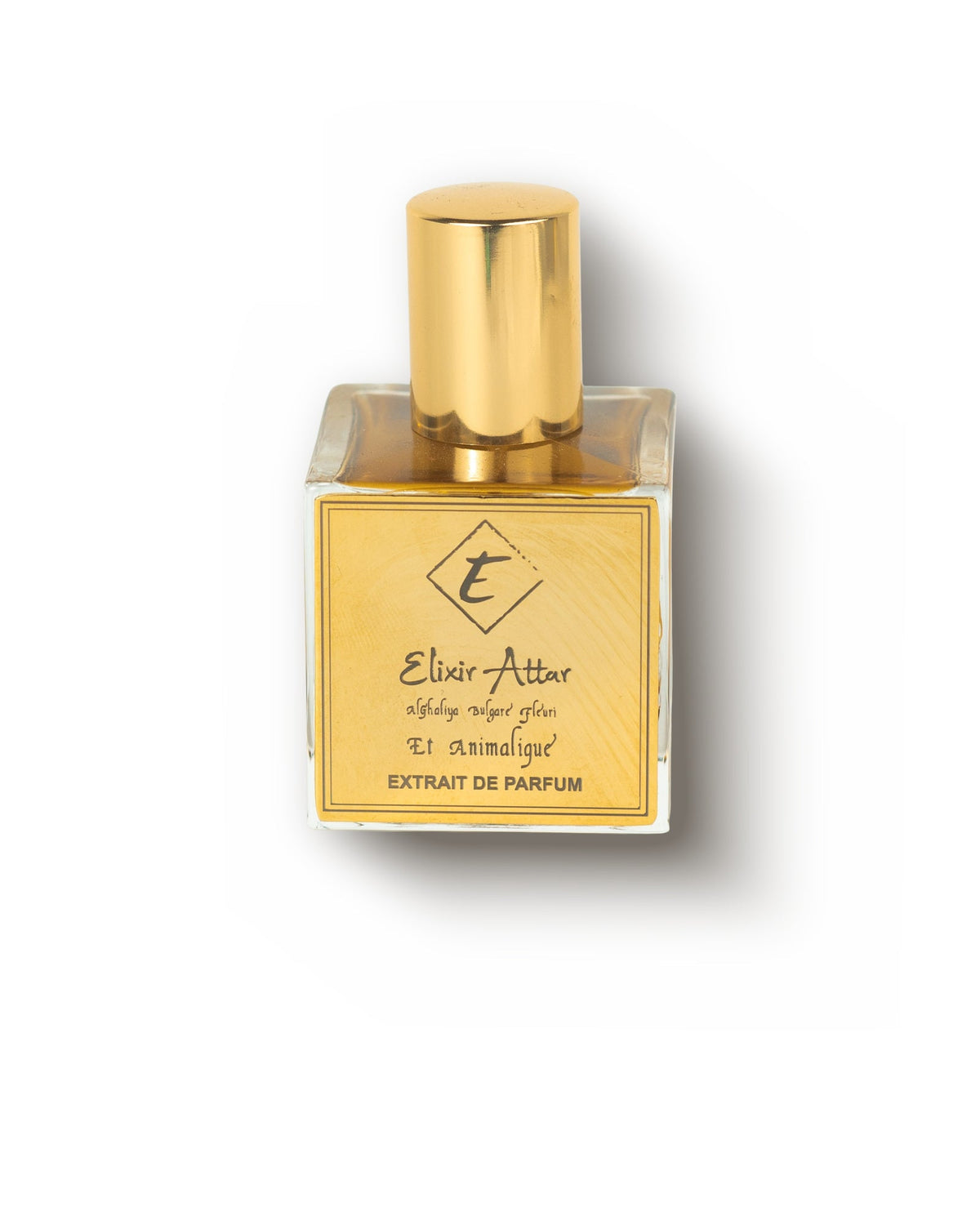
Elixir Attar
AlGhaliya Bulgare Fleuri et Animalique
The Story
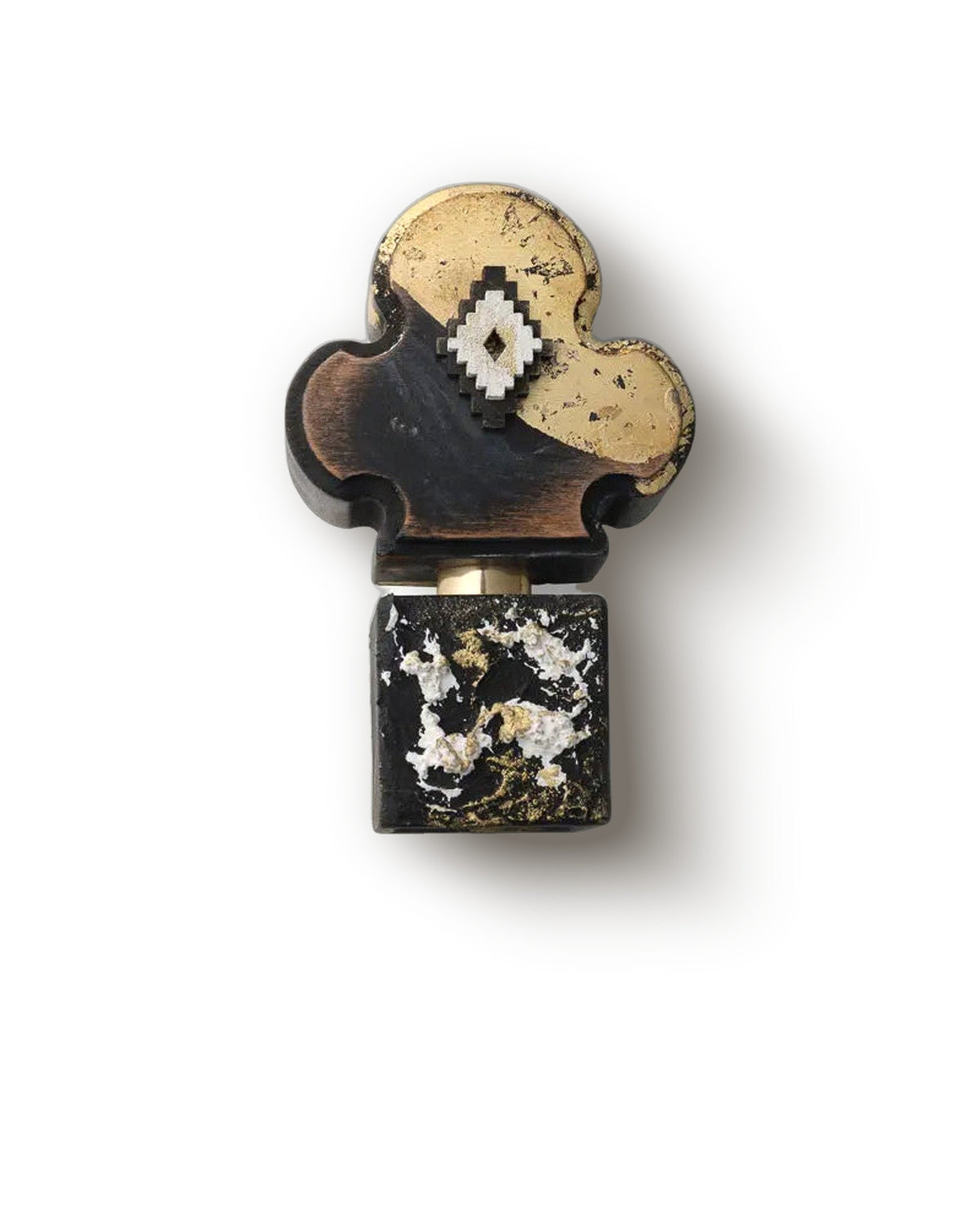
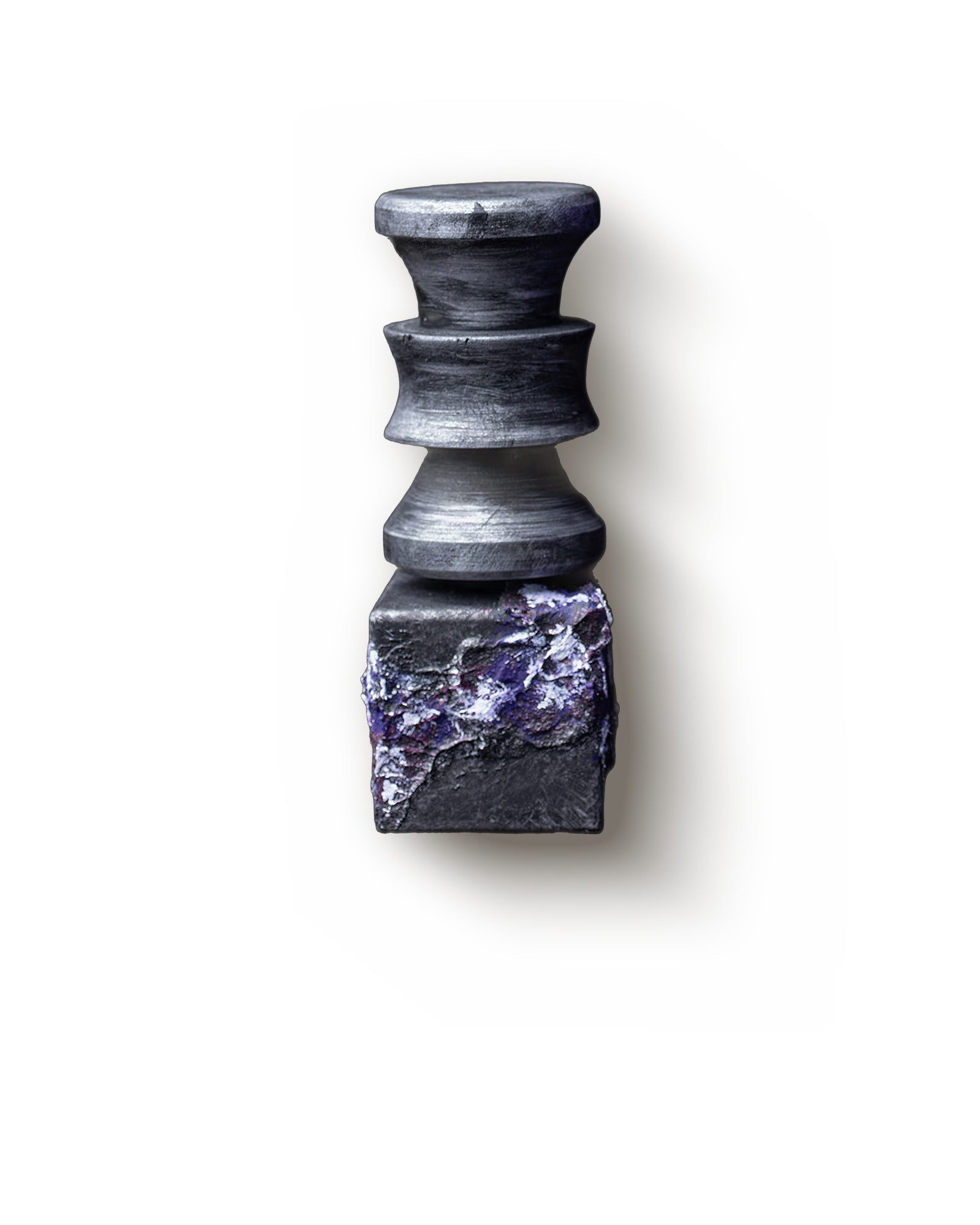
AlGhaliya Bulgare Fleuri et Animalique is Elixir Attar's ghaliya, the old Arabian form built on musk and ambergris. The California house was founded by Ahmed Mostafa. Its signature is a split treatment: the musk is macerated in rare-aged Mysore sandalwood, while the ambergris is melted in rather than macerated. The musk and ambergris vary slightly from batch to batch.


Floral
A whole garden, never one flower
Not one flower but the impression of many, usually rose, jasmine and orange blossom leaning on each other until no single one is recognizable. Sweet, dewy, faintly powdery, with nectar underneath. It is what people mean when a perfume smells like flowers and they cannot say which.


Musky
Warm breath of clean skin
A soft, slightly animalic warmth that smells like clean skin and freshly dried laundry, intimate and faintly sweet. It hums quietly underneath a fragrance, a second skin that only registers when someone is already standing close enough to catch it.


White Floral
The flowers you smell across a garden
Jasmine and tuberose share it: thick creamy petals with a ripe, almost animal sweetness underneath, the indole that keeps big florals from ever smelling polite. Green at the edges, overripe fruit in the middle, and louder on warm skin.


Rose
Velvet petals, honey and thorn
Dewy and fruity on top, then a jammy, honeyed heart with a green peppery bite underneath. Very little of it is distilled flower. A rose accord is built, and a good one can smell more like a rose than the rose does.


Amber
Resin warmed until it goes sweet
Labdanum, benzoin and vanilla melted together into something sweet but dusky, like tree sap gone soft in the sun with a thread of incense smoke through it. Amber does not sparkle or shout. It sits close to the skin and gives off heat for hours.


Woody
Dry grain of cut timber
The smell of cedar shavings, sandalwood, and dry vetiver roots, a sanded, resinous warmth with a faint pencil-box rasp. It feels grounded and composed, the quiet backbone that makes a scent read as serious and lasting.


Mineral
cool wet stone and salt
The cool, dry smell of wet pebbles, slate, and salt-flecked air, almost metallic and faintly oceanic. It reads clean and austere, adding a stony transparency that feels like rain on hot rock or breath drawn over a quarry.


Sri Lankan Oud
Ceylon's green, spiced agarwood from a different tree
What it is
Not Aquilaria at all. Ceylon oud comes from walla patta, a slender hardwood that grows nowhere but Sri Lanka's wet-zone forests, and resinous wood turns up in only a small fraction of mature trees.
How it smells
The bright, sour-fruity face of oud. It opens green and almost tropical, frangipani and cooling mimosa over a faint salt edge, then a dry spice caught somewhere between cinnamon and pink pepper. Clean resin underneath, never funk.
In perfumery
Perfumers use it where a Hindi or Thai oil would smother everything: green florals, citrus, incense, sea air. It lifts rather than broods, sitting up in the top and heart instead of anchoring the base.
Good to know
Sri Lanka now bars the export of the tree, its wood and its extracts, so almost nothing new leaves the island. If Hindi reads too barnyard and Cambodi too sweet, this is your oud.


Lilac Enfleurage
Cool spring blossom with a green stem underneath
What it is
Lilac is the blossom of Syringa vulgaris, a hardy shrub that flowers for only a few weeks in late spring. It gives up almost no oil to distillation, so most lilac in perfume is built from other materials. Here it comes as an enfleurage: fresh blossoms are laid on purified fat that slowly absorbs their scent, and the scented fat is then washed with alcohol.
How it smells
Fresh, cool and powdery, a light floral sweetness with a green, almost watery stem beneath it. A faint bitterness and a touch of almond keep it from turning sugary. Where rose is warm and jasmine is heavy, lilac stays airy and a little wistful.
In perfumery
Enfleurage lilac is one of the rarest floral materials, made in tiny quantities from a flower that refuses the still. It brings a cool, airy freshness to roses and heavier white florals, and an old-garden softness that a rebuilt lilac only approximates.
Good to know
Enfleurage is slow, hand-done work: trays of fat are covered with fresh flowers, which are replaced every day or two for weeks until the fat is saturated. Very few houses still use it, and the yields are tiny.


Freesia Enfleurage
Peppery petals with a citrus-cool whisper
What it is
A flowering plant native to South Africa, of the iris family (Iridaceae), growing from a corm and prized for its slender one-sided spray of funnel-shaped blooms. Freesia gives almost nothing to the still; here its scent is captured by enfleurage, with fresh flowers laid on purified fat that is later washed with alcohol.
How it smells
Light, fresh and delicately sweet, a watery floral with a peppery snap and a cool citrus-green edge. Soft rosy and violet facets sit over a faintly soapy, dewy cleanness. It stays airy and transparent throughout, never heady, fading like a breeze off a spring garden.
In perfumery
A top-to-heart note adding sparkle, freshness and a modern clean floralcy to fruity-florals and white bouquets. It lifts heavier flowers like jasmine and tuberose and pairs with pear, peony and musk, becoming a defining accent in many bright contemporary feminine and unisex scents.
Good to know
Most freesia notes are built from aroma molecules such as linalool and ionones, because the flower yields so little. An enfleurage freesia is a rarity, made in very small amounts.


Bulgarian Rose Enfleurage
The fresh dawn breath of the Rose Valley
What it is
The flower of Rosa damascena, grown chiefly around Kazanlak in central Bulgaria's Rose Valley. Rose is usually steam-distilled into otto or solvent-extracted into absolute; here it is captured by enfleurage, with blossoms picked before sunrise and laid on purified fat that holds their scent.
How it smells
Bright, dewy and honeyed, with a green lemony lift on top over a spicy, velvety heart. Compared with Turkish rose it reads fresher and clearer. As it settles, a faint clove-like warmth and a waxy, black-tea softness surface beneath the petals.
In perfumery
A heart note prized for transparency and natural radiance, paired with patchouli, oud, sandalwood or fruity notes like lychee. It anchors many of the great rose-centered compositions, lending lifelike floral depth.
Good to know
Harvest runs only three to four weeks from mid-May into June, and pickers work before sunrise because the day's heat evaporates the volatile oils. That tiny, weather-dependent window, plus the tonnes of blossoms needed per kilo, makes Bulgarian rose one of perfumery's costliest naturals, and an enfleurage, laid by hand on fat, rarer still.


Gardenia Enfleurage
Creamy white bloom with a mushroom heart
What it is
Gardenia is a glossy-leaved evergreen shrub of the coffee family, native to China and Japan, prized for its waxy white flowers. The bloom yields almost no oil to distillation or solvents, which is why most gardenia notes are rebuilt from jasmine, tuberose and aroma molecules. Here it is captured by enfleurage, with fresh flowers laid on purified fat.
How it smells
Lush, creamy and white-floral, layering jasmine sweetness over tuberose richness. A green, almost buttery freshness opens it, while a curious mushroom-and-coconut facet sits at its core, lending a fleshy, slightly savory depth that keeps the sweetness grounded and lifelike.
In perfumery
A heart note bringing opulent, velvety body to white-floral and tropical compositions. It pairs with tuberose, ylang-ylang, jasmine and coconut, and stars in soliflores built entirely around the bloom.
Good to know
A true gardenia extract barely exists commercially, which makes an enfleurage gardenia a genuine rarity. The shrub was named for Scottish-born naturalist Alexander Garden in the eighteenth century.


Tuberose Enfleurage
Carnal white flower that opens after dark
What it is
The waxy white flower of Polianthes tuberosa, a tuberous-rooted plant native to Mexico and now grown chiefly in India and Egypt. Most tuberose today is solvent-extracted to a concrete and washed to an absolute; here it is captured the older way, by enfleurage, with the blossoms laid on purified fat.
How it smells
A heady, creamy white floral with a buttery lactonic richness, green sappy edges and a mentholated coolness on top. Beneath runs a warm, almost fleshy and indolic depth tinged with eugenol spice, giving tuberose its famously narcotic, sometimes overwhelming character.
In perfumery
A powerful heart note prized for its diffusive, three-dimensional presence, often built around gardenia, jasmine, orange blossom and coconut-lactonic accords. It defines bold white florals and the great tuberose soliflores, the benchmark by which others are judged.
Good to know
Tuberose absolute is among the costliest florals, with sources citing roughly 6,000 to 8,000 kilograms of fresh flowers for a single kilogram of absolute. The blossoms keep releasing scent after picking, the very property that once made the slow enfleurage method worthwhile.


New Zealand White Ambergris
Beach-cast white from the southern ocean
What it is
White-grade ambergris gathered on the New Zealand coast, one of the world's best-known sources of beach-cast material. A lump expelled by a sperm whale drifts for years while sun and saltwater bleach it from black toward white and oxidise its near-odourless ambrein into fragrant ambroxide and ambrinol; the long southern-ocean drift is what makes the New Zealand find so reliably well cured.
How it smells
Soft, sweet and marine, the most rounded of the ambergris grades. Clean skin, warm musk, a tobacco warmth and sea air over a velvety mineral sweetness, with none of the fecal edge that a fresh dark piece still carries. Pale, faintly powdery, and enormously diffusive for how quiet it seems.
In perfumery
Used as a tincture, macerated for months, and dosed as a fixative that lends radiance and a skin-like glow while extending everything around it. It pairs with rose, citrus and labdanum, and it is the material Ambroxan was created to approximate.
Good to know
Beach-cast ambergris is gathered rather than taken from any whale, but its legal status does not follow from that: it cannot lawfully be sold, imported or held in the United States, and Australia and India restrict it too, while it trades legally in the United Kingdom and much of the European Union.


Black Ambergris
Sea-aged whale gold breathing warm salt air
What it is
Ambergris is a waxy substance formed in the gut of the sperm whale, thought to coat the indigestible squid beaks it swallows. Produced by perhaps one percent of whales, it is expelled and drifts for years at sea, oxidizing under sun and salt before washing ashore as lumps.
How it smells
Fresh ambergris is fecal and marine; aged, it turns sweet, animalic and softly mineral. The scent is warm and skin-like, with tobacco, dry seaweed, old wood and a salty, faintly sweet musk. It reads less as a sharp odor than as warmth, diffusion and breath.
In perfumery
A prized base note and fixative, it lends warmth, diffusion and a luminous skin effect while slowing evaporation of lighter materials. Its bulk constituent is the near-odorless triterpene ambrein, whose oxidation products ambroxide and ambrinol carry the scent. Most fragrances now use synthetics like Ambroxan; rare real tinctures appear in bespoke work and vintage chypre and oriental compositions.
Good to know
Though salvageable in some countries, ambergris is illegal to collect, possess or sell in the United States, protected as a sperm-whale product under marine-mammal and endangered-species law; India bans possession and sale as well, while Australia restricts only its commercial import and export. Single boulder-sized finds have sold elsewhere for hundreds of thousands of dollars, earning the nickname floating gold.
Ancient Celtic White Ambergris
Long-cured white from the Atlantic west
What it is
White-grade ambergris beach-combed from the Celtic Atlantic coasts, the Irish seaboard and its neighbours, where the same sperm-whale material washes ashore after a long North Atlantic drift. The name marks a particularly long-cured piece: the longer a lump weathers at sea, the paler and drier it becomes and the further its ambrein has oxidised.
How it smells
Drier and more mineral than the southern-ocean whites, with the marine sweetness pulled back and a cool, dusty, almost stone-like quality forward. Clean skin and old tobacco sit underneath, and there is a faint smokiness that very long curing tends to bring. Quiet on its own and enormous on skin.
In perfumery
A fixative used for lift and airiness rather than sweetness, where a warmer white ambergris would round a composition off too much. Its dryness makes it a natural counterweight in ambers and resinous orientals, and it gives citrus a strange, salt-dried persistence.
Good to know
Colour is the grading axis in ambergris, running from black through brown and grey to white, and age at sea is what moves a piece along it. Atlantic finds are far rarer than New Zealand ones. The legal position is the same everywhere regardless of how a piece was found: prohibited in the United States, prohibited in India, restricted in Australia, legal in the United Kingdom and much of the European Union.


Nepali Musk
Himalayan deer musk from the Nepal ranges
What it is
Genuine glandular deer musk grain from the musk deer of the Nepal Himalaya, an animal of the high forest and shrubline. This is real musk rather than a synthetic reconstruction, and the artisanal releases that use it are offered as long-held vintage stock rather than anything newly harvested. Nepal sits at the southern edge of the same high range that gives the Tibetan grades their character.
How it smells
Warmer and rounder than the plateau musks, with less of the dry alpine brightness and more sweetness. A brief animalic bite gives way to a soft leathered heart with honeyed and faintly nutty facets, and it settles powdery and skin-close rather than luminous.
In perfumery
A fixative that lends living warmth and tenacity in trace quantity, dosed by the breath rather than the gram. Its rounder sweetness suits rose, amber and resin compositions where a drier musk would read too austere, and it holds a blend together without announcing itself.
Good to know
Deer musk grades are named for the range the animal lived in, and altitude is the axis: the higher and colder, the drier and brighter the musk. Authentic Himalayan material is vanishingly rare and tied almost entirely to legacy private stock.


Kashmiri Musk
Western Himalayan deer musk, cool and dry
What it is
Genuine glandular deer musk grain from the musk deer of the western Himalaya, the Kashmir ranges at the far end of the same high belt that runs east into Nepal and Tibet. As with every grade in this family it is real musk rather than a synthetic reconstruction, and the artisanal releases that use it are offered as long-held vintage stock rather than anything newly harvested.
How it smells
Cool, dry and mineral, the most austere of the Himalayan grades. The animalic opening is brief and clean, and beneath it sits a pale leathered warmth with a faint woody-earthy edge and very little sweetness. It reads almost stony next to the honeyed Nepali or the chocolatey Tibetan material.
In perfumery
Used where a composition needs the fixative power and living warmth of real musk without any added sweetness, particularly under iris, vetiver and dry woods. Its restraint makes it a precise instrument rather than a comfortable one, and it is dosed in traces.
Good to know
The regional names in deer musk describe provenance rather than a quality ladder; what actually varies is altitude, diet and how long the grain has been held. Authentic Kashmiri material is exceedingly rare and moves almost entirely as legacy stock.


Siberian Musk
The taiga's own musk, traded as Cabardine
What it is
Old traders called it Cabardine, and the name still does the sorting: true deer musk out of the Siberian taiga, a regional grade alongside the benchmark Tonquin and the Assam and Nepal types.
How it smells
Fresh, it is startling: sharp, ammoniac, close to fecal. Months in alcohol turn that into something warm, dry and faintly leathery, with a powdery radiance that sits on skin like fur. Coarser than Tonquin, and less honeyed.
In perfumery
Fixative and animalic heart, tinctured for months before it met a blend. Less muscone than Tonquin and a rougher edge put it a tier lower, yet it still commanded extraordinary sums back when natural musk underpinned the fougeres.
Good to know
When a modern list says musk, it almost never means this. Synthetics took the word over generations ago, and genuine Cabardine now turns up mostly in vintage bottles and the odd all-natural artisan release.


Rare-Aged Mysore Sandalwood
The creamy gold standard of fragrant wood
What it is
Heartwood of Santalum album, a slow-growing semi-parasitic tree historically prized from the Mysore region of Karnataka, India. The dense inner wood and roots are chipped and steam-distilled. Fragrant oil concentrates in the heartwood, which begins to scent the wood at around ten years and deepens with age; a tree is seldom worth taking before fifteen or twenty.
How it smells
Soft, creamy and milky, with a rounded woody-sweet body and a faint sour-buttery edge that turns almost lactic. Warm rosy and balsamic facets sit underneath. It opens smooth and unfolds slowly, drying into a quiet, skin-like, persistent woodiness without sharpness or smoke.
In perfumery
A base note valued for long, smooth tenacity and its power to fix and round other materials. It pairs with rose, jasmine, violet and oud. Mysore-rich sandalwood defines the great vintage milky-woody orientals and lends a creamy woody heart to countless smooth, skin-like compositions.
Good to know
Indian sandalwood was over-harvested nearly to collapse; standing trees and trade fall under strict Indian government license and auction control. Genuine aged Mysore oil has grown rare and costly, pushing perfumers toward plantation-grown Australian Santalum album and synthetics like Javanol.
Fragrance Character
The florals are enfleurages rather than absolutes, and they read as flowers rather than accords: rose, lilac, freesia, gardenia, tuberose. The animalic part is brought forward and the florals sit behind it. On skin it reads the other way: a salty, mineral clarity rather than anything barnyard. It settles into creamy sandalwood, oud and powdery musk.


Longevity
how long it stays on skin
The hourglass reads wear time: how many hours the fragrance keeps speaking before it fades. A bar that barely leaves the start means a few fleeting hours. One that runs the full length carries from morning into evening. Treat it as typical, not promised. Oily skin holds scent far longer than dry.


Sillage
the size of its scent trail
Sillage is French for a ship's wake, and that is exactly what this measures: how much of the scent reaches the room instead of staying on you. Low is a whisper only close friends catch. Enormous fills the room, then keeps filling it after you leave.


Experimental
Built to provoke, not to please
Some perfumes are made to be liked. These are made to be argued about: inky tar, hot rubber, fruit on the turn, metal and fur where you expected flowers. The coin glows for a scent that provokes and dims for one that plays it safe, which is sometimes the point.


Office
Polished, and never louder than the room
Scent is manners in a shared room. At this range it should reach the person across the desk and stop there: tidy citrus, soft musk, pale woods, all of it reading competent and considerate. A glowing coin means nobody has to mention it. A dim one means it travels.


Evening
After dark, when it deepens
Dinner, drinks, the night that runs long. Low light is where ambers, resins and smoky woods stop being polite, and where a plush floral finally blooms. A glowing coin means it is waiting for exactly this hour. A dim one means it did its best work in daylight.


Romantic
Close enough to be felt
A fragrance can hum against skin instead of announcing itself across a table. That is the register here: creamy florals, vanilla, soft musk, a thread of spice, warm enough to make someone lean in. The coin glows when a scent sets that mood and dims when it is more practical than seductive.


Formal
Quiet authority in a dressed-up room
A wedding, a ceremony, a room where everyone has thought about their shoes. What works here is structure, not volume: smooth woods, disciplined florals, soft leather. A glowing coin means it holds its posture all evening. A dim one means it is too casual for the room.


Casual
Easy comfort for unhurried days
Errands, coffee, a slow Saturday with nowhere to be. Nothing here has to impress anyone, so the fit is soft and easy: fresh citrus, light woods, a little warmth off the skin. A glowing coin says yes to all that. A dim one means the fragrance is asking for a bigger night.


Day to Night
where its mood naturally falls
A bar running from sun to moon, reading the hour the fragrance was made for. The more of it that stays gold, the more the scent belongs to daylight and open air. The further the blue reaches back toward the sun, the deeper and warmer it turns: evening, candlelight, low rooms.


Winter
Warmth that carries through cold air
Cold air mutes a fragrance and slows it down, which is why winter belongs to the dense and the warm: resin, smoke, vanilla, leather, ambered spice. The bar reads how well this one pushes back, glowing against the chill instead of thinning out in it.


Spring
Fresh blooms in mild, rising warmth
Mild, humid air lifts a light composition, so the season belongs to dewy florals, green stems, soft powder and citrus you can see through. Alive rather than heavy. The further the green runs along the bar, the more comfortably this one wears in that weather.


Summer
Bright and airy in real heat
Heat does the projecting for you, which is why the wrong perfume turns unbearable by noon. What survives is cool and breathable: sharp citrus, salt air, aromatic herbs, water. Things that refresh instead of cloy. A short bar here means save it for cooler months.


Fall
Spiced warmth for cooling days
As the air cools, the rich materials stop smothering and start reading clearly: dry woods, warm spice, tobacco, amber, fruit gone golden. It is the season perfume turns contemplative. The bar fills according to how naturally this one settles into crisp, cooling days.
Best Worn
It works in any season and on anyone. It works from late afternoon into evening, at dinner or somewhere quiet, and suits anyone who wants florals with salt and musk underneath rather than sweetness.
Choose options
The Vibe


The Nose
Ahmed Mostafa
Founder and perfumer
The founder of Elixir Attar, who also runs Elixir Agarwood Science and writes the house’s product copy himself, in the first person. He works with agarwood, kinam, deer musk, ambergris, irones and floral enfleurages, and his compositions include Elixir Attar Kinam Kodo, Elixir Attar Dark Matter II and Elixir Attar AlGhaliya Bulgare Fleuri et Animalique.
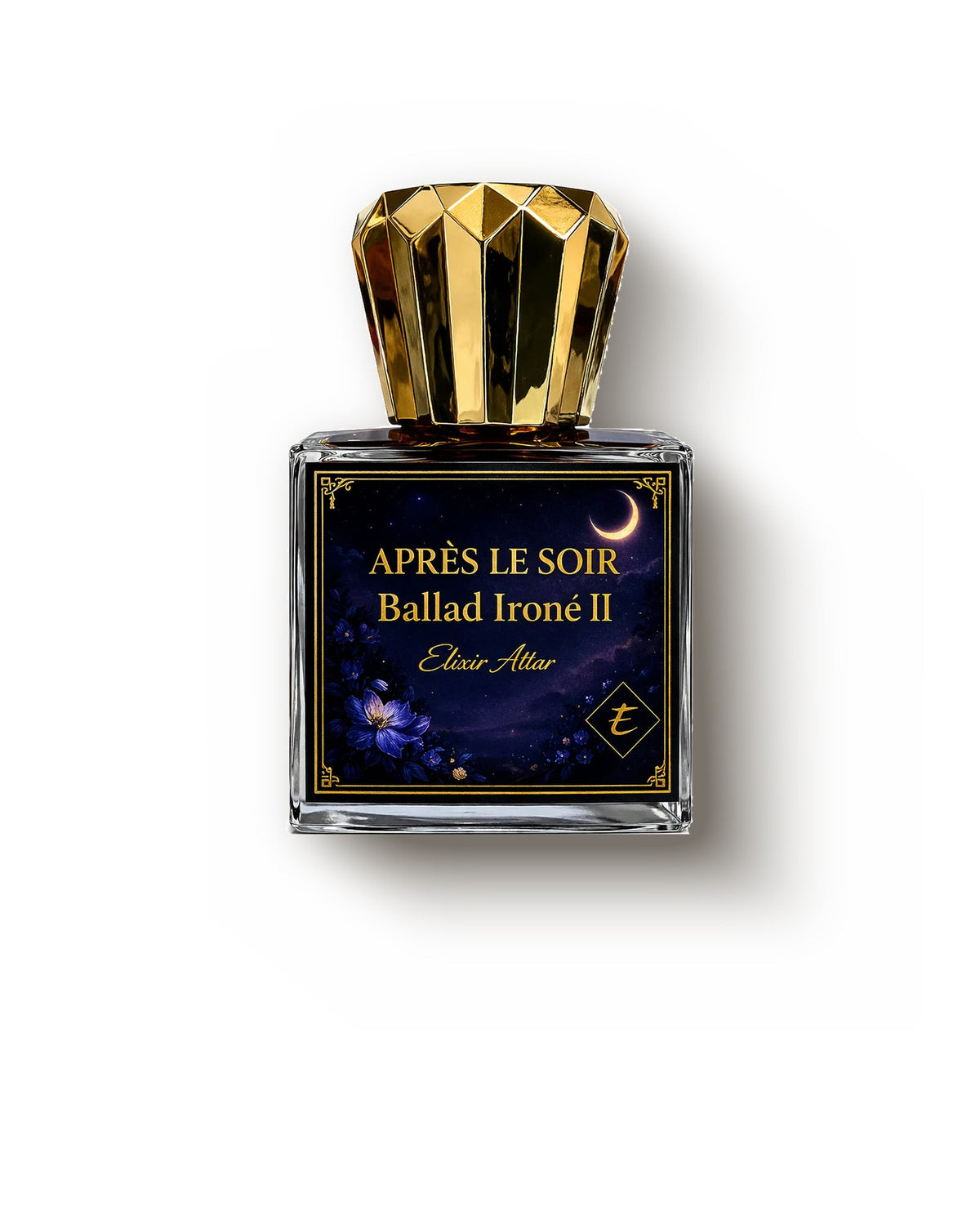
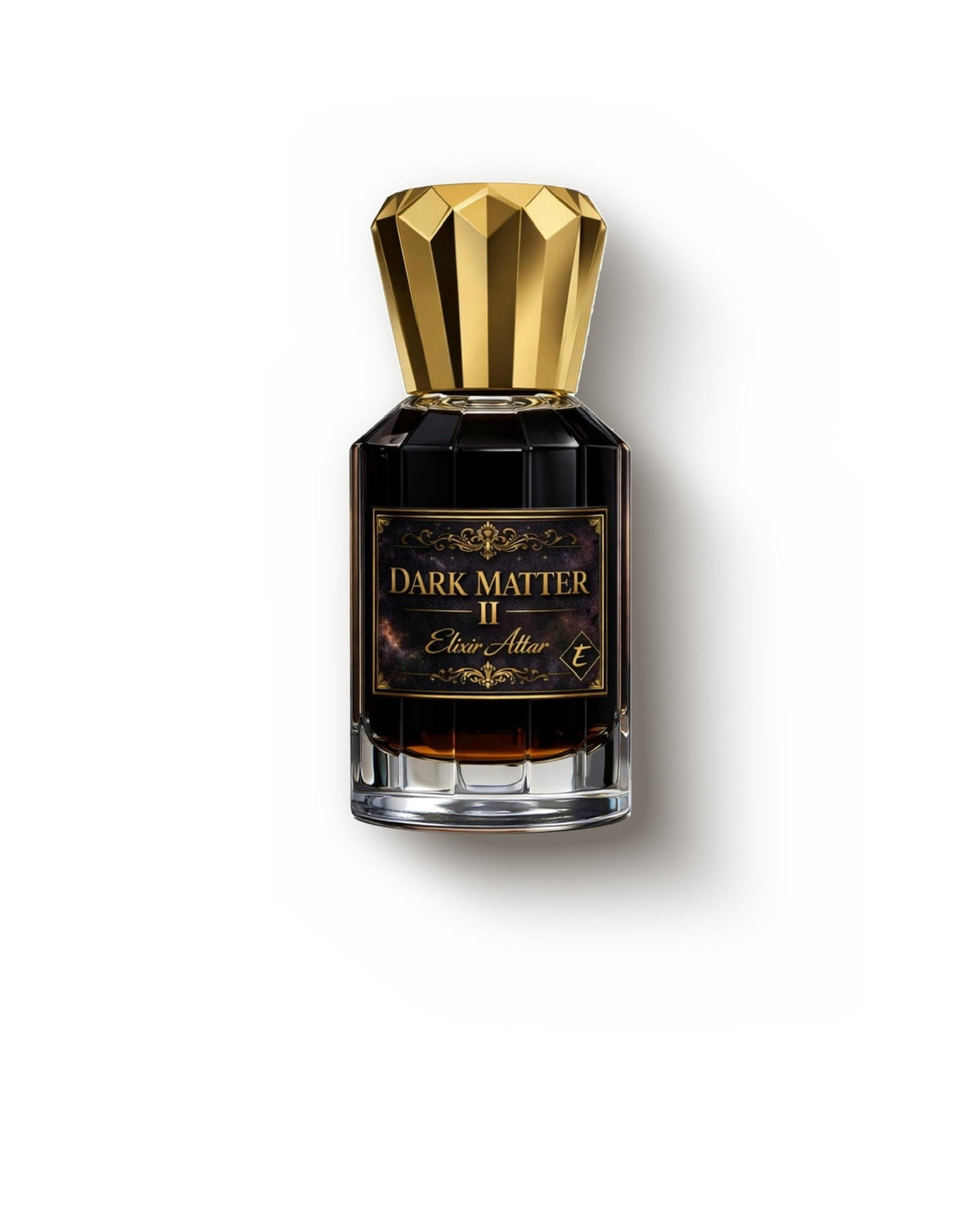
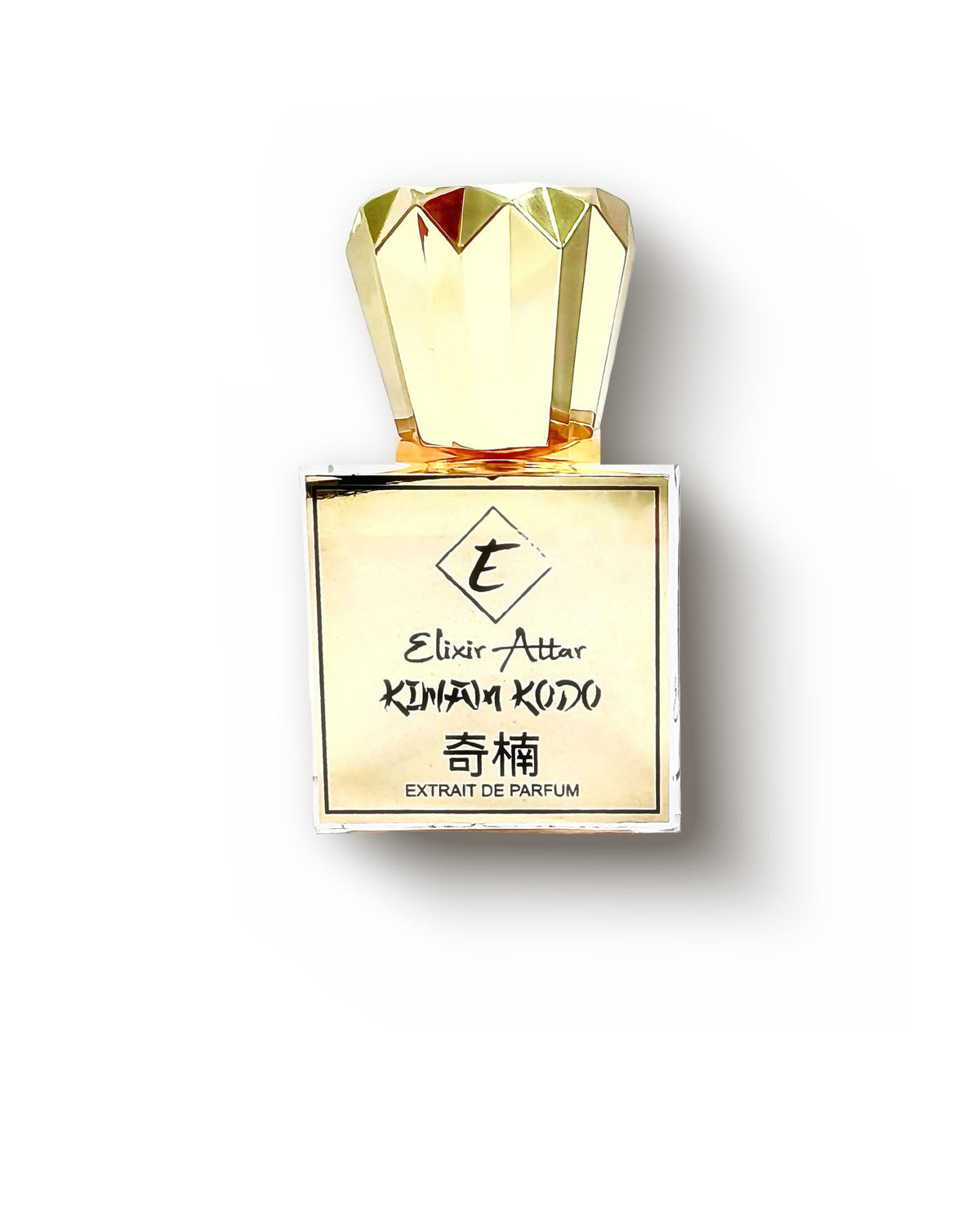
More by this noseDark Matter IIKinam KodoBallad Irone II: Après Le Soir
The Maison

Deer musk and ambergris in the medieval ghaliya form, with a smoke series running dark beside it.
Elixir Attar was founded in 2019 by Ahmed Mostafa, who came to perfumery from materials science, and works with a small team that includes scientists for material analysis. The ghaliyas are the soft end, floral enfleurages over deer musk and ambergris in aged Mysore sandalwood, honeyed and powdery with an animal hum underneath. The Smoke Series runs colder.
- Origin
- Laguna Beach, USA
- Founded
- 2019
- Known for
- Ghaliyas, oud and kinam smoke

More from Elixir Attar
You may also like