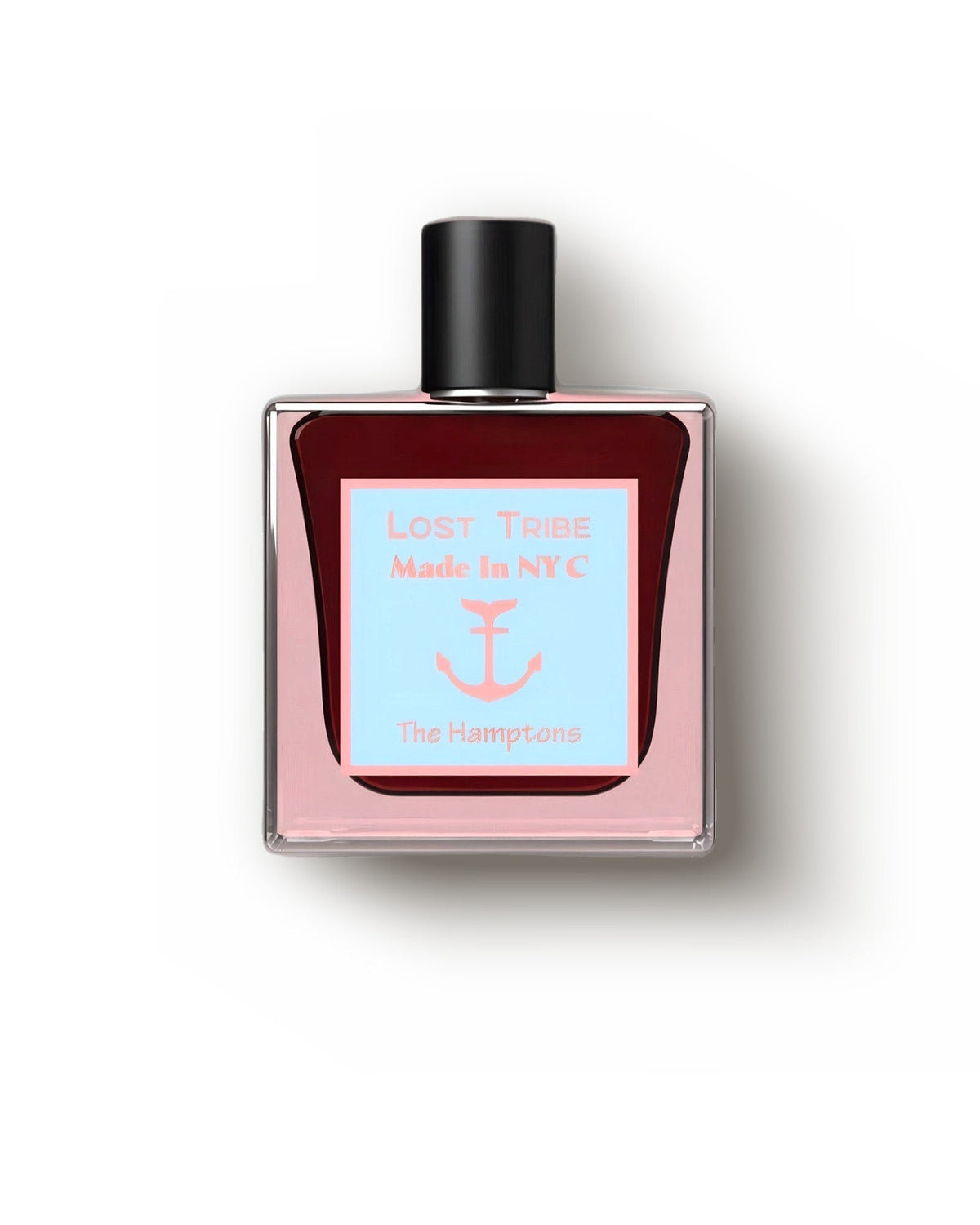
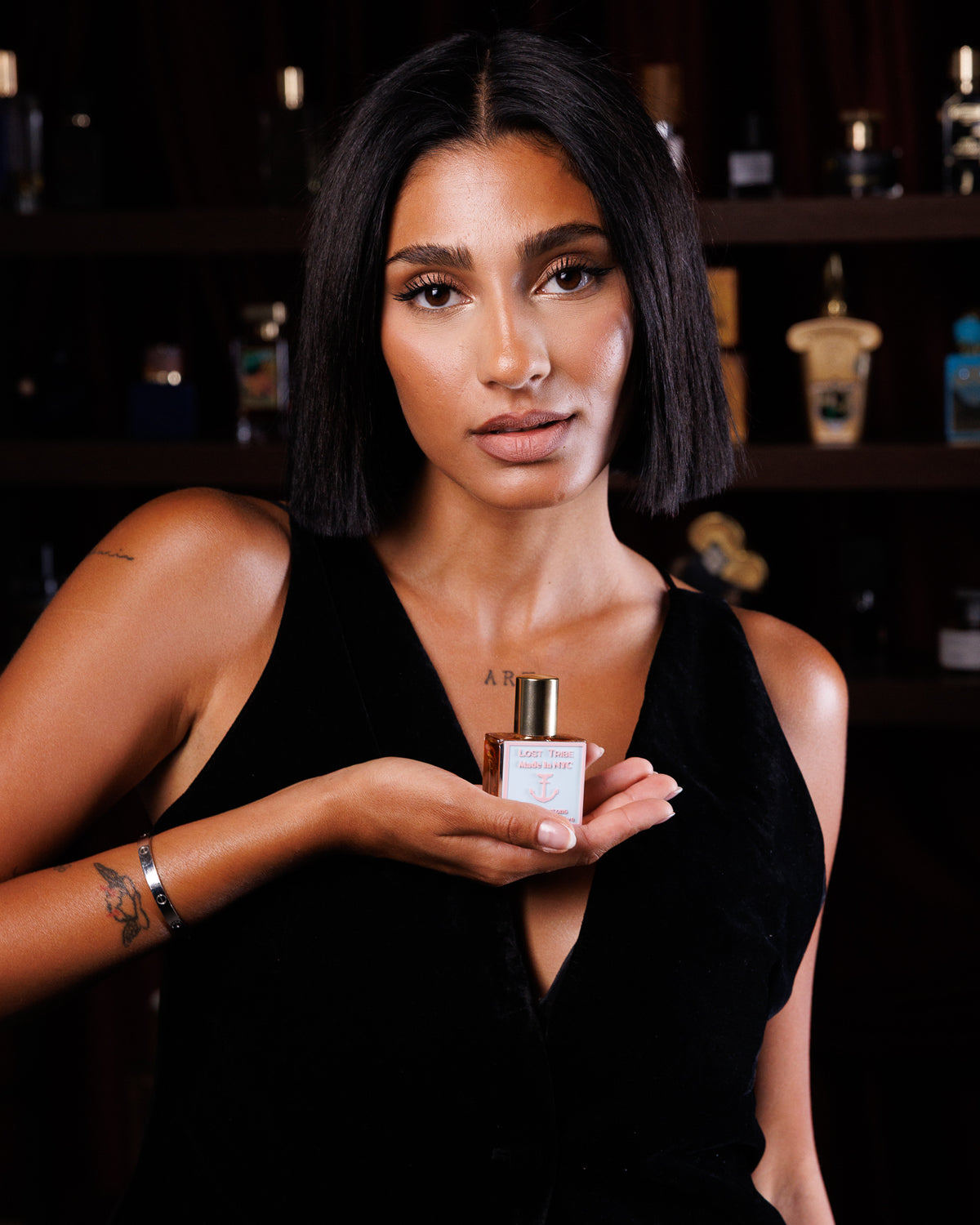
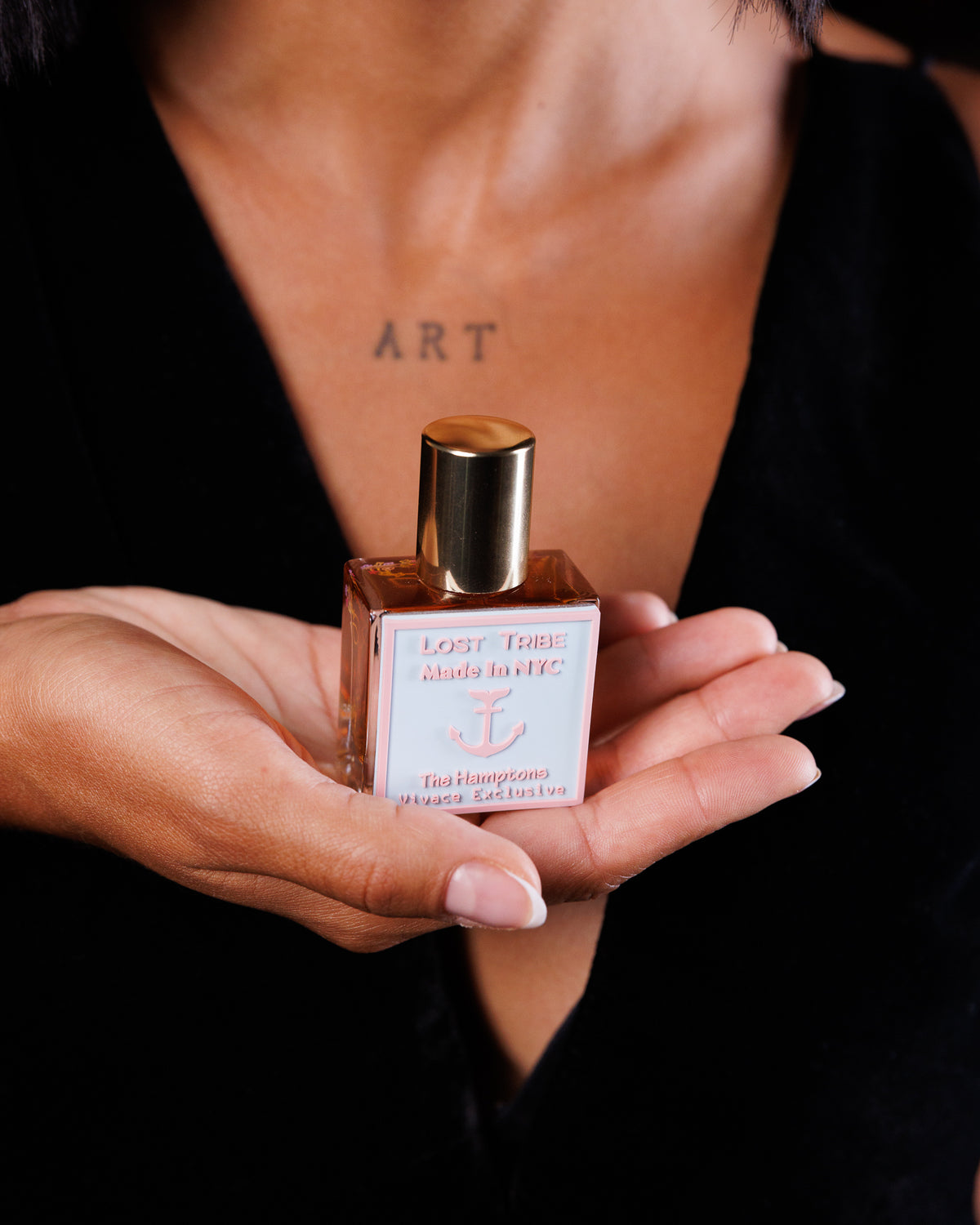
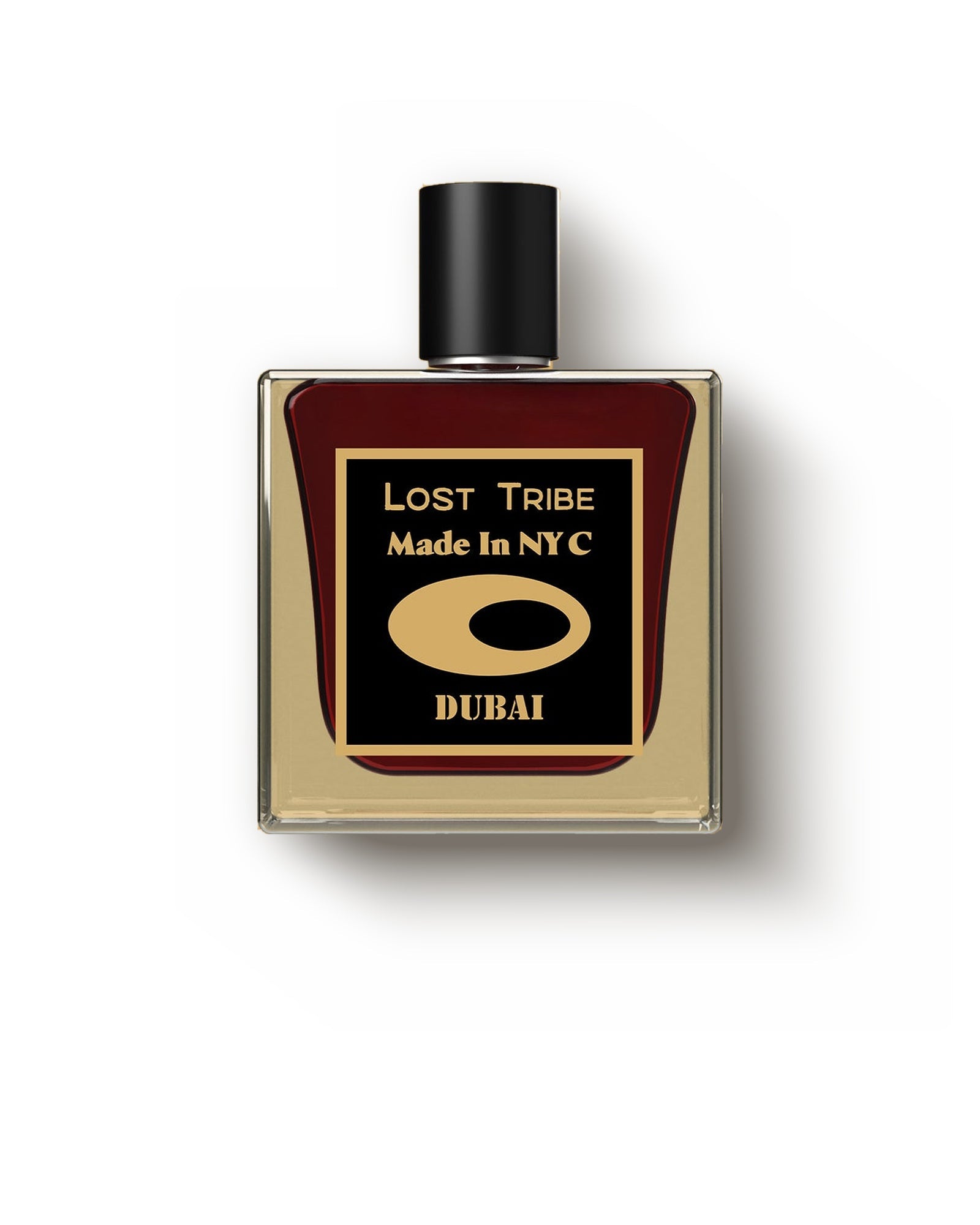
Lost Tribe
The Hamptons
The Story
Lost Tribe built The Hamptons around late-afternoon light on the East End, the golden hour when everything slows. Rather than the dense, animalic oud of the house's darker work, it takes a Sri Lankan oud that behaves like a sea breeze, lifting the fruit and white florals instead of weighing them down. Ambergris, Siberian musk, and Sri Lankan sandalwood settle it into warm skin.


White Floral
The flowers you smell across a garden
Jasmine and tuberose share it: thick creamy petals with a ripe, almost animal sweetness underneath, the indole that keeps big florals from ever smelling polite. Green at the edges, overripe fruit in the middle, and louder on warm skin.


Citrus
First bright zest of morning
The juicy, rind-snapping brightness of lemon, bergamot, and orange peel, tart and effervescent with a clean bitter edge. It opens a scent with instant lift and sparkle, fresh and energizing, evaporating quickly like sunlight on water.


Fruity
Peach skin, not lemon peel
Peach, pear, apple, berry: this is sweetness in the flesh rather than the rind, dewy and nectar-heavy where citrus is sharp and thin. It plays young and slightly greedy, the sort of ripeness you can almost feel running down a wrist.


Amber
Resin warmed until it goes sweet
Labdanum, benzoin and vanilla melted together into something sweet but dusky, like tree sap gone soft in the sun with a thread of incense smoke through it. Amber does not sparkle or shout. It sits close to the skin and gives off heat for hours.


Rose
Velvet petals, honey and thorn
Dewy and fruity on top, then a jammy, honeyed heart with a green peppery bite underneath. Here the rose is largely the real flower, rose otto or absolute, rather than an accord built from aroma-chemicals.


Animalic
Skin, fur and something not quite tame
A raw, body-warm muskiness that reads of skin, hair and fur, sometimes sweet and powdery, sometimes sharp and faintly feral. At its best you cannot tell where the perfume stops and the wearer starts. At its strongest, it is the reason some people back away.


Yuzu
Tart Japanese citrus, crisp as winter air
What it is
A knobbly, thick-skinned citrus grown in Japan, Korea and China, long used in Japanese cooking and bathing. The fragrance sits in the bumpy rind, cold-pressed from the peel; smaller amounts are steam-distilled.
How it smells
Sharp and mouth-watering, like grapefruit crossed with mandarin and a squeeze of lime. A green, faintly herbal bitterness sits under the brightness, with cool floral facets that belong to yuzu alone. Then it thins to clean zest.
In perfumery
Perfumers reach for it when a citrus opening should read sharp rather than sweet: it is fresher and more savory than orange, and it sits well with shiso, tea, vetiver and clean musks.
Good to know
Yuzu trees take years to fruit, long enough to feed a proverb about waiting eighteen years for the harvest. On the winter solstice whole yuzu are floated in a hot bath, the yuzuyu, to scent the water.


Georgian Rose Otto
The sunlit, honey-clear damask of the Caucasus
What it is
Damask rose grown in the valleys of the Caucasus and distilled rather than solvent-extracted, which is the whole difference. Otto keeps the crystalline top of the flower; absolute keeps the dark jammy depth. Georgia's comes out unusually clear.
How it smells
Bright, warm and lit from inside: a clear honeyed damask with musky powder under it and a green, almost geranium lift at the top. In the drydown you get the whole shrub, leaves and stems included.
In perfumery
Perfumers use it to put daylight into a dark blend: against oud or musk it lifts rather than thickens. A few drops read clean and floral, while a heavier hand turns it velvety and powdery without clouding it.
Good to know
A true otto congeals in a cool room, around 20C, and melts again in your hand, which is one way to tell it has not been stretched. Hundreds of pounds of blossoms go into a single ounce.


White Ambergris
Salt, skin and driftwood, bleached pale
What it is
White is where the journey ends. A waxy mass forms in the gut of a sperm whale, drifts for years, and sun and saltwater bleach it from black toward dusty white, oxidizing near-odorless ambrein into something fragrant.
How it smells
Soft, sweet and marine, the most rounded of the grades. Clean skin, warm musk, tobacco and sea air over a velvety mineral sweetness. Whatever fecal edge the fresher, darker pieces carry has weathered out of it.
In perfumery
Used as a tincture, it works less like a note than like a light behind the others, adding warmth, diffusion and a skin-close glow while making everything around it last. Ambroxan now reproduces the core of that effect.
Good to know
Nothing is taken from a whale: every piece is picked off a beach, often years after it was expelled. The law does not always follow that logic, and the United States bars the trade outright.


Honeysuckle
Sun-warmed hedgerow nectar dripping golden evening sweetness
What it is
The flowers are full of nectar and give up almost none of it to a perfumer. This climbing hedgerow vine yields no worthwhile oil, so the honeysuckle in a bottle is nearly always rebuilt molecule by molecule.
How it smells
Sweet and green at the same time, honeyed petals with a dewy lift that borrows from jasmine and orange blossom. Bright at first, like a hedge in flower at dusk, then it clings, sweet and faintly waxy.
In perfumery
Rarely a soloist. In the heart it lends radiance and transparency, sweetening lily-of-the-valley, jasmine, tuberose and neroli without adding weight, and it carries the whole of a honeysuckle soliflore when one is attempted.
Good to know
Children have long pinched the base of a bloom to draw out one bead of nectar, which is where the folk name comes from. Anything labeled honeysuckle absolute is a rarity; the note you meet is built.


Civet
Animal warmth that makes flowers bloom indecent
What it is
A paste scraped from a pouch under the tail of the African civet, a nocturnal cat-like animal, then tinctured in alcohol. Nearly all perfumery civet today is civetone, made in a lab.
How it smells
Undiluted it is shocking: fecal, indolic, more soiled stable than perfume. At a trace it turns honeyed and leathery, warm as skin, with a low tobacco hum. The shift from repellent to alluring happens entirely through dilution.
In perfumery
Perfumers use it in traces, as base and fixative, to make jasmine and rose smell like they are growing on a living body rather than sitting in a bottle. Animalic chypres and orientals run on it.
Good to know
Animals are still caged and scraped for it in Ethiopia, on a small scale, decades after the lab made that unnecessary. And this is not the palm civet behind kopi luwak coffee: same family, different animal.


Gardenia
Creamy white bloom with a mushroom heart
What it is
A glossy evergreen of the coffee family, out of China and Japan, carrying waxy white flowers that refuse to give up their oil. So perfumers read the living bloom's air and rebuild it from jasmine, tuberose and aroma-chemicals.
How it smells
Lush and creamy, jasmine sweetness laid over tuberose richness, opening with a green, almost buttery freshness. At the core sits the strange part: a mushroom-and-coconut facet, fleshy and faintly savory, that keeps the sweetness from turning candied.
In perfumery
Perfumers use it in the heart, where it brings velvety body to white-floral and tropical compositions. It pairs with tuberose, ylang-ylang, jasmine and coconut, and stars in soliflores built entirely around the bloom.
Good to know
A true gardenia absolute barely exists commercially: the flower yields too little to extract economically, so nearly every gardenia note is a reconstruction. The gardenia you smell has almost certainly never been near a gardenia.


Honeysuckle Absolute
The rare extracted honeysuckle, not the accord
What it is
A solvent extraction of real Lonicera blossom, which is unusual enough to be worth naming: honeysuckle yields so little that distillation and enfleurage were both abandoned as commercially unviable, and nearly all honeysuckle in perfumery is a reconstruction built from aroma chemistry. An actual absolute exists only in tiny artisanal quantities, and it costs accordingly.
How it smells
Heavier, greener and more truthful than the reconstruction. The honeyed nectar is there but it comes with the waxy, faintly bitter green of the leaf and stem, and a soft indolic warmth the reconstruction only ever sketches. Less luminous than the accord and considerably more alive.
In perfumery
Used in traces in all-natural compositions where a reconstructed honeysuckle would be out of bounds, and where its green waxiness can do something the accord cannot: give a white-floral heart a hedgerow realism. It sits with jasmine, tuberose and orange blossom rather than replacing any of them.
Good to know
Because a true honeysuckle absolute is so rare, the word absolute on this note is a claim about the material and worth taking seriously; most fragrances listing honeysuckle are not using one. Expect green and waxy alongside the honey, and expect very little of it in the bottle.


Raspberry
A berry conjured, since none can be extracted
What it is
The fruit gives up nothing: no oil, no absolute. The note is always built, from raspberry ketone with beta-ionone for a violet edge and furaneol for cooked sweetness, or from boronia absolute, davana, rose and violet leaf.
How it smells
Jammy and ripe, sweeter than it is sharp, with a powdery floral shadow that surfaces as it dries. The lab version is brighter, a little candied, and holds its shape. The boronia route runs warmer, greener, wilder.
In perfumery
It lives in fruity-florals and gourmands, next to rose, violet and vanilla. Raspberry ketone is unusual among fruit materials for its tenacity: it is still there in the dry-down, long after pear and peach have evaporated.
Good to know
Raspberry leaf absolute exists, but it reads green, leathery and balsamic with a jammy sweetness, closer to mulled wine than fresh fruit. Boronia smells of raspberry jam and tea, and is scarce enough that botanical raspberry stays rare.


Wild Sri Lankan Oud
Oud from a different tree, cool and aquatic
What it is
Most oud comes from Aquilaria. Sri Lanka's comes from Gyrinops walla, the island's Walla Patta tree, a different genus making its own resin. Distilled from mature wild heartwood rather than fast-inoculated plantation stock, and sold as Silani oud.
How it smells
Bright, spicy and resinous, sweet and balsamic, but the surprise is the temperature: it runs cool, almost aquatic-green, where oud usually runs hot. Clean medicinal incense up top, a sandalwood softness below. An oud that breathes rather than broods.
In perfumery
A lifting base note that adds precious-wood depth without crushing what sits above it, so fruit, florals and vetiver stay legible. Reach for it when you want oud's weight and none of its smoke; a little radiates for hours.
Good to know
No leather, no barn, no fecal edge: this is the opposite of a brooding Hindi oil. Wild Walla Patta is thinning, and there are calls in Sri Lanka to put the tree under trade protection.


Siberian Musk
The taiga's own musk, traded as Cabardine
What it is
Old traders called it Cabardine, and the name still does the sorting: true deer musk out of the Siberian taiga, a regional grade alongside the benchmark Tonquin and the Assam and Nepal types.
How it smells
Fresh, it is startling: sharp, ammoniac, close to fecal. Months in alcohol turn that into something warm, dry and faintly leathery, with a powdery radiance that sits on skin like fur. Coarser than Tonquin, and less honeyed.
In perfumery
Fixative and animalic heart, tinctured for months before it met a blend. Less muscone than Tonquin and a rougher edge put it a tier lower, yet it still commanded extraordinary sums back when natural musk underpinned the fougeres.
Good to know
When a modern list says musk, it almost never means this. Synthetics took the word over generations ago, and genuine Cabardine now turns up mostly in vintage bottles and the odd all-natural artisan release.


Sri Lankan Sandalwood
Same species as Mysore, grown in Sri Lanka
What it is
The tree behind fabled Mysore sandalwood, Santalum album, also grows in the hills of Sri Lanka. Heartwood and roots from mature trees are ground and steam-distilled into a pale, heavy oil.
How it smells
Creamy and milky, closer to warm skin than to timber. Beside the drier Australian sandalwood it reads sweeter and rounder, with a balsamic depth that edges toward animalic. It has no real opening: it arrives, and it stays.
In perfumery
Base note, and a fixative that softens everything around it. Rose, jasmine, violet and vetiver all sit better on top of it, which is why orientals, chypres and woody florals keep coming back to that santalol drydown.
Good to know
Few cut one young: the heart is worth taking only after fifteen to twenty years at the earliest, and because the oil runs richest in the roots the tree is pulled up rather than felled. Mysore sandalwood was cut so hard that wild supply is a fraction of what it was, which is why other origins such as Sri Lanka matter.


Sandalwood
Creamy wood, pulled up by the roots
What it is
The richest oil sits in the roots, so the whole tree is pulled up and steam-distilled rather than felled. Mysore in southern India was the classic source, until decades of overcutting pushed the wild trees to the edge.
How it smells
Milk and warm wood, with a rosy, almost buttery edge and nothing sharp at all. What surprises people is how little it moves: no bright opening, no dry-down drama, just the same quiet glow for hours.
In perfumery
It works twice over: as a smell, and as a fixative that holds rose or jasmine in place. Sandalwood is also graded, and the darkest, densest, most resin-heavy old heartwood carries its own name: red meat.
Good to know
A heart worth taking takes about thirty years to form. Plantations of the same species in Western Australia now supply a large share of the world's oil, close to the old Mysore chemistry if not quite its creaminess.
Fragrance Character
Yuzu and raspberry pour juicy and luminous over a flush of Georgian rose, a trace of civet keeping it from turning candied. Through the heart, gardenia and honeysuckle absolute bloom dewy and full, tart fruit threaded between them. The drydown stays close and golden, the wild oud clean and breezy against Siberian musk and creamy Sri Lankan sandalwood.


Longevity
how long it stays on skin
The hourglass reads wear time: how many hours the fragrance keeps speaking before it fades. A bar that barely leaves the start means a few fleeting hours. One that runs the full length carries from morning into evening. Treat it as typical, not promised. Oily skin holds scent far longer than dry.


Sillage
the size of its scent trail
Sillage is French for a ship's wake, and that is exactly what this measures: how much of the scent reaches the room instead of staying on you. Low is a whisper only close friends catch. Enormous fills the room, then keeps filling it after you leave.


Experimental
Built to provoke, not to please
Some perfumes are made to be liked. These are made to be argued about: inky tar, hot rubber, fruit on the turn, metal and fur where you expected flowers. The coin glows for a scent that provokes and dims for one that plays it safe, which is sometimes the point.


Office
Polished, and never louder than the room
Scent is manners in a shared room. At this range it should reach the person across the desk and stop there: tidy citrus, soft musk, pale woods, all of it reading competent and considerate. A glowing coin means nobody has to mention it. A dim one means it travels.


Evening
After dark, when it deepens
Dinner, drinks, the night that runs long. Low light is where ambers, resins and smoky woods stop being polite, and where a plush floral finally blooms. A glowing coin means it is waiting for exactly this hour. A dim one means it did its best work in daylight.


Romantic
Close enough to be felt
A fragrance can hum against skin instead of announcing itself across a table. That is the register here: creamy florals, vanilla, soft musk, a thread of spice, warm enough to make someone lean in. The coin glows when a scent sets that mood and dims when it is more practical than seductive.


Formal
Quiet authority in a dressed-up room
A wedding, a ceremony, a room where everyone has thought about their shoes. What works here is structure, not volume: smooth woods, disciplined florals, soft leather. A glowing coin means it holds its posture all evening. A dim one means it is too casual for the room.


Casual
Easy comfort for unhurried days
Errands, coffee, a slow Saturday with nowhere to be. Nothing here has to impress anyone, so the fit is soft and easy: fresh citrus, light woods, a little warmth off the skin. A glowing coin says yes to all that. A dim one means the fragrance is asking for a bigger night.


Day to Night
where its mood naturally falls
A bar running from sun to moon, reading the hour the fragrance was made for. The more of it that stays gold, the more the scent belongs to daylight and open air. The further the blue reaches back toward the sun, the deeper and warmer it turns: evening, candlelight, low rooms.


Winter
Warmth that carries through cold air
Cold air mutes a fragrance and slows it down, which is why winter belongs to the dense and the warm: resin, smoke, vanilla, leather, ambered spice. The bar reads how well this one pushes back, glowing against the chill instead of thinning out in it.


Spring
Fresh blooms in mild, rising warmth
Mild, humid air lifts a light composition, so the season belongs to dewy florals, green stems, soft powder and citrus you can see through. Alive rather than heavy. The further the green runs along the bar, the more comfortably this one wears in that weather.


Summer
Bright and airy in real heat
Heat does the projecting for you, which is why the wrong perfume turns unbearable by noon. What survives is cool and breathable: sharp citrus, salt air, aromatic herbs, water. Things that refresh instead of cloy. A short bar here means save it for cooler months.


Fall
Spiced warmth for cooling days
As the air cools, the rich materials stop smothering and start reading clearly: dry woods, warm spice, tobacco, amber, fruit gone golden. It is the season perfume turns contemplative. The bar fills according to how naturally this one settles into crisp, cooling days.
Best Worn
Spring and summer, in daylight and warm evenings, worn close to the skin. It suits someone who wants the richness of oud and ambergris without the weight, a refined scent for casual and romantic hours.
Choose options
The Vibe


The Nose
Mathew Schmuelian
Founder and perfumer
Founder and perfumer of Lost Tribe, who moved from collecting artisanal naturals to macerating his own musks in 2022; his first release was Lost Tribe Hope You Like It. He composed Lost Tribe Sultry Sambac, Lost Tribe Smoky Bear and Lost Tribe Prince of Persia.
More by this noseNeon PalmsVanilla Waves V2 Extra MuskLost Lotus
The Maison

Small tribe, real musk, no compromises, poured while stock of the originals lasts.
Lost Tribe makes fragrance that feels lived in and loud, the kind that arrives before you do and lingers after you leave. There is a maximalist streak running through the whole house, from sun drunk tropical fruit to resin thick vanilla to rare oud built on aged Kinam.
- Known for
- Maximalist naturals, aged Kinam

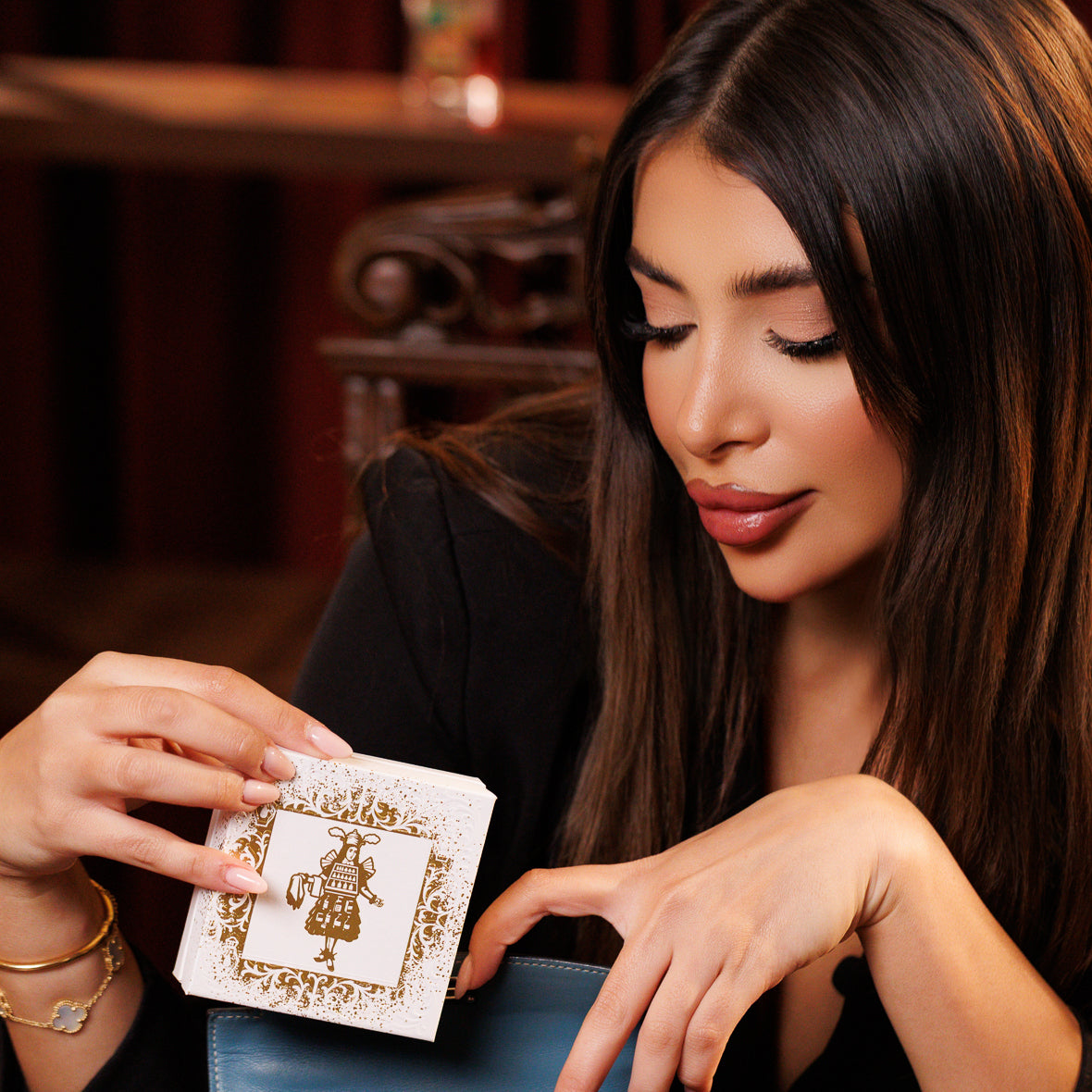
EVERY DECANT
From the original bottle to your door
We buy the original flacon at full retail price, direct from the house.
A medical grade Socorex syringe takes the exact millilitres straight from the flacon.
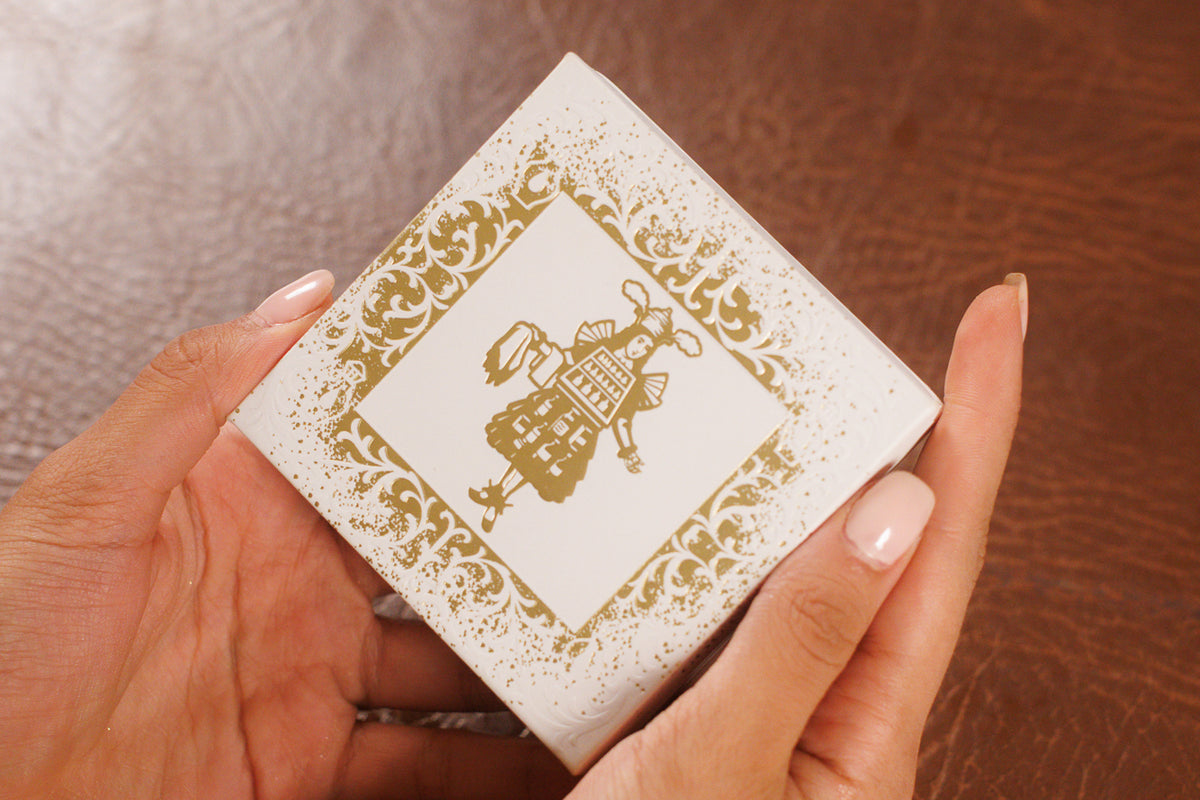
Packed into the hot foiled box and handed to DHL, every duty already paid. How a decant is made
More from Lost Tribe
You may also like