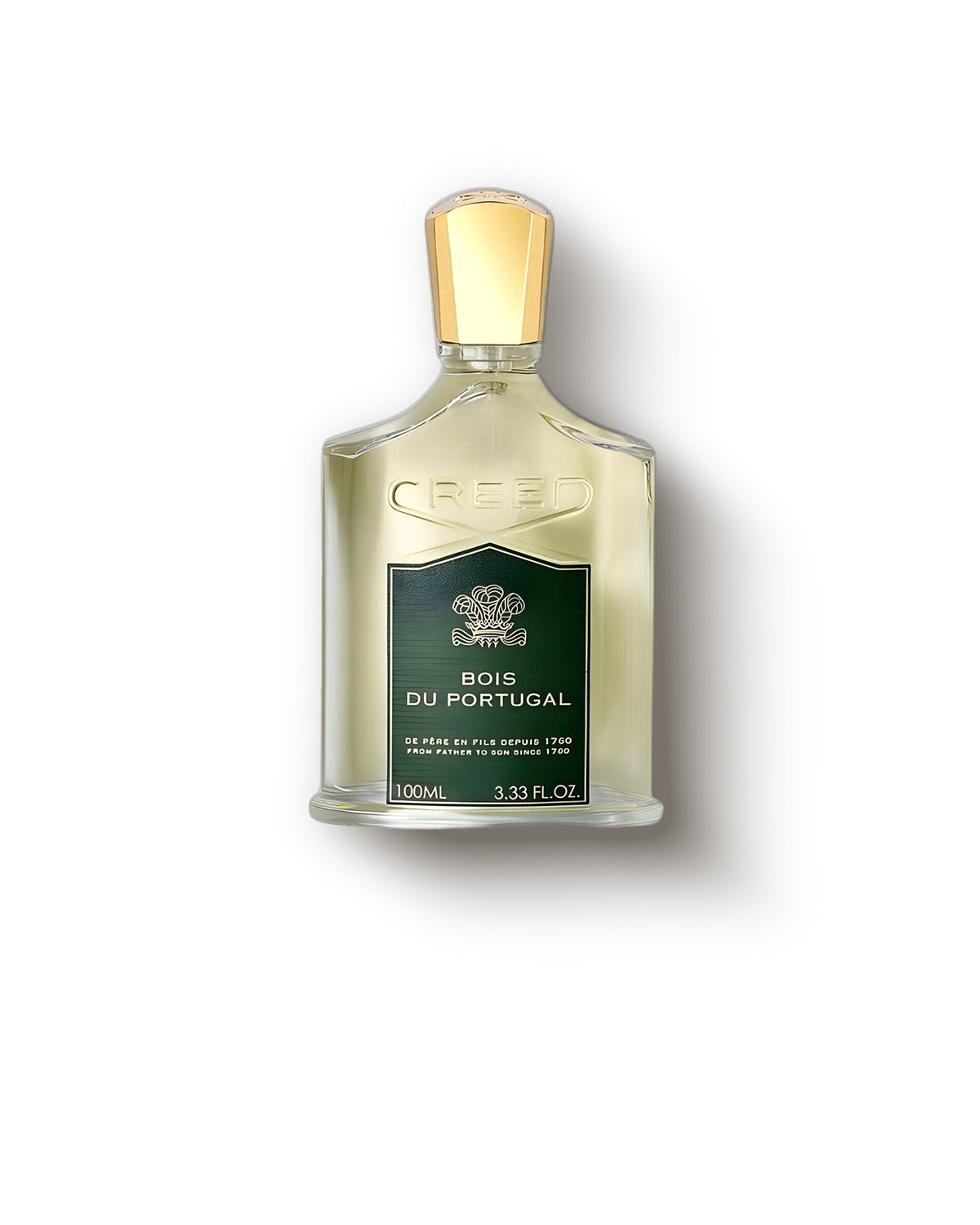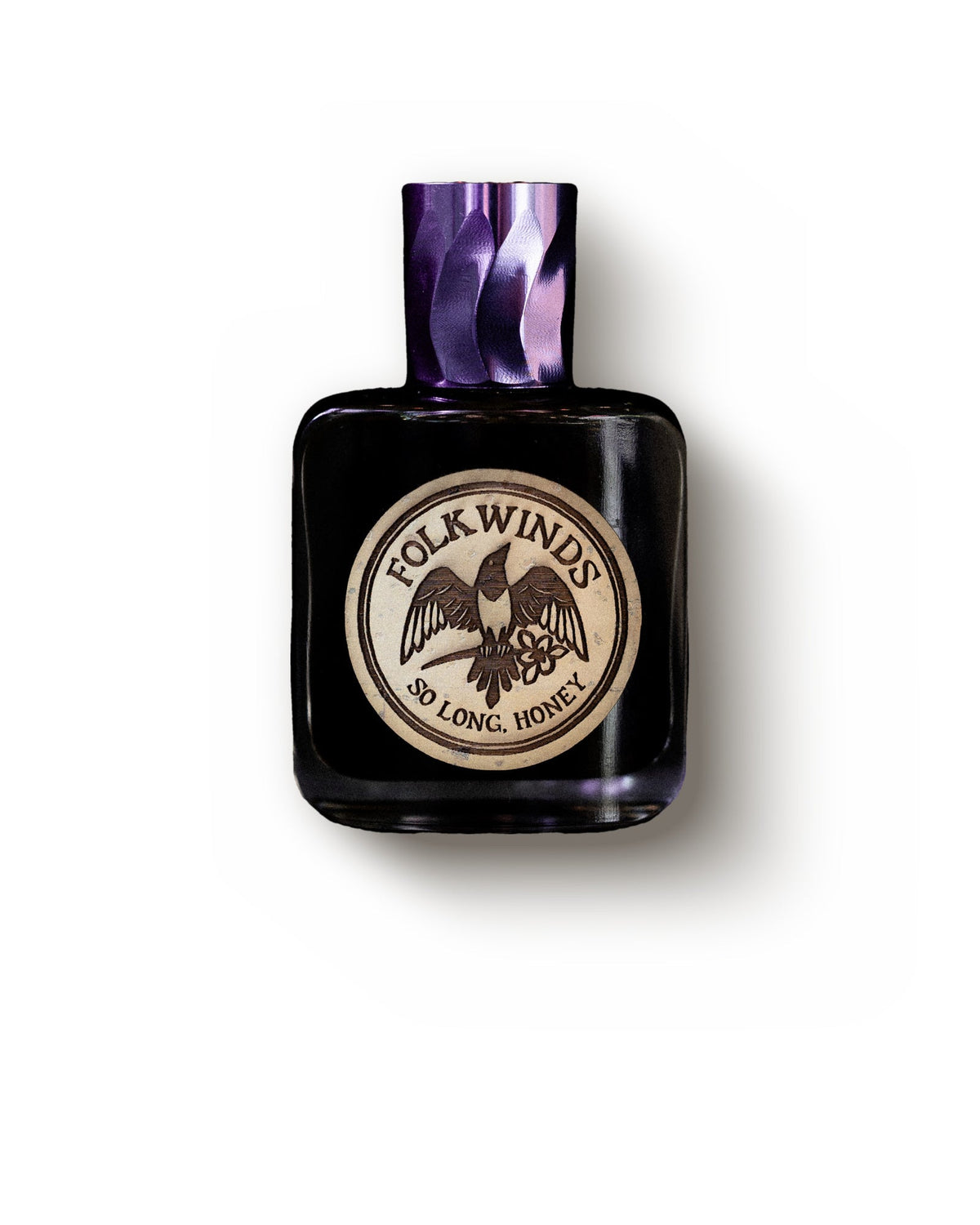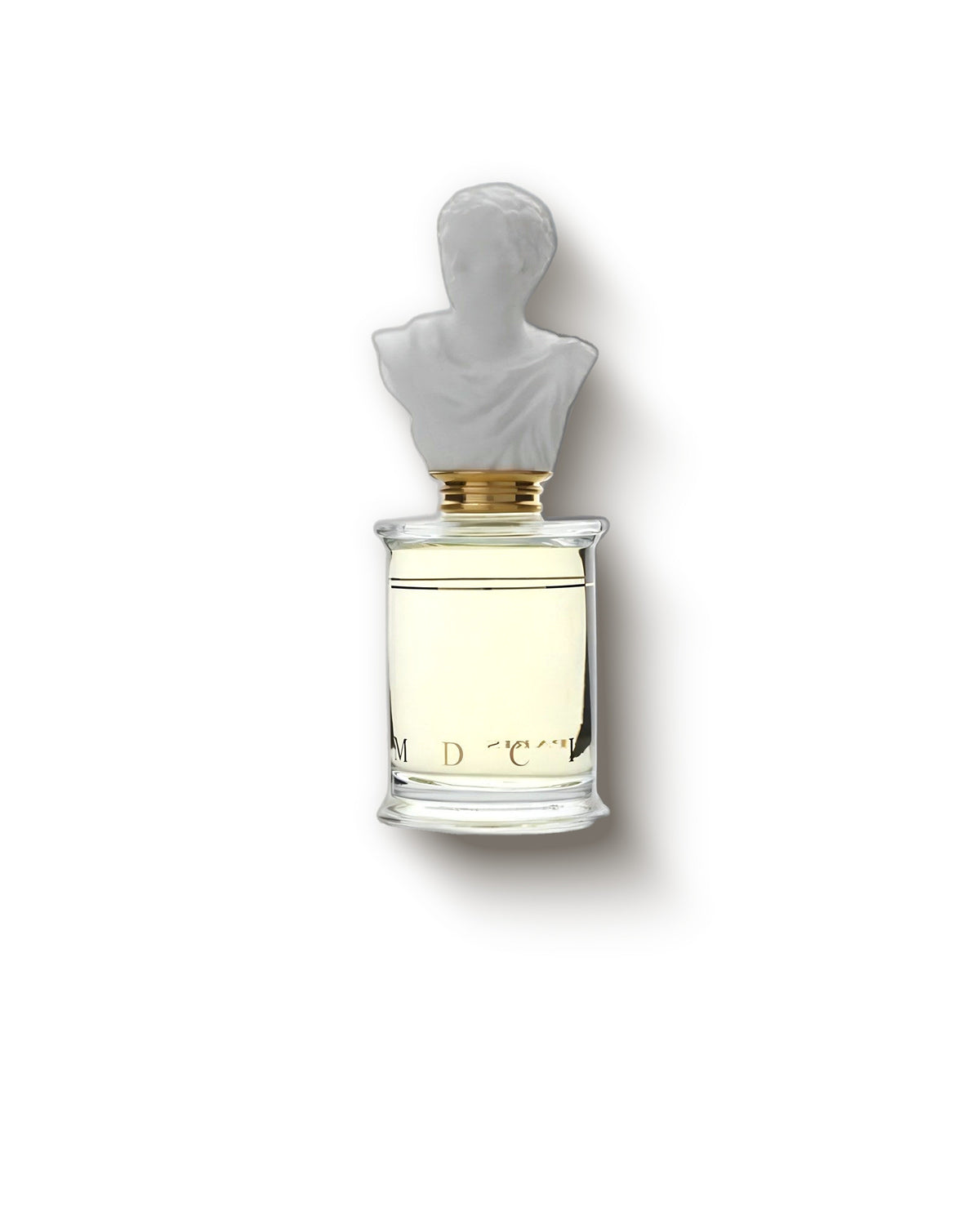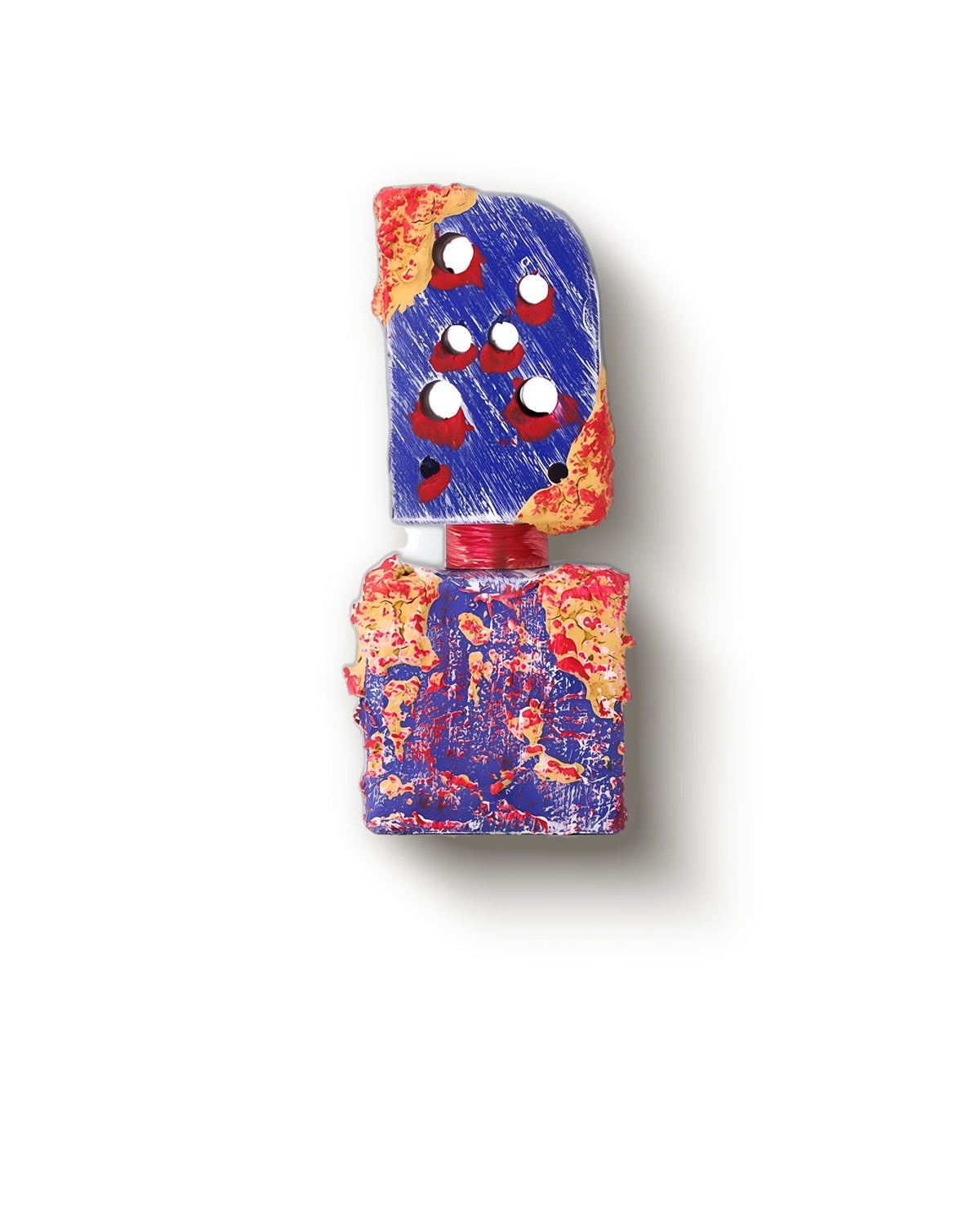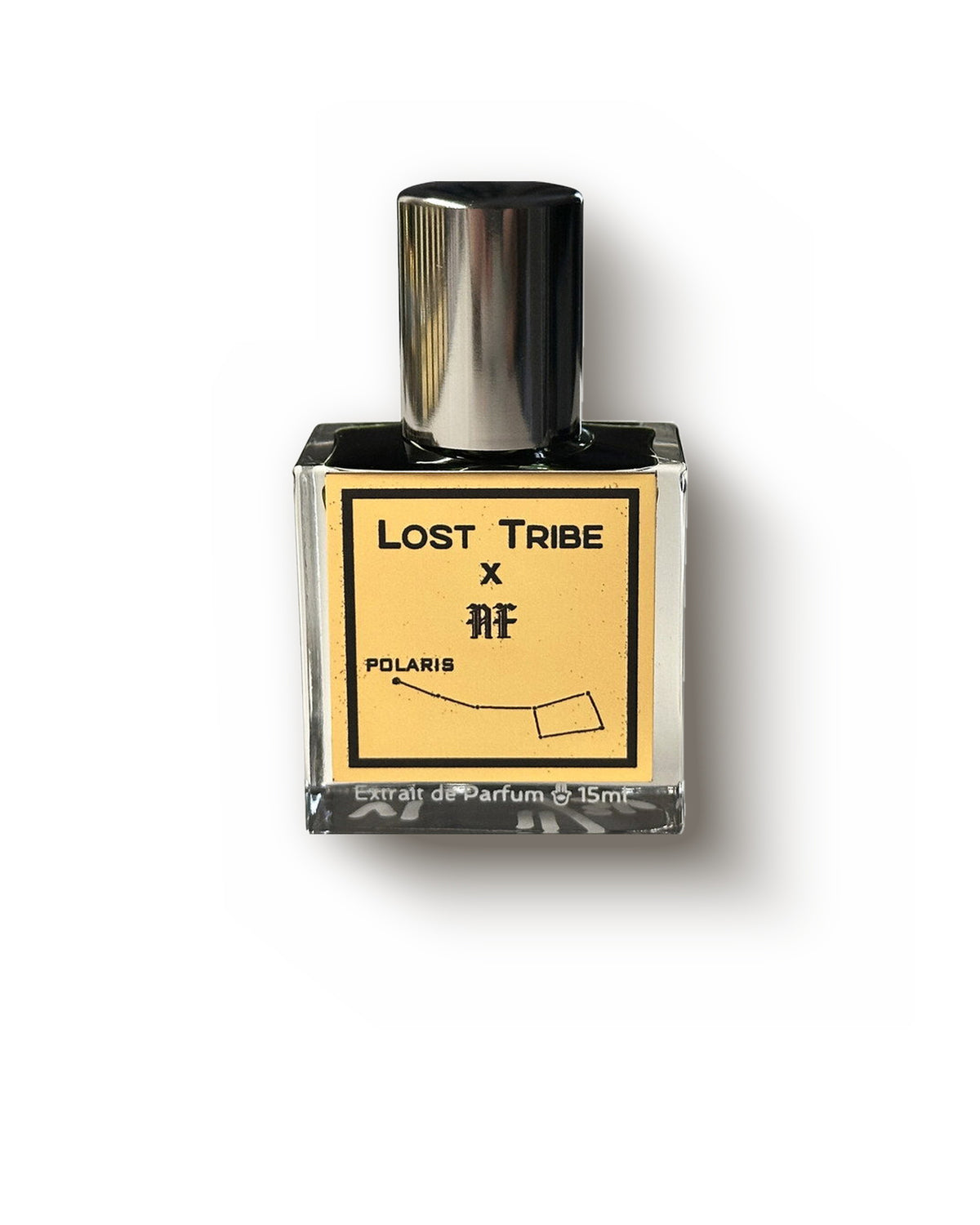
Lost Tribe
Polaris
The Story
Polaris is Lost Tribe's cold aromatic fougère, named after the North Star. It is composed without deer musk or oud, unusual in this catalogue. The brand's own page names no perfumer. Mint runs through the lavender throughout.


Lavender
Clean herbal calm with a bite
Cool and camphorous at first, closer to a crushed stem than a drawer sachet, then softening into a powdery, faintly sweet hush. Freshly pressed linen, barbershop polish, a grey-purple quiet. The bite is what keeps it from being merely soothing.


Aromatic
Crushed herbs in cool air
The green, camphorous coolness of lavender, rosemary, sage, and thyme, like herbs bruised between the fingers. It feels clean, invigorating, and a touch austere, the crisp backbone of a classic barbershop freshness.


Green
Sap on your hands after weeding
Snap a stem and this is what comes off: sappy, cool, a little bitter, more vegetable than floral. Cut grass, bruised leaves, the inside of a hedge after the shears. Nothing here is sweet.


Fresh
Bright plant oils lifting into open air
Freshness from real plant oils, whether cold citrus peel, crushed mint and herbs, camphor or conifer needles. It reads bright, sharp and aromatic, lifting the opening the way a room changes when you open a window, then fading fast.


Mossy
inky green shade under old oaks
The damp, inky smell of oakmoss and treemoss, lichens rather than true mosses, gathered from shaded oak and fir bark, faintly bitter with a cool woody depth. It grounds a fragrance in forest-floor shadow, lending an old, melancholy elegance that feels like breathing in a rain-soaked wood.


Woody
Dry grain of cut timber
The smell of cedar shavings, sandalwood, and dry vetiver roots, a sanded, resinous warmth with a faint pencil-box rasp. It feels grounded and composed, the quiet backbone that makes a scent read as serious and lasting.


White Ambergris
Salt, skin and driftwood, bleached pale
What it is
White is where the journey ends. A waxy mass forms in the gut of a sperm whale, drifts for years, and sun and saltwater bleach it from black toward dusty white, oxidizing near-odorless ambrein into something fragrant.
How it smells
Soft, sweet and marine, the most rounded of the grades. Clean skin, warm musk, tobacco and sea air over a velvety mineral sweetness. Whatever fecal edge the fresher, darker pieces carry has weathered out of it.
In perfumery
Used as a tincture, it works less like a note than like a light behind the others, adding warmth, diffusion and a skin-close glow while making everything around it last. Ambroxan now reproduces the core of that effect.
Good to know
Nothing is taken from a whale: every piece is picked off a beach, often years after it was expelled. Each lump is a one-off find, and no two smell quite alike.


Lime
Green citrus zest with a bitter peel snap
What it is
The oil leaves the fruit two ways. Cold pressing squeezes it straight out of the green peel; distillation boils it off the whole crushed fruit, a grade made largely for the soft-drink trade. They do not smell alike.
How it smells
Pressed lime is sharp and bitter and wet, exactly a wedge cut a second ago. Distilled lime is rounder and almost candied, all cola and soda fizz. Both fade fast and leave a thin green, faintly soapy dryness.
In perfumery
Lime goes at the top, cutting richness and making the first few minutes feel carbonated. Basil, mint, vetiver and rum are its usual company, in colognes, fougeres and every gin-and-tonic accord ever built.
Good to know
Sunlight is the catch. Cold-pressed lime carries odourless compounds, furocoumarins, that leave skin hypersensitive to it, so the dose is capped or a furocoumarin-free grade is used. Distilled lime has none of them, and its soda smell comes from the fruit's own acid reshaping the oil in the still.


Lavender High Elevation
Mountain-grown lavender, finer and sweeter
What it is
Lavandula angustifolia grown high on cool mountain slopes rather than on the warm plain. Altitude is the oldest quality marker in lavender: cooler nights and a shorter season push the plant to lay down more of the esters that make the oil sweet, and true angustifolia has in any case always belonged high up, growing wild on cool slopes long before it was ever farmed.
How it smells
Cleaner and sweeter than lowland oil, with the camphor lift held right back. The opening is soft and fruity rather than sharp, the floral heart rounder, and the drydown quietly hay-like with a powdery calm. Where a plains lavender or a lavandin reads medicinal, this reads almost like a fine tea.
In perfumery
The grade used where lavender has to be beautiful in its own right rather than structural: in soliflores, in soft fougères, and against iris, tonka and gentle musks. Its low camphor means it will not fight a floral heart the way ordinary lavender oil does.
Good to know
High-elevation is a real distinction rather than a marketing one, and it is reflected in ester content, which is the number the trade actually grades on. Much of what is sold as lavender is lavandin, a sterile hybrid that yields far more per hectare and smells sharper; altitude and species are the two things worth asking about.

Bergamot
Sparkling citrus light with a bitter edge
What it is
Nobody eats bergamot. It is sour, seedy and disappointing, and almost the whole world's supply grows on one strip of Calabrian coast, farmed purely for the oil pressed cold from its green rind.
How it smells
Zest and green light in the first second, then something rounder than lemon: a floral, tea-like smoothness sitting on a faintly bitter warmth. It burns off fast. What stays behind is a quiet, slightly spiced hum.
In perfumery
It defines eau de cologne, and sits on top of nearly every fougère alongside lavender and oakmoss. Perfumers want the first bright second it gives, and the oil is also what makes Earl Grey smell like Earl Grey.
Good to know
The thing that makes it sparkle can also burn. Bergamot carries bergapten, which leaves skin hypersensitive to sunlight, so perfumers either keep the dose low or reach for a grade with the molecule stripped out.


Camphor
A cold white crystal, not a leaf
What it is
Not a eucalypt at all, and not a leaf oil. Camphor crystallises out of steam driven through the chipped wood of an East Asian laurel, a cousin of cinnamon. Most of it now starts from pine turpentine.
How it smells
Cold and dry, with a waxy medicinal bite and no sweetness beneath it. Balm tins. A wool coat lifted out of winter storage. Where eucalyptus smells like a crushed green leaf, camphor stays mineral and hard.
In perfumery
Lavender, rosemary and sage already carry a little of it, which is why a fougere feels bracing. Perfumers add more to make a top note land cold, or to set a hard edge against patchouli and white florals.
Good to know
Left in a drawer, a block of it shrinks away to nothing without ever turning liquid, straight from solid to vapour. The same trick lights the flame in Hindu aarti, burning off without ash.


Lotus
Cool pond petals, long painted in Egyptian tombs
What it is
Two flowers answer to the name: the pink lotus of Asia and the blue water lily of the Nile, both rooted in pond mud. Neither yields much oil, but both give a costly absolute extracted from the flowers, which is where a natural lotus begins.
How it smells
Cool and watery, petals over still water. The pink reads clean and rosy-green; the blue goes deeper, heavier, almost wine-like. The absolutes add a honeyed, powdery warmth and a faint herbal edge, where mainstream reconstructions reach for cucumber and melon instead.
In perfumery
It works as a fresh floral heart, thinning out heavy white florals and putting daylight between woods. Mainstream versions are built from ozonic marine molecules and green cucumber materials; natural work uses the absolute itself. Nearly every spa-clean aquatic leans on the built version.
Good to know
The Egyptians held blue lotus at their banquets and painted it through their tombs as rebirth: the bloom opens each morning, closes by mid-afternoon, and returns with the next sun.


Gardenia
Creamy white bloom with a mushroom heart
What it is
A glossy evergreen of the coffee family, out of China and Japan, carrying waxy white flowers that refuse to give up their oil. So natural perfumers compose it from tuberose, jasmine sambac and tiare, itself a true gardenia, or take it from the flower by enfleurage, tincture or a rare small-batch absolute.
How it smells
Lush and creamy, jasmine sweetness laid over tuberose richness, opening with a green, almost buttery freshness. At the core sits the strange part: a mushroom-and-coconut facet, fleshy and faintly savory, that keeps the sweetness from turning candied.
In perfumery
Perfumers use it in the heart, where it brings velvety body to white-floral and tropical compositions. It pairs with tuberose, ylang-ylang, jasmine and coconut, and stars in soliflores built entirely around the bloom.
Good to know
A true gardenia absolute barely exists commercially: the flower yields too little to extract economically, so nearly every gardenia note is a reconstruction. In natural work that reconstruction is made from real flowers, and sometimes holds the gardenia itself.


Rose
Dewy sweetness over a green, peppery bite
What it is
Most perfumery rose is one of two: damascena from Bulgaria and Turkey, centifolia from Grasse. Whole blossoms are picked by hand from before sunrise until about ten thirty, then distilled into otto or solvent-extracted into absolute.
How it smells
Fresh, honeyed, green at the edges, with something dewy still on it. Spice and fruit sit underneath, and in the absolute a jammy darkness. Otto opens crisp and bright; absolute is warmer, smokier, closer to skin.
In perfumery
Rose behaves less like one note than a whole palette. It carries a perfume alone or vanishes into a chypre, turns dark against oud and patchouli, goes powdery beside violet, and holds a floral heart together.
Good to know
The two extractions are not the same bargain. Otto takes three to four thousand kilograms of blossoms to yield one kilogram of oil. Absolute, pulled out with solvent, gets there on roughly a seventh of the flowers.


Orris
Violet powder from a root dried for years
What it is
Iris grown for its roots, not its flowers, in the hills of Tuscany. The rhizomes are dug, dried, then left three to five years before anyone grinds and steam-distils them into a waxy ivory butter.
How it smells
Cool and powdery, a violet with no sweetness in it, closer to face powder and soft suede than to a flower. Raw carrot and flour, damp soil underneath, a faint metallic shine over all of it.
In perfumery
Perfumers use it for body: a little in the heart or base rounds off sharp florals and raw woods and leaves powder behind. Violet, rose and ambrette are its company, and it underpins every great iris fragrance.
Good to know
Dig the root up and it has almost no scent, and nothing like a violet. The irones form as the dried rhizome oxidises, so the years make the violet, not the plant. A tonne gives two kilos of butter.


Geranium
A rose with green stems and crushed mint
What it is
The perfumer's geranium is not a geranium at all. It is a pelargonium, and the rose smell sits in the leaves and stems, which is the part that goes into the still.
How it smells
Crush a leaf and you get rose, but rose with the stem still attached: green, crisp, a little peppery, cooled by something minty. Lemon and a powdery sweetness thread through it.
In perfumery
It works the heart, bridging florals and fougeres, and its herbal edge is the reason so much of it ends up in scents marketed to men. Rose, mint, clove, bergamot and vetiver all take it well.
Good to know
Geranium and rose share citronellol, which is why geranium can stand in for part of a rose accord far more affordably. Reunion's Bourbon crop, once the benchmark, has thinned as growing shifted to Egypt and China.


Elemi
The bright, lemon-peppered cousin of frankincense
What it is
Cut the bark of a Philippine tree and it weeps a soft white gum that yellows in the air. Steam-distilled, that resin becomes elemi: a first cousin of frankincense that arrives smelling of lemon peel.
How it smells
Sharp lemon and pine up front, with a green pepper snap. Underneath, something oddly herbal: dill and fennel over warm balsam, threaded with incense smoke. It dries soft and woody, much lighter than its frankincense relatives.
In perfumery
Perfumers use it as a hinge. It sits high in the blend, carrying citrus brightness down into woods and incense so the join never shows, and it lets a resinous composition glow without turning heavy or smoky.
Good to know
Its name is usually traced to the Greek enhaemon, a blood-staunching medicine described by Pliny. Long before perfumery it went into Renaissance healing balms and varnish, and the resin still yields oil generously enough to stay affordable.


Fragonia
Tea tree, minus the medicine cabinet
What it is
Nobody distilled this commercially until the 2000s. It is a myrtle shrub from the swampy southwest corner of Western Australia, closer kin to tea tree and eucalyptus than to the rosemary and lavender it gets filed beside.
How it smells
Think tea tree that has been rounded off: the same cool camphor lift, but sweetened, with a small citrus flick and something quietly floral underneath. It finishes soft and balsamic rather than antiseptic.
In perfumery
Perfumers reach for it when a formula needs cool green lift without the cleaning cupboard. It sits in the top and heart, and it turns up mostly in natural and indie work, often alongside other Australian natives.
Good to know
The name is a trademark, not botany. Growers in Western Australia coined Fragonia for their own plantation stock and registered it, so the same shrub distilled from anywhere else sells as Taxandria fragrans.


Oakmoss
The damp green soul of the forest floor
What it is
Not a moss at all, but a lichen, scraped off oak and other deciduous bark across temperate Europe, Russia and North Africa. Solvents turn the harvested growth into a dark, viscous concrete, then the absolute perfumers actually use.
How it smells
Wet stone, damp bark and something inky and leathery underneath, dry and faintly bitter. This is not fresh green: it is the cool floor beneath old trees after rain has soaked the ground.
In perfumery
The backbone of the chypre: a base note that gives a fragrance its shadow and its spine, classically under bergamot, beside labdanum and patchouli. Anything described as mossy, vintage or green-masculine is usually leaning on it.
Good to know
Oakmoss carries two allergens, atranol and chloroatranol, potent enough that the EU banned them from cosmetics outright. Perfumers use stripped grades now, but it was the earlier cap on the extract that changed how the classic chypre smells.


Lavender Absolute
Solvent-drawn lavender, dark and honeyed
What it is
The extract obtained by washing lavender flowers with solvent rather than steaming them, first to a waxy concrete and then to a deep green-brown absolute. Because it is never steamed, the absolute carries the heavier, less volatile parts of the flower that never survive a distillation, and it looks and behaves nothing like the pale essential oil.
How it smells
Far richer and darker than the oil: herbaceous and honeyed, with hay, tobacco and a jammy fruitiness where the distilled oil is cool and camphorous. The fresh green top is largely absent, and what is left is the deep floral body of the plant with a sweet, almost balsamic weight.
In perfumery
Used as a heart and base material rather than a top note, and often alongside the essential oil rather than instead of it, so a composition can have both lavender's cool lift and its warm depth. It sits naturally with tonka, tobacco, hay and amber, and it is a mainstay of the darker fougères.
Good to know
Absolute and essential oil are two different materials from one flower, and a formula naming both is not being redundant. Absolutes are extracted with solvent, which some natural-perfumery standards exclude, and the yield is very low, so the absolute costs considerably more than the distilled oil.


Blue Cypress
Sweet smoky wood that distils to ink blue
What it is
Not a true cypress, and nowhere near Italy. This is an Australian conifer of the monsoon north, and the still takes chipped wood and bark, not foliage. Different genus, different hemisphere.
How it smells
Warm and sweet where you expected cold and green. Sanded wood, honeyed fruit, a curl of smoke, a faint licorice edge underneath. Closer to a balsamic resin than to a clipped green hedge.
In perfumery
Perfumers build it into the base. A needle oil lifts and vanishes; this one barely moves, so it fixes incense and wood accords in place and stretches the drydown. Citrus reads brighter over it.
Good to know
The blue is not in the tree. Its timber is pale gold. The colour is made in the still: wood and bark go in together, and the heat builds a blue the tree never had.


Mint
Two mints, one icy and one sweet
What it is
Two plants, two different jobs. Peppermint carries menthol and reads cold. Spearmint carries carvone instead and reads sweet, round and herbal. Both are steam-distilled from leaves and flowering tops, and swapping one for the other changes everything.
How it smells
Peppermint is piercing and icy, with a camphor edge that clears your head whether you asked or not. Spearmint is gentler: sweet, faintly fruity, no cold bite. Both start green and watery, then settle to a clean herbal hum.
In perfumery
A top note, and a fast one: it flashes through fougeres, colognes and fresh masculines, then it is gone. Peppermint handles the bracing openings. Both work with lavender, basil, citrus and, less obviously, chocolate.
Good to know
Menthol does not cool anything. It switches on the nerve receptors that report cold, so your brain reads cold where there is none. That is the trick behind toothpaste and gum, and spearmint cannot do it.


Vetiver
Cool damp earth pulled from tangled roots
What it is
Everything worth having is underground. Vetiver grows as a tall tropical grass, but the perfume lives in its roots, a dense fibrous mat that gets dug up, washed, dried and steam-distilled into a thick amber-brown oil.
How it smells
Cool damp soil and cut grass over dry wood. Haitian oil runs smoother and faintly hazelnut-sweet; Java is darker, smokier, more leathery. Underneath both, a bitter grapefruit edge and a green mineral streak that holds for hours.
In perfumery
Perfumers use it to hold a formula down, which is why fougères and chypres reach for it. Citrus, leather and tobacco sit well on top. Push its ashier side forward and it turns severe beside cypress and cedar.
Good to know
The same roots that end up in a bottle get planted on hillsides to hold the soil, gripping ground where nothing else will. Haiti supplies about half the world's vetiver oil, most of it grown on smallholder farms.
Black Meat Mysore
Sandalwood so old the heartwood turned dark
What it is
Not a place or a species but a colour. Sandalwood heartwood keeps darkening as long as the tree stands: pale, then deep yellow, then red, then the near-black core the trade calls black meat.
How it smells
Heavier than the milky sandalwood you expect. The creaminess is still there, sunk under something resinous and dark, closer to maple syrup and vanilla than to fresh milk, with a nutty sweetness that stays put.
In perfumery
Used by the drop, and almost always underneath. It works as fixative and base, anchoring rose, oud and jasmine, holding a composition down long after the lighter materials would have lifted off the skin.
Good to know
Ordinary Mysore is cut at thirty or forty years. Black meat wants far longer, so most of what circulates was set aside decades ago. It is dense enough to sink in water.
Fragrance Character
It opens cold and sharp, mint and lime over high elevation lavender, camphor holding the edge bright. Lotus, gardenia and rose sit behind geranium and elemi, reading green and resinous as much as floral, with oakmoss and vetiver underneath. The drydown turns creamy, Black Meat Mysore sandalwood beside the white ambergris, warm and slightly aquatic.


Longevity
how long it stays on skin
The hourglass reads wear time: how many hours the fragrance keeps speaking before it fades. A bar that barely leaves the start means a few fleeting hours. One that runs the full length carries from morning into evening. Treat it as typical, not promised. Oily skin holds scent far longer than dry.


Sillage
the size of its scent trail
Sillage is French for a ship's wake, and that is exactly what this measures: how much of the scent reaches the room instead of staying on you. Low is a whisper only close friends catch. Enormous fills the room, then keeps filling it after you leave.


Experimental
Built to provoke, not to please
Some perfumes are made to be liked. These are made to be argued about: inky tar, hot rubber, fruit on the turn, metal and fur where you expected flowers. The coin glows for a scent that provokes and dims for one that plays it safe, which is sometimes the point.


Office
Polished, and never louder than the room
Scent is manners in a shared room. At this range it should reach the person across the desk and stop there: tidy citrus, soft musk, pale woods, all of it reading competent and considerate. A glowing coin means nobody has to mention it. A dim one means it travels.


Evening
After dark, when it deepens
Dinner, drinks, the night that runs long. Low light is where ambers, resins and smoky woods stop being polite, and where a plush floral finally blooms. A glowing coin means it is waiting for exactly this hour. A dim one means it did its best work in daylight.


Romantic
Close enough to be felt
A fragrance can hum against skin instead of announcing itself across a table. That is the register here: creamy florals, vanilla, soft musk, a thread of spice, warm enough to make someone lean in. The coin glows when a scent sets that mood and dims when it is more practical than seductive.


Formal
Quiet authority in a dressed-up room
A wedding, a ceremony, a room where everyone has thought about their shoes. What works here is structure, not volume: smooth woods, disciplined florals, soft leather. A glowing coin means it holds its posture all evening. A dim one means it is too casual for the room.


Casual
Easy comfort for unhurried days
Errands, coffee, a slow Saturday with nowhere to be. Nothing here has to impress anyone, so the fit is soft and easy: fresh citrus, light woods, a little warmth off the skin. A glowing coin says yes to all that. A dim one means the fragrance is asking for a bigger night.


Day to Night
where its mood naturally falls
A bar running from sun to moon, reading the hour the fragrance was made for. The more of it that stays gold, the more the scent belongs to daylight and open air. The further the blue reaches back toward the sun, the deeper and warmer it turns: evening, candlelight, low rooms.


Winter
Warmth that carries through cold air
Cold air mutes a fragrance and slows it down, which is why winter belongs to the dense and the warm: resin, smoke, vanilla, leather, ambered spice. The bar reads how well this one pushes back, glowing against the chill instead of thinning out in it.


Spring
Fresh blooms in mild, rising warmth
Mild, humid air lifts a light composition, so the season belongs to dewy florals, green stems, soft powder and citrus you can see through. Alive rather than heavy. The further the green runs along the bar, the more comfortably this one wears in that weather.


Summer
Bright and airy in real heat
Heat does the projecting for you, which is why the wrong perfume turns unbearable by noon. What survives is cool and breathable: sharp citrus, salt air, aromatic herbs, water. Things that refresh instead of cloy. A short bar here means save it for cooler months.


Fall
Spiced warmth for cooling days
As the air cools, the rich materials stop smothering and start reading clearly: dry woods, warm spice, tobacco, amber, fruit gone golden. It is the season perfume turns contemplative. The bar fills according to how naturally this one settles into crisp, cooling days.
Best Worn
Cool weather suits it, autumn through early spring, daytime into evening. It works for office hours and casual wear alike, and it suits anyone who likes lavender kept green and cold.
Choose options
The Vibe


The Nose
Mathew Schmuelian
Founder and perfumer
Founder and perfumer of Lost Tribe, who moved from collecting artisanal naturals to macerating his own musks in 2022; his first release was Lost Tribe Hope You Like It. He composed Lost Tribe Sultry Sambac, Lost Tribe Smoky Bear and Lost Tribe Prince of Persia.
More by this noseNeon PalmsVanilla Waves V2 Extra MuskLost Lotus
The Maison

Small tribe, real musk, no compromises, poured while stock of the originals lasts.
Lost Tribe makes fragrance that feels lived in and loud, the kind that arrives before you do and lingers after you leave. There is a maximalist streak running through the whole house, from sun drunk tropical fruit to resin thick vanilla to rare oud built on aged Kinam.
- Known for
- Maximalist naturals, aged Kinam

EVERY DECANT
From the original bottle to your door
We buy the original flacon at full retail price, direct from the house.
A medical grade Socorex syringe takes the exact millilitres straight from the flacon.
Packed into the hot foiled box and handed to DHL, every duty already paid. How a decant is made
More from Lost Tribe
You may also like