
Bidzina Kanchaveli
Yellow
The Story
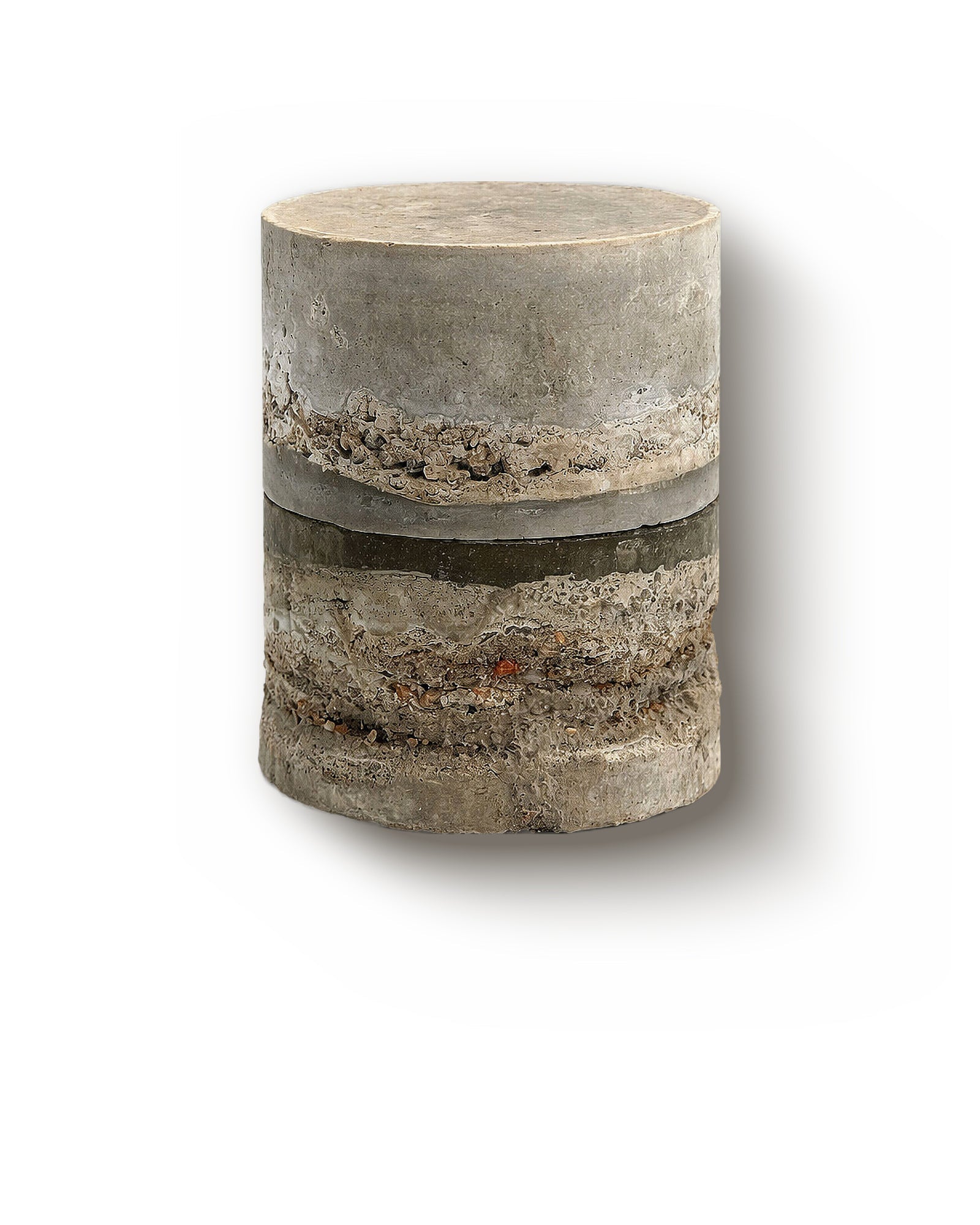
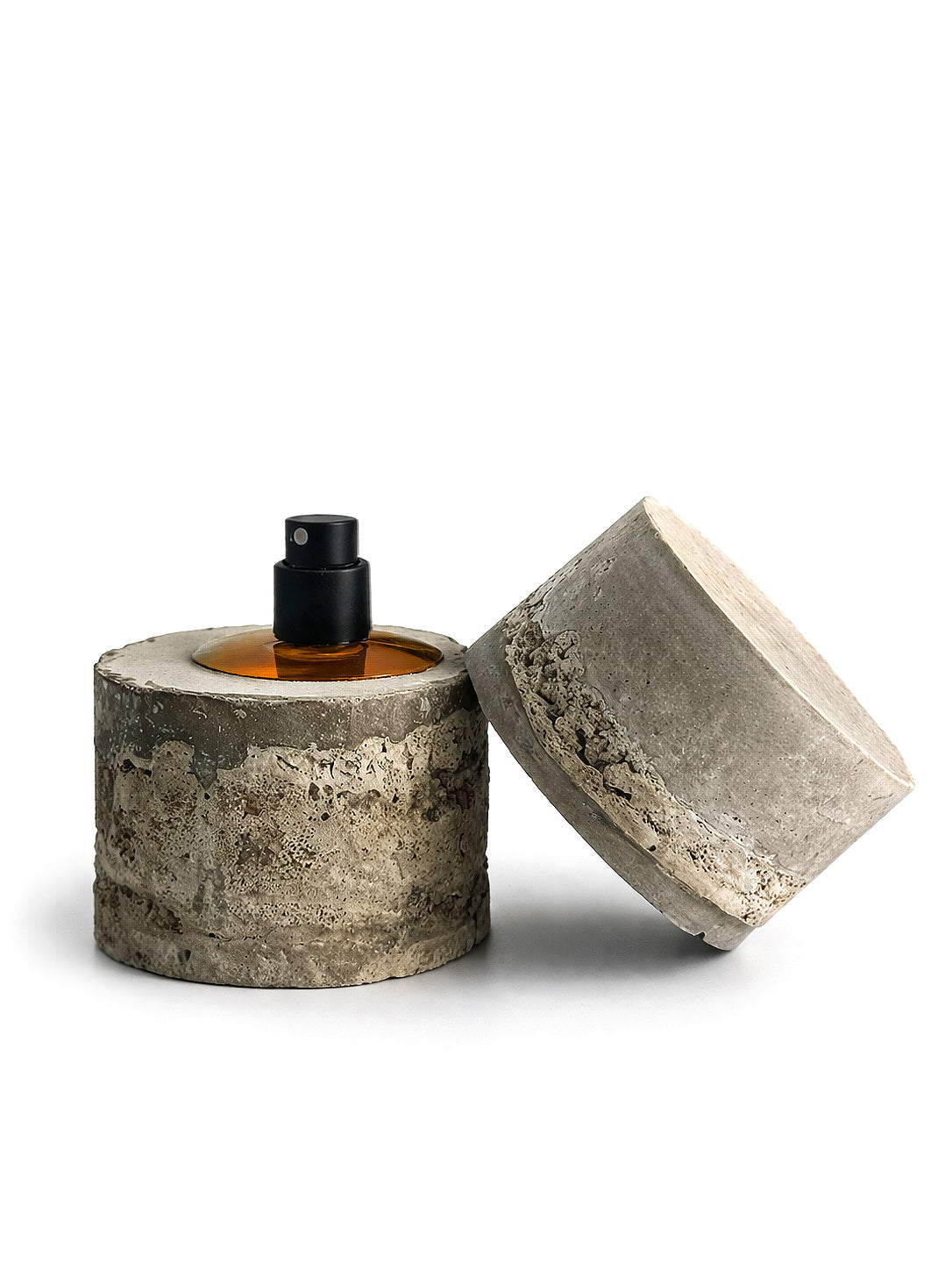
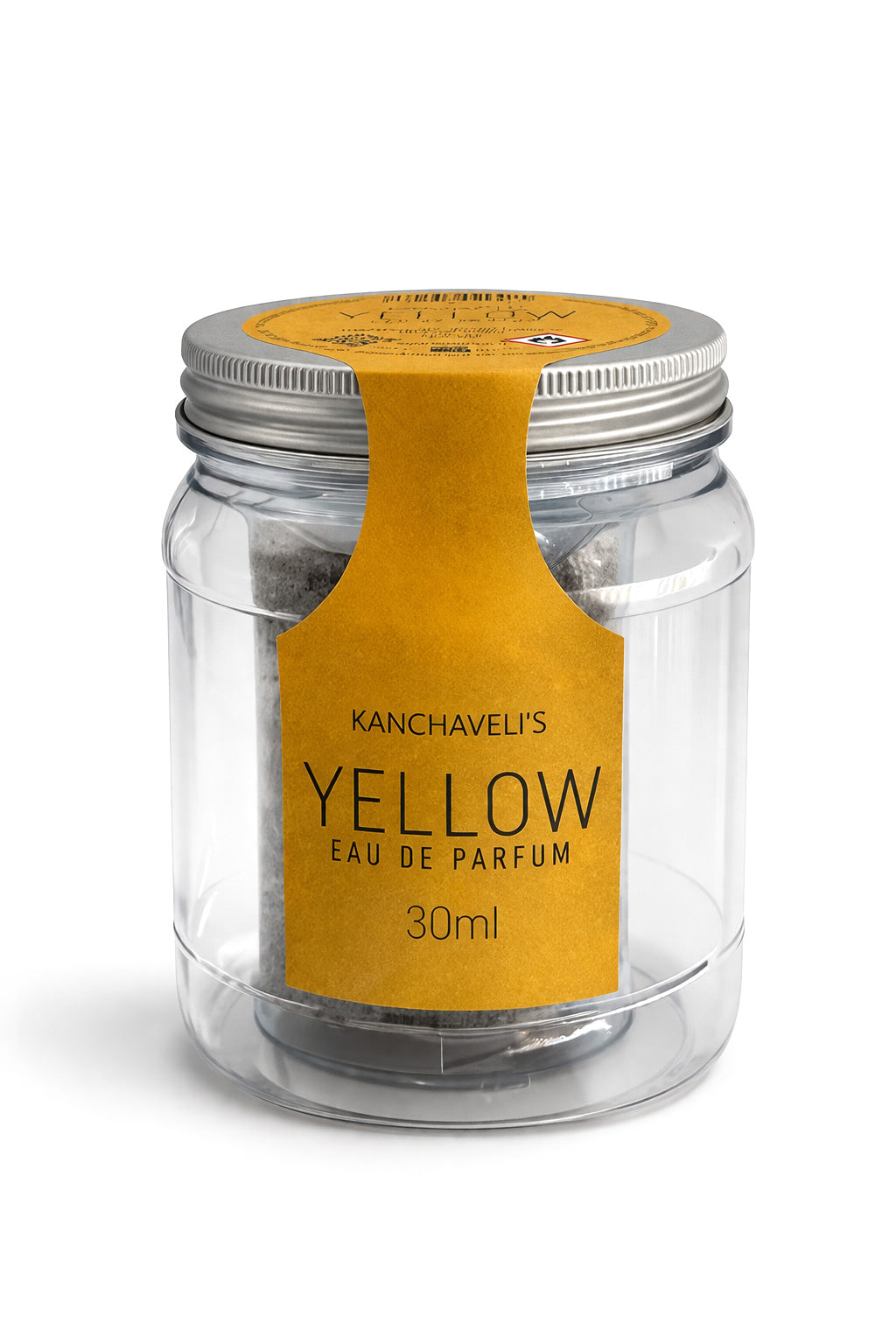
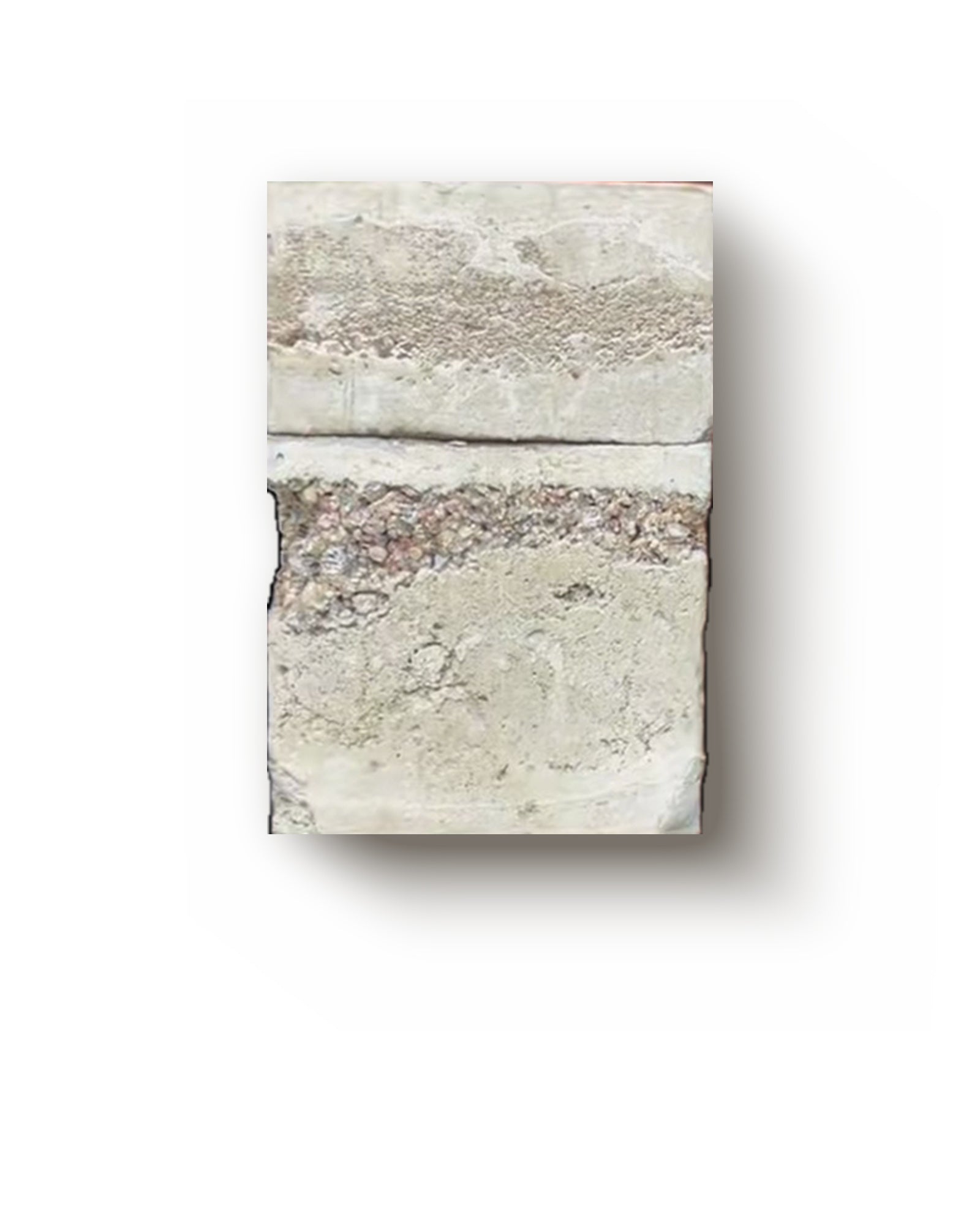
Yellow is written as the colour of the mind, of spontaneity and of sudden inspiration, and Kanchaveli intends its molecules to act on the limbic system rather than simply smell of something. It is sealed in a hand-moulded concrete cylinder he describes as a storage medium for ideas, closed inside stone. Like the rest of his work it is treated as a tool acting on perception and memory rather than as ornament.


Woody
Dry grain of cut timber
The smell of cedar shavings, sandalwood, and dry vetiver roots, a sanded, resinous warmth with a faint pencil-box rasp. It feels grounded and composed, the quiet backbone that makes a scent read as serious and lasting.


Leather
A jacket with some miles on it
Tanned hide and birch tar, dry, smoky, a bitter rasp and tobacco under it. Sometimes new and lacquered, like a car interior; sometimes worn soft, like suede gloves gone thin. Either way, it smells used.


Citrus
First bright zest of morning
The juicy, rind-snapping brightness of lemon, bergamot, and orange peel, tart and effervescent with a clean bitter edge. It opens a scent with instant lift and sparkle, fresh and energizing, evaporating quickly like sunlight on water.


Animalic
Skin, fur and something not quite tame
A raw, body-warm muskiness that reads of skin, hair and fur, sometimes sweet and powdery, sometimes sharp and faintly feral. At its best you cannot tell where the perfume stops and the wearer starts. At its strongest, it is the reason some people back away.


Fresh
Cold water, open air, washed skin
Cool water, laundered cotton, air with nothing in it yet. The lift can go citrus-zesty or salt-aquatic, but the effect is the same either way: it registers as clean rather than as a scent, the way a room reads different five minutes after you open a window.


Smoky
Charred wood and rising embers
The dry, charred scent of burning wood, smoldering incense, and lingering ash, sometimes tarry, sometimes wispy and gray. It feels brooding and atmospheric, conjuring a dying fire and a cool current of air carrying its last breath.


Leather
Tanned hide, smoke and animal warmth
What it is
There is no leather essential oil. Perfumers rebuild the smell from birch tar and cade, smoky distilled woods, plus styrax and labdanum resins, isobutyl quinoline and safraleine-type molecules, echoing the tannins and oils once used to cure hides.
How it smells
Smoky, dry and animalic, ranging from supple new suede to tarry old saddle. Birch-tar versions read sooty and phenolic, almost campfire and band-aid; softer suede accords turn powdery, floral and skin-warm.
In perfumery
A base note that lends spine and a carnal edge. It does its best work under rose and violet, alongside tobacco and oud, and a floral heart set on leather turns unmistakably human.
Good to know
The genre was born in Russia, where boots and book bindings were treated with birch tar, and Russian leather still means that smell. The real tanning oils were mostly restricted on safety grounds, so today's leathers are reconstructions.


Citrus
All the brightness lives in the rind
What it is
One family, one place: the rind. Lemon, orange, bergamot, lime, grapefruit and mandarin all keep their scent in the peel, pressed out cold rather than distilled. The same trees' leaves and flowers become petitgrain and neroli instead.
How it smells
Tart and fizzing, like rind oil sprayed into the air when you bend a peel. Sweet mandarin at one end, bitter grapefruit and sharp lemon at the other. It burns bright, then softens and goes.
In perfumery
The opening of countless fragrances, and the whole point of eau de cologne, which the eighteenth and nineteenth centuries built almost entirely on it. A citrus top also buys lift for heavier things: florals, chypres, fougeres.
Good to know
Ever wonder why the opening never lasts? Pressed citrus oil is the most volatile thing in the bottle. It can also burn: bergapten in expressed bergamot leaves skin sensitive to sunlight, so formulas use grades stripped of it.


Woody Notes
Sawn timber, pencil shavings, warm bark
What it is
Not one material but a whole shelf: sandalwood, cedar, vetiver, guaiac, patchouli, plus the lab-made woody-ambers that stretch them further. Roots, bark and heartwood, steam-distilled or solvent-extracted, sitting beside molecules built from nothing at all.
How it smells
Dry at one end, creamy at the other. Cedar reads pencil-sharp, sandalwood milky, vetiver rooty and damp, guaiac smoky-sweet. Together they smell of sawn timber and sun-warmed bark, grounding whatever gets built on top.
In perfumery
Heart and base work, mostly. Woods give a composition its spine: structure, staying power, something for florals and ambers to hang on. The dry cedar-vetiver register drives a great deal of what has been released this century.
Good to know
Most woodiness comes from a lab, partly because sandalwood and rosewood were overharvested into protection. Iso E Super grew so dominant that Escentric Molecules built Molecule 01 around it almost neat: barely there up close, glowing on skin.


Cinnamon
Sweet bark heat, glowing rather than stinging
What it is
Only the inner bark is worth anything. Strips are peeled from the tree, curled into quills, then steam-distilled. Sri Lanka's true cinnamon is the delicate one; the coarser, lower-priced cassia is what fills most kitchen jars.
How it smells
Warm, dry and sweet, with a red glow from cinnamaldehyde and a clove-like edge behind it. True cinnamon smells rounder and faintly floral; cassia bites. The dry-down goes woody and balsamic, with a whisper of leather.
In perfumery
A heart note, and the reason gourmands and orientals feel like a warm room. It works with vanilla, amber, rose, apple and tobacco, and the whole trick is restraint: a touch gives glow, a fraction more gives sting.
Good to know
The Dutch once burned their own stockpiles to keep the price up, back when this bark outvalued gold and Ceylon was worth conquering for it. Modern caution is duller: cinnamaldehyde sensitizes skin, so the dose is capped.
Fragrance Character
Leather on top, citrus through the heart and woody notes at the base. Woody and leather dominate, with citrus and a fresh accord lifting the opening and a smoky, faintly animal thread underneath.


Longevity
how long it stays on skin
The hourglass reads wear time: how many hours the fragrance keeps speaking before it fades. A bar that barely leaves the start means a few fleeting hours. One that runs the full length carries from morning into evening. Treat it as typical, not promised. Oily skin holds scent far longer than dry.


Sillage
the size of its scent trail
Sillage is French for a ship's wake, and that is exactly what this measures: how much of the scent reaches the room instead of staying on you. Low is a whisper only close friends catch. Enormous fills the room, then keeps filling it after you leave.


Experimental
Built to provoke, not to please
Some perfumes are made to be liked. These are made to be argued about: inky tar, hot rubber, fruit on the turn, metal and fur where you expected flowers. The coin glows for a scent that provokes and dims for one that plays it safe, which is sometimes the point.


Office
Polished, and never louder than the room
Scent is manners in a shared room. At this range it should reach the person across the desk and stop there: tidy citrus, soft musk, pale woods, all of it reading competent and considerate. A glowing coin means nobody has to mention it. A dim one means it travels.


Evening
After dark, when it deepens
Dinner, drinks, the night that runs long. Low light is where ambers, resins and smoky woods stop being polite, and where a plush floral finally blooms. A glowing coin means it is waiting for exactly this hour. A dim one means it did its best work in daylight.


Romantic
Close enough to be felt
A fragrance can hum against skin instead of announcing itself across a table. That is the register here: creamy florals, vanilla, soft musk, a thread of spice, warm enough to make someone lean in. The coin glows when a scent sets that mood and dims when it is more practical than seductive.


Formal
Quiet authority in a dressed-up room
A wedding, a ceremony, a room where everyone has thought about their shoes. What works here is structure, not volume: smooth woods, disciplined florals, soft leather. A glowing coin means it holds its posture all evening. A dim one means it is too casual for the room.


Casual
Easy comfort for unhurried days
Errands, coffee, a slow Saturday with nowhere to be. Nothing here has to impress anyone, so the fit is soft and easy: fresh citrus, light woods, a little warmth off the skin. A glowing coin says yes to all that. A dim one means the fragrance is asking for a bigger night.


Day to Night
where its mood naturally falls
A bar running from sun to moon, reading the hour the fragrance was made for. The more of it that stays gold, the more the scent belongs to daylight and open air. The further the blue reaches back toward the sun, the deeper and warmer it turns: evening, candlelight, low rooms.


Winter
Warmth that carries through cold air
Cold air mutes a fragrance and slows it down, which is why winter belongs to the dense and the warm: resin, smoke, vanilla, leather, ambered spice. The bar reads how well this one pushes back, glowing against the chill instead of thinning out in it.


Spring
Fresh blooms in mild, rising warmth
Mild, humid air lifts a light composition, so the season belongs to dewy florals, green stems, soft powder and citrus you can see through. Alive rather than heavy. The further the green runs along the bar, the more comfortably this one wears in that weather.


Summer
Bright and airy in real heat
Heat does the projecting for you, which is why the wrong perfume turns unbearable by noon. What survives is cool and breathable: sharp citrus, salt air, aromatic herbs, water. Things that refresh instead of cloy. A short bar here means save it for cooler months.


Fall
Spiced warmth for cooling days
As the air cools, the rich materials stop smothering and start reading clearly: dry woods, warm spice, tobacco, amber, fruit gone golden. It is the season perfume turns contemplative. The bar fills according to how naturally this one settles into crisp, cooling days.
Best Worn
Cooler weather and daytime into evening. The citrus keeps it from being heavy and the leather keeps it from being casual.
Choose options
The Vibe


The Nose

Bidzina Kanchaveli
Founder and perfumer
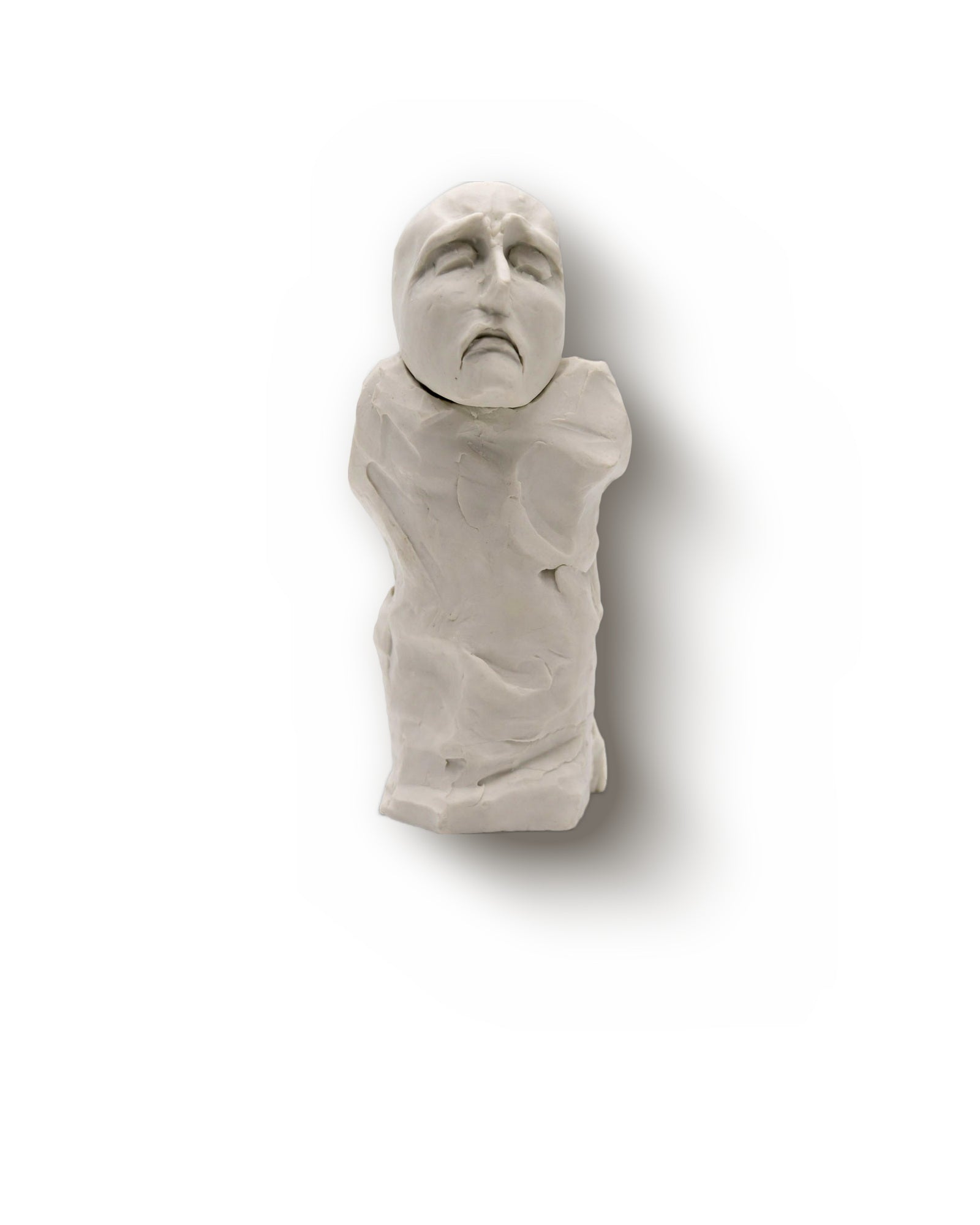
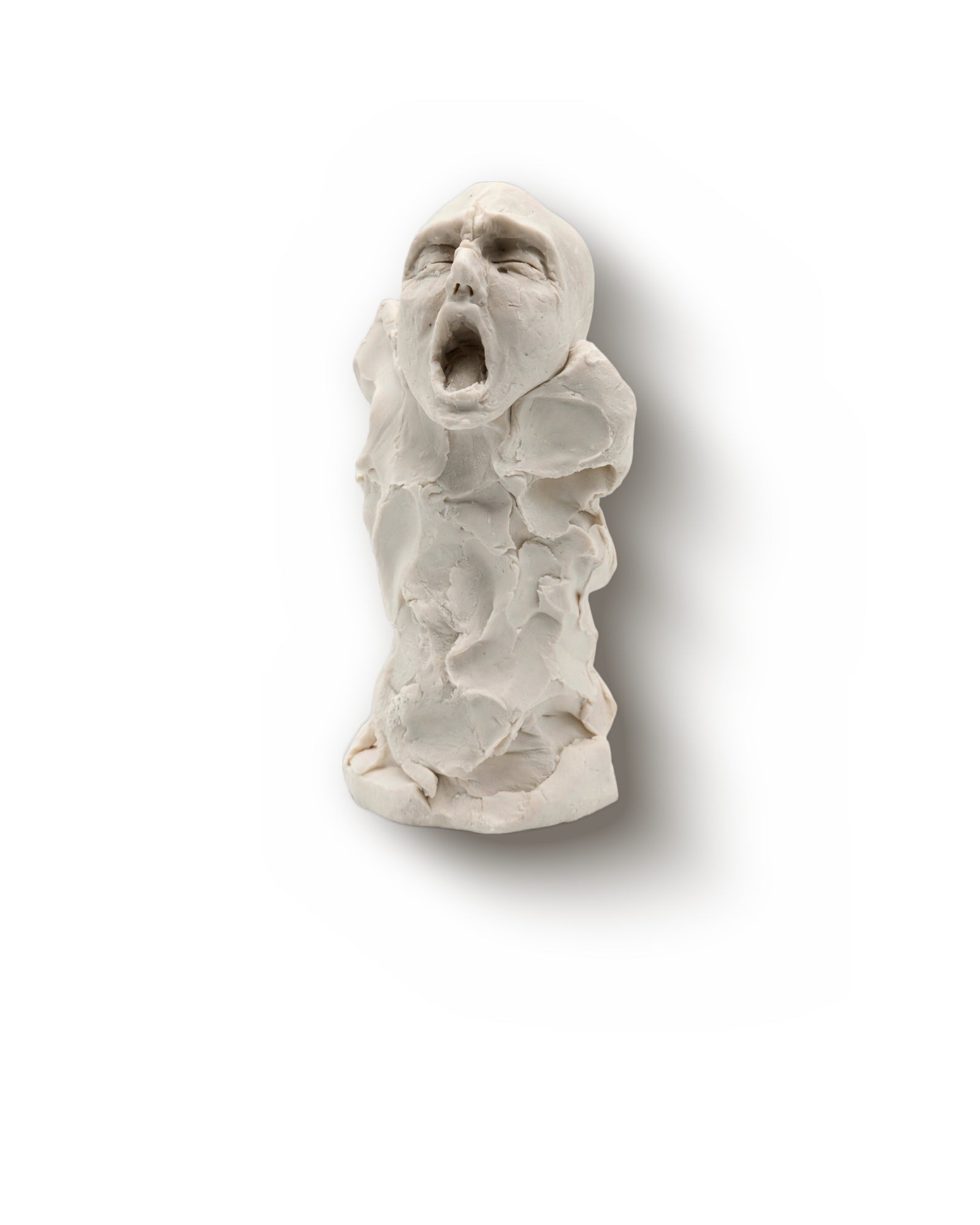
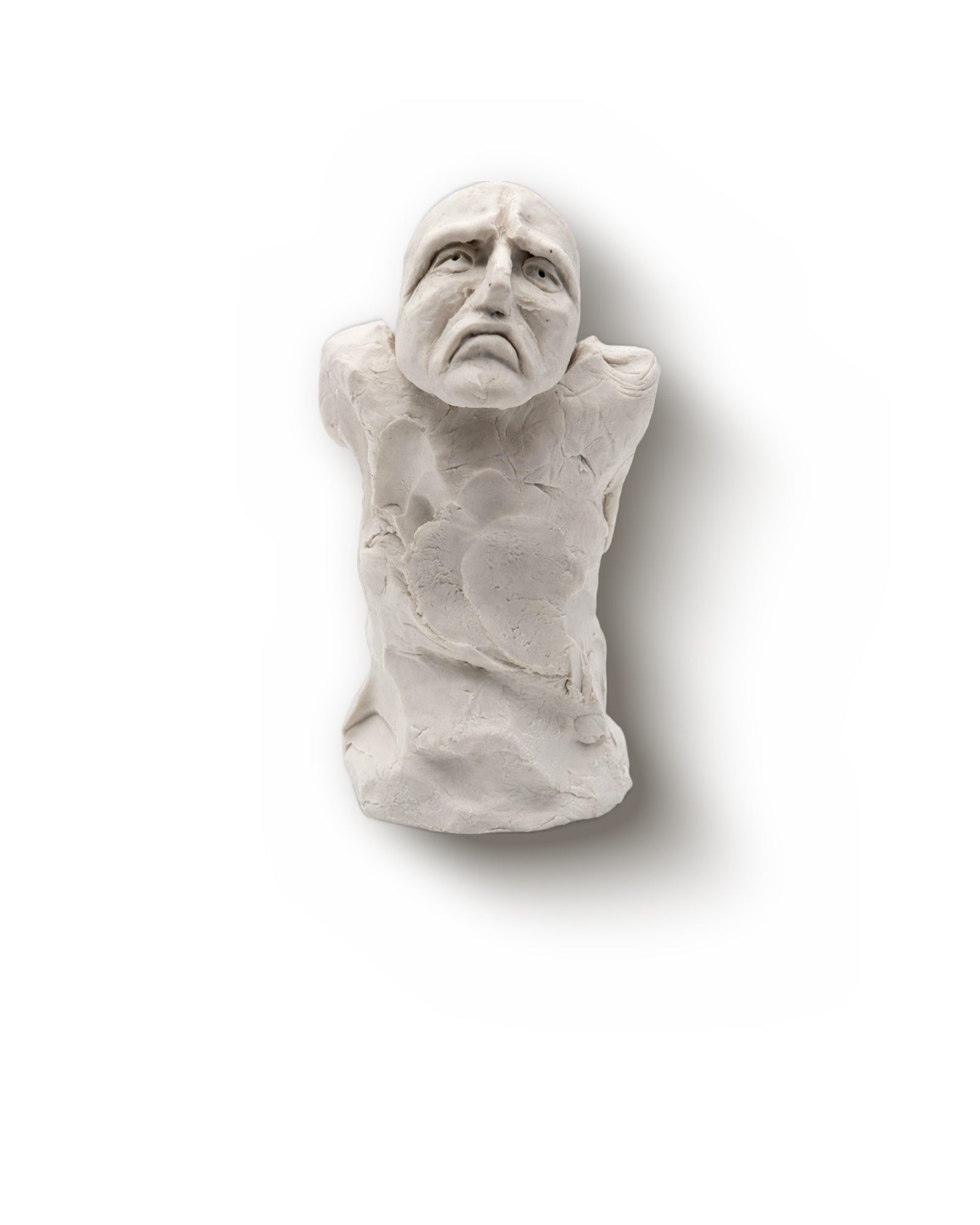
Georgian artist and former filmmaker who runs his own Berlin atelier, sculpting each concrete or porcelain flacon by hand alongside the scent. His Color Series holds Kanchaveli White and Kanchaveli Yellow; the Emotion Series extraits are Kanchaveli Hate, Kanchaveli Fear, Kanchaveli Grief and Kanchaveli Envy.
The Maison

One fragrance composed from inside one emotion, in a flacon cast by hand.
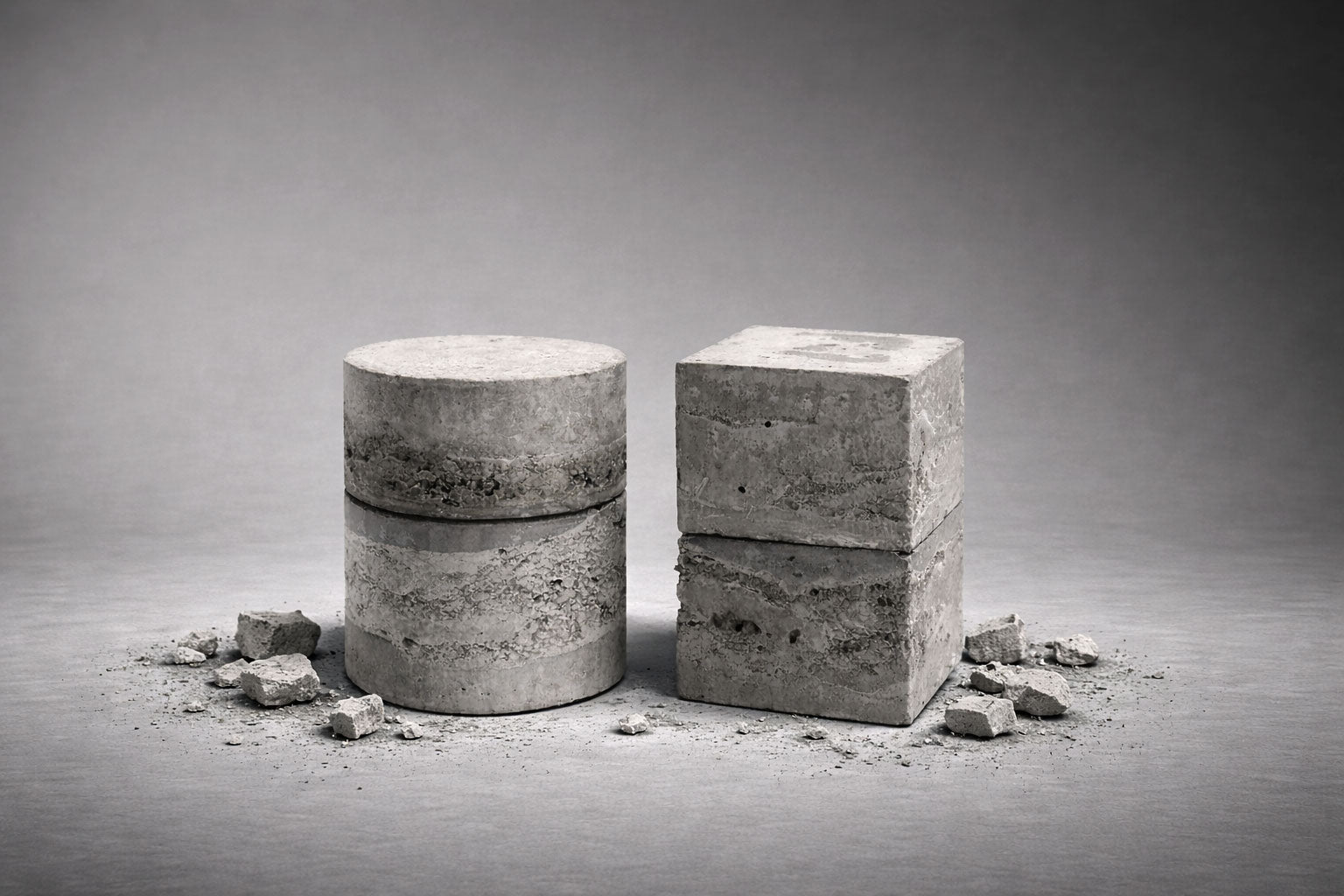
Bidzina Kanchaveli is a Georgian artist and film maker working out of a Berlin atelier, and he builds each extrait from inside a single emotional state rather than around a note pyramid. Every bottle is thrown by hand in porcelain or cast in concrete, so the object and the scent arrive as one piece.
- Origin
- Berlin, Germany
- Known for
- The Emotions and Colour series
More from Bidzina Kanchaveli
You may also like