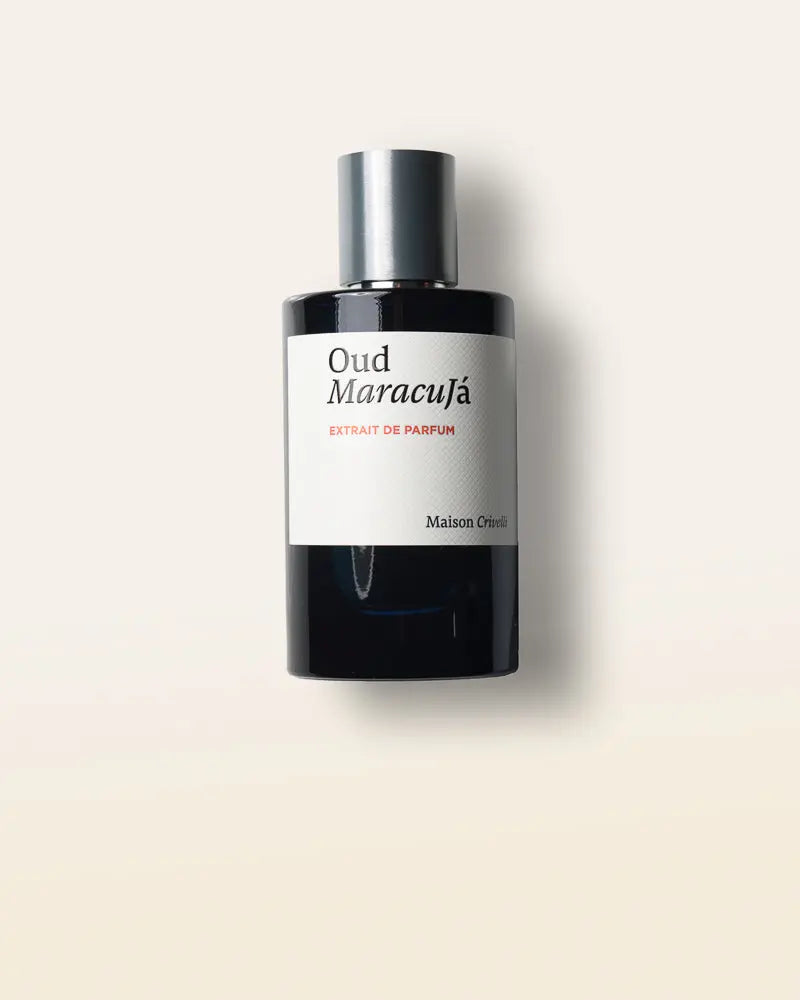


Maison Crivelli - Oud Maracuja
Oud Maracuja collides the ripe, acidic burst of passionfruit with the dense, resinous weight of agarwood, wrapping saffron and Turkish rose around a core of Indonesian patchouli and leather that deepens toward a labdanum-anchored amber base.
The Nose
Composed by Jordi Fernández for Maison Crivelli, also behind Montblanc Explorer, Ex Nihilo Blue Talisman and Ex Nihilo The Hedonist.
Synthetic Passionfruit
The clean, bright tropical workhorse of modern perfumery
What it is
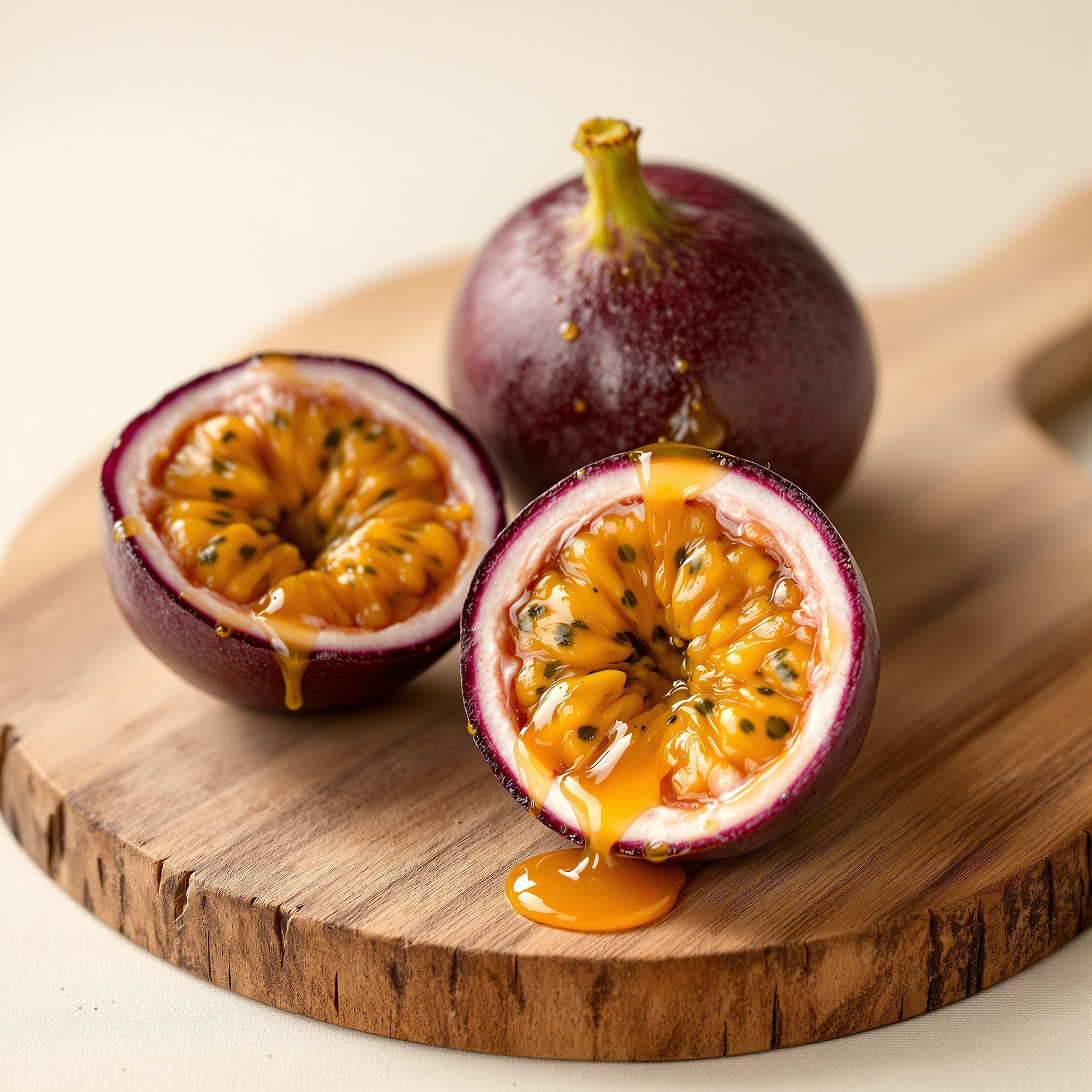
Because no real passionfruit oil exists, mainstream perfumery builds the note from aroma chemicals — most centrally a family of fruity-sulfur synthetics such as passionfruit thioesters that carry the fruit's signature tang. It is a lab-built accord, designed to deliver a recognizable passionfruit impression without any part of the plant involved. This is the everyday, default way the note appears.
How it smells
Vivid, juicy and unmistakably tropical, with a tart-sweet pop and that distinctive savory-sulfur twang that signals ripe passionfruit. Compared with the all-natural version it reads brighter, cleaner and more linear — a sharp, consistent burst that holds its exact shape. The effect is crisp and immediate rather than soft or evolving.
In perfumery
It is ubiquitous, threaded through fruity florals, gourmands, summery and tropical compositions across every price tier. A tiny dose of the thioester-type materials goes a long way, adding sparkle to the top notes and a mouthwatering lift to florals and sweet accords. Perfumers reach for it constantly precisely because it is reliable and easy to dose.
Good to know
Synthetics here are not a compromise — they are clean, stable, inexpensive and identical from batch to batch, which is exactly why they dominate. They give perfumers a vivid passionfruit effect at a fraction of the cost and effort of an all-natural reconstruction, with none of the volatility. Bright and dependable, this is the version most people actually smell when a fragrance says passionfruit.
Fruity Notes
An orchard in a bottle, sun-warmed and dripping
What it is
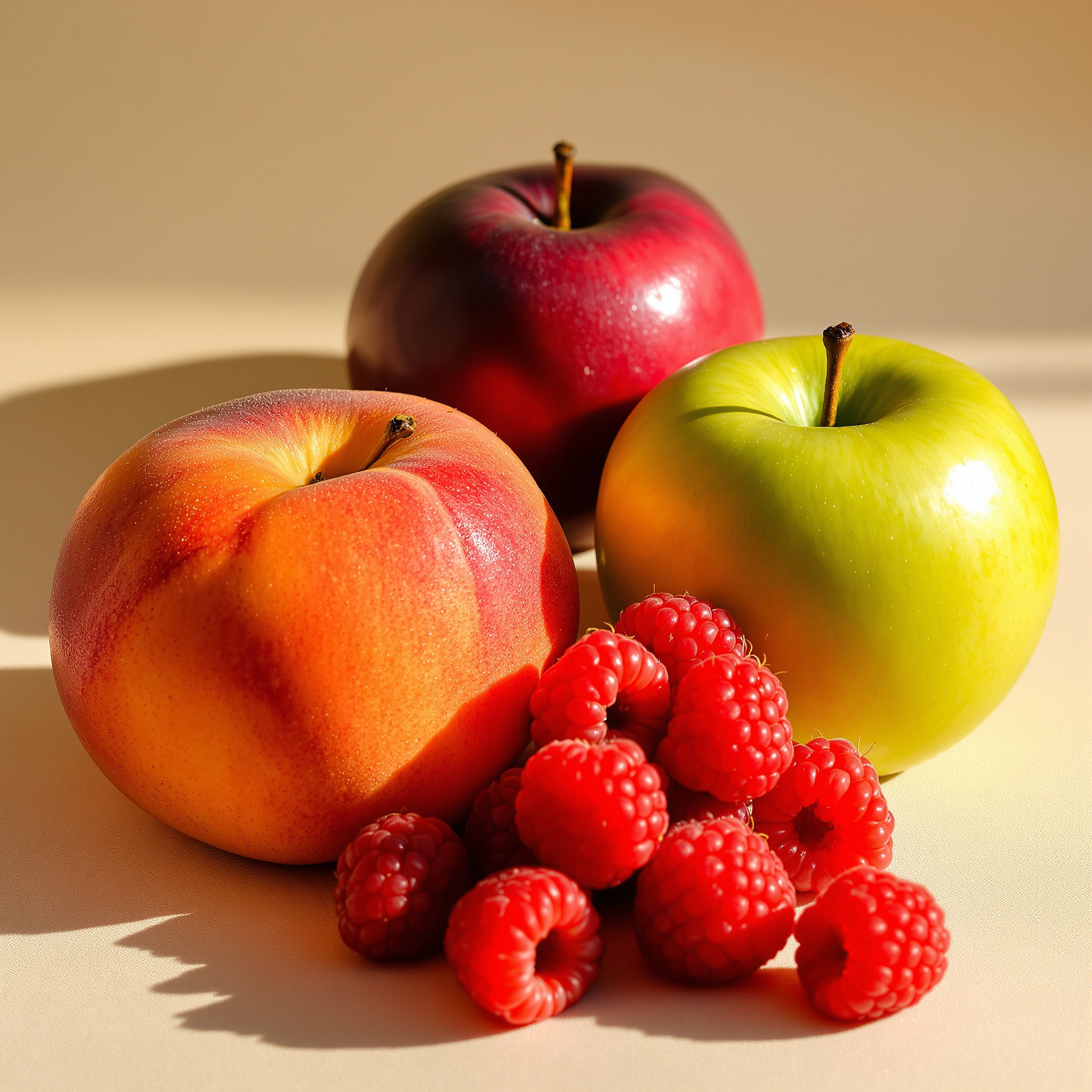
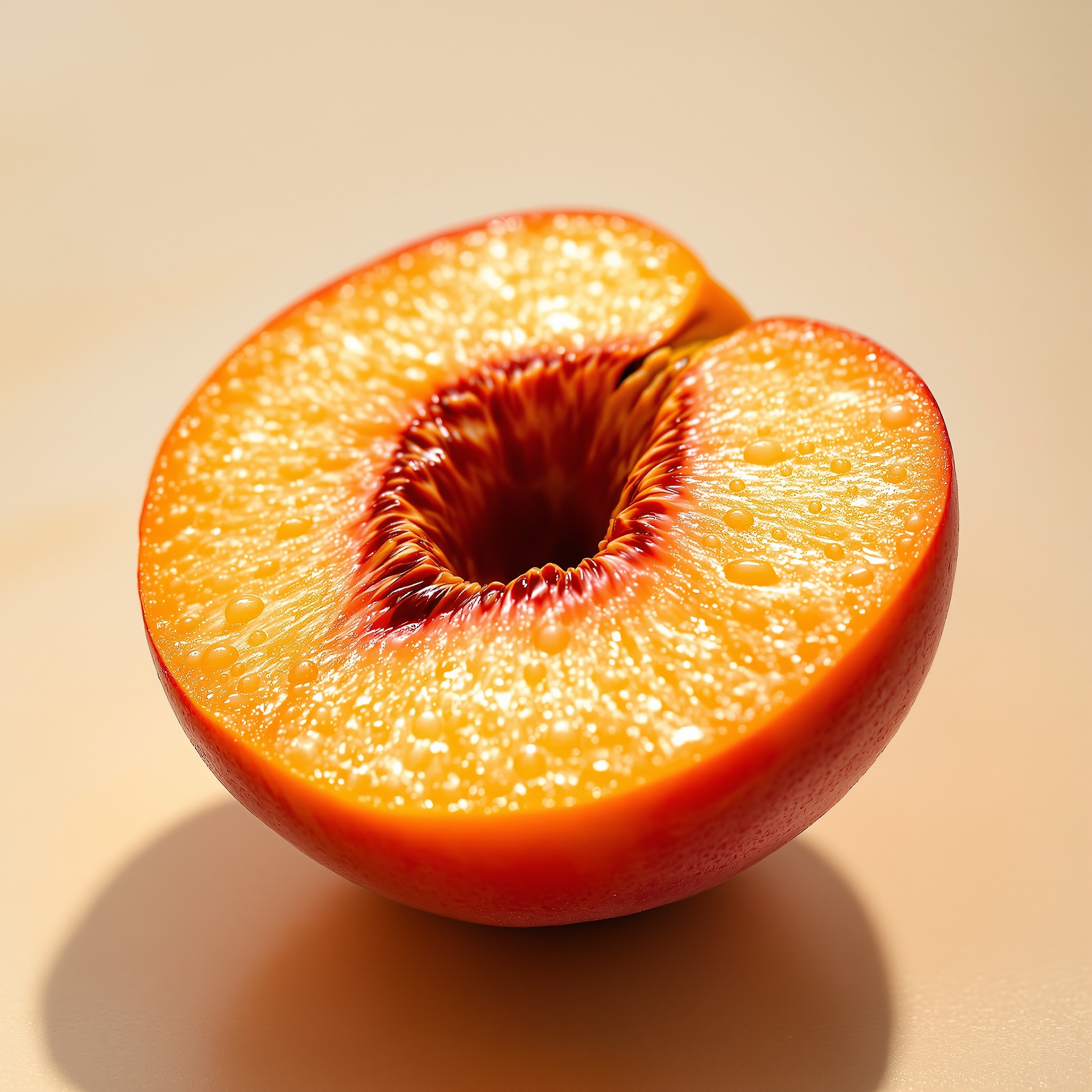
An umbrella term for accords evoking edible fruit beyond citrus: peach, apple, pear, berry, plum, lychee. Few come from real fruit, which yields little usable scent. Most are built from aroma-chemicals such as gamma-undecalactone for peach or ethyl maltol for candied warmth, blended into convincing impressions.
How it smells
Juicy, sweet and round, spanning crisp green apple and pear, jammy red berry, syrupy plum and tropical lychee. Lactones lend creamy, skin-of-the-fruit softness while esters add nail-polish brightness on top. Most accords shift from fresh, sappy bite to candied warmth as they dry down.
In perfumery
Usually a top-to-heart accent adding lift, sweetness and approachability, softening woods or brightening florals. It is foundational to fruity-florals and gourmands. The style shows in the berry-patchouli of the landmark orientals, the crisp apple of modern fresh fruity-florals, and the famous peach-skin warmth threading through the great vintage chypres.
Good to know
The peach in classic perfume is rarely real peach. Gamma-undecalactone, nicknamed Aldehyde C-14 although it is chemically a lactone, was first synthesized in 1908. A pioneering perfumer used it in a 1919 chypre, giving the scent its signature fuzzy, fruity warmth.
Saffron
Crimson threads breathing leather, honey and dry hay
What it is
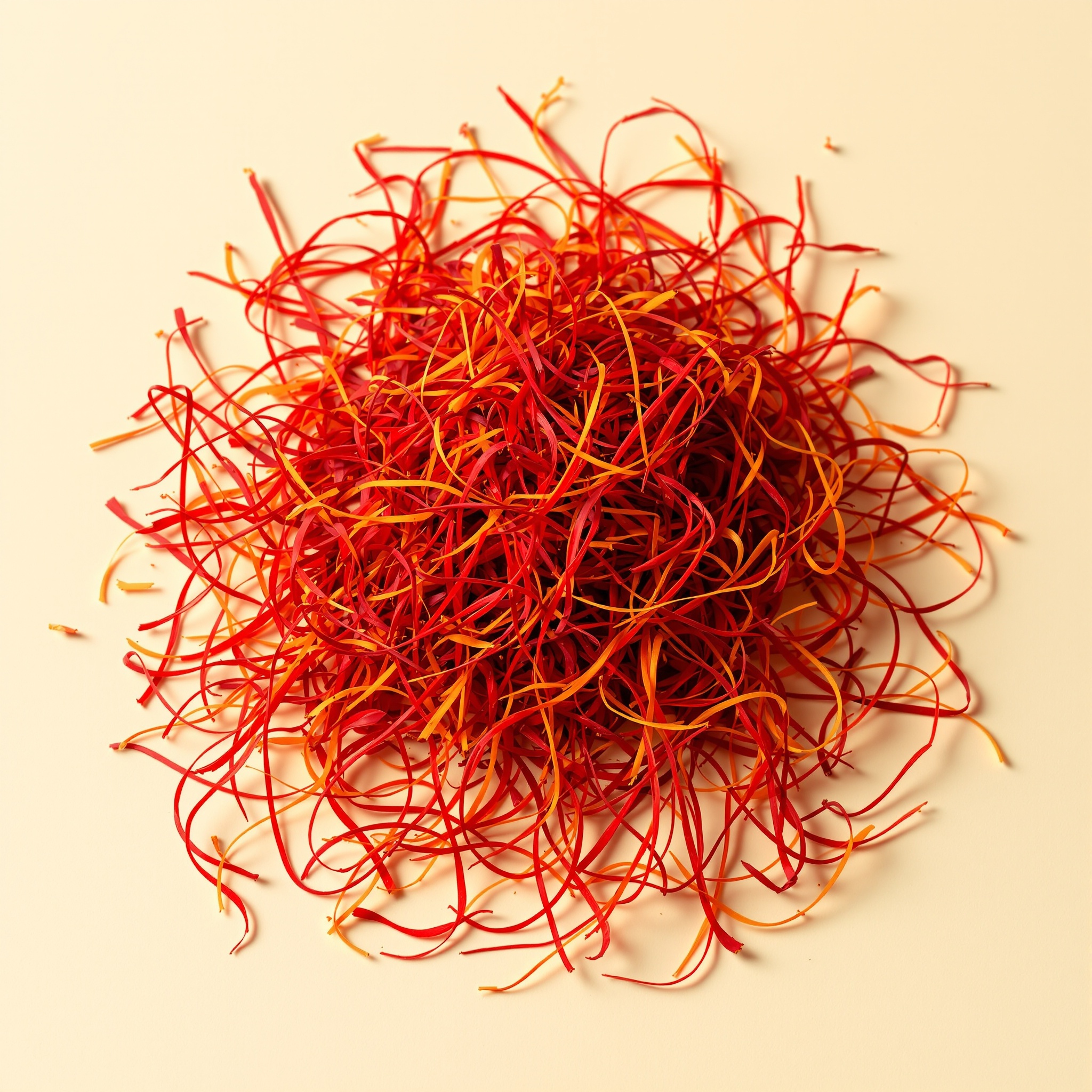
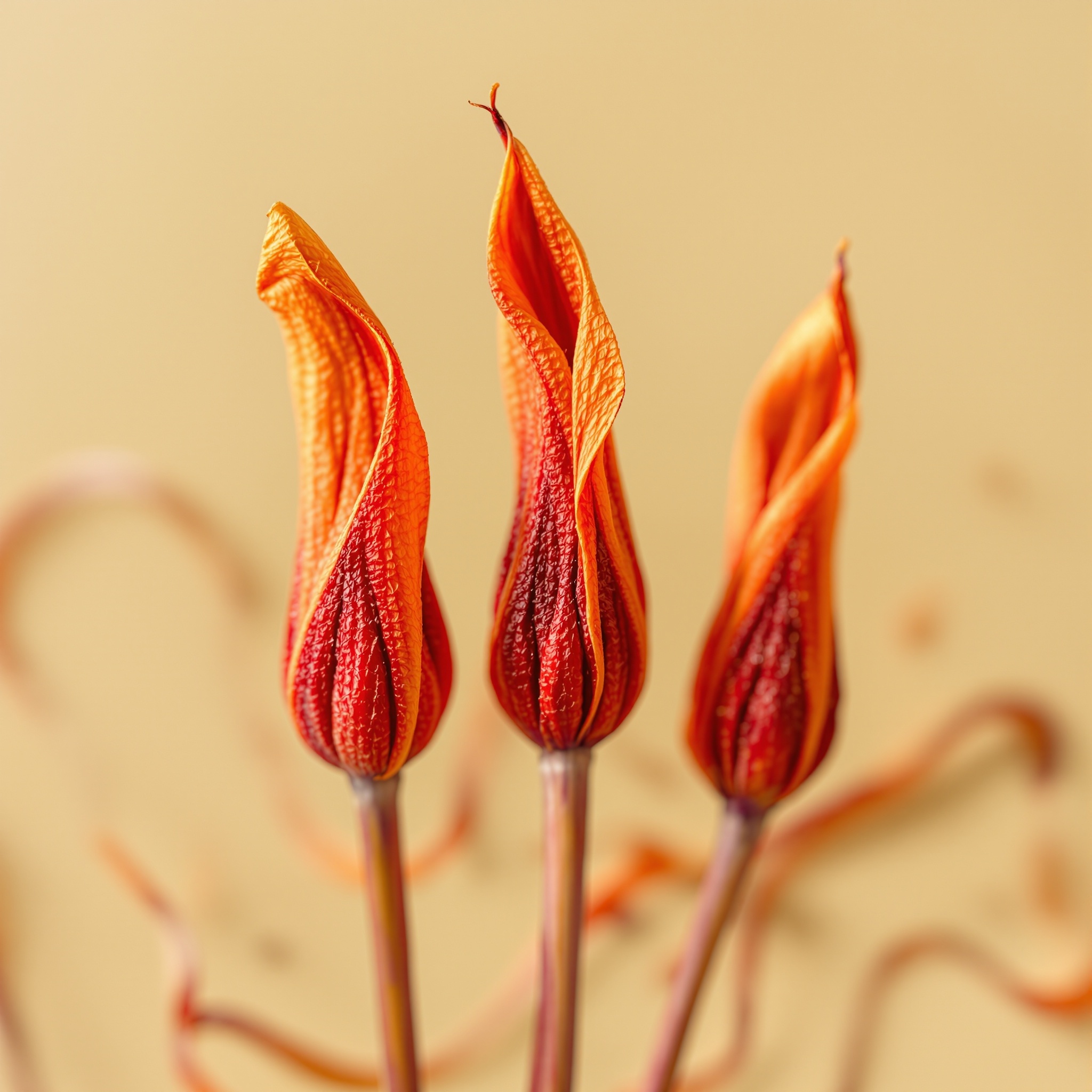
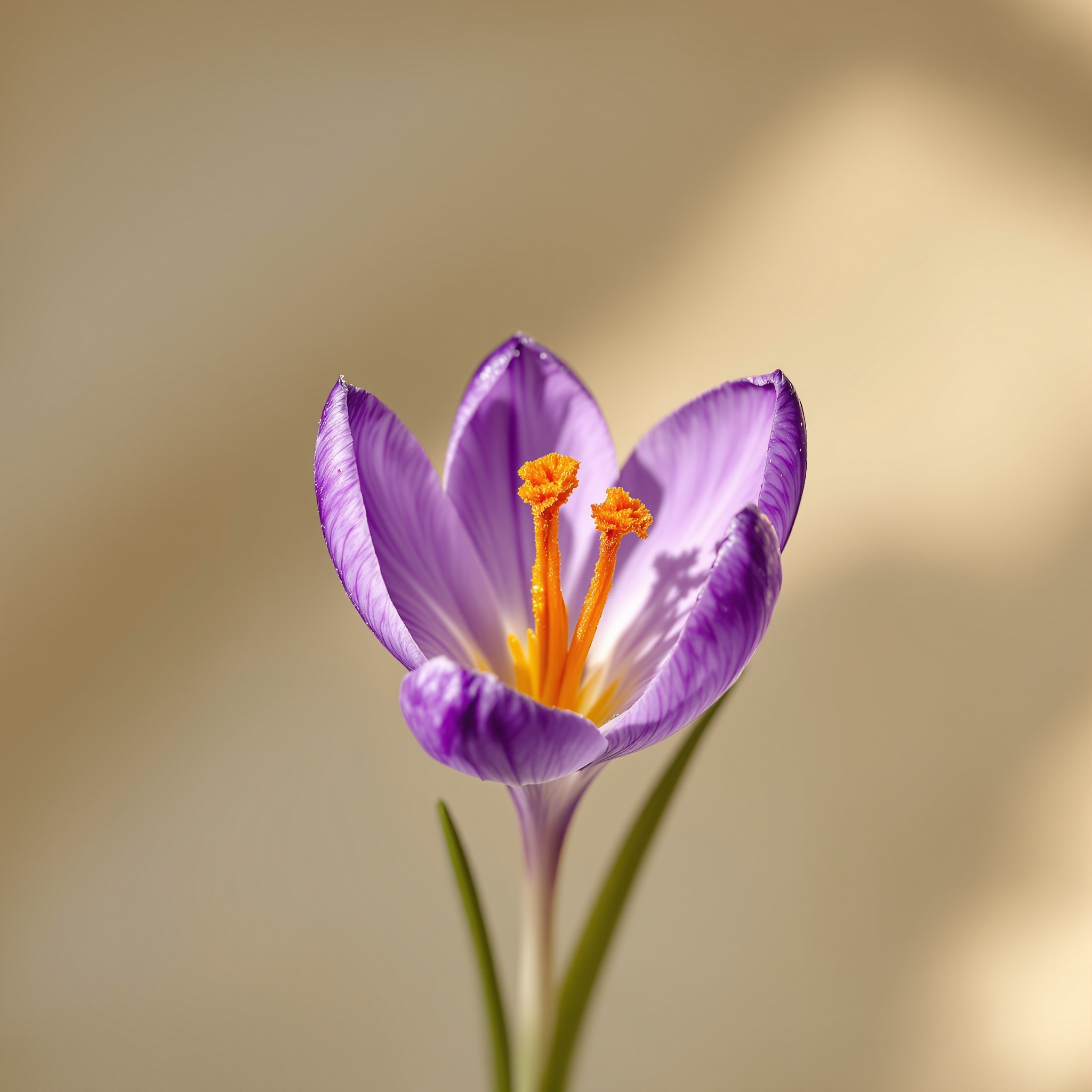
Saffron is the dried stigma of Crocus sativus, a purple autumn-flowering crocus in the iris family. Each bloom yields just three slender crimson threads, plucked by hand. The dried threads are steeped into a tincture or solvent-extracted into an absolute to capture their aromatic oil for perfumery.
How it smells
Warm and dry at first, with hay, honey and toasted bread, then a metallic, leathery edge driven by the molecule safranal. Beneath runs a bittersweet, faintly medicinal earthiness and a soft rubbery warmth. It opens spicy and golden, drying into suede, tobacco and dusty amber.
In perfumery
Saffron works in the heart, bridging spice and leather and lending a glowing, reddish warmth. It pairs classically with rose, oud, amber and tobacco. Whole leathery accords can be built around it, and it is often wed to rose for a rich, spiced-floral effect.
Good to know
Saffron is the costliest spice on earth, dearer by weight than gold. A single kilogram demands roughly 150,000 hand-picked flowers and many days of stooped labor. Most perfumery saffron is reconstructed from synthetic safranal or saffron bases, since the natural extract is too rare and expensive to use widely.
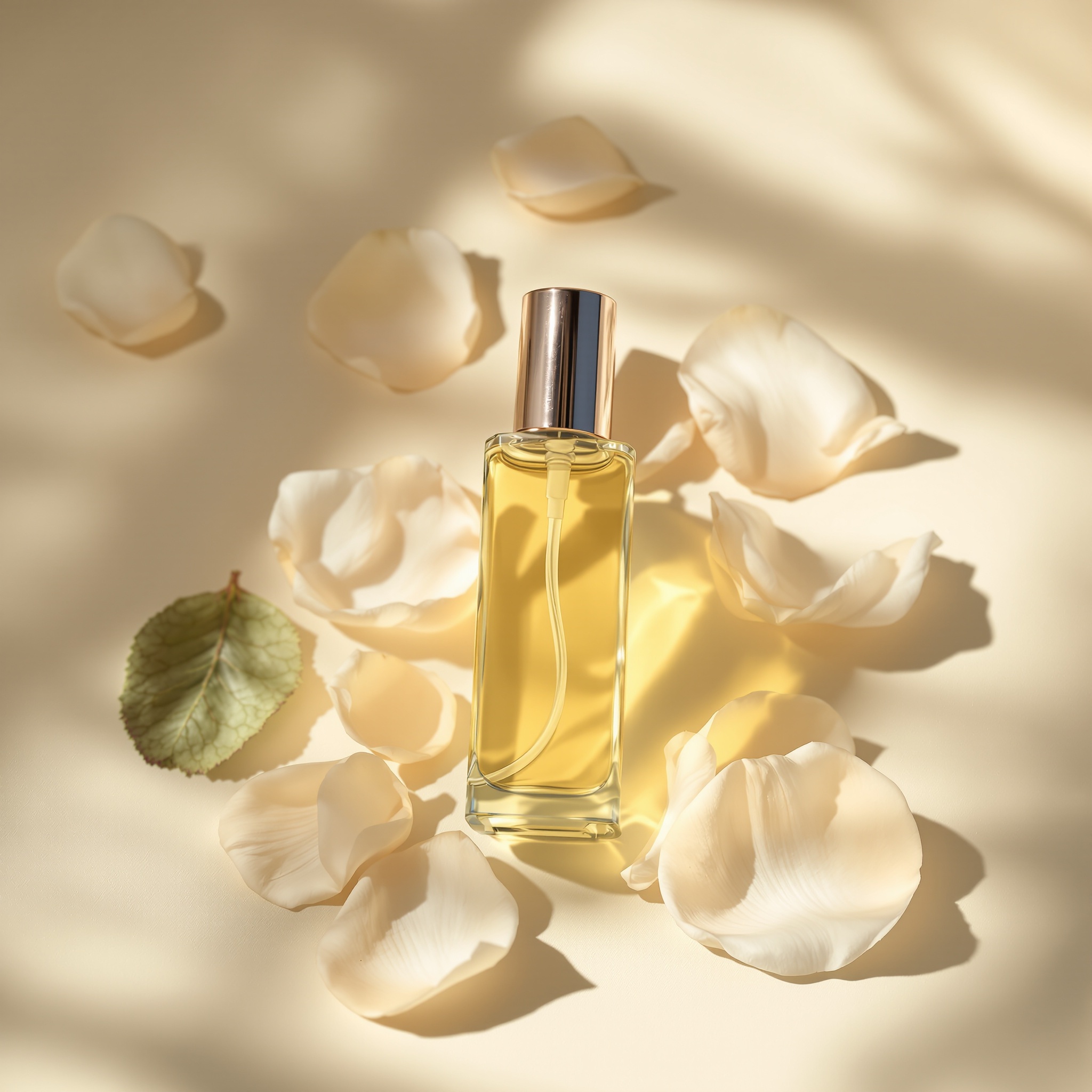
Turkish Rose
Spiced honey petals from the Isparta valleys
What it is
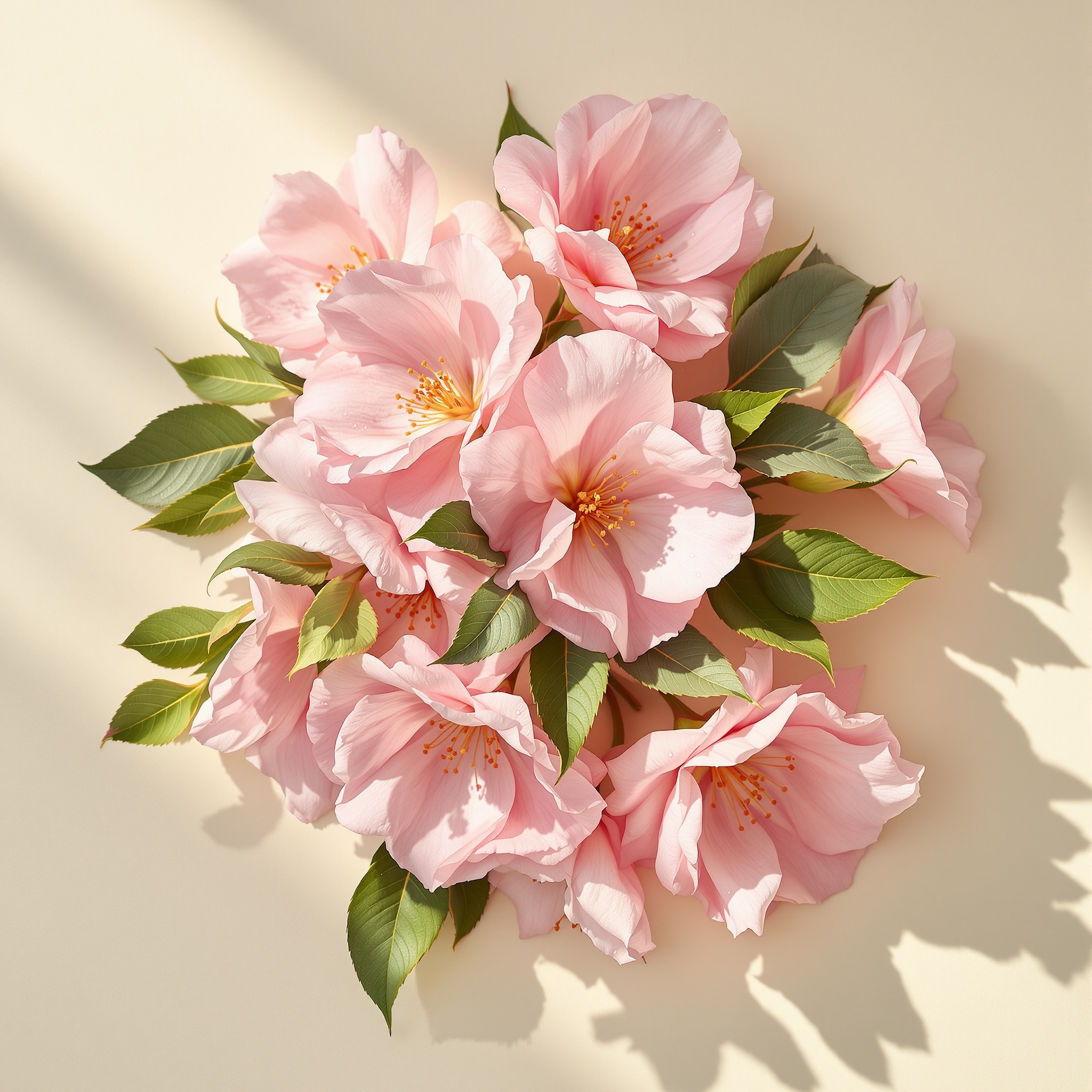
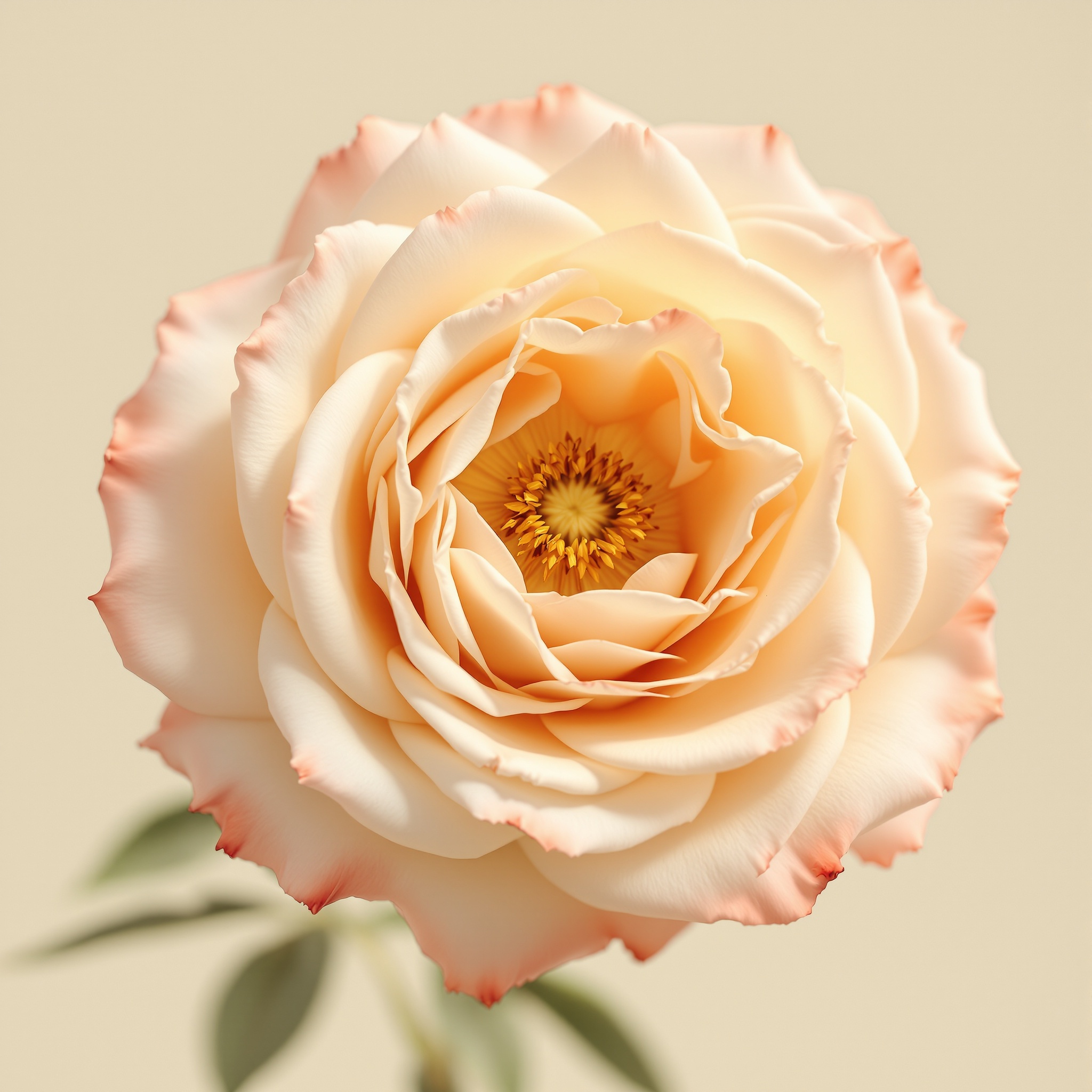
Rosa damascena grown in Turkey's Isparta region, where small farms hand-pick blossoms at dawn before the heat scatters the oil. Steam distillation of the petals yields rose otto, while solvent extraction produces the deeper, redder rose absolute used for its fuller, jammier facets.
How it smells
Fresh, fruity and spicy, with a honeyed glow and a green, faintly peppery edge. Against the sweeter, denser Bulgarian rose, the Turkish material reads brighter and more transparent, opening dewy and rosy before settling into a warm, spiced, lightly clove-like depth.
In perfumery
A heart note delivering true natural rose: radiant, multifaceted and indispensable in florals, chypres and orientals. It blends with oud, saffron, patchouli and geranium. Isparta otto and absolute thread through fine perfumery wherever an authentic, lifelike damask rose is wanted.
Good to know
Roughly three to five tonnes of hand-picked petals distill into a single kilogram of rose otto, placing it among the costliest naturals. Isparta Rose holds a Turkish registered designation of origin, granted in 2022, restricting the name to specified districts of the province.
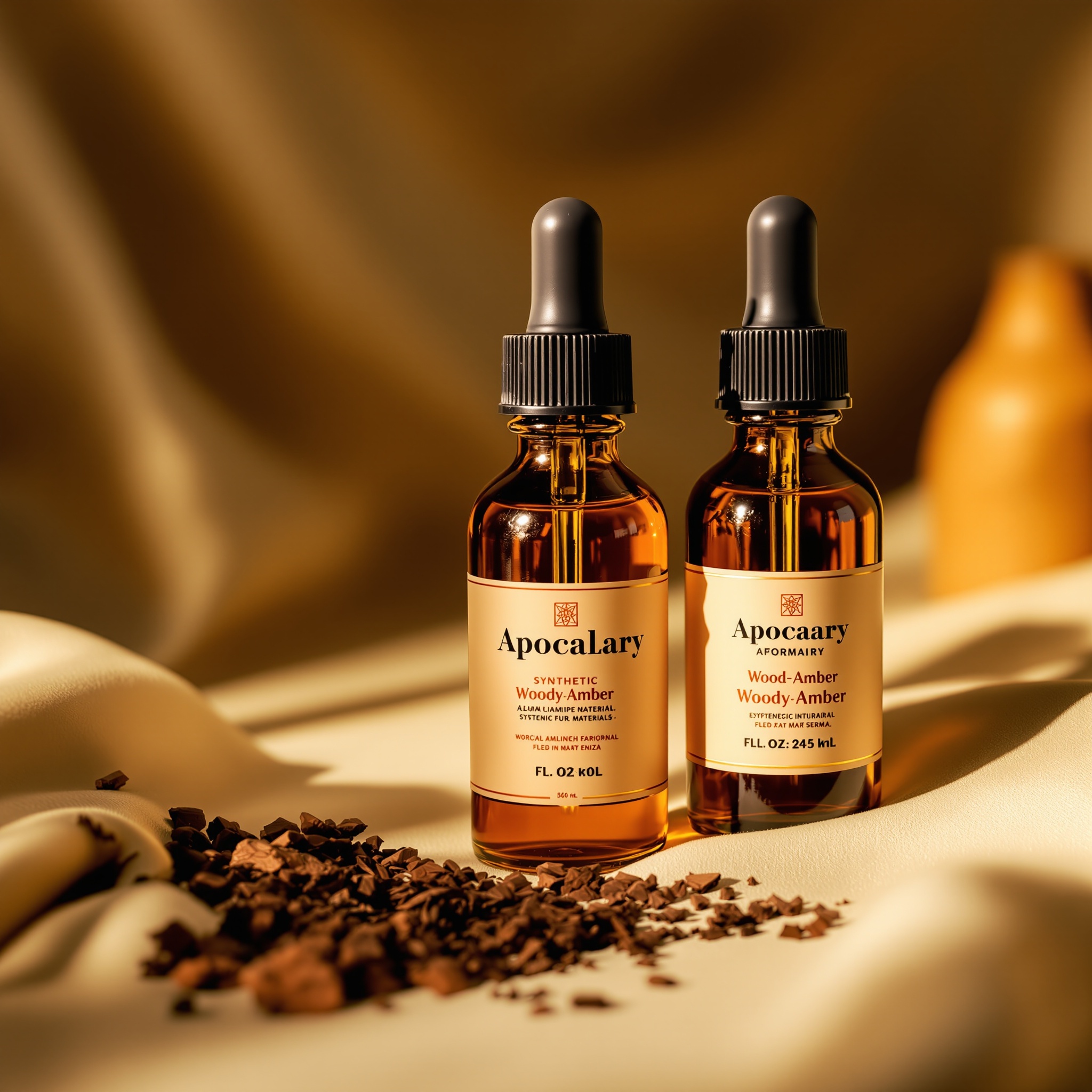
Synthetic Oud
The lab-built woody accord behind designer oud
What it is
An engineered accord standing in for real agarwood, built from a few aroma-chemicals and ready-made oud bases: woody-ambers like Norlimbanol and Sylvamber, musky-woody Cashmeran, dry Vertofix, a creamy sandalwood material such as Firsantol, plus captive oud bases. Ten or so molecules approximate what natural oud spreads across hundreds.
How it smells
Clean, dry and woody-smoky with a leathery medicinal edge from Norlimbanol and the captive oud bases. Linear and well-behaved, it reads instantly as oud yet stays polished and bloodless, missing the fermented barnyard funk, resinous sweetness and the living, shifting drydown of true distilled agarwood.
In perfumery
Nearly every mainstream and designer oud is this accord. Real agarwood oil costs more by weight than gold, supply is throttled by CITES protection of Aquilaria, and quality swings wildly. Synthetics deliver consistency, stability and scale at a fraction of the price, so houses overwhelmingly reach for them.
Good to know
Synthetic oud is not fake so much as a different material: skilled, useful and honest when labelled. The tell is its cleanliness. An oud that smells smooth, sweet, uniform and never animalic or rough is almost certainly an accord rather than a drop of distilled wood.
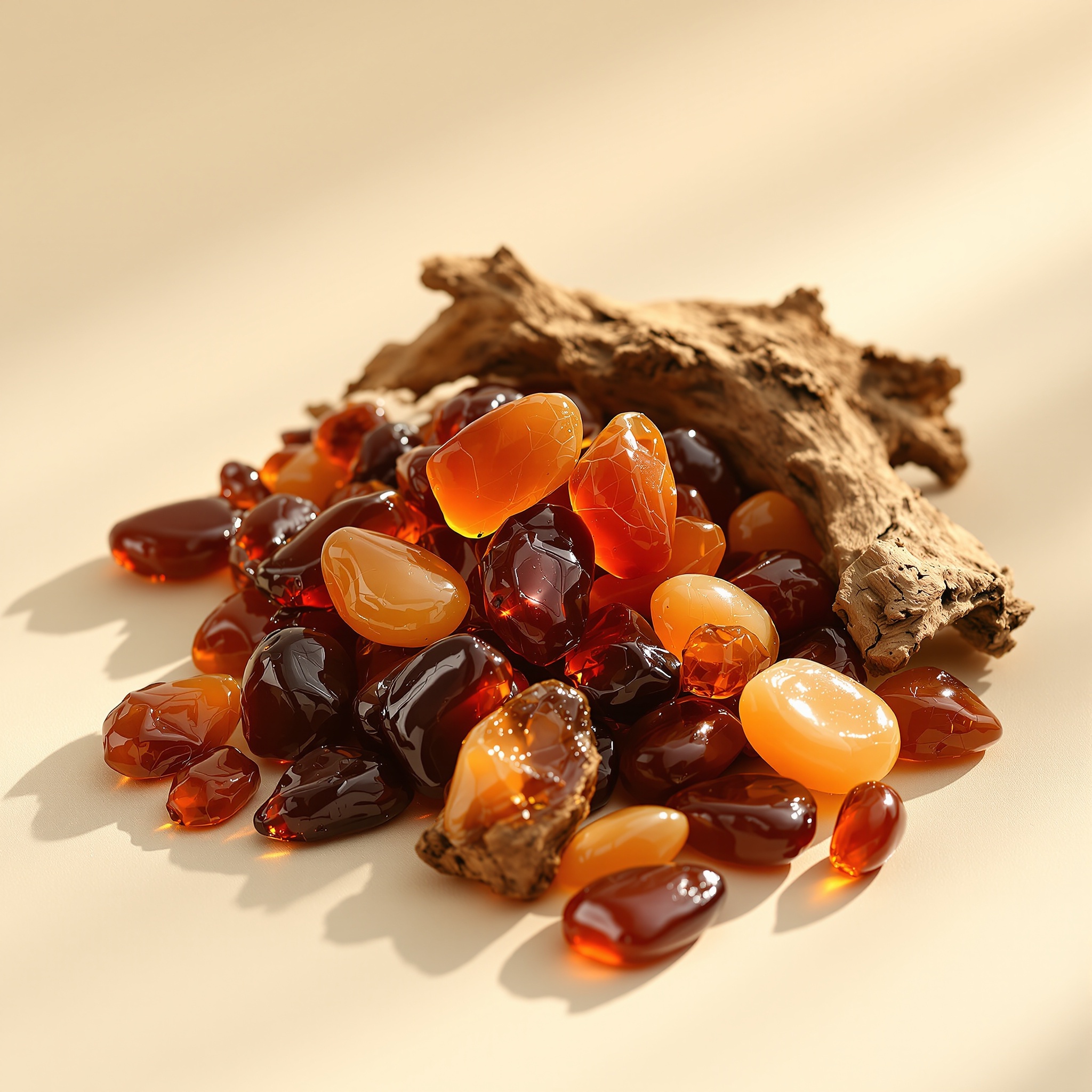
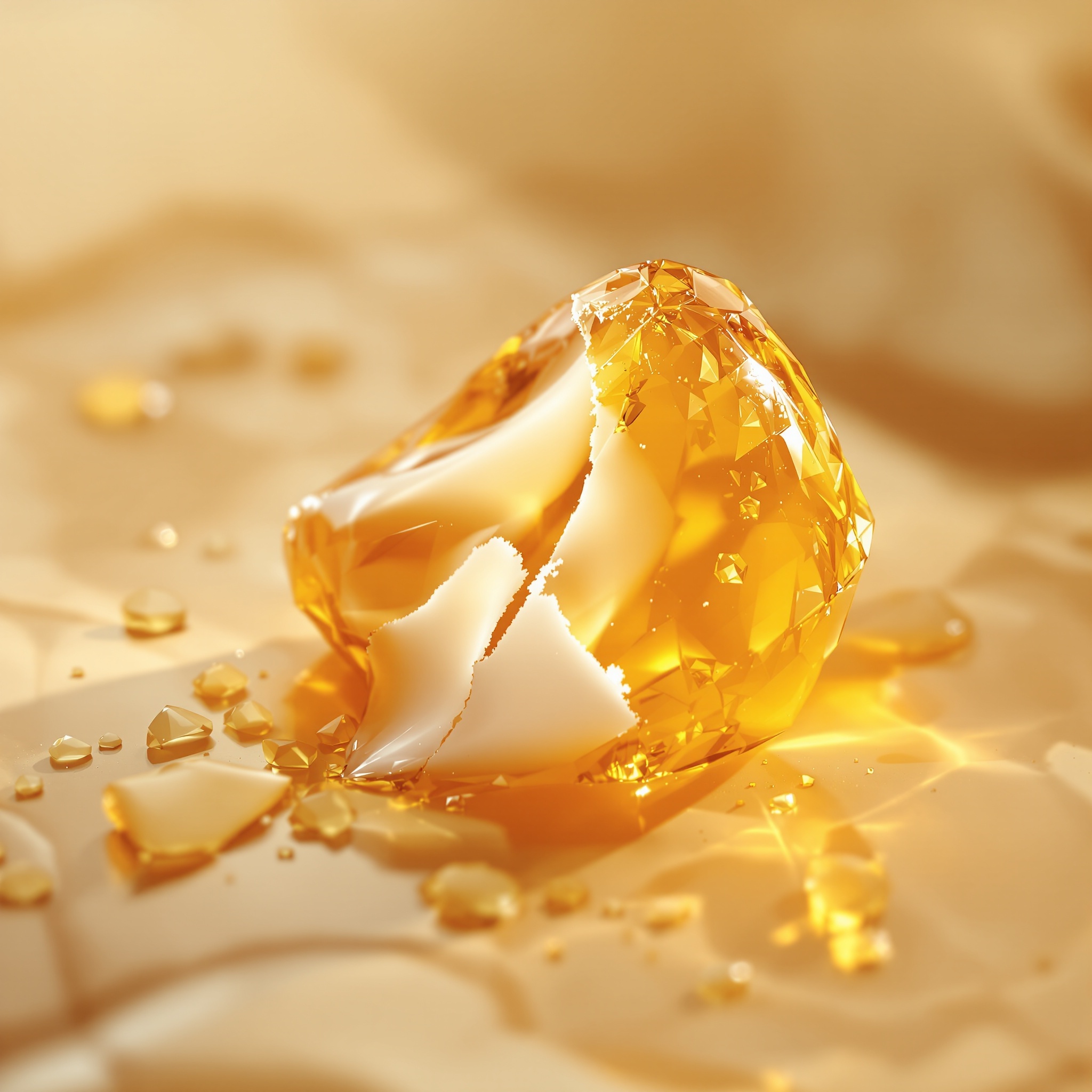
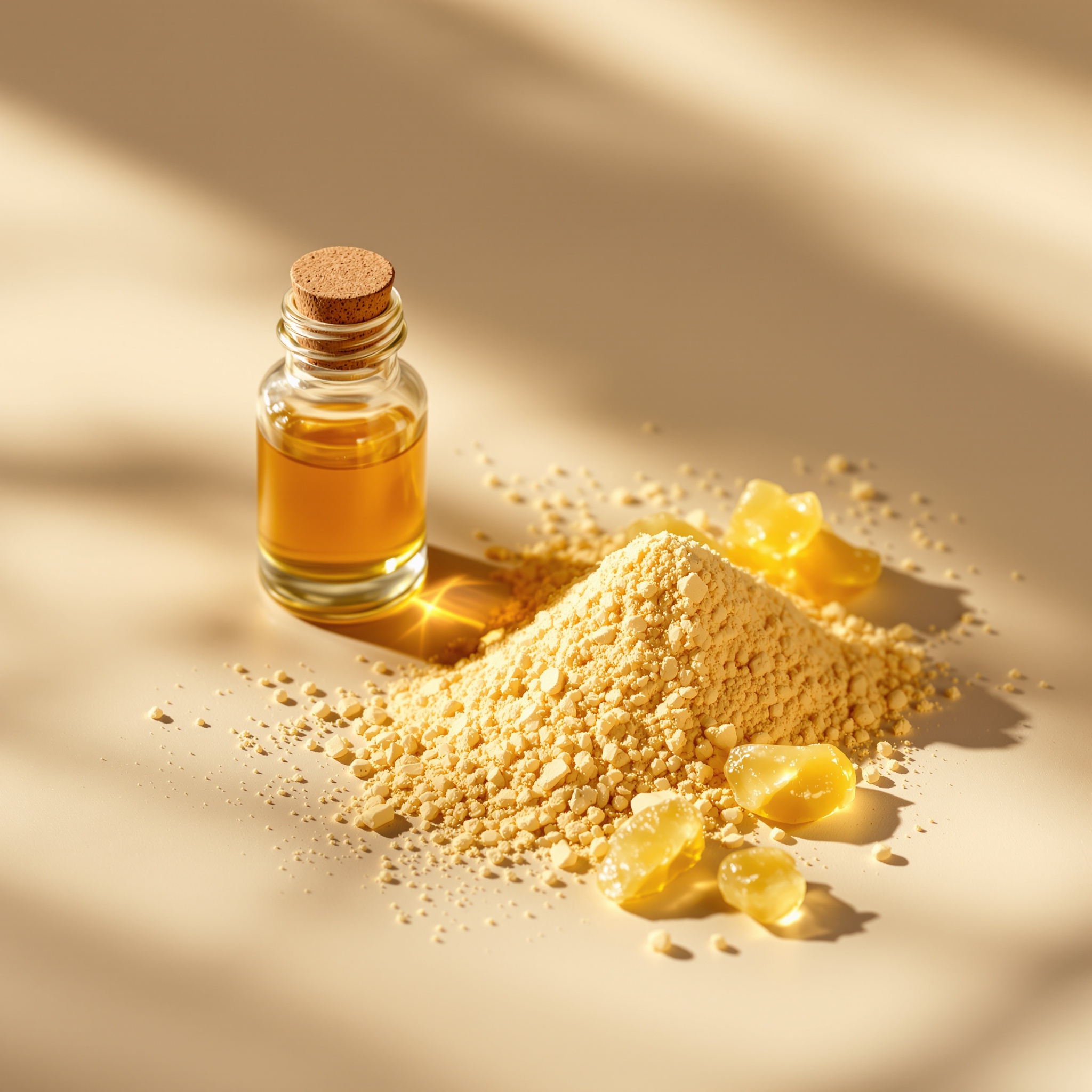
Benzoin
Warm vanilla balsam wept from a tapped tree
What it is
Benzoin is a balsamic resin from Styrax trees of Southeast Asia. Siam benzoin comes from Styrax tonkinensis (Laos, Vietnam), Sumatra benzoin from Styrax benzoin (Indonesia). Incisions in the bark make the tree exude a gum that hardens over months into reddish tears, processed into resinoid and absolute.
How it smells
Sweet, warm and balsamic with a pronounced vanilla character and powdery, ambery, faintly cinnamic facets. Siam is rounder and more vanillic; Sumatra is smokier with a cinnamon-styrax edge. It opens soft and creamy, then dries into a cozy, resinous, almost caramelized sweetness.
In perfumery
A warm base note and gentle fixative lending sweetness, body and a vanillic glow to amber accords. It blends with labdanum, vanilla, tonka and incense, smoothing orientals and gourmands. Benzoin is a defining warmth in golden-age oriental classics and countless amber compositions.
Good to know
Benzoin gave its name to benzoic acid and, through it, to the chemical term benzene. The word itself traces to the Arabic luban jawi, "frankincense of Java." The resin never flows on its own; every tear is the tree healing an incision deliberately cut into its bark.
Indonesian Patchouli Leaf
Green herbal patchouli still bright with sap
What it is
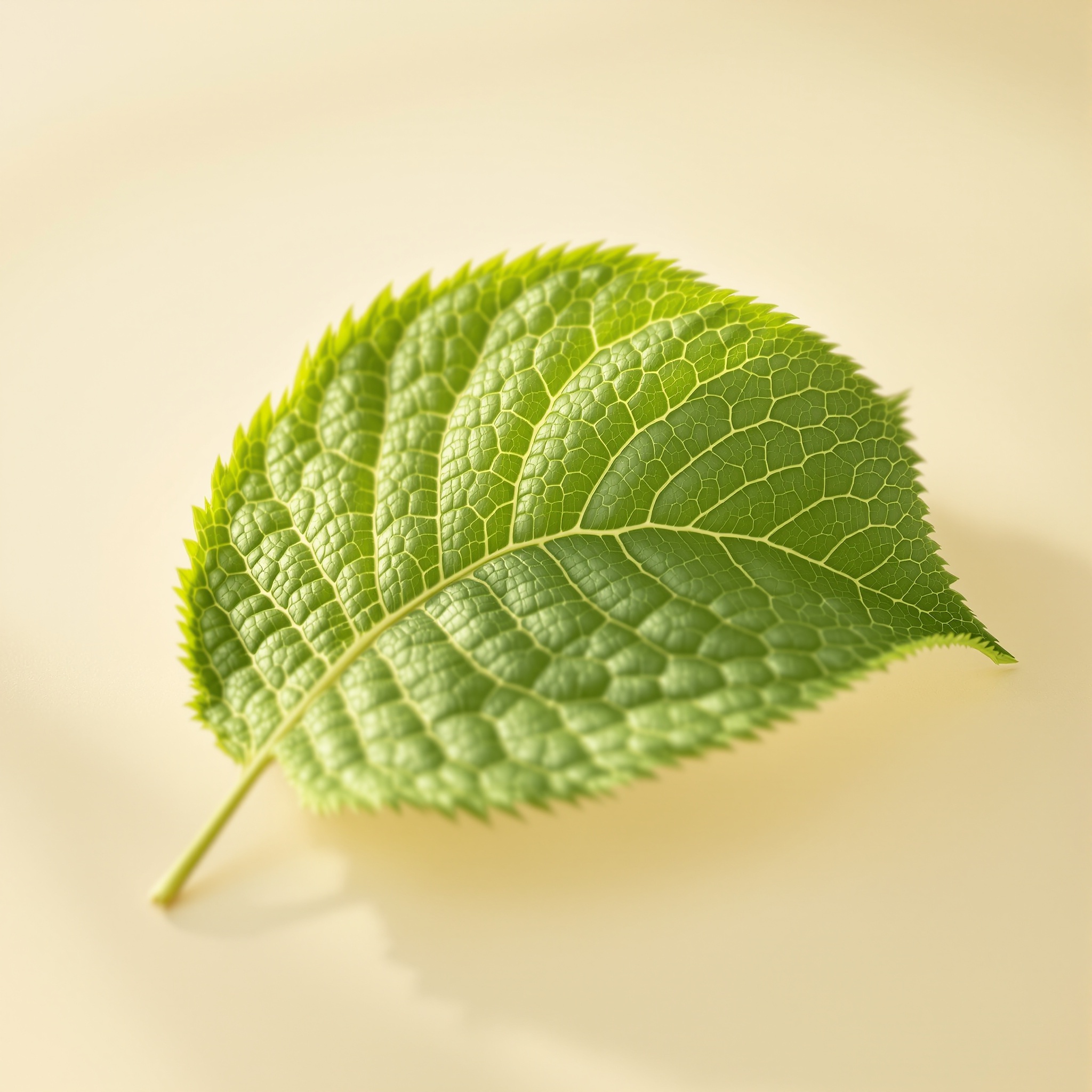
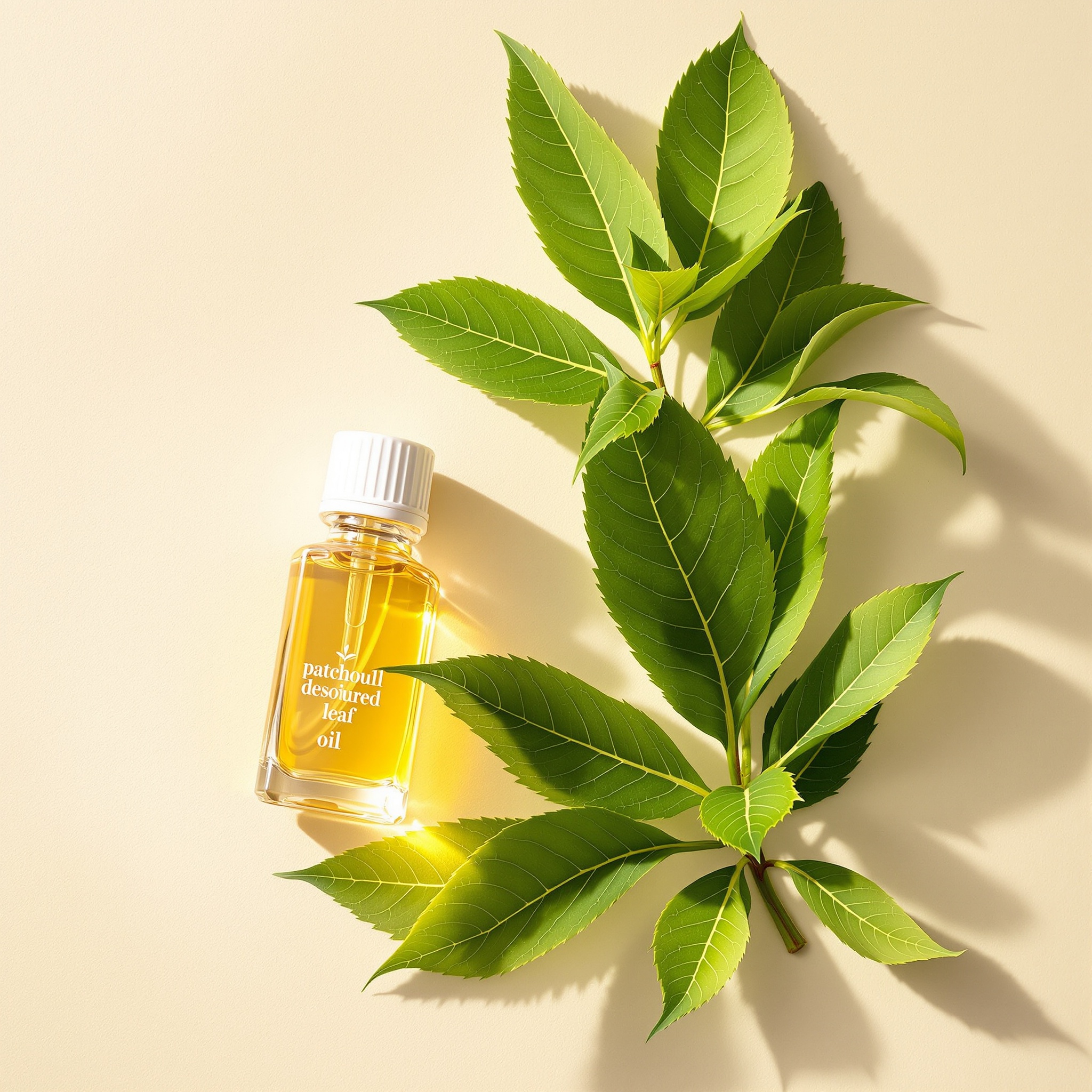
The leaf of Pogostemon cablin grown in Indonesia, the world's dominant patchouli source, especially Sulawesi and Sumatra. Sun-dried, lightly fermented leaves are steam-distilled for their oil. As a note, leaf signals the fresher, greener top of the plant rather than its deep, cured base.
How it smells
Lighter and more herbaceous than aged Indonesian patchouli oil: green, slightly minty and camphoraceous up top, with a clean leafy crispness over the familiar earthy-woody warmth. Less of the chocolatey, musty depth, more of the living plant snapped fresh from the bush at harvest.
In perfumery
Used to add a green, aromatic lift to heart and base, sharpening patchouli's earthiness without its full sweetness. It pairs with bergamot, geranium, lavender and woods, brightening chypres and fougeres. The leaf supplies the crisp patchouli signal in many fresh modern unisex blends.
Good to know
Indonesia produces the overwhelming majority of the world's patchouli oil, much of it distilled in small village stills on Sulawesi. The scent is so tenacious that dried leaves were once packed between Indian shawls shipped to Europe, where the smell became the mark of a genuine import.
Leather
Tanned hide, smoke and animal warmth
What it is
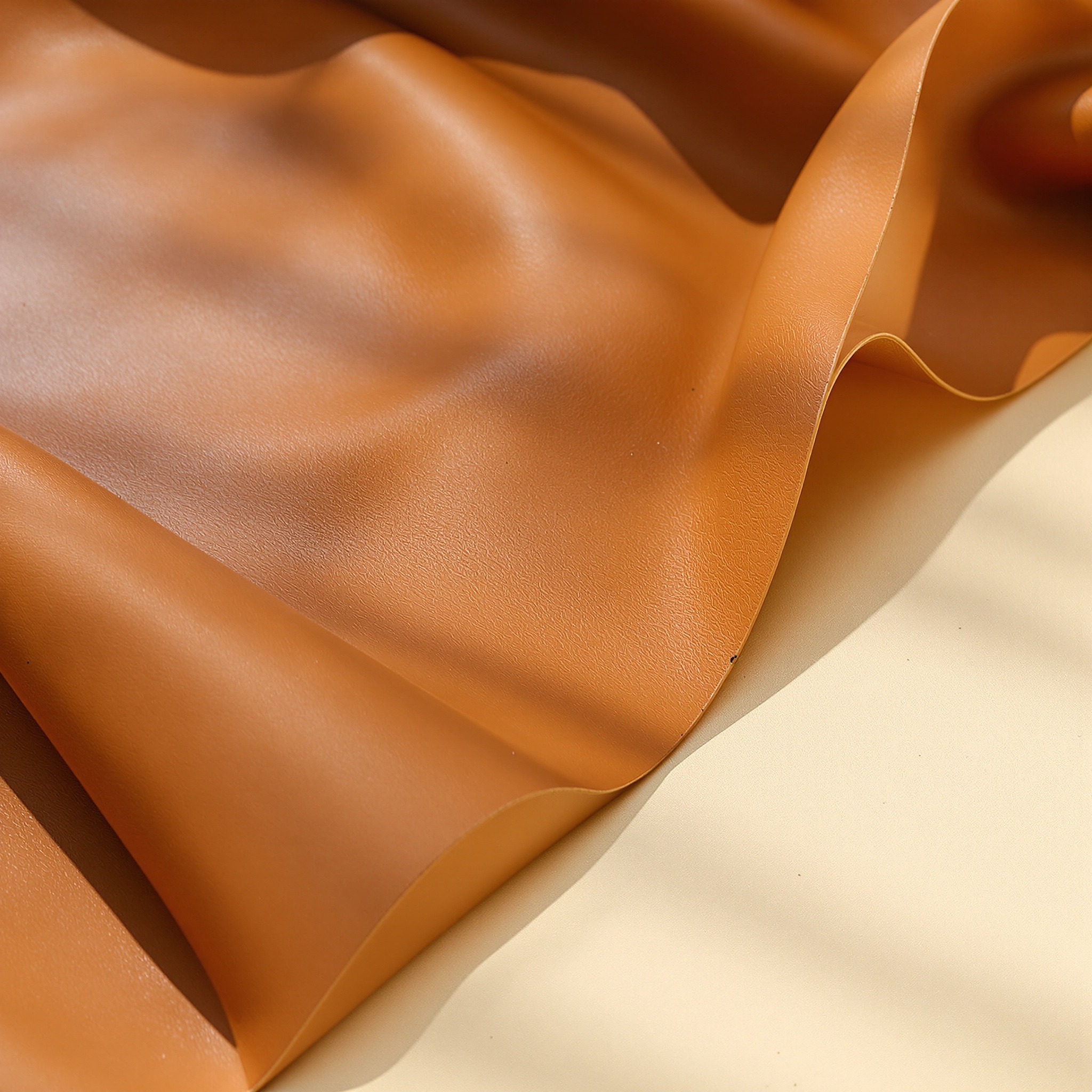
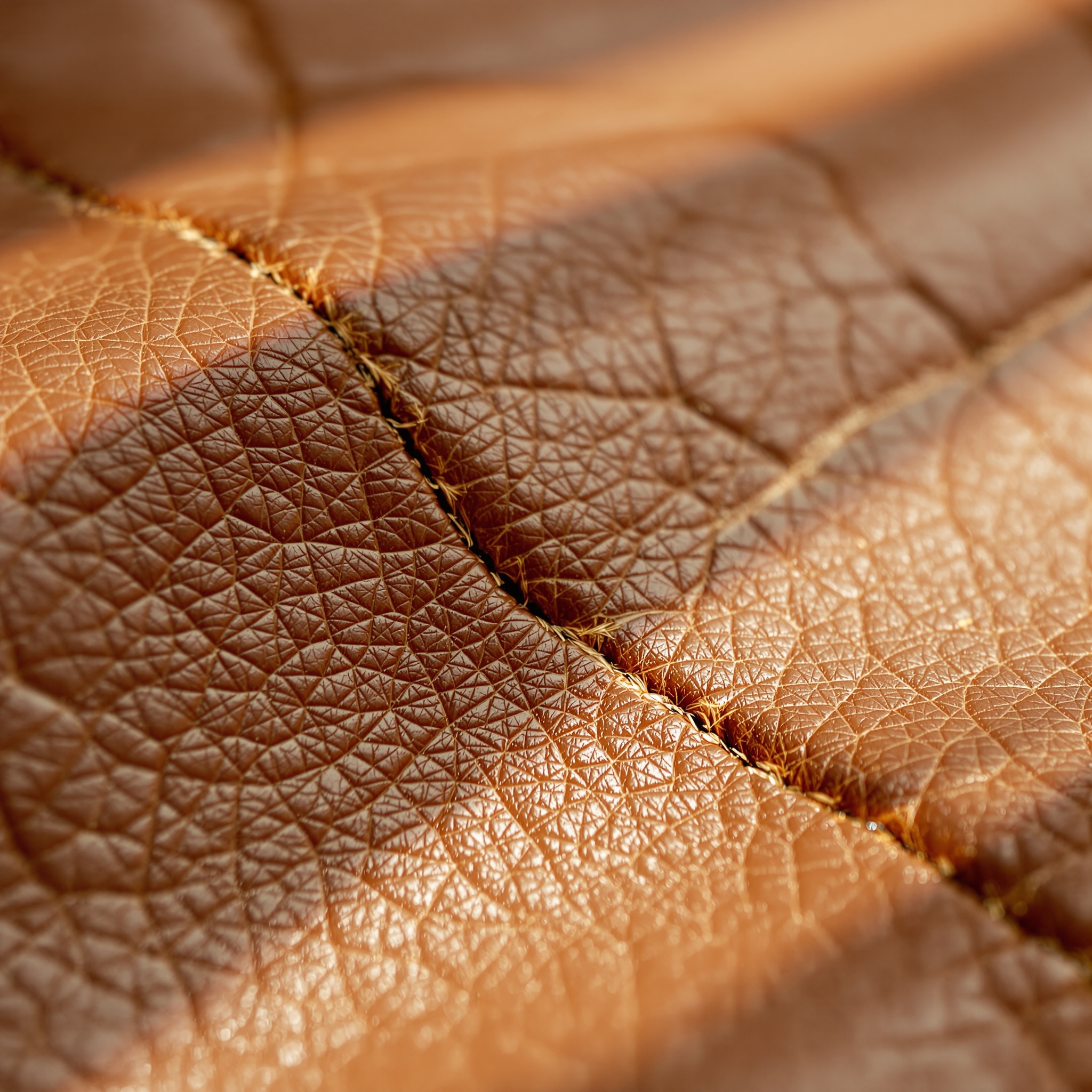
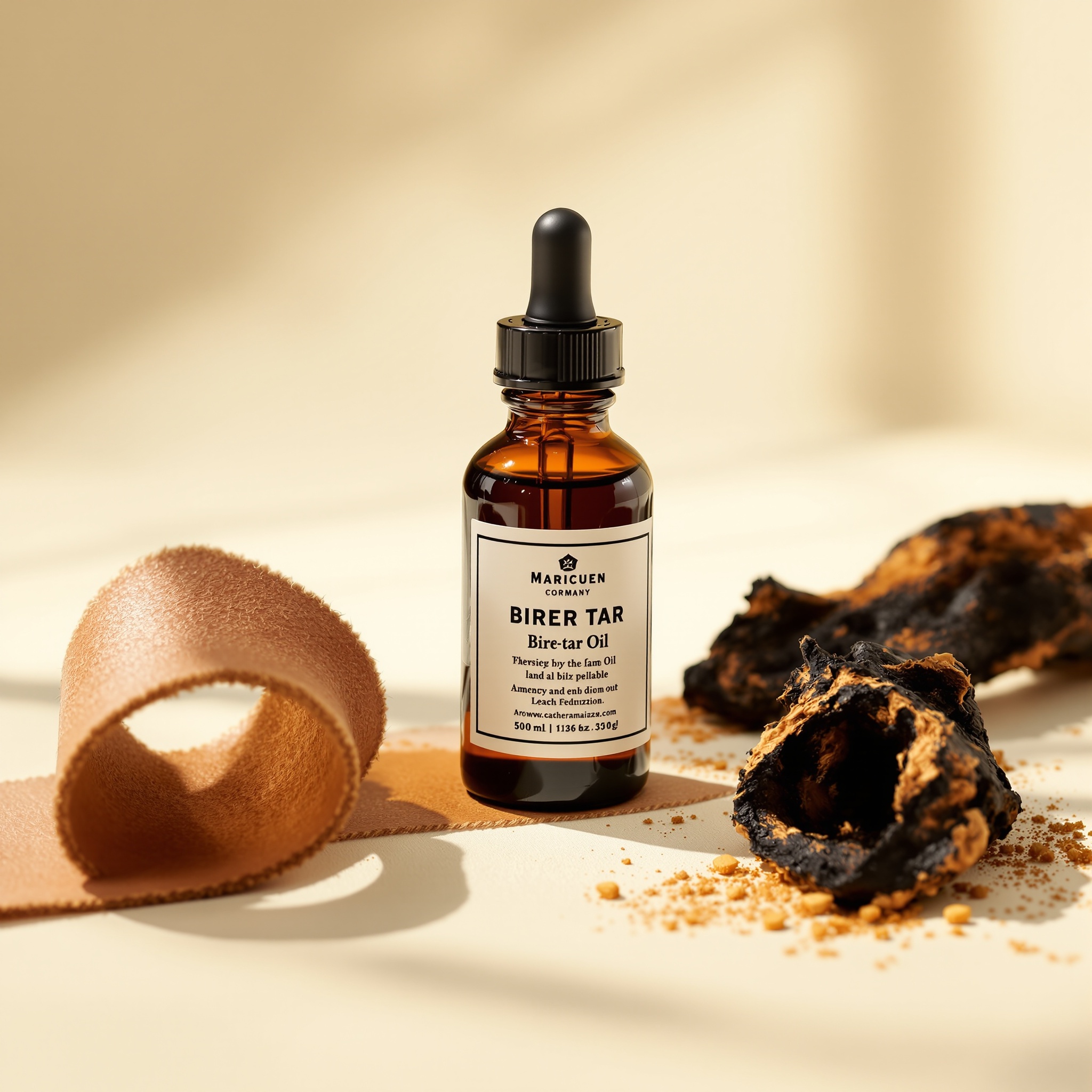
Leather is an accord, not a single ingredient: there is no leather essential oil. Perfumers rebuild its scent from birch tar and cade (smoky distilled woods), styrax and labdanum resins, isobutyl quinoline and modern safraleine-type molecules, historically echoing the tannins and oils once used to cure hides.
How it smells
Smoky, dry and animalic, ranging from supple new suede to tarry old saddle. Birch-tar versions read sooty and phenolic, almost campfire and band-aid; softer suede accords turn powdery, floral and skin-warm. It can lean bitter-green, ashy or sweet depending on the supporting resins.
In perfumery
A base-note signature that gives depth, structure and a carnal edge, pairing with rose, violet, tobacco, oud and floral hearts. Iconic in the great Russian-leather and rugged dry-leather styles, each one a different facet of the accord.
Good to know
The genre was born in Russia, where book bindings and boots were treated with birch tar; the classic Russian-leather style recalls that scent. Real tanning oils were largely restricted on safety grounds, so today's leathers are almost entirely the work of clever synthetic reconstruction.
Akigalawood
Upcycled patchouli reborn as peppery whispered oud
What it is
A natural captive ingredient developed by a major fragrance-ingredient house's biosciences team in the 2010s. The enzyme laccase oxidizes alpha-guaiene-rich fractions recovered from patchouli oil production, using only water and salts, transforming a byproduct into a new aroma compound without petrochemical synthesis.
How it smells
Warm and woody with a clean, vibrant spiciness, it carries patchouli's earthiness stripped of the mustiness, lifted by pink-pepper brightness and a quiet agarwood facet. It reads as a contemporary, transparent oud-adjacent wood: dry, peppery, radiant and unmistakably modern.
In perfumery
A versatile heart-to-base material adding spicy woody radiance and a refined oud impression without animalic heaviness. It pairs with pink pepper, rose, leather and amber. Early niche florals and woody compositions helped popularize it, and it now threads through many niche woody compositions.
Good to know
It is a flagship of upcycling in fragrance: the raw input is industrial patchouli residue that would otherwise be discarded, converted into a high-value natural ingredient. As a captive material, it is restricted to perfumers working within its originating house's palette.
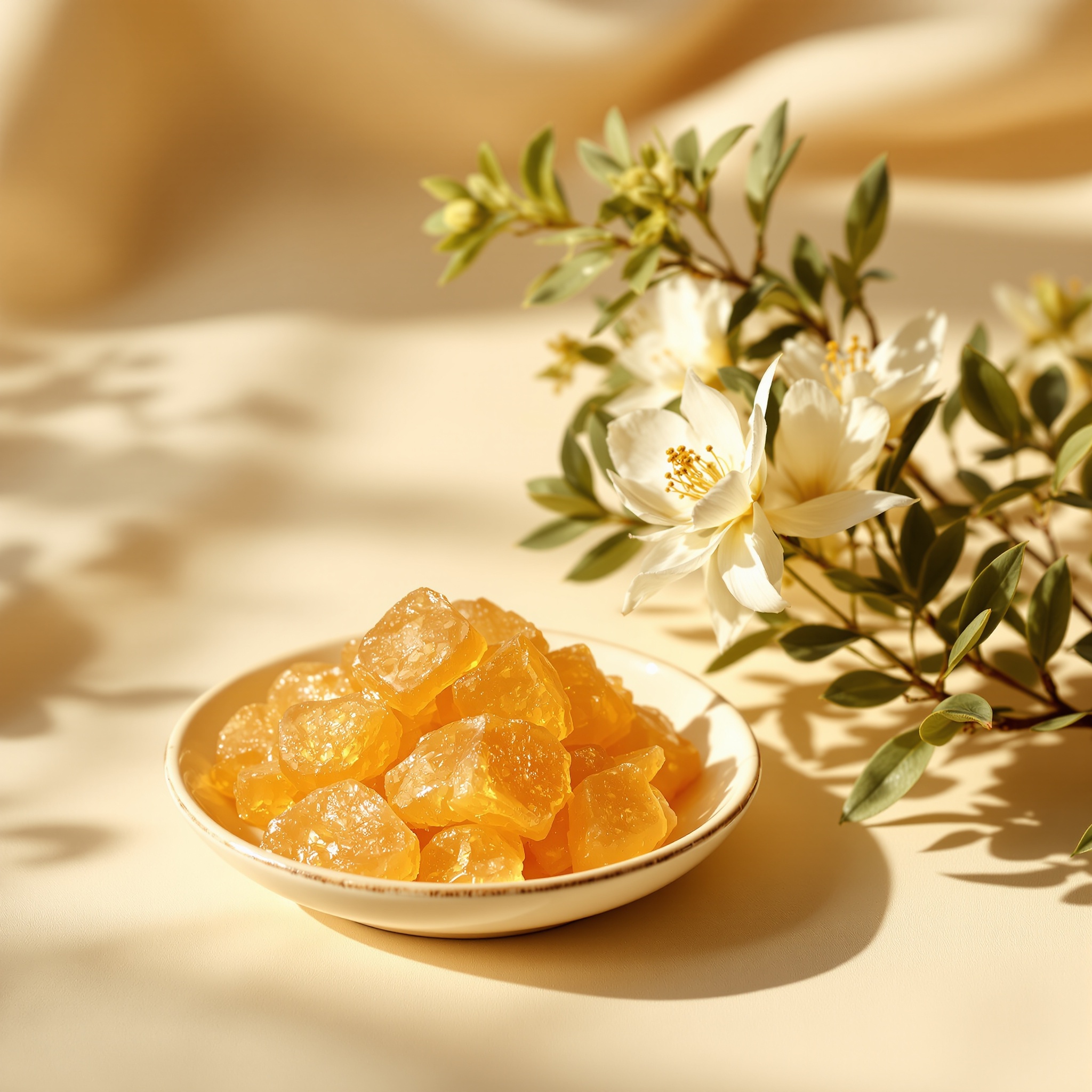
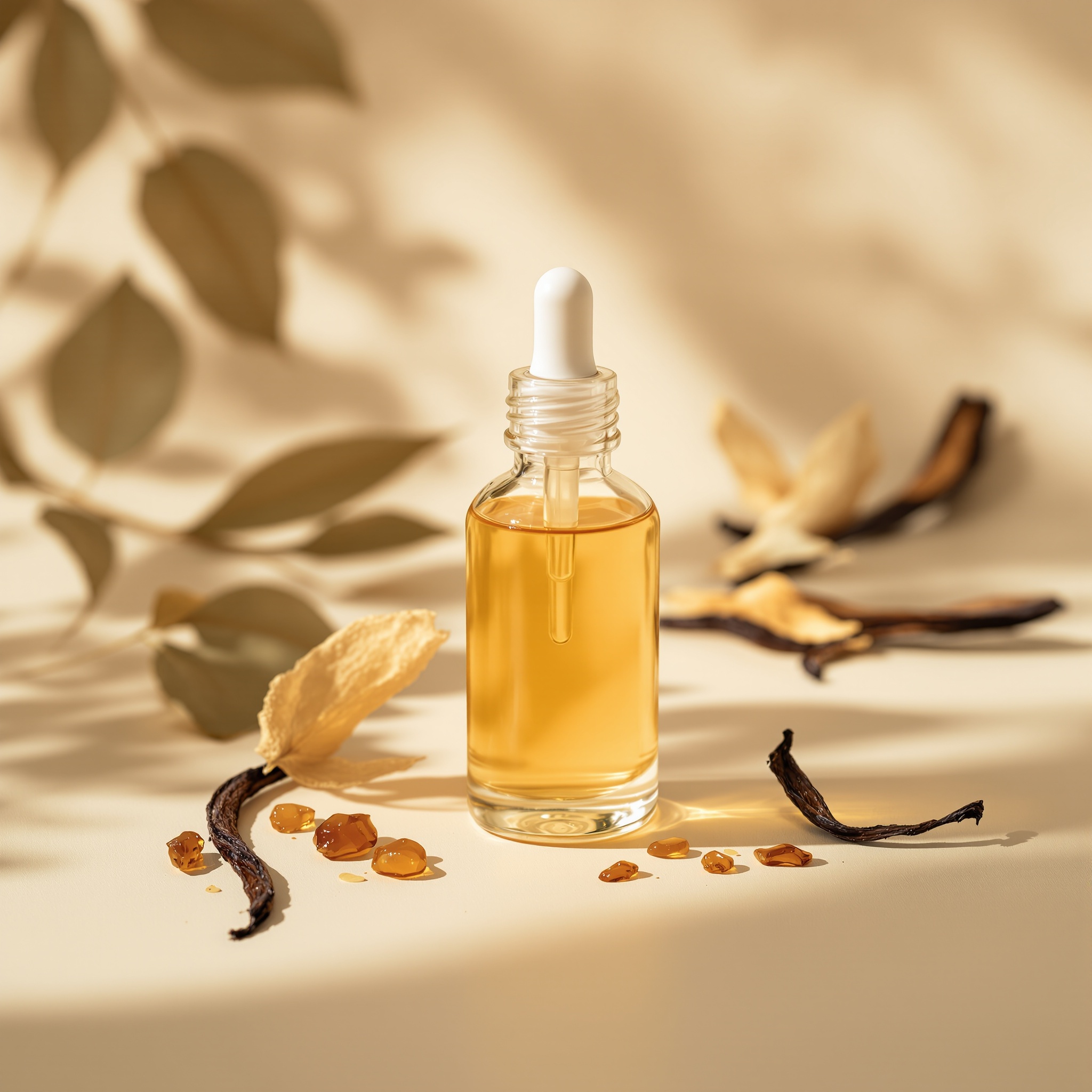
Amber
A warm resinous glow built, not harvested
What it is
Amber is not one ingredient but a perfumer's accord, most often blending labdanum (a sticky resin from the Mediterranean rockrose shrub Cistus ladanifer), benzoin and vanilla, sometimes with tonka or Peru balsam. Despite the name, it has no link to fossilized tree amber, which stays odorless on skin.
How it smells
Warm, soft and balsamic, a powdery sweetness sitting over dry resin. It opens honeyed and faintly animalic from labdanum, then settles into rounded golden warmth recalling beeswax, tobacco and worn leather, threaded with a quiet smoky, incense-like undertone that lingers close to the skin.
In perfumery
A base note prized for warmth, depth and long persistence, anchoring oriental and amber compositions. It pairs naturally with vanilla, patchouli, sandalwood and spices. The sweet vanilla-amber template is a perfumery classic, while drier, resin-forward and herbal readings show its other face.
Good to know
The word once meant ambergris, the waxy intestinal secretion of sperm whales, fueling centuries of confusion among three unrelated things: fossil tree amber, whale ambergris and the resin accord. Modern amber bases are wholly plant and synthetic, leaning on molecules like Ambroxan rather than any animal source.
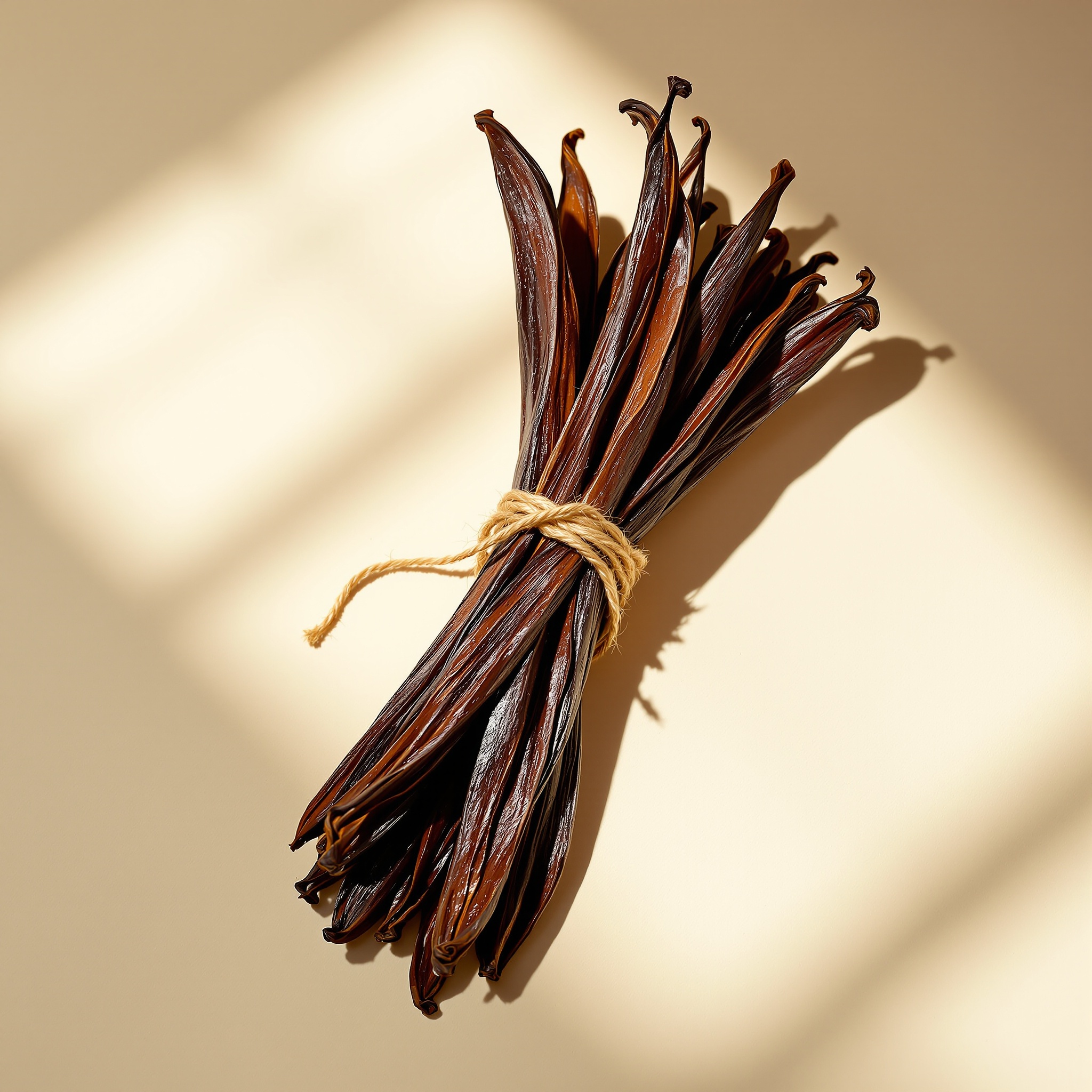
Vanilla
The warm sweet heart of comfort itself
What it is
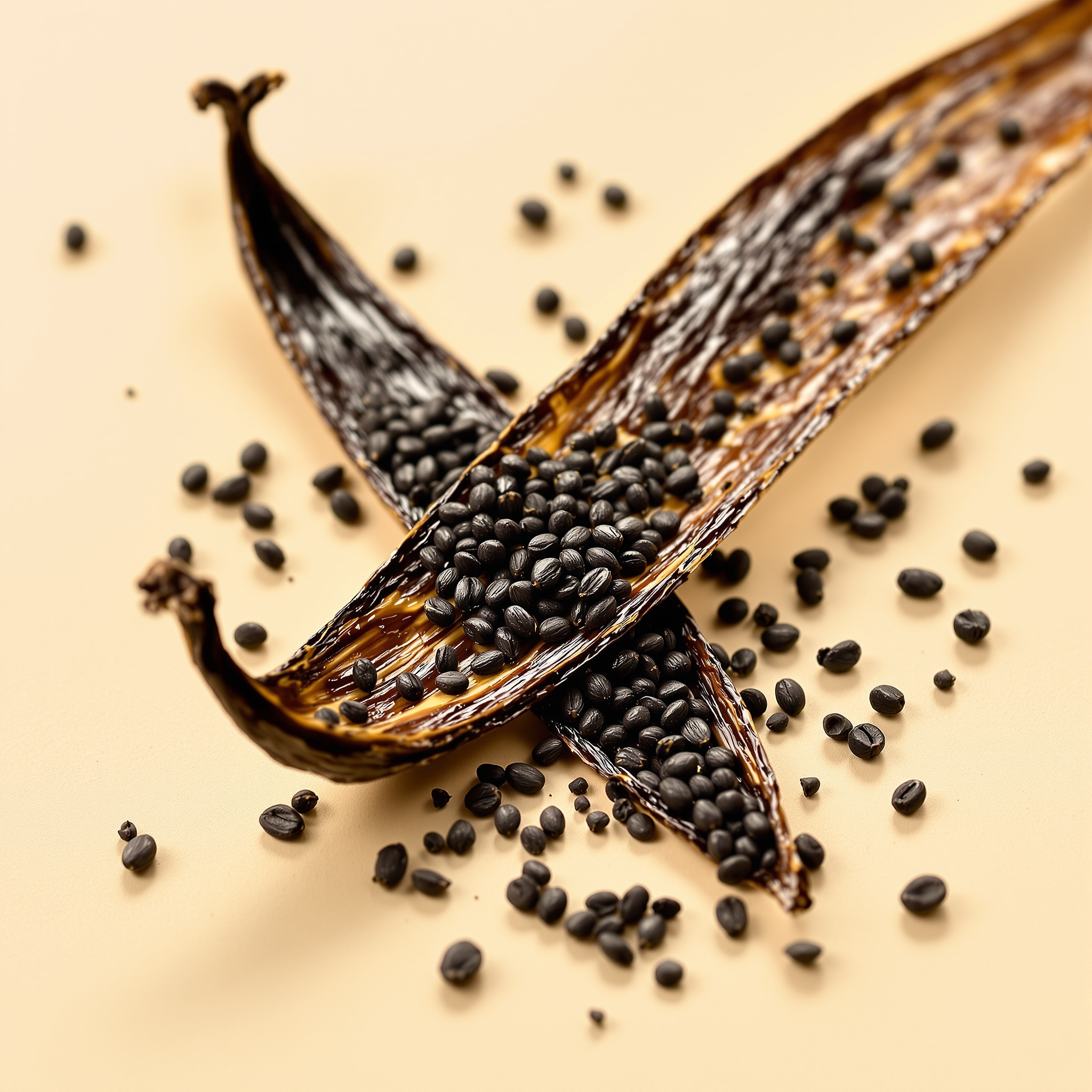
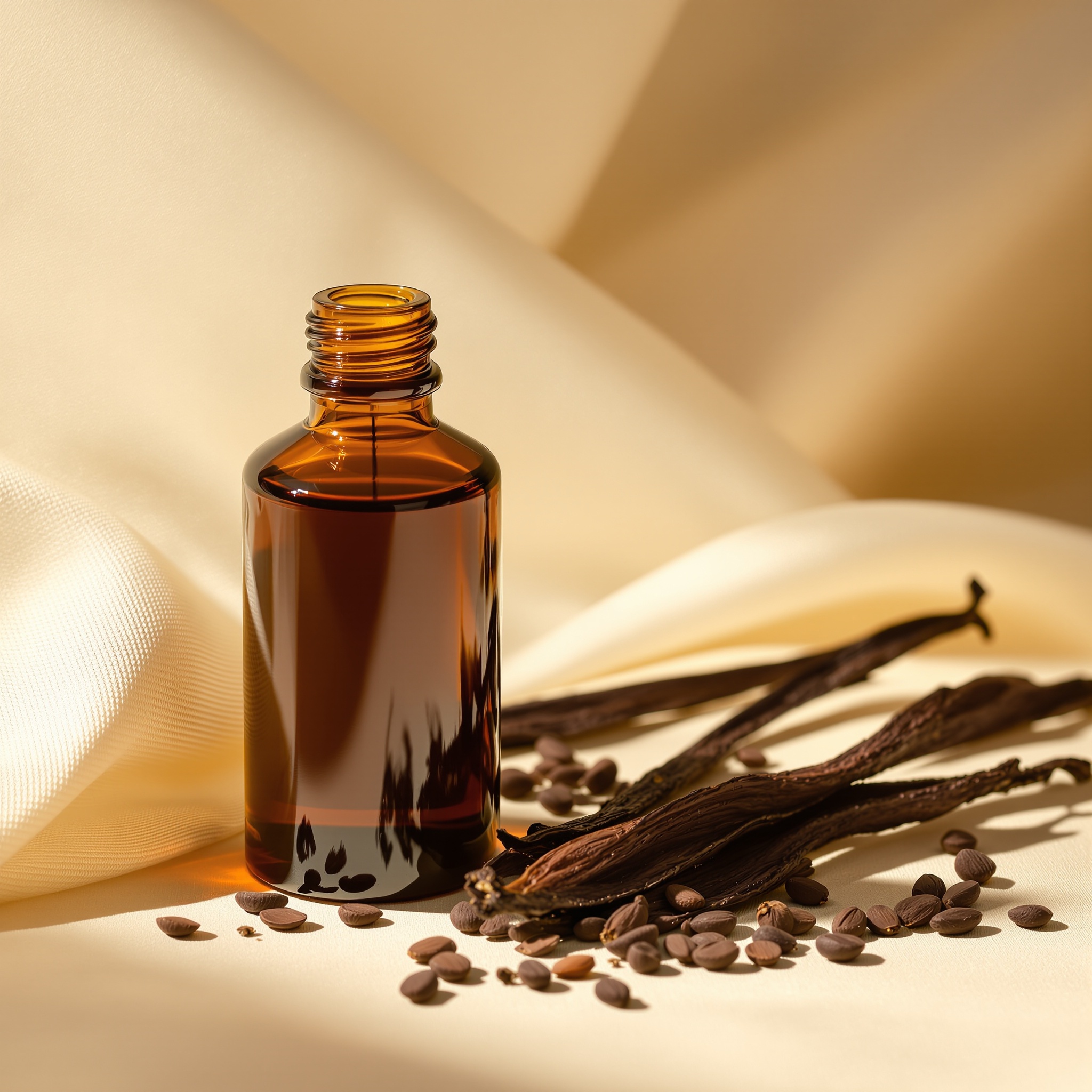
Vanilla comes from the cured seed pods of Vanilla planifolia, a climbing orchid native to Mexico now grown mainly in Madagascar, Réunion and Tahiti. Green pods are picked unripe, then blanched, sweated in the sun and slow-dried over months until they darken and develop their aroma and vanillin.
How it smells
Sweet, warm and creamy, with a balsamic depth recalling custard, caramel and dried fruit, a faint smoky tobacco-like edge sitting underneath. It opens soft and gourmand, then dries into a powdery resinous warmth that clings close to skin and reads richer than synthetic vanillin alone.
In perfumery
A base note prized for richness and lasting warmth, vanilla rounds sharp edges and anchors oriental and gourmand compositions. It pairs naturally with tonka, amber, sandalwood and spice. Many of the most enduring oriental and tobacco fragrances build their core around it.
Good to know
Vanilla ranks among the costliest spices because each orchid flower opens for one day and must be hand-pollinated, a technique devised in 1841 by Edmond Albius, a twelve-year-old enslaved boy on Réunion. Most commercial vanilla flavor now relies on synthetic vanillin.
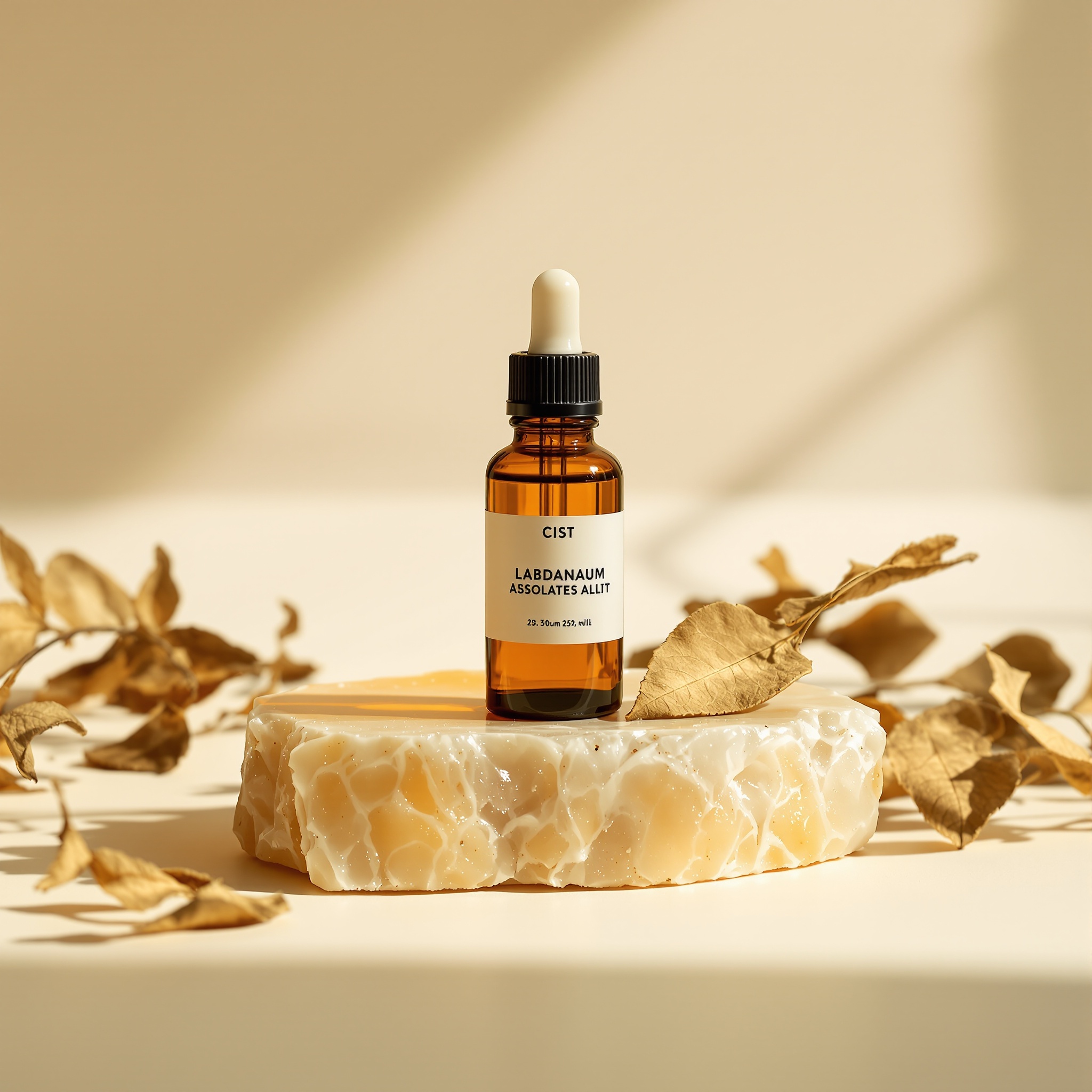
Labdanum
Sticky amber resin scraped from sun-baked rockrose
What it is
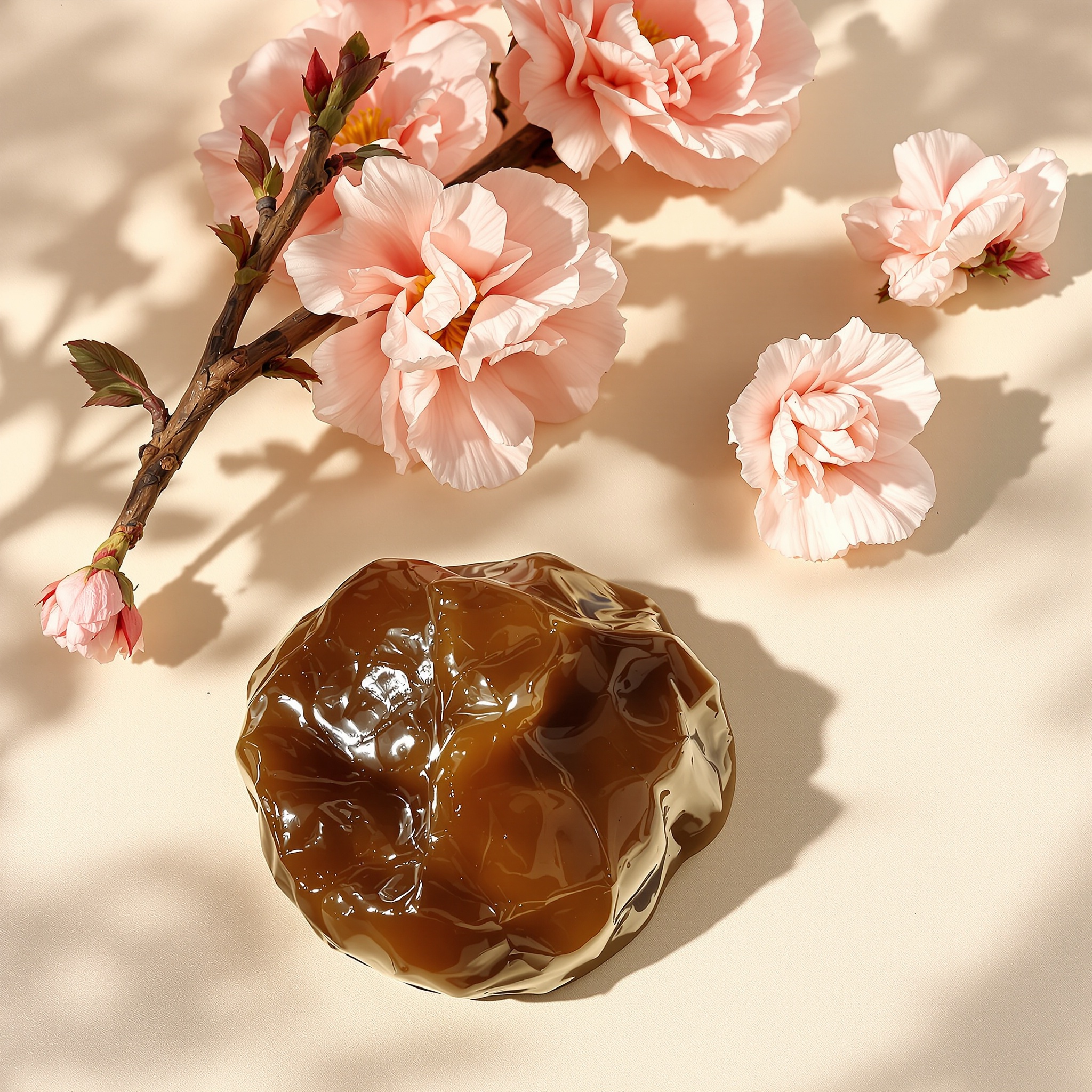
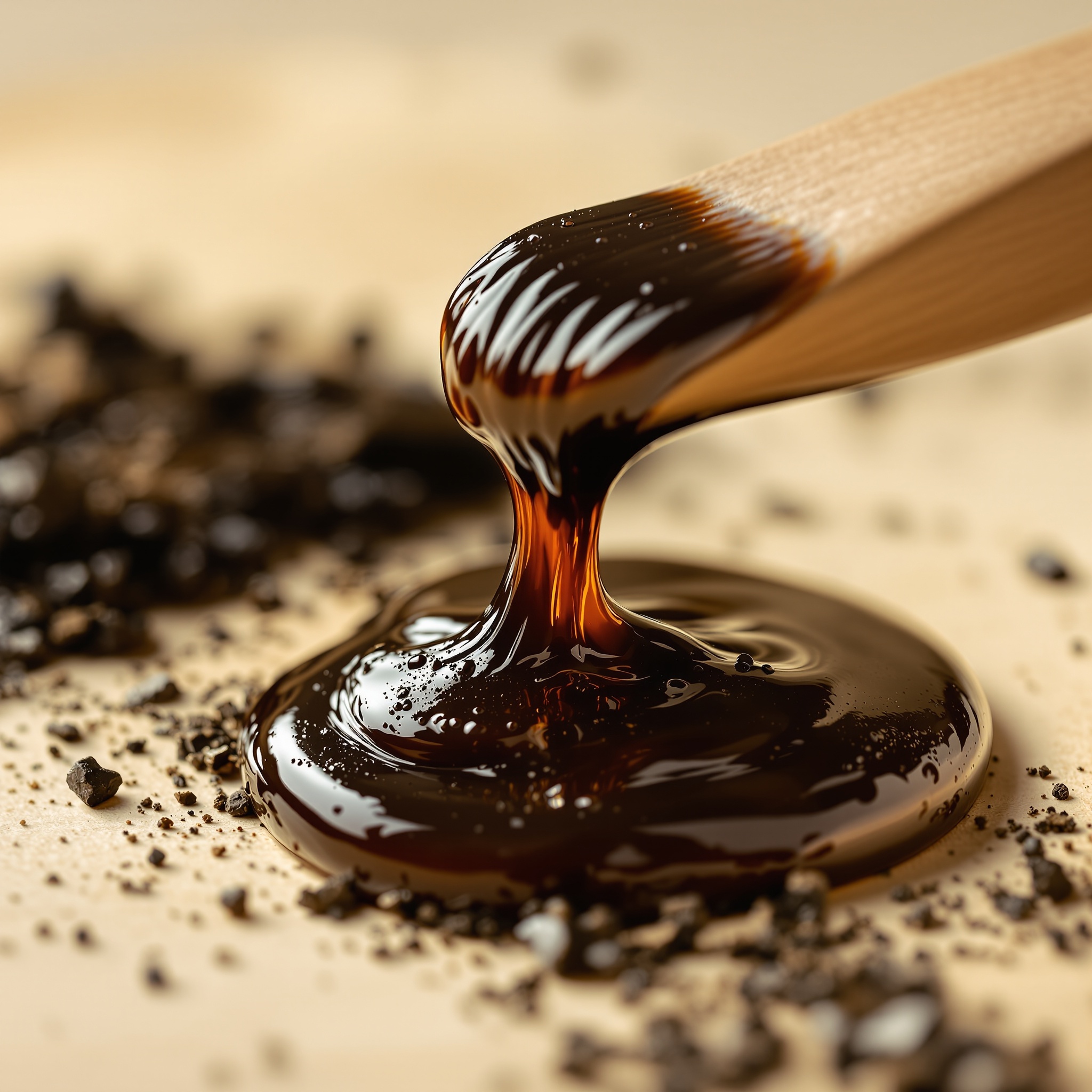
Labdanum is a dark, sticky resin from the rockrose shrub Cistus ladanifer, native to the western Mediterranean. The plant exudes a fragrant gum on its leaves and twigs in summer heat; branches are boiled or scraped to recover the crude resin, which is then solvent-extracted into absolute and resinoid.
How it smells
Deep, warm and balsamic with leathery, animalic and faintly sweet facets that read as soft amber. Dried-fruit, honey, smoke and pine undertones run through it. It opens resinous and almost ambergris-like, then dries into a brown tobacco-and-leather warmth that lingers for hours.
In perfumery
A foundational base note and the natural backbone of most amber accords, usually built with vanilla and benzoin. A strong fixative, it deepens chypres, orientals and leathers and pairs with rose, oakmoss and incense. It underpins many golden-age oriental classics and countless amber compositions.
Good to know
In antiquity labdanum was combed from the matted beards and thighs of goats and sheep that had browsed through cistus thickets, then raked off with a toothed tool called a ladanisterion. It is one of the oldest aromatic materials, predating distillation by millennia.
Fragrance Character
It opens with passionfruit's sharp, almost fizzing acidity cut through with saffron's dry metallic heat and rose, lush but not precious. The oud arrives with real presence, smoked and animalic, grounded by patchouli leaf and benzoin into something earthy and dense. On the drydown, vanilla and labdanum pull the whole composition warm and close to skin, where it lingers with quiet authority.

Best Worn
High summer heat amplifies the tropical fruit against the resinous base in a way cooler months cannot; this belongs on skin headed somewhere after dark, worn by someone who does not apologize for taking up space.
Why the Oud Maracuja Decant
The pairing of tropical fruit brightness with heavy oud and leather is genuinely polarising, and the enormous projection in the opening hours means a single decant will tell you everything you need to know before committing to a full bottle.
Official Notes
Passionfruit · Fruity Notes · Saffron · Turkish Rose · Agarwood (Oud) · Benzoin · Indonesian Patchouli Leaf · Leather · Akigalawood · Amber · Vanilla · Labdanum
Explore more: Ultra-Niche Perfume Decants · All Fragrance Decants
Choose options
The Vibe
Select your decant size

You are selecting a decant size, not the full bottle