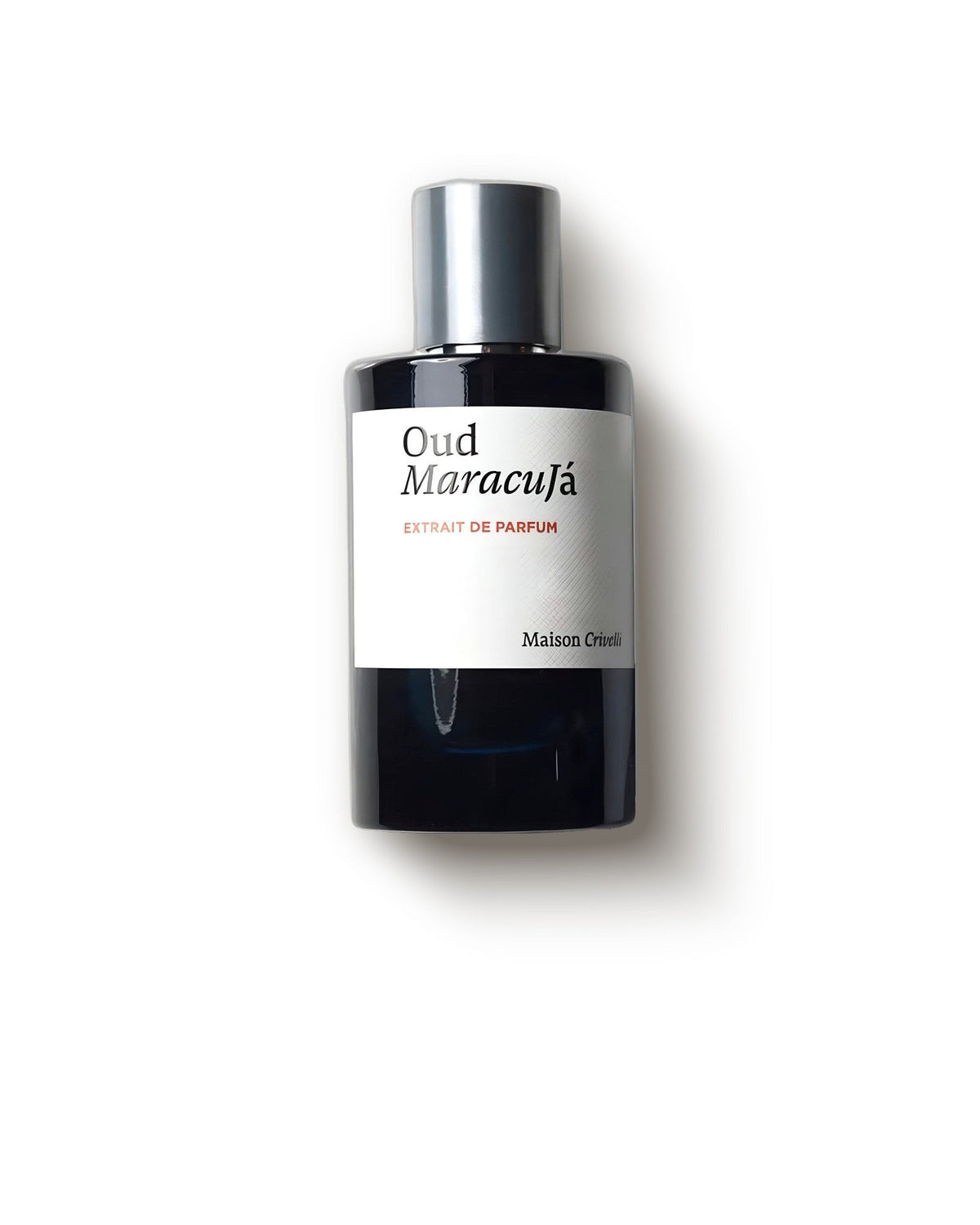

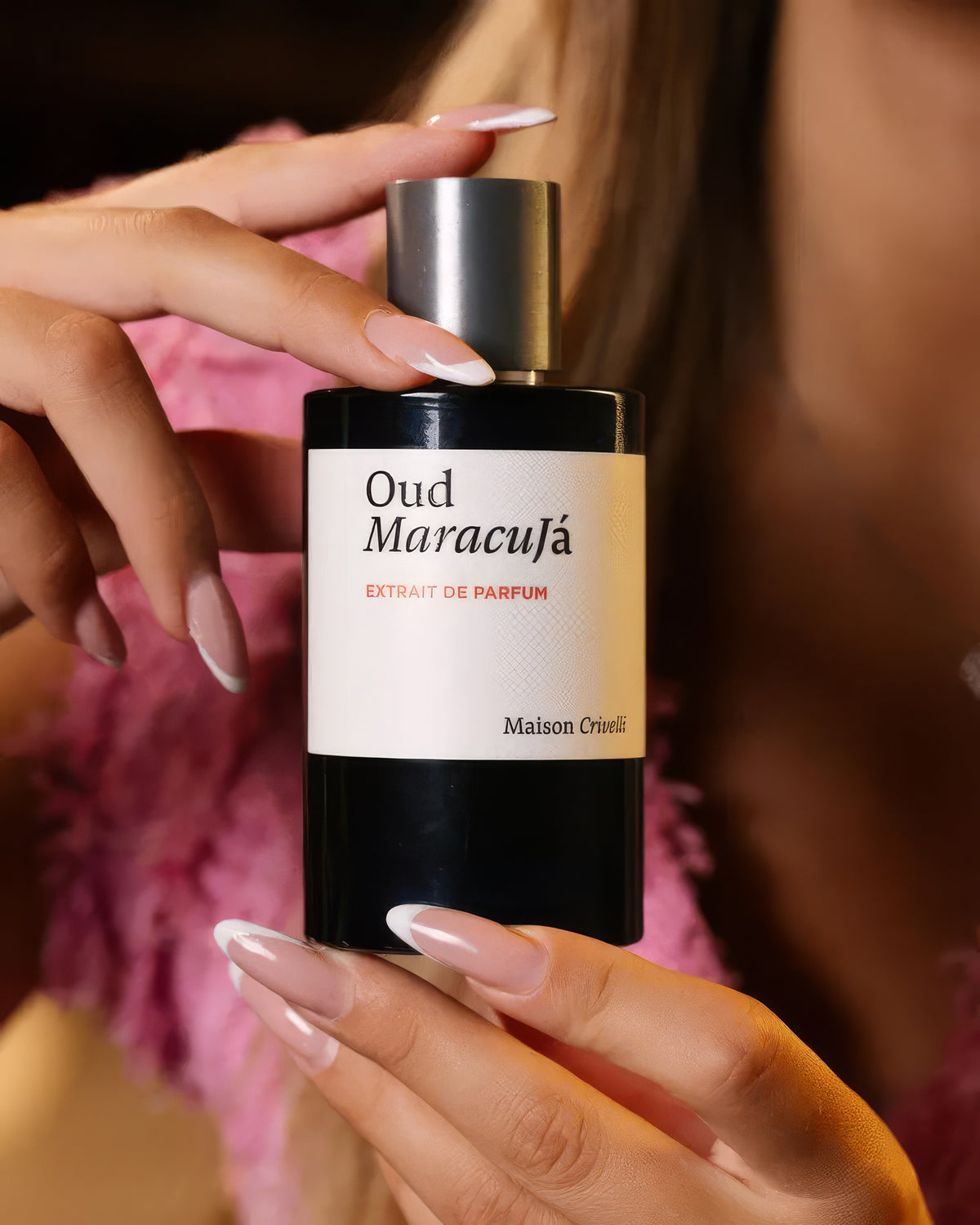

Maison Crivelli
Oud Maracujá
The Story
Thibaud Crivelli builds each scent from one specific shock he has actually smelled while travelling, and for this one it was oud, encountered in stilt huts inside a secluded forest. He set it against passion fruit, a pairing nobody had reason to expect would hold.


Oud
What a tree makes when it is wounded
A dense, resinous wood that smells warm and slightly medicinal, with a leathery, animal-tinged smokiness and a sweet, almost barnyard funk underneath. It feels ancient and brooding, wrapping the skin in something thick and quietly powerful.


Fruity
Peach skin, not lemon peel
Peach, pear, apple, berry: this is sweetness in the flesh rather than the rind, dewy and nectar-heavy where citrus is sharp and thin. It plays young and slightly greedy, the sort of ripeness you can almost feel running down a wrist.


Leather
A jacket with some miles on it
Tanned hide and birch tar, dry, smoky, a bitter rasp and tobacco under it. Sometimes new and lacquered, like a car interior; sometimes worn soft, like suede gloves gone thin. Either way, it smells used.


Sweet
Warm sugar you cannot quite name
Caramel, honey, spun sugar: sweetness that hovers between all three and never settles on one. This is the gourmand pull, the thing that makes someone lean in closer than they meant to, warm and soft and a half step short of edible.


Tropical
Sun-warmed fruit and creamy bloom
A juicy swell of ripe mango, pineapple, and overripe banana laced with coconut milk and sticky white petals. It smells of heat on bare skin, suntan lotion, and fruit left to soften in the sun, breezy and indulgent at once.


Amber
Resin warmed until it goes sweet
Labdanum, benzoin and vanilla melted together into something sweet but dusky, like tree sap gone soft in the sun with a thread of incense smoke through it. Amber does not sparkle or shout. It sits close to the skin and gives off heat for hours.


Passionfruit
Juicy tropical tang built on sulfur molecules
What it is
Overdose the materials that make it and you get a cat, not a fruit. The tang comes from sulfur molecules, chiefly Oxane and two thiols. Naturals-only builds borrow the same twang from buchu leaf and blackcurrant bud.
How it smells
Juicy and tart with something savoury under the sweetness, the smell of fruit just past ripe. The lab build bursts sharp and clean and holds its shape. A botanical one is softer, mintier and greener, and drifts.
In perfumery
Fruity-florals and tropical summer compositions use it for sparkle up top and a mouth-watering lift under white flowers. The sulfur materials are extreme in strength and go in by the trace. Buchu is handled the same way.
Good to know
No passionfruit oil exists, so every version is a reconstruction and neither route is the honest one. Buchu and blackcurrant bud sit in mainstream formulas too, so the word on the label tells you nothing.


Saffron
Crimson threads breathing leather, honey and dry hay
What it is
Three crimson threads sit inside each autumn crocus flower, and a hand pulls every one. Dried, those stigmas are steeped into a tincture or extracted into an absolute. That is the entire supply chain.
How it smells
Hay and honey and warm toast first, then something metallic and leathery underneath, the work of a molecule called safranal. It dries down into suede, tobacco and dusty amber, bitter at the edges.
In perfumery
It lives in the heart, glowing reddish, the hinge between spice and leather. Perfumers wed it to rose so often the pairing became a genre, and entire leather accords get built on it alone.
Good to know
A kilogram of saffron costs about 150,000 hand-picked flowers and many days of stooped labor, which is why almost none of it reaches perfume. Most saffron notes are built from synthetic safranal instead.


Turkish Rose
Spiced honey petals from the Isparta valleys
What it is
The valleys around Isparta are planted with damask rose, picked in the dark and finished by mid-morning, before the heat scatters the oil. The still gives rose otto; solvent gives the darker, redder absolute, jammier and fuller.
How it smells
Honey and spice more than dew. Against the brighter Bulgarian rose this one reads warmer and denser, opening fresh and green-edged before settling into something clove-like and deep. There is a peppery flick at the edges.
In perfumery
Put it in the heart and the whole fragrance turns radiant and slightly restless, never one flat rose. Oud, saffron, patchouli and geranium all take it well, in florals, chypres and orientals alike.
Good to know
Three to four tonnes of hand-picked blossoms go into one kilogram of otto. The name is protected as well: Isparta Rose is a registered name of origin covering the provinces of Isparta, Burdur, Afyon and Denizli, and a grower outside that line cannot use it.


Oud Accord
The distilled resin and the accord that imitates it
What it is
Resinous heartwood, and the oil distilled from it. One word covers chips burned over coals, attars that shift with species, soil and still, and the woody-amber accords built to imitate them. Most commercial oud is the accord.
How it smells
A distilled oil moves: fermented and barnyard, then leather, dried fruit, honey, then resin and warm skin, rarely the same twice in one evening. An accord holds still. Dry, smoky, medicinal, unchanged from first minute to last.
In perfumery
Collectors chase regions the way wine drinkers chase terroir: fecal Hindi, fruity Cambodi, camphorous Borneo, and above them all kyara, the rarest and most prized grade. The accord exists because none of that can be repeated at scale.
Good to know
Aquilaria is listed under CITES Appendix II, which regulates the trade rather than banning it. Chips, beads and carvings move on permits. The finished bottle on a shelf does not.


Benzoin
Warm vanilla balsam wept from a tapped tree
What it is
Benzoin does not flow on its own. Someone cuts the bark of a styrax tree in Laos, Vietnam or Sumatra, and the wound weeps a gum that hardens over months into reddish tears.
How it smells
Sweet, warm, unmistakably vanillic, with a powdery amber softness underneath. Siam benzoin is rounder and creamier; Sumatra runs smokier, with a cinnamon bite. Left on skin it turns almost caramelized.
In perfumery
A base note that behaves like a fixative and a sweetener at once, giving amber accords their glow and holding the rest of the composition still. It softens sharp edges beside labdanum, tonka and incense.
Good to know
The word benzene comes from here. Chemists named benzoic acid after this resin, and benzene took its name from the acid. The resin's own name is a worn-down Arabic phrase, luban jawi, frankincense of Java.


Indonesian Patchouli Leaf
Green herbal patchouli still bright with sap
What it is
Leaf, not aged oil. Indonesia grows most of the world's patchouli and distills much of it in small village stills on Sulawesi. Leaf points to the fresher green top of the plant, not the deep cured base.
How it smells
Lighter and more herbaceous than aged patchouli oil: green, faintly minty, camphoraceous up top, a leafy crispness laid over the familiar earthy warmth. Less chocolate and must, more of the living bush snapped off at harvest.
In perfumery
It sharpens patchouli's earthiness without dragging in the sweetness, so it lifts chypres and fougeres. Bergamot, geranium, lavender and woods all take it well, and it gives the crisp patchouli signal in fresh modern unisex blends.
Good to know
Europe learned this smell from cloth. Dried leaves were packed between Indian shawls shipped west, and the scent clung so stubbornly that it became the mark of a genuine import.


Leather
Tanned hide, smoke and animal warmth
What it is
There is no leather essential oil. Perfumers rebuild the smell from birch tar and cade, smoky distilled woods, plus styrax and labdanum resins, isobutyl quinoline and safraleine-type molecules, echoing the tannins and oils once used to cure hides.
How it smells
Smoky, dry and animalic, ranging from supple new suede to tarry old saddle. Birch-tar versions read sooty and phenolic, almost campfire and band-aid; softer suede accords turn powdery, floral and skin-warm.
In perfumery
A base note that lends spine and a carnal edge. It does its best work under rose and violet, alongside tobacco and oud, and a floral heart set on leather turns unmistakably human.
Good to know
The genre was born in Russia, where boots and book bindings were treated with birch tar, and Russian leather still means that smell. The real tanning oils were mostly restricted on safety grounds, so today's leathers are reconstructions.


Akigalawood
Patchouli leftovers remade as peppery wood
What it is
The patchouli industry throws off a residue nobody wanted. Givaudan put an enzyme to work on it, with water and salts and no petrochemistry, and got a wood that had never existed before. It counts as natural.
How it smells
Patchouli with the cellar taken out. What is left is dry and warm, peppery in a pink-pepper way, with a thin line of agarwood running through it. Transparent where oud is dense, and unmistakably contemporary.
In perfumery
It runs from heart to base, giving woody radiance and an oud impression without the animalic weight, which is why it turns up in so much modern niche. Pink pepper, rose, leather and amber are its usual company.
Good to know
A captive material, so only perfumers inside Givaudan can use it: every fragrance that smells of it traces back to one house. It has become the flagship example of upcycling in fragrance.


Amber
A warm resinous glow built, not harvested
What it is
There is no amber tree. Perfumers assemble the smell from labdanum, the sticky gum that bleeds off a Mediterranean rockrose in summer heat, plus benzoin and vanilla. The fossilized resin in museum cases is odorless on skin.
How it smells
Honeyed and faintly animalic at first, then it settles into golden powdery warmth: beeswax, old tobacco, worn leather, a thread of smoke underneath. It stays close to the skin rather than filling the room.
In perfumery
It sits at the base and holds everything above it in place, which is why oriental compositions lean on it so hard. Vanilla and patchouli push it sweet; more resin, spice and dry herbs push it austere.
Good to know
The word once meant ambergris, the waxy secretion of sperm whales, and the confusion never cleared. The trade now uses amber for two things: this resin accord, almost always plant and synthetic, and the ambergris substitutes like Ambroxan.


Vanilla
Cured orchid pods, custard and faint smoke
What it is
Green pods come off the orchid vine smelling of almost nothing. The scent is made, not found: months of blanching, sweating in the sun and slow drying before the vanillin appears. Mexico first, Madagascar now.
How it smells
Custard and caramel up front, then something darker underneath: dried fruit and a thread of tobacco smoke. It turns powdery as it dries and sits close to the skin. Real cured vanilla reads deeper than vanillin alone.
In perfumery
Perfumers use it to round off edges. Anything too sharp, too green, too austere gets warmth and body from a vanilla base, which is why it anchors many oriental and gourmand builds alongside tonka, amber, sandalwood and spice.
Good to know
Every flower opens for one day. Miss it and there is no pod, so all of it is pollinated by hand, a trick devised by Edmond Albius, a twelve-year-old enslaved boy on Réunion. Most vanilla flavour today is synthetic.


Labdanum
Sticky amber resin scraped from sun-baked rockrose
What it is
A Mediterranean rockrose sweats gum through its leaves in summer, dark and sticky enough to glue your fingers together. Harvesters boil or scrape the branches to get it off, then extract that crude gum into absolute and resinoid.
How it smells
Balsamic warmth, then leather, dried fruit, honey and a curl of smoke. There is something almost ambergris-like in the opening. Hours later it has settled into brown tobacco and worn skin, still going.
In perfumery
Take labdanum out and most amber accords collapse; it is what vanilla and benzoin get built on. It fixes a formula in place, gives chypres and leathers their depth, and sits well with rose, oakmoss and incense.
Good to know
Before there was distillation, there were goats. Herds browsed through cistus scrub all summer, the gum matted into their beards and thighs, and shepherds combed it out. Labdanum is one of the oldest aromatic materials still in use.
Fragrance Character
It opens with passionfruit's sharp, almost fizzing acidity cut through with saffron's dry metallic heat and rose, lush but not precious. The oud accord arrives with presence, woody and deep, grounded by patchouli leaf and benzoin into something earthy and dense. On the drydown, vanilla and labdanum pull the whole composition warm and close to skin, where it lingers with quiet authority.


Longevity
how long it stays on skin
The hourglass reads wear time: how many hours the fragrance keeps speaking before it fades. A bar that barely leaves the start means a few fleeting hours. One that runs the full length carries from morning into evening. Treat it as typical, not promised. Oily skin holds scent far longer than dry.


Sillage
the size of its scent trail
Sillage is French for a ship's wake, and that is exactly what this measures: how much of the scent reaches the room instead of staying on you. Low is a whisper only close friends catch. Enormous fills the room, then keeps filling it after you leave.


Experimental
Built to provoke, not to please
Some perfumes are made to be liked. These are made to be argued about: inky tar, hot rubber, fruit on the turn, metal and fur where you expected flowers. The coin glows for a scent that provokes and dims for one that plays it safe, which is sometimes the point.


Office
Polished, and never louder than the room
Scent is manners in a shared room. At this range it should reach the person across the desk and stop there: tidy citrus, soft musk, pale woods, all of it reading competent and considerate. A glowing coin means nobody has to mention it. A dim one means it travels.


Evening
After dark, when it deepens
Dinner, drinks, the night that runs long. Low light is where ambers, resins and smoky woods stop being polite, and where a plush floral finally blooms. A glowing coin means it is waiting for exactly this hour. A dim one means it did its best work in daylight.


Romantic
Close enough to be felt
A fragrance can hum against skin instead of announcing itself across a table. That is the register here: creamy florals, vanilla, soft musk, a thread of spice, warm enough to make someone lean in. The coin glows when a scent sets that mood and dims when it is more practical than seductive.


Formal
Quiet authority in a dressed-up room
A wedding, a ceremony, a room where everyone has thought about their shoes. What works here is structure, not volume: smooth woods, disciplined florals, soft leather. A glowing coin means it holds its posture all evening. A dim one means it is too casual for the room.


Casual
Easy comfort for unhurried days
Errands, coffee, a slow Saturday with nowhere to be. Nothing here has to impress anyone, so the fit is soft and easy: fresh citrus, light woods, a little warmth off the skin. A glowing coin says yes to all that. A dim one means the fragrance is asking for a bigger night.


Day to Night
where its mood naturally falls
A bar running from sun to moon, reading the hour the fragrance was made for. The more of it that stays gold, the more the scent belongs to daylight and open air. The further the blue reaches back toward the sun, the deeper and warmer it turns: evening, candlelight, low rooms.


Winter
Warmth that carries through cold air
Cold air mutes a fragrance and slows it down, which is why winter belongs to the dense and the warm: resin, smoke, vanilla, leather, ambered spice. The bar reads how well this one pushes back, glowing against the chill instead of thinning out in it.


Spring
Fresh blooms in mild, rising warmth
Mild, humid air lifts a light composition, so the season belongs to dewy florals, green stems, soft powder and citrus you can see through. Alive rather than heavy. The further the green runs along the bar, the more comfortably this one wears in that weather.


Summer
Bright and airy in real heat
Heat does the projecting for you, which is why the wrong perfume turns unbearable by noon. What survives is cool and breathable: sharp citrus, salt air, aromatic herbs, water. Things that refresh instead of cloy. A short bar here means save it for cooler months.


Fall
Spiced warmth for cooling days
As the air cools, the rich materials stop smothering and start reading clearly: dry woods, warm spice, tobacco, amber, fruit gone golden. It is the season perfume turns contemplative. The bar fills according to how naturally this one settles into crisp, cooling days.
Best Worn
High summer heat amplifies the tropical fruit against the resinous base, and the same leather, vanilla and labdanum base carries it through autumn and winter nights; this belongs on skin headed somewhere after dark.
Choose options
The Vibe


The Nose

Jordi Fernández
Senior perfumer
Self-taught Spanish perfumer based in Barcelona who began at Eurofragance and is now a senior perfumer at Givaudan, known for his oud work. He composed Maison Crivelli Oud Maracujá, D'Orsay Tonka Hysteria and Carner Barcelona Helix, and co-signed Montblanc Explorer with Antoine Maisondieu and Olivier Pescheux.
More by this noseBlue Talisman ExtraitBrompton ImmortalsOutcast Blue Extrait
The Maison

Perfume as sensory flashback, best sprung from a small vial.
Maison Crivelli builds the way a memory ambushes you, all at once and out of nowhere. Each scent is anchored to a moment the founder actually lived, then pushed until it feels almost too vivid to be real. A bright fruit can crash straight into resin, or a cool herb can turn suddenly sultry.
- Origin
- Paris, France
- Founded
- 2018
- Known for
- Oud Maracujá, vivid contrasts

EVERY DECANT
From the original bottle to your door
We buy the original flacon at full retail price, direct from the house.
A medical grade Socorex syringe takes the exact millilitres straight from the flacon.
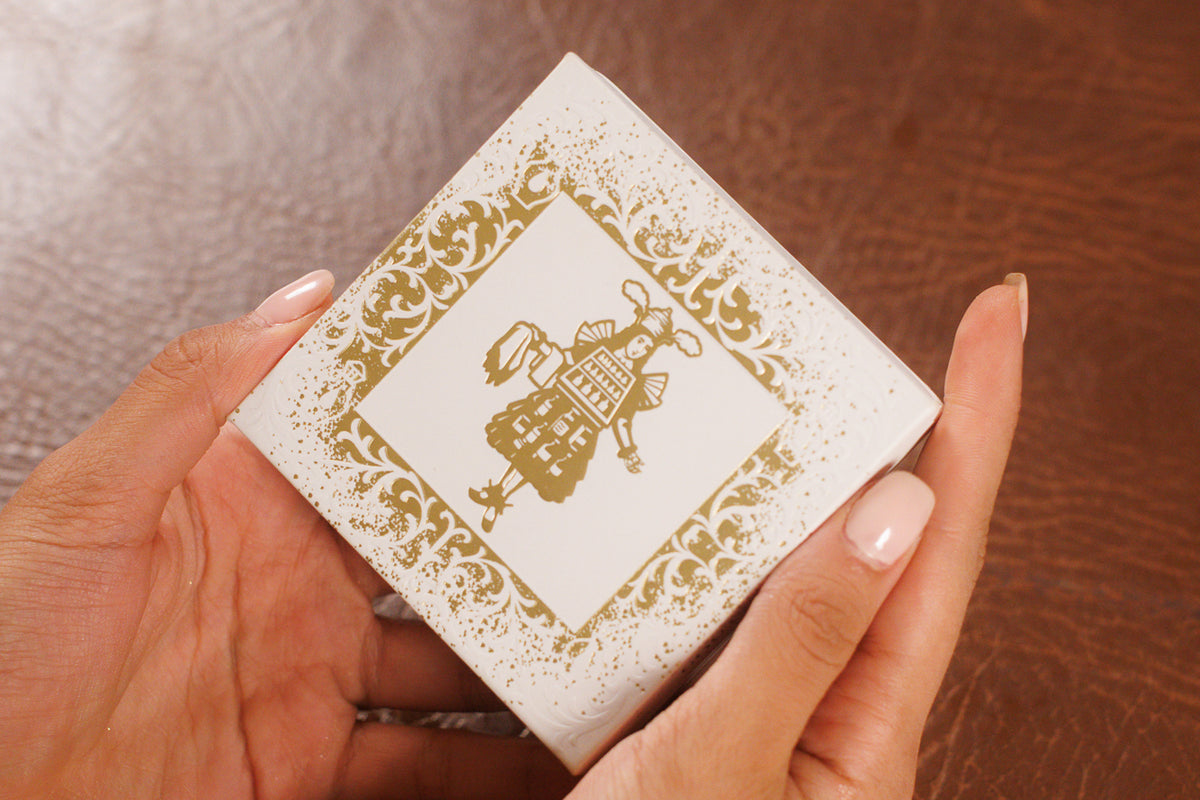
Packed into the hot foiled box and handed to DHL, every duty already paid. How a decant is made
More from Maison Crivelli
You may also like