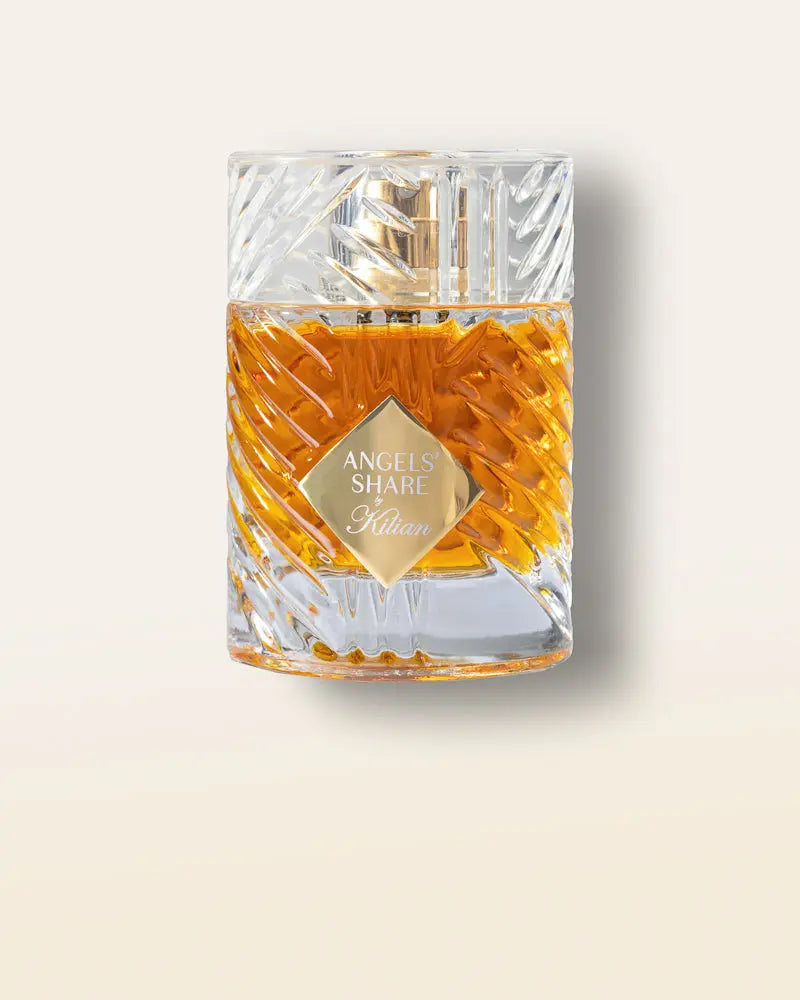


Kilian Paris - Angels’ Share
Angels' Share by Kilian Paris opens with cognac, turns to cinnamon, tonka bean, oak and hedione, and dries down to vanilla, praline, sandalwood and candied almond.
The Nose
Composed by Benoist Lapouza for Kilian Paris.


Woody
Dry grain of cut timber
The smell of cedar shavings, sandalwood, and dry vetiver roots, a sanded, resinous warmth with a faint pencil-box rasp. It feels grounded and composed, the quiet backbone that makes a scent read as serious and lasting.


Warm Spicy
Glowing embers of the spice drawer
The rounded heat of cinnamon, clove, and nutmeg, dry and slightly resinous, like a baking pantry rather than a sharp kitchen. It creates a flushed, enveloping warmth that feels intimate and cool-weather, hugging the skin from within.


Sweet
Edible warmth on the skin
A rounded, sugary character that suggests caramel, honey, or spun candy without any single one dominating. It reads as comforting and indulgent, the gourmand pull that makes a fragrance feel soft, inviting, and almost good enough to taste.


Vanilla
Creamy bean steeped in warmth
The soft, custardy sweetness of cured vanilla pods, rich and balsamic with a faint boozy, smoky depth beneath the cream. It feels comforting and skin-warm, a tender glow that smooths and rounds everything it touches.


Cinnamon
Hot bark, sweet and biting
The dry, reddish heat of ground bark, sweet and woody with a tingling bite that almost prickles the tongue. It smells of mulled drinks and spiced pastry, comforting and festive, with a glowing warmth that feels both edible and slightly fierce.


Amber
Golden resin glowing warm
A soft, resinous glow built from labdanum, benzoin, and vanilla, sweet but dusky, like sun-warmed tree sap with a hint of incense smoke. It radiates a cozy, golden heat that wraps close to the skin and lingers.


Cognac
Boozy grape warmth with a green champagne lift
What it is
Cognac in perfumery is not the brandy but cognac oil, also called wine lees oil. It is steam-distilled from wine lees, the yeasty sediment left after fermentation. Green cognac gets its emerald tint from copper stills; white cognac comes from inert stills. Both originate in French wine regions.
How it smells
Dry, tart and intensely wine-like, with grape, raisin and brandy facets over a fatty, waxy, slightly fermented undertone. The green version smells of crisp green apple and herbaceous champagne fizz; lesser batches drift toward a sour, almost rancid edge that perfumers use in tiny doses.
In perfumery
A heart-to-base material giving a diffusive lift and spirituous warmth to gourmand, oriental and tobacco compositions. It pairs with tobacco, plum, vanilla, leather and dried fruit, animating boozy themes. It threads through apple-brandy accords and various rum and whisky themes as a fermented top accent.
Good to know
Because cognac oil is wildly potent and variable, described as ranging from candied green apple to baby vomit, it is dosed in trace amounts and never as a literal brandy. A single drop too many can wreck a formula, so it is treated as a sharp spice rather than a base.


Cinnamon
Red bark warmth dusted with sweet fire
What it is
Cinnamon is the dried inner bark of evergreen Cinnamomum trees. True Ceylon cinnamon, C. verum, comes from Sri Lanka; the coarser, cheaper cassia from C. cassia is common in food. Bark strips are peeled, curled into quills, and steam-distilled into a bark oil rich in cinnamaldehyde.
How it smells
Warm, sweet and dry-spicy, with a glowing red-hot quality from cinnamaldehyde and a soft clove-like nuance from eugenol. Ceylon bark is rounder, faintly floral and refined; cassia is sharper and more biting. The dry-down feels woody, balsamic and faintly leathery.
In perfumery
A heart-note spice giving oriental and gourmand scents their cozy heat, it pairs with vanilla, amber, rose, apple and tobacco. Used sparingly, it adds glow without sting. It marks the classic spicy oriental and the spiced heart of many autumn fragrances.
Good to know
Cinnamaldehyde and related compounds are skin sensitizers, so IFRA strictly caps cinnamon bark oil in fragrance. Once worth more than its weight in gold, cinnamon helped drive Portuguese and later Dutch control of Ceylon; the Dutch even burned stockpiles to keep prices high.


Tonka Bean
Warm almond-vanilla sweetness with a hay-tobacco shadow
What it is
Tonka bean is the cured seed of Dipteryx odorata, a tall South American legume tree of Venezuela, Brazil and Guyana. Shelled seeds are soaked in alcohol, then dried for weeks until coumarin frosts their surface. Perfumers use a solvent-extracted absolute drawn from these cured beans.
How it smells
A warm, sweet bouquet of vanilla and bitter almond, threaded with hay, dried tobacco and toasted nuts. The opening recalls caramelized custard; the drydown turns powdery and faintly boozy, with cinnamon and cut clover. Rounder and hazier than vanilla, softer and less sharp than almond.
In perfumery
A base and heart material prized for warmth, sweetness and soft persistence. It bridges gourmand, oriental and fougère accords, pairing with vanilla, lavender, amber and tobacco. Tonka and its coumarin shaped the very first fougère, and underpin the sweet drydown of countless oriental-gourmand blends.
Good to know
Tonka owes most of its scent to coumarin, which the FDA banned as a food additive in 1954 after hepatotoxicity appeared in animal studies at high doses. So tonka is effectively illegal in American kitchens, yet remains entirely legal, and widely loved, in fine fragrance.


Oak
The warm grain of the cooper's barrel
What it is
The wood of oak trees in the genus Quercus, hardwoods of Europe and North America. The aroma comes mainly from the heartwood, captured by distilling or solvent-extracting wood chips, or borrowed from the toasted oak staves of wine and whisky barrels and reconstructed with aroma chemicals such as vanillin and oak lactones.
How it smells
Dry, woody and slightly sweet, with a sawdust grain that turns warm and vanillic when the wood is charred. Untreated it reads of pencil shavings and cool bark; barrel-aged or smoked it becomes nutty, tannic and faintly boozy, edging toward leather and toasted coconut.
In perfumery
A base and heart note giving structure, dryness and a barrel-warm backbone. It anchors woody, leathery, boozy and gourmand accords and pairs with vanilla, tobacco, whisky and amber. It defines barrel-and-cellar compositions and many whisky-themed fragrances.
Good to know
Much of an aged spirit's vanilla sweetness comes from oak: charring the barrel breaks the wood's lignin down into vanillin, the very molecule that flavours vanilla. A single oak can take well over a century to mature before its timber is cut for staves.


Hedione
Transparent jasmine that makes a fragrance breathe
What it is
Hedione is a synthetic aroma-chemical, methyl dihydrojasmonate, related to a trace component of jasmine. Edouard Demole achieved its synthesis in 1958, and the material was patented as Hedione in 1962. It is now made industrially and ranks among the most-used ingredients in modern perfumery.
How it smells
Limpid, airy and luminous: a soft green-floral jasmine without the heavy indolic density of the real flower. It reads of magnolia and dewy petals, faintly citrusy and watery. It adds lift and radiance, lending compositions a fizzy, transparent quality often likened to champagne.
In perfumery
A heart-note diffuser and blender used at high levels to add space, glow and naturalness, smoothing citrus, bolstering white florals and lengthening drydowns. It was put centre stage in a landmark fresh masculine of 1966, and it also defines the airy bloom of countless modern florals.
Good to know
Hedione is estimated to appear in a large share of all fine fragrances, a figure sometimes cited near eighty percent. Research has suggested its high-purity form can weakly activate a putative human pheromone receptor, fuelling its reputation as a quietly attractive, skin-flattering molecule.


Vanilla
The warm sweet heart of comfort itself
What it is
Vanilla comes from the cured seed pods of Vanilla planifolia, a climbing orchid native to Mexico now grown mainly in Madagascar, Réunion and Tahiti. Green pods are picked unripe, then blanched, sweated in the sun and slow-dried over months until they darken and develop their aroma and vanillin.
How it smells
Sweet, warm and creamy, with a balsamic depth recalling custard, caramel and dried fruit, a faint smoky tobacco-like edge sitting underneath. It opens soft and gourmand, then dries into a powdery resinous warmth that clings close to skin and reads richer than synthetic vanillin alone.
In perfumery
A base note prized for richness and lasting warmth, vanilla rounds sharp edges and anchors oriental and gourmand compositions. It pairs naturally with tonka, amber, sandalwood and spice. Many of the most enduring oriental and tobacco fragrances build their core around it.
Good to know
Vanilla ranks among the costliest spices because each orchid flower opens for one day and must be hand-pollinated, a technique devised in 1841 by Edmond Albius, a twelve-year-old enslaved boy on Réunion. Most commercial vanilla flavor now relies on synthetic vanillin.


Praline
Caramelized nuts folded warm into sugar
What it is
Praline is not a plant but a confectionery accord recreating roasted almonds or hazelnuts cooked in caramelized sugar. Because real praline yields no oil, perfumers build it synthetically, combining caramel molecules such as ethyl maltol with nutty, buttery lactones and toasted Maillard-reaction aroma chemicals into one edible accord.
How it smells
A warm, toasted sweetness sitting between burnt sugar and roasted nut. The opening reads as crisp caramel and almond skin; the heart softens into buttery hazelnut and milk chocolate. The drydown turns cozy and faintly powdery, rounder and less sharp than pure caramel.
In perfumery
A heart-to-base gourmand pillar adding edible nutty warmth and roundness. It pairs with vanilla, tonka, coffee, and woods to anchor dessert compositions. A landmark praline-and-patchouli accord popularized it, and toasted nut sweetness now runs through countless modern gourmands.
Good to know
The confection traces to a 17th-century recipe credited to Clement Lassagne, cook to the French diplomat Cesar, Duke of Choiseul, Count of Plessis-Praslin, whose name it carries. American pralines later swapped almonds for pecans and added cream, producing a softer, fudgier candy.


Sandalwood
Creamy meditative woods that breathe in slowly
What it is
Sandalwood oil is steam-distilled from the heartwood and roots of slow-growing Santalum trees, classically Santalum album of Mysore, India. As the wild Indian source neared collapse, plantations of the same species in tropical Western Australia now supply much of the world's perfumery-grade oil.
How it smells
Soft, creamy and milky, with a smooth woody warmth and a faintly sweet, rosy, almost buttery edge. It carries no sharpness, only a rounded balsamic depth. It stays remarkably steady on skin, glowing quietly for hours rather than opening and drying in distinct stages.
In perfumery
A base note valued as both scent and fixative, sandalwood lends creaminess, warmth and a meditative softness that binds compositions together. It pairs beautifully with rose, jasmine, vetiver and spice. Many meditative woody and incense fragrances celebrate it at their heart.
Good to know
Genuine Mysore sandalwood was so overharvested that India tightened export controls and the wild tree became vulnerable, with oil prices reported around two thousand dollars per kilogram. Plantations of Santalum album grown near Kununurra in Western Australia now sustainably recreate the original creamy profile.


Candied Almond
Toasted almonds glazed in warm caramelized sugar
What it is
An accord rather than a single material, built to evoke sugar-glazed almonds. Perfumers assemble it from benzaldehyde, the bitter-almond molecule found in crushed kernels, plus heliotropin, tonka and caramel-like furanones, sometimes with roasted-nut pyrazines and a touch of real almond extract.
How it smells
Sweet marzipan and toasted nut over hot caramelized sugar, with a faint cherry-pit bitterness underneath. It opens bright and sugary like a praline shell, then settles into a doughy almond-paste warmth edged with vanilla, milk and a whisper of roasted skin.
In perfumery
A heart-to-base gourmand accent giving body and edible warmth. It pairs with tonka, vanilla, cherry, coffee and tobacco, and rounds amber or floral compositions. The marzipan facet drives delicate soft-focus almond fragrances, while caramelized almond warms confectionery scents.
Good to know
The almond smell comes from benzaldehyde, released when amygdalin in bitter-almond kernels breaks down, also yielding trace hydrogen cyanide. Synthetic benzaldehyde sidesteps that toxicity entirely, which is why almost every almond note in perfume and food flavoring is now made in a lab.
Fragrance Character
A gourmand-woody composition led by cognac, resting on vanilla and praline.


Longevity
how long it stays on skin
This gauge reads the expected wear time, how many hours the fragrance keeps speaking on skin before it fades. A marker near the low end means a few fleeting hours, while a marker pushed to the far end promises a scent still present from morning into night.


Sillage
the size of its scent trail
This reads how far the fragrance reaches beyond you and the trail it leaves behind. Low sits soft against the skin, an intimate whisper noticed only up close; high climbs through moderate and strong toward enormous, filling a room and lingering in the air after you have left it.


Experimental
For the bold and curious
Unconventional, boundary-pushing scents for someone who wants to provoke a reaction and stand apart. Suited to artistic, challenging compositions: inky tar, rubber, fermented fruit, metallic or animalic facets that defy easy liking. On this wheel a glowing coin means it rewards the adventurous nose, a dim one means it plays things safe.


Office
Polished but never overpowering
Close-quarters professional settings where a scent should be noticed only by those near you. Suited to restrained, clean compositions with modest projection: tidy citrus, soft musk, pale woods that read competent and considerate. On this wheel a glowing coin means it works in shared workspaces, a dim one means it carries too far.


Evening
After dark, turned up
Dinners, drinks, and nights out when a fragrance can deepen and project with confidence. Suited to richer, warmer compositions: ambers, resins, smoky woods, or plush florals that bloom under low light. On this wheel a glowing coin means the scent comes alive after sundown, a dim one means it stays better suited to daytime.


Romantic
Close enough to be felt
Intimate moments and date nights meant to draw someone nearer. Suited to warm, sensual compositions that hum against skin: creamy florals, vanilla, soft musk, a touch of spice or amber that invites closeness. On this wheel a glowing coin means it sets an alluring mood, a dim one means it leans more practical than seductive.


Formal
Refined for the occasion that matters
Weddings, ceremonies, galas, and dressed-up affairs that call for composure and elegance. Suited to polished, structured scents with quiet authority: smooth woods, refined florals, soft leather, nothing loud or playful. On this wheel a glowing coin means it carries the right gravitas, a dim one means it feels too casual for the room.


Casual
Easy comfort for unhurried days
Everyday wear with no agenda: errands, coffee, friends, a slow weekend. Suited to soft, approachable scents that feel clean and natural, like fresh citrus, light woods, or a gentle skin warmth. On this wheel a glowing coin means the fragrance fits these laid-back moments, a dim one means it asks for more.


Day to Night
where its mood naturally falls
This slider reads the hour the fragrance was made for. A marker to the left leans luminous and bright, easy in daylight and open air; slide it right and the character turns deeper and warmer, the kind of presence that belongs to evening and candlelit rooms.


Winter
Warmth that carries through cold air
Cold air mutes and slows a fragrance, so winter rewards the dense and the warm: resins, smoke, vanilla, leather, and ambered spice that radiate heat against the chill. The bar shows how strongly this particular scent holds up and glows in cold weather.


Spring
Fresh blooms in mild, rising warmth
Mild, humid air lifts lighter compositions beautifully, so spring favors dewy florals, green stems, soft powder, and transparent citrus that feel alive rather than heavy. The bar shows how well this particular scent matches that fresh, gently warming season.


Summer
Bright and airy in real heat
Heat amplifies and projects scent hard, so summer calls for cool, crisp, breathable things: sharp citrus, salty marine air, aromatic herbs, and watery freshness that refresh instead of cloy. The bar shows how comfortably this particular scent wears in real warmth.


Fall
Spiced warmth for cooling days
As temperatures drop, richer materials read clearly without smothering, so autumn suits dry woods, warm spice, tobacco, amber, and golden fruit that feel cozy and contemplative. The bar shows how naturally this particular scent settles into crisp, cooling days.
Best Worn
Winter and Fall wear, at home in romantic, evening moments, for those who favour gourmand and woody fragrances.
Why the Angels' Share Decant
A decant is the considered way to live with Angels' Share across a few wears before the full bottle.
Official Notes
Cognac · Cinnamon · Tonka Bean · Oak · Hedione · Vanilla · Praline · Sandalwood · Candied Almond
Explore more: Ultra-Niche Perfume Decants · All Fragrance Decants
Choose options
The Vibe


Select your decant size

You are selecting a decant size, not the full bottle