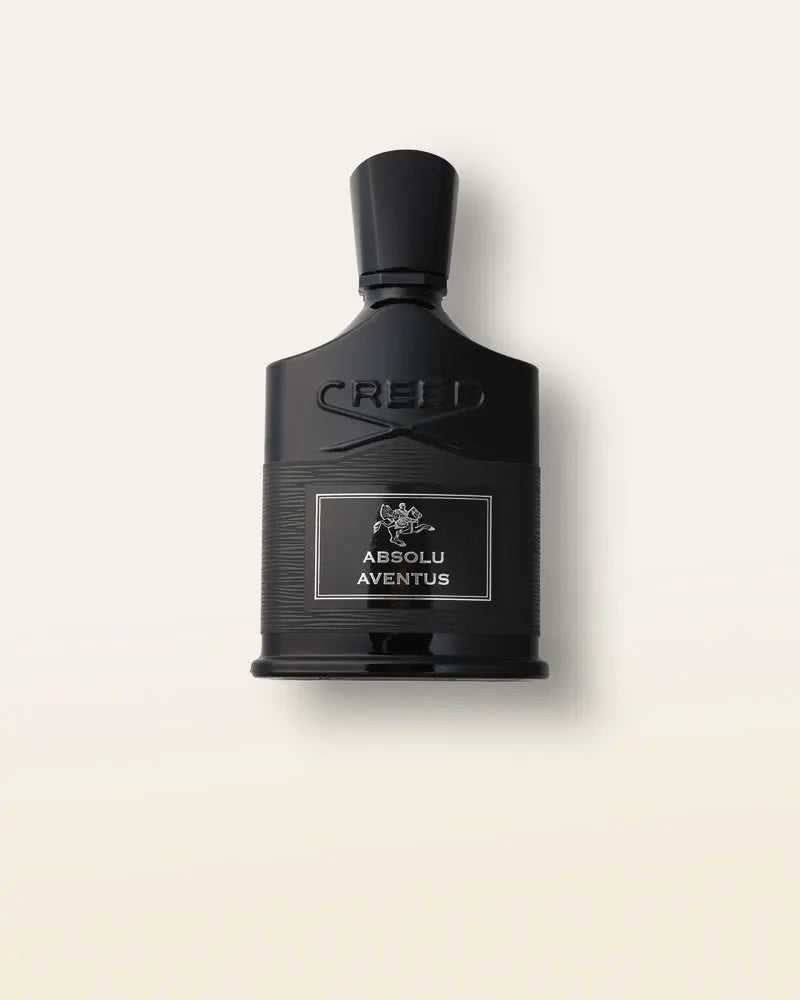


Creed - Absolu Aventus
Absolu Aventus is Aventus turned richer and darker, the signature blackcurrant-and-pineapple sparkle over a spicier heart of ginger, cinnamon and cardamom, sinking into a deep, smoky base of patchouli, oakmoss, ambroxan and sandalwood.
The Story
Creed's reworking of its blockbuster amps up the fruit and the woods alike: the bright pineapple-cassis opening stays, but the drydown is denser and more resinous, Aventus for those who want more weight and longevity.
The Nose
Composed by Olivier Creed and Erwin Creed for Creed.


Fruity
Ripe orchard flush of juice
The succulent sweetness of peach, pear, apple, or berry, soft and dewy with a nectar-like ripeness distinct from sharp citrus. It brings a playful, mouthwatering roundness that feels youthful, juicy, and lighthearted.


Citrus
First bright zest of morning
The juicy, rind-snapping brightness of lemon, bergamot, and orange peel, tart and effervescent with a clean bitter edge. It opens a scent with instant lift and sparkle, fresh and energizing, evaporating quickly like sunlight on water.


Aromatic
Crushed herbs in cool air
The green, camphorous coolness of lavender, rosemary, sage, and thyme, like herbs bruised between the fingers. It feels clean, invigorating, and a touch austere, the crisp backbone of a classic barbershop freshness.


Warm Spicy
Glowing embers of the spice drawer
The rounded heat of cinnamon, clove, and nutmeg, dry and slightly resinous, like a baking pantry rather than a sharp kitchen. It creates a flushed, enveloping warmth that feels intimate and cool-weather, hugging the skin from within.


Woody
Dry grain of cut timber
The smell of cedar shavings, sandalwood, and dry vetiver roots, a sanded, resinous warmth with a faint pencil-box rasp. It feels grounded and composed, the quiet backbone that makes a scent read as serious and lasting.


Sweet
Edible warmth on the skin
A rounded, sugary character that suggests caramel, honey, or spun candy without any single one dominating. It reads as comforting and indulgent, the gourmand pull that makes a fragrance feel soft, inviting, and almost good enough to taste.


Grapefruit
Bitter-bright citrus burst with a sulfurous tang
What it is
Grapefruit oil is cold-pressed from the peel of Citrus paradisi, a large subtropical citrus that arose as a natural hybrid of pomelo and sweet orange in the Caribbean. Mechanical expression ruptures oil glands in the rind, releasing a fragrant oil rich in limonene with trace nootkatone and sulfur compounds.
How it smells
Sharp, juicy and effervescent: tart citrus with a distinctive bitter rind edge and a faintly sweaty, sulfurous tang that reads as true grapefruit. It opens with a fizzy, mouth-watering brightness, then fades quickly, leaving a clean, slightly soapy and bitter-green impression behind.
In perfumery
A top note delivering an instant burst of freshness and a modern, slightly bitter sparkle, pairing with neroli, mint, vetiver and woody-amber bases. It is the bright opening of countless citrus-forward colognes, pomelo-themed eaux and many contemporary sport and unisex scents.
Good to know
Grapefruit's signature smell comes mostly from trace molecules: nootkatone and grapefruit mercaptan (1-p-menthene-8-thiol), the latter detectable at parts-per-billion levels. The oil is phototoxic from furocoumarins, so it is often used in furocoumarin-free form or capped under fragrance-safety guidelines.


Bergamot
Sparkling citrus light with a bittersweet edge
What it is
Bergamot is a small citrus fruit, Citrus bergamia, grown almost entirely along the Calabrian coast of southern Italy. The aromatic oil sits in glands in the rind of the unripe green-yellow fruit and is cold-pressed mechanically from the peel rather than distilled, preserving its fresh brightness.
How it smells
Bright, zesty and green, a sweet citrus sparkle softened by a floral, almost tea-like smoothness. Underneath runs a faintly bitter, balsamic warmth that sets it apart from lemon or orange. It flashes lively on opening, then fades quickly into a soft, slightly spicy hum.
In perfumery
The classic top note, bergamot adds freshness and lift while blending sharp citrus into the heart. It defines eau de cologne and the fougère family, harmonizing with lavender, neroli and oakmoss. It opens countless modern fresh-floral compositions, and its oil gives Earl Grey tea its scent.
Good to know
Natural bergamot oil contains bergapten, a furocoumarin that makes skin highly sensitive to sunlight and can cause burns. Modern perfumery uses bergapten-free (FCF) oil to meet IFRA safety limits, so most contemporary bergamot in fragrance is purified rather than raw cold-pressed oil.


Lemon
Cold yellow zest snapping into bright sun
What it is
Lemon is the fruit of Citrus limon, a small evergreen tree grown around the Mediterranean, especially Sicily and Calabria, and in California. The aromatic oil sits in tiny glands in the colored peel and is cold-pressed mechanically from the rind, a squeezing and scraping rather than distillation.
How it smells
Sharp, juicy and instantly recognizable, a cold bright zest with sparkling sourness. The opening is tart, green and effervescent, driven by limonene and citral; beneath sits a faint sweet pith and a clean, slightly waxy peel facet. It is fleeting, fading within minutes.
In perfumery
A classic top note prized for lift, freshness and instant cleanliness, it powers the eau de cologne tradition alongside bergamot, neroli and petitgrain. Because it evaporates fast, it is often reinforced with citral. It defines the great classic colognes and the bright, sparkling opening of countless fresh fragrances.
Good to know
Cold-pressed lemon oil contains photosensitizing furocoumarins that can trigger sun-induced skin burns, so perfumers often use a furocoumarin-free version. It also oxidizes quickly, turning harsh and turpentine-like, which is why citrus fragrances are notoriously hard to keep stable in the bottle.


Pink Pepper
Bright rosy berries with a sparkling spice fizz
What it is
Pink pepper is the dried berry of the Peruvian pepper tree Schinus molle, native to the Andes and a member of the cashew family Anacardiaceae, not a true pepper. The rose-colored berries are steam-distilled or CO2-extracted into an oil dominated by alpha-phellandrene, limonene and pinene.
How it smells
Bright, dry and sparkling, more rosy and fruity than black pepper, with only a soft prickle of spice. Crushed-berry, juniper-like resin and faint citrus facets give a fizzy, airy lift. It flashes peppery on top, then fades quickly into a gentle warm spiciness.
In perfumery
A favoured top-to-heart note that adds effervescent spice and a rosy glow without heat or bite. It brightens florals, freshens woods and ambers, and pairs with rose, bergamot and patchouli. Its sparkle opens many modern scents, notably the tea-and-bergamot top of bright fruity-floral bombs.
Good to know
Despite the name, these berries are botanically unrelated to true pepper, Piper nigrum; the resemblance is purely aromatic. As an Anacardiaceae cousin of cashew and mango, Schinus can trigger reactions in people sensitive to that family, so culinary use of the berries is best in moderation.


Blackcurrant
Tart cassis with a wild, animalic snarl
What it is
From Ribes nigrum, a small deciduous shrub grown across Europe, notably Burgundy. Perfumery rarely uses the berry; the prized material is cassis bud absolute, hexane-extracted from the resinous leaf buds, often supplemented by sulphur-containing aroma molecules that capture the fruit's pungent tartness.
How it smells
Sharply fruity and tart, the bud absolute carries a green, leafy, almost catty pungency with a sweat-like, sulphurous bite beneath the berry sweetness. The effect is wild and unmistakable: ripe blackcurrant fruit edged with green sap and a faintly animalic growl.
In perfumery
A top note delivering tart fruit and a bracing green realism that lifts a composition. It sharpens rose and adds bite to fruity-floral and chypre accords. Cassis is a classic chypre opening and a recurring jolt in modern fruity perfumes.
Good to know
The catty, sulphurous facet comes from trace thiols so potent they register at parts per trillion, the same molecule family behind the scent of cat spray and certain Sauvignon Blanc wines. A drop of cassis bud absolute goes a very long way.


Synthetic Pineapple
The lab-built pineapple behind nearly every tropical note
What it is
Since the fruit gives no usable oil, mainstream perfumery reaches for aroma-chemicals that smell convincingly of pineapple. The workhorses are pineapple-type esters — allyl caproate (allyl hexanoate) and Aldehyde C16-style materials — often blended into a tidy ready-made accord. These are defined, single-molecule ingredients made in the lab, not anything pressed from a pineapple.
How it smells
Vivid, juicy, and instantly recognizable as pineapple, with a bright candied sweetness and a crisp fruity sparkle. Compared with the natural reconstruction it reads cleaner, sharper, and more linear — a clear hard-candy pineapple that stays put rather than evolving. That very consistency is the point: it smells the same every time.
In perfumery
This is the everyday standard, found across mass-market and designer tropical, fruity, and gourmand compositions. A trace lifts an opening; a heavier dose drives a full piña-colada or fruit-punch effect. It blends easily with other fruit esters, coconut materials, and white florals, which is why it appears almost anywhere a tropical accent is wanted.
Good to know
Honestly, the synthetics earn their ubiquity: they are inexpensive, reliably consistent batch to batch, and clean in profile. They let perfumers add pineapple at scale without the cost or variability of a hand-built natural accord. The trade-off is a flatter, more one-note character — bright and effective, but with less of the rounded warmth a natural reconstruction can offer.


Nutmeg
Warm baking spice with a hidden narcotic edge
What it is
The dried seed kernel of Myristica fragrans, an evergreen tree native to Indonesia's Banda Islands and now grown in Grenada and Sri Lanka. The hard brown seed sits inside an apricot-like fruit, wrapped in red mace. It is ground for spice or steam-distilled for oil.
How it smells
Warm, dry and spicy-sweet, with a soft woody body and a faint terpenic, almost camphoraceous lift on top. Beneath the familiar baking-spice warmth runs a slightly resinous, balsamic depth and a cool medicinal edge. It feels cozy yet subtly sharp and pine-like.
In perfumery
A top-to-heart spice adding warmth, lift and a gourmand-ambery glow without overt sweetness. It pairs with vanilla, tobacco, lavender and woods. Nutmeg anchors spice-and-ginger pairings and forms the classic warm-spice signature of barbershop fougeres.
Good to know
Nutmeg contains myristicin, a compound that is mildly psychoactive and toxic in large doses. In the 1600s the Banda Islands were the world's only source, and control of that trade sparked colonial wars between the Dutch, Portuguese and English.


Cloves
Warm pinpricks of dark, resinous spice
What it is
The dried unopened flower buds of Syzygium aromaticum, an evergreen tree native to Indonesia's Maluku Islands and now grown in Madagascar, Zanzibar and Sri Lanka. Buds are picked before they bloom, sun-dried to deep brown, then steam-distilled into clove bud oil rich in eugenol.
How it smells
Hot, sweet and woody-spicy, with a sharp medicinal bite and a faint floral roundness. The top is almost peppery and numbing, recalling dental antiseptic, before drying into a warm, balsamic, slightly fruity base. Eugenol gives that signature tingling, carnation-like edge.
In perfumery
A heart and base accent adding warmth, spice and an old-fashioned carnation effect, paired with rose, ylang, vanilla and ambery resins. Several classic spicy compositions open with clove, and it underpins countless spicy-oriental and carnation compositions.
Good to know
Cloves once drove global trade wars; the Dutch burned whole groves to corner supply. Eugenol is restricted by IFRA as a skin sensitiser, so modern perfumers dose natural clove oil sparingly or reach for purified eugenol fractions instead.


Ginger
Fresh peppery zing with a fibrous warmth
What it is
Ginger is the underground rhizome of Zingiber officinale, a reed-like tropical herb cultivated in India, China and Nigeria. The knobby root is steam-distilled or CO2-extracted; distillation gives a fresh, sparkling oil, while the CO2 extract captures the warm, pungent gingerol of the fresh root more fully.
How it smells
Bright, dry and peppery, with a fizzy lemon-pine sparkle over earthy, fibrous warmth. The top is fresh and zesty, almost soapy-citrus; underneath sits a spicy heat without the sweetness of cooked ginger. CO2 extracts smell rounder, juicier and closer to the raw rhizome.
In perfumery
A top-to-heart spice that injects vitality and a clean, modern warmth, lifting citrus, sharpening woods and animating aquatic and fougere structures. Ginger drives the heart of crisp peppery masculines, the candied facets of bright floral colognes, and the watery spice of monsoon-inspired garden scents.
Good to know
Ginger has been a prized trade spice for over five thousand years, valued in Asian medicine long before it reached European kitchens. The plant rarely flowers in cultivation and is propagated entirely from rhizome cuttings, so harvested gingers are essentially clones of one another.


Cinnamon
Red bark warmth dusted with sweet fire
What it is
Cinnamon is the dried inner bark of evergreen Cinnamomum trees. True Ceylon cinnamon, C. verum, comes from Sri Lanka; the coarser, cheaper cassia from C. cassia is common in food. Bark strips are peeled, curled into quills, and steam-distilled into a bark oil rich in cinnamaldehyde.
How it smells
Warm, sweet and dry-spicy, with a glowing red-hot quality from cinnamaldehyde and a soft clove-like nuance from eugenol. Ceylon bark is rounder, faintly floral and refined; cassia is sharper and more biting. The dry-down feels woody, balsamic and faintly leathery.
In perfumery
A heart-note spice giving oriental and gourmand scents their cozy heat, it pairs with vanilla, amber, rose, apple and tobacco. Used sparingly, it adds glow without sting. It marks the classic spicy oriental and the spiced heart of many autumn fragrances.
Good to know
Cinnamaldehyde and related compounds are skin sensitizers, so IFRA strictly caps cinnamon bark oil in fragrance. Once worth more than its weight in gold, cinnamon helped drive Portuguese and later Dutch control of Ceylon; the Dutch even burned stockpiles to keep prices high.


Citron
The ancient knobbly citrus of dry, green light
What it is
Citron is Citrus medica, one of the oldest cultivated citrus species and a genetic ancestor of the lemon. The large, oblong fruit is mostly thick, knobbly, leathery rind with little juice; its essential oil, called cedrat, is cold-pressed from that fragrant peel.
How it smells
Tangy and sparkling like lemon but rounder and more velvety, with light floral nuances and a clean, dry bitterness. It opens crisp and zesty, then reveals a subtle, refined citrus edge that feels less acidic and more polished than common lemon.
In perfumery
A bright top note bringing dynamic, uplifting freshness and a dry citrus facet to colognes and modern citrus accords. It pairs naturally with neroli, petitgrain and herbs, and gives its name, under the French term cedrat, to a whole genre of cedrat scents.
Good to know
The fingered citron variety, Buddha's hand, splits into tendril-like segments and is used in religious offerings across Asia. A separate citron cultivar, the etrog, is one of the four sacred plants of the Jewish autumn festival of Sukkot.


Cardamom
Green spice cracking open with citrus heat
What it is
Cardamom is the dried seed pod of Elettaria cardamomum, a tall perennial in the ginger family native to the forests of southern India and now widely farmed in Guatemala. The small green pods are hand-picked before fully ripe and dried; the cracked seeds are steam-distilled for their oil.
How it smells
Bright, green and spicy-fresh, with a cool eucalyptus-camphor lift over warm peppery sweetness. There are facets of lemon peel, pine resin and a faint smoky breadiness, like cracked pods in chai. It opens sharp and effervescent, then settles into a soft, balsamic warmth.
In perfumery
A top-to-heart spice adding sparkle and an airy, modern coolness, it bridges citrus openings and woody-amber bases without the heaviness of clove or cinnamon. It pairs with bergamot, rose, leather and oud, and is the defining spark of many a modern aromatic and woody-leather scent.
Good to know
Cardamom ranks among the world's most expensive spices, behind only saffron and vanilla, because every pod is hand-harvested at a precise unripe stage. India and Guatemala dominate supply, and the green pods rapidly lose aroma once cracked, so distillers work quickly.


Rose
The queen of flowers, fresh and endlessly deep
What it is
Perfumery rose comes mainly from two species: Rosa damascena, grown in Bulgaria's Valley of Roses and in Turkey, and Rosa centifolia from Grasse. Petals are picked at dawn, then either steam-distilled into rose otto or solvent-extracted into a deeper, redder absolute via a waxy concrete.
How it smells
Rich, fresh and unmistakably floral, with honeyed sweetness and a green, dewy lift. Beneath sit spicy, fruity and faintly tea-like facets, and in the absolute a darker, jammy depth. Rose otto opens crisp and bright; the absolute reads warmer, smokier and more sensual.
In perfumery
A heart note of extraordinary range, rose adds body, freshness and natural floral richness, blending with almost anything. It anchors the chypre and floral families and pairs with oud, patchouli and violet. It is the showpiece of countless classic floral and chypre compositions.
Good to know
It takes roughly three to four thousand kilograms of hand-picked petals to distill a single kilogram of rose otto, which helps explain why the oil can rival precious metals in price. Picking happens at dawn, before the sun burns off the most fragrant compounds.


Patchouli
Damp earth and dark wood after rain
What it is
Patchouli comes from Pogostemon cablin, a leafy bush in the mint family native to tropical Asia and grown mainly in Indonesia, India and Sri Lanka. The harvested leaves are dried and lightly cured or fermented, then steam-distilled or hydrodistilled into a thick, dark essential oil.
How it smells
Deeply earthy and woody, like damp forest floor, wet soil and old cellars, threaded with a winey, slightly sweet darkness. Fresh oil can read sharp, almost camphorous and green; with age it rounds into chocolate, leather and dried-fruit warmth that clings for hours.
In perfumery
A base note and powerful fixative, patchouli anchors a composition and lengthens its wear. It forms the backbone of chypres and orientals, pairing with rose, vetiver, labdanum and vanilla. It defines many gourmand-oriental blends and carries the woody-balsamic heart of plush chypre accords.
Good to know
In the 19th century, real Kashmiri shawls were packed with dried patchouli leaves to repel moths in transit, so Europeans learned to recognise genuine imports by smell. Unlike most essential oils, patchouli improves with age, deepening and mellowing over years much like wine.


Vetiver
Cool damp earth pulled from tangled roots
What it is
Vetiver is a tall tropical bunchgrass, Chrysopogon zizanioides, native to India and now grown mainly in Haiti, Java, and Réunion. The prized part is its dense network of fibrous underground roots, which are dug up, washed, dried, and steam-distilled into a thick amber-green essential oil.
How it smells
Cool, damp earth and freshly cut grass over a woody, rooty base. Haitian oil reads smooth, smoky, and faintly hazelnut-sweet; Java leans darker and more leathery. Beneath sit dry cedar, grapefruit-like bitterness, and a persistent green minerality that lingers for hours as it dries down.
In perfumery
A base note valued for tenacity, grounding earthiness, and natural fixative power. It anchors chypres and fougères, pairing with citrus, leather, and tobacco. Many vetiver soliflores are built around it, while its smokier, ashier side is showcased beside cypress and cedar.
Good to know
Haiti supplies roughly half the world's vetiver oil, most of it grown by smallholder farmers. The same deep roots that perfume a bottle are planted on hillsides worldwide as living barriers, gripping soil against erosion and stabilizing slopes where little else will hold.


Oakmoss
The damp green soul of the forest floor
What it is
Oakmoss is not a true moss but a lichen, Evernia prunastri, growing on oak and other deciduous bark across temperate Europe, notably the Balkans, France and Morocco. The harvested thalli are solvent-extracted into a dark, viscous concrete and absolute, the raw materials used in perfumery.
How it smells
Deeply earthy and forest-green, with damp bark, wet stone and a leathery, inky undertone. A dry, faintly bitter mossiness carries marine and tar-like facets. The effect is shadowy rather than fresh, evoking the cool floor beneath old trees after rain has soaked the ground.
In perfumery
A base note and the backbone of the chypre family, lending structure, depth and a vintage signature. It pairs classically with bergamot, labdanum and patchouli. It defines the great peach-spiced chypres and the green core of classic galbanum florals, plus countless mossy fougères and masculines.
Good to know
Oakmoss extracts contain atranol and chloroatranol, potent skin allergens the EU effectively banned in 2017. IFRA now requires reduced-allergen, low-atranol versions, capping these molecules to trace levels, which has quietly reshaped how the classic chypre smells in reformulated modern perfumes.


Ambroxan
Synthetic ambergris that glows like warm skin
What it is
Ambroxan is a synthetic aroma-chemical, a tetramethyl naphthofuran first made by Firmenich to mimic ambergris. It is semi-synthesised from sclareol, a molecule extracted from clary sage (Salvia sclarea), which is oxidatively degraded then cyclised into ambroxide. Modern biotech routes now ferment sclareol for higher yield.
How it smells
Dry, warm and ambery with a clean mineral-woody character, faintly salty and musky. It reads as soft skin, blond woods and a touch of velvety sweetness, almost odourless up close yet vast in projection. It diffuses without sharp edges, smelling like sun-warmed air.
In perfumery
A powerhouse base and fixative giving radiance, longevity and a skin-like glow, often used to amplify woods and ambers and to project a whole composition. It is the engine of countless modern fresh and ambery blockbusters and the near-solo star of several minimalist single-note compositions.
Good to know
Ambergris is a rare waxy substance formed in sperm whale guts and found washed ashore. Ambroxan delivers its key facet without harming whales, sidestepping legal and ethical issues. Firmenich's fermentation route, using clary sage enzymes expressed in microbes, made it cheaper and far greener to manufacture.


Sandalwood
Creamy meditative woods that breathe in slowly
What it is
Sandalwood oil is steam-distilled from the heartwood and roots of slow-growing Santalum trees, classically Santalum album of Mysore, India. As the wild Indian source neared collapse, plantations of the same species in tropical Western Australia now supply much of the world's perfumery-grade oil.
How it smells
Soft, creamy and milky, with a smooth woody warmth and a faintly sweet, rosy, almost buttery edge. It carries no sharpness, only a rounded balsamic depth. It stays remarkably steady on skin, glowing quietly for hours rather than opening and drying in distinct stages.
In perfumery
A base note valued as both scent and fixative, sandalwood lends creaminess, warmth and a meditative softness that binds compositions together. It pairs beautifully with rose, jasmine, vetiver and spice. Many meditative woody and incense fragrances celebrate it at their heart.
Good to know
Genuine Mysore sandalwood was so overharvested that India tightened export controls and the wild tree became vulnerable, with oil prices reported around two thousand dollars per kilogram. Plantations of Santalum album grown near Kununurra in Western Australia now sustainably recreate the original creamy profile.


Synthetic Musk
The clean lab musk in nearly everything
What it is
Lab-made musk molecules created to replace animal-derived deer musk. The familiar workhorses are Galaxolide, Habanolide and ethylene brassylate, spanning the polycyclic and biodegradable macrocyclic families, after the old nitro musks were largely restricted over persistence and toxicity concerns.
How it smells
Clean, soft and radiant, with none of the fecal animalic edge of raw deer musk. Galaxolide is sweet, round and floral-woody; Habanolide leans metallic and waxy, the so-called hot-iron musk; ethylene brassylate is soft and powdery. Together they read as fresh laundry, warm skin and airy powder.
In perfumery
Nearly all musk in modern fragrance is synthetic. These molecules anchor base notes, lend lasting power and supply the clean white-musk drydown of countless designer scents. Inexpensive, free of CITES restrictions and ethical relative to deer musk, they made musk universal across fine fragrance and detergent alike.
Good to know
White musk and synthetic musk are one family, the laundered counterpoint to animalic deer musk. Some polycyclic musks raise persistence and bioaccumulation concerns, pushing the industry toward biodegradable macrocyclics. None carry the living, sweet-animalic depth of genuine Tonkin deer musk.


Tonka Bean
Warm almond-vanilla sweetness with a hay-tobacco shadow
What it is
Tonka bean is the cured seed of Dipteryx odorata, a tall South American legume tree of Venezuela, Brazil and Guyana. Shelled seeds are soaked in alcohol, then dried for weeks until coumarin frosts their surface. Perfumers use a solvent-extracted absolute drawn from these cured beans.
How it smells
A warm, sweet bouquet of vanilla and bitter almond, threaded with hay, dried tobacco and toasted nuts. The opening recalls caramelized custard; the drydown turns powdery and faintly boozy, with cinnamon and cut clover. Rounder and hazier than vanilla, softer and less sharp than almond.
In perfumery
A base and heart material prized for warmth, sweetness and soft persistence. It bridges gourmand, oriental and fougère accords, pairing with vanilla, lavender, amber and tobacco. Tonka and its coumarin shaped the very first fougère, and underpin the sweet drydown of countless oriental-gourmand blends.
Good to know
Tonka owes most of its scent to coumarin, which the FDA banned as a food additive in 1954 after hepatotoxicity appeared in animal studies at high doses. So tonka is effectively illegal in American kitchens, yet remains entirely legal, and widely loved, in fine fragrance.


Evernyl
The synthetic ghost of restricted oakmoss
What it is
A synthetic aroma-chemical, methyl atratate (methyl 2,4-dihydroxy-3,6-dimethylbenzoate), sold as Evernyl by Givaudan and as Veramoss by IFF. It is a white crystalline powder made in the lab, not plant-extracted, developed to recreate the scent of oakmoss without its restricted allergens.
How it smells
Dry, mossy and woody with a powdery, phenolic, earthy undertone evoking forest floor and damp bark. Alone it can read thin or slightly inky, but in a blend it contributes an ancient, shadowy green depth close to natural oakmoss, though far quieter.
In perfumery
A base-note fixative giving the mossy backbone of chypre and fougere accords. It partly replaces restricted oakmoss absolute, pairing with bergamot, patchouli, labdanum and rose. It quietly underpins reformulated classics that once leaned on real moss for their dark structure.
Good to know
Natural oakmoss was curtailed after the allergens atranol and chloroatranol were identified in it. Evernyl is free of both, letting houses keep a legal mossy signature. It is also strikingly tenacious, lingering on a test strip well over a hundred hours.
Fragrance Character
Juicy grapefruit, blackcurrant and pineapple open it instantly recognisable; nutmeg, clove and ginger spice the heart; and the base is darker than the original, smoky patchouli, oakmoss and ambroxan over creamy sandalwood and tonka.


Longevity
how long it stays on skin
This gauge reads the expected wear time, how many hours the fragrance keeps speaking on skin before it fades. A marker near the low end means a few fleeting hours, while a marker pushed to the far end promises a scent still present from morning into night.


Sillage
the size of its scent trail
This reads how far the fragrance reaches beyond you and the trail it leaves behind. Low sits soft against the skin, an intimate whisper noticed only up close; high climbs through moderate and strong toward enormous, filling a room and lingering in the air after you have left it.


Experimental
For the bold and curious
Unconventional, boundary-pushing scents for someone who wants to provoke a reaction and stand apart. Suited to artistic, challenging compositions: inky tar, rubber, fermented fruit, metallic or animalic facets that defy easy liking. On this wheel a glowing coin means it rewards the adventurous nose, a dim one means it plays things safe.


Office
Polished but never overpowering
Close-quarters professional settings where a scent should be noticed only by those near you. Suited to restrained, clean compositions with modest projection: tidy citrus, soft musk, pale woods that read competent and considerate. On this wheel a glowing coin means it works in shared workspaces, a dim one means it carries too far.


Evening
After dark, turned up
Dinners, drinks, and nights out when a fragrance can deepen and project with confidence. Suited to richer, warmer compositions: ambers, resins, smoky woods, or plush florals that bloom under low light. On this wheel a glowing coin means the scent comes alive after sundown, a dim one means it stays better suited to daytime.


Romantic
Close enough to be felt
Intimate moments and date nights meant to draw someone nearer. Suited to warm, sensual compositions that hum against skin: creamy florals, vanilla, soft musk, a touch of spice or amber that invites closeness. On this wheel a glowing coin means it sets an alluring mood, a dim one means it leans more practical than seductive.


Formal
Refined for the occasion that matters
Weddings, ceremonies, galas, and dressed-up affairs that call for composure and elegance. Suited to polished, structured scents with quiet authority: smooth woods, refined florals, soft leather, nothing loud or playful. On this wheel a glowing coin means it carries the right gravitas, a dim one means it feels too casual for the room.


Casual
Easy comfort for unhurried days
Everyday wear with no agenda: errands, coffee, friends, a slow weekend. Suited to soft, approachable scents that feel clean and natural, like fresh citrus, light woods, or a gentle skin warmth. On this wheel a glowing coin means the fragrance fits these laid-back moments, a dim one means it asks for more.


Day to Night
where its mood naturally falls
This slider reads the hour the fragrance was made for. A marker to the left leans luminous and bright, easy in daylight and open air; slide it right and the character turns deeper and warmer, the kind of presence that belongs to evening and candlelit rooms.


Winter
Warmth that carries through cold air
Cold air mutes and slows a fragrance, so winter rewards the dense and the warm: resins, smoke, vanilla, leather, and ambered spice that radiate heat against the chill. The bar shows how strongly this particular scent holds up and glows in cold weather.


Spring
Fresh blooms in mild, rising warmth
Mild, humid air lifts lighter compositions beautifully, so spring favors dewy florals, green stems, soft powder, and transparent citrus that feel alive rather than heavy. The bar shows how well this particular scent matches that fresh, gently warming season.


Summer
Bright and airy in real heat
Heat amplifies and projects scent hard, so summer calls for cool, crisp, breathable things: sharp citrus, salty marine air, aromatic herbs, and watery freshness that refresh instead of cloy. The bar shows how comfortably this particular scent wears in real warmth.


Fall
Spiced warmth for cooling days
As temperatures drop, richer materials read clearly without smothering, so autumn suits dry woods, warm spice, tobacco, amber, and golden fruit that feel cozy and contemplative. The bar shows how naturally this particular scent settles into crisp, cooling days.
Best Worn
Worn close on cool spring and autumn nights, intimate yet ready for an evening out or a dressed-up occasion, its juicy grapefruit and pineapple giving way to a darker, smoky base with real presence.
Why the Absolu Aventus Decant
A richer take on a modern classic, a decant lets you compare it against the original Aventus on your own skin.
Official Notes
Grapefruit · Bergamot · Lemon · Pink Pepper · Blackcurrant · Pineapple · Nutmeg · Cloves · Ginger · Cinnamon · Citron · Cardamom · Rose · Patchouli · Vetiver · Oakmoss · Ambroxan · Sandalwood · Musk · Tonka Bean · Evernyl
Explore more: Ultra-Niche Perfume Decants · All Fragrance Decants
Choose options
The Vibe


Select your decant size

You are selecting a decant size, not the full bottle