
Bortnikoff
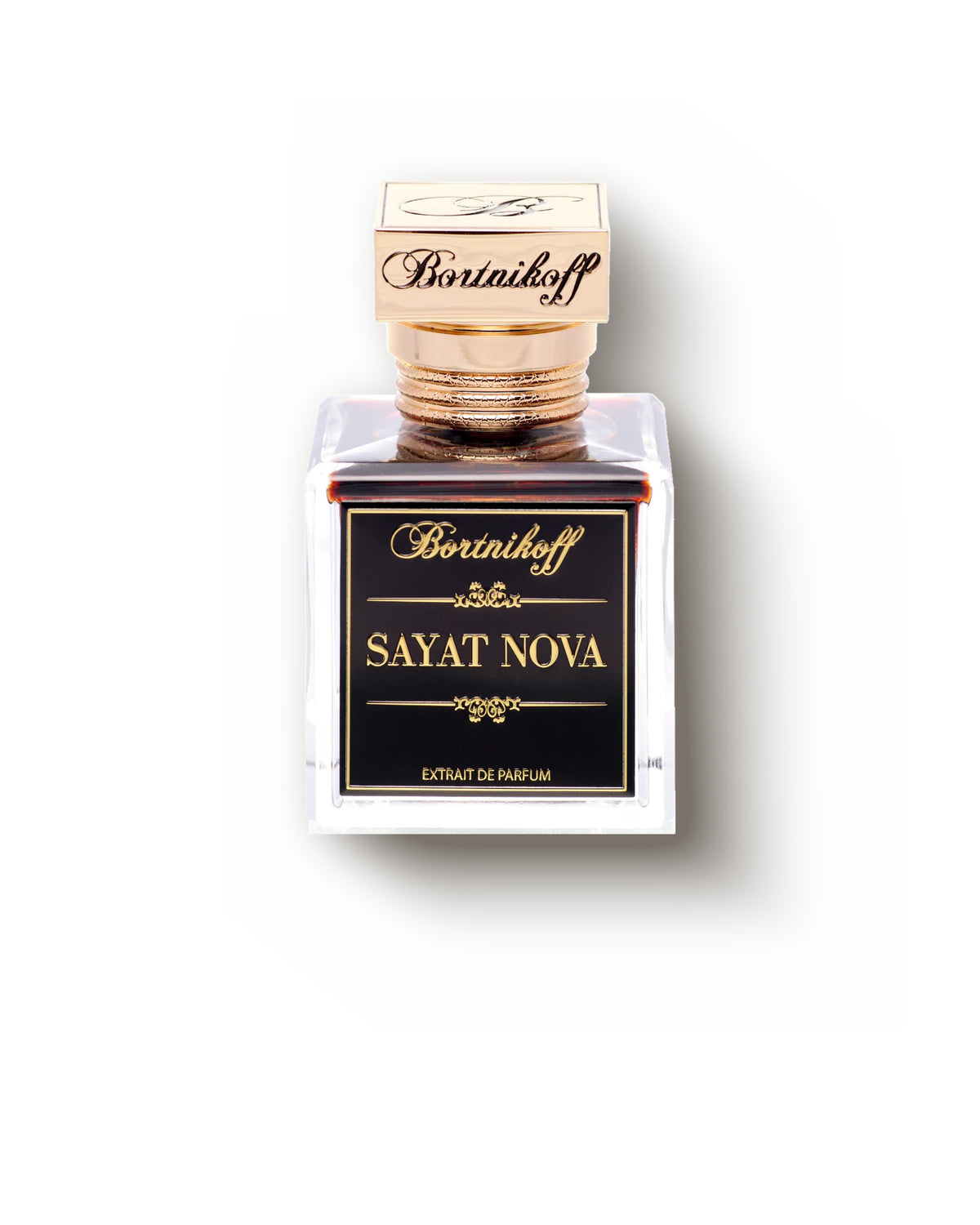
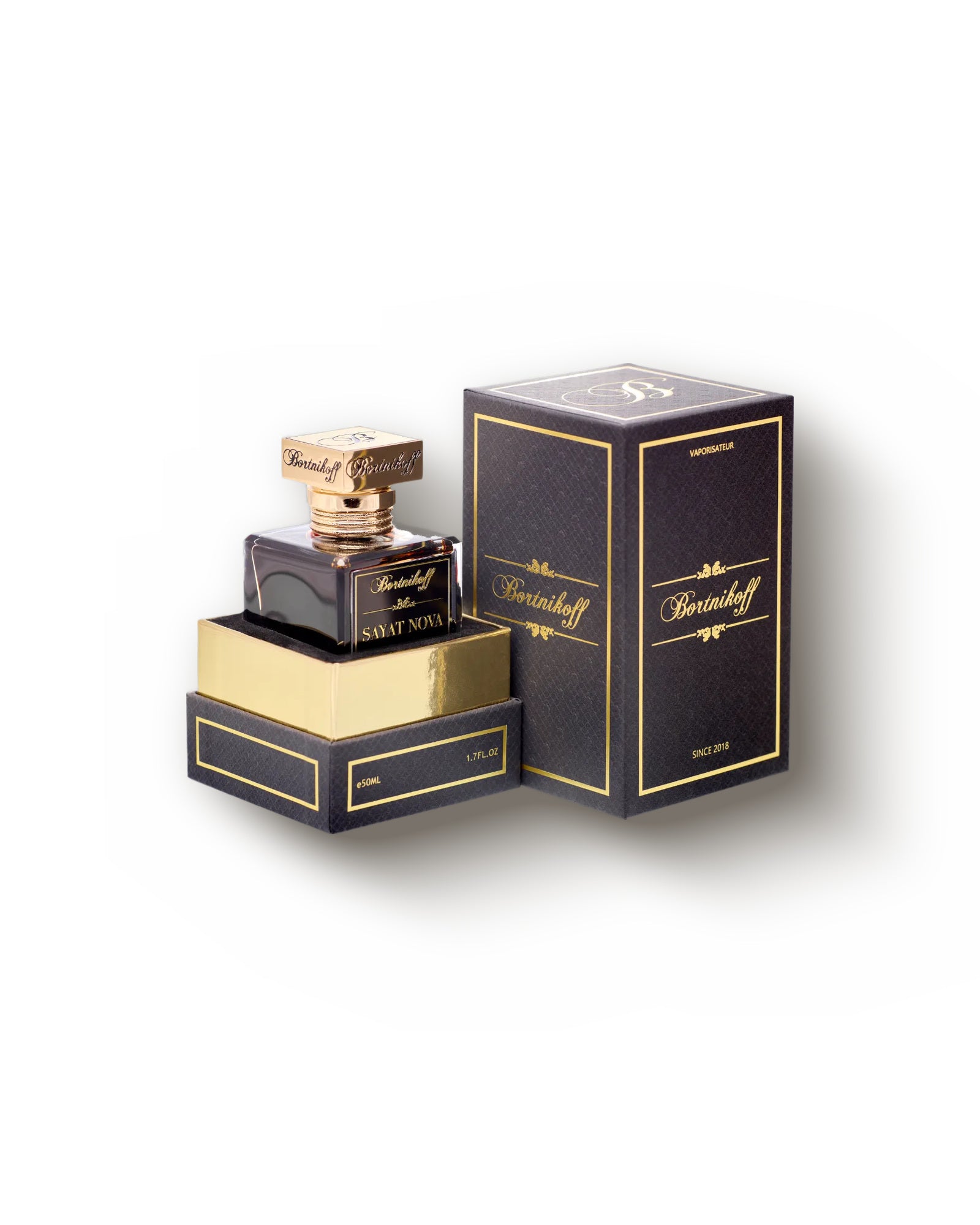
Sayat Nova
The Story
Sayat Nova is an extrait from Bortnikoff, the Thailand-based house founded by Dmitry Bortnikoff, an architect turned perfumer who also co-founded an agarwood distillery. It is named for the 18th-century Armenian troubadour, and the maker states its base draws on three separate ouds, from Laos, Bengal and Trat.


Fruity
Ripe orchard flush of juice
The succulent sweetness of peach, pear, apple, or berry, soft and dewy with a nectar-like ripeness distinct from sharp citrus. It brings a playful, mouthwatering roundness that feels youthful, juicy, and lighthearted.


Oud
Dark resinous wood with depth
A dense, resinous wood that smells warm and slightly medicinal, with a leathery, animal-tinged smokiness and a sweet, almost barnyard funk underneath. It feels ancient and brooding, wrapping the skin in something thick and quietly powerful.


Sweet
Edible warmth on the skin
A rounded, sugary character that suggests caramel, honey, or spun candy without any single one dominating. It reads as comforting and indulgent, the gourmand pull that makes a fragrance feel soft, inviting, and almost good enough to taste.


Rum
dark molasses and warm spice
A sticky, sugar-cane sweetness gone slightly fermented, dark with molasses, brown sugar, and a heady alcoholic lift. It reads as festive and indulgent, conjuring spiced cake and the heat of something poured neat.


Vanilla
Creamy bean steeped in warmth
The soft, custardy sweetness of cured vanilla pods, rich and balsamic with a faint boozy, smoky depth beneath the cream. It feels comforting and skin-warm, a tender glow that smooths and rounds everything it touches.


Mossy
damp forest floor and bark
The damp, earthy smell of green moss on shaded bark, faintly bitter and inky with a cool woody depth. It grounds a fragrance in forest-floor shadow, lending an old, melancholy elegance that feels like breathing in a rain-soaked wood.
Apricot
A stone-fruit accord built, never extracted
What it is
The apricot fruit yields no usable essential oil or absolute, so every apricot note in perfumery is a constructed accord. The aroma-chemical route builds it from lactones, chiefly gamma-undecalactone and gamma-decalactone, lifted with fruity esters. An all-natural route reconstructs it from botanicals instead, leaning on osmanthus absolute for its dried-apricot and leather facets and davana oil for jammy stone-fruit warmth.
How it smells
Velvety and sun-warmed, with the blush of ripe skin and a creamy, faintly waxy weight underneath. The lab-built version is brighter and more linear, holding one confident apricot shape from opening to dry-down. A naturals-only reconstruction reads hazier and softer, threaded with tea and honey from the osmanthus, and drifts as it wears.
In perfumery
Apricot sits in the top and heart of fruity-florals, chypres and gourmands, adding plush sweetness and a sunlit lift. The lactone route blends predictably and gives reliable volume at any price. The botanical route is dosed with restraint, since osmanthus and davana are costly and harvest-dependent, and it tends to be treated as a centerpiece.
Good to know
Neither route contains apricot. The tell is behaviour rather than brightness alone: a lab build stays put and projects, while a botanical reconstruction is quieter, less stable, and varies with the harvest. Osmanthus and davana also appear in mainstream formulas, so their presence is no proof of an all-natural composition.


Narcissus
Hay, honey and a green animal hush
What it is
An absolute extracted from the flowers of Narcissus poeticus, a daffodil-family bulb. For perfumery it is hand-harvested from high meadows on the Aubrac plateau in France's Massif Central, over the few weeks of the late-spring bloom. Blooms are solvent-extracted into a concrete, then alcohol-washed to a thick dark absolute.
How it smells
Green and floral over a heady, narcotic depth: bruised petals, fresh hay and tobacco, with honeyed, faintly fecal facets from indole. It opens grassy and herbal, then dries into something earthy, leathery and mossy, far darker and stranger than the bright daffodil might suggest.
In perfumery
A heart note adding green narcotic richness and a hay-like, mossy depth that deepens chypres and florals. It pairs with jasmine, oakmoss, leather and immortelle. Its black, animalic facet anchors several dark vintage florals and threads through classic leathery chypres.
Good to know
Narcissus absolute is among the costliest florals: flowers are hand-mown with a comb during a few spring weeks and yield very little oil. The name likely comes not from the drowning Greek youth but from Greek narke, numbness, for the flower's narcotic, head-spinning scent.


Rum
Boozy warmth of barrel-aged sugarcane and caramelized spice
What it is
Rum is a spirit distilled from sugarcane, either fresh-pressed juice or molasses, then aged in oak. In perfumery it is never a single extract but a built accord, reconstructed from molecules such as ethyl maltol, rum ether, vanillin and oak lactones to mimic the drink.
How it smells
Sweet, dark and heady: caramelized sugar and molasses up front, threaded with vanilla, dried fruit and a warm alcoholic lift. Oak aging adds woody, slightly smoky depth. As it settles, the boozy sweetness softens into toffee, spice and a leathery, tobacco-tinged warmth.
In perfumery
Rum works as a top-to-heart accord, contributing gourmand sweetness, warmth and a boozy character. It pairs naturally with tobacco, vanilla, tonka, cinnamon and dark woods. It can be folded into a spiced base, or set against cacao and cardamom for a darker gourmand effect.
Good to know
There is no true rum essential oil; the note is always a composed accord, so its intensity and style vary widely between houses. Rum ether, a core building block, is a fruity-boozy material also used in food flavoring, blurring the line between perfumery and confectionery.


Vanilla
The warm sweet heart of comfort itself
What it is
Vanilla comes from the cured seed pods of Vanilla planifolia, a climbing orchid native to Mexico and Central America, now grown mainly in Madagascar and Indonesia; the vanilla of Tahiti is a different species, Vanilla x tahitensis. Green pods are picked unripe, then blanched, sweated in the sun and slow-dried over months until they darken and develop their aroma and vanillin.
How it smells
Sweet, warm and creamy, with a balsamic depth recalling custard, caramel and dried fruit, a faint smoky tobacco-like edge sitting underneath. It opens soft and gourmand, then dries into a powdery resinous warmth that clings close to skin and reads richer than synthetic vanillin alone.
In perfumery
A base note prized for richness and lasting warmth, vanilla rounds sharp edges and anchors oriental and gourmand compositions. It pairs naturally with tonka, amber, sandalwood and spice. Many of the most enduring oriental and tobacco fragrances build their core around it.
Good to know
Vanilla ranks among the costliest spices because each orchid flower opens for one day and must be hand-pollinated, a technique devised in 1841 by Edmond Albius, a twelve-year-old enslaved boy on Réunion. Most commercial vanilla flavor now relies on synthetic vanillin.


Oud from Laos
Smoky leather and embered medicinal woods
What it is
Thai oud is distilled from Aquilaria crassna grown in eastern Thailand, with Trat province on the Cambodian border its most celebrated source, the same Cardamom Mountains range that yields Khmer oud. Wood is often aged for years before distillation, building the depth that defines the region's character.
How it smells
Leathery, smoky and medicinal, opening with a plush full-bodied smokiness like smouldering embers. A distinctive fruity sweetness threads through tannic leather, warm spice and honeyed tobacco, with camphorous, almost antiseptic facets that give Thai oud its bracing, resinous edge and a faint animalic warmth.
In perfumery
Thai oud bridges the sweet Cambodian and animalic Hindi styles, offering smoky leather depth without overwhelming funk, which makes it valued by artisanal distillers and blenders alike. Trat oils in particular are sought for a balanced, full-bodied profile that wears richly on skin.
Good to know
Sharing the Cardamom range with Cambodian crassna, Thai border ouds can echo Khmer sweetness while carrying more leather and smoke. Long pre-distillation ageing rounds the medicinal sharpness, and the best sustainably sourced Trat oil rivals far costlier origins for complexity.


Bengal Oud
The fermented, leathered, animalic king of agarwood
What it is
Indian oud, known to connoisseurs as Hindi oud, is essential oil distilled from genuine Aquilaria agarwood grown in Assam and northeastern India, the most prized terroir for the animalic style. The finest artisans work with single-origin, naturally distilled material rather than reconstructed accords, building on Assamese oils, some aged in the bottle for a decade or more. The signature trait comes from the method: the wood is soaked and fermented for days, then hydro-distilled in a copper still with the water it soaked in, and that controlled fermentation is what gives Hindi oud its famous funk.
How it smells
It opens loud and unapologetic: a fecal, barnyard, almost stable-floor blast that reads indolic the way overripe jasmine or animal hide does, never clean or pretty. As it settles, the rawness resolves into supple buttery leather, dry hay, warm spice (black pepper, clove, cardamom), and a meditative, smoky-resinous base; aged examples add chai, dried fruit, and a leathered sweetness. This is the deepest and most savagely animalic oud profile in the world: visceral and a touch feral up top, profound and intimate by the drydown.
In perfumery
Hindi oud is the benchmark against which every other oud is measured, prized precisely for the barnyard intensity that scares off newcomers and obsesses collectors. It anchors compositions with unmatched depth and longevity, pairing naturally with rose (the classic Arabian mukhallat), ambergris, aged sandalwood, birch tar, and smoke. In artisanal practice it is most often worn neat as a pure oil, so the full fermented-to-leather arc can unfold on warm skin over many hours.
Good to know
Don't confuse Hindi with its siblings: Cambodi oud is sweet, fruity and honeyed, Borneo leans cool with pine, camphor and vanilla, and true Thai turns smoky and medicinal; Indian alone owns the fermented, fecal-leather animalic register. Within India the cut matters too: a young Hindi hits hardest with that barnyard opening, whereas long-aged oils mellow the funk into smooth leather and spice. If a sharp animalic opening unsettles you, give it twenty minutes; the funk usually settles into leather and spice. Pungency on its own proves nothing about authenticity, though: a badly cured or heavily cut oil can open just as loud.


Oud from Trat
Smoky leather and embered medicinal woods
What it is
Thai oud is distilled from Aquilaria crassna grown in eastern Thailand, with Trat province on the Cambodian border its most celebrated source, the same Cardamom Mountains range that yields Khmer oud. Wood is often aged for years before distillation, building the depth that defines the region's character.
How it smells
Leathery, smoky and medicinal, opening with a plush full-bodied smokiness like smouldering embers. A distinctive fruity sweetness threads through tannic leather, warm spice and honeyed tobacco, with camphorous, almost antiseptic facets that give Thai oud its bracing, resinous edge and a faint animalic warmth.
In perfumery
Thai oud bridges the sweet Cambodian and animalic Hindi styles, offering smoky leather depth without overwhelming funk, which makes it valued by artisanal distillers and blenders alike. Trat oils in particular are sought for a balanced, full-bodied profile that wears richly on skin.
Good to know
Sharing the Cardamom range with Cambodian crassna, Thai border ouds can echo Khmer sweetness while carrying more leather and smoke. Long pre-distillation ageing rounds the medicinal sharpness, and the best sustainably sourced Trat oil rivals far costlier origins for complexity.


Oakmoss
The damp green soul of the forest floor
What it is
Oakmoss is not a true moss but a lichen, Evernia prunastri, growing on oak and other deciduous bark across temperate Europe and North Africa, notably the Balkans, France and Morocco. The harvested thalli are solvent-extracted into a dark, viscous concrete and absolute, the raw materials used in perfumery.
How it smells
Deeply earthy and forest-green, with damp bark, wet stone and a leathery, inky undertone. A dry, faintly bitter mossiness carries marine and tar-like facets. The effect is shadowy rather than fresh, evoking the cool floor beneath old trees after rain has soaked the ground.
In perfumery
A base note and the backbone of the chypre family, lending structure, depth and a vintage signature. It pairs classically with bergamot, labdanum and patchouli. It defines the great peach-spiced chypres and the green core of classic galbanum florals, plus countless mossy fougères and masculines.
Good to know
Oakmoss extracts contain atranol and chloroatranol, potent skin allergens the EU prohibited outright in cosmetics in 2017 (Regulation 2017/1410, applying from August 2019). IFRA separately requires low-atranol grades, each molecule below 100 ppm in the extract, and caps the extract itself at 0.1% in fine fragrance; that older ceiling, not the atranol measures, is what quietly reshaped how the classic chypre smells.
Fragrance Character
The opening is thick apricot, closer to dried fruit and syrup than fresh, with narcissus adding a green, faintly animalic edge. Rum reads as barrel spirit rather than sugar, and the vanilla beside it is balsamic, smoke-tinged. Three ouds sit behind it all, smoky and medicinal, oakmoss underneath. It projects hard from the opening and stays audible as it settles.
Best Worn
Autumn and winter, late afternoon into evening. It suits someone who already wears sweet, boozy woods and does not mind being noticed. Dark juice, so keep it off pale fabric.
選擇選項


氛圍
調香師

Dmitry Bortnikoff
創辦人暨調香師
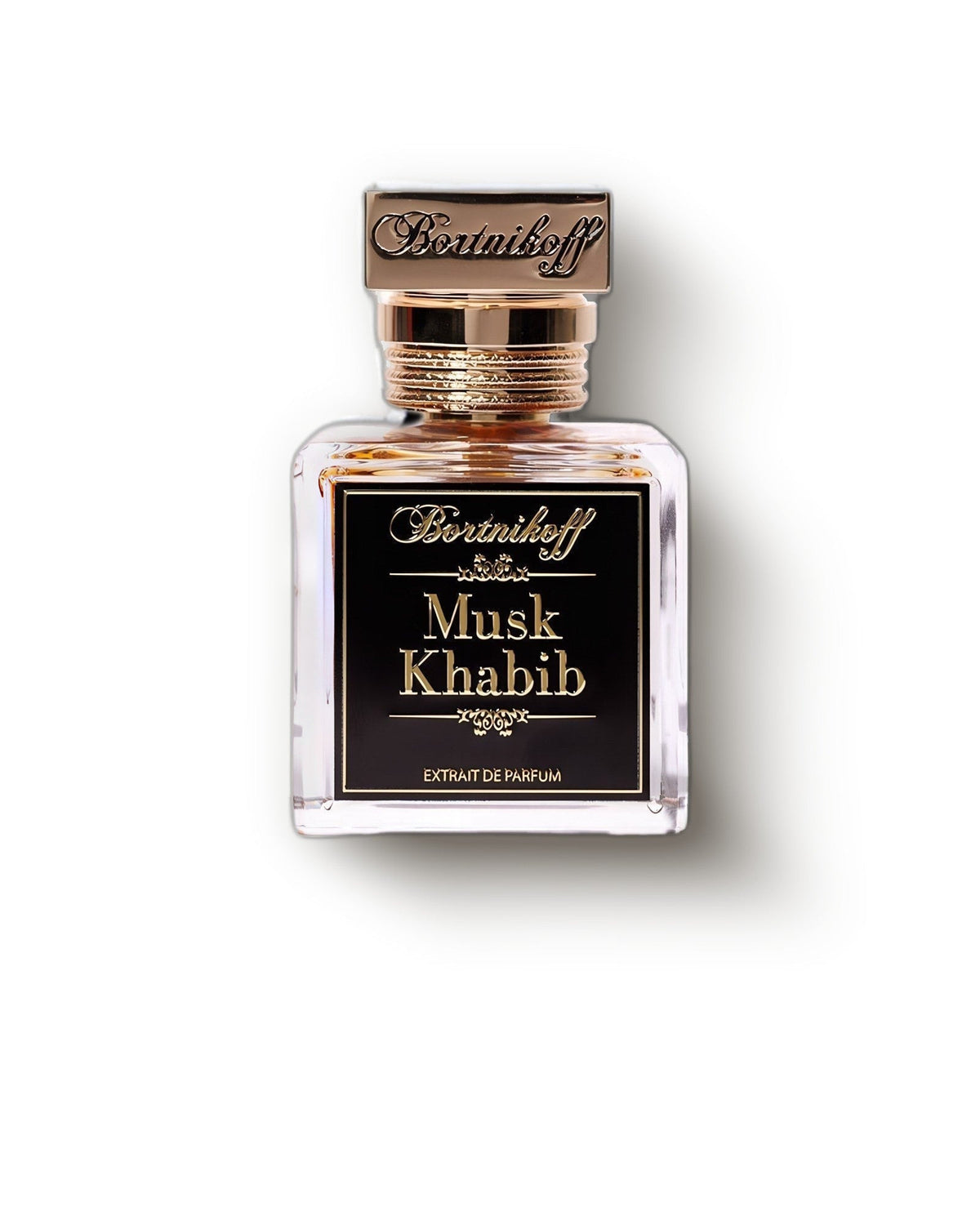
本業是建築師,後來轉向蒸餾。他在 2013 年共同創辦 Feel Oud,蒸餾沉香木與檀香精油,接著於 2018 年在泰國創立 Bortnikoff。品牌香水的天然含量介於 95% 到 100%:Bortnikoff Sayat Nova、Bortnikoff Santa Sangre、Bortnikoff Musk Khabib、Bortnikoff Sir Winston。
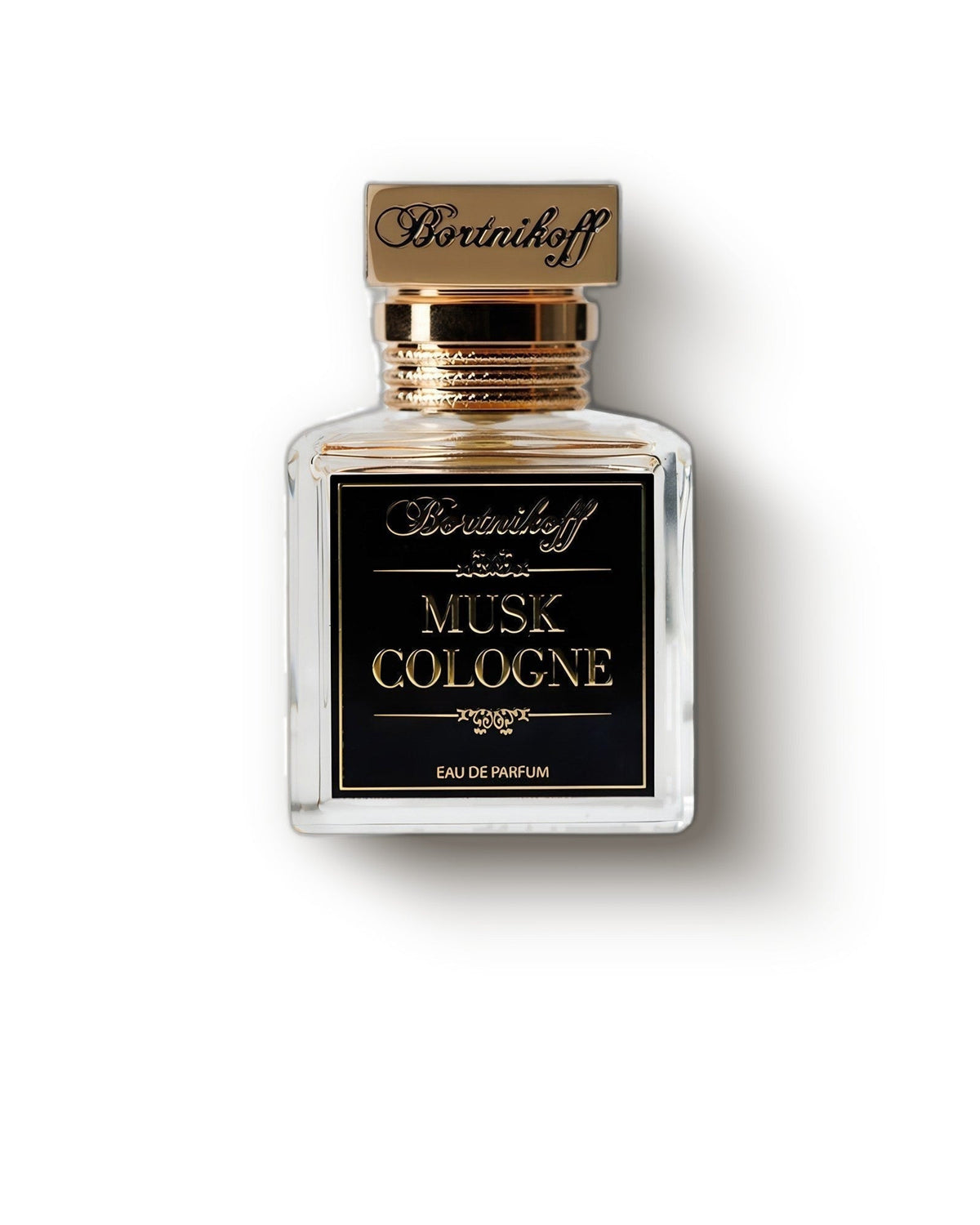
更多此調香師的作品Oud MaximusMusk KhabibMusk Cologne
品牌
Bortnikoff
真正的鹿麝香、真正的沉香、真正的龍涎香。以天然活性原料製成的小批量純香精。
Dmitry Bortnikoff 以緩慢的手工方式製香,選用多數品牌根本無從取得的天然原料。以古法發酵蒸餾的真正印度沉香、歷經數月浸製的鹿麝香、直接蒸餾入檀香木的蜜香玫瑰。成品在肌膚上顯得鮮活,溫暖而帶著一絲不羈。
- 產地
- 泰國
- 創立
- 2016
- 代表香調
- 真正的動物性原料、極小批量