

The Spirit of Dubai
Turath
The Story
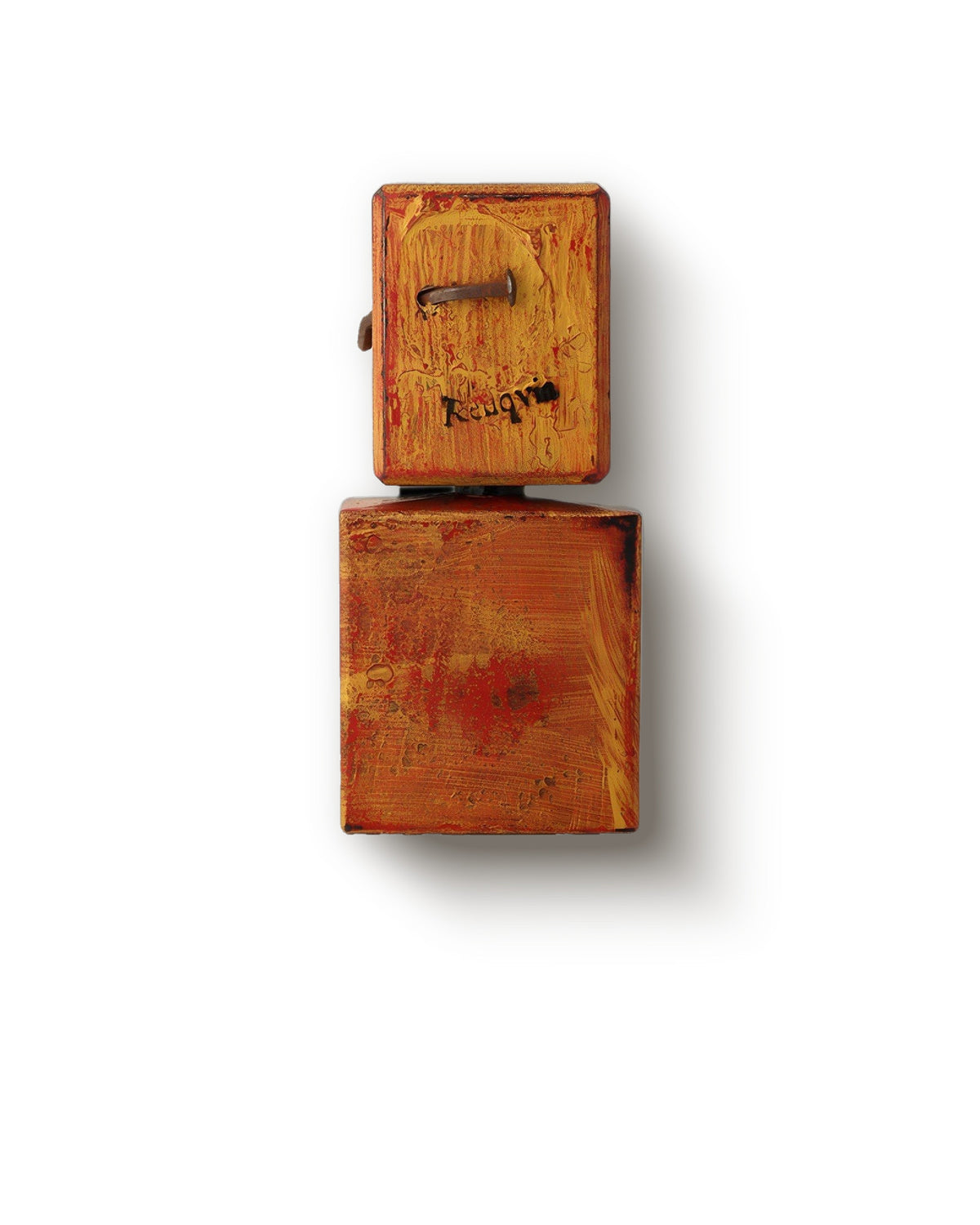
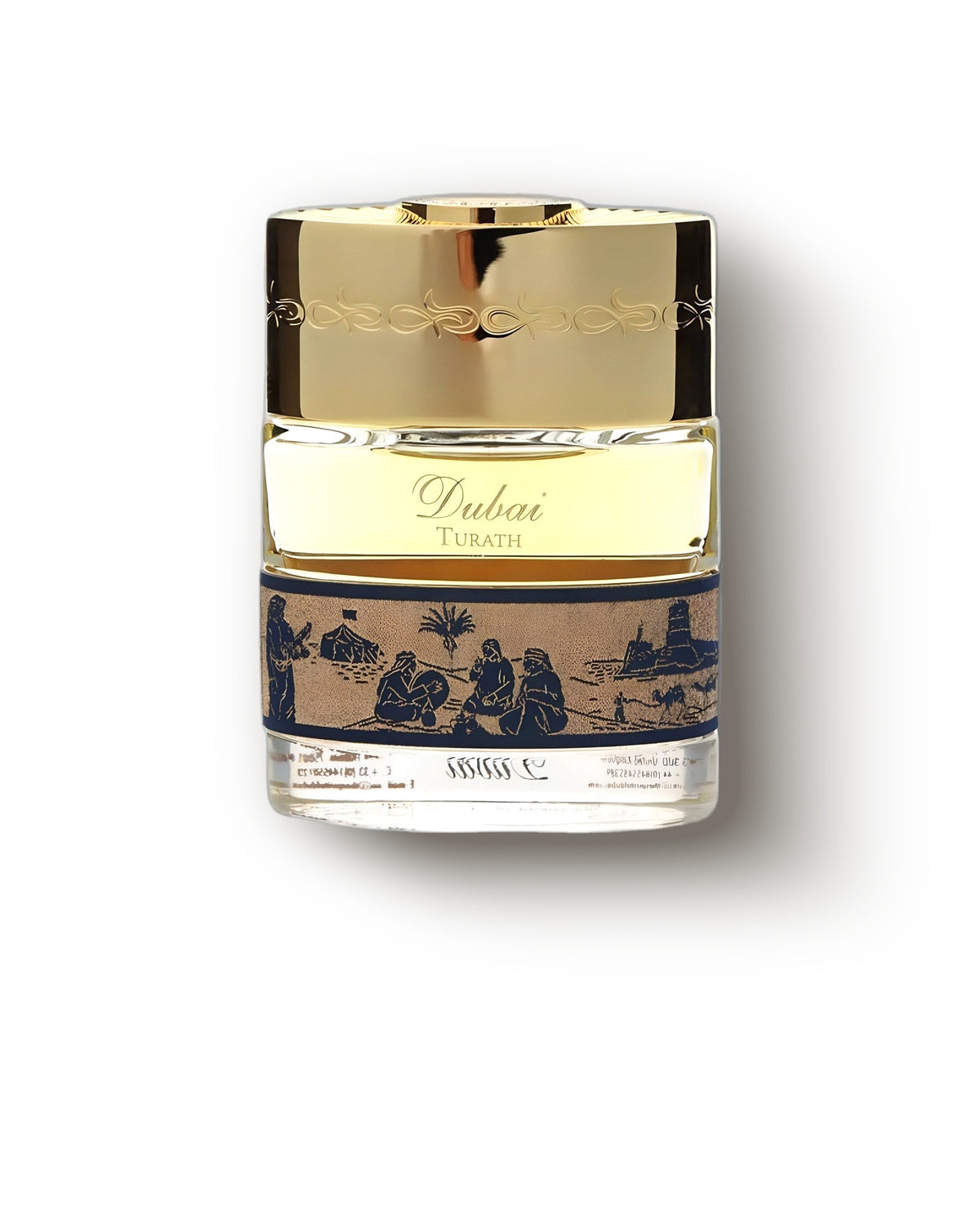
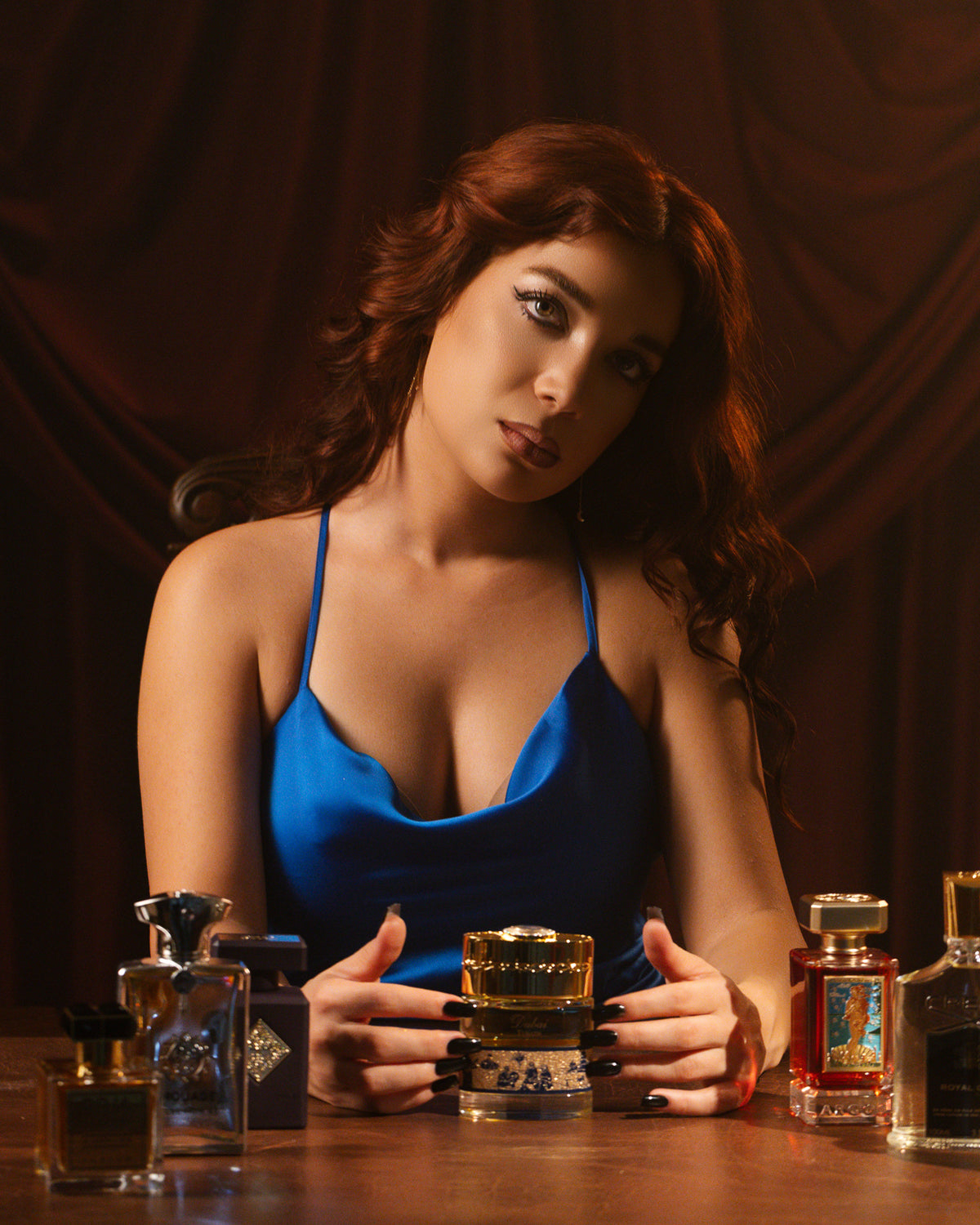
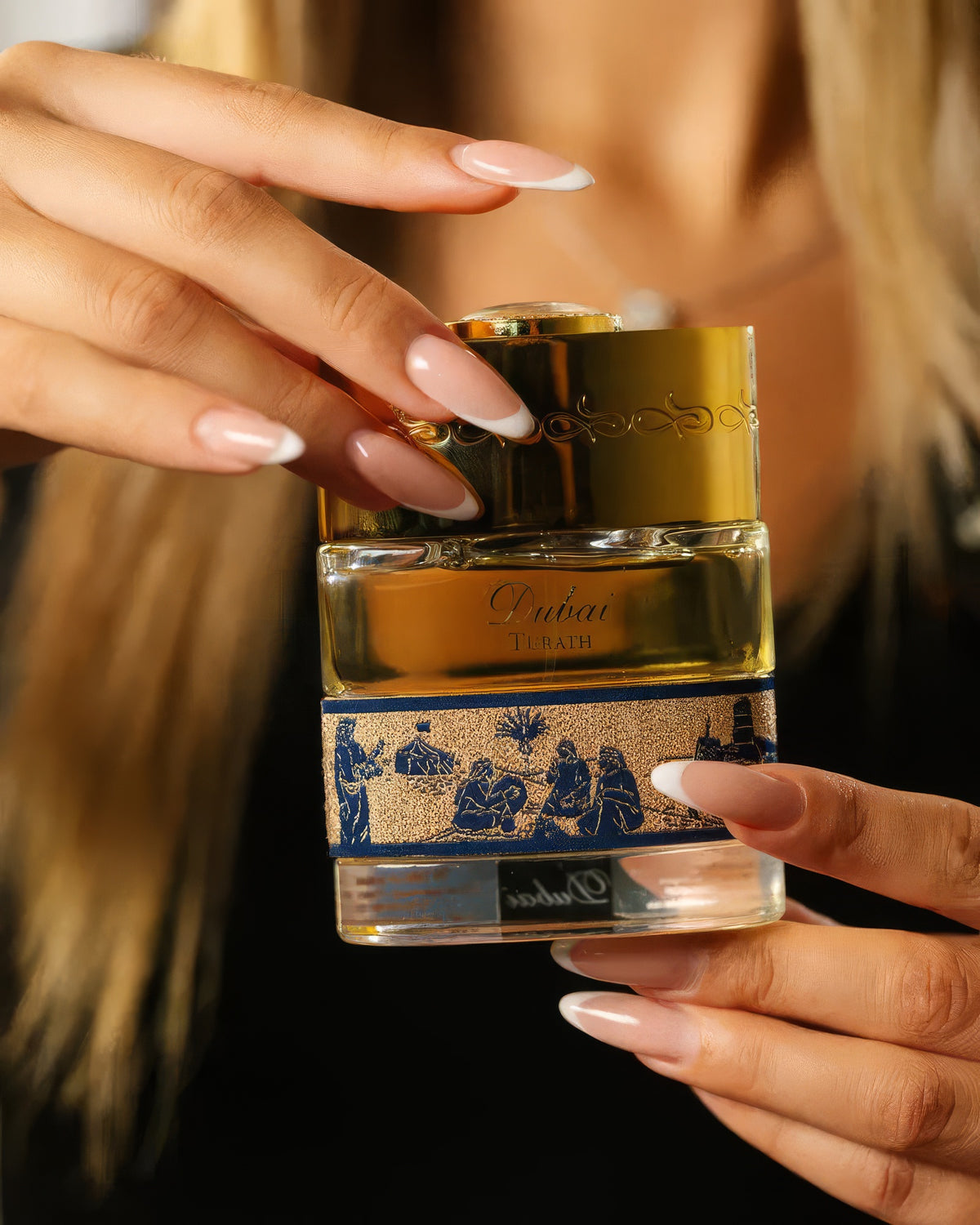
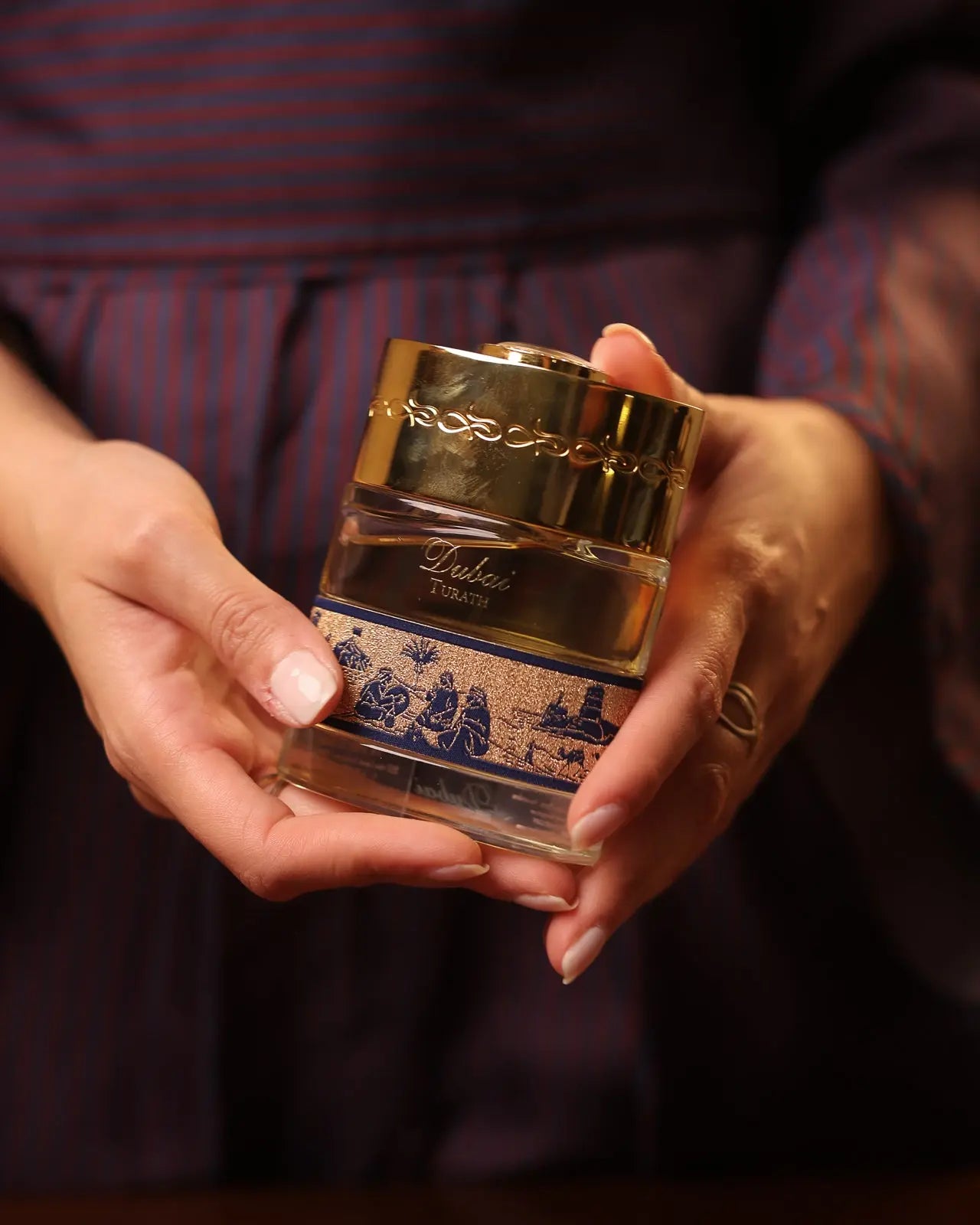
Turath means heritage: the old culture of the land, its Mu'allaqat poems, One Thousand and One Nights and its cuisine. The bottle is decorated with the scenes the name points to, a dhow, a camel, palm trees, tents, figures drinking qahwa and a crescent moon, and Asghar Adam Ali composed the oud and rose inside it to match that register.


Fruity
Peach skin, not lemon peel
Peach, pear, apple, berry: this is sweetness in the flesh rather than the rind, dewy and nectar-heavy where citrus is sharp and thin. It plays young and slightly greedy, the sort of ripeness you can almost feel running down a wrist.

Warm Spicy
Glowing embers of the spice drawer
The rounded heat of cinnamon, clove, and nutmeg, dry and slightly resinous, like a baking pantry rather than a sharp kitchen. It creates a flushed, enveloping warmth that feels intimate and cool-weather, hugging the skin from within.


Woody
Dry grain of cut timber
The smell of cedar shavings, sandalwood, and dry vetiver roots, a sanded, resinous warmth with a faint pencil-box rasp. It feels grounded and composed, the quiet backbone that makes a scent read as serious and lasting.


Sweet
Warm sugar you cannot quite name
Caramel, honey, spun sugar: sweetness that hovers between all three and never settles on one. This is the gourmand pull, the thing that makes someone lean in closer than they meant to, warm and soft and a half step short of edible.


Amber
Resin warmed until it goes sweet
Labdanum, benzoin and vanilla melted together into something sweet but dusky, like tree sap gone soft in the sun with a thread of incense smoke through it. Amber does not sparkle or shout. It sits close to the skin and gives off heat for hours.


Smoky
Charred wood and rising embers
The dry, charred scent of burning wood, smoldering incense, and lingering ash, sometimes tarry, sometimes wispy and gray. It feels brooding and atmospheric, conjuring a dying fire and a cool current of air carrying its last breath.


Dried Fruits
Sun-soaked larder of figs, dates and prunes
What it is
Not one material but an accord, built to smell like a shelf of sun-dried figs, dates, prunes and raisins. Perfumers reach for fig and prune absolutes and add lactones and damascones to get that concentrated, dehydrated depth.
How it smells
Deep, jammy and syrup-sweet, with the chewy concentration that drying brings: stewed plum, sticky date, leathery fig skin and the boozy edge of raisin steeped in rum. A faint nutty, tobacco-like dryness keeps it from turning cloying.
In perfumery
It sits between heart and base, where its stickiness gives amber and tobacco compositions something to chew on. Add rum or honey and the whole thing turns boozy; add spice and it reads like fruitcake.
Good to know
Drying doesn't just remove water; it concentrates sugars and triggers reactions that build aroma molecules the fresh fruit never had. That is why a dried fig smells leathery and caramelized rather than like a shrunken fresh one.


Damask Rose
The empress of roses, picked through the morning
What it is
Bulgaria's Rose Valley starts picking in the dark and stops around half past ten, before the day gets hot. Whole blossoms, not petals, go to the still for rose otto or to solvent for rose absolute.
How it smells
Deep and honeyed, with dew and green stem at the top and a peppery warmth underneath. The two forms part ways here: otto is clean and waxy with a clove edge, the absolute darker, jammier, closer to fruit.
In perfumery
It sits at the heart and gives a composition its body. Oud, saffron and patchouli are its usual company, and the dark, jammy rose builds come out of that pairing. It anchors oriental and chypre structures alike.
Good to know
Three to four tonnes of blossom go into a kilo of rose otto; the absolute needs roughly a seventh of that. The damascones found in this flower changed perfumery: they read as rosy at vanishingly small concentrations.


Candied Fruits
What fruit becomes when the sugar wins
What it is
Not a material but an effect: fruit that has given up its water to sugar. The build is waxy peach lactone, davana for dried apricot, orange and plum, and sugar molecules that do the crystallising.
How it smells
Dense and syrupy, all glace cherry, candied orange peel and apricot left too long in the pot. The bright juice of fresh fruit is gone. What is left is chewy, waxy and faintly caramelised, warm rather than sharp.
In perfumery
It sits in the heart of gourmands and orientals, thickening vanilla, tonka and amber underneath it. Where a fresh fruit note would go thin and sour, this one stays heavy and holds the sweetness together.
Good to know
Perfumers still call its backbone material, gamma-undecalactone, aldehyde C-14. It is not an aldehyde, but the name stuck. Sugaring fruit is ancient work: Roman kitchens did it to carry summer through winter.


Strawberry
Jam, candy and a green winey edge
What it is
Strawberry gives no oil worth having, so the note is a build. Two materials define it: furaneol for the jammy, faintly cooked depth, and the one perfumers call strawberry aldehyde, which is not an aldehyde, for the candy.
How it smells
Crushed ripe berry with the sugar slightly cooked into it, a green leafy edge on top and something winey underneath. It reads warmer and jammier than the fresh fruit ever does, closer to the jar than the garden.
In perfumery
It lifts florals and soft musks and builds dessert accords beside vanilla and cream, then leaves early, well before the woods underneath it. Furaneol is powerful enough that a heavy hand turns the whole thing to burnt caramel.
Good to know
Furaneol is also one of the compounds that makes pineapple and guava smell like themselves, which is why those accords share strawberry's jammy sweetness. Smell them side by side and the family resemblance is hard to unhear.


Spicy Notes
The warm crackle that wakes a fragrance up
What it is
Not one material but a family: clove buds, cinnamon bark, black pepper, cardamom, ginger. Some arrive as distilled oils, others as single molecules such as eugenol, the one that carries clove.
How it smells
You feel it before you name it, a dry prickle at the top of the nose. Pepper reads sharp, clove numbing, cinnamon sweet and woody, nutmeg dusty. The biting edge burns off and leaves a rounded ambery warmth.
In perfumery
Spice sits in the heart, or as a top accent, and its job is contrast. It bridges citrus to woody-ambery bases and stops a soft floral from going sleepy. Rose, leather and tobacco all sharpen next to it.
Good to know
The molecules that make clove and cinnamon sting are also skin sensitisers, so perfumers dose them carefully. Once, a pound of pepper cost a craftsman several days' wages, and the voyages sent to fetch it redrew the map.


Apple
An apple with no apple in it
What it is
Squeeze an apple and you get juice, not perfume. There is no apple oil, no absolute, nothing to distil, so every apple note is assembled: fruity esters in most hands, Roman chamomile and davana in all-botanical ones.
How it smells
Cold, tart and green, the snap of skin breaking under a bite, with something candied behind it. The ester build is bright and holds one clear shape. The chamomile build is hazier, honeyed, more cider than orchard.
In perfumery
A trace lifts fruity florals, chypres, aquatics and gourmands, beside rose, musk and light woods. With esters the green and the candy can be dialled precisely. With botanicals the whole accord is rebalanced by hand.
Good to know
Neither route is the fruit, so the honest difference is stability rather than authenticity. Ester-built apple survives soap, heat and detergent and repeats identically. The botanical one is costly, shifts with the harvest, speaks quietly, and stays rare.


Cardamom
Green spice cracking open with citrus heat
What it is
Pickers take the pods before they ripen, which means doing it by hand. A ginger relative from the forests of southern India, now farmed widely in Guatemala. The seeds inside are what gets distilled.
How it smells
Crack one and you get cool eucalyptus lift over warm pepper, lemon peel and a little pine resin. There is a smoky breadiness in it too, the smell of chai. Sharp and effervescent first, then soft and balsamic.
In perfumery
It sits between top and heart, a spice sparkle that stays cool, letting a composition move from citrus into woody amber without the weight of clove or cinnamon. Rose, leather and oud all take it well.
Good to know
The pod is packaging. Sealed, it keeps the oil intact; cracked, the aroma starts escaping straight away, which is why distillers work fast and why pre-ground cardamom is a ghost of the whole pod.


Pineapple
Tropical sweetness with no fruit behind it
What it is
Squeeze a pineapple, distil it, and you get nothing a perfumer can use. The note is always a construction: a synthetic route led by allyl caproate, or a botanical one assembled from ylang-ylang, balsams, citrus and isolates.
How it smells
The ester version is hard-candy bright and sits exactly where it is put. The botanical one is warmer and rounder, more flesh than candy, green-tart at the edge, and it blooms and fades instead of holding still.
In perfumery
A trace lifts an opening; a heavy hand turns the whole thing into fruit punch. It sits easily with coconut, citrus, jasmine and warm resins, and the botanical version goes jammy the moment it is overdosed.
Good to know
Stability decides it. The synthetic behaves identically every time, so it turns up wherever a tropical accent is wanted, while the botanical costs more, shifts from batch to batch, and carries less distance.


Peach
Downy skin and cream, no fruit involved
What it is
Press a peach and you get a wet mess, so the note is always built. It rests on lactones, and the trade still sells one of them as aldehyde C-14, which is not an aldehyde and never was.
How it smells
Fuzzy skin first, then flesh: creamy, a little buttery, sweet at the edge of overripe. A lab-built peach reads bright and stays put. One leaning on naturals is hazier, more floral and tea-like, and moves as it dries.
In perfumery
It works in the heart, carrying rose and white florals down into woods, amber and musk. Osmanthus is the shortcut: that flower makes the same lactones itself, which is why it smells of apricot and peach on its own.
Good to know
Lactones are stubborn, so peach lasts whichever way it is built. One of them can now be brewed instead of synthesised, castor oil fed to yeast, which is enough to make that version count as natural.


Cinnamon
Sweet bark heat, glowing rather than stinging
What it is
The prized part is the inner bark. Strips are peeled from the tree and curled into quills for the spice trade; the oil is steam-distilled from the trimmings and broken bark. Sri Lanka's true cinnamon is the delicate one; the coarser, lower-priced cassia is what fills most kitchen jars.
How it smells
Warm, dry and sweet, with a red glow from cinnamaldehyde and a clove-like edge behind it. True cinnamon smells rounder and faintly floral; cassia bites. The dry-down goes woody and balsamic, with a whisper of leather.
In perfumery
A heart note, and the reason gourmands and orientals feel like a warm room. It works with vanilla, amber, rose, apple and tobacco, and the whole trick is restraint: a touch gives glow, a fraction more gives sting.
Good to know
The Dutch once burned their own stockpiles to keep the price up, back when this bark outvalued gold and Ceylon was worth conquering for it. Modern caution is duller: cinnamaldehyde sensitizes skin, so the dose is capped.


Coffee
The dark heart of morning, bottled
What it is
Not a bean at all: coffee is the seed of a tropical cherry, two to a fruit, and the smell arrives only with the roast. Perfumers use a roasted-bean absolute or a CO2 extract.
How it smells
Bitter cocoa, toasted nuts and a grainy, just-ground sharpness with smoke behind it. Then it softens: burnt sugar, chocolate, a little tobacco, and a milky, oily roundness that keeps the bitterness from turning harsh.
In perfumery
It sits in the heart, or at the top of the base, where bitterness does what sugar cannot and stops vanilla, tonka and amber going syrupy. A whole run of sweet masculine scents was built on that trick.
Good to know
One molecule does most of the talking. Your nose catches 2-furfurylthiol at 0.01 parts per billion, so a trace reads instantly as fresh brew. Coffee absolute and CO2 extract exist, but they are costly, and many coffee notes are built or boosted with roasted-smelling molecules.


Black Currant
Tart cassis with a wild, animalic snarl
What it is
Perfumery mostly ignores the berry. The material that matters is cassis bud absolute, extracted from the sticky, resinous leaf buds of the shrub, usually propped up with sulphur molecules that carry the fruit's tart snap.
How it smells
Sharp, tart, unmistakably purple, then something feral cuts across it: a green, leafy, faintly sweaty pungency that sits closer to cat than to fruit. Ripe berry with a growl behind it.
In perfumery
A top note with claws. It cuts through sweetness, puts an edge on rose, and gives a fruity-floral something to push against. The classic chypre opening starts here, and it still jolts open modern fruity compositions.
Good to know
The catty edge comes from thiols your nose can catch at parts per trillion, the same family behind tomcat spray and a glass of Sauvignon Blanc. Perfumers dose cassis in drops, not millilitres.


Pepper
Dry, sneeze-bright heat that snaps awake
What it is
One vine, four peppercorns. Picked green and sun-dried, the berries wrinkle black; left to ripen and soaked until the hull slips off, they come out white. Both are distilled to a thin, terpene-bright oil.
How it smells
Dry, prickly, warm, with the woody sparkle of a mill cranked over a plate. Under the bite sit resin and a clove-like green. Black reads sharper and crackling; white runs more fermented, almost barnyard.
In perfumery
A top-to-heart spice that lifts without sweetening, electrifying woods, vetiver, rose and citrus. The burn never makes it into the bottle: piperine is too heavy to distil, so what you get is the crackle without the sting.
Good to know
Pepper once worked as money. Rents were settled in it, dowries counted out in it, and the hunt for a direct route to the source pushed European ships around the world.


Coconut
Suntan lotion, cream and toasted flesh
What it is
Squeeze a coconut and you get almost no smell. The fruit's aroma lives in a handful of lactones in the white flesh, and the oil yields nothing on distillation, so perfumers build coconut from isolated molecules instead.
How it smells
Creamy and milky, sweet with a nutty warmth, and unmistakably the smell of a beach towel and sun cream. There is a waxy, buttery richness under it and a faint toasted edge. It stays rounded rather than sharp.
In perfumery
It works in the heart, where it gives a composition volume and a soft beachy sweetness. Vanilla, tiare and ylang turn it into monoi; that coconut and vanilla pairing is the spine of almost every solar summer fragrance.
Good to know
The molecule doing most of the work, gamma-nonalactone, has been called aldehyde C-18 since the early days of the trade. It is not an aldehyde. The name stuck anyway, and perfumers still use it.


Cumin
The spice that smells like a person
What it is
Cook with it and it is a kitchen spice. Distil it and it turns into something closer to a body. The crescent-shaped seeds carry cuminaldehyde, one compound doing both jobs: the food and the flesh.
How it smells
Hot, dusty and green at the top, then unmistakably skin. A trace reads as warmth off a collarbone. A little more and it is a shirt worn two days running. Underneath sits something nutty and oddly comforting.
In perfumery
Perfumers keep it to fractions of a percent, at the heart, where it puts a carnal pulse under rose, leather, labdanum and orange blossom. It warms several oriental classics. One drop too many tips the whole formula.
Good to know
Cumin's sweaty warmth sits close enough to the smell of skin that nobody is neutral about it: the same skin, the same dose, and one person reads intimate while the next reads unwashed.


Sweet Orange
Sunlit zest squeezed straight from the peel
What it is
The oil is pressed cold out of the peel. Most of the world's supply is a side effect of breakfast: the juice industry squeezes the fruit, and the discarded rind is what the perfumer wants.
How it smells
Juicy and immediately recognisable: ripe orange flesh with a sherbet fizz and a green bitterness hiding behind it. It arrives round and sunny and does not stay long, leaving a soft waxy sweetness rather than lemon's sharp tang.
In perfumery
A top note with the edibility of the fruit itself, used to round off citruses that would otherwise cut. It opens eaux de cologne, and sits happily beside neroli, clove, cinnamon and vanilla when a gourmand needs lifting.
Good to know
Bergamot burns skin in sunlight. Sweet orange, pressed from the same kind of rind, carries almost none of that molecule, so a sunny day is no risk. It is also one of the least expensive naturals there is.


Bergamot
Sparkling citrus light with a bitter edge
What it is
Nobody eats bergamot. It is sour, seedy and disappointing, and almost the whole world's supply grows on one strip of Calabrian coast, farmed purely for the oil pressed cold from its green rind.
How it smells
Zest and green light in the first second, then something rounder than lemon: a floral, tea-like smoothness sitting on a faintly bitter warmth. It burns off fast. What stays behind is a quiet, slightly spiced hum.
In perfumery
It defines eau de cologne, and sits on top of nearly every fougère alongside lavender and oakmoss. Perfumers want the first bright second it gives, and the oil is also what makes Earl Grey smell like Earl Grey.
Good to know
The thing that makes it sparkle can also burn. Bergamot carries bergapten, which leaves skin hypersensitive to sunlight, so perfumers either keep the dose low or reach for a grade with the molecule stripped out.


Pink Pepper
Bright rosy berries with a spice fizz
What it is
It is not pepper. The rose-colored berries come from a South American tree with no botanical link to the pepper vine at all, dried and then steam-distilled or extracted with CO2.
How it smells
Rosier and fruitier than black pepper, with only a prickle of heat. Crushed berries, a juniper-ish resin, a flick of citrus. It flashes on the opening and is gone quickly, leaving a gentle warm spiciness behind.
In perfumery
Perfumers reach for it when a composition needs spice without heat. It puts a rosy fizz over florals, freshens woods and ambers, and sits well with bergamot and patchouli. The fizz is a signature of the modern fruity-floral.
Good to know
The family it actually belongs to is the cashews, close enough that people who react to cashew or mango sometimes react to these berries too. Worth knowing before you cook with them.


Oud
The distilled resin and the accord that imitates it
What it is
Resinous heartwood, and the oil distilled from it. One word covers chips burned over coals, attars that shift with species, soil and still, and the woody-amber accords built to imitate them. Most commercial oud is the accord.
How it smells
A distilled oil moves: fermented and barnyard, then leather, dried fruit, honey, then resin and warm skin, rarely the same twice in one evening. An accord holds still. Dry, smoky, medicinal, unchanged from first minute to last.
In perfumery
Collectors chase regions the way wine drinkers chase terroir: fecal Hindi, fruity Cambodi, camphorous Borneo, and above them all kyara, the rarest and most prized grade. The accord exists because none of that can be repeated at scale.
Good to know
Aquilaria is listed under CITES Appendix II, which regulates the trade rather than banning it. Chips, beads and carvings move on permits. The finished bottle on a shelf does not.


Rose
Dewy sweetness over a green, peppery bite
What it is
Most perfumery rose is one of two: damascena from Bulgaria and Turkey, centifolia from Grasse. Whole blossoms are picked by hand from before sunrise until about ten thirty, then distilled into otto or solvent-extracted into absolute.
How it smells
Fresh, honeyed, green at the edges, with something dewy still on it. Spice and fruit sit underneath, and in the absolute a jammy darkness. Otto opens crisp and bright; absolute is warmer, smokier, closer to skin.
In perfumery
Rose behaves less like one note than a whole palette. It carries a perfume alone or vanishes into a chypre, turns dark against oud and patchouli, goes powdery beside violet, and holds a floral heart together.
Good to know
The two extractions are not the same bargain. Otto takes three to four thousand kilograms of blossoms to yield one kilogram of oil. Absolute, pulled out with solvent, gets there on roughly a seventh of the flowers.


Saffron
Crimson threads breathing leather, honey and dry hay
What it is
Three crimson threads sit inside each autumn crocus flower, and a hand pulls every one. Dried, those stigmas are steeped into a tincture or extracted into an absolute. That is the entire supply chain.
How it smells
Hay and honey and warm toast first, then something metallic and leathery underneath, the work of a molecule called safranal. It dries down into suede, tobacco and dusty amber, bitter at the edges.
In perfumery
It lives in the heart, glowing reddish, the hinge between spice and leather. Perfumers wed it to rose so often the pairing became a genre, and entire leather accords get built on it alone.
Good to know
A kilogram of saffron costs about 150,000 hand-picked flowers and many days of stooped labor, which is why almost none of it reaches perfume. Most saffron notes are built from synthetic safranal instead.


Sandalwood
Creamy wood, pulled up by the roots
What it is
The richest oil sits in the roots, so the whole tree is pulled up and steam-distilled rather than felled. Mysore in southern India was the classic source, until decades of overcutting pushed the wild trees to the edge.
How it smells
Milk and warm wood, with a rosy, almost buttery edge and nothing sharp at all. What surprises people is how little it moves: no bright opening, no dry-down drama, just the same quiet glow for hours.
In perfumery
It works twice over: as a smell, and as a fixative that holds rose or jasmine in place. Sandalwood is also graded, and the darkest, densest, most resin-heavy old heartwood carries its own name: red meat.
Good to know
A heart worth taking takes about thirty years to form. Plantations of the same species in Western Australia now supply a large share of the world's oil, close to the old Mysore chemistry if not quite its creaminess.


Cedar
Dry sharpened pencils and sun-warmed timber
What it is
Most perfumery cedar is not cedar. It is juniper, from the Virginia and Texas trees, steam-distilled from chips and sawmill shavings. True Atlas cedar exists and is used, but it is the smaller source.
How it smells
Freshly sharpened pencils, then the inside of a cedar-lined closet. Atlas leans warm, smoky and balsamic; Virginia reads sharper and cleaner. Either way it settles into soft sawdust warmth and stays there for hours.
In perfumery
A workhorse. It gives woody compositions their backbone and holds lighter materials in place, sitting comfortably beside vetiver, rose, citrus and amber. Its plummy-woody core runs through most modern unisex woods.
Good to know
Egyptian embalmers poured cedar oil into the body rather than burning it, and cedar timber lined the tombs and coffins they meant to outlast them. The true cedars and the junipers share a name through smell, not lineage.


Jasmine
The heady white flower at perfumery's beating heart
What it is
Picking runs by hand in the dark, from before first light into the morning. The blossoms are too fragile to distill, so solvent lifts their oil into a waxy concrete, and alcohol washes the absolute out of that.
How it smells
Sweet, heavy and honeyed, with something faintly animal underneath. Sambac reads green, tea-like and luminous; grandiflorum is fruitier, creamier, heavier on the skin. Both dry down warm and soft, with a mushroomy musk you notice only up close.
In perfumery
Put it in the heart and it ties a citrus opening to the woods underneath, adding volume to both. Rose, tuberose, sandalwood and musk all take it well. Plenty of perfumes are built on jasmine and nothing else.
Good to know
Roughly six thousand hand-picked blossoms go into one gram of absolute, among the costliest materials in perfumery. Part of its depth is indole, which smells like decay when concentrated and turns radiant at the trace the flower carries.


Amyris
Caribbean wood that whispers like soft sandalwood
What it is
The branches are so loaded with oil that people once lit them as torches, which is where candlewood and torchwood come from. Fallen, aged wood is distilled slowly into a soft heartwood oil sold as West Indian sandalwood.
How it smells
Dry, soft and low-volume: clean cedar-like woodiness with a faint balsamic warmth and a peppery wisp of smoke. Next to true sandalwood it is thinner and much less creamy, a little oily, happy to sit underneath everything else.
In perfumery
Base-note plumbing: an affordable fixative that holds lighter materials down and stretches the woods. It goes with citrus, lavender, cedar and sandalwood, and props up more colognes and soliflores than ever list it.
Good to know
West Indian sandalwood is a sales name, nothing more. The tree is a Caribbean relative of citrus and shares almost no chemistry with Santalum, which costs many times more, and the two smell alike only from a distance.


Cypriol Oil or Nagarmotha
A wild river sedge that smells like oud
What it is
This sedge grows wild in the wet ground along Indian rivers. Its roots, dried and steam-distilled, give a thick dark oil, which is how a riverbank sedge became one of perfumery's prized dark materials. India calls it nagarmotha.
How it smells
Vetiver and patchouli crossed with dry tobacco and charred wood, then smeared with something leathery. It has a black-pepper bite that comes from rotundone, and it carries: diffusive, resinous, still there hours later.
In perfumery
It sits in the base and does two jobs: fixative, and the dark oud-like heart of a woody composition without a single animal material. Vetiver, patchouli, saffron, rose and incense all sit well on top of it.
Good to know
Rotundone is the reason a Syrah smells peppery, and it is one of the most odour-active things in this oil. The same molecule, the same bite, one in a wine glass and one in a bottle of perfume.


Iris
Cool powdered earth from a patiently aged root
What it is
Perfumery iris comes not from the flower but from the root. The dug rhizomes are dried and left to age three to five years while the aromatic irones form, then ground and steam-distilled into a waxy orris butter.
How it smells
Cool, powdery and rooty: violet, suede and fresh-sawn wood dusted with face powder. Underneath sits a damp mineral earthiness, a faint carrot sweetness, a buttery softness. It feels more texture than perfume, and it stays quiet on skin.
In perfumery
Nothing else gives a blend that cool, powdered restraint. It steadies chypres and florals, takes the shine off rose and violet, and lends sandalwood and ambrette a velvet finish. Iris makes a perfume behave.
Good to know
A tonne of dried, aged rhizome yields about two kilograms of butter. Add the years of waiting before it can even be distilled and you see why real orris turns up in so few bottles.


Coriander
Spice that smells nothing like cilantro
What it is
Same plant, two smells. The ripe seed dries warm and woody; the fresh leaf, sold as cilantro, is another thing entirely and almost never sees a perfume. Only the crushed seed goes to the still.
How it smells
Warm and sweet up front, with a peppery lift and a squeeze of citrus. Then it rounds out: lavender, rosewood, a faint gingerbread warmth that sits closer to a fougere than a spice rack.
In perfumery
Perfumers slot it between top and heart for freshness, spice and a lavender-like roundness, alongside bergamot, lavender, geranium and ambery bases. It is a classic heart in vintage citrus-aromatics and all over the fougeres.
Good to know
Archaeologists found coriander seeds sealed in Tutankhamun's tomb, one of the oldest spices anyone bothered to farm. The oil is mostly linalool, which gives perfumers a rounder, gentler source of that smell than the isolated molecule.


Violet
Powdery purple petals that vanish as you reach
What it is
Almost no violet in perfumery comes from violets. The flower yields so little oil that it is hardly produced any more, so the note is built from ionones, aroma-chemicals first made in a lab in the 1890s.
How it smells
Soft, cool and powdery, with a sugar-dusted candied sweetness and a thin green wetness behind it. It reads tender and nostalgic: Parma violet sweets, face powder, petals crushed in a pocket.
In perfumery
In the heart it does something unusual: it takes the sugar out of sweetness and leaves powder behind. Iris, rose, leather and almond all bend toward it, and violet soliflores wear it like an old makeup box.
Good to know
Ionones saturate the receptors fast, so the scent seems to vanish, then return as your nose recovers: perfumery's textbook case of olfactory fatigue. Violet leaf is another material entirely, green and cucumber-cool.


Lily-of-the-Valley
Spring's white bell, rebuilt molecule by molecule
What it is
Tiny white bells on a shade-loving woodland perennial, and one of perfumery's great frustrations: the flower gives up no usable oil. For decades muguet was built from scratch, on hydroxycitronellal and Lyral, rather than taken from the plant.
How it smells
Cool, green and wet: white petals, crushed stem sap, rain. It never goes heady, staying crystalline where jasmine would thicken. The drydown turns soft and clean, faintly soapy, with a last lemony-green glow.
In perfumery
In the heart it works like a window opening: it lifts rose, jasmine and lilac and puts green sparkle into aldehydic bouquets. The great mid-century soliflores were built around this accord, and it still brightens most spring florals.
Good to know
Every part of the plant is poisonous. No still or solvent ever drew scent from those bells, and a first commercial extract appeared only in 2021; by then the Lyral ban had already forced perfumers to rebuild it.


Incense
The smell of resin hitting hot coal
What it is
What you are smelling is a change of state: resin meeting heat. The resin is usually olibanum, wept by Boswellia trees in Oman and the Horn of Africa, and perfumers round the effect out with labdanum and styrax.
How it smells
Cool and dry to begin with, sharp enough to read as turpentine, then the smoke arrives: peppery, ashen, faintly sweet. There is a stone-church quality to it, soapy and faintly green, and it stays close to the skin.
In perfumery
It works the way silence works in a room. From the heart into the base it cools florals, sharpens woods and drops a weight of ritual into oriental and chypre structures that would otherwise read as merely rich.
Good to know
Long before anyone wore it, this smoke was among antiquity's costliest imports. It moved along the Arabian caravan roads to temples around the Mediterranean, where burning it was the point: the scent was the offering.


Smoke
Cooled ash and a bonfire two fields away
What it is
Nobody distills smoke. It is assembled: birch bark smoldered down to tar, cade oil, guaiacwood, a little lapsang souchong tea, and phenols like guaiacol that the nose files under burning.
How it smells
Cooled embers and singed paper. It leans tarry and leathery, or resinous like incense, or sweet as a campfire. Acrid at first, it smolders down to a dry warmth that clings like smoke in a wool coat.
In perfumery
Perfumers work it into the base, where it does what a shadow does in a painting. Leather, oud, vetiver, incense and dry woods all get darker and further away with a little smoke behind them.
Good to know
The most convincing material of the lot, birch tar, carries carcinogens in its crude grades, so its use is tightly capped. What goes into a bottle now is a rectified, cleaned-up version, helped along by synthetic phenols.


Vanilla
Cured orchid pods, custard and faint smoke
What it is
Green pods come off the orchid vine smelling of almost nothing. The scent is made, not found: months of blanching, sweating in the sun and slow drying before the vanillin appears. Mexico first, Madagascar now.
How it smells
Custard and caramel up front, then something darker underneath: dried fruit and a thread of tobacco smoke. It turns powdery as it dries and sits close to the skin. Real cured vanilla reads deeper than vanillin alone.
In perfumery
Perfumers use it to round off edges. Anything too sharp, too green, too austere gets warmth and body from a vanilla base, which is why it anchors many oriental and gourmand builds alongside tonka, amber, sandalwood and spice.
Good to know
Every flower opens for one day. Miss it and there is no pod, so all of it is pollinated by hand, a trick devised by Edmond Albius, a twelve-year-old enslaved boy on Réunion. Most vanilla flavour today is synthetic.


Leather
Tanned hide, smoke and animal warmth
What it is
There is no leather essential oil. Perfumers rebuild the smell from birch tar and cade, smoky distilled woods, plus styrax and labdanum resins, isobutyl quinoline and safraleine-type molecules, echoing the tannins and oils once used to cure hides.
How it smells
Smoky, dry and animalic, ranging from supple new suede to tarry old saddle. Birch-tar versions read sooty and phenolic, almost campfire and band-aid; softer suede accords turn powdery, floral and skin-warm.
In perfumery
A base note that lends spine and a carnal edge. It does its best work under rose and violet, alongside tobacco and oud, and a floral heart set on leather turns unmistakably human.
Good to know
The genre was born in Russia, where boots and book bindings were treated with birch tar, and Russian leather still means that smell. The real tanning oils were mostly restricted on safety grounds, so today's leathers are reconstructions.


Ambergris
Sea-aged whale gold breathing warm salt air
What it is
Perhaps one sperm whale in a hundred makes it: a waxy mass in the gut, thought to coat the squid beaks it cannot digest. Expelled, it drifts for years, curing in sun and salt before washing ashore.
How it smells
Fresh from the whale it is fecal and marine. Years later it is sweet, animalic, softly mineral, all tobacco and dry seaweed and old wood. It reads less as an odor than as warmth, diffusion and breath.
In perfumery
In a base it slows everything down and lends skin-like radiance. Almost every ambergris note is Ambroxan, the synthetic built around the molecule the sea makes; real tinctures survive in bespoke work and old bottles.
Good to know
Collecting or selling it is illegal in the United States, where the whale is protected, though some countries let a beachcomber keep what washes up. Boulder-sized lumps have sold for hundreds of thousands of dollars, hence floating gold.


White Musk
The laundered lab musk in almost everything
What it is
White musk names a shelf, not a material. Behind it sit clean synthetic musks, Galaxolide the most familiar, with lighter macrocyclics like Habanolide beside it, and together they anchor the base of nearly every fragrance made today.
How it smells
If you can smell it at all: soft, airy, weightless, reading as fresh cotton, warm skin and powdery soap, with a faint fruity shimmer where Galaxolide is doing the work. Laundered rather than alive.
In perfumery
This is the great diffuser and fixative: stable, forgiving, able to stretch everything around it, which is how a modern scent gets its second-skin drydown. Older polycyclic musks are under environmental review, pushing perfumers toward biodegradable macrocyclics.
Good to know
A fair number of people cannot smell Galaxolide, so the same fragrance vanishes on one wearer and blooms on the next. White musk is what most people now mean by musk: clean, soft, nothing animal about it.


Guaiac Wood
Smoldering wood with a tea-rose heart
What it is
The oil arrives as a solid. Guaiac is a slow-growing Gran Chaco hardwood whose chipped heartwood steam-distills to a pale amber, waxy oil, one that sets at room temperature and has to be warmed before it will pour.
How it smells
An ember, not an open flame. Warm, smoky and balsamic, with a sweet woodiness and a distinct tea-rose facet running through it, plus powdery, peppery, faintly tarry edges. It dries creamy, closer to incense than to timber.
In perfumery
It earns its place in the base twice over: as a scent, and as a fixative that stretches everything around it. It rounds rough woods and smoky leathers, and sits well with rose, vetiver and tobacco.
Good to know
Demand has outrun the forest. Overharvesting put the species under international protection, so logs, extract and oil all travel on permits. It is still traded, just closely counted.


Amber
A warm resinous glow built, not harvested
What it is
There is no amber tree. Perfumers assemble the smell from labdanum, the sticky gum that bleeds off a Mediterranean rockrose in summer heat, plus benzoin and vanilla. The fossilized resin in museum cases is odorless on skin.
How it smells
Honeyed and faintly animalic at first, then it settles into golden powdery warmth: beeswax, old tobacco, worn leather, a thread of smoke underneath. It stays close to the skin rather than filling the room.
In perfumery
It sits at the base and holds everything above it in place, which is why oriental compositions lean on it so hard. Vanilla and patchouli push it sweet; more resin, spice and dry herbs push it austere.
Good to know
The word once meant ambergris, the waxy secretion of sperm whales, and the confusion never cleared. The trade now uses amber for two things: this resin accord, almost always plant and synthetic, and the ambergris substitutes like Ambroxan.


Labdanum
Sticky amber resin scraped from sun-baked rockrose
What it is
A Mediterranean rockrose sweats gum through its leaves in summer, dark and sticky enough to glue your fingers together. Harvesters boil or scrape the branches to get it off, then extract that crude gum into absolute and resinoid.
How it smells
Balsamic warmth, then leather, dried fruit, honey and a curl of smoke. There is something almost ambergris-like in the opening. Hours later it has settled into brown tobacco and worn skin, still going.
In perfumery
Take labdanum out and most amber accords collapse; it is what vanilla and benzoin get built on. It fixes a formula in place, gives chypres and leathers their depth, and sits well with rose, oakmoss and incense.
Good to know
Before there was distillation, there were goats. Herds browsed through cistus scrub all summer, the gum matted into their beards and thighs, and shepherds combed it out. Labdanum is one of the oldest aromatic materials still in use.


Cistus
Sun-baked Mediterranean shrub that bleeds amber resin
What it is
Cistus, the rockrose, survives dry Mediterranean hillsides by sweating a sticky brown resin across its leaves and stems. The resin is labdanum, boiled out of the cut branches or lifted with solvent.
How it smells
Warm, dark and balsamic around a leathery amber core. It opens green and medicinal, then settles into resinous sweetness laced with honey, dried fruit and a faint muskiness. The drydown recalls ambergris, tobacco and old polished wood.
In perfumery
Most amber accords are built on it. Labdanum fixes a composition and gives chypres and orientals their leather-and-resin backbone, sitting under oakmoss, patchouli and bergamot long after the citrus has burned off.
Good to know
Cretan and Cypriot shepherds gathered labdanum by combing it from the beards and thighs of goats that had browsed through the sticky shrubs. Some scholars call it the onycha of the biblical holy incense.


Peru Balsam
Warm vanilla cinnamon bleeding from wounded bark
What it is
Harvesters scorch the tree, beat the bark until it splits, then pack the wound with cloth and boil the resin out. Almost all of it comes from one stretch of El Salvador, the Costa del Balsamo.
How it smells
Vanilla and cinnamon in a deep sticky resin, with something almost cola-like underneath and a whisper of smoked leather. It starts tarry, then goes soft and powdery, with clove and dried fruit hanging around the edges.
In perfumery
Base note and fixative, the thing that makes an amber last, at home with vanilla, tonka, labdanum and tobacco. The raw exudation is a potent contact allergen, so only purified extracts and distillates ever reach a bottle.
Good to know
The name is a lie of logistics. The resin sailed for Europe out of a Peruvian port and Europe named it after the harbor, while the trees themselves stand in Central America.


Tolu Balsam
Cinnamon, vanilla and slow amber warmth
What it is
Cut a V into the bark and the tree bleeds a brown, sticky resin that hardens as it meets the air. That is tolu balsam, gathered from a legume tree in Colombia and refined into resinoid or absolute.
How it smells
Warm, sweet and soft, cinnamon threaded through vanilla and dried honey. It opens resinous with a faint floral edge, then spends hours settling into caramelized sugar, old wood and cured tobacco. Nothing about it is sharp.
In perfumery
A base note doing two jobs at once: it sweetens and it holds, giving amber, oriental and gourmand accords their staying power. Vanilla, benzoin, labdanum and tobacco are its natural company.
Good to know
It is named for Tolú in Colombia, though indigenous peoples across the region were using the resin long before any Spanish chronicle wrote it down. Perfumery came late: the balsam spent generations in cough syrup and throat lozenges first.


Civet
Animal warmth that makes flowers bloom indecent
What it is
A paste scraped from a pouch under the tail of the African civet, a nocturnal cat-like animal, then tinctured in alcohol. Nearly all perfumery civet today is civetone, made in a lab.
How it smells
Undiluted it is shocking: fecal, indolic, more soiled stable than perfume. At a trace it turns honeyed and leathery, warm as skin, with a low tobacco hum. The shift from repellent to alluring happens entirely through dilution.
In perfumery
Perfumers use it in traces, as base and fixative, to make jasmine and rose smell like they are growing on a living body rather than sitting in a bottle. Animalic chypres and orientals run on it.
Good to know
Animals are still caged and scraped for it in Ethiopia, on a small scale, decades after the lab made that unnecessary. And this is not the palm civet behind kopi luwak coffee: same family, different animal.


Patchouli
Damp earth and dark wood after rain
What it is
Nobody guesses mint, but that is the family: a leafy bush whose leaves are dried and left to cure, close to fermenting, before distillation pulls out an oil thick and dark as syrup.
How it smells
Wet soil, forest floor, an old cellar, with a winey sweetness underneath. Young oil can come at you sharp and green, almost camphorous. Aged oil goes the other way, into chocolate and leather, and stays put for hours.
In perfumery
Almost nothing holds a composition down like it. Chypres and orientals are built on that anchor, and a few drops under rose, vetiver or labdanum will hold the whole thing on skin for hours.
Good to know
Nineteenth-century Kashmiri shawls travelled packed in dried patchouli leaves to keep moths off, and Europeans learned to tell a real one by smell alone. The oil improves with age, which almost no essential oil does, mellowing like wine.


Vetiver
Cool damp earth pulled from tangled roots
What it is
Everything worth having is underground. Vetiver grows as a tall tropical grass, but the perfume lives in its roots, a dense fibrous mat that gets dug up, washed, dried and steam-distilled into a thick amber-brown oil.
How it smells
Cool damp soil and cut grass over dry wood. Haitian oil runs smoother and faintly hazelnut-sweet; Java is darker, smokier, more leathery. Underneath both, a bitter grapefruit edge and a green mineral streak that holds for hours.
In perfumery
Perfumers use it to hold a formula down, which is why fougères and chypres reach for it. Citrus, leather and tobacco sit well on top. Push its ashier side forward and it turns severe beside cypress and cedar.
Good to know
The same roots that end up in a bottle get planted on hillsides to hold the soil, gripping ground where nothing else will. Haiti supplies about half the world's vetiver oil, most of it grown on smallholder farms.


Moss
Damp forest floor pinned into a bottle
What it is
Perfumery moss is not moss at all. Oakmoss and tree moss are lichens, grey-green crusts scraped off oak and conifer bark, then soaked in solvent until they give up a dark, sticky absolute.
How it smells
Wet bark, leaf litter and cellar stone, with an inky bitterness under it. Tree moss runs drier and more tar-like than oakmoss. Both smell like shade rather than sunlight, cool and green and unmistakably out of doors.
In perfumery
The chypre is built on it: bergamot at the top, labdanum and patchouli below, moss holding the shadow underneath. Take it out and the structure loses its floor. Green, leather and fougere builds lean on it too.
Good to know
Two allergens in oakmoss, atranol and chloroatranol, forced the industry's hand. The great vintage chypres were rebuilt around them: a forest floor reconstructed without the molecules that made it smell like one. Purified grades keep it in play.


Oakmoss
The damp green soul of the forest floor
What it is
Not a moss at all, but a lichen, scraped off oak and other deciduous bark across temperate Europe, Russia and North Africa. Solvents turn the harvested growth into a dark, viscous concrete, then the absolute perfumers actually use.
How it smells
Wet stone, damp bark and something inky and leathery underneath, dry and faintly bitter. This is not fresh green: it is the cool floor beneath old trees after rain has soaked the ground.
In perfumery
The backbone of the chypre: a base note that gives a fragrance its shadow and its spine, classically under bergamot, beside labdanum and patchouli. Anything described as mossy, vintage or green-masculine is usually leaning on it.
Good to know
Oakmoss carries two allergens, atranol and chloroatranol, potent enough that the EU banned them from cosmetics outright. Perfumers use stripped grades now, but it was the earlier cap on the extract that changed how the classic chypre smells.
Fragrance Character
Jammy dried and candied fruits, rose and spice make a huge, sweet-spicy opening; oud, saffron, sandalwood and florals form a smoky-rosy heart; and incense, leather, ambergris, amber and balsams give an enormous, resinous drydown. Strong, ceremonial, year-round but rich.


Longevity
how long it stays on skin
The hourglass reads wear time: how many hours the fragrance keeps speaking before it fades. A bar that barely leaves the start means a few fleeting hours. One that runs the full length carries from morning into evening. Treat it as typical, not promised. Oily skin holds scent far longer than dry.


Sillage
the size of its scent trail
Sillage is French for a ship's wake, and that is exactly what this measures: how much of the scent reaches the room instead of staying on you. Low is a whisper only close friends catch. Enormous fills the room, then keeps filling it after you leave.


Experimental
Built to provoke, not to please
Some perfumes are made to be liked. These are made to be argued about: inky tar, hot rubber, fruit on the turn, metal and fur where you expected flowers. The coin glows for a scent that provokes and dims for one that plays it safe, which is sometimes the point.


Office
Polished, and never louder than the room
Scent is manners in a shared room. At this range it should reach the person across the desk and stop there: tidy citrus, soft musk, pale woods, all of it reading competent and considerate. A glowing coin means nobody has to mention it. A dim one means it travels.


Evening
After dark, when it deepens
Dinner, drinks, the night that runs long. Low light is where ambers, resins and smoky woods stop being polite, and where a plush floral finally blooms. A glowing coin means it is waiting for exactly this hour. A dim one means it did its best work in daylight.


Romantic
Close enough to be felt
A fragrance can hum against skin instead of announcing itself across a table. That is the register here: creamy florals, vanilla, soft musk, a thread of spice, warm enough to make someone lean in. The coin glows when a scent sets that mood and dims when it is more practical than seductive.


Formal
Quiet authority in a dressed-up room
A wedding, a ceremony, a room where everyone has thought about their shoes. What works here is structure, not volume: smooth woods, disciplined florals, soft leather. A glowing coin means it holds its posture all evening. A dim one means it is too casual for the room.


Casual
Easy comfort for unhurried days
Errands, coffee, a slow Saturday with nowhere to be. Nothing here has to impress anyone, so the fit is soft and easy: fresh citrus, light woods, a little warmth off the skin. A glowing coin says yes to all that. A dim one means the fragrance is asking for a bigger night.


Day to Night
where its mood naturally falls
A bar running from sun to moon, reading the hour the fragrance was made for. The more of it that stays gold, the more the scent belongs to daylight and open air. The further the blue reaches back toward the sun, the deeper and warmer it turns: evening, candlelight, low rooms.


Winter
Warmth that carries through cold air
Cold air mutes a fragrance and slows it down, which is why winter belongs to the dense and the warm: resin, smoke, vanilla, leather, ambered spice. The bar reads how well this one pushes back, glowing against the chill instead of thinning out in it.


Spring
Fresh blooms in mild, rising warmth
Mild, humid air lifts a light composition, so the season belongs to dewy florals, green stems, soft powder and citrus you can see through. Alive rather than heavy. The further the green runs along the bar, the more comfortably this one wears in that weather.


Summer
Bright and airy in real heat
Heat does the projecting for you, which is why the wrong perfume turns unbearable by noon. What survives is cool and breathable: sharp citrus, salt air, aromatic herbs, water. Things that refresh instead of cloy. A short bar here means save it for cooler months.


Fall
Spiced warmth for cooling days
As the air cools, the rich materials stop smothering and start reading clearly: dry woods, warm spice, tobacco, amber, fruit gone golden. It is the season perfume turns contemplative. The bar fills according to how naturally this one settles into crisp, cooling days.
Best Worn
Made for cooler weather and formal occasions, though it carries year-round, worn by someone who wants Arabian perfumery at full weight rather than a western reading of it.
Choose options
The Vibe


The Nose
Attribution not published.
The Maison

Emirati luxury at full weight, oud and amber in flacons made like objets.
The Spirit of Dubai builds around the materials the Gulf prizes most, aged oud, saffron, rose and resin, at concentrations that last a full day and then some. The bottles are collectible in their own right, which is exactly why a decant is the sensible way to meet the juice first.
- Origin
- Sharjah, United Arab Emirates
- Founded
- 2015
- Known for
- Turath, collectible flacons

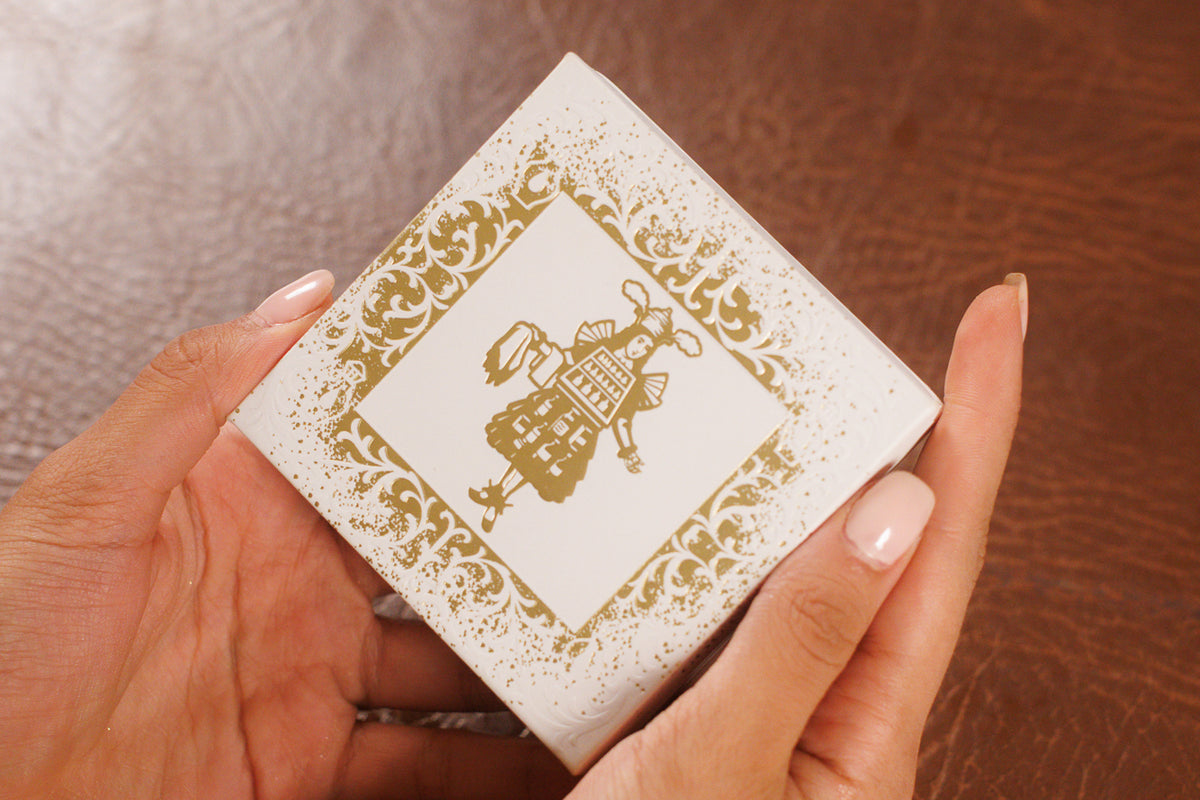
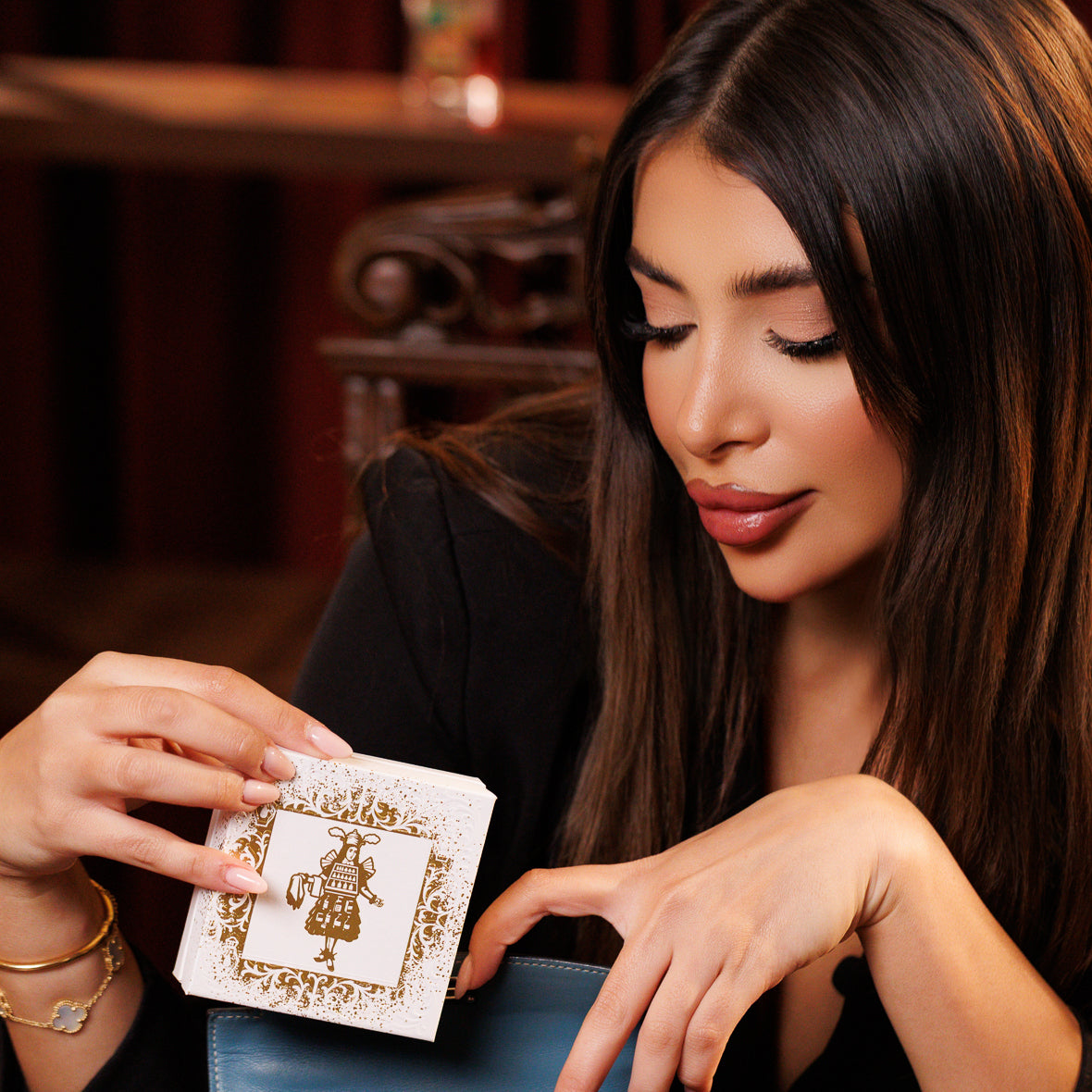
EVERY DECANT
From the original bottle to your door
We buy the original flacon at full retail price, direct from the house.
A medical grade Socorex syringe takes the exact millilitres straight from the flacon.
Packed into the hot foiled box and handed to DHL, every duty already paid. How a decant is made
Similar fragrances
You may also like