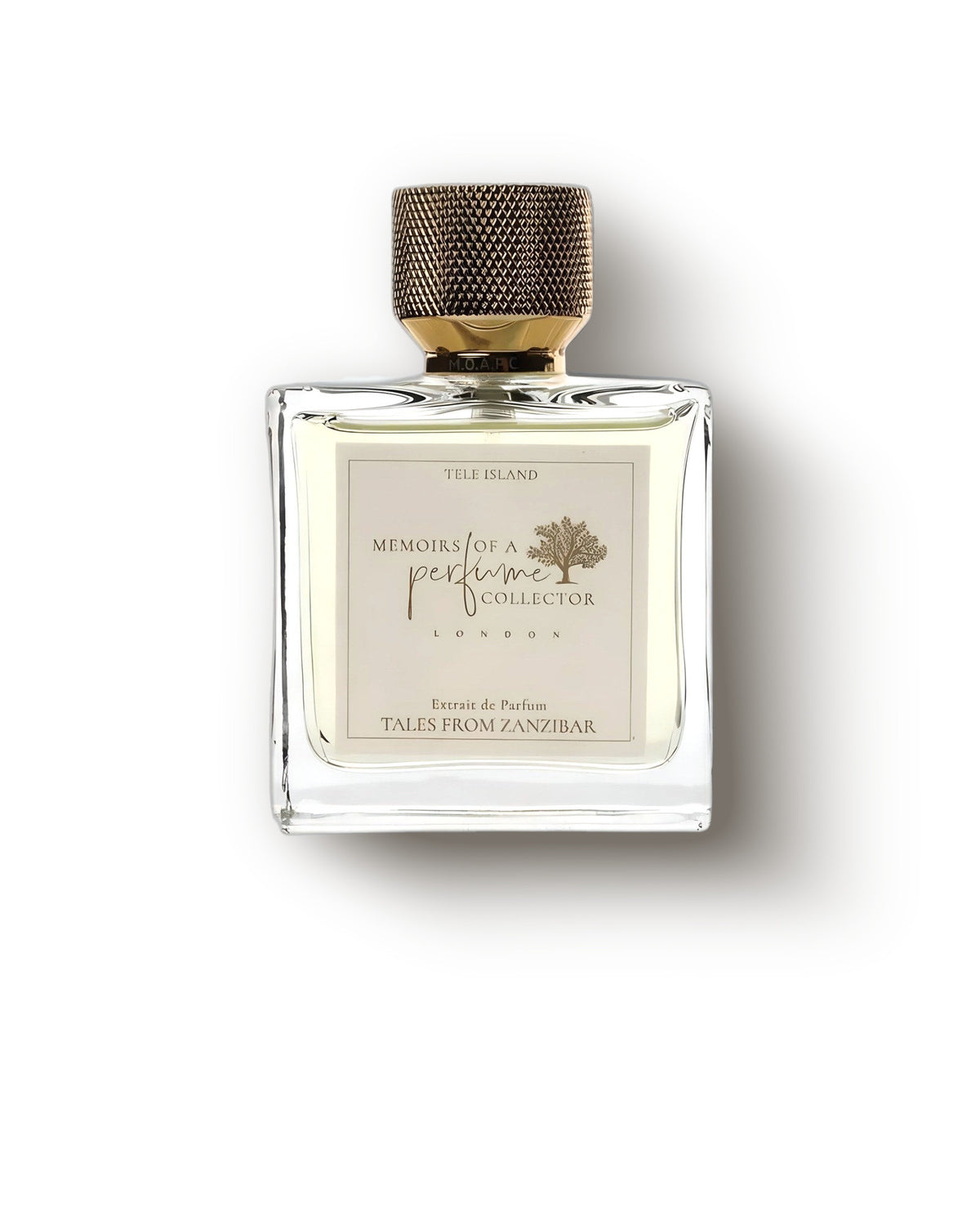
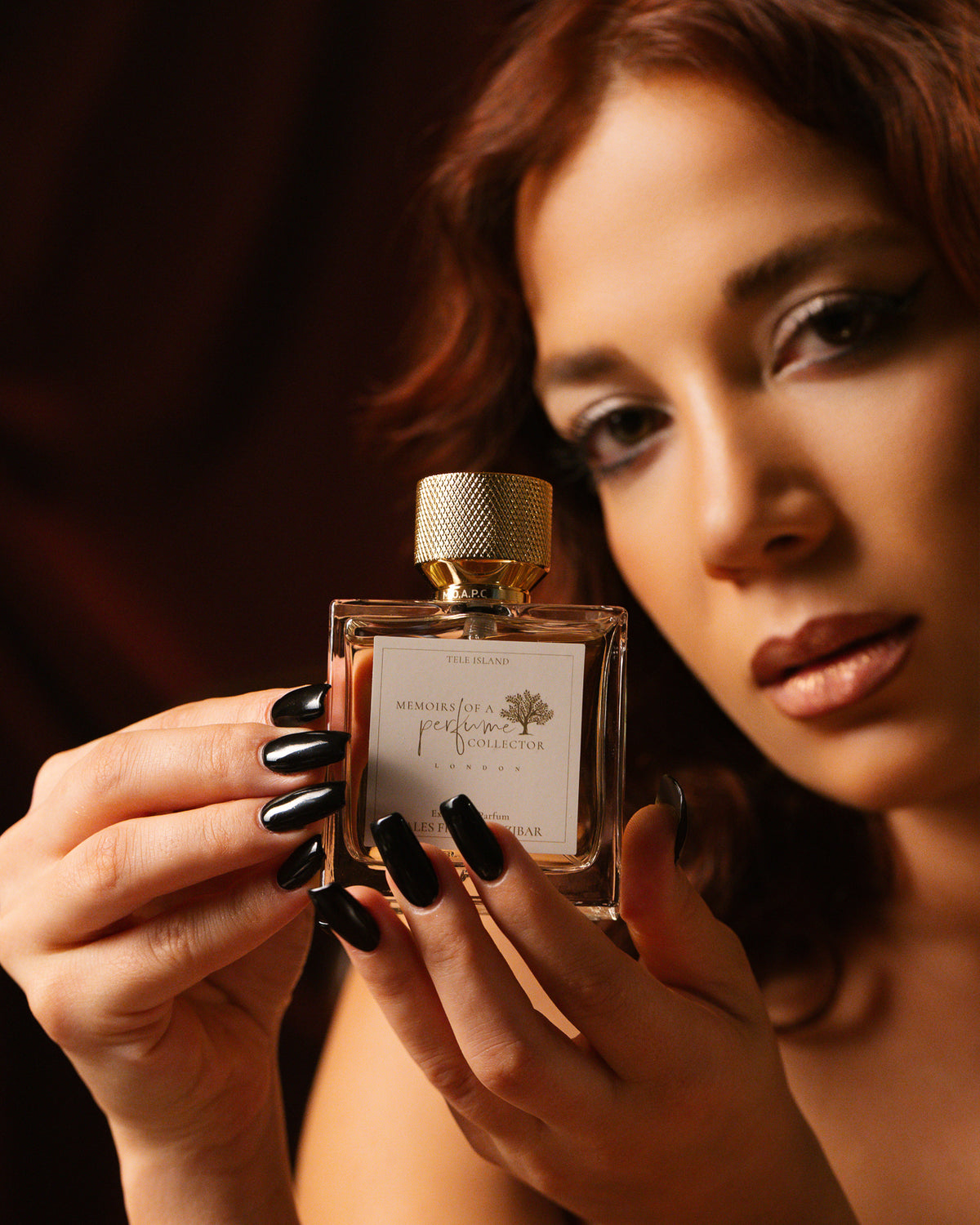


Memoirs of a Perfume Collector
Tales from Zanzibar
The Story
Tales from Zanzibar is written from the Perfume Collector's diary, his record of powdery white sand, warm turquoise water and the sunsets there. Harry Sherwood composed it, and it launched in 2021.


Fruity
Peach skin, not lemon peel
Peach, pear, apple, berry: this is sweetness in the flesh rather than the rind, dewy and nectar-heavy where citrus is sharp and thin. It plays young and slightly greedy, the sort of ripeness you can almost feel running down a wrist.


Citrus
First bright zest of morning
The juicy, rind-snapping brightness of lemon, bergamot, and orange peel, tart and effervescent with a clean bitter edge. It opens a scent with instant lift and sparkle, fresh and energizing, evaporating quickly like sunlight on water.


Green
Sap on your hands after weeding
Snap a stem and this is what comes off: sappy, cool, a little bitter, more vegetable than floral. Cut grass, bruised leaves, the inside of a hedge after the shears. Nothing here is sweet.


Sweet
Warm sugar you cannot quite name
Caramel, honey, spun sugar: sweetness that hovers between all three and never settles on one. This is the gourmand pull, the thing that makes someone lean in closer than they meant to, warm and soft and a half step short of edible.


Aromatic
Crushed herbs in cool air
The green, camphorous coolness of lavender, rosemary, sage, and thyme, like herbs bruised between the fingers. It feels clean, invigorating, and a touch austere, the crisp backbone of a classic barbershop freshness.


Tropical
Sun-warmed fruit and creamy bloom
A juicy swell of ripe mango, pineapple, and overripe banana laced with coconut milk and sticky white petals. It smells of heat on bare skin, suntan lotion, and fruit left to soften in the sun, breezy and indulgent at once.


Lime
Green citrus zest with a bitter peel snap
What it is
The oil leaves the fruit two ways. Cold pressing squeezes it straight out of the green peel; distillation boils it off the whole crushed fruit, a grade made largely for the soft-drink trade. They do not smell alike.
How it smells
Pressed lime is sharp and bitter and wet, exactly a wedge cut a second ago. Distilled lime is rounder and almost candied, all cola and soda fizz. Both fade fast and leave a thin green, faintly soapy dryness.
In perfumery
Lime goes at the top, cutting richness and making the first few minutes feel carbonated. Basil, mint, vetiver and rum are its usual company, in colognes, fougeres and every gin-and-tonic accord ever built.
Good to know
Sunlight is the catch. Cold-pressed lime carries odourless compounds, furocoumarins, that leave skin hypersensitive to it, so the dose is capped or a furocoumarin-free grade is used. Distilled lime has none of them, and its soda smell comes from the fruit's own acid reshaping the oil in the still.


Mint
Two mints, one icy and one sweet
What it is
Two plants, two different jobs. Peppermint carries menthol and reads cold. Spearmint carries carvone instead and reads sweet, round and herbal. Both are steam-distilled from leaves and flowering tops, and swapping one for the other changes everything.
How it smells
Peppermint is piercing and icy, with a camphor edge that clears your head whether you asked or not. Spearmint is gentler: sweet, faintly fruity, no cold bite. Both start green and watery, then settle to a clean herbal hum.
In perfumery
A top note, and a fast one: it flashes through fougeres, colognes and fresh masculines, then it is gone. Peppermint handles the bracing openings. Both work with lavender, basil, citrus and, less obviously, chocolate.
Good to know
Menthol does not cool anything. It switches on the nerve receptors that report cold, so your brain reads cold where there is none. That is the trick behind toothpaste and gum, and spearmint cannot do it.


Blood Mandarin
Mandarin pushed dark, with a berry undertow
What it is
A trade name, not a botanical one. Perfumers use it for the deepest red-orange mandarins, whose oil is cold-pressed straight from that colored peel, then push the result darker and juicier than ordinary mandarin ever goes.
How it smells
Mandarin with the lights lowered: juicy and sunlit still, but tart at the edge and shadowed by something berry-red. Sweeter and rounder than lemon, it sparkles for a few minutes, then softens into a faint floral sweetness.
In perfumery
Top-note work, for perfumers who want citrus with weight behind it. Set against neroli, bergamot, spice, amber or woods, it brightens an opening while hinting at the warmth waiting underneath.
Good to know
Cut one open and the flesh is orange like any other. The species never makes the anthocyanin pigments that redden a blood orange, so the red lives in the skin, and the berry-dark twist lives in the formula.

Pink Pepper
Bright rosy berries with a spice fizz
What it is
It is not pepper. The rose-colored berries come from a South American tree with no botanical link to the pepper vine at all, dried and then steam-distilled or extracted with CO2.
How it smells
Rosier and fruitier than black pepper, with only a prickle of heat. Crushed berries, a juniper-ish resin, a flick of citrus. It flashes on the opening and is gone quickly, leaving a gentle warm spiciness behind.
In perfumery
Perfumers reach for it when a composition needs spice without heat. It puts a rosy fizz over florals, freshens woods and ambers, and sits well with bergamot and patchouli. The fizz is a signature of the modern fruity-floral.
Good to know
The family it actually belongs to is the cashews, close enough that people who react to cashew or mango sometimes react to these berries too. Worth knowing before you cook with them.
Guava
A tropical note assembled, never pressed or distilled
What it is
No press or still gets guava out of guava. The thing that makes it recognisable is sulfur, thiols the lab can dose directly, or the same catty facet borrowed from blackcurrant bud absolute, with davana for ripe warmth.
How it smells
Pink flesh and green skin at once, juicy and tart, tipping toward blackcurrant. The lab build is vivid and keeps its shape as it wears. A naturals-only guava is hazier, blooming and fading unevenly over a resinous undertone.
In perfumery
In the top and upper heart it lifts white florals, tropical fruit and light musks. The catch is dosage: the sulfur that makes it convincing in traces turns frankly cattish just above them.
Good to know
Guava leaf does give a real essential oil, waxy green and woody with a faint citrus edge and nothing of the pink flesh about it. Fruit and leaf share a name and little else: one is bought, the other is built.


Cassis
Tart blackcurrant with a wild feral growl
What it is
Cassis is French for blackcurrant, but perfumery ignores the berry. What it wants is the bud: sticky, resinous leaf buds picked off the bush, nine tenths of them from Burgundy, and extracted into an absolute.
How it smells
Blackcurrant cordial spilled near a tomcat. That is cassis: jammy ruby fruit shot through with green sap and a sulfurous bite that reads almost feral. It opens tart and pungent, then rounds out into crushed leaf and berry.
In perfumery
It sits at the top and just into the heart, all fruit sparkle with an animal twitch underneath, which is what stops rose and violet turning sugary. Green chypres run on it, so do the blackcurrant-and-bay accords.
Good to know
The molecules doing that are thiols, close cousins of the ones in cat urine. A drop too much and juicy becomes litter box. Perfumers walk that line because the same sulfur is what makes blackcurrant smell alive rather than flat.


Coconut
Suntan lotion, cream and toasted flesh
What it is
Squeeze a coconut and you get almost no smell. The fruit's aroma lives in a handful of lactones in the white flesh, and the oil yields nothing on distillation, so perfumers build coconut from isolated molecules instead.
How it smells
Creamy and milky, sweet with a nutty warmth, and unmistakably the smell of a beach towel and sun cream. There is a waxy, buttery richness under it and a faint toasted edge. It stays rounded rather than sharp.
In perfumery
It works in the heart, where it gives a composition volume and a soft beachy sweetness. Vanilla, tiare and ylang turn it into monoi; that coconut and vanilla pairing is the spine of almost every solar summer fragrance.
Good to know
The molecule doing most of the work, gamma-nonalactone, has been called aldehyde C-18 since the early days of the trade. It is not an aldehyde. The name stuck anyway, and perfumers still use it.


Candied Fruits
What fruit becomes when the sugar wins
What it is
Not a material but an effect: fruit that has given up its water to sugar. The build is waxy peach lactone, davana for dried apricot, orange and plum, and sugar molecules that do the crystallising.
How it smells
Dense and syrupy, all glace cherry, candied orange peel and apricot left too long in the pot. The bright juice of fresh fruit is gone. What is left is chewy, waxy and faintly caramelised, warm rather than sharp.
In perfumery
It sits in the heart of gourmands and orientals, thickening vanilla, tonka and amber underneath it. Where a fresh fruit note would go thin and sour, this one stays heavy and holds the sweetness together.
Good to know
Perfumers still call its backbone material, gamma-undecalactone, aldehyde C-14. It is not an aldehyde, but the name stuck. Preserving fruit in honey is ancient work: Roman kitchens did it to carry summer through winter.


Musk Cocktail
Soft, skin-close warmth that anchors the base
What it is
A musk note rarely says which material it is. In modern perfumery a musk note almost always means one of the synthetic musks, a large family of molecules, because natural deer musk is restricted and rarely used.
How it smells
Synthetic musks smell clean, soft and warm: hot-ironed linen, fresh cotton, skin rather than fur. Depending on the molecule they lean sweet and faintly fruity, powdery, or smooth and almost waxy, but all share a quiet, rounded warmth.
In perfumery
Musk is the floor a composition stands on: it fixes what sits above, stretches the wear and adds that second-skin glow. Synthetic musks do this so reliably that most modern fragrances carry at least one in the base.
Good to know
One bottle can smell radiant on you and like almost nothing on the next person. Many people cannot smell certain synthetic musks at all, a quirk called specific anosmia, which is one reason perfumers often blend several musks together.


Ambergris
A warm, salty glow that hangs in the air
What it is
On a note list, ambergris is almost always an accord built on Ambroxan-type molecules, since real ambergris is rare and turns up only by chance, on a shoreline or at sea.
How it smells
These accords smell warm, salty and skin-like, closer to a glow than to a smell. A dry mineral sweetness runs through them, with hints of driftwood, blond woods and sun-warmed skin, and no sharp edge anywhere.
In perfumery
An ambergris note works from the base. It lends radiance and hold, pushes woods and ambers outward and gives a composition the breathing, sun-warmed quality that so many modern scents share.
Good to know
Ambroxan-type molecules work in a curious way: right on the skin they can seem faint, yet a step away they fill the air. They are also remarkably long-lasting, often clinging to a scarf or a jumper long after the skin has let go.


Moss
Damp forest floor pinned into a bottle
What it is
Perfumery moss is not moss at all. Oakmoss and tree moss are lichens, pale grey-green strap-shaped tufts gathered by hand from oak and conifer bark, then washed in solvent to a waxy concrete and refined into a dark, sticky absolute.
How it smells
Wet bark, leaf litter and cellar stone, with an inky bitterness under it. Tree moss runs drier and more tar-like than oakmoss. Both smell like shade rather than sunlight, cool and green and unmistakably out of doors.
In perfumery
The chypre is built on it: bergamot at the top, labdanum and patchouli below, moss holding the shadow underneath. Take it out and the structure loses its floor. Green, leather and fougere builds lean on it too.
Good to know
Two allergens in oakmoss, atranol and chloroatranol, forced the industry's hand. The great vintage chypres were reformulated: a forest floor rebuilt with much less natural oakmoss and moss notes made from other materials. Purified grades keep it in play.


Transparent Oud
Dark, dry woods of smoke, leather and resin
What it is
In Western perfumery an oud note is usually an oud accord, often built from guaiacwood, cypriol and other dry, smoky, leathery materials, and sometimes lifted with a trace of real oil.
How it smells
An accord reads dry, woody and smoky, with a leathery, slightly medicinal edge, and it holds steady from first minute to last. A distilled oil shifts more as it wears, through leather, dried fruit, honey and warm resin.
In perfumery
An oud accord gives a composition the dark gravity of agarwood with an even character from bottle to bottle. It sits naturally with rose, saffron, leather and incense, the pairings that made oud famous in Western perfumery.
Good to know
Oud and agarwood name the same thing. Oud is the Arabic word for wood, and agarwood is the resin-soaked heartwood an Aquilaria tree forms when it is wounded, the material that oud oils are distilled from and that oud accords echo.
Fragrance Character
Citrus and pepper flare and burn off quickly, revealing a tropical heart where guava and coconut read ripe and edible, their sweetness offset by the dark berry density of cassis. As it settles, transparent oud and ambergris take control, lending a soft woody warmth that keeps the candied fruit from tipping into dessert territory. Moss pulls it earthward; the final hours sit close to skin, resinous and faintly salt-sweet.


Longevity
how long it stays on skin
The hourglass reads wear time: how many hours the fragrance keeps speaking before it fades. A bar that barely leaves the start means a few fleeting hours. One that runs the full length carries from morning into evening. Treat it as typical, not promised. Oily skin holds scent far longer than dry.


Sillage
the size of its scent trail
Sillage is French for a ship's wake, and that is exactly what this measures: how much of the scent reaches the room instead of staying on you. Low is a whisper only close friends catch. Enormous fills the room, then keeps filling it after you leave.


Experimental
Built to provoke, not to please
Some perfumes are made to be liked. These are made to be argued about: inky tar, hot rubber, fruit on the turn, metal and fur where you expected flowers. The coin glows for a scent that provokes and dims for one that plays it safe, which is sometimes the point.


Office
Polished, and never louder than the room
Scent is manners in a shared room. At this range it should reach the person across the desk and stop there: tidy citrus, soft musk, pale woods, all of it reading competent and considerate. A glowing coin means nobody has to mention it. A dim one means it travels.


Evening
After dark, when it deepens
Dinner, drinks, the night that runs long. Low light is where ambers, resins and smoky woods stop being polite, and where a plush floral finally blooms. A glowing coin means it is waiting for exactly this hour. A dim one means it did its best work in daylight.


Romantic
Close enough to be felt
A fragrance can hum against skin instead of announcing itself across a table. That is the register here: creamy florals, vanilla, soft musk, a thread of spice, warm enough to make someone lean in. The coin glows when a scent sets that mood and dims when it is more practical than seductive.


Formal
Quiet authority in a dressed-up room
A wedding, a ceremony, a room where everyone has thought about their shoes. What works here is structure, not volume: smooth woods, disciplined florals, soft leather. A glowing coin means it holds its posture all evening. A dim one means it is too casual for the room.


Casual
Easy comfort for unhurried days
Errands, coffee, a slow Saturday with nowhere to be. Nothing here has to impress anyone, so the fit is soft and easy: fresh citrus, light woods, a little warmth off the skin. A glowing coin says yes to all that. A dim one means the fragrance is asking for a bigger night.


Day to Night
where its mood naturally falls
A bar running from sun to moon, reading the hour the fragrance was made for. The more of it that stays gold, the more the scent belongs to daylight and open air. The further the blue reaches back toward the sun, the deeper and warmer it turns: evening, candlelight, low rooms.


Winter
Warmth that carries through cold air
Cold air mutes a fragrance and slows it down, which is why winter belongs to the dense and the warm: resin, smoke, vanilla, leather, ambered spice. The bar reads how well this one pushes back, glowing against the chill instead of thinning out in it.


Spring
Fresh blooms in mild, rising warmth
Mild, humid air lifts a light composition, so the season belongs to dewy florals, green stems, soft powder and citrus you can see through. Alive rather than heavy. The further the green runs along the bar, the more comfortably this one wears in that weather.


Summer
Bright and airy in real heat
Heat does the projecting for you, which is why the wrong perfume turns unbearable by noon. What survives is cool and breathable: sharp citrus, salt air, aromatic herbs, water. Things that refresh instead of cloy. A short bar here means save it for cooler months.


Fall
Spiced warmth for cooling days
As the air cools, the rich materials stop smothering and start reading clearly: dry woods, warm spice, tobacco, amber, fruit gone golden. It is the season perfume turns contemplative. The bar fills according to how naturally this one settles into crisp, cooling days.
Best Worn
An easy everyday fragrance for the warm stretch of spring and summer, when sun amplifies the bright, almost edible tropical heart, worn by someone unafraid of something boldly and unambiguously sun-soaked.
Choose options
The Vibe


The Nose

Harry Sherwood
Perfumer
Perfumer and philosopher of olfaction who founded the scent-design studio Artifiscent, whose collaborators include 4160Tuesdays. His commissions have included the smell of Play-Doh for an artist's exhibition and of an old armchair for a smartphone launch, and after Covid-19 the charity AbScent asked him to design the scents for its smell-training kits.
The Maison

A collector’s notebook turned into scent, one place at a time.
Memoirs of a Perfume Collector builds each release around a remembered place and the materials that belong to it, and keeps production small enough that the naturals stay generous. The compositions are warm and narrative, closer to a travel journal than a launch.
- Known for
- Tales from Zanzibar, place led compositions

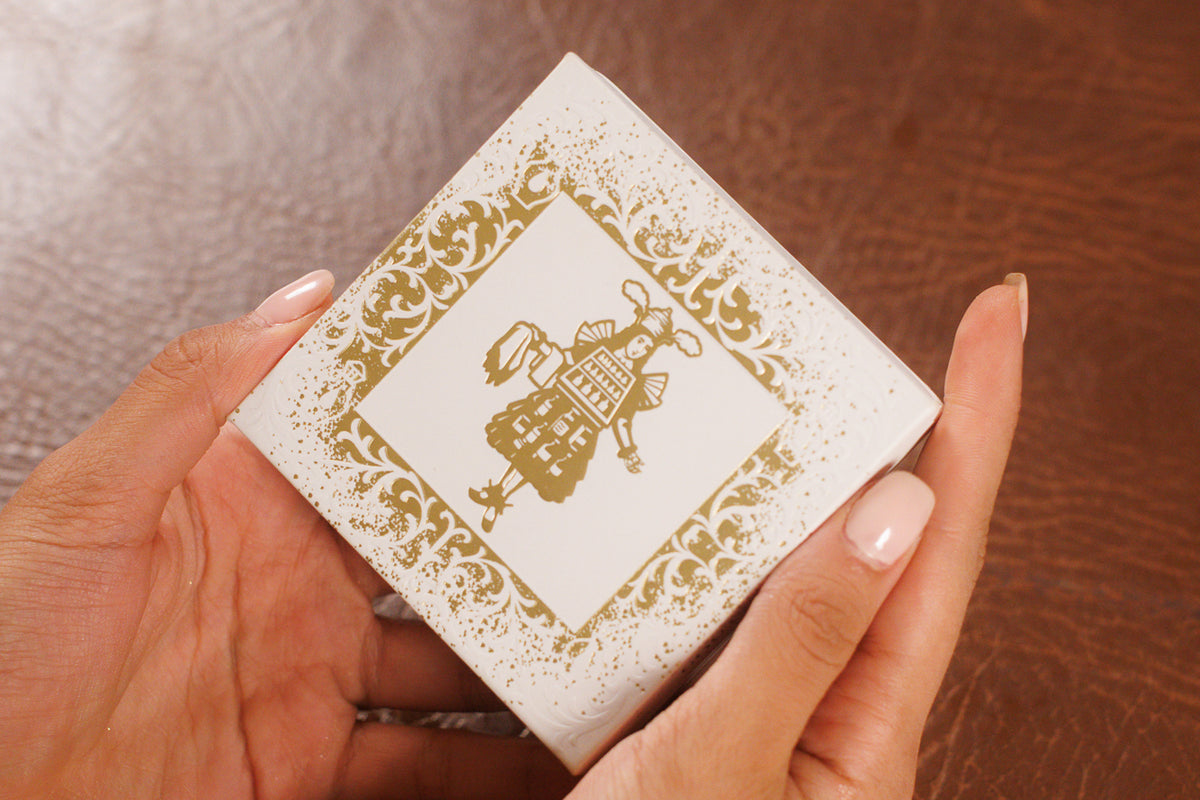
EVERY DECANT
From the original bottle to your door
We buy the original flacon at full retail price, direct from the house.
A medical grade Socorex syringe takes the exact millilitres straight from the flacon.
Packed into the hot foiled box and handed to DHL, every duty already paid. How a decant is made
Similar fragrances
You may also like