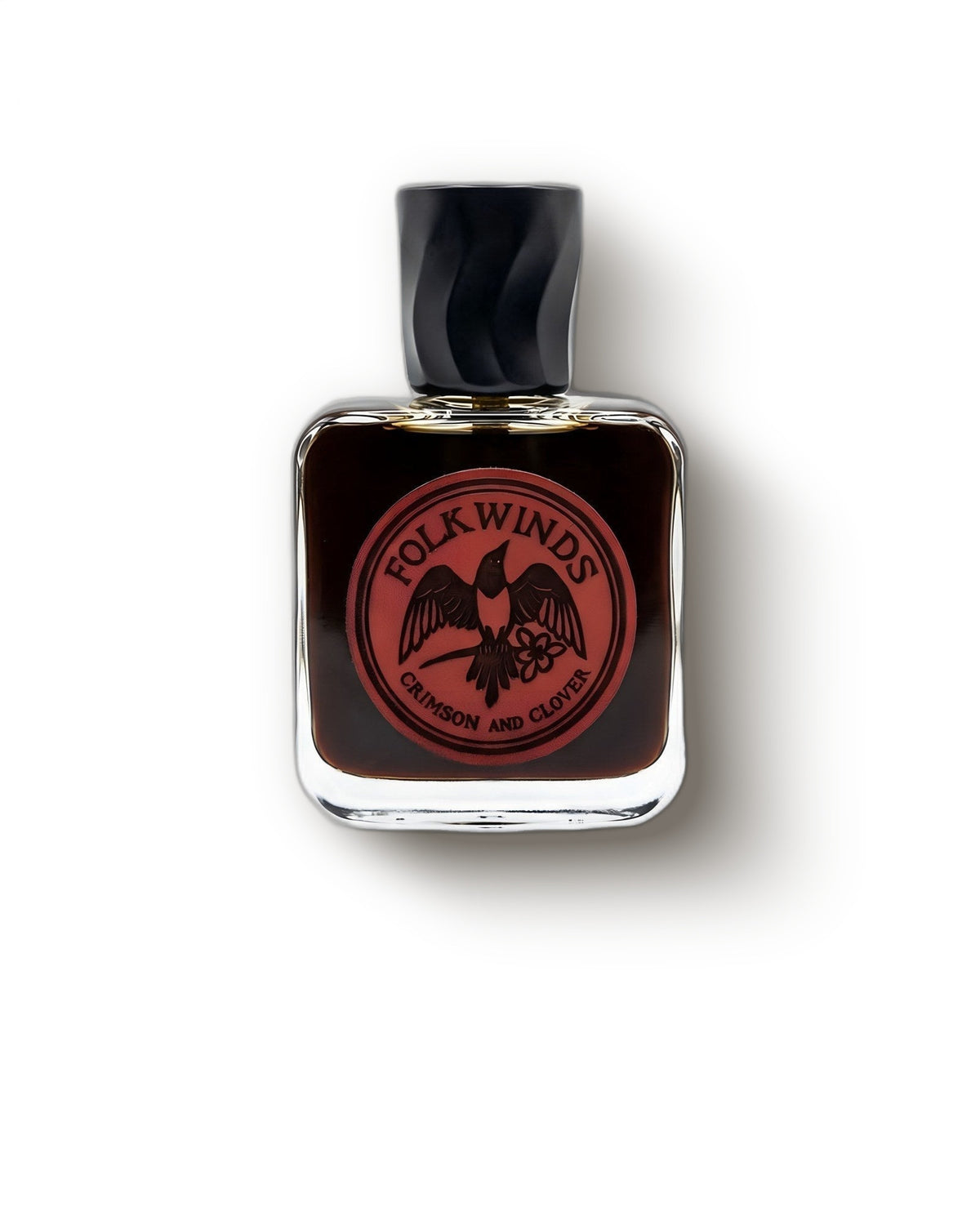
Folkwinds
Crimson and Clover
The Story
Crimson and Clover is a tobacco and apple extrait built around a Vermont autumn, opening on boozy cider and boiled cranberries. Clove and ginger carry it into a drydown of green tobacco, Vietnamese oud and Mongolian musk.


Spicy
A spice stall in the open air
Black pepper, cardamom and pimento berry, dry rather than sweet, with a heat that catches at the top of the nose before you have finished inhaling. It does not sit quietly under anything. Spice raises the temperature of whatever it is put next to.


Woody
Dry grain of cut timber
The smell of cedar shavings, sandalwood, and dry vetiver roots, a sanded, resinous warmth with a faint pencil-box rasp. It feels grounded and composed, the quiet backbone that makes a scent read as serious and lasting.


Sweet
Warm sugar you cannot quite name
Caramel, honey, spun sugar: sweetness that hovers between all three and never settles on one. This is the gourmand pull, the thing that makes someone lean in closer than they meant to, warm and soft and a half step short of edible.


Smoky
Charred wood and rising embers
The dry, charred scent of burning wood, smoldering incense, and lingering ash, sometimes tarry, sometimes wispy and gray. It feels brooding and atmospheric, conjuring a dying fire and a cool current of air carrying its last breath.


Green
Sap on your hands after weeding
Snap a stem and this is what comes off: sappy, cool, a little bitter, more vegetable than floral. Cut grass, bruised leaves, the inside of a hedge after the shears. Nothing here is sweet.

Cranberry
Puckering red berry, sour before it is sweet
What it is
Bite a cranberry and it fights back. That puckering sourness has no oil or absolute behind it, so the note is assembled from green aldehydes, beta-ionone and benzaldehyde, or, in all-natural work, from fruity and green naturals.
How it smells
Sharp and mouth-watering, a thin red juiciness with a green, stewed edge and an acidity that tightens your jaw. The lab version snaps brighter and stays photographic. A botanical one is rounder, hazier, and loosens as it dries.
In perfumery
Mostly a winter note, sparkling up the opening of fruity-florals and gourmands. The aroma-chemical version is tough enough for soap, candle and detergent bases, where naturals fall apart. The botanical one stays in small hand-poured work, dosed low.
Good to know
The lab route repeats exactly, batch after batch. The botanical route shifts with each harvest and fades sooner, which is either a flaw or the point. Neither has any cranberry in it.

Apple Cider
Orchard fruit gone warm and faintly boozy
What it is
Cider is not distilled for scent, so a natural cider note is assembled from botanicals: Roman chamomile for the apple, davana for a boozy fruitiness, sometimes an apple or cider tincture, and spice oils for the warmth.
How it smells
Crushed ripe apple, juicy and sweet, with a vinegary sparkle and a soft yeasty warmth behind it. Some builds go mulled and spiced, others thick and honeyed, like cider pressed from frozen fruit. Cosy, slightly tipsy.
In perfumery
A heart accord for autumn, at home with cinnamon, caramel and soft woods. It sells the season more than the drink, which is why it turns up in fall fragrances and in half the candles on the shelf.
Good to know
Mainstream cider notes often take their apple lift from alpha-damascone, a rose ketone. Natural work turns to Roman chamomile instead, whose Greek name, chamaimelon, means earth apple, for the smell of its flowers.

Poplar
Resinous buds, honeyed and dark as a beehive
What it is
Bees did not invent propolis. They gather it from the sticky buds of the balsam poplar, picked in late winter before they open and solvent-extracted into an absolute as dark and thick as syrup.
How it smells
Honey and sour plum first, then raisin and fortified wine, then the warm wax of a hive. Underneath, tobacco and hay, a faint yeasty tang, and a resinous depth that reads almost churchy.
In perfumery
Natural perfumers use it as a base and a fixative at once, where it holds amber and incense accords in place and sweetens them from below. Labdanum, beeswax and tobacco are its natural company.
Good to know
In the hive that resin becomes caulk and antiseptic, sealing every crack against damp and disease. The absolute is made in small batches from wild northern trees, mostly by hand, which is why so little exists.
Clove
Warm spice with a numbing, dentist-chair bite
What it is
The clove you know is a flower stopped before it opened. Buds come off the tree as they flush pink, dry to small brown nails, and go to the still as clove bud oil.
How it smells
Hot and dry, with a tingle that turns numb: eugenol, the same compound a dentist uses. Under the burn sits a woody, fruity sweetness and a slow balsamic trail of pomanders and mulled wine.
In perfumery
Perfumers use it in the heart for heat and old-world richness, beside carnation, rose and vanilla. The same spice warms a shelf of chypres, fougeres and spicy carnation accords.
Good to know
Clove was once among the most prized spices in Europe, and the Dutch razed whole groves in the Spice Islands to control supply. Eugenol can turn skin allergic, so IFRA caps the eugenol in a finished perfume, whichever material it comes from.


Ginger
Fresh peppery zing with a fibrous warmth
What it is
Not a root, whatever the greengrocer calls it, but a swollen underground stem. Perfumers take it two ways: steam-distilled to an essential oil, or extracted with CO2, and the two are not interchangeable.
How it smells
Bright and dry, a fizzy lemon-pine sparkle with pepper behind it and a fibrous, earthy warmth underneath. None of the sweetness of cooked ginger. The CO2 extract is rounder and juicier, closer to a rhizome snapped in half.
In perfumery
It works between the top and the heart, waking up citrus, putting an edge on woods, keeping aquatic and fougere structures from going flat. When a crisp, peppery scent has a pulse to it, ginger is usually why.
Good to know
Ginger barely flowers in cultivation. Every plant is grown from a piece of another plant, which makes the world's ginger something close to one enormous clone, passed hand to hand along trade routes for five thousand years.
Green Tobacco
Raw leaf before the fire and the cure
What it is
The plant before anything is done to it: leaf and stem straight off the field, nothing dried, nothing burned. Perfumers assemble it from hay-sweet coumarin, clary sage, fig leaf and green materials over a little tobacco absolute.
How it smells
Vegetal and slightly bitter, crushed-leaf sharpness over a thin herbaceous sweetness. Sappy green up top, dry hay and tea underneath, and only a whisper of the nutty warmth cured tobacco develops. Cooler and rawer than any cigar.
In perfumery
A heart note that walks green into warm without passing through smoke. Hay, clary sage, fig and honey are its neighbours. It is what keeps a tobacco fragrance leafy instead of turning it into an ashtray.
Good to know
Tobacco's warmth is not in the living plant. It is manufactured after harvest, during curing and fermentation, when enzymes break down the leaf's own sugars and proteins. What smells sweet in a cigar was made in the barn.


Hay
Sun-dried meadow grass bottled at golden hour
What it is
Cut meadow grass, clover and sweet vernal, left in the sun. Hay's sweetness is almost entirely one molecule, coumarin, and perfumery takes it either by extracting the dried grasses or by building the molecule outright.
How it smells
Warm, sweet and dry, a sunlit barn loft: cut grass tipping toward almond and vanilla, with a nutty, tobacco-like underside. Green and golden at first, then soft powdery warmth. Mown lawn left to bake all afternoon.
In perfumery
A heart-to-base note handing rustic, sun-warmed character to fougeres, chypres and tobacco blends, and the bridge from green tops to warm bases. Lavender, tobacco, oakmoss and tonka gather round it. The fougere family rests on this accord.
Good to know
Coumarin came out of the tonka bean before anyone learned to build it, one of perfumery's first aroma-chemicals. Grass gives it up only as it dries, which is why hay smells sweeter than a living field.


Amyris
Caribbean wood that whispers like soft sandalwood
What it is
The branches are so loaded with oil that people once lit them as torches, which is where candlewood and torchwood come from. Fallen, aged wood is distilled slowly into a soft heartwood oil sold as West Indian sandalwood.
How it smells
Dry, soft and low-volume: clean cedar-like woodiness with a faint balsamic warmth and a peppery wisp of smoke. Next to true sandalwood it is thinner and much less creamy, a little oily, happy to sit underneath everything else.
In perfumery
Base-note plumbing: an affordable fixative that holds lighter materials down and stretches the woods. It goes with citrus, lavender, cedar and sandalwood, and props up more colognes and soliflores than ever list it.
Good to know
West Indian sandalwood is a sales name, nothing more. The tree is a Caribbean relative of citrus and shares almost no chemistry with Santalum, which costs many times more, and the two smell alike only from a distance.
Sweet Clover
Sun-dried hay sweetened with almond and vanilla
What it is
Nothing much happens until it dries. This wild legume, tall stems of small yellow flowers, builds its coumarin in the drying herb, which then yields an absolute, though most fragrances reach for synthetic coumarin instead.
How it smells
A meadow drying in the sun: almond, new-mown grass, a creamy vanilla warmth. Keep the dose light and you get hay. Push it and it turns nutty, balsamic and gourmand, right next to tonka and woodruff.
In perfumery
It sweetens and rounds without turning sugary, working from heart into base: body for florals, warmth for fougeres, a hay bridge from fresh top notes down to woods. Lavender, tonka, oakmoss and tobacco are its company.
Good to know
Moldy sweet clover hay sickened cattle with internal bleeding. Tracing that led to dicoumarol, and from dicoumarol came warfarin. The hayfield sweetness in your bottle is the ancestor of a blood thinner.


Thai Malaccensis Oud
Smouldering leather with a fruity thread
What it is
Oud distilled in Thailand, most of it from the eastern border forests around Trat, though Thai stills run on more than one Aquilaria species. Wood is commonly aged for years before it ever reaches the pot.
How it smells
Smouldering rather than burning: tannic leather, warm spice and honeyed tobacco with a bright fruity thread running under it. The camphor edge keeps things bracing, almost antiseptic, and a faint animal warmth sits beneath.
In perfumery
It sits between the sweet Cambodian style and the animalic Hindi one: smoky leather depth without the barnyard, which is why artisan distillers and blenders both reach for it. Trat oils are the most sought of the lot.
Good to know
Trat shares the Cardamom range with Cambodia, so border oils can echo Khmer sweetness while carrying far more leather and smoke. Years of ageing before distillation is what rounds off the medicinal sharpness.


Cassia
Fierce red-hot cinnamon with a balsamic bite
What it is
The cinnamon in most kitchen cupboards is not cinnamon at all. It is cassia, the thick, coarse bark of a Chinese evergreen, stripped from trunk and branches for the spice jar. The perfumery oil is steam-distilled mostly from the leaves and twigs of the same tree and is largely cinnamaldehyde.
How it smells
Hotter and rougher than true cinnamon: a red-candy heat that arrives before anything else. Under it sits a woody, faintly leathery body and a sweet balsamic warmth. Where Ceylon bark is powdery, this one has an edge.
In perfumery
A spice for the top and heart of orientals and gourmands, where a trace does the work of a spoonful. It heats carnation accords and sweet drydowns, and sits well with clove, tonka and vanilla.
Good to know
It carries more coumarin than the Sri Lankan bark, which is why there are limits on eating much of it. In perfumery the cap sits on cinnamaldehyde, a skin sensitizer, and that is what keeps the dose small.


Vetiver
Cool damp earth pulled from tangled roots
What it is
Everything worth having is underground. Vetiver grows as a tall tropical grass, but the perfume lives in its roots, a dense fibrous mat that gets dug up, washed, dried and steam-distilled into a thick amber-brown oil.
How it smells
Cool damp soil and cut grass over dry wood. Haitian oil runs smoother and faintly hazelnut-sweet; Java is darker, smokier, more leathery. Underneath both, a bitter grapefruit edge and a green mineral streak that holds for hours.
In perfumery
Perfumers use it to hold a formula down, which is why fougères and chypres reach for it. Citrus, leather and tobacco sit well on top. Push its ashier side forward and it turns severe beside cypress and cedar.
Good to know
The same roots that end up in a bottle get planted on hillsides to hold the soil, gripping ground where nothing else will. Haiti supplies about half the world's vetiver oil, most of it grown on smallholder farms.

Smuggler's Notch
A Vermont mountain pass, folded into the base
What it is
A real pass runs through the Green Mountains of northern Vermont, and Folkwinds has a perfume of the same name. The house lists Smuggler's Notch as a single line in the base of Crimson and Clover.
How it smells
Cold northern wood with something lit in it. Spruce and maple over toasted oak and cigar tobacco, dark and resinous, faintly boozy, sweet at the edges rather than fresh, held down by a low animal warmth.
In perfumery
The house calls its Smuggler's Notch perfume all natural and closed-loop, with raw materials blended before and after extraction. Its materials list runs from Vermont red spruce, sugar maple and toasted American oak to cigars and incense-grade Nha Trang agarwood, and names deer musk and castoreum. The apple and tobacco above it get a floor of cold wood.
Good to know
Folkwinds calls Crimson and Clover a stylistic evolution of its Santi Ana and Smuggler's Notch DNA, so the note is the house quoting itself. The pass is real, and it closes to traffic every winter.


Amber
A warm resinous glow built, not harvested
What it is
There is no amber tree. Perfumers assemble the smell from labdanum, the sticky gum that bleeds off a Mediterranean rockrose in summer heat, plus benzoin and vanilla. The fossilized resin in museum cases is odorless on skin.
How it smells
Honeyed and faintly animalic at first, then it settles into golden powdery warmth: beeswax, old tobacco, worn leather, a thread of smoke underneath. It stays close to the skin rather than filling the room.
In perfumery
It sits at the base and holds everything above it in place, which is why oriental compositions lean on it so hard. Vanilla and patchouli push it sweet; more resin, spice and dry herbs push it austere.
Good to know
The word once meant ambergris, the waxy secretion of sperm whales, and the confusion never cleared. The trade now uses amber for two things: this resin accord, almost always plant and synthetic, and the ambergris substitutes like Ambroxan.


Castoreum
Real castoreum, smoky hide with an aspirin edge
What it is
This is real castoreum rather than an accord built to imitate it: the secretion of the beaver's castor sacs, which the animal uses to mark its territory. The sacs are dried and worked into a tincture or absolute, the form in which perfumers usually use it.
How it smells
Dark, tarry leather with a medicinal edge, like birch smoke off a wet coat. Underneath there is sweetness: dried fruit, hay, a smear of vanilla. Dilute it far enough and the growl turns to warm suede.
In perfumery
It anchors the base and holds everything above it: the hide of a leather scent, the smoke of a Russian-leather style, the long tail of an old oriental. Natural perfumers sometimes age or macerate other materials with it, oud among them, to lend them its leathery depth.
Good to know
Beavers live on willow and poplar bark, thick with salicin, the compound behind aspirin, and it carries through: a cool, almost medicinal thread under all that leather. It has long been a flavouring material as well.


Santalol
The two molecules that are sandalwood itself
What it is
Strip sandalwood down to what actually smells and this is it: a sesquiterpene alcohol in two forms, alpha and beta, together sixty to eighty-five percent of the oil. It is isolated from that oil.
How it smells
Woody and creamy, the exact thing your nose calls sandalwood. Alpha is the milky, smooth half; beta is drier and spicier. Together they run long, round and lactonic, never harsh the way woody chemicals often are.
In perfumery
A base note and fixative, used to rebuild sandalwood character with a consistency natural oil cannot promise. It deepens real sandalwood and authenticates a sandalwood accord, though most of the effect in modern work is carried by synthetic sandalwood odorants, which are different molecules.
Good to know
Sandalwood is overharvested, so researchers rebuilt the santalol pathway in baker's yeast, brewing the two isomers out of sugar. It leaves the trees in the ground, though the first yeast version made a mixture of sesquiterpenols, and fermentation-made santalol has been on the market since 2020.

Sugar Maple
Forest woodiness boiled down to golden syrup
What it is
North America's sugar maple gives no usable essential oil, so a natural maple is composed rather than extracted: fenugreek absolute or CO2, whose sotolon reads as maple syrup when dilute, warmed with vanilla absolute and real woods, standing in for sap boiled down in a shed at winter's end.
How it smells
Sweet and toasted, warm syrup poured over dry wood. Caramelised brown sugar, a buttery roundness, a wisp of smoke and something cedar-like beneath. It opens frankly gourmand, then settles into candied warmth that stops short of cloying.
In perfumery
A heart-to-base gourmand that stops sugar floating away by tying it to real wood. Cedar, guaiac wood and clove suit it, holding the candied syrup against a dry, spiced frame.
Good to know
Roughly forty litres of clear sap, boiled for hours, make one litre of syrup, and a maple must be decades old before anyone taps it. The candied smell owes much to sotolon, the molecule behind fenugreek's curry reek.
Vietnamese Sinensis Oud
Vietnamese agarwood from the sinensis tree, sweet and clear
What it is
Oud distilled from Aquilaria sinensis, the agarwood species best known as Chinese agarwood, here from Vietnam.
How it smells
Vietnamese oils are usually the sweetest and most polished of the regional styles: honeyed resin, dried fruit and a floral lift, with little barnyard. Sinensis wood leans clear and cool, a faint bitter edge keeping the sweetness in check.
In perfumery
This perfume layers two ouds, a Thai malaccensis in the heart and this sinensis in the base, two Aquilaria species from the middle to the drydown. Here it sits with sugar maple, castoreum, santalol and aged Mongolian musk.
Good to know
Species shapes an oil as much as region does, which is why artisan houses name it. Aquilaria sinensis is also the tree behind China's historic incense woods, prized for centuries in Guangdong and on Hainan Island.


Aged Mongolian Musk
Chocolate, dust and a warm animal hum
What it is
Deer musk from the cold end of its range, the forested mountains where Mongolia meets southern Siberia. Perfumers grade it against Tonkin, the Tibetan and Chinese grade every other musk is measured by.
How it smells
Sweeter than expected, almost chocolatey, with earth and resin underneath and a dry sandy warmth close to ambergris. Muddier than the floral prettiness of Tonkin, softer than the feral Siberian grade. It sits on skin, not above it.
In perfumery
A trace holds everything above it in place for hours and gives a blend its brooding, skin-close weight. All-natural houses set it against oud, where its earthy backbone meets the smoke halfway.
Good to know
Most musk on today's note lists is synthetic; a named deer musk like this one is the real material those molecules were made to echo. Tonkin stays the benchmark; taiga grades read rougher and more barnyard.
Fragrance Character
The opening crackles with tart fruit and spice, projecting with real force before green tobacco and amyris draw it inward. In the heart, oud and cassia add dry resinous heat while hay and vetiver keep it grounded and slightly wild. The drydown is long and enveloping, all woodsmoke, sugar maple, musk, and amber, wearing close to skin but never quite releasing its grip.


Longevity
how long it stays on skin
The hourglass reads wear time: how many hours the fragrance keeps speaking before it fades. A bar that barely leaves the start means a few fleeting hours. One that runs the full length carries from morning into evening. Treat it as typical, not promised. Oily skin holds scent far longer than dry.


Sillage
the size of its scent trail
Sillage is French for a ship's wake, and that is exactly what this measures: how much of the scent reaches the room instead of staying on you. Low is a whisper only close friends catch. Enormous fills the room, then keeps filling it after you leave.


Experimental
Built to provoke, not to please
Some perfumes are made to be liked. These are made to be argued about: inky tar, hot rubber, fruit on the turn, metal and fur where you expected flowers. The coin glows for a scent that provokes and dims for one that plays it safe, which is sometimes the point.


Office
Polished, and never louder than the room
Scent is manners in a shared room. At this range it should reach the person across the desk and stop there: tidy citrus, soft musk, pale woods, all of it reading competent and considerate. A glowing coin means nobody has to mention it. A dim one means it travels.


Evening
After dark, when it deepens
Dinner, drinks, the night that runs long. Low light is where ambers, resins and smoky woods stop being polite, and where a plush floral finally blooms. A glowing coin means it is waiting for exactly this hour. A dim one means it did its best work in daylight.


Romantic
Close enough to be felt
A fragrance can hum against skin instead of announcing itself across a table. That is the register here: creamy florals, vanilla, soft musk, a thread of spice, warm enough to make someone lean in. The coin glows when a scent sets that mood and dims when it is more practical than seductive.


Formal
Quiet authority in a dressed-up room
A wedding, a ceremony, a room where everyone has thought about their shoes. What works here is structure, not volume: smooth woods, disciplined florals, soft leather. A glowing coin means it holds its posture all evening. A dim one means it is too casual for the room.


Casual
Easy comfort for unhurried days
Errands, coffee, a slow Saturday with nowhere to be. Nothing here has to impress anyone, so the fit is soft and easy: fresh citrus, light woods, a little warmth off the skin. A glowing coin says yes to all that. A dim one means the fragrance is asking for a bigger night.


Day to Night
where its mood naturally falls
A bar running from sun to moon, reading the hour the fragrance was made for. The more of it that stays gold, the more the scent belongs to daylight and open air. The further the blue reaches back toward the sun, the deeper and warmer it turns: evening, candlelight, low rooms.


Winter
Warmth that carries through cold air
Cold air mutes a fragrance and slows it down, which is why winter belongs to the dense and the warm: resin, smoke, vanilla, leather, ambered spice. The bar reads how well this one pushes back, glowing against the chill instead of thinning out in it.


Spring
Fresh blooms in mild, rising warmth
Mild, humid air lifts a light composition, so the season belongs to dewy florals, green stems, soft powder and citrus you can see through. Alive rather than heavy. The further the green runs along the bar, the more comfortably this one wears in that weather.


Summer
Bright and airy in real heat
Heat does the projecting for you, which is why the wrong perfume turns unbearable by noon. What survives is cool and breathable: sharp citrus, salt air, aromatic herbs, water. Things that refresh instead of cloy. A short bar here means save it for cooler months.


Fall
Spiced warmth for cooling days
As the air cools, the rich materials stop smothering and start reading clearly: dry woods, warm spice, tobacco, amber, fruit gone golden. It is the season perfume turns contemplative. The bar fills according to how naturally this one settles into crisp, cooling days.
Best Worn
Made for the cold half of the year and the hours after dark, for wood fires, wool, and the specific pleasure of a room that smells like it has history.
Choose options
The Vibe


The Nose
Jono Bornstein
Founder and perfumer
Founder and perfumer of Folkwinds, launched in 2022 to showcase North American aromatic materials. He works over 90 per cent natural and American sourced, on Folkwinds American Pharaoh, Folkwinds Cloud Illusions, Folkwinds Santi Ana, Folkwinds Jasper No Kodo and Folkwinds Smoke Jumping.
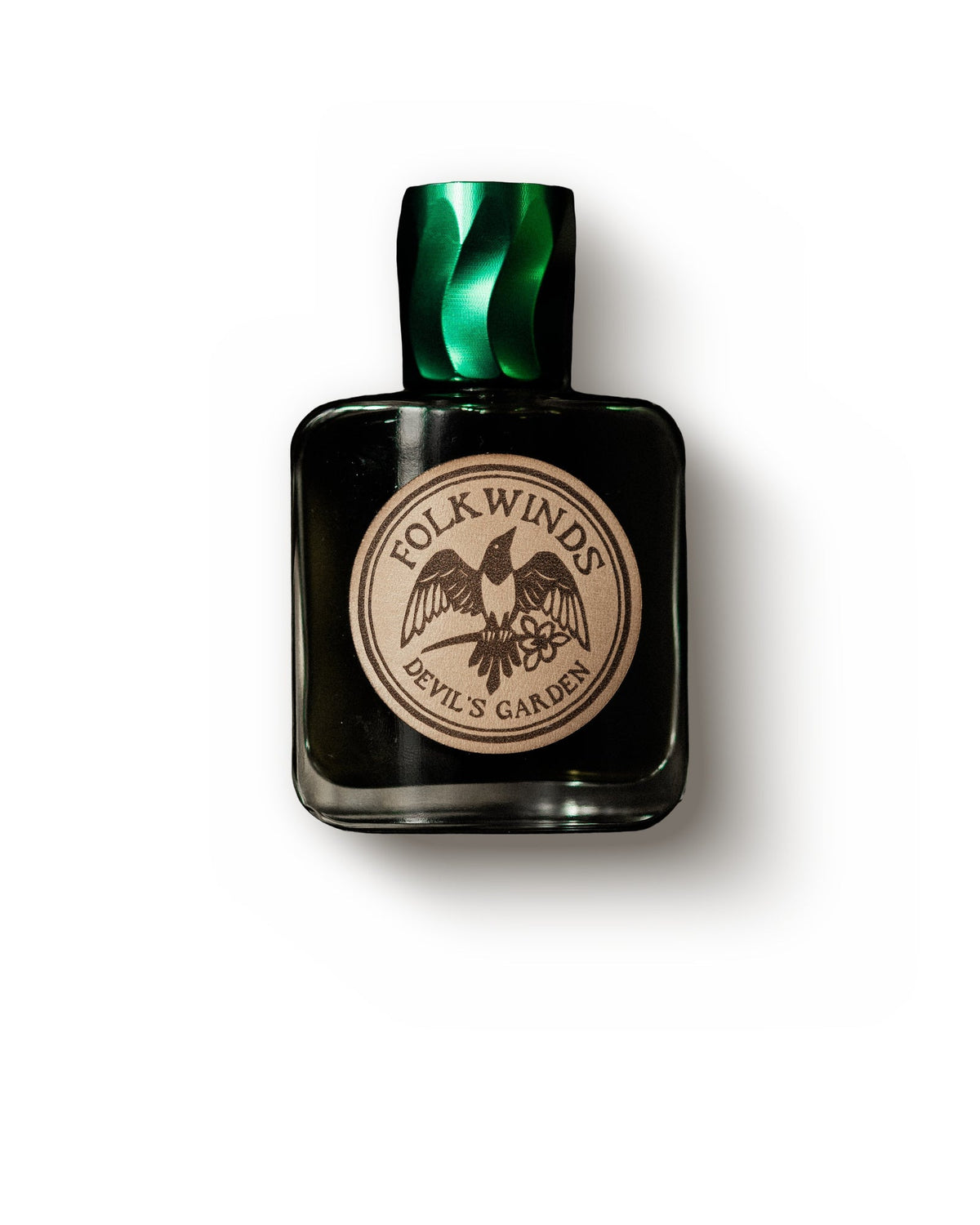
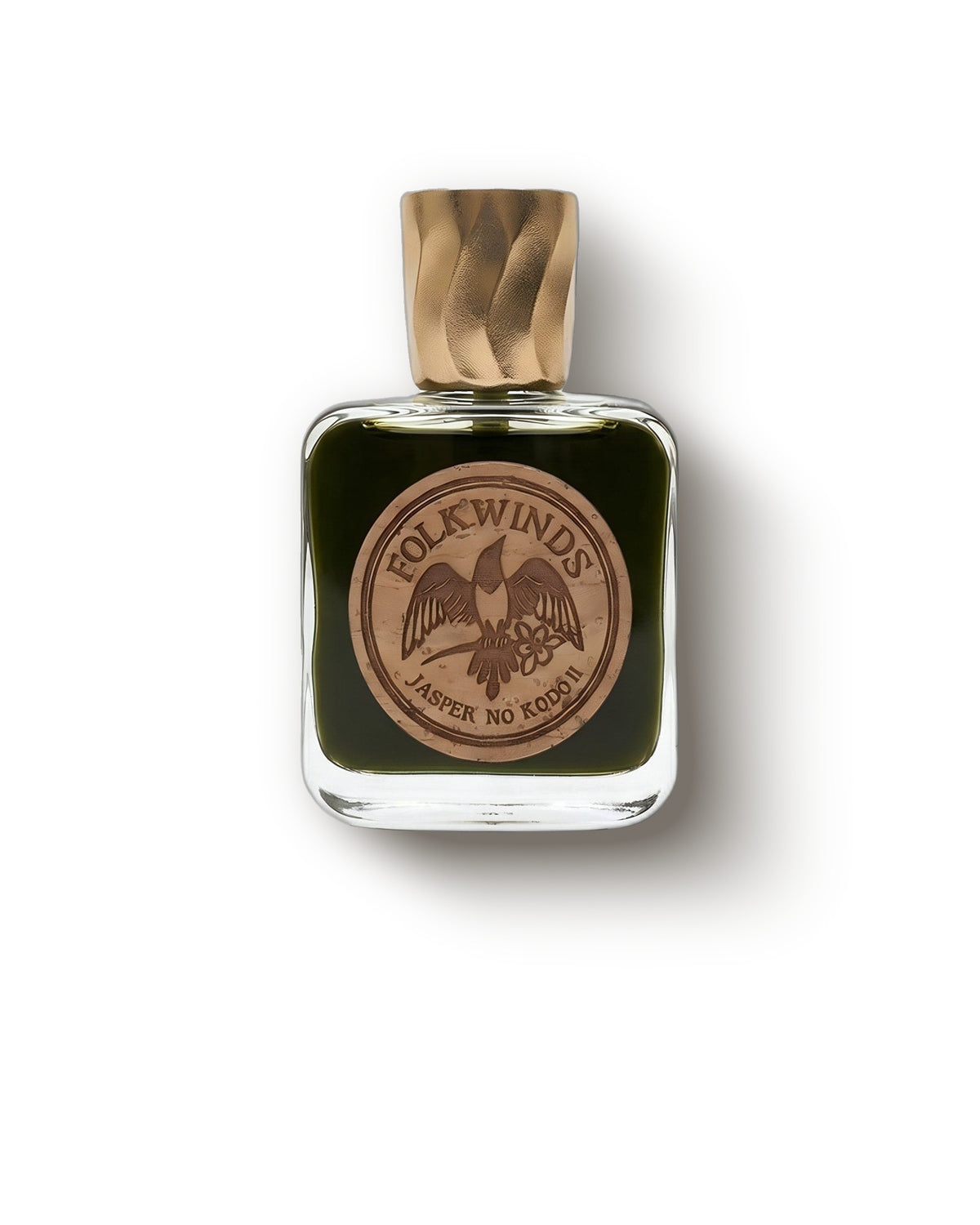
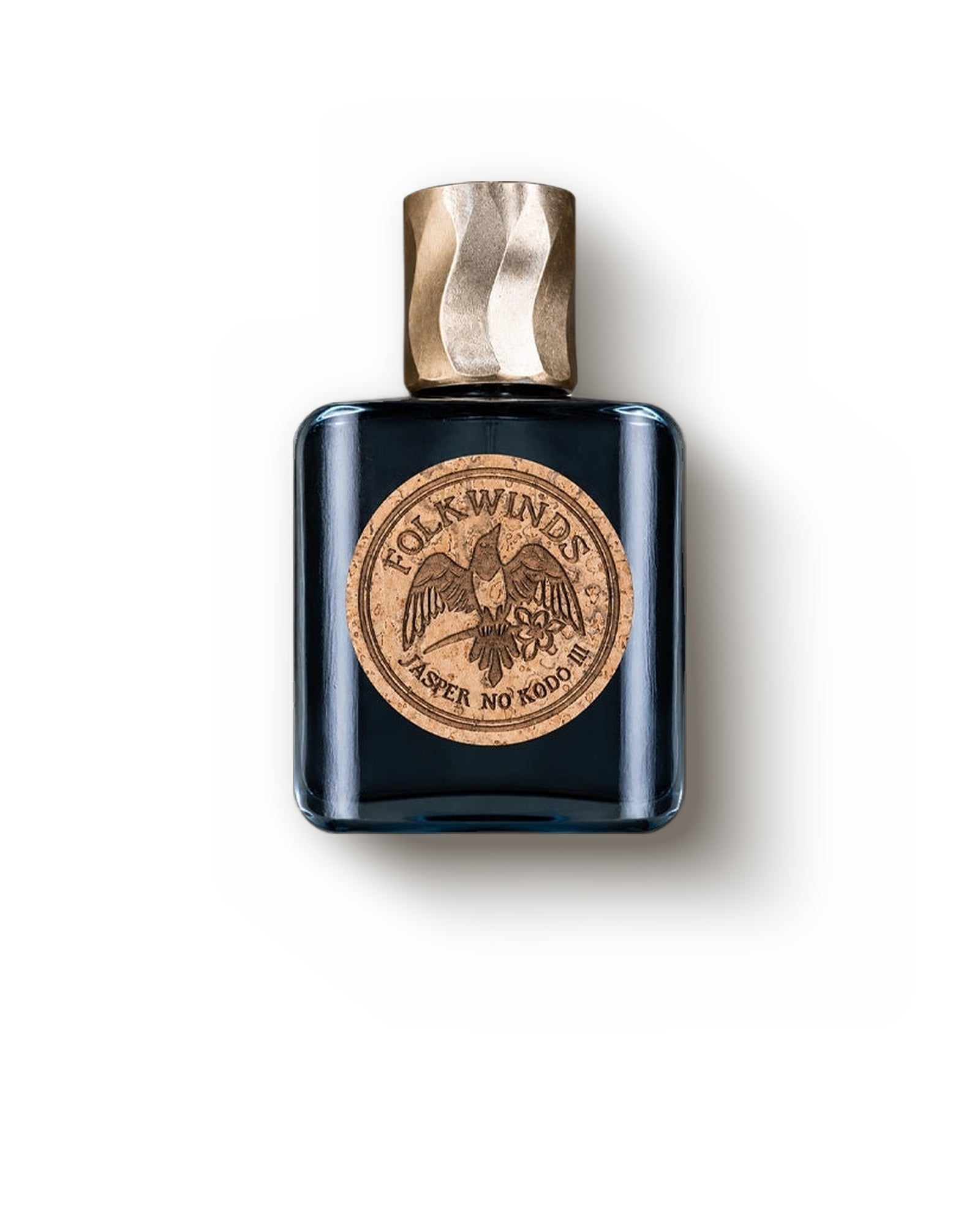
More by this noseJasper No Kodo 2Jasper no Kodō IIIDevil's Garden
The Maison

Natural perfumery built mostly on American materials, many of them co-extracted.
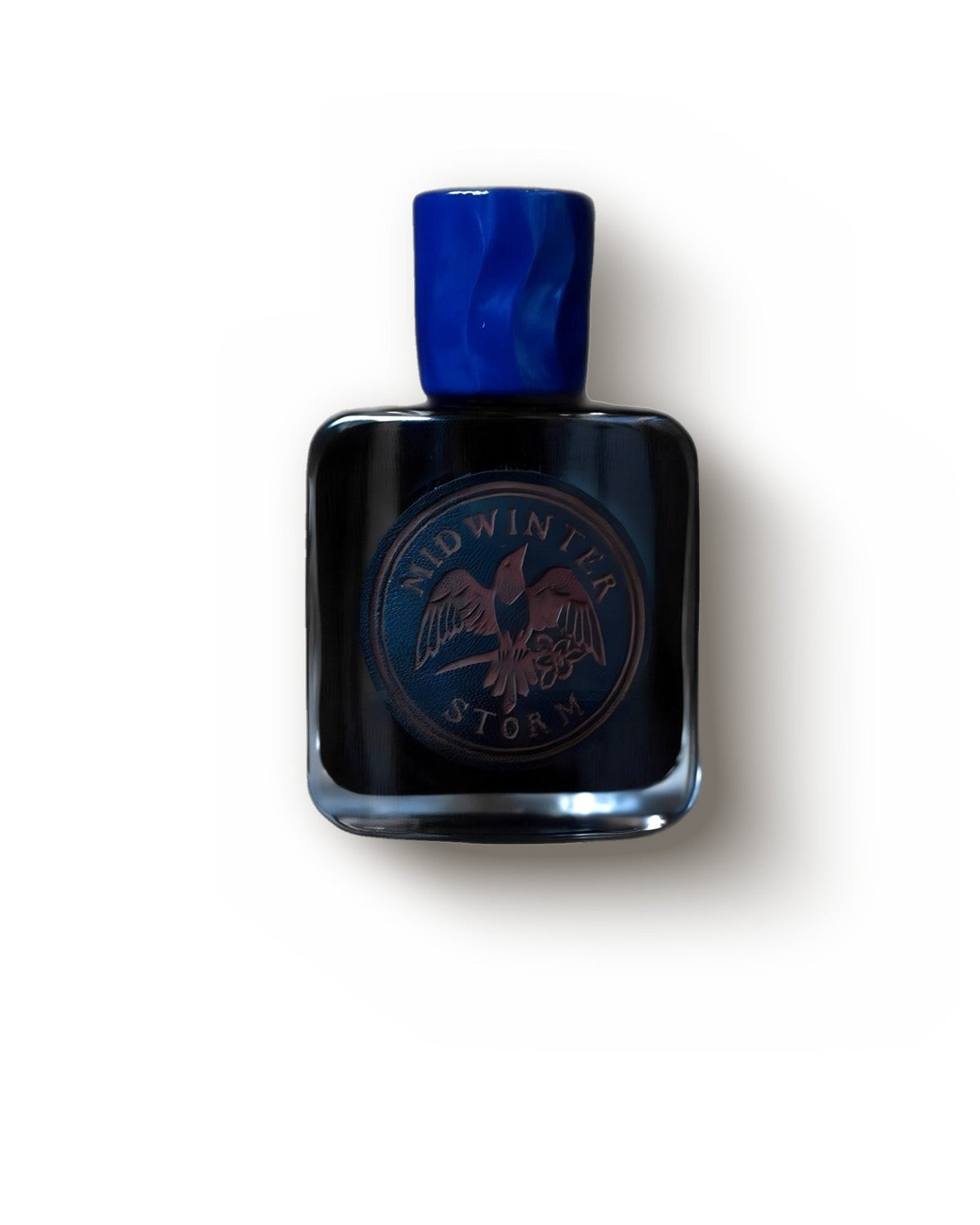
Folkwinds smells like the edge of a forest after weather has moved through it. Formulas over 90% natural, from white ambergris and deer musk to floral absolutes and sandalwood, leaning strange and beautiful rather than polite. Expect fermented fruit, cold resins, damp bark, smoke, and orris so dense it reads as a texture instead of a note. Some scents return as numbered reworkings, like Jasper no Kodō II and III, and others are fixed limited editions, like Midwinter Storm at 50 bottles.
- Known for
- American-sourced naturals, co-extractions, agarwood

EVERY DECANT
From the original bottle to your door
We buy the original flacon at full retail price, direct from the house.
A medical grade Socorex syringe takes the exact millilitres straight from the flacon.
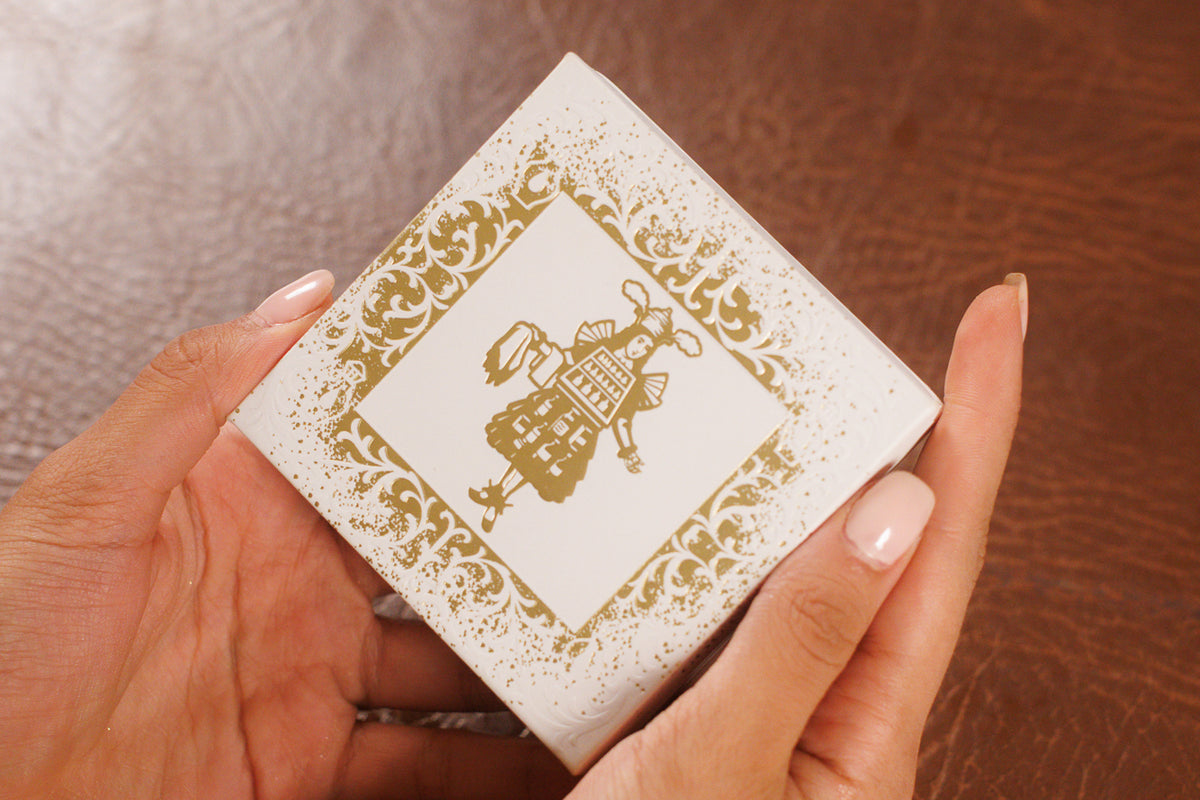
Packed into the hot foiled box and handed to DHL, every duty already paid. How a decant is made
More from Folkwinds
You may also like