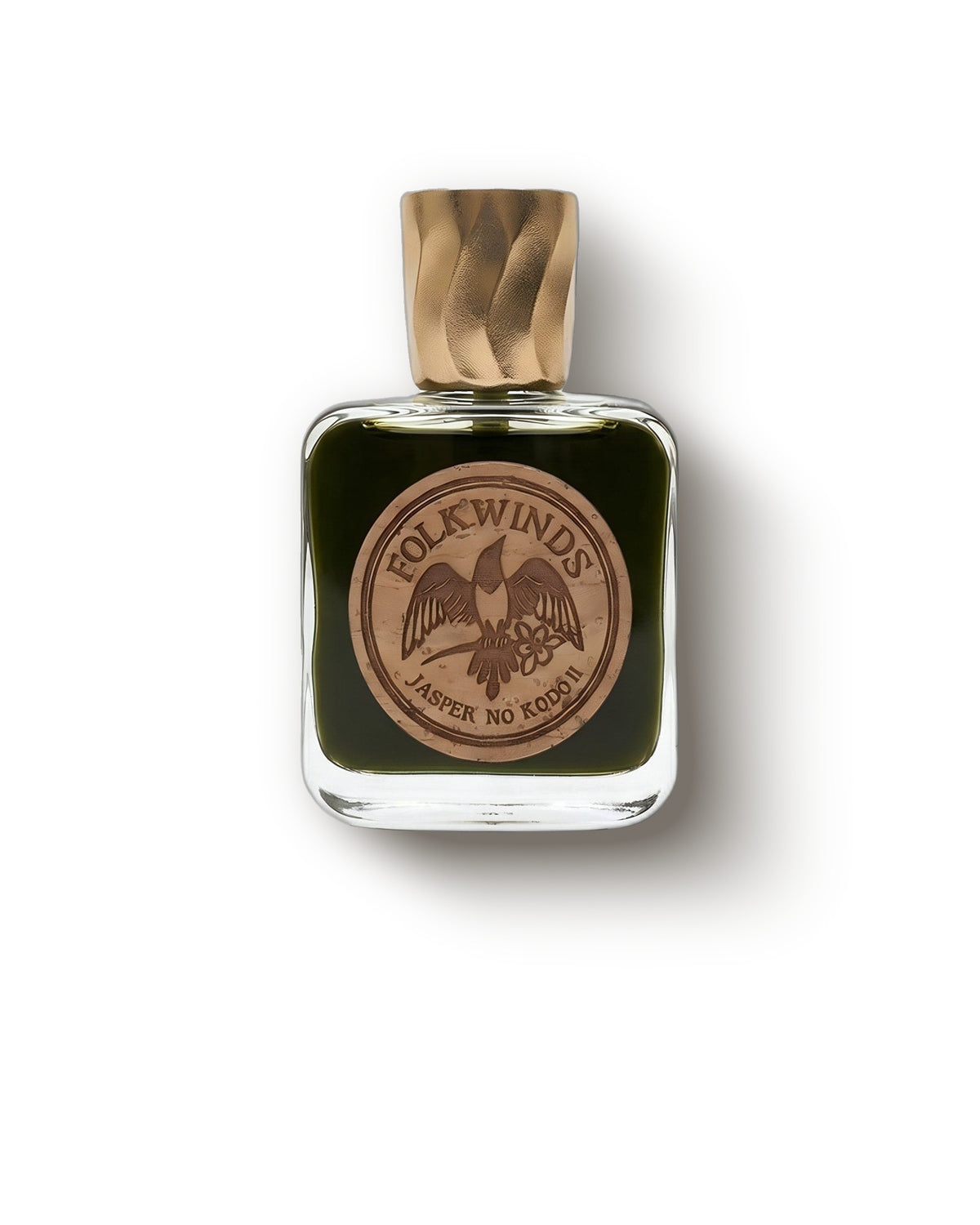

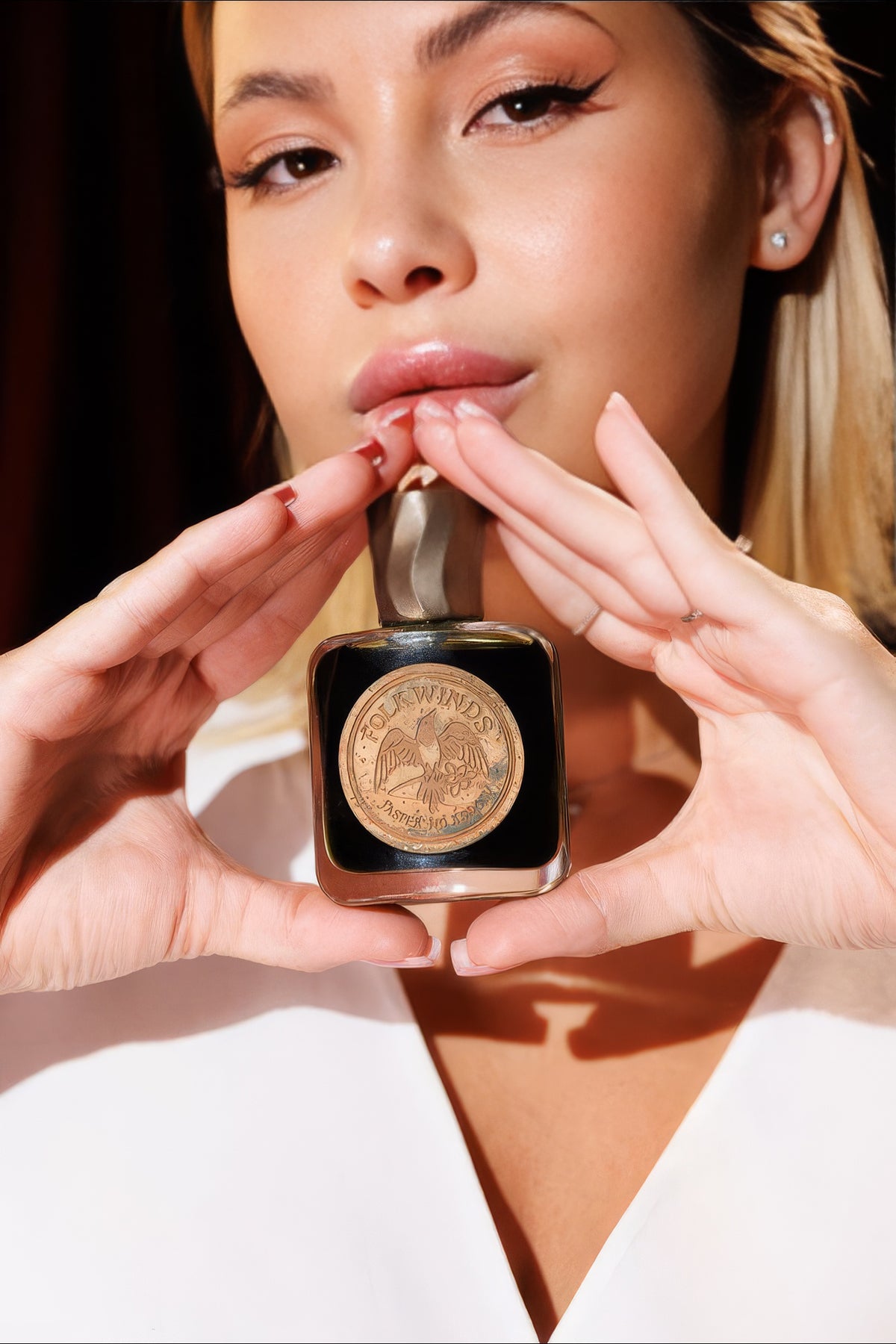
Folkwinds
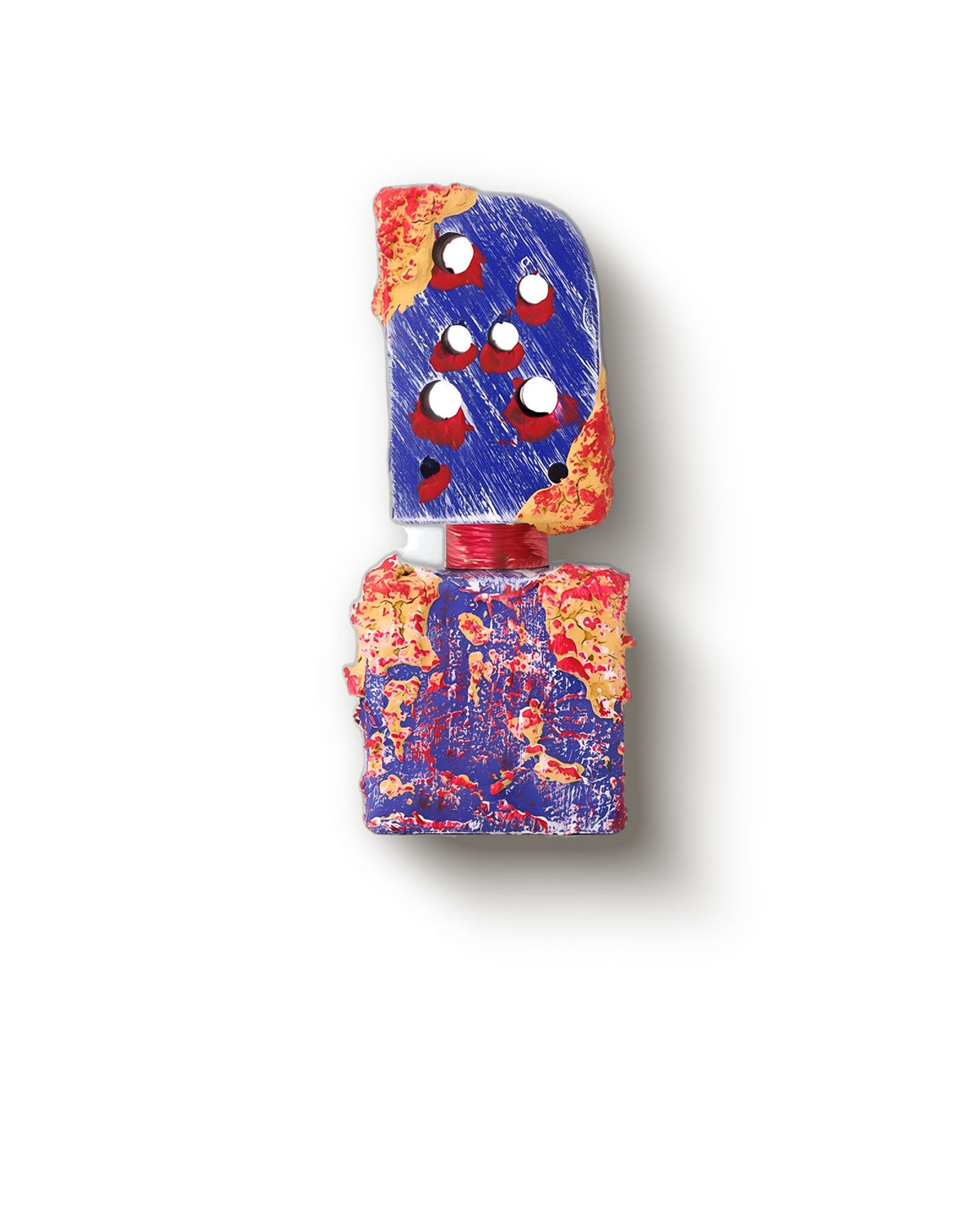
Jasper No Kodo 2
The Story
Jasper no Kodō II is the second pass at the house's Rockies perfume, a mountain-meadow scene built around agarwood, with blackberry, copal and palo santo over cold air off the trees. Against the first, it turns up five things: more blackberry, more oud, more blue water lily, more Mysore and more white ambergris.


Woody
Dry grain of cut timber
The smell of cedar shavings, sandalwood, and dry vetiver roots, a sanded, resinous warmth with a faint pencil-box rasp. It feels grounded and composed, the quiet backbone that makes a scent read as serious and lasting.


Amber
Resin warmed until it goes sweet
Labdanum, benzoin and vanilla melted together into something sweet but dusky, like tree sap gone soft in the sun with a thread of incense smoke through it. Amber does not sparkle or shout. It sits close to the skin and gives off heat for hours.


Aromatic
Crushed herbs in cool air
The green, camphorous coolness of lavender, rosemary, sage, and thyme, like herbs bruised between the fingers. It feels clean, invigorating, and a touch austere, the crisp backbone of a classic barbershop freshness.


Fresh Spicy
Cool bite of cracked pepper
Pink pepper, cardamom and ginger, spice that prickles rather than warms. It fizzes near the top of a fragrance, dry and faceted, closer to crushed peppercorns and a split cardamom pod than to anything simmering in a kitchen. Bright, never comforting.


Sweet
Warm sugar you cannot quite name
Caramel, honey, spun sugar: sweetness that hovers between all three and never settles on one. This is the gourmand pull, the thing that makes someone lean in closer than they meant to, warm and soft and a half step short of edible.


Fruity
Peach skin, not lemon peel
Peach, pear, apple, berry: this is sweetness in the flesh rather than the rind, dewy and nectar-heavy where citrus is sharp and thin. It plays young and slightly greedy, the sort of ripeness you can almost feel running down a wrist.


Blackberry
Bramble fruit, violet-dusted and slightly wild
What it is
No single molecule smells of blackberry, and the fruit's own aroma is so faint and so water-loving that extraction returns nothing. Every blackberry note is several materials leaning on each other until the shape appears.
How it smells
Dark and cooked-down sweet, with violet powder underneath and a green scratch of bramble leaf over the top. It is the hedgerow rather than the punnet: sun-warm fruit, dust, and a little thorn.
In perfumery
It gives fruity florals and chypres a dark juiciness that stops sweetness turning to candy, and its powdery side bridges fruit and moss. Aroma-chemical builds do nearly all commercial work; botanical ones stay rare and artisanal.
Good to know
The naturals route gets there sideways, through blackcurrant bud absolute cut to almost nothing, davana and osmanthus. None of them is blackberry. Read the ingredient list all you like; it will not tell you which route was taken.


Fir
A cold forest breathed in at first light
What it is
One name, two materials. The needles and young twigs steam-distil into a clear, sappy oil; the same needles and twigs, taken with solvent, give a dark, sticky fir balsam absolute. Balsam, silver and Douglas fir all answer to the name.
How it smells
The distilled oil is green and resinous, sappy almost to fruit: crushed Christmas-tree needles in the hand. The absolute goes deeper and sweeter, jammy, intensely balsamic, warmed with coumarin and a wisp of smoke, and it lasts.
In perfumery
Distilled fir works top to heart, the absolute anchors the base, and between them they build forest, fougere and aromatic-woody accords. It sits well with cedar, lavender, oakmoss and incense, and carries dense coniferous work like Slumberhouse Norne.
Good to know
Douglas fir is not a true fir, and smells it: brighter, closer to citrus. Balsam fir has the odder history: bark blisters yielding Canada balsam, the glass-clear cement that mounted microscope slides because it bends light like glass.


Copal
Bright citrus incense, smoky sacred resin
What it is
Given long enough, this would be amber. Copal is fresh resin, tapped from torchwood trees across Mexico and Central America, hardening on the bark into pale tears that are burned whole or extracted for perfumery.
How it smells
Lighter than frankincense and much brighter, with a citrus-pine sparkle over soft sweet wood. White grades come out almost lemony; the darker oro runs warmer and faintly smoky. Set alight it turns clean and piney, then vanishes fast.
In perfumery
Its job is transparency. Copal works in the heart and base beside palo santo and dry woods, keeping a ceremonial smoke accord airy where the heavier resins would turn it dense.
Good to know
The Maya and the Aztec burned copal as an offering and it still smokes in ceremonies today, millennia later. The word itself is Nahuatl: copalli, incense.


Palo Santo
Sacred wood smoke, sweet and resinous
What it is
A dry-forest tree of Ecuador and Peru whose living wood gives almost nothing. Only after it falls and seasons on the forest floor for four to ten years does the heartwood turn fragrant, and that wood is distilled.
How it smells
Lemon and mint on top, oddly bright for a wood, then a warm sappy heart somewhere between frankincense and sandalwood. The end is dusty and balsamic with smoke drifting through it.
In perfumery
Few materials carry citrus and wood in the same breath, so perfumers use palo santo as a bridge: bright on top, resinous underneath. It sits naturally beside frankincense, cedar and labdanum.
Good to know
Nobody may cut a living one for oil. Peru's forestry authority permits only naturally fallen or dead wood, and synthetics increasingly stand in for the natural material.


Juniper Berries
Resinous blue cones that breathe gin and pine
What it is
It is not a berry. Juniper's blue-black beads are cones on an evergreen, and they ripen over two or three years, green and ripe sharing one branch. Dried and steam-distilled, they give the oil that flavors gin.
How it smells
Crisp and dry: green needles, cracked pepper and a cold turpentine bite over something balsamic. The opening is gin in a glass, almost minty, before it settles into woody, camphorous resin with a faint sappy sweetness underneath.
In perfumery
A top-to-heart note that cools a blend down. Fougeres, chypres and aromatic colognes lean on it for herbal snap, usually alongside lavender, vetiver, cardamom and citrus, where it keeps the sweetness dry and the opening bracing.
Good to know
Only the female bushes bear cones, so half of any stand is no use to a picker. Long before gin, juniper branches were burned as a fumigant in plague-era hospitals and sickrooms, trusted to clean the air.


Hemlock
A harmless conifer with a poisoner's name
What it is
The tree, not the poison. Perfumery hemlock means Tsuga, a slow-growing evergreen of eastern North American forests; the oil is steam-distilled from its needles and young twigs.
How it smells
Pine, fir and spruce rolled into one round green scent, softer than most needle oils. A fruit note runs through it, close to apple, over damp moss and a mild sweetness. Forest air, not a scrubbed floor.
In perfumery
A middle-to-base note that puts real trees into a woodland or winter composition. It sits well with cedar, fir balsam, vetiver and citrus, and gives fougeres and chypres an open-air edge.
Good to know
The name is an accident. Early colonists crushed a handful of Tsuga needles, thought they caught the smell of the herb that killed Socrates, and the label stuck. The two plants are unrelated and the conifer is harmless.


Boronia
The Australian flower that smells of violets and hay
What it is
Nodding brown-purple cups, yellow inside, on a small shrub from the far southwest of Australia. Boronia sits in the citrus family and smells nothing like it. Nearly all material now comes from Tasmanian plantations, solvent-extracted to an absolute.
How it smells
Green and cassis-like on opening, dry with the sweetness of cut hay. The heart is powdery and violet-like, closer to orris and black tea than to any garden flower. Neat it overwhelms. Heavily diluted, it becomes legible.
In perfumery
Only a handful of flowers carry ionones in the extract itself, which is why boronia reads as violet and orris with neither present. Used in traces, it lifts the flowers around it and gives depth rather than a declared note.
Good to know
Few floral materials cost more. The flowers open for a few weeks in the southern spring, the yield is tiny, and world production stays small. Synthetic ionones copy the violet heart but not the cassis and hay around it.


Green Kyen Agarwood
The green grade at agarwood's summit
What it is
Kynam, known as kyara in Japan and kinam across the trade, is the tiny top tier of agarwood, a fraction of a percent of what the Aquilaria tree produces. Vietnamese tradition sorts it by colour, and the old proverb ranks them first white, second green, third yellow, fourth black. Green kynam is the second grade, distinguished by very high oil content and wood soft and sticky enough to curl when it is pared.
How it smells
Cool and sweet rather than funky, with a sappy, almost mentholated brightness over clean honeyed resin. It reads as cold temple incense and lacquered wood, with a green edge on top and a soft, meditative sweetness that lingers. Everything most people associate with the word oud is absent.
In perfumery
Used in microscopic quantity, valued for refinement and longevity rather than projection. Its cooling sweetness keeps dense oriental compositions from turning heavy, and it sits beautifully with rose otto, orris and soft musks. At this tier the material is treated less as a note than as the spine of a fragrance.
Good to know
Kynam is graded on the character of its resin, not on density, so plenty of ordinary sinking-grade wood is not kynam at all. Genuine green kynam is effectively unrepeatable batch to batch, and the word is applied far more often than the material warrants; provenance and the seller's reputation are the only real protection.


Lotus
Cool pond petals, long painted in Egyptian tombs
What it is
Two flowers answer to the name: the pink lotus of Asia and the blue water lily of the Nile, both rooted in pond mud. Neither yields much oil, so nearly every lotus you meet is a reconstruction.
How it smells
Cool and watery, petals over still water. The pink reads clean and rosy-green; the blue goes deeper, heavier, almost wine-like. Reconstructions add cucumber and melon, which is why the note often feels like air off a pond.
In perfumery
It works as a fresh floral heart, thinning out heavy white florals and putting daylight between woods. Ozonic marine molecules and green cucumber materials do the building. Nearly every spa-clean aquatic leans on it.
Good to know
The Egyptians held blue lotus at their banquets and painted it through their tombs as rebirth: the bloom opens each morning, closes by mid-afternoon, and returns with the next sun.


Narcissus
Hay, honey and a green animal hush
What it is
Forget the bright daffodil on a windowsill. This absolute comes from the poet's narcissus, combed by hand off high meadows on France's Aubrac plateau during a few weeks of late-spring bloom.
How it smells
Green and heady at once: bruised petals, fresh hay, a curl of tobacco, and an indolic sweetness that reads almost fecal. It opens grassy, then turns earthy, leathery and mossy. Darker and stranger than any daffodil should be.
In perfumery
In the heart it deepens chypres and florals with hay and moss, sitting well beside jasmine, oakmoss, immortelle and leather. Its black animalic streak is what anchors the darkest vintage florals.
Good to know
Yield is tiny and the harvest window is weeks, which puts it among the costliest florals. The name probably comes not from the Greek youth at the pool but from narke, numbness, for the head-spinning scent.


Gardenia
Creamy white bloom with a mushroom heart
What it is
A glossy evergreen of the coffee family, out of China and Japan, carrying waxy white flowers that refuse to give up their oil. So perfumers read the living bloom's air and rebuild it from jasmine, tuberose and aroma-chemicals.
How it smells
Lush and creamy, jasmine sweetness laid over tuberose richness, opening with a green, almost buttery freshness. At the core sits the strange part: a mushroom-and-coconut facet, fleshy and faintly savory, that keeps the sweetness from turning candied.
In perfumery
Perfumers use it in the heart, where it brings velvety body to white-floral and tropical compositions. It pairs with tuberose, ylang-ylang, jasmine and coconut, and stars in soliflores built entirely around the bloom.
Good to know
A true gardenia absolute barely exists commercially: the flower yields too little to extract economically, so nearly every gardenia note is a reconstruction. The gardenia you smell has almost certainly never been near a gardenia.
Wild White Malinau


White Ambergris
Salt, skin and driftwood, bleached pale
What it is
White is where the journey ends. A waxy mass forms in the gut of a sperm whale, drifts for years, and sun and saltwater bleach it from black toward dusty white, oxidizing near-odorless ambrein into something fragrant.
How it smells
Soft, sweet and marine, the most rounded of the grades. Clean skin, warm musk, tobacco and sea air over a velvety mineral sweetness. Whatever fecal edge the fresher, darker pieces carry has weathered out of it.
In perfumery
Used as a tincture, it works less like a note than like a light behind the others, adding warmth, diffusion and a skin-close glow while making everything around it last. Ambroxan now reproduces the core of that effect.
Good to know
Nothing is taken from a whale: every piece is picked off a beach, often years after it was expelled. The law does not always follow that logic, and the United States bars the trade outright.


Oakmoss
The damp green soul of the forest floor
What it is
Not a moss at all, but a lichen, scraped off oak and other deciduous bark across temperate Europe, Russia and North Africa. Solvents turn the harvested growth into a dark, viscous concrete, then the absolute perfumers actually use.
How it smells
Wet stone, damp bark and something inky and leathery underneath, dry and faintly bitter. This is not fresh green: it is the cool floor beneath old trees after rain has soaked the ground.
In perfumery
The backbone of the chypre: a base note that gives a fragrance its shadow and its spine, classically under bergamot, beside labdanum and patchouli. Anything described as mossy, vintage or green-masculine is usually leaning on it.
Good to know
Oakmoss carries two allergens, atranol and chloroatranol, potent enough that the EU banned them from cosmetics outright. Perfumers use stripped grades now, but it was the earlier cap on the extract that changed how the classic chypre smells.


Pine Needle Absolute
Cold forest air with a turpentine bite
What it is
Snap a needle and you have most of it. Pine oil is steam-distilled from needles and young twigs across the northern forests; the absolute, pulled with solvent instead, comes out darker, greener and heavier.
How it smells
Cold, dry and resinous, with a green balsamic edge and a turpentine bite that turns medicinal. Sappy up top, like standing in a wood in January. It softens as it goes, ending sweeter and warmer than it began.
In perfumery
A top note for anything that has to smell like outdoors: woody-forest accords, fougeres, the bracing open air of an alpine theme. Lavender, cedar, fir and clean musks all hold it in place.
Good to know
Twentieth-century cleaning products ran on pine oil for its disinfectant power, and that is why a forest note also reads as a mopped floor. The nose gets both at once: wild woodland and household hygiene.


Jade Wood
Dry cypress with a warm-milk softness
What it is
There is no jade wood tree. The name belongs to the trade, and the oil behind it is steam distilled from white cypress pine, a conifer scattered across the dry Australian interior.
How it smells
Dry wood with an unexpected softness over it, lactonic, nearer warm milk than fresh sap. Balsamic underneath, barely sweet. Blue cypress is its closest relative on the shelf, with sandalwood and massoia bark somewhere behind.
In perfumery
From the base it works as a fixative, holding a composition together without announcing itself. Incense and smoke accords suit it, so does a place beside agarwood. It often stands in for blue cypress at lower cost.
Good to know
Australians know this tree as timber, not perfume. Its heartwood shrugs off termites, an effect traced to sesquiterpenes in the wood, and it gets milled into flooring and fence posts right across the country.


Green Sacra Absolute
Golden tears hardened on a cut trunk
What it is
A scored Boswellia bleeds a milky sap that hardens over weeks into golden tears. The sacra trees of Oman and Somalia give the most prized resin. Steam or solvent turns the tears into oil.
How it smells
Brighter than you expect from something called incense: cool, lemony, almost pine-fresh, with a peppery lift. Underneath it is dry and balsamic, and it ends in the warm dusty smoke you already know.
In perfumery
It does something odd for a resin: it makes heavy things lighter. Sitting in the heart and base, it opens up oud, labdanum and thick oriental accords, and gives rose a cool, quiet space to stand in.
Good to know
The trees are in trouble. Wild Boswellia stands are thinning under over-tapping, drought and grazing, and the long-term supply of a resin the world has burned for thousands of years is now a real question.
Wild Papuan Agarwood
Resinous heartwood that perfumers call liquid gold
What it is
Agarwood is the dark, resin-soaked heartwood that Aquilaria trees produce only after a wound or mould infection triggers their defence. The fungus-fighting oleoresin saturates the wood over years, and steam or hydro-distillation draws it into oud oil. Real distilled oud is among the costliest materials in perfumery, sold by the gram.
How it smells
Living and shifting rather than fixed: smoke, animal warmth, damp forest floor, leather and incense braided together. Sesquiterpenes carry an almost fermented depth while chromones lend leathery sweetness. It breathes on skin, moving from barnyard funk through balsamic resin to a quiet, meditative woodiness.
In perfumery
True agarwood oil is the spine of Arabian attars and the prize of all-natural artisan houses, who distill it themselves. CITES protection and ruinous cost mean most commercial perfumes labelled oud instead lean on a synthetic accord.
Good to know
Profile changes radically with origin, tree species, fungus and ageing, which is why oud is discussed like wine terroir. Grades climb from plantation oils to wild double-superior batches, peaking at kyara, the rarest and most prized grade once reserved for emperors and temple incense. Aquilaria and Gyrinops sit in CITES Appendix II under Annotation 14, which exempts finished products packaged and ready for retail trade; the exemption expressly does not reach wood chips, beads, prayer beads or carvings, which still travel on CITES documents.
Fragrance Character
The top is fruit and conifer at once, crushed blackberry against cold fir and juniper berries, sharpened by the incense breath of copal and palo santo with boronia humming apricot underneath. In the heart, agarwood rises through gardenia, jonquil and lotus, the florals cool and watery rather than sweet. Then it settles and stays: ambergris and jade wood over damp oakmoss and pine needle absolute, salt-lit, enormous, and still going ten hours later.


Longevity
how long it stays on skin
The hourglass reads wear time: how many hours the fragrance keeps speaking before it fades. A bar that barely leaves the start means a few fleeting hours. One that runs the full length carries from morning into evening. Treat it as typical, not promised. Oily skin holds scent far longer than dry.


Sillage
the size of its scent trail
Sillage is French for a ship's wake, and that is exactly what this measures: how much of the scent reaches the room instead of staying on you. Low is a whisper only close friends catch. Enormous fills the room, then keeps filling it after you leave.


Experimental
Built to provoke, not to please
Some perfumes are made to be liked. These are made to be argued about: inky tar, hot rubber, fruit on the turn, metal and fur where you expected flowers. The coin glows for a scent that provokes and dims for one that plays it safe, which is sometimes the point.


Office
Polished, and never louder than the room
Scent is manners in a shared room. At this range it should reach the person across the desk and stop there: tidy citrus, soft musk, pale woods, all of it reading competent and considerate. A glowing coin means nobody has to mention it. A dim one means it travels.


Evening
After dark, when it deepens
Dinner, drinks, the night that runs long. Low light is where ambers, resins and smoky woods stop being polite, and where a plush floral finally blooms. A glowing coin means it is waiting for exactly this hour. A dim one means it did its best work in daylight.


Romantic
Close enough to be felt
A fragrance can hum against skin instead of announcing itself across a table. That is the register here: creamy florals, vanilla, soft musk, a thread of spice, warm enough to make someone lean in. The coin glows when a scent sets that mood and dims when it is more practical than seductive.


Formal
Quiet authority in a dressed-up room
A wedding, a ceremony, a room where everyone has thought about their shoes. What works here is structure, not volume: smooth woods, disciplined florals, soft leather. A glowing coin means it holds its posture all evening. A dim one means it is too casual for the room.


Casual
Easy comfort for unhurried days
Errands, coffee, a slow Saturday with nowhere to be. Nothing here has to impress anyone, so the fit is soft and easy: fresh citrus, light woods, a little warmth off the skin. A glowing coin says yes to all that. A dim one means the fragrance is asking for a bigger night.


Day to Night
where its mood naturally falls
A bar running from sun to moon, reading the hour the fragrance was made for. The more of it that stays gold, the more the scent belongs to daylight and open air. The further the blue reaches back toward the sun, the deeper and warmer it turns: evening, candlelight, low rooms.


Winter
Warmth that carries through cold air
Cold air mutes a fragrance and slows it down, which is why winter belongs to the dense and the warm: resin, smoke, vanilla, leather, ambered spice. The bar reads how well this one pushes back, glowing against the chill instead of thinning out in it.


Spring
Fresh blooms in mild, rising warmth
Mild, humid air lifts a light composition, so the season belongs to dewy florals, green stems, soft powder and citrus you can see through. Alive rather than heavy. The further the green runs along the bar, the more comfortably this one wears in that weather.


Summer
Bright and airy in real heat
Heat does the projecting for you, which is why the wrong perfume turns unbearable by noon. What survives is cool and breathable: sharp citrus, salt air, aromatic herbs, water. Things that refresh instead of cloy. A short bar here means save it for cooler months.


Fall
Spiced warmth for cooling days
As the air cools, the rich materials stop smothering and start reading clearly: dry woods, warm spice, tobacco, amber, fruit gone golden. It is the season perfume turns contemplative. The bar fills according to how naturally this one settles into crisp, cooling days.
Best Worn
Crisp winter and early spring days, worn for the ease of an ordinary afternoon outdoors, where blackberry and resinous fir settle into woods that feel right against the cold.
Choose options
The Vibe


The Nose
Jono Bornstein
Founder and perfumer
Founder and perfumer of Folkwinds, launched in 2022 to showcase North American aromatic materials. He works over 90 per cent natural and American sourced, on Folkwinds American Pharaoh, Folkwinds Cloud Illusions, Folkwinds Santi Ana, Folkwinds Jasper No Kodo and Folkwinds Smoke Jumping.
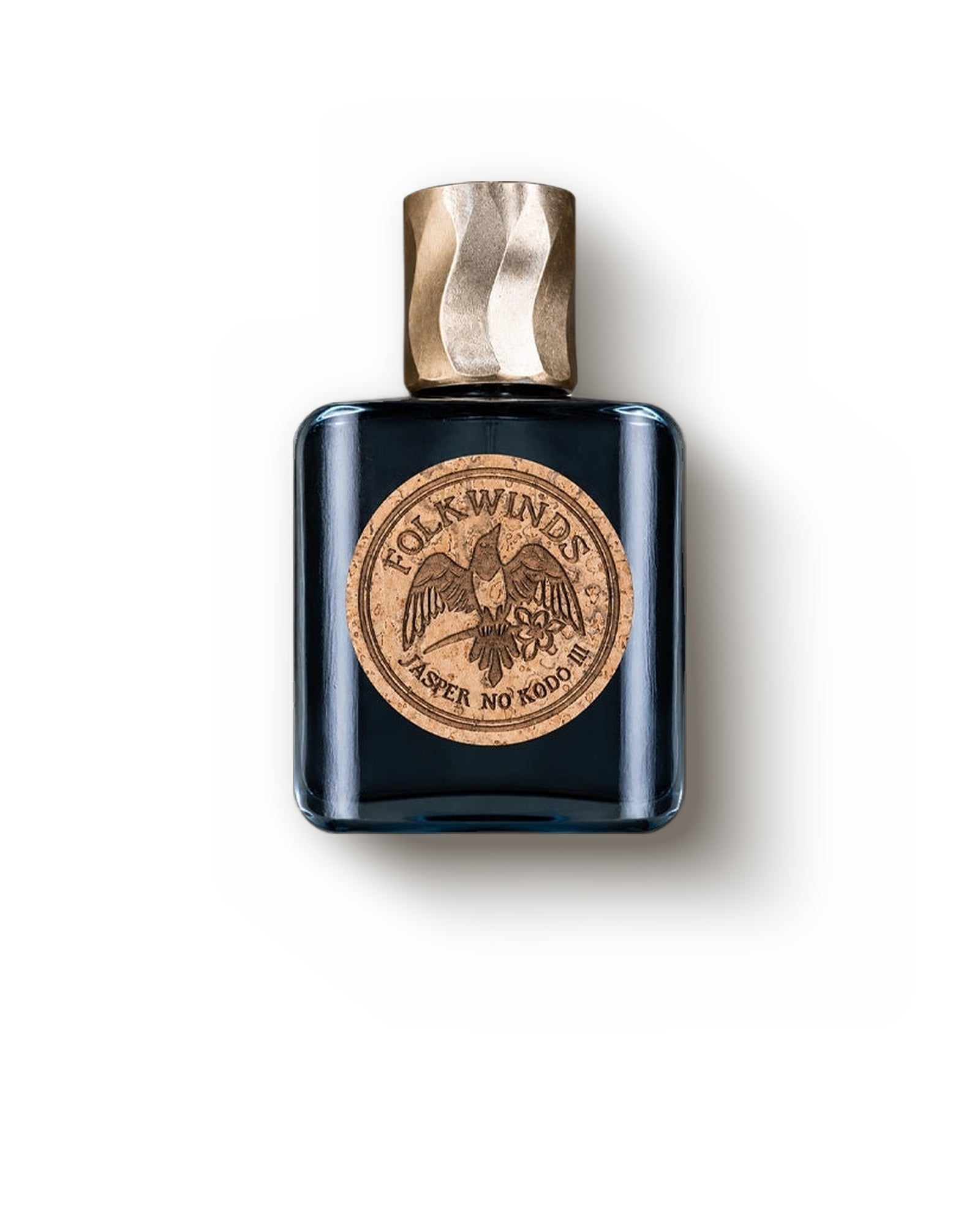
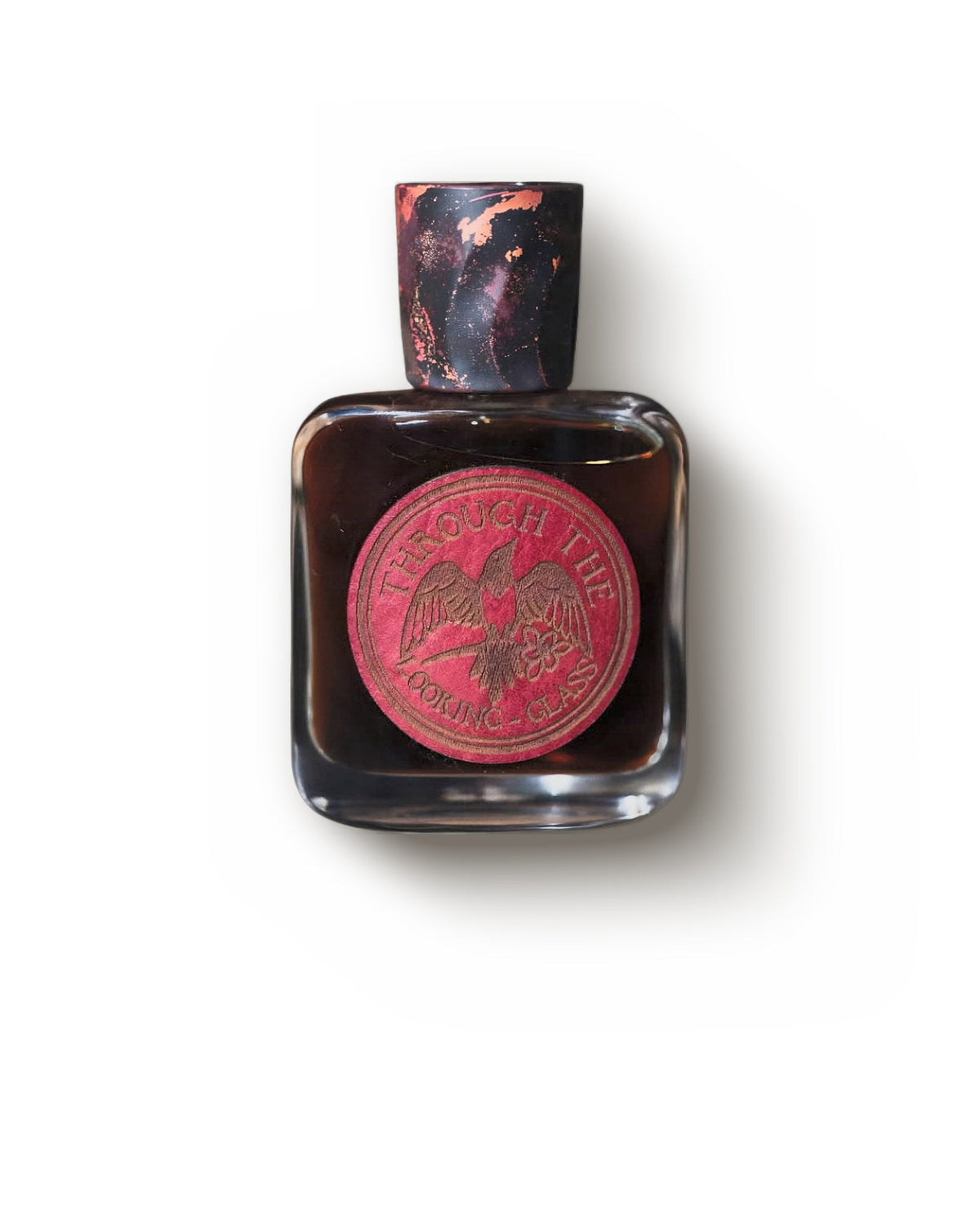
More by this noseJasper no Kodō IIIDevil's GardenThrough the Looking Glass
The Maison

Natural perfumery built mostly on American materials, many of them co-extracted.
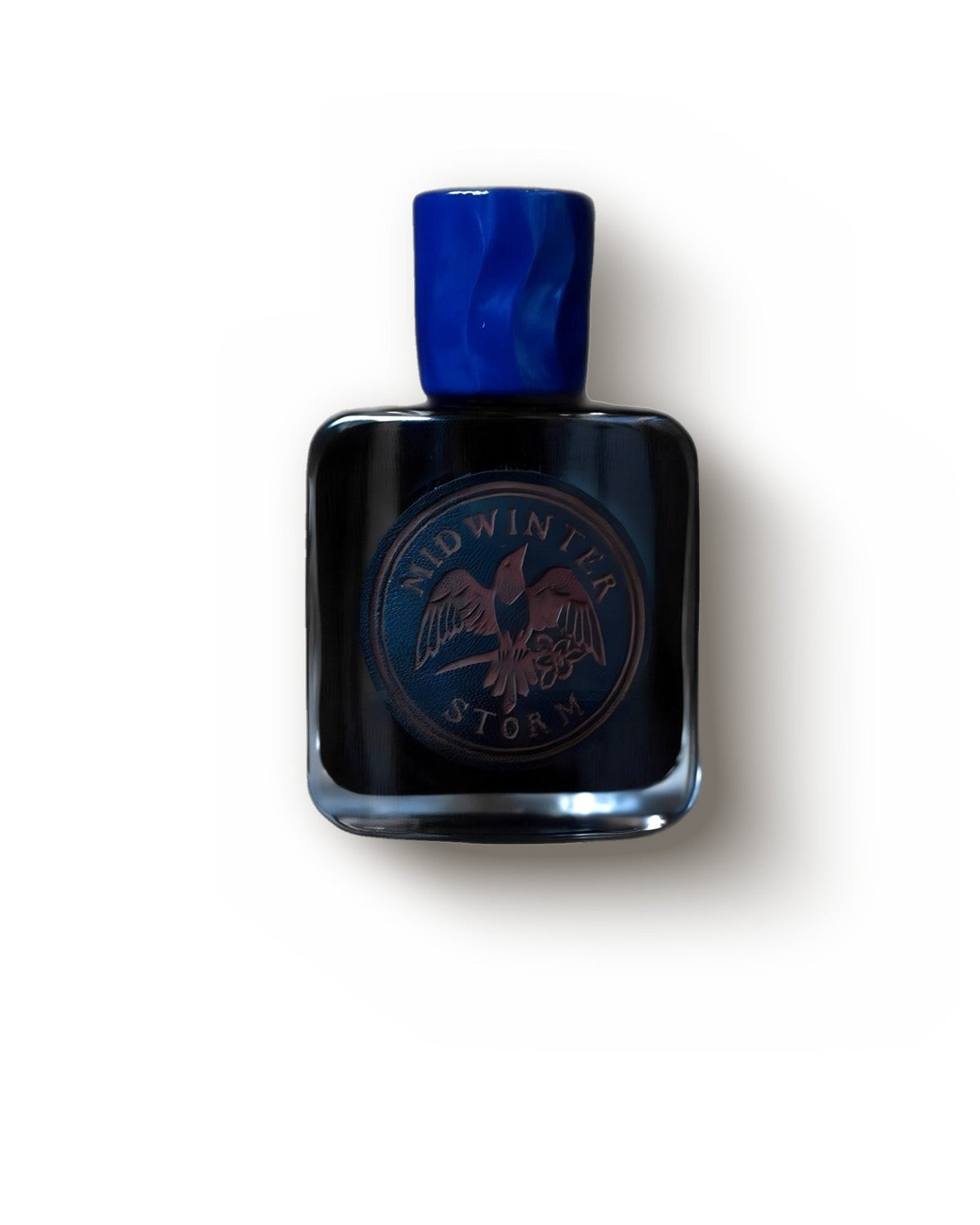
Folkwinds smells like the edge of a forest after weather has moved through it. Formulas over 90% natural, from white ambergris and deer musk to floral absolutes and sandalwood, leaning strange and beautiful rather than polite. Expect fermented fruit, cold resins, damp bark, smoke, and orris so dense it reads as a texture instead of a note. Some scents return as numbered reworkings, like Jasper no Kodō II and III, and others are fixed limited editions, like Midwinter Storm at 50 bottles.
- Known for
- American-sourced naturals, co-extractions, agarwood

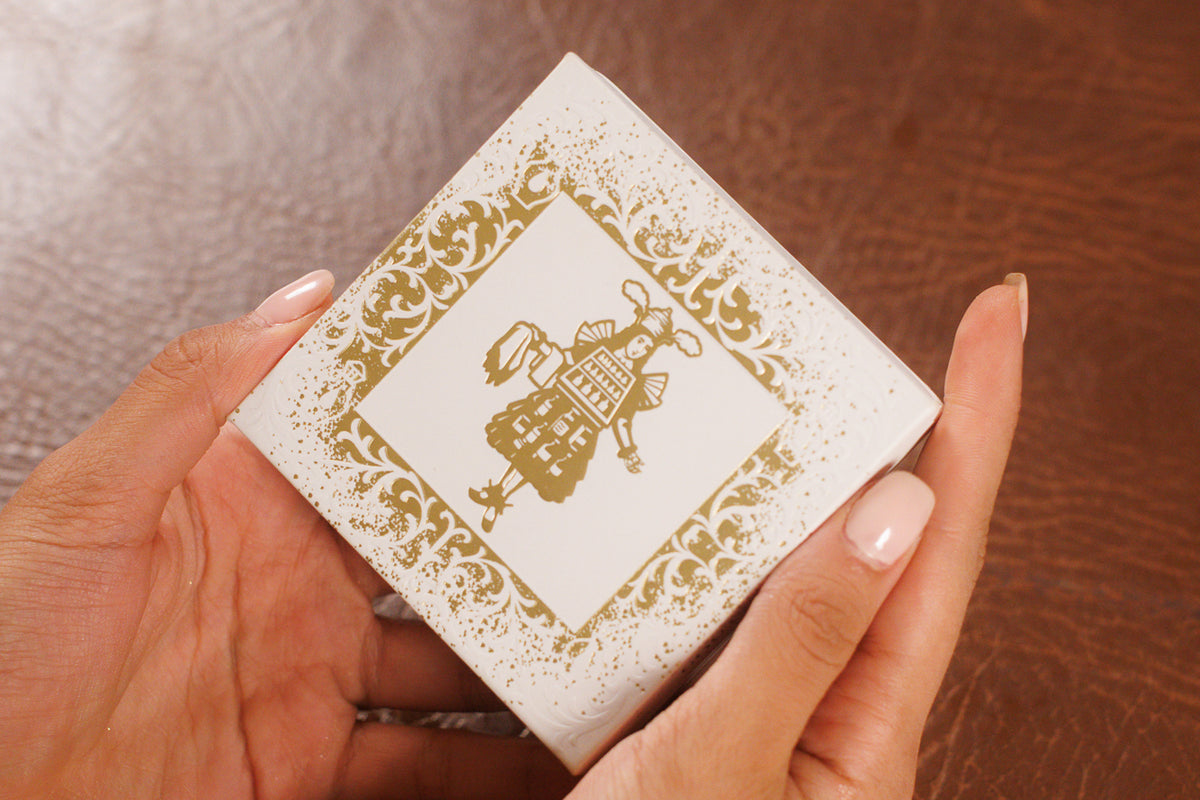
EVERY DECANT
From the original bottle to your door
We buy the original flacon at full retail price, direct from the house.
A medical grade Socorex syringe takes the exact millilitres straight from the flacon.
Packed into the hot foiled box and handed to DHL, every duty already paid. How a decant is made
More from Folkwinds
You may also like