
Zoologist
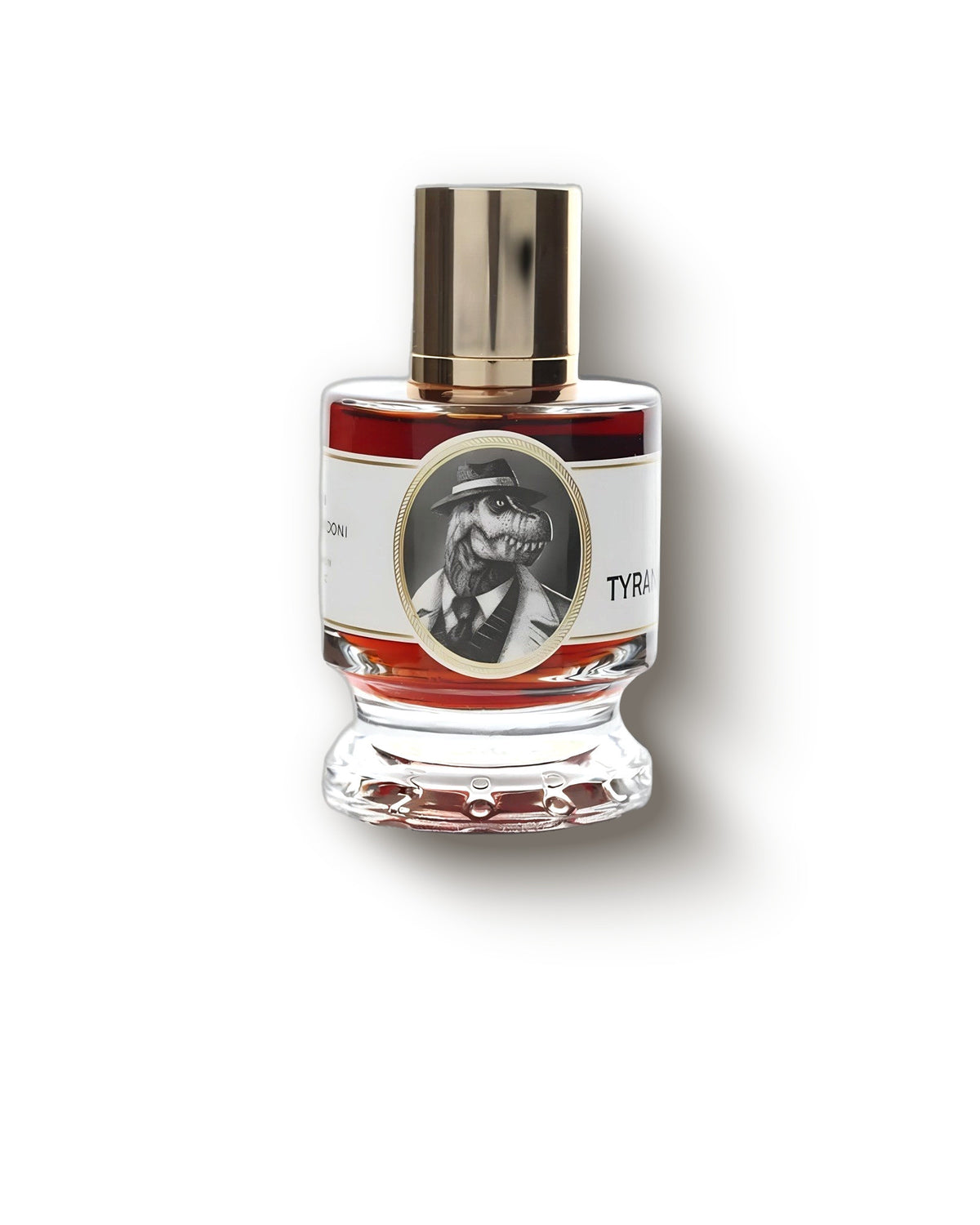
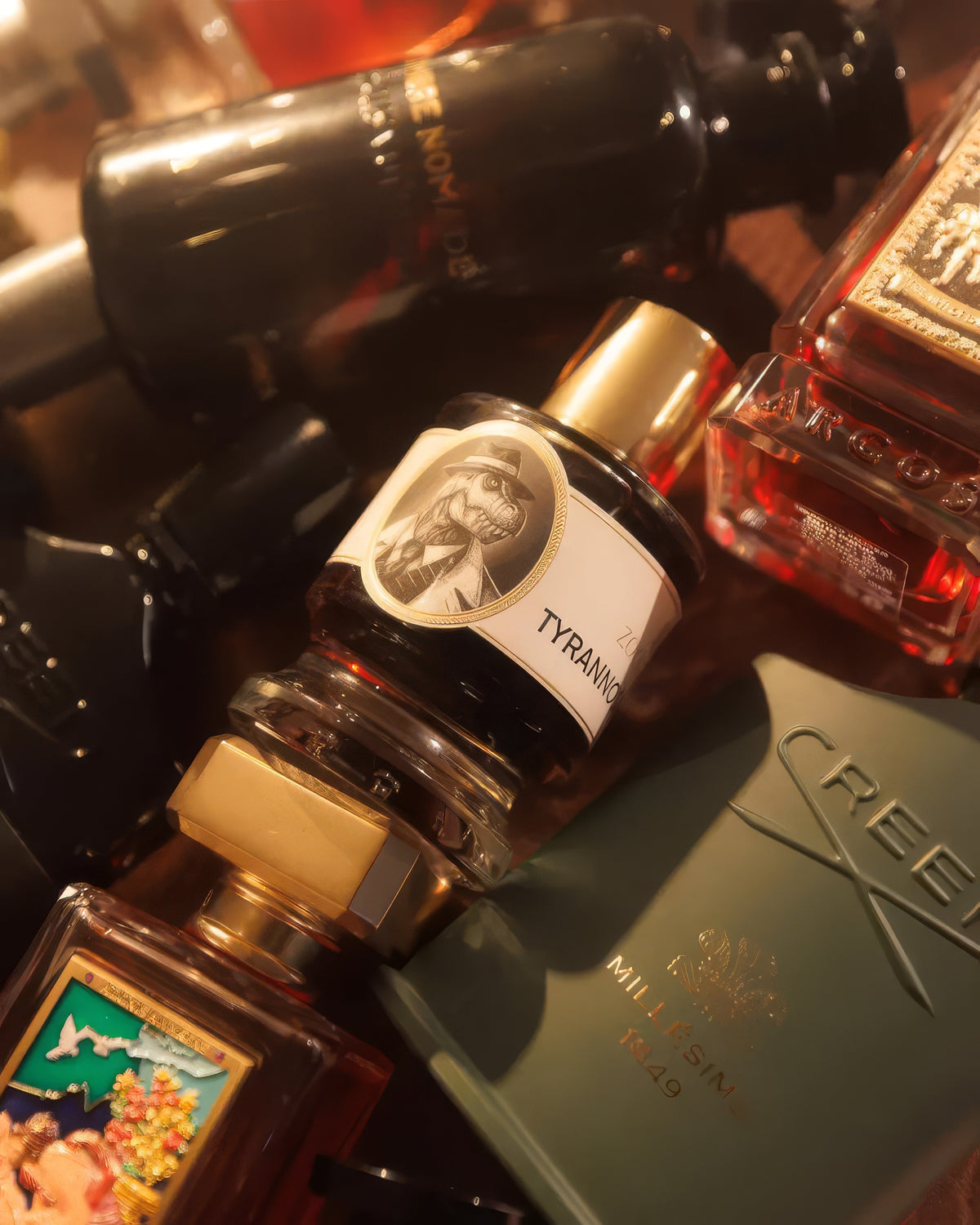
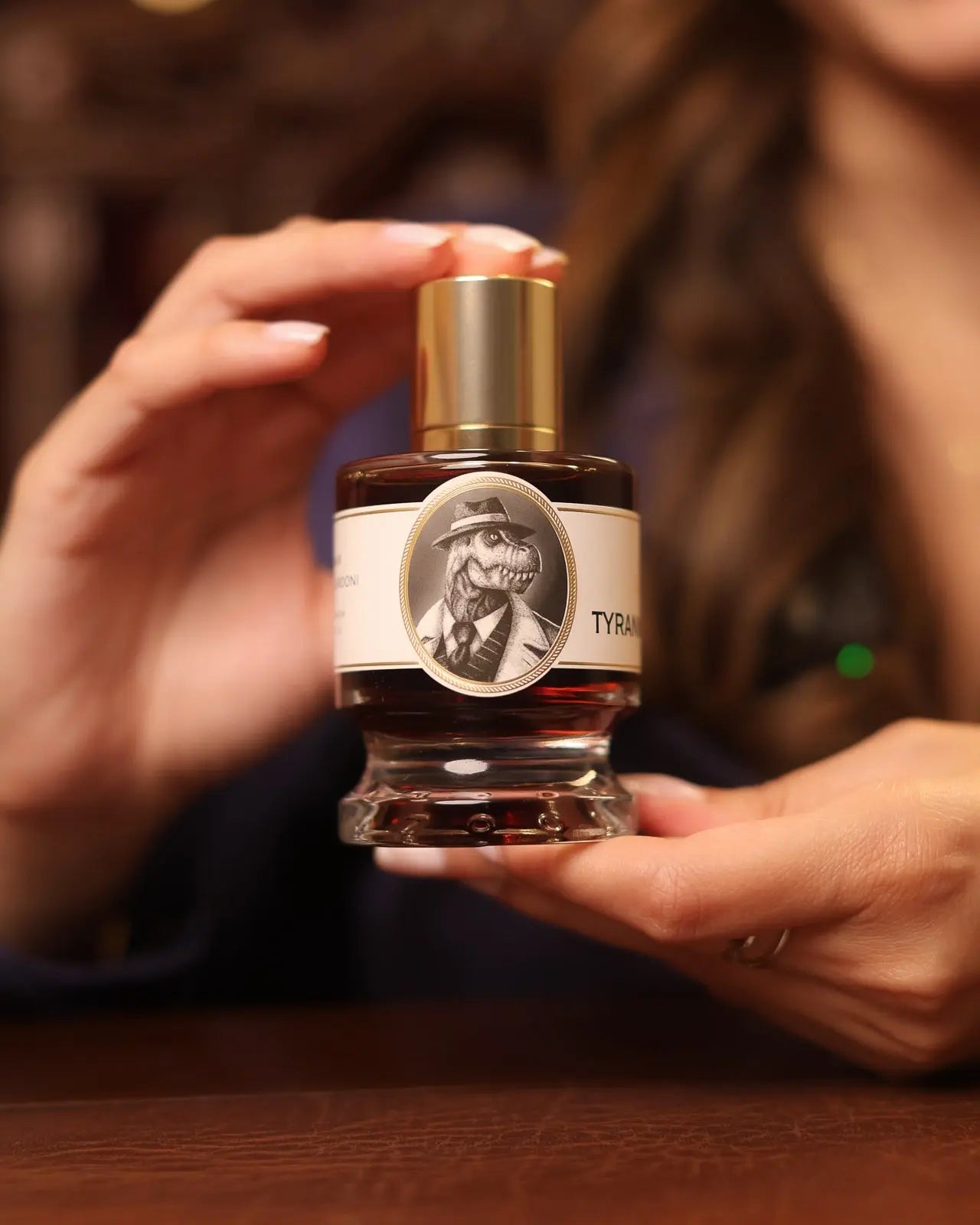
Tyrannosaurus Rex
The Story
Antonio Gardoni first considered making this smell of plastic toys, on the grounds that plastic is the first smell most people actually associate with dinosaurs. He abandoned that for the Cretaceous instead, florals torn through by smoke, leather and cade.


Fresh Spicy
Cool bite of cracked pepper
Pink pepper, cardamom and ginger, spice that prickles rather than warms. It fizzes near the top of a fragrance, dry and faceted, closer to crushed peppercorns and a split cardamom pod than to anything simmering in a kitchen. Bright, never comforting.


Woody
Dry grain of cut timber
The smell of cedar shavings, sandalwood, and dry vetiver roots, a sanded, resinous warmth with a faint pencil-box rasp. It feels grounded and composed, the quiet backbone that makes a scent read as serious and lasting.


Aromatic
Crushed herbs in cool air
The green, camphorous coolness of lavender, rosemary, sage, and thyme, like herbs bruised between the fingers. It feels clean, invigorating, and a touch austere, the crisp backbone of a classic barbershop freshness.


Amber
Resin warmed until it goes sweet
Labdanum, benzoin and vanilla melted together into something sweet but dusky, like tree sap gone soft in the sun with a thread of incense smoke through it. Amber does not sparkle or shout. It sits close to the skin and gives off heat for hours.


Animalic
Skin, fur and something not quite tame
A raw, body-warm muskiness that reads of skin, hair and fur, sometimes sweet and powdery, sometimes sharp and faintly feral. At its best you cannot tell where the perfume stops and the wearer starts. At its strongest, it is the reason some people back away.


Leather
A jacket with some miles on it
Tanned hide and birch tar, dry, smoky, a bitter rasp and tobacco under it. Sometimes new and lacquered, like a car interior; sometimes worn soft, like suede gloves gone thin. Either way, it smells used.


Fir
A cold forest breathed in at first light
What it is
One name, two materials. The needles and young twigs steam-distil into a clear, sappy oil; the same needles and twigs, taken with solvent, give a dark, sticky fir balsam absolute. Balsam, silver and Douglas fir all answer to the name.
How it smells
The distilled oil is green and resinous, sappy almost to fruit: crushed Christmas-tree needles in the hand. The absolute goes deeper and sweeter, jammy, intensely balsamic, warmed with coumarin and a wisp of smoke, and it lasts.
In perfumery
Distilled fir works top to heart, the absolute anchors the base, and between them they build forest, fougere and aromatic-woody accords. It sits well with cedar, lavender, oakmoss and incense, and carries dense coniferous work like Slumberhouse Norne.
Good to know
Douglas fir is not a true fir, and smells it: brighter, closer to citrus. Balsam fir has the odder history: bark blisters yielding Canada balsam, the glass-clear cement that mounted microscope slides because it bends light like glass.


Black Pepper
Dry heat that prickles and sharpens
What it is
Peppercorns start out green; drying is what turns them black and wrinkled. They grow on a climbing vine, and the scent is drawn out by steam or by CO2.
How it smells
Sharp and dry, a bite that tingles the inside of your nose. Underneath, woody and resinous with a lift of citrus. The distilled oil is airy; the CO2 extract smells like a peppercorn cracked a second ago.
In perfumery
It snaps a fragrance awake from the top, then works lower down as a foil for rose, vetiver and amber. Some are built on nothing but that dry crackle over cedar, which turns out to be enough.
Good to know
Pepper was once used as currency and accepted as rent. And the heat you taste is piperine, which is too heavy to travel in a distillation, so the oil smells peppery without burning anything at all.
Bay Leaf
Victors' laurel, kitchen spice, barbershop rum
What it is
The leaf that crowned poets and emperors also goes into the stew pot. Its oil is steam-distilled from Mediterranean bay laurel, and the word laureate comes straight from it. A second, unrelated leaf is also sold as bay.
How it smells
Cool and green up front, a eucalyptus-camphor lift, then warm clove spice and a peppery, faintly medicinal edge underneath. Mediterranean laurel stays herbal and resinous; the West Indian leaf runs sweeter, more clove, almost smoky as it dries.
In perfumery
It sits near the top, green and cool enough to sparkle over lavender, citrus, rum and tonka in fougeres, chypres and old masculine accords. West Indian bay is the leaf behind bay rum itself.
Good to know
Botanically the two have nothing to do with each other. The Caribbean one is an allspice cousin, steeped and distilled with rum in the Danish West Indies from the 1840s, which is where barbershops got their tonic.

Nutmeg
Warm baking spice with a hidden narcotic edge
What it is
Two spices come out of one fruit. Split the apricot-like flesh and there is a hard brown seed, nutmeg, wrapped in a scarlet lace of mace. The seed is ground for the kitchen or steam-distilled for perfumery.
How it smells
Warm and dry rather than sweet, with a cool camphor lift on top that stops it feeling like dessert. Underneath, soft wood and a faint balsamic resin. Cozy at first, then oddly sharp, almost pine.
In perfumery
It works high in a fragrance, giving warmth and an ambery glow without the sugar a gourmand note brings. Vanilla, tobacco, lavender and woods take it well. The warm-spice signature of a barbershop fougere is mostly this.
Good to know
Nutmeg holds myristicin, mildly psychoactive and toxic in quantity. In the 1600s the world's entire supply grew on one small cluster of islands, the Banda, and Europe went to war over them.

Bergamot
Sparkling citrus light with a bitter edge
What it is
Nobody eats bergamot. It is sour, seedy and disappointing, and almost the whole world's supply grows on one strip of Calabrian coast, farmed purely for the oil pressed cold from its green rind.
How it smells
Zest and green light in the first second, then something rounder than lemon: a floral, tea-like smoothness sitting on a faintly bitter warmth. It burns off fast. What stays behind is a quiet, slightly spiced hum.
In perfumery
It defines eau de cologne, and sits on top of nearly every fougère alongside lavender and oakmoss. Perfumers want the first bright second it gives, and the oil is also what makes Earl Grey smell like Earl Grey.
Good to know
The thing that makes it sparkle can also burn. Bergamot carries bergapten, which leaves skin hypersensitive to sunlight, so perfumers either keep the dose low or reach for a grade with the molecule stripped out.


Neroli
Bittersweet orange blossom distilled into white light
What it is
One flower, two perfumes. Steam the fresh blossoms of the bitter orange and you get neroli; wash them in solvent and you get orange blossom absolute, heavier and sweeter. Both go in the day they are picked.
How it smells
Clean and green with a honeyed metallic shimmer, closer to freshly ironed linen than to anything sugary. It opens cool and citrus-crisp, then softens into waxy petal warmth. A bitter edge keeps it from turning sweet.
In perfumery
Colognes are built on it. It gives the top of a fragrance somewhere to go, opening outward instead of sitting still, with bergamot and petitgrain either side and jasmine and musk underneath.
Good to know
Neroli carries the name of a seventeenth-century princess of Nerola who scented her gloves and her bathwater with it until half of Europe copied her. It still takes about a tonne of hand-picked blossom to make one kilo.

Champaca
Golden petals of orange, tea and honey
What it is
Narrow petals, cream fading to orange, picked by hand at dawn from a tree in India and Southeast Asia while the scent is still at full strength. Solvent extraction gives a deep, resinous absolute.
How it smells
Orange blossom, black tea, dried hay and honey, all running through a fruity sweetness that edges toward bubblegum. The red absolute leans earthy and tannic; the orange type opens brighter and dries into a smooth ambery floral.
In perfumery
It sits in the heart, throwing a tea-like glow over white florals and orientals, and it can hold a soliflore alone: honey and tannin over a bed of woods. Neroli, jasmine and rice notes all take to it.
Good to know
The scent fades fast once the flower is off the tree, so blossoms are processed at once and the yield stays tiny. Across South and Southeast Asia they are strung into temple garlands and worn in the hair.


Geranium
A rose with green stems and crushed mint
What it is
The perfumer's geranium is not a geranium at all. It is a pelargonium, and the rose smell sits in the leaves and stems, which is the part that goes into the still.
How it smells
Crush a leaf and you get rose, but rose with the stem still attached: green, crisp, a little peppery, cooled by something minty. Lemon and a powdery sweetness thread through it.
In perfumery
It works the heart, bridging florals and fougeres, and its herbal edge is the reason so much of it ends up in scents marketed to men. Rose, mint, clove, bergamot and vetiver all take it well.
Good to know
Geranium and rose share citronellol, which is why geranium can stand in for part of a rose accord far more affordably. Reunion's Bourbon crop, once the benchmark, has thinned as growing shifted to Egypt and China.


Ylang-Ylang
Sun-warmed tropical bloom, banana-cream and jasmine
What it is
A drooping yellow star of a flower, hand-picked from a tropical tree and held in the still for fifteen to twenty hours. The run is drawn off in stages, each one a different grade, Extra down to Third.
How it smells
Creamy and heady, jasmine over something like banana custard, with rubber and clove threaded through. Extra grade is the bright, fruity, spicy one; the later fractions go deeper, fatter and faintly medicinal, drying down waxy and round.
In perfumery
In the heart it bridges jasmine, rose and tuberose, and it keeps citrus tops from turning thin. It carries the floral bouquet inside the aldehydic classics, and it is the reason a solar tiare accord smells tropical.
Good to know
In Indonesia the blossoms are scattered over the beds of newlyweds. The name is Tagalog, ilang-ilang, from ilang, wilderness, after the wild places where the tree grows. The most fragrant blooms are taken at dawn, while they are still cool.


Rose
Dewy sweetness over a green, peppery bite
What it is
Most perfumery rose is one of two: damascena from Bulgaria and Turkey, centifolia from Grasse. Whole blossoms are picked by hand from before sunrise until about ten thirty, then distilled into otto or solvent-extracted into absolute.
How it smells
Fresh, honeyed, green at the edges, with something dewy still on it. Spice and fruit sit underneath, and in the absolute a jammy darkness. Otto opens crisp and bright; absolute is warmer, smokier, closer to skin.
In perfumery
Rose behaves less like one note than a whole palette. It carries a perfume alone or vanishes into a chypre, turns dark against oud and patchouli, goes powdery beside violet, and holds a floral heart together.
Good to know
The two extractions are not the same bargain. Otto takes three to four thousand kilograms of blossoms to yield one kilogram of oil. Absolute, pulled out with solvent, gets there on roughly a seventh of the flowers.


Osmanthus
Apricot and soft leather in a tiny gold flower
What it is
Tiny orange-gold flowers that China has scented its tea and its wine with for centuries. They are gathered by hand, drawn into a waxy concrete with solvent, then washed down to the absolute perfumers buy.
How it smells
Apricot first, ripe and almost jammy, then peach and black tea. Give it a minute and suede appears, soft and slightly smoky, the way a well-worn glove smells. It dries toward raisin rather than sugar.
In perfumery
A heart note that sits exactly between fruit, flower and leather, which is why it can sweeten a composition without any sugar in it. Black tea, rose and apricot accords go with it naturally; so does actual leather.
Good to know
It takes about a tonne of those minuscule flowers to make one kilo of absolute. The tree belongs to the harvest moon and to love there, a lot of meaning for a flower this small.

Jasmine
The heady white flower at perfumery's beating heart
What it is
Picking runs by hand in the dark, from before first light into the morning. The blossoms are too fragile to distill, so solvent lifts their oil into a waxy concrete, and alcohol washes the absolute out of that.
How it smells
Sweet, heavy and honeyed, with something faintly animal underneath. Sambac reads green, tea-like and luminous; grandiflorum is fruitier, creamier, heavier on the skin. Both dry down warm and soft, with a mushroomy musk you notice only up close.
In perfumery
Put it in the heart and it ties a citrus opening to the woods underneath, adding volume to both. Rose, tuberose, sandalwood and musk all take it well. Plenty of perfumes are built on jasmine and nothing else.
Good to know
Roughly six thousand hand-picked blossoms go into one gram of absolute, among the costliest materials in perfumery. Part of its depth is indole, which smells like decay when concentrated and turns radiant at the trace the flower carries.


Resins
Tree wounds that harden into incense
What it is
Every resin starts as an injury. Cut the bark of a frankincense or myrrh tree and it bleeds milky tears that harden in the air; labdanum is boiled or scraped from the leaves of a rock rose.
How it smells
Warm, sweet and balsamic underneath, but each pulls a different way: frankincense cool and peppery with lemon-pine smoke, myrrh bittersweet and medicinal, benzoin all vanilla caramel, labdanum leathery honey. They open bright and dry down sticky.
In perfumery
Nothing holds a base together like resin. It slows evaporation, so everything above lasts longer, and supplies the glow under amber and incense compositions. Frankincense builds the cathedral ones; benzoin and labdanum the warm ones.
Good to know
Frankincense and myrrh once traded at the price of gold, carried north along the Incense Route and named among the Magi's gifts. The wild trees are thinning now from over-tapping, which is a problem for perfumery's oldest material.

Leather
Tanned hide, smoke and animal warmth
What it is
There is no leather essential oil. Perfumers rebuild the smell from birch tar and cade, smoky distilled woods, plus styrax and labdanum resins, isobutyl quinoline and safraleine-type molecules, echoing the tannins and oils once used to cure hides.
How it smells
Smoky, dry and animalic, ranging from supple new suede to tarry old saddle. Birch-tar versions read sooty and phenolic, almost campfire and band-aid; softer suede accords turn powdery, floral and skin-warm.
In perfumery
A base note that lends spine and a carnal edge. It does its best work under rose and violet, alongside tobacco and oud, and a floral heart set on leather turns unmistakably human.
Good to know
Scented leather began with European glovemakers, while the smoky strand comes from Russia, where hides for boots and book bindings were dressed with birch tar, and Russian leather still means that smell. The real tanning oils were mostly restricted on safety grounds, so today's leathers are reconstructions.


Cade Oil
Black smoke pulled from juniper wood
What it is
Juniper wood does not give this up willingly. Branches, roots and heartwood are baked in a sealed oven until they char, and the tar that sweats out is cleaned up into perfumery grade.
How it smells
Tar, creosote and hot leather, sharper and more medicinal than birch tar. It arrives acrid, like standing downwind of a bonfire, then loses the bite and settles into smoky resin with a thin sweetness under it.
In perfumery
Used by the drop, never the spoonful. A trace builds smoky leather, pine and forest accords; more than a trace and everything smells like a chimney.
Good to know
For centuries it sold as juniper tar, a folk remedy smeared on livestock and rubbed into scalps. The crude tar is too dirty for skin, so what reaches a perfumer is rectified and restricted.

Frankincense
Golden tears hardened on a cut trunk
What it is
A scored Boswellia bleeds a milky sap that hardens over weeks into golden tears. The sacra trees of Oman and Somalia give the most prized resin. Steam or solvent turns the tears into oil.
How it smells
Brighter than you expect from something called incense: cool, lemony, almost pine-fresh, with a peppery lift. Underneath it is dry and balsamic, and it ends in the warm dusty smoke you already know.
In perfumery
It does something odd for a resin: it makes heavy things lighter. Sitting in the heart and base, it opens up oud, labdanum and thick oriental accords, and gives rose a cool, quiet space to stand in.
Good to know
The trees are in trouble. Wild Boswellia stands are thinning under over-tapping, drought and grazing, and the long-term supply of a resin the world has burned for thousands of years is now a real question.


Civet
Civet's golden animal warmth, made without the animal
What it is
In this perfume the civet is synthetic: an accord built around civetone-type molecules, which echo the musky heart of real civet, with other animalic notes to round it out. It recreates the warm, skin-like depth of civet paste without any animal material.
How it smells
Warm, musky and faecal-sweet, with a honeyed, leathery depth and a low tobacco hum. At a trace it reads as skin rather than animal, the warmth of a body under the flowers, and it holds steady well into the drydown.
In perfumery
Perfumers use it in traces, as base and fixative, to make jasmine and rose smell like they are growing on a living body rather than sitting in a bottle. A synthetic civet does this cleanly and consistently, and modern animalic chypres and orientals lean on it.
Good to know
Civetone gave chemistry a surprise. In 1926 Leopold Ružička showed that it is built on a ring of seventeen carbon atoms, a size many chemists then thought too strained to be stable, and that discovery opened the way to the large-ring musks perfumers use today.


Cedar
Dry sharpened pencils and sun-warmed timber
What it is
Most perfumery cedar is not cedar. It is juniper, from the Virginia and Texas trees, steam-distilled from chips and sawmill shavings. True Atlas cedar exists and is used, but it is the smaller source.
How it smells
Freshly sharpened pencils, then the inside of a cedar-lined closet. Atlas leans warm, smoky and balsamic; Virginia reads sharper and cleaner. Either way it settles into soft sawdust warmth and stays there for hours.
In perfumery
A workhorse. It gives woody compositions their backbone and holds lighter materials in place, sitting comfortably beside vetiver, rose, citrus and amber. Its plummy-woody core runs through most modern unisex woods.
Good to know
Egyptian embalmers poured cedar oil into the body rather than burning it, and cedar timber lined the tombs and coffins they meant to outlast them. The true cedars and the junipers share a name through smell, not lineage.


Patchouli
Damp earth and dark wood after rain
What it is
Nobody guesses mint, but that is the family: a leafy bush whose leaves are dried and left to cure, close to fermenting, before distillation pulls out an oil thick and dark as syrup.
How it smells
Wet soil, forest floor, an old cellar, with a winey sweetness underneath. Young oil can come at you sharp and green, almost camphorous. Aged oil goes the other way, into chocolate and leather, and stays put for hours.
In perfumery
Almost nothing holds a composition down like it. Chypres and orientals are built on that anchor, and a few drops under rose, vetiver or labdanum will hold the whole thing on skin for hours.
Good to know
Nineteenth-century Kashmiri shawls travelled packed in dried patchouli leaves to keep moths off, and Europeans learned to tell a real one by smell alone. The oil improves with age, which almost no essential oil does, mellowing like wine.


Sandalwood
Creamy wood, pulled up by the roots
What it is
The richest oil sits in the roots, so the whole tree is pulled up and steam-distilled rather than felled. Mysore in southern India was the classic source, until decades of overcutting pushed the wild trees to the edge.
How it smells
Milk and warm wood, with a rosy, almost buttery edge and nothing sharp at all. What surprises people is how little it moves: no bright opening, no dry-down drama, just the same quiet glow for hours.
In perfumery
It works twice over: as a smell, and as a fixative that holds rose or jasmine in place. Sandalwood is also graded, and the darkest, densest, most resin-heavy old heartwood carries its own name: red meat.
Good to know
A heart worth taking takes about thirty years to form. Plantations of the same species in Western Australia now supply a large share of the world's oil, close to the old Mysore chemistry if not quite its creaminess.


Vanilla
Cured orchid pods, custard and faint smoke
What it is
Green pods come off the orchid vine smelling of almost nothing. The scent is made, not found: months of blanching, sweating in the sun and slow drying before the vanillin appears. Mexico first, Madagascar now.
How it smells
Custard and caramel up front, then something darker underneath: dried fruit and a thread of tobacco smoke. It turns powdery as it dries and sits close to the skin. Real cured vanilla reads deeper than vanillin alone.
In perfumery
Perfumers use it to round off edges. Anything too sharp, too green, too austere gets warmth and body from a vanilla base, which is why it anchors many oriental and gourmand builds alongside tonka, amber, sandalwood and spice.
Good to know
Every flower opens for one day. Miss it and there is no pod, so all of it is pollinated by hand, a trick devised by Edmond Albius, a twelve-year-old enslaved boy on Réunion. Most vanilla flavour today is synthetic.
Fragrance Character
Coniferous resin and spice cut through bergamot and neroli like cold air through a forest, immediate and unsettling. In the heart, champaca, osmanthus, and ylang-ylang soften the aggression without taming it, adding a humid, almost carnal richness. The drydown is where it truly settles: frankincense, cade oil, and a synthetic civet pressing close to skin, smoky and animalic, fading slowly into cedar, patchouli, and vanilla.


Longevity
how long it stays on skin
The hourglass reads wear time: how many hours the fragrance keeps speaking before it fades. A bar that barely leaves the start means a few fleeting hours. One that runs the full length carries from morning into evening. Treat it as typical, not promised. Oily skin holds scent far longer than dry.


Sillage
the size of its scent trail
Sillage is French for a ship's wake, and that is exactly what this measures: how much of the scent reaches the room instead of staying on you. Low is a whisper only close friends catch. Enormous fills the room, then keeps filling it after you leave.


Experimental
Built to provoke, not to please
Some perfumes are made to be liked. These are made to be argued about: inky tar, hot rubber, fruit on the turn, metal and fur where you expected flowers. The coin glows for a scent that provokes and dims for one that plays it safe, which is sometimes the point.


Office
Polished, and never louder than the room
Scent is manners in a shared room. At this range it should reach the person across the desk and stop there: tidy citrus, soft musk, pale woods, all of it reading competent and considerate. A glowing coin means nobody has to mention it. A dim one means it travels.


Evening
After dark, when it deepens
Dinner, drinks, the night that runs long. Low light is where ambers, resins and smoky woods stop being polite, and where a plush floral finally blooms. A glowing coin means it is waiting for exactly this hour. A dim one means it did its best work in daylight.


Romantic
Close enough to be felt
A fragrance can hum against skin instead of announcing itself across a table. That is the register here: creamy florals, vanilla, soft musk, a thread of spice, warm enough to make someone lean in. The coin glows when a scent sets that mood and dims when it is more practical than seductive.


Formal
Quiet authority in a dressed-up room
A wedding, a ceremony, a room where everyone has thought about their shoes. What works here is structure, not volume: smooth woods, disciplined florals, soft leather. A glowing coin means it holds its posture all evening. A dim one means it is too casual for the room.


Casual
Easy comfort for unhurried days
Errands, coffee, a slow Saturday with nowhere to be. Nothing here has to impress anyone, so the fit is soft and easy: fresh citrus, light woods, a little warmth off the skin. A glowing coin says yes to all that. A dim one means the fragrance is asking for a bigger night.


Day to Night
where its mood naturally falls
A bar running from sun to moon, reading the hour the fragrance was made for. The more of it that stays gold, the more the scent belongs to daylight and open air. The further the blue reaches back toward the sun, the deeper and warmer it turns: evening, candlelight, low rooms.


Winter
Warmth that carries through cold air
Cold air mutes a fragrance and slows it down, which is why winter belongs to the dense and the warm: resin, smoke, vanilla, leather, ambered spice. The bar reads how well this one pushes back, glowing against the chill instead of thinning out in it.


Spring
Fresh blooms in mild, rising warmth
Mild, humid air lifts a light composition, so the season belongs to dewy florals, green stems, soft powder and citrus you can see through. Alive rather than heavy. The further the green runs along the bar, the more comfortably this one wears in that weather.


Summer
Bright and airy in real heat
Heat does the projecting for you, which is why the wrong perfume turns unbearable by noon. What survives is cool and breathable: sharp citrus, salt air, aromatic herbs, water. Things that refresh instead of cloy. A short bar here means save it for cooler months.


Fall
Spiced warmth for cooling days
As the air cools, the rich materials stop smothering and start reading clearly: dry woods, warm spice, tobacco, amber, fruit gone golden. It is the season perfume turns contemplative. The bar fills according to how naturally this one settles into crisp, cooling days.
Best Worn
This belongs to winter evenings and dark formal occasions, worn by someone who treats fragrance as a statement of presence rather than pleasantry.
Choose options
The Vibe


The Nose

Antonio Gardoni
Perfumer
Antonio Gardoni is a Brescia-based architect and self-taught perfumer who runs his own Italian house, Bogue Profumo. He composed Bogue Profumo MAAI, Bogue Profumo MEM and Bogue Profumo O/E, plus Cadavre Exquis, a 2016 edition of 99 made with Bruno Fazzolari.
The Maison

A bestiary in extrait. Civilised doses of untamed animals.
Zoologist does not make perfumes so much as it makes creatures. Each release is a portrait of a single animal, handed to a perfumer, independent or at one of the big fragrance companies, and told to be fearless, and the results tend to divide a room in the best way. These are scents with weather and mood, worn as a story rather than as a background.
- Origin
- Toronto, Canada
- Founded
- 2013
- Known for
- Squid, Tyrannosaurus Rex

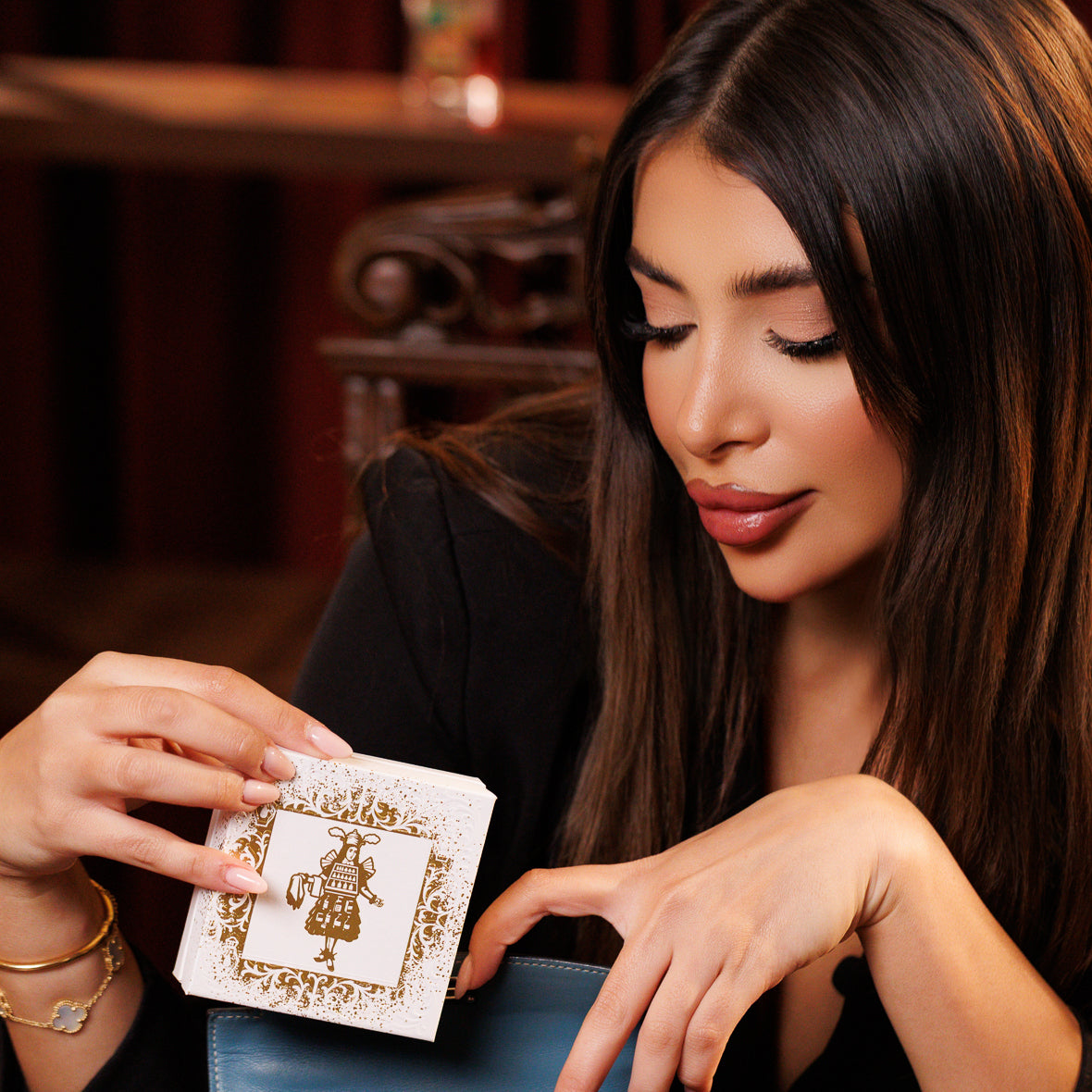
EVERY DECANT
From the original bottle to your door
We buy the original flacon at full retail price, direct from the house.
A medical grade Socorex syringe takes the exact millilitres straight from the flacon.
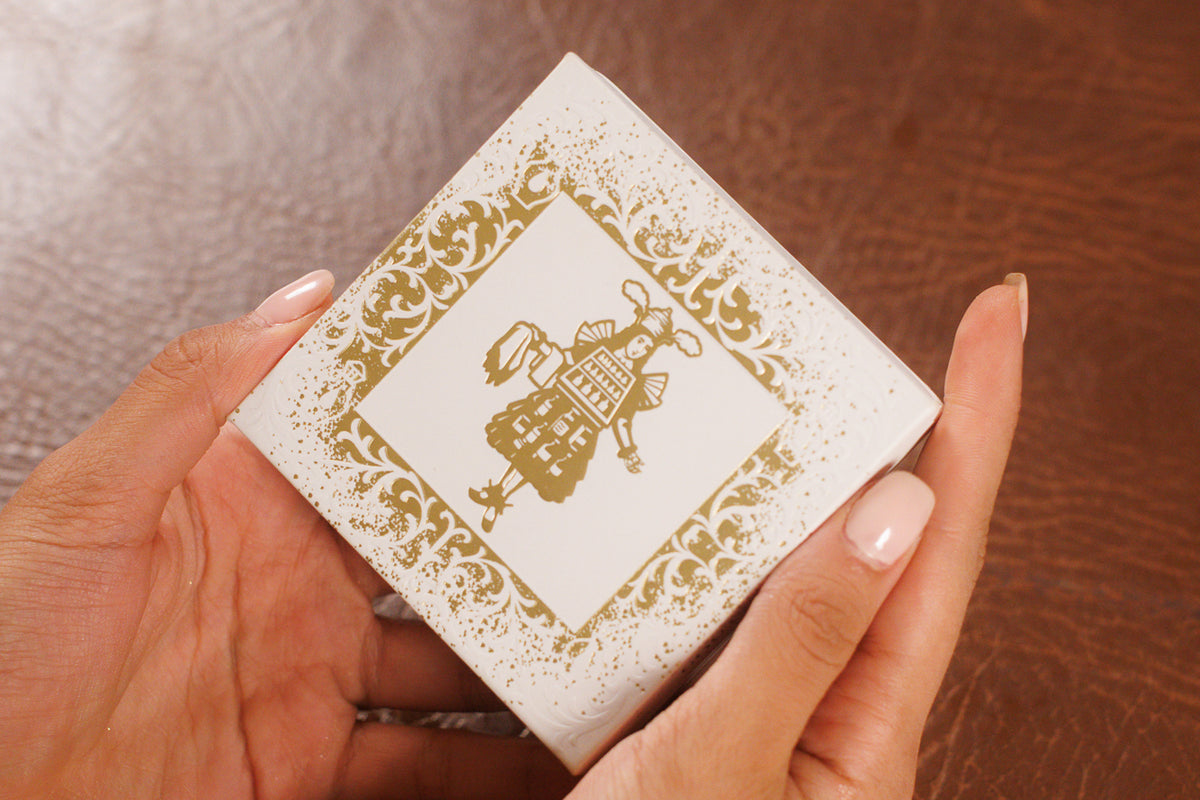
Packed into the hot foiled box and handed to DHL, every duty already paid. How a decant is made
More from Zoologist
You may also like