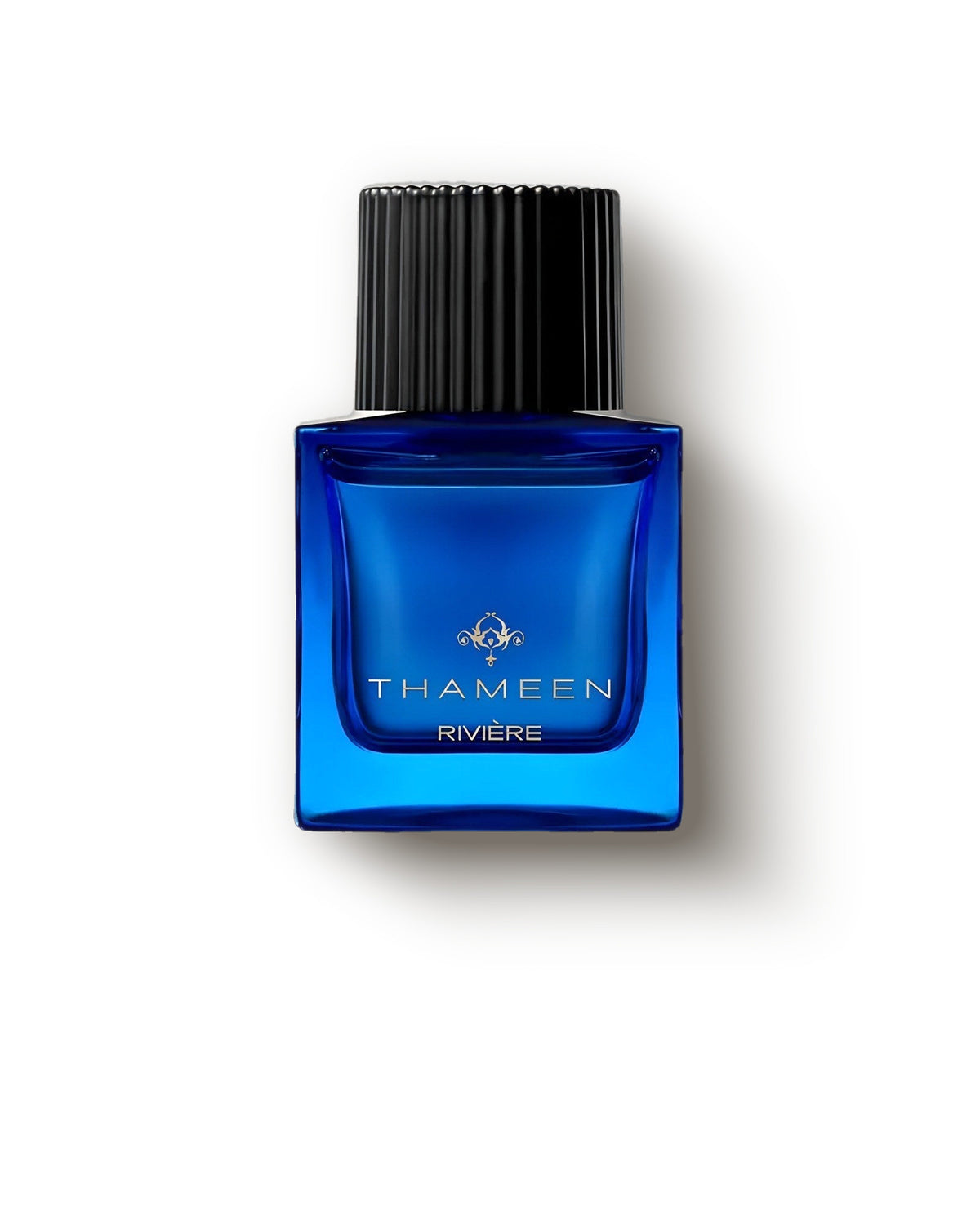
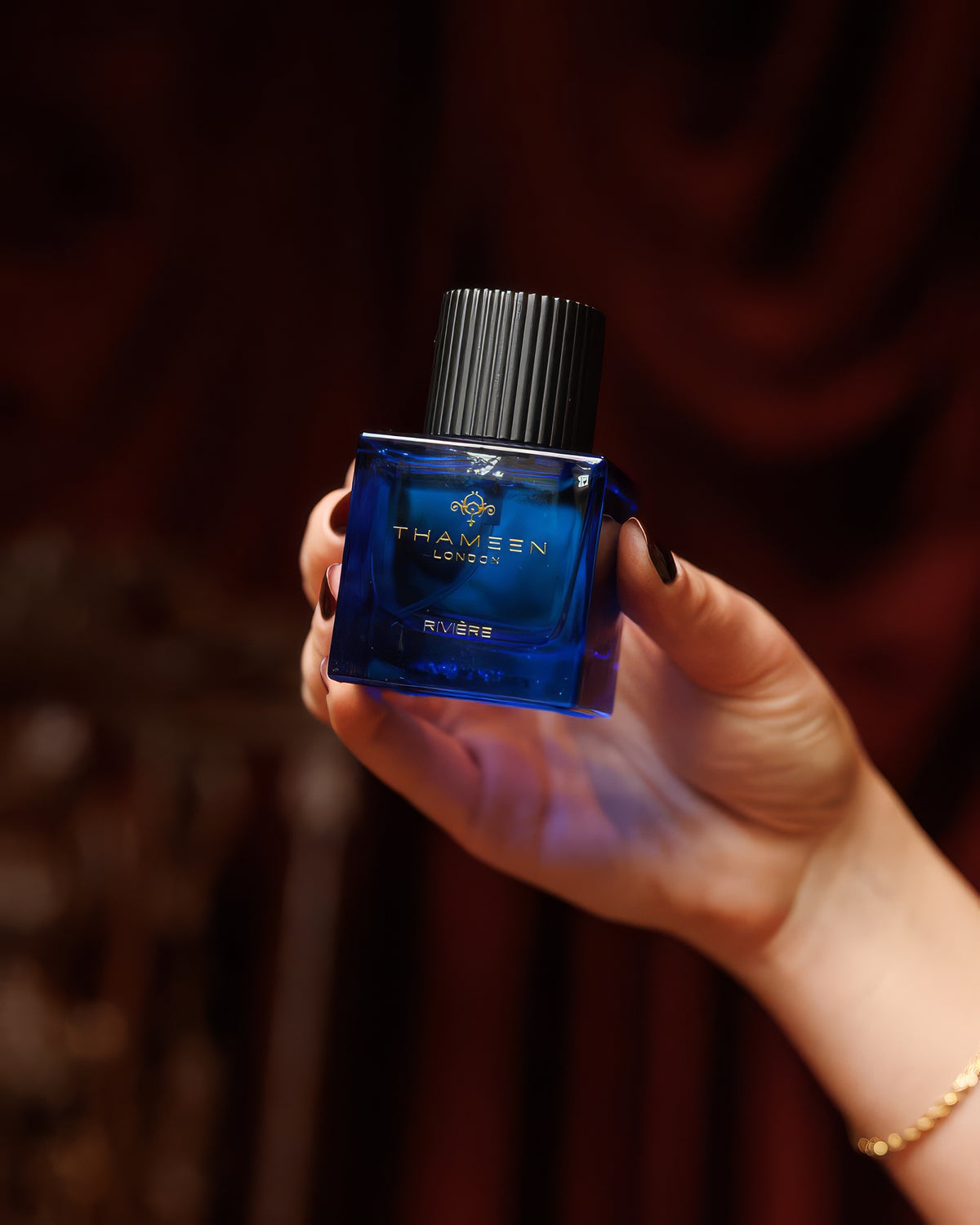
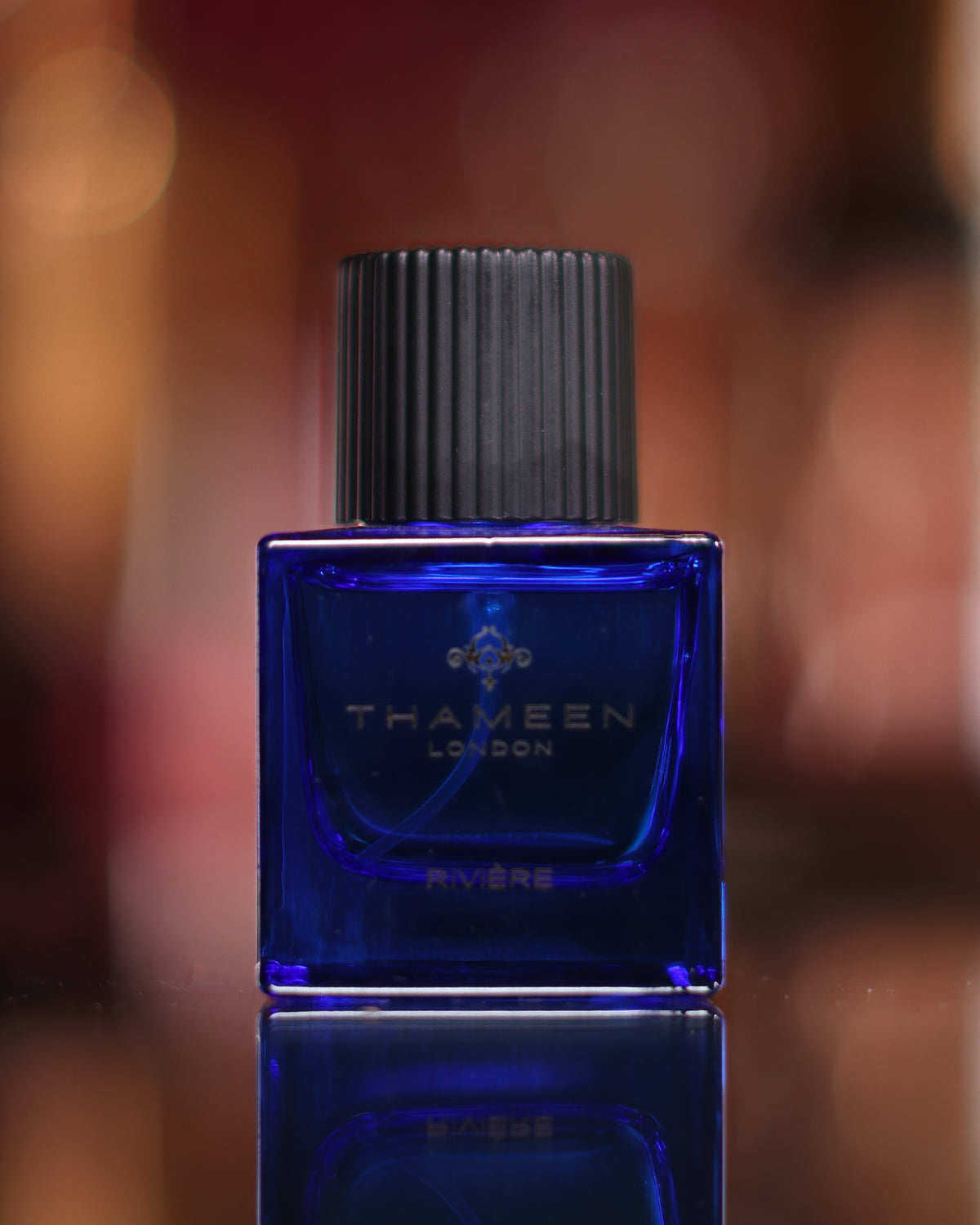
Thameen
Rivière
The Story
A rivière is a diamond necklace whose stones are all matched or evenly graduated toward a single centre. The scent is composed to sit on skin with that same unbroken clarity, moving from a piercing spiced opening into rose and amber without a break.


Leather
A jacket with some miles on it
Tanned hide and birch tar, dry, smoky, a bitter rasp and tobacco under it. Sometimes new and lacquered, like a car interior; sometimes worn soft, like suede gloves gone thin. Either way, it smells used.

Warm Spicy
Glowing embers of the spice drawer
The rounded heat of cinnamon, clove, and nutmeg, dry and slightly resinous, like a baking pantry rather than a sharp kitchen. It creates a flushed, enveloping warmth that feels intimate and cool-weather, hugging the skin from within.


Rose
Velvet petals, honey and thorn
Dewy and fruity on top, then a jammy, honeyed heart with a green peppery bite underneath. Very little of it is distilled flower. A rose accord is built, and a good one can smell more like a rose than the rose does.


Fresh Spicy
Cool bite of cracked pepper
Pink pepper, cardamom and ginger, spice that prickles rather than warms. It fizzes near the top of a fragrance, dry and faceted, closer to crushed peppercorns and a split cardamom pod than to anything simmering in a kitchen. Bright, never comforting.


Animalic
Skin, fur and something not quite tame
A raw, body-warm muskiness that reads of skin, hair and fur, sometimes sweet and powdery, sometimes sharp and faintly feral. At its best you cannot tell where the perfume stops and the wearer starts. At its strongest, it is the reason some people back away.


Earthy
Damp soil after the rain
The mineral smell of wet ground, and of beets pulled straight from the dirt with the soil still on them. Cool, raw and faintly bitter, it grounds a fragrance with the dark, humid breath of the forest floor.

Saffron
Crimson threads breathing leather, honey and dry hay
What it is
Three crimson threads sit inside each autumn crocus flower, and a hand pulls every one. Dried, those stigmas are steeped into a tincture or extracted into an absolute. That is the entire supply chain.
How it smells
Hay and honey and warm toast first, then something metallic and leathery underneath, the work of a molecule called safranal. It dries down into suede, tobacco and dusty amber, bitter at the edges.
In perfumery
It lives in the heart, glowing reddish, the hinge between spice and leather. Perfumers wed it to rose so often the pairing became a genre, and entire leather accords get built on it alone.
Good to know
A kilogram of saffron costs about 150,000 hand-picked flowers and many days of stooped labor, which is why almost none of it reaches perfume. Most saffron notes are built from synthetic safranal instead.


Lemon Blossom Accord
White petals with a cool citrus snap
What it is
The lemon tree's flower: small, white and waxy, tinged with purple on the outside, and open on the same branches as the fruit. Here it is an accord, a composed impression of the blossom rather than an extract.
How it smells
Sweet, creamy and faintly honeyed, with a green, waxy petal feel and a thread of lemon zest running through it. Softer and rounder than the rind, closer to orange blossom with the lights turned up.
In perfumery
A top-to-heart floral that lets a citrus opening melt into white flowers. It sits well with neroli, orange blossom, jasmine and musks, and it gives a fresh cologne a softer, more floral landing than peel alone.
Good to know
A lemon tree can carry flowers and ripe fruit at the same time, yet the two smell nothing alike: the rind is sharp and fizzing, the flower soft, sweet and creamy.


Turkish Rose
Spiced honey petals from the Isparta valleys
What it is
The valleys around Isparta are planted with damask rose, picked in the dark and finished by mid-morning, before the heat scatters the oil. The still gives rose otto; solvent gives the darker, redder absolute, jammier and fuller.
How it smells
Honey and spice more than dew. Against the brighter Bulgarian rose this one reads warmer and denser, opening fresh and green-edged before settling into something clove-like and deep. There is a peppery flick at the edges.
In perfumery
Put it in the heart and the whole fragrance turns radiant and slightly restless, never one flat rose. Oud, saffron, patchouli and geranium all take it well, in florals, chypres and orientals alike.
Good to know
Three to four tonnes of hand-picked blossoms go into one kilogram of otto. The name is protected as well: Isparta Rose is a registered name of origin covering the provinces of Isparta, Burdur, Afyon and Denizli, and a grower outside that line cannot use it.


Patchouli
Damp earth and dark wood after rain
What it is
Nobody guesses mint, but that is the family: a leafy bush whose leaves are dried and left to cure, close to fermenting, before distillation pulls out an oil thick and dark as syrup.
How it smells
Wet soil, forest floor, an old cellar, with a winey sweetness underneath. Young oil can come at you sharp and green, almost camphorous. Aged oil goes the other way, into chocolate and leather, and stays put for hours.
In perfumery
Almost nothing holds a composition down like it. Chypres and orientals are built on that anchor, and a few drops under rose, vetiver or labdanum will hold the whole thing on skin for hours.
Good to know
Nineteenth-century Kashmiri shawls travelled packed in dried patchouli leaves to keep moths off, and Europeans learned to tell a real one by smell alone. The oil improves with age, which almost no essential oil does, mellowing like wine.


Oud Accord
The distilled resin and the accord that imitates it
What it is
Resinous heartwood, and the oil distilled from it. One word covers chips burned over coals, attars that shift with species, soil and still, and the woody-amber accords built to imitate them. Most commercial oud is the accord.
How it smells
A distilled oil moves: fermented and barnyard, then leather, dried fruit, honey, then resin and warm skin, rarely the same twice in one evening. An accord holds still. Dry, smoky, medicinal, unchanged from first minute to last.
In perfumery
Collectors chase regions the way wine drinkers chase terroir: fecal Hindi, fruity Cambodi, camphorous Borneo, and above them all kyara, the rarest and most prized grade. The accord exists because none of that can be repeated at scale.
Good to know
Here the house lists it plainly as an oud accord: the smell of agarwood composed by the perfumer rather than oil distilled from the tree. An accord gives oud's dark, smoky depth with none of the batch-to-batch swings of a distilled oil.

Leather
Tanned hide, smoke and animal warmth
What it is
There is no leather essential oil. Perfumers rebuild the smell from birch tar and cade, smoky distilled woods, plus styrax and labdanum resins, isobutyl quinoline and safraleine-type molecules, echoing the tannins and oils once used to cure hides.
How it smells
Smoky, dry and animalic, ranging from supple new suede to tarry old saddle. Birch-tar versions read sooty and phenolic, almost campfire and band-aid; softer suede accords turn powdery, floral and skin-warm.
In perfumery
A base note that lends spine and a carnal edge. It does its best work under rose and violet, alongside tobacco and oud, and a floral heart set on leather turns unmistakably human.
Good to know
Scented leather began with European glovemakers, while the smoky strand comes from Russia, where hides for boots and book bindings were dressed with birch tar, and Russian leather still means that smell. The real tanning oils were mostly restricted on safety grounds, so today's leathers are reconstructions.

Cypriol Oil or Nagarmotha
A wild river sedge that smells like oud
What it is
This sedge grows wild in the wet ground along Indian rivers. Its roots, dried and steam-distilled, give a thick dark oil, which is how a riverbank sedge became one of perfumery's prized dark materials. India calls it nagarmotha.
How it smells
Vetiver and patchouli crossed with dry tobacco and charred wood, then smeared with something leathery. It has a black-pepper bite that comes from rotundone, and it carries: diffusive, resinous, still there hours later.
In perfumery
It sits in the base and does two jobs: fixative, and the dark oud-like heart of a woody composition without a single animal material. Vetiver, patchouli, saffron, rose and incense all sit well on top of it.
Good to know
Rotundone is the reason a Syrah smells peppery, and it is one of the most odour-active things in this oil. The same molecule, the same bite, one in a wine glass and one in a bottle of perfume.


Amber Accord
A warm resinous glow built, not harvested
What it is
There is no amber tree. Perfumers assemble the smell from labdanum, the sticky gum that bleeds off a Mediterranean rockrose in summer heat, plus benzoin and vanilla. The fossilized resin in museum cases is odorless on skin.
How it smells
Honeyed and faintly animalic at first, then it settles into golden powdery warmth: beeswax, old tobacco, worn leather, a thread of smoke underneath. It stays close to the skin rather than filling the room.
In perfumery
It sits at the base and holds everything above it in place, which is why oriental compositions lean on it so hard. Vanilla and patchouli push it sweet; more resin, spice and dry herbs push it austere.
Good to know
The word once meant ambergris, the waxy secretion of sperm whales, and the confusion never cleared. The trade now uses amber for two things: this resin accord, almost always plant and synthetic, and the ambergris substitutes like Ambroxan.
Fragrance Character
Saffron pushes outward with a dry, spiced warmth over a lemon blossom accord before Turkish rose softens the edges without sweetening it. Patchouli keeps the heart dark and slightly bitter, holding the floral notes honest. On the drydown, leather and cypriol pull everything close to the skin, earthy and resinous, fading with a quietly animalic persistence.


Longevity
how long it stays on skin
The hourglass reads wear time: how many hours the fragrance keeps speaking before it fades. A bar that barely leaves the start means a few fleeting hours. One that runs the full length carries from morning into evening. Treat it as typical, not promised. Oily skin holds scent far longer than dry.


Sillage
the size of its scent trail
Sillage is French for a ship's wake, and that is exactly what this measures: how much of the scent reaches the room instead of staying on you. Low is a whisper only close friends catch. Enormous fills the room, then keeps filling it after you leave.


Experimental
Built to provoke, not to please
Some perfumes are made to be liked. These are made to be argued about: inky tar, hot rubber, fruit on the turn, metal and fur where you expected flowers. The coin glows for a scent that provokes and dims for one that plays it safe, which is sometimes the point.


Office
Polished, and never louder than the room
Scent is manners in a shared room. At this range it should reach the person across the desk and stop there: tidy citrus, soft musk, pale woods, all of it reading competent and considerate. A glowing coin means nobody has to mention it. A dim one means it travels.


Evening
After dark, when it deepens
Dinner, drinks, the night that runs long. Low light is where ambers, resins and smoky woods stop being polite, and where a plush floral finally blooms. A glowing coin means it is waiting for exactly this hour. A dim one means it did its best work in daylight.


Romantic
Close enough to be felt
A fragrance can hum against skin instead of announcing itself across a table. That is the register here: creamy florals, vanilla, soft musk, a thread of spice, warm enough to make someone lean in. The coin glows when a scent sets that mood and dims when it is more practical than seductive.


Formal
Quiet authority in a dressed-up room
A wedding, a ceremony, a room where everyone has thought about their shoes. What works here is structure, not volume: smooth woods, disciplined florals, soft leather. A glowing coin means it holds its posture all evening. A dim one means it is too casual for the room.


Casual
Easy comfort for unhurried days
Errands, coffee, a slow Saturday with nowhere to be. Nothing here has to impress anyone, so the fit is soft and easy: fresh citrus, light woods, a little warmth off the skin. A glowing coin says yes to all that. A dim one means the fragrance is asking for a bigger night.


Day to Night
where its mood naturally falls
A bar running from sun to moon, reading the hour the fragrance was made for. The more of it that stays gold, the more the scent belongs to daylight and open air. The further the blue reaches back toward the sun, the deeper and warmer it turns: evening, candlelight, low rooms.


Winter
Warmth that carries through cold air
Cold air mutes a fragrance and slows it down, which is why winter belongs to the dense and the warm: resin, smoke, vanilla, leather, ambered spice. The bar reads how well this one pushes back, glowing against the chill instead of thinning out in it.


Spring
Fresh blooms in mild, rising warmth
Mild, humid air lifts a light composition, so the season belongs to dewy florals, green stems, soft powder and citrus you can see through. Alive rather than heavy. The further the green runs along the bar, the more comfortably this one wears in that weather.


Summer
Bright and airy in real heat
Heat does the projecting for you, which is why the wrong perfume turns unbearable by noon. What survives is cool and breathable: sharp citrus, salt air, aromatic herbs, water. Things that refresh instead of cloy. A short bar here means save it for cooler months.


Fall
Spiced warmth for cooling days
As the air cools, the rich materials stop smothering and start reading clearly: dry woods, warm spice, tobacco, amber, fruit gone golden. It is the season perfume turns contemplative. The bar fills according to how naturally this one settles into crisp, cooling days.
Best Worn
Best suited to the colder half of the year, a day-to-night fragrance for the office, candlelit rooms and dark coats, worn by someone who finds roses most interesting when they carry thorns.
Choose options
The Vibe


The Nose

Julia Rodríguez Pastor
Senior perfumer
Julia Rodríguez Pastor came into perfumery through her father, who worked in the industry, joined Eurofragance in 2009 and is one of its senior perfumers, now based in Dubai. She composed Gallivant Gdańsk, which sets plum, honey and saffron over leather, cistus and New Caledonian sandalwood.
The Maison

British luxury built around gemstones, taken a millilitre at a time.
Thameen names much of its range after famous jewels and builds each one to match, precise, polished and rich without being heavy handed. The compositions are quieter than most of the London houses, which makes them easier to wear daily than their price suggests.
- Origin
- London, England
- Founded
- 2013
- Known for
- Rivière, gemstone inspired compositions

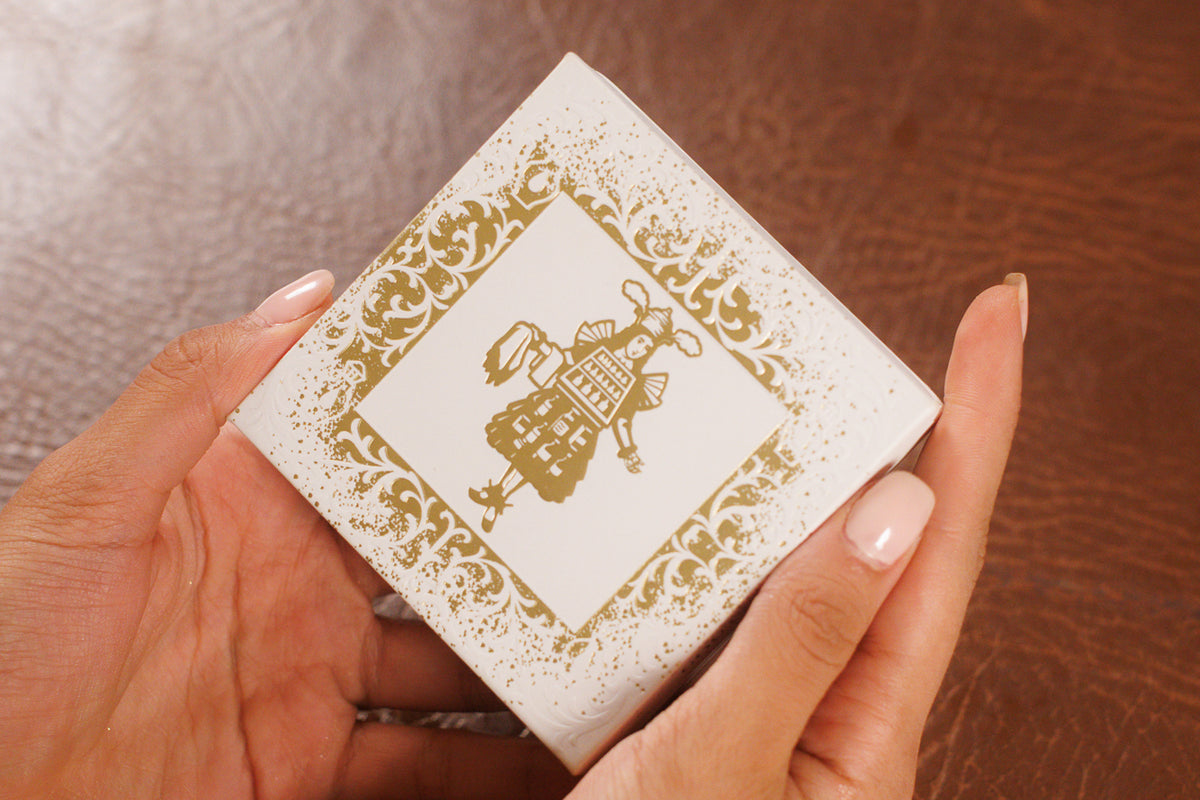
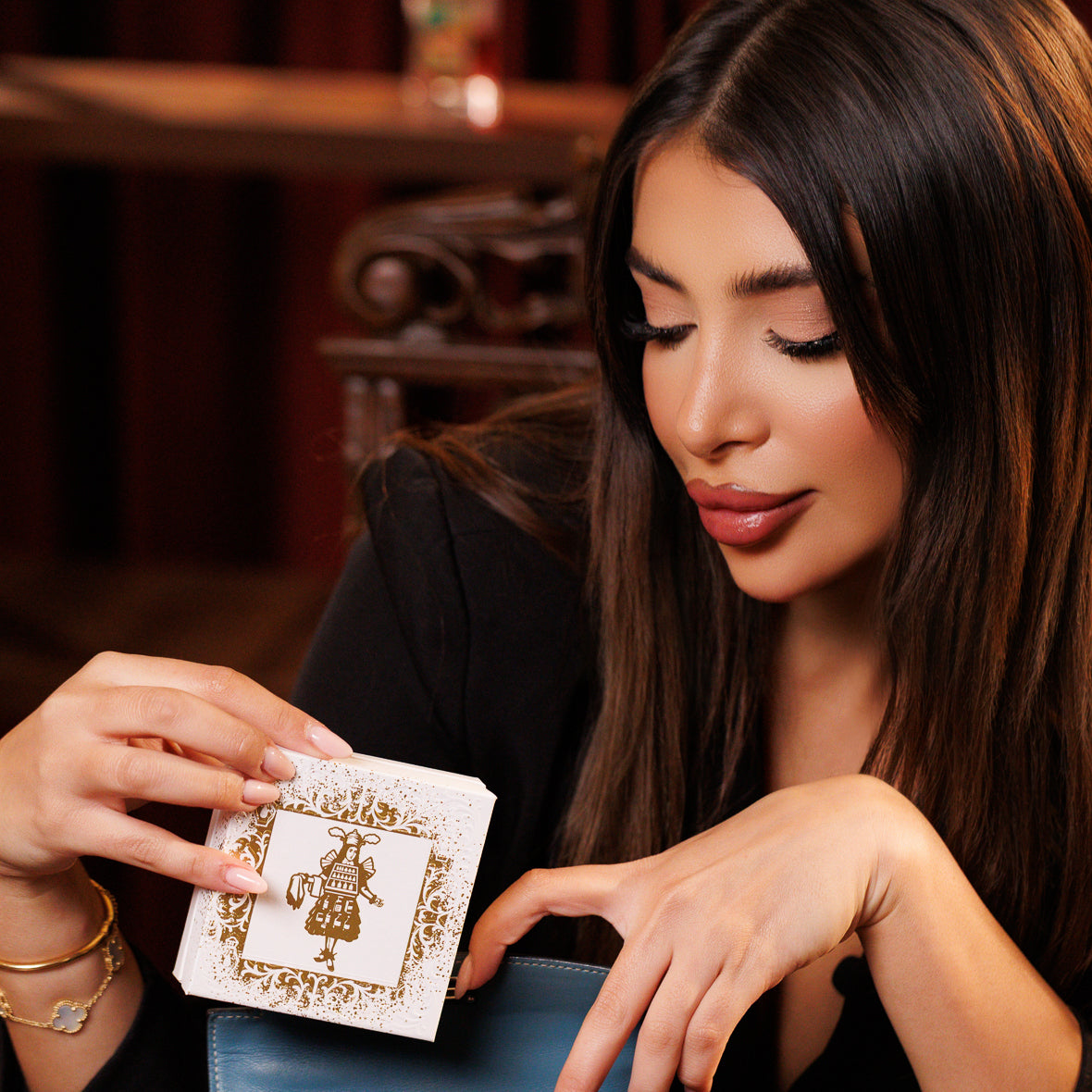
EVERY DECANT
From the original bottle to your door
We buy the original flacon at full retail price, direct from the house.
A medical grade Socorex syringe takes the exact millilitres straight from the flacon.
Packed into the hot foiled box and handed to DHL, every duty already paid. How a decant is made
Similar fragrances
You may also like