Folkwinds
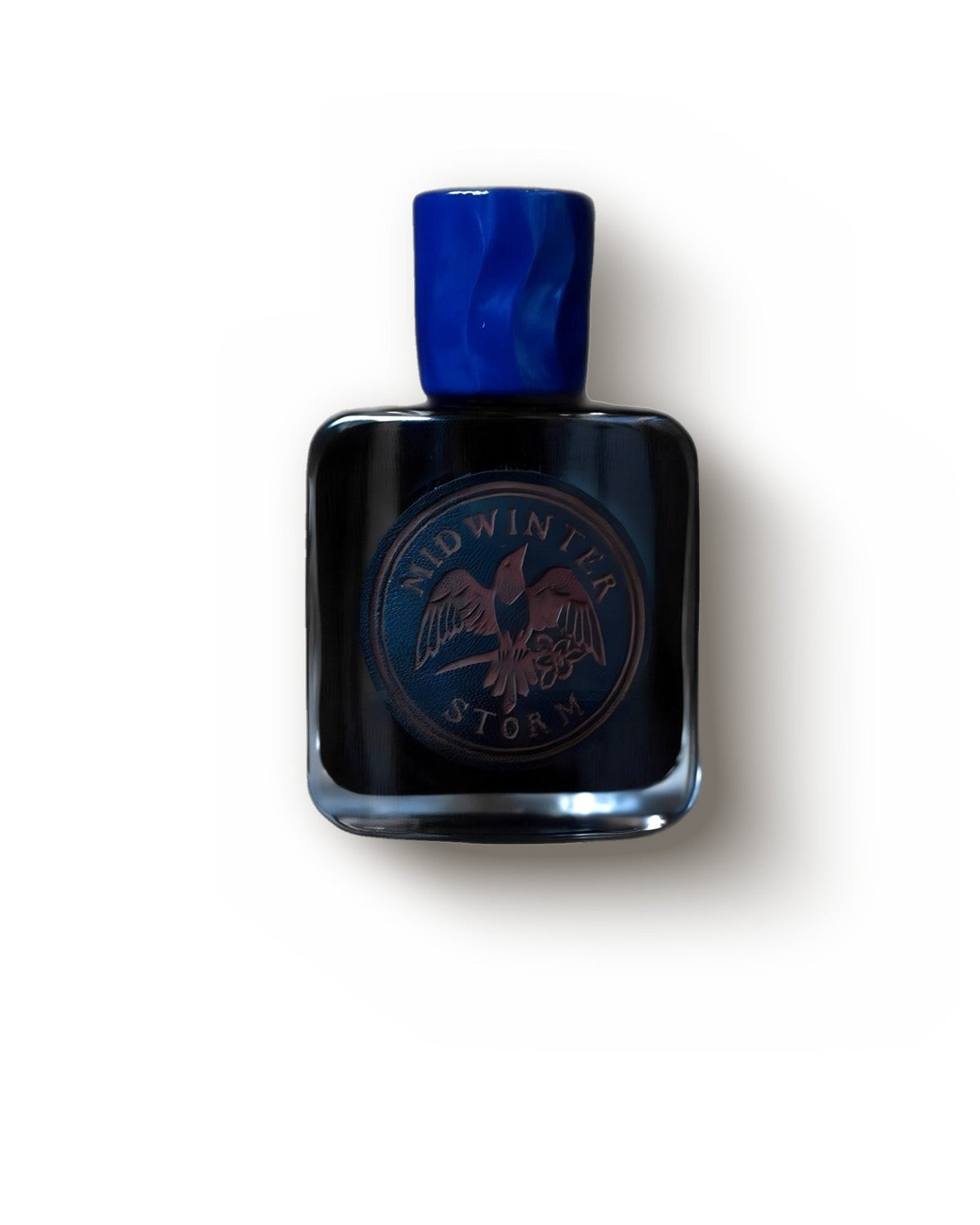
Midwinter Storm
The Story
Midwinter Storm is conceived as a full-spectrum orris soliflore, built from every natural iris material and isolate available, stacked at the highest possible concentrations. The powdery iris foundation is grounded by top-tier agarwoods, with sandalwood taking the place of the more conventional benzoin. Released in 2026 as a strictly limited edition of 50 bottles.


Floral
A whole garden, never one flower
Not one flower but the impression of many, usually rose, jasmine and orange blossom leaning on each other until no single one is recognizable. Sweet, dewy, faintly powdery, with nectar underneath. It is what people mean when a perfume smells like flowers and they cannot say which.


Woody
Dry grain of cut timber
The smell of cedar shavings, sandalwood, and dry vetiver roots, a sanded, resinous warmth with a faint pencil-box rasp. It feels grounded and composed, the quiet backbone that makes a scent read as serious and lasting.


Powdery
Soft hush of dressed skin
A velvety, slightly dry softness of iris root, violet, and fine talc, like face powder or clean linen warmed by skin. It feels intimate, refined, and nostalgic, blurring a fragrance into a gentle, cushioned haze.


Fresh
Bright plant oils lifting into open air
Freshness from real plant oils, whether cold citrus peel, crushed mint and herbs, camphor or conifer needles. It reads bright, sharp and aromatic, lifting the opening the way a room changes when you open a window, then fading fast.


Lactonic
creamy milk and warm skin
A creamy, milky softness reminiscent of warm steamed milk, milk skin, or coconut flesh without the sweetness. It feels plush and enveloping, smoothing florals and woods into something tender and slightly nostalgic, the warmth of skin more than the sweetness of dessert.


Ice Cider
Orchard fruit gone warm and faintly boozy
What it is
Cider is not distilled for scent, so a natural ice cider note is assembled from naturals: Roman chamomile for the apple, davana or cognac oil for the boozy fruit, beeswax absolute for the honeyed depth and spice oils for the warmth.
How it smells
Crushed ripe apple, juicy and sweet, with a vinegary sparkle and a soft yeasty warmth behind it. Some builds go mulled and spiced, others thick and honeyed, like cider pressed from frozen fruit. Cosy, slightly tipsy.
In perfumery
A heart accord for autumn, at home with cinnamon, caramel and soft woods. It sells the season more than the drink, which is why it turns up in fall fragrances and in half the candles on the shelf.
Good to know
Mainstream cider notes often take their apple lift from alpha-damascone, a rose ketone. Natural work turns to Roman chamomile instead, whose Greek name, chamaimelon, means earth apple, for the smell of its flowers.

Rye Spice
Caraway-dark crust of warm rye loaf
What it is
Not a distilled oil but the warm aromatic facet of rye grain and its bread. Perfumers build it from caraway, cumin and fennel-seed materials layered over toasted-grain and yeasty accords, echoing the dark loaf rye flour bakes into.
How it smells
Astringent, peppery caraway leads, edged with anise coolness and warm cumin. Beneath sits toasted crust, a sourdough tang and a faint molasses sweetness. Dry, grainy and rustic, more savoury bakery than dessert, with a lingering seeded warmth.
In perfumery
A gourmand-spice bridge: it lends edible warmth to amber, tobacco and leather bases and pairs with coffee, fig, immortelle and dark woods. It also anchors the frank bread-and-grain effect of Demeter's Rye Bread.
Good to know
Caraway, the seed that defines rye's character, is not the grain but a spice baked into the dough. Its pungency comes from S-carvone, mirror twin of the R-carvone that makes spearmint cool and sweet: the same atoms built backwards.


Blueberry
A berry with no extract behind it
What it is
Squeeze a blueberry and you get juice, not oil. There is too little of it to distil, so no blueberry essential oil exists anywhere at commercial scale. What you smell is assembled from scratch.
How it smells
Cool and blue-purple, candied, sharply drawn, more the idea of blueberry than the fruit in your hand. Built from botanicals instead, through osmanthus and violet leaf, it goes hazier and jammier and slides toward flowers and powder.
In perfumery
It lives in the opening, flattering violet, soft woods and musk, and it is fugitive: without musks or lactones holding it up from below, the berry is gone before the first hour is.
Good to know
With nothing bottled to copy, every perfumer's blueberry is an opinion about what blueberry smells like. That is why two of them rarely agree, one leaning candy, the next leaning violet and dust.


White Spruce
Boreal spruce needles, resinous with a camphor edge
What it is
The boreal spruce of Canada and Alaska, reaching into the northern Great Lakes states and northern New England, distilled from freshly cut needles and twigs. Crush the needles on the branch and they give off a sharp, catty tang, which earned the tree the names cat spruce and skunk spruce.
How it smells
Fresh, resinous and camphor-edged, a cool and bracing needle oil. Green and crisp at first, then balsamic and gently woody, with the camphor running underneath to keep it brisk rather than sweet.
In perfumery
Cold-air freshness for woody and fougere structures, sitting at the top and into the heart. Cedar, fir balsam, vetiver and citrus all take it well. It suits winter compositions, where the point is clean air rather than warmth.
Good to know
Before gum came in sticks, North Americans chewed spruce resin straight off the bark. John Curtis packaged the habit in 1848 and sold the continent's first commercial chewing gum. Spruce wood also tops guitars and violins.


Orris
Violet powder from a root dried for years
What it is
Iris grown for its roots, not its flowers, in the hills of Tuscany. The rhizomes are dug, dried, then left three to five years before anyone grinds and steam-distils them into a waxy ivory butter.
How it smells
Cool and powdery, a violet with no sweetness in it, closer to face powder and soft suede than to a flower. Raw carrot and flour, damp soil underneath, a faint metallic shine over all of it.
In perfumery
Perfumers use it for body: a little in the heart or base rounds off sharp florals and raw woods and leaves powder behind. Violet, rose and ambrette are its company, and it underpins every great iris fragrance.
Good to know
Dig the root up and it has almost no scent, and nothing like a violet. The irones form as the dried rhizome oxidises, so the years make the violet, not the plant. A tonne gives two kilos of butter.


Oakmoss
The damp green soul of the forest floor
What it is
Not a moss at all, but a lichen, scraped off oak and other deciduous bark across temperate Europe, Russia and North Africa. Solvents turn the harvested growth into a dark, viscous concrete, then the absolute perfumers actually use.
How it smells
Wet stone, damp bark and something inky and leathery underneath, dry and faintly bitter. This is not fresh green: it is the cool floor beneath old trees after rain has soaked the ground.
In perfumery
The backbone of the chypre: a base note that gives a fragrance its shadow and its spine, classically under bergamot, beside labdanum and patchouli. Anything described as mossy, vintage or green-masculine is usually leaning on it.
Good to know
Oakmoss carries two allergens, atranol and chloroatranol, potent enough that the EU banned them from cosmetics outright. Perfumers use stripped grades now, but it was the earlier cap on the extract that changed how the classic chypre smells.


Vanilla
Cured orchid pods, custard and faint smoke
What it is
Green pods come off the orchid vine smelling of almost nothing. The scent is made, not found: months of blanching, sweating in the sun and slow drying before the vanillin appears. Mexico first, Madagascar now.
How it smells
Custard and caramel up front, then something darker underneath: dried fruit and a thread of tobacco smoke. It turns powdery as it dries and sits close to the skin. Real cured vanilla reads deeper than vanillin alone.
In perfumery
Perfumers use it to round off edges. Anything too sharp, too green, too austere gets warmth and body from a vanilla base, which is why it anchors many oriental and gourmand builds alongside tonka, amber, sandalwood and spice.
Good to know
Every flower opens for one day. Miss it and there is no pod, so all of it is pollinated by hand, a trick devised by Edmond Albius, a twelve-year-old enslaved boy on Réunion. Most vanilla flavour today is synthetic.


Silver Tigerwood
A tigerwood distillation new to the house
What it is
Agarwood oil from wood the oud trade calls tigerwood, named for the black resin streaks that run through it like a tiger's stripes. Folkwinds introduces it in Midwinter Storm as a brand new Silver Tigerwood distillation, and does not say where the wood grew or what silver refers to.
How it smells
Folkwinds gives no separate tasting note for this oil. As a distilled agarwood it reads as resinous wood that shifts on skin rather than a fixed note, and it surfaces late, in a drydown where oud and sandalwood fuse into something resinous and skin-warm.
In perfumery
It is one of three agarwoods in the base, with Wild Malinau and a purple-tinged Thai malaccensis, which the house calls top-tier agarwoods with a spine. They give structure to a full-spectrum orris, with sandalwood standing in for the usual powdery benzoin.
Good to know
Silver Tigerwood is the newcomer: the Malinau returns from Maligne Blue and the Thai from The Wonderland II. Midwinter Storm was made as an edition of 50 bottles, so this is a small first outing for the oil at Folkwinds.

Wild Malinau
Vaporous blue-green agarwood, camphor over ripe fruit
What it is
Agarwood from Borneo, one of the oldest rainforests on earth, split between Indonesian Kalimantan, where the Malinau regency lies, and Malaysian Sabah and Sarawak. Its species and soil give a resin profile no synthetic oud reproduces.
How it smells
High and vaporous, a blue-green lift: camphor with a cool mentholated whistle, sometimes read as eucalyptus or marker pen, riding over pear, peach, apricot and soft berry. Clean golden wood underneath, never sour. Forest canopy, not forest floor.
In perfumery
A base note that stays lifted instead of heavy, so a blend gains hours without gaining weight. Rose, sandalwood, amber and green florals suit it. Worn neat in an attar, the camphor burns off to a fruity-woody heart.
Good to know
Where an Assam oil opens on hay and barn, Borneo's blue camphor keeps everything above ground level: drier, cooler, fruitier than a jammy Cambodi. Genuine Bornean wood is scarce and slow to distil, so single-origin oil stays rare.


Purple Thai Malaccensis
Smouldering leather with a fruity thread
What it is
Oud distilled from Aquilaria malaccensis from Thailand. It is the species behind Indian and Malaysian oud, not the crassna of Cambodia and Thailand's eastern border. The oil is purple tinged, with no province, distiller or age given.
How it smells
Smouldering rather than burning: tannic leather, warm spice and honeyed tobacco with a bright fruity thread running under it. The camphor edge keeps things bracing, almost antiseptic, and a faint animal warmth sits beneath.
In perfumery
It sits between the sweet Cambodian style and the animalic Hindi one: smoky leather depth without the barnyard. In Midwinter Storm it sits in a base of agarwoods, beside Wild Malinau and the new Silver Tigerwood, under wave after wave of orris.
Good to know
This is the same purple-tinged Thai that Folkwinds used in The Wonderland II, brought back for Midwinter Storm. Only the species and the country are named, not the province or the distiller.


Santalols
The two molecules that are sandalwood itself
What it is
Strip sandalwood down to what actually smells and this is it: a sesquiterpene alcohol in two forms, alpha and beta, together sixty to eighty-five percent of the oil. It is isolated from that oil.
How it smells
Woody and creamy, the exact thing your nose calls sandalwood. Alpha is the milky, smooth half; beta is drier and spicier. Together they run long, round and lactonic, never harsh the way woody chemicals often are.
In perfumery
A base note and fixative, used to rebuild sandalwood character with a consistency natural oil cannot promise. It deepens and authenticates a sandalwood accord, though most sandalwood effects in modern work come from synthetic sandalwood molecules, which are not santalol at all.
Good to know
Sandalwood is overharvested, so researchers rebuilt the santalol pathway in baker's yeast, brewing the two isomers out of sugar. It leaves the trees in the ground, though it produced a mixture of sesquiterpenols.
Fragrance Character
Ice cider and rye cut tart and brisk through a shimmer of white spruce before the iris arrives in full force, starchy and cool, edged by oakmoss. In the heart, the orris softens almost imperceptibly, vanilla lending a faint sweetness without ever diluting the powder. The drydown is deep and close, Wild Malinau and purple Thai agarwood fusing with santalols into something resinous and skin-warm, the iris still present but now felt more than smelled.


Longevity
how long it stays on skin
The hourglass reads wear time: how many hours the fragrance keeps speaking before it fades. A bar that barely leaves the start means a few fleeting hours. One that runs the full length carries from morning into evening. Treat it as typical, not promised. Oily skin holds scent far longer than dry.


Sillage
the size of its scent trail
Sillage is French for a ship's wake, and that is exactly what this measures: how much of the scent reaches the room instead of staying on you. Low is a whisper only close friends catch. Enormous fills the room, then keeps filling it after you leave.


Experimental
Built to provoke, not to please
Some perfumes are made to be liked. These are made to be argued about: inky tar, hot rubber, fruit on the turn, metal and fur where you expected flowers. The coin glows for a scent that provokes and dims for one that plays it safe, which is sometimes the point.


Office
Polished, and never louder than the room
Scent is manners in a shared room. At this range it should reach the person across the desk and stop there: tidy citrus, soft musk, pale woods, all of it reading competent and considerate. A glowing coin means nobody has to mention it. A dim one means it travels.


Evening
After dark, when it deepens
Dinner, drinks, the night that runs long. Low light is where ambers, resins and smoky woods stop being polite, and where a plush floral finally blooms. A glowing coin means it is waiting for exactly this hour. A dim one means it did its best work in daylight.


Romantic
Close enough to be felt
A fragrance can hum against skin instead of announcing itself across a table. That is the register here: creamy florals, vanilla, soft musk, a thread of spice, warm enough to make someone lean in. The coin glows when a scent sets that mood and dims when it is more practical than seductive.


Formal
Quiet authority in a dressed-up room
A wedding, a ceremony, a room where everyone has thought about their shoes. What works here is structure, not volume: smooth woods, disciplined florals, soft leather. A glowing coin means it holds its posture all evening. A dim one means it is too casual for the room.


Casual
Easy comfort for unhurried days
Errands, coffee, a slow Saturday with nowhere to be. Nothing here has to impress anyone, so the fit is soft and easy: fresh citrus, light woods, a little warmth off the skin. A glowing coin says yes to all that. A dim one means the fragrance is asking for a bigger night.


Day to Night
where its mood naturally falls
A bar running from sun to moon, reading the hour the fragrance was made for. The more of it that stays gold, the more the scent belongs to daylight and open air. The further the blue reaches back toward the sun, the deeper and warmer it turns: evening, candlelight, low rooms.


Winter
Warmth that carries through cold air
Cold air mutes a fragrance and slows it down, which is why winter belongs to the dense and the warm: resin, smoke, vanilla, leather, ambered spice. The bar reads how well this one pushes back, glowing against the chill instead of thinning out in it.


Spring
Fresh blooms in mild, rising warmth
Mild, humid air lifts a light composition, so the season belongs to dewy florals, green stems, soft powder and citrus you can see through. Alive rather than heavy. The further the green runs along the bar, the more comfortably this one wears in that weather.


Summer
Bright and airy in real heat
Heat does the projecting for you, which is why the wrong perfume turns unbearable by noon. What survives is cool and breathable: sharp citrus, salt air, aromatic herbs, water. Things that refresh instead of cloy. A short bar here means save it for cooler months.


Fall
Spiced warmth for cooling days
As the air cools, the rich materials stop smothering and start reading clearly: dry woods, warm spice, tobacco, amber, fruit gone golden. It is the season perfume turns contemplative. The bar fills according to how naturally this one settles into crisp, cooling days.
Best Worn
Made for the coldest, darkest months, this is a fragrance for formal evenings when the occasion demands presence, worn by someone who understands powder not as softness but as weight.
Choose options
The Vibe


The Nose
Jono Bornstein
Founder and perfumer
Founder and perfumer of Folkwinds, launched in 2022 to showcase North American aromatic materials. He works over 90 per cent natural and American sourced, on Folkwinds American Pharaoh, Folkwinds Cloud Illusions, Folkwinds Santi Ana, Folkwinds Jasper No Kodo and Folkwinds Smoke Jumping.
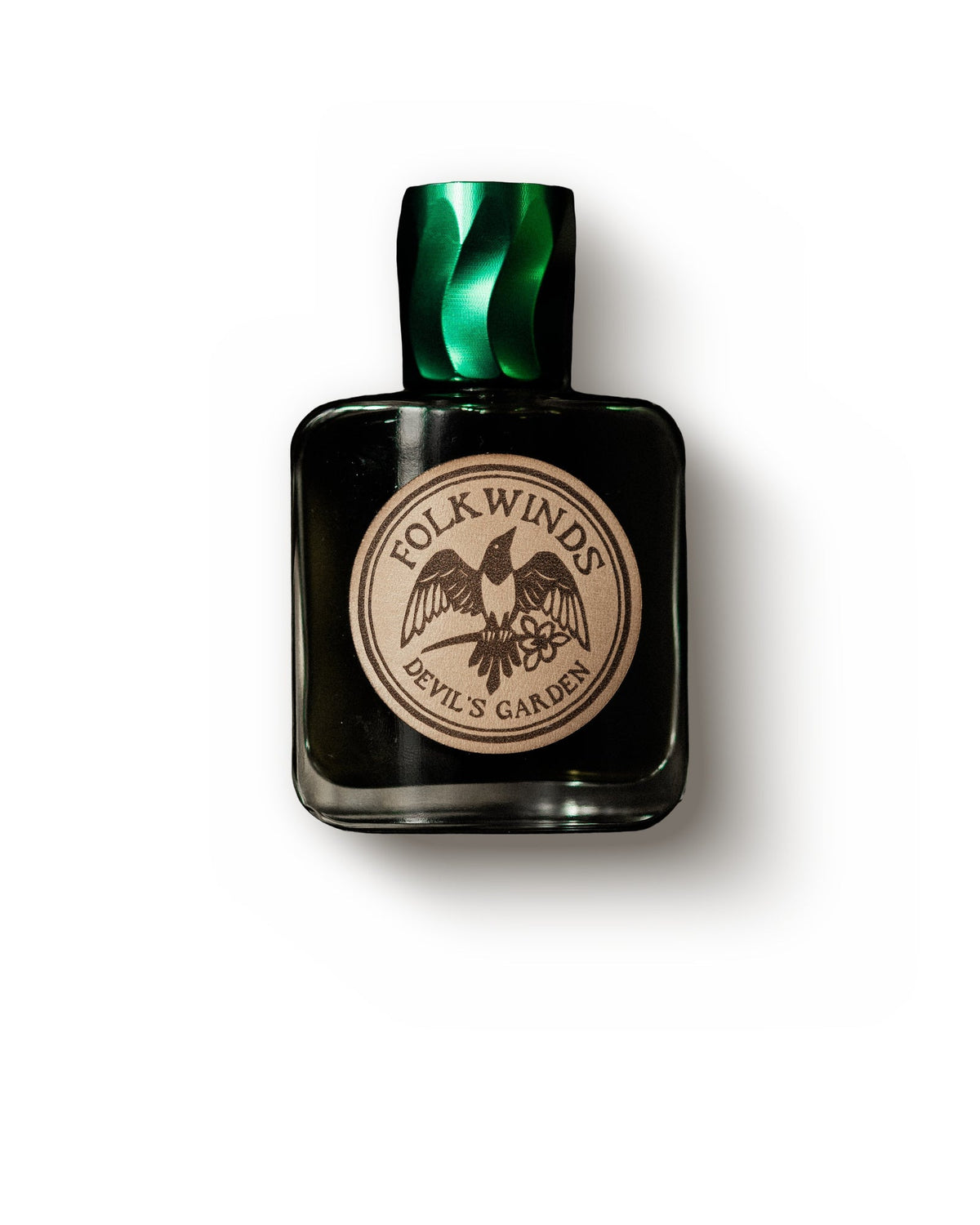
More by this noseJasper No Kodo 2Jasper no Kodō IIIDevil's Garden
The Maison

Natural perfumery built mostly on American materials, many of them co-extracted.
Folkwinds smells like the edge of a forest after weather has moved through it. Formulas over 90% natural, from white ambergris and deer musk to floral absolutes and sandalwood, leaning strange and beautiful rather than polite. Expect fermented fruit, cold resins, damp bark, smoke, and orris so dense it reads as a texture instead of a note. Some scents return as numbered reworkings, like Jasper no Kodō II and III, and others are fixed limited editions, like Midwinter Storm at 50 bottles.
- Known for
- American-sourced naturals, co-extractions, agarwood

EVERY DECANT
From the original bottle to your door
We buy the original flacon at full retail price, direct from the house.
A medical grade Socorex syringe takes the exact millilitres straight from the flacon.
Packed into the hot foiled box and handed to DHL, every duty already paid. How a decant is made
More from Folkwinds
You may also like