
Xerjoff
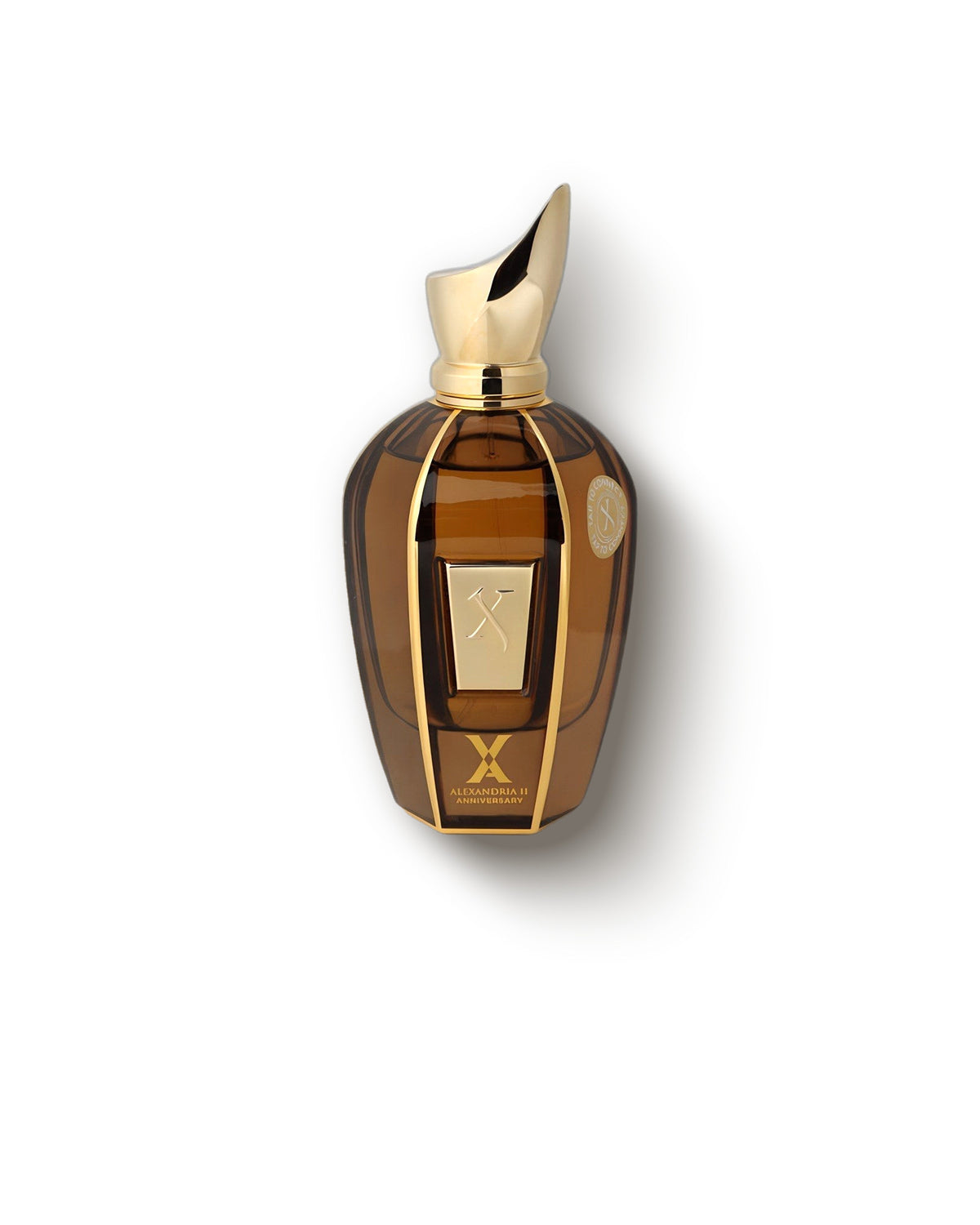
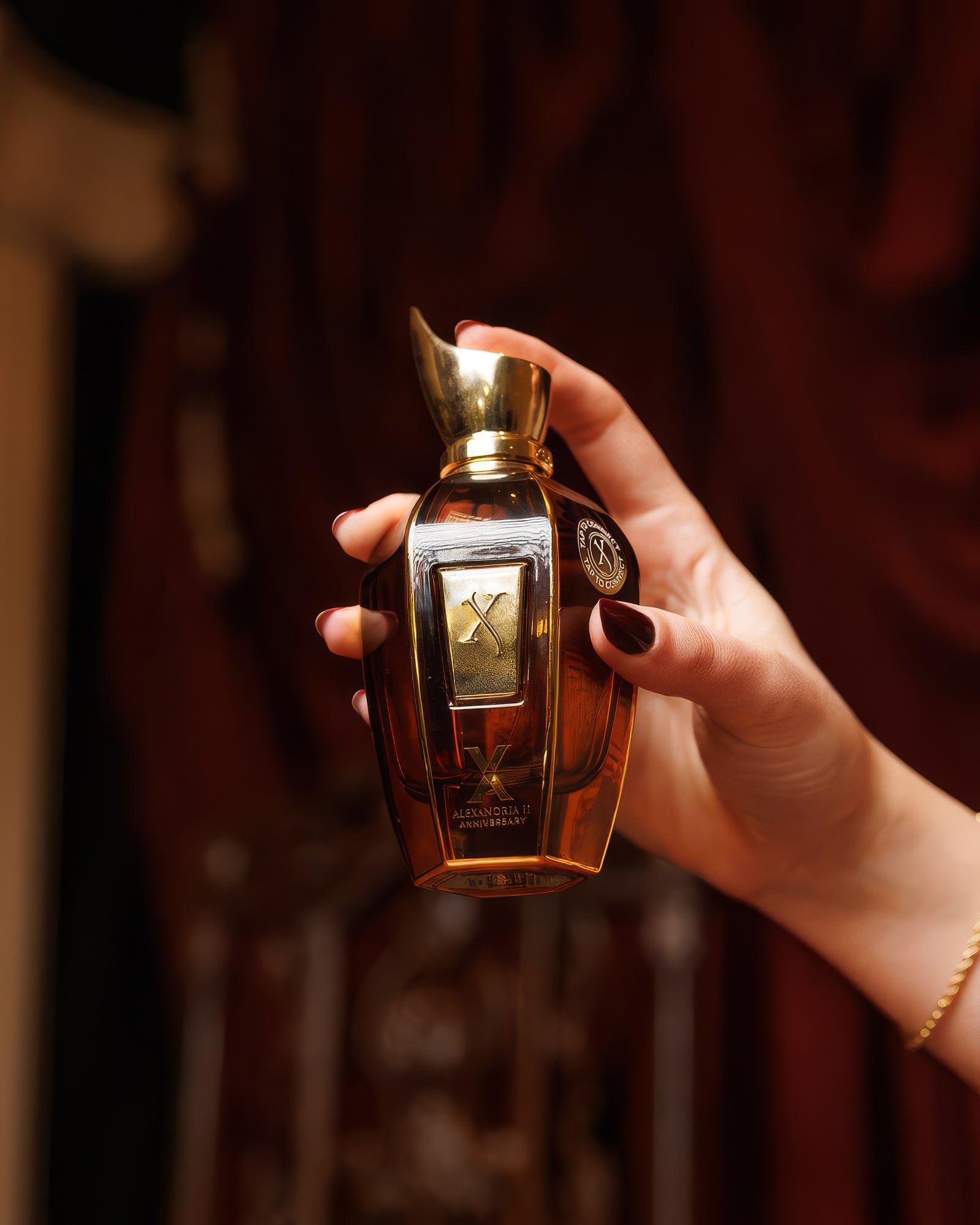
Alexandria 2 Anniversary
The Story
Alexandria II is Xerjoff's homage to the old Arabian art of perfumery and to Alexandria itself as a crossroads of trade and cultures. The Anniversary edition sets precious Tarakan oud from Borneo in a resinous heart of amber, and that oud is the material the rest of the composition is built to carry.


Oud
What a tree makes when it is wounded
A dense, resinous wood that smells warm and slightly medicinal, with a leathery, animal-tinged smokiness and a sweet, almost barnyard funk underneath. It feels ancient and brooding, wrapping the skin in something thick and quietly powerful.


Powdery
Soft hush of dressed skin
A velvety, slightly dry softness of iris root, violet, and fine talc, like face powder or clean linen warmed by skin. It feels intimate, refined, and nostalgic, blurring a fragrance into a gentle, cushioned haze.


Aromatic
Crushed herbs in cool air
The green, camphorous coolness of lavender, rosemary, sage, and thyme, like herbs bruised between the fingers. It feels clean, invigorating, and a touch austere, the crisp backbone of a classic barbershop freshness.


Fresh Spicy
Cool bite of cracked pepper
Pink pepper, cardamom and ginger, spice that prickles rather than warms. It fizzes near the top of a fragrance, dry and faceted, closer to crushed peppercorns and a split cardamom pod than to anything simmering in a kitchen. Bright, never comforting.


Musky
Warm breath of clean skin
A soft, slightly animalic warmth that smells like clean skin and freshly dried laundry, intimate and faintly sweet. It hums quietly underneath a fragrance, a second skin that only registers when someone is already standing close enough to catch it.


Animalic
Skin, fur and something not quite tame
A raw, body-warm muskiness that reads of skin, hair and fur, sometimes sweet and powdery, sometimes sharp and faintly feral. At its best you cannot tell where the perfume stops and the wearer starts. At its strongest, it is the reason some people back away.


Lavender
Cool herbal blue from a sunlit hillside
What it is
The flowering tops are cut at peak bloom and go straight to the still, the purple spikes giving up a pale oil. Solvent extraction yields a darker absolute instead. Provence and Bulgaria supply most of it.
How it smells
Sharp and green at first, almost minty, with a cool camphor lift over soft floral sweetness. The dry-down warms into hay, faint vanilla and a powdery calm. True lavender is rounder and sweeter than the lavandin hybrid.
In perfumery
Set it against oakmoss, coumarin and tonka and you have a fougere, the barbershop structure behind countless aromatic masculines. Lavender runs from the top into the heart, cooling bright florals and softening citrus colognes.
Good to know
Those Provence fields the tourists photograph are mostly lavandin, a sterile hybrid that yields far more oil per hectare. True lavender is retreating uphill: a bacterial disease carried by sap-sucking insects has pushed plantings to cooler altitudes.


Bulgarian Rose
The fresh dawn breath of the Rose Valley
What it is
Damask roses around Kazanlak, in the valley Bulgaria named after them. Three to four tonnes of blossoms go into the still for a single kilo of rose otto. Solvent extraction gives a deep red absolute.
How it smells
Dewy and lemon-bright on top, then honey, then a velvet spice underneath. It is the clearer of the two great damask roses. Give it time and a clove warmth surfaces, with something waxy and close to black tea.
In perfumery
Transparency is what perfumers want from it: it holds its shape next to patchouli, oud, sandalwood or something fruity like lychee, and most of the great rose fragrances lean on it.
Good to know
The harvest is three or four weeks, mid-May into June, and that is the whole year. Pickers are out before sunrise because the day's heat drives the oil off. Left somewhere cool, the otto crystallises in the bottle.
Cumin
The spice that smells like a person
What it is
Cook with it and it is a kitchen spice. Distil it and it turns into something closer to a body. The crescent-shaped seeds carry cuminaldehyde, one compound doing both jobs: the food and the flesh.
How it smells
Hot, dusty and green at the top, then unmistakably skin. A trace reads as warmth off a collarbone. A little more and it is a shirt worn two days running. Underneath sits something nutty and oddly comforting.
In perfumery
Perfumers keep it to fractions of a percent, at the heart, where it puts a carnal pulse under rose, leather, labdanum and orange blossom. It warms several oriental classics. One drop too many tips the whole formula.
Good to know
Cumin's sweaty warmth sits close enough to the smell of skin that nobody is neutral about it: the same skin, the same dose, and one person reads intimate while the next reads unwashed.


Cardamom
Green spice cracking open with citrus heat
What it is
Pickers take the pods before they ripen, which means doing it by hand. A ginger relative from the forests of southern India, now farmed widely in Guatemala. The seeds inside are what gets distilled.
How it smells
Crack one and you get cool eucalyptus lift over warm pepper, lemon peel and a little pine resin. There is a smoky breadiness in it too, the smell of chai. Sharp and effervescent first, then soft and balsamic.
In perfumery
It sits between top and heart, a spice sparkle that stays cool, letting a composition move from citrus into woody amber without the weight of clove or cinnamon. Rose, leather and oud all take it well.
Good to know
The pod is packaging. Sealed, it keeps the oil intact; cracked, the aroma starts escaping straight away, which is why distillers work fast and why pre-ground cardamom is a ghost of the whole pod.

Tarakan Oud
Precious Bornean agarwood in a resinous amber heart
What it is
Oud is the dark resin an agarwood tree lays down in its heartwood to seal a wound, and the oil drawn from that wood. This one is Tarakan oud from Borneo. Tarakan lies in North Kalimantan, the Indonesian province in the north-east of Borneo.
How it smells
Bornean oud is usually counted among the lighter agarwoods: camphor and clean, cool wood over a soft sweetness, with little of the barnyard weight of Indian oils. The heart it sits in is resinous, where the oud meets amber, civet and the dark, smoky root of cypriol.
In perfumery
Xerjoff sets it in the heart with amber, civet, cypriol, Tuscan orris, wormwood, mint and clary sage, after an opening of lavender, rose and spice. Australian sandalwood, musk and Madagascan vanilla wait at the base, a warm embrace for the drydown.
Good to know
The original Alexandria II lists precious Laotian oud in its base. The Anniversary edition, which the house made to honour both Alexandria and Alexandria II, names Tarakan oud from Borneo in its heart.


Civet
Animal warmth that makes flowers bloom indecent
What it is
In modern perfumery a civet note usually means a synthetic civet: civetone-type molecules, which echo the musky warmth of real civet paste, blended with other animalic notes.
How it smells
Warm, musky and faintly faecal-sweet, with a honeyed, leathery depth and a low tobacco hum. Harsh when concentrated, it turns golden at a trace, where it reads as skin rather than animal.
In perfumery
Used in traces, as base and fixative, civet makes jasmine and rose smell as if they were growing on a living body rather than sitting in a bottle. Animalic chypres, orientals and old-school florals run on it.
Good to know
The note is named for the civet, a nocturnal, cat-like animal, and the paste perfumers once relied on came mainly from the African civet. It is not the palm civet behind kopi luwak coffee: same family, different animal.


Amber
A warm resinous glow built, not harvested
What it is
There is no amber tree. Perfumers assemble the smell from labdanum, the sticky gum that bleeds off a Mediterranean rockrose in summer heat, plus benzoin and vanilla. The fossilized resin in museum cases is odorless on skin.
How it smells
Honeyed and faintly animalic at first, then it settles into golden powdery warmth: beeswax, old tobacco, worn leather, a thread of smoke underneath. It stays close to the skin rather than filling the room.
In perfumery
It sits at the base and holds everything above it in place, which is why oriental compositions lean on it so hard. Vanilla and patchouli push it sweet; more resin, spice and dry herbs push it austere.
Good to know
The word once meant ambergris, the waxy secretion of sperm whales, and the confusion never cleared. The trade now uses amber for two things: this resin accord, almost always plant and synthetic, and the ambergris substitutes like Ambroxan.


Orris
Violet powder from a root dried for years
What it is
Iris grown for its roots, not its flowers, in the hills of Tuscany. The rhizomes are dug, dried, then left three to five years before anyone grinds and steam-distils them into a waxy ivory butter.
How it smells
Cool and powdery, a violet with no sweetness in it, closer to face powder and soft suede than to a flower. Raw carrot and flour, damp soil underneath, a faint metallic shine over all of it.
In perfumery
Perfumers use it for body: a little in the heart or base rounds off sharp florals and raw woods and leaves powder behind. Violet, rose and ambrette are its company, and it underpins every great iris fragrance.
Good to know
Dig the root up and it has almost no scent, and nothing like a violet. The irones form as the dried rhizome oxidises, so the years make the violet, not the plant. A tonne gives two kilos of butter.

Cypriol Oil or Nagarmotha
A wild river sedge that smells like oud
What it is
This sedge grows wild in the wet ground along Indian rivers. Its roots, dried and steam-distilled, give a thick dark oil, which is how a riverbank sedge became one of perfumery's prized dark materials. India calls it nagarmotha.
How it smells
Vetiver and patchouli crossed with dry tobacco and charred wood, then smeared with something leathery. It has a black-pepper bite that comes from rotundone, and it carries: diffusive, resinous, still there hours later.
In perfumery
It sits in the base and does two jobs: fixative, and the dark oud-like heart of a woody composition without a single animal material. Vetiver, patchouli, saffron, rose and incense all sit well on top of it.
Good to know
Rotundone is the reason a Syrah smells peppery, and it is one of the most odour-active things in this oil. The same molecule, the same bite, one in a wine glass and one in a bottle of perfume.

Wormwood
Bitter silvery herb of absinthe and vermouth
What it is
The bitter green heart of absinthe, and of traditional vermouth too: a silvery, finely cut shrub whose flowering tops and leaves distil into a dark oil thick with thujone.
How it smells
Sharp, cold and relentlessly bitter, with a camphorous, anise-tinged prickle on top and a faint blue-chamomile hush beneath it. Under that, a warm medicinal wood. Read it as crushed sage and mugwort, never anything sweet.
In perfumery
It works from the top into the heart, sharpening fougeres and chypres with a green bite and an unmistakable absinthe signal. Lavender, citrus, jasmine and oakmoss all take it well, and it is dosed in traces.
Good to know
Thujone made wormwood notorious. It is restricted in food and long took the blame for absinthe's supposed madness, though modern science points squarely at the alcohol. Wermut, the German name for the plant, is where vermouth comes from.


Mint
Two mints, one icy and one sweet
What it is
Two plants, two different jobs. Peppermint carries menthol and reads cold. Spearmint carries carvone instead and reads sweet, round and herbal. Both are steam-distilled from leaves and flowering tops, and swapping one for the other changes everything.
How it smells
Peppermint is piercing and icy, with a camphor edge that clears your head whether you asked or not. Spearmint is gentler: sweet, faintly fruity, no cold bite. Both start green and watery, then settle to a clean herbal hum.
In perfumery
A top note, and a fast one: it flashes through fougeres, colognes and fresh masculines, then it is gone. Peppermint handles the bracing openings. Both work with lavender, basil, citrus and, less obviously, chocolate.
Good to know
Menthol does not cool anything. It switches on the nerve receptors that report cold, so your brain reads cold where there is none. That is the trick behind toothpaste and gum, and spearmint cannot do it.
Clary Sage
Herbal ambery haze with a wine-like lift
What it is
Cut in flower, this tall biennial of the mint family is steam-distilled from its tops and leaves; a heavier concrete and absolute are made too. Nothing about the plant hints at what perfumery does with it.
How it smells
Green and hay-like at first, with a nutty edge and something distinctly winey, as if the herb had been left to ferment. Underneath runs a clean musk. It dries down warm, rounded and faintly tobacco-sweet.
In perfumery
Perfumers place it between top and heart, where it adds roundness and holds the volatile notes down a little longer. It is the quiet backbone of the fougere, sitting beside lavender, bergamot and oakmoss in the barbershop classics.
Good to know
Clary sage gives sclareol, the natural starting point for Ambrox, the synthetic that stands in for ambergris in modern perfumery. A field herb underwrites the amber category. Folk tradition read the name as clear-eye, after an old remedy for sore eyes.


Australian Sandalwood
Drier, resinous cousin of the milky woods
What it is
The tree is pulled out of the ground, not cut down: its roots hold the richest oil. A hemiparasite of Western Australia's dry rangelands, it is chipped and steam-distilled over several days.
How it smells
Drier and sharper than the Indian wood, with a resinous, faintly bitter edge where you expect cream. A soft milky balsam sits underneath, a little spice, a little amber. It dries down suede-smooth and stays for hours.
In perfumery
In the base it holds everything else still, smoothing sharp florals and deepening rose, amber and incense. Vetiver and patchouli are natural partners. It stands in for vulnerable Mysore sandalwood, and its supply can be traced.
Good to know
The colony ran on it. By 1848 sandalwood rivalled wool and whale oil among Western Australia's leading exports, shipped to Asian incense markets decades before anyone distilled the oil. Most is still cut from wild rangeland under a state quota.


Vanilla
Cured orchid pods, custard and faint smoke
What it is
Green pods come off the orchid vine smelling of almost nothing. The scent is made, not found: months of blanching, sweating in the sun and slow drying before the vanillin appears. Mexico first, Madagascar now.
How it smells
Custard and caramel up front, then something darker underneath: dried fruit and a thread of tobacco smoke. It turns powdery as it dries and sits close to the skin. Real cured vanilla reads deeper than vanillin alone.
In perfumery
Perfumers use it to round off edges. Anything too sharp, too green, too austere gets warmth and body from a vanilla base, which is why it anchors many oriental and gourmand builds alongside tonka, amber, sandalwood and spice.
Good to know
Every flower opens for one day. Miss it and there is no pod, so all of it is pollinated by hand, a trick devised by Edmond Albius, a twelve-year-old enslaved boy on Réunion. Most vanilla flavour today is synthetic.


Musk
Clean synthetic musk, soft as warm skin
What it is
In this perfume the musk is synthetic: modern musk molecules rather than any animal material. The family is wide, from clean, sweet Galaxolide to the macrocyclic musks, and it is the backbone of modern perfumery, chosen for softness, consistency and staying power.
How it smells
Clean, soft and quietly warm: hot-ironed linen, fresh cotton, skin rather than fur. Some musks lean sweet and faintly fruity, others powdery, but all share a smooth, rounded warmth that settles close to the skin and stays there.
In perfumery
Musk is the floor a composition stands on: it fixes what sits above, stretches the wear and adds that second-skin glow. Synthetic musks do this with great consistency from batch to batch, softening sharp edges and carrying a scent well into its drydown.
Good to know
The first synthetic musk was found by chance: in 1888 the chemist Albert Baur, working on explosives, noticed that one of his compounds smelled of musk. The musks perfumers use today are later, refined generations, chosen for their softness and how well they last.
Fragrance Character
Lavender and Bulgarian rose open together, spiced immediately by cumin and cardamom, herbal glints of mint and clary sage flickering at the edges. Oud, civet and orris give the heart its animal depth, resinous and grand without apology. Australian sandalwood, vanilla and musk hold the drydown for hours, plush and slow-burning.


Longevity
how long it stays on skin
The hourglass reads wear time: how many hours the fragrance keeps speaking before it fades. A bar that barely leaves the start means a few fleeting hours. One that runs the full length carries from morning into evening. Treat it as typical, not promised. Oily skin holds scent far longer than dry.


Sillage
the size of its scent trail
Sillage is French for a ship's wake, and that is exactly what this measures: how much of the scent reaches the room instead of staying on you. Low is a whisper only close friends catch. Enormous fills the room, then keeps filling it after you leave.


Experimental
Built to provoke, not to please
Some perfumes are made to be liked. These are made to be argued about: inky tar, hot rubber, fruit on the turn, metal and fur where you expected flowers. The coin glows for a scent that provokes and dims for one that plays it safe, which is sometimes the point.


Office
Polished, and never louder than the room
Scent is manners in a shared room. At this range it should reach the person across the desk and stop there: tidy citrus, soft musk, pale woods, all of it reading competent and considerate. A glowing coin means nobody has to mention it. A dim one means it travels.


Evening
After dark, when it deepens
Dinner, drinks, the night that runs long. Low light is where ambers, resins and smoky woods stop being polite, and where a plush floral finally blooms. A glowing coin means it is waiting for exactly this hour. A dim one means it did its best work in daylight.


Romantic
Close enough to be felt
A fragrance can hum against skin instead of announcing itself across a table. That is the register here: creamy florals, vanilla, soft musk, a thread of spice, warm enough to make someone lean in. The coin glows when a scent sets that mood and dims when it is more practical than seductive.


Formal
Quiet authority in a dressed-up room
A wedding, a ceremony, a room where everyone has thought about their shoes. What works here is structure, not volume: smooth woods, disciplined florals, soft leather. A glowing coin means it holds its posture all evening. A dim one means it is too casual for the room.


Casual
Easy comfort for unhurried days
Errands, coffee, a slow Saturday with nowhere to be. Nothing here has to impress anyone, so the fit is soft and easy: fresh citrus, light woods, a little warmth off the skin. A glowing coin says yes to all that. A dim one means the fragrance is asking for a bigger night.


Day to Night
where its mood naturally falls
A bar running from sun to moon, reading the hour the fragrance was made for. The more of it that stays gold, the more the scent belongs to daylight and open air. The further the blue reaches back toward the sun, the deeper and warmer it turns: evening, candlelight, low rooms.


Winter
Warmth that carries through cold air
Cold air mutes a fragrance and slows it down, which is why winter belongs to the dense and the warm: resin, smoke, vanilla, leather, ambered spice. The bar reads how well this one pushes back, glowing against the chill instead of thinning out in it.


Spring
Fresh blooms in mild, rising warmth
Mild, humid air lifts a light composition, so the season belongs to dewy florals, green stems, soft powder and citrus you can see through. Alive rather than heavy. The further the green runs along the bar, the more comfortably this one wears in that weather.


Summer
Bright and airy in real heat
Heat does the projecting for you, which is why the wrong perfume turns unbearable by noon. What survives is cool and breathable: sharp citrus, salt air, aromatic herbs, water. Things that refresh instead of cloy. A short bar here means save it for cooler months.


Fall
Spiced warmth for cooling days
As the air cools, the rich materials stop smothering and start reading clearly: dry woods, warm spice, tobacco, amber, fruit gone golden. It is the season perfume turns contemplative. The bar fills according to how naturally this one settles into crisp, cooling days.
Best Worn
Made for winter and autumn after dark, at home in candlelit rooms and dressed-up occasions, where the Tarakan oud beneath the rose has the cold air it needs to carry.
Choose options
The Vibe


The Maison

Italian maximalism done properly, in pours that let you audition the gold.
Xerjoff is built to fill a room and hold it, glossy and confident, an entrance rather than a whisper. There is a lot of sweetness and a lot of polish, but real craft sits underneath the shine, and the gap between the loud first impression and how a composition settles over an evening is exactly why the house rewards sampling.
- Origin
- Turin, Italy
- Founded
- 2007
- Known for
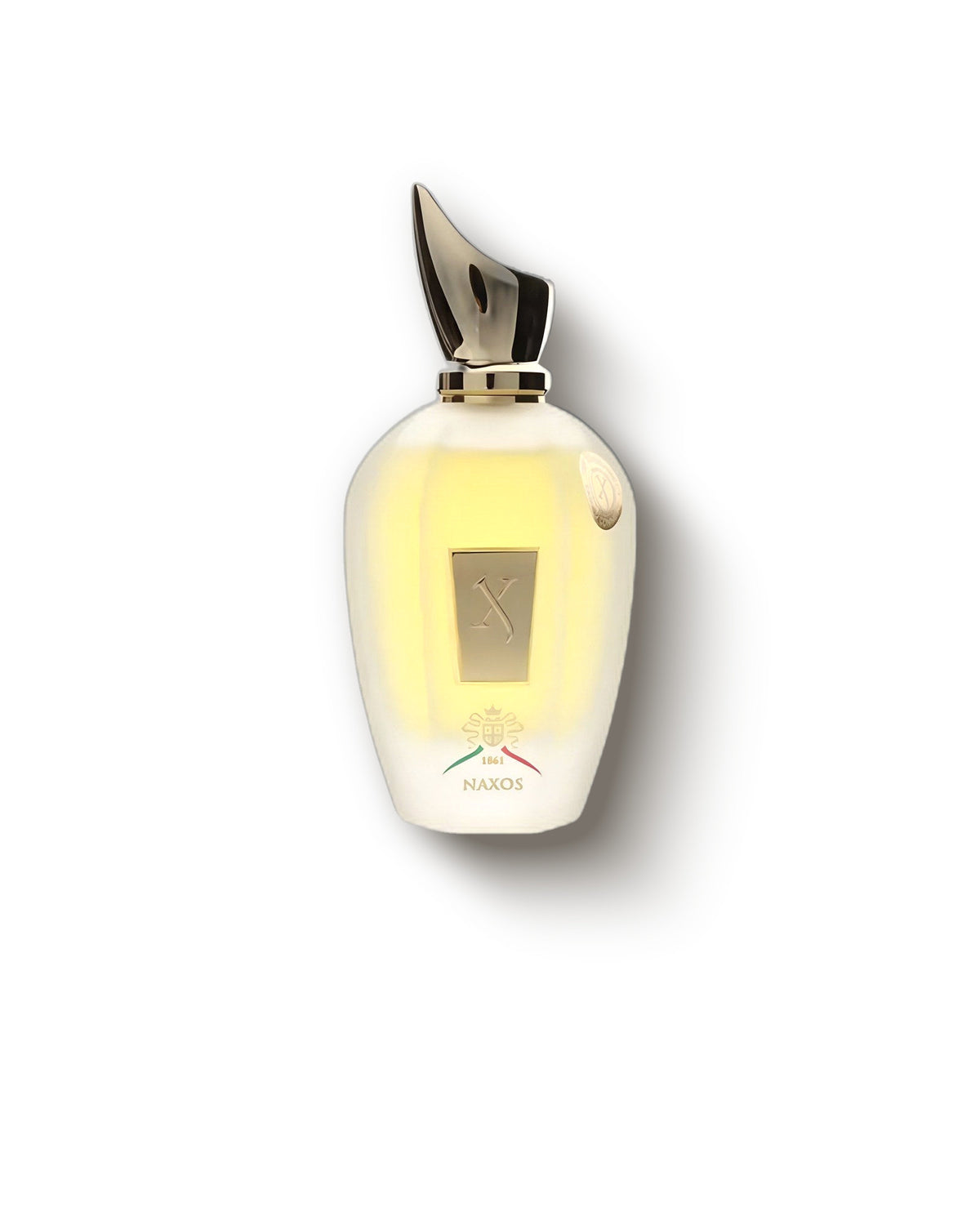
- Naxos, Alexandria II, honeyed tobacco

EVERY DECANT
From the original bottle to your door
We buy the original flacon at full retail price, direct from the house.
A medical grade Socorex syringe takes the exact millilitres straight from the flacon.
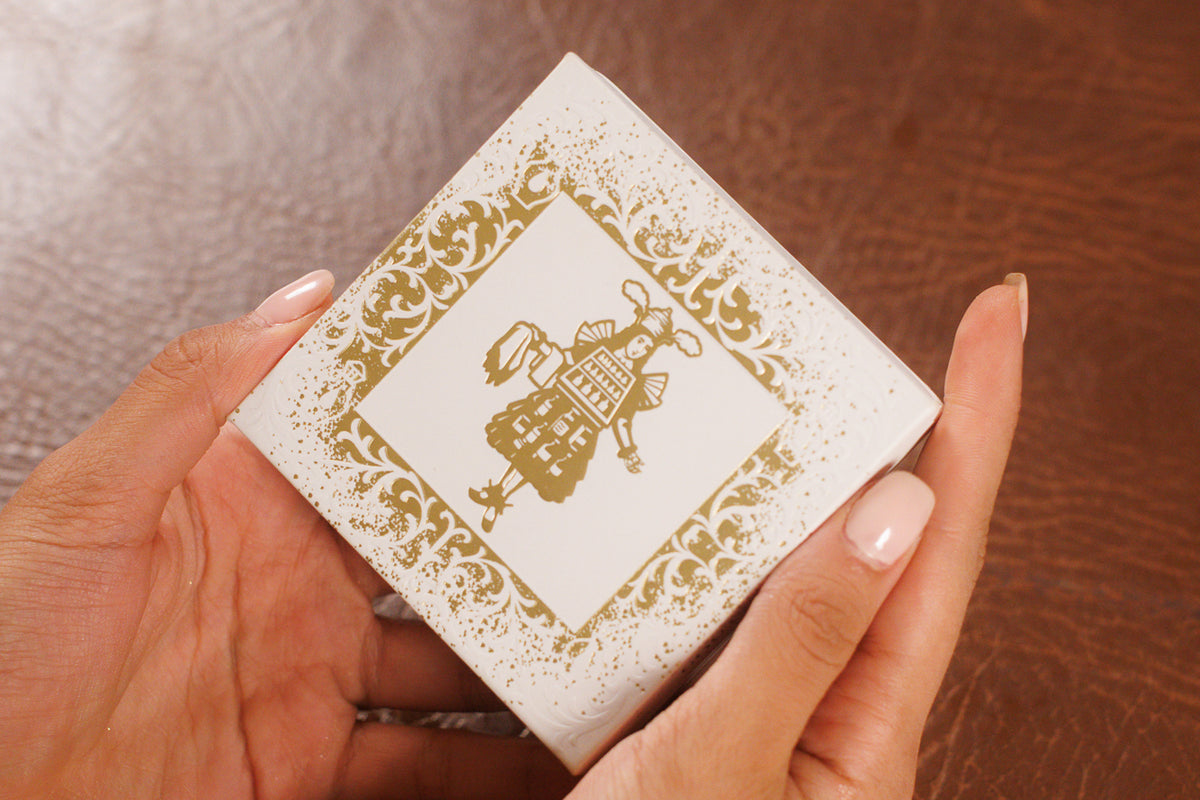
Packed into the hot foiled box and handed to DHL, every duty already paid. How a decant is made
More from Xerjoff
You may also like