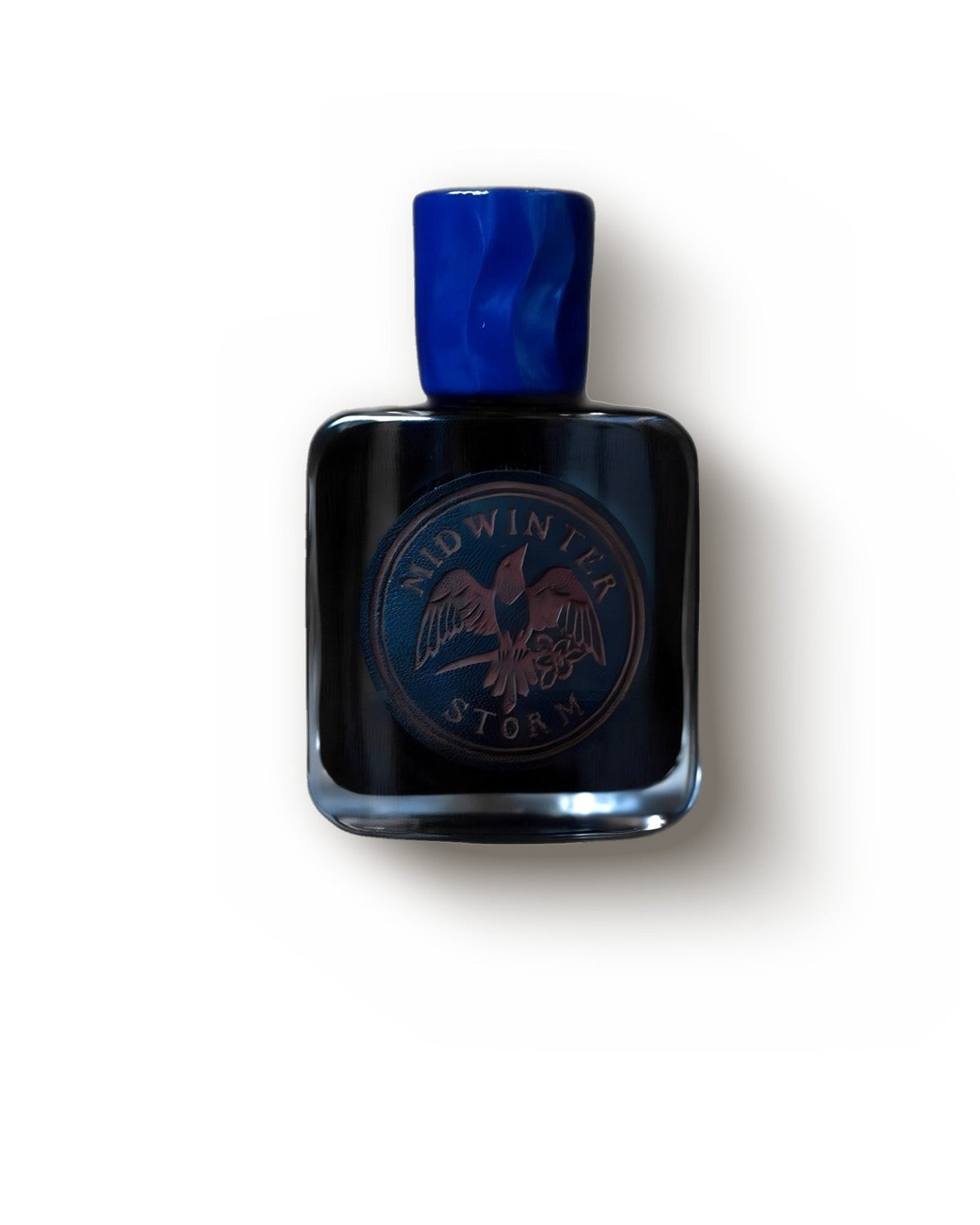
Folkwinds
Midwinter Storm
A História
Midwinter Storm foi concebido como um soliflore de íris de espectro completo, construído a partir de todos os materiais naturais de íris e isolados disponíveis, empilhados nas concentrações mais altas possíveis. A base empoada de íris é sustentada por madeiras de agar de primeira linha, com sândalo ocupando o lugar do benjoim mais convencional. Lançado em 2026 como uma edição estritamente limitada a 50 frascos.


Floral
Um jardim inteiro, nunca uma só flor
Não uma flor, mas a impressão de muitas, geralmente rosa, jasmim e flor de laranjeira apoiadas umas nas outras até que nenhuma seja reconhecível sozinha. Doce, orvalhado, levemente empoado, com néctar por baixo. É o que as pessoas querem dizer quando um perfume cheira a flores e elas não sabem dizer quais.


Amadeirado
O veio seco da madeira cortada
O cheiro de aparas de cedro, sândalo e raízes secas de vetiver, um calor resinoso de madeira lixada com um leve arranhar de estojo de lápis. Transmite firmeza e compostura: é a espinha dorsal discreta que faz um perfume soar sério e duradouro.


Empoado
O silêncio macio da pele vestida
Uma maciez aveludada e levemente seca de raiz de íris, violeta e talco fino, como pó de arroz ou linho limpo aquecido pela pele. Parece íntimo, refinado e nostálgico, e desfoca a fragrância numa névoa suave e acolchoada.


Fresco
Água fria, ar livre, pele lavada
Água fria, algodão lavado, um ar que ainda não carrega nada. Esse frescor pode puxar para o cítrico vibrante ou para o aquático salgado, mas o efeito é o mesmo nos dois casos: o que se percebe é limpeza, e não um perfume, como um cômodo que parece outro cinco minutos depois que você abre a janela.


Lactônico
leite cremoso e pele quente
Uma maciez cremosa e leitosa que lembra leite morno fervido, a nata do leite ou a polpa de coco sem a doçura. Sente-se aveludada e envolvente, suavizando flores e madeiras em algo terno e levemente nostálgico, mais o calor da pele do que a doçura de uma sobremesa.


Sidra Gelada
Frutas do pomar aquecidas, levemente alcoólicas
O que é
A sidra não é destilada para uso em perfumaria, então a nota é montada: ésteres de maçã para o suco, um fio de acidez acética para a fermentação, açúcar e especiaria para o calor.
Como cheira
Maçã madura amassada, suculenta e doce, com um brilho avinagrado e um calor suave de fermento por trás. Algumas versões saem quentes e especiadas, outras espessas e melosas, como sidra prensada de frutas congeladas. Aconchegante, levemente embriagada.
Na perfumaria
Um acorde de coração para o outono, que combina bem com canela, caramelo e madeiras suaves. Vende mais a estação do que a bebida, por isso aparece em fragrâncias de outono e em metade das velas da prateleira.
Vale saber
A elevação de maçã geralmente vem da alfa-damascona, uma rosa-cetona. Ela tem aroma de maçã e ameixa, com um fundo floral, então uma nota de sidra carrega discretamente um toque de rosa.

Especiaria de Centeio
Crosta escura de alcaravia do pão de centeio quente
O que é
A Especiaria de Centeio é a faceta quente e aromática do grão de centeio e de seu pão, e não um óleo destilado único. Os perfumistas a reconstroem a partir de matérias de semente do tipo alcaravia, cominho e funcho, sobrepostas a acordes de grão tostado e de fermento, ecoando o pão escuro em que a farinha de centeio se transforma.
Como cheira
Uma alcaravia adstringente e apimentada conduz, contornada pelo frescor do anis e por um cominho quente. Abaixo ficam a crosta tostada, um travo de fermentação natural e uma doçura levemente terrosa de melaço. A impressão geral é seca, granulosa e rústica, mais padaria salgada que sobremesa, com um calor persistente de sementes.
Na perfumaria
Uma ponte entre gourmand e especiaria: empresta calor comestível a bases de âmbar, tabaco e couro, e combina com café, figo, imortela e madeiras escuras. Também ancora o efeito franco de pão e grão do Rye Bread da Demeter.
Vale saber
A alcaravia, semente que define o caráter do centeio, não é o grão em si, mas uma especiaria assada na massa. Sua pungência vem da S-carvona, a gêmea em espelho da R-carvona que faz a hortelã-verde cheirar fresca e doce, os mesmos átomos montados ao contrário.


Mirtilo
Uma fruta sem nenhum extrato por trás
O que é
Esprema um mirtilo e você obtém suco, não óleo. Há pouco demais para destilar, então nenhum óleo essencial de mirtilo existe em escala comercial. O que você sente é montado do zero.
Como cheira
Fresco e azul-violeta, cristalizado, de contornos nítidos, mais a ideia do mirtilo do que a fruta em si. Construído a partir de botânicos, com osmanthus e folha de violeta, ele se torna mais nebuloso e mais parecido com geleia, deslizando para flores e pó.
Na perfumaria
Ele vive na abertura, valorizando violeta, madeiras suaves e almíscar, e é fugaz: sem almíscares ou lactonas para sustentá-lo por baixo, a baga desaparece antes que a primeira hora termine.
Vale saber
Sem nada engarrafado para copiar, o mirtilo de cada perfumista é uma opinião sobre o que o mirtilo deveria cheirar. É por isso que dois deles raramente concordam, um inclinando para o doce de goma, o outro para violeta e poeira.


Abeto Branco
Abeto doce com um toque de casca de laranja
O que é
O abeto das cristas dos Apalaches e do leste do Canadá, destilado de agulhas e ramos frescos recém-cortados. Esprema um punhado e há cítrico nele, um leve toque de casca de laranja sob a resina.
Como cheira
Mais redondo e mais doce que os óleos de agulha de pinho ou abeto, que por comparação ficam afiados e medicinais. Verde e crocante no início, depois balsâmico e suavemente amadeirado, com uma faceta frutada que o impede de ficar austero.
Na perfumaria
Frescor de ar frio para estruturas amadeiradas e fougère, situando-se do topo ao coração. Cedro, bálsamo de abeto, vetiver e cítricos combinam bem com ele. Serve bem composições de inverno, onde o ponto é o ar limpo, não o calor.
Vale saber
A goma de abeto, resina endurecida do abeto vermelho e do abeto negro, era mascada por toda a América do Norte rural e vendida por John Curtis a partir de 1848 como a primeira goma de mascar comercial do continente. O abeto vermelho também fornece a prezada madeira ressonante dos tampos de violões e violinos.


Raiz de Íris
Pó de violeta vindo de uma raiz seca por anos
O que é
Íris cultivada pelas raízes, não pelas flores, nas colinas da Toscana. Os rizomas são desenterrados, secos e deixados descansando de três a cinco anos antes que alguém os moa e os destile a vapor, obtendo uma manteiga cerosa cor de marfim.
Como cheira
Fresca e empoada, uma violeta sem nenhuma doçura, mais perto do pó de arroz e da camurça macia do que de uma flor. Cenoura crua e farinha, terra úmida por baixo, um leve brilho metálico sobre tudo.
Na perfumaria
Os perfumistas a usam para dar corpo: um pouco no coração ou no fundo arredonda florais afiados e madeiras cruas e deixa um rastro empoado. Violeta, rosa e ambrette são suas companhias, e ela sustenta toda grande fragrância de íris.
Vale saber
Recém-desenterrada, a raiz cheira a verde e acre, nada parecido com uma violeta. As ironas se formam à medida que o rizoma seco oxida, então são os anos que fazem a violeta, não a planta. Uma tonelada rende dois quilos de manteiga.


Musgo de Carvalho
A alma verde e úmida do chão da floresta
O que é
Não é musgo de forma alguma, e sim um líquen, raspado da casca do carvalho e de outras árvores caducifólias na Europa temperada, na Rússia e no Norte da África. Solventes transformam o material colhido num concreto escuro e viscoso e, depois, no absoluto que os perfumistas de fato usam.
Como cheira
Pedra molhada, casca úmida e, por baixo, algo de tinta e de couro, seco e levemente amargo. Não é um verde fresco: é o chão frio sob árvores antigas depois que a chuva encharcou a terra.
Na perfumaria
A espinha dorsal do chypre: uma nota de fundo que dá à fragrância sua sombra e sua estrutura, classicamente sob a bergamota, ao lado do ládano e do patchouli. Tudo o que se descreve como musgoso, vintage ou verde-masculino costuma se apoiar nele.
Vale saber
O musgo de carvalho contém dois alérgenos, o atranol e o cloroatranol, potentes a ponto de a UE proibi-los por completo nos cosméticos. Hoje os perfumistas usam versões depuradas, mas foi o limite imposto antes ao próprio extrato que mudou o cheiro do chypre clássico.


Baunilha
Favas de orquídea curadas, creme inglês e uma fumaça sutil
O que é
As favas verdes saem da orquídea trepadeira quase sem cheiro. O aroma é construído, não encontrado: meses de escaldamento, suadouro ao sol e secagem lenta até a vanilina aparecer. Primeiro o México, hoje Madagascar.
Como cheira
Creme inglês e caramelo na abertura, depois algo mais escuro por baixo: frutas secas e um fio de fumaça de tabaco. À medida que seca, fica empoada e permanece rente à pele. A baunilha curada de verdade soa mais profunda do que a vanilina sozinha.
Na perfumaria
Os perfumistas a usam para suavizar arestas. Tudo o que é afiado demais, verde demais, austero demais ganha calor e corpo com uma base de baunilha, e é por isso que ela ancora muitas composições orientais e gourmand, ao lado de fava tonka, âmbar, sândalo e especiarias.
Vale saber
Cada flor se abre por um único dia. Perdido esse dia, não há fava, por isso toda a baunilha é polinizada à mão, um truque criado por Edmond Albius, um menino escravizado de doze anos na ilha da Reunião. Hoje, a maior parte do sabor de baunilha é sintética.


Tigerwood Prateado
A resina destilada e o acorde que a imita
O que é
Cerne resinoso, e o óleo destilado a partir dele. Uma única palavra abrange lascas queimadas sobre brasas, attars que variam conforme a espécie, o solo e o alambique, e os acordes amadeirado-ambarados criados para imitá-los. A maior parte do oud comercial é o acorde.
Como cheira
Um óleo destilado se transforma: fermentado e de estábulo, depois couro, fruta seca, mel, depois resina e pele quente, raramente igual duas vezes numa mesma noite. Um acorde permanece imóvel: seco, defumado, medicinal, inalterado do primeiro ao último minuto.
Na perfumaria
Colecionadores perseguem regiões da mesma forma que apreciadores de vinho perseguem o terroir: o Hindi fecal, o Cambodi frutado, o Bornéu canforado e, acima de todos, o kyara, o grau mais raro e prezado. O acorde existe porque nada disso pode ser reproduzido em escala.
Vale saber
A Aquilaria está listada no Apêndice II da CITES, que regula o comércio em vez de proibi-lo. Lascas, contas e esculturas circulam por meio de licenças. O frasco acabado na prateleira, não.

Malinau Selvagem
Madeira de agar azul-verde vaporosa, cânfora sobre fruta madura
O que é
A madeira de agar de Bornéu, uma das florestas tropicais mais antigas do planeta, se divide entre o Kalimantan indonésio, onde fica a regência de Malinau, e os estados malaios de Sabah e Sarawak. Sua espécie e seu solo conferem um perfil resinoso que nenhum oud sintético reproduz.
Como cheira
Alto e vaporoso, um erguer azul-esverdeado: cânfora com um assovio mentolado e frio, por vezes lido como eucalipto ou caneta marcadora, deslizando sobre pera, pêssego, damasco e frutas vermelhas suaves. Por baixo, uma madeira dourada limpa, nunca ácida. Copa da floresta, não o solo da floresta.
Na perfumaria
Uma nota de fundo que permanece leve em vez de pesada, de modo que uma composição ganha horas sem ganhar peso. Combina bem com rosa, sândalo, âmbar e florais verdes. Usada pura em um attar, a cânfora se dissipa e revela um coração frutado-amadeirado.
Vale saber
Onde um óleo de Assam abre em feno e estábulo, a cânfora azulada de Borneo mantém tudo acima do nível do solo: mais seco, mais fresco e mais frutado do que um Cambodi adocicado. A madeira genuína de Borneo é escassa e lenta de destilar, por isso o óleo de origem única permanece raro.


Malaccensis Tailandês Púrpura
Couro em brasa com um fio frutado
O que é
Oud destilado na Tailândia, em sua maior parte das florestas da fronteira leste em torno de Trat, embora os alambiques tailandeses trabalhem com mais de uma espécie de Aquilaria. A madeira costuma envelhecer por anos antes de chegar à panela.
Como cheira
Brasa lenta em vez de chama: couro tânico, especiarias quentes e tabaco adocicado, com um fio frutado e brilhante correndo por baixo. A borda de cânfora mantém tudo revigorante, quase antisséptico, e um leve calor animal repousa ao fundo.
Na perfumaria
Fica entre o estilo cambojano, doce, e o hindi, animálico: profundidade de couro defumado sem o odor de estábulo, e por isso destiladores artesanais e blenders recorrem a ele. Os óleos de Trat são os mais procurados de todos.
Vale saber
Trat divide a cadeia de Cardamomo com o Camboja, então os óleos da fronteira podem ecoar a doçura Khmer e trazer bem mais couro e fumaça. Os anos de envelhecimento antes da destilação é que arredondam a aspereza medicinal.


Santalóis
As duas moléculas que são o próprio sândalo
O que é
Reduza o sândalo ao que de fato tem cheiro e chega-se a isto: um álcool sesquiterpênico em duas formas, alfa e beta, que juntas somam de sessenta a oitenta e cinco por cento do óleo. Ele é isolado a partir desse óleo.
Como cheira
Amadeirado e cremoso, exatamente aquilo que seu nariz chama de sândalo. O alfa é a metade leitosa e suave; o beta é mais seco e picante. Juntos, se estendem longos, redondos e lactônicos, nunca ásperos como costumam ser os químicos amadeirados.
Na perfumaria
Uma nota de fundo e fixador, usada para reconstruir o caráter do sândalo com uma constância que o óleo natural não consegue garantir. Ela aprofunda e autentica um acorde de sândalo, embora a maior parte do efeito no trabalho moderno seja levada por outros sintéticos amadeirados.
Vale saber
O sândalo é superexplorado, então pesquisadores reconstruíram a via do santalol em levedura de padeiro, produzindo os dois isômeros a partir do açúcar. Isso deixa as árvores na terra, ainda que o resultado seja uma mistura de sesquiterpenóis e continue sendo uma prova de conceito.
Caráter da Fragrância
A abertura é ácida e vibrante, com cidra de gelo e centeio cortando através de um brilho de abeto branco, antes de a íris chegar em plena força, amilácea e fria, emoldurada por musgo de carvalho e um sussurro de aglaia. No coração, a raiz de íris suaviza quase imperceptivelmente, com baunilha e lótus azul emprestando uma doçura floral discreta, sem jamais diluir o pó. O drydown é profundo e próximo, com oud de Bornéu e oud tailandês se fundindo ao sândalo em algo resinoso e quente sobre a pele, com a íris ainda presente, mas agora mais sentida do que cheirada.


Durabilidade
quanto tempo permanece na pele
A ampulheta indica o tempo de duração: quantas horas a fragrância continua falando antes de se apagar. Uma barra que mal sai do início significa poucas horas fugazes. Uma que percorre toda a extensão vai da manhã até a noite. Considere isso um valor típico, não uma promessa. Pele oleosa segura o perfume por muito mais tempo que pele seca.


Sillage
o tamanho do seu rastro
Sillage é a palavra francesa para o rastro de um navio, e é exatamente isso que se mede aqui: quanto do perfume chega ao ambiente em vez de ficar em você. Baixo é um sussurro que só os amigos próximos percebem. Enorme preenche o ambiente e continua preenchendo depois que você sai.


Experimental
Feito para provocar, não para agradar
Alguns perfumes são feitos para agradar. Estes são feitos para gerar discussão: alcatrão escuro como tinta, borracha quente, fruta passando do ponto, metal e pelo onde você esperava flores. A moeda se acende para um aroma que provoca e se apaga para um que joga na segurança, o que às vezes é justamente a ideia.


Escritório
Refinado, e nunca mais alto que o ambiente
Num espaço compartilhado, perfume é questão de boas maneiras. Nesse nível, ele deve alcançar a pessoa do outro lado da mesa e parar por aí: cítrico comportado, almíscar suave, madeiras claras, tudo transmitindo competência e consideração. Uma moeda acesa significa que ninguém vai precisar comentar. Uma apagada significa que ele vai longe.


Noite
Depois que escurece, quando ganha profundidade
Jantar, drinques, a noite que se estende. Na luz baixa, âmbares, resinas e madeiras esfumaçadas deixam de ser educados, e um floral aveludado enfim desabrocha. Uma moeda acesa significa que ele espera exatamente por esta hora. Uma apagada significa que ele rendeu o seu melhor durante o dia.


Romântico
Perto o bastante para ser sentido
Uma fragrância pode vibrar junto à pele em vez de se anunciar do outro lado da mesa. É esse o registro aqui: florais cremosos, baunilha, almíscar suave, um fio de especiaria, quentes o bastante para fazer alguém se aproximar. A moeda se acende quando um aroma cria esse clima e se apaga quando ele é mais prático do que sedutor.


Formal
Autoridade discreta em um ambiente de gala
Um casamento, uma cerimônia, um salão em que todos pensaram bem nos sapatos. O que funciona aqui é estrutura, não volume: madeiras lisas, florais disciplinados, couro macio. Uma moeda acesa significa que ele mantém a postura a noite toda. Uma apagada significa que é casual demais para a ocasião.


Casual
Conforto tranquilo para dias sem pressa
Tarefas do dia a dia, um café, um sábado lento sem ter aonde ir. Aqui nada precisa impressionar ninguém, então o que combina é macio e descomplicado: cítrico fresco, madeiras leves, um pouco de calor vindo da pele. Uma moeda acesa diz sim a tudo isso. Uma apagada significa que a fragrância está pedindo uma noite mais especial.


Do Dia à Noite
onde seu clima se encaixa naturalmente
Uma barra que vai do sol à lua e indica a hora para a qual a fragrância foi feita. Quanto mais a barra continua dourada, mais o aroma pertence à luz do dia e ao ar livre. Quanto mais o azul avança de volta em direção ao sol, mais profundo e quente ele fica: noite, luz de velas, ambientes à meia-luz.


Inverno
Calor que atravessa o ar frio
O ar frio abafa um perfume e o desacelera, e é por isso que o inverno pertence ao denso e ao quente: resina, fumaça, baunilha, couro, especiaria ambarada. A barra mostra o quanto este resiste, brilhando contra o frio em vez de se diluir nele.


Primavera
Flores frescas no calor ameno que começa a subir
O ar ameno e úmido eleva uma composição leve, então a estação pertence aos florais orvalhados, talos verdes, pó suave e cítricos translúcidos. Vivos em vez de pesados. Quanto mais o verde avança pela barra, mais confortável é usá-lo nesse clima.


Verão
Luminoso e leve no calor de verdade
O calor faz a projeção por você, e é por isso que o perfume errado fica insuportável antes do meio-dia. O que sobrevive é fresco e respirável: cítrico afiado, ar salgado, ervas aromáticas, água. Coisas que refrescam em vez de enjoar. Uma barra curta aqui significa: guarde-o para os meses mais frescos.


Outono
Calor especiado para os dias que esfriam
Quando o ar esfria, os materiais ricos param de sufocar e passam a se revelar com clareza: madeiras secas, especiaria quente, tabaco, âmbar, fruta que ficou dourada. É a estação em que o perfume se torna contemplativo. A barra se preenche conforme a naturalidade com que este se acomoda aos dias secos e cada vez mais frios.
Melhor Ocasião de Uso
Criada para os meses mais frios e escuros, esta é uma fragrância para noites formais em que a ocasião exige presença, usada por quem compreende o pó não como suavidade, mas como peso.
Escolher opções
A atmosfera


O Nariz
Jono Bornstein
Fundador e perfumista
Fundador e perfumista da Folkwinds, lançada em 2022 para dar destaque às matérias aromáticas norte-americanas. Ele trabalha com mais de 90 por cento de material natural e de origem americana, em Folkwinds American Pharaoh, Folkwinds Cloud Illusions, Folkwinds Santi Ana, Folkwinds Jasper No Kodo e Folkwinds Smoke Jumping.
Mais deste narizJasper No Kodo 2Jasper no Kodō IIIDevil's Garden
A Maison

Perfumaria natural construída majoritariamente sobre materiais americanos, muitos deles co-extraídos.
A Folkwinds cheira como a orla de uma floresta depois que o tempo passou por ela. Fórmulas com mais de 90% de naturais, do âmbar cinza branco e almíscar de veado a absolutos florais e sândalo, mais estranhas e belas do que educadas. Espere fruta fermentada, resinas frias, casca úmida, fumaça e uma raiz de íris tão densa que se lê como textura, não como nota. Algumas fragrâncias retornam como retrabalhos numerados, como Jasper no Kodō II e III, e outras são edições limitadas fixas, como Midwinter Storm, com 50 frascos.
- Conhecida por
- Naturais de origem americana, co-extrações, madeira de agar

CADA DECANT
Do frasco original até a sua porta
Compramos o flacon original a preço de tabela, direto da casa.
Uma seringa Socorex de grau médico retira os mililitros exatos direto do flacon.
Guardado na caixa com gravação a quente e entregue à DHL, com todos os impostos já pagos. Como um decant é feito
Mais de Folkwinds
Você também pode gostar