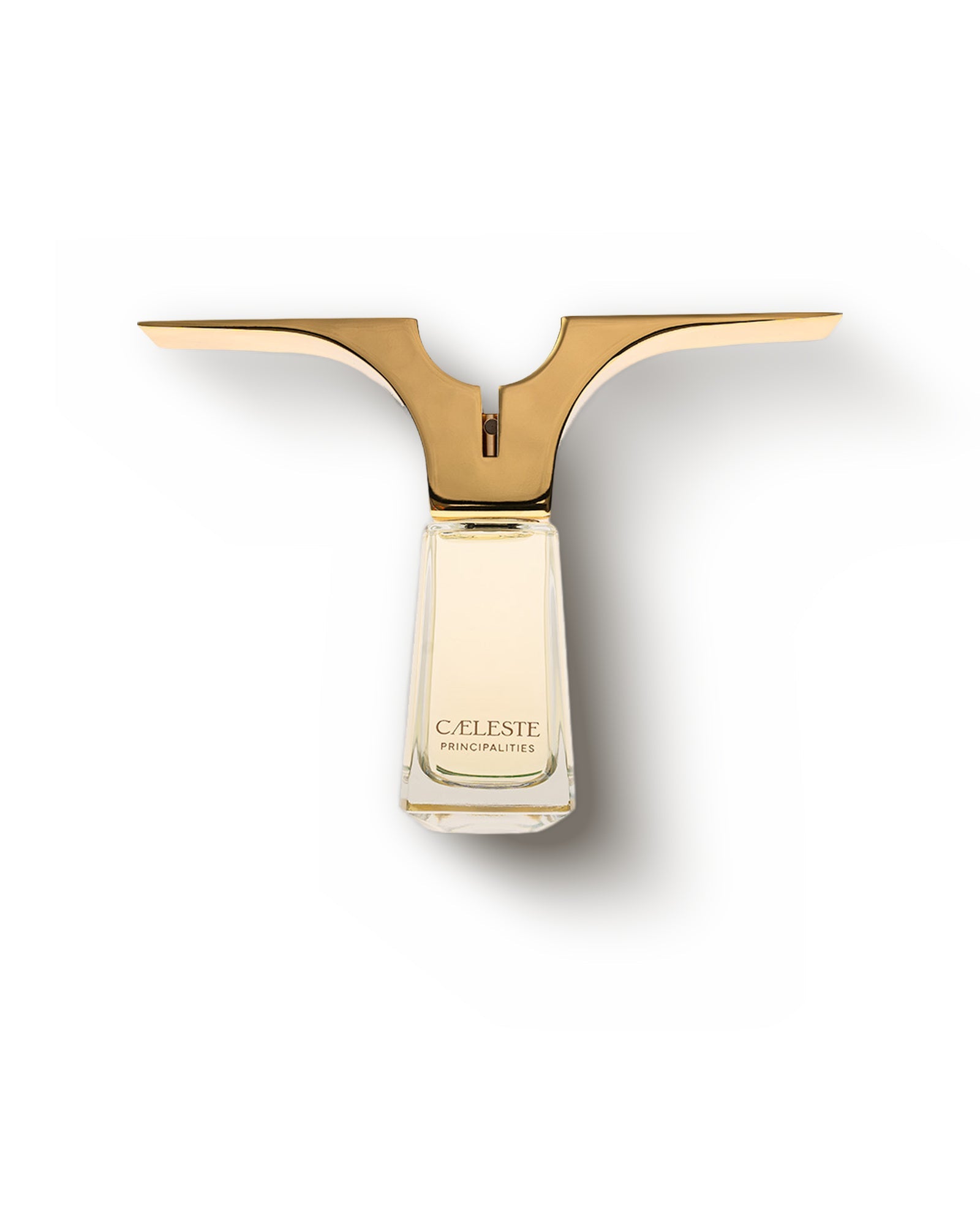

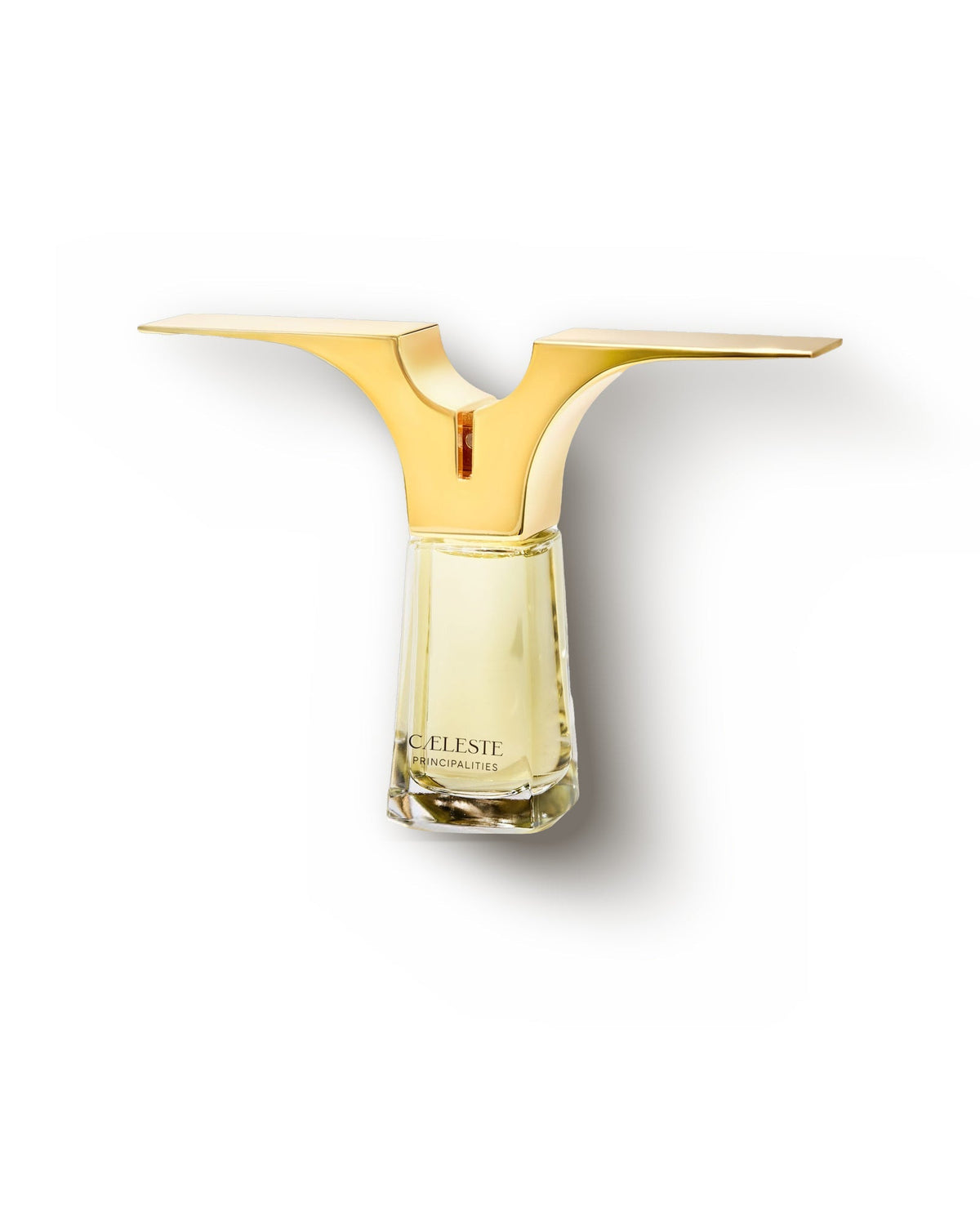
Caeleste Parfums
Principalities
The Story
Caeleste is a Romanian house whose three debut fragrances were conceived together as a trilogy, named for the angelic ranks it calls the Third Order. Principalities, the highest, won the 2025 Art and Olfaction Newcomer Award. David-Lev Jipa-Slivinschi, the nose behind Toskovat', had no brief beyond the sensation of outer space, so he read astronaut accounts of what space smells like.


Smoky
Charred wood and rising embers
The dry, charred scent of burning wood, smoldering incense, and lingering ash, sometimes tarry, sometimes wispy and gray. It feels brooding and atmospheric, conjuring a dying fire and a cool current of air carrying its last breath.


Mineral
cool wet stone and salt
The cool, dry smell of wet pebbles, slate, and salt-flecked air, almost metallic and faintly oceanic. It reads clean and austere, adding a stony transparency that feels like rain on hot rock or breath drawn over a quarry.

Warm Spicy
Glowing embers of the spice drawer
The rounded heat of cinnamon, clove, and nutmeg, dry and slightly resinous, like a baking pantry rather than a sharp kitchen. It creates a flushed, enveloping warmth that feels intimate and cool-weather, hugging the skin from within.


Metallic
Cold steel and bright blood
A cool shimmer that is not the metal itself, which is odourless, but what skin gives up at the touch of a coin or a blade. Sharp and almost mineral, it lends a clean, modern coldness: a knife edge, the inside of a tin, bracing and faintly electric.


Aromatic
Crushed herbs in cool air
The green, camphorous coolness of lavender, rosemary, sage, and thyme, like herbs bruised between the fingers. It feels clean, invigorating, and a touch austere, the crisp backbone of a classic barbershop freshness.


Sweet
Warm sugar you cannot quite name
Caramel, honey, spun sugar: sweetness that hovers between all three and never settles on one. This is the gourmand pull, the thing that makes someone lean in closer than they meant to, warm and soft and a half step short of edible.

Hyssop
Bitter green herb with a camphor bite
What it is
A stiff mint-family shrub of southern Europe and the eastern Mediterranean, grown for centuries for the kitchen and the medicine chest. Perfumery steam-distills the flowering tops and leaves into an oil far more severe than the plant looks.
How it smells
Green and bracing, camphor first, somewhere between rosemary, lavender and mint. A sweet anisic thread runs through it over a bitter, almost medicinal floor, and it dries down warm and faintly spicy. Cool on contact. Never soft.
In perfumery
A drop or two at the top for green austerity: fougeres, chypres, colognes. Lavender softens an opening; hyssop does the reverse, holding it cold and a little severe. It works beside clary sage, geranium, citrus and incense.
Good to know
Hyssop is used in traces for a reason. Pinocamphone, which dominates the oil, is a convulsant at high doses, so aromatherapy generally steers clear. One cultivated variety carries almost none of it, and smells gentler for the loss.


Black Tea
Dry leaves, tannin and a whisper of smoke
What it is
Leaves withered, rolled, then left to oxidise right through: that is what turns them black and takes the smell from grassy to dark. China has done this for centuries. Real tea absolute is rare, so perfumery rebuilds it.
How it smells
Dry and astringent, the way the third cup of the pot tastes. Hay and worn leather sit under it, with a rose-and-jasmine softness held down by powder. It starts crisp and airy, then goes quiet, smoky and woody.
In perfumery
A heart note that does the job of a brake: its tannin cuts sweetness and keeps a floral from turning syrupy. Citrus lifts it, woods carry it, and most modern tea fragrances are some version of this balance.
Good to know
Linalool and geraniol carry the floral core, while two trace molecules give it character. Theaspirane throws a blackcurrant brightness over a cool green edge; tabanone brings tobacco and something like acorn. Ionones and guaiacwood fill in the powder and the wood around them.


Rose Thorn
The stem's green bite beneath the petal
What it is
There is no thorn extract. The prickles of a rose bush yield nothing to steam or solvent, so a perfumer builds the effect instead: green, sappy, faintly metallic materials against a rose, and the flower arrives with its stem attached.
How it smells
Rose, but cold and unfriendly. Green comes first, crushed stem and bitter sap, then a thin metallic glint like blood or wet iron. The petal underneath is drier and sharper than usual, with none of the powder.
In perfumery
The job is to stop a rose turning pretty. Violet leaf, galbanum and rose oxide, the molecule behind the flower's own green prickle, do it at the top and heart, where saffron, incense and leather can meet them.
Good to know
Botanically, roses have no thorns. What catches your sleeve is a prickle, a skin-deep outgrowth of the stem that snaps off clean; a true thorn is a modified branch wired into the plant's tissue, like a hawthorn's. The note is named after something that does not exist.


Violet
Powdery purple petals that vanish as you reach
What it is
Almost no violet in perfumery comes from violets. The flower yields so little oil that it is hardly produced any more, so the note is built from ionones, aroma-chemicals first made in a lab in the 1890s.
How it smells
Soft, cool and powdery, with a sugar-dusted candied sweetness and a thin green wetness behind it. It reads tender and nostalgic: Parma violet sweets, face powder, petals crushed in a pocket.
In perfumery
In the heart it does something unusual: it takes the sugar out of sweetness and leaves powder behind. Iris, rose, leather and almond all bend toward it, and violet soliflores wear it like an old makeup box.
Good to know
Ionones saturate the receptors fast, so the scent seems to vanish, then return as your nose recovers: perfumery's textbook case of olfactory fatigue. Violet leaf is another material entirely, green and cucumber-cool.


Ylang-ylang
Sun-warmed tropical bloom, banana-cream and jasmine
What it is
A drooping yellow star of a flower, hand-picked from a tropical tree and held in the still for fifteen to twenty hours. The run is drawn off in stages, each one a different grade, Extra down to Third.
How it smells
Creamy and heady, jasmine over something like banana custard, with rubber and clove threaded through. Extra grade is the bright, fruity, spicy one; the later fractions go deeper, fatter and faintly medicinal, drying down waxy and round.
In perfumery
In the heart it bridges jasmine, rose and tuberose, and it keeps citrus tops from turning thin. It carries the floral bouquet inside the aldehydic classics, and it is the reason a solar tiare accord smells tropical.
Good to know
In Indonesia the blossoms are scattered over the beds of newlyweds. The name is Tagalog, ilang-ilang, from ilang, wilderness, a nod to the tree's wild habitat. The most fragrant blooms are taken at dawn, while they are still cool.


Mineral Notes
Cool breath of wet stone after rain
What it is
Rock gives up no essence, so this is a fabrication: calone for ozone, salty and metallic modifiers, woody-amber synthetics for the dry backbone, and geosmin at a trace far below the beetroot dose to bring the rain.
How it smells
Cool and dry, like damp slate, struck flint or wet concrete after a storm. There is chalk in it, a little salt and a faint metallic edge, all of it thin and airy rather than heavy.
In perfumery
Top and heart work, where it opens space and gives a composition a grey, geological floor. Aquatic and modern niche styles lean on it hard, usually with sea salt, ginger, vetiver or ambergris nearby.
Good to know
A human nose picks up geosmin at a few parts per trillion. That sensitivity is thought to be old and useful: rain on dry ground, smelled across a landscape long before there was anything to see.


Petrichor
First rain hitting hot dust and stone
What it is
Not a material, a phenomenon: the smell of rain on ground dry for weeks. Australian scientists named it in 1964, tracing it to plant oils that collect on clay and stone through a drought. Perfumers rebuild it from synthetics.
How it smells
Damp and earthy, with the green sweetness of soil turned over and cool wet stone behind it. Geosmin brings a mushroomy, almost beetroot depth; over the top sits a metallic tang, like the first drops hitting warm tarmac.
In perfumery
A top-and-heart effect that hands a composition its weather. It damps down a dry woody structure and gives vetiver and patchouli somewhere to sit. Overdone, it reads as cellar, so most perfumers keep it to a trace.
Good to know
The name joins the Greek petra, stone, to ichor, the fluid in the veins of the gods. High-speed film suggests why it travels: a drop landing on porous ground traps a bubble that fizzes up and may fling scent into the breeze.


Oud Assafi
A registered Bangladeshi agarwood oil, dark and animalic
What it is
Oud Assafi is a named agarwood oil from Bangladesh, made from Aquilaria malaccensis by the distillers Jalali Agarwood in partnership with Firmenich. Mizensir describes it as the first extract of that species ever registered for perfumery.
How it smells
It is intensely leathery and animalic, balanced by woody depth and a sweet undertone. Dark, dense and slow, it reads as worn leather and resinous wood with a honeyed softness underneath, and a trace is enough to be felt.
In perfumery
A base note and a strong fixative, used in traces to give luxury compositions an opulent woody, animalic depth. Caeleste files it under Earth in Principalities, beside leather, galbanum, immortelle, ginseng root and dry leaves, where it anchors the smoke and mineral above.
Good to know
Jalali Agarwood inherited thousands of mature trees, has harvested them for generations and plants twenty for every tree it cuts. A registered name ties the oil to that one source, so on a note list it says more than plain oud.


Dry Leaves
Papery autumn litter, sweet dust and tobacco
What it is
No one presses oil from a fallen leaf. The effect is assembled from tobacco and hay absolutes, tea, dry woods and a trace of smoke. Caeleste lists it among the Earth notes of Principalities.
How it smells
Dry, papery and faintly bitter, the tannic rustle of leaf litter kicked along a pavement. Underneath sits hay warmth and a whisper of tobacco, then a cool damp undertow where the pile has been sitting on wet ground.
In perfumery
Nothing dates a fragrance to autumn faster. Working from the heart down, it gives smoky compositions something organic to smoulder against, and sits with immortelle, chestnut and vetiver. Too little sweetness reads as compost, too much as pipe tobacco.
Good to know
Coumarin, the hay molecule, does the sweet half of the work. It was also one of the first laboratory materials built into a commercial perfume, in 1882, which makes autumn one of perfumery's oldest synthetic tricks.


Galbanum
Green so bitter it borders on turpentine
What it is
A gum that bleeds out of cuts in the stems and roots of a giant fennel from Iran and Central Asia. Once hardened, it is steam-distilled to an oil or pulled into a dark, thick brown absolute.
How it smells
Bitter, sharp and aggressively green, a fistful of snapped stems with a turpentine edge. Underneath sits something musky and almost balsamic. At a trace rather than a dose it turns cool and dewy, more garden than assault.
In perfumery
One of the few natural green base notes, used as a fixative and as the opening signature of the green chypre. It sits with oakmoss, iris, hyacinth and neroli, and has been overdosed on purpose more than once.
Good to know
The Book of Exodus names it, as an ingredient of the sacred temple incense. Iran still supplies most of the gum, thousands of years later.

Ginseng Root
Bitter earth pulled from a mountain forest
What it is
A root that spends four to six years underground before it is lifted, from the mountain forests of Korea and north-east China. Perfumery uses an extract of the dried root, or rebuilds it from woody, earthy materials.
How it smells
Quiet and rooty, more herbal tonic than spice. Damp cellar earth first, a faint mushroom edge, dry bark, then a cool green bitterness with liquorice behind it. It never raises its voice; it works as texture.
In perfumery
Perfumers reach for the idea of vigour as much as for the smell, which is why it turns up in sporty structures. In the heart it gives an earthy backbone that stops green compositions floating away, beside vetiver and mint.
Good to know
The genus name comes from the Greek for all-healing, the same root as panacea. The Chinese name, rénshēn, means man root, for the forked, limbed shape diggers prize. Named twice, once for a promise and once for a resemblance.


Leather
Tanned hide, smoke and animal warmth
What it is
There is no leather essential oil. Perfumers rebuild the smell from birch tar and cade, smoky distilled woods, plus styrax and labdanum resins, isobutyl quinoline and safraleine-type molecules, echoing the tannins and oils once used to cure hides.
How it smells
Smoky, dry and animalic, ranging from supple new suede to tarry old saddle. Birch-tar versions read sooty and phenolic, almost campfire and band-aid; softer suede accords turn powdery, floral and skin-warm.
In perfumery
A base note that lends spine and a carnal edge. It does its best work under rose and violet, alongside tobacco and oud, and a floral heart set on leather turns unmistakably human.
Good to know
Scented leather began with European glovemakers, while the smoky strand comes from Russia, where hides for boots and book bindings were dressed with birch tar, and Russian leather still means that smell. The real tanning oils were mostly restricted on safety grounds, so today's leathers are reconstructions.

Immortelle
Sun-baked hay laced with maple and curry
What it is
Gardeners call this silvery Mediterranean shrub the curry plant, and one crushed leaf explains the nickname. Its small yellow flower heads are steam-distilled for an oil or solvent-extracted into an absolute.
How it smells
Dried chamomile and hot straw, then a curry-leaf sharpness you will not expect. The sweetness follows: burnt maple syrup, caramel, a breath of tobacco. It ends honeyed and fenugreek-spiced, with something faintly medicinal underneath.
In perfumery
It works in the heart and base, where its tobacco-and-liqueur warmth sits easily with woods, leather and amber. Perfumers set it against lavender when they want the sweetness to read as contrast rather than dessert.
Good to know
Everlasting is the literal meaning: cut and dried, the flowers keep shape and colour for years, which won them a place in ancient funeral wreaths. Yields are tiny either way, so immortelle sits among the costlier naturals.


Ash
Cold embers, mineral dust and dying smoke
What it is
Ash is what is left when there is nothing left, and it cannot be distilled. Perfumers reach for smoke materials, birch tar, cade, guaiacol, then strip out everything warm and resinous until only the grey remains.
How it smells
Dry, smoky, faintly bitter: a fireplace the morning after. Burnt wood and cold charcoal, a chalky mineral edge, the slightly metallic dust of cooled embers. Nothing sweet, nothing resinous, nothing to soften it.
In perfumery
A base note for atmosphere rather than beauty. Vetiver, cedar and birch tar push it further into the cold; jasmine or incense will warm it back if you want it habitable. Niche houses use it to build ruins.
Good to know
Cold ash barely smells at all. What the nose reads as ash is the smoke residue left clinging to it, lignin broken apart by heat, the same molecules that scent smoked food.


Elemi Resin
Lemon-peppery resin from the Philippines
What it is
The soft, pale oleoresin of Canarium luzonicum, a tall tree of the Philippine rainforest, tapped from the trunk and collected as a sticky greenish gum that hardens slowly in air. Steam distillation gives an essential oil dominated by limonene and elemol. Elemi is the youngest and freshest-smelling member of the resin family, nothing like the dark balsamics it sits beside.
How it smells
Bright and startlingly citrus for a resin: lemon peel and green pepper over a dry pine-turpentine lift, with a faint fennel sweetness underneath. As it settles it turns quietly balsamic and warm, but it never develops the sweetness of benzoin or the bitterness of myrrh. It is the incense note that smells clean.
In perfumery
Used to give resin accords lift and transparency, and as a bridge between a citrus opening and a balsamic base, where it makes the join disappear. It sharpens frankincense, cools amber and adds a peppery clarity to woods. Also a traditional fixative, and historically a wound salve.
Good to know
Elemi is sometimes called poor man's frankincense, which undersells it: they do different jobs, and elemi's citrus-pepper top has no equivalent among the other resins. It is collected from living trees by cutting the bark and scraping off the gum that weeps from the cut, much as pine resin is tapped.
Chili Pepper Seeds
Dry seed heat inside a split capsicum
What it is
The seeds themselves are almost mild. What burns is the pale placental tissue they cling to inside the pod, where the capsaicin sits. Nothing about this note is distilled; it is an accord a perfumer assembles.
How it smells
Not the burn. Capsaicin barely evaporates, so heat is felt rather than smelled. What reaches you is dry and papery, a toasted, faintly green seed smell with a vegetal bite, like the dust when you snap a dried pod open.
In perfumery
A heart accent that reads as heat with no sweetness attached, built from pyrazines and pepper materials rather than an extract. It sharpens smoky and leathery structures, sits beside saffron and ash, and stings in a way spice resins cannot.
Good to know
Birds carry the receptor, but their version does not answer to capsaicin, so they eat the fruit freely, which is how capsicums spread their seeds. All that heat is addressed to mammals, and the birds never get the message.

Saffron
Crimson threads breathing leather, honey and dry hay
What it is
Three crimson threads sit inside each autumn crocus flower, and a hand pulls every one. Dried, those stigmas are steeped into a tincture or extracted into an absolute. That is the entire supply chain.
How it smells
Hay and honey and warm toast first, then something metallic and leathery underneath, the work of a molecule called safranal. It dries down into suede, tobacco and dusty amber, bitter at the edges.
In perfumery
It lives in the heart, glowing reddish, the hinge between spice and leather. Perfumers wed it to rose so often the pairing became a genre, and entire leather accords get built on it alone.
Good to know
A kilogram of saffron costs about 150,000 hand-picked flowers and many days of stooped labor, which is why almost none of it reaches perfume. Most saffron notes are built from synthetic safranal instead.

Star Dust
Cold sparkle in airless dark
What it is
There is no such raw material. Star dust is an accord a perfumer assembles when a composition needs to read as open space rather than open air, built from dry, faintly effervescent materials over a cold mineral lift and arranged so the nose registers distance instead of a room. It belongs to the same family of made things as dust and airy notes, and like them it is pure suggestion: an idea the nose agrees to rather than something gathered, pressed or distilled.
How it smells
Dry, cold and weightless, with a fine glitter to it, as though something were sparkling a long way off. No sweetness, no moisture, no earth anywhere in it. A faint prickle sits behind the sparkle, closer to static than to smoke, and it does not really develop; it hangs at its own altitude and thins slowly until it is gone, leaving the materials underneath it exposed.
In perfumery
It is used for altitude. Set behind gunpowder, hot metal or ash, it lifts the whole scene off the ground, so those same materials read as happening somewhere without air rather than in a workshop. It gives incense a vaulted space to sit in and keeps mineral and metallic accords from turning industrial. A little goes a long way, and too much empties a composition out.
Good to know
Notes named for a picture rather than a plant drift between houses: one perfumer's star dust is cold and sparkling, another's is powdery and sweet, and neither is wrong. Read it as a composition's altitude marker rather than as an ingredient, and expect it to do its work behind everything else. It is rarely smelled on its own, and it is not meant to be.

Cosmos Flower
A dark red daisy that smells of chocolate
What it is
Cosmos flower here means Cosmos atrosanguineus, the chocolate cosmos, named by the house itself. It is a tuberous Mexican perennial in the daisy family, with small velvety flowers of such deep maroon they read as black, and it scents the air around it on warm afternoons. No commercial extract exists, so the note is reconstructed.
How it smells
Warm cocoa and vanilla first, closer to a tin of drinking chocolate than to a flower, with a light red-fruit sweetness and a faint bitter edge underneath. The floral part is soft and almost powdery. In a composition it arrives as gourmand warmth wearing a petal.
In perfumery
Built from cocoa and vanillic materials with a floral overlay, it gives sweetness that stays dark rather than sugary. It softens smoke, metal and ash, pairs readily with immortelle, saffron and sandalwood, and is the usual way a perfumer makes a burnt or mineral structure wearable.
Good to know
Chocolate cosmos was long reported extinct in the wild, though small wild populations have since been found in central Mexico. For most of the last century it was propagated only by division of a sterile clone, which is why the scent is better known from garden borders than from a bottle.


Gunpowder
Smoke, sulphur and struck char on the wind
What it is
Nothing here grows. Black powder is saltpetre, charcoal and sulphur, none of it a perfumery material, so the smell has to be reconstructed: burnt-match and sulphurous molecules, tarry birch, smoky woods and a trace of hot metal.
How it smells
Sharp and acrid on the opening, like a freshly struck match: sulphur, hot metal, ash. Beneath it sits charred wood and a flinty mineral edge. The drydown is warm smoke and singed paper, never open flame.
In perfumery
Perfumers use it for tension. A thread under leather, oud, vetiver or saffron puts an edge on a scent that would otherwise just be dark. Too much and the whole thing smells burnt rather than dangerous.
Good to know
Fireworks smell mostly of burnt sulphur and smoke. Chasing that, perfumers lean on birch tar, which is why smoky scents so often drift toward campfire and old leather whether they meant to or not.

Burnt Almond Cookie
Caramel, char and bitter almond from the oven
What it is
Nothing of the kind comes out of a still. This is a gourmand accord, built: bitter almond over caramelised sugar and vanilla, with a trace of smoke for the scorch.
How it smells
Marzipan and cherry stone first, over warm caramelised sugar and butter. Then the char: the dry, acrid smell of a biscuit left a minute too long. Edible but never sugary, and the burnt edge keeps it from turning cosy.
In perfumery
Weighted to the base, it makes dark, smoky and metallic compositions approachable without softening them into dessert. Ash, gunpowder and hot metal answer it well, and it sits with immortelle and tonka. Overdose it and it turns into a bakery.
Good to know
Toast, coffee and bread crust all smell of the same family of molecules, pyrazines, thrown off when sugars and amino acids meet heat in the Maillard reaction. Above food levels they stop reading as baking and start reading as scorch.


Incense
The smell of resin hitting hot coal
What it is
What you are smelling is a change of state: resin meeting heat. The resin is usually olibanum, wept by Boswellia trees in Oman and the Horn of Africa, and perfumers round the effect out with labdanum and styrax.
How it smells
Cool and dry to begin with, sharp enough to read as turpentine, then the smoke arrives: peppery, ashen, faintly sweet. There is a stone-church quality to it, soapy and faintly green, and it stays close to the skin.
In perfumery
It works the way silence works in a room. From the heart into the base it cools florals, sharpens woods and drops a weight of ritual into oriental and chypre structures that would otherwise read as merely rich.
Good to know
Long before anyone wore it, this smoke was among antiquity's costliest imports. It moved along the Arabian caravan roads to temples around the Mediterranean, where burning it was the point: the scent was the offering.
Hot Metal
Struck iron, ozone and warm scorched air
What it is
No metal is volatile enough to distil, so this one gets built. Perfumers assemble it from ozonic and flinty synthetics, a trace of burnt match, and dry smoky woods: steel with no steel in it.
How it smells
Sharp, cool and strangely dry: struck flint, a hot radiator, the tang of a blade held close. Underneath runs a faint blood-like iron. It reads as temperature and texture more than as any smell you could name.
In perfumery
Perfumers reach for it when they want tension instead of comfort: it sharpens incense, leather and gunpowder accords and stops resins turning cosy. Saffron, ash and dry woods sit beside it. You meet it mostly in conceptual work.
Good to know
Iron itself is odourless. That metallic smell you get off coins or a handrail comes from you: fats on your skin break down the moment they touch iron ions. The smell of metal is a smell of you.


Sandalwood
Creamy wood, pulled up by the roots
What it is
The richest oil sits in the roots, so the whole tree is pulled up and steam-distilled rather than felled. Mysore in southern India was the classic source, until decades of overcutting pushed the wild trees to the edge.
How it smells
Milk and warm wood, with a rosy, almost buttery edge and nothing sharp at all. What surprises people is how little it moves: no bright opening, no dry-down drama, just the same quiet glow for hours.
In perfumery
It works twice over: as a smell, and as a fixative that holds rose or jasmine in place. Sandalwood is also graded, and the darkest, densest, most resin-heavy old heartwood carries its own name: red meat.
Good to know
A heart worth taking takes about thirty years to form. Plantations of the same species in Western Australia now supply a large share of the world's oil, close to the old Mysore chemistry if not quite its creaminess.
Fragrance Character
It opens metallic and mineral, hyssop and black tea over wet stone, with saffron and chili pepper seeds putting heat behind them. Gunpowder, ash and hot metal hold the middle, sweetened oddly by burnt almond cookie and immortelle. Leather, Oud Assafi, sandalwood and incense close it, dry and resinous, with galbanum keeping a green edge.


Longevity
how long it stays on skin
The hourglass reads wear time: how many hours the fragrance keeps speaking before it fades. A bar that barely leaves the start means a few fleeting hours. One that runs the full length carries from morning into evening. Treat it as typical, not promised. Oily skin holds scent far longer than dry.


Sillage
the size of its scent trail
Sillage is French for a ship's wake, and that is exactly what this measures: how much of the scent reaches the room instead of staying on you. Low is a whisper only close friends catch. Enormous fills the room, then keeps filling it after you leave.


Experimental
Built to provoke, not to please
Some perfumes are made to be liked. These are made to be argued about: inky tar, hot rubber, fruit on the turn, metal and fur where you expected flowers. The coin glows for a scent that provokes and dims for one that plays it safe, which is sometimes the point.


Office
Polished, and never louder than the room
Scent is manners in a shared room. At this range it should reach the person across the desk and stop there: tidy citrus, soft musk, pale woods, all of it reading competent and considerate. A glowing coin means nobody has to mention it. A dim one means it travels.


Evening
After dark, when it deepens
Dinner, drinks, the night that runs long. Low light is where ambers, resins and smoky woods stop being polite, and where a plush floral finally blooms. A glowing coin means it is waiting for exactly this hour. A dim one means it did its best work in daylight.


Romantic
Close enough to be felt
A fragrance can hum against skin instead of announcing itself across a table. That is the register here: creamy florals, vanilla, soft musk, a thread of spice, warm enough to make someone lean in. The coin glows when a scent sets that mood and dims when it is more practical than seductive.


Formal
Quiet authority in a dressed-up room
A wedding, a ceremony, a room where everyone has thought about their shoes. What works here is structure, not volume: smooth woods, disciplined florals, soft leather. A glowing coin means it holds its posture all evening. A dim one means it is too casual for the room.


Casual
Easy comfort for unhurried days
Errands, coffee, a slow Saturday with nowhere to be. Nothing here has to impress anyone, so the fit is soft and easy: fresh citrus, light woods, a little warmth off the skin. A glowing coin says yes to all that. A dim one means the fragrance is asking for a bigger night.


Day to Night
where its mood naturally falls
A bar running from sun to moon, reading the hour the fragrance was made for. The more of it that stays gold, the more the scent belongs to daylight and open air. The further the blue reaches back toward the sun, the deeper and warmer it turns: evening, candlelight, low rooms.


Winter
Warmth that carries through cold air
Cold air mutes a fragrance and slows it down, which is why winter belongs to the dense and the warm: resin, smoke, vanilla, leather, ambered spice. The bar reads how well this one pushes back, glowing against the chill instead of thinning out in it.


Spring
Fresh blooms in mild, rising warmth
Mild, humid air lifts a light composition, so the season belongs to dewy florals, green stems, soft powder and citrus you can see through. Alive rather than heavy. The further the green runs along the bar, the more comfortably this one wears in that weather.


Summer
Bright and airy in real heat
Heat does the projecting for you, which is why the wrong perfume turns unbearable by noon. What survives is cool and breathable: sharp citrus, salt air, aromatic herbs, water. Things that refresh instead of cloy. A short bar here means save it for cooler months.


Fall
Spiced warmth for cooling days
As the air cools, the rich materials stop smothering and start reading clearly: dry woods, warm spice, tobacco, amber, fruit gone golden. It is the season perfume turns contemplative. The bar fills according to how naturally this one settles into crisp, cooling days.
Best Worn
Autumn and winter, and it carries from afternoon into the night rather than belonging to either. Cold air suits the mineral and metallic opening; enclosed rooms give the gunpowder and incense somewhere to gather. Worn by someone who reads a note list as an argument and wants the strange one, at an evening that can take something confrontational.
Choose options
The Vibe


The Nose

David-Lev Jipa-Slivinschi
Founder and perfumer
Bucharest-based Romanian who came to perfumery from filmmaking and founded Toskovat' in 2022. He composed Toskovat' Inexcusable Evil, Toskovat' Age of Innocence, Toskovat' Anarchist A_, Toskovat' In the Belly of the Beast and Adi ale Van Gethsemane.
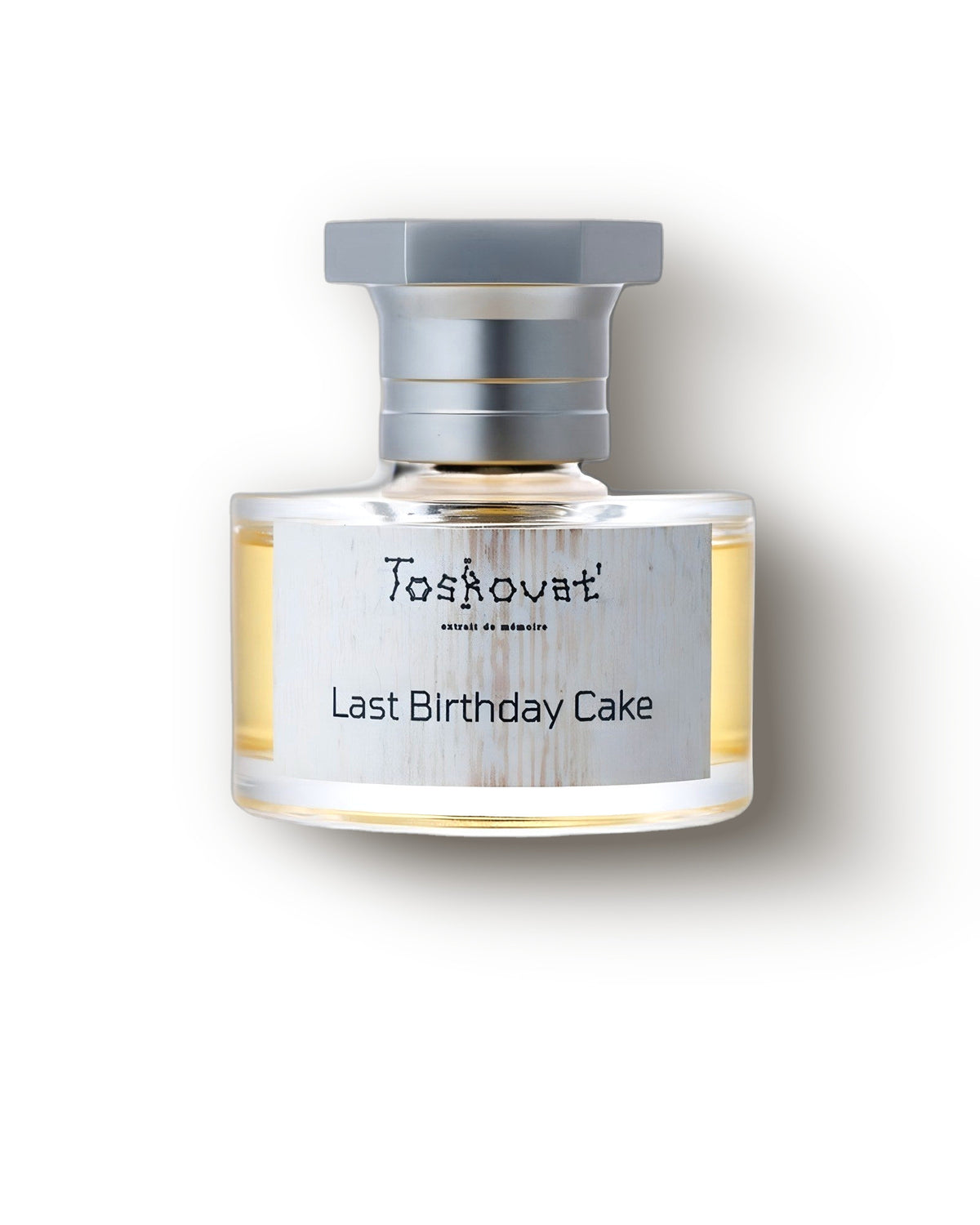
More by this noseInexcusable EvilLast Birthday CakePornstar (Noyau Doux)
The Maison

Burnt almond cookie, gunpowder and hot metal: an extrait built from what astronauts said space smells like.
Caeleste is a Romanian house naming its fragrances for the ranks of the angelic hierarchy, a different nose for each rank. It opened in 2024 with three extraits conceived together as the third order and has since moved up a sphere with Virtues. Principalities, by David-Lev Jipa-Slivinschi of Toskovat', won the 2025 Art and Olfaction Newcomer Award.
- Origin
- Bucharest, Romania
- Founded
- 2024
- Known for
- Angel-hierarchy extraits

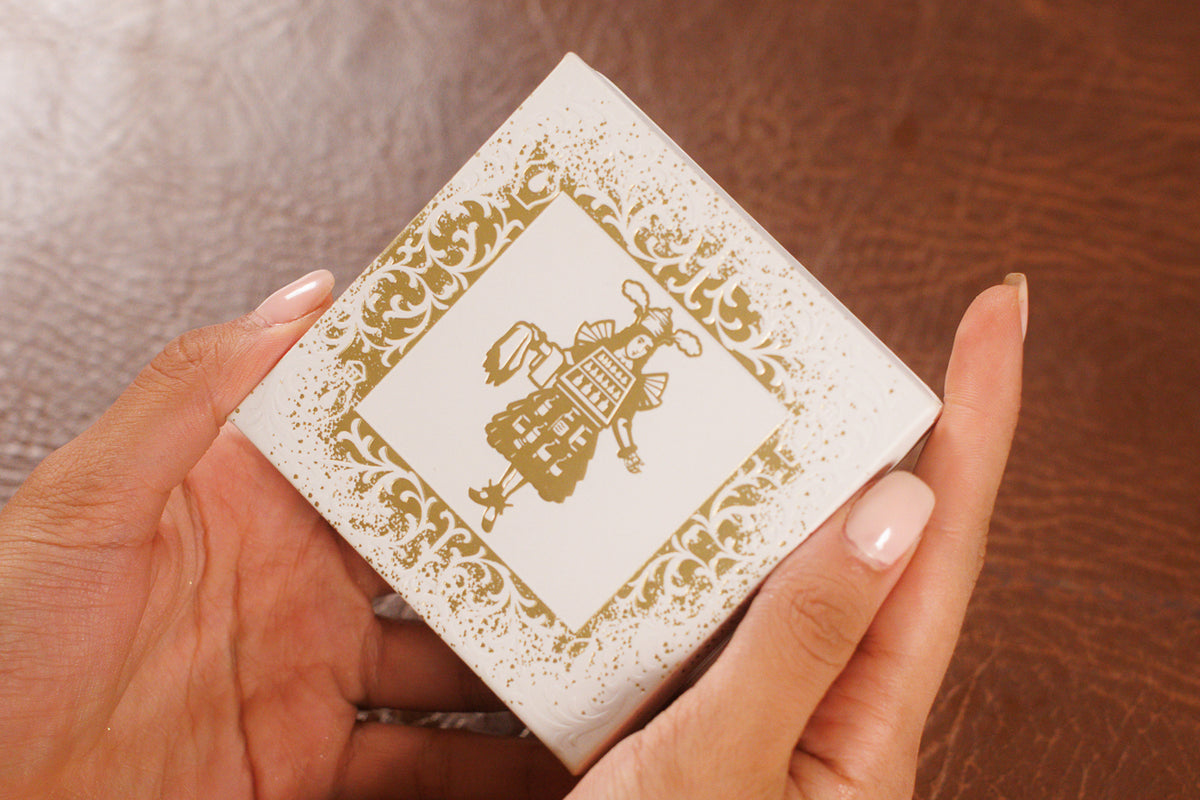
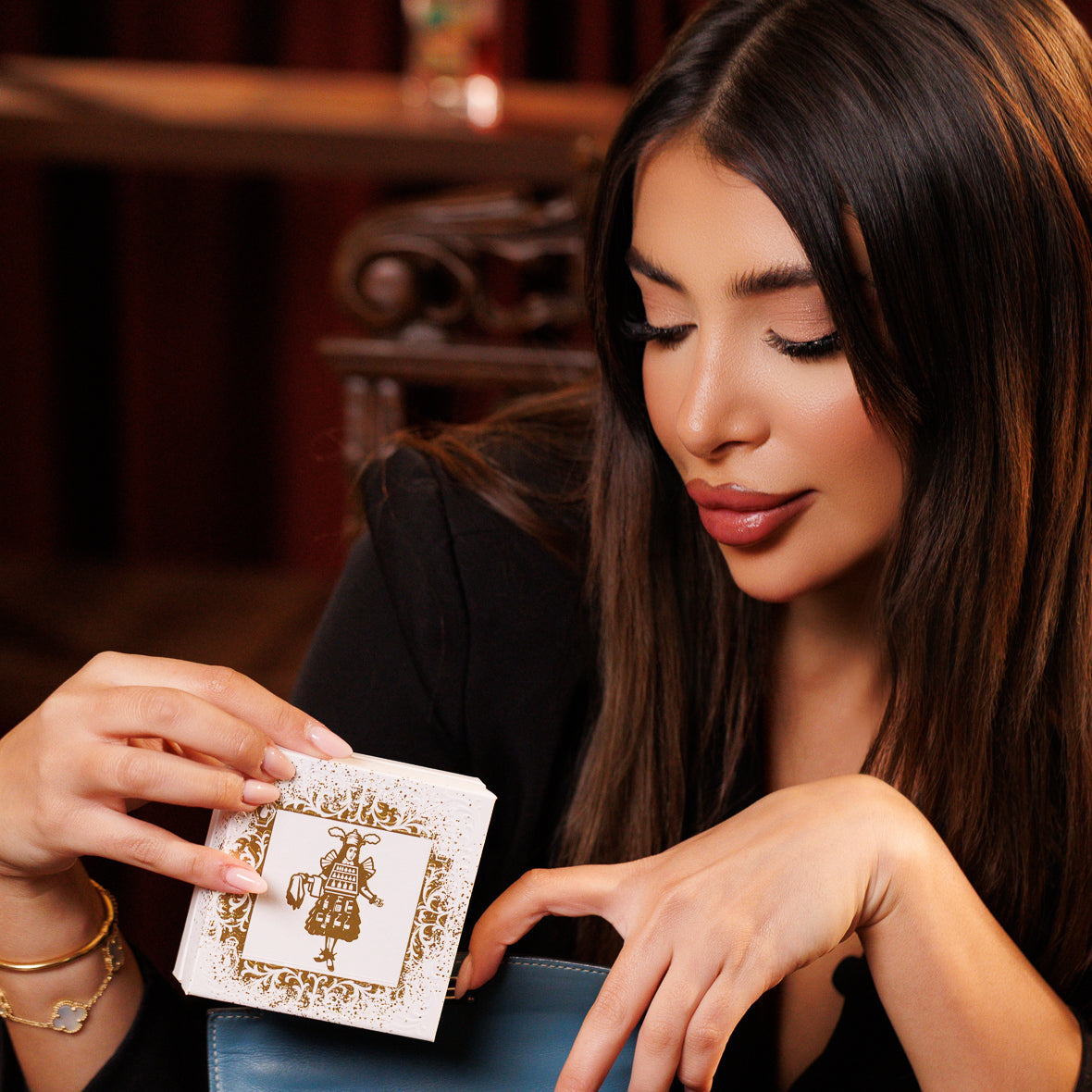
EVERY DECANT
From the original bottle to your door
We buy the original flacon at full retail price, direct from the house.
A medical grade Socorex syringe takes the exact millilitres straight from the flacon.
Packed into the hot foiled box and handed to DHL, every duty already paid. How a decant is made
More from Caeleste Parfums
You may also like