El Khaldi
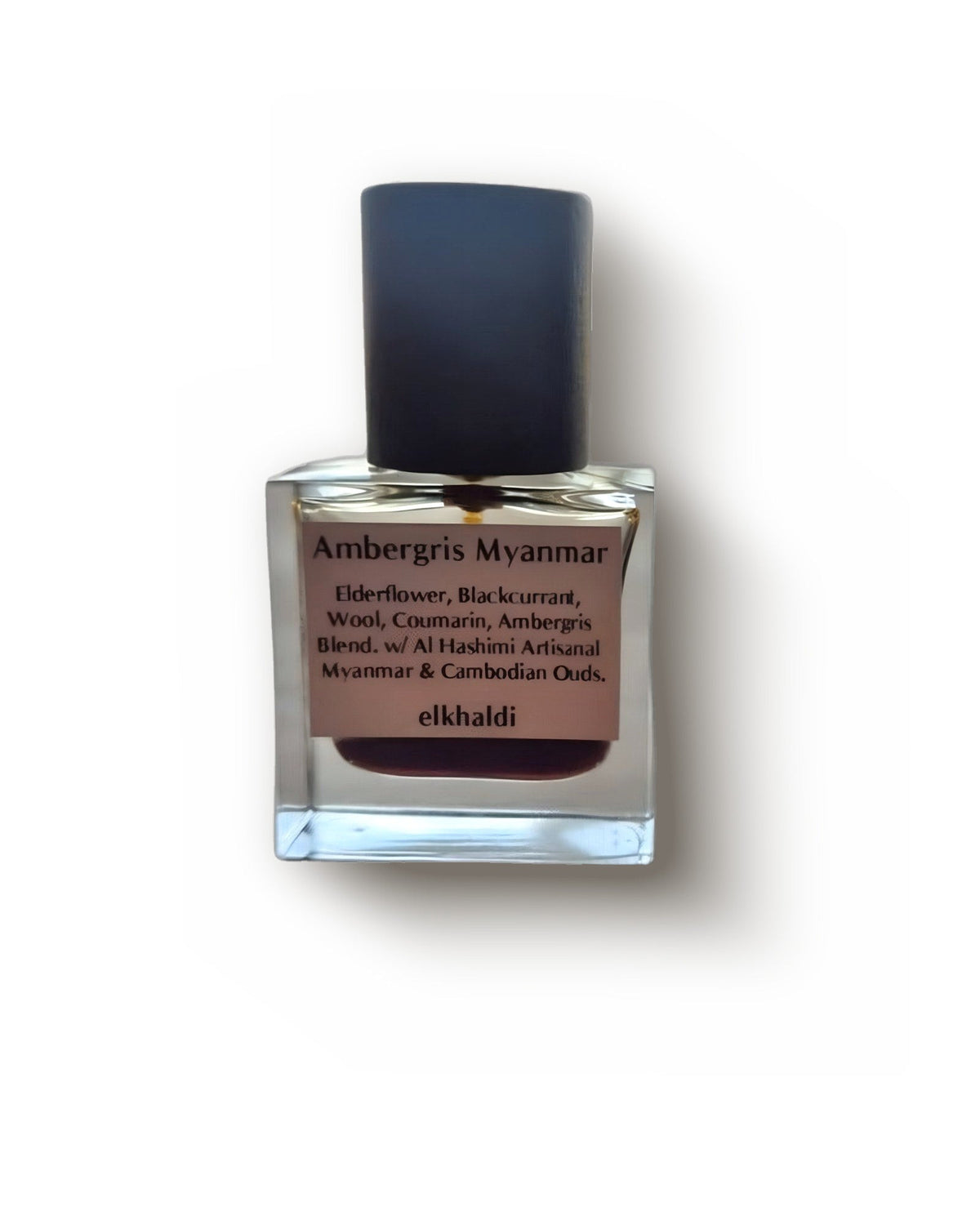
Ambergris Myanmar
The Story
Ambergris Myanmar belongs to El Khaldi's Ambergris Spectrum release, conceived as a reimagining of Ambergris Cambodia in spray format with a deliberately elevated oud concentration. The Burmese oud is the differentiator, sharpening the woody and earthy register that the ambergris base then absorbs and holds.


Woody
Dry grain of cut timber
The smell of cedar shavings, sandalwood, and dry vetiver roots, a sanded, resinous warmth with a faint pencil-box rasp. It feels grounded and composed, the quiet backbone that makes a scent read as serious and lasting.


Spicy
A spice stall in the open air
Black pepper, cardamom and pimento berry, dry rather than sweet, with a heat that catches at the top of the nose before you have finished inhaling. It does not sit quietly under anything. Spice raises the temperature of whatever it is put next to.


Leathery
smoke-cured hide and dark suede
A smoky, tannic richness that smells of tanned hide, worn saddles and birch tar, sometimes softened toward suede. It is assertive and animalic, the smell of polished boots and dim interiors, a note that has clearly been somewhere before it reached you.


Balsamic
Tree sap gone thick and golden
Tree resins and golden amber, thickened to syrup and touched with vanilla. It does not sparkle or move; it settles, warming the skin the way candlelight warms a room, and it stays there long after the top notes have gone quiet.


Sweet
Warm sugar you cannot quite name
Caramel, honey, spun sugar: sweetness that hovers between all three and never settles on one. This is the gourmand pull, the thing that makes someone lean in closer than they meant to, warm and soft and a half step short of edible.
Elderflower
Muscat grapes and pear cordial, faintly feral
What it is
There is no elderflower essential oil. The lacy cream heads are too delicate to survive a still, but solvents and CO2 lift a small extract from the blossom, and natural perfumers round it out with linden, hay and blackcurrant bud, which brings the catty edge.
How it smells
Muscat grape and pear cordial first, soft and honeyed. Then the odd part: a cat-like sharpness, feral and faintly savoury, that keeps the sweetness from turning into syrup. Cool, dewy, transparent.
In perfumery
It gives summery fruity-florals a nectarous green sparkle and holds up the elderflower-and-gooseberry accord that fresh scents keep returning to. Pear, lychee, white musk and delicate florals are its usual company.
Good to know
Green stems, leaves and unripe berries are toxic raw and are discarded; only ripe berries are eaten, and those are best cooked. The blossom goes the other way, steeped into cordial and liqueur, which is why the note arrives already smelling like a summer drink.


Blackcurrant
Tart cassis with a wild, animalic snarl
What it is
Perfumery mostly ignores the berry. The material that matters is cassis bud absolute, extracted from the sticky, resinous leaf buds of the shrub, whose natural sulphur facets carry the fruit's tart snap. Some ouds have a dark berry note of their own, so in an oud perfume the berry can come from the wood itself.
How it smells
Sharp, tart, unmistakably purple, then something feral cuts across it: a green, leafy, faintly sweaty pungency that sits closer to cat than to fruit. Ripe berry with a growl behind it.
In perfumery
A top note with claws. It cuts through sweetness, puts an edge on rose, and gives a fruity-floral something to push against. It still jolts open modern fruity compositions.
Good to know
The catty edge comes from thiols your nose can catch at parts per trillion, the same family behind tomcat spray and a glass of Sauvignon Blanc. Perfumers dose cassis in drops, not millilitres.


Wool
Lanolin-soft warmth of raw fleece
What it is
No one distils a sheep. Wool is an accord, built from waxy fleece-grease materials, soft animalic musks, beeswax and warm powdery woods until the fibre seems to be still carrying skin and grease.
How it smells
Warm, dry, slightly greasy: an unwashed fleece and a heavy sweater pulled close, with a tallowy waxiness and a faint barnyard hum under the comfort. It smells like wool warmed by a body.
In perfumery
It lends musk and amber compositions a second-skin closeness and makes a comfort fougere feel like clothing rather than perfume. Iris, suede and tonka draw out the texture; Commodity Wool is built around it.
Good to know
Most of that smell is lanolin, the grease a sheep grows to shed rain. Purified, the same wax turns up in hand balms and lip salves, which is why the note lands as soothing rather than dirty.


Coumarin
White crystals that smell of mown hay
What it is
Tonka beans carry it, so do sweet clover, sweetgrass and woodruff, and in pure form it arrives as small white crystals. Almost all the coumarin in perfumery is now made rather than picked.
How it smells
Hay drying in a field, then almond, vanilla and a little tobacco behind it. It is soft rather than loud, powdery, faintly nutty, and it lingers as warmth more than as a smell you can point at.
In perfumery
Base note, and the quiet half of the fougere: lavender up front, oakmoss underneath, coumarin holding the two together. It also sweetens ambers and gourmands, leaving a faint hay hum under perfumes you would never call hay.
Good to know
In 1882 a commercial perfume used synthetic coumarin for the first time. That perfume founded the fougere family. The dose is capped now over skin sensitivity; the habit never broke.


Al Hashimi Cambodian Oud
Cambodian oud from Al Hashimi's artisanal collection
What it is
Real Cambodian oud from Al Hashimi's bespoke artisanal collection. El Khaldi made Ambergris Cambodia by adding loads of these Cambodian ouds to its Ambergris Spectrum base, and Ambergris Myanmar is the spray version of that perfume, with a higher concentration of oud.
How it smells
These artisanal ouds bring a deep, dark richness. Cambodian oud is prized for its sweet, fruity side, dried plum and jam over soft wood and honey, and here it sits under the elderflower and blackcurrant, lending weight and a resinous warmth.
In perfumery
In Ambergris Cambodia the result is a bold, oud-forward composition. Here the Cambodian ouds meet a second oud from Myanmar and the house's ambergris base of tinctures, macerations and absolutes, which ties the fruit, wool and coumarin together.
Good to know
Collectors prize Cambodian oud as the sweet counterpart to the darker, animalic Indian style, which is why it sits so easily with fruit. Give it time on skin: the drydown is where the oud and ambergris come together, close and slow to fade.

Myanmar Oud
Burma's honeyed bridge between Hindi fire and Cambodi fruit
What it is
Resin is what the tree makes when it is wounded, a defence laid into its own heartwood over years. Myanmar oud is that resin distilled from Burmese agarwood.
How it smells
Honeyed sweetness first, wrapped around supple leather and a barnyard hum that stays rounded rather than raw. Under it: dark chocolate, dried red fruit, tobacco and a smooth incense smoke that turns tea-like as it dries. Plush, never sour.
In perfumery
Attar makers treat it as the diplomat, bridging the animalic Indian style and the fruity Southeast Asian one, so it anchors a rose or jasmine composition without shouting over it. A few drops stay legible on skin for hours.
Good to know
Good Burmese oil is scarce, and no two distillations smell quite alike. A real one and a synthetic oud accord are not the same material wearing different labels.


Ambergris
Real ambergris in four colours, from white to black
What it is
Ambergris is a waxy mass formed in the gut of a sperm whale, expelled and left to drift and cure at sea, often for years. This perfume rests on El Khaldi's Ambergris Spectrum base: white, brown, grey and black ambergris tinctures, with macerations and absolutes.
How it smells
The house describes its Ambergris Spectrum blend as animalic, floral, earthy, spicy and powdery. Ambergris itself reads less as a smell than as warmth: salt air, sweet driftwood, tobacco and a soft, skin-like glow that rounds the oud and leather around it.
In perfumery
Ambergris is one of the great fixatives: it slows the lighter materials, lends radiance and gives a composition its skin-close diffusion. El Khaldi uses the same base under every Ambergris perfume in the line so they layer with one another, and here, the house says, it ties all the notes together.
Good to know
Colour is the grading axis in ambergris: fresh material is dark, and years of sun and salt water lighten it through brown and grey toward white. The house gives its tinctures as 13 to 40 percent. This is the real material that Ambroxan was made to echo.


Leather
Tanned hide, smoke and animal warmth
What it is
There is no leather essential oil. Natural perfumers compose the smell from birch tar and cade, smoky distilled woods, plus styrax and labdanum resins and a touch of saffron, echoing the tannins and oils once used to cure hides.
How it smells
Smoky, dry and animalic, ranging from supple new suede to tarry old saddle. Birch-tar versions read sooty and phenolic, almost campfire and band-aid; softer suede accords turn powdery, floral and skin-warm.
In perfumery
A base note that lends spine and a carnal edge. It does its best work under rose and violet, alongside tobacco and oud, and a floral heart set on leather turns unmistakably human.
Good to know
Scented leather began with European glovemakers, while the smoky strand comes from Russia, where hides for boots and book bindings were dressed with birch tar, and Russian leather still means that smell. Today's tars are refined for safety, and in natural work they still carry the note: a hide composed from real materials.
Fragrance Character
Elderflower and blackcurrant open tart and green through the first wave of projection with real presence. Spiced leather takes the heart, coumarin and wool lending a muffled, textile warmth. The drydown contracts close to skin, a slow, resinous coalescence of oud and ambergris that lingers without lifting.


Longevity
how long it stays on skin
The hourglass reads wear time: how many hours the fragrance keeps speaking before it fades. A bar that barely leaves the start means a few fleeting hours. One that runs the full length carries from morning into evening. Treat it as typical, not promised. Oily skin holds scent far longer than dry.


Sillage
the size of its scent trail
Sillage is French for a ship's wake, and that is exactly what this measures: how much of the scent reaches the room instead of staying on you. Low is a whisper only close friends catch. Enormous fills the room, then keeps filling it after you leave.


Experimental
Built to provoke, not to please
Some perfumes are made to be liked. These are made to be argued about: inky tar, hot rubber, fruit on the turn, metal and fur where you expected flowers. The coin glows for a scent that provokes and dims for one that plays it safe, which is sometimes the point.


Office
Polished, and never louder than the room
Scent is manners in a shared room. At this range it should reach the person across the desk and stop there: tidy citrus, soft musk, pale woods, all of it reading competent and considerate. A glowing coin means nobody has to mention it. A dim one means it travels.


Evening
After dark, when it deepens
Dinner, drinks, the night that runs long. Low light is where ambers, resins and smoky woods stop being polite, and where a plush floral finally blooms. A glowing coin means it is waiting for exactly this hour. A dim one means it did its best work in daylight.


Romantic
Close enough to be felt
A fragrance can hum against skin instead of announcing itself across a table. That is the register here: creamy florals, vanilla, soft musk, a thread of spice, warm enough to make someone lean in. The coin glows when a scent sets that mood and dims when it is more practical than seductive.


Formal
Quiet authority in a dressed-up room
A wedding, a ceremony, a room where everyone has thought about their shoes. What works here is structure, not volume: smooth woods, disciplined florals, soft leather. A glowing coin means it holds its posture all evening. A dim one means it is too casual for the room.


Casual
Easy comfort for unhurried days
Errands, coffee, a slow Saturday with nowhere to be. Nothing here has to impress anyone, so the fit is soft and easy: fresh citrus, light woods, a little warmth off the skin. A glowing coin says yes to all that. A dim one means the fragrance is asking for a bigger night.


Day to Night
where its mood naturally falls
A bar running from sun to moon, reading the hour the fragrance was made for. The more of it that stays gold, the more the scent belongs to daylight and open air. The further the blue reaches back toward the sun, the deeper and warmer it turns: evening, candlelight, low rooms.


Winter
Warmth that carries through cold air
Cold air mutes a fragrance and slows it down, which is why winter belongs to the dense and the warm: resin, smoke, vanilla, leather, ambered spice. The bar reads how well this one pushes back, glowing against the chill instead of thinning out in it.


Spring
Fresh blooms in mild, rising warmth
Mild, humid air lifts a light composition, so the season belongs to dewy florals, green stems, soft powder and citrus you can see through. Alive rather than heavy. The further the green runs along the bar, the more comfortably this one wears in that weather.


Summer
Bright and airy in real heat
Heat does the projecting for you, which is why the wrong perfume turns unbearable by noon. What survives is cool and breathable: sharp citrus, salt air, aromatic herbs, water. Things that refresh instead of cloy. A short bar here means save it for cooler months.


Fall
Spiced warmth for cooling days
As the air cools, the rich materials stop smothering and start reading clearly: dry woods, warm spice, tobacco, amber, fruit gone golden. It is the season perfume turns contemplative. The bar fills according to how naturally this one settles into crisp, cooling days.
Best Worn
Autumn nights and cold formal occasions, worn by someone who prefers weight and permanence over brightness.
Choose options
The Vibe


The Nose
Maher Elkhaldi
Perfumer
Palestinian perfumer behind Elkhaldi Studio, who came to scent from a background in art, computation, architecture and software, and builds around vintage ouds, antique civet and musk macerated for months or years. He composed Elkhaldi Ghazali Kashmiri, Elkhaldi Castore Rouge and Elkhaldi Ambergris Bouquet.
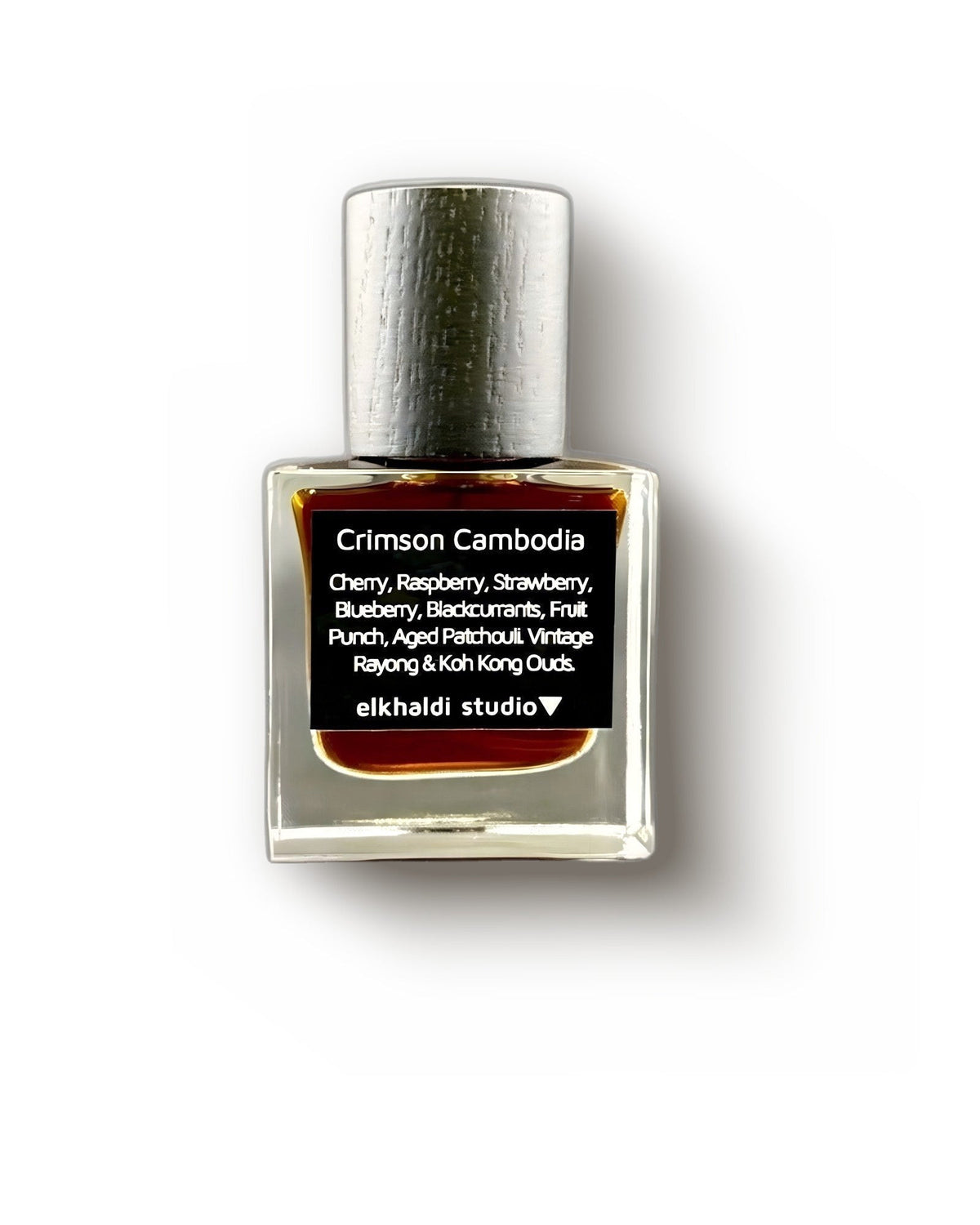
More by this noseCrimson Cambodia
The Maison

Khaleeji perfumery at full depth: vintage oud, dark fruit and paste thick ambergris.
Maher Elkhaldi builds around specific, dated aged woods and thick macerated bases, so a bottle does not smell like a formula so much as like a room where a particular resin has been sitting for years. These are dense, nocturnal, unhurried scents, and heavy hitters are best met in small doses first.
- Known for
- Dated aged oud, macerated bases

EVERY DECANT
From the original bottle to your door
We buy the original flacon at full retail price, direct from the house.
A medical grade Socorex syringe takes the exact millilitres straight from the flacon.
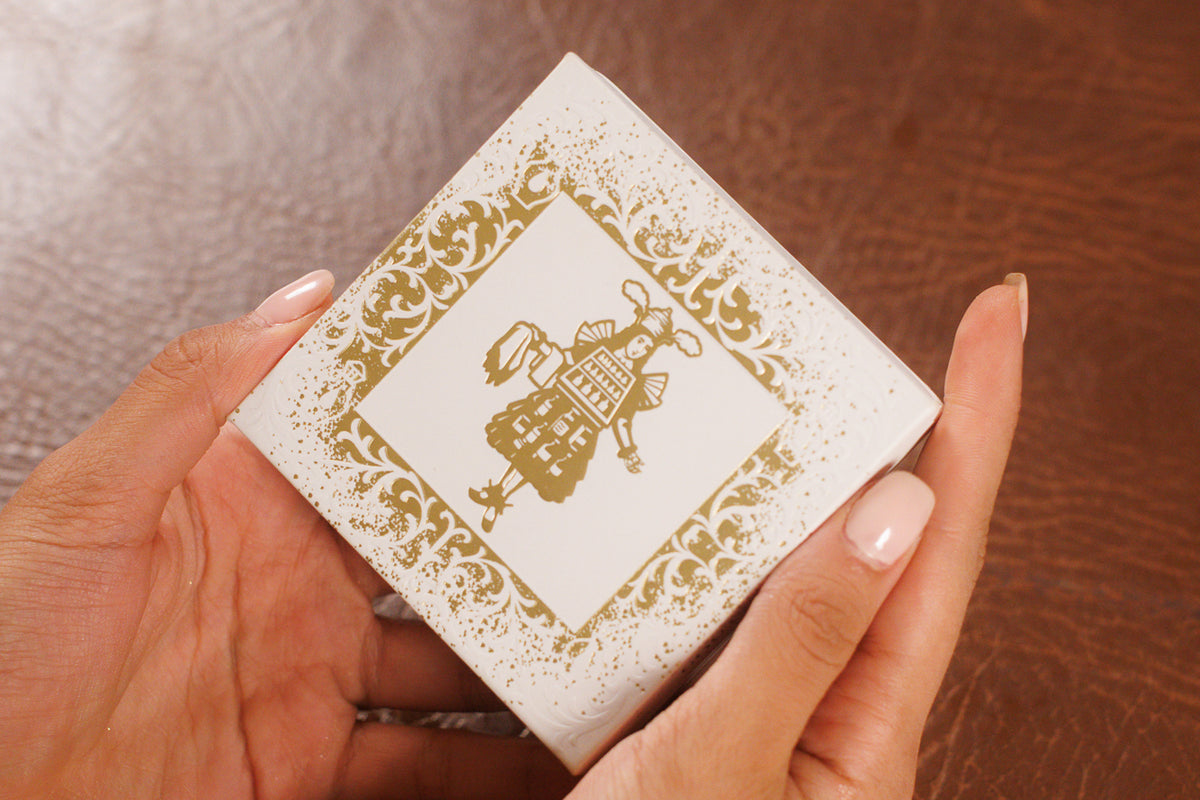
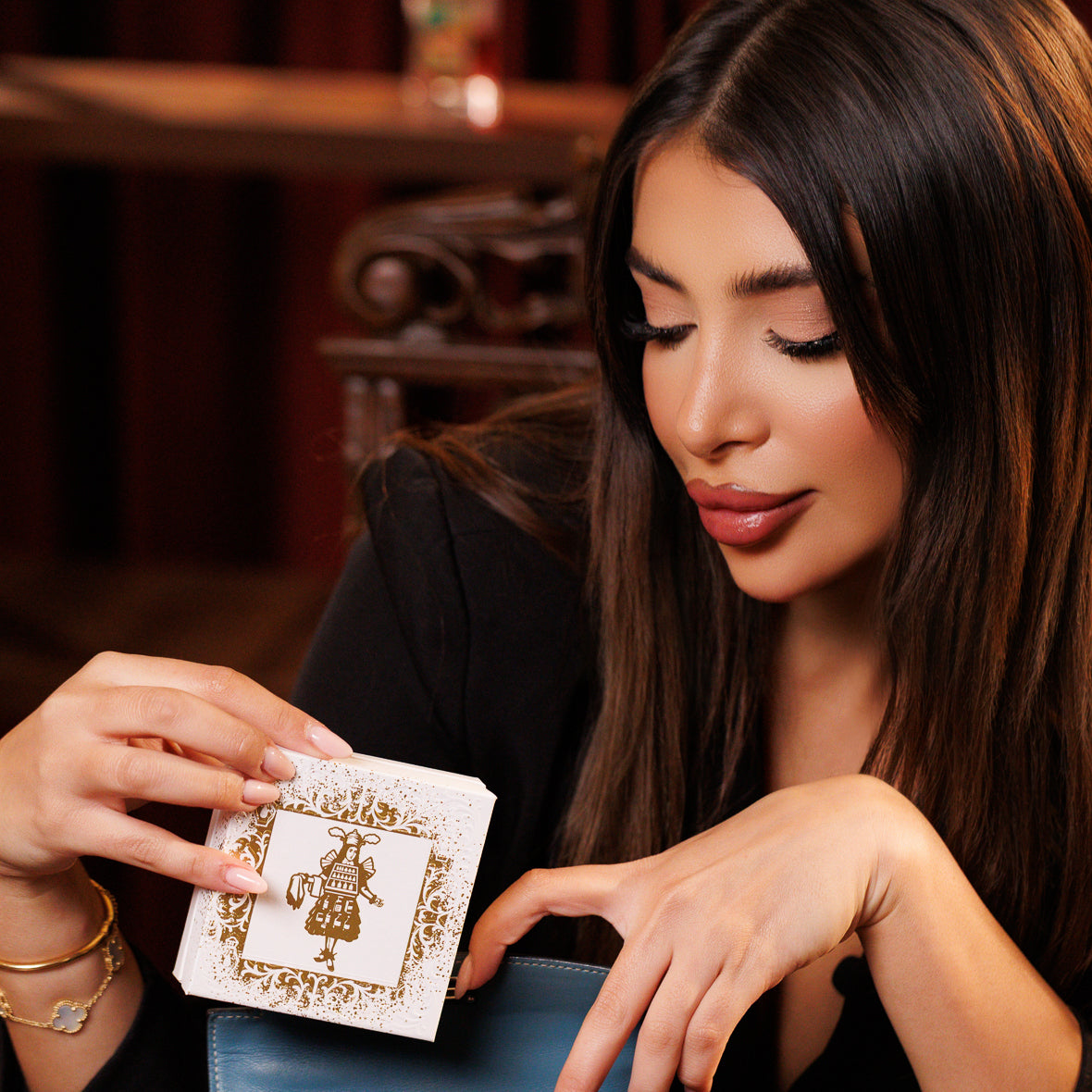
Packed into the hot foiled box and handed to DHL, every duty already paid. How a decant is made
More from El Khaldi
You may also like