Bortnikoff
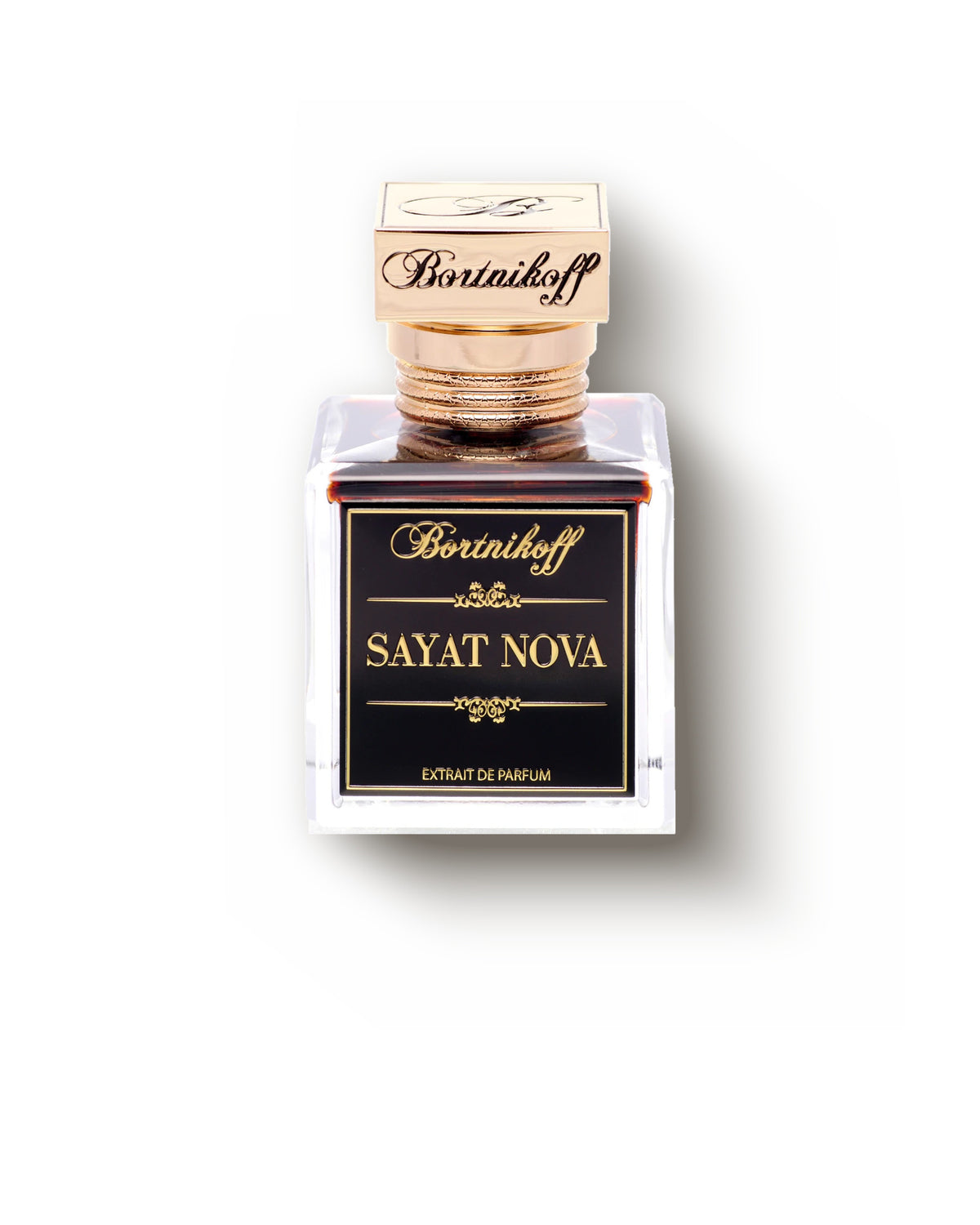
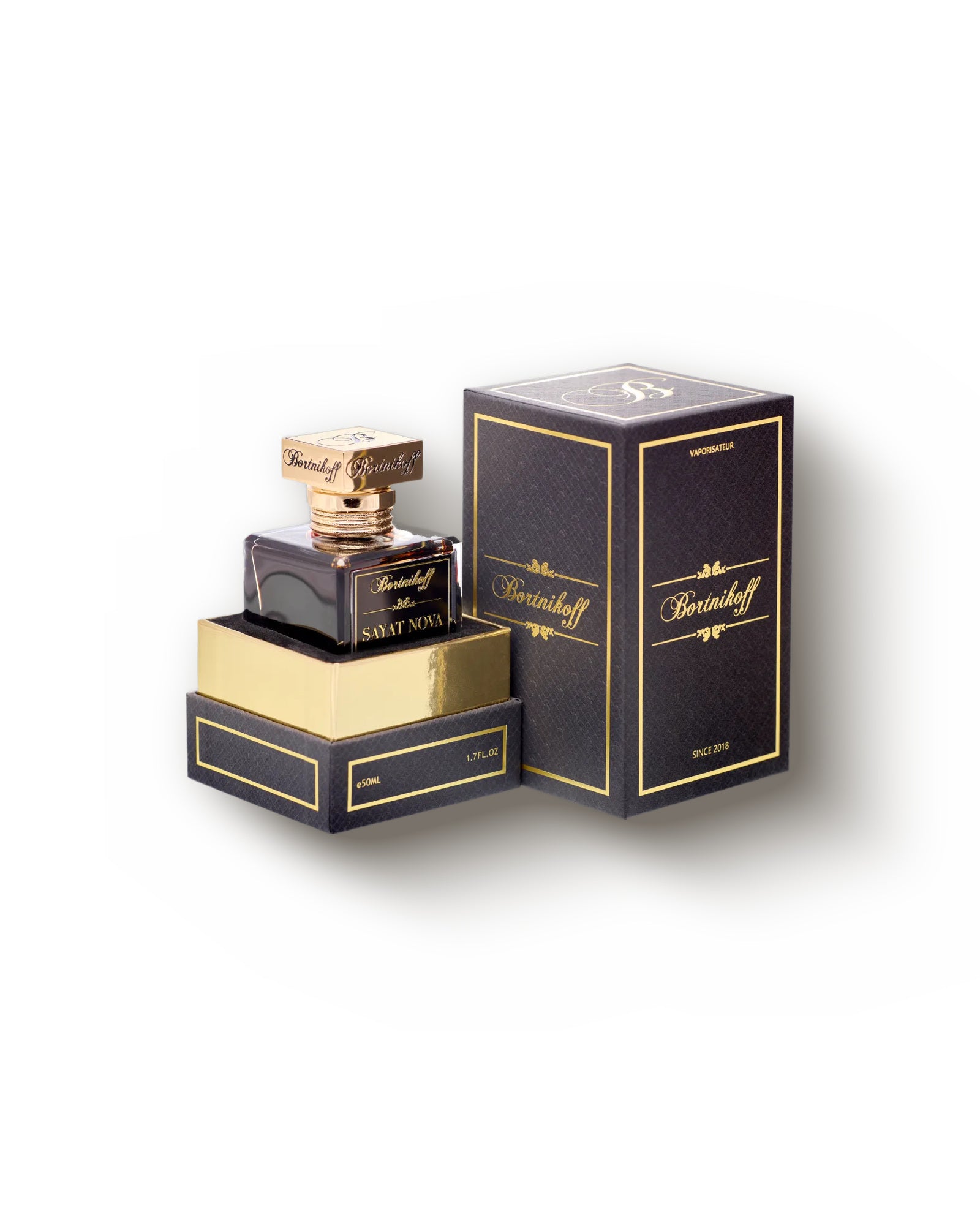
Sayat Nova
The Story
Sayat Nova is an extrait from Bortnikoff, the Thailand-based house founded by Dmitry Bortnikoff, an architect turned perfumer who also co-founded an agarwood distillery. It is named for the 18th-century Armenian troubadour, and its base draws on three separate ouds, from Laos, Bengal and Trat in Thailand.


Fruity
Peach skin, not lemon peel
Peach, pear, apple, berry: this is sweetness in the flesh rather than the rind, dewy and nectar-heavy where citrus is sharp and thin. It plays young and slightly greedy, the sort of ripeness you can almost feel running down a wrist.


Oud
What a tree makes when it is wounded
A dense, resinous wood that smells warm and slightly medicinal, with a leathery, animal-tinged smokiness and a sweet, almost barnyard funk underneath. It feels ancient and brooding, wrapping the skin in something thick and quietly powerful.


Sweet
Warm sugar you cannot quite name
Caramel, honey, spun sugar: sweetness that hovers between all three and never settles on one. This is the gourmand pull, the thing that makes someone lean in closer than they meant to, warm and soft and a half step short of edible.


Rum
dark molasses and warm spice
A sticky, sugar-cane sweetness gone slightly fermented, dark with molasses, brown sugar, and a heady alcoholic lift. It reads as festive and indulgent, conjuring spiced cake and the heat of something poured neat.


Vanilla
Cured pod, boozy under the cream
Cured pods, not frosting. The sweetness here is custardy and balsamic, with something dark and boozy under it, closer to rum and woodsmoke than to sugar. It warms everything above it, blunting sharp edges and slowing the whole thing down.


Mossy
inky green shade under old oaks
The damp, inky smell of oakmoss and treemoss, lichens rather than true mosses, gathered from shaded oak and fir bark, faintly bitter with a cool woody depth. It grounds a fragrance in forest-floor shadow, lending an old, melancholy elegance that feels like breathing in a rain-soaked wood.


Apricot
Sun-warmed velvet with no fruit in it
What it is
There is no apricot in apricot. The fruit gives up nothing worth distilling, so the note gets built: lactones and bright esters in most hands, or osmanthus absolute, which smells of dried apricot and leather on its own.
How it smells
Velvety and sun-warmed, the blush of ripe skin over something creamy and waxy. The lab build holds one apricot shape start to finish. The naturals build is hazier, threaded with tea and honey, and will not sit still.
In perfumery
It sits in the top and heart of fruity florals, chypres and gourmands, adding plush sweetness and lift. Lactones dose predictably and give volume. Osmanthus and davana are costly and harvest-dependent, so they get treated as the centrepiece.
Good to know
Osmanthus and davana turn up in mainstream formulas too, so seeing them on a list proves nothing about how natural a perfume is. The tell is behaviour: a lab apricot stays put and projects, a botanical one wanders.
Narcissus
Hay, honey and a green animal hush
What it is
Forget the bright daffodil on a windowsill. This absolute comes from the poet's narcissus, combed by hand off high meadows on France's Aubrac plateau during a few weeks of late-spring bloom.
How it smells
Green and heady at once: bruised petals, fresh hay, a curl of tobacco, and an indolic sweetness that reads almost fecal. It opens grassy, then turns earthy, leathery and mossy. Darker and stranger than any daffodil should be.
In perfumery
In the heart it deepens chypres and florals with hay and moss, sitting well beside jasmine, oakmoss, immortelle and leather. Its black animalic streak is what anchors the darkest vintage florals.
Good to know
Yield is tiny and the harvest window is weeks, which puts it among the costliest florals. The name probably comes not from the Greek youth at the pool but from narke, numbness, for the head-spinning scent.

Rum
Dark molasses and oak with a boozy kick
What it is
There is no rum essential oil. A botanical rum is composed from a rum extract or tincture and cognac oil, with tonka, benzoin, labdanum and davana filling in the molasses and dried fruit, all chasing a spirit distilled from sugarcane and left to sit in oak.
How it smells
Burnt sugar and molasses first, with the warm sting of alcohol behind them. Vanilla and dried fruit fill in, oak adds a little smoke, and the whole thing slumps into toffee, spice and old tobacco.
In perfumery
It sits high in a gourmand and works downward, warming tobacco, vanilla, tonka and cinnamon on the way. Set it against cacao and cardamom instead of sugar and the composition turns darker, drier, more adult.
Good to know
Mainstream rum accords lean on rum ether, which also flavours sweets and baked goods, so the line between a perfume and a dessert gets thin; a botanical rum does without it. Since every house composes its own rum, no two smell quite the same.

Vanilla
Cured orchid pods, custard and faint smoke
What it is
Green pods come off the orchid vine smelling of almost nothing. The scent is made, not found: months of blanching, sweating in the sun and slow drying before the vanillin appears. Mexico first, Madagascar now.
How it smells
Custard and caramel up front, then something darker underneath: dried fruit and a thread of tobacco smoke. It turns powdery as it dries and sits close to the skin. Real cured vanilla reads deeper than vanillin alone.
In perfumery
Perfumers use it to round off edges. Anything too sharp, too green, too austere gets warmth and body from a vanilla base, which is why it anchors many oriental and gourmand builds alongside tonka, amber, sandalwood and spice.
Good to know
Every flower opens for one day. Miss it and there is no pod, so all of it is pollinated by hand, a trick devised by Edmond Albius, a twelve-year-old enslaved boy on Réunion. Most vanilla flavour today is synthetic.


Oud from Laos
Syrupy dried fruit over soft leather
What it is
Oud distilled from Aquilaria crassna grown in Laos, the same species that supplies Cambodia, Vietnam and eastern Thailand. Laotian material sits in the middle of that mainland belt, and its oils are usually read as a bridge between the sweet Cambodian style and the smokier Thai one rather than as a category of their own.
How it smells
It opens pungent and leathery, then settles quickly into a syrupy woody sweetness carrying dried fruit and a faint floral tone. A honeyed warmth runs under balsamic woods and gentle earth, with only a light animalic edge and none of the fermented ferocity of a Hindi oil. Sweeter and rounder than most of its neighbours.
In perfumery
Used where oud has to be rich but companionable: it gives body and length without dominating a blend, and its dried-fruit sweetness makes it a natural partner for rose, honey, tobacco and balsams. Perfumers reach for it when a composition needs agarwood warmth rather than an agarwood statement.
Good to know
Wild crassna in Laos is severely depleted, so genuine Laotian oil is scarce. Yields are minute, with long distillations returning a fraction of a percent by weight, which is why the real thing is never inexpensive.
Bengal Oud
Indian-style agarwood from the Bengal region
What it is
Agarwood oil from Bengal, the region now divided between India and Bangladesh, and one of the three oud origins the house names for this perfume. Agarwood there comes from Aquilaria malaccensis, the species of neighbouring Assam, and its oils belong to the Indian family.
How it smells
Oils of the Indian family run deep and dark: leather, damp earth and resinous wood, often with a fermented, animalic edge from the long soak before distillation. As they dry the funk recedes and a sweeter, woody warmth carries on for hours.
In perfumery
A base material that gives weight and length. Here it shares the base with oils from Laos and Trat, two mainland regions known for sweeter, fruitier ouds, and an Indian-style oil typically brings the darker, earthier side of such a trio.
Good to know
Bengal borders Assam, and the agarwood on either side of that line is close kin, so oils from the two are usually grouped together as the classic Indian style. Three ouds from three countries in one base is an unusual choice, and Bengal is the one from the subcontinent.

Oud from Trat
Honeyed Thai agarwood from the Cambodian border
What it is
Agarwood oil from Trat, the province on Thailand's eastern seaboard where the Cardamom Mountains cross into Cambodia, and one of the three oud origins the house names for this perfume. Trat is Thailand's best-known oud region, and its trees are mostly Aquilaria crassna, the species of the mainland belt.
How it smells
Trat oils are known for a sweet, resinous core with a honeyed thread, wrapped in smouldering leather, warm spice and a touch of camphor. They carry more smoke than the Cambodian oils just over the border, and stay warm and steady rather than sharp.
In perfumery
Thai oud sits between the sweet Cambodian style and the animalic Indian one, giving depth without the barnyard. Here it shares the base with oils from Laos and Bengal, under the rum and vanilla and beside the oakmoss.
Good to know
Agarwood forms only where a wounded Aquilaria, or a close relative such as Gyrinops, floods its heartwood with dark resin, a defence that can take years to build. Trat is one of the heartlands of Thai agarwood growing, which is why its name carries weight on a label.


Oakmoss
The damp green soul of the forest floor
What it is
Not a moss at all, but a lichen, scraped off oak and other deciduous bark across temperate Europe, Russia and North Africa. Solvents turn the harvested growth into a dark, viscous concrete, then the absolute perfumers actually use.
How it smells
Wet stone, damp bark and something inky and leathery underneath, dry and faintly bitter. This is not fresh green: it is the cool floor beneath old trees after rain has soaked the ground.
In perfumery
The backbone of the chypre: a base note that gives a fragrance its shadow and its spine, classically under bergamot, beside labdanum and patchouli. Anything described as mossy, vintage or green-masculine is usually leaning on it.
Good to know
Oakmoss carries two allergens, atranol and chloroatranol, potent enough that the EU banned them from cosmetics outright. Perfumers use stripped grades now, but it was the earlier cap on the extract that changed how the classic chypre smells.
Fragrance Character
The opening is thick apricot, closer to dried fruit and syrup than fresh, with narcissus adding a green, faintly animalic edge. Rum reads as barrel spirit rather than sugar, and the vanilla beside it is balsamic, smoke-tinged. Three ouds sit behind it all, smoky and medicinal, oakmoss underneath. It projects hard from the opening and stays audible as it settles.


Longevity
how long it stays on skin
The hourglass reads wear time: how many hours the fragrance keeps speaking before it fades. A bar that barely leaves the start means a few fleeting hours. One that runs the full length carries from morning into evening. Treat it as typical, not promised. Oily skin holds scent far longer than dry.


Sillage
the size of its scent trail
Sillage is French for a ship's wake, and that is exactly what this measures: how much of the scent reaches the room instead of staying on you. Low is a whisper only close friends catch. Enormous fills the room, then keeps filling it after you leave.


Experimental
Built to provoke, not to please
Some perfumes are made to be liked. These are made to be argued about: inky tar, hot rubber, fruit on the turn, metal and fur where you expected flowers. The coin glows for a scent that provokes and dims for one that plays it safe, which is sometimes the point.


Office
Polished, and never louder than the room
Scent is manners in a shared room. At this range it should reach the person across the desk and stop there: tidy citrus, soft musk, pale woods, all of it reading competent and considerate. A glowing coin means nobody has to mention it. A dim one means it travels.


Evening
After dark, when it deepens
Dinner, drinks, the night that runs long. Low light is where ambers, resins and smoky woods stop being polite, and where a plush floral finally blooms. A glowing coin means it is waiting for exactly this hour. A dim one means it did its best work in daylight.


Romantic
Close enough to be felt
A fragrance can hum against skin instead of announcing itself across a table. That is the register here: creamy florals, vanilla, soft musk, a thread of spice, warm enough to make someone lean in. The coin glows when a scent sets that mood and dims when it is more practical than seductive.


Formal
Quiet authority in a dressed-up room
A wedding, a ceremony, a room where everyone has thought about their shoes. What works here is structure, not volume: smooth woods, disciplined florals, soft leather. A glowing coin means it holds its posture all evening. A dim one means it is too casual for the room.


Casual
Easy comfort for unhurried days
Errands, coffee, a slow Saturday with nowhere to be. Nothing here has to impress anyone, so the fit is soft and easy: fresh citrus, light woods, a little warmth off the skin. A glowing coin says yes to all that. A dim one means the fragrance is asking for a bigger night.


Day to Night
where its mood naturally falls
A bar running from sun to moon, reading the hour the fragrance was made for. The more of it that stays gold, the more the scent belongs to daylight and open air. The further the blue reaches back toward the sun, the deeper and warmer it turns: evening, candlelight, low rooms.


Winter
Warmth that carries through cold air
Cold air mutes a fragrance and slows it down, which is why winter belongs to the dense and the warm: resin, smoke, vanilla, leather, ambered spice. The bar reads how well this one pushes back, glowing against the chill instead of thinning out in it.


Spring
Fresh blooms in mild, rising warmth
Mild, humid air lifts a light composition, so the season belongs to dewy florals, green stems, soft powder and citrus you can see through. Alive rather than heavy. The further the green runs along the bar, the more comfortably this one wears in that weather.


Summer
Bright and airy in real heat
Heat does the projecting for you, which is why the wrong perfume turns unbearable by noon. What survives is cool and breathable: sharp citrus, salt air, aromatic herbs, water. Things that refresh instead of cloy. A short bar here means save it for cooler months.


Fall
Spiced warmth for cooling days
As the air cools, the rich materials stop smothering and start reading clearly: dry woods, warm spice, tobacco, amber, fruit gone golden. It is the season perfume turns contemplative. The bar fills according to how naturally this one settles into crisp, cooling days.
Best Worn
Autumn and winter, late afternoon into evening. It suits someone who already wears sweet, boozy woods and does not mind being noticed. Dark juice, so keep it off pale fabric.
Choose options
The Vibe


The Nose

Dmitry Bortnikoff
Founder and perfumer
An architect by profession who turned to distilling. He co-founded Feel Oud in 2013, distilling agarwood and sandalwood oils, then launched Bortnikoff in Thailand in 2018. Its perfumes run 95 to 100 per cent natural. He composed Bortnikoff Oud Maximus, and Bortnikoff Sayat Nova and Bortnikoff Santa Sangre with Rajesh Balkrishnan.
More by this noseOud MaximusMusk KhabibMusk Cologne
Rajesh Balkrishnan
Perfumer
Rajesh Balkrishnan is a perfumer and fragrance storyteller who works through collaborations. He created Bortnikoff Sayat Nova with Dmitry Bortnikoff, led the creative direction of Folkwinds’ Sleepy Hollow and Devil’s Garden, sourcing remote materials for the perfumer to weave, and co-created Pan’s Labyrinth with Lost Tribe.
More by this noseDevil's GardenPan's Labyrinth v1Pan's Labyrinth v2
The Maison

Real oud, true ambergris. Small batch extraits made of living materials.
Dmitry Bortnikoff builds the slow, artisanal way, from naturals most makers simply cannot get their hands on. Real Indian oud, honeyed roses distilled straight into sandalwood, and many oils distilled in house with nineteenth century techniques. The result feels alive on skin, warm and a little unruly.
- Origin
- Thailand
- Founded
- 2018
- Known for
- Real animalics, tiny batches

EVERY DECANT
From the original bottle to your door
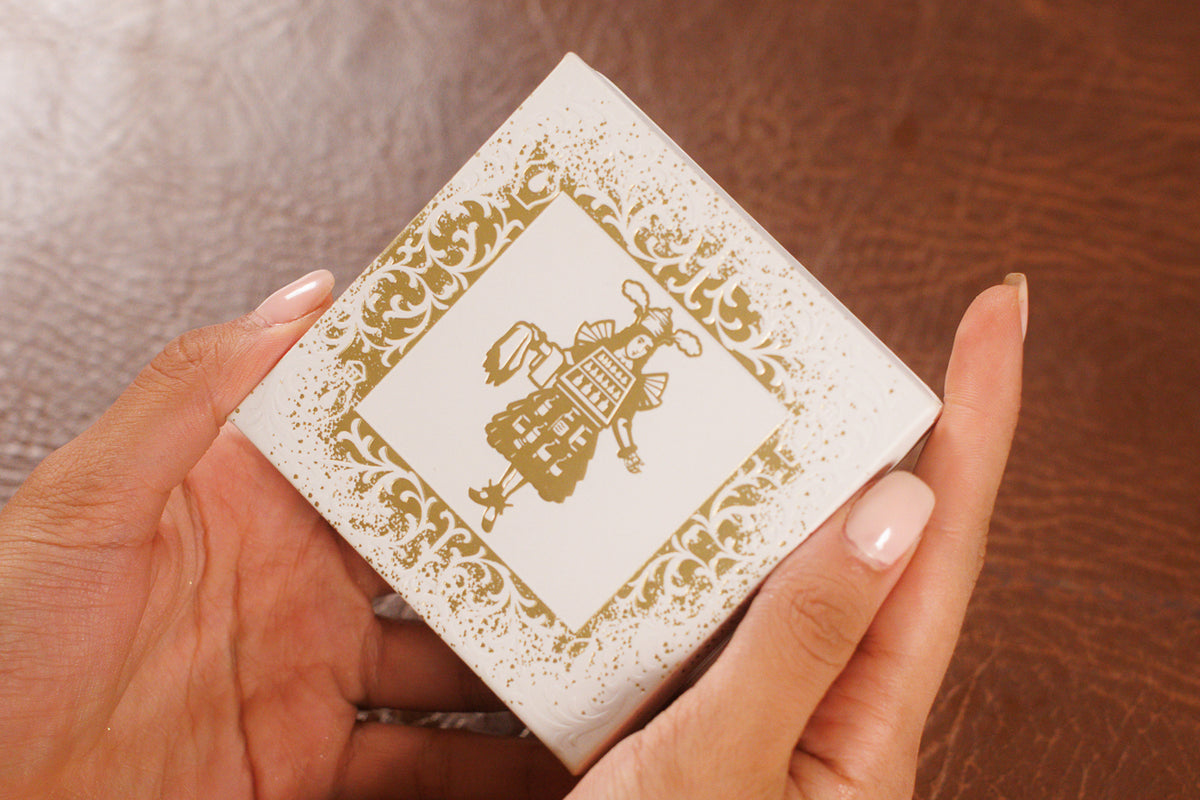
We buy the original flacon at full retail price, direct from the house.
A medical grade Socorex syringe takes the exact millilitres straight from the flacon.
Packed into the hot foiled box and handed to DHL, every duty already paid. How a decant is made
More from Bortnikoff
You may also like