Folkwinds
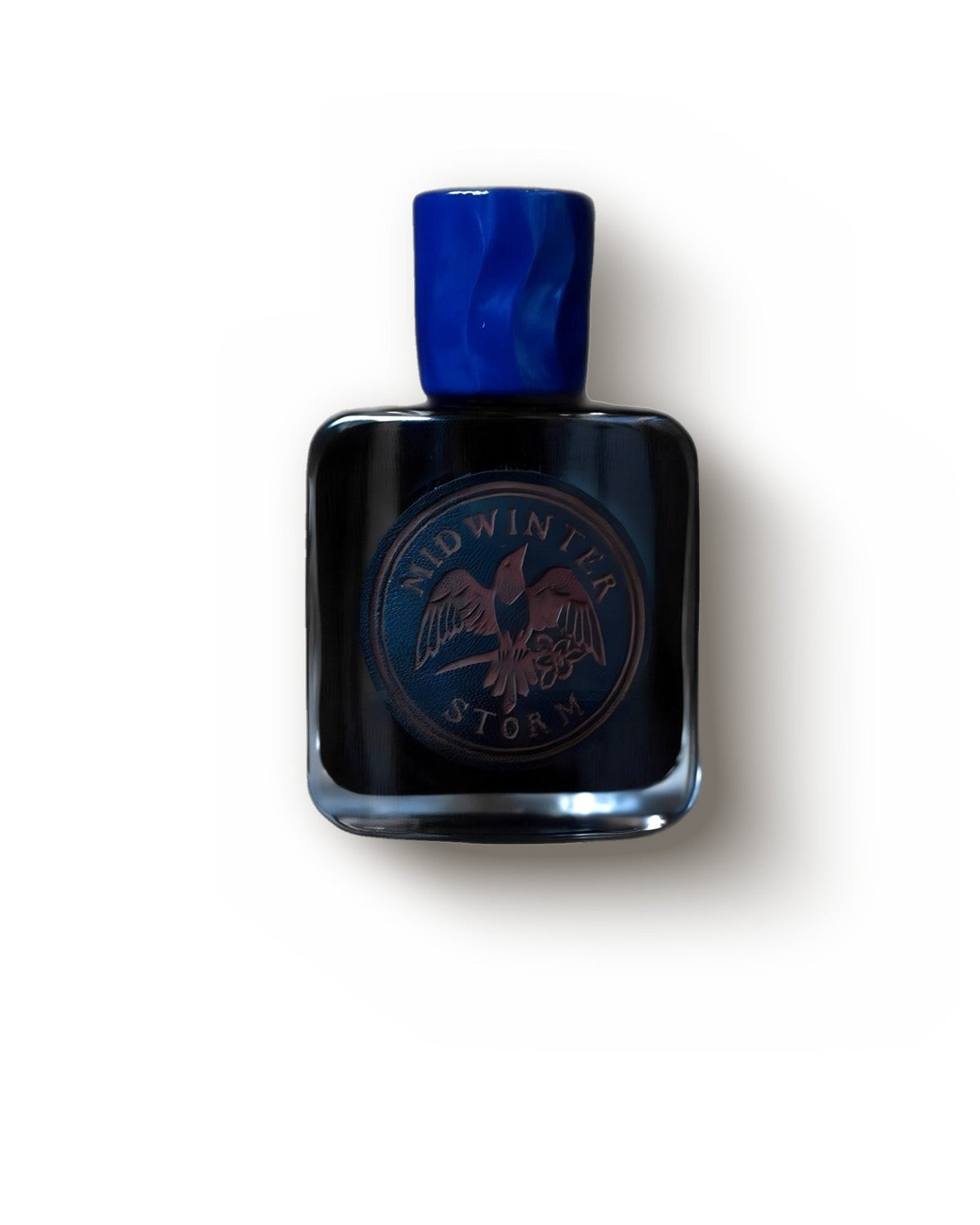
Midwinter Storm
Midwinter Storm 以发酵苹果的冰冷气息与刺人的黑麦揭开序幕,随即坍缩为一枚浓密而带粉感的鸢尾(orris)核心,浓缩到近乎不像一种香调,而更像一种实体物质——洁白、粉质而冰冷,由三种各异的沉香(oud)与如温热奶油般丰润的檀香基调深深锚定。
香氛故事
Midwinter Storm 是 Folkwinds Reserve 系列作品,以全光谱鸢尾根单花香为创作理念,汇集了所有可获取的天然鸢尾素材与分离单体,以尽可能高的浓度叠加构建。粉质鸢尾根基底由顶级沉香木奠定,以檀香代替了更为惯常的安息香。于 2026 年以严格限量 50 瓶发行。
调香师
Midwinter Storm 由 Jono Bornstein 调制,他是 Folkwinds 旗下作品的灵魂人物,代表作包括 Cloud Illusions、Santi Ana 与 By-And-By。


花香
柔软盛放的花瓣
花朵盛开时那圆润、带露的气息,柔软微甜,带着粉质、花蜜般的光晕。它浪漫而温柔,唤起暮春的花园,以及贴肤而来的一缕轻盈。


木质
锯木干燥的纹理
雪松刨花、檀香与干燥岩兰草根的气息,一份打磨过、富树脂的温暖,缀着一缕铅笔盒般的粗粝。它扎根而沉稳,正是那道静默的骨架,使香气读来庄重而持久。


粉香
梳妆肌肤上柔软的静谧
鸢尾根、紫罗兰与细腻滑石那丝绒般、略干的柔软,宛如扑面粉,或被肌肤晒暖的洁净亚麻。它亲昵、精致而怀旧,将香气晕染成一片温柔、缓冲的薄雾。


清新
凉水之后洁净的空气
一种清脆、透明的明亮感,让人想到凉水、洗净的肌肤与开阔的空气,常掺一缕果皮或水生的提升。它洁净而轻盈,即刻清凉而毫不繁复,宛如雨后踏出门外。


乳酯
奶油般的乳香与温热肌肤
一种奶油般、乳质的柔软,让人想起温热的蒸奶、奶皮或不带甜味的椰肉。它丰盈而包裹,将花香与木香抚平成某种温柔而略带怀旧的气息,宛如温暖乳品的慰藉。


冰苹果酒
Orchard fruit gone warm and faintly boozy
What it is
An evocative accord rather than a single raw material, built to conjure pressed apples fermenting toward cider. Perfumers reconstruct it from fruity esters, apple aroma molecules, a touch of acetic tang and warm spice, since fermented cider itself is not distilled for scent.
How it smells
Crushed ripe apple, sweet and juicy, edged with a tart vinegary sparkle and a soft yeasty, faintly boozy warmth. Mulling spices of cinnamon, clove and nutmeg often hover at the edges, giving an autumnal, just-pressed orchard impression that feels cozy and a little tipsy.
In perfumery
A heart accord driving fruity-gourmand and seasonal autumn compositions. It blends with cinnamon, caramel, brown sugar, woods and ambers, and sits naturally beside other orchard and harvest notes. It anchors cozy fall and apple-orchard themed fragrances and home scents.
Good to know
The bright apple lift in such accords often leans on alpha-damascone, a rose-ketone prized for its fruity apple effect with floral and plum nuances. So beneath the juice and spice a cider note can carry a surprising soft rosy glow from that single molecule.


黑麦香料
Caraway-dark crust of warm rye loaf
What it is
Rye Spice is the warm, aromatic facet of rye grain and its bread rather than a single distilled oil. Perfumers reconstruct it from caraway, cumin and fennel-type seed materials layered over toasted-grain and yeasty accords, echoing the dark loaf that rye flour bakes into.
How it smells
Astringent, peppery caraway leads, edged with anise coolness and warm cumin. Beneath sits toasted crust, a sourdough tang and a faintly earthy, molasses sweetness. The overall impression reads dry, grainy and rustic, more savoury bakery than dessert, with a lingering seeded warmth.
In perfumery
Used as a gourmand-spice bridge, it lends edible warmth to amber, tobacco and leather bases and pairs with coffee, fig, immortelle and dark woods. It anchors playful bread-and-grain accords, the kind of rustic loaf effect explored in Demeter's Rye Bread and savoury niche gourmands.
Good to know
Caraway, the seed that defines rye's character, is not the grain itself but a spice baked into the dough. Its pungency comes from S-carvone, the mirror-image twin of the R-carvone that makes spearmint smell cool and sweet, the same atoms built the opposite way.


蓝莓
A rare all-natural impression, painted from fruits and resins
What it is
There is no blueberry essential oil — the fruit yields nothing usable by distillation or expression, so a true natural blueberry simply does not exist as a raw material. What artisanal natural-perfume houses offer instead is a hand-built accord: an artful impression assembled entirely from natural ingredients, with not a single synthetic in the blend. It is a reconstruction, an interpretation of the berry, never an extract of it.
How it smells
Soft, plump and gently jammy, with a cool blue-purple sweetness and a quiet green-leaf edge that keeps it from turning sugary. Because it is woven from naturals, it reads rounder, warmer and more three-dimensional than a single fruity chemical — the smell shifts and breathes as it dries rather than holding one flat note. The effect is less photo-real and more painterly: a suggestion of blueberry rather than a sharp snapshot.
In perfumery
The accord is coaxed from natural fruity and aromatic materials — think jammy fruit-toned absolutes, berry-leaning floral and herbal extracts, a whisper of wine-like or balsamic facets, and soft musky naturals to give body. A perfumer layers these so the brain assembles 'blueberry' from many honest parts, none of which is the fruit itself. It lends a fresh, fruity glow to the top and early heart, flattering florals and soft woods.
Good to know
This all-natural route is the connoisseur's path and a genuine rarity: natural materials are costly, vary batch to batch, and demand real skill to balance into a convincing berry. The trade-off for that expense and labor is honesty and depth — a living, slightly unpredictable accord rather than a fixed one. If a fragrance smells of blueberry yet declares itself fully natural, it is this patient reconstruction at work, not a bottled fruit.


白云杉
Cool northern forest air made fragrant
What it is
A tall evergreen conifer, Picea rubens, native to eastern Canada and the northeastern United States, ranging from the Adirondacks down the Appalachians. The aroma material is an essential oil steam-distilled from the freshly cut needles and small twigs of the tree.
How it smells
Softer and sweeter than most evergreen oils, with a clean balsamic, resinous heart. It opens fresh and green with a crisp coniferous snap, then reveals gentle woody warmth and a subtle fruity facet, rounder and less sharp than pine or fir needle oils.
In perfumery
A fresh top-to-heart note bringing airy, forest-clean character to woody, aromatic and fougere accords. It pairs with cedar, fir balsam, vetiver and citrus, lending a crisp, outdoorsy evergreen lift especially suited to cool-weather and coniferous compositions.
Good to know
Spruce gum, the hardened resin of red and black spruce, was chewed across rural North America and sold by John Curtis from 1848 as the continent's first commercial chewing gum. Red spruce also supplies prized resonant tonewood for guitar and violin soundboards.


鸢尾
Powdered violet rooted in patient buried earth
What it is
Orris is the aroma material from the rhizome of iris flowers, chiefly Iris pallida grown in the hills of Tuscany. The roots are harvested, dried and aged three to six years so enzymes slowly develop irones, then ground and steam-distilled into a waxy, ivory orris butter.
How it smells
A cool, powdery violet scent with a suede-like, almost edible carrot-and-raw-flour facet. It reads dry rather than sweet, evoking face powder, soft leather and damp soil, carrying a silvery, slightly metallic shimmer that feels both floral and rooty at once.
In perfumery
A heart and base material prized for its body and a powdery lift that smooths sharp florals and woods. It pairs with violet, rose, iris leaf and ambrette. It defines a whole lineage of refined powdery-iris and aldehydic-floral compositions.
Good to know
Orris ranks among the costliest naturals in perfumery. A ton of aged rhizome yields only about two kilograms of orris butter, and high-irone grades can exceed one hundred thousand dollars per kilogram, the cost driven by years of aging before any scent develops.


蓝莲花
The sacred water lily of pharaohs and dreams
What it is
Blue lotus is Nymphaea caerulea, the blue Egyptian water lily, a star-petalled flower rooted in Nile mud and ponds across North and East Africa. The blossoms are solvent-extracted with hexane into a concrete, then ethanol-washed into a thick, dark absolute that preserves their delicate aromatic compounds.
How it smells
Sweet and honeyed with a green, watery floralcy and soft fruity, lychee-like undertones, edged by an earthy, slightly spicy warmth and a waxy, powdery backbone. It opens cool and aquatic like a pond at dawn, then dries down resinous and balsamic, more meditative than bright.
In perfumery
A heart note prized for an exotic floral character bridging aquatic freshness and warm sweetness, typically dosed below five percent given its strength. Rare and costly, it appears in niche compositions and amber-incense accords built around ancient Egyptian and meditative themes.
Good to know
Ancient Egyptians revered the flower as a symbol of rebirth and the sun, depicting it on tomb walls and steeping it in wine for its mild psychoactive effect. It opens at dawn and closes at dusk, a daily cycle that tied it to resurrection myths.


木兰原精
Rice-grain blossoms breathing fruit and green tea
What it is
Aglaia Absolute is solvent-extracted from the tiny golden flowers of Aglaia odorata, a shrub in the mahogany family known as the Chinese Perfume Tree or Chinese Rice Flower. Each bloom is barely the size of a rice grain, so yields are minute and the absolute remains genuinely rare.
How it smells
Sweetly fruity and floral, with juicy peach and pear flesh wrapped around a soft, leafy green-tea note. A gentle lemony radiance lifts the top, earning the plant the nickname mock lemon, while a quiet hay-like warmth settles underneath, giving an impression both luminous and rounded.
In perfumery
A precious natural used in small touches, it adds fruity-floral radiance and tea-like freshness to oriental, amber and East-Asian themed bouquets. It blends naturally with osmanthus, peach, oolong and forest-green accords, reading as a softer, sunnier cousin to osmanthus in fine fragrance.
Good to know
The plant belongs to Meliaceae, the same botanical family as true mahogany, an unusually woody lineage for so delicate a flower. Its yellow blooms are at their most fragrant by day, releasing a strong lemony-floral scent that gives the tree its perfume-plant name.


橡木苔
The damp green soul of the forest floor
What it is
Oakmoss is not a true moss but a lichen, Evernia prunastri, growing on oak and other deciduous bark across temperate Europe, notably the Balkans, France and Morocco. The harvested thalli are solvent-extracted into a dark, viscous concrete and absolute, the raw materials used in perfumery.
How it smells
Deeply earthy and forest-green, with damp bark, wet stone and a leathery, inky undertone. A dry, faintly bitter mossiness carries marine and tar-like facets. The effect is shadowy rather than fresh, evoking the cool floor beneath old trees after rain has soaked the ground.
In perfumery
A base note and the backbone of the chypre family, lending structure, depth and a vintage signature. It pairs classically with bergamot, labdanum and patchouli. It defines the great peach-spiced chypres and the green core of classic galbanum florals, plus countless mossy fougères and masculines.
Good to know
Oakmoss extracts contain atranol and chloroatranol, potent skin allergens the EU effectively banned in 2017. IFRA now requires reduced-allergen, low-atranol versions, capping these molecules to trace levels, which has quietly reshaped how the classic chypre smells in reformulated modern perfumes.


香草
The warm sweet heart of comfort itself
What it is
Vanilla comes from the cured seed pods of Vanilla planifolia, a climbing orchid native to Mexico now grown mainly in Madagascar, Réunion and Tahiti. Green pods are picked unripe, then blanched, sweated in the sun and slow-dried over months until they darken and develop their aroma and vanillin.
How it smells
Sweet, warm and creamy, with a balsamic depth recalling custard, caramel and dried fruit, a faint smoky tobacco-like edge sitting underneath. It opens soft and gourmand, then dries into a powdery resinous warmth that clings close to skin and reads richer than synthetic vanillin alone.
In perfumery
A base note prized for richness and lasting warmth, vanilla rounds sharp edges and anchors oriental and gourmand compositions. It pairs naturally with tonka, amber, sandalwood and spice. Many of the most enduring oriental and tobacco fragrances build their core around it.
Good to know
Vanilla ranks among the costliest spices because each orchid flower opens for one day and must be hand-pollinated, a technique devised in 1841 by Edmond Albius, a twelve-year-old enslaved boy on Réunion. Most commercial vanilla flavor now relies on synthetic vanillin.


银虎纹木
The grain and warmth of trees themselves
What it is
A category rather than a single material, covering aromas from tree woods, roots and bark plus synthetics that extend them. It spans sandalwood, cedar, vetiver, guaiac and patchouli, drawn by steam distillation or solvent extraction, alongside lab-made woody-ambers like Iso E Super, made entirely by chemical synthesis.
How it smells
Dry to creamy, evoking sawn timber, pencil shavings, fresh resin and sun-warmed bark. Cedar reads pencil-sharp, sandalwood milky and smooth, vetiver earthy and rooty, guaiac smoky-sweet. As a group the impression is grounding, textured and faintly smoky, the backbone many compositions stand on.
In perfumery
Mostly heart and base material, woody notes give structure, longevity and a natural backbone tying a composition together. They support nearly every family, anchoring florals, ambers and fougeres. Modern woody-amber molecules drive countless contemporary scents, the dry cedar-vetiver register among them.
Good to know
Much of today's woodiness is synthetic, partly because natural sandalwood and rosewood were overharvested into protected status. A single molecule, Iso E Super, grew so dominant that an entire cult fragrance was built around it almost neat, near-imperceptible up close yet glowing on skin.


野生马里瑙
Vaporous blue-green agarwood, camphor lifted over ripe fruit
What it is
Genuine agarwood (Aquilaria) distilled from trees grown on Borneo — the Indonesian Kalimantan side and the Malaysian states of Sabah and Sarawak, among the oldest rainforests on earth. The finest examples work from real, single-origin Bornean wood rather than a reconstructed "oud" base, so the oil carries the terroir of that specific island. Borneo's distinct species and soil yield a resin profile that no synthetic oud accord reproduces.
How it smells
The signature is a high, vaporous "blue-green" lift: bright camphor and a cool mentholated whistle that some describe as magic-marker or eucalyptus, riding above ripe stone fruit — pear, peach, apricot — and a soft berry sweetness. Underneath sits a clean, golden-woody, faintly creamy base with green-floral and powdery facets, never sour or fecal. It reads airy and luminous — more forest-canopy than forest-floor.
In perfumery
Borneo oud is prized as a base note that stays lifted and radiant rather than heavy, giving a composition long wear without the funk. It marries beautifully with rose, sandalwood, amber, and green florals, its fruity-camphor top brightening a blend where Hindi would darken it. In a natural attar it can be worn neat, the camphor evaporating to reveal the fruity-woody heart over hours.
Good to know
Compare it directly to its siblings: Hindi (Assam) oud opens animalic and barnyard — hay, dung, leather; Cambodi is sweet, sticky, and jammy with red berries; Thai/Trat leans warm and resinous. Borneo splits the difference and adds the camphoraceous blue note that is uniquely its own — drier and cooler than Cambodi, cleaner and fruitier than Hindi. Genuine Bornean agarwood is scarce and slow to distill, which is why a real single-origin oil commands its price.


紫色泰国马拉肯西斯
Smoky leather and embered medicinal woods
What it is
Thai oud is distilled from Aquilaria crassna grown in eastern Thailand, with Trat province on the Cambodian border its most celebrated source, the same Cardamom Mountains range that yields Khmer oud. Wood is often aged for years before distillation, building the depth that defines the region's character.
How it smells
Leathery, smoky and medicinal, opening with a plush full-bodied smokiness like smouldering embers. A distinctive fruity sweetness threads through tannic leather, warm spice and honeyed tobacco, with camphorous, almost antiseptic facets that give Thai oud its bracing, resinous edge and a faint animalic warmth.
In perfumery
Thai oud bridges the sweet Cambodian and animalic Hindi styles, offering smoky leather depth without overwhelming funk, which makes it valued by artisanal distillers and blenders alike. Trat oils in particular are sought for a balanced, full-bodied profile that wears richly on skin.
Good to know
Sharing the Cardamom range with Cambodian crassna, Thai border ouds can echo Khmer sweetness while carrying more leather and smoke. Long pre-distillation ageing rounds the medicinal sharpness, and the best sustainably sourced Trat oil rivals far costlier origins for complexity.


檀香醇
Creamy meditative woods that breathe in slowly
What it is
Sandalwood oil is steam-distilled from the heartwood and roots of slow-growing Santalum trees, classically Santalum album of Mysore, India. As the wild Indian source neared collapse, plantations of the same species in tropical Western Australia now supply much of the world's perfumery-grade oil.
How it smells
Soft, creamy and milky, with a smooth woody warmth and a faintly sweet, rosy, almost buttery edge. It carries no sharpness, only a rounded balsamic depth. It stays remarkably steady on skin, glowing quietly for hours rather than opening and drying in distinct stages.
In perfumery
A base note valued as both scent and fixative, sandalwood lends creaminess, warmth and a meditative softness that binds compositions together. It pairs beautifully with rose, jasmine, vetiver and spice. Many meditative woody and incense fragrances celebrate it at their heart.
Good to know
Genuine Mysore sandalwood was so overharvested that India tightened export controls and the wild tree became vulnerable, with oil prices reported around two thousand dollars per kilogram. Plantations of Santalum album grown near Kununurra in Western Australia now sustainably recreate the original creamy profile.
香氛特质
开篇酸爽而振奋,苹果冰酒与黑麦气息穿透白云杉的微光,随后鸢尾根全力登场,淀粉感十足而清凉,边缘点缀着橡苔与一缕 Aglaia 的低语。中段,鸢尾根几乎难以察觉地渐趋柔和,香草与蓝莲花带来隐约的花香甜意,却始终不稀释那份粉质感。尾调深沉而贴肤,Borneo 与 Thai Oud 与檀香融合,化为树脂感与肤温的合一,鸢尾根仍在,但此刻更多是以感知而非气味的方式存在。
最佳穿戴时机
专为最寒冷、最幽暗的月份而生,这是一款属于正式夜晚场合的香水,为那些懂得粉质感不是柔弱,而是分量的人而穿戴。
为何选择 Midwinter Storm 分装
全球仅 50 瓶,分装或许是获取这款近年独立香水界原料密度最高的鸢尾根香氛的唯一现实途径。
官方香调
冰苹果酒 · 黑麦香料 · 蓝莓 · 白云杉 · 鸢尾 · 蓝莲花 · 木兰原精 · 橡木苔 · 香草 · 银虎纹木 · 野生马里瑙 · 紫色泰国马拉肯西斯 · 檀香醇
相关内容: 最佳沉香木分装,按表现力排名 · 最佳小众木质与檀香香水 · 冬季最佳小众香水
选择选项

氛围
选择您的分装规格
您正在选择分装规格,而非整瓶购买