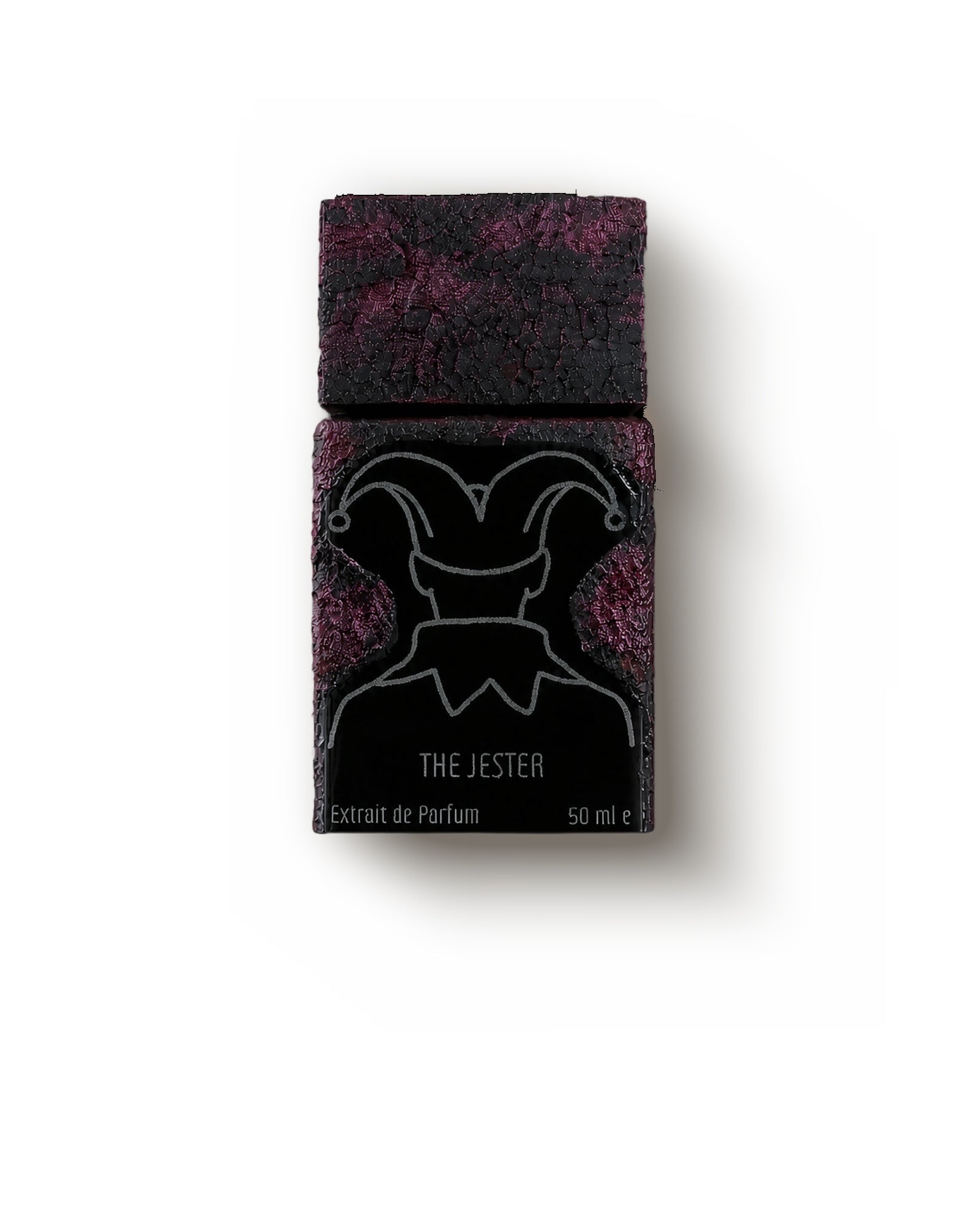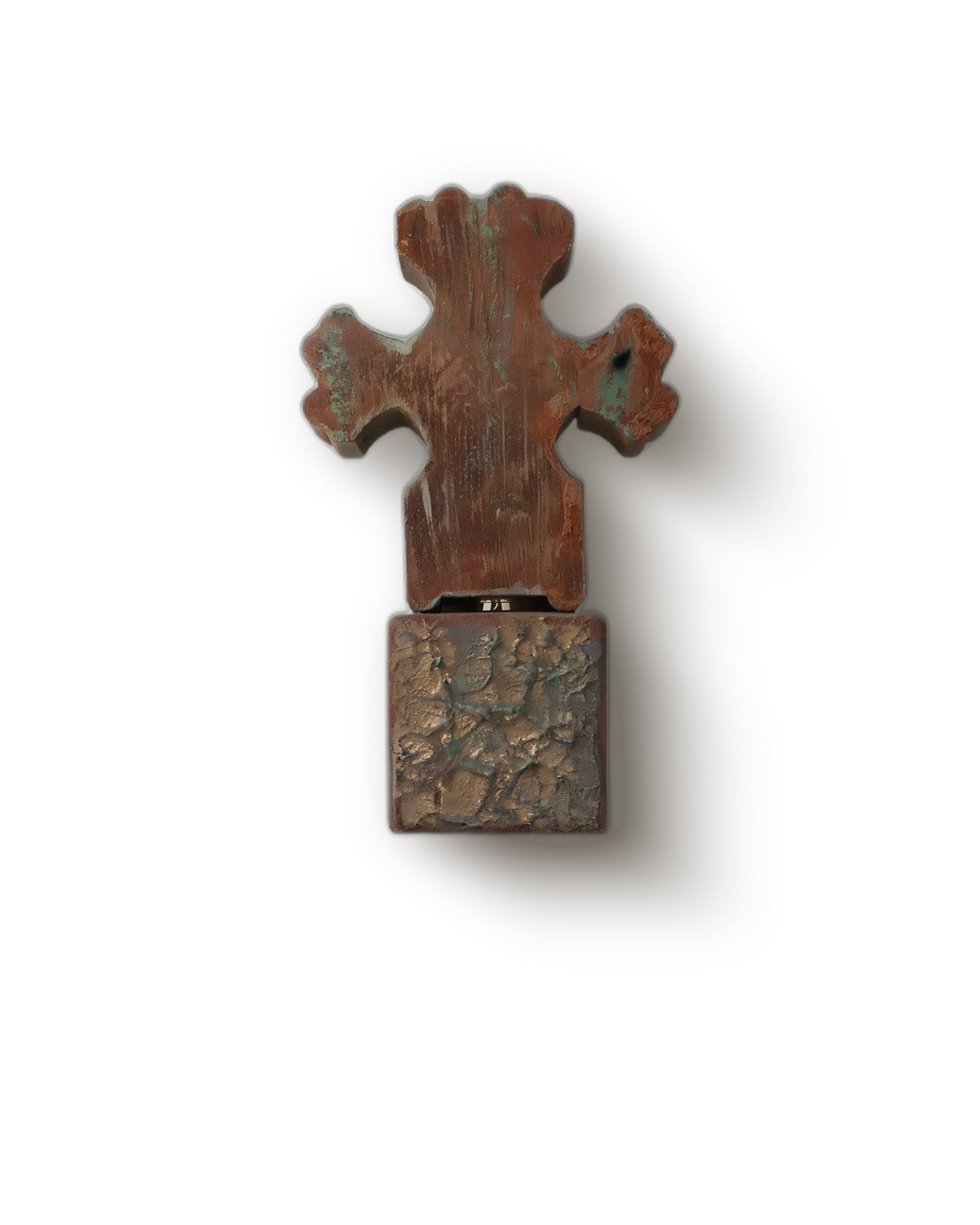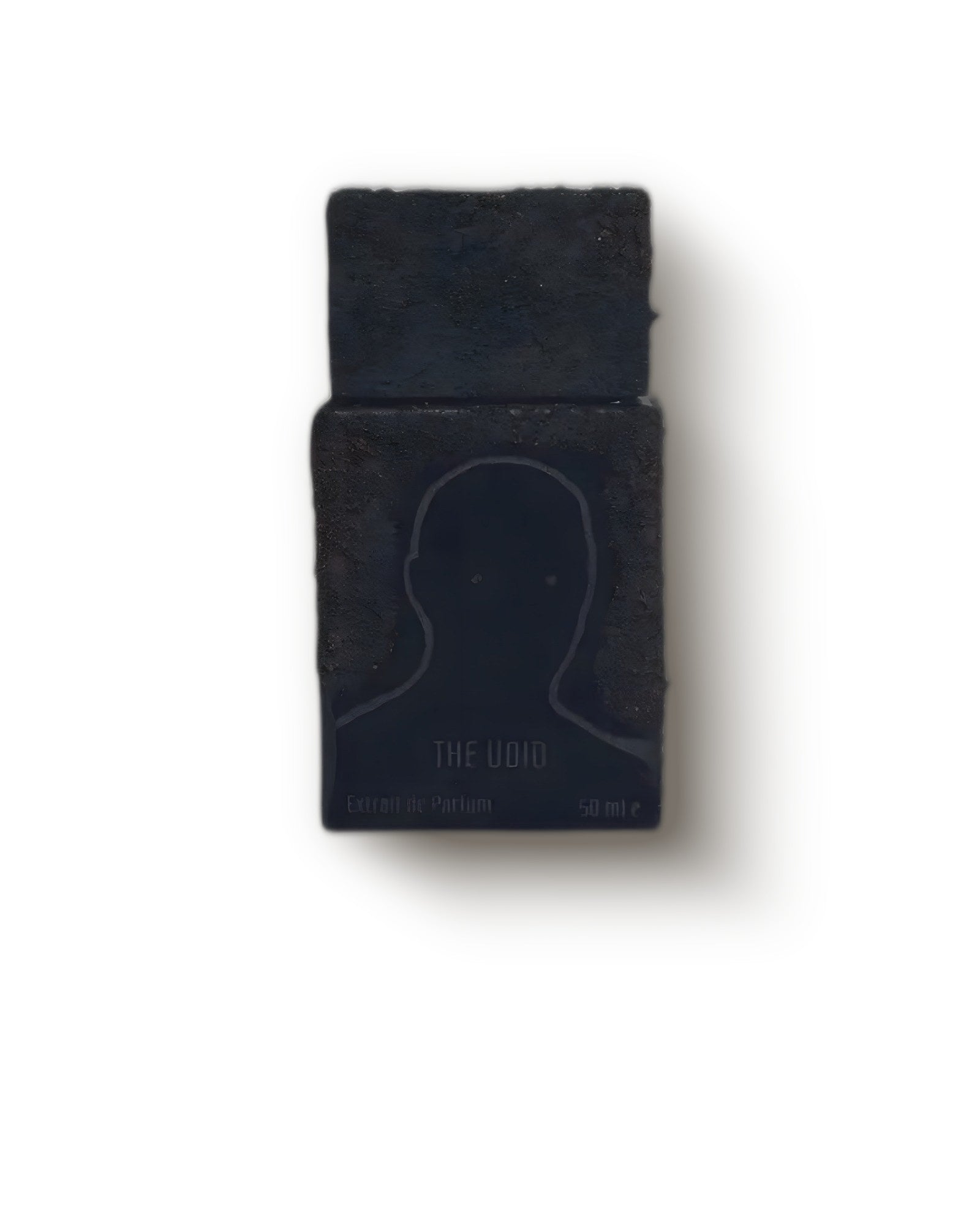
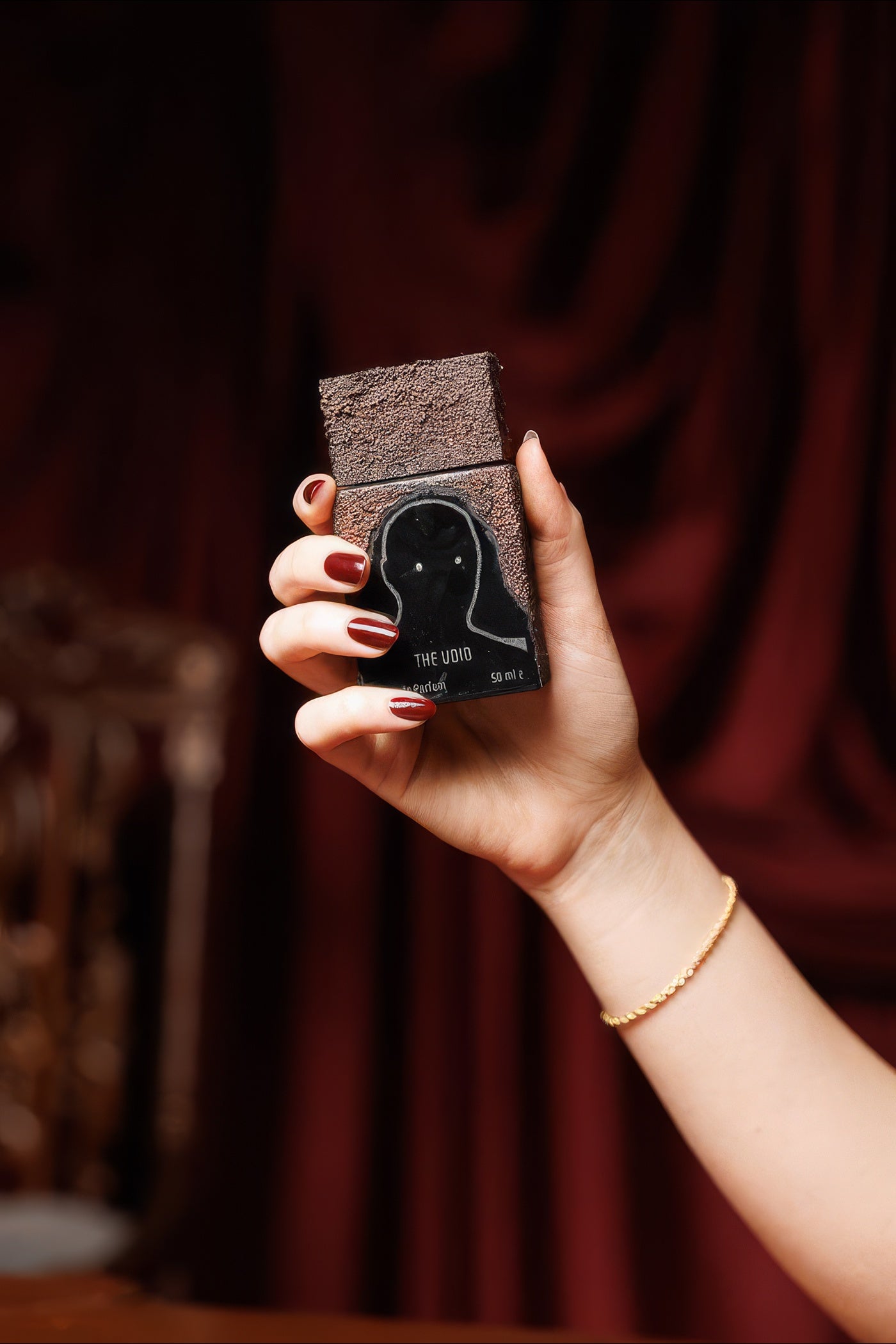

The Antagonist
The Void
汽油与火药点燃前调,随即让位于大麻树脂、冷冽金属与阴燃的煤炭,最终沉降于灰烬、橡胶与乳香交织的基调之中,与其说是一款香水,不如说是一处犯罪现场。
调香师
由 The Antagonist 香氛品牌创作,调香师保持匿名。


烟熏
焦黑的木材与升腾的余烬
燃烧木材、阴燃香薰与残留灰烬那干燥、焦黑的气息,时而焦油般,时而缥缈灰白。它沉郁而充满氛围,唤起一炉将熄的火,以及一股清凉气流送来它最后的呼吸。


芳香草本
清冷空气中揉碎的香草
薰衣草、迷迭香、鼠尾草与百里香那带着樟脑清凉的绿意,仿佛香草在指间揉碎。它洁净、提神而略带峻冷,正是经典理发店清新感的清脆骨架。


大麻
绿色树脂,烟熏而草本
一种辛辣的绿色树脂感,草本而略带臭味,边缘缠着烟熏与胡椒,掺一缕干草气息。它朦胧而叛逆,添上一抹麻醉般、略显粗野的温暖,介于新揉香草与阴燃青烟之间。


木质
锯木干燥的纹理
雪松刨花、檀香与干燥岩兰草根的气息,一份打磨过、富树脂的温暖,缀着一缕铅笔盒般的粗粝。它扎根而沉稳,正是那道静默的骨架,使香气读来庄重而持久。


金属
冰冷的钢与鲜亮的血
一种清冷、无血色的微光,宛如舔过硬币或灼热铁器周围的空气。锐利而近乎矿物,它赋予一份洁净、现代的冰冷,那是刀刃或锡罐内壁的气息,醒神而隐隐带电。


汽油
Hot tarmac, pumps and engines on a summer forecourt
What it is
A conceptual note reproducing the smell of petrol, never real fuel, which is toxic and volatile. Perfumers build it from aroma-chemicals: solvent-like isoparaffins, styrene and other aromatic-hydrocarbon impressions, rubbery and phenolic facets, and mineral, faintly sweet molecules that together evoke a fuel-station forecourt.
How it smells
Sharp, volatile and chemical: a sweetish solvent rush over warm rubber, hot asphalt and metal. A faintly mineral, almost narcotic lift sits on top, drying to smoky, tarry, industrial warmth. The effect is equal parts repellent and oddly compelling, like a freshly handled pump nozzle.
In perfumery
A provocative top-to-heart accent in niche and avant-garde work, signalling machinery, speed and urban grit. It pairs with leather, rubber, incense and metallic notes. The accord drives petrol-and-asphalt fragrances built around a fuel-station forecourt and the gasoline facet of certain provocative niche scents.
Good to know
The sweetness many people crave in petrol comes largely from benzene and related aromatic hydrocarbons, which are carcinogenic. US regulators have capped average gasoline benzene content at 0.62 percent by volume since 2011. Perfume accords recreate the thrill while omitting the fuel's hazardous chemistry.


烟雾
Drifting ash, embers and distant bonfire
What it is
Smoke is an abstract, evocative note rather than a single ingredient, built from materials that carry burnt and charred facets. Perfumers construct it from birch tar distilled from smoldering bark, guaiacwood, cade oil, lapsang souchong tea, vetiver and phenolic aroma-chemicals such as guaiacol that mimic combustion.
How it smells
Dry, charred and airy, like cooled embers, woodsmoke and singed paper drifting from a distant fire. It can lean tarry and leathery, incense-like and resinous, or campfire-sweet. It opens acrid and ashen, then settles into a warm, smoldering dryness that clings like scent on a wool coat.
In perfumery
Usually a base or heart effect lending depth, edge and a brooding atmosphere. It pairs with leather, incense, oud, vetiver and dry woods in dark, moody compositions. It haunts many smoky leather and incense scents.
Good to know
Birch tar, the most authentic smoke and leather material, is tightly restricted by IFRA because crude grades carry carcinogenic polycyclic aromatic hydrocarbons. Modern perfumers rely on vacuum-rectified, low-PAH birch tar and synthetic phenols to evoke the same primal campfire effect within safety limits.


火药
Smoke, sulphur and struck char on the wind
What it is
Gunpowder is not a botanical but an accord built by perfumers. Black powder itself is saltpetre, charcoal and sulphur; its scent-image is reconstructed from smoky woods, sulphurous and burnt-match materials, tarry birch and trace metallic, mineral notes layered to suggest combustion and spent fireworks.
How it smells
It opens sharp and acrid, like a freshly struck match or a spent firecracker, with sulphur, hot metal and ash. Beneath sits dry charred wood and a flinty mineral edge. The drydown settles toward warm smoke, gunflint and singed paper rather than open flame.
In perfumery
A heart-to-base effect prized in dark, smoky and incense compositions for tension and edge, pairing with leather, oud, incense, vetiver and saffron. The flinty gunpowder facet, paired with flint and smoke, drives a number of green and mineral niche compositions and runs through many mineral niche leathers.
Good to know
The smell of fireworks owes more to vaporised metallic salts and sulphur than to the powder itself. Perfumers chase the effect with sulphur-bearing molecules and smoky materials; many cult smoky scents also lean on birch tar, which is why some read faintly of campfire and old leather.


木质调
The grain and warmth of trees themselves
What it is
A category rather than a single material, covering aromas from tree woods, roots and bark plus synthetics that extend them. It spans sandalwood, cedar, vetiver, guaiac and patchouli, drawn by steam distillation or solvent extraction, alongside lab-made woody-ambers like Iso E Super, made entirely by chemical synthesis.
How it smells
Dry to creamy, evoking sawn timber, pencil shavings, fresh resin and sun-warmed bark. Cedar reads pencil-sharp, sandalwood milky and smooth, vetiver earthy and rooty, guaiac smoky-sweet. As a group the impression is grounding, textured and faintly smoky, the backbone many compositions stand on.
In perfumery
Mostly heart and base material, woody notes give structure, longevity and a natural backbone tying a composition together. They support nearly every family, anchoring florals, ambers and fougeres. Modern woody-amber molecules drive countless contemporary scents, the dry cedar-vetiver register among them.
Good to know
Much of today's woodiness is synthetic, partly because natural sandalwood and rosewood were overharvested into protected status. A single molecule, Iso E Super, grew so dominant that an entire cult fragrance was built around it almost neat, near-imperceptible up close yet glowing on skin.


大麻
Green smoke off a damp forest floor
What it is
A note inspired by Cannabis sativa, the flowering hemp plant. Because the resin's psychoactive compounds are not used, perfumers reconstruct the scent as an accord, sometimes drawing on legal hemp aroma, blending green, smoky and herbal aroma-chemicals to mimic the leaves, stems and burning bud.
How it smells
Aromatic, green and smoky with a dirty, sour herbal edge. It reads earthy like damp soil and crushed leaves, with sage, basil and pine-resin facets and a peppery bite. Some accords stay fresh and vegetal; others smoulder into a musky, woody warmth resembling a lit joint.
In perfumery
A heart note adding edgy, herbaceous green smoke, usually woven with vetiver, patchouli, cedar and black pepper to keep it refined rather than literal. Fresh Cannabis Santal grounds it in patchouli and dark chocolate, while BORNTOSTANDOUT Mary Jane lifts it with mint, grapefruit and passionfruit.
Good to know
The fragrance note contains no THC and is fully legal; it is an olfactory illusion assembled from terpenes and synthetics rather than extracted from the plant. Cannabis perfumes grew into a recognized trend, with several launches timed around the 4/20 cannabis date as a knowing wink.


金属调
Cold electric shiver of struck steel and blood
What it is
A synthetic accord rather than a single ingredient, since metal cannot be distilled. Perfumers build the impression from aliphatic aldehydes and certain ketones blended in the laboratory, anchored by trace molecules such as trans-4,5-epoxy-(E)-2-decenal, the aldehyde behind blood's iron tang, plus notes echoing struck flint.
How it smells
Cold, sharp and electric, like a coin held on the tongue or the tang of iron on damp skin. It opens bright and almost soapy from the aldehydes, then cools toward wet steel and struck flint with a faint coppery, bloody edge before drying clean and inorganic.
In perfumery
Usually a top or heart accent adding chill, tension and modernity, cutting through florals and ambers. It pairs with rose, violet leaf, incense and aquatic notes. Classic aldehydic florals carry a metallic shimmer, and many modern niche scents lean on the facet for edge.
Good to know
Trans-4,5-epoxy-(E)-2-decenal, the molecule giving blood its iron tang, is detectable around 0.078 parts per trillion in water, among the most potent odorants known. Predators track prey by it, and a few invisible drops can turn a whole composition cold and razor-edged.


熏香
Sacred smoke curling from resin and embers
What it is
In perfumery, incense usually means olibanum, the oleo-gum-resin of Boswellia trees from Oman, Somalia and Ethiopia. The bark is slashed, weeps a milky exudate that hardens into amber tears, and these are steam-distilled to an essential oil or solvent-extracted to an absolute; blends often add labdanum and styrax.
How it smells
Cool, dry and resinous, with a sharp citrus-pine lift over smoky, peppery warmth. There is a clean church-air quality: balsamic, slightly soapy, faintly green. It opens bright and turpentine-fresh, then settles into a meditative, ashen-sweet woodiness that lingers close to the skin.
In perfumery
A heart-to-base material prized for its contemplative, smoky-resinous character. It cools florals, sharpens woods and lends ritual gravity to oriental and chypre accords. It defines the great church-incense scents and the cold, mineral incense of many a meditative niche composition.
Good to know
Frankincense was once worth its weight in gold, carried along ancient Arabian caravan routes to temples across the Mediterranean and beyond. Wild Boswellia stands are now threatened by over-tapping, grazing and climate stress, prompting growing interest in sustainable harvesting and tapping quotas.


煤炭
Smouldering embers, cold ash, mineral dark
What it is
Coal is a black sedimentary rock formed over millions of years from compressed, heat-altered plant matter buried in ancient swamps. As a fragrance note it is not extracted but reconstructed: perfumers build the impression using smoky, charred, tarry and mineral aroma-chemicals rather than burning the rock itself.
How it smells
The accord reads dark, dry and dusty, like smouldering embers and a fire just put out. It opens with sooty, ashen smoke over a cold, almost metallic mineral edge, then settles into gritty earthen char. Less sweet than incense, harder and more rusted than woodsmoke.
In perfumery
Coal works in the heart and base, lending grit, tension and brooding industrial darkness to smoky mineral compositions. It pairs with incense, leather, tar, papyrus and dry woods. Andrea Maack's Coal, built on smoky papyrus, juniper and leather, is the reference fragrance evoking this sooty theme.
Good to know
Coal-tar by-products seeded modern perfumery. From the 1860s onward, chemists drew synthetic aroma materials from coal-tar distillation, yielding early molecules like coumarin and vanillin. The smoky note now called coal is a separate modern abstraction, not a relic of that nineteenth-century chemistry.


灰烬
Cold embers, mineral dust and dying smoke
What it is
Not a harvested material but a constructed accord. Ash, the grey residue of burnt wood, cannot be distilled, so perfumers evoke it synthetically. They take smoke materials such as birch tar, cade oil and guaiacol, then strip away their warm resinous facets to leave only the dry, mineral, bitter trace.
How it smells
Dry, smoky and faintly bitter, like a fireplace the morning after. There is burnt wood and cold charcoal, a chalky mineral edge, and the slightly metallic dustiness of cooled embers. It reads austere and desolate, with no sweetness or resin to round it off.
In perfumery
A base note prized for raw, atmospheric depth in smoky and mineral compositions. It is amplified by vetiver, cedar and birch tar, while jasmine, rose or incense can soften its starkness. The note appears in avant-garde and niche fragrances built around fire, ruin and bleak landscapes.
Good to know
Because true ash has no extractable oil, the note exists entirely as an olfactory illusion. Perfumers often build it by subtraction, removing the cosy parts of a smoke accord rather than adding new materials, so the smell is defined by what is taken away.


橡胶
Fresh tire and warm latex, smoky and addictive
What it is
As a perfume note, rubber is an effect built rather than distilled. Perfumers assemble it from smoky materials such as birch tar and guaiacol, paired with leathery synthetics, to suggest vulcanized rubber, new tires and latex. It does not come from tapping the rubber tree itself.
How it smells
Bitter, dry and slightly powdery, recalling a fresh bicycle inner tube, a new car interior or a balloon. It carries a smoky, sooty, almost burnt-mineral edge over a faint sweetness. The note reads industrial and cool up top, softening into a warm leathery, latex-skin facet as it settles.
In perfumery
Usually a heart-to-base accent giving smoky, leathery texture and an unexpected dark edge rather than standing alone. It pairs with vanilla, tar, leather and incense. The defining example is a late-1990s cult fragrance in which a fresh-tire rubber accord meets smoky lapsang tea and vanilla.
Good to know
In a well-built fragrance the rubber note is meant to stay subliminal, lending smokiness without announcing itself. A 1998 cult classic discontinued in 2017 made the new-tire accord famous and turned a deliberately industrial smell into a beloved comfort scent.


地下室气息
The hush beneath the floorboards
What it is
Basement Air is the smell of stillness held underground, where no wind has stirred in years. It is air gone cool and faintly damp, carrying the chalky dryness of dust on a shelf and the wet-mineral edge of concrete that never fully dries. There is a green whisper of something growing in the dark, a trace of old paper softening, and the clean, almost metallic coolness that rises off a stone floor in summer. It smells less of a single material than of a held breath, of a room that remembers being closed.
In the composition
Avant-garde houses reach for Basement Air to ground a fragrance in unease and quiet, lending a scent that subterranean weight that ordinary freshness cannot. It sits low and shadowy beneath brighter accords, its damp-concrete chill sharpening earthy roots, oakmoss, and pale woods, while its dusty hush softens anything too polished. A little turns a composition introspective and architectural; too much and the whole scent goes cold and abandoned. It is a note for perfumes that want to feel found rather than made.


乳香
Sacred smoke distilled from desert tree tears
What it is
Frankincense, or olibanum, is the dried gum resin of Boswellia trees, with Boswellia sacra of Oman, Yemen and Somalia among the most prized. The bark is scored and weeps a milky sap that hardens over weeks into golden tears, later steam-distilled or solvent-extracted for perfumery.
How it smells
Fresh, resinous and luminous, with a clean coniferous-citrus brightness from alpha-pinene and limonene over a dry, balsamic woody base. It carries a cool, peppery, almost lemony lift, then settles into the warm, dusty incense smoke familiar from churches and temples.
In perfumery
Used in heart and base, it adds a meditative, smoky resinous spine and a soaring transparency. It pairs with myrrh, rose, oud and labdanum, and lifts heavy oriental accords. It centers many incense-built compositions and defines the cathedral-incense theme.
Good to know
Frankincense has been traded for over five thousand years and once moved along Arabian incense routes at prices rivaling gold. Wild Boswellia populations are now declining from over-tapping, drought and grazing, raising real concern over the long-term sustainability of the harvest.


没药
Bitter resin smoke from a wounded desert tree
What it is
An oleo-gum-resin from thorny Commiphora myrrha shrubs of the Horn of Africa and the Arabian Peninsula. Harvesters wound the bark; the tree weeps a pale sap that hardens into reddish-brown tears. These are steam-distilled to an essential oil or solvent-extracted to a darker resinoid.
How it smells
Cool, bitter and resinous on opening, with a medicinal, almost band-aid sharpness over dry earth and licorice. It warms into smoky balsam, soft leather and a faint mushroom-mossy depth, drying down dusty, sweet-bitter and meditative — slower and darker than frankincense.
In perfumery
A base note bringing smoky depth, resinous body and a churchy gravity to orientals, chypres and incense compositions. Pairs naturally with frankincense, rose, labdanum and benzoin. It anchors meditative myrrh-forward incense scents and gives backbone to countless amber and incense accords.
Good to know
One of the oldest traded aromatics, myrrh was burned in Egyptian temples, used in embalming and named among the Magi's gifts. Its name derives from a Semitic root meaning bitter. Wild harvesting and overgrazing now threaten several Commiphora populations across the Horn of Africa.
香氛个性
开场浓烈而充满化学感,石油与烟雾以近乎侵略性的清晰度切入空气。中调愈发奇异:大麻树脂与金属香调紧压着熏香与煤炭,工业感与仪式感并存。在干化阶段,灰烬与橡胶缓缓退场,留下乳香与没药在肌肤上驻守,幽暗、宁静,带有隐约的神圣感。
最佳佩戴时机
专为最寒冷的季节与最深沉的夜晚而生,献给那些觉得传统晚香过于平和的人。
为何选择 The Void 分装
The Void 的对峙感足够强烈,分装是唯一明智的方式,让你从容判断这种特殊的黑暗究竟是一次启示,还是根本无法与之共处。
官方香调
汽油 · 烟雾 · 火药 · 木质调 · 大麻 · 金属调 · 熏香 · 煤炭 · 灰烬 · 橡胶 · 地下室气息 · 乳香 · 没药
相关内容: 大众香水与小众、超小众及独立香水——有何区别? · 最佳小众木质与檀香香水 · 冬季最佳小众香水
选择选项


氛围
选择您的分装规格
您正在选择分装规格,而非整瓶购买