Folkwinds
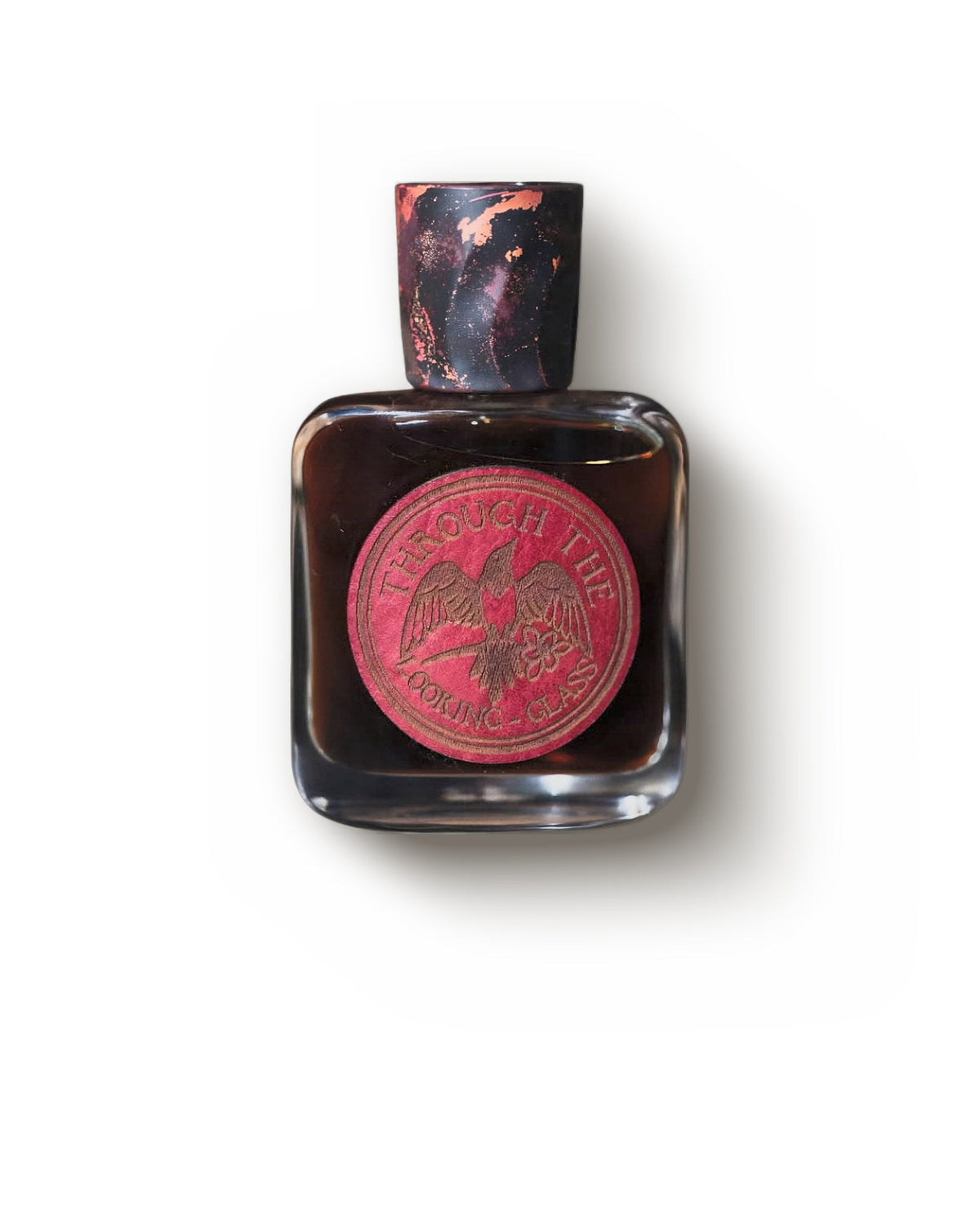
Through the Looking Glass
The Story
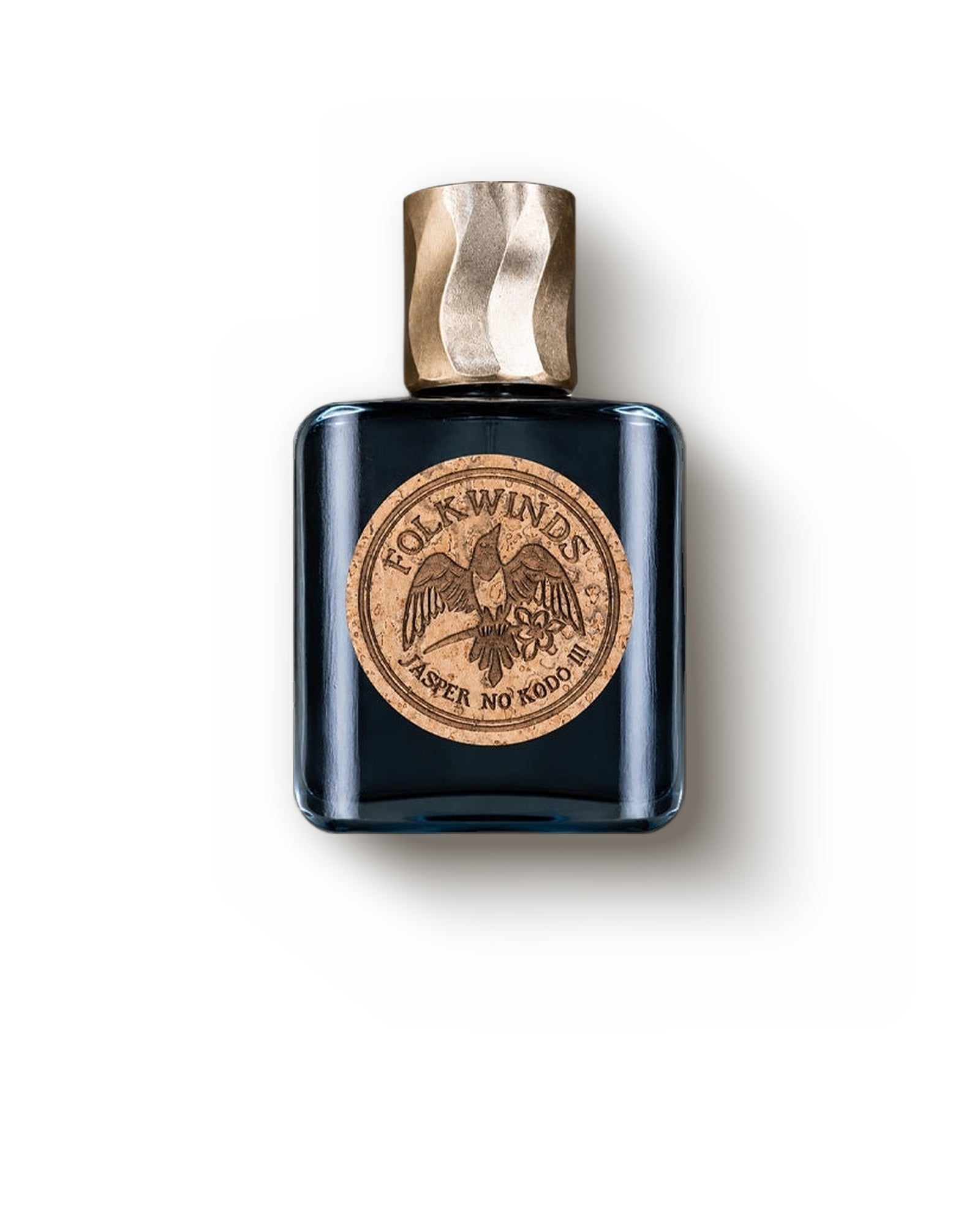
Through the Looking Glass is the Reserve Series finale to The Wonderland, and material discontinuations make it the last Wonderland perfume Folkwinds will produce. Jono Bornstein recast The Wonderland as a psychedelic floral of plum blossom, roses, blue lotus and purple kinam. It was released on 12 September 2026 in an edition of 50 bottles.


Floral
A whole garden, never one flower
Not one flower but the impression of many, usually rose, jasmine and orange blossom leaning on each other until no single one is recognizable. Sweet, dewy, faintly powdery, with nectar underneath. It is what people mean when a perfume smells like flowers and they cannot say which.


Woody
Dry grain of cut timber
The smell of cedar shavings, sandalwood, and dry vetiver roots, a sanded, resinous warmth with a faint pencil-box rasp. It feels grounded and composed, the quiet backbone that makes a scent read as serious and lasting.


Powdery
Soft hush of dressed skin
A velvety, slightly dry softness of iris root, violet, and fine talc, like face powder or clean linen warmed by skin. It feels intimate, refined, and nostalgic, blurring a fragrance into a gentle, cushioned haze.


Rose
Velvet petals, honey and thorn
Dewy and fruity on top, then a jammy, honeyed heart with a green peppery bite underneath. Very little of it is distilled flower. A rose accord is built, and a good one can smell more like a rose than the rose does.


Oud
What a tree makes when it is wounded
A dense, resinous wood that smells warm and slightly medicinal, with a leathery, animal-tinged smokiness and a sweet, almost barnyard funk underneath. It feels ancient and brooding, wrapping the skin in something thick and quietly powerful.


Fruity
Peach skin, not lemon peel
Peach, pear, apple, berry: this is sweetness in the flesh rather than the rind, dewy and nectar-heavy where citrus is sharp and thin. It plays young and slightly greedy, the sort of ripeness you can almost feel running down a wrist.


Smoky
Charred wood and rising embers
The dry, charred scent of burning wood, smoldering incense, and lingering ash, sometimes tarry, sometimes wispy and gray. It feels brooding and atmospheric, conjuring a dying fire and a cool current of air carrying its last breath.


Plum Blossom
Almond, clove and jasmine on a winter branch
What it is
The blossom of Prunus mume, the ume, which English calls a plum although botanists file it with the apricots. It opens on bare branches in January and February in East Asia, with a scent no other apricot shares.
How it smells
Sweet and fruity in the way jasmine is, from the benzyl acetate that leads most cultivars, with a clove edge from eugenol and a thread of bitter almond. Some pink cultivars add a cinnamon note; one runs mostly to clove.
In perfumery
The blossom yields no viable essential oil by traditional steam distillation, so most plum blossom notes are composed: benzaldehyde for almond, eugenol for clove, benzyl alcohol and light florals for the petal, clean green notes for the cold.
Good to know
Folkwinds lists a plum blossom otto; otto names a distilled oil, as in rose otto, though how theirs was made is not published. In China the ume stands for perseverance and hope, one of the Three Friends of Winter.


Nature's Aldehydes
Sparkling waxy lift that built modern perfume
What it is
Blow out a candle: that waxy smell is this family of molecules. Perfumery uses the fatty ones, carbon chains sorted by length. First found in rose oil and citrus zest, they are now made in a lab.
How it smells
Bright, abstract, effervescent. Waxy and soapy with a metallic edge, somewhere between clean laundry, a hot iron and orange peel. They flash hard on top, then lift everything underneath into the air.
In perfumery
Used in tiny doses at the very top, where they add radiance and volume above a floral heart. C-10, C-11 and C-12 make the classic trio, and the snowy sparkle they make founded an entire family of perfumes.
Good to know
Their fame is partly an accident. A perfumer is said to have overdosed the aldehydes in a 1921 trial, and the client picked that very sample. A whole style of perfumery came out of a mistake nobody corrected.


September Plums
Stewed dark fruit, wine-sweet and never juicy
What it is
Peach comes from lactones, apple from esters. Plum comes from damascones, honeyed and wine-like, which is why it reads dark rather than juicy. No plum oil exists; davana and osmanthus carry the same molecules for a botanical build.
How it smells
The lab build is jammy, a little candied, bright and steady from top to base. The botanical one runs darker: fruit slow-cooked and left to cool, the sweetness pulling back as a dried-fruit edge surfaces late.
In perfumery
Rose, patchouli, woods and amber all take it well, and it slots into gourmands and chypres without turning either one sugary. Where peach lifts a composition, plum weighs it down. More velvet than juice.
Good to know
A trace of damascenone does the work; much more takes over the formula. Davana is the same. Osmanthus is one of the few naturals that smells of stone fruit on its own, and a flower absolute at that.


Rosa Rugosa
Clove-edged beach rose from salt-sprayed dunes
What it is
Rosa rugosa, the beach or Japanese rose, grows on sand dunes in northeast China, Korea, Japan and southeastern Siberia. Rugosa means wrinkled, for its creased leaves. Reaching England in 1796, it runs wild on northern European and New England coasts.
How it smells
Pingyin rose, the rugosa China grows most for oil, has a strong, sweet scent. Its oil is high in citronellol, the molecule behind plain rosiness, and carries over three percent methyl eugenol, which smells of clove and carnation.
In perfumery
China distils it at industrial scale. The many-petalled cultivar Plena, known as Pingyin rose after a county in Shandong, covers over 4,000 hectares. Gansu's Kushui rose, held to be a rugosa hybrid, yields 600 to 700 kilograms of oil yearly.
Good to know
Rugosa oil is built differently from damask. In one Chinese comparison it held about a tenth of damask's odourless, waxy paraffins and around a hundred times its methyl eugenol, so the scented liquid part of the oil dominates.


Iranian Rose Otto
Dewy sweetness over a green, peppery bite
What it is
Most perfumery rose is one of two: damascena from Bulgaria and Turkey, centifolia from Grasse. Whole blossoms are picked by hand from before sunrise until about ten thirty, then distilled into otto or solvent-extracted into absolute.
How it smells
Fresh, honeyed, green at the edges, with something dewy still on it. Spice and fruit sit underneath, and in the absolute a jammy darkness. Otto opens crisp and bright; absolute is warmer, smokier, closer to skin.
In perfumery
Rose behaves less like one note than a whole palette. It carries a perfume alone or vanishes into a chypre, turns dark against oud and patchouli, goes powdery beside violet, and holds a floral heart together.
Good to know
The two extractions are not the same bargain. Otto takes three to four thousand kilograms of blossoms to yield one kilogram of oil. Absolute, pulled out with solvent, gets there on roughly a seventh of the flowers.


Old Growth Forests
Fallen giants, wet needles and mushroom-dark soil
What it is
This names a place, not a plant. Old-growth forest means large aged trees, standing dead trunks and fallen logs breaking down into the soil. No single oil smells of all that, so it is built as an accord.
How it smells
Camphor-cool pine needles, then what lies under them: dry cedar, soft crumbling wood and a mushroom note, earthy and faintly musty. Less sap and sparkle than a single conifer oil, more age and slow decay.
In perfumery
Each layer has its material. Bornyl acetate, found in pine-needle oils, gives the camphor-cool needles, cedarwood oil the dry timber, and matsutake alcohol, the main odour of that mushroom, the damp decay. Moss and earth sit below.
Good to know
Folkwinds presents Through the Looking Glass as The Wonderland reimagined. For The Wonderland II, the house wrote that moss and cedar accords plus a batch of mitti make it emulate an old-growth forest. This heart note has no published formula.


Spices of a Thousand Colors
A warm drawer of dried seeds and bark
What it is
Everything in this family was dried before it was useful: bark, seed, bud, root, berry. Clove and cinnamon, pepper and nutmeg, cardamom and ginger, each one steamed or pressed until the heat comes out as oil.
How it smells
Dry heat first, then the differences: pepper and ginger prickle, cinnamon goes sweet and woody, clove lands with that dark medicinal bite. Underneath, something resinous and faintly bitter. It rounds out as it warms on skin.
In perfumery
Spice is friction. A pinch in the heart keeps a citrus opening from going polite and stops an amber base from going syrupy, which is why it sits so often beside rose, tobacco and woods.
Good to know
Nutmeg grew on one small cluster of islands in the Banda Sea and nowhere else, which made it and clove worth enough to launch fleets and start wars. Venice, Lisbon and Amsterdam took a cut of every pound.


Iris Absolute
Cool powdered earth from a patiently aged root
What it is
Perfumery iris comes not from the flower but from the root. The dug rhizomes are dried and left to age three to five years while the aromatic irones form, then ground and steam-distilled into a waxy orris butter.
How it smells
Cool, powdery and rooty: violet, suede and fresh-sawn wood dusted with face powder. Underneath sits a damp mineral earthiness, a faint carrot sweetness, a buttery softness. It feels more texture than perfume, and it stays quiet on skin.
In perfumery
Nothing else gives a blend that cool, powdered restraint. It steadies chypres and florals, takes the shine off rose and violet, and lends sandalwood and ambrette a velvet finish. Iris makes a perfume behave.
Good to know
A tonne of dried, aged rhizome yields about two kilograms of butter. Add the years of waiting before it can even be distilled and you see why real orris turns up in so few bottles.


Blue Lotus
The sacred water lily of pharaohs and dreams
What it is
Egypt made this flower sacred, though the absolute sold today comes mostly from Thailand and India. The lily roots in mud; its star-shaped blossoms are washed with solvent, then alcohol, into a thick dark extract.
How it smells
Cool and watery to begin with, like a pond at dawn, with a honeyed sweetness and a lychee-soft fruitiness underneath. Then it warms: earthy, faintly spicy, powdery, drying down resinous rather than bright. More meditative than pretty.
In perfumery
A heart note that bridges water and warmth. Perfumers reach for it when a floral needs to feel ancient rather than fresh, mostly in niche work and in amber-incense accords on Egyptian themes.
Good to know
Tomb walls are full of it, a symbol of the sun and rebirth, and the Egyptians steeped it in wine for a mild psychoactive lift. The symbolism was earned: it opens with the sun and closes by afternoon.


Orris Butter
Violet powder from a root dried for years
What it is
Iris grown for its roots, not its flowers, in the hills of Tuscany. The rhizomes are dug, dried, then left three to five years before anyone grinds and steam-distils them into a waxy ivory butter.
How it smells
Cool and powdery, a violet with no sweetness in it, closer to face powder and soft suede than to a flower. Raw carrot and flour, damp soil underneath, a faint metallic shine over all of it.
In perfumery
Perfumers use it for body: a little in the heart or base rounds off sharp florals and raw woods and leaves powder behind. Violet, rose and ambrette are its company, and it underpins every great iris fragrance.
Good to know
Dig the root up and it smells green and acrid, nothing like a violet. The irones form as the dried rhizome oxidises, so the years make the violet, not the plant. A tonne gives two kilos of butter.


Wild Bornean Agarwood
Blue and vaporous, camphor over clean wood
What it is
Kalimantan on Borneo makes the most celebrated of these oils, with Sumatra and Papua behind it. Indonesian oud is the lightest agarwood there is, a world away from the dense Indian distillations.
How it smells
Vaporous and lifted, opening on camphor, menthol and a whiff of lacquer thinner, the so-called blue character. Underneath: sweet fruity-floral brightness and a touch of cream, then clean wood, bitter in a good way, never barnyard.
In perfumery
Perfumers use it for air. Where a Hindi oud would smother a composition, this one lifts it, camphoraceous and almost springlike, which is why collectors reach for Borneo when they want oud's depth without its weight.
Good to know
Region changes everything. Malinau oils on Borneo carry melon, apple and tangerine; Merauke wood from Papua goes herbal, mossy and earthy under the same vaporous top. Genuine single-origin batches are tiny; plantation Kalimantan wood supplies the affordable end.


Aged Cigars
Cured leaf, sweet hay, a thread of honey
What it is
The pouch and the cigar box, never the burning cigarette. Tobacco is a nightshade, kin to the tomato, and its leaves are cured by air, sun or fire before solvent draws them into a dark, syrupy absolute.
How it smells
Dry and sweet at once: cured leaf, hay drying in a barn, a curl of honeyed smoke. Cocoa, dried fig and worn leather run underneath. It ends soft, powdery and ambery on the skin.
In perfumery
It sits in the heart and stays into the base, giving warmth and a lived-in richness that reads as someone else's study. Vanilla, tonka and dried fruit sweeten it; leather and labdanum push it darker.
Good to know
Most perfumery tobacco comes from Virginia and Burley leaf, the mild, sweet blends. Latakia is the outlier, fire-cured until it turns tarry and heavy, and a little darkens everything around it.


Purple Kinam
Purple-black kinam that turns from floral to almond
What it is
Purple kinam is named for red-brown resin that reads violet. Under its thick red-brown outer layer the resin is purple-black, the interior often hollowed and the fibres largely charred. A Vietnamese speciality, it comes mostly in small pieces.
How it smells
It opens softly floral, then parts by type. Grey-purple slab pieces turn intensely sweet and cool after five or six minutes and close on almond milk. Red-purple twisted pieces stay warm, deep and mellow, with almond and no chill.
In perfumery
A small shaving is gently heated, not burned, and Chinese collectors judge it in three stages: first scent, body and tail. The name has also passed to an oil: Malaysian agarwood distilled in Taiwan, sold as Purple Kinam.
Good to know
Freshly dug, purple kinam is very moist and looks like red-soil agarwood not yet dried, and both smell clearly of almond. Ordinary red-soil wood is passed off as purple kinam, but it lacks the shifting scent and the finish.


Frankincense Dalzielii
Orange-and-mint frankincense from the West African savanna
What it is
West Africa's frankincense comes from Boswellia dalzielii, a savanna tree with pale, papery, peeling bark, found from Mali to Nigeria and Chad. Hausa speakers call it hano. Its whitish resin seeps from branches and from wounds where bark was stripped.
How it smells
Unmistakably frankincense at first, brisk and bright, with the familiar citrus and honey. Then it goes its own way, toward orange, sweet fruit, camphorous mint and nutmeg, drying down to black pepper, cardamom and a warm, dry musk.
In perfumery
Distillation gives a pale-yellow oil, and the resin itself is sold for natural perfumery, tinctures and incense blends. Its fruit, mint and nutmeg set it apart from other frankincense oils, though the opening still reads plainly as frankincense.
Good to know
The resin is burned, alone or with other fragrant resins, to fumigate clothing and drive flies and mosquitoes from rooms. Catholic missions have used it in place of true incense, and in Nigeria it is chewed as gum.
Fragrance Character
Plum blossom and aldehydes open it bright and lightly sweet, the plum more floral than juicy, rosa rugosa beside it. Iranian rose and blue lotus fill the heart as iris and orris butter lay a dry, woody powder over warm spice and green forest. Agarwood and purple kinam run dark and steady underneath, and frankincense turns the drydown smoky and resinous.


Longevity
how long it stays on skin
The hourglass reads wear time: how many hours the fragrance keeps speaking before it fades. A bar that barely leaves the start means a few fleeting hours. One that runs the full length carries from morning into evening. Treat it as typical, not promised. Oily skin holds scent far longer than dry.


Sillage
the size of its scent trail
Sillage is French for a ship's wake, and that is exactly what this measures: how much of the scent reaches the room instead of staying on you. Low is a whisper only close friends catch. Enormous fills the room, then keeps filling it after you leave.


Experimental
Built to provoke, not to please
Some perfumes are made to be liked. These are made to be argued about: inky tar, hot rubber, fruit on the turn, metal and fur where you expected flowers. The coin glows for a scent that provokes and dims for one that plays it safe, which is sometimes the point.


Office
Polished, and never louder than the room
Scent is manners in a shared room. At this range it should reach the person across the desk and stop there: tidy citrus, soft musk, pale woods, all of it reading competent and considerate. A glowing coin means nobody has to mention it. A dim one means it travels.


Evening
After dark, when it deepens
Dinner, drinks, the night that runs long. Low light is where ambers, resins and smoky woods stop being polite, and where a plush floral finally blooms. A glowing coin means it is waiting for exactly this hour. A dim one means it did its best work in daylight.


Romantic
Close enough to be felt
A fragrance can hum against skin instead of announcing itself across a table. That is the register here: creamy florals, vanilla, soft musk, a thread of spice, warm enough to make someone lean in. The coin glows when a scent sets that mood and dims when it is more practical than seductive.


Formal
Quiet authority in a dressed-up room
A wedding, a ceremony, a room where everyone has thought about their shoes. What works here is structure, not volume: smooth woods, disciplined florals, soft leather. A glowing coin means it holds its posture all evening. A dim one means it is too casual for the room.


Casual
Easy comfort for unhurried days
Errands, coffee, a slow Saturday with nowhere to be. Nothing here has to impress anyone, so the fit is soft and easy: fresh citrus, light woods, a little warmth off the skin. A glowing coin says yes to all that. A dim one means the fragrance is asking for a bigger night.


Day to Night
where its mood naturally falls
A bar running from sun to moon, reading the hour the fragrance was made for. The more of it that stays gold, the more the scent belongs to daylight and open air. The further the blue reaches back toward the sun, the deeper and warmer it turns: evening, candlelight, low rooms.


Winter
Warmth that carries through cold air
Cold air mutes a fragrance and slows it down, which is why winter belongs to the dense and the warm: resin, smoke, vanilla, leather, ambered spice. The bar reads how well this one pushes back, glowing against the chill instead of thinning out in it.


Spring
Fresh blooms in mild, rising warmth
Mild, humid air lifts a light composition, so the season belongs to dewy florals, green stems, soft powder and citrus you can see through. Alive rather than heavy. The further the green runs along the bar, the more comfortably this one wears in that weather.


Summer
Bright and airy in real heat
Heat does the projecting for you, which is why the wrong perfume turns unbearable by noon. What survives is cool and breathable: sharp citrus, salt air, aromatic herbs, water. Things that refresh instead of cloy. A short bar here means save it for cooler months.


Fall
Spiced warmth for cooling days
As the air cools, the rich materials stop smothering and start reading clearly: dry woods, warm spice, tobacco, amber, fruit gone golden. It is the season perfume turns contemplative. The bar fills according to how naturally this one settles into crisp, cooling days.
Best Worn
Spring and autumn, worn into the evening, for dinners and nights out. It suits someone who likes roses and powdery iris over dark agarwood, and wants a floral with weight underneath.
옵션 선택
분위기


노즈
Jono Bornstein
창립자 겸 조향사
북미의 향 원료를 보여 주기 위해 2022년에 출범한 Folkwinds의 창립자이자 조향사. 90퍼센트 이상을 천연 원료와 미국산 원료로 작업하며, Folkwinds American Pharaoh, Folkwinds Cloud Illusions, Folkwinds Santi Ana, Folkwinds Jasper No Kodo, Folkwinds Smoke Jumping이 그렇게 만들어졌습니다.
이 조향사의 다른 작품Jasper No Kodo 2Jasper no Kodō IIIDevil's Garden
메종

미국산 원료를 중심으로 한 천연 조향, 다수는 공동 추출 방식으로 얻는다.
Folkwinds의 향은 날씨가 한바탕 지나간 뒤의 숲 가장자리를 닮았습니다. 화이트 Ambergris와 사슴 머스크부터 플로럴 앱솔루트, Sandalwood까지, 포뮬러의 90% 이상이 천연 원료이며, 단정하기보다 낯설고 아름다운 쪽으로 기울어 있습니다. 발효된 과일, 차가운 레진, 젖은 나무껍질, 스모크, 그리고 노트라기보다 질감으로 읽힐 만큼 짙은 Orris를 만나게 됩니다. 어떤 향은 Jasper no Kodō II, III처럼 번호를 붙여 다시 돌아오고, Midwinter Storm처럼 50병 한정으로 고정된 향도 있습니다.
- 대표 특징
- 미국산 천연 원료, 공동 추출, 아가우드

Folkwinds의 다른 향
이런 향도 추천합니다