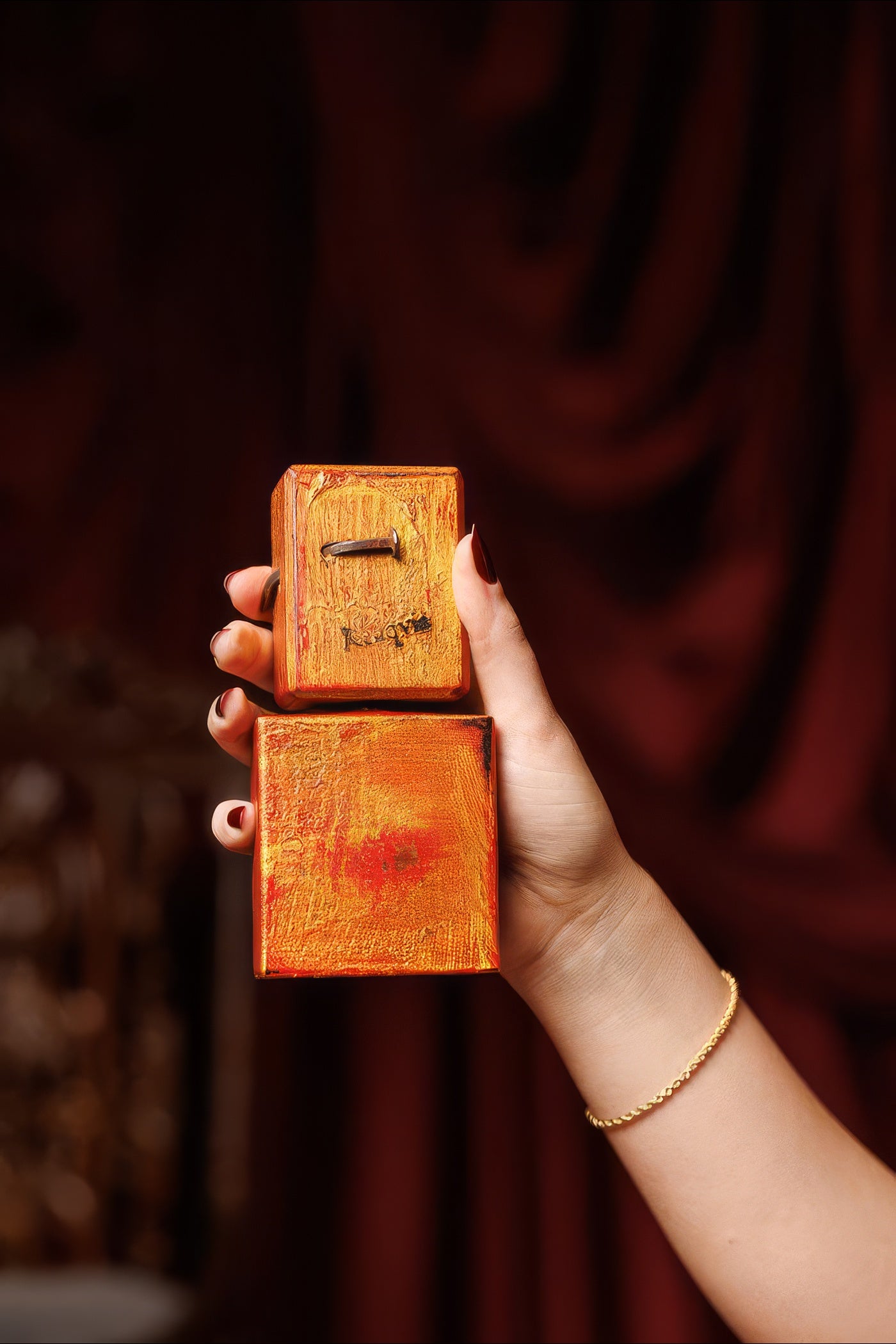

Filippo Sorcinelli
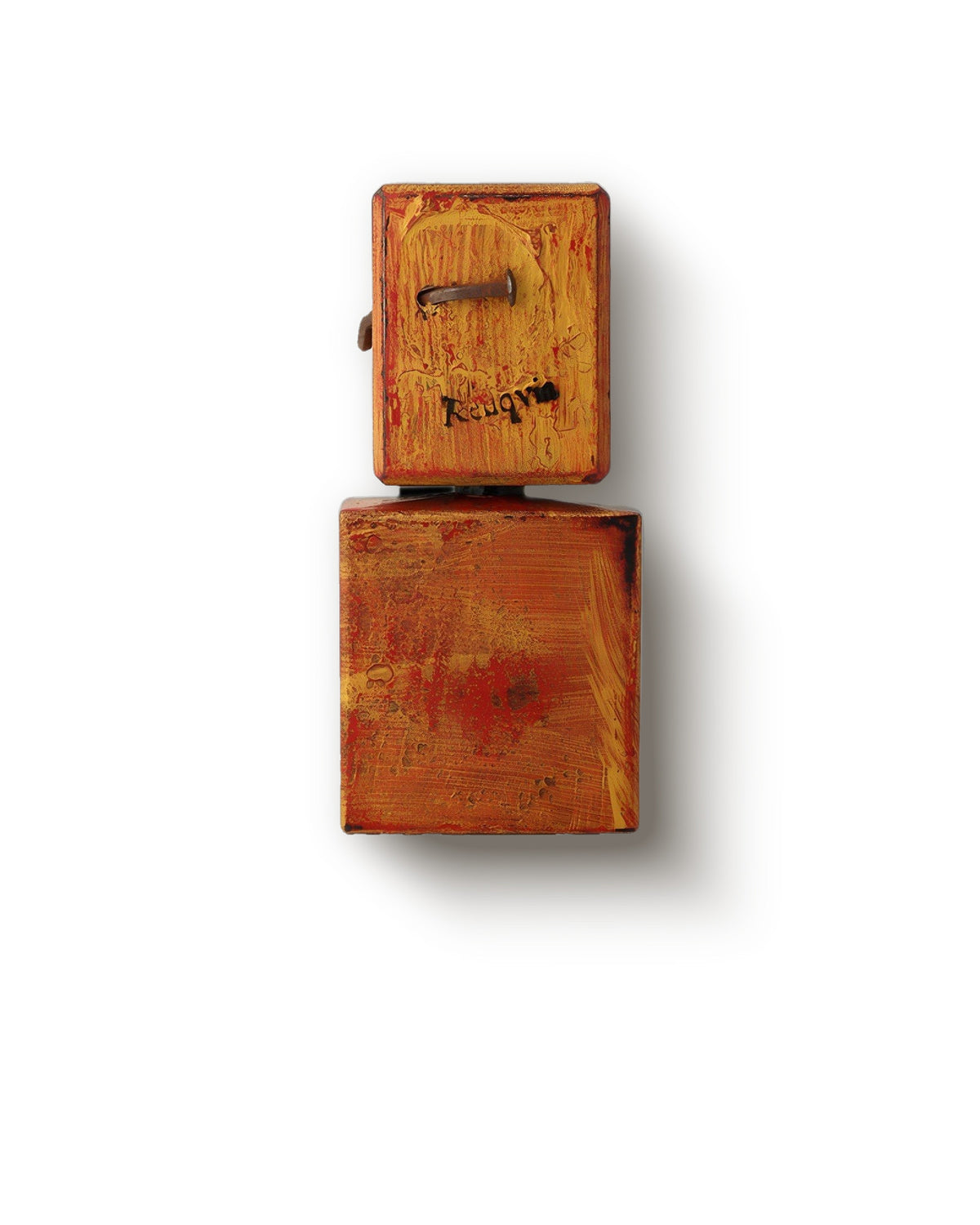
Reliqvia
Reliqvia 的開場宛如一座古老教堂被剝至骨架的內部:松脂與乳香樹脂在丁香中劈啪作響,煙霧穿越乳香與癒創木冉冉升起,整體隨後沉澱為一種溫暖、被菸草染深的檀木與黑加侖懷抱。
調香師
由 Filippo Sorcinelli 創作,他是 UNUM 的創始調香師,同時也是 UNUM LAVS 與 UNUM Io Non Ho Mani Che Mi Accarezzino il Volto 的幕後推手。


木質
鋸開木材的乾燥紋理
雪松刨花、檀香與乾燥岩蘭草根的氣息,一股經砂磨的樹脂暖意,襯著一絲鉛筆盒般的粗糲。它沉穩而從容,是令香氣顯得莊重而持久的靜默骨幹。


煙燻
焦炙木質與升騰餘燼
燃燒木材、悶燒熏香與殘餘灰燼那乾燥焦炙的氣息,時而帶焦油感,時而縹緲灰白。它陰鬱而富氛圍感,喚起一爐將熄的火,與一道清涼氣流捎來的最後一息。


香脂
溫暖樹脂與甜潤琥珀
樹脂與金色琥珀那溫暖如糖漿般的醇厚,柔軟而微甜,泛著香草般近乎蜜糖的光暈。它包覆而緩慢,如燭光般沉落於肌膚之上,撫慰人心,隱約帶著一絲神聖。


芳香草本
清冷空氣裡揉碎的草葉
薰衣草、迷迭香、鼠尾草與百里香那綠意而帶樟腦的清涼,宛如指間揉碎的香草。它潔淨、振奮,略帶幾分肅然,是經典理髮店清新感的清爽骨幹。


琥珀
金色樹脂溫暖地閃耀
由勞丹脂、安息香與香草交織出柔軟的樹脂光暈,甜美中帶著暮色般的幽深,宛如被陽光曬暖的樹液,襯著一縷熏香煙氣。它散發出溫煦的金色暖意,緊貼肌膚緩緩繚繞,久久不散。


溫暖辛香
香料抽屜裡閃耀的餘燼
肉桂、丁香與肉荳蔻那圓潤的熱度,乾燥而略帶樹脂感,宛如烘焙中的食櫥,而非尖銳的廚房。它營造出一股泛紅而包覆的暖意,親密而適於寒冷季節,自內而外擁抱肌膚。


廣藿香
Damp earth and dark wood after rain
What it is
Patchouli comes from Pogostemon cablin, a leafy bush in the mint family native to tropical Asia and grown mainly in Indonesia, India and Sri Lanka. The harvested leaves are dried and lightly cured or fermented, then steam-distilled or hydrodistilled into a thick, dark essential oil.
How it smells
Deeply earthy and woody, like damp forest floor, wet soil and old cellars, threaded with a winey, slightly sweet darkness. Fresh oil can read sharp, almost camphorous and green; with age it rounds into chocolate, leather and dried-fruit warmth that clings for hours.
In perfumery
A base note and powerful fixative, patchouli anchors a composition and lengthens its wear. It forms the backbone of chypres and orientals, pairing with rose, vetiver, labdanum and vanilla. It defines many gourmand-oriental blends and carries the woody-balsamic heart of plush chypre accords.
Good to know
In the 19th century, real Kashmiri shawls were packed with dried patchouli leaves to repel moths in transit, so Europeans learned to recognise genuine imports by smell. Unlike most essential oils, patchouli improves with age, deepening and mellowing over years much like wine.


乳香
Sacred smoke curling from resin and embers
What it is
In perfumery, incense usually means olibanum, the oleo-gum-resin of Boswellia trees from Oman, Somalia and Ethiopia. The bark is slashed, weeps a milky exudate that hardens into amber tears, and these are steam-distilled to an essential oil or solvent-extracted to an absolute; blends often add labdanum and styrax.
How it smells
Cool, dry and resinous, with a sharp citrus-pine lift over smoky, peppery warmth. There is a clean church-air quality: balsamic, slightly soapy, faintly green. It opens bright and turpentine-fresh, then settles into a meditative, ashen-sweet woodiness that lingers close to the skin.
In perfumery
A heart-to-base material prized for its contemplative, smoky-resinous character. It cools florals, sharpens woods and lends ritual gravity to oriental and chypre accords. It defines the great church-incense scents and the cold, mineral incense of many a meditative niche composition.
Good to know
Frankincense was once worth its weight in gold, carried along ancient Arabian caravan routes to temples across the Mediterranean and beyond. Wild Boswellia stands are now threatened by over-tapping, grazing and climate stress, prompting growing interest in sustainable harvesting and tapping quotas.


喀什米爾木
A made-up wood that smells of warm skin
What it is
A fantasy note with no botanical source: no cashmere tree exists. The scent is the synthetic molecule Cashmeran, chemically DPMI, first made in 1968 by John Hall at IFF. It is a polycyclic ketone built entirely through laboratory chemistry, a solid melting near room temperature.
How it smells
Soft, diffusive and warm, sitting between woody and musky. Dry blond wood and clean white musk are wrapped in spicy, balsamic, faintly vanillic warmth, with an old-paper and pine-resin edge. In trace amounts it reads salty and abstract, like sun-warmed skin.
In perfumery
A workhorse base note prized for radiance and long wear, lending a velvety wool-like haze that smooths sharp edges and stretches a composition. It pairs with amber, iris, rose and white musks, and anchors Donna Karan Black Cashmere alongside countless modern woody-musk scents.
Good to know
Brands often dress Cashmeran up as Cashmere Wood, Cashmere Musk or Blond Woods on note pyramids to sound natural, though no such plant exists. It is so self-sufficient that perfumers use it as a near-finished accord alone, blurring the line between molecule and material.


癒創木
Smoldering rosewood from the arid Gran Chaco
What it is
Guaiac wood oil comes from Bulnesia sarmientoi, a slow-growing hardwood of the Gran Chaco across Paraguay, Argentina and Bolivia. Chipped heartwood and sawdust are steam-distilled into a pale amber, waxy oil that solidifies at room temperature and melts close to skin warmth.
How it smells
Warm, smoky and balsamic, like a smoldering ember rather than open flame. A soft, sweet woodiness carries a distinct tea-rose facet, with powdery, peppery and faintly tar-like nuances. It dries down rounded and quietly creamy, blurring the line between wood and gentle incense.
In perfumery
A base note valued as much for fixative power as for scent, extending and grounding a blend. It rounds rough woods and smoky leathers, pairing with rose, vetiver and tobacco. Its hushed smokiness threads through many modern niche woody and oud-style compositions.
Good to know
Bulnesia sarmientoi has been on CITES Appendix II since 2010, so logs, extracts and oil need permits as overharvesting threatens the species. Sold as Argentine lignum vitae, it is a substitute for true lignum vitae, the unrelated Guaiacum genus listed by CITES decades earlier.


檀香
Creamy meditative woods that breathe in slowly
What it is
Sandalwood oil is steam-distilled from the heartwood and roots of slow-growing Santalum trees, classically Santalum album of Mysore, India. As the wild Indian source neared collapse, plantations of the same species in tropical Western Australia now supply much of the world's perfumery-grade oil.
How it smells
Soft, creamy and milky, with a smooth woody warmth and a faintly sweet, rosy, almost buttery edge. It carries no sharpness, only a rounded balsamic depth. It stays remarkably steady on skin, glowing quietly for hours rather than opening and drying in distinct stages.
In perfumery
A base note valued as both scent and fixative, sandalwood lends creaminess, warmth and a meditative softness that binds compositions together. It pairs beautifully with rose, jasmine, vetiver and spice. Many meditative woody and incense fragrances celebrate it at their heart.
Good to know
Genuine Mysore sandalwood was so overharvested that India tightened export controls and the wild tree became vulnerable, with oil prices reported around two thousand dollars per kilogram. Plantations of Santalum album grown near Kununurra in Western Australia now sustainably recreate the original creamy profile.


橙花
White petals between honey and bitter green
What it is
The flower of the bitter orange tree, Citrus aurantium, grown mainly in Tunisia, Morocco and across the Mediterranean. Hand-picked white blossoms yield two materials: neroli, steam-distilled from the fresh flowers, and orange blossom absolute, solvent-extracted from the same petals into a richer, waxy concrete and then absolute.
How it smells
A sweet white floral with honeyed nectar at its core, lifted by a clean bitter-green edge and a faint metallic coolness. Neroli reads brighter and slightly soapy; the absolute is warmer, more animalic and indolic, carrying a soft, almost musky depth underneath the sweetness.
In perfumery
A heart note bridging citrus tops and floral or musky bases, adding radiance and fresh sweetness. It anchors classic colognes and modern florals alike, from diffusive, sparkling neroli accords to the plush, indolic blossom threading through bold white florals.
Good to know
Neroli reportedly takes its name from Anna Maria de La Tremoille, 17th-century Princess of Nerola near Rome, who scented her gloves, gloves and bathwater with the oil. Distilling one kilogram of neroli takes roughly a tonne of freshly picked blossoms, making it costly.


蘇格蘭松
Resinous forest air, sharp and bracing
What it is
Pine in perfumery usually means the essential oil steam-distilled from the needles and young twigs of conifers in the Pinus genus, most often Scots pine, Pinus sylvestris, grown across Siberia, Scandinavia and the Balkans. The oil is rich in monoterpenes such as alpha-pinene drawn straight from the foliage.
How it smells
Fresh, dry and resinous with a green, balsamic coolness and a faint camphor-turpentine bite. The opening is bracing and outdoorsy, like cold forest air, sappy and slightly medicinal. As it fades it grows softer and sweeter, leaving a clean coniferous warmth rather than the initial sharpness.
In perfumery
A top note that delivers instant evergreen freshness and a rugged, open-air character. It anchors woody-forest accords, masculine fougeres and clean functional scents, pairing with lavender, cedar, fir and fresh musks. Its crisp coniferous lift defines the brisk alpine spirit of Pino Silvestre.
Good to know
The bracing scent of pine became shorthand for cleanliness in the twentieth century, when pine oil's natural disinfectant power made it the smell of scrubbed floors and household cleaners. That association still tugs at the nose, lending pine a paradoxical mix of wild forest and tidy hygiene.


丁香
Warm pinpricks of dark, resinous spice
What it is
The dried unopened flower buds of Syzygium aromaticum, an evergreen tree native to Indonesia's Maluku Islands and now grown in Madagascar, Zanzibar and Sri Lanka. Buds are picked before they bloom, sun-dried to deep brown, then steam-distilled into clove bud oil rich in eugenol.
How it smells
Hot, sweet and woody-spicy, with a sharp medicinal bite and a faint floral roundness. The top is almost peppery and numbing, recalling dental antiseptic, before drying into a warm, balsamic, slightly fruity base. Eugenol gives that signature tingling, carnation-like edge.
In perfumery
A heart and base accent adding warmth, spice and an old-fashioned carnation effect, paired with rose, ylang, vanilla and ambery resins. Several classic spicy compositions open with clove, and it underpins countless spicy-oriental and carnation compositions.
Good to know
Cloves once drove global trade wars; the Dutch burned whole groves to corner supply. Eugenol is restricted by IFRA as a skin sensitiser, so modern perfumers dose natural clove oil sparingly or reach for purified eugenol fractions instead.


乳香黃連木
Green resin of the wild coast
What it is
Lentisk is the breath of the mastic shrub that grips the limestone of the Mediterranean coast, where the sun cracks the bark and a clear amber resin weeps out and stiffens in the heat. The note carries three things at once: a bright crushed-leaf green, a thin pine-sap sharpness, and a soft balsamic warmth underneath, like turpentine that has been rounded off and sweetened by sea wind. It smells of dry scrubland at midday, of bruised stems between the fingers, of something half-medicinal and wholly alive.
In the composition
Lentisk is the green thread a composition pulls taut. A few drops in the opening lift everything skyward with that resinous, herbal snap, throwing light across the top before the heart arrives. Lower in the structure it behaves more like a soft balsam, lending body to woods and gluing florals to earth without weight. It pairs beautifully with myrtle, pine, dry incense, and warm labdanum, and it is prized by composers who want their fragrance to feel rooted in a real place rather than a perfumer's bottle: sun, stone, and the salt-bitten coast.


阿米香樹
Caribbean wood that whispers like soft sandalwood
What it is
Amyris is the essential oil steam-distilled from the heartwood of Amyris balsamifera, a small tropical tree of the citrus family native to Haiti and the Caribbean. Called West Indian sandalwood, it is botanically unrelated to true sandalwood. Aged, fallen wood, dense with oil, is slowly distilled.
How it smells
Soft, dry and woody with a faint balsamic, resinous warmth and a light peppery smokiness. It is quieter and less creamy than true sandalwood, a touch oily and slightly sweet, with a clean cedar-like dryness that settles into a muted, grounding woody base.
In perfumery
A base note used mainly as an affordable fixative and woody extender, prolonging and grounding lighter materials. It pairs with citrus, lavender, cedar and sandalwood. It rounds out countless colognes and soliflores and props up the woody base of many mass-market and natural fragrances.
Good to know
Its nickname West Indian sandalwood is purely commercial; chemically it shares little with Santalum sandalwood, which sells for many times the price. The wood is so oil-rich that dried branches were once lit as natural torches, earning the tree the names candlewood and torchwood.


欖香脂
Frankincense's bright, lemon-peppered cousin
What it is
Elemi is an oleoresin from Canarium luzonicum, a tall tropical tree native to the Philippines, in the same Burseraceae family as frankincense. Tappers cut shallow incisions in the bark; the tree weeps a soft white gum that yellows in air, which is then steam-distilled into a pale essential oil.
How it smells
Bright and resinous, opening with a sharp lemon-and-pine zing over green, peppery freshness. Beneath the citrus lift sits a warm, balsamic, dill-and-fennel spiciness with faint incense smoke. It dries down soft, woody and slightly sweet, far lighter than its frankincense relatives.
In perfumery
Used as a top-to-heart note that adds sparkle, lift and a resinous backbone while bridging citrus to woods and incense. It pairs with frankincense, lavender, myrrh and spices, giving oriental and incense compositions a fresh, terpenic glow without heaviness or smoke.
Good to know
The name is often traced to an Arabic phrase meaning roughly as above, so below, and elemi was a fixture in Renaissance healing balms and varnishes long before perfumery. Its high yield from resin, around fifteen to twenty-five percent oil, keeps it relatively affordable among naturals.


甜橙
Sunlit zest squeezed straight from the peel
What it is
The essential oil of Citrus sinensis, the common sweet orange grown across Brazil, Florida, Spain and Italy. The aroma sits in tiny glands in the fruit's rind and is released by cold-pressing the peel, frequently recovered as a byproduct of the juice industry.
How it smells
Bright, juicy and instantly recognisable: sweet orange flesh with a sherbet sparkle and a faint green-peel bitterness behind it. It bursts open sunny and round, then fades quickly, leaving a soft, slightly waxy sweetness rather than the sharp tang of lemon or bergamot.
In perfumery
A top note prized for its cheerful, edible lift and natural sweetness that rounds sharper citruses. It pairs with neroli, clove, cinnamon and vanilla in colognes and gourmands, opening countless eaux de cologne and lifting the citrus chord of classic green-citrus blends.
Good to know
Unlike bergamot, cold-pressed sweet orange oil contains little bergapten, so it is essentially non-phototoxic on sunlit skin. It is also one of perfumery's cheapest naturals, since the world's vast juice industry yields orange peel oil as an abundant secondary product.


黑醋栗
Tart purple berries with a sly catty growl
What it is
Black currant is the small dark berry of Ribes nigrum, a shrub native to northern Europe and Asia. Both berries and aromatic buds (cassis) carry the scent; an absolute is solvent-extracted from the buds, while the fruit facet in perfumery is usually rebuilt with aroma-chemicals.
How it smells
Sharp, juicy and tart, a burst of purple-red berry with green leafy edges and a wine-like depth. Its hallmark is a sulphurous, faintly sweaty, animalic catty undertone that keeps it from reading as merely fruity. It opens fresh and biting, then sweetens into jammy darkness.
In perfumery
A top-note material adding fruity sparkle, tartness and a mischievous edge to florals and chypres. The bud absolute deepens rose and lends a green-fruity lift. It headlines bright fruity-floral openers and powers the celebrated cassis-rose accord at the heart of dark, velvety chypres.
Good to know
The signature catty smell comes from sulphur-containing thiol molecules, the same family that gives buchu, grapefruit and tomcat spray their pungency. At a few parts per million these thiols read as ripe fruit; concentrated, they turn startlingly skunky and sharp.


肉荳蔻
Warm baking spice with a hidden narcotic edge
What it is
The dried seed kernel of Myristica fragrans, an evergreen tree native to Indonesia's Banda Islands and now grown in Grenada and Sri Lanka. The hard brown seed sits inside an apricot-like fruit, wrapped in red mace. It is ground for spice or steam-distilled for oil.
How it smells
Warm, dry and spicy-sweet, with a soft woody body and a faint terpenic, almost camphoraceous lift on top. Beneath the familiar baking-spice warmth runs a slightly resinous, balsamic depth and a cool medicinal edge. It feels cozy yet subtly sharp and pine-like.
In perfumery
A top-to-heart spice adding warmth, lift and a gourmand-ambery glow without overt sweetness. It pairs with vanilla, tobacco, lavender and woods. Nutmeg anchors spice-and-ginger pairings and forms the classic warm-spice signature of barbershop fougeres.
Good to know
Nutmeg contains myristicin, a compound that is mildly psychoactive and toxic in large doses. In the 1600s the Banda Islands were the world's only source, and control of that trade sparked colonial wars between the Dutch, Portuguese and English.


煙燻調
Drifting ash, embers and distant bonfire
What it is
Smoke is an abstract, evocative note rather than a single ingredient, built from materials that carry burnt and charred facets. Perfumers construct it from birch tar distilled from smoldering bark, guaiacwood, cade oil, lapsang souchong tea, vetiver and phenolic aroma-chemicals such as guaiacol that mimic combustion.
How it smells
Dry, charred and airy, like cooled embers, woodsmoke and singed paper drifting from a distant fire. It can lean tarry and leathery, incense-like and resinous, or campfire-sweet. It opens acrid and ashen, then settles into a warm, smoldering dryness that clings like scent on a wool coat.
In perfumery
Usually a base or heart effect lending depth, edge and a brooding atmosphere. It pairs with leather, incense, oud, vetiver and dry woods in dark, moody compositions. It haunts many smoky leather and incense scents.
Good to know
Birch tar, the most authentic smoke and leather material, is tightly restricted by IFRA because crude grades carry carcinogenic polycyclic aromatic hydrocarbons. Modern perfumers rely on vacuum-rectified, low-PAH birch tar and synthetic phenols to evoke the same primal campfire effect within safety limits.


菸草葉
Dried leaf curing into honey and hay
What it is
The cured leaf of Nicotiana tabacum, a tall broad-leaved plant in the nightshade family. For perfumery the dried, fermented leaves are solvent-extracted to a dark concrete and absolute. Unburned and unsmoked, the leaf gives a sweet hay-like aroma rather than the smell of cigarette smoke.
How it smells
Warm, sweet and dry: cured hay and pipe tobacco laced with honey, dried fruit and a faint cocoa. There is a leathery, slightly herbal-green bite up top that settles into a soft, ambery, balsamic warmth, sometimes carrying a powdery floral nuance.
In perfumery
A heart-to-base note giving warmth, sweetness and a lived-in depth, often paired with vanilla, tonka, leather, honey and spice. It headlines tobacco-centered scents, often built around vanilla or sweet spice, and shades countless oriental and fougere compositions from beneath.
Good to know
The sweet, fruity, hay-like character of the absolute comes from curing and fermentation, not the living leaf, which smells sharp and green. Authentic tobacco absolute is expensive and restricted in some markets, so many modern tobacco accords are reconstructed from coumarin, hay and spice notes instead.
香氣個性
開場樹脂感鮮明,乳香樹脂與松樹散發出清涼、近乎藥用的清晰感,隨後丁香與阿米香樹將溫暖推入畫面。乳香與廣藿香使中段更加濃郁,癒創木與開士米木將煙燻從高處拉入更貼近大地、更親膚的層次。後調是它最久留之處,菸草與榄香脂融入橙與黑加侖的淡淡甜意,在深夜如第二層肌膚般縈繞。
最佳穿戴時機
深秋與隆冬,在夜幕降臨後踏入燭光搖曳的房間或冷冽的夜風之中,適合那些在日常中尋覓儀式感的人。
為何選擇 Reliqvia 分裝
Reliqvia 的濃郁質地與飽含煙燻的個性需要相當的承擔才能駕馭,分裝讓您在購入整瓶之前,得以測試其乳香菸草的厚重感與您的膚質是否相合。
官方香調
廣藿香 · 乳香 · 喀什米爾木 · 癒創木 · 檀香 · 橙花 · 蘇格蘭松 · 丁香 · 乳香黃連木 · 阿米香樹 · 欖香脂 · 甜橙 · 黑醋栗 · 肉荳蔻 · 煙燻調 · 菸草葉
相關內容: 最佳小眾木質與檀香香水
選擇選項


氛圍
選擇您的分裝容量
您正在選購分裝容量,而非完整原瓶