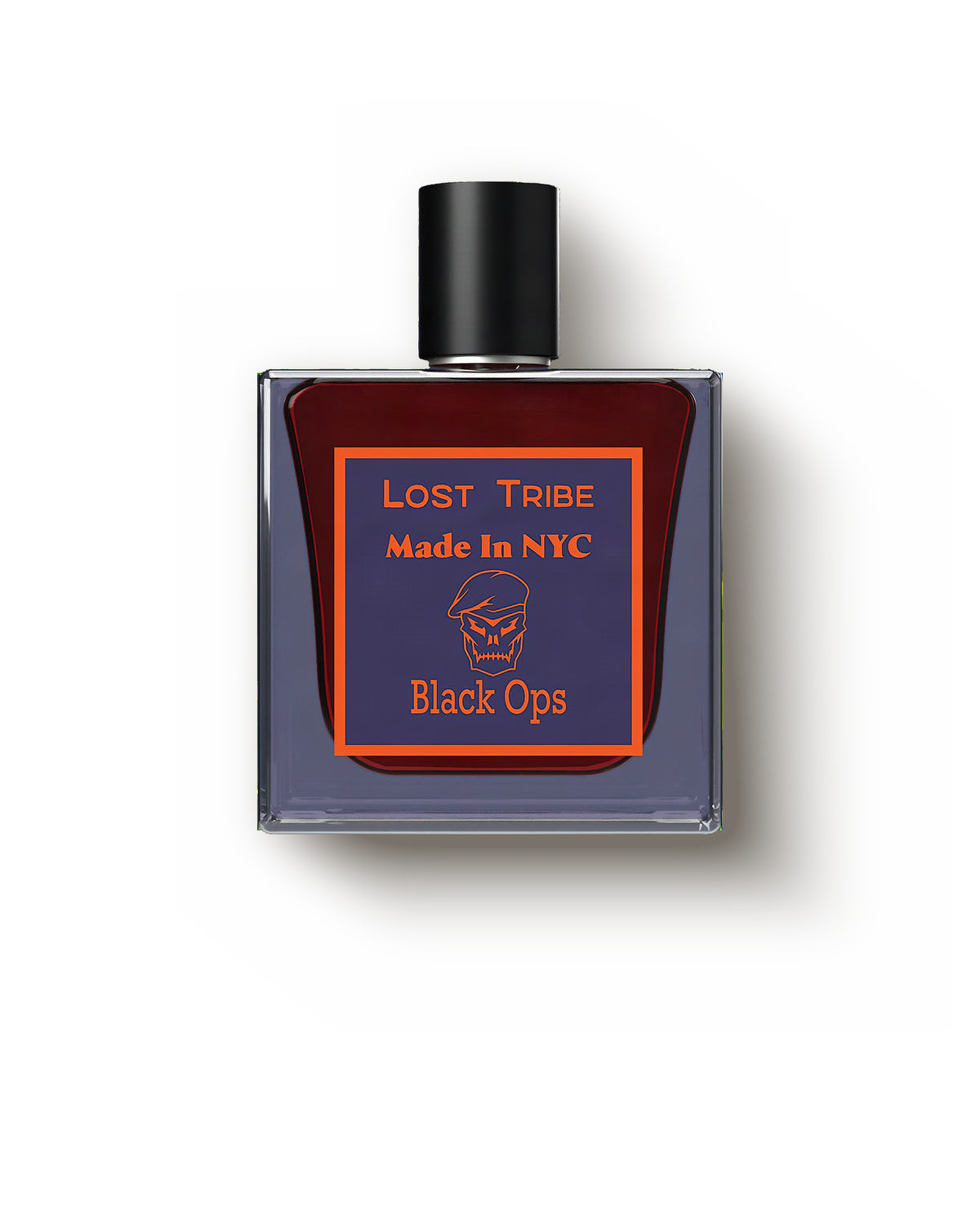
Lost Tribe
Black Ops
The Story
Black Ops, released in November 2025 by Lost Tribe, the New York house, sets green mango, narcissus and plenty of orris over Sumatra Brasin oud. Its signature is the carrier: the formula is blended into a pure oud tincture rather than a neutral base, so the oud is both medium and material.


Fruity
Peach skin, not lemon peel
Peach, pear, apple, berry: this is sweetness in the flesh rather than the rind, dewy and nectar-heavy where citrus is sharp and thin. It plays young and slightly greedy, the sort of ripeness you can almost feel running down a wrist.


Floral
A whole garden, never one flower
Not one flower but the impression of many, usually rose, jasmine and orange blossom leaning on each other until no single one is recognizable. Sweet, dewy, faintly powdery, with nectar underneath. It is what people mean when a perfume smells like flowers and they cannot say which.


Citrus
First bright zest of morning
The juicy, rind-snapping brightness of lemon, bergamot, and orange peel, tart and effervescent with a clean bitter edge. It opens a scent with instant lift and sparkle, fresh and energizing, evaporating quickly like sunlight on water.


Sweet
Warm sugar you cannot quite name
Caramel, honey, spun sugar: sweetness that hovers between all three and never settles on one. This is the gourmand pull, the thing that makes someone lean in closer than they meant to, warm and soft and a half step short of edible.


Oud
What a tree makes when it is wounded
A dense, resinous wood that smells warm and slightly medicinal, with a dry, faintly tart edge, a touch of smoke and a quiet sweetness underneath. It feels ancient and brooding, wrapping the skin in something thick and quietly powerful.


Iris
Cool powder over damp earth
A cool, silvery powderiness with a buttery, slightly carroty rootiness and a whisper of damp soil. It feels elegant and restrained, almost melancholic, like fine face powder and suede laid over something quietly earthy.


Mango
Mango flesh gives nothing, so perfumers reconstruct it
What it is
Squeeze a mango and you get juice, not oil. The only mango material perfumers have comes from the tree's leaves, and it smells green and resinous. The note is therefore always assembled: lactones and esters, or davana and osmanthus.
How it smells
Built from lactones it comes out sweet and golden, creamy under a juicy top, one bright shape from opening to drydown. The botanical build is softer and hazier: jammy, faintly boozy, apricot at the edges, blurring as it wears.
In perfumery
Mango anchors tropical and gourmand builds, sitting easily with coconut and white florals. Lactones hold it into the drydown; the esters flash and go. A botanical build needs constant rebalancing, every material dragging a floral tail with it.
Good to know
Neither version is the fruit. The lactone route is stable and identical every time, which is why mango turns up everywhere. Osmanthus and davana shift with the harvest, so an all-botanical mango is rare, and reads warmer and quieter.


Yuzu
Tart Japanese citrus, crisp as winter air
What it is
A knobbly, thick-skinned citrus grown in Japan, Korea and China, long used in Japanese cooking and bathing. The fragrance sits in the bumpy rind, cold-pressed from the peel; smaller amounts are steam-distilled.
How it smells
Sharp and mouth-watering, like grapefruit crossed with mandarin and a squeeze of lime. A green, faintly herbal bitterness sits under the brightness, with cool floral facets that belong to yuzu alone. Then it thins to clean zest.
In perfumery
Perfumers reach for it when a citrus opening should read sharp rather than sweet: it is fresher and more savory than orange, and it sits well with shiso, tea, vetiver and clean musks.
Good to know
Yuzu trees take years to fruit, long enough to feed a proverb about waiting eighteen years for the harvest. On the winter solstice whole yuzu are floated in a hot bath, the yuzuyu, to scent the water.


Honeysuckle Otto
Hedgerow honey, deep and golden
What it is
The vine gives up little scent to a still, so honeysuckle materials are rare, often caught in sandalwood as attars or rebuilt. Lost Tribe lists this one as an otto without saying how it is made; in Black Ops it supports the mango and smooths the citrus.
How it smells
Deeper and rounder than the airy flower on the hedge: thick honeyed nectar, a jasmine-like sweetness, a soft waxy body. It clings where fresh honeysuckle would drift off.
In perfumery
Sweet and clinging, it layers with rose, jasmine and vanilla, and placed in an opening it softens sharp citrus and lends fruit a honeyed roundness.
Good to know
In classical attar craft the receiving vessel is charged with sandalwood oil, so the flower's aroma condenses straight into the wood rather than into water. That base is why an attar wears warm and holds for hours.


Grapefruit
Bitter-bright citrus burst with a sulfurous tang
What it is
The oil is in the rind, not the flesh: pressure ruptures the glands and it runs out cold. The fruit was an accident, a chance cross of pomelo and sweet orange that turned up in the Caribbean.
How it smells
Tart and fizzing, with a bitter rind edge and, underneath, something faintly sweaty and sulfurous that is exactly what makes it read as grapefruit rather than orange. It goes quickly, leaving a clean, soapy, bitter-green trace.
In perfumery
Perfumers use it for the opening, the cold slap of freshness before anything else arrives. It sits well with neroli and mint, and turns modern and dry over vetiver or a woody amber base.
Good to know
Almost all of that character is trace: grapefruit mercaptan, which the nose catches at a fraction of a part per trillion, and nootkatone. The oil also leaves skin sun-sensitive, so it is usually stripped or kept low.


Iranian Rose Otto
Dewy sweetness over a green, peppery bite
What it is
Rose otto is steam-distilled from damask rose petals; this one is distilled in Iran, and the house uses it for a citric rose brightness at the top. Whole blossoms are picked by hand from before sunrise until about ten thirty, then distilled into otto or solvent-extracted into absolute.
How it smells
Fresh, honeyed, green at the edges, with something dewy still on it. Spice and fruit sit underneath, and in the absolute a jammy darkness. Otto opens crisp and bright; absolute is warmer, smokier, closer to skin.
In perfumery
Rose behaves less like one note than a whole palette. It carries a perfume alone or vanishes into a chypre, turns dark against oud and patchouli, goes powdery beside violet, and holds a floral heart together.
Good to know
The two extractions are not the same bargain. Otto takes three to four thousand kilograms of blossoms to yield one kilogram of oil. Absolute, pulled out with solvent, keeps more of the rose's warm, honeyed depth.


White Ambergris
Salt, skin and driftwood, bleached pale
What it is
White is where the journey ends. A waxy mass forms in the gut of a sperm whale, drifts for years, and sun and saltwater bleach it from black toward dusty white, oxidizing near-odorless ambrein into something fragrant.
How it smells
Soft, sweet and marine, the most rounded of the grades. Clean skin, warm musk, tobacco and sea air over a velvety mineral sweetness. Whatever fecal edge the fresher, darker pieces carry has weathered out of it.
In perfumery
Used as a tincture, it works less like a note than like a light behind the others, adding warmth, diffusion and a skin-close glow while making everything around it last. Ambroxan now reproduces the core of that effect.
Good to know
Nothing is taken from a whale for real ambergris: pieces are picked off beaches, often years after they were expelled. Lost Tribe does not say whether its white ambergris is natural. Each lump is a one-off find, and no two smell quite alike.


Narcissus
Hay, honey and a green animal hush
What it is
Forget the bright daffodil on a windowsill. Perfumery narcissus usually means the poet's narcissus, gathered from high meadows during a few weeks of late-spring bloom; Lost Tribe does not name its source or form.
How it smells
Green and heady at once: bruised petals, fresh hay, a curl of tobacco, and an indolic sweetness that reads almost fecal. It opens grassy, then turns earthy, leathery and mossy. Darker and stranger than any daffodil should be.
In perfumery
In the heart it deepens chypres and florals with hay and moss, sitting well beside jasmine, oakmoss, immortelle and leather. Its black animalic streak is what anchors the darkest vintage florals.
Good to know
Yield is tiny and the harvest window is weeks, which puts it among the costliest florals. Pliny tied the name not to the Greek youth at the pool but to narke, numbness, for the head-spinning scent; its true origin is unknown.


Rose Trio Absolute
A warm, jammy rose in three voices
What it is
A blend of rose absolutes from three regions the house does not name. Whole blossoms are picked by hand from before sunrise until about ten thirty, then distilled into otto or solvent-extracted into absolute.
How it smells
Warmer and fuller than the otto at the top: honeyed and jammy, a little spiced, closer to skin. Each region brings its own facet, and in Black Ops it sits beside the narcissus and gives the heart its balance.
In perfumery
Rose behaves less like one note than a whole palette. It carries a perfume alone or vanishes into a chypre, turns dark against oud and patchouli, goes powdery beside violet, and holds a floral heart together.
Good to know
The two extractions are not the same bargain. Otto takes three to four thousand kilograms of blossoms to yield one kilogram of oil. Absolute, pulled out with solvent, gets there on roughly a seventh of the flowers.


Rhododendron
Honeyed mountain blossom with a resinous tang
What it is
One genus holds both the evergreen rhododendrons and the azaleas, and most garden kinds smell of very little. A few are strongly scented, among them the yellow honeysuckle azalea, Rhododendron luteum, native from Poland to the Caucasus and Turkey.
How it smells
Sweet and open rather than heady: honeyed petals over a green, leafy freshness, a light spice at the edge and a faint tang of resin. Sheerer than rose and cleaner than jasmine, like a flowering shrub after mild spring rain.
In perfumery
Rhododendron oil does exist, but it smells of fir needles and balsam, distilled in Nepal from the dwarf R. anthopogon. The flowers yield nothing usable; azalea, itself a rhododendron, is rebuilt from lily-of-the-valley molecules, honeyed materials, rose and geranium.
Good to know
Rhododendron nectar carries grayanotoxins. On Turkey's eastern Black Sea coast, bees working R. ponticum and this same yellow azalea make "mad honey", which brings nausea, vomiting and fainting. Xenophon described Greek soldiers who ate it as intoxicated madmen.

Jasmine Sambac
Tea-green jasmine that opens after dark
What it is
The flowers open after dark, which is when they smell strongest, so pickers take them as buds in the early morning, before they unfurl. Solvent extraction gives a waxy concrete, and washing that with alcohol gives the absolute.
How it smells
Greener and more tea-like than the grandiflorum kind, and much less fruity. It starts crisp and a little waxy, almost banana-tinged, then warms into indolic sweetness. That indole is the animal in it: heady up close, still luminous.
In perfumery
A heart note that gives white-floral bouquets their body and their lift. It works with rose, tuberose, sandalwood and green tea, rounds off sharp citrus, and some night-blooming soliflores are built on almost nothing else.
Good to know
This is sampaguita, the national flower of the Philippines, strung into garlands and used to scent Chinese tea. Tiny blooms picked by hand every morning across a long season put the absolute among the costliest florals.


Raspberry
A berry conjured, since none can be extracted
What it is
The fruit gives up nothing: no oil, no absolute. The note is always built, from raspberry ketone with beta-ionone for a violet edge and furaneol for cooked sweetness, or from boronia absolute, davana, rose and violet leaf.
How it smells
Jammy and ripe, sweeter than it is sharp, with a powdery floral shadow that surfaces as it dries. The lab version is brighter, a little candied, and holds its shape. The boronia route runs warmer, greener, wilder.
In perfumery
It lives in fruity-florals and gourmands, next to rose, violet and vanilla. Raspberry ketone is unusual among fruit materials for its tenacity: it is still there in the dry-down, long after pear and peach have evaporated.
Good to know
Raspberry leaf absolute exists, but it reads green, leathery and balsamic with a jammy sweetness, closer to mulled wine than fresh fruit. Boronia smells of raspberry jam and tea, and is scarce enough that botanical raspberry stays rare.


Lychee Rose Musk
The house's own lychee rose, drawn close to skin
What it is
Lost Tribe's own lychee rose musk, a house blend rather than a single material. On other releases the house macerates its lychee rose in deer musk; for Black Ops it gives no detail.
How it smells
A quick, bright burst of lychee, then rose, full and rounded rather than powdery, with the musk rising beneath it and drawing the flower close to skin. In Black Ops it runs through the heart beside raspberry, a faint fruit trace that gives the flowers life rather than sweetness.
In perfumery
Elsewhere in the house's range it sits in the top notes; in Black Ops it moves to the heart, where its musk works for diffusion beside narcissus for structure, roses for balance and jasmine for fullness.
Good to know
The rose brings openness and the musk brings weight and intimacy, so the flower seems to bloom against skin rather than in air.


Sumatra Brasin Oud
Dark, earthy oud from the volcanic west
What it is
Oud distilled on Sumatra, the long western island of the Indonesian arc, chiefly from Aquilaria malaccensis and Aquilaria microcarpa. Its terroir is lowland rainforest on volcanic soil under constant humidity, and that ground shows in the oil. Sumatra is one of several distinct Indonesian oud regions, alongside Kalimantan on Borneo and Papua in the far east, and it is the one most often mistaken for the others: an oil labelled simply Indonesian is usually Kalimantan, and reads nothing like this.
How it smells
Deep and resinous, with a natural dryness and the slight, sharp tartness of a clean distillation. Beneath that sits a dark resinous woodiness, quietly sweet instead of fruity, with a faintly medicinal thread running through. In Black Ops it carries the florals and the fruit through the last phase of wear.
In perfumery
Used for weight and soil at the base of a composition, where the vaporous Kalimantan oils give lift instead. Its dark, resinous depth anchors amber, rose and fruit, and a little carries a long way.
Good to know
Indonesia is not one oud. The camphorous blue character usually credited to the country belongs to Kalimantan on Borneo; Sumatran oil runs darker and earthier, and Papuan oil greener and more herbal. Yields are tiny and distillation runs for days, so genuine single-origin Sumatran oud is made in small artisanal batches.


Indonesian Sandalwood
Mysore's own species, raised on drier islands
What it is
It cannot grow alone. Sandalwood taps the roots of neighbouring plants for water and nutrients, and on Timor and Sumba it does so slowly, building the fragrant heartwood that gets ground and distilled.
How it smells
Creamy and milky at first, warm and balsamic underneath, with a faint sour-green bite the Indian wood does not have. It runs drier and sharper than Mysore, and it builds on skin rather than fading.
In perfumery
Base note and fixative. It does the smoothing: sharp materials laid over it lose their edges, and rose, jasmine and oud gain a velvety floor that holds them in place for hours.
Good to know
Botanically this is the same plant as Mysore, so the difference comes largely from soil, island and the age of the tree. When India restricted its exports, Indonesian and Australian wood filled the gap.


Siberian Musk
The taiga's own musk, traded as Cabardine
What it is
Old traders called it Cabardine: deer musk from the Siberian taiga, a regional grade alongside the benchmark Tonquin. Lost Tribe uses Siberian deer musk on other releases but does not specify the source for Black Ops.
How it smells
Fresh, it is startling: sharp, ammoniac, close to fecal. Months in alcohol turn that into something warm, dry and faintly leathery, with a powdery radiance that sits on skin like fur. Coarser than Tonquin, and less honeyed.
In perfumery
Traditionally a fixative and animalic heart, tinctured for months before it met a blend. Less muscone than Tonquin and a rougher edge put it a tier lower, yet it still commanded extraordinary sums back when natural musk underpinned the fougeres.
Good to know
When a modern list says musk, it almost never means this. Synthetics took the word over generations ago, and genuine Cabardine now turns up mostly in vintage bottles and the odd all-natural artisan release.


Chinese Oud
Crystallised honey over bitter green Chinese wood
What it is
Agarwood traded as Chinese oud, most of it from Aquilaria sinensis, the incense tree, found wild in Guangdong, Guangxi, Hainan and Yunnan. In Chinese the resinous wood is chenxiang, sinking fragrance. Black Ops gives no region or grade.
How it smells
A golden sweetness closer to crystallised honey than syrup, checked by a bitter, tannic green edge and herbal, nutty, medicinal shades. Cleaner and less animalic than Indian oud, the finest Chinese oils can recall high-grade Japanese incense.
In perfumery
Black Ops stacks four agarwood materials in its base. Chinese oud sits with Indonesian sandalwood and Siberian musk in support of the lead Sumatra Brasin Oud, each chosen for how it works with the tinctured base.
Good to know
Nearly all Chinese agarwood now comes from planted trees, wounded by drilling or injected with inducers so the resin forms. Hong Kong's name, Fragrant Harbour, is commonly traced to the export of this tree's agarwood since the Tang dynasty.


Cultivated Kinam
Grafted plantation kinam, clear, minty and softly sweet
What it is
Kinam, also kyara or qi nan, is agarwood's most prized grade. Cultivated kinam is best documented on Chinese plantations centred on Dianbai in Guangdong, where branches of resin-prone Aquilaria sinensis clones are grafted onto ordinary seedlings.
How it smells
Clear and fresh rather than deep: a light milkiness, a minty coolness and a gentle sweetness over a woody core. Beside wild kinam it is less honeyed, less piercingly cool and less complex, and it fades sooner when heated.
In perfumery
In Black Ops it sits in the base, lending a subtle sweet lift beside the oud chip tincture. Away from perfume, buyers in China warm it on electric incense burners.
Good to know
Plantation wood now fills most of the kinam bead trade; some sellers pass off few-hundred-yuan pieces as wild kinam worth hundreds of thousands. Its colour names, white, green, purple or black, differ mainly in their first notes when heated.


Oud Chip Tincture
Raw agarwood chips, steeped slowly in alcohol
What it is
Agarwood chips steeped in high-proof alcohol at room temperature for weeks or months, then filtered. Just wood and alcohol: no water soak, no heat and no still, unlike the oil distilled from the same chips.
How it smells
Softer than oud oil, since tinctures are far less concentrated than distilled oils: woody and resinous, without the oil's dense punch. Long steeping softens rough edges, and the heavier molecules it carries evaporate slowly, so it lingers in the background.
In perfumery
Natural perfumers tincture agarwood to bring the wood into alcohol, though each batch of chips steeps differently and can take years to mature. In Black Ops, the house pairs it with cultivated kinam for a touch of smoke and resin.
Good to know
Alcohol doubles as a quality test: China's pharmacopoeia requires that at least a tenth of medicinal agarwood dissolve in it. A tincture keeps what alcohol draws from the wood, colour included: agarwood steeped in ethanol gives a light-brown extract.


Orris
Violet powder from a root dried for years
What it is
Iris grown for its roots, not its flowers; Lost Tribe does not say where its orris comes from. The rhizomes are dug, dried, then left three to five years before anyone grinds and steam-distils them into a waxy ivory butter.
How it smells
Cool and powdery, a violet with no sweetness in it, closer to face powder and soft suede than to a flower. Raw carrot and flour, damp soil underneath, a faint metallic shine over all of it.
In perfumery
Perfumers use it for body: a little in the heart or base rounds off sharp florals and raw woods and leaves powder behind. Violet, rose and ambrette are its company, and it underpins every great iris fragrance.
Good to know
Dig the root up and it has almost no scent, and nothing like a violet. The irones form as the dried rhizome oxidises, so the years make the violet, not the plant. A tonne gives two kilos of butter.
Fragrance Character
Mango comes first, closer to underripe than syrupy, with yuzu and grapefruit sharpening it. Narcissus takes the middle, strong and slightly green, with roses, jasmine sambac and a trace of raspberry around it. The fruit holds for a long time and the scent carries well. Oud, musk and orris arrive late, the oud dry and resinous, the orris powdery and rooty.


Longevity
how long it stays on skin
The hourglass reads wear time: how many hours the fragrance keeps speaking before it fades. A bar that barely leaves the start means a few fleeting hours. One that runs the full length carries from morning into evening. Treat it as typical, not promised. Oily skin holds scent far longer than dry.


Sillage
the size of its scent trail
Sillage is French for a ship's wake, and that is exactly what this measures: how much of the scent reaches the room instead of staying on you. Low is a whisper only close friends catch. Enormous fills the room, then keeps filling it after you leave.


Experimental
Built to provoke, not to please
Some perfumes are made to be liked. These are made to be argued about: inky tar, hot rubber, fruit on the turn, metal and fur where you expected flowers. The coin glows for a scent that provokes and dims for one that plays it safe, which is sometimes the point.


Office
Polished, and never louder than the room
Scent is manners in a shared room. At this range it should reach the person across the desk and stop there: tidy citrus, soft musk, pale woods, all of it reading competent and considerate. A glowing coin means nobody has to mention it. A dim one means it travels.


Evening
After dark, when it deepens
Dinner, drinks, the night that runs long. Low light is where ambers, resins and smoky woods stop being polite, and where a plush floral finally blooms. A glowing coin means it is waiting for exactly this hour. A dim one means it did its best work in daylight.


Romantic
Close enough to be felt
A fragrance can hum against skin instead of announcing itself across a table. That is the register here: creamy florals, vanilla, soft musk, a thread of spice, warm enough to make someone lean in. The coin glows when a scent sets that mood and dims when it is more practical than seductive.


Formal
Quiet authority in a dressed-up room
A wedding, a ceremony, a room where everyone has thought about their shoes. What works here is structure, not volume: smooth woods, disciplined florals, soft leather. A glowing coin means it holds its posture all evening. A dim one means it is too casual for the room.


Casual
Easy comfort for unhurried days
Errands, coffee, a slow Saturday with nowhere to be. Nothing here has to impress anyone, so the fit is soft and easy: fresh citrus, light woods, a little warmth off the skin. A glowing coin says yes to all that. A dim one means the fragrance is asking for a bigger night.


Day to Night
where its mood naturally falls
A bar running from sun to moon, reading the hour the fragrance was made for. The more of it that stays gold, the more the scent belongs to daylight and open air. The further the blue reaches back toward the sun, the deeper and warmer it turns: evening, candlelight, low rooms.


Winter
Warmth that carries through cold air
Cold air mutes a fragrance and slows it down, which is why winter belongs to the dense and the warm: resin, smoke, vanilla, leather, ambered spice. The bar reads how well this one pushes back, glowing against the chill instead of thinning out in it.


Spring
Fresh blooms in mild, rising warmth
Mild, humid air lifts a light composition, so the season belongs to dewy florals, green stems, soft powder and citrus you can see through. Alive rather than heavy. The further the green runs along the bar, the more comfortably this one wears in that weather.


Summer
Bright and airy in real heat
Heat does the projecting for you, which is why the wrong perfume turns unbearable by noon. What survives is cool and breathable: sharp citrus, salt air, aromatic herbs, water. Things that refresh instead of cloy. A short bar here means save it for cooler months.


Fall
Spiced warmth for cooling days
As the air cools, the rich materials stop smothering and start reading clearly: dry woods, warm spice, tobacco, amber, fruit gone golden. It is the season perfume turns contemplative. The bar fills according to how naturally this one settles into crisp, cooling days.
Best Worn
Warm months suit it best, from late morning into a summer evening, on relaxed days and casual nights out. It suits anyone who likes fruit and flowers first and the oud held back.
Seçenekleri belirleyin
Atmosfer


Burun
Mathew Schmuelian
Kurucu ve parfümör
Lost Tribe'ın kurucusu ve parfümörü; zanaatkar doğal malzemeler toplamaktan 2022'de kendi misklerini maserasyona bırakmaya geçti. İlk çıkışı Lost Tribe Hope You Like It yaklaşık on altı şişe olarak üretildi. Lost Tribe Sultry Sambac, Lost Tribe Smoky Bear ve Lost Tribe Prince of Persia'yı besteledi.
Bu burundan daha fazlasıNeon PalmsVanilla Waves V2 Extra MuskLost Lotus
Maison

Küçük bir kabile, gerçek misk, tavizsiz üretim, orijinallerin stoğu sürdükçe dökülüyor.
Lost Tribe, yaşanmış ve yüksek sesli kokular yapar; siz gelmeden önce içeri giren, siz çıktıktan sonra da kalan türden. Evin tamamından geçen maksimalist bir damar var: güneşten sarhoş tropik meyveden reçine kıvamında vanilyaya, oradan yaşlandırılmış Kinam üzerine kurulu nadir uda.
- Öne çıkan
- Maksimalist doğal malzemeler, yaşlandırılmış Kinam

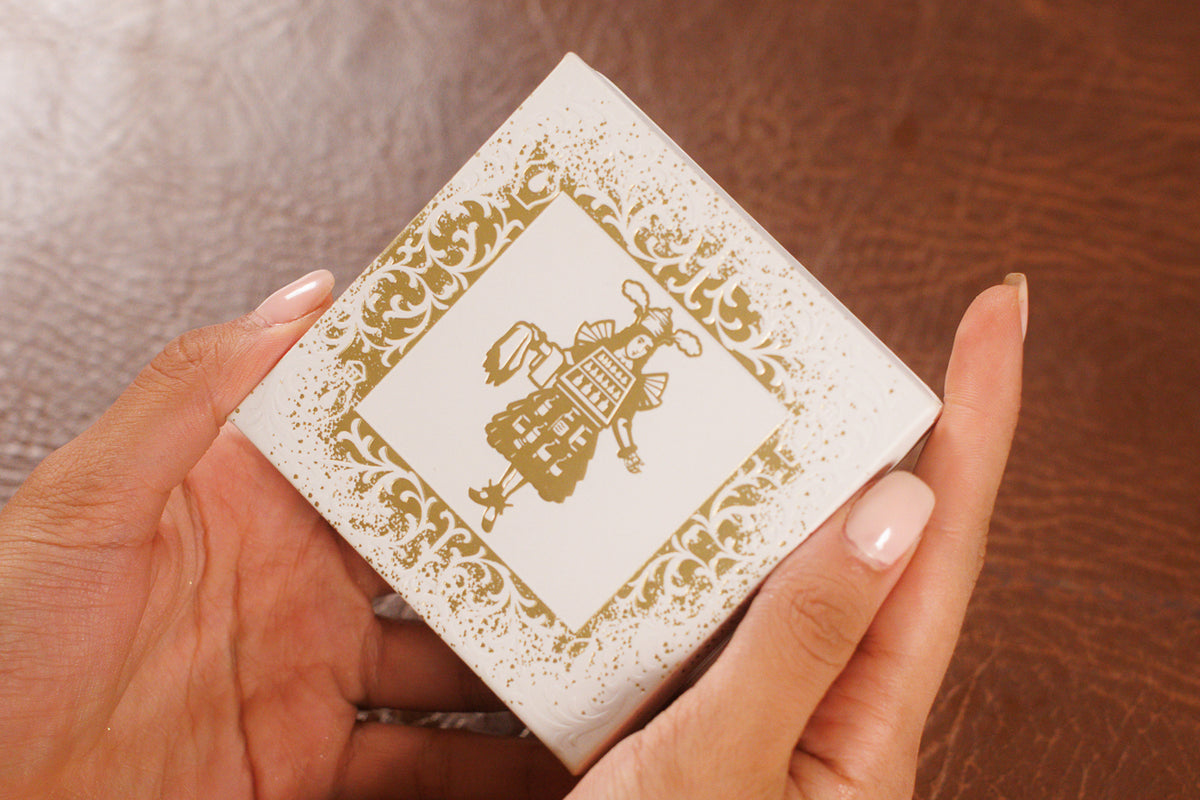
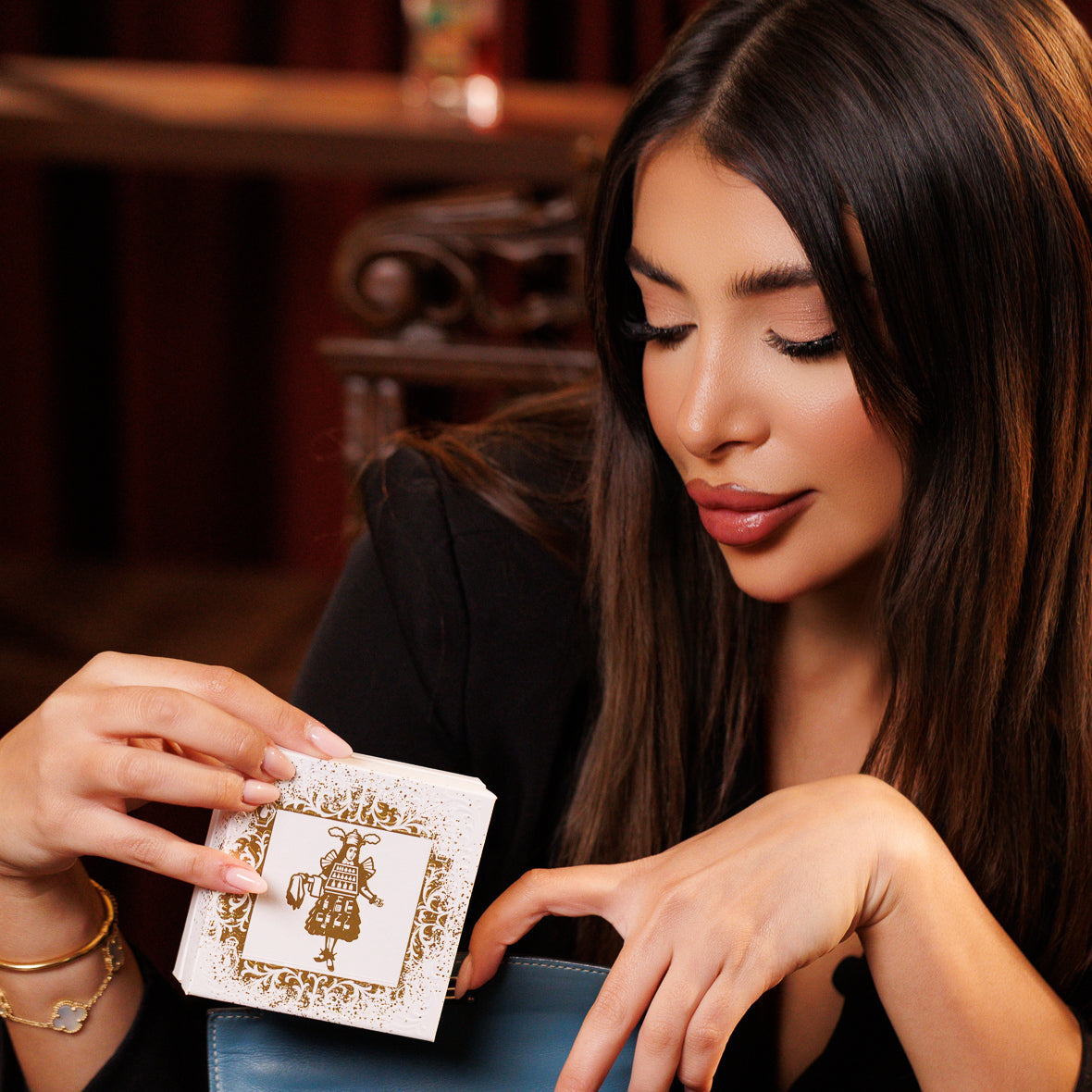
HER DEKANT
Orijinal şişeden kapınıza
Orijinal flakonu perakende fiyatından, doğrudan evden satın alırız.
Tıbbi sınıf bir Socorex şırınga, tam mililitreyi doğrudan flakondan çeker.
Sıcak yaldız baskılı kutusuna yerleştirilir ve tüm gümrük vergileri önceden ödenmiş olarak DHL'e teslim edilir. Bir dekant nasıl hazırlanır
Lost Tribe evinden diğer parfümler
Bunlar da ilginizi çekebilir