Folkwinds
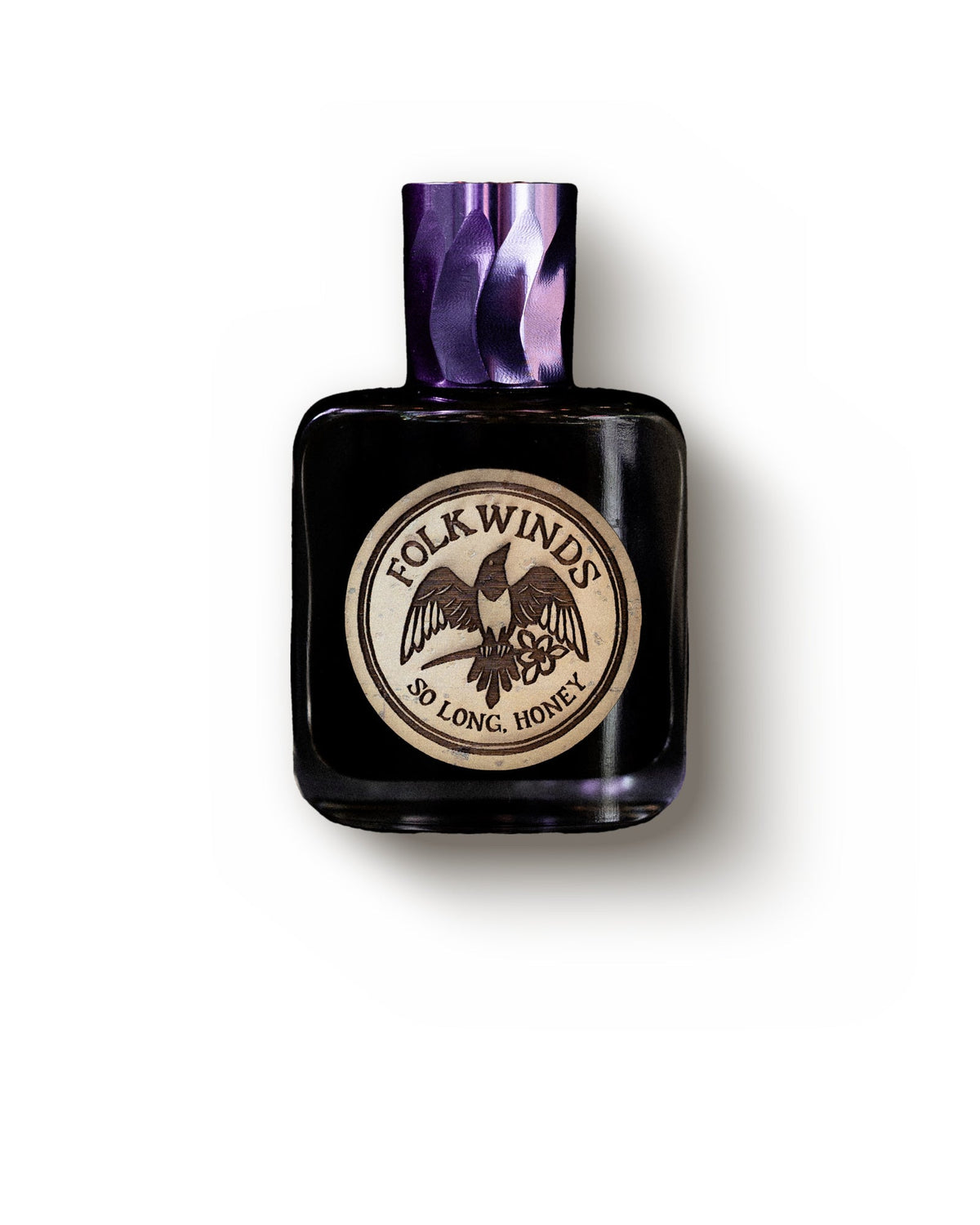
So Long, Honey
The Story
So Long, Honey is an autumn 2026 release from Folkwinds, Jono Bornstein's house in Vermont, and a perfume for the weeks the leaves start to turn. August peaches, hay and clover set the scene, but the hive is what makes it itself: propolis and clarified beeswax over three sandalwoods, white kinam and wild Hainan agarwood.


Lavender
Clean herbal calm with a bite
Cool and camphorous at first, closer to a crushed stem than a drawer sachet, then softening into a powdery, faintly sweet hush. Freshly pressed linen, barbershop polish, a grey-purple quiet. The bite is what keeps it from being merely soothing.


Honey
golden sweetness with animal warmth
A thick, waxy sweetness with a faintly animalic, almost leathery undertone beneath the nectar. It hums warm and skin-close, comb-fresh florals on top and something darker and stickier underneath, closer to the hive itself than to anything poured from a jar.


Woody
Dry grain of cut timber
The smell of cedar shavings, sandalwood, and dry vetiver roots, a sanded, resinous warmth with a faint pencil-box rasp. It feels grounded and composed, the quiet backbone that makes a scent read as serious and lasting.


Aromatic
Crushed herbs in cool air
The green, camphorous coolness of lavender, rosemary, sage, and thyme, like herbs bruised between the fingers. It feels clean, invigorating, and a touch austere, the crisp backbone of a classic barbershop freshness.


Sweet
Warm sugar you cannot quite name
Caramel, honey, spun sugar: sweetness that hovers between all three and never settles on one. This is the gourmand pull, the thing that makes someone lean in closer than they meant to, warm and soft and a half step short of edible.


Fruity
Peach skin, not lemon peel
Peach, pear, apple, berry: this is sweetness in the flesh rather than the rind, dewy and nectar-heavy where citrus is sharp and thin. It plays young and slightly greedy, the sort of ripeness you can almost feel running down a wrist.


Powdery
Soft hush of dressed skin
A velvety, slightly dry softness of iris root, violet, and fine talc, like face powder or clean linen warmed by skin. It feels intimate, refined, and nostalgic, blurring a fragrance into a gentle, cushioned haze.


Lavandin
The lavender in your laundry, louder and cooler
What it is
Almost every lavender you have smelled in soap was this one. A sterile cross of true lavender and spike lavender that turned up wild on the Provence hillsides, it sets no seed, so every plant is a cutting.
How it smells
Recognisably lavender, then louder and colder. Spike lavender brings camphor and a bracing near-eucalyptus lift where true lavender would be sweeter and more floral. The herbal heart is familiar; the drydown goes woody rather than powdery.
In perfumery
Soap, shaving foam, detergent, fresh fougeres: the workhorse, strong enough to survive a soap base and stay clean doing it. Coumarin, oakmoss, geranium and clary sage are its usual company. Fine perfumery keeps true lavender for softer work.
Good to know
One hectare gives several times the oil of true lavender at a fraction of the price, which makes it the classic adulterant. When a label says only lavender, the material behind it is worth asking about.


Iris
Cool powdered earth from a patiently aged root
What it is
Perfumery iris comes not from the flower but from the root. The dug rhizomes are dried and left to age three to five years while the aromatic irones form, then ground and steam-distilled into a waxy orris butter.
How it smells
Cool, powdery and rooty: violet, suede and fresh-sawn wood dusted with face powder. Underneath sits a damp mineral earthiness, a faint carrot sweetness, a buttery softness. It feels more texture than perfume, and it stays quiet on skin.
In perfumery
Nothing else gives a blend that cool, powdered restraint. It steadies chypres and florals, takes the shine off rose and violet, and lends sandalwood and ambrette a velvet finish. Iris makes a perfume behave.
Good to know
A tonne of dried, aged rhizome yields about two kilograms of butter. Add the years of waiting before it can even be distilled and you see why real orris turns up in so few bottles.


August Peaches
Downy skin and cream, no fruit involved
What it is
Press a peach and you get a wet mess, so the note is always built. It rests on lactones, and the trade still sells one of them as aldehyde C-14, which is not an aldehyde and never was.
How it smells
Fuzzy skin first, then flesh: creamy, a little buttery, sweet at the edge of overripe. A lab-built peach reads bright and stays put. One leaning on naturals is hazier, more floral and tea-like, and moves as it dries.
In perfumery
It works in the heart, carrying rose and white florals down into woods, amber and musk. Osmanthus is the shortcut: that flower makes the same lactones itself, which is why it smells of apricot and peach on its own.
Good to know
Lactones are stubborn, so peach lasts whichever way it is built. One of them can now be brewed instead of synthesised, castor oil fed to yeast, which is enough to make that version count as natural.


Amburana
Cachaça cask wood breathing cinnamon and vanilla
What it is
A legume timber tree, Amburana cearensis, of South America's dry forests, from the Caatinga of northeastern Brazil to Bolivia, Paraguay and Argentina. Brazilians call it imburana-de-cheiro, fragrant imburana, and also cumaru, a name tonka's tree, Dipteryx odorata, shares.
How it smells
Cinnamon and a sweet coumarin warmth close to vanilla, with dried fruit, honey and a soft coconut note, all over pale planed wood. One whiskey critic hears cinnamon rolls and carrot cake; less kind tasters say potpourri.
In perfumery
No essential oil is widely sold, so perfumers mostly steep the chips in alcohol, as a cask does with cachaça. Folkwinds built By and By around a bespoke amburana extraction and lists it again in the opening of So Long, Honey.
Good to know
Coumarin is over half the phenolics alcohol draws from it, so chemists track it as a marker of amburana-rested cachaça. Time matters: one batch in a new barrel, sampled at 24 to 32 months, tasted too woody to drink.


Propolis
Bee glue, poplar-bud resin that seals the hive
What it is
Bee glue, and neither wax nor honey. Honeybees gather resin from tree buds, most often black poplar in temperate climates, and work it with wax and saliva to seal cracks, narrow the entrance and entomb a dead mouse.
How it smells
Beeswax smells of the candle and honey of the flower, but propolis smells of the tree. Balsamic and resinous, close to sticky poplar buds, sweetened by honey and wax, with faint smoke, a herbal edge and a sharp medicinal note.
In perfumery
Perfumers work it as an alcohol tincture or a CO2 extract, the second more complete. Every batch shifts with the trees the bees visited. In a formula it lends balsamic depth beside beeswax absolute, labdanum and amber.
Good to know
Propolis is a recognised contact allergen. Its caffeic acid esters can trigger dermatitis, and beekeepers and violin makers both meet it at work. People allergic to propolis often react to balsam of Peru as well, through shared ingredients.


Lavender Absolute
Lavender gone deep green, thick and sweet
What it is
Solvent work rather than steam. Freshly cut flowering tops of true lavender are washed with a hydrocarbon solvent into a waxy concrete, then taken up in alcohol and chilled. Drawing off the alcohol leaves a thick, dark green absolute.
How it smells
Sweeter and heavier than the oil, with little of its camphor sting, and closer to the flowering herb itself. A herbal floral heart rests on coumarin warmth that reads as fresh hay, turning balsamic as it dries.
In perfumery
A heart note with real staying power. It gives a fougere a fuller, hay-sweet middle and carries lavender down into amber and oriental bases, where labdanum, oakmoss, patchouli and vetiver hold it. New-mown hay accords and chypres use it too.
Good to know
Roughly 130 kilos of flowers go into one kilo of absolute. Lots vary widely: colour runs from clear emerald to opaque dark brown, and a little waxy sediment in the bottle is normal, not a flaw.


Hay
Sun-dried meadow grass bottled at golden hour
What it is
Cut meadow grass, clover and sweet vernal, left in the sun. Hay's sweetness is almost entirely one molecule, coumarin, and perfumery takes it either by extracting the dried grasses or by building the molecule outright.
How it smells
Warm, sweet and dry, a sunlit barn loft: cut grass tipping toward almond and vanilla, with a nutty, tobacco-like underside. Green and golden at first, then soft powdery warmth. Mown lawn left to bake all afternoon.
In perfumery
A heart-to-base note handing rustic, sun-warmed character to fougeres, chypres and tobacco blends, and the bridge from green tops to warm bases. Lavender, tobacco, oakmoss and tonka gather round it. The fougere family rests on this accord.
Good to know
Coumarin came out of the tonka bean before anyone learned to build it, one of perfumery's first aroma-chemicals. Grass gives it up only as it dries, which is why hay smells sweeter than a living field.


Clover
A pasture in bloom, honey on the breeze
What it is
True clover is Trifolium: the rounded pink and white flower heads of red and white clover, not the tall yellow melilot known as sweet clover. No clover essential oil or absolute is widely traded, so perfumers compose the note.
How it smells
Sweet and green at once, like walking a pasture in bloom instead of sniffing one flower. Light nectar honey floats over fresh leaf, while coumarin warms it softly from below. Lighter than tonka, greener than hay.
In perfumery
Perfumers assemble it from coumarin for warmth, linalool for a light floral lift, cis-3-hexenol for fresh green and a trace of phenylacetic acid for honey. It works as a green-sweet heart modifier in fougeres, pastoral greens and hay accords.
Good to know
In the 1890s Piver launched Trèfle Incarnat, named for crimson clover and built on amyl salicylate, a newly made molecule that smelled sweetly grassy like clover. Ernest Beaux later said it lifted perfume out of banality.


Mysore Sandalwood
Creamy heartwood, pulled up roots and all
What it is
Harvesting means uprooting: the oil runs richest in the roots, so in Karnataka the whole tree comes out of the ground. Heartwood begins forming at five to ten years, but a heart worth taking is closer to thirty.
How it smells
Cream and warm milk over sawn wood, with a sour-buttery edge that turns almost lactic. Something rosy and balsamic sits underneath. It never sharpens and never smokes, just settles on skin, quiet and close, for hours.
In perfumery
Perfumers use it to hold a blend together: it rounds sharp edges and makes everything above it last longer. Rose, jasmine, violet and oud all soften against it. The great vintage milky-woody orientals are built on it.
Good to know
India cut its own supply almost to collapse. Standing trees and sales now fall under government licence and auction, and genuine Mysore oil has grown scarce, so most sandalwood you meet is Australian plantation wood or synthetic Javanol.


Hainan Sandalwood
A planted newcomer on China's tropical island
What it is
Santalum album, the Indian sandalwood tree, grows wild nowhere in China. Twelve seeds from Indonesia reached the South China Botanical Garden in 1962, and from 1968 to 1974 seed from those early trees went to trial plots on Hainan.
How it smells
Milky, creamy and mellow over sweet balsamic wood, with a cashew note and a light herbal spice. At the Jianfeng research station, staff walled in stumps left by sandalwood thieves, and months later the scent carried five to ten metres.
In perfumery
Folkwinds lists it in So Long, Honey as one of three sandalwoods, beside Mysore and Papuan, with wild Hainan agarwood in the same base. Like all oil of this species it is a fixative, steadying more volatile materials around it.
Good to know
At Jianfeng, in southwest Hainan, ten 21-year-old trees grown from Indonesian seed were felled for study. All had formed heartwood naturally, averaging 4.36 percent oil, and that heartwood oil met ISO 3518, the international standard for this species.


Papuan Sandalwood
Sweet savannah sandalwood, different from tree to tree
What it is
Santalum macgregorii is the sandalwood of southern Papua New Guinea, a tree of dry savannah and grassland. Between 1891 and 1980 about 9,000 tonnes left the country, most of it shipped from Port Moresby to Singapore and China.
How it smells
Sweet, at times almost sugary, with a soft balsamic body and a dry woody finish. No two trees agree: alpha-santalol, around 55 percent of a classic sandalwood oil, runs from half a percent to 51 percent here.
In perfumery
In So Long, Honey it sits in the base beside Mysore and Hainan sandalwood, beeswax, white kinam and Tibetan musk, under lavender, hay and peach. Reviewers liken one Papuan CO2 extract to vintage Mysore, with long skin life.
Good to know
Labels disagree. One Papuan CO2 is sold as Santalum album, other oils as Santalum macgregorii, and the oil alone cannot settle it: a 2009 study found some macgregorii trees giving oil very like album. The species is Critically Endangered.


White Kinam
Kinam's highest colour grade, cool then honeyed
What it is
Kinam is agarwood at its rarest, soft enough that carving it is likened to drawing on sand. Chinese graders rank it by colour, and white heads the list: one white, two green, three yellow, four black.
How it smells
Chinese descriptions name five scents in it: cool, honey, milk, flowers and fruit. The chill comes first and the sweetness after, with a clean, creamy milkiness. Warmed on a burner, the coolness fades and florals take the lead.
In perfumery
Like other kinam, it is warmed on a thin mica plate over buried charcoal, never burned, so the oil rises without smoke. Distilling it is a rare, difficult undertaking, and enthusiasts steep powdered kinam in strong alcohol for tinctures.
Good to know
Sources disagree on where the white comes from: pale wood showing between black resin, or a white bloom that forms on the surface with age. Some collectors hold that the name itself is modern, first used in Taiwan.


Wild Hainan Agarwood
Lotus and honey in China's prized island wood
What it is
Resinous wood of Aquilaria sinensis, the Chinese agarwood tree, from Hainan Island. Heavy harvesting has left viable wild stands in only a few mountain areas of Hainan and Guangdong. The tree is listed as Vulnerable and protected by Chinese law.
How it smells
Clear and sweet rather than heavy: green wood and damp forest, then white flowers, pear and a honeyed warmth, held cool by a slightly bitter, medicinal edge. Set beside Indian or Cambodian oud, it feels cooler and drier.
In perfumery
Genuine wild Hainan oil is scarce even among seasoned oud collectors. Sellers of the few on offer describe wood kept for decades in private Chinese stocks rather than freshly felled, then distilled slowly over low, steady heat.
Good to know
In 1175 the Song official Fan Chengda placed Hainan's wood above the incense shipped in from abroad and likened it to lotus, plum blossom, pear and honeycomb. Burned, he wrote, it never smelled scorched, even down to the ash.


Clarified Beeswax
Golden honeyed wax, the warmth of the hive
What it is
Worker bees secrete wax to build the comb, and the comb keeps everything that happens inside it. Solvent-extracted, it becomes a dark gold absolute still carrying honey, pollen and propolis.
How it smells
Honey first, then the smell of a candle just blown out. Underneath there is hay, a little tobacco, and something faintly animal from the propolis. Golden, waxy, round, and warmer than any of those words suggest.
In perfumery
Heart to base, where it rounds a floral and thickens an amber with something close to texture. Orange blossom, immortelle, tobacco and labdanum are its usual neighbours. Niche houses often leave it raw and let the hive show.
Good to know
Bees eat about eight kilos of honey to make one kilo of wax, and a hundred kilos of that wax renders down to a single kilo of absolute. Very little of it ever reaches a bottle.


Tibetan Musk
High-altitude deer musk, dry, bright and chocolate-smooth
What it is
The altitude is the whole story. Real deer musk from above the tree line on the Tibetan plateau comes up dry and clean instead of farmyard-heavy, and the artisanal releases carrying it draw on stock held privately for decades.
How it smells
It bites first, a brief feral, urinous flash, then opens out. Lemony lift, a swell of blackcurrant, an animal warmth that turns frankly chocolatey as it settles. Dry and luminous where cruder musks go phenolic and sharp.
In perfumery
A trace carries enormous projection, so it is dosed by the breath rather than the gram. Compositions built on it leave it exposed, ringed with blackcurrant, frankincense, amber and lavender, and its dryness keeps sweet resins from turning heavy.
Good to know
Set it beside a synthetic white musk and the difference is immediate: galaxolide smells soapy and flat, one idea repeated. Tonkin grades run sweeter and more honeyed. Tibetan is the driest and brightest of them, and the scarcest.
Fragrance Character
Lavandin opens it bright and herbal, softened by ripe peach and a powdery thread of iris, with amburana adding a spiced sweetness. Lavender absolute carries the herbs into the heart, where hay and clover dry it out and propolis turns it balsamic and honeyed. The drydown is soft sandalwood and sweet white kinam over agarwood, warmed by beeswax and musk.


Longevity
how long it stays on skin
The hourglass reads wear time: how many hours the fragrance keeps speaking before it fades. A bar that barely leaves the start means a few fleeting hours. One that runs the full length carries from morning into evening. Treat it as typical, not promised. Oily skin holds scent far longer than dry.


Sillage
the size of its scent trail
Sillage is French for a ship's wake, and that is exactly what this measures: how much of the scent reaches the room instead of staying on you. Low is a whisper only close friends catch. Enormous fills the room, then keeps filling it after you leave.


Experimental
Built to provoke, not to please
Some perfumes are made to be liked. These are made to be argued about: inky tar, hot rubber, fruit on the turn, metal and fur where you expected flowers. The coin glows for a scent that provokes and dims for one that plays it safe, which is sometimes the point.


Office
Polished, and never louder than the room
Scent is manners in a shared room. At this range it should reach the person across the desk and stop there: tidy citrus, soft musk, pale woods, all of it reading competent and considerate. A glowing coin means nobody has to mention it. A dim one means it travels.


Evening
After dark, when it deepens
Dinner, drinks, the night that runs long. Low light is where ambers, resins and smoky woods stop being polite, and where a plush floral finally blooms. A glowing coin means it is waiting for exactly this hour. A dim one means it did its best work in daylight.


Romantic
Close enough to be felt
A fragrance can hum against skin instead of announcing itself across a table. That is the register here: creamy florals, vanilla, soft musk, a thread of spice, warm enough to make someone lean in. The coin glows when a scent sets that mood and dims when it is more practical than seductive.


Formal
Quiet authority in a dressed-up room
A wedding, a ceremony, a room where everyone has thought about their shoes. What works here is structure, not volume: smooth woods, disciplined florals, soft leather. A glowing coin means it holds its posture all evening. A dim one means it is too casual for the room.


Casual
Easy comfort for unhurried days
Errands, coffee, a slow Saturday with nowhere to be. Nothing here has to impress anyone, so the fit is soft and easy: fresh citrus, light woods, a little warmth off the skin. A glowing coin says yes to all that. A dim one means the fragrance is asking for a bigger night.


Day to Night
where its mood naturally falls
A bar running from sun to moon, reading the hour the fragrance was made for. The more of it that stays gold, the more the scent belongs to daylight and open air. The further the blue reaches back toward the sun, the deeper and warmer it turns: evening, candlelight, low rooms.


Winter
Warmth that carries through cold air
Cold air mutes a fragrance and slows it down, which is why winter belongs to the dense and the warm: resin, smoke, vanilla, leather, ambered spice. The bar reads how well this one pushes back, glowing against the chill instead of thinning out in it.


Spring
Fresh blooms in mild, rising warmth
Mild, humid air lifts a light composition, so the season belongs to dewy florals, green stems, soft powder and citrus you can see through. Alive rather than heavy. The further the green runs along the bar, the more comfortably this one wears in that weather.


Summer
Bright and airy in real heat
Heat does the projecting for you, which is why the wrong perfume turns unbearable by noon. What survives is cool and breathable: sharp citrus, salt air, aromatic herbs, water. Things that refresh instead of cloy. A short bar here means save it for cooler months.


Fall
Spiced warmth for cooling days
As the air cools, the rich materials stop smothering and start reading clearly: dry woods, warm spice, tobacco, amber, fruit gone golden. It is the season perfume turns contemplative. The bar fills according to how naturally this one settles into crisp, cooling days.
Best Worn
Autumn into early winter, from late morning to early evening. It suits someone who likes lavender and honeyed woods together, and it fits anything from a weekend market to a quiet dinner at home.
Επιλέξτε χαρακτηριστικά
Η ατμόσφαιρα


Η Μύτη
Jono Bornstein
Ιδρυτής και αρωματοποιός
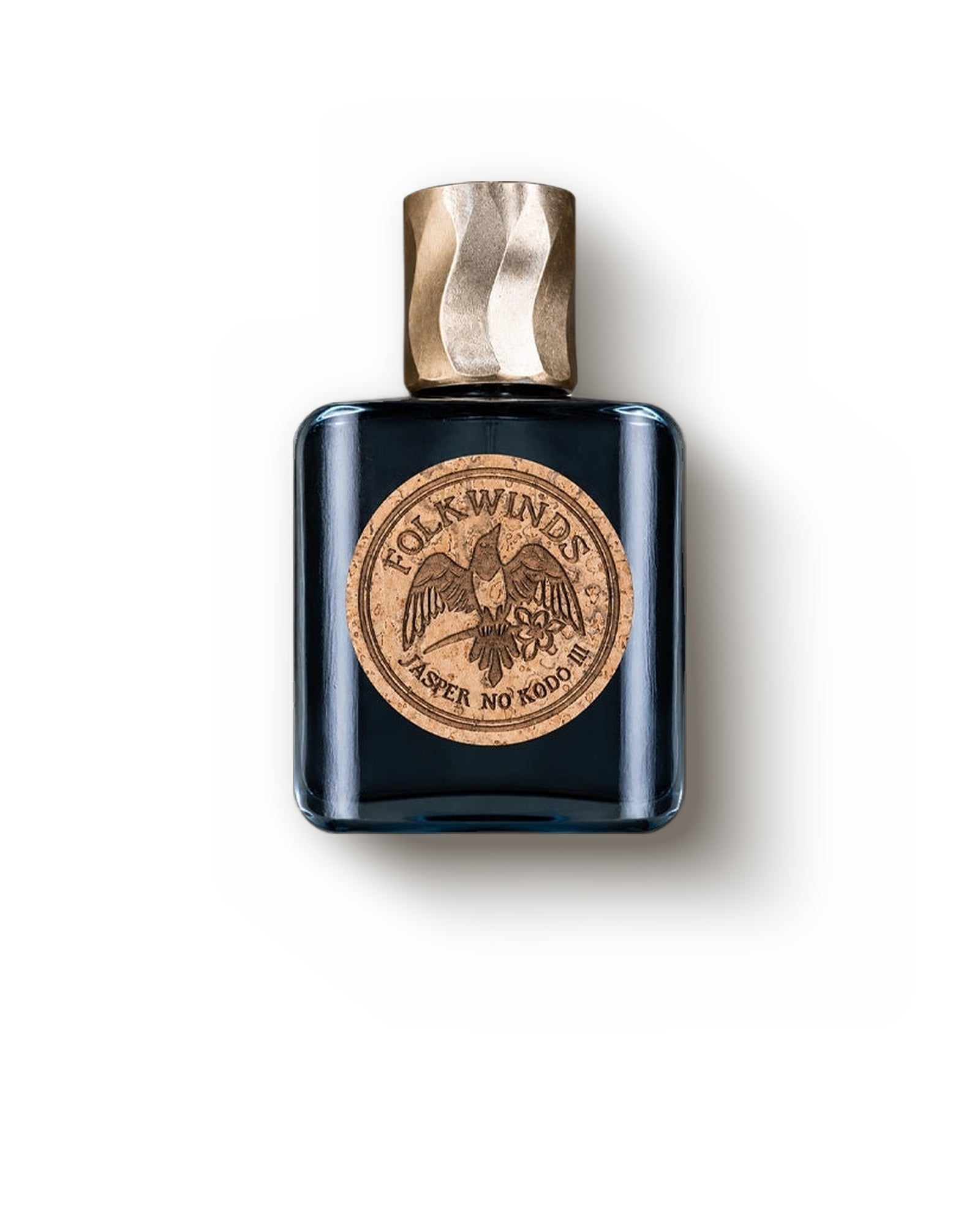
Ιδρυτής και αρωματοποιός της Folkwinds, που ξεκίνησε το 2022 για να αναδείξει αρωματικά υλικά της Βόρειας Αμερικής. Δουλεύει σε ποσοστό άνω του 90 τοις εκατό με φυσικά υλικά αμερικανικής προέλευσης, στα Folkwinds American Pharaoh, Folkwinds Cloud Illusions, Folkwinds Santi Ana, Folkwinds Jasper No Kodo και Folkwinds Smoke Jumping.
Περισσότερα από αυτή τη ΜύτηJasper No Kodo 2Jasper no Kodō IIIDevil's Garden
Ο Οίκος

Φυσική αρωματοποιία χτισμένη κυρίως πάνω σε αμερικανικά υλικά, πολλά από αυτά συν-εκχυλισμένα.
Η Folkwinds μυρίζει σαν την άκρη ενός δάσους αφού έχει περάσει από πάνω του η κακοκαιρία. Συνταγές πάνω από 90% φυσικές, από λευκό Ambergris και Deer Musk έως ανθικά απόλυτα και Sandalwood, με κλίση προς το παράξενο και το όμορφο παρά προς το ευγενικό. Περιμένετε ζυμωμένο φρούτο, κρύα ρετσίνια, υγρό φλοιό, καπνό και Orris τόσο πυκνό που διαβάζεται ως υφή και όχι ως νότα. Κάποια αρώματα επιστρέφουν ως αριθμημένες επανεπεξεργασίες, όπως τα Jasper no Kodō II και III, ενώ άλλα είναι σταθερές περιορισμένες εκδόσεις, όπως το Midwinter Storm στις 50 φιάλες.
- Ξεχωρίζει για
- Φυσικά υλικά αμερικανικής προέλευσης, συν-εκχυλίσεις, αγαρόξυλο

Περισσότερα από Folkwinds
Ίσως σας αρέσουν