The Antagonist The Jester: The Smell of a Throne Room After the Feast
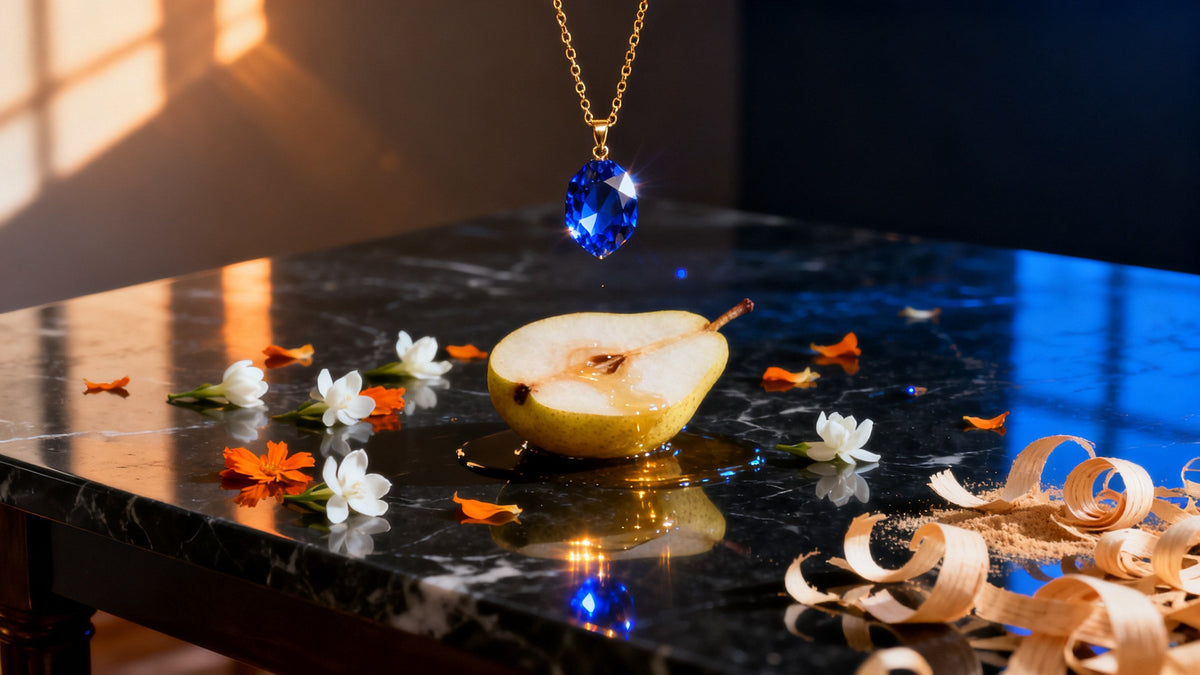
The feast is long over. Down the length of an old oak table the beeswax candles have burned to stubs, and a black pomegranate lies split where someone left it, its seeds staining the wood. The wine left in the cups has gone warm, and the air still holds leather and cold tobacco. Heavy velvet keeps the windows shut. At the head of the hall the throne is empty, and a thread of incense goes on burning for nobody.
This is the room The Jester puts on skin. It comes from The Antagonist, a house founded in Romania in 2025 by someone who has never given a name, and it is a perfume about a court fool: the man behind the painted smile, cheered by a crowd that never looks past the mask.
A maker without a name
The Antagonist keeps its maker out of sight, and no perfumer is credited on any of its perfumes. One heading in the manifesto waves the question of authorship away: who the author is does not matter. The first collection, Extrait d'émotion, was built on memory: handmade extraits meant to bring a feeling back, Forelsket for the rush of new love among them. The collection after it takes that question for its name, asked in the first person, and The Jester belongs to it.
A year after The Void
The collection opened in June 2025 with The Lover, The Stranger and The Void, and the house boxed the three together as a story set whose bottles told the collection's full arc. The Void went furthest, a perfume of gasoline and gunpowder that sinks through rust and charcoal into bonfire ash and basement air.
The arc was complete in three bottles. The Jester joined them a year later, on presale in June 2026. Ten Antagonist perfumes came out in 2025, the house's first year, and The Jester is the only one since. The three before it in the collection are sold out at the house, which leaves The Jester alone on the shelf.
Matejko gave the fool his own face, and The Antagonist, whose founder has no public name, drew its fool with none.
A fool in a dark room
The Jester comes with a short poem in place of a description. A crowd cheers for the mask and never sees the man. The jester laughs because he sees everything, from the lies under the applause to the fear that props up power, and the poem closes: "They call him a fool. He is the only one awake."
The bottle makes the same point in a drawing. It is black, with a crackled purple surface, and on its label a jester in a three-pointed belled cap is drawn in a pale line from the shoulders up. He has no face.
European painting already holds a famous version of this man. In 1862 Jan Matejko finished Stańczyk, named for a real Polish court jester in the reign of Sigismund the Old. He sits alone in a dark room while a royal ball goes on in the next hall. His jester's stick lies dropped on the floor, and on the table is a letter, likely announcing the loss of Smolensk in 1514. Nothing suggests The Antagonist had the painting in mind. Matejko gave the fool his own face, and The Antagonist, whose founder has no public name, drew its fool with none.
Leather first, then the room
The opening lays leather and tobacco down together, and the fruit bleeds up through them: raspberry, black pomegranate and, underneath, spiced red wine. It is dark fruit, closer to a stain on a tablecloth than to anything bright.
Then the perfume turns from the guests to the room. Black tea brings tannin and black pepper a dry prickle. Behind them the walls close in, honeyed beeswax and the dust of old parchment held behind velvet. Those three are objects in the room, and so is a fourth, the ancient oak in the base: the old tables of the hall.
The base is where the hall empties. Sandalwood, patchouli, saffron and cedarwood settle with burnt incense onto the ancient oak while the wine and the fruit fall back. What remains is smoke on old wood.
Half of it is perfume oil
The Jester is 50 percent perfume oil. Extrait usually runs 15 to 30 percent aromatic compounds, so it sits well above the range. It is also the highest concentration The Antagonist lists on any of its perfumes: 40 percent for the Extrait d'émotion line, 33 for the three perfumes before it in its own collection.
It is handcrafted in Romania and sold one way only, as a full bottle in a purple wooden presentation box.

The throne room

10-12 Hours · Strong sillage
Opens
 Leather
 Tobacco
Heart
 Black Tea
 Black Pepper
Dries down
 Sandalwood
 Patchouli
For someone who wants leather and tobacco with dark fruit and wine running through them, in a perfume that smells of a place more than of a person. Parfumo files it for women and men and marks it as a controversially rated scent: opinion on it is still split.
The rest of the court
The Jester is the only Antagonist perfume we have in stock, so the bottles beside it come from other houses.

The feast itself

8-10 Hours · Enormous sillage
Opens
 White Peach
 Green Apple
Heart
- Patchouli
 Vetiver
Dries down
- Tobacco
 Amber
Amber
Argos built this one on Bacchus, god of wine and theatre, seen both as a god of chaos and as a protector of misfits and outsiders, which is about as close to a patron as a court fool gets. Saffron and rum notes pour over white peach and green apple, and the night ends on tobacco, amber, sandalwood and vanilla. It shares The Jester's tobacco and saffron, with a rum note in place of the spiced wine.

The incense without the feast

6-8 Hours · Moderate sillage
Opens
- Patchouli
 Incense
Heart
 Orange Blossom
 Scots Pine
Dries down
 Elemi
Elemi
 Sweet Orange
Filippo Sorcinelli is organist and artistic director of the confraternity at the Church of the Cross in Senigallia, a Baroque oratory from 1608 where a seventeenth-century wooden statue of the dead Christ can be seen only once a year. Reliqvia is that room. Sorcinelli writes its notes as music, under the heading Harmonic evolution, and they read like a fugue. Incense and patchouli over guaiac and sandalwood carry the subject, Scots pine, lentisk and cloves run against it, and tobacco leaves, nutmeg and smoke trail behind. It is The Jester's burnt incense and tobacco, carried from the throne room into the chapel.

The table the guests left

8-10 Hours · Strong sillage
Opens
 Orange Peel
 Peach Stone
Heart
 Amaretto
 Sugar Syrup Foam
Dries down
 Vanilla Powder
 Passionflower
Toskovat is another Romanian house, and this is the first perfume of its Betrayal Collection, released in 2025. It is sweeter than The Jester, with candle wax where The Jester has beeswax: amaretto whipped into sugar syrup foam over sacramental bread, labdanum in the heart, and a drydown of honeycomb and tobacco absolute. The story is a betrayal at the host's own table: guests invited in and trusted with the host's memories, while all along their eyes were on fool's gold.
Frequently asked questions
What does The Antagonist The Jester smell like?
Leather and tobacco open with raspberry, black pomegranate and spiced red wine. The heart is black tea and black pepper over beeswax candles, velvet drapes and aged parchment, and the base is sandalwood, patchouli, saffron, cedarwood, burnt incense and ancient oak.
Who makes The Jester, and who is the perfumer?
The Antagonist, a house founded in Romania in 2025 whose founder works anonymously. No perfumer is credited on any Antagonist perfume. The Jester is handcrafted in Romania.
How concentrated is The Jester?
It is an extrait de parfum at 50 percent perfume oil, the highest concentration The Antagonist lists on any of its perfumes. Extrait usually runs 15 to 30 percent aromatic compounds.
When was The Jester released?
In June 2026, a year after the first three perfumes in The Antagonist's Who Am I collection, The Lover, The Stranger and The Void. It was sold on presale at the house until 28 June 2026.
Everything in this guide
The shelf


 From the decanting room
Every guide here ends in a 2 ml decant.
Browse the discovery sets · $58+
From the decanting room
Every guide here ends in a 2 ml decant.
Browse the discovery sets · $58+